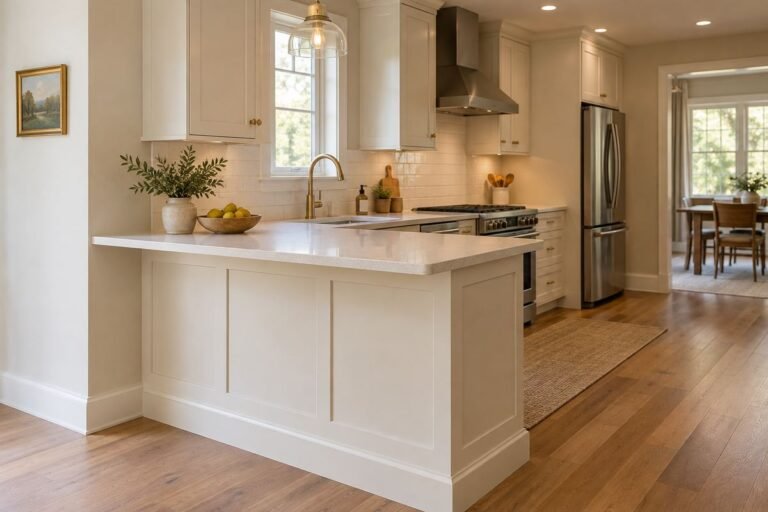
Dining room rug ideas need to work when the chairs are being used, not only when they are tucked neatly under the table. The rug connects the furniture visually, but its shape, edge position and surface also affect an ordinary meal.
Begin with the table and the actual chairs. Pull each chair out as you normally do to sit down, then note where its feet land. Include the table’s extended arrangement if you use it regularly. This gives you a useful starting footprint before you compare colors and patterns.
The 28 ideas below combine appearance with practical layout decisions. Their original images illustrate possible rooms rather than proving a specific rug’s material, washability or dimensions. Check those details on the actual product and compare a sample with your table and floor.
The images are original AI-generated decor concepts, not installation diagrams or photographs of completed client projects.
Browse These 28 Dining Room Rug Ideas
Jump to an idea
- Echo a round table with a round rug
- Use a rectangular rug beneath a long table
- Try a square rug in a square dining area
- Use an oval outline to soften a long table
- Plan the rug for the extended table
- Include a dining bench in the footprint
- Let a pedestal table reveal the rug pattern
- Use a quiet rug beneath a glass table
- Give dark wood a lighter rug partner
- Ground a pale table with a deeper rug
- Keep neutral dining room rug ideas varied in texture
- Use muted blue with warm wood
- Try a restrained green rug with cream chairs
- Warm the room with a clay-colored rug
- Use black and cream as a deliberate graphic base
- Try a tonal geometric pattern
- Let a medallion sit within the furniture group
- Use a border to define the dining outline
- Run stripes along the table’s long axis
- Try a broad stripe across the dining group
- Use a softly faded-looking pattern
- Compare a flatter weave for chair movement
- Choose a product you can actually clean
- Define the dining zone in an open-plan room
- Keep the route to a patio door clear
- Make a compact dining rug decision honestly
- Use a quiet rug with expressive dining chairs
- Let the rug connect the room’s permanent finishes
Measure dining room rug ideas with the chairs pulled out
Mark the proposed rug outline on the floor using a method suitable for that surface. Set the table and chairs in their normal positions, then pull the chairs out and walk around the group. Check the end seats, any bench and the route to a door or sideboard. The goal is a rug that accommodates ordinary chair movement while keeping the rest of the room useful. Do not decide from the tabletop dimensions alone.
| What to record | Why it matters | Decision to make |
|---|---|---|
| Normal and extended table size | The furniture footprint changes | Which arrangement should the rug serve? |
| Pulled-out chair feet | The edge must suit everyday movement | Does the chair remain fully on the rug? |
| Doors and sideboard | The room still needs working routes | Does the outline obstruct another task? |
| Rug thickness and surface | Chairs and doors interact with it | Does the actual product suit the arrangement? |
| Care instructions | Dining creates real spills and crumbs | Can you maintain this exact rug? |
Test dining room rug ideas with a worked footprint example
Suppose a hypothetical rectangular table measures 72 by 36 inches and the actual pulled-out chairs extend the furniture footprint by 28 inches beyond each table edge. The resulting outline is 128 by 92 inches: 72 plus 56, and 36 plus 56. An 8-by-10-foot rug is 96 by 120 inches, so it is too short for that particular outline. A 9-by-12-foot rug is 108 by 144 inches and covers the outline, but the room’s doors and circulation still need checking. These are example measurements, not a universal chair allowance or a purchase recommendation.
Read the care information for the exact construction
A washable label does not mean every rug of the same brand or fiber can go into your machine. Check the particular rug type, machine capacity, drying method and any separate pad instructions. Other constructions may need a different cleaning approach. Choose the product you can maintain in your home, and confirm floor compatibility for any pad or backing.
1. Echo a round table with a round rug

A round rug can give a round dining table a clear shared center. The curved outline works especially well when the chairs form a balanced group around the table.
Test the diameter with every chair pulled out. A rug that looks generous beneath the tabletop can still be too small for the seats. Keep the surrounding route visible rather than choosing the largest circle that barely fits the walls.
Practical tip: Measure the chairs at their widest normal position.
2. Use a rectangular rug beneath a long table

A rectangular rug can support the long line of a dining table and its end seats. A restrained border or tonal pattern gives the group definition without competing with the furniture.
Check the end chairs separately, because their movement may determine the useful rug length. The side chairs and end chairs need to work together in the same outline. Include the nearby sideboard in the circulation test.
Practical tip: Test the end seats before settling the rug length.
3. Try a square rug in a square dining area

A square rug can relate to a square room or a compact round table. It gives the furniture a defined area without repeating a long rectangular outline.
Compare the corners with doors and circulation routes. The shape should suit how people approach the table, not only the room’s geometry. Mark the actual outline and use the chairs before deciding that a symmetrical plan works in daily life.
Practical tip: Check the rug corners against the walking route.
4. Use an oval outline to soften a long table

An oval rug offers a curved boundary beneath an elongated table. It can make the dining group feel softer while keeping a clear long axis.
The narrowing ends need careful checking with the end chairs. A generous middle does not establish adequate space at every seat. Test the outline with the real chairs pulled out and compare it with a rectangular option.
Practical tip: Check the curved ends with the end seats in use.
5. Plan the rug for the extended table

An extension table can have two substantially different footprints. Choose which arrangement the rug should serve before selecting the size and pattern.
Set out the leaves and extra chairs during the measurement exercise. If the rug serves the extended arrangement, check that it still feels proportionate when the table is closed. Both views should be deliberate rather than one becoming an awkward afterthought.
Practical tip: Measure with the actual leaves and extra chairs in place.
6. Include a dining bench in the footprint

A bench changes how people approach and leave the dining table. Its position and movement deserve the same attention as the chairs.
Test the bench pulled out and with people approaching from each end. Keep its feet and the rug edge in a useful relationship. A styled photograph with the bench pushed tightly under the table does not show the full daily arrangement.
Practical tip: Test the bench’s normal movement before choosing the outline.
7. Let a pedestal table reveal the rug pattern

A pedestal base leaves more of the rug visible than several table legs. This can make a restrained central motif or tonal texture a clear part of the dining area.
Check the chairs and table base together. The rug still needs to support the pulled-out seats, and its central motif should not be chosen without seeing how the pedestal covers it. Use the supplier’s full design image in the plan.
Practical tip: Review what the pedestal hides within the pattern.
8. Use a quiet rug beneath a glass table

A glass tabletop allows more of the rug and chair bases to remain visible. A quiet design can keep that layered view from becoming overly busy.
Compare the rug with the table’s actual frame and the chairs. Strong lines on every layer may compete, especially in a small room. Let one element provide the main pattern while the other materials offer contrast through texture and tone.
Practical tip: Judge the rug through the tabletop as well as beside it.
9. Give dark wood a lighter rug partner

A lighter rug can distinguish a dark wood table from a dark or medium floor. The contrast makes the furniture outline clearer without changing the table itself.
Compare the rug sample beside the chair fabric and wood finish. A very bright white and a warm cream create different effects. Choose a light tone whose care requirements suit the household rather than assuming every pale rug is practical.
Practical tip: Compare the rug’s light tone with the actual chair fabric.
10. Ground a pale table with a deeper rug

A deeper rug can give a pale table and light chairs a clear foundation. The contrast keeps the dining group from merging into a similarly pale floor.
Check the whole room from the doorway. A large dark area can become the strongest feature, so decide whether that is the role you want. Keep the rug edge and the chair movement useful rather than selecting depth alone.
Practical tip: View the full rug area from the entrance.
11. Keep neutral dining room rug ideas varied in texture
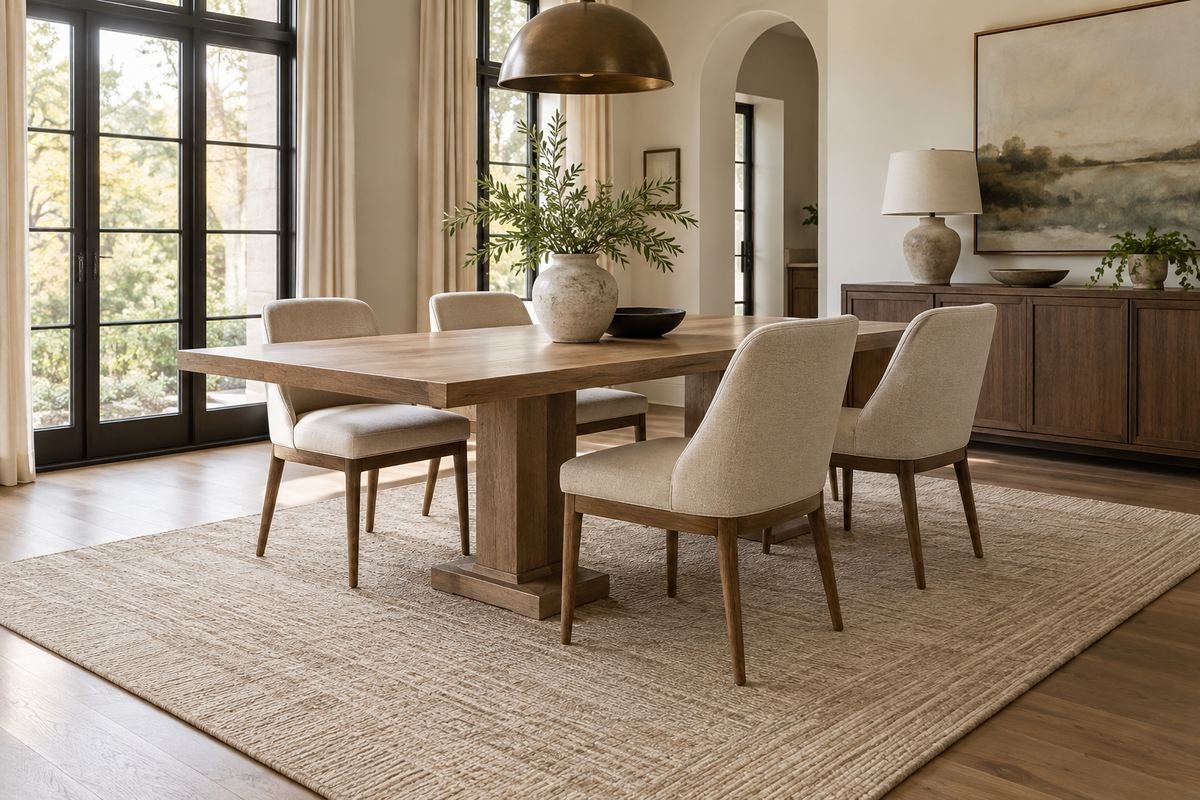
A neutral rug can still bring visual interest through a considered surface and subtle pattern. It is useful when the room already has distinctive chairs or wall art.
Assess the actual texture for chair movement and cleaning. A texture that looks appealing close up may be less suitable beneath dining furniture. Compare a physical sample with the chair feet where possible before ordering the full rug.
Practical tip: Check the real surface rather than the neutral color alone.
12. Use muted blue with warm wood
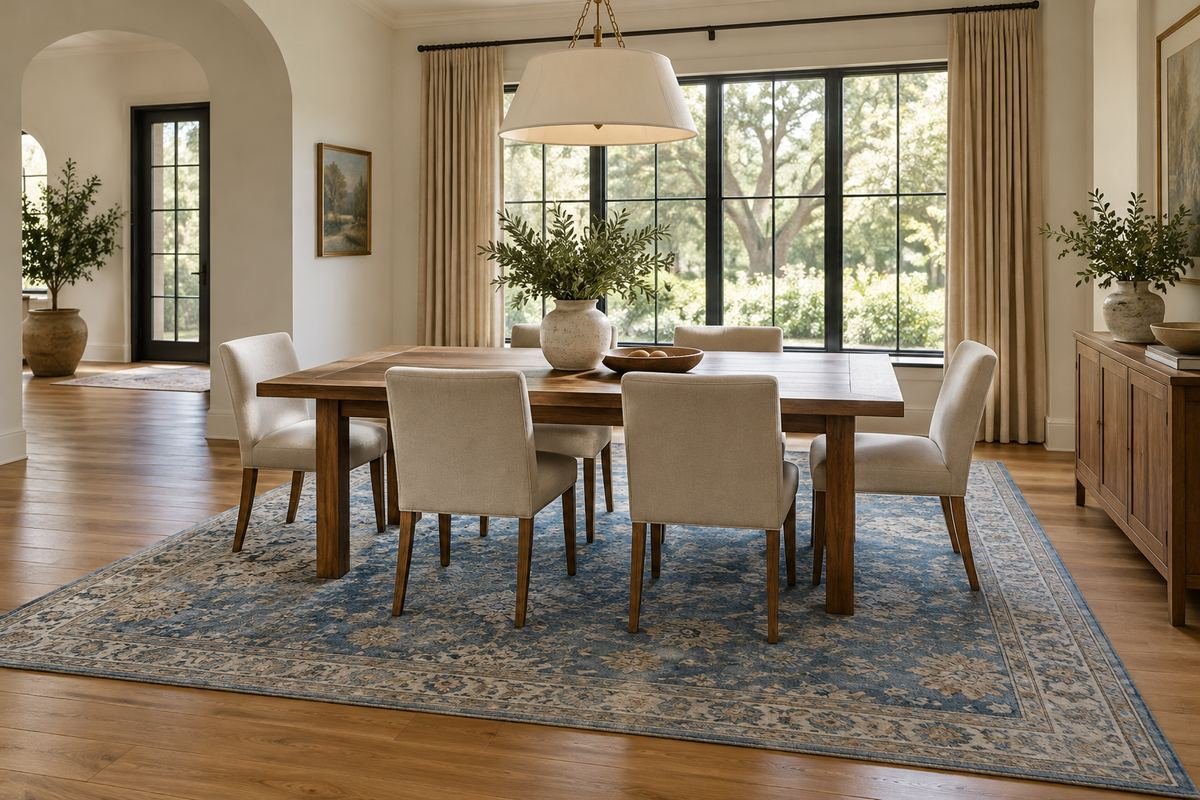
Muted blue can provide a deliberate cool partner for warm wood furniture. A simple neutral chair fabric lets the blue remain the main color below the table.
Choose the depth beside the floor sample. A gray-blue and a clearer navy have different relationships with golden wood. Keep other blue accents limited until you see the full rug in the room.
Practical tip: Compare the blue against both table and floor.
13. Try a restrained green rug with cream chairs

A restrained green rug can connect a dining room to nearby planting or a green wall detail. Cream chairs give the color a quiet companion without requiring exact matching.
Compare the rug’s undertone with the wood and any curtains. If the room contains several greens, decide whether they relate or compete. A muted difference can work well, but an accidental near-match may feel less settled.
Practical tip: Compare all existing green textiles together.
14. Warm the room with a clay-colored rug
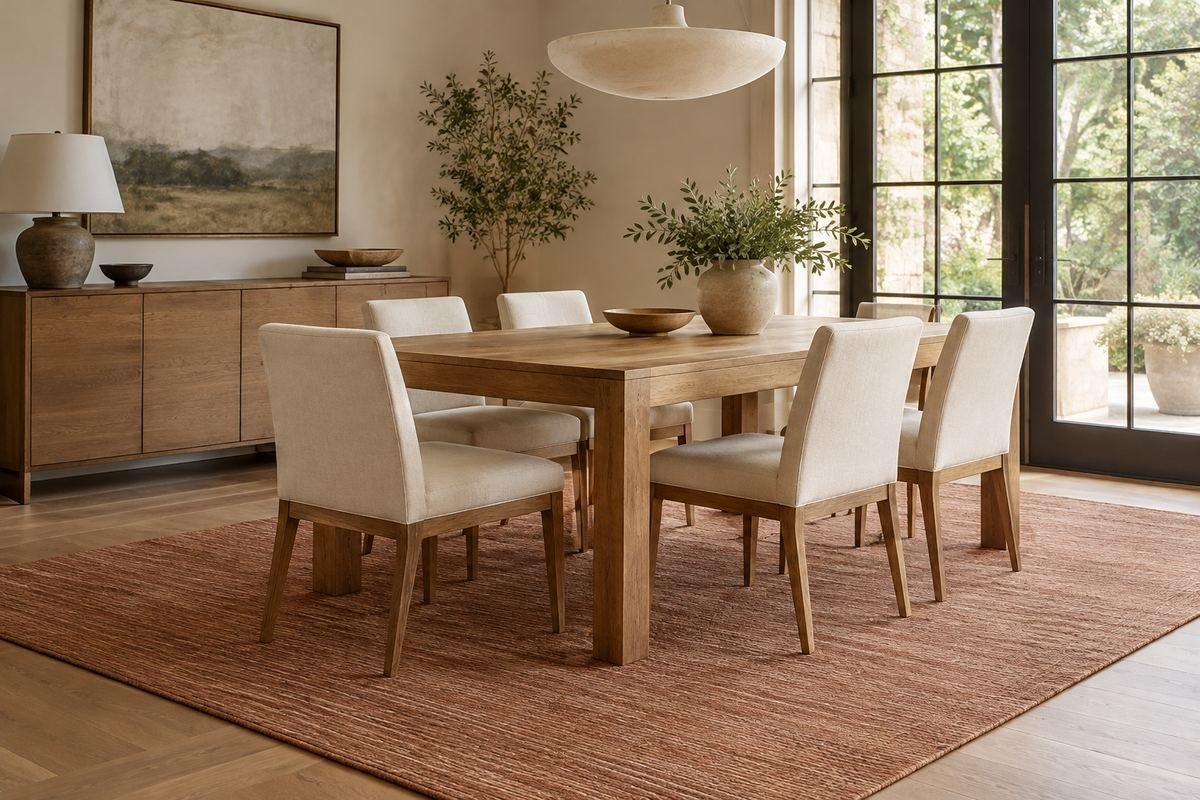
A clay or muted terracotta rug can introduce warmth beneath an otherwise quiet dining group. Pale chairs and simple wood furniture allow the color to remain clear.
Check the rug beside the floor, particularly where both have red or orange notes. You may prefer a pink-brown clay or a deeper rust. Choose from physical samples rather than treating those colors as interchangeable.
Practical tip: Keep the floor in the warm-color comparison.
15. Use black and cream as a deliberate graphic base

A black-and-cream pattern can give simple dining furniture a stronger outline. It works best when the remaining surfaces do not all carry equally bold patterns.
Look at the design through the chair legs. A very busy grid can become more complex beneath a furniture group. Compare a larger, quieter motif if the combined lines feel crowded.
Practical tip: Review the pattern with all chair legs visible.
16. Try a tonal geometric pattern
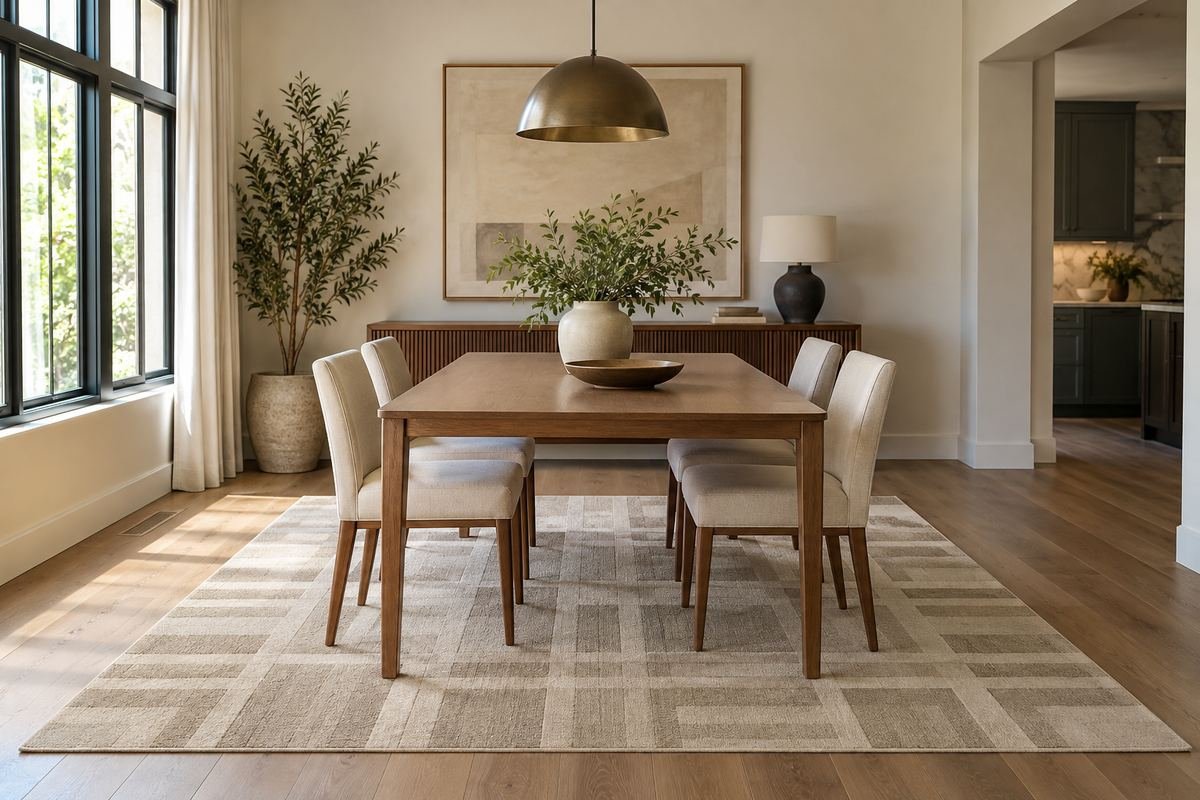
A tonal geometric rug can add structure without the contrast of black and white. Similar colors allow the design to read as a considered background to the table.
Check the pattern in the room’s ordinary light. Very close tones may nearly disappear, which can be attractive if you want subtlety. Choose that effect deliberately and let the furniture provide the stronger shapes.
Practical tip: View the tonal pattern in daylight and evening light.
17. Let a medallion sit within the furniture group

A medallion-style design can give the dining area a clear center. Choose an original or appropriately sourced rug pattern rather than expecting every part of the motif to remain visible.
Review how the table base and chairs cover the center. The outer field and border may be more noticeable than the medallion itself. Choose the rug because the whole visible design works, not only for one hidden detail.
Practical tip: Compare the full design with the furniture drawn over it.
18. Use a border to define the dining outline
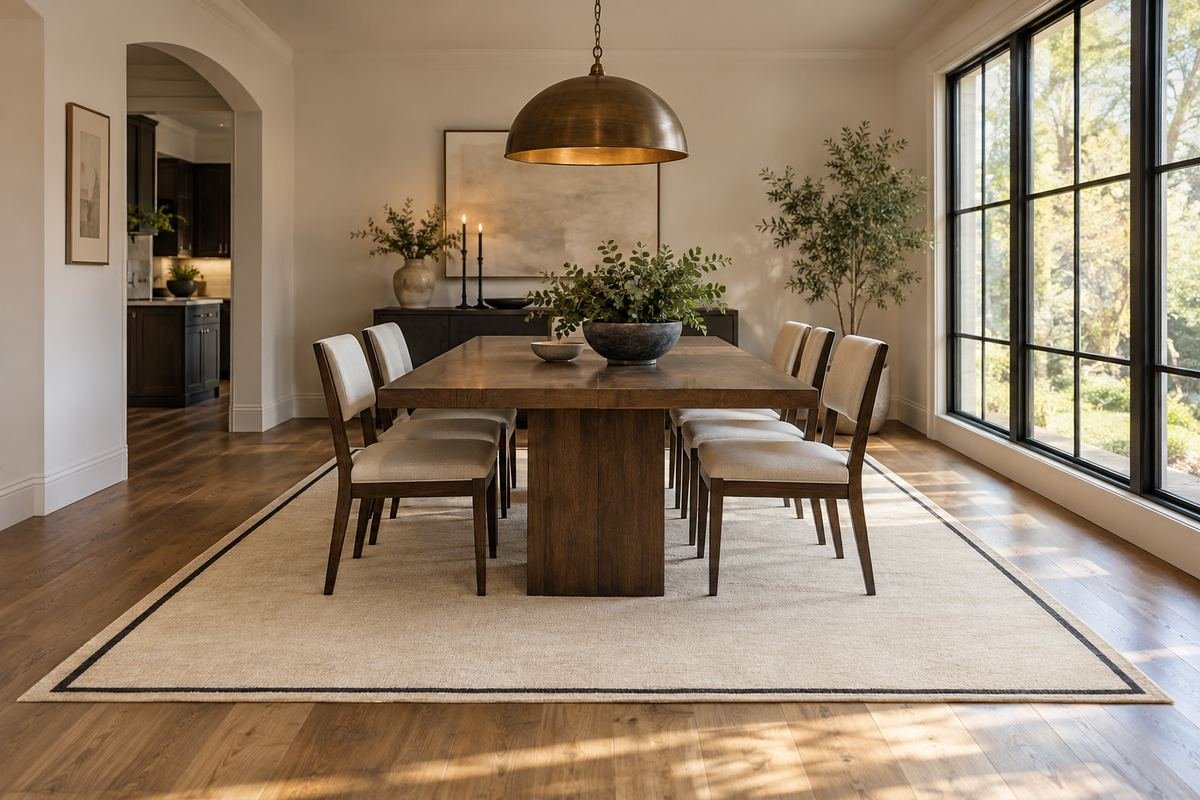
A bordered rug can make the edge of the dining group feel deliberate. A quieter middle leaves room for the table and chair legs to remain visually clear.
Check where the pulled-out chairs land in relation to the border and edge. The border is a visual detail, not an indication that the rug is large enough. Mark the real footprint before judging the composition.
Practical tip: Measure first, then choose the border proportion.
19. Run stripes along the table’s long axis
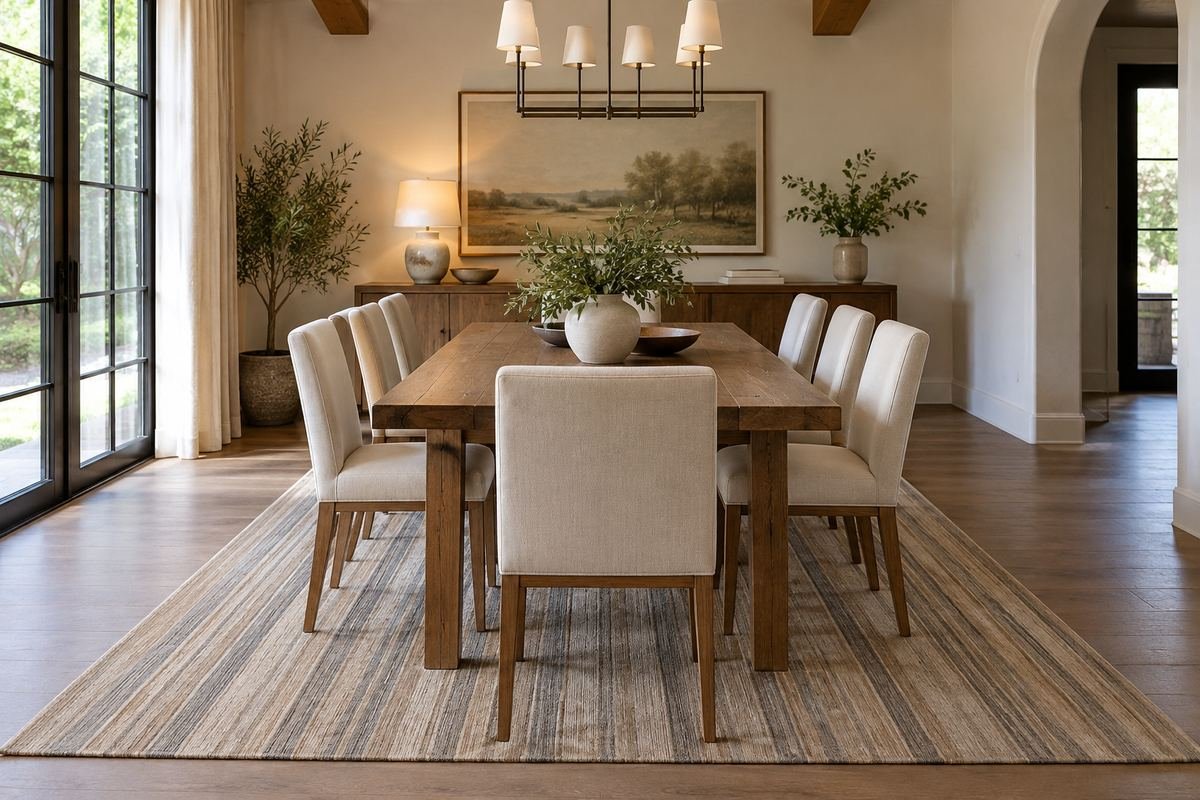
Lengthwise stripes can echo a rectangular table and give the dining area a clear direction. A restrained color contrast keeps the lines from overpowering the furniture.
Check the stripes against any striped chair fabric or nearby runner. Too many parallel patterns can feel busy. Let one textile carry the main linear design and use quieter surfaces for the rest.
Practical tip: Compare the rug with adjacent striped textiles.
20. Try a broad stripe across the dining group
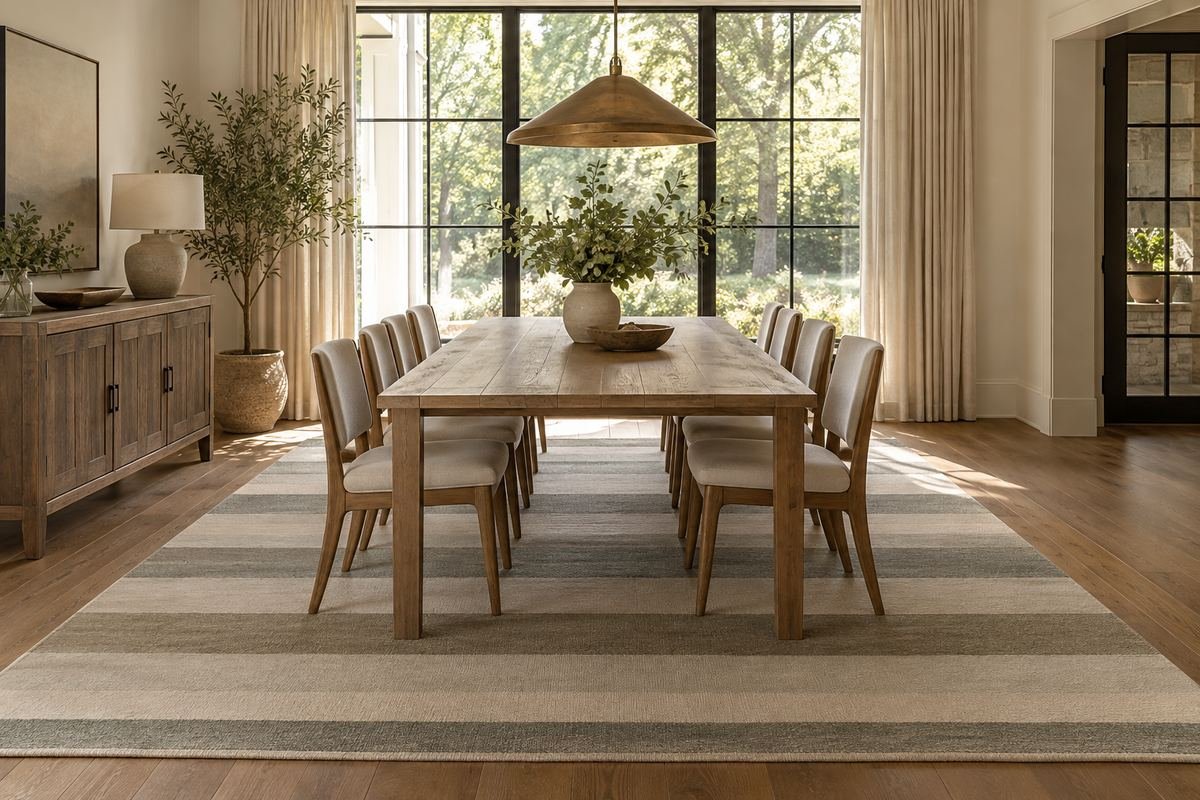
A broad crosswise stripe creates a different rhythm beneath a long table. It can make the rug feel like a deliberate design element rather than a neutral background.
Plan the visible pattern at the ends and sides of the table. The design may be largely hidden in the center. Compare a full image of the actual rug with the furniture positions before selecting a strong stripe.
Practical tip: Review the pattern visible beyond the tabletop.
21. Use a softly faded-looking pattern

A softly faded-looking pattern can provide color variation without a crisp high-contrast motif. It may sit comfortably beside an existing table and mixed chair finishes.
A distressed appearance is a design treatment rather than evidence of age or quality. Check the actual construction and care information. Compare the pale areas with likely everyday marks so the choice reflects the household’s real use.
Practical tip: Read the construction details independently of the vintage look.
22. Compare a flatter weave for chair movement
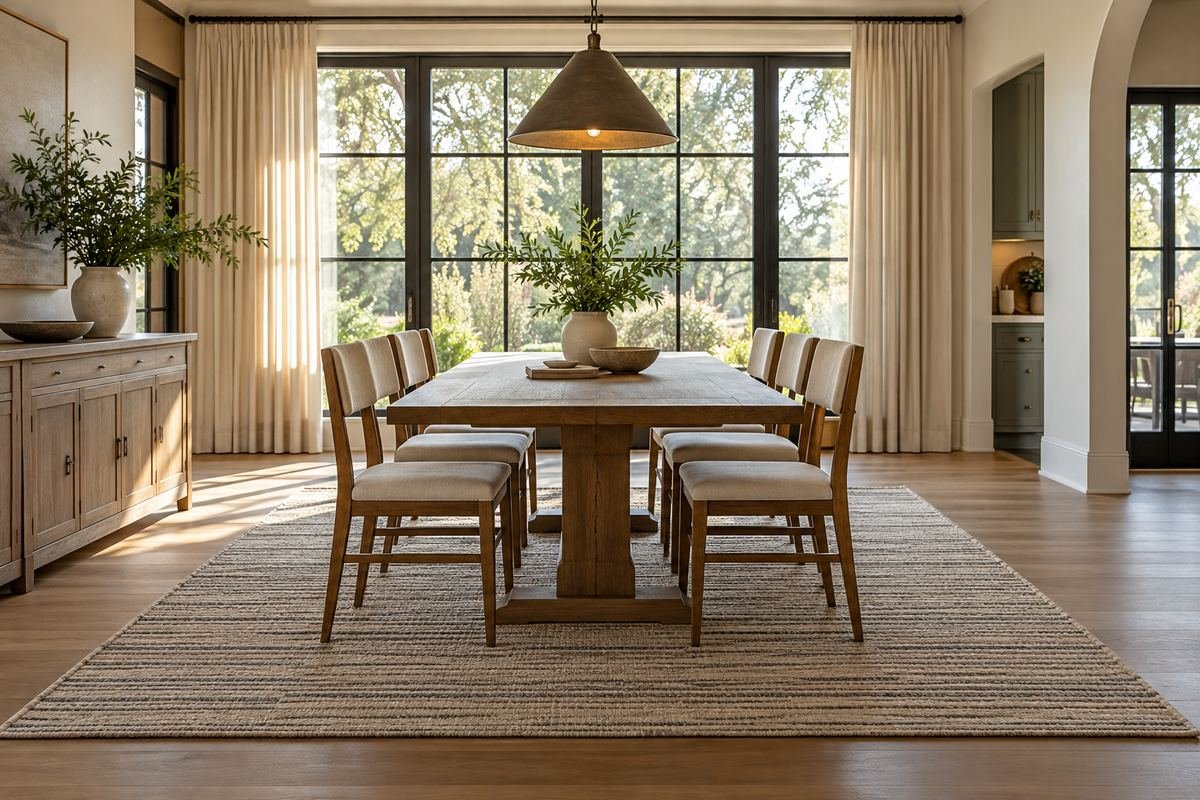
A flatter rug surface is worth comparing where chairs move frequently. It can give the dining group a clear textile area without a visibly deep pile.
Check the particular product’s edge, backing and chair interaction. A flat appearance alone does not establish that it will stay in place or suit the floor. Follow the exact rug and pad guidance and test the outline in use.
Practical tip: Check the edge and backing as well as the pile.
23. Choose a product you can actually clean

A dining rug should suit the way the household handles crumbs and spills. A specific washable construction may be useful when its care requirements match your equipment and routine.
Confirm the exact rug type, machine capacity and drying instructions before buying. Other products need different care. The illustration shows a design direction, so use the supplier’s specifications to establish performance rather than inferring it from the image.
Practical tip: Check the full care process before choosing a washable product.
24. Define the dining zone in an open-plan room
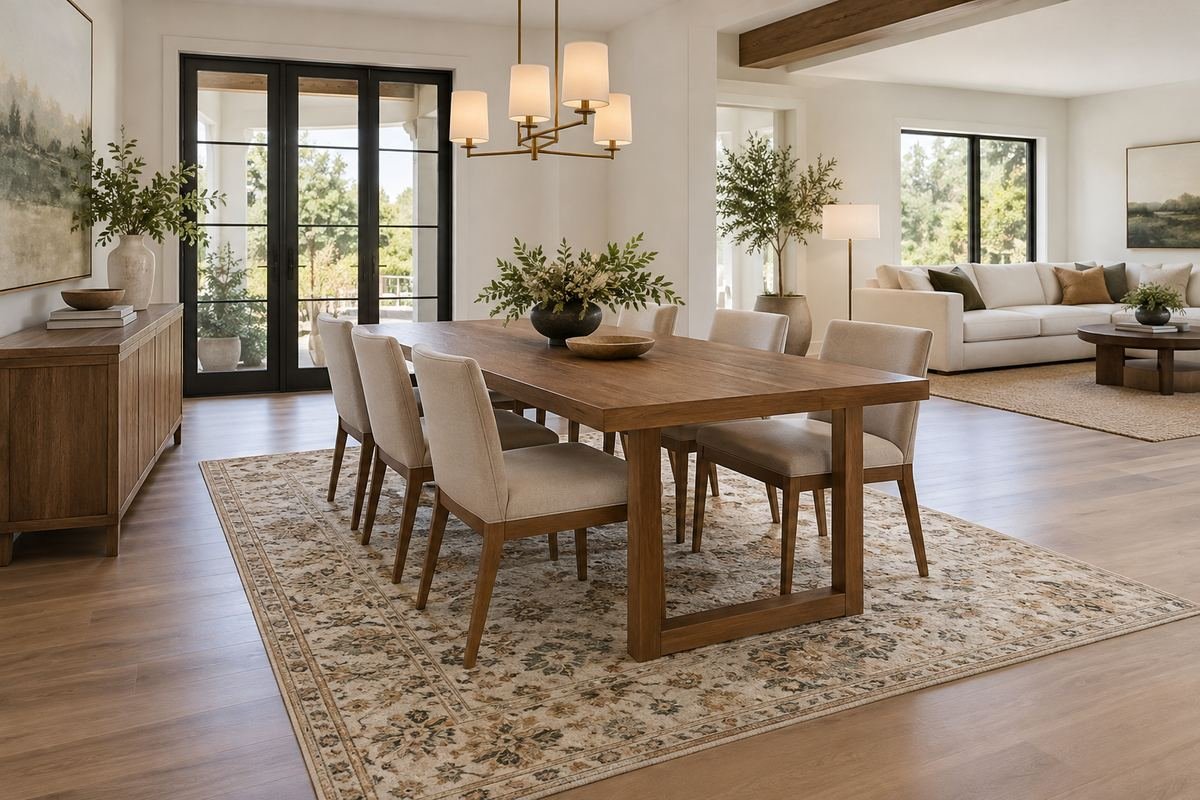
A rug can distinguish the table-and-chair group within an open living area. Its outline gives the dining zone a visual boundary while the floor continues into the neighboring space.
Compare it with the living-room rug and the route between the groups. They can relate without matching exactly. Keep each furniture footprint complete so the two rugs do not create a narrow or awkward passage.
Practical tip: Mark both rug outlines before ordering either one.
25. Keep the route to a patio door clear
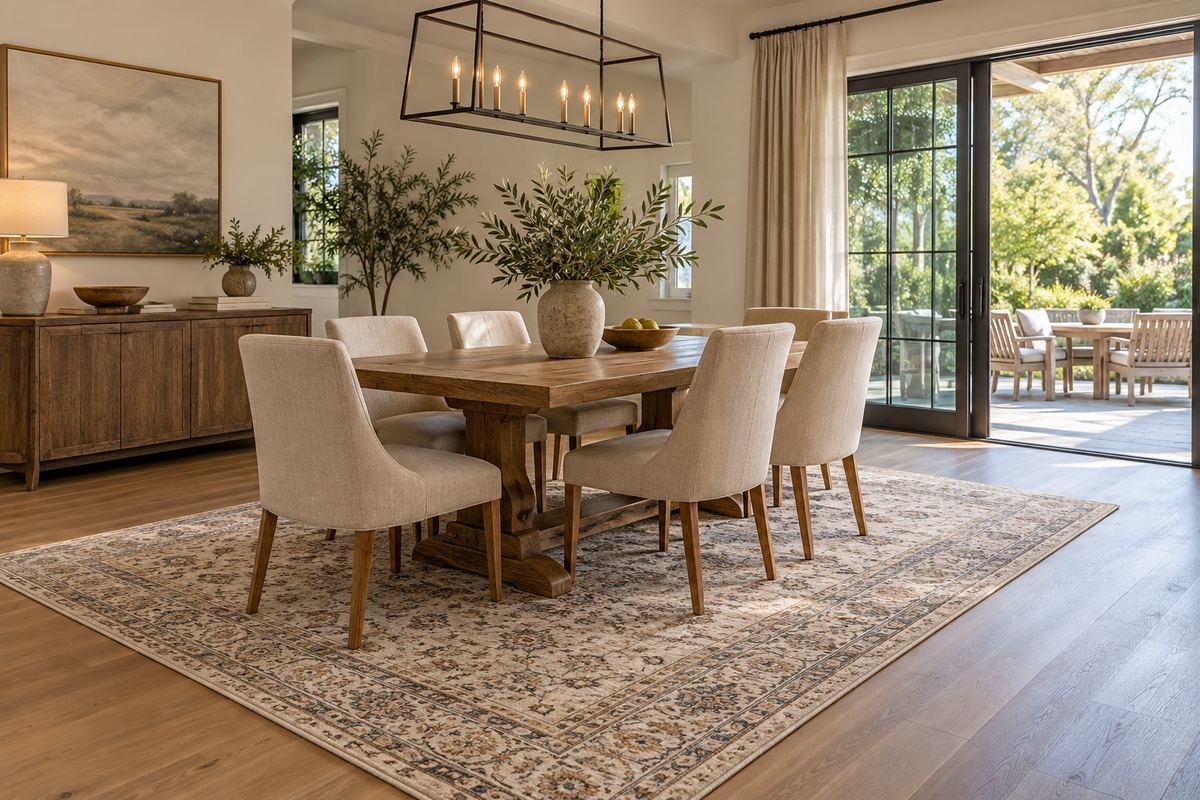
A dining table near a patio door needs a rug outline that respects the door and the everyday route. Chair movement and access should be considered together.
Open the door fully and use the end seat during the floor-layout test. The rug should not interfere with the door’s operation or create an awkward edge in the main approach. If necessary, compare a different table position before changing the rug alone.
Practical tip: Test the door and end chair at the same time.
26. Make a compact dining rug decision honestly

A compact room may have limited space for both a generous chair footprint and clear circulation. Mark the available outline before falling in love with a pattern.
If the real arrangement cannot accommodate a suitable rug, leaving the floor visible can be the better design decision. A smaller rug that catches every chair movement does not become practical because it fits the tabletop. Keep the room useful first.
Practical tip: Test the smallest practical outline before shopping by style.
27. Use a quiet rug with expressive dining chairs
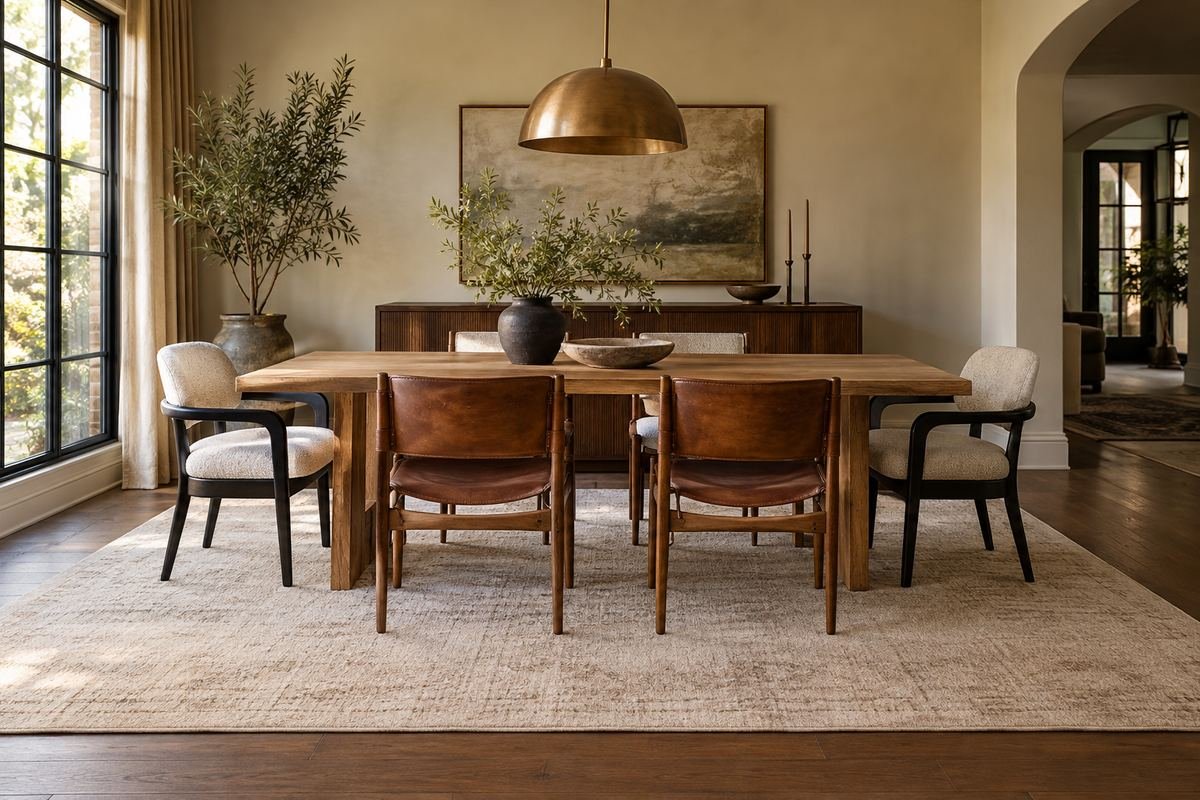
Distinctive chair shapes or patterned upholstery can be the dining room’s main feature. A quieter rug lets those pieces remain visible without adding another equally strong motif.
Compare the rug sample beside more than one chair if the group is mixed. The aim is a relationship across the complete set. A related neutral or subtle tonal pattern can connect the chairs while giving their differences room to show.
Practical tip: Compare the rug with the entire chair group.
28. Let the rug connect the room’s permanent finishes
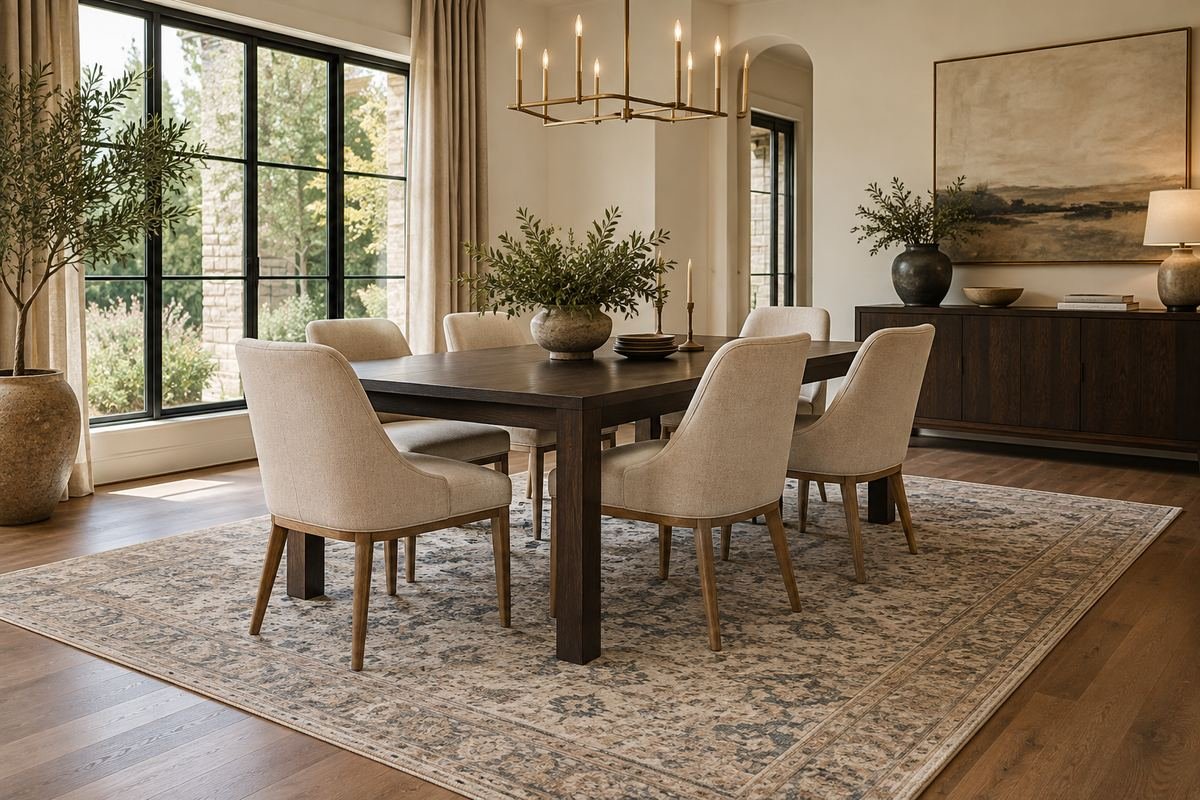
A rug can bring together a warm floor, pale chairs and a darker table through a limited mix of colors. The most useful palette acknowledges the pieces you intend to keep.
Build a sample group with the floor, chair fabric and table finish. Choose the rug from that whole group, then keep smaller accessories restrained. Recheck the marked outline before ordering so an attractive color choice also works in everyday use.
Practical tip: Keep the color samples and floor measurements together.
Frequently Asked Questions
Should dining chairs stay on the rug when pulled out?
Plan for the chair feet to remain on the rug through the ordinary movement used to sit down and stand up. Test the actual chairs rather than relying only on the table size.
Which dining room rug ideas suit a round table?
A round rug is one coherent option, but a rectangular or square rug may suit the room and chair footprint better. Compare the complete arrangement.
Can dining room rug ideas work in a small room?
It can if a suitable rug accommodates the chairs while leaving doors and routes useful. If the available sizes create awkward edges, keeping the floor clear is also a valid design choice.
Is a low-pile rug always the best dining option?
A flatter surface is worth comparing for chair movement, but construction, backing, edge and care still matter. Assess the actual product rather than relying on a single label.
Should dining room rug ideas match the table?
It can relate through color or material while remaining clearly different. A useful contrast helps the table and chairs remain distinct from the floor.
Choose the Details That Work in Your Home
Choose dining room rug ideas from the complete table-and-chair footprint, then refine the shape, color and pattern. A considered outline and a product you can care for will matter every day, long after the room is first styled.
For related ideas, explore dining room lighting ideas, small dining room ideas, dining table centerpiece ideas.
Planning References
Ruggable: measuring a rug under a dining table; Ruggable: rug size guide; Ruggable: construction-specific rug care. Follow the instructions for the exact products you choose.
Optional digital guide for this topic
If you prefer a structured workbook, explore this related paid guide.