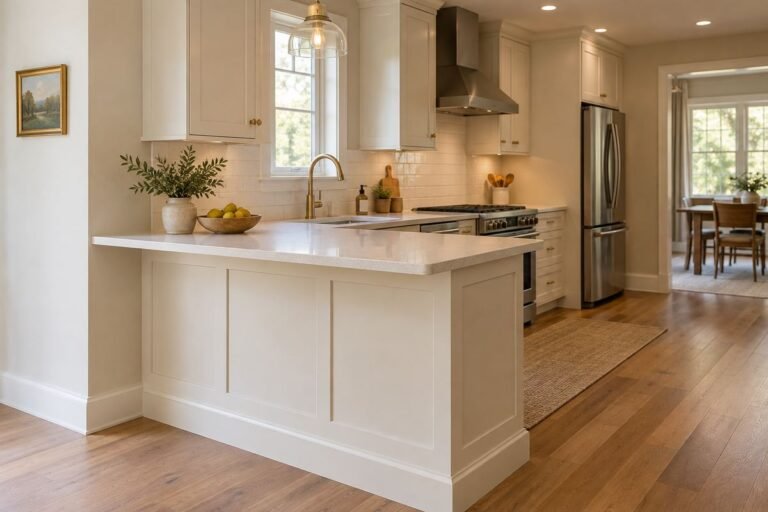
Kitchen cabinet lighting is most useful when it solves a particular visibility problem. A counter can remain in shadow beneath beautiful upper cabinets, while a bright display cupboard contributes little to the surface where you prepare food. Start with the task before choosing the decorative glow.
Look at the kitchen in daylight and after dark. Stand at the counter, sit at the island and open the storage you normally use. Notice where your body blocks the ceiling light, where the backsplash reflects a bright source and which shelves are difficult to see. Those observations give every proposed cabinet light a reason to exist.
These 23 concepts compare layouts and visual effects rather than electrical installation methods. Select a complete compatible lighting system for the specific location and have power, controls, product clearances and installation requirements resolved appropriately. AI concept images show design intent; they do not establish measured light levels, wiring details or product suitability.
The images are original AI-generated decor concepts, not installation diagrams or photographs of completed client projects.
Browse These 23 Kitchen Cabinet Lighting
Jump to an idea
- Use a continuous light line over the main preparation counter
- Fit a short light bar to an isolated counter bay
- Compare separate lights within distinct cabinet bays
- Carry useful light around an L-shaped return
- Give the sink-side landing counter its own attention
- Light the preparation space between tall elements
- Use restrained light inside a glass-front dish cupboard
- Compare vertical light in a tall display section
- Use shelf lighting to define one open kitchen section
- Consider drawer lighting as a complete cabinet feature
- Help a deep pantry compartment reveal its contents
- Give a breakfast cupboard a clear retrieval view
- Make one display cabinet the evening accent
- Test cabinet lighting with dark wood and real contents
- Keep a pale kitchen from becoming a field of bright edges
- Check a glossy backsplash for visible source reflections
- Compare the light on a matte countertop as well as the wall
- Review the exposed cabinet end from the room entrance
- Check the source from a seated island position
- Use a restrained base glow only as a secondary accent
- Compare an upper-cabinet wash with the ceiling shape
- Keep working and display lighting independently useful
- Finish with a simple control routine the household understands
Plan kitchen cabinet lighting from the surface you need to see
Mark the main preparation counter, sink-side landing area, display cupboards and deep storage on a simple kitchen plan. Give each a clear purpose and priority. Useful task light comes first, followed by storage visibility and then decorative accents. Include the normal contents, open fronts and seated viewpoints when comparing samples, because the light that looks attractive on an empty elevation can behave differently in use.
| Need | Concept to compare | Useful test |
|---|---|---|
| A long preparation counter | Continuous linear under-cabinet light | Look for useful coverage with a person at the counter |
| A short isolated counter bay | A suitably sized complete light bar | Check the ends of the working surface |
| A dish display | Restrained interior cabinet lighting | View the actual dishes through the closed glass |
| A deep storage compartment | A purpose-designed interior light | Open the front and retrieve an ordinary item |
| A quieter evening setting | Separately controlled decorative lighting | Keep task light available for any active work |
| A reflective backsplash | A concealed source and suitable diffusion | Check glare from standing and seated positions |
Compare the complete light, channel and control
Kichler’s tape-and-channel guide distinguishes surface-mounted and recessed profiles and describes different diffusion effects. A shallow profile may leave individual diodes visible, while another complete assembly can create a softer result. Treat the channel, light source and lens as a coordinated choice rather than expecting any cover to hide every point of light. Ask to see a working sample with a material like your own counter and backsplash.
Separate light color from brightness and color rendering
A brighter setting does not necessarily make a light whiter. Color temperature describes the character of white light, while color rendering concerns how objects appear under it. Waveform Lighting’s under-cabinet guide discusses both separately. Compare the proposed light with the kitchen’s existing fixtures and actual cabinet, food and surface colors. Use product specifications and a real sample; a generated image or camera exposure cannot verify these qualities.
Specify the system before hiding its components
IKEA’s current kitchen-lighting collection includes counter strips, spotlights and drawer lights with sensors, illustrating that different cabinet jobs can use different complete products. Check the required driver, connection parts, controls and compatible cabinet details for the exact selection. Plan appropriate service access and cable routing before the cabinetry is finished. A clean appearance should come from a resolved design, with no loose lead crossing a drawer, hinge or usable preparation surface.
Build a short lighting brief before adding more fixtures
Write one sentence for each zone: what you need to see, when you use it and where you view it from. For example, a preparation run needs useful counter coverage during cooking, while a glazed dish cupboard may need only a restrained evening display. Ask the supplier to demonstrate the intended output and control behavior together. This is more informative than choosing a strip by length alone or assuming that matching product names guarantee compatibility.
1. Use a continuous light line over the main preparation counter
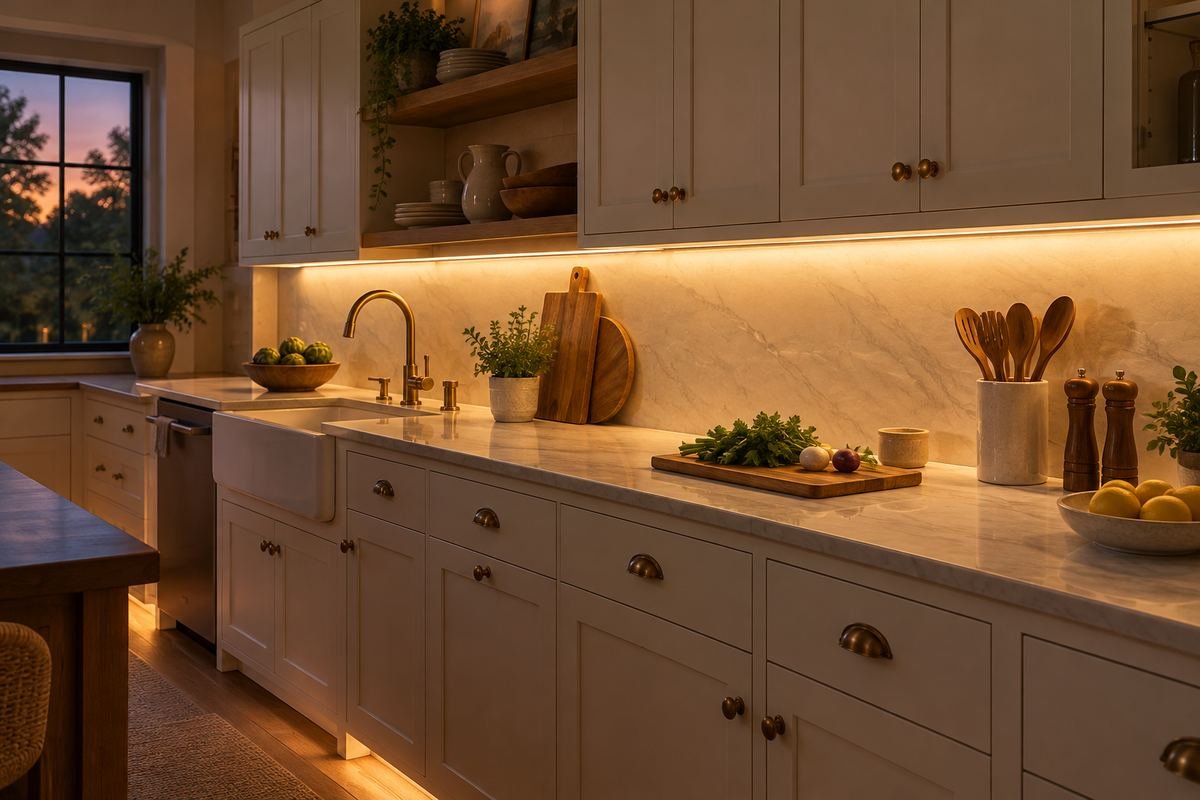
A continuous counter run often benefits from a visually quiet line of light beneath the upper cabinets. The purpose is to make the usable surface easier to see while the cabinet fronts remain the stronger part of the kitchen design.
Test the actual light with a person standing where preparation happens. A bright backsplash alone does not prove that the front of the counter receives useful illumination. Compare the ends of the run and the effect of cabinet divisions, then choose the complete fixture arrangement that serves the surface rather than chasing an uninterrupted decorative line.
Practical tip: Judge the light at the working surface with the kitchen in use.
2. Fit a short light bar to an isolated counter bay

A small counter between taller cabinets can need its own lighting attention even when the rest of the kitchen is bright. A suitably sized complete bar can make the bay useful without adding a more complicated lighting pattern than the space requires.
Check how the proposed product illuminates both ends of the usable surface. The outside cabinet width is only one part of the decision; the cabinet sides, source position and counter objects affect the result. Keep the small bay free enough that a light is not being added simply to illuminate permanent clutter.
Practical tip: Compare the light with the actual short counter, not its cabinet width alone.
3. Compare separate lights within distinct cabinet bays

Individual light sources can make sense when the cabinet layout already breaks into clearly separate bays. The lighting can follow those divisions instead of pretending that a row of small independent cupboards is one continuous architectural feature.
Look carefully at the light pattern between sources. Separate pools may suit a display, yet leave an uneven working surface if the placement and output are wrong for the task. Compare a sample in the actual cabinet geometry and avoid choosing quantity or spacing from a generic photograph.
Practical tip: Assess the gaps between pools of light as carefully as their bright centers.
4. Carry useful light around an L-shaped return

An L-shaped counter can develop a dark return even when the main run looks bright. Plan the second surface as a real working area, especially when it holds the place where you regularly set down ingredients or unload dishes.
View the corner from both approaches. Cabinet sides and the direction of the source can change the result at the turn. Resolve the complete compatible system and connection details with the supplier or installer rather than stretching a product around a corner it was not designed to negotiate.
Practical tip: Include the short return in the lighting sample and plan.
5. Give the sink-side landing counter its own attention

The counter beside the sink often handles dishes, glasses and food preparation, so its lighting deserves attention beyond the main display view. A cabinet light over the landing surface can help the kitchen feel more usable during an evening clean-up.
Specify products and installation appropriate to the actual exposure and location. Do not infer suitability near water from a fixture’s small size or an attractive concept photo. Keep the counter light coordinated with the rest of the kitchen so the sink-side area does not become an unexpectedly harsh patch in a softer room.
Practical tip: Resolve location suitability before choosing the visual detail.
6. Light the preparation space between tall elements

A counter squeezed between a refrigerator enclosure and a tall pantry can feel enclosed and shadowed. A focused cabinet-lighting plan can give this small but useful preparation area a clearer purpose within the kitchen.
Check the effect of both tall sides and any items normally kept there. The light needs to serve the remaining work surface rather than make the back wall brighter while the task stays dark. Consider whether an object can move elsewhere before using additional fixtures to compensate for an overfilled bay.
Practical tip: Evaluate the available working area after everyday items are in place.
7. Use restrained light inside a glass-front dish cupboard

An illuminated glazed cupboard can give a kitchen depth after dark and make a small dish collection easy to read. It works best when the cupboard has a deliberate display role and the light remains gentler than the active preparation zone.
Choose the display with the lighting in place. A bright source can reveal every crowded shelf and reflect in the closed door. Test the actual glass, shelf layout and dishes, then keep the collection simple enough that the light adds definition instead of highlighting an overloaded cupboard.
Practical tip: Review the display through the closed glass from across the room.
8. Compare vertical light in a tall display section
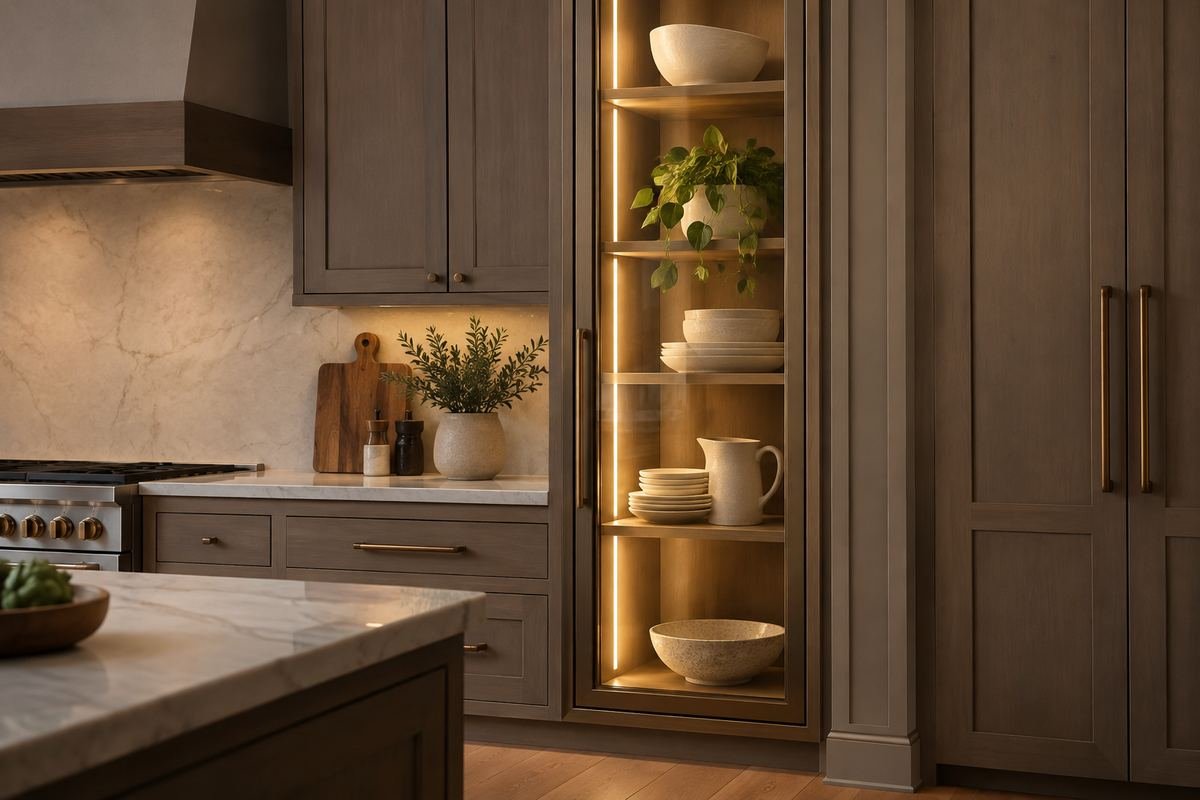
A tall glazed cabinet may benefit from light that relates to its vertical shape. A discreet vertical lighting detail can offer a different visual balance from one bright spot at the top, especially when several shelves divide the interior.
Treat this as a system-specific cabinet detail. Shelves, frames and the viewing angle can hide or expose the source in different ways. Ask for a demonstration with comparable contents before choosing the position, and retain the practical space needed to remove dishes without contacting the lighting components.
Practical tip: Test more than the top shelf before approving the display effect.
9. Use shelf lighting to define one open kitchen section

A small open-shelf section can gain useful definition from a concealed light beneath the shelf above. It can connect a kitchen display with the surrounding cabinetry without requiring every open edge in the room to glow.
Keep the arrangement modest and review the source from the ordinary approach. A light intended to reveal a few bowls can become distracting if the LED points remain visible. Compare the complete profile and diffusion detail with the actual shelf thickness and background material.
Practical tip: Choose one purposeful lit shelf group before lighting the whole wall.
10. Consider drawer lighting as a complete cabinet feature

A deep drawer may be easier to use when its contents become visible as it opens. Purpose-designed drawer lighting can be worth comparing for a compartment where ordinary room light does not reach the supplies you need.
Include the drawer movement, stored objects and maintenance access in the assessment. An improvised loose strip is not equivalent to a complete furniture-lighting feature. Confirm the system and sensor behavior for the exact cabinet, keeping components and leads clear of the moving parts and useful storage space.
Practical tip: Test the drawer with its normal contents and full approved movement.
11. Help a deep pantry compartment reveal its contents
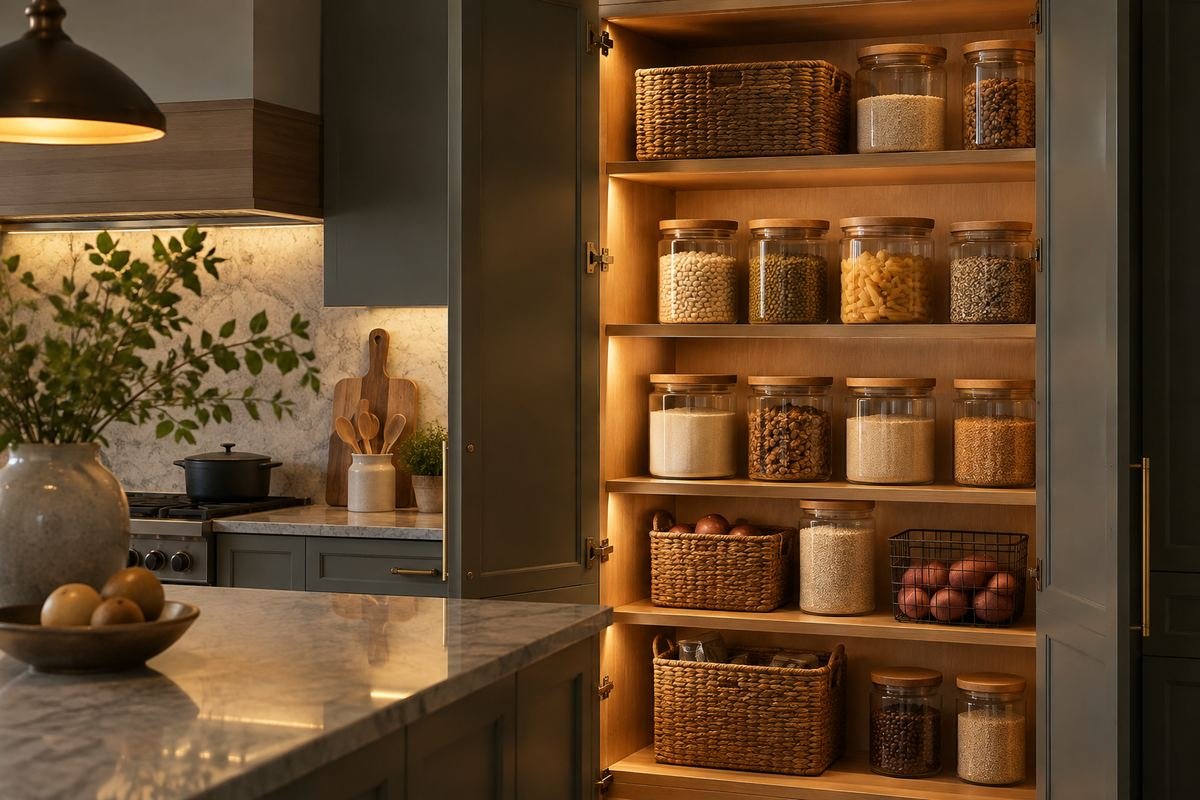
A deep pantry cabinet can look bright at the front while the back shelves remain difficult to identify. An interior light designed for the compartment may improve retrieval where the problem is visibility rather than simply too many stored items.
First edit the storage and check the shelf arrangement. More light will not make an inaccessible package easier to reach. Then test the chosen system with the front open and real contents in place, so the lighting serves the shelves instead of being blocked by the first row of containers.
Practical tip: Fix the storage obstruction before adding interior light.
12. Give a breakfast cupboard a clear retrieval view

A breakfast cupboard can benefit from restrained interior lighting when mugs and bowls are hard to see in the early morning or after dark. The light can clarify a small routine without turning the whole kitchen into a dramatic display.
Keep the cupboard’s role clear. Lighting used to see stored tableware does not establish that an appliance can operate inside the enclosure. Use the approved system for the actual cabinet and maintain the practical space needed to retrieve the dishes easily.
Practical tip: Light the items you retrieve while keeping the cupboard’s intended use clear.
13. Make one display cabinet the evening accent

One illuminated cabinet can be enough to give the room a focal point after dark. It is a useful choice when the kitchen already has strong cabinet colors, pendant shapes or a patterned backsplash that does not need more competing highlights.
Compare the accent with the rest of the room in its normal evening setting. If it draws attention away from every other element, reduce the effect or reconsider the display. Keep the functional counter lighting available independently so a decorative scene does not become the setting used for active cooking.
Practical tip: Choose the accent from the complete evening room view.
14. Test cabinet lighting with dark wood and real contents

Dark timber can make a light source appear more pronounced while the shelf contents remain visually quiet. A sample with the actual wood and dishes helps reveal whether the proposed lighting brings useful definition or only a bright edge.
Avoid compensating by making every light more intense. The source position, beam and display arrangement may matter as much as output. View the cabinet both open and closed if it has glazing, and include the ordinary room light so the test resembles how the kitchen will be used.
Practical tip: Use the actual dark finish in the lighting demonstration.
15. Keep a pale kitchen from becoming a field of bright edges

White or pale cabinets can look calm with a quiet lighting detail that serves the counter. They do not need every recess, cornice and base line illuminated to feel complete, particularly in a compact room.
Review the overall balance before adding another strip. Too many bright lines can make the joinery look fragmented and compete with useful light. Start with the surface that needs illumination and let the pale cabinet fronts remain part of the room’s softer background.
Practical tip: Add a light only when you can name the job it performs.
16. Check a glossy backsplash for visible source reflections

A glossy backsplash can reflect cabinet lights as bright lines or separate points. The same product that appears discreet beside a matte sample may become visually prominent when reflected in polished tile.
View a working sample from your actual standing and seated positions. Consider the complete source, profile and lens with the backsplash material rather than relying on a rendered glow. The aim is useful light on the task surface with reflections you find comfortable, not a promise that one diffusion cover removes every reflection.
Practical tip: Bring a real glossy tile sample to the lighting comparison.
17. Compare the light on a matte countertop as well as the wall

A matte or textured counter gives a different visual response from a highly reflective one. Looking at the actual horizontal surface can help you decide whether the light serves the preparation area comfortably without judging the result only by the backsplash.
Include a normal board, bowl or plate in the sample view. Objects create useful clues about shadows and visibility that an empty pristine counter does not show. Keep the comparison consistent so a change in room lighting is not mistaken for a difference between cabinet-lighting products.
Practical tip: Assess the light with ordinary task objects on the counter.
18. Review the exposed cabinet end from the room entrance
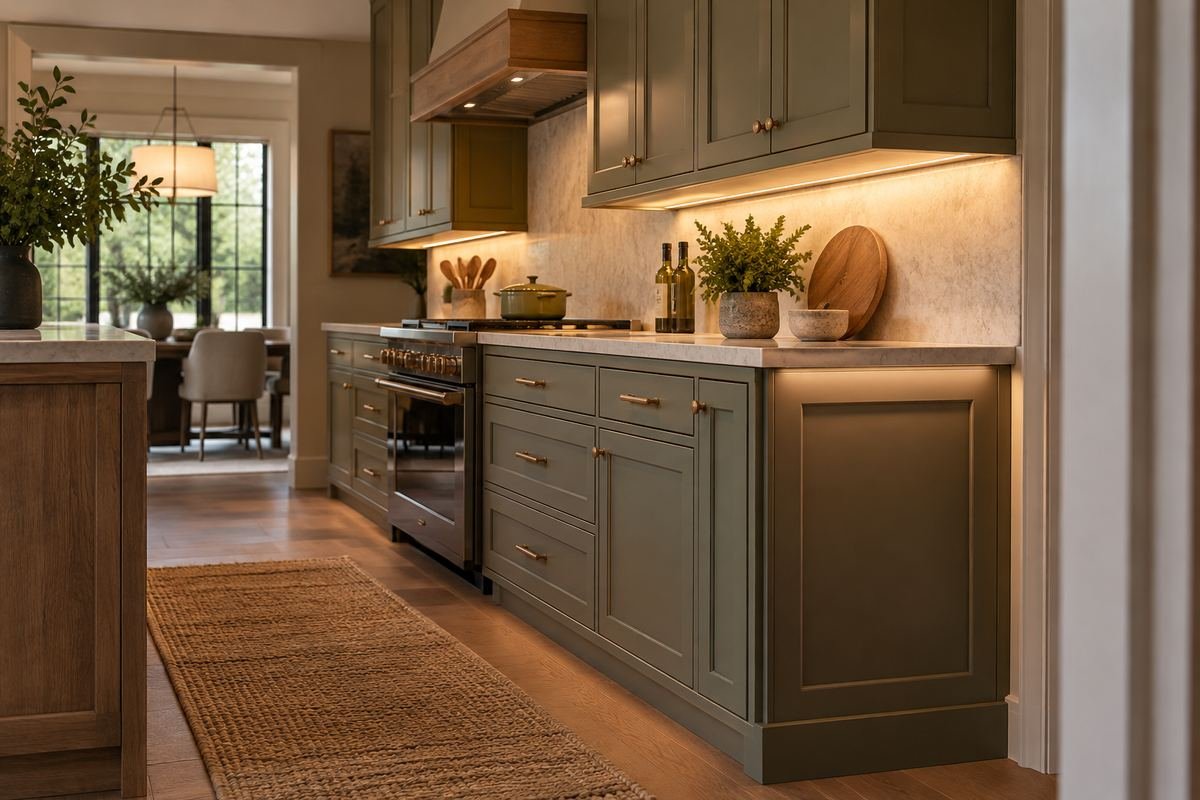
A lighting detail can be hidden from the main kitchen viewpoint yet exposed at the end of a cabinet run. This is especially noticeable where the kitchen opens to a dining or living area and the cabinet underside is visible on approach.
Check the actual profile, end detail and cable route with the supplier before the cabinetry is finished. A neat elevation drawing may miss this side view. Keep the design coherent from the entrance without using a decorative panel to conceal components that require appropriate access.
Practical tip: Include the cabinet’s side view in the lighting review.
19. Check the source from a seated island position

Seating changes the viewing angle beneath upper cabinets. A fixture that is concealed when you stand at the counter may become visible from a stool across the island, making a small detail unexpectedly distracting during a meal.
Look from the real seat height and distance, including chairs in an adjoining dining area. Resolve the complete lighting profile with the cabinet design instead of assuming a generic setback will work everywhere. Keep the task surface useful while making the source comfortable from the places people actually sit.
Practical tip: Review the cabinet underside from the household’s real seats.
20. Use a restrained base glow only as a secondary accent

A modest light effect along a cabinet base can define the furniture after dark when it suits the room. It should remain a secondary decorative layer rather than the reason the kitchen is difficult to use in a low evening setting.
Check the floor reflection and the view from adjoining rooms. A bright continuous base line can dominate a small kitchen or highlight every interruption in the plinth. Select a product and installation suitable for the location and keep general and task lighting available for movement and work.
Practical tip: Judge base lighting with the floor material and room route in view.
21. Compare an upper-cabinet wash with the ceiling shape

A soft wash above cabinetry can relate the kitchen to the ceiling when there is a suitable gap and a clear reason for the effect. It can work as a background layer in a room that otherwise feels abruptly dark above the cabinet line.
Review the actual ceiling, cabinet heights and any objects stored above. Light will reveal irregularities and visual clutter as well as create atmosphere. Resolve the system and access requirements properly, then compare whether the effect improves the whole room before extending it across every upper cabinet.
Practical tip: Assess the ceiling and upper cabinet line together after dark.
22. Keep working and display lighting independently useful

Separate control of the working counter and a display layer can make the kitchen easier to use across different routines. You may want a clear preparation surface while cooking and a gentler cabinet display once the meal is over.
Specify the exact compatible controls with the lighting system. The ability to dim or operate groups independently depends on the chosen products and installation. Test the intended settings together, including the transition back to useful task light, rather than approving an attractive low scene in isolation.
Practical tip: Demonstrate the cooking and evening settings before final selection.
23. Finish with a simple control routine the household understands
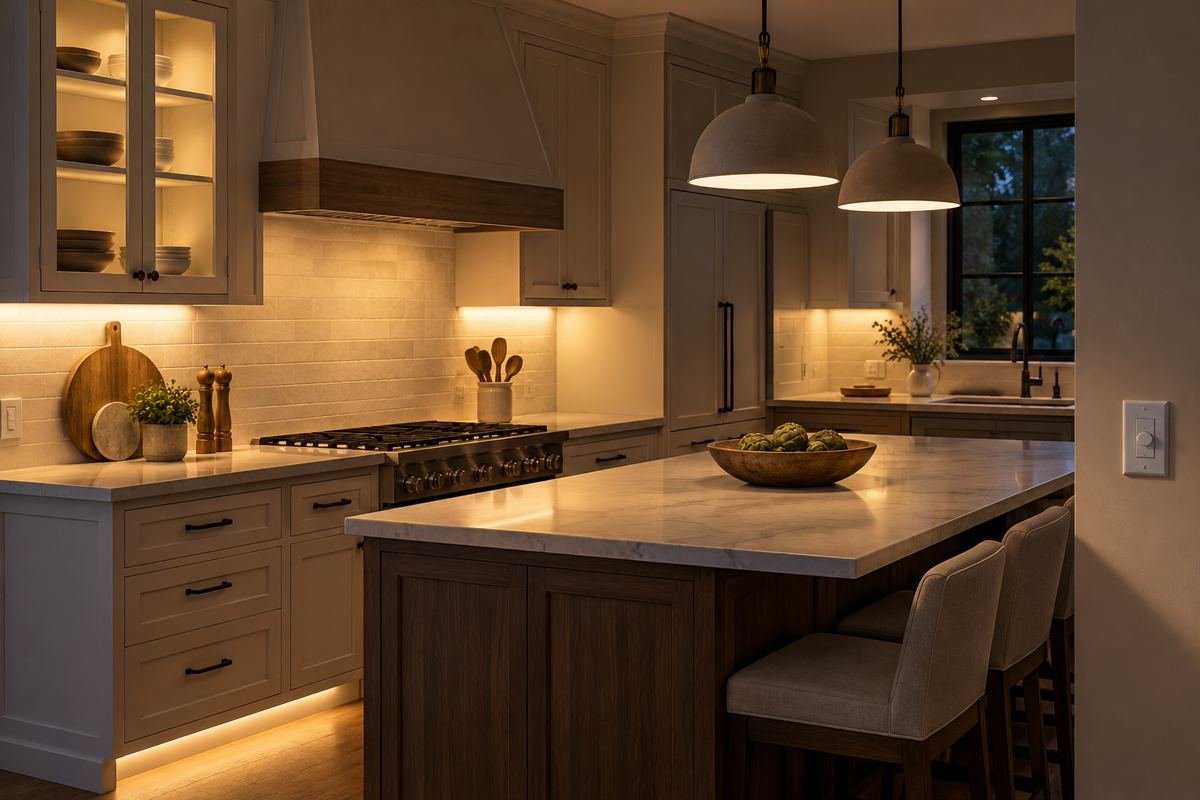
A successful lighting scheme is easy to operate during ordinary kitchen use. One clear way to select the necessary light can be more useful than several decorative scenes that no one remembers how to reach.
Walk through arriving with groceries, preparing dinner, clearing the counter and leaving the room. Decide what needs to turn on for each task, then confirm the exact system supports that behavior. Keep sensor or smart-control choices tied to a practical routine, with appropriate product support and service access.
Practical tip: Test the complete daily routine rather than collecting extra features.
Frequently Asked Questions
What is the best kitchen cabinet lighting?
Choose by the problem being solved. Linear under-cabinet lighting can suit a continuous counter, while an interior cabinet or drawer needs a product designed for that compartment. Compare the complete system, the real lighting effect, compatible controls and the requirements of the specific location.
Are light strips better than puck lights?
They create different patterns. A linear source can suit a continuous surface, while separate pucks produce more localized pools of light. Neither shape guarantees useful illumination. View the actual product with the cabinet height, counter material and working positions in place.
Should cabinet lighting be warm or cool?
Compare the proposed white light with the rest of the kitchen and your actual finishes. The preferred appearance depends on the room and task. Color temperature and brightness are separate choices, and the same nominal white-light description does not guarantee an identical appearance across products.
Can all cabinet lights be dimmed?
No. Confirm that the exact light source, driver and control are designed to work together, including the intended dimming range. Test the behavior you need before purchase rather than adding an unrelated control to a system because both products mention LEDs.
Does cabinet lighting replace ceiling or pendant lighting?
It provides a particular layer and does not automatically illuminate the whole room. Keep the general kitchen route and other tasks appropriately lit, then use cabinet lighting for the counters, storage and displays it serves.
Do I need lights in every cupboard?
No. Prioritize places where visibility or a deliberate display actually improves the kitchen. A cabinet you can already see clearly may not need an extra fixture. Fewer well-planned zones can be easier to operate and maintain than lighting every available edge.
Choose the Details That Work in Your Home
Choose the working counter first, resolve the real light source and reflections, then add storage or display lighting where it provides a clear benefit. Good kitchen cabinet lighting remains comfortable from the room’s ordinary viewpoints and easy to control during an ordinary meal. Finish with a working sample and a complete system rather than relying on an attractive glow in a photograph.
For related ideas, explore kitchen pendant lighting ideas, kitchen backsplash ideas, kitchen cabinet colors.
Planning References
Kichler: tape lighting and channel types; Waveform Lighting: under-cabinet light forms, color temperature and color rendering; IKEA US: integrated kitchen lighting types. Follow the instructions for the exact products you choose.
Optional digital guide for this topic
If you prefer a structured workbook, explore this related paid guide.