Drop-leaf dining table ideas work when the room supports the folded table, the everyday meal and the larger occasional arrangement. Start with the actual number of diners and the way the leaf is opened. Then include the supports, occupied chairs and nearby storage in every state.
These 22 original illustrated concepts explore useful ways to furnish around a changing table. The three-state room test below helps compare a proposed product with your own room before buying. A small folded footprint is only one part of the decision; the table also needs a convenient place to operate and use.
Contents
- 1. Start drop-leaf dining table ideas with the everyday meal
- 2. Keep the larger open position as a complete room state
- 3. Give the folded table an appropriate parking place
- 4. Use a rectangular shape along a longer room
- 5. Compare a round-ended drop-leaf shape with real seats
- 6. Choose a drawer-bearing gateleg through access as well as capacity
- 7. Review the supporting leg from the occupied chair
- 8. Keep everyday chairs comfortable before checking how they tuck in
- 9. Give folding guest chairs a separate storage destination
- 10. Compare stackable seating only through the actual product
- 11. Keep a bench approach open when the table changes
- 12. Leave the window and its treatment usable
- 13. Keep cabinet doors clear of the expanded group
- 14. Move serving dishes to a useful nearby surface when needed
- 15. Use a small centerpiece with a convenient temporary home
- 16. Choose lighting after testing the table’s real position
- 17. Test a rug with all the chair positions
- 18. Leave the floor bare when the room changes frequently
- 19. Use a white table as one quiet part of the room
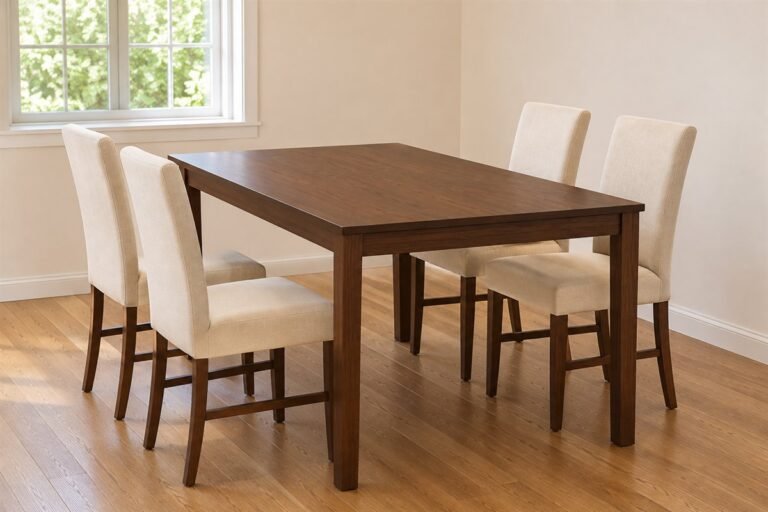
- 20. Let a dark table keep the room’s stronger outline
- 21. Keep a useful retained wood table distinct from an exact match
- 22. Finish by rehearsing the complete change back to dining
Choose the actual table mechanism before styling the room
IKEA’s dining range includes gateleg, drop-leaf and other extending formats. Its NORDEN example lists different minimum and maximum lengths, storage drawers and indoor use. These are product-specific details, not properties of every folding table. Compare the exact model’s supported positions, dimensions, care and instructions before planning furniture around a generic photograph.
Give each table state a real job
- Folded or parked: Check the full stored footprint, support and route around it.
- Everyday meal: Set out the usual places and include occupied chairs.
- Occasional larger meal: Test the approved open configuration and extra seats.
- Opening or closing: Keep the actual operating area and procedure clear.
- After the meal: Give extra chairs and moved objects a convenient home.
1. Start drop-leaf dining table ideas with the everyday meal
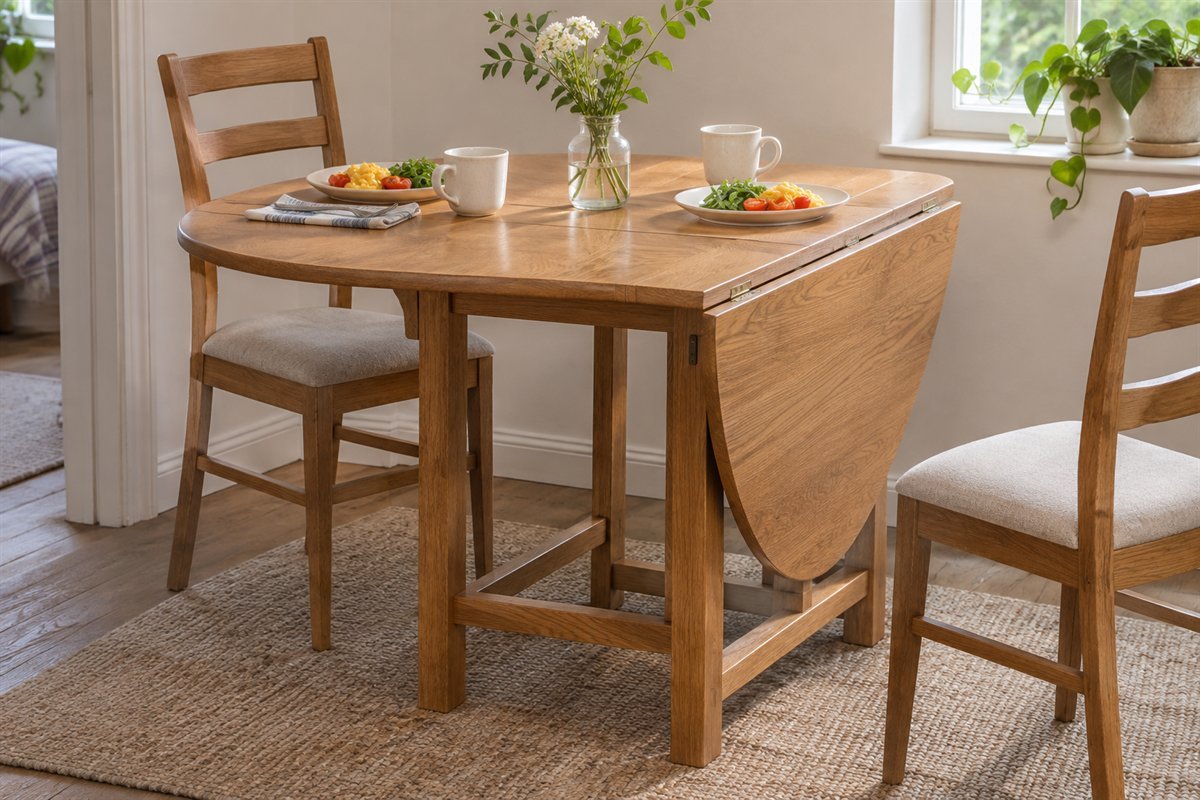
Choose the configuration that serves the usual meal rather than the largest gathering you can imagine. Compare the actual plates, cups and shared dishes with the usable top. Include the chair positions and the support beneath the raised leaf. A compact everyday arrangement is useful when it can be set up without repeatedly moving unrelated furniture.
Begin with the number of people who eat there most days.
2. Keep the larger open position as a complete room state
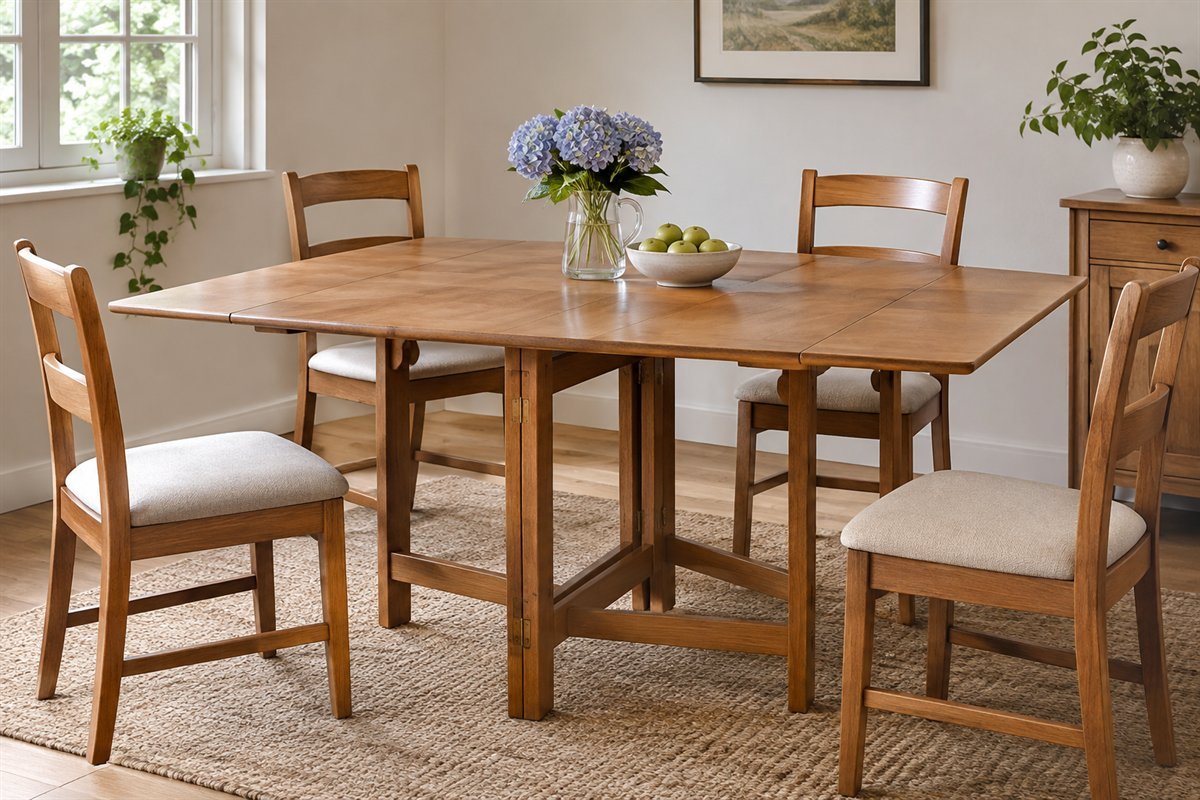
A larger top needs more than empty floor beneath it. Compare the approved open table with the actual guest chairs and the route used for serving. Check that doors and storage remain useful during the meal. The product’s stated seating range does not guarantee that the expanded group suits the room or every diner.
Mark the occupied arrangement before treating the open length as a fit.
3. Give the folded table an appropriate parking place
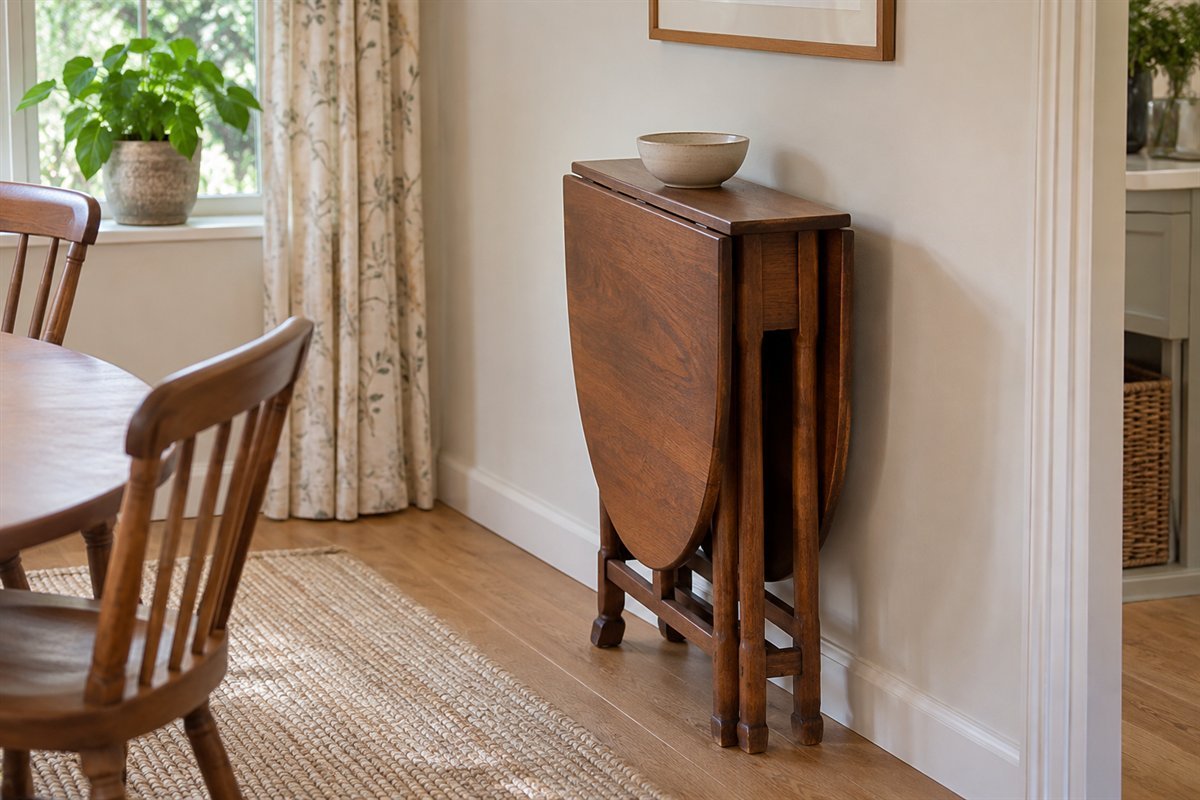
A fully folded table may have a useful parking position when the exact product permits that state. Keep its whole base in the plan and leave the operating area available. Do not disguise the folded leaves with baskets or furniture that must be unpacked every time. Follow the actual product guidance rather than assuming the narrow top functions as any other console.
Keep the folded position separate from the dining arrangement.
4. Use a rectangular shape along a longer room
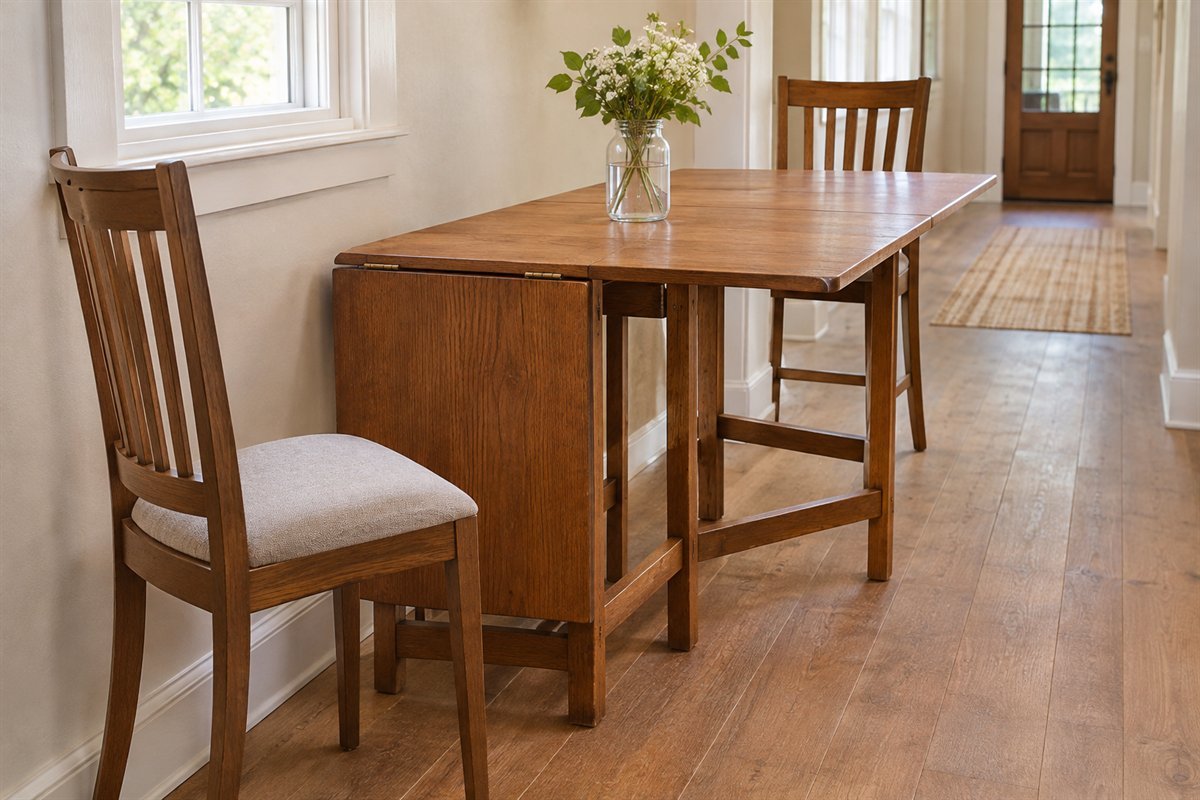
A rectangular drop-leaf format can relate to a longer room, but compare its full usable width as well as its length. A very narrow-looking table may not leave enough surface for the actual meal. Keep the supporting legs and the nearest cabinet in the comparison. The room’s useful arrangement comes from the complete group.
Test the place settings before reducing the table width.
5. Compare a round-ended drop-leaf shape with real seats
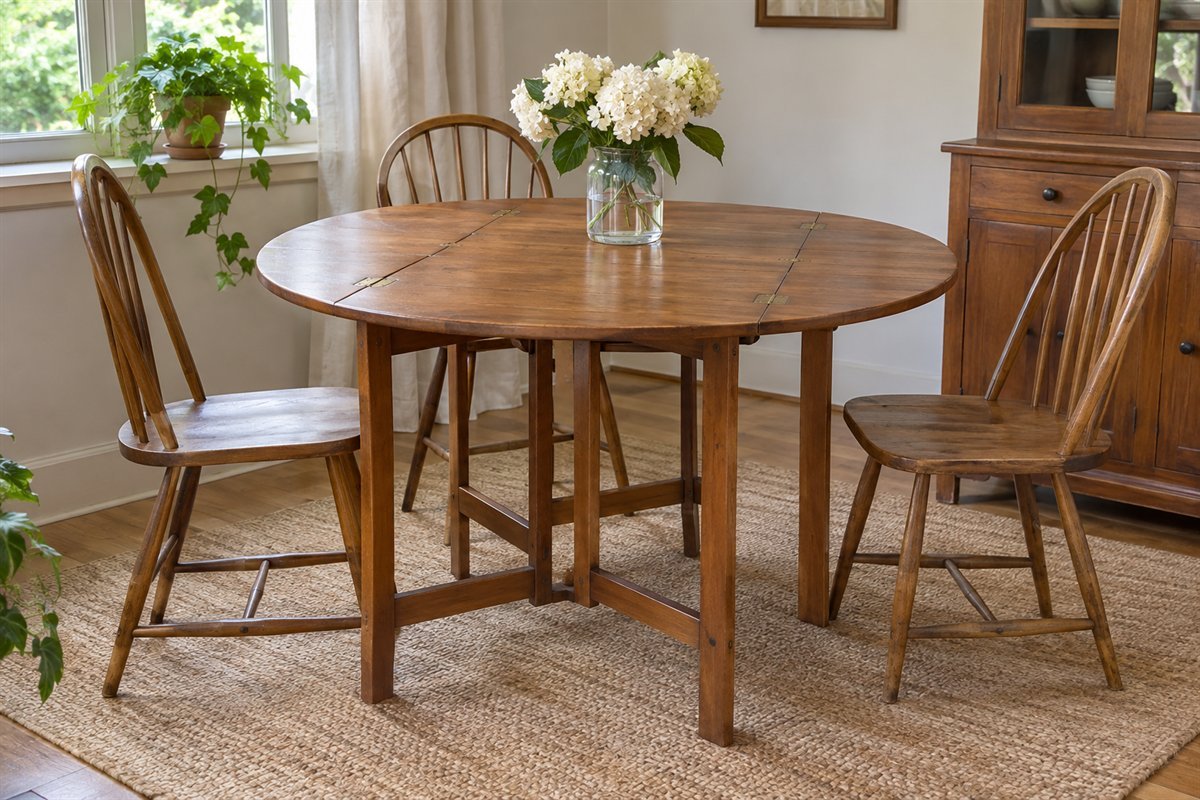
A round-ended top can provide a different outline beside the route. Compare the actual size and support with each intended chair position. The curved edge does not guarantee more seats or better access. Keep the folded width and the open shape in the same decision rather than selecting only from the attractive round view.
Try each place with the real base beneath it.
6. Choose a drawer-bearing gateleg through access as well as capacity
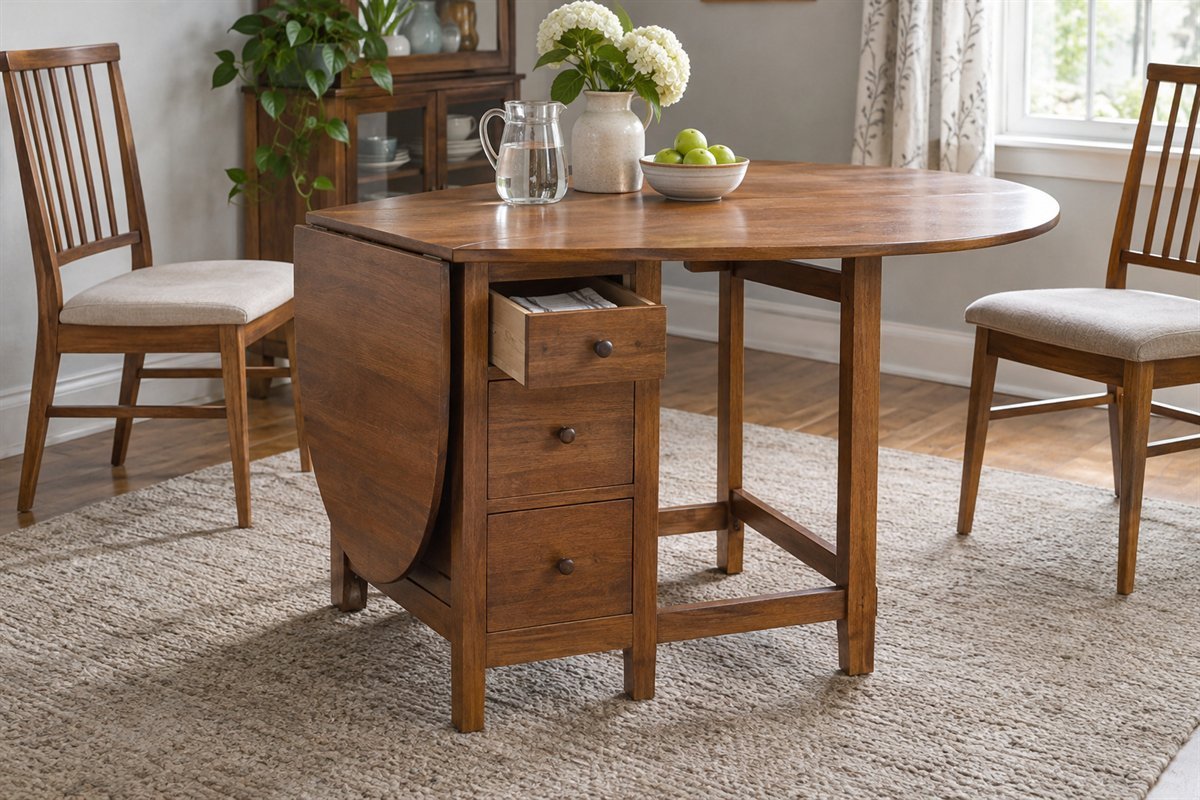
Some gateleg tables include drawers that may hold a modest dining inventory. Measure their usable interiors and test retrieval in the intended room position. A useful drawer can become inconvenient if the table must be moved to reach it. Keep the table’s operating instructions and permitted contents with the storage decision.
Check the drawer while the table is in the state used most often.
7. Review the supporting leg from the occupied chair
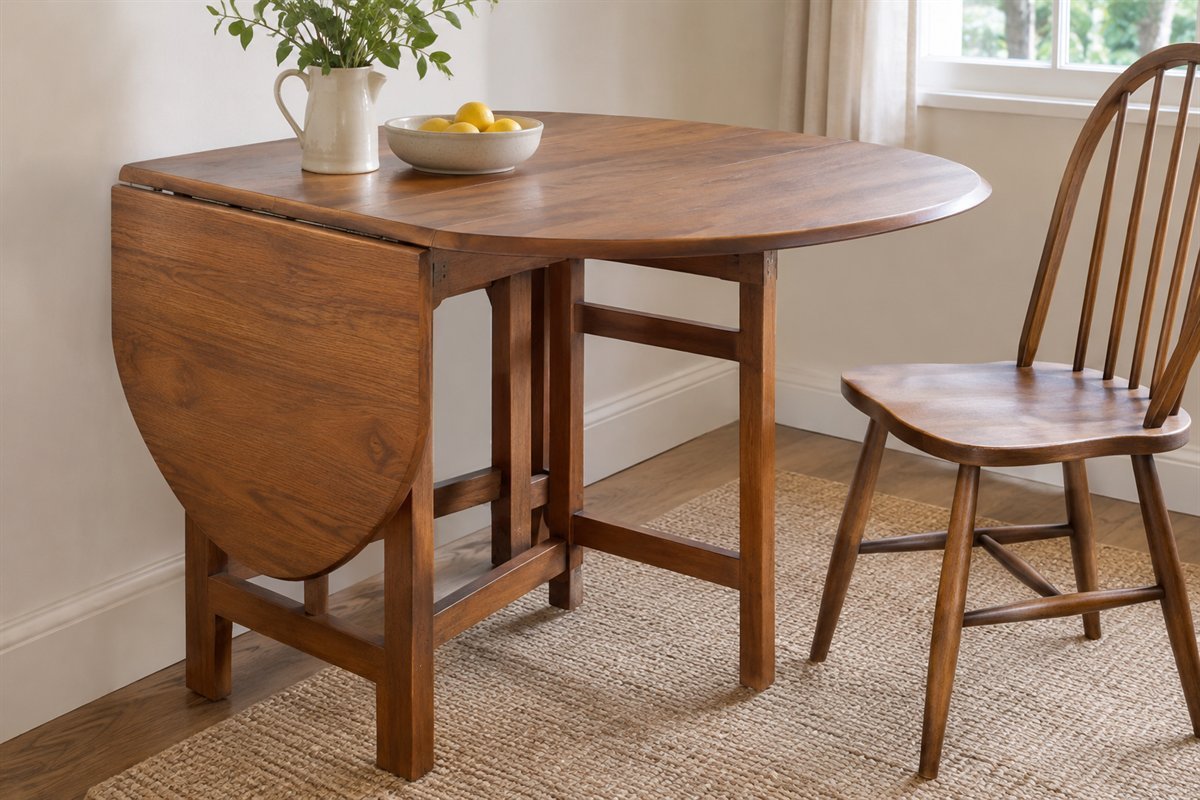
The support can affect where a chair sits beneath a raised leaf. Try the actual table and chair together rather than inferring knee room from the top alone. Follow the intended positions and operating procedure. If a useful seat conflicts with the support, compare another approved configuration or product instead of modifying the mechanism.
Treat the base and tabletop as one seating decision.
8. Keep everyday chairs comfortable before checking how they tuck in
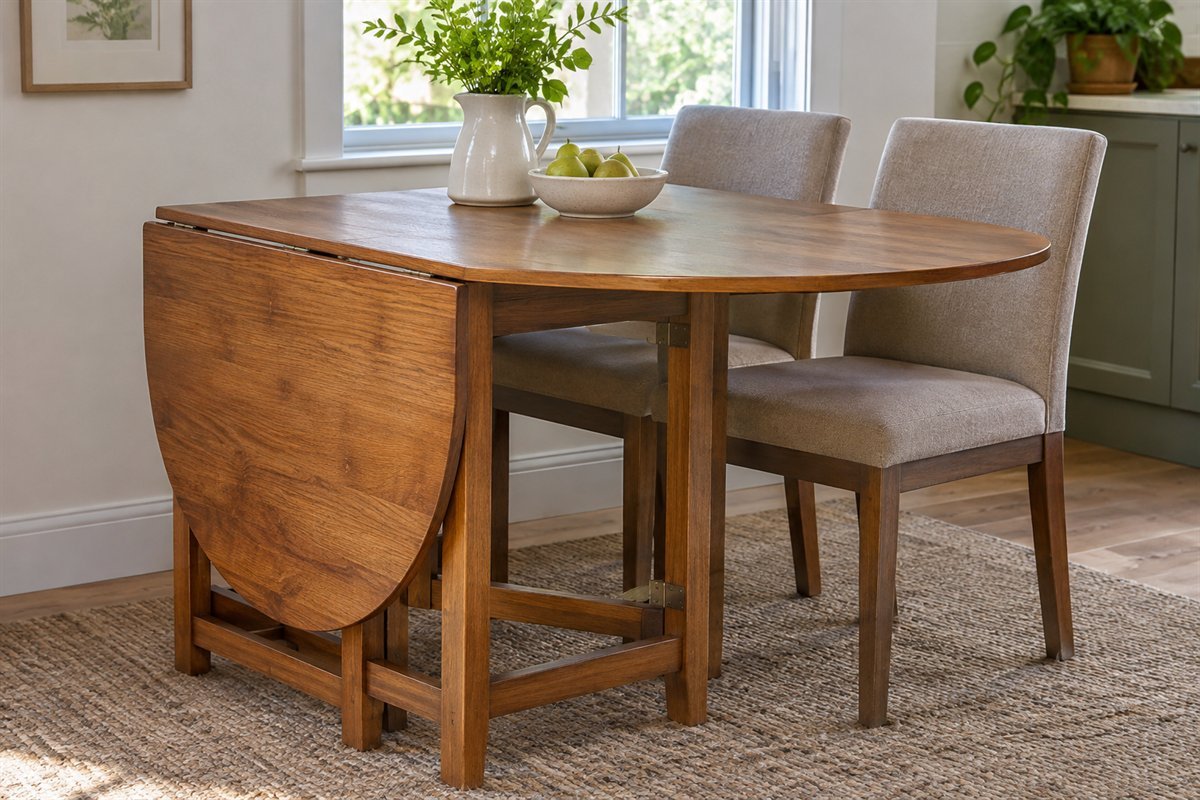
A slim chair may tuck in conveniently, but the normal meal still needs a comfortable seat and useful relationship to the top. Compare chair width, arms and the table’s underside as well as appearance. Keep the chairs in the room test when a leaf changes position. A neatly stored chair is only one state.
Sit at the actual table before choosing by silhouette.
9. Give folding guest chairs a separate storage destination
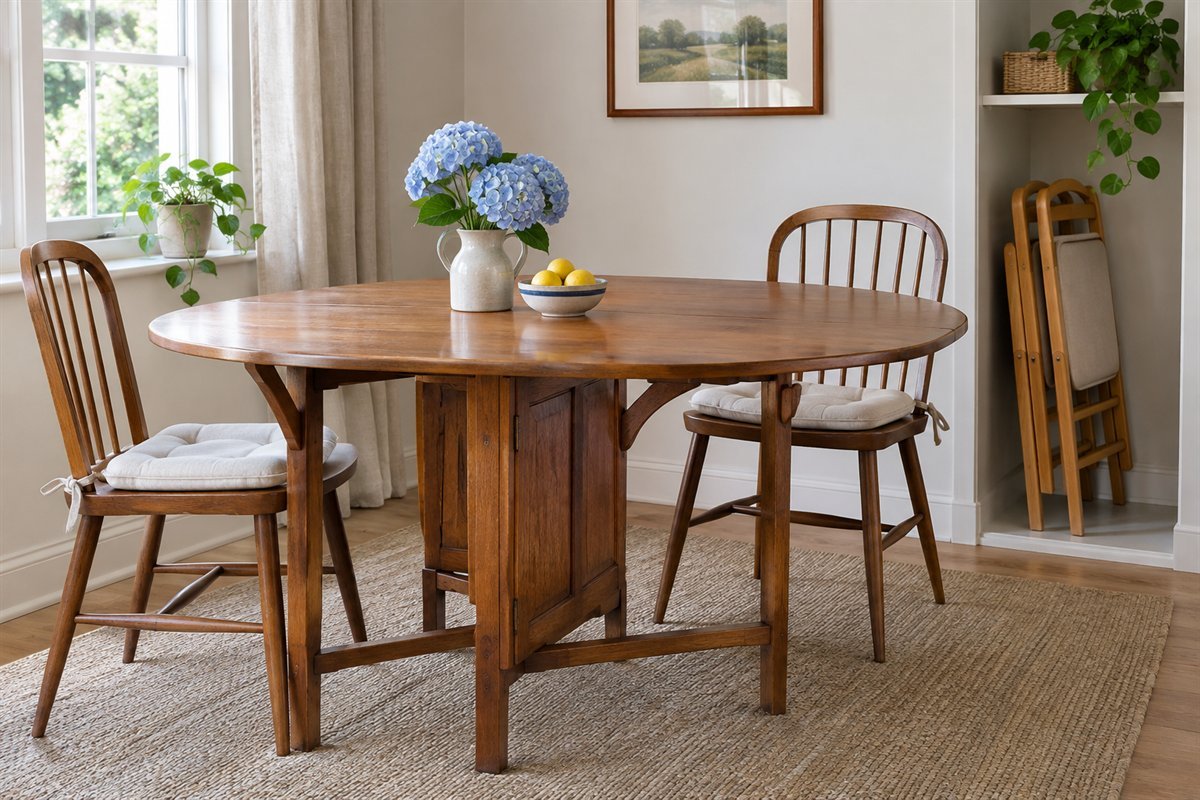
Extra chairs need a realistic home between larger meals. Choose chairs intended for their actual use and folding arrangement, then check how they are retrieved. Avoid leaving them against the lowered leaf or the only route out of the room. The room should regain its useful space without creating another obstacle elsewhere.
Include chair retrieval and return in the larger-meal trial.
10. Compare stackable seating only through the actual product

Stackable seating can be an option when the real product is designed for it. Confirm the intended arrangement, storage footprint and handling rather than assuming similar-looking chairs stack safely. Keep comfortable daily seats if those are used most often. The compact table and spare-chair group should be planned together.
Use the stated stacking and use guidance for the actual chairs.
11. Keep a bench approach open when the table changes
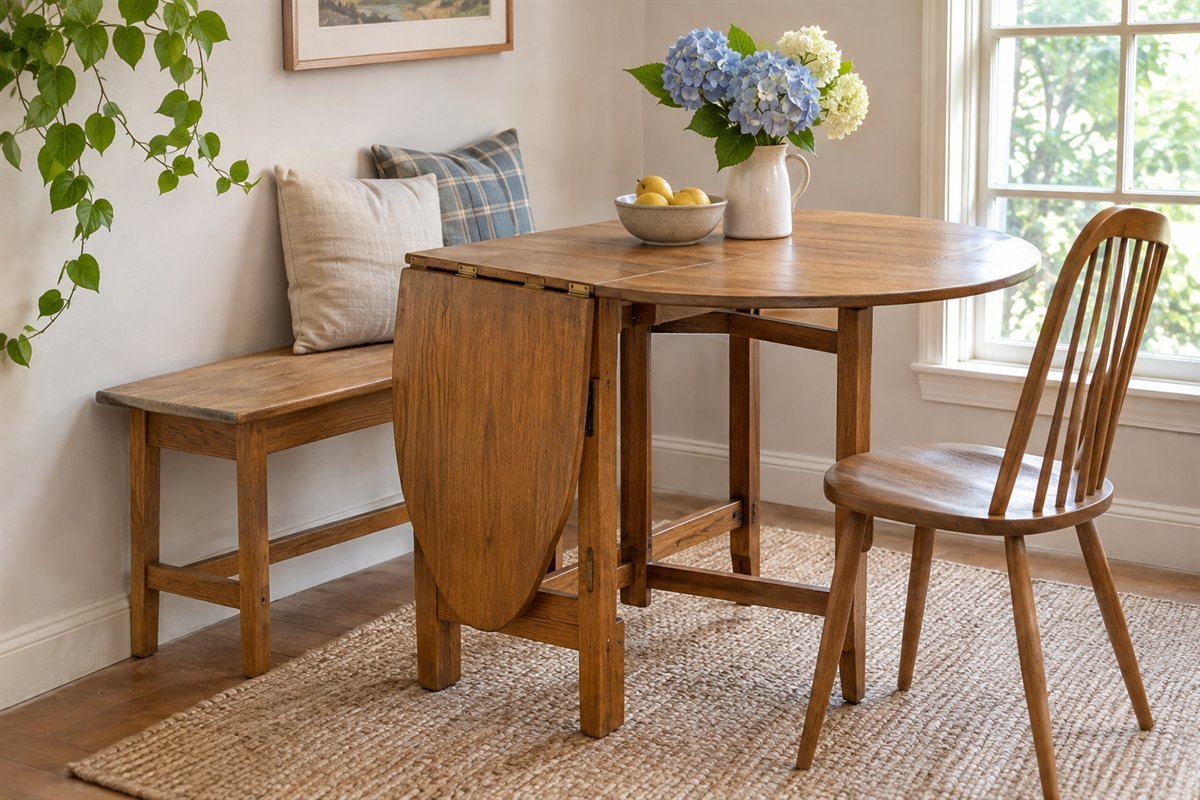
A bench can relate to a small dining area when the real table base and approach work. Test entering and leaving each intended position in both ordinary and larger table states. A long bench does not automatically create more usable places. Keep the most convenient access available for the people who need it.
Rehearse leaving the inner place before choosing a fixed arrangement.
12. Leave the window and its treatment usable

A window-side table can be pleasant when the actual opening, controls and covering remain accessible. Check those tasks with the leaf open and chairs occupied. Compare glare and privacy at the times the area is used. The table should not become permanent furniture in front of a window that the household needs to reach.
Open the actual window and treatment during the trial.
13. Keep cabinet doors clear of the expanded group
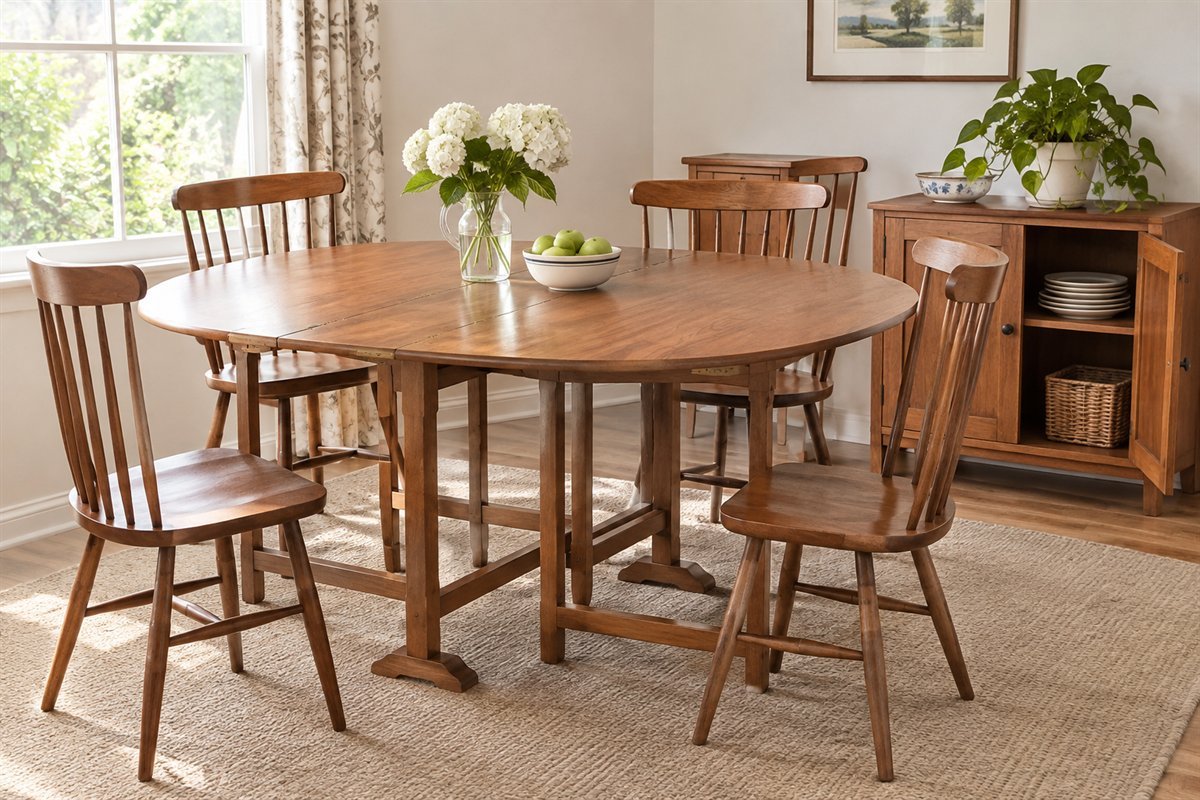
A cabinet can be convenient when the table is folded and difficult during a larger meal. Compare its full door or drawer movement with occupied chairs in every intended state. If the arrangement only works after diners stand up, choose another suitable location or storage routine. Do not rely on a closed-front photograph.
Test the drawer needed during the meal, not only occasional storage.
14. Move serving dishes to a useful nearby surface when needed
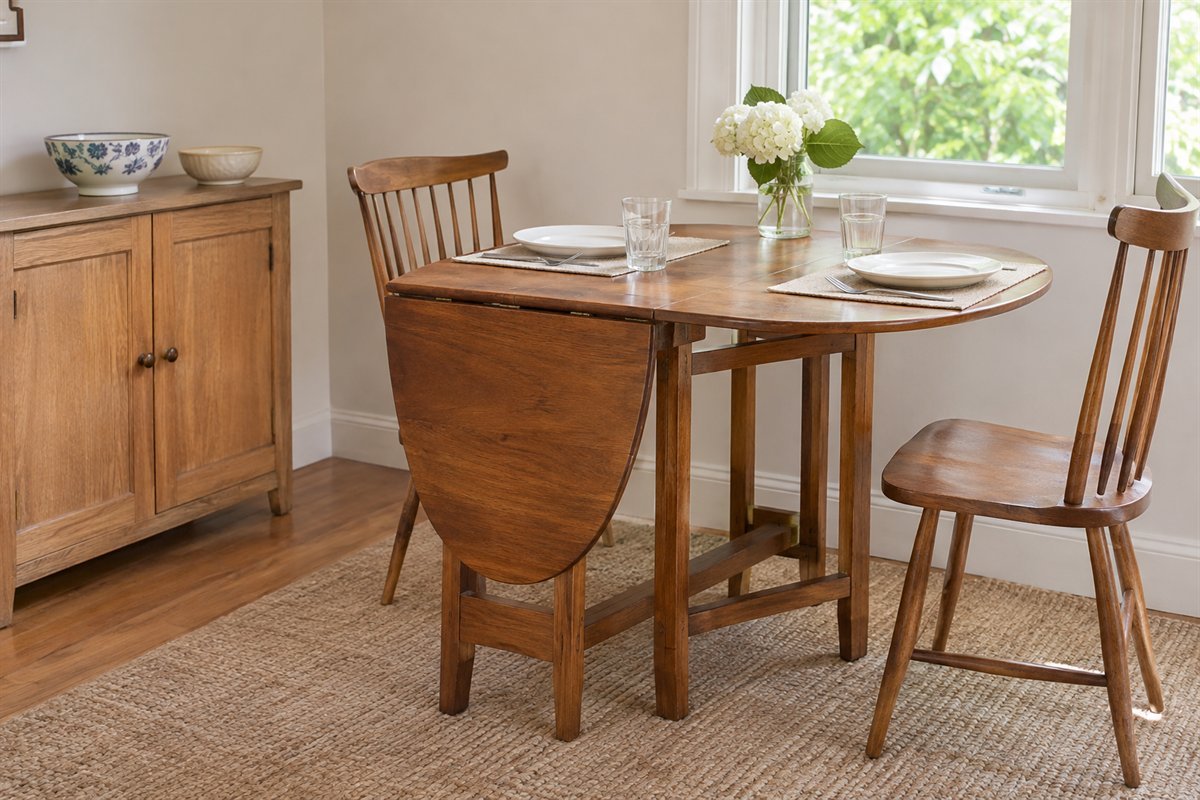
A nearby appropriate surface can hold shared dishes when the everyday top is compact. Test the serving route with the usual seats occupied. Keep the cabinet’s actual intended use and surface care in the decision. Adding another piece is useful only when it improves the meal without occupying the space recovered by folding the table.
Try serving with the real plates and chairs in place.
15. Use a small centerpiece with a convenient temporary home
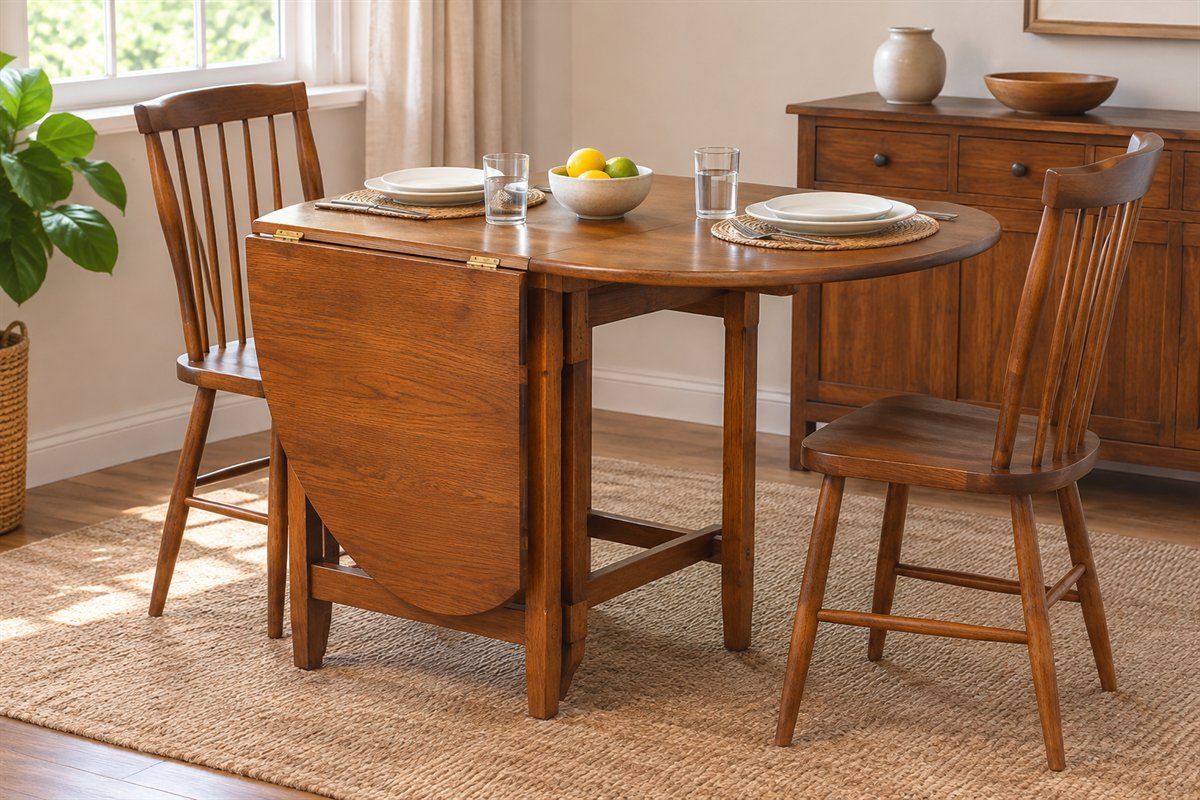
A small decorative object can have a place on the table between meals and a suitable destination when more surface is needed. Choose a modest item that moves conveniently without leaving the room cluttered. A full centerpiece may be unnecessary if it must be rearranged at every breakfast. Let the normal meal decide how much top stays clear.
Plan the object’s temporary home before choosing its size.
16. Choose lighting after testing the table’s real position

The folded and expanded table may have different visual centers. Choose useful light for the actual meal and check the fitting from seated and standing positions. Resolve the exact fixture and installation appropriately. A decorative centering rule cannot settle every movable table arrangement, especially when the room has other activities.
Keep the proven table location ahead of the pendant’s appearance.
17. Test a rug with all the chair positions
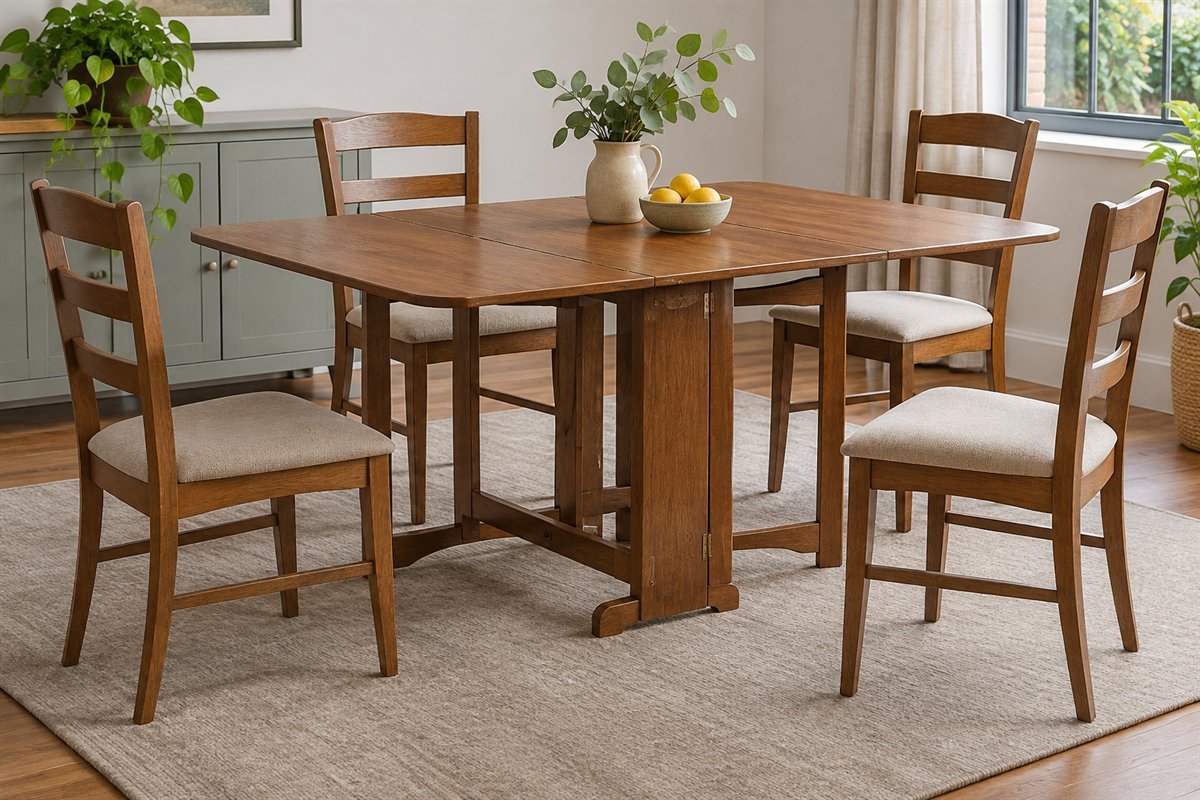
A rug needs to work with the arrangement in use, including the larger meal if that is part of the plan. Try moving every chair and compare the real rug, underlay and floor compatibility. A rug that looks centered beneath the folded table may not suit the expanded group. Keep the occupied states in the comparison.
Use the actual chair travel rather than a tabletop-only outline.
18. Leave the floor bare when the room changes frequently

A changing dining area can feel finished without a rug. Keep the floor treatment appropriate to the actual furniture and use suitable protection where required. Add a quieter textile or wall detail if you want visual softness. Avoid filling the recovered floor with stools or baskets that must be moved before opening the table.
Test the leaf change and chair movement on the actual floor.
19. Use a white table as one quiet part of the room
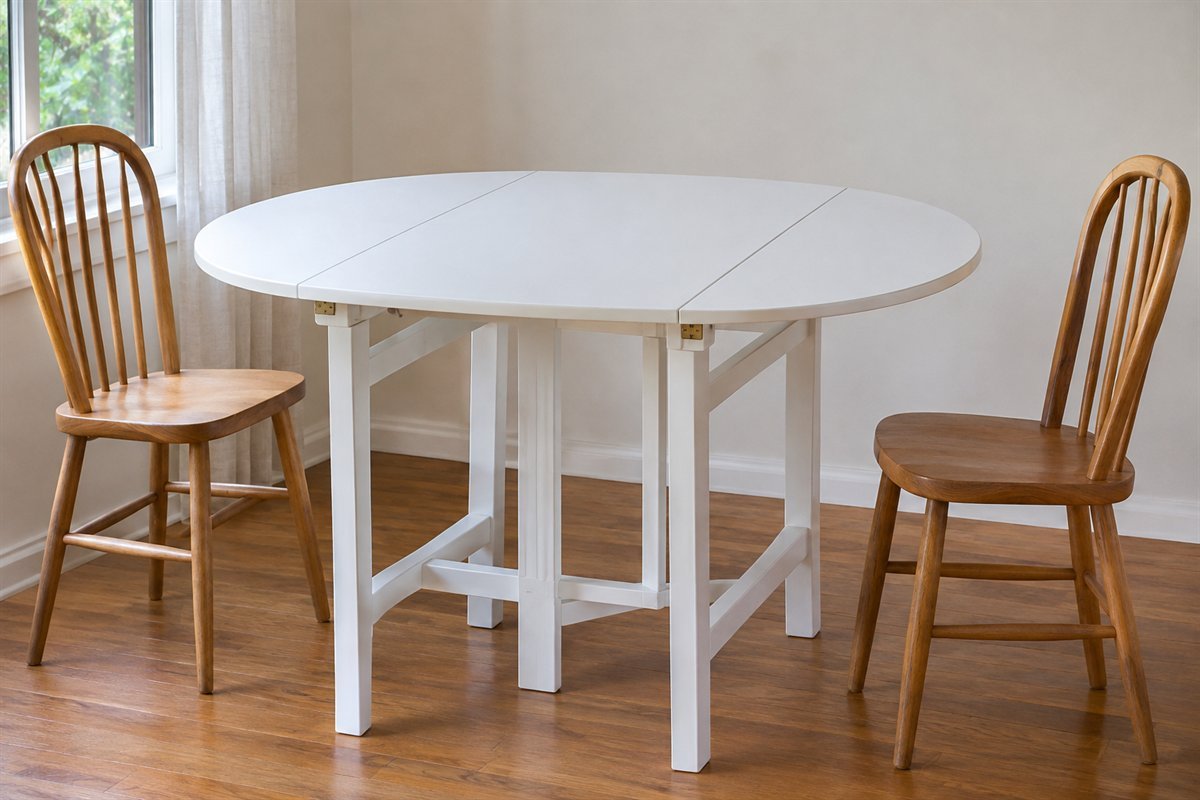
A white table can relate to a pale wall while retained wood chairs supply contrast. Compare the actual finish and care guidance rather than expecting the color to determine performance. Keep the leaf seams and ordinary wear expectations in the real product review. A simple palette is a decorative choice around a mechanism that still needs to work conveniently.
Compare the finish with the retained floor and chairs.
20. Let a dark table keep the room’s stronger outline

A black or dark wood table can remain the main outline in a quieter dining area. Compare it with the largest retained surfaces and ordinary light. Keep the surrounding display restrained if the folded panels already provide a substantial shape. The room does not need a pale table simply because the available footprint is small.
Choose contrast from the furniture that will remain.
21. Keep a useful retained wood table distinct from an exact match
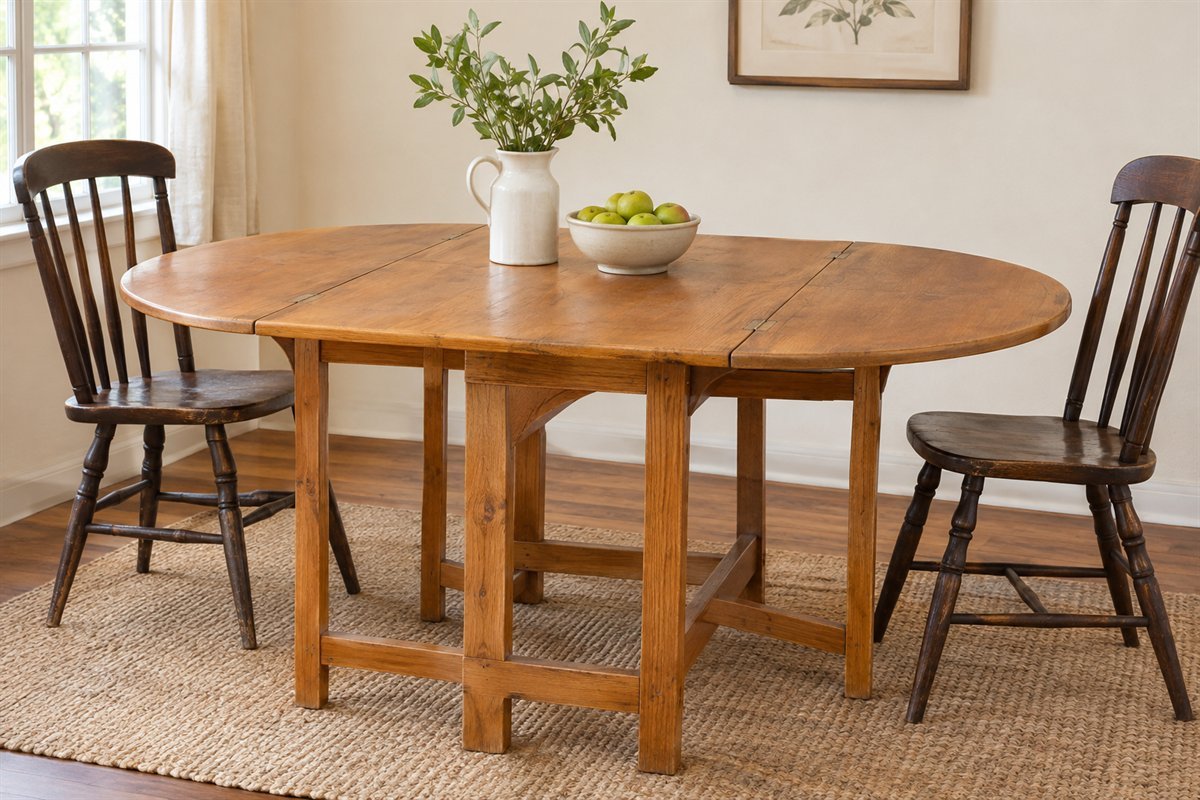
A retained wood table can work with chairs that do not match exactly. Compare their warmth and scale together before ordering another set. Confirm the existing table’s identity, condition and operating guidance before relying on its folding parts. A decorative update can coordinate an appropriate piece without pretending to repair an uncertain mechanism.
Resolve condition and operation separately from the wood-tone choice.
22. Finish by rehearsing the complete change back to dining
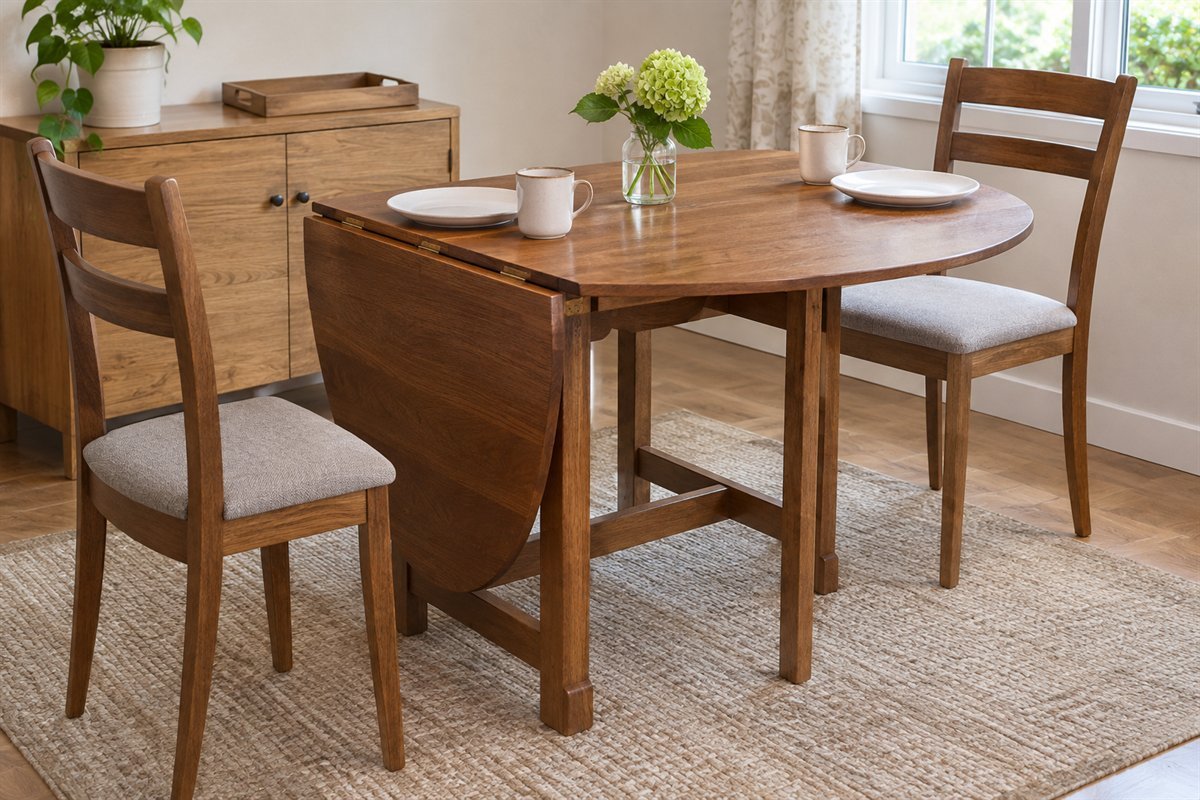
If the table also serves a short task, give its materials a convenient destination before the next meal. Follow the actual operating procedure whenever the leaf changes position. Compare clearing, opening, seating and returning extra chairs as one sequence. The useful table is the one whose ordinary changeover the household can realistically maintain.
Use the three-state room test below before making a purchase.
Make an original three-state room card
Use one page for the actual table you are considering. Start with its exact identity, intended use, product instructions and the approved configurations you plan to use. A generic drop-leaf label does not identify the support mechanism, permitted positions or useful seating range. Keep uncertain information marked as unresolved until the supplier or appropriate assessment answers it.
Give the card three rows: parked, everyday and occasional larger meal. For each row, record the table’s complete footprint, the required seats, nearby openings and the route used while those seats are occupied. If the product has only two relevant states, use those two rather than inventing a third. The card is a comparison aid, not a requirement that every folding table works in the same way.
Add a separate operating area to the plan. Mark where the user stands and which chairs or objects must move while following the actual opening procedure. Keep this separate from the footprint after the table is ready. A product can fit in its final open position while the room makes the change inconvenient. Do not improvise a repair or alter the supports to force a planned layout.
Consider a hypothetical table with a folded top footprint of 14 by 30 inches, an everyday footprint of 32 by 30 inches and a fully open footprint of 50 by 30 inches. If a trial with the actual chairs extends 22 inches beyond each long side, the assumed occupied width is 30 + 22 + 22 = 74 inches. That same width calculation does not settle end seating, serving routes or opening movement. These are invented example inputs, not product dimensions, universal clearances or an accessibility assessment.
Replace every assumed value with the proposed product and household trial. Mark the full arrangement with an appropriate recoverable method after checking the floor finish. Include the nearest cabinet, door and retained furniture. Have the usual diners enter, sit and leave, and try retrieving the item needed during a meal. Record the conflict instead of assuming a chair can always be moved out of the way.
Review the occasional arrangement honestly. Name the extra chairs and their actual storage location. Test retrieving them without moving a large part of the room. The larger table may be useful only for some gatherings; it is better to know that limitation than to plan the room around a maximum seat count copied from a photograph.
Add the reset to the same card. Record where work materials or decorations go, how spare chairs return and which furniture stays in place. A folding table that requires several heavy pieces to move may be less convenient than another suitable arrangement. The useful comparison concerns the complete routine, not the narrowest advertised dimension alone.
Finish with the unresolved item that must be answered before ordering: a support conflict, inaccessible drawer, missing chair location or uncertainty about the existing mechanism. Keep the actual documents with the decision. Use an appropriate professional or supplier assessment when the furniture’s condition, assembly or intended use is unclear.
Separate decorative choices from the real folding mechanism
Choose wood tone, color and nearby artwork after the table and seating states work. A quiet wall can connect mixed chairs, and a modest cabinet can hold the dining inventory when its doors remain convenient. None of these decorative choices proves that a raised leaf is correctly supported or that an old hinge is serviceable.
Keep the illustrations as appearance concepts. Their visible seams and supports do not establish a tested product or an operating method. Follow the exact table’s instructions, keep assembly and care information available and reassess an existing piece when its identity or condition is uncertain.
A drop-leaf table can be useful even when one leaf remains open most days. Conversely, a very compact folded form may offer little benefit if it is never folded. Choose the actual change the household needs, then keep the room simple enough to make that change convenient.
Is a drop-leaf table always better for a small room?
No. Compare the complete folded, everyday and expanded arrangements with occupied seats and opening movement. Another suitable table may be more convenient when the leaves rarely change.
Can I use just one leaf?
Only in a configuration permitted by the actual product. Check its intended support positions and instructions rather than assuming all drop-leaf tables operate alike.
How many people can sit at the open table?
Use the actual product guidance and test the usable positions with the chairs, base and household. A long top or an attractive image does not establish comfortable seating for every group.
Where should extra chairs go?
Choose a convenient storage location for seating intended to fold or stack as required. Include retrieval and return in the room test, keeping ordinary routes usable.
Can an old drop-leaf table be refreshed with decoration?
You can coordinate an appropriate retained piece, but identify its condition and operation separately. Paint, a rug or new chairs cannot repair an unresolved support or hinge problem.
Do these images show exact products or opening instructions?
No. They are original visual concepts. Confirm actual furniture dimensions, permitted states, supports, care and assembly through the exact product documentation.
A practical next step
Choose the everyday meal, the larger arrangement and the reset together. A drop-leaf table earns its place when the actual product and the whole room make those changes useful and convenient.
Compare the complete occupied small dining room. Compare breakfast nook seats and entry routes.
Images are original AI-generated dining concepts, not exact products, measured layouts or operating instructions. The three-state room card and example dimensions are original planning aids.
Sources and care references
- IKEA NORDEN example: product-specific states, dimensions and care
- IKEA: different drop-leaf, gateleg and extending table formats
Optional digital guide for this topic
If you prefer a structured workbook, explore this related paid guide.