Modern dining room ideas begin with a useful table, comfortable seats and a few deliberate relationships between materials. Clean lines can sit beside an older cabinet or a retained wood table. The room does not need an entirely new matching set to feel considered.
These 25 ideas focus on composing the complete modern room. Our separate sizing, small-room and chair guides cover those decisions in more depth. Here the original keep-or-change card helps compare silhouettes, material contrasts and the next purchase around furniture that already works.
All images are original AI-generated decor concepts. They illustrate furniture and material relationships, not exact products, measured clearances, electrical designs or tested installations.
Contents
- 1. Keep a useful wood table as the starting piece
- 2. Pair a round pedestal table with distinct chair outlines
- 3. Use an oval table to soften a long composition
- 4. Choose a square group for an everyday table for two
- 5. Compare a pale tabletop with darker chair frames
- 6. Let a dark table stand with light upholstery
- 7. Keep one family of simple wood chairs
- 8. Use a mixed chair group with a clear reason
- 9. Try a bench only when its positions remain useful
- 10. Balance a strong table base with quieter seats
- 11. Use closed storage as a quiet supporting plane
- 12. Let a retained dark cabinet provide contrast
- 13. Give open display a defined amount of wall
- 14. Choose a wall color around the retained furniture
- 15. Make one large artwork the main decorative decision
- 16. Keep a geometric wall treatment contained
- 17. Use one pendant with a readable outline
- 18. Compare a linear light with a long table
- 19. Let curtains soften a simple furniture group
- 20. Decide whether a rug improves the complete group
- 21. Keep a bare floor as a finished choice
- 22. Make a color accent substantial enough to judge
- 23. Keep the table setting restrained and useful
- 24. Relate an open dining area to one neighboring material
- 25. Review the room without the styling layer
Use a keep-or-change card before replacing the dining set
Begin with the substantial piece you intend to retain. Record its visible outline, material and daily task, then identify the specific relationship that feels unresolved. Compare one change at a time while the rest of the room stays in view. Use the card as a decision aid rather than a requirement that every item share a finish.
An original keep-or-change card for a modern dining room
- Retained anchor: Name the table, chairs or cabinet that already works and record why it stays.
- Outline: Compare the actual chair backs, table base and light fixture from the entrance.
- Material pair: Put the real wood, fabric, wall and metal samples together under ordinary light.
- Occupied fit: Check the exact chairs, table supports, cabinet openings and routes during use.
- Single change: Name the one new element and the problem it should resolve.
- Decision: Keep the current group, sample another option or buy only when the relationship is clearer.
1. Keep a useful wood table as the starting piece

A modern dining room can begin with the table already serving the household. Let its grain, thickness and leg shape establish one substantial material, then compare quieter companions. An older table does not need to be hidden beneath a cloth or replaced merely because it has a familiar silhouette.
Identify what actually feels unresolved: crowded chair backs, several competing finishes or an oversized light. Try addressing that relationship first. A retained dark table with simpler chairs can create a different room without changing every piece. Keep its real condition and everyday usefulness in the decision.
2. Pair a round pedestal table with distinct chair outlines

A round table can provide a clear central shape in a modern room. Compare a restrained pedestal with chairs that are easy to read around it rather than assuming the base disappears. The curve is a visual option, not proof that the arrangement uses less room.
Sit at the actual pairing and check feet, knees and chair movement. A broad central base can interrupt a position that looks available from above. Use the dedicated sizing guide for the occupied layout; choose this idea when both the outline and the meal work.
3. Use an oval table to soften a long composition

An oval tabletop offers a softer counterpart to straight walls and cabinetry. Let the complete table and seating group form one composition, especially where the room has an uninterrupted long view. Compare it with the existing furniture before deciding that rounded ends are necessary.
Keep the actual base and occupied end seats in the comparison. An oval outline does not establish a smaller footprint or a higher seat count. A quieter cabinet or less complicated chair may deliver the softer appearance you want without replacing the table.
4. Choose a square group for an everyday table for two

A compact square table can create a deliberate modern setting for a household that usually seats two. A straightforward shape and repeated chair outline can be enough, without adding a large formal group for an occasional event. Treat the smaller group as a complete choice.
Test the real plates and shared dishes before reducing the tabletop. Keep guest plans separate and realistic. A clear daily arrangement works when people can use it comfortably, not when the room merely contains fewer chairs in the photograph.
5. Compare a pale tabletop with darker chair frames

A pale table can remain distinct from dark chair frames without repeating black across every wall. View the group from the doorway and let the outline around the seats supply the contrast. Keep the main floor material in the same comparison.
Check finish care for the exact tabletop separately from its pale appearance. A white or stone-like surface is not automatically stain resistant. If dark chairs already supply a strong rhythm, compare a quieter light fixture before adding another prominent black feature.
6. Let a dark table stand with light upholstery

Cream or pale-gray upholstered chairs can give a dark table a different setting. The contrast can come from broad material areas rather than many small table accessories. Compare the actual fabric against the tabletop, especially when the wood has a pronounced warm tone.
Assess comfort and the exact upholstery care before choosing by color. Keep the chair arms and back shape in the whole-room view, too. A chair that looks calm from the front may become the room’s strongest repeated shape when seen from the doorway.
7. Keep one family of simple wood chairs

A matching group of wood chairs can make a modern dining room feel settled without requiring a matching table. Compare one coherent chair shape with the retained tabletop. The repetition can carry the room while the wall and storage remain quieter.
Wood tones do not need to be identical to belong together. Compare real samples and the complete group under ordinary light, then decide whether the difference is deliberate. Keep seat comfort and chair-table fit ahead of a perfectly matched catalog appearance.
8. Use a mixed chair group with a clear reason

Mixed seating can work when the difference has a purpose, such as keeping a comfortable pair of end chairs. Repeat one useful relationship, perhaps a wood tone or quiet fabric, instead of introducing a different style at every position. A matching group remains equally valid.
Check each actual chair against the table apron, supports and neighboring seats. Similar seat heights alone do not establish compatibility. Keep the mixed group small enough to judge together rather than buying several unrelated chairs and hoping a shared color will resolve everything.
9. Try a bench only when its positions remain useful

A simple bench can make one side of a rectangular table read as a continuous line. Choose it for people who enjoy the arrangement and can reach their places comfortably. Its clean outline does not mean it will be the right seat for everyone.
Test entering and leaving the center position with the other seats occupied. Include the bench legs and the table supports, not just the top widths. If access is awkward, individual chairs can produce a modern composition without making the meal more complicated.
10. Balance a strong table base with quieter seats
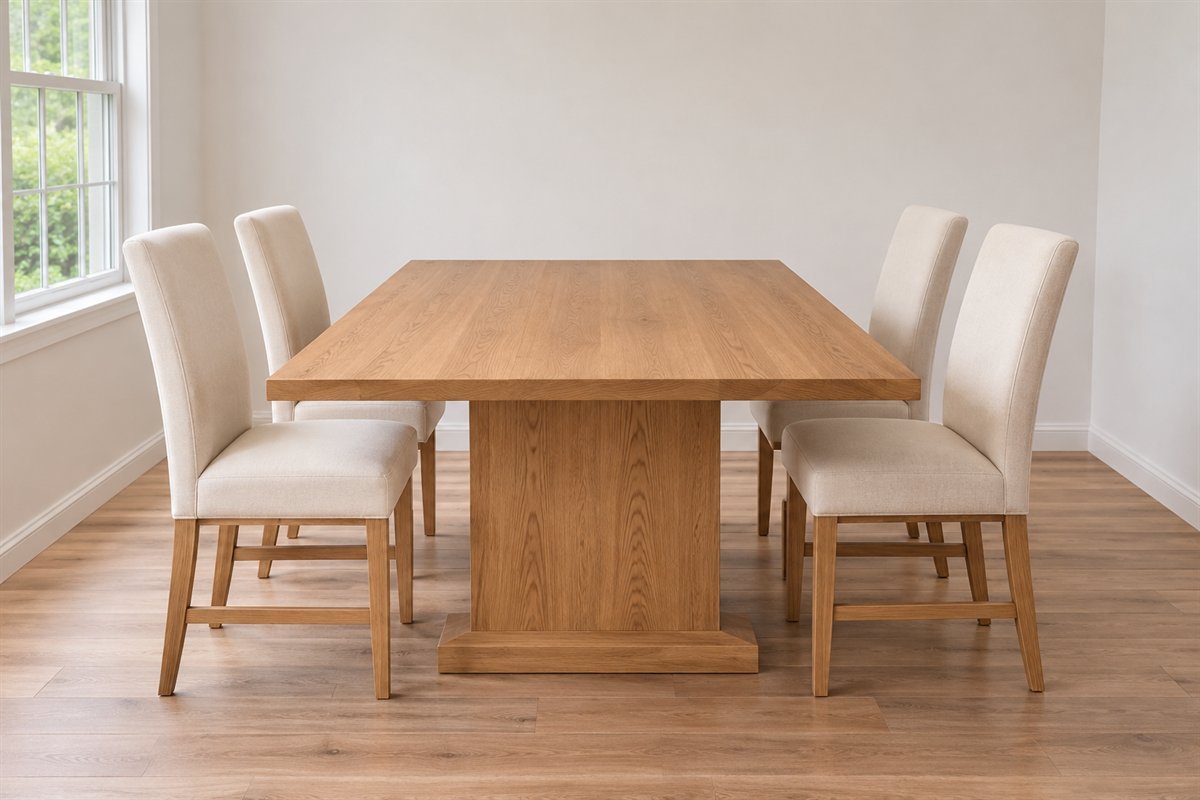
A visibly substantial pedestal or trestle can become the main shape in a modern dining room. Compare simpler chair backs so the base remains readable. The room can have one expressive furniture element without requiring a sculptural pendant and a bold wall beside it.
Judge the base from an occupied seat as well as from the doorway. Its visual drama is separate from knee and foot room. Keep the exact product’s construction and fit in the decision rather than choosing the base from an attractive illustration alone.
11. Use closed storage as a quiet supporting plane
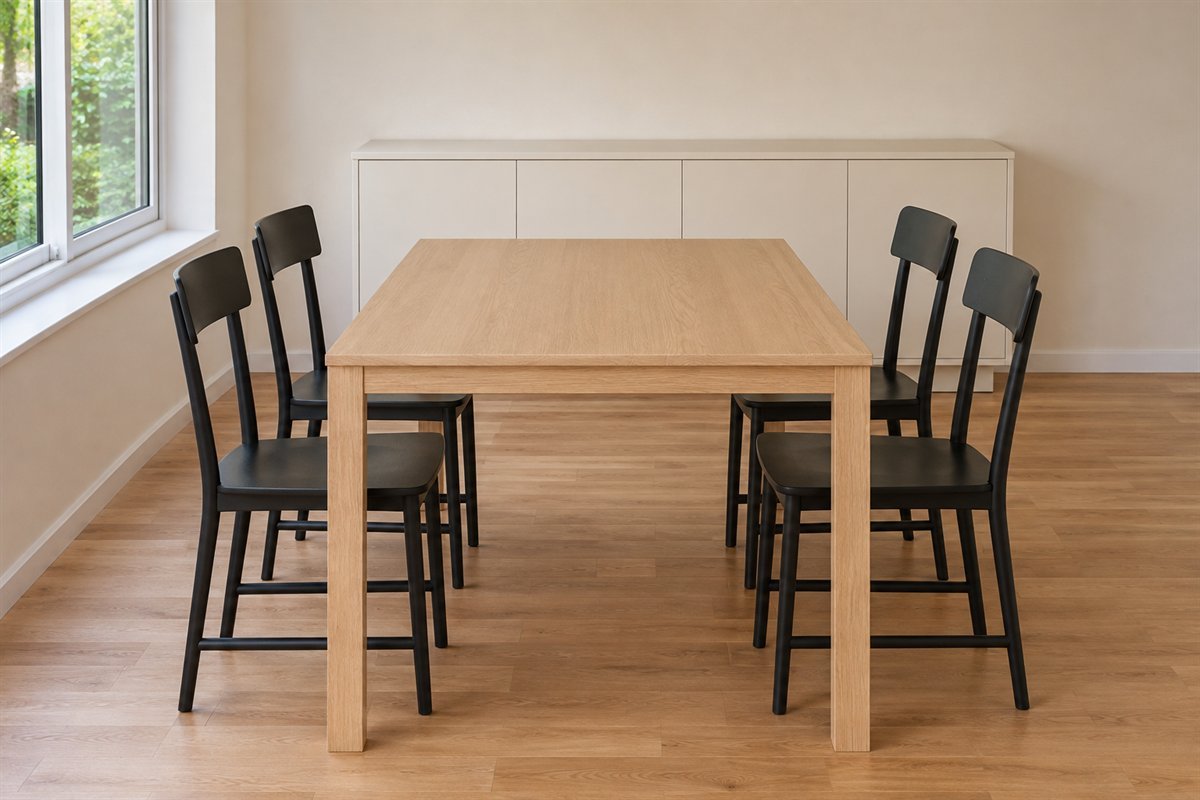
A restrained sideboard can give tableware a useful home while allowing the table and chairs to lead. Choose its internal capacity from the actual collection. A plain front is helpful when it reduces visual competition without hiding an inconvenient storage arrangement.
Open doors and drawers with chairs in use before committing to the position. Include handles and full cabinet depth. If the existing cabinet works well, a change to nearby color or artwork may be enough; modern style does not require replacing useful storage with handleless fronts.
12. Let a retained dark cabinet provide contrast
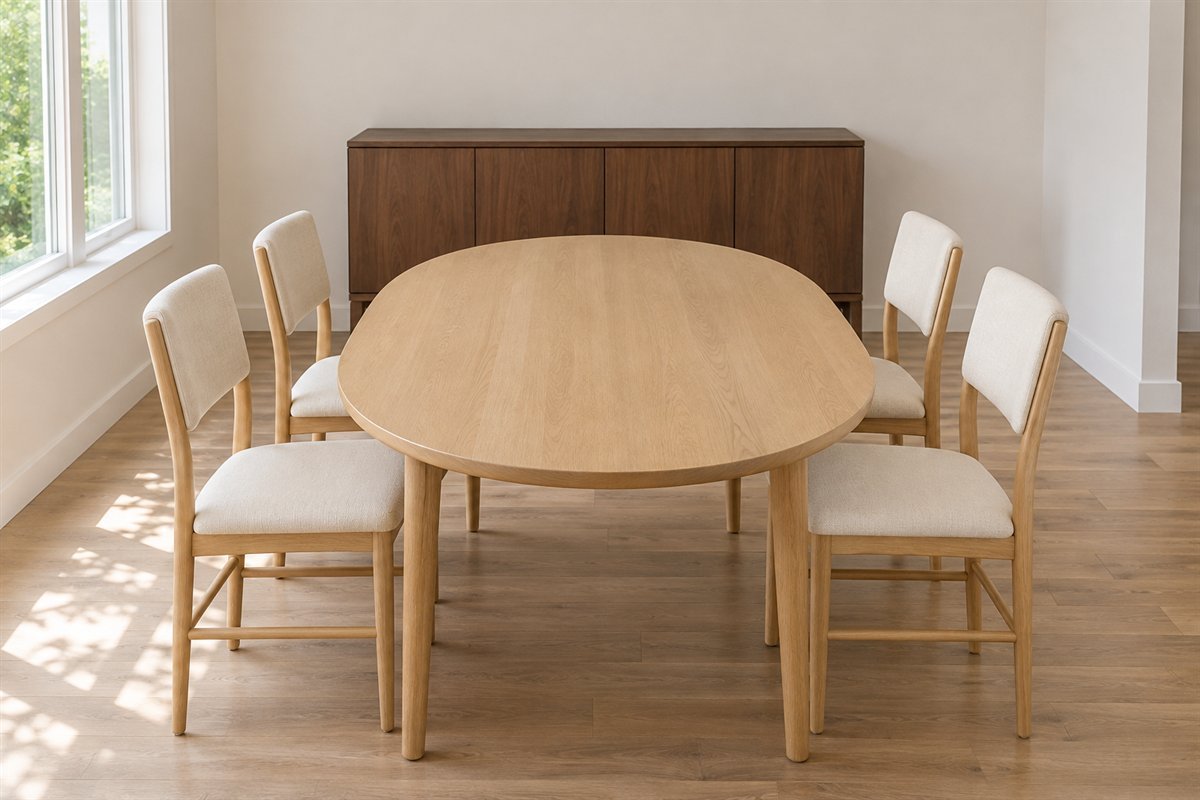
An older dark cabinet can belong beside a simpler table and chairs. Give its full shape enough room in the composition and compare the wall behind it before deciding it feels too traditional. A useful piece can add material variety without a new decorative collection.
Keep the actual contents and support requirements in view. Do not fill the cabinet top to make the piece feel updated. A clear serving surface or one deliberate artwork nearby can let the existing grain and proportions become part of the modern room.
13. Give open display a defined amount of wall
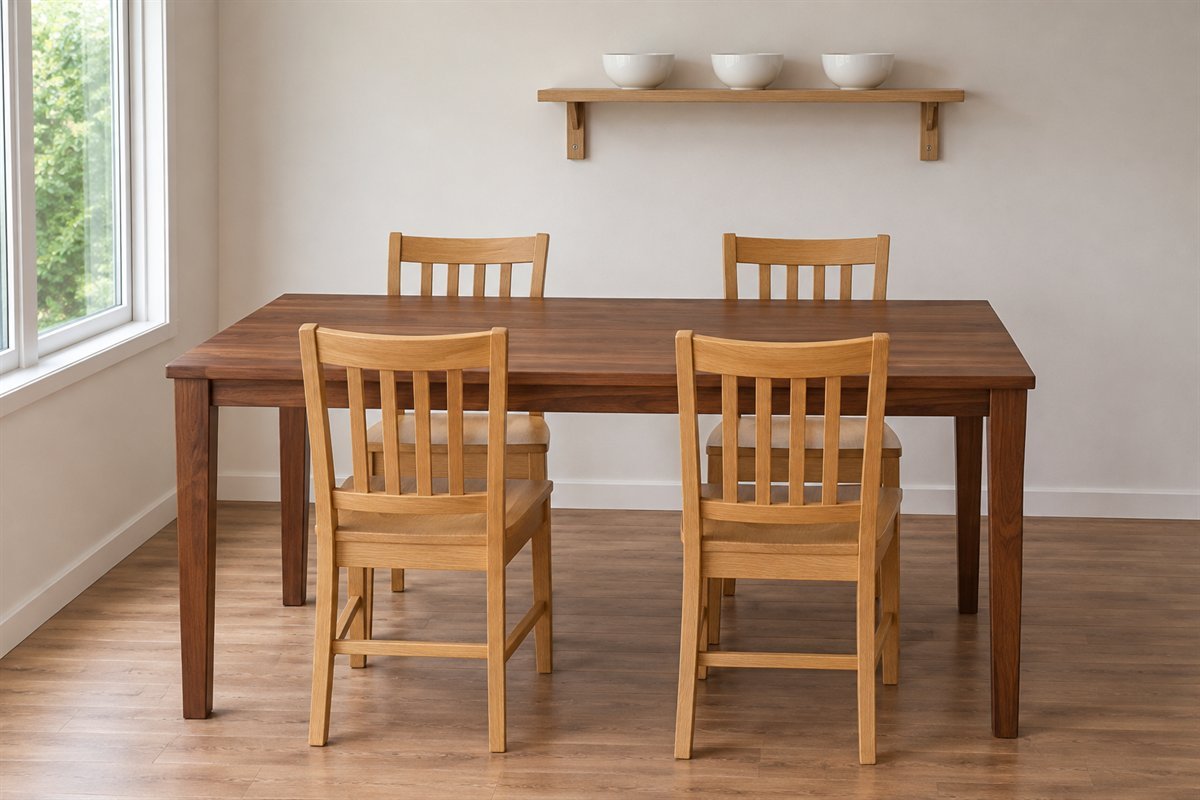
One modest open display can hold a real collection while the rest of the room stays composed. Choose the shelf for useful pieces rather than buying ornaments to fill a symmetrical arrangement. A smaller display may show the things you care about more clearly.
Follow the actual shelf’s fixing and load guidance and keep frequent items reachable. If daily use requires unloading several pieces, compare closed storage instead. A modern dining room can include an open shelf without making every wall a display surface.
14. Choose a wall color around the retained furniture

A muted wall color can support the table rather than becoming a separate theme. Compare a generous actual sample with the largest chair fabric, floor and cabinet. Keep the dining room’s usual time of use in the decision, especially when most meals happen after dark.
A paint name or screen image does not establish how the color will appear at home. Observe the sample under the normal lamps before buying. Use the dedicated paint guide for broader palette options; here the aim is to settle the relationship with the furniture already chosen.
15. Make one large artwork the main decorative decision

A single substantial original artwork can give the room personality without several small decorative groups. Compare its full outline with the table and storage, and keep the rest of the wall deliberate. The artwork can introduce color that does not need to appear on every chair.
Test the position from a seat and the entrance before arranging the furniture around it. Use suitable secure fixings for the real wall and work. If the piece needs a quieter background, simplify the nearby display rather than shrinking the useful dining arrangement to suit a photograph.
16. Keep a geometric wall treatment contained
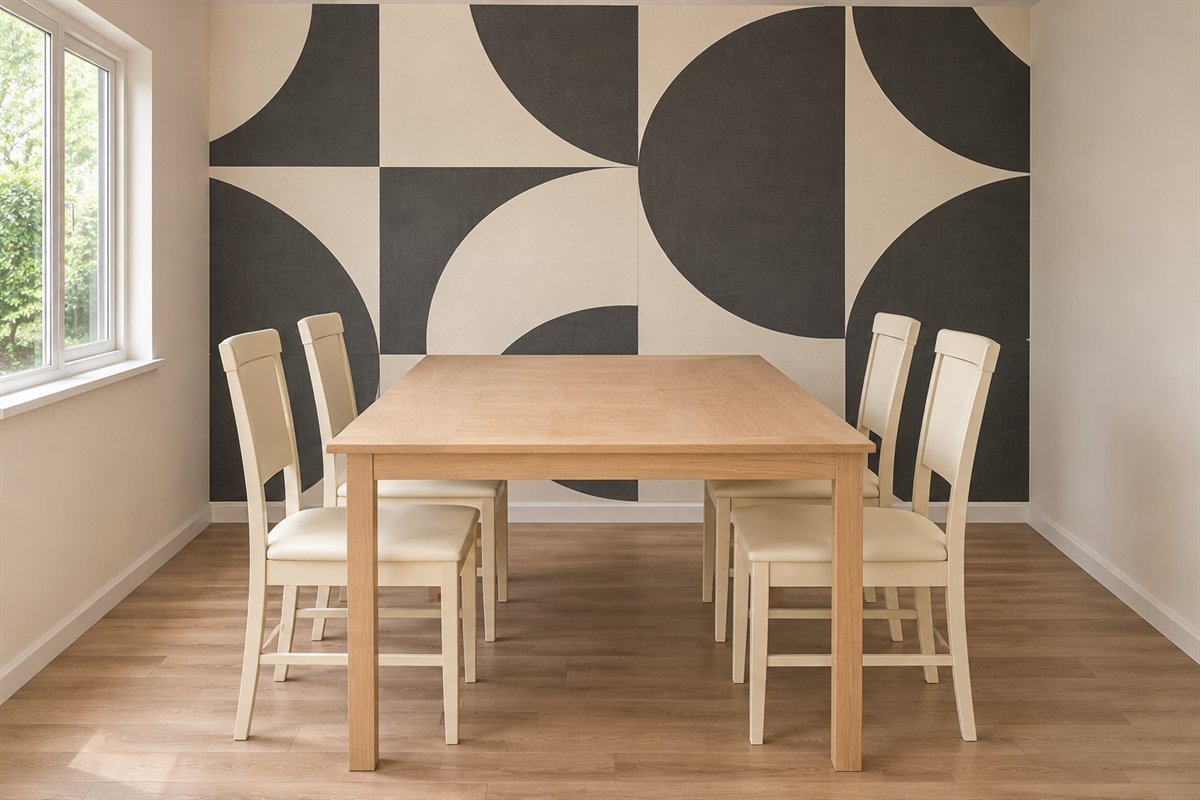
A limited geometric pattern can create a modern backdrop beside simpler furniture. Compare one full repeat and the view from the main entrance. The pattern may provide enough visual activity without a patterned rug or several strong chair colors below it.
Check preparation, application and care for the exact wall product. Keep the actual room boundary rather than extending a treatment only to fill a camera view. A contained panel can be an option, but leaving the wall plain is sensible when the furniture already carries the composition.
17. Use one pendant with a readable outline

A simple pendant can establish the dining group’s center while providing light for meals. Compare its whole outline with the tabletop rather than selecting it as an isolated object. A strong table base may need a quieter shade, while plain furniture can support a more distinctive fitting.
Check the exact fitting switched on, including glare from seated positions and the useful spread of light. Follow its installation requirements. A generated pendant is a visual concept, not proof of an appropriate drop, electrical installation or complete room-light arrangement.
18. Compare a linear light with a long table
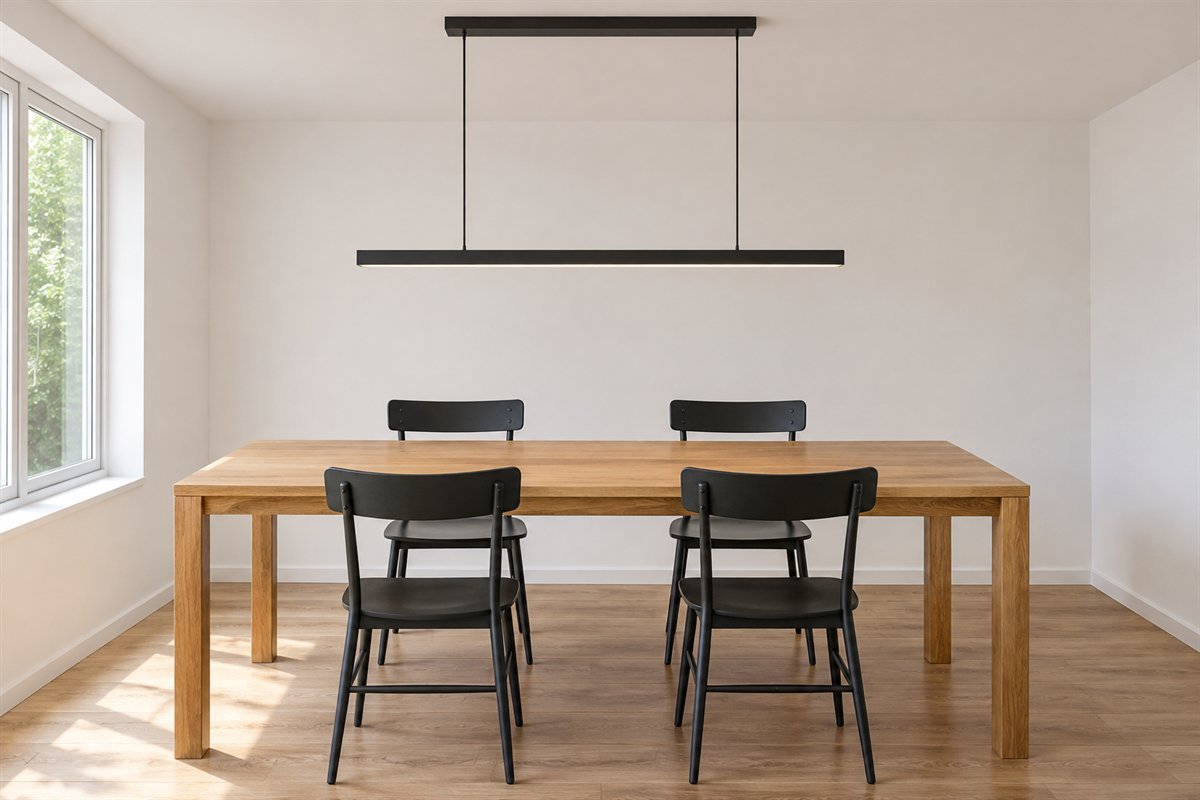
A restrained linear fitting can relate to a rectangular table without adding several separate shades. Keep the table’s actual position in the lighting plan. Its visual alignment should support the room rather than forcing the useful dining arrangement under an inconvenient existing outlet.
Check the fitting’s complete body, distribution and occupied views before installation. Resolve electrical changes appropriately, and include any extended-table arrangement. The modern outline is useful only when the people seated at the ends receive suitable light without uncomfortable direct glare.
19. Let curtains soften a simple furniture group

Plain curtains can give a room with crisp furniture another broad texture. Compare the fabric with the chairs and tabletop rather than treating the window as a separate decorative project. A quiet curtain can remain useful even when the rest of the room includes stronger color.
Open the treatment fully and check the nearest chair’s movement, heating equipment and the actual hem. Follow the relevant instructions for the window and equipment. Keep a straightforward working treatment before adding layers only to make the room look more formal.
20. Decide whether a rug improves the complete group
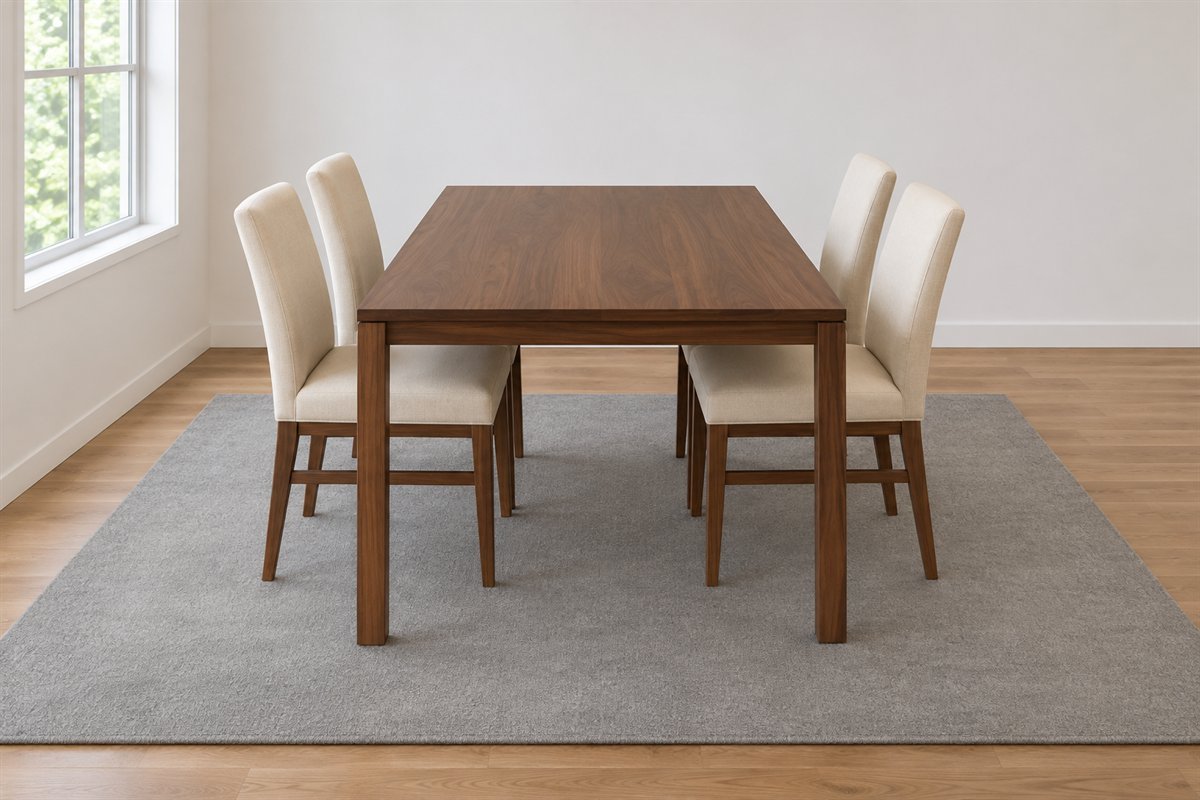
A plain textured rug can gather the table and chairs into one area when the actual occupied layout supports it. Compare the material with chair movement and ordinary cleaning. A modern room does not require a bare floor, nor does every dining group need a rug.
Pull out the real chairs and test all positions before choosing the rug. Follow product and flooring guidance and keep any movement needs in the decision. If the rug creates an awkward edge, retain the bare floor and add visible texture elsewhere.
21. Keep a bare floor as a finished choice

A useful existing floor can be the finished background for a modern dining group. Its uninterrupted surface lets table legs, chair frames and wood grain remain visible. Compare the complete room before adding a rug merely because a dining inspiration image includes one.
Use suitable chair-floor protection for the actual surfaces and consider the routine for ordinary spills. If the room feels visually hard, try one softer curtain or upholstered seat before adding more furniture. Bare flooring is a design choice, not a claim about sound performance or universal easy care.
22. Make a color accent substantial enough to judge
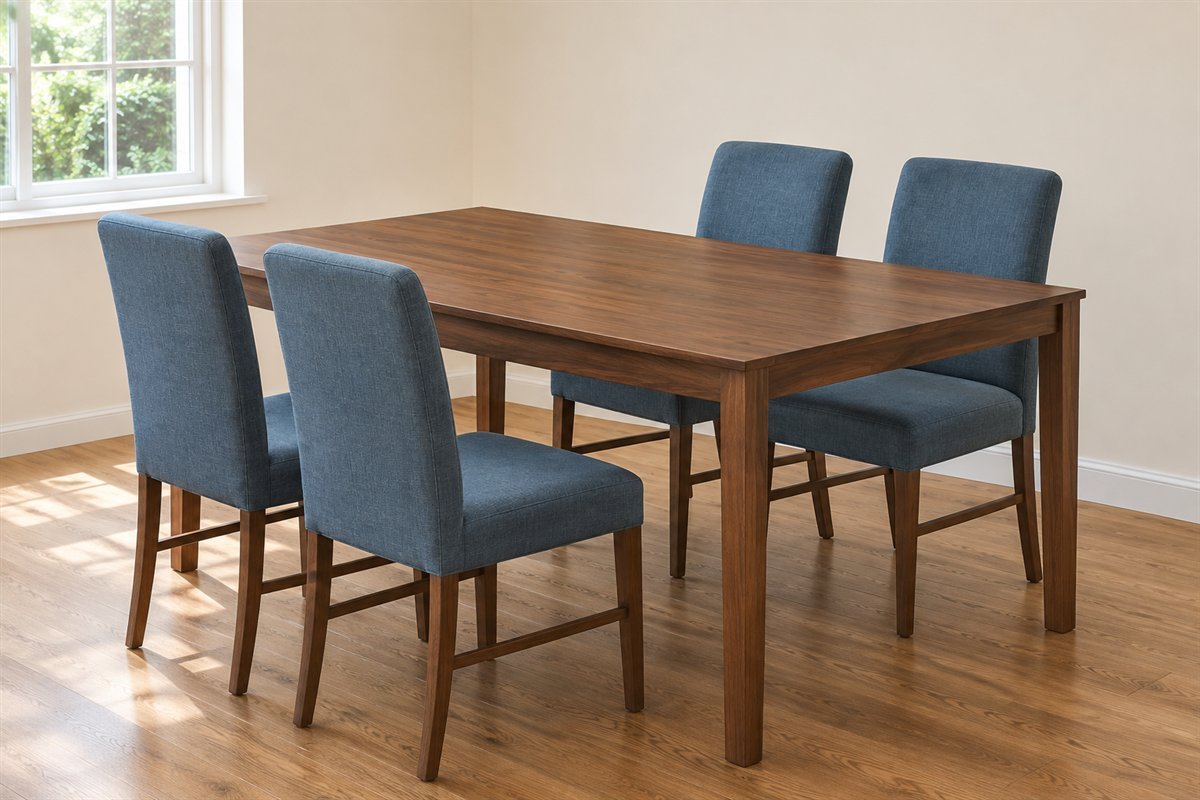
A deliberate chair color can contribute more clearly than many tiny repeated accessories. Compare the whole chair group with the retained table and floor. A muted blue or green may be the room’s only new color, leaving the table and storage finishes to supply the rest.
View actual upholstery or finish samples before committing to several seats. Keep wear, cleaning and comfort separate from the color decision. If the result feels too busy, first compare quieter nearby textiles rather than assuming the accent must be echoed on every surface.
23. Keep the table setting restrained and useful
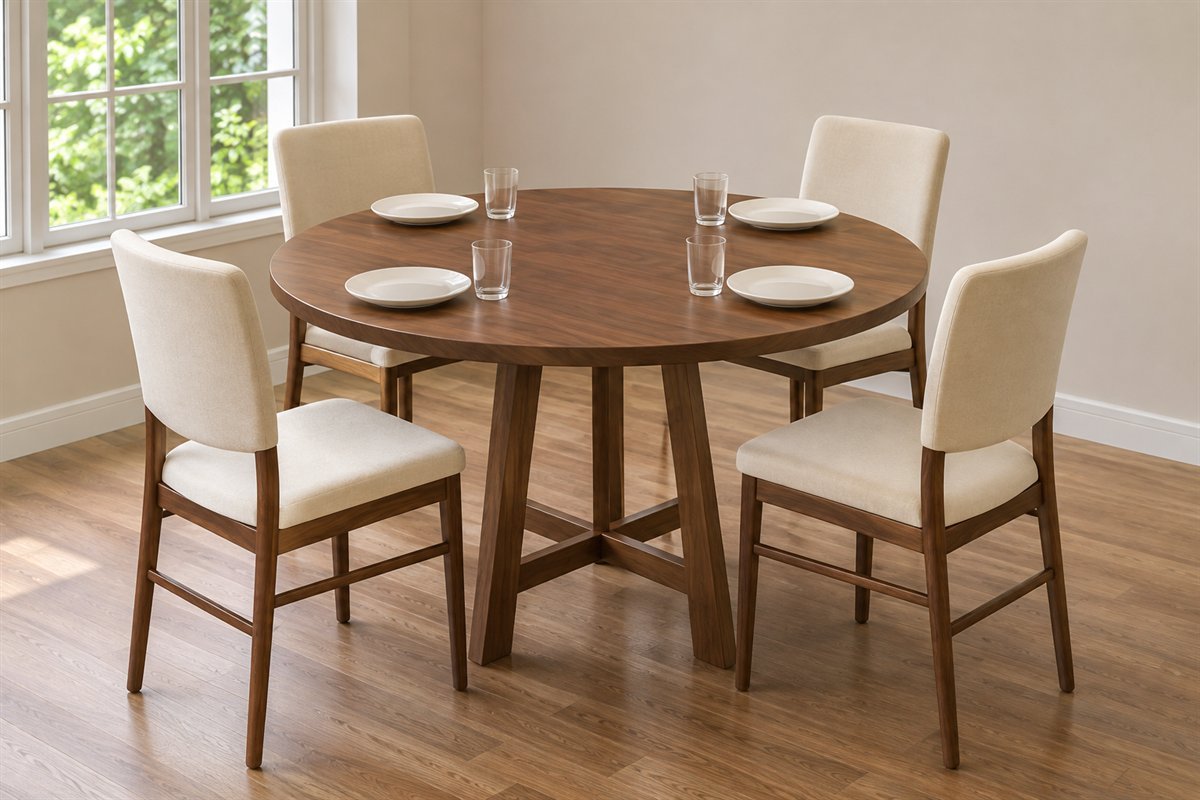
A modern tabletop can include familiar plates and glasses without a permanent decorative installation. Begin with one complete place setting and the serving dishes normally used. Let the table material remain visible where it helps the arrangement instead of adding layers by default.
Check actual food use, care and storage for the pieces. Keep tall or spreading objects out of the shared surface if they interfere with the meal. Useful retained dishes can form a coordinated table without buying a new matching collection to follow the furniture style.
24. Relate an open dining area to one neighboring material
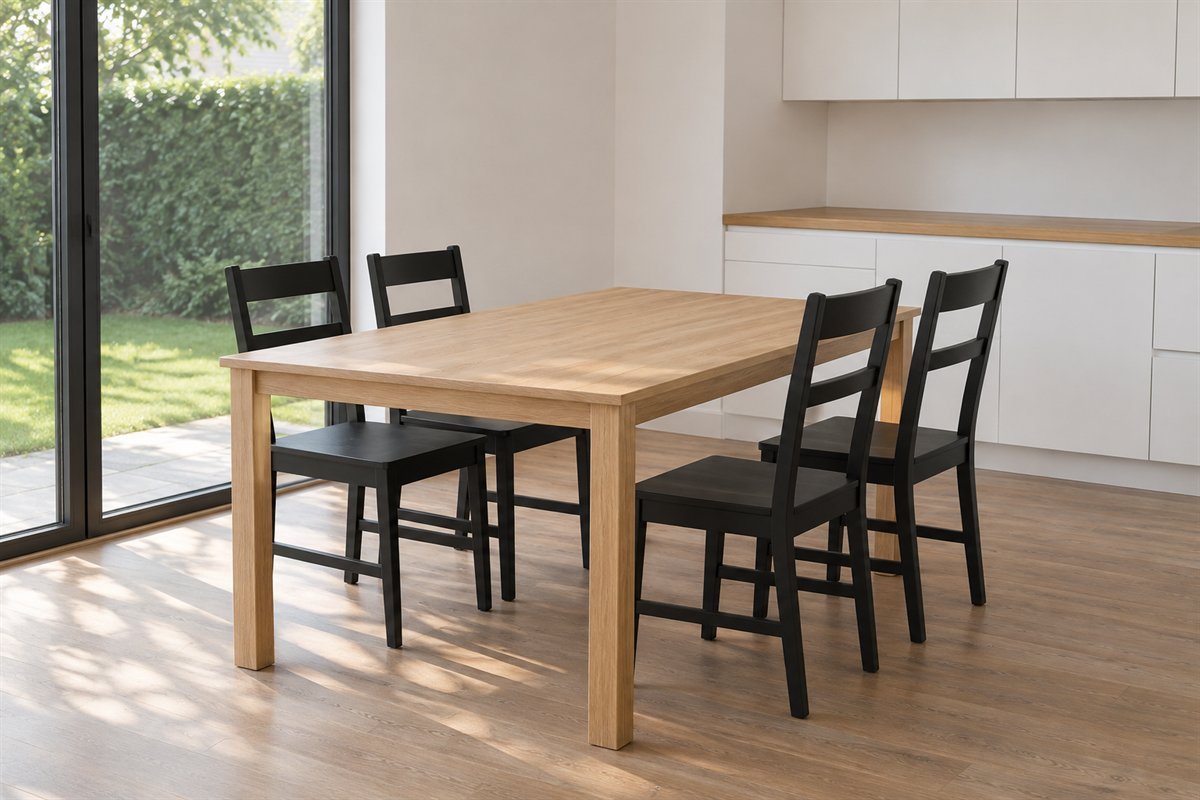
In an open room, one retained material can connect the dining group with the nearby kitchen. A wood tone or quiet dark outline may be enough. The dining furniture does not need to copy every cabinet finish or disappear into the adjoining room.
Keep the actual circulation and nearby openings in the same plan. Avoid adding a screen or extra cabinet simply to make the dining zone look separate. A clear table group can establish its own role while remaining part of the larger room.
25. Review the room without the styling layer
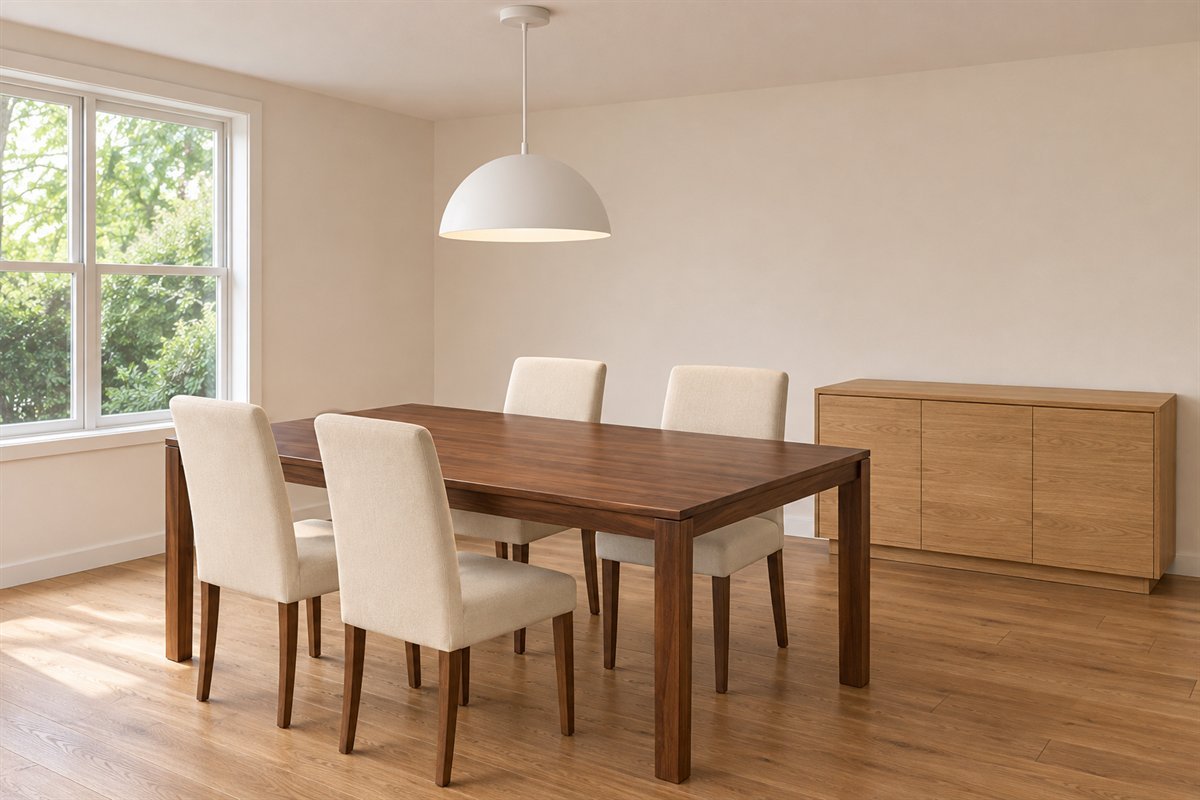
Before making the final purchase, look at the table, seating, storage and light with the accessories removed. Decide which shapes and materials already belong together. This view can reveal whether another decorative object would help or only conceal an unresolved furniture relationship.
Use the original comparison card during an ordinary meal, then choose one next change with a reason. Keep the useful retained pieces and acknowledge what still needs a sample or actual fitting. A modern dining room can feel complete without using every idea in this guide.
A worked example with a retained dark table
Imagine a hypothetical household keeping a dark rectangular table in good condition. The dining room feels busy because the ornate chair backs, patterned curtain and elaborate pendant all compete from the doorway. The first shopping list replaces the entire set with pale furniture.
Instead, record the dark table as the retained anchor. Compare its substantial rectangular outline with one simpler chair, keeping the existing curtain and light visible. Then compare a quieter curtain sample while the current chairs stay. These are separate trials rather than several purchases made at once.
If the simpler chair improves the composition and fits the actual apron, legs and diners, it becomes a reasoned next choice. If the curtain is the stronger source of competition, the chair purchase may be unnecessary. This original hypothetical example establishes a comparison process, not a tested room result or a saving claim.
Separate visual coordination from physical compatibility
Two dining pieces can share a wood tone and still fail as a pair. Chair arms may meet the table edge, a broad base may interrupt feet, or a cabinet may open only when a diner stands. Keep those observations alongside the style card rather than treating a matching finish as proof of fit.
Try the actual chair and table together where possible. Include a normal meal, the seat used for longer conversations and the route to the serving surface. If only dimensions are available, keep the unverified areas explicit before ordering. A drawn tabletop alone cannot describe the occupied arrangement.
Room & Board’s dining guide identifies chair width, arms, seat height, apron and leg placement as parts of fit. Its commercial numeric suggestions are not universal clearances for every household or access need. Our separate table-sizing guide provides a dedicated planning checklist; the present guide uses compatibility to keep the modern composition practical.
Choose a material hierarchy rather than an exact matching set
Start with the largest retained material, then compare one supporting surface and one contrast. A dark table might sit with cream upholstery and a quieter cabinet. A pale table could use dark chair frames while the rest of the room stays restrained. Neither arrangement requires every wood to match.
View the actual samples beside the floor under daylight and normal evening lamps. Keep the difference deliberate. If the room feels unsettled, decide whether the issue is color, pattern, too many strong outlines or a lack of useful light before introducing another finish.
The IKEA reference contributes limited context about contrast and combining materials in a modern setting. The ideas, keep-or-change card and hypothetical room here are original. They do not copy its five-part sequence or establish the performance of its named products. Keep exact care and installation guidance with the pieces ultimately chosen.
Give formal meals and ordinary meals the same useful foundation
A room used for occasional gatherings still needs a realistic everyday arrangement. Keep the ordinary seat count, table reset and return places for linens and serving pieces clear. A decorative centerpiece should not determine whether the household can put a meal on the table.
For a more formal evening, compare a useful textile or familiar tableware with the same furniture group. Keep the special setting easy to remove and store. Modern style can accommodate a personal collection without leaving the room permanently staged between meals.
Review the whole room after an ordinary use. Note whether the next change concerns reach, light, storage or simply the desired appearance. Keep that reason with the comparison card so the next purchase responds to the room rather than an unrelated inspiration photograph.
Does a modern dining room need matching furniture?
No. A retained table can work with a different chair or cabinet material when the complete group is deliberate and physically compatible. Compare actual samples, outlines and occupied use rather than matching finish names alone.
Can an older dining table work in a modern room?
Yes. Keep a useful table and compare quieter seating, a considered wall or a different light before replacing it. Identify the competing relationship instead of assuming the table’s age is the problem.
Is a round table always the modern choice?
No. Round, oval, square and rectangular tables can belong in a modern room. Choose the exact table through the household’s meals, chairs, supports and actual available space.
How do I keep a modern dining room from feeling bare?
Use meaningful material variation, suitable light and one deliberate personal feature. A real artwork, textile or retained cabinet can add character without many small decorative groups.
Do modern dining rooms need a rug?
No. Compare the actual rug with occupied chair movement, care and the floor. A suitable bare floor is also a finished choice, with softer materials introduced elsewhere if wanted.
A practical next step
Keep the furniture that serves the household, compare complete outlines and settle the actual material relationships before buying. Use one deliberate change to resolve a specific issue, then review the modern dining room during a real meal.
Check dining-table size with the occupied seats. Plan a genuinely small dining room around daily meals. Compare dining chairs for comfort and fit. Explore a broader range of personal dining-room styles.
Images are original AI-generated dining-room concepts, not measured room plans, named products or tested installations. The comparison card and worked room are original hypothetical planning aids.
Sources and care references
- IKEA: contrast and material context for modern dining
- Room & Board: chair-table fit within the complete dining room
Optional digital guide for this topic
If you prefer a structured workbook, explore this related paid guide.