A hose needs a place that works while you are watering as well as when the garden is tidy. A reel hidden in the wrong corner can send the hose across a doorway or make the farthest bed awkward to reach. Start with the tap, the watering destinations and the route between them.
These garden hose storage ideas cover freestanding reels, carts, suitable wall-mounted products and simple holders. They focus on organization and placement rather than plumbing changes or installation instructions. Use the actual product's guidance for compatibility, mounting, operation and seasonal storage; a neat concept photograph cannot establish those details.
Contents
- 1. Put a reel near the tap without blocking it
- 2. Use a mobile trolley for several watering areas
- 3. Choose a compact reel for a small courtyard
- 4. Consider a wall box only with a suitable mounting plan
- 5. Keep the hose route away from the main doorway
- 6. Use a purpose-designed holder for a shorter hose
- 7. Give the nozzle its own clear return position
- 8. Leave the winding handle enough room
- 9. Park a trolley beside a shed rather than inside the route
- 10. Match a discreet reel to the surrounding structure
- 11. Keep planting outside the reel's operating area
- 12. Choose a holder that supports a broad coil
- 13. Use a dedicated utility corner on a broad patio
- 14. Check reach around raised beds
- 15. Keep spare connectors in separate organized storage
- 16. Allow room for the hose to leave the reel smoothly
- 17. Keep a retractable system visible during use
- 18. Make the stored footprint part of the plan
- 19. Use a simple container only if the hose guidance allows it
- 20. Separate the watering route from outdoor dining
- 21. Follow exact seasonal storage instructions
- 22. Make the reel easy to inspect and clean
- 23. Choose one main system instead of scattered coils
- 24. End watering with a consistent return routine
Map the complete watering route
Measure along the route the hose will actually travel, including turns around beds and the distance between tap and storage product. Check hose diameter, length and fitting compatibility against the chosen reel's specification. GARDENA's range illustrates several different formats, including trolleys, reels and wall boxes, with model-specific features. Seasonal rules also vary: some products have explicit frost-protection claims, so neither “all reels can stay out” nor “every reel must come indoors” is a reliable universal rule. Follow the exact model and hose instructions for your conditions.
Compare the storage or placement options
- Manual freestanding reel: Defined parking spot; allow crank movement and check connector requirements.
- Mobile trolley: Can serve several areas; assess loaded handling and the actual route.
- Wall box: Frees floor space; requires a compatible mounting and operating plan.
- Purpose-designed holder: Simple for suitable coils; check hose support, capacity and storage guidance.
1. Put a reel near the tap without blocking it
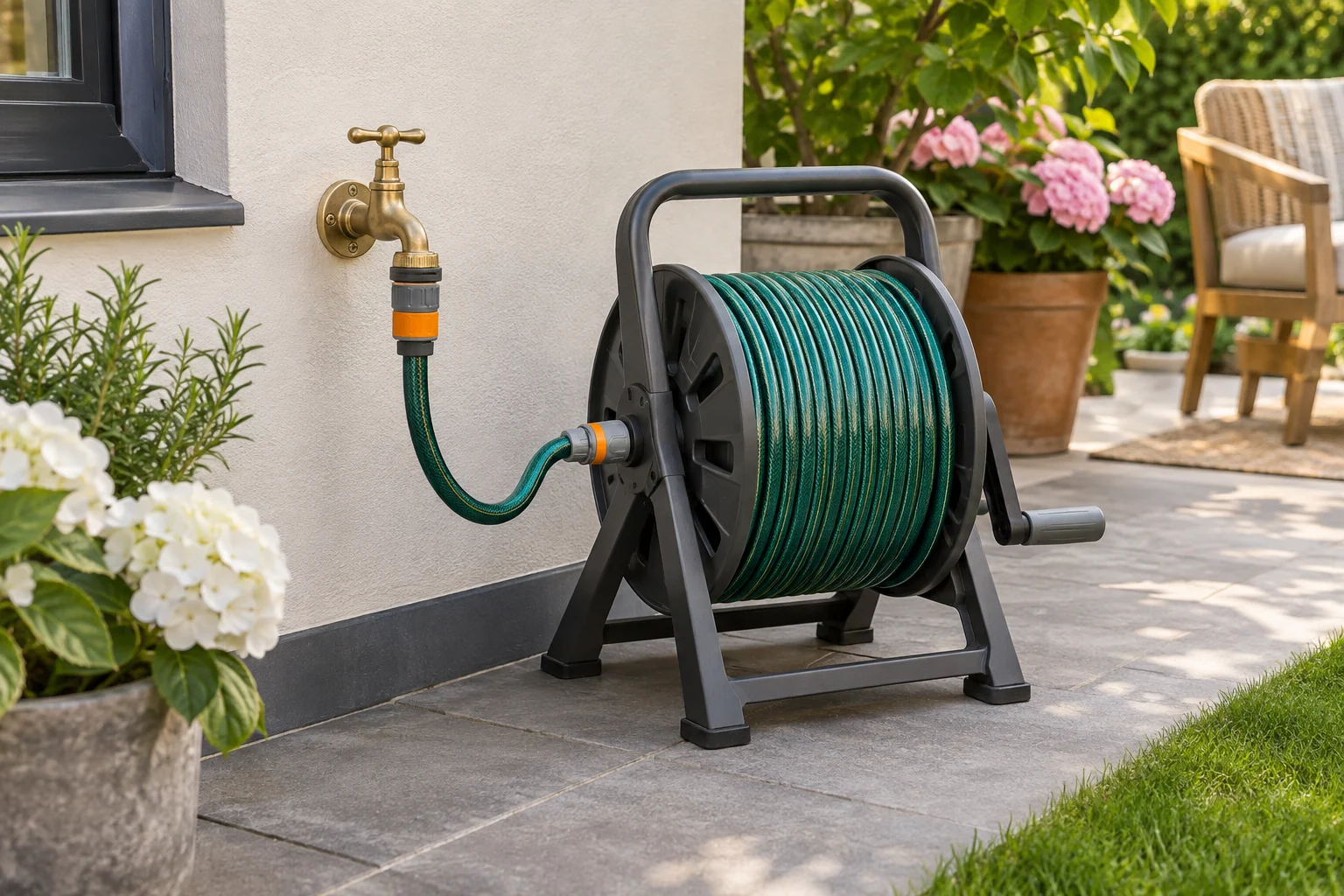
A nearby reel can keep the connection route short, but leave the tap and fittings accessible for normal operation and inspection. Check whether the reel needs a separate connecting hose and where that line will run. Avoid placing a cabinet or pot in front of the water connection simply to hide it. An accessible practical area is easier to maintain than a concealed tangle.
2. Use a mobile trolley for several watering areas
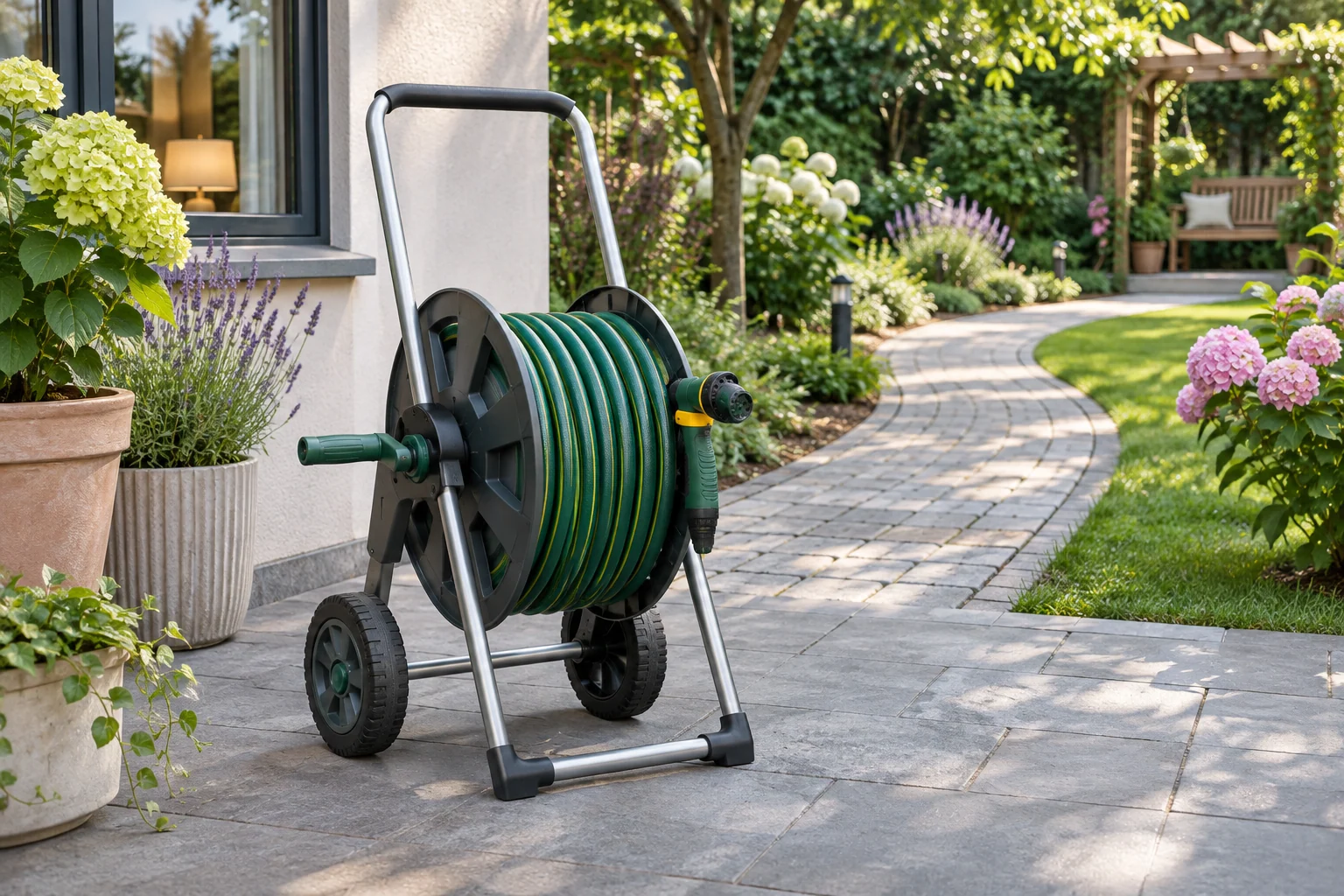
A hose trolley may suit a yard with several destinations if the route is appropriate for its wheels and the loaded weight is manageable. Check the maker's use instructions and test the route around steps, gravel and gates. Give the trolley a defined parking position. Mobility is only useful when moving the reel does not require repeatedly rearranging furniture or lifting it over obstacles.
3. Choose a compact reel for a small courtyard
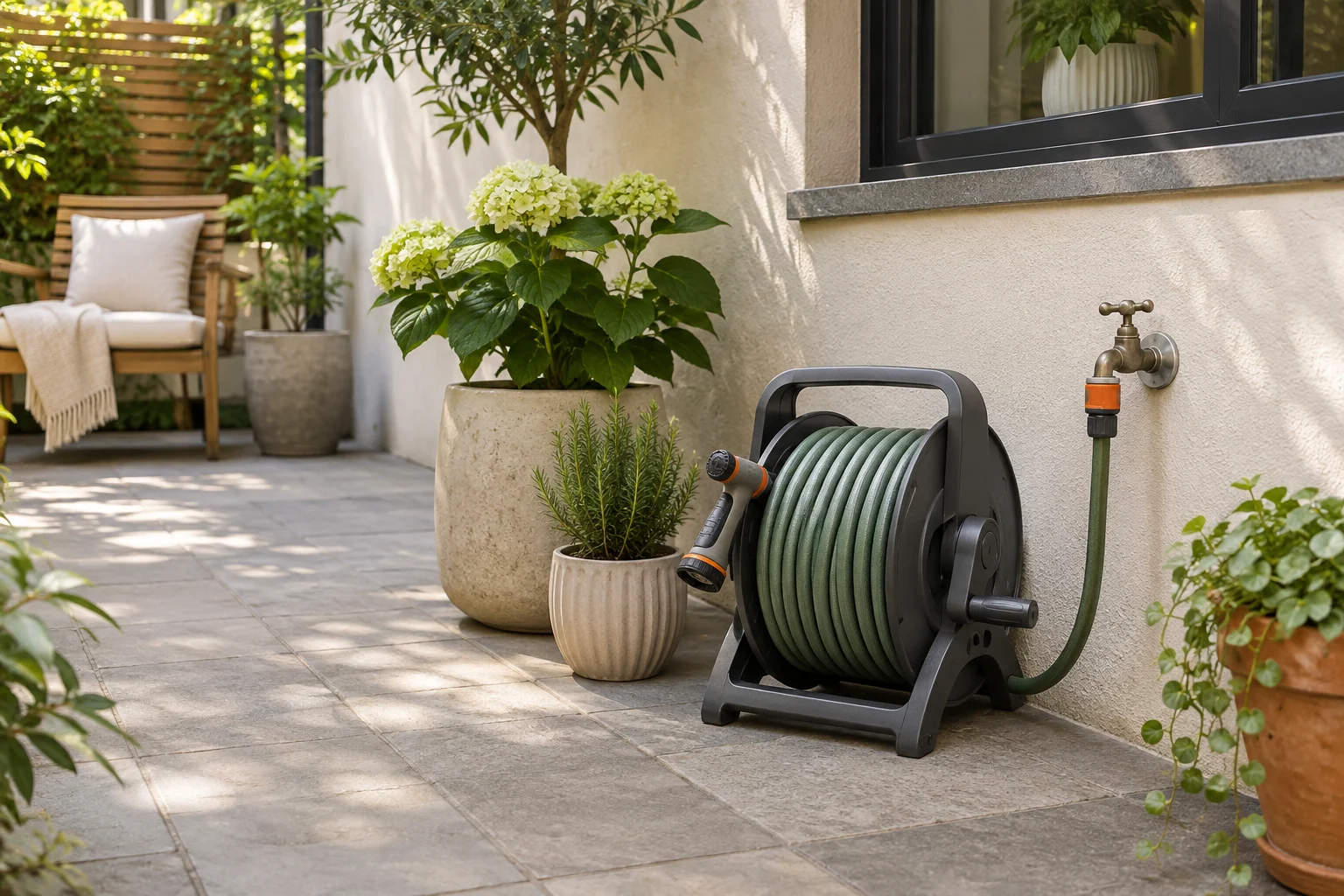
A small courtyard may not need a large storage system. Compare the hose length actually required with a compact reel's stated compatibility and leave room for connecting and winding. Keep the unit outside the doorway and seating footprint. A modest product that reaches the planting comfortably can use less space than an oversized reel chosen for a garden much larger than your own.
4. Consider a wall box only with a suitable mounting plan

A wall-mounted box can free floor space, but the wall, fixings, operating clearance and instructions matter. Confirm compatibility for the exact product and obtain appropriate installation help when needed. Check the movement of any swivel mechanism and the hose's route from the box. Do not infer that a similar-looking wall or bracket in an image proves your installation is suitable.
5. Keep the hose route away from the main doorway
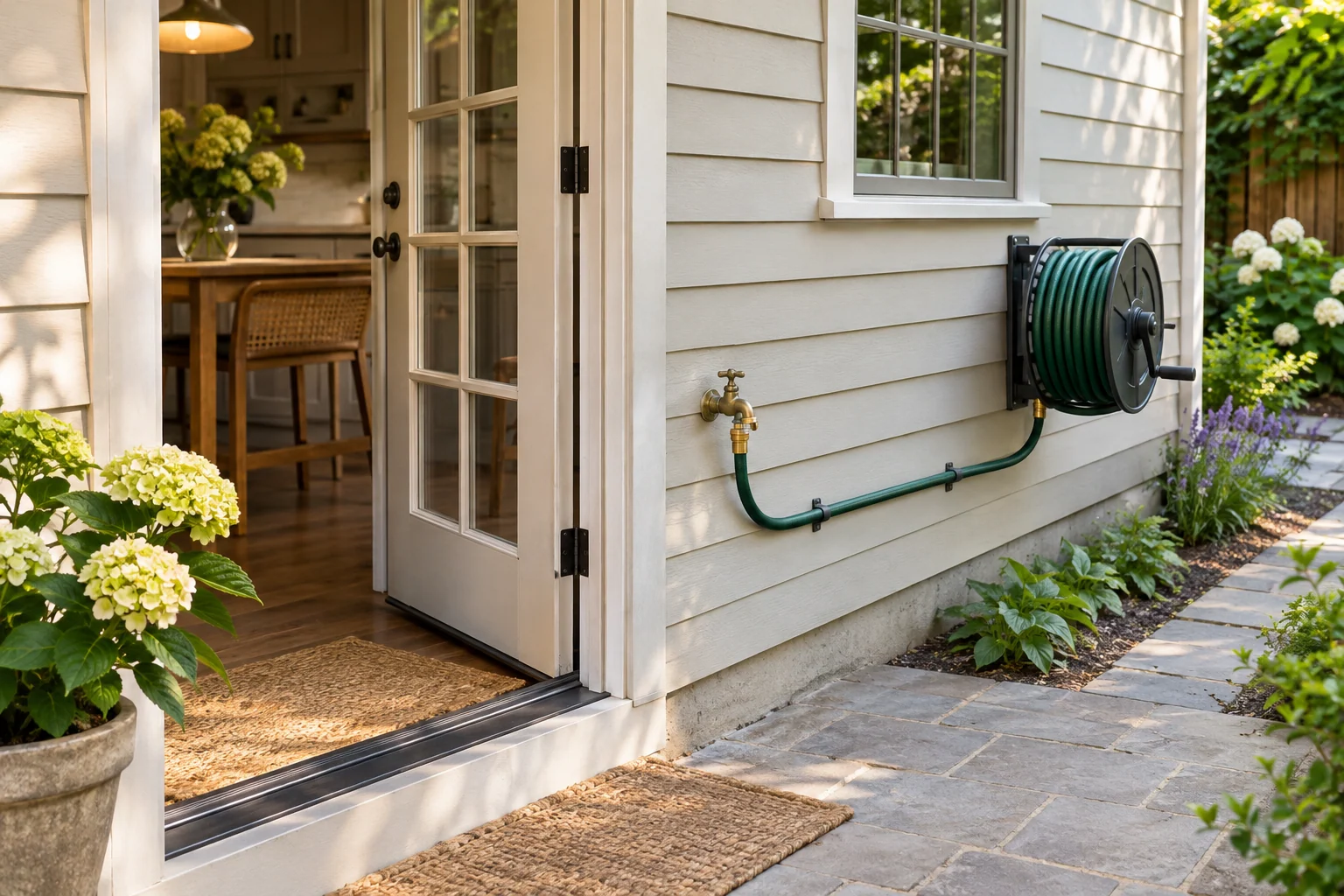
Plan the storage position so normal watering does not send the hose across the busiest entrance whenever possible. Consider the tap connection and the direction in which the hose leaves the reel. If a route needs reconsideration, choose a better product position within the existing system rather than improvising plumbing. Put the hose away after use instead of leaving a temporary crossing in place.
6. Use a purpose-designed holder for a shorter hose
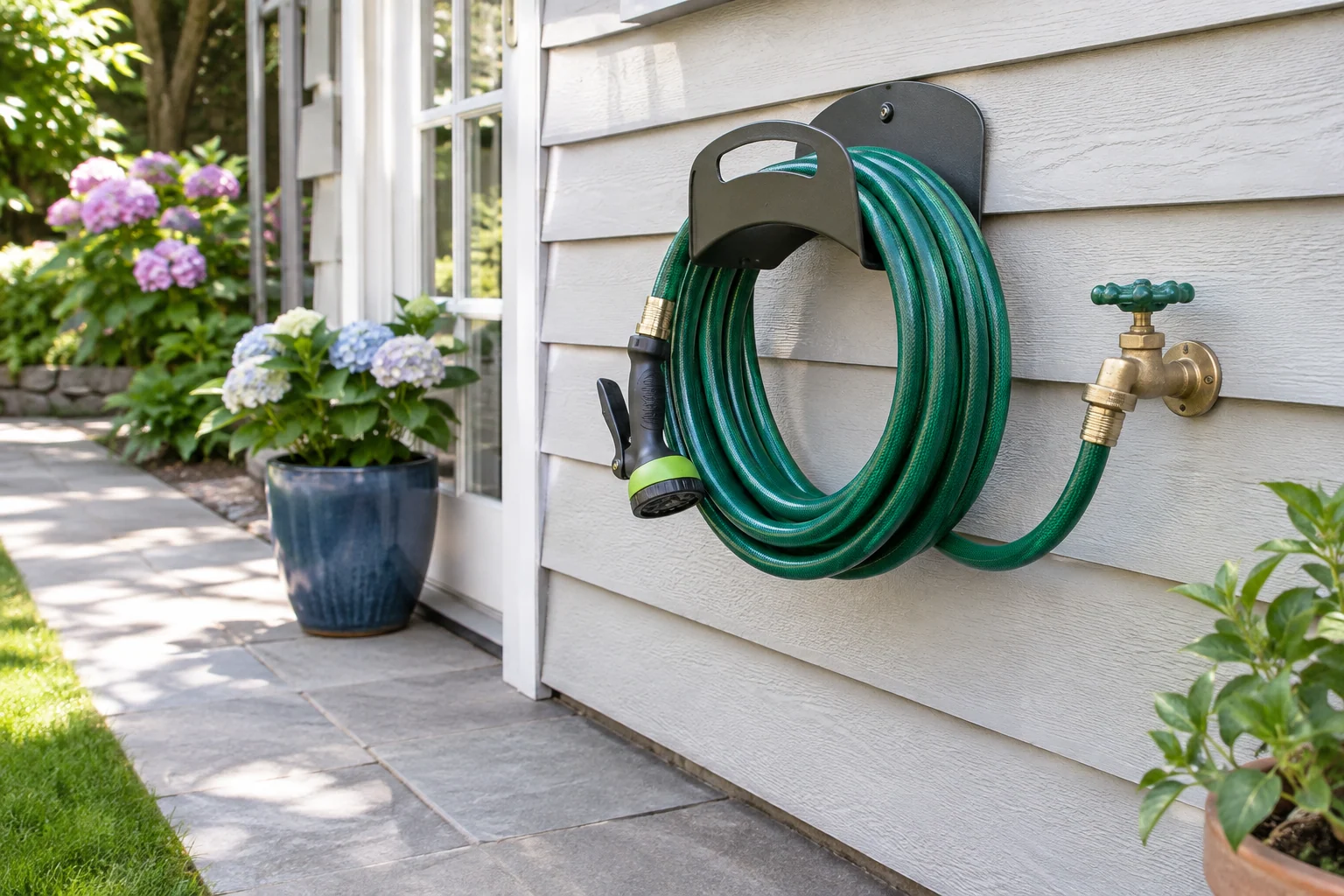
A suitable hose holder can be enough for a modest length that is easy to coil. Check the product's intended hose capacity and mounting requirements rather than choosing a decorative hook by appearance alone. Follow the hose maker's guidance for coiling and avoid tight bends. Leave room below the holder so the stored loops do not drag through soil or spill into the path.
7. Give the nozzle its own clear return position

The nozzle should return with the hose rather than lying in a bed or across the path. Use a compatible clip or storage point provided or recommended for the product when available. Check the nozzle's own care instructions and keep the connection easy to inspect. Avoid inventing a tight decorative pocket that traps moisture or forces the attached hose into a sharp bend.
8. Leave the winding handle enough room
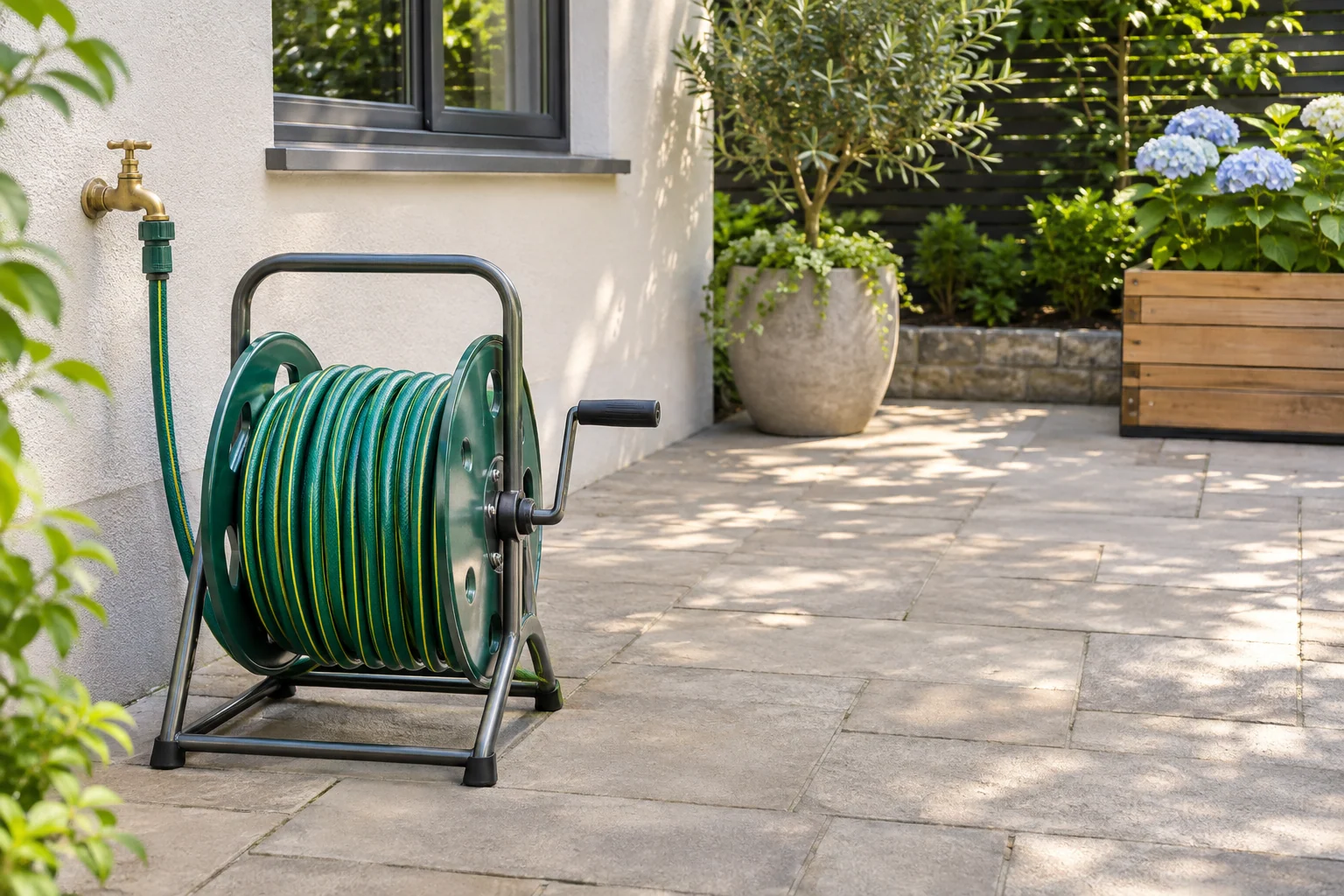
A manual reel needs space for the full handle movement and for your own position while winding. Test this before placing planters tightly around it. Check the maker's operating guidance and keep the route visible while retrieving the hose. A reel that fits in a narrow gap may still be awkward to use if its handle strikes the fence or your hand cannot move comfortably.
9. Park a trolley beside a shed rather than inside the route
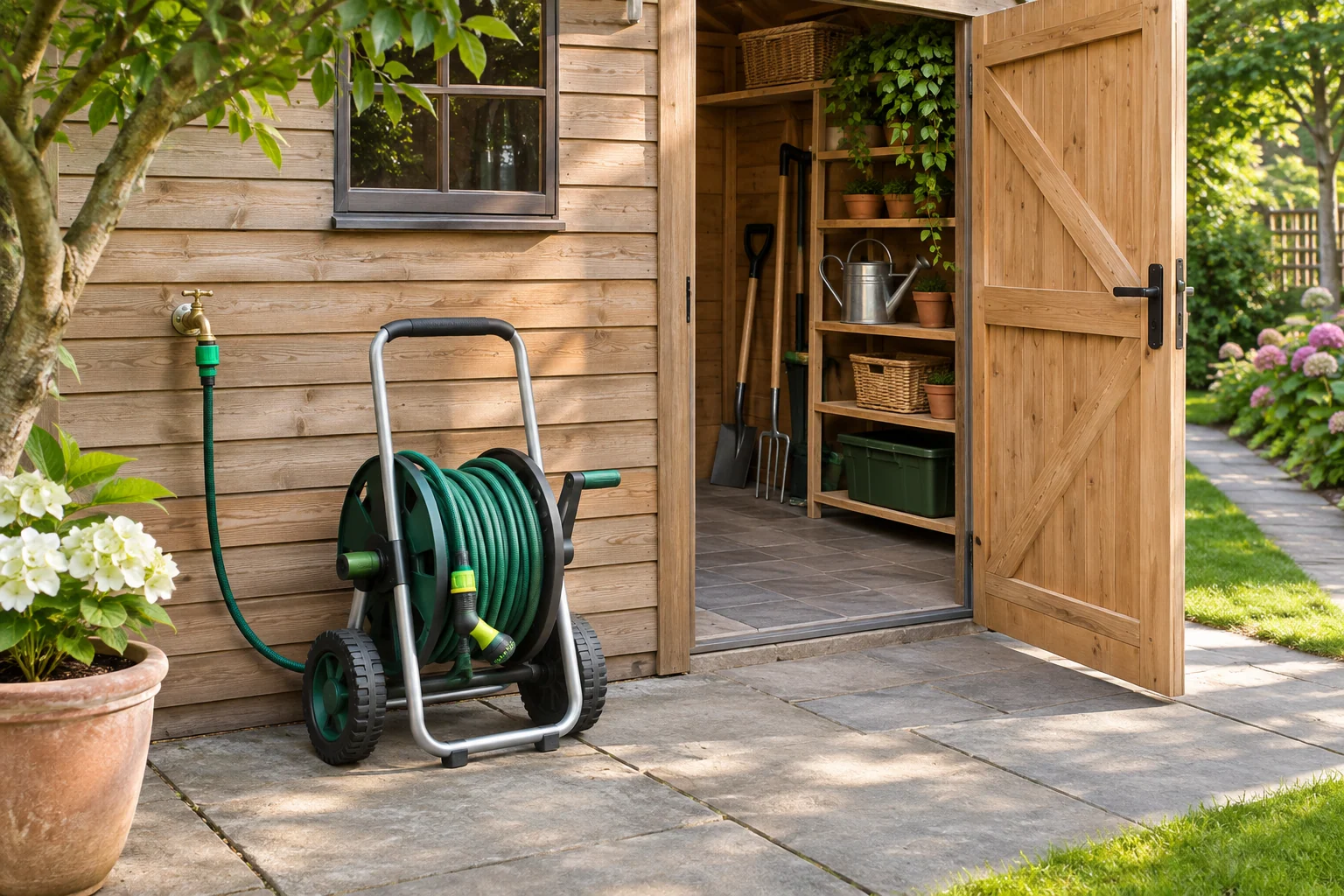
A shed wall can define a tidy parking position for a mobile reel. Leave the door, hinges and access to stored tools clear. Compare the trolley's full footprint, including handle and connections, with the available area. Keep the surface suitable for the product and follow weather-storage guidance. A defined parking space helps the reel return to the same place after watering.
10. Match a discreet reel to the surrounding structure
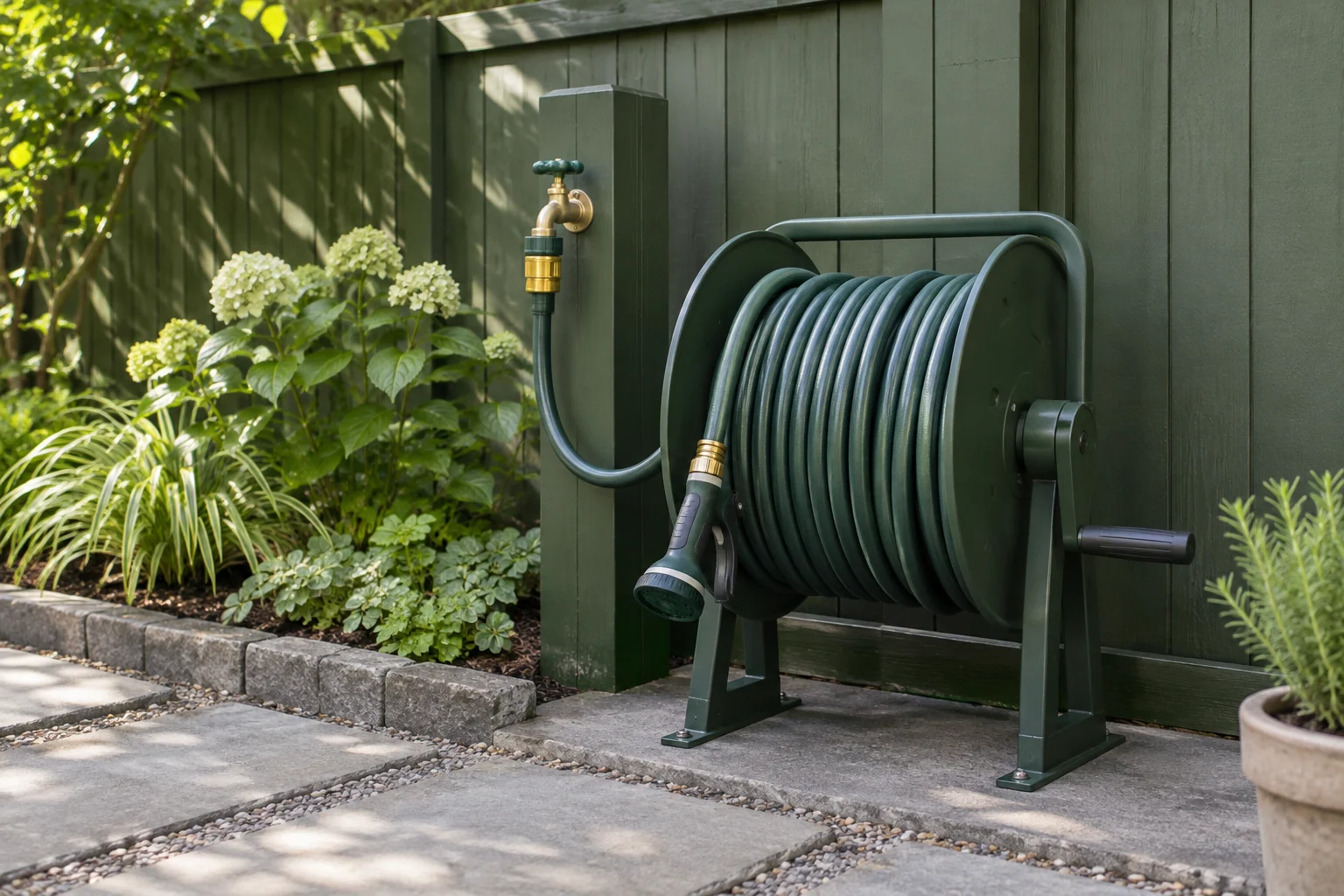
A charcoal or muted green product can blend with a fence, wall or utility area. Choose from suitable products first, then use color to reduce visual clutter. Do not paint functional mechanisms or cover labels unless the manufacturer permits it. A restrained palette can make the area look calmer while the reel remains accessible and clearly identifiable as garden equipment.
11. Keep planting outside the reel's operating area

Plants can soften a utility corner, but mature foliage should not obstruct the crank, swivel or hose exit. Leave a practical gap for inspection and cleaning. Consider how seasonal growth changes the route, especially where stems can catch a moving hose. Use planting to frame the area rather than hide every part of the equipment behind pots and leaves.
12. Choose a holder that supports a broad coil
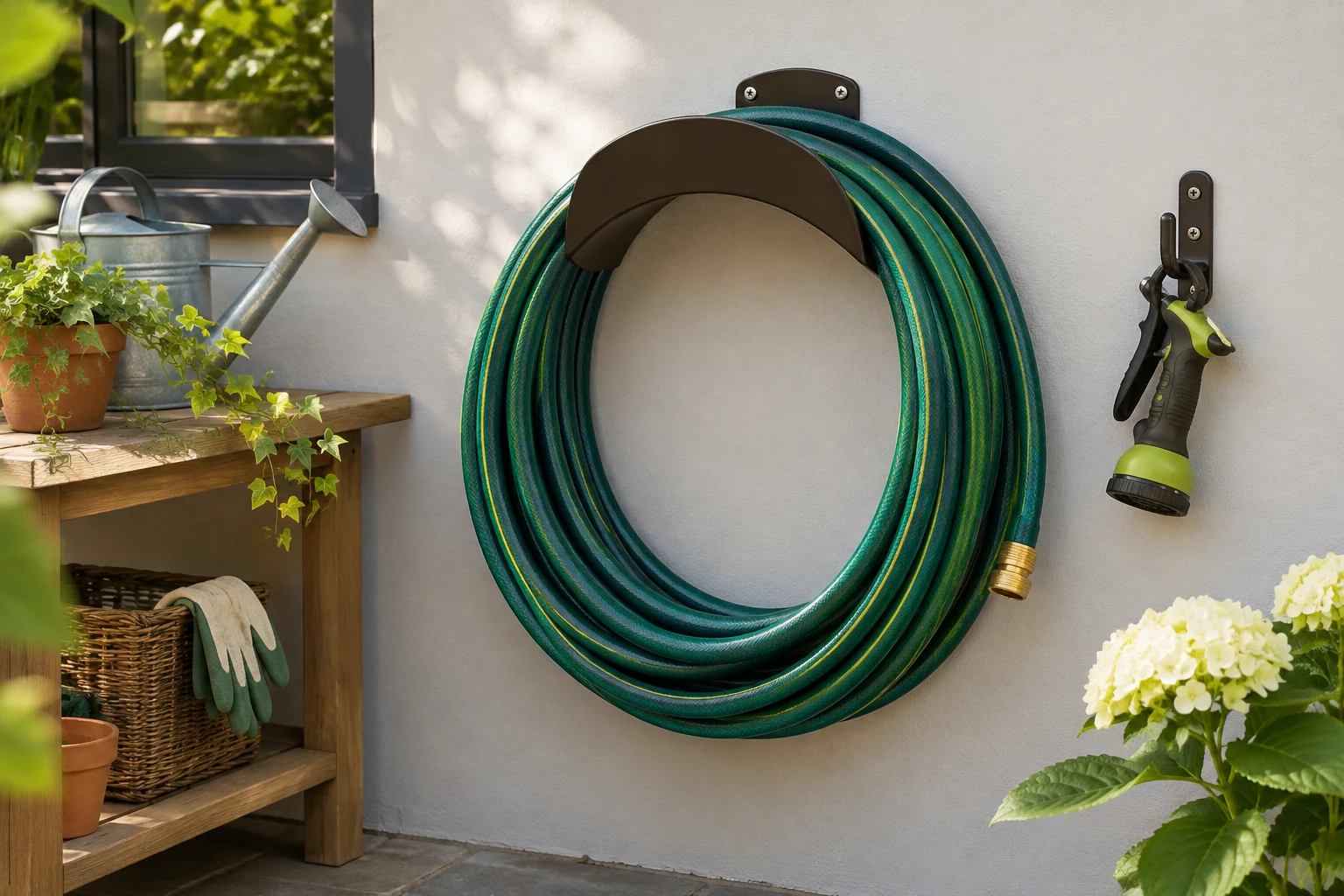
A hose stored on an unsuitable narrow hook may be forced into an awkward shape. Compare the holder's design with the hose maker's storage guidance and the actual coil size. Keep loops orderly without pulling them unnaturally tight. If the hose repeatedly slips or kinks in the chosen position, reconsider the holder instead of adding makeshift ties that complicate every watering session.
13. Use a dedicated utility corner on a broad patio
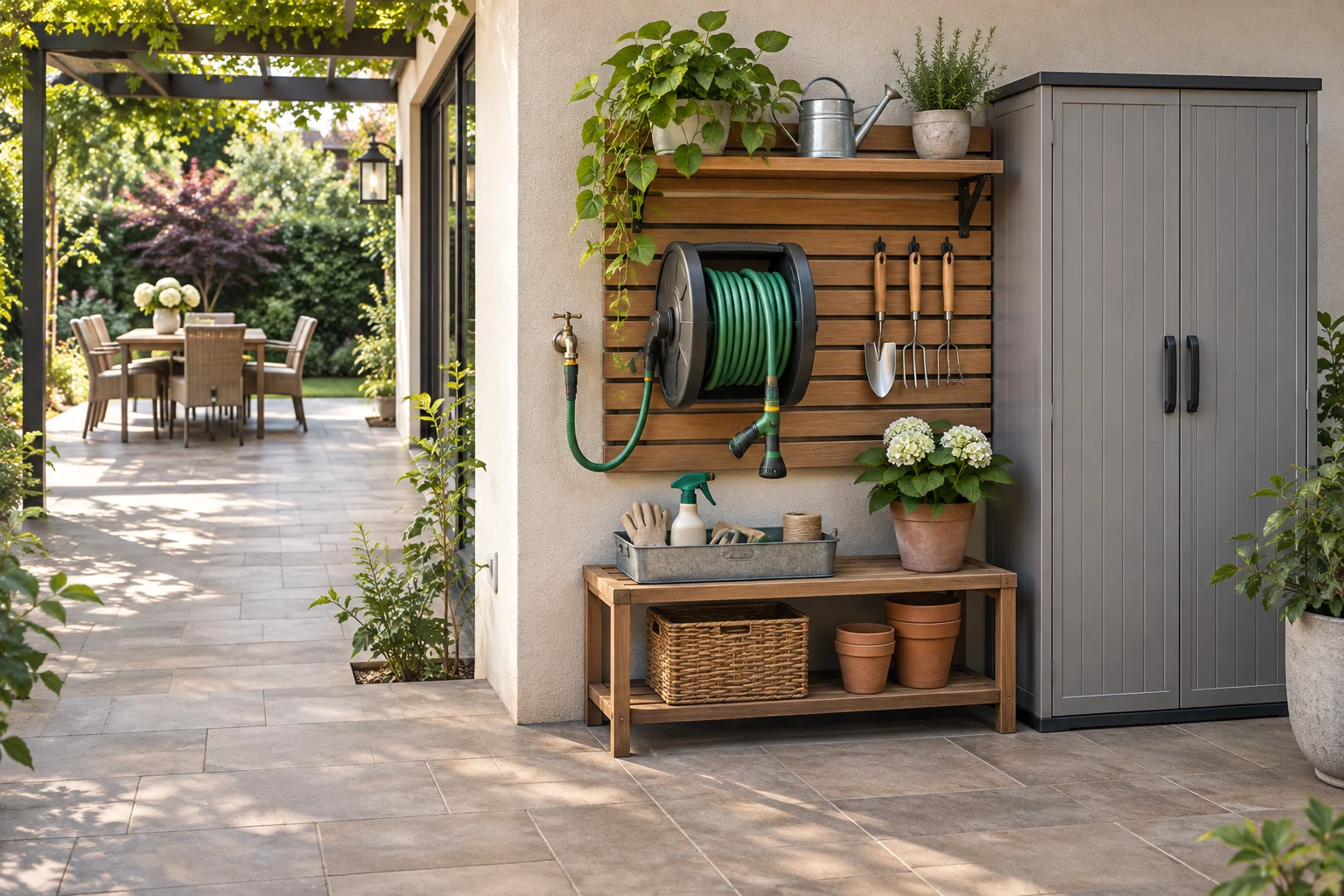
On a larger patio, group the reel near related practical equipment while keeping each item accessible. Leave the dining and sitting areas clear of the hose's storage footprint. Keep fertilizers, tools and other supplies in their own appropriate storage rather than loose around the reel. A small, orderly utility corner can be less visually intrusive than equipment scattered along several walls.
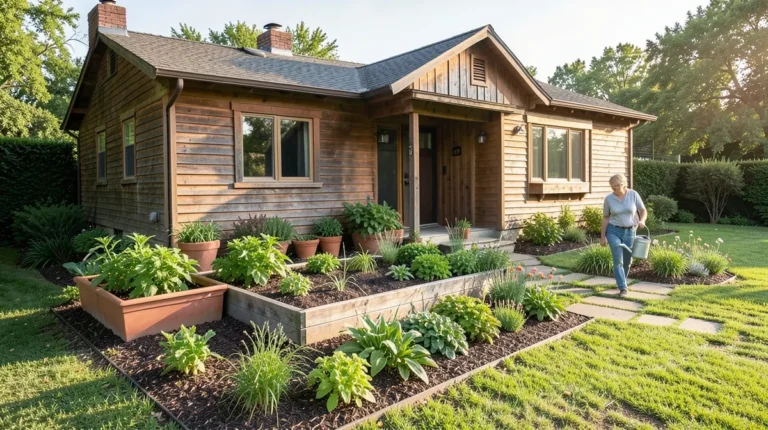
14. Check reach around raised beds
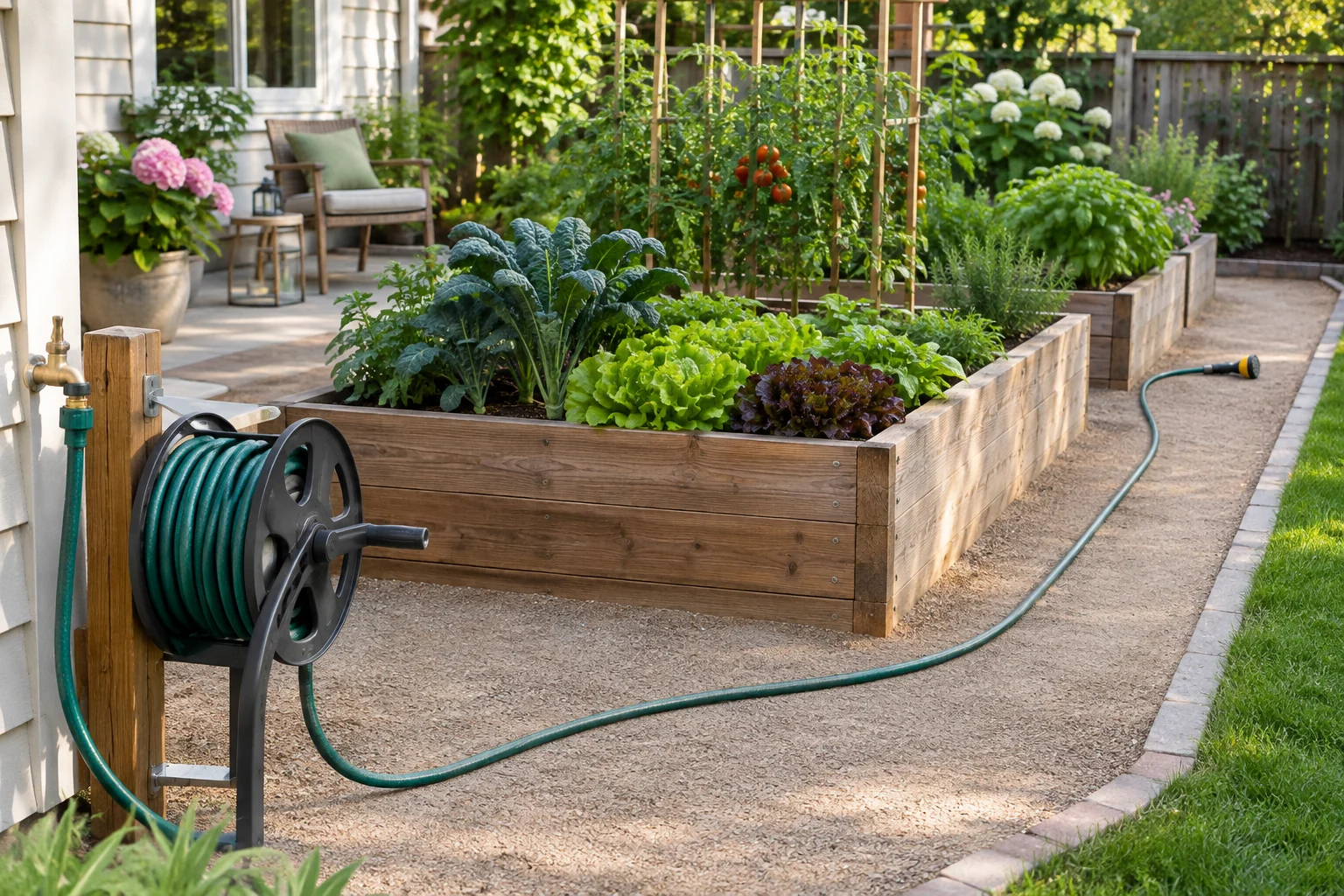
Measure along the route around raised beds rather than diagonally across their planted area. Consider how the hose will move when you change positions. Avoid relying on plants or sharp bed corners to redirect it. A different reel location or an appropriate product from the hose system may improve routing; follow the actual maker's guidance rather than improvising accessories from an image.
15. Keep spare connectors in separate organized storage
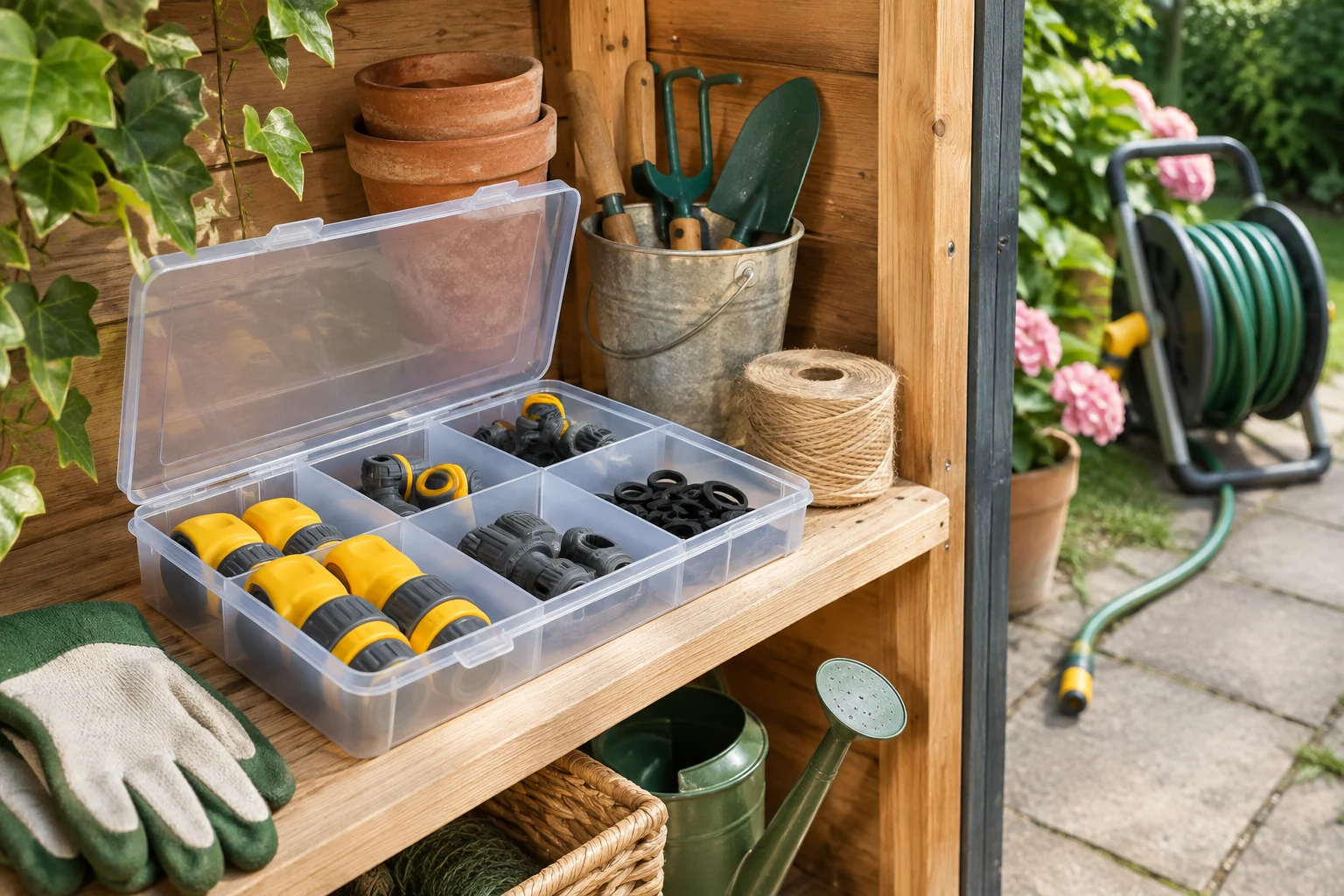
Small compatible fittings are easier to find in a dedicated compartment than loose in soil or the bottom of a large tool bin. Keep the product information needed to identify compatibility. Follow fitting care and storage directions, and avoid mixing unidentified parts into the working system. Store the organizer in an appropriate location for its material rather than assuming a decorative container is weatherproof.
16. Allow room for the hose to leave the reel smoothly
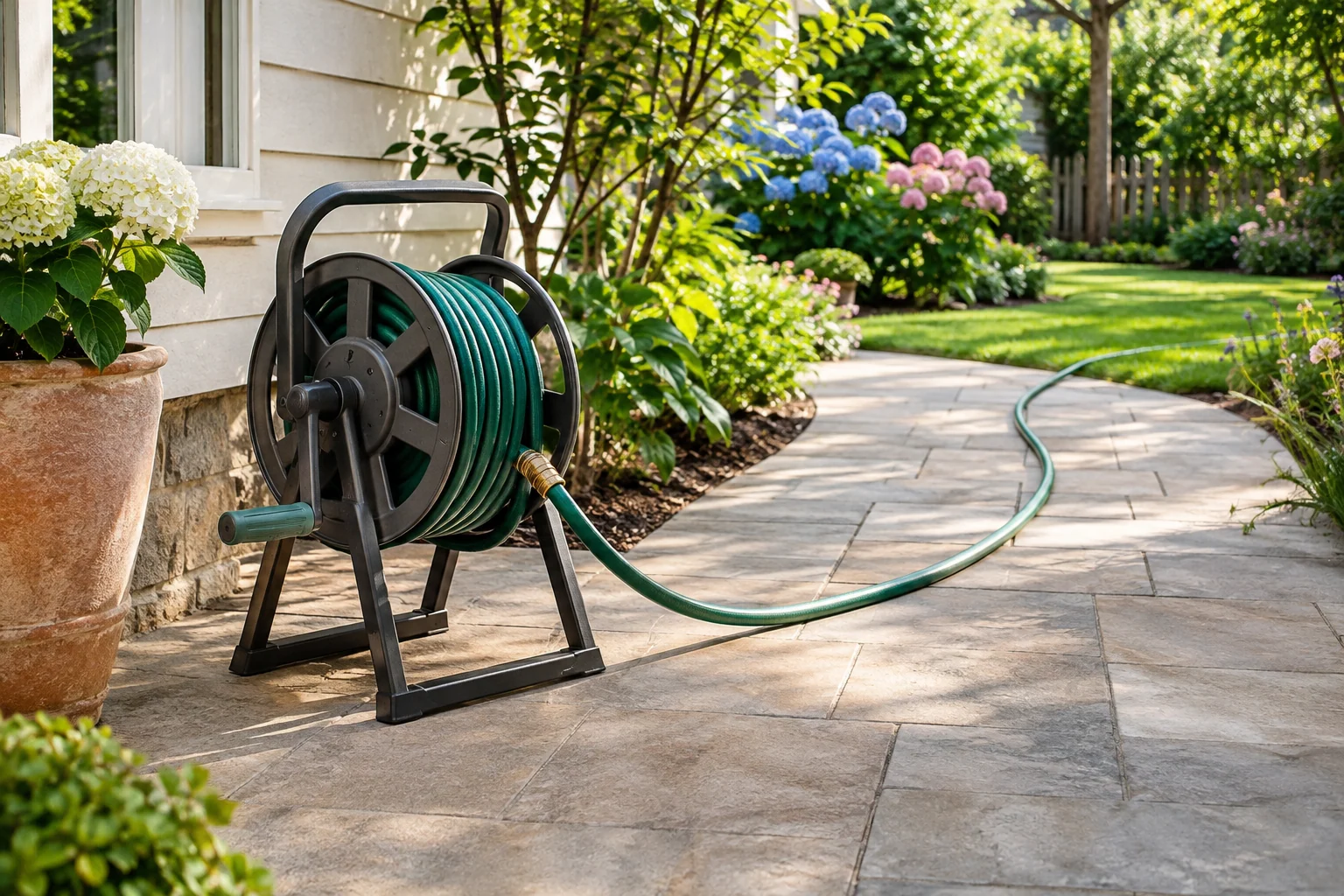
Check the path from the exit point to the garden. A reel tucked behind a sharp corner or furniture leg may make the hose rub or bend as it is pulled. Follow the manufacturer's operating directions and adjust the placement if needed. The reel should work without threading the hose through a narrow decorative gap each time you water.
17. Keep a retractable system visible during use
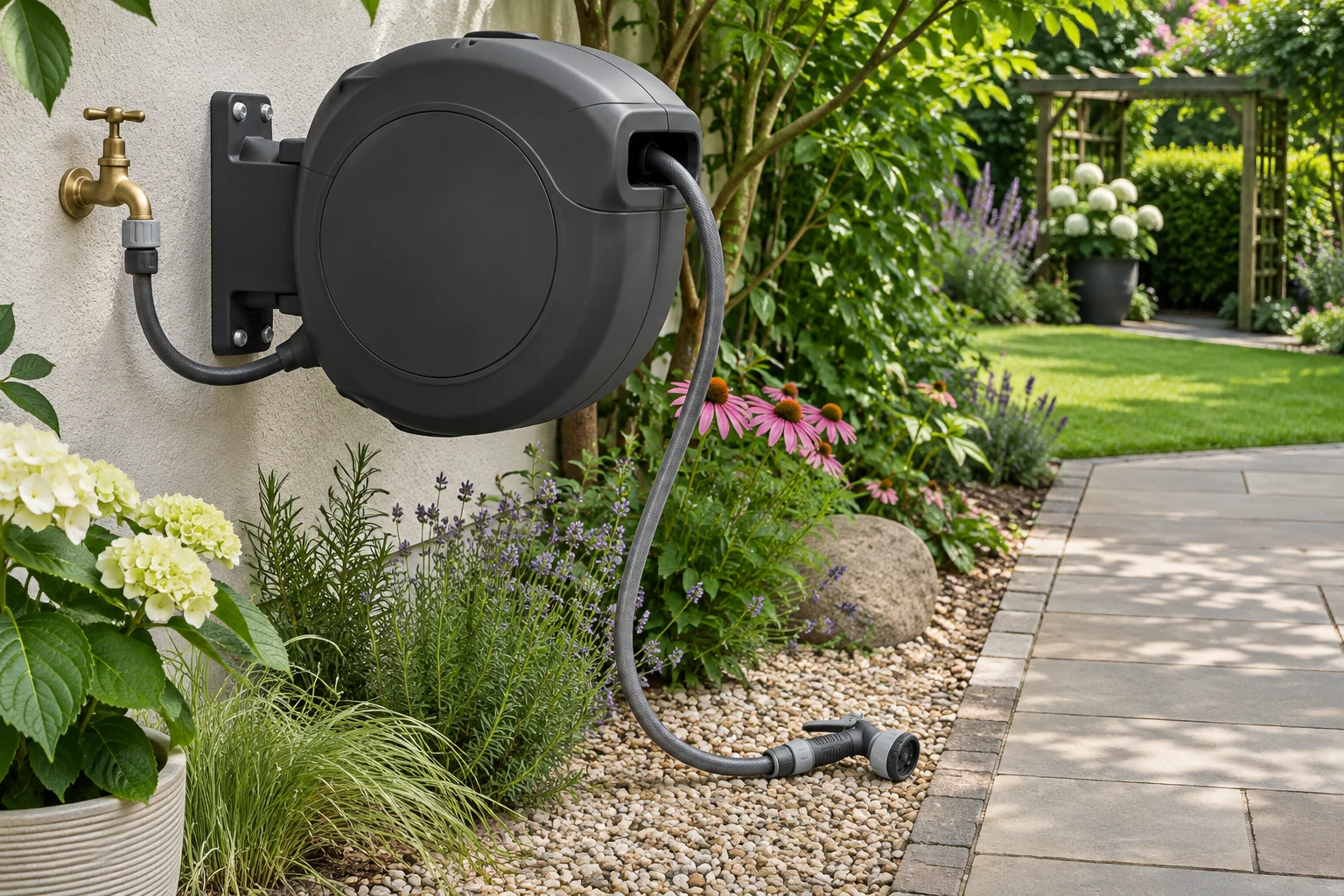
If you choose a retractable product, read and follow its specific extension and return instructions. Keep the operating area clear and use it as intended rather than treating every mechanism as interchangeable. Avoid enclosing the unit or obstructing its movement for appearance alone. A clean surrounding wall and limited planting can make the system look orderly without interfering with its design.
18. Make the stored footprint part of the plan
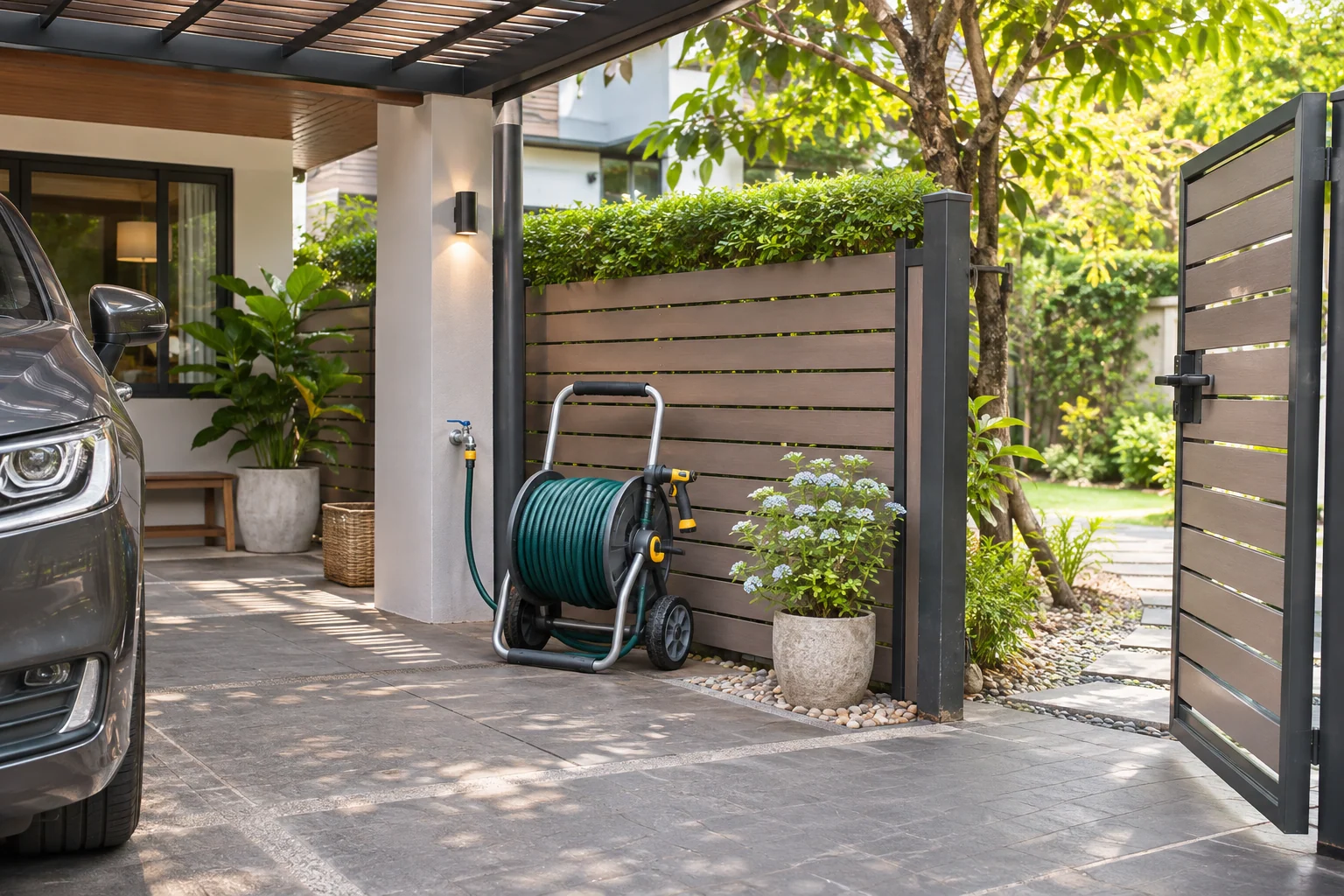
Include projecting handles, nozzles, connectors and hose loops when measuring the parking space. The reel's body dimensions may not describe the whole working arrangement. Mark the complete footprint beside a path or gate and test the movement of nearby doors. A product that fits comfortably while connected is more useful than one that only fits after being disconnected and rearranged.
19. Use a simple container only if the hose guidance allows it
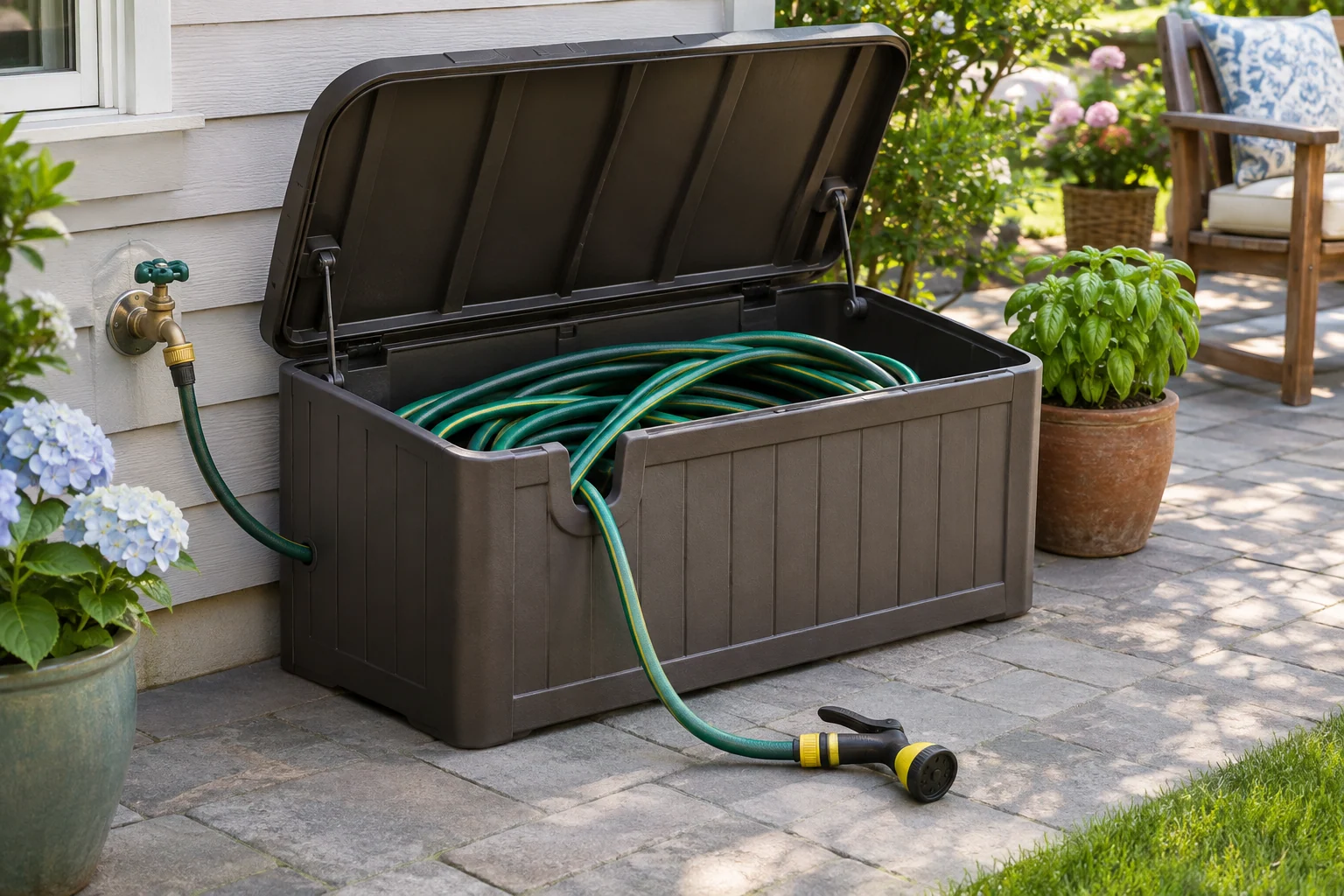
A suitable container can conceal a loosely coiled hose, but verify the hose's storage needs and the container's drainage and outdoor suitability. Avoid a tight decorative pot that forces sharp bends or hides trapped water. Check the weight when handling it and keep fittings accessible. A purpose-designed hose container may offer relevant features, but those still need confirmation for the exact product.
20. Separate the watering route from outdoor dining
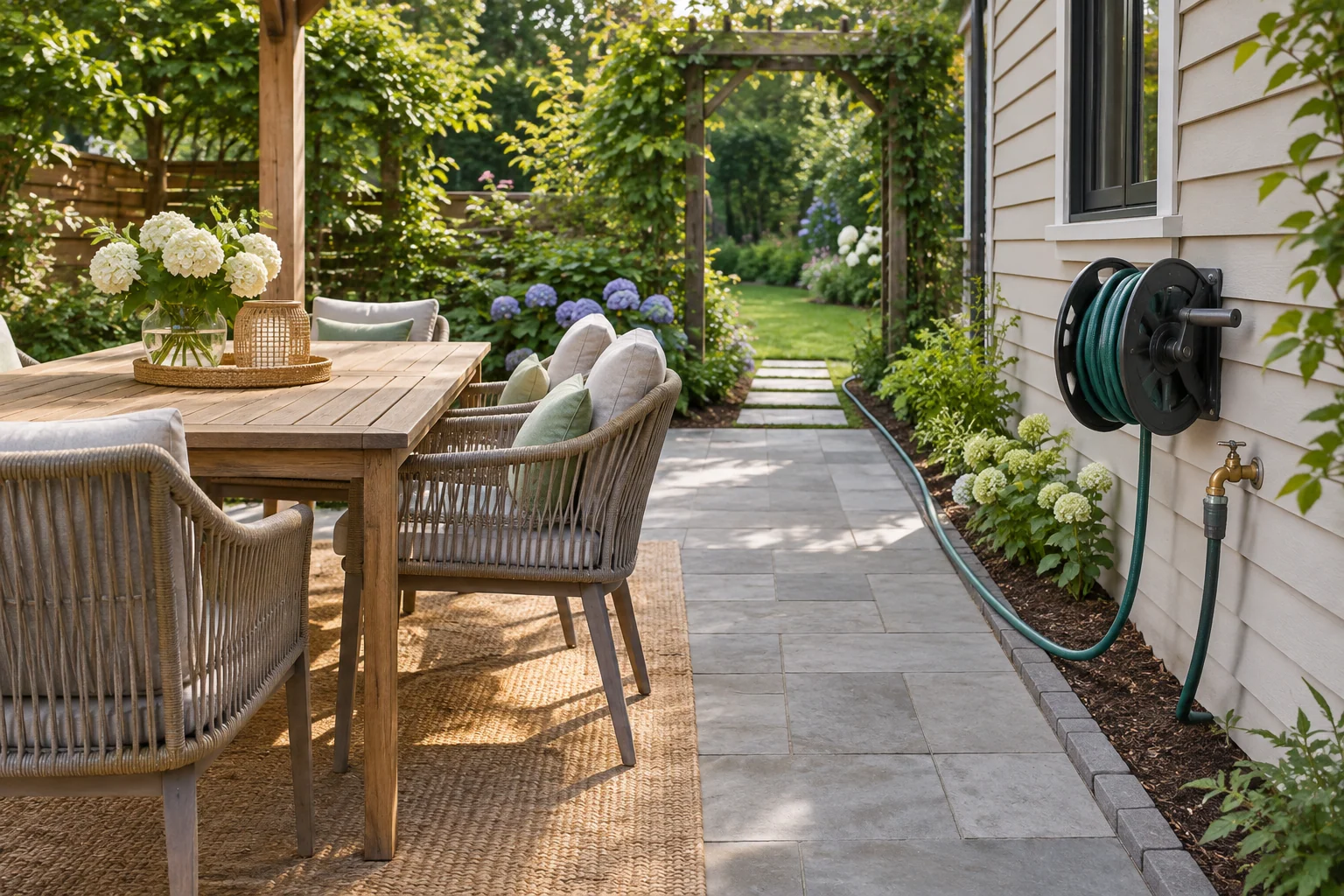
Place the reel so routine watering can reach the garden without weaving between occupied chairs whenever practical. Test the route with the table in normal use, including chairs pulled out. Keep the hose returned after watering. If the existing tap position limits options, work within the current system and choose appropriate guidance for any larger changes rather than treating storage styling as plumbing advice.
21. Follow exact seasonal storage instructions
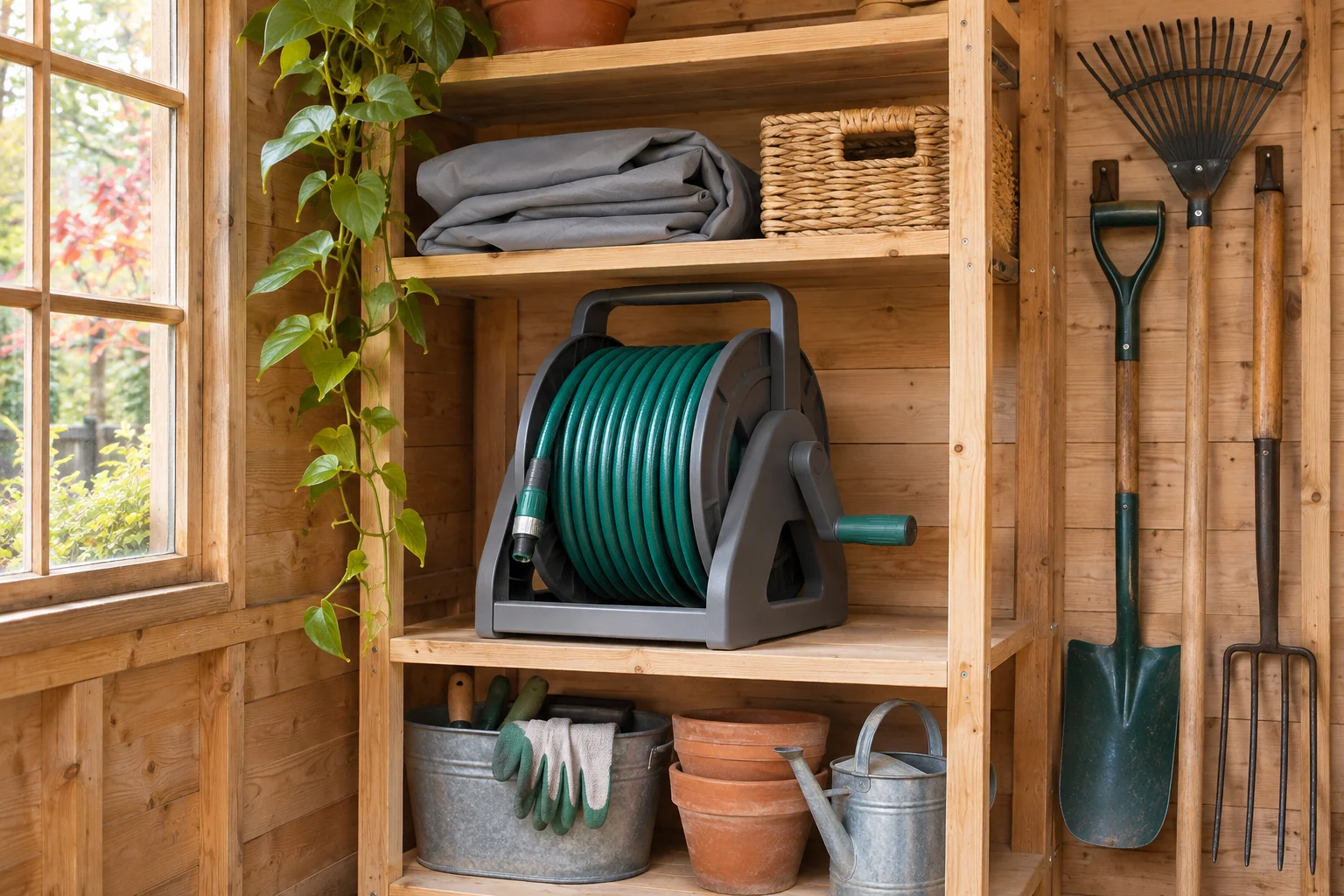
Check the reel, hose and fittings separately for their cold-weather requirements. Some products are designed with specific frost-protection features, while others need a different routine. Keep the actual manual rather than relying on a generic social-media rule. Prepare appropriate storage space if the instructions call for moving the system, and avoid assuming a cover changes the manufacturer's stated winter limits.
22. Make the reel easy to inspect and clean
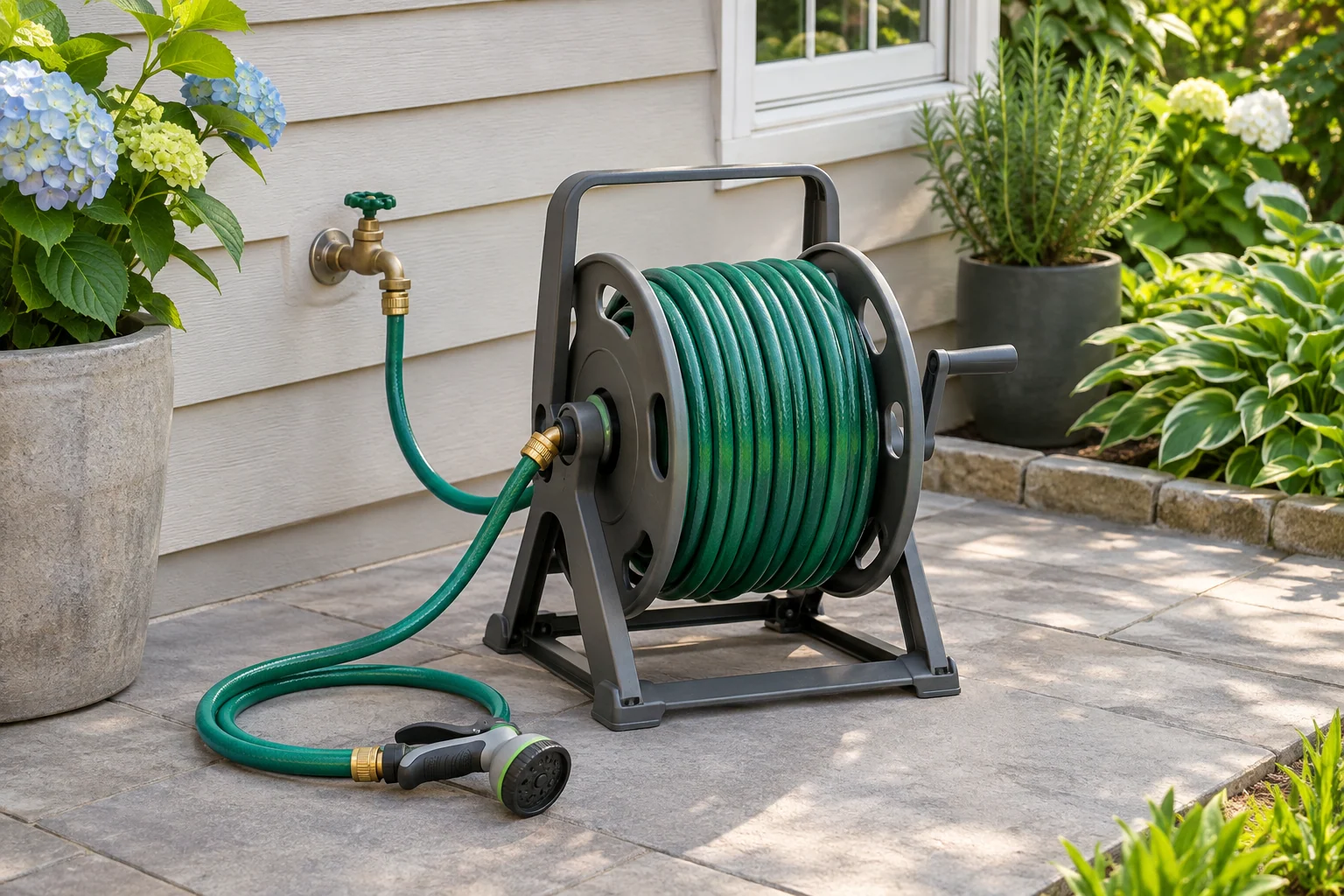
Leave access around the unit so dirt, leaves and visible problems can be addressed according to the instructions. Do not bury the base in mulch or pack pots against every side. A quick visual check is easier when the reel has a defined clear area. If you notice leaks or damaged components, address the actual product issue rather than hiding it with landscaping.
23. Choose one main system instead of scattered coils
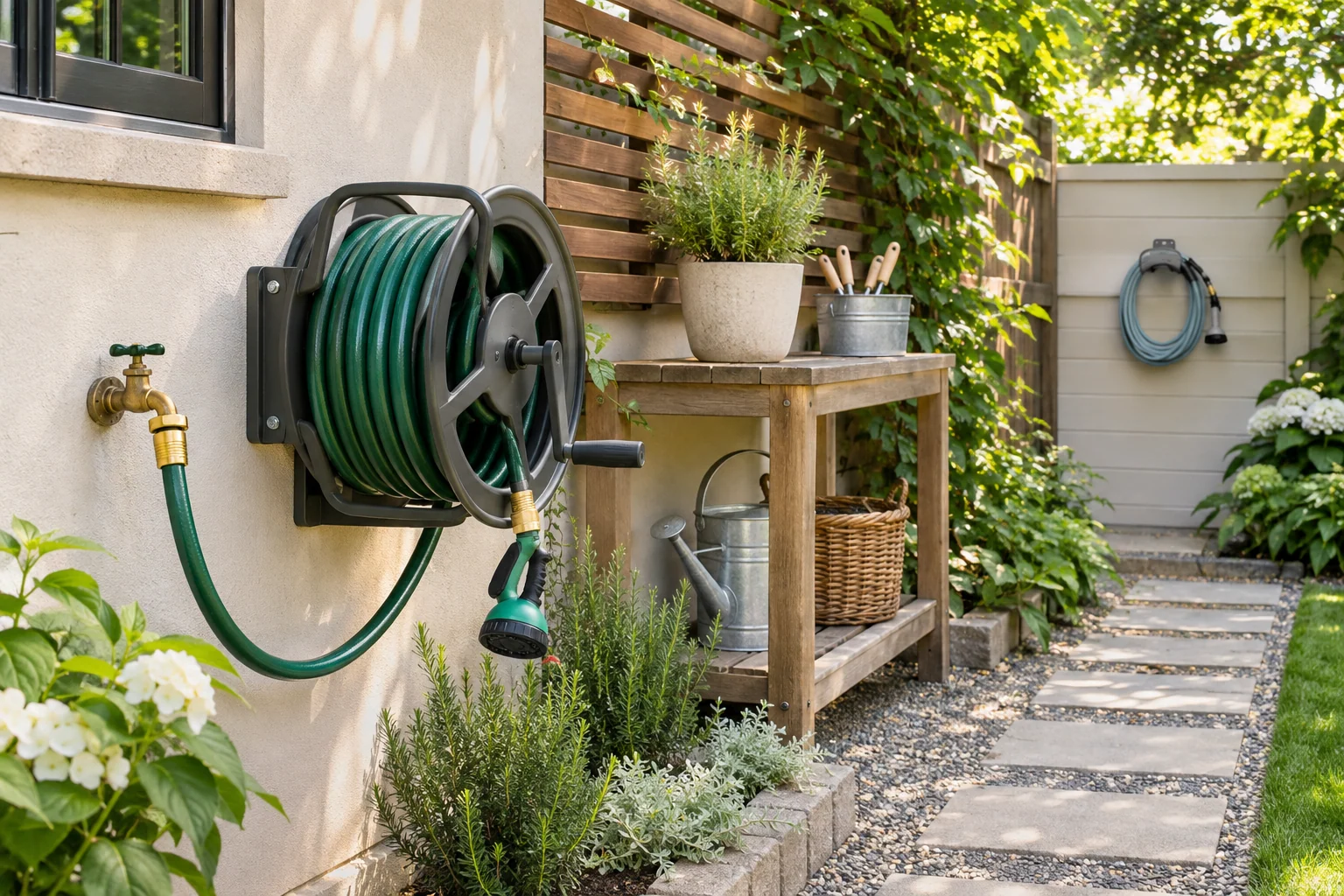
Several loose coils around the yard can make it difficult to know which hose belongs where. Review the routes and choose a clear primary storage arrangement appropriate to the actual watering needs. Keep any separate hose distinctly organized for its intended purpose. The aim is a manageable system, not the fewest possible products regardless of compatibility, reach or the garden's layout.
24. End watering with a consistent return routine
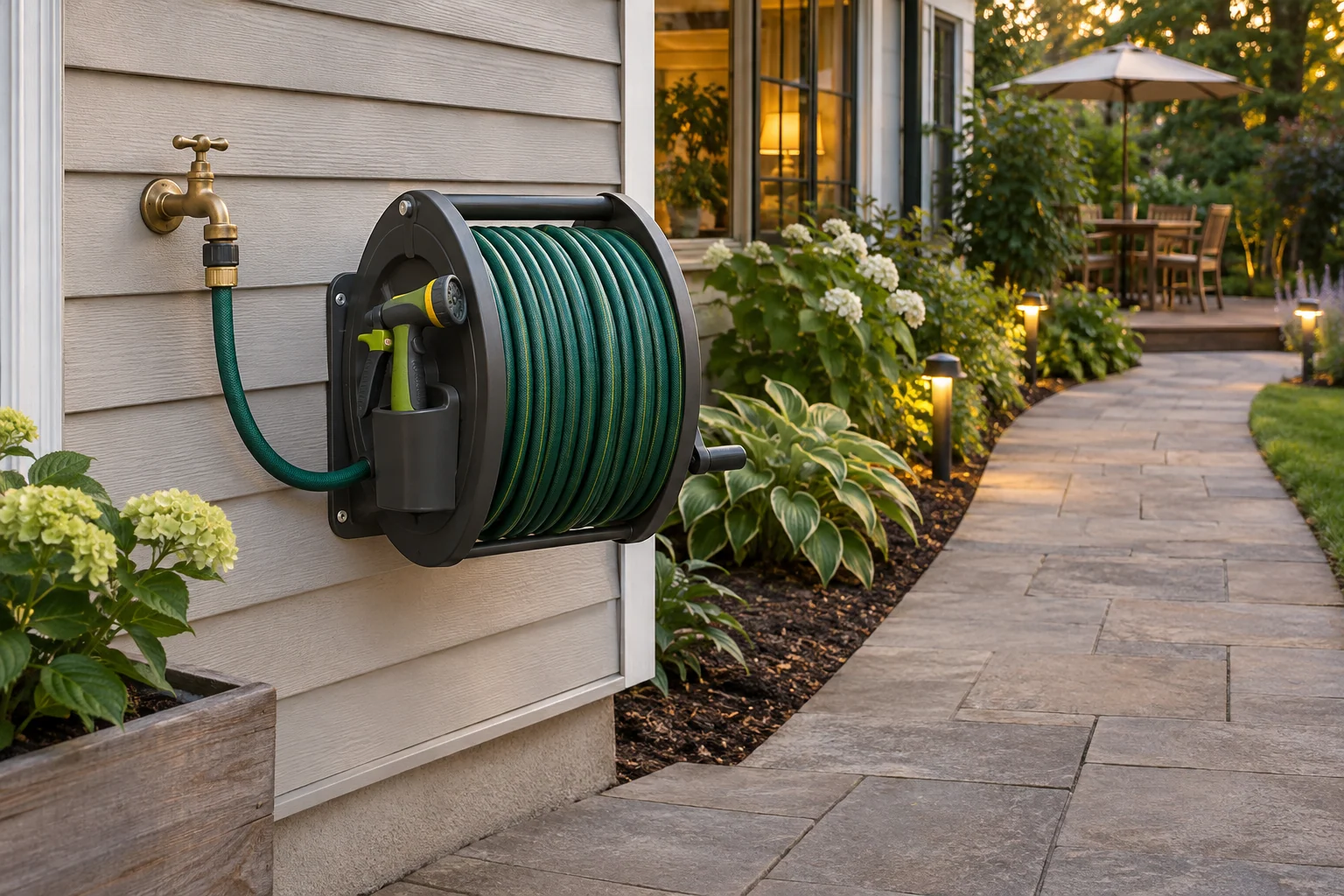
Follow the product's shutoff, pressure-release, draining and storage instructions as applicable to that system. Return the hose without tight bends, place the nozzle in its intended home and check that the path is clear. Keep the sequence short enough to repeat. The most attractive storage arrangement is one that makes putting the equipment away a normal part of watering.
A hose-route and storage worksheet
Sketch the tap, the storage position, the farthest watering destinations and every turn along the intended route. Measure that route, then compare it with the chosen system's compatible hose length and connector requirements. For a hypothetical bed 30 feet away by the actual path, do not choose solely from a 20-foot straight-line estimate across planting; include the connection and operating guidance for the exact product. Record the full stored footprint, handle movement and seasonal instructions beside the sketch. This worksheet does not replace a product manual or plumbing assessment.
A practical next step
A good hose-storage plan follows the tap, the watering route and the return routine. Choose a compatible system, leave it room to operate and keep paths clear when the job is finished. A restrained position and a few thoughtful planting choices can make practical equipment feel organized without concealing the parts you need to use.
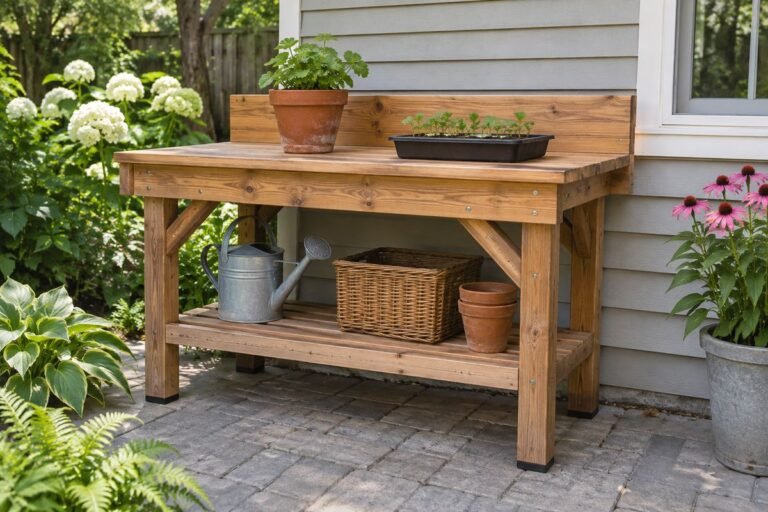
The images are original AI-generated design concepts. They illustrate arrangements rather than tested products, installations or measured performance.
Sources and care references
Related reading on Nestroxe
- Organize the wider garden work area
- Plan access around raised beds
- Keep useful routes through the garden
Optional digital guide for this topic
If you prefer a structured workbook, explore this related paid guide.