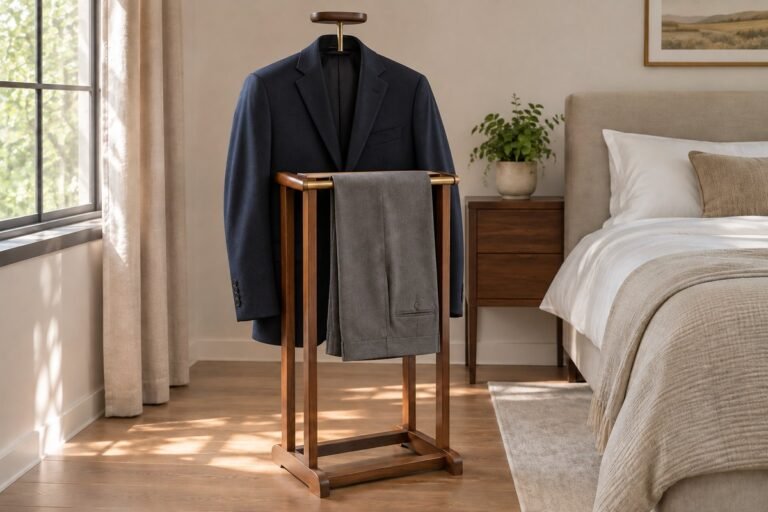
Useful kids bedroom ideas begin with the child and the routines that happen in the room: getting dressed, finding a book, working at a desk and returning things at the end of the day. Start with an appropriate bed and the furniture you already have, then add color and storage around those real activities.
This guide focuses on a bedroom for a school-age child, with ordinary low single-bed concepts. It is not a nursery, bunk-bed or loft-bed guide. The 27 ideas offer distinct layout and decorating choices; the planning sheet below helps you select the few that answer your room rather than trying to include them all.
Contents
- 1. Begin with a bed wall that leaves the room usable
- 2. Give a narrow room one main furniture run
- 3. Use the existing bed as the starting point
- 4. Build the palette around something the child chooses
- 5. Try a painted lower band for color without a full mural
- 6. Give broad stripes one clear surface
- 7. Keep a wallpaper pattern on the wall it suits
- 8. Put the theme in replaceable layers
- 9. Let the ceiling remain a quiet part of the scheme
- 10. Make a reading spot that does not need a built-in nook
- 11. Keep the current book group easy to see
- 12. Give the desk its own occupied footprint
- 13. Place a drawing area where supplies can return nearby
- 14. Display a small selection of the child’s artwork
- 15. Choose bedside storage through the evening objects
- 16. Separate everyday clothing from occasional storage
- 17. Use the under-bed space for a named category
- 18. Keep the daily toy group smaller than the whole collection
- 19. Give an unfinished project a defined stopping place
- 20. Put a laundry return near the dressing routine
- 21. Use a rug through the movement around it
- 22. Choose a window treatment without decorative loose cords
- 23. Repeat one color across mismatched furniture
- 24. Leave a deliberate open patch for the actual routine
- 25. Bring a favorite texture into one simple layer
- 26. Reserve a small personal collection without filling every surface
- 27. Plan the next change before buying the last accessory
Start with the routines that need a place
Record the room’s actual openings and retained furniture. Ask the child to choose a favorite color or item, then list the everyday activities and objects that must fit. Compare the space with drawers open and the desk chair occupied. Resolve the real furniture, window-covering and installation requirements before purchasing; a concept image cannot establish product suitability or childproof a room.
Choose an idea through the problem it answers
- Furniture fits but movement is awkward: Compare the occupied bed, wardrobe and desk positions before adding another piece.
- The child wants a theme that may change: Put the interest into a limited replaceable layer and retain appropriate larger furniture.
- Books and toys cover the bed: Give a modest current group a low, specific return position.
- The room feels unfinished: Compare a deliberate color relationship and one personal display before filling the remaining floor.
- The next school year will change the routine: Keep one adaptable area and record the real product adjustment options.
1. Begin with a bed wall that leaves the room usable

Place an ordinary single bed on the drawing before adding a reading chair or a larger wardrobe. Compare the door swing, window and position used to make the bed. A photograph of a neatly tucked corner does not show whether you can change the bedding there.
Keep a clear route from the entrance to the main storage and the bed. Test the arrangement with the furniture you intend to keep, including its projections. Let the remaining space set the size of optional pieces rather than collecting furniture and hoping it will fit.
2. Give a narrow room one main furniture run

In a narrow room, line up the bed and a compact storage piece on one side when the actual dimensions allow. Compare that arrangement with placing a bulky piece opposite the bed. The useful difference is the remaining occupied space, not the number of furniture items along a wall.
Draw every opening in use and include the person reaching a drawer. Keep a chair or basket out of the remaining passage. A smaller item that performs its task may be more useful here than a coordinated set whose closed dimensions only just fit.
3. Use the existing bed as the starting point

A room can change character while retaining a sound, appropriate bed. Compare its finish with two possible bedding and wall-color combinations before replacing it for appearance alone. Check the condition and the maker’s information separately from the styling decision.
Treat the headboard, quilt and nearby furniture as one view. A familiar wood frame can connect an otherwise colorful room; a white frame can leave more attention for a patterned quilt. Retaining an appropriate piece also gives the child a stable reference while other details change.
4. Build the palette around something the child chooses

Offer a manageable choice, such as two quilt patterns or a few painted sample boards. Use the chosen item to identify a main color and a smaller accent. An interest can guide the room without requiring every wall and object to illustrate it.
Compare those colors with the floor and furniture already present. Keep some plain areas so the favorite item remains visible. Revisit the choice after seeing the real samples in the room instead of committing to an entire matching collection from a screen image.
5. Try a painted lower band for color without a full mural

A lower wall band can bring color around furniture while leaving the upper wall simple. Mark its proposed position with removable paper before painting. Compare it with the bed, door casing and other breaks instead of assuming it must follow a standard height.
Choose the finish through its actual surface preparation and care instructions. Keep the color continuous where that helps the room feel composed, or stop at a deliberate corner. The visual band can stay useful even when the bedding and small accessories change.
6. Give broad stripes one clear surface

Wide painted stripes can add pattern without several competing motifs. Place them on one wall and compare their rhythm with the bed width and nearby openings. Test the spacing on paper rather than measuring a design from a photograph.
Use plainer bedding or curtains if the stripes are the main pattern. A stripe that disappears awkwardly behind every piece may work better on another surface. The room should still make sense from the entrance, where the whole composition is seen at once.
7. Keep a wallpaper pattern on the wall it suits
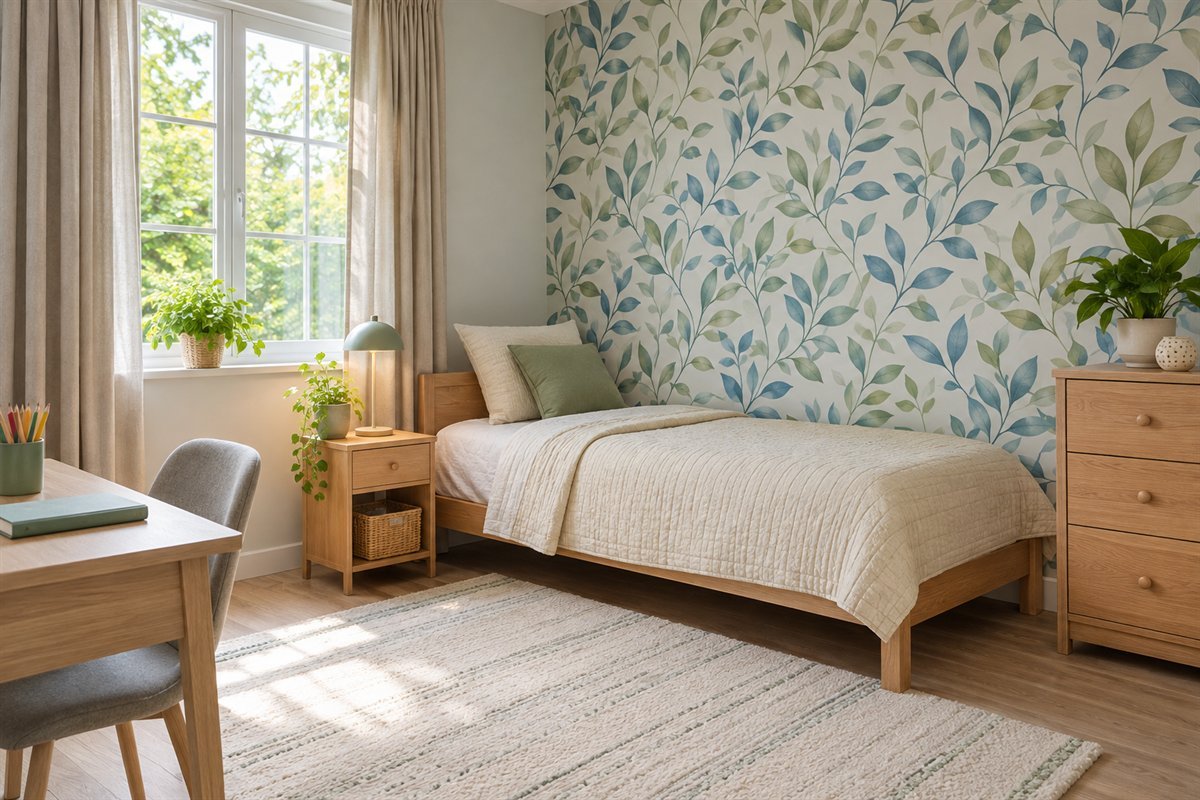
A small area of wallpaper can define the bedroom without becoming a permanent theme across every object. Compare a real sample with the furniture and the distance from which it will be seen. A detailed motif can read quite differently from the doorway.
Check the chosen paper’s surface requirements and removal information. Use the same color elsewhere in a plain textile if you want a connection. The illustration offers a pattern relationship; it cannot establish the actual wall condition or how a product will remove.
8. Put the theme in replaceable layers

A favorite subject can appear in bedding, a small print or a limited group of objects. Keep the larger furniture more adaptable if the interest is likely to change. The goal is a room the child recognizes as theirs without making the next change an entire renovation.
Choose one or two strong references rather than repeating the same image everywhere. For example, a blue quilt and a simple star-pattern cushion can suggest space while leaving the furniture ordinary. Keep decorative pieces appropriate for the child and the way the room is used.
9. Let the ceiling remain a quiet part of the scheme

A plain ceiling can balance a colorful quilt or patterned wall. Compare its actual color with the upper walls before adding another decorative feature. Keeping that plane quiet may be the choice that allows the child’s own belongings to remain the focus.
If changing the ceiling finish, resolve preparation and lighting details for the actual room. Do not add suspended decorations simply to fill an empty area in a photograph. A considered absence of pattern can be useful when the room already has several strong surfaces.
10. Make a reading spot that does not need a built-in nook

A small upright chair near a low bookcase can be enough when it fits without taking over the route. Compare its occupied footprint and the place a book is set down. You do not need a raised platform or enclosed structure to give reading a recognizable place.
Choose the chair for the child who will use it and keep the surrounding area straightforward. Avoid turning a floor corner into a pile of cushions that must be moved before cleaning. If the room is tight, reading on the bed with an appropriate arrangement may be the simpler brief.
11. Keep the current book group easy to see

A low front-facing rack can hold a small current selection while other books have a separate home. Compare the rack’s actual openings with the largest book and how it is put back. A display becomes less useful when the books are packed tightly behind one another.
Let the child help choose the current group and make returning it uncomplicated. IKEA’s storage guide discusses keeping everyday storage within the child’s reach. Apply that idea to the actual child and furniture, with suitable installation and anchoring information kept alongside the plan.
12. Give the desk its own occupied footprint
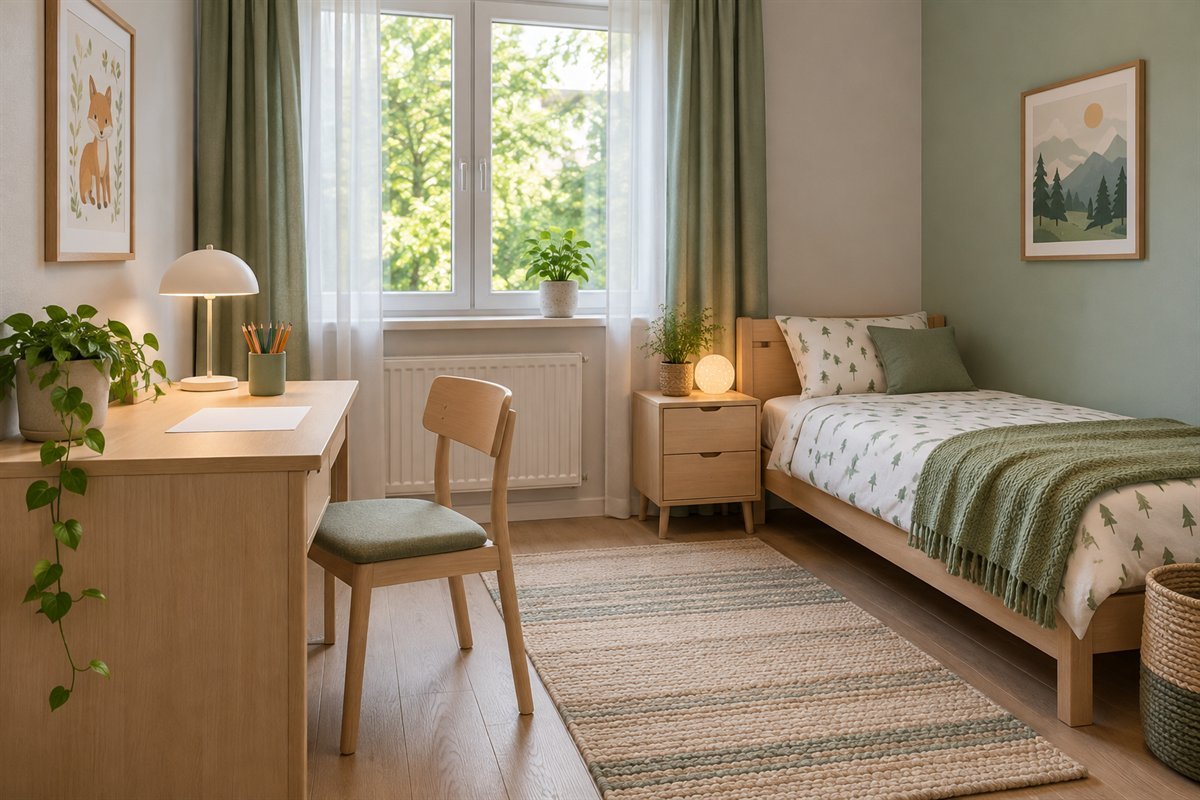
A compact desk needs room for the chair in use and the activity on top. Draw that complete arrangement rather than fitting the closed chair neatly under the surface on a plan. Keep it separate from the opening needed to reach clothing.
Test the chosen desk and seat with the child and the work they actually do. A desk for drawing on paper may have a different brief from a screen setup. Keep the top useful for that task instead of adding a decorative collection that occupies the working area.
13. Place a drawing area where supplies can return nearby

Keep a modest drawing kit close to the surface used for it. Compare paper size, the space for elbows and where the current drawing rests while materials are put away. This prevents the bedroom desk from becoming an unfinished stack without a place to return things.
Use storage suited to the materials and the child’s needs, with adult control where necessary. Keep messy or unsuitable activities elsewhere when the bedroom cannot accommodate them. The useful feature is the complete start-and-finish routine rather than a large collection of attractive art supplies.
14. Display a small selection of the child’s artwork

Choose a limited side-wall area where current work can be seen without covering every surface. Use suitable securely installed frames or another appropriate system for the actual wall. Keep the display away from the bed and avoid cords or loose hanging clips.
Let the child choose the pieces to show and keep the rest in an appropriate folder. A small display is easier to change than a densely packed arrangement. Its purpose is personal authorship, so it can remain interesting even when the furniture and bedding are simple.
15. Choose bedside storage through the evening objects

List the few things that belong beside the bed before choosing a cabinet. A current book, tissues or another actual item may need a modest surface and one drawer. Avoid buying a larger piece because its proportions resemble an adult bedroom set.
Compare the cabinet with the bed and the route used in the evening. Keep fragile ornaments and loose electrical arrangements out of the styling brief. A simpler bedside position can be complete without a lamp when the room’s appropriate lighting arrangement already meets the task.
16. Separate everyday clothing from occasional storage

Give the clothing used most often a clear location within the chosen wardrobe or dresser. Compare the real folded groups and hanging lengths rather than filling a plan with identical decorative baskets. Keep the child’s actual reach and the furniture instructions part of the decision.
IKEA’s guide describes adaptable shelving as needs change. Use the adjustment options the real product provides instead of modifying it from a concept image. Seasonal items can have another appropriate home when keeping them here makes everyday clothing hard to retrieve.
17. Use the under-bed space for a named category

A low container can use a suitable bed’s clear space for occasional bedding or another defined group. Measure the full usable gap and the movement needed to pull the container out. Include handles, legs and the rug rather than relying on the nominal bed size.
Keep the contents appropriate and within the actual bed and container guidance. Do not fill the opening so tightly that cleaning or retrieval becomes difficult. If the bed is close to a wall on that side, choose another storage position instead of creating a hidden compartment that rarely gets used.
18. Keep the daily toy group smaller than the whole collection
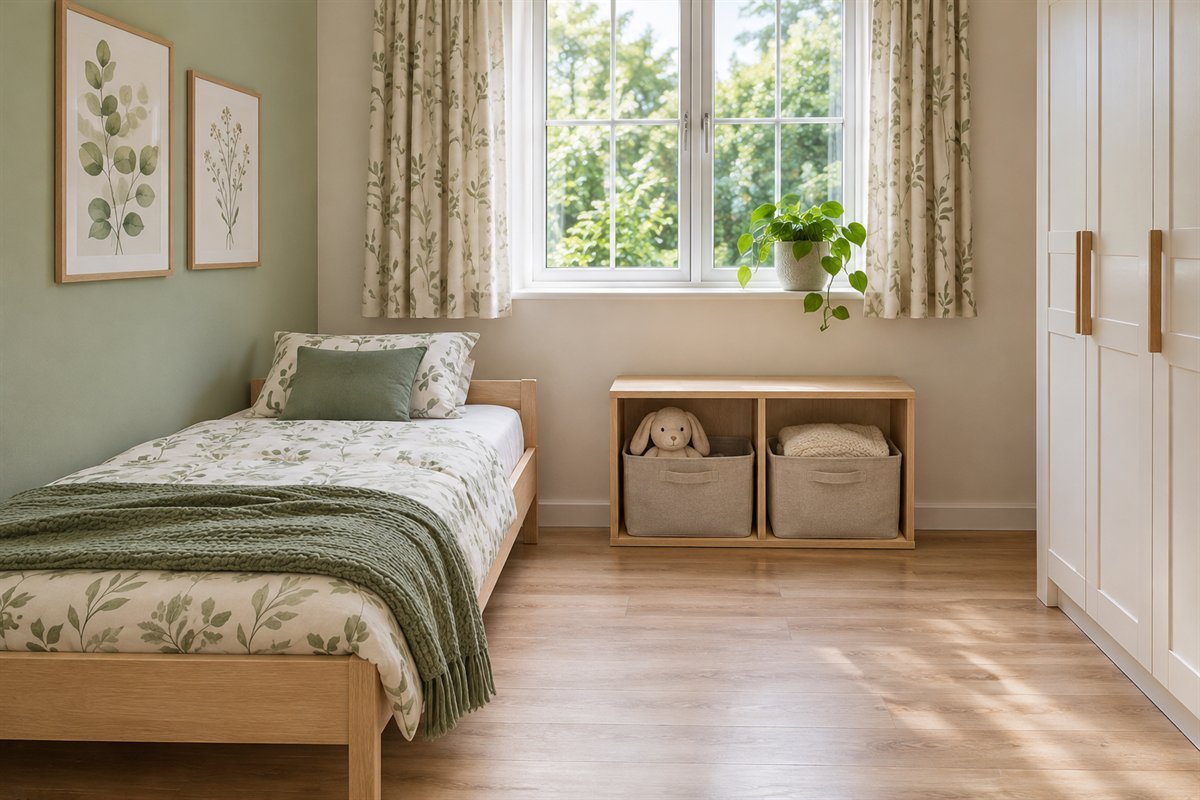
A bedroom can hold a limited group without becoming a second playroom. Choose the objects used here and give them a defined low storage position. Keep larger activities in the room where they normally happen if that arrangement already works.
Compare the container with the actual objects and how they return after use. Avoid storing a favorite toy high on a wardrobe as a display. The CPSC advises removing tempting objects from furniture tops that could encourage climbing; a styled photograph should not undo that practical consideration.
19. Give an unfinished project a defined stopping place

A child may want to keep a drawing or construction between sessions. A suitable tray or shelf within a low unit can preserve the current project without taking over the bed or passage. Decide what fits and how long it stays before adding a permanent display.
Use the arrangement only for materials appropriate to the child and the space. A bedroom does not need to hold every activity in progress. A clear stopping place is useful because it gives unfinished work a boundary and leaves the next morning’s ordinary routine possible.
20. Put a laundry return near the dressing routine

Place a manageable hamper where clothes normally come off, provided its position does not obstruct the route or a cabinet door. Compare the complete footprint with the wardrobe in use. A narrow decorative basket may be inconvenient if laundry repeatedly lands beside it.
Choose a product appropriate for the child and keep long handles, loose cords or heavy lids out of this simple brief. Make the route to empty it part of the plan. The hamper belongs through its actual job, not because an empty corner needs another accessory.
21. Use a rug through the movement around it

Compare the rug with the bed, desk chair and everyday route before choosing a large pattern. Check how its edges meet the furniture in use and follow the actual product guidance for the floor. A nice pattern alone does not establish a stable installation.
Keep the number of separate floor layers manageable. One suitable rug may give the room color while leaving cleaning and chair movement straightforward. A smaller decorative piece that repeatedly bunches or moves deserves reconsideration rather than another object placed on top to disguise it.
22. Choose a window treatment without decorative loose cords

Select the actual window covering through the window, privacy needs and current product safety information. Keep its operation and installation in the decision. This guide’s concepts avoid decorative cord arrangements; the appearance of a blind in an illustration is not a product safety assessment.
Compare the textile or finish with the bedding using real samples. Do not place furniture as a step to reach window controls or use a long curtain as a play feature. Keep the window’s requirements resolved before treating it as another place to repeat the room’s theme.
23. Repeat one color across mismatched furniture

A retained bed and a different desk can belong together through a repeated accent in textiles or hardware that is suitable for the actual furniture. Begin with the pieces you have and identify the visual difference that matters. They do not need identical silhouettes.
Use samples before deciding to refinish anything, and follow the chosen products and furniture guidance. A small color connection may be enough. Keep the desk and storage useful rather than replacing appropriate pieces solely to obtain a matching catalog arrangement.
24. Leave a deliberate open patch for the actual routine
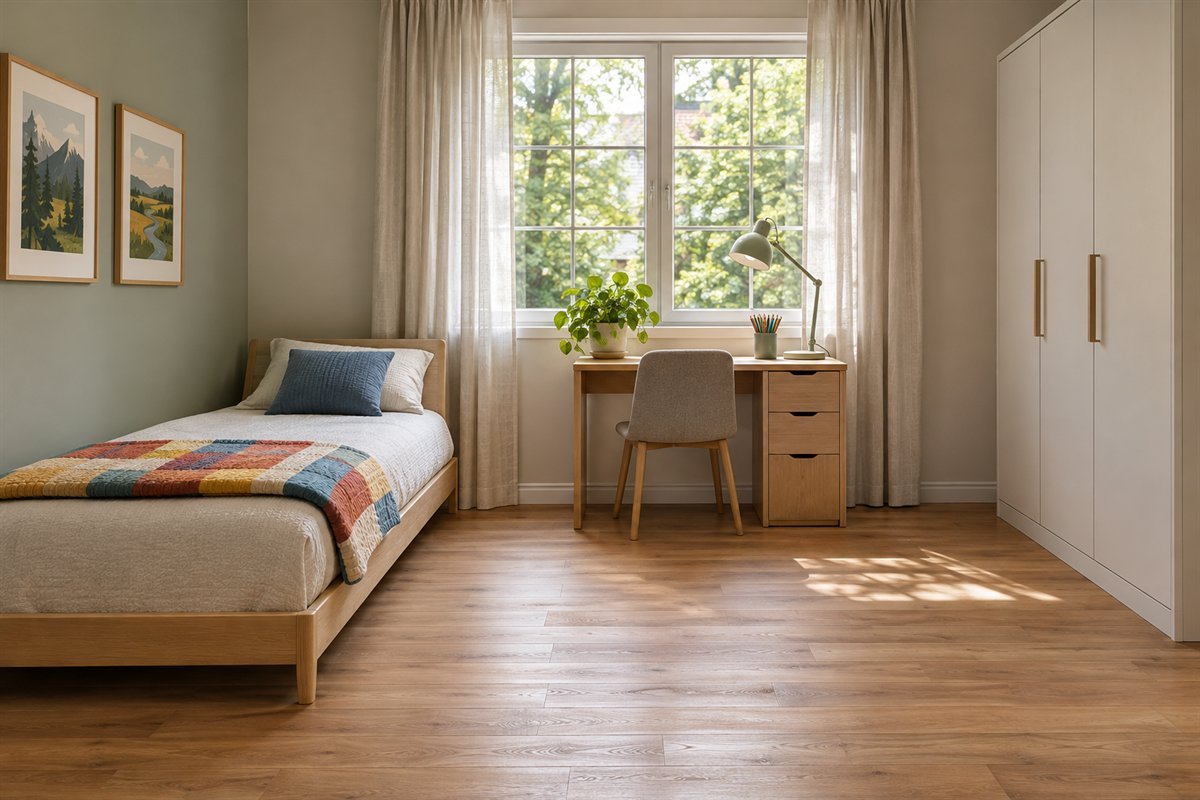
A clear part of the floor may serve dressing, laying out a school bag or a modest activity. Name the ordinary use before filling it with another chair or tent. An unoccupied area can be part of a finished design.
Check it with the furniture in use, since an open drawer or pulled-out chair changes what remains. Keep larger physical play in an appropriate space instead of making a cramped bedroom perform every role. The layout should explain why that patch stays clear.
25. Bring a favorite texture into one simple layer
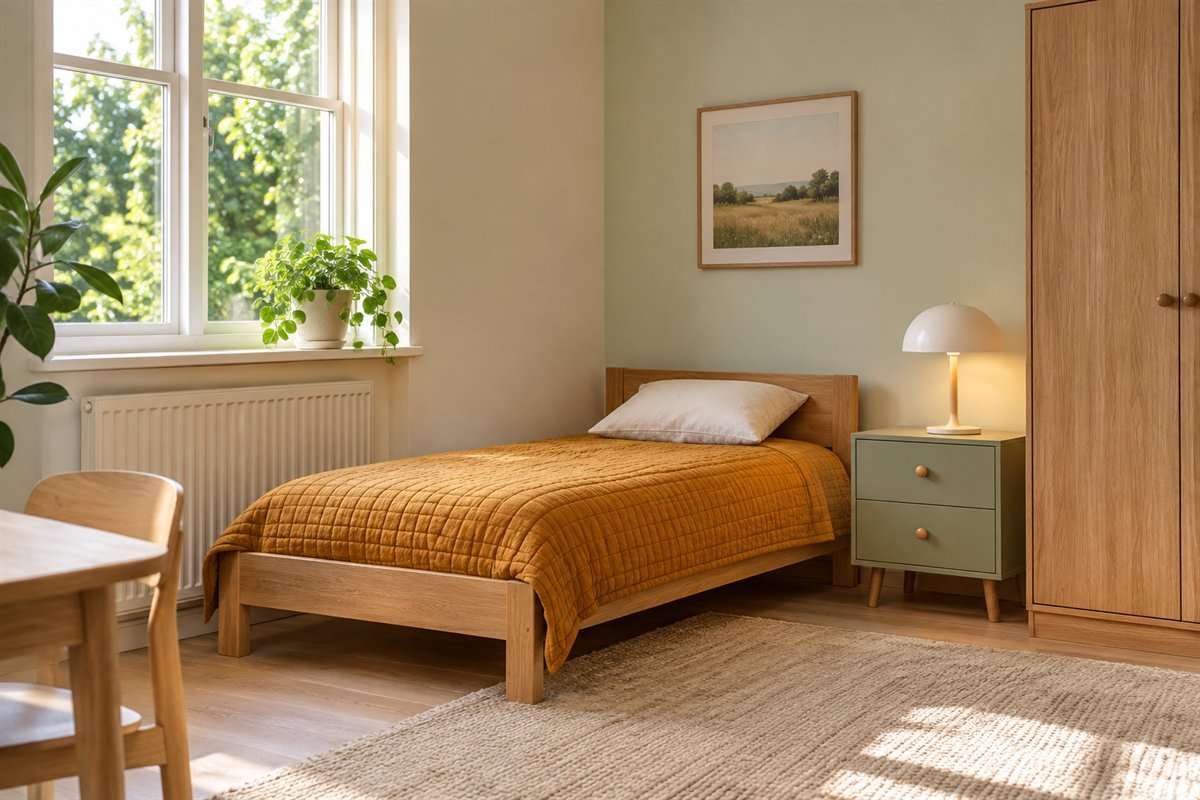
A quilt, a smooth wood frame or a modest upholstered chair can give the room tactile variety. Choose a small number of appropriate materials and compare their actual care requirements. The scene can suggest texture, but it cannot establish fabric composition, sensitivity or wash performance.
Keep the layer connected to a real object the child uses. A decorative pile of cushions may make the bed harder to put right each morning. One useful textile that fits and is manageable to care for can carry more of the room’s character than several ornamental layers.
26. Reserve a small personal collection without filling every surface
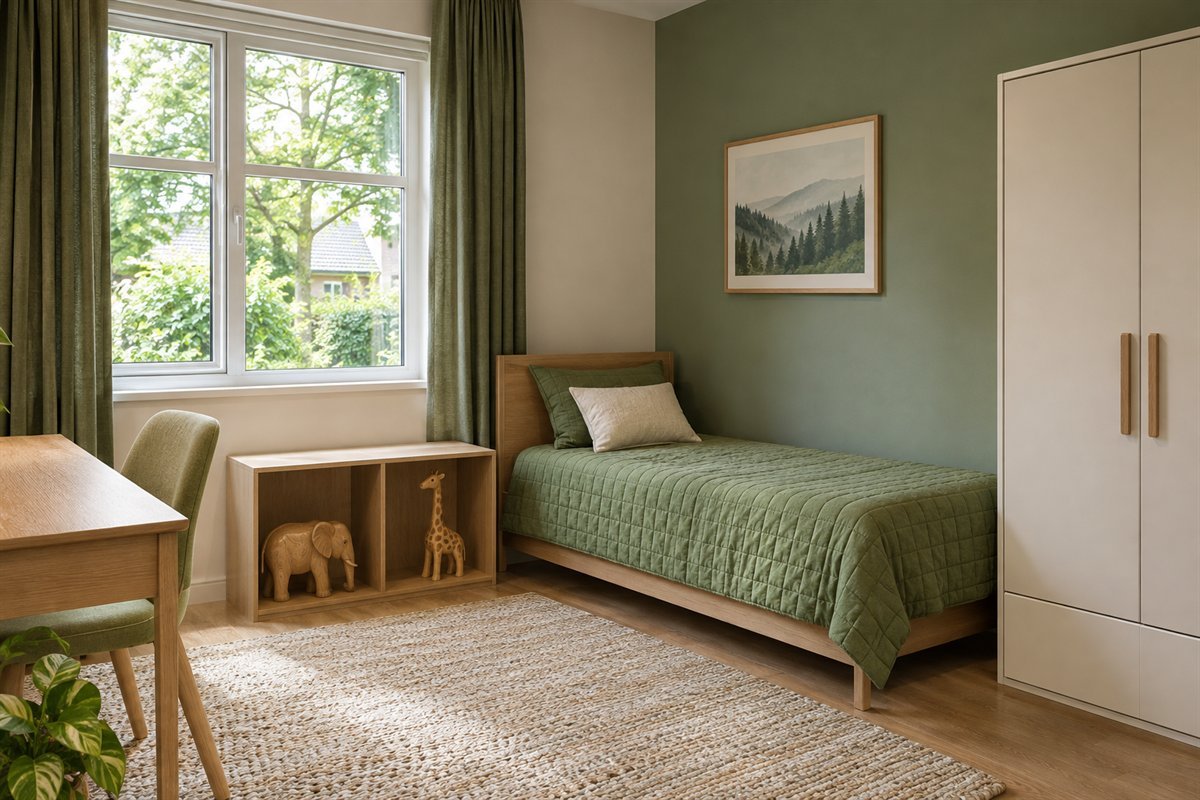
A few chosen objects can communicate an interest when they have a defined low display area. Keep the items appropriate for the child and the furniture’s use. Leave the top of taller furniture free of attractive objects that invite climbing.
Choose the collection with the child rather than turning the whole bedroom into a themed display. It can change without repainting or replacing the bed. Keep the ordinary storage capacity intact so showing favorite things does not force clothing or books onto the floor.
27. Plan the next change before buying the last accessory

Write down which part of the room is likely to change first: book volume, clothing, homework or a particular interest. Compare the current proposal with that one change. Keep an adaptable part of the layout instead of treating every remaining corner as permanent storage.
Set aside suitable product instructions and a simple record of the choices. When something stops working, change the smallest part that answers the actual problem. A room can feel personal now while leaving a straightforward next step, without predicting exactly what the child will want in several years.
An original routine-to-room planning sheet
Use a page with six columns: routine, actual objects, starting position, place used, return position and unresolved issue. Fill it in for an ordinary school day before drawing a new layout. The information should come from your room, not an idealized list of activities every child is assumed to enjoy.
For dressing, record the clothing group, where it comes from, the space used and where worn clothes go. For reading, record the current book group and where a book returns. For homework or drawing, include the chair in use and the materials that need to be put away. This makes it easier to see whether a new cabinet answers a real problem or merely adds another storage category.
Keep one separate line for the child’s favorite part of the proposed room. It could be a quilt color, a low book display or a place for current drawings. Ask what they want to keep from the existing arrangement as well. A functional plan is more useful when it preserves something that already matters to the person using it.
Compare two proposals using the same ordinary objects. One might keep the present bed and change where books return; the other might replace a storage piece. Draw each in its occupied state, including doors, drawers and the desk chair. Record the actual conflict and obtain appropriate advice where product suitability, fixing or the building is involved. Do not adopt dimensions from these unmeasured images.
For a hypothetical example, a child’s room may have enough clothing storage but books regularly end up across the desk. Proposal A adds a large wardrobe and leaves the book return unchanged. Proposal B retains the wardrobe and makes a modest low location for the current book group. Compare what happens at reading time and at the next desk task. This is an original planning example, not a measured household test or a promise that one type of furniture is always better.
Finish with a short keep/change/later list. Keep the appropriate pieces and routines that work, change the specific conflict you observed and record the optional decorative purchase separately. Revisit the page when the real routine changes; the room does not have to accommodate every imagined future hobby today.
Keep furniture and window decisions separate from styling
The US Consumer Product Safety Commission’s Anchor It campaign advises securing furniture according to the manufacturer’s instructions and removing tempting objects from furniture tops that might encourage children to climb. Follow the real product and installation information; a low-looking unit or a clear floor in an illustration is not proof of stability.
Select beds, seating, storage and window coverings for the actual child and their current use. Check current product safety information, recalls where applicable and the supplied instructions. Get suitable installation help when needed. The images show visual arrangements, not inspected products, concealed anchoring, verified cord management or a complete safety assessment. They do not establish the suitability of a particular product for a particular age.
How do I start decorating a kids bedroom?
Begin with the actual bed, openings and daily routines, then choose a color or favorite item with the child. Compare the furniture in use before choosing optional accessories.
How can a small kids bedroom work better?
Identify the real conflict, such as a drawer meeting the desk chair or books lacking a return position. Compare a simpler arrangement with suitable retained furniture before adding more storage.
Does every kids bedroom need a desk?
No. Include one when the child’s actual routine needs it and the complete occupied arrangement fits appropriately. A suitable study position elsewhere may already serve the task.
How do I use a theme without replacing everything later?
Put a limited reference into replaceable items such as bedding or a small appropriate display, while retaining larger furniture that remains suitable. Compare the choice with what the child wants to keep.
Can these pictures be used as installation plans?
No. They are unmeasured AI-generated concepts. Resolve dimensions, suitability, fixing, furniture stability, window-covering requirements and other project details with actual product information and appropriate support.
A practical next step
Choose one routine that is awkward now and one personal detail the child wants to keep. Compare a modest change using the planning sheet, check the actual products and only then add the decorative layer that helps the room feel like theirs.
Use the teen-bedroom guide when study and older-child needs become the main brief. Plan larger activity zones with the playroom guide. Compare bedroom wardrobe layouts through their actual contents.
Images are original AI-generated kids-bedroom concepts, not measured plans, tested products or verified childproof installations. The routine-to-room sheet and hypothetical comparison are original planning aids.
Sources and care references
- IKEA: age-aware storage, reachable everyday items and adaptable systems
- US CPSC Anchor It: furniture anchoring instructions and tempting objects
Optional digital guide for this topic
If you prefer a structured workbook, explore this related paid guide.