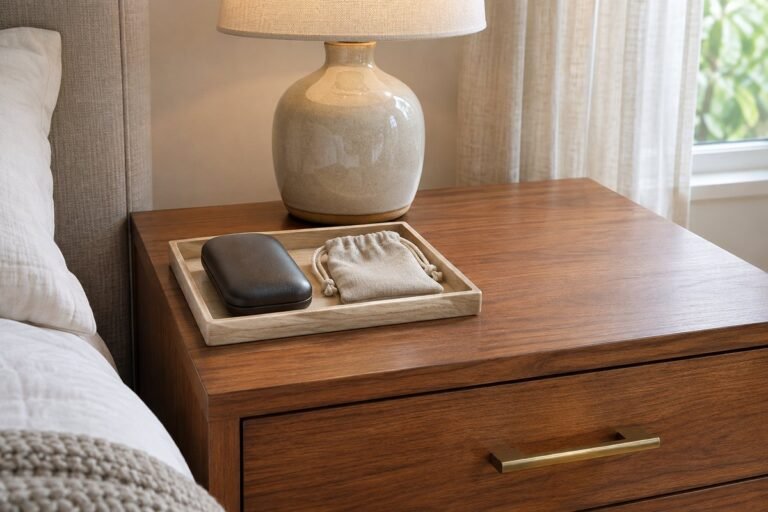
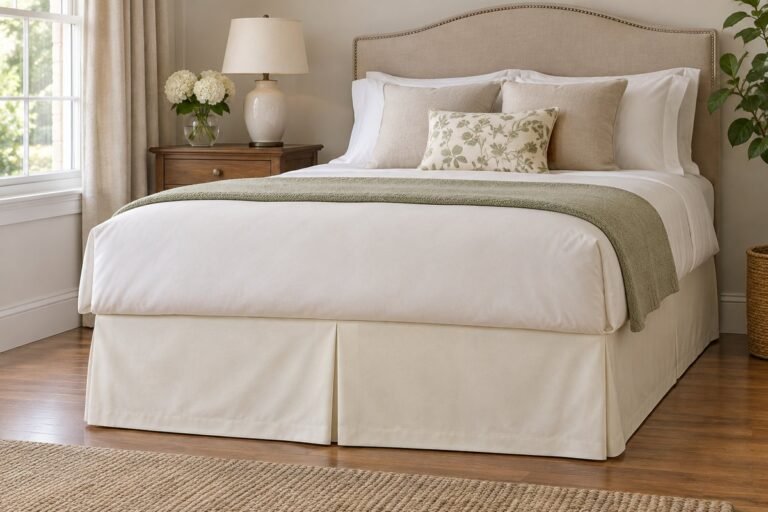
Guest bedroom ideas should make an overnight stay easier from the moment a visitor brings in a bag. A useful bed, clear belongings space, understandable lighting and a considered palette can make the room feel prepared without filling it with decorative extras. Start with the people you actually host and the furniture you want to keep.
These 26 ideas focus on a dedicated guest room and the practical details around a visit. They are options to compare, not a checklist of furniture to buy. Use the original arrival-to-reset worksheet to test the room and keep the hosting plan manageable.
Contents
- 1. Choose the bed from the guests you actually host
- 2. Use twin beds when separate sleeping places matter
- 3. Keep a small guest room’s furniture commitment modest
- 4. Give a narrow room a clear arrival route
- 5. Choose a compact frame when the headboard wall is limited
- 6. Check the mattress and base as one system
- 7. Use a daybed only when its full sleeping setup works
- 8. Build the palette around retained bedding or furniture
- 9. Give a modern room one clear material contrast
- 10. Let traditional furniture keep its character
- 11. Use one patterned textile as the feature
- 12. Keep decorative cushions easy to put away
- 13. Make extra bedding available without crowding the bed
- 14. Give both sides a place for ordinary belongings
- 15. Let reading light work from the actual pillow position
- 16. Check the room after the main light is switched off
- 17. Choose window coverings for the real visit
- 18. Reserve one genuinely empty drawer
- 19. Make a short hanging section easy to find
- 20. Plan the suitcase while it is open
- 21. Keep a reading chair only when its occupied space fits
- 22. Place a mirror where dressing makes sense
- 23. Provide a clear, suitable place for charging
- 24. Keep arrival information brief and private
- 25. Leave one useful surface available
- 26. Use a repeatable reset between visits
Plan the guest stay before the decorative layer
Sketch the fully made bed, the route from the door, the open suitcase and the storage guests can actually use. Check the exact sleeping system and the support it requires. Ask about preferences and any practical requirements before the visit; an attractive room photograph cannot establish that a layout works for every guest. If the room also serves as an office, use the linked two-mode guide for the full work-and-stay comparison.
Choose the guest-room decision that matters first
- Frequent overnight stays: Compare the permanent bed, useful surfaces and repeatable room reset.
- Separate sleeping places are preferred: Check two complete bed footprints and each person’s usable light and route.
- A small room feels crowded: Keep the essentials and test the open luggage before adding occasional seating.
- The furniture works but the room feels unfinished: Build a limited palette around retained materials and one selected textile.
1. Choose the bed from the guests you actually host

Start with who normally stays and for how long. A room for an occasional solo visitor may need a different arrangement from one used regularly by a couple. Ask about practical preferences before buying a larger bed or another piece of furniture. Measure the whole frame and the usable route rather than relying only on the mattress size. The most impressive bed in a photograph may leave too little room for ordinary arrival and unpacking.
Make the bed and walk around it in the proposed layout before adding a bench or chair.
2. Use twin beds when separate sleeping places matter

Two separate beds can suit visitors who prefer their own sleeping place. Compare the complete frames, bedding access and light for each person rather than assuming they take the same space as one double bed. A shared middle table may be useful if both guests can reach it. Keep the arrangement appropriate for the people using it; twin beds are a layout choice, not a universal improvement.
Test each person’s route, surface and light independently.
3. Keep a small guest room’s furniture commitment modest

A small guest room benefits from choosing which functions deserve permanent floor space. Keep the bed, useful light, belongings surface and a real place for luggage ahead of an extra decorative chair. A narrow room does not need every item seen in a hotel photograph. Retain a useful piece only if its occupied footprint and open drawers still fit the room during the visit.
Remove one occasional item from the proposed layout and compare how the arrival route changes.
4. Give a narrow room a clear arrival route
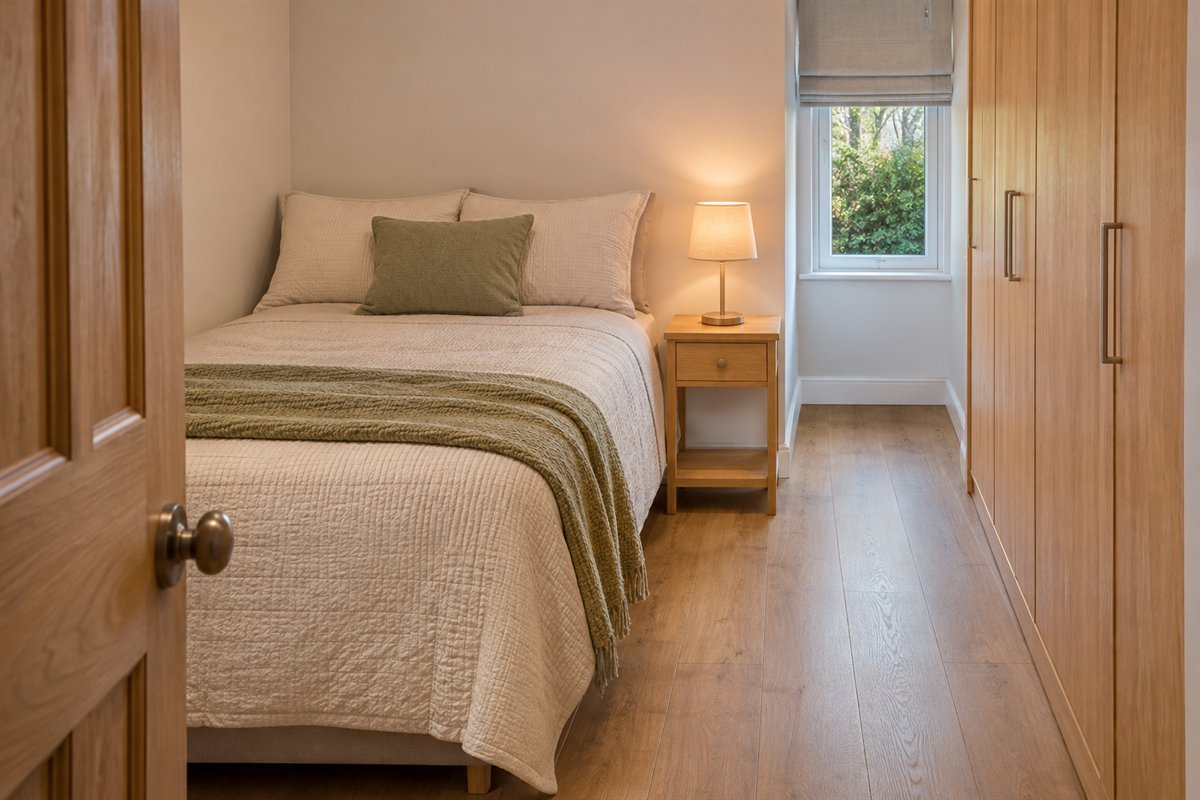
Walk into the room with a real suitcase and notice where you stop, turn and set it down. Use that sequence to judge the layout. The route needs to remain useful after guests open their bags and leave shoes nearby. Keep the door and necessary openings available according to the actual room requirements. A visually balanced arrangement is less useful if the first arrival requires moving furniture.
Practice the arrival with the bed made and the intended storage doors open.
5. Choose a compact frame when the headboard wall is limited
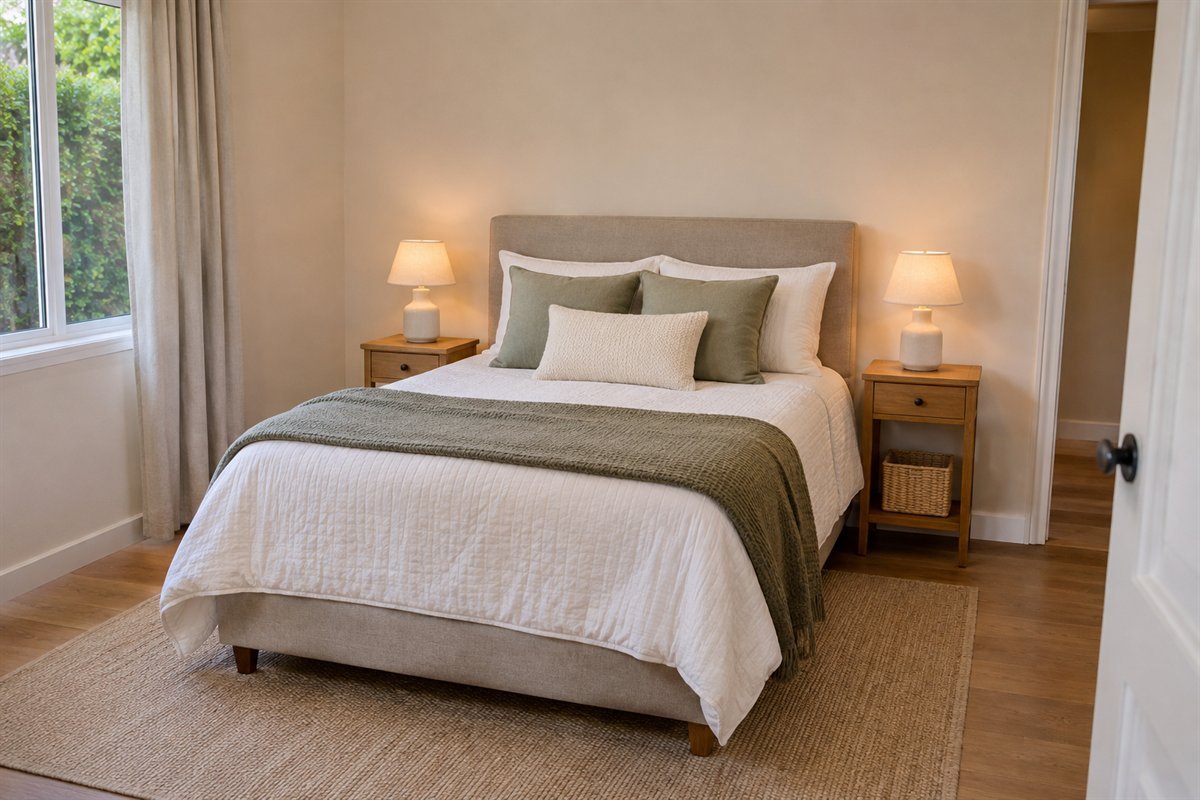
A deep frame or wide winged headboard can use substantially more space than the mattress suggests. Compare the product’s complete dimensions with the wall, bedside positions and openings. Choose the visual presence you want after those relationships work. A simple headboard can give the bed a finished outline while allowing the rest of a modest room to remain useful.
Draw the full frame and headboard footprint rather than marking the mattress alone.
6. Check the mattress and base as one system

A guest bed still needs the support specified for its actual mattress and frame. Tempur-Pedic’s guidance, for example, sets product-specific requirements and exclusions; those are not rules to transfer to every brand. Read the instructions for the exact combination you intend to use. A decorative photograph cannot establish hidden support, compatibility or the condition of an older bed.
Record the real mattress, base and frame models together before replacing only one component.
7. Use a daybed only when its full sleeping setup works

A purpose-made daybed can suit a room used as a sitting place between visits. Check its actual sleeping surface, mattress requirements and any change in footprint when opened. Keep the complete guest setup in mind rather than choosing it only for the daytime photograph. If the room also needs a substantial work setup, use the separate guest-bedroom-office guide to compare both active layouts.
Practice the entire sleeping setup before buying extra occasional furniture for the room.
8. Build the palette around retained bedding or furniture
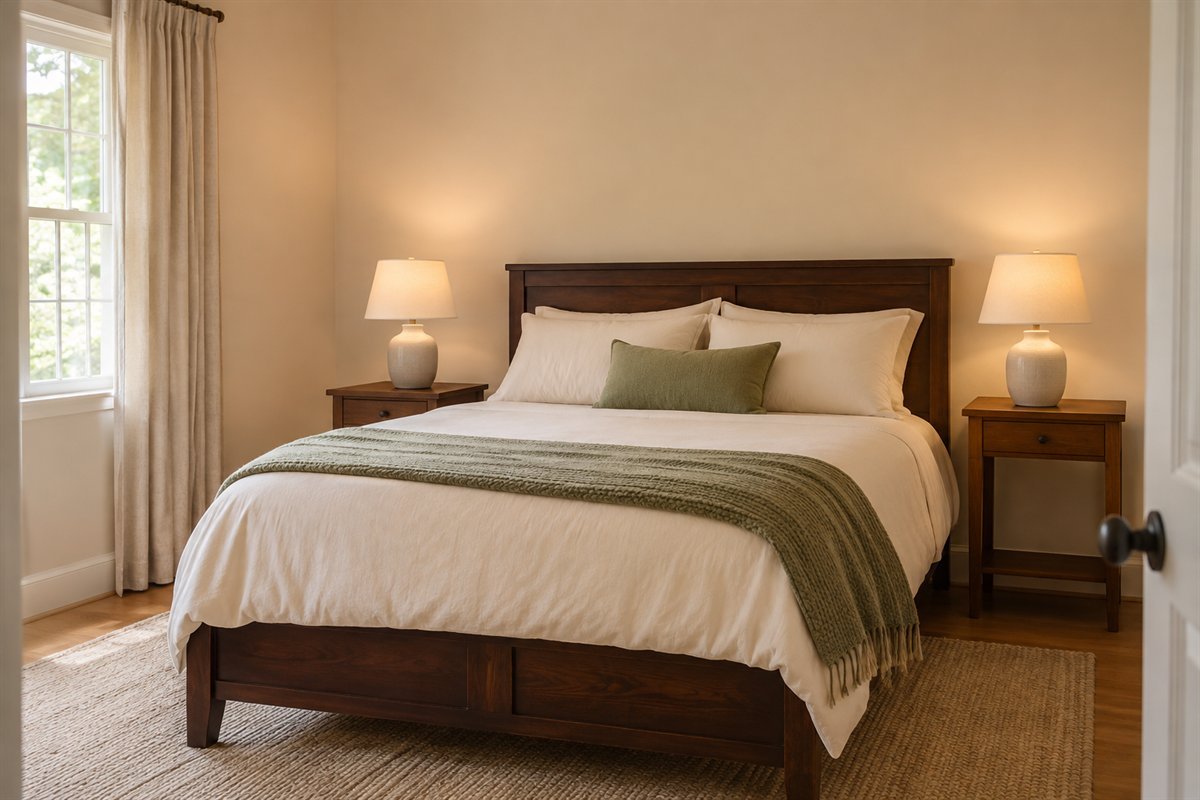
A guest bedroom can feel considered without a matching furniture set. Start with a retained bed, wardrobe or substantial textile and compare the next large color beside it. A dark wood bed might work with ivory and muted green, while a pale frame may suggest another relationship. Keep enough variation between the wall and bedding for the main forms to remain clear.
Compare the substantial materials together before buying several small decorative accents.
9. Give a modern room one clear material contrast

For a modern guest room, compare clear furniture outlines with one selected material contrast. Pale wood beside a softer textile can be enough to distinguish the main elements. Choose the furniture by its role and proportion rather than replacing comfortable pieces simply because they look less angular. Keep the bedside and luggage surfaces available so the room’s clarity remains practical during an actual stay.
Choose one substantial contrast and simplify a competing decorative group before adding more.
10. Let traditional furniture keep its character

An older bed or dresser can give the room character without needing a full vintage theme. Compare its finish with simpler bedding and a restrained accent. Keep furniture in suitable condition and follow its support and restraint guidance. Let the expressive outline be visible rather than covering every surface with ornaments. The room can welcome visitors while still looking connected to the rest of your home.
Use a restrained textile group to relate inherited pieces before considering refinishing or replacement.
11. Use one patterned textile as the feature

A patterned coverlet, curtain or cushion can provide the main decorative feature. Choose where it has the most effect, then keep the surrounding large fabrics comparatively quiet. Compare its scale from the doorway as well as close to the bed. The pattern does not need to match every object, and guests should not have to remove a large decorative arrangement before using the room.
Begin with one substantial patterned element and review it against the room’s existing finishes.
12. Keep decorative cushions easy to put away
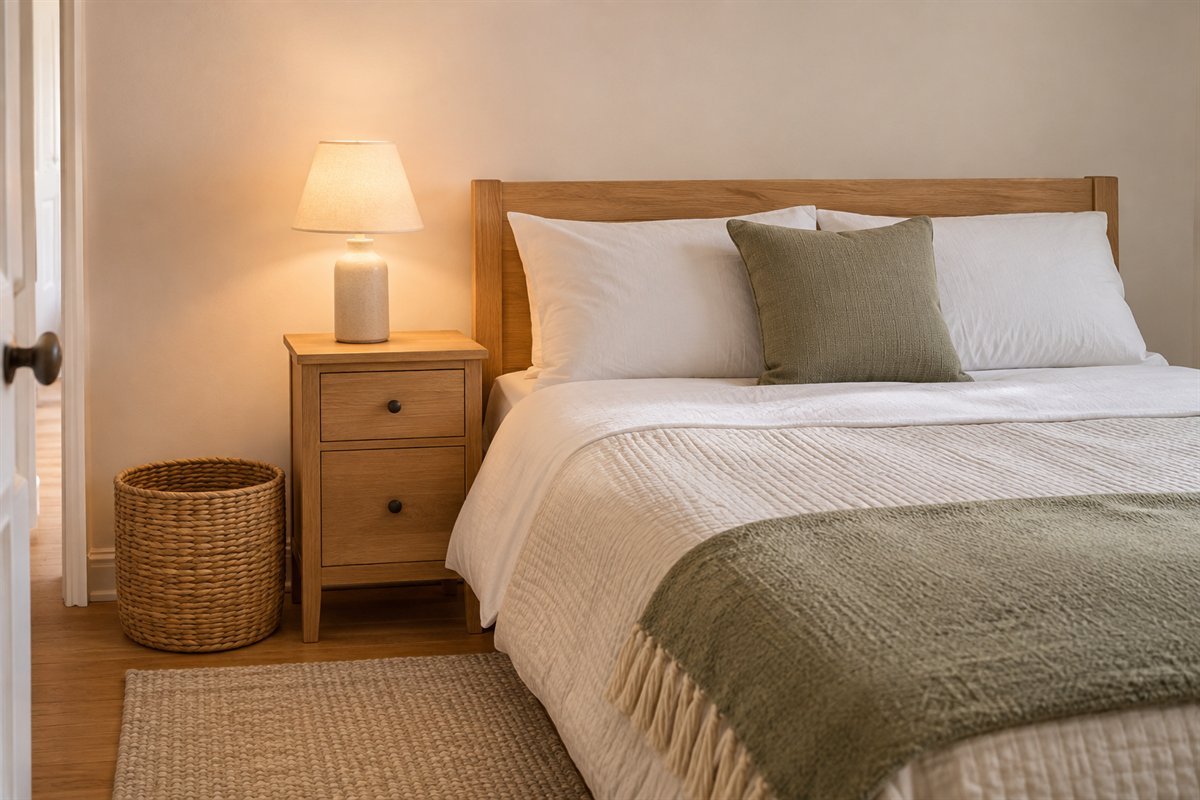
A small decorative layer can finish the bed, but decide where it goes at night. Keep the intended sleeping pillows separate from cushions that are only for appearance. Provide a clean, suitable return position rather than leaving guests to pile everything on the floor. The useful amount is the amount the room can manage easily during a stay, not the maximum number that fits across the headboard.
Clear the bed yourself and check that the decorative pieces have a real destination.
13. Make extra bedding available without crowding the bed
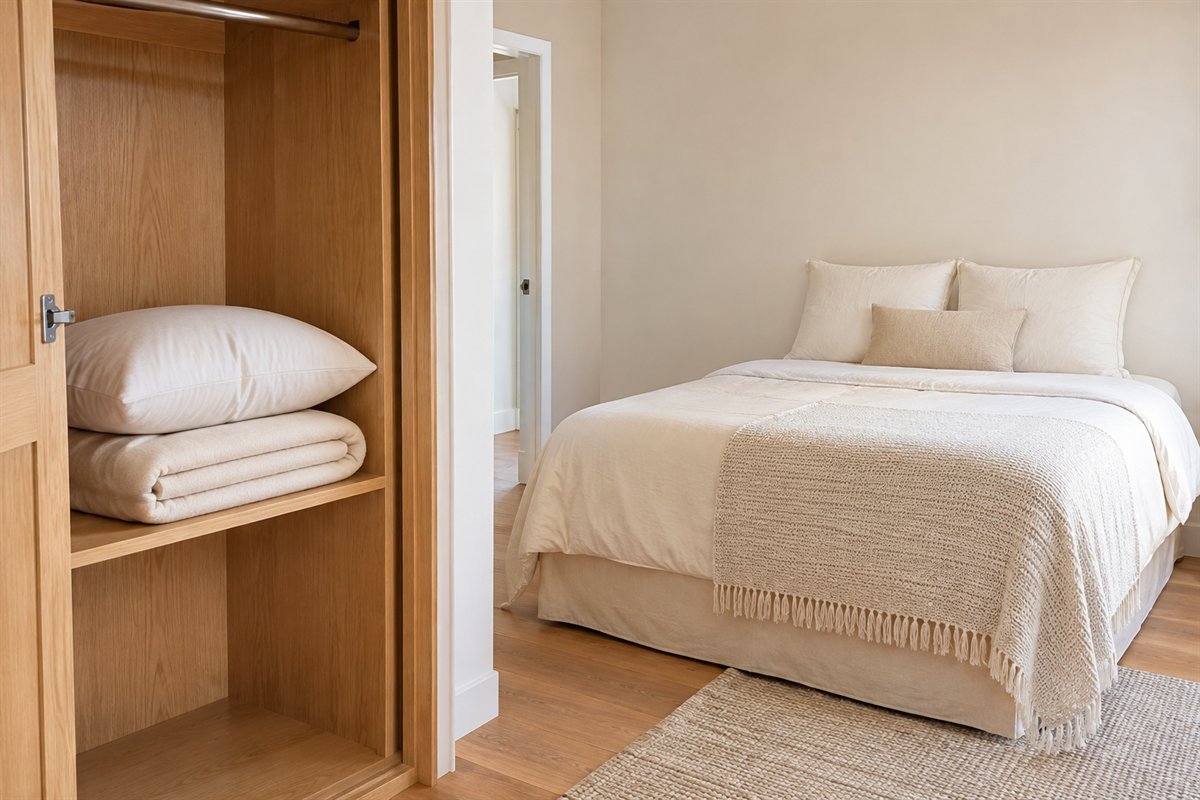
Some visitors may want a different layer or an additional pillow. Keep suitable clean extras available and explain where they are, while avoiding assumptions about everyone’s comfort preferences. Follow the actual washing and storage instructions. A pale fabric, natural-looking fiber or particular color does not establish a health benefit or a universally better sleeping experience.
Ask about preferences and keep the chosen extras reachable without unpacking the host’s storage.
14. Give both sides a place for ordinary belongings
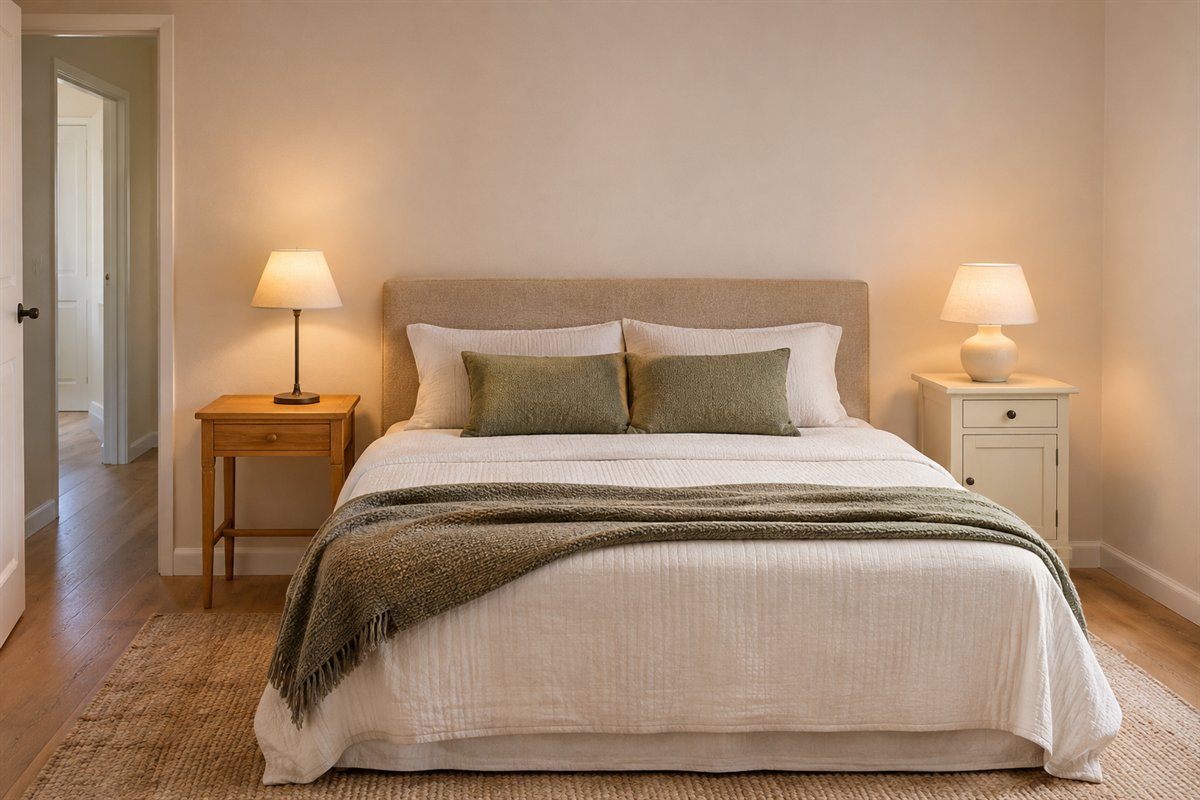
Where two people use the bed, compare the practical needs on both sides. Each may need somewhere for glasses, a book or a phone even if the tables are different shapes. Keep the surfaces clear enough for belongings and check reach from the bed. Visual balance can come from related materials or light rather than identical furniture that does not fit the room.
Sit at each side and test the useful surface instead of judging the arrangement only from the doorway.
15. Let reading light work from the actual pillow position
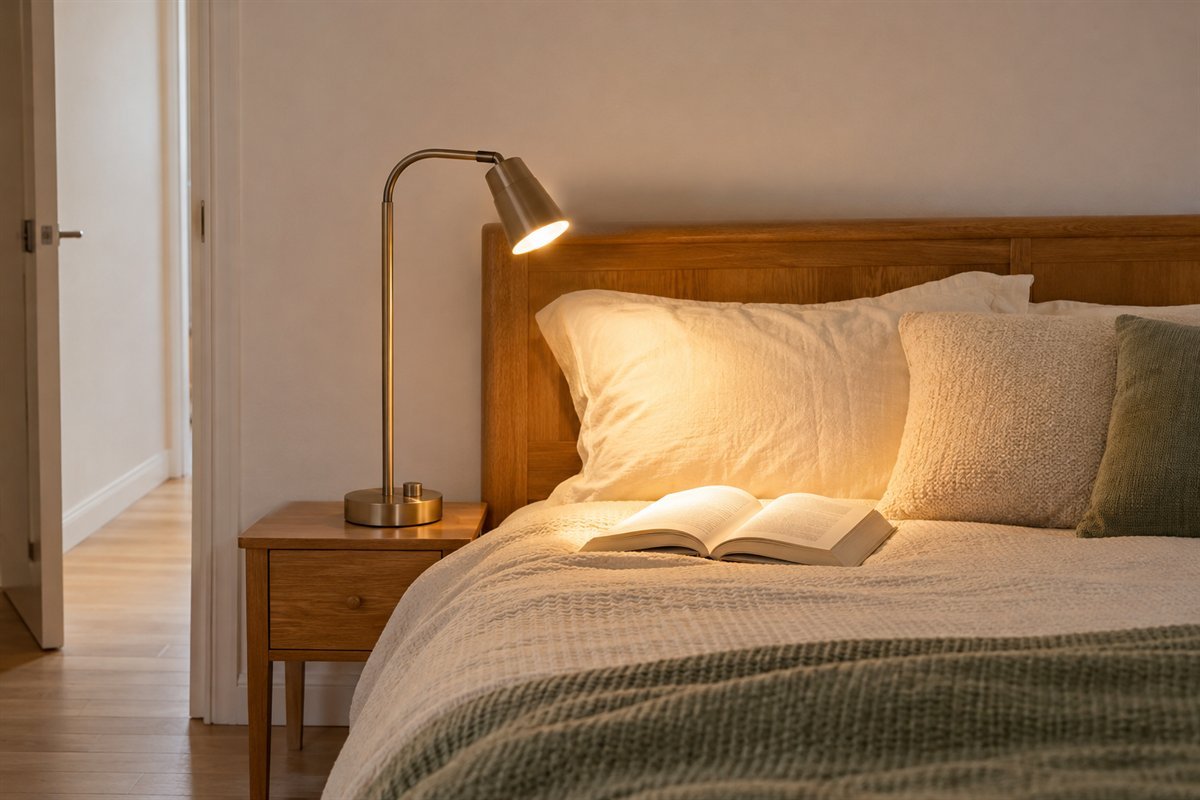
A guest should be able to use the intended reading light without rearranging furniture. Compare the light and glare from the actual seated position against the pillows. Keep the control easy to understand and the fitting appropriate for its location. A decorative lamp can relate to the room’s materials, but its scale and appearance do not establish whether it serves the person in bed.
Try the light with the room’s other lamps off and ask what remains unclear or inconvenient.
16. Check the room after the main light is switched off

Walk through the ordinary evening sequence: enter, put belongings down, prepare the bed and switch off the main light. Check where the remaining light comes from and how its controls are reached. Keep cables and furniture out of the route. This is a practical room-use check, not a lighting design or a substitute for the requirements of the actual electrical installation.
Show guests any unfamiliar controls rather than leaving them to guess in a new room.
17. Choose window coverings for the real visit

Compare the window covering with privacy after dark, outside light and the way guests can operate it. Choose the real fabric, lining and control system from the product information and household needs. A dark-looking curtain in a photograph does not prove light-blocking performance. Keep window operation and any relevant household requirements part of the arrangement rather than treating the fabric as decoration alone.
Test the actual covering in its closed position with the bed and bedside furniture in place.
18. Reserve one genuinely empty drawer

An empty drawer can be more useful than another decorative tray. Choose one guests can reach and make it available before they arrive. Do not require visitors to move the host’s belongings in order to unpack. Keep the furniture appropriately restrained and use it within its instructions. If the visit is short and a drawer is unnecessary, make another suitable belongings position clear instead.
Open the assigned drawer and confirm that it is actually empty and convenient during the stay.
19. Make a short hanging section easy to find

A few available hangers and a clear part of a wardrobe can support guests with clothes that do not suit a suitcase. The available space matters more than a large rail that remains full of the host’s belongings. Keep the opening and route convenient with the bed in use. Use the actual furniture guidance for load and restraint rather than judging suitability from its outline.
Show the available section and leave only the hangers that belong to that space.
20. Plan the suitcase while it is open

An open suitcase takes more space than the closed case used in many room photographs. Compare its position with the bed route, wardrobe doors and any chair. Choose a surface intended to support the expected use, or identify another appropriate position. A decorative stool is not automatically a luggage stand. The aim is to make arrival straightforward without turning the doorway into temporary storage.
Place a real open case in the intended position while checking the route.
21. Keep a reading chair only when its occupied space fits

A separate seat can give guests somewhere to read or put on shoes when the room has enough space. Compare it while occupied, including the route around it and the reach to the side table. Avoid treating a chair as an automatic guest-room requirement if it consumes the useful luggage area. In a small room, the more helpful choice may be a clearer layout with fewer pieces.
Try an existing chair in the proposed position before committing to another furniture purchase.
22. Place a mirror where dressing makes sense

Position a suitable mirror where guests can use it without standing in the doorway or moving the suitcase. Compare the view, light and storage used during dressing. Follow the actual support and fixing instructions; the photograph cannot establish a secure installation. If the room has no appropriate wall, choose another practical arrangement in the home rather than squeezing in an oversized decorative mirror.
Test the intended standing position with the room set for the visit.
23. Provide a clear, suitable place for charging

Show guests a suitable available outlet and provide a clear solid surface for their device. Keep equipment and cables used according to their instructions, away from bedding and routes. Do not assume that a decorative compartment or fabric pocket is a suitable charging location. The useful improvement may be clearing an existing bedside surface rather than adding a complicated organizer or another electrical accessory.
Check that the ordinary device position does not depend on a cable stretched across the room.
24. Keep arrival information brief and private
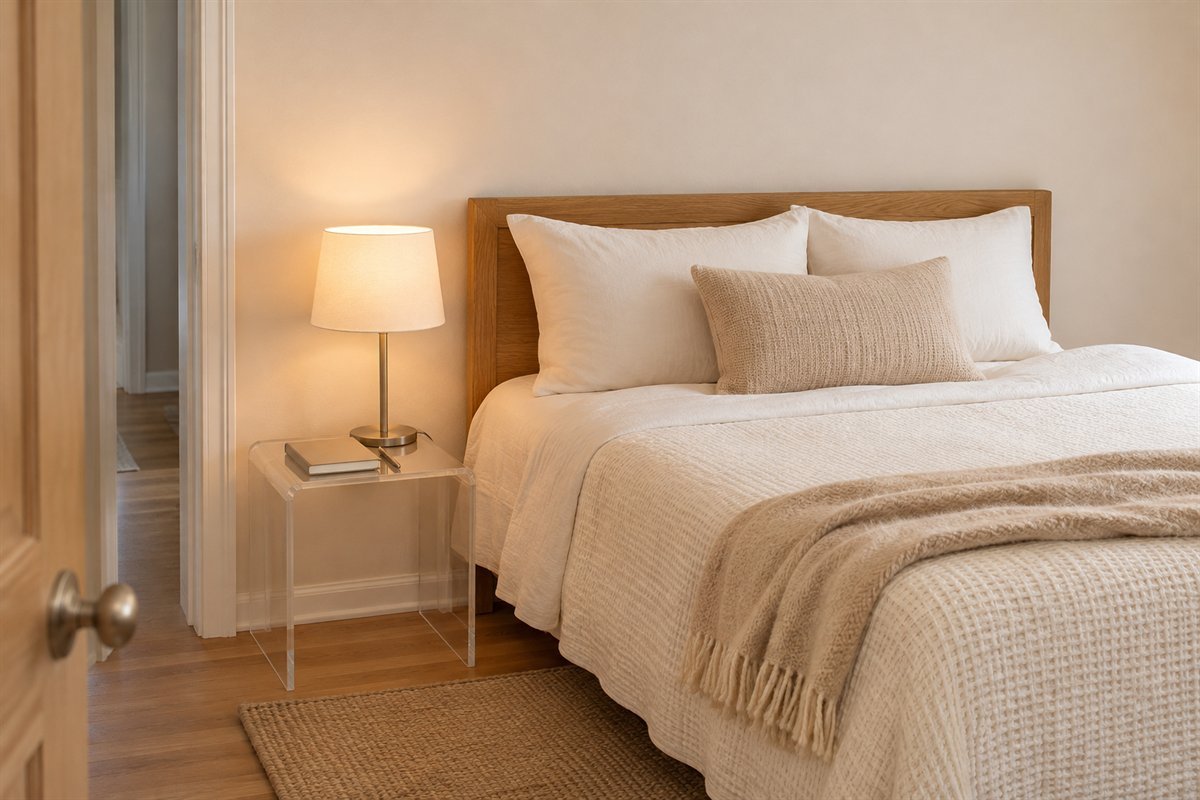
A short welcome note can explain where useful things are and how to find you. Include only what the visit needs, such as the location of spare bedding or the relevant household routine. Share private connection details directly with the intended guest rather than making them part of decorative artwork or a public room photograph. Keep the information easy to update between stays.
Remove outdated notes and check that any unfamiliar room controls have been explained clearly.
25. Leave one useful surface available
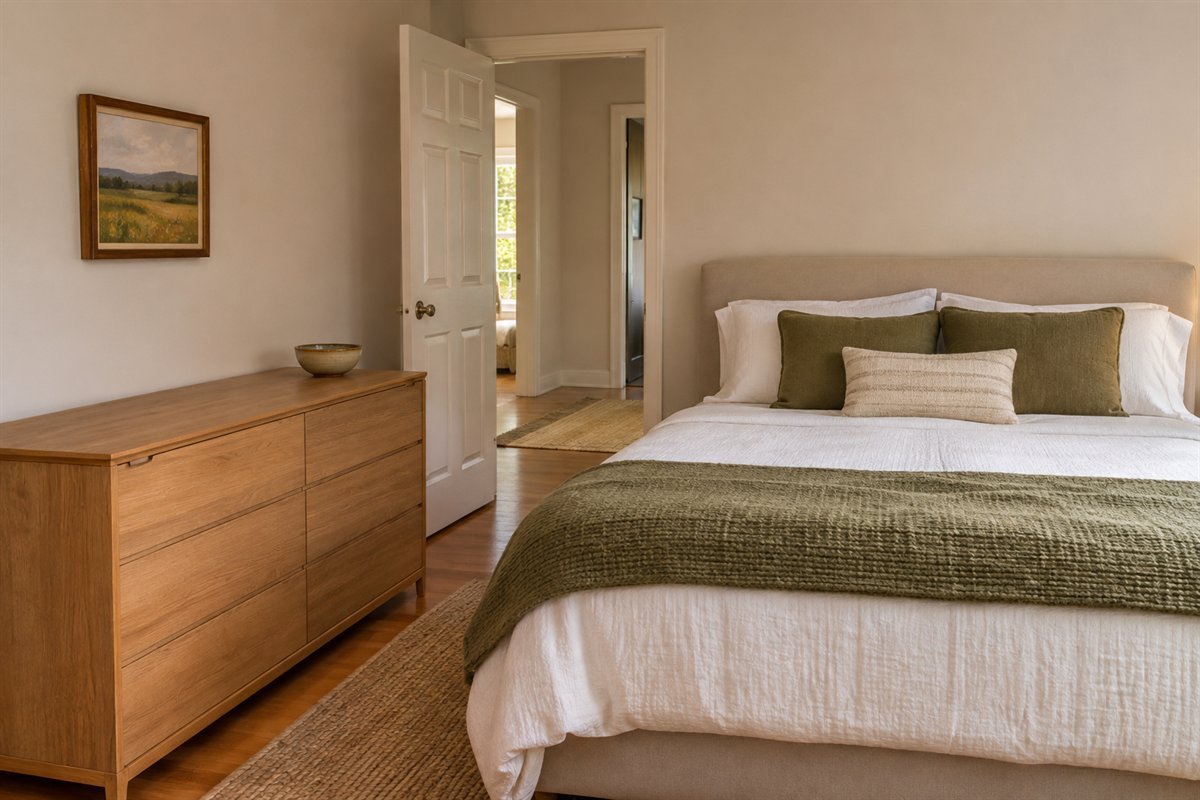
Visitors bring ordinary belongings even when the stay is short. Keep at least one suitable surface available instead of filling the dresser, bedside tables and shelves with display objects. A small personal artwork or a restrained ceramic can give the room character while leaving practical space. Keep fragrance optional and ask about preferences rather than assuming a particular scent makes every guest comfortable.
Set down the items a guest is likely to bring and remove the decorative group that competes with them.
26. Use a repeatable reset between visits
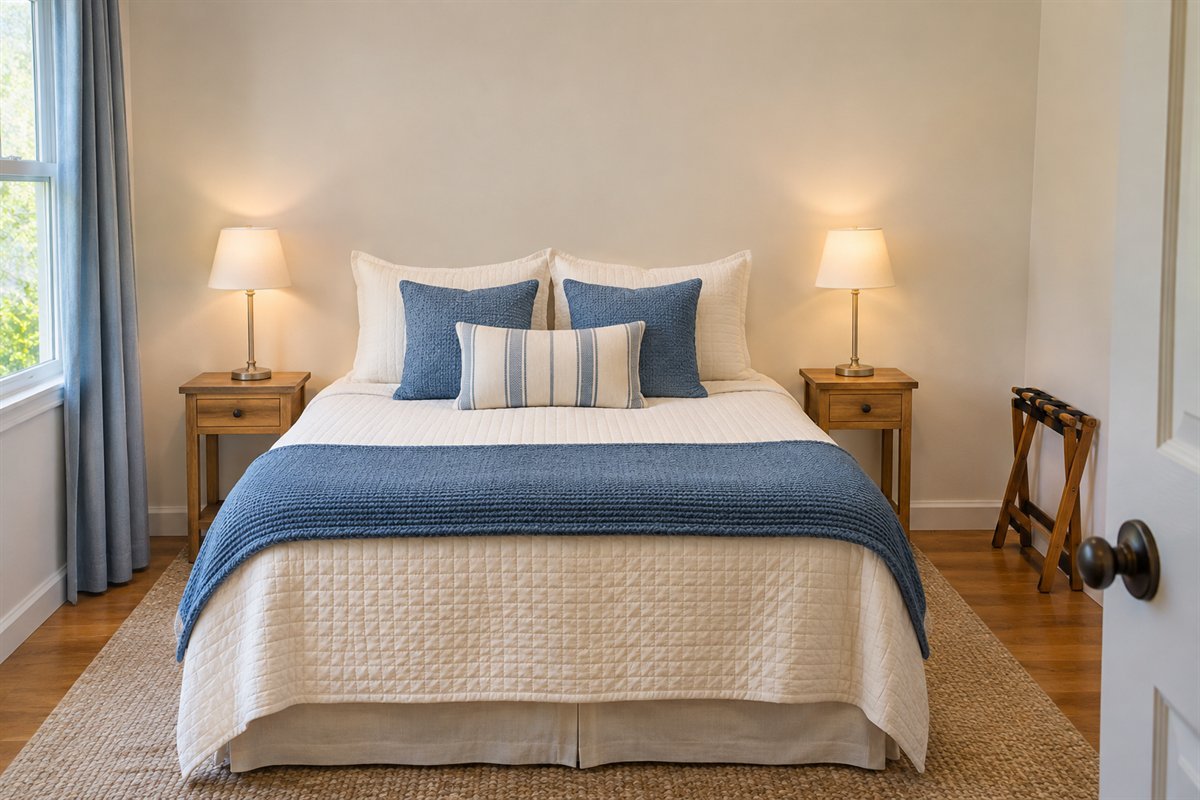
A guest room is easier to prepare when each useful item has a known position. After a stay, follow the actual bedding and furniture care instructions, review any problem mentioned and restore the available drawer, hanging space and surfaces. Keep decorative changes separate from the essentials that need checking. A repeatable reset helps reveal what the next visit needs without requiring the whole room to be redecorated.
Use the arrival-to-reset worksheet below and revise it when the actual guests or room change.
An original arrival-to-reset guest bedroom worksheet
Divide a sheet into four stages: arrival, evening, morning and reset. For each stage, write the task, the actual place or control used, what you tested and one adjustment. This is an original hosting-planning exercise, not an accessibility certification, a sleep assessment or a completed room design. Ask guests directly about requirements that cannot be inferred from a generic photograph.
For arrival, carry a real case through the door and open it at the intended luggage position. Try the available drawer and hanging section. Record any furniture that blocks the route or needs to move. In a hypothetical small room, removing an unused foot bench may make a more useful change than buying a narrower wardrobe. That conclusion depends on the real furniture and room; it is not a universal layout prescription.
For evening, prepare the bed exactly as a guest would use it. Put decorative cushions in their assigned position, reach the reading-light control and check the window covering. Look for the belongings surface, charging position and the route after the main light is off. Do not assume that a darker textile, a softer color or a particular fiber guarantees better sleep. Choose the actual products and ask about comfort preferences instead.
For morning, try reaching clothes, using the mirror and getting the case back out without placing belongings on the bed. Keep necessary openings and services usable for the actual room. If a guest has a specific practical requirement, agree the arrangement in advance rather than treating a general inspiration guide as a substitute for that conversation. An extra furniture piece earns its space only if it helps the routine.
For reset, record the actual care instructions for bedding and the room’s products, then restore the guest storage and clear surfaces. Note any issue from the visit and resolve that issue before buying another decorative object. Keep the working sheet private if it includes guest information; the published example does not need names, passwords or personal requirements. A short repeatable process is more useful than a long checklist that is never used.
Compare three guest-room styles around the same useful plan
For a modern direction, keep the main furniture outlines simple and compare one substantial material contrast, such as pale timber beside a textured cream textile. For a traditional direction, retain a shaped wood bed or dresser and relate it to quieter bedding. For a more colorful direction, choose one patterned textile and compare a restrained accent from it elsewhere in the room. These are original decorative options rather than fixed rules about who should enjoy each style.
The usable plan stays central in all three: a suitable sleeping system, useful light, somewhere for belongings and a layout tested during the visit. IKEA’s guest-room example illustrates how a particular household combined furnishing choices with its hosting needs; its room size and chosen products do not establish what your room requires. Use the principle of planning for the actual stay while keeping the composition, furniture and personal details your own.
What does a small guest bedroom actually need?
Start with a suitable sleeping system, useful light, a place for ordinary belongings and a real luggage position. Compare the fully occupied layout before adding a bench or chair.
Should a guest bedroom have a double bed or twin beds?
Choose from the visitors you host and their preferences, then compare the complete bed frames and routes. Neither arrangement is automatically better for every room or guest.
Can a daybed work in a guest room?
It can when the actual product, mattress and complete sleeping setup suit the intended use. Include any expanded footprint and follow the exact support and operating instructions.
How do I make a guest room feel finished on a limited budget?
Keep useful furniture, compare a limited textile palette and clear the belongings surfaces. Resolve one practical problem before spending on a full matching set.
Do all mattresses need the same base?
No. Follow the mattress and bed manufacturers’ actual compatibility and support instructions. A requirement for one model or brand is not a universal standard.
A practical next step
Prepare the room through the guest’s actual arrival, evening and morning routines. Keep the useful furniture, choose a limited decorative direction and use the reset sheet to decide which change deserves attention next.
Plan a room that combines guest stays and everyday office work. Compare everyday bedroom layout and comfort decisions.
Images are original AI-generated guest-room concepts, not measured layouts, tested sleeping products or verified installations. The worksheet is original hosting-planning guidance. Follow actual product, restraint, care and installation instructions and discuss guests’ practical requirements; no sleep, health or universal accessibility outcome is promised.
Sources and care references
- IKEA: a guest room planned for one household’s hosting needs
- Tempur-Pedic: product-specific mattress support and compatibility guidance
- CPSC Anchor It: furniture restraint guidance
Optional digital guide for this topic
If you prefer a structured workbook, explore this related paid guide.