The best paper towel holder ideas give the roll a convenient home while leaving the kitchen useful for cooking. Start with where the paper is used, then check how the roll turns, how the next sheet is reached and how a replacement goes onto the holder. A small accessory can still interrupt a cupboard door or occupy the last clear part of a counter.
These 22 options combine holder styles, placement choices and modest backup storage. Use them as alternatives for your own room rather than a reason to add several dispensers. Keep paper away from unsuitable heat, persistent splashes and appliance operating areas, following the exact products' instructions.
Contents
- 1. Start with a stable freestanding holder
- 2. Compare a holder with a controlled side arm
- 3. Use an open-ended horizontal holder with clear loading space
- 4. Place a suitable holder beneath an upper cabinet
- 5. Mount a holder on a suitable wall beside the work area
- 6. Consider an accessible cabinet-end position
- 7. Keep the working roll inside a compatible cupboard door
- 8. Give a pantry work surface its own modest setup
- 9. Use an intended cart-side holder
- 10. Choose a carrying feature for a roll that moves between tasks
- 11. Group a small removable setup on a fitting tray
- 12. Use a movable roll at the serving end of an island
- 13. Position the roll within a clear approach from preparation work
- 14. Keep sink-side paper on the dry side of the arrangement
- 15. Preserve the upright holder's refill height
- 16. Check clearance using a new full-size roll
- 17. Check that the last sheets remain easy to find
- 18. Repeat one nearby finish without buying a whole matching set
- 19. Stand a few spare rolls in a defined dry pantry bin
- 20. Give backup rolls a fitting drawer section
- 21. Keep bulk packaging in its own reachable storage bay
- 22. Keep reusable cloths in a separate nearby return position
Measure a full roll and its replacement movement
Record the new roll's width, outside diameter and core, then compare the holder's supported sizes and complete loaded outline. Include any side arm, removable end cap or top handle. Follow the mounting instructions for the actual surface and cabinet construction. Simplehuman notes that the supplied screw type or size may need to change with the mounting surface. A decorative image cannot establish that a fixing or cabinet panel is suitable.
Choose an arrangement that fits your situation
- You want to test the location first: Compare a suitable freestanding holder with a complete stable base
- The counter is useful but crowded: Check a compatible wall or under-cabinet mounting position
- Upper cabinets restrict refilling: Compare a clear side-loading route with an open-height upright position
- The roll moves to the dining area: Choose an intended carrying feature and a defined return spot
- Multipacks crowd the working kitchen: Separate the immediate reserve from a fitting dry bulk-storage bay
1. Start with a stable freestanding holder

A freestanding holder lets you test the location before committing to a mounting position. Compare the complete base with the available counter area and the way the roll is dispensed. Keep the base fully supported and easy to move for wiping beneath it. A heavy-looking finish in a photograph is not proof of stability, so check the actual product and its directions.
2. Compare a holder with a controlled side arm

A designed tension arm can help manage the paper edge rather than letting the roll unwind freely. OXO's SimplyTear is one example with a spring arm that opens for loading. Compare the mechanism with your preferred rolls and normal grip. Treat one-handed dispensing as a product feature to evaluate, rather than assuming every decorative spindle provides the same resistance.
3. Use an open-ended horizontal holder with clear loading space

A horizontal design that loads from one end can avoid lifting a replacement above a tall upright spindle. Check the entire sideward movement, including any retaining cap. Keep a neighboring wall, cabinet or utensil crock out of that route. The holder may fit its own footprint while still needing more room for an ordinary roll change.
4. Place a suitable holder beneath an upper cabinet

An under-cabinet arrangement can free the surface directly below it. Compare the full roll with the cabinet trim and leave access to any lights or switches. Use a product and fixing method appropriate to the actual cabinetry. Simplehuman's linked guide gives a molding-clearance requirement for its own holder; do not assume an arbitrary position will work simply because the empty bracket fits.
5. Mount a holder on a suitable wall beside the work area

A wall position can keep a narrow counter free while leaving the paper visible. Choose the location around the task and the exact holder's mounting requirements. Keep the dispensing and replacement movements clear of neighboring objects. Avoid drilling a backsplash or wall until its construction, concealed services and appropriate installation method have been established.
6. Consider an accessible cabinet-end position

An exposed cabinet end can provide a different approach from a crowded backsplash. Check the complete side panel and the route past the kitchen before selecting hardware. The loaded roll should not project into a passage or catch a nearby door. Use the cabinet and holder instructions to establish suitability; a thin finished panel is not automatically a mounting surface.
7. Keep the working roll inside a compatible cupboard door

A suitable inner-door holder can make the roll available when needed while keeping it out of the main view. Check the full roll against shelves, hinges and contents throughout closure. Include the replacement movement too. This option is useful only when opening the cupboard remains convenient; hiding the roll should not turn a quick cleanup into a search through stored supplies.
8. Give a pantry work surface its own modest setup

When a separate pantry counter is used regularly, a small working-roll position there may reduce trips back to the main kitchen. Keep it tied to an actual task, such as packing lunches or using that work surface. Preserve appliance access and dry storage conditions. Skip a second dispenser if the pantry is mostly a passage or a place for unopened food.
9. Use an intended cart-side holder

A kitchen cart with a designed paper-roll attachment can keep the top available for its working task. Compare the loaded width with the cart's parked location and travel route. Follow the cart and accessory directions, including stability and wheel use. An improvised rod projecting from the cart can create an obstruction even when it looks efficient in a photograph.
10. Choose a carrying feature for a roll that moves between tasks

A holder intended to be carried can suit a household that moves the roll from the kitchen to the table. Check the designated grip and the loaded balance instead of carrying it by the paper. Give the holder a defined return position after use. A portable arrangement works better when it has one recognizable home rather than drifting between several crowded surfaces.
11. Group a small removable setup on a fitting tray

A modest tray can define a roll's position beside another genuinely related item, but its rim and handles add to the footprint. Keep enough room for the holder's normal operation and lift the tray only as intended. If the tray becomes harder to clean or move than the holder alone, simplify the arrangement rather than keeping an extra layer solely for styling.
12. Use a movable roll at the serving end of an island

A freestanding holder can be brought to an island during a meal or shared project and returned afterward. Keep it outside the main food-preparation footprint and away from any cooking surface. This can be more flexible than fixing hardware to an exposed end that also serves seated guests. Compare the arrangement with the island in ordinary use, including chairs and passing people.
13. Position the roll within a clear approach from preparation work

Choose a place where the paper can be reached without moving a knife block, reaching over a hot appliance or crossing the sink. Keep an ordinary landing area available beside the task. The useful distance depends on your layout and reach. Do not add a dispenser to the center of the chopping area just because that is the closest possible position.
14. Keep sink-side paper on the dry side of the arrangement

A location near cleanup can be convenient, but the full roll should remain out of the faucet's normal splash and movement area. Check the setup while using the sink in the usual way. Move the holder if the base or exposed paper repeatedly becomes wet. A raised decorative stand does not make paper suitable for persistent water exposure.
15. Preserve the upright holder's refill height

An upright spindle needs space for the replacement roll to pass over its top. Compare that movement beneath upper cabinets or shelves before deciding on the position. Include any removable handle or cap. If refilling always requires lifting the entire assembly out of a tight corner, try a different location or a holder with a more suitable loading direction.
16. Check clearance using a new full-size roll

An almost-empty roll can conceal a poor fit. Compare the largest roll you normally buy with the space behind the rod, beside the side arm and under any cabinet trim. Confirm the holder's stated compatibility rather than forcing a large core or tight outer diameter into place. A change of paper brand can alter this fit even when the roll length looks similar.
17. Check that the last sheets remain easy to find

A holder should remain useful near the end of a roll as well as immediately after refilling. Compare how its retaining feature behaves with less paper, following the product directions. Keep the paper edge available without wrapping it around neighboring objects. If the mechanism does not suit your usual rolls, choose another intended design rather than improvising clips that obstruct normal dispensing.
18. Repeat one nearby finish without buying a whole matching set

A restrained holder finish can connect with handles, a faucet or a utensil crock already in the room. Compare the actual undertones and reflections under the kitchen's lighting. Keep operation and care requirements ahead of the finish choice. One related detail is enough; replacing other useful accessories merely to match a paper-roll stand adds cost and visual clutter without improving the routine.
19. Stand a few spare rolls in a defined dry pantry bin

A small bin can keep the immediate reserve together without occupying the working counter. Size the bin around your normal purchases and retain useful packaging as appropriate. Make the next roll easy to reach, while keeping the group separate from leaks or stored chemicals. A defined reserve limit also shows whether a large multipack actually fits the available storage.
20. Give backup rolls a fitting drawer section

A suitable drawer can hold a modest reserve close to the working dispenser. Check roll diameter against the usable opening, not only the internal drawer depth. Keep the group recognizable and avoid packing it so tightly that the first roll must be crushed to come out. The drawer should open and close normally with the full reserve in place.
21. Keep bulk packaging in its own reachable storage bay

When you buy a multipack, reserve an appropriate dry cupboard position for the actual package shape. Keep a manageable working supply nearer the dispenser and bring another roll forward when needed. Avoid using an unreachable high pile as the overflow plan. If the multipack repeatedly blocks another useful group, compare the purchase quantity with the room before buying more storage.
22. Keep reusable cloths in a separate nearby return position

If the household uses both paper and reusable cloths, give each an obvious place rather than combining loose textiles around the spindle. Store clean cloths in a dry section and follow their actual washing and drying routine after use. Keep the holder easy to wipe and the reserve paper identifiable. This makes choosing the right item straightforward without turning a small cleanup setup into a crowded display.
Make a loaded-roll and refill checklist
Write down the new roll's complete width, diameter and core size. Next record the holder's footprint, loaded outline and refill direction. For example, OXO lists the cited SimplyTear model, SKU 1066736, at 7 by 7 by 13 inches. That body measurement does not establish the space needed above it to load a roll. A hypothetical 12-inch-high counter bay already conflicts with a 13-inch holder, before allowing for the replacement movement.
For a mounted model, record the surface requirements and the exact guide's trim clearance. Simplehuman's linked instruction sheet calls for at least 2 inches, or 5 cm, from cabinet molding for its holder to accommodate large rolls. This is a requirement for that product, not a universal mounting rule. Check the current instructions and full loaded movement before committing.
A practical next step
Choose the holder around the roll and the routine, then use the finish to connect it with the room. A clear dispensing movement, straightforward refill and modest dry reserve are more useful than an elaborate setup that constantly has to move. Recheck the position after ordinary meals and keep the arrangement that makes cleanup easier.
For the surrounding room, keep the surrounding kitchen counter useful. plan the neighboring kitchen drawer storage.
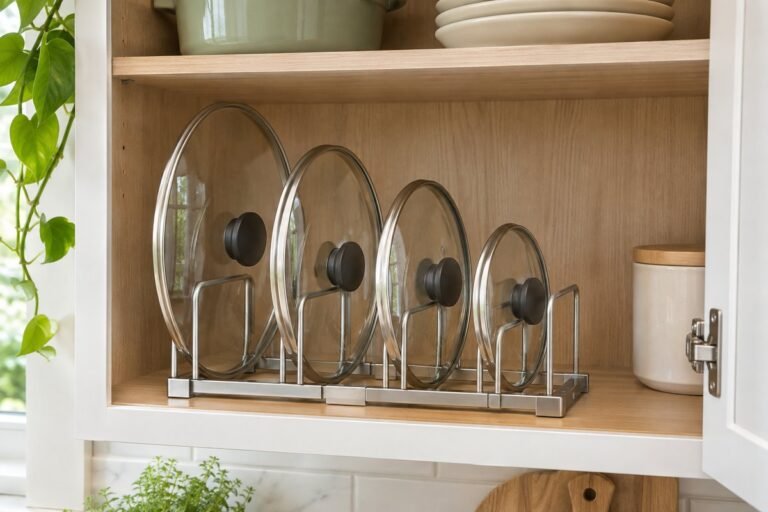
The images are original AI-generated design concepts, not photographs of tested products or verified installations.
Sources and care references
- OXO: SimplyTear features and US model dimensions
- Simplehuman: wall-mount holder and mounting-surface guidance
- Simplehuman: model-specific mounting and molding-clearance guide
Optional digital guide for this topic
If you prefer a structured workbook, explore this related paid guide.