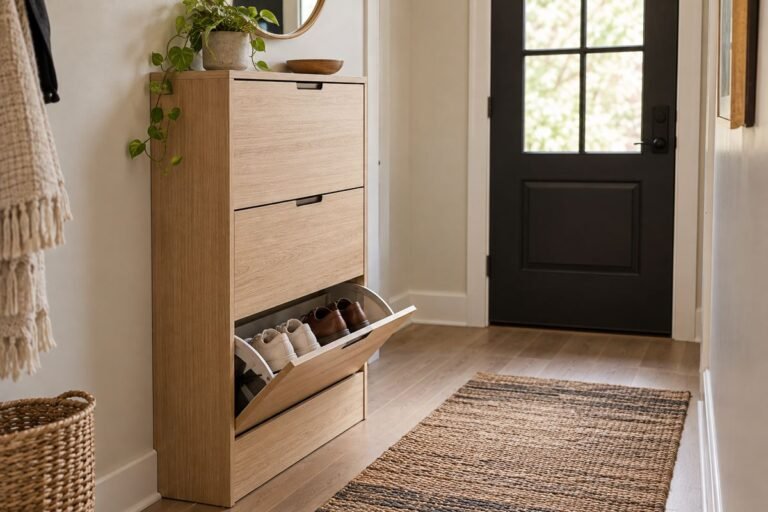
Small linen closet organization works when every shelf has a clear job and the contents are easy to return. Begin with the towels, sheet sets and reserve linens actually used, then compare their filled storage shapes.
These 22 small linen closet organization ideas focus on useful folds, manageable groups, and storage that fits the opening. Choose the changes that solve your own problem; a tidy photograph is not a reason to buy an organizer that makes the closet harder to use.
The original generated images are storage concepts, not measured installations. Match shelving, hardware, and textile care to your actual products and space.
Test Small Linen Closet Organization With Fresh Laundry
Carry a normal basket of clean dry linens to the open closet and return each group to its intended shelf. Next, remove the set needed for a bed without disturbing the other stacks. For example, a wide basket may fit the shelf while its handles catch the hinges during retrieval. Keep the useful opening and filled weight in the plan, and choose a folding method you can repeat during an ordinary laundry day.
Measure Before Choosing Organizers
Check the usable shelf depth and width, the opening between hinges, and the clearance above your normal linen stack. Compare those measurements with the container when it is full. Keep the most frequently used groups comfortably reachable, and follow textile and shelving instructions for the actual products.
1. Begin Small Linen Closet Organization With Used Sets
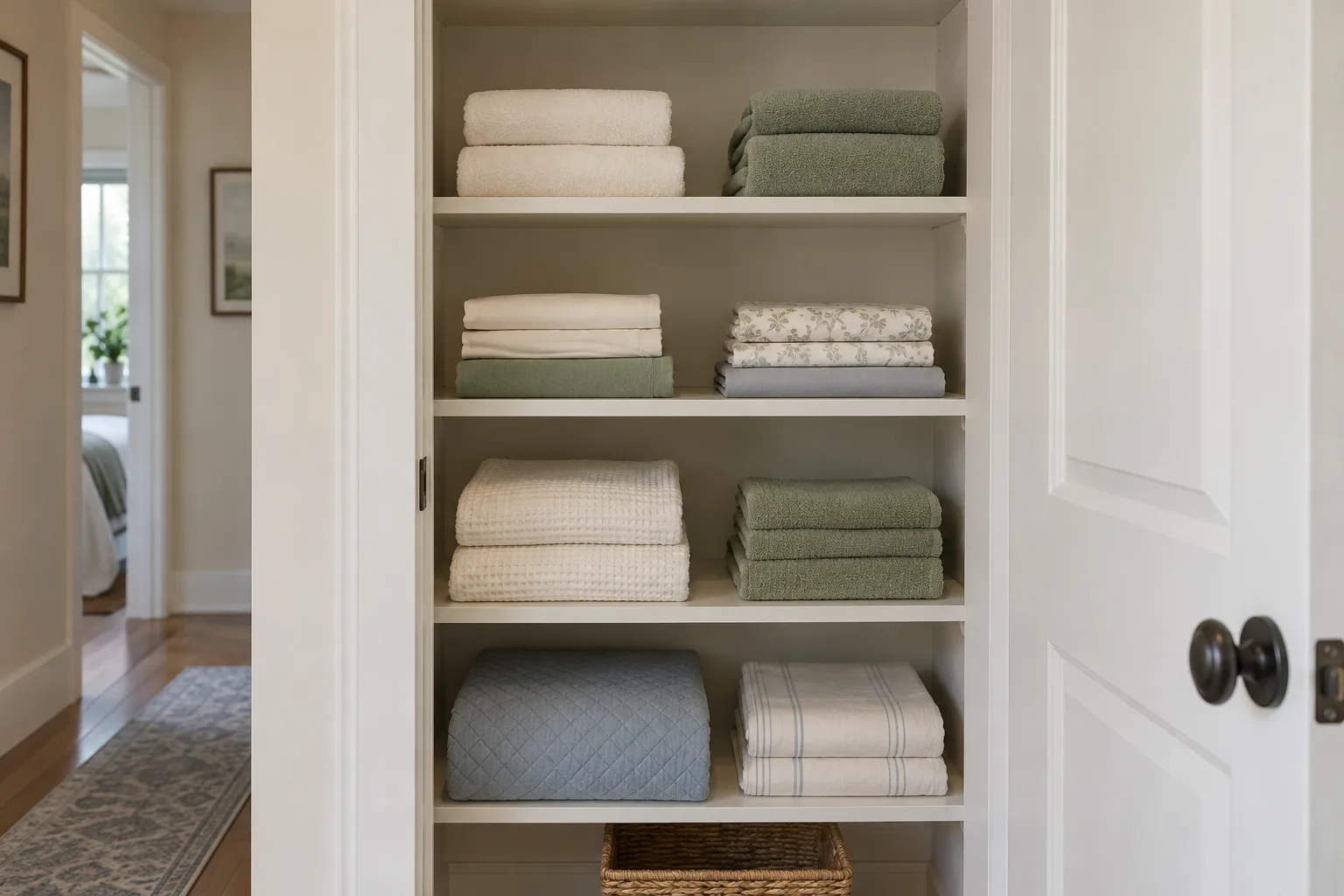
Before buying baskets, look at the towels, sheets, and table linens that really belong in this closet. Separate the pieces you use from the ones that no longer fit your beds or routine. The amount you keep determines the storage problem more than the color of the containers.
Choose a practical reserve for your household instead of filling every shelf simply because it is available. Move items with another purpose to their proper home before arranging the remaining linens.
Practical tip: Count complete usable sets, not just individual pieces.
2. Give Everyday Towels and Sheets Separate Zones
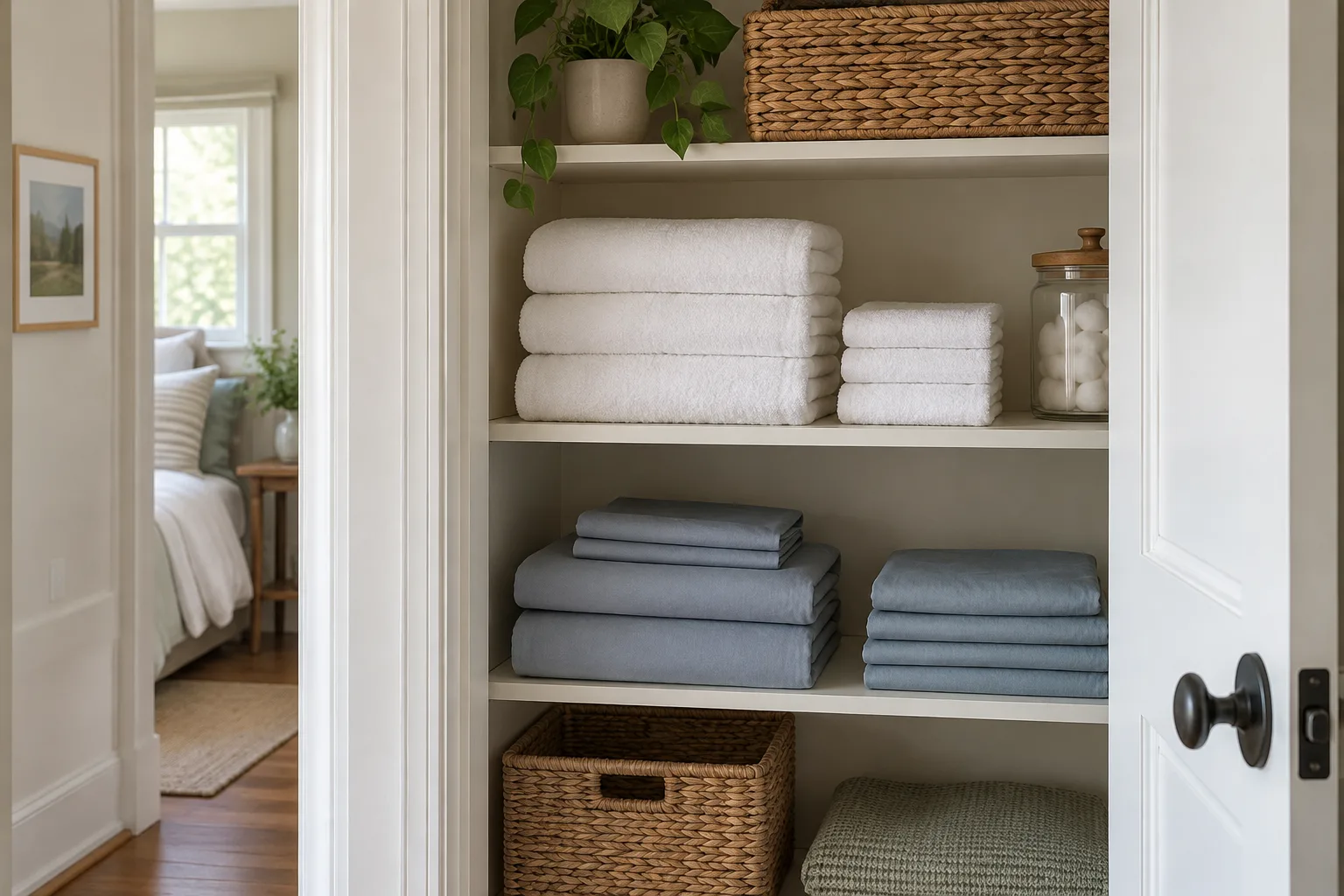
A simple division by use makes the closet easier to read when you are putting laundry away. Give everyday towels one zone and bed linen another, then keep that arrangement consistent. You should be able to see where a clean item belongs without moving several unrelated stacks.
Place the things you reach for most where they are comfortable to retrieve. Shelf position should reflect the people using the closet, not a fixed height copied from a photograph.
Practical tip: Test the arrangement while carrying a basket of clean laundry.
3. Keep Each Sheet Set Together in a Pillowcase

Keeping a matching sheet set together can end the search for the missing pillowcase. Fold the pieces to a manageable shape, then use one matching pillowcase as a loose envelope when that works for the set. The bundle should lift out easily without forcing fabric into a tight package.
Separate different bed sizes so similar colors do not become confusing. If a bulky set does not fit neatly inside its pillowcase, a suitable fabric bag or open shelf group may be easier.
Practical tip: Keep the set complete before it returns to the shelf.
4. Fold Sheets to the Depth of the Shelf

A folding method is useful only when its finished shape suits the shelf. Try folding a sheet into a rectangle that stays fully supported rather than hanging over the edge. Consistent shapes make a small linen closet look calmer and help you see what is available.
Avoid pressing every fabric into the same dimensions if it becomes awkward or bulky. Follow the product care instructions and choose a fold you can repeat during ordinary laundry days.
Practical tip: Use the shelf depth as your folding guide, leaving the front edge clear.
5. Use Shelf Dividers to Support Separate Stacks
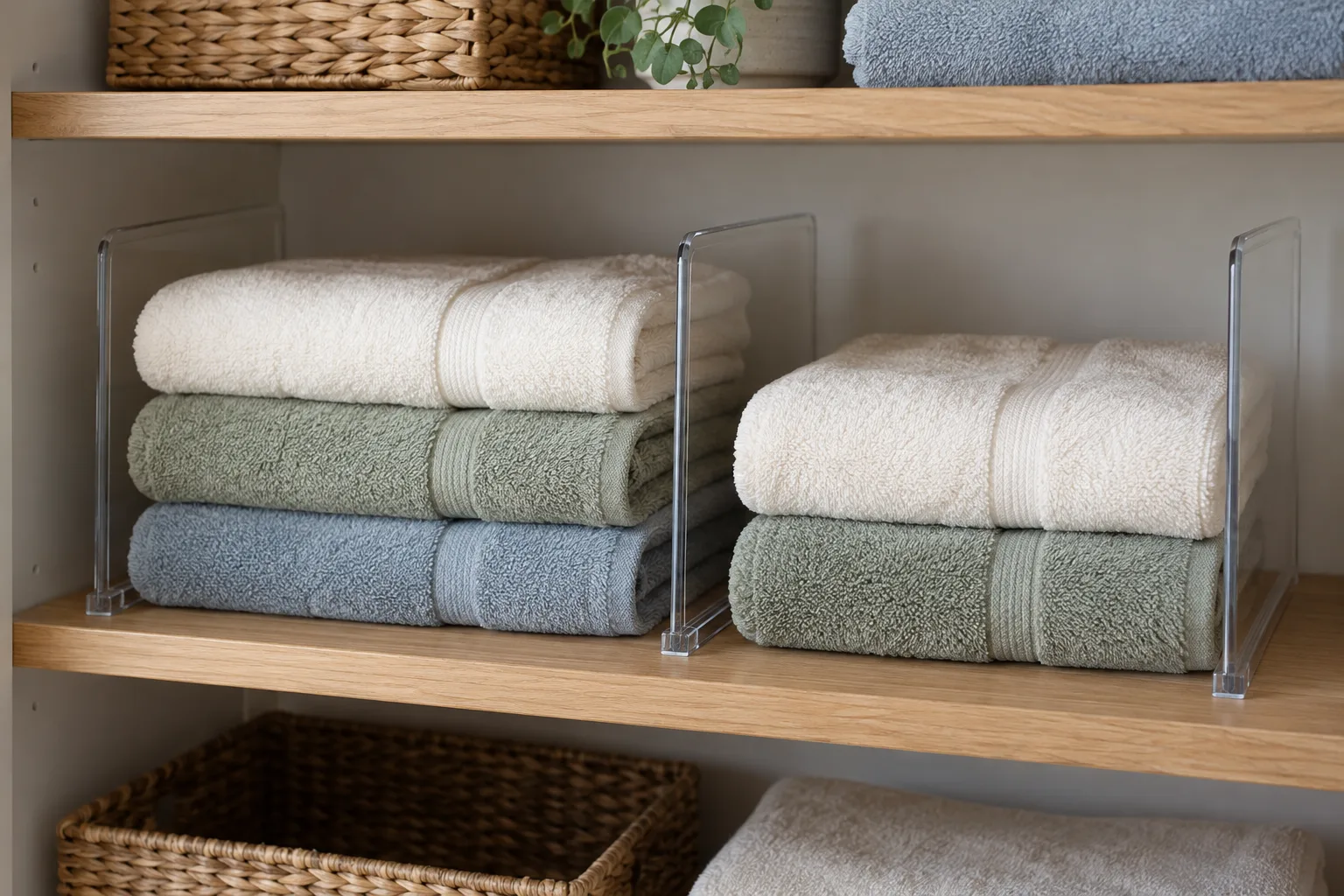
Linen closet shelf dividers can stop one group from spreading into the next. They are especially useful when a wide shelf holds separate towel or sheet sizes. Keep the stacks modest so you can remove an item without leaning the entire pile against a divider.
Check the divider’s fit, fastening method, and compatibility with the shelf. A clip-on accessory should not damage the surface or substitute for proper shelf support.
Practical tip: Measure shelf thickness before choosing a clip-on divider.
6. Face Towels Forward in Small Linen Closet Organization

Folded bath towels are easy to count when their edges face the opening. Keep the stack low enough that the next towel lifts out without dragging the rest along. This arrangement suits towels that become too bulky when rolled into a narrow basket.
Choose a fold based on the towel and shelf rather than aiming for a tightly styled hotel display. Leave space above the stack so returning clean towels is straightforward.
Practical tip: Try removing the middle towel to see whether the stack is too tall.
7. Roll Small Towels Into One Reachable Basket
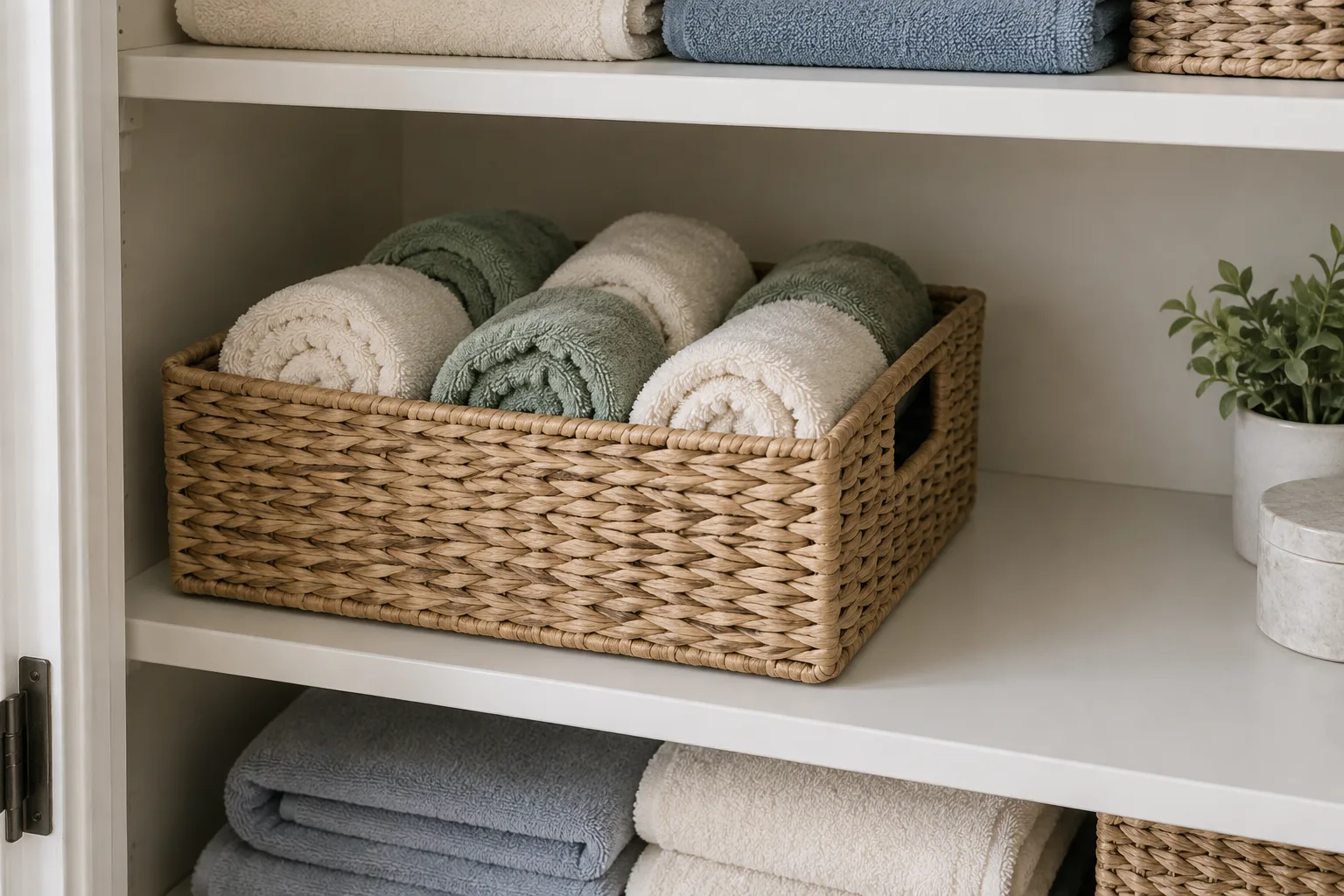
Rolled hand towels can work well in a low basket where you can see the selection from above. Use this approach for smaller towels rather than assuming every bath towel should be rolled. The basket should lift out easily and leave the shelf simple to wipe.
Avoid packing the rolls so tightly that taking one out disturbs the whole group. Compare a folded stack with a basket before buying a set of matching containers.
Practical tip: Choose the arrangement that is easiest to refill, not just photograph.
8. Keep Washcloths in a Shallow Open Bin

Small washcloths can disappear beneath larger towels. A shallow bin gives them a defined home while keeping the top layer visible. Use a size that holds your normal supply without becoming a deep container you have to empty to find the last few pieces.
Keep the bin for clean, fully dry cloths and check the care instructions for both the fabric and the organizer. Separate cloths used for household cleaning from the linens intended for bathing.
Practical tip: Use a low front edge when you want the contents easy to see.
9. Separate Spare Pillowcases From Full Sheet Sets

A few spare pillowcases may deserve their own small container rather than being mixed into complete sheet sets. Fold them so you can see the colors or sizes, then keep the bin near the bedding zone. This makes the extra pieces useful without breaking up a matching set.
Review the spares when you change bedding sizes or replace worn pieces. A bin is a boundary, not a reason to keep adding pillowcases you no longer use.
Practical tip: Choose one place for spares so they do not spread across several shelves.
10. Store Light Seasonal Linens in Suitable Fabric Bags
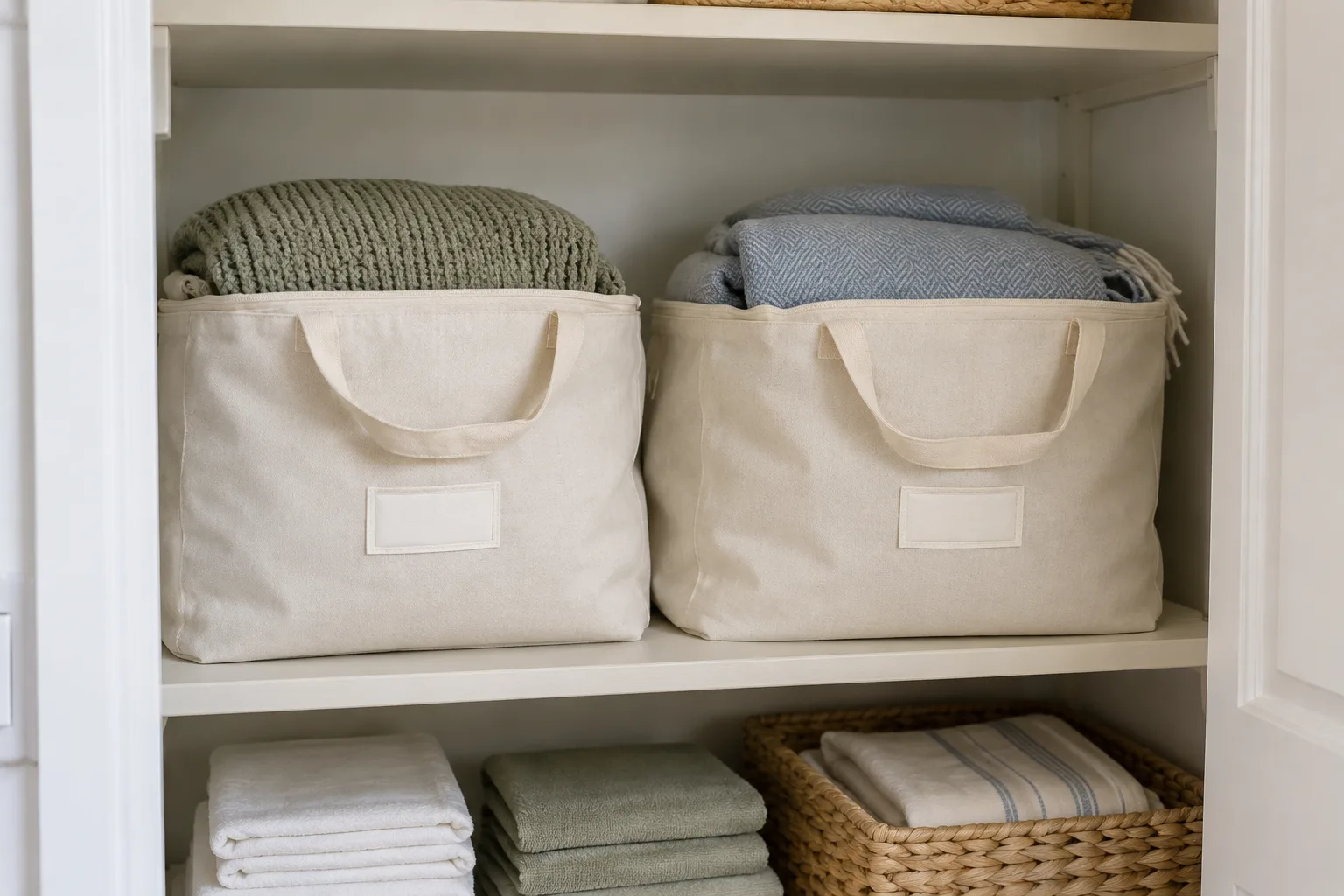
Light seasonal linens can live on a less frequently used shelf in a suitable fabric storage bag. A bag keeps a group together and makes it easier to recognize, but it still needs to fit the shelf and the contents. Avoid making an overhead bundle too heavy to handle comfortably.
Store items clean and fully dry, following their individual care guidance. Choose the storage material and location for the specific textile instead of assuming any sealed bag works for every bedding fill.
Practical tip: Keep the bag light enough to lift without balancing another item.
11. Use Lift-Out Bins on Deep Shelves
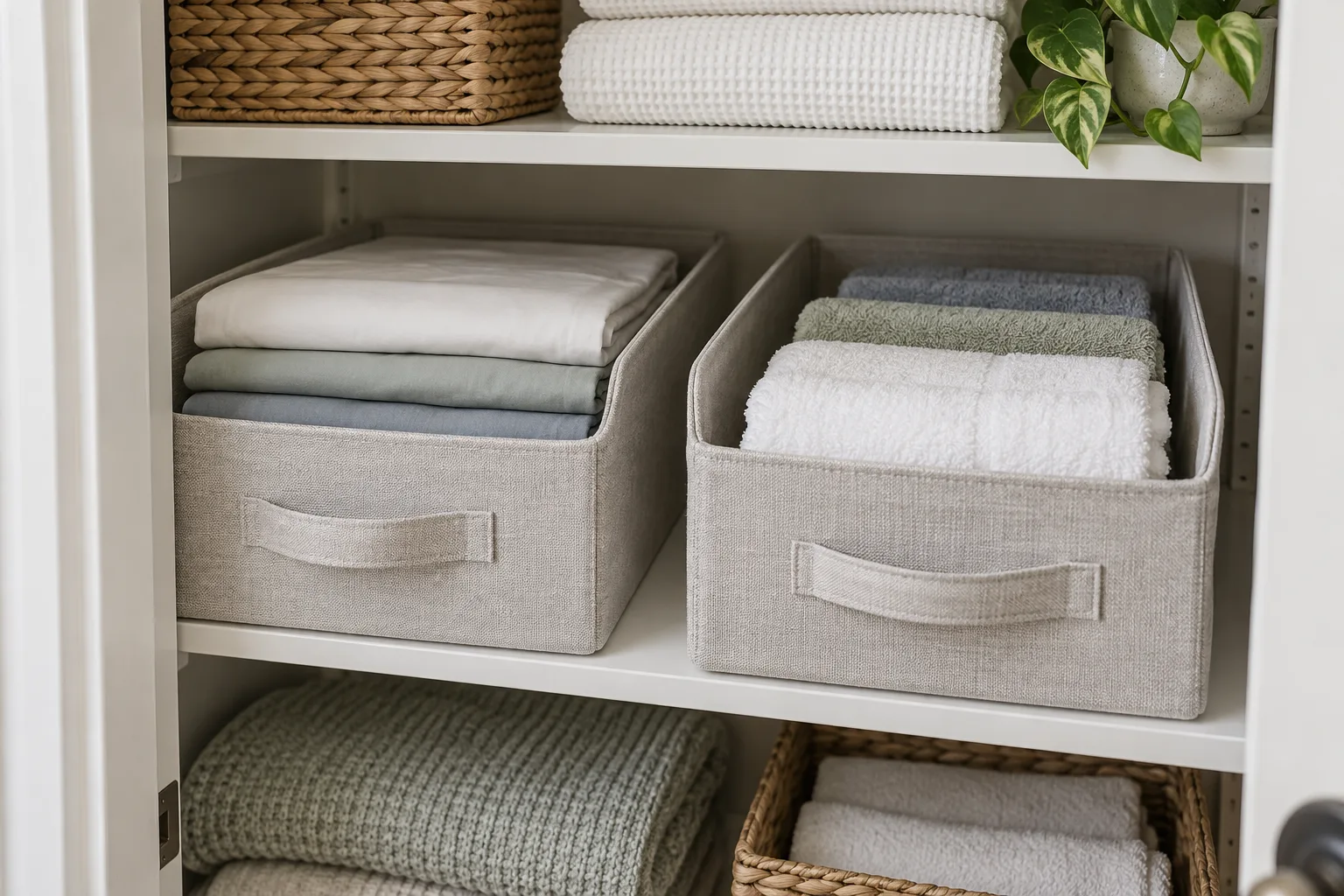
Deep linen closet organization becomes easier when the contents can come forward as one manageable group. A lift-out bin can make the back of a shelf accessible without pulling out several individual stacks. Measure the opening and usable shelf depth before choosing the container.
Check the weight when the bin is full and leave room to grasp its handles. If it is too awkward to lift safely, divide the contents into smaller groups.
Practical tip: Try a container you already own before buying matching bins.
12. Keep Daily Linens in Front and Reserve Sets Behind
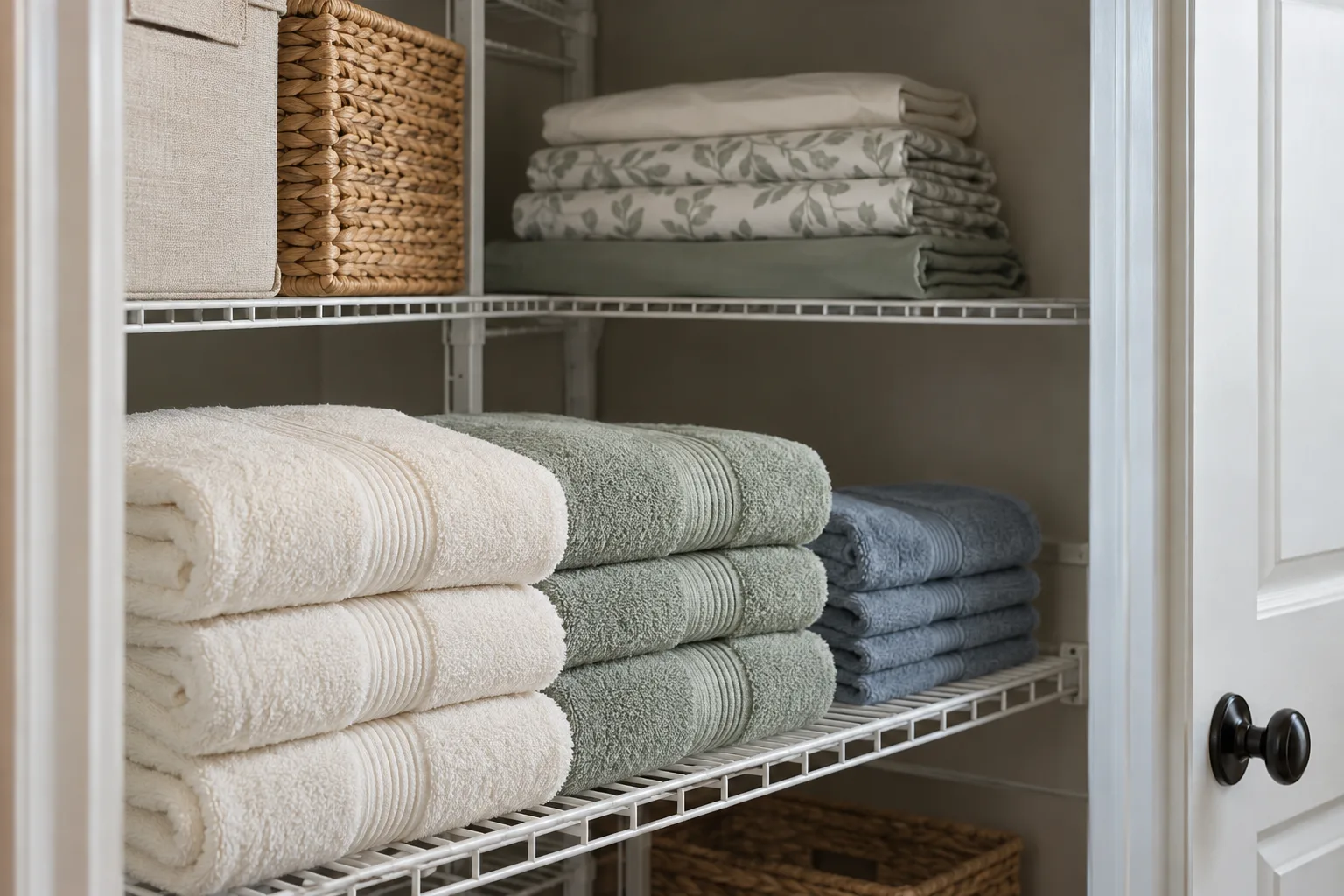
A front-and-back arrangement can suit a deep shelf when the reserve items remain easy to identify. Keep the frequently used group at the front and a small reserve behind it. This works best when you can reach the rear without unloading an entire wall of fabric.
Do not use the back as a place to hide unknown leftovers. Review it during your normal reset and move the arrangement if the reserve keeps being forgotten.
Practical tip: Use this method only where the rear group remains visible or clearly identified.
13. Fit Baskets to Small Linen Closet Organization
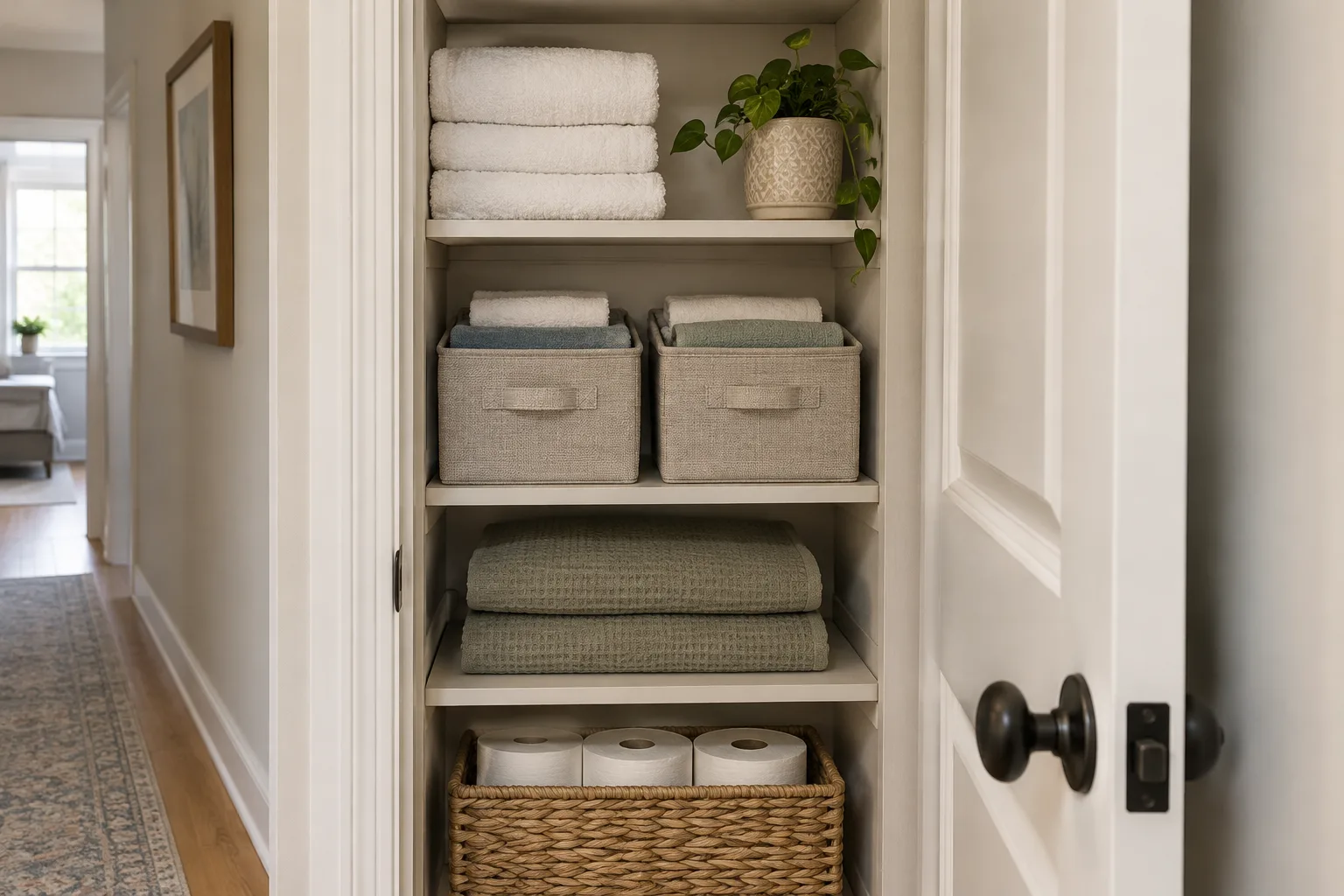
A small closet opening can make a wide basket frustrating even when it fits on the shelf. Compare the container with the doorway, hinges, and the space needed to lift it out. Two narrow linen closet baskets may be more useful than one large basket that gets caught on the frame.
Keep each basket assigned to a specific group. Matching finishes are optional; access and a manageable filled weight matter more than buying a coordinated set.
Practical tip: Measure the narrowest part of the opening as well as the shelf.
14. Adjust Shelf Spacing Around the Actual Contents
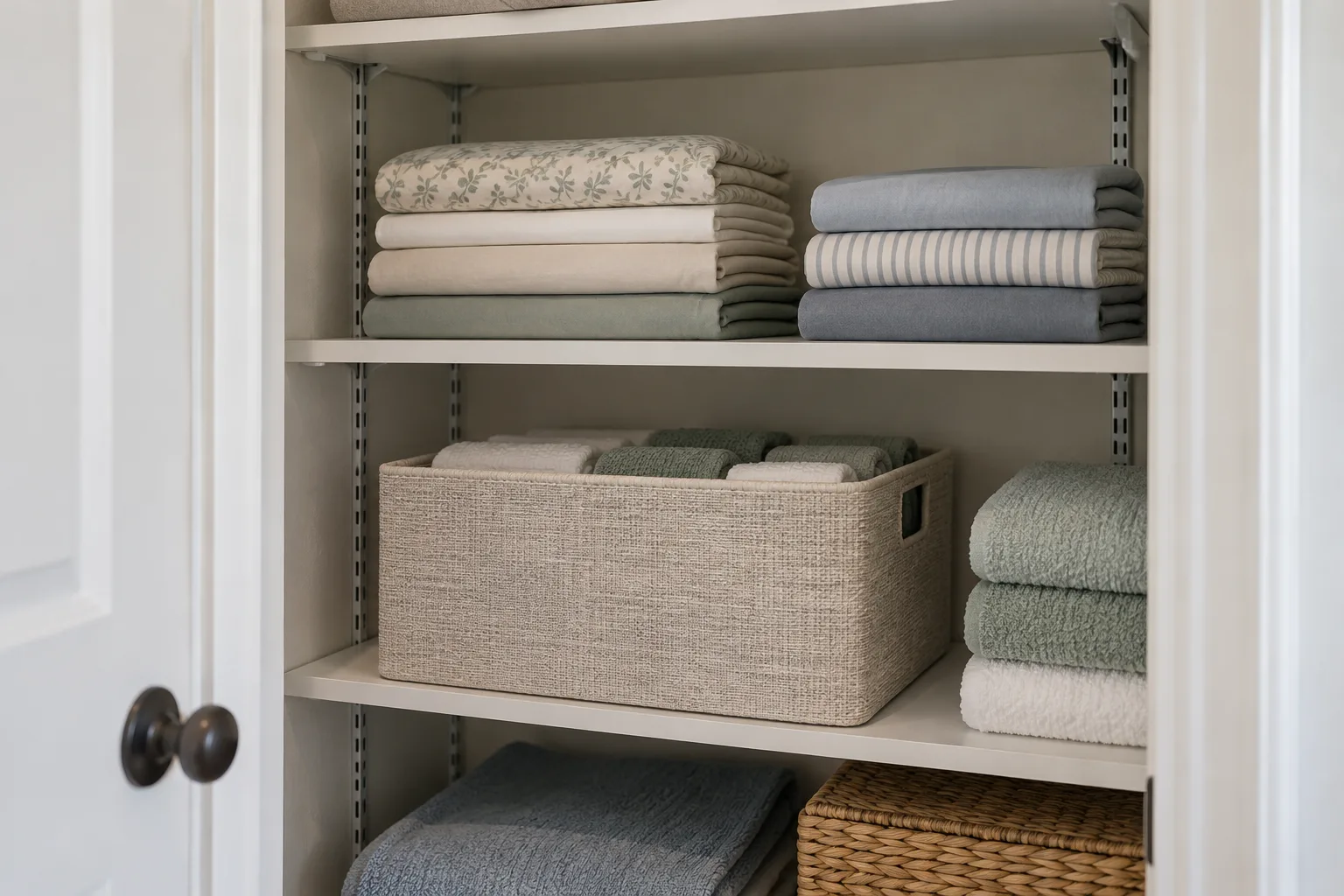
Adjustable shelves can help reduce unused vertical gaps, but begin with the stacks and containers you actually need. A little clearance above a group makes it easier to remove and replace an item. Squeezing another shelf into every gap can make a narrow closet harder to use.
Follow the shelving system’s support, spacing, and load instructions. Permanent changes need an assessment of the wall and fittings rather than assumptions based on the appearance of a storage photo.
Practical tip: Set out one real towel stack and one real basket before changing shelf positions.
15. Use Simple Labels That Match the Way You Search
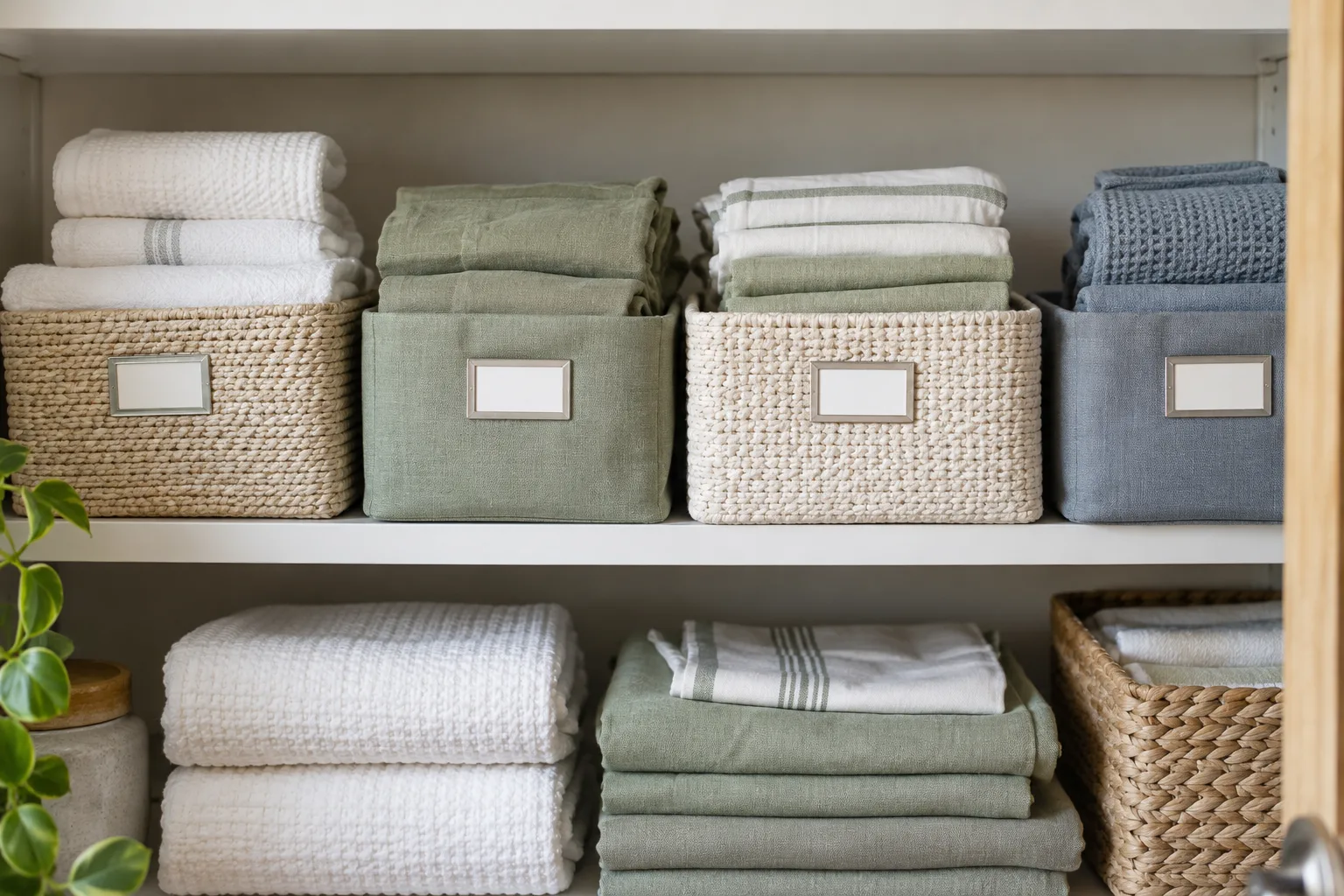
Useful labels answer the question you ask when opening the closet: which room, bed size, or linen type is this? Use a short label and keep the system consistent. Labels are particularly helpful when several family members put clean laundry away.
Avoid adding a complicated code that needs a separate explanation. The images show blank label holders so you can choose the wording that fits your household rather than copy a fictional inventory.
Practical tip: Label the place where the item belongs, not just the item itself.
16. Use the Door Only for Light, Flat Linens

A slim door organizer may hold a few light, flat items when there is enough closing clearance. Check the space between the door and the shelves, then test the full movement. A pocket organizer that presses into towel stacks can make the whole closet less convenient.
Use hardware and an organizer suited to the door and load, and follow the fitting instructions. Keep heavier groups on appropriately supported shelves instead of overloading a hanging accessory.
Practical tip: Close the door slowly during your fit check before filling every pocket.
17. Prepare One Small Guest-Linen Basket
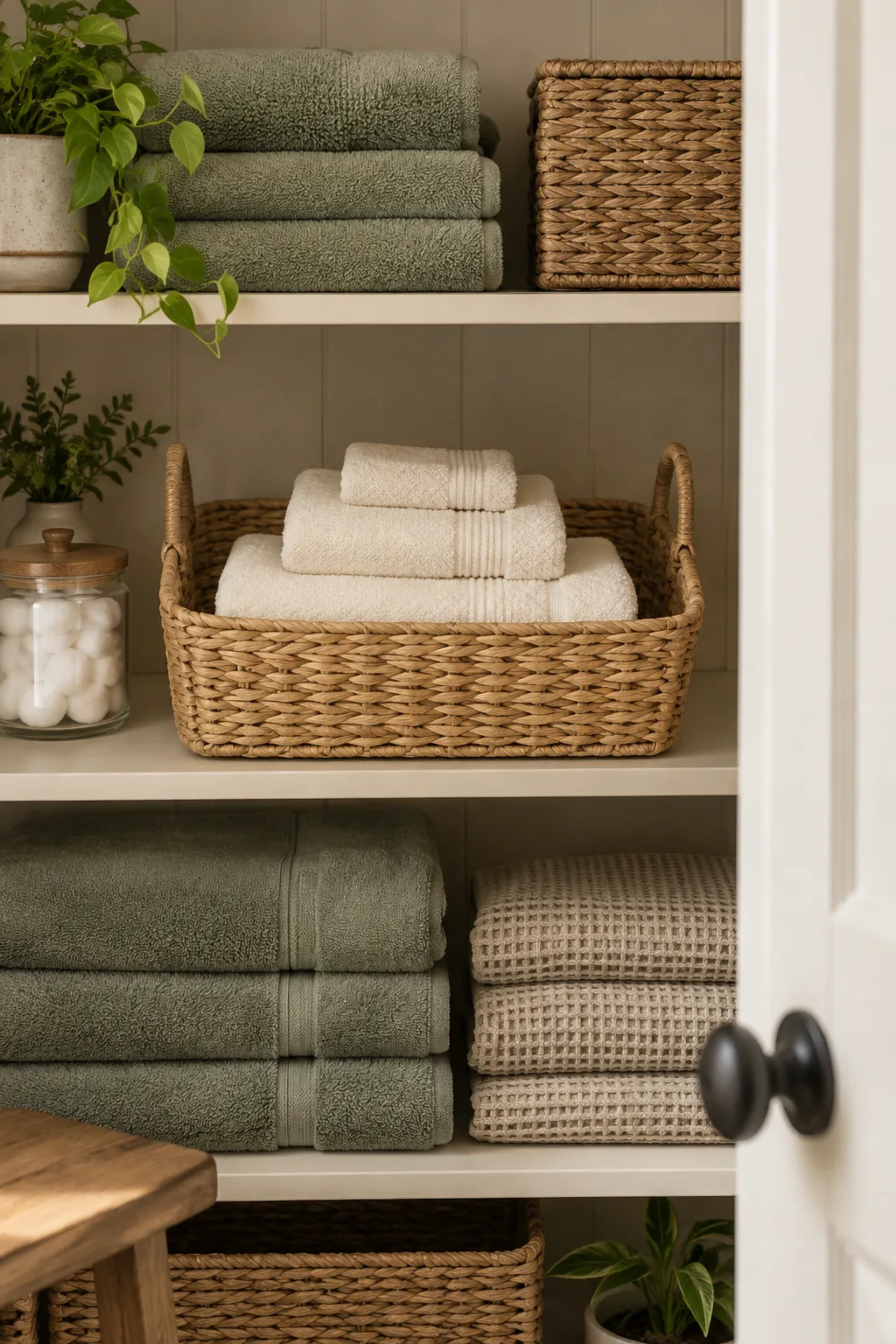
A guest-linen basket can keep a small coordinated group ready without dedicating a whole shelf to occasional use. Include the pieces you normally provide and keep the set easy to carry. This is useful when guest linens otherwise become mixed into several everyday piles.
Check and refresh the group before it is needed. A basket does not replace the washing, drying, and storage directions for its contents.
Practical tip: Keep guest sets separate only if the distinction makes your routine easier.
18. Give Table Linens Their Own Flat Group
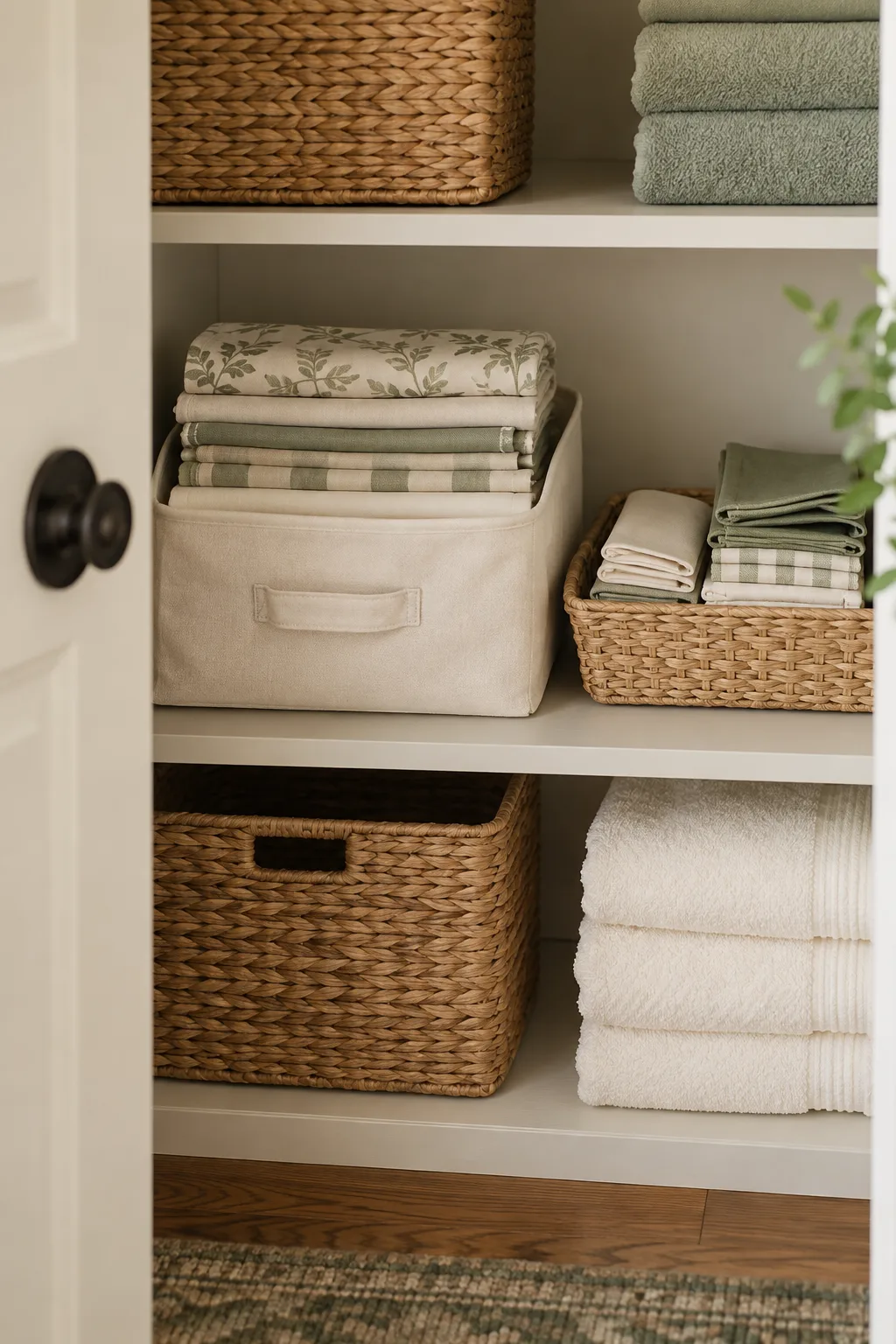
Tablecloths and cloth napkins often need a different storage shape from bath towels. Keep them in a small flat group where their size or set can be recognized. A suitable bag or shelf divider can stop the pieces from sliding into the bedding zone.
Follow the textile’s care and folding guidance, especially for delicate or embellished items. Avoid forcing a special piece into the same small fold simply to match the rest of the closet.
Practical tip: Group napkins with the tablecloth only when you actually use them together.
19. Keep Clean Bath Mats on a Separate Lower Shelf

Clean bath mats can have a lower shelf or separate bin so their bulk does not disturb small towel stacks. Keep only the spare mats that fit your routine and make the group easy to lift. A designated place also helps the larger pieces return after laundry.
Only put mats away when they are fully dry and follow their care label. Do not use the linen closet as a waiting place for wet bathroom textiles.
Practical tip: Choose a storage spot that lets the mat keep a practical fold.
20. Use a Shallow Shelf for Small Linen Groups
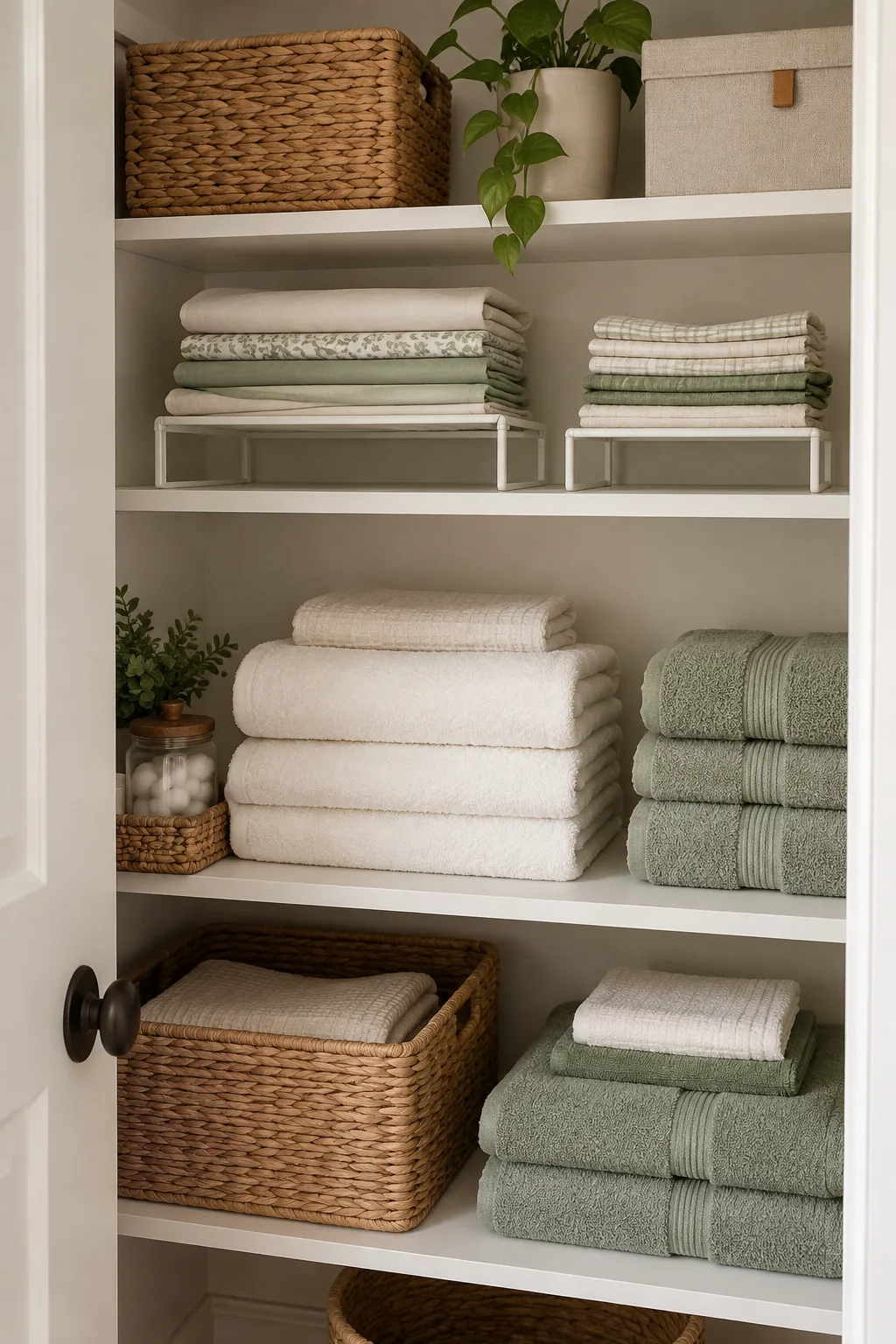
A shallow shelf can work well for small linen groups that disappear on deeper shelving. It may improve visibility when the existing closet already offers that option, or when a properly planned shelf change is appropriate. Start with the items and access problem rather than adding shelving for its own sake.
New or altered shelves need suitable support and clearances for the actual wall and load. Keep the opening usable and avoid creating ledges that catch larger bedding as you remove it.
Practical tip: Use shallow storage for genuinely small groups, not tightly compressed bulky sets.
21. Move Overflow to a Separate Suitable Cabinet

If a small linen closet remains crowded after editing, a separate suitable cabinet may be a better home for reserve bedding. Choose a dry, accessible location and keep the extra store limited to a defined purpose. Moving overflow works only when it does not create another forgotten collection.
Measure the cabinet doors, walking route, and furniture footprint, and follow anti-tip instructions where applicable. Our home storage ideas can help you compare other places for a modest reserve.
Practical tip: Write down what the second cabinet holds so you do not buy duplicates.
22. Reset Small Linen Closet Organization After Laundry
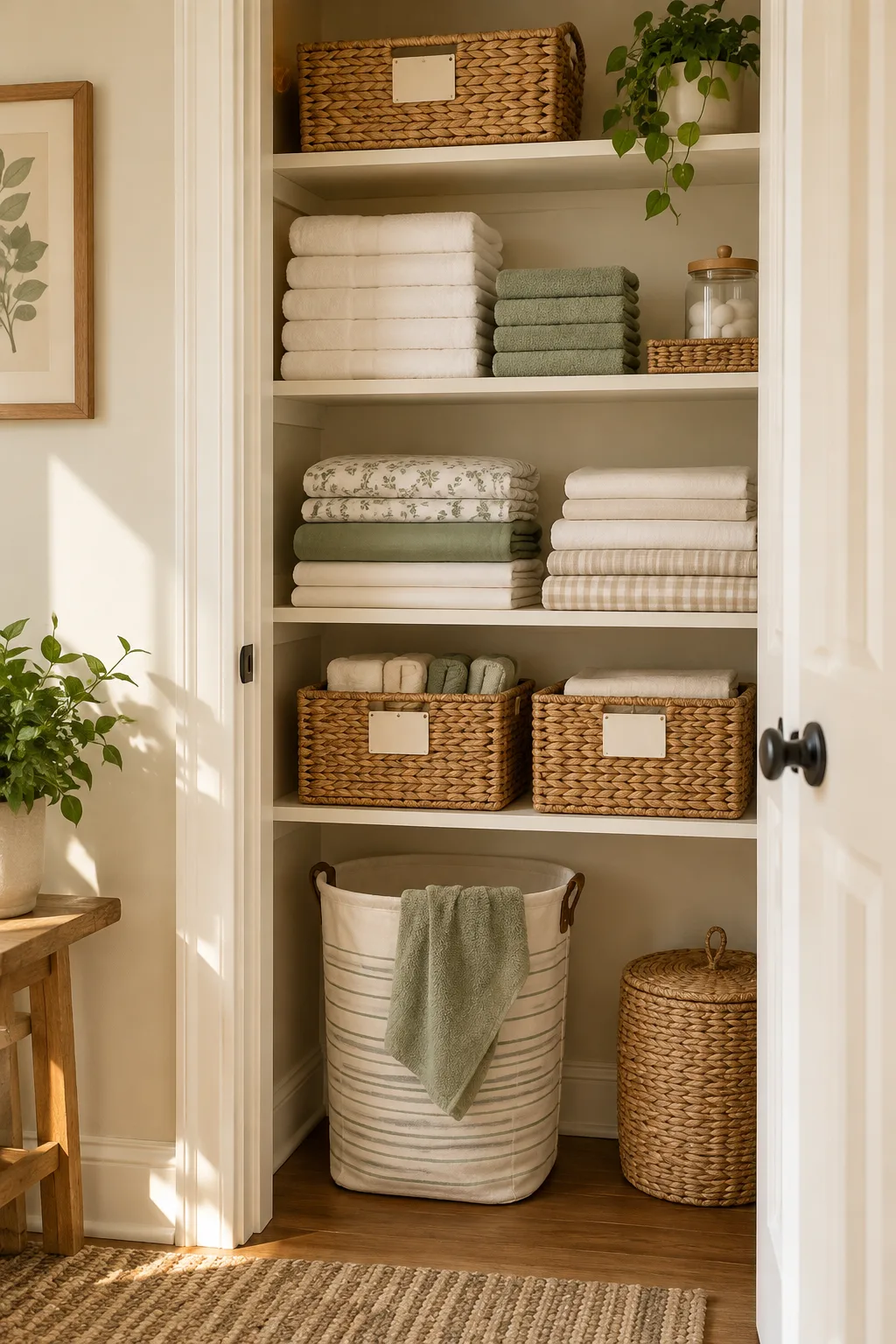
A closet stays useful when returning clean laundry is as easy as taking something out. Keep the zones clear, put complete sets back together, and rotate the pieces you use instead of reaching for the same top towel every time. A brief reset can reveal when the collection is outgrowing the space.
Check textile care guidance before washing or storing. The Brooklinen care guide illustrates why instructions vary by product; the label on your own linen is the relevant starting point.
Practical tip: Review one shelf when putting laundry away rather than waiting for another full reorganization.
Start With the Most Useful Change
Choose the shelf or linen group that causes the most daily inconvenience. Test one change through a normal laundry cycle, then adjust the arrangement before buying more containers. A simple system that is easy to refill is more useful than a crowded display.
For related planning, explore closet organization ideas and small laundry room organization ideas.
Test a Loaded Bin With the Door Fully Open
Measure the clear opening available with the door in its normal open position, then test a bin containing the linens you actually store. The bin must pass the hinges, latch area and any folded or overlapping panels without tilting its contents onto the floor. A shelf can be wide enough for a container while the usable doorway is too narrow to remove it comfortably.
If the door itself limits access, compare these closet door ideas before buying a different set of baskets. Check the complete door system and its operating space; a new panel finish alone will not enlarge the accessible opening.
Optional digital guide for this topic
If you prefer a structured workbook, explore this related paid guide.