Stair runner ideas involve more than choosing a narrow strip of carpet. The visible wood, risers, railing, turns and landing all affect how the runner reads from the hall and from the steps themselves.
Begin with the staircase you have. Note the tread shapes, changes in width and the way the flight meets the landing. A straight stripe, a border and a repeating motif each need a considered layout around that geometry.
These 22 original concepts focus on appearance and planning. The actual floor covering must be specified as suitable for stair use, then measured and fitted appropriately. Neither a fiber name nor an attractive illustration establishes stair suitability, secure fixing or compliance for your home.
The images are original AI-generated decor concepts, not installation diagrams or photographs of completed client projects.
Browse These 22 Stair Runner Ideas
Jump to an idea
- Use a quiet oatmeal runner with warm wood
- Pair navy stair runner ideas with white risers
- Try a muted blue pattern on a simple flight
- Use sage with a pale stair surround
- Choose olive beside deeper wood
- Warm the hall with a muted clay runner
- Give charcoal a clear surrounding contrast
- Use a dark border on a natural-tone center
- Keep the border close in tone
- Try a broad border as the main graphic detail
- Use a narrow binding for a restrained finish
- Run a clear central stripe along the flight
- Try fine stripes for a quieter rhythm
- Use an original chevron pattern deliberately
- Try a herringbone-looking surface
- Choose a small geometric repeat
- Use a softened traditional motif
- Let white risers frame a warm runner
- Use a pale runner beside dark stair details
- Coordinate a painted stair surround with the runner
- Plan the pattern around a turning staircase
- Resolve the landing transition as part of the design
Plan stair runner ideas with the whole staircase in view
Make a simple record of the straight sections, turns, landing and surrounding finishes. Bring a real carpet sample, border sample and wood or paint finish together. View the combination at the bottom and top of the flight. Use a suitable professional to confirm the geometry, product suitability, finished width, fitting method and transitions before ordering. A decorative runner concept is not a substitute for that specification.
| Feature to record | Design question | Confirm with the fitter |
|---|---|---|
| Straight flight | Which pattern direction suits the view? | Actual quantity and fit |
| Turning steps | How will a motif continue? | Templating and pattern layout |
| Visible stair sides | How much finish should remain visible? | Suitable finished runner width |
| Border or binding | Quiet edge or deliberate contrast? | Compatible finish and construction |
| Top landing | Continue, stop or change material? | A secure planned transition |
Check stair runner ideas against the exact carpet specification
Not every wool, plant-fiber or synthetic floor covering is recommended for stairs. Check the exact product’s current suitability and the manufacturer’s installation guidance. The backing, construction, underlay and staircase can affect the appropriate approach. A manufacturer’s guide may describe more than one fitting method, so let the chosen product and professional assessment determine the specification.
Resolve turns and landings before ordering
A turning staircase can need professional templating and a planned pattern layout. Review where stripes, borders and motifs meet on the turn and at the landing. Ask to see the proposed transition in the actual plan rather than assuming the straight-flight image will continue automatically. Decorative stair rods, if used, should not be treated as a substitute for the required secure fitting.
1. Use a quiet oatmeal runner with warm wood
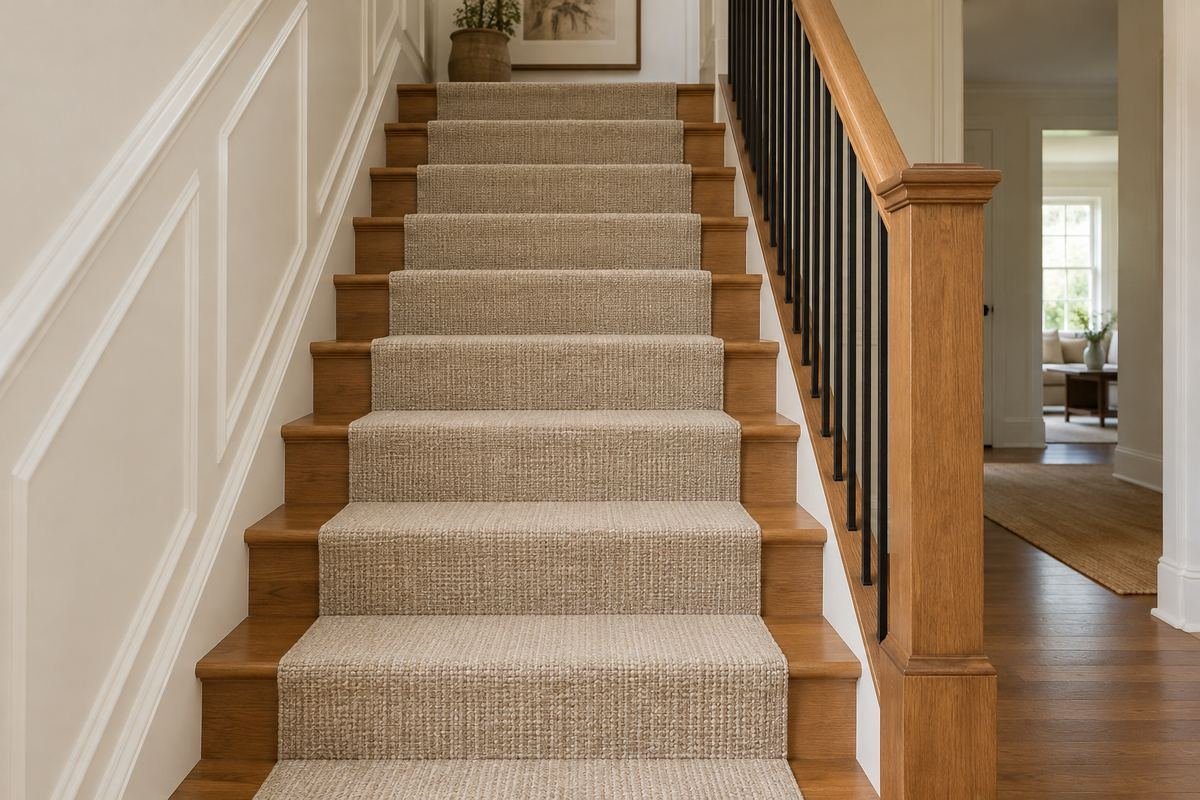
An oatmeal runner can sit gently beside warm wood stair sides. The close natural palette keeps the railing and stair geometry visible without a strong new color.
Compare the sample with the finished wood, not an unfinished board. A cream, beige or gray cast changes the relationship. Choose the exact floor covering for stair suitability before refining the edge color.
Practical tip: Compare the sample against the final stair finish.
2. Pair navy stair runner ideas with white risers
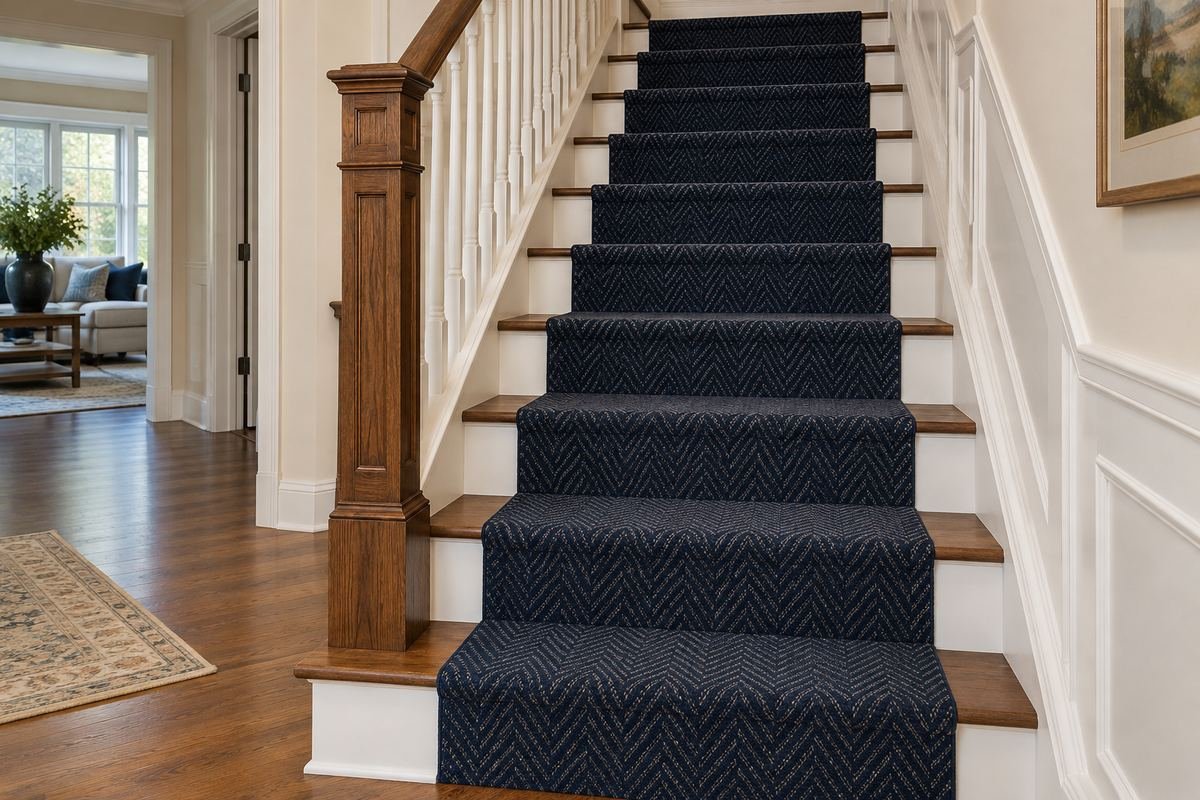
Navy and white create a clear stair composition. The deeper runner gives the flight a defined center while the pale risers keep the surrounding details distinct.
Check the blue beside the railing finish and hall floor. A nearly black navy has a different effect from a clearer blue. Use the actual sample in the stairwell’s evening lighting as well as daylight.
Practical tip: View the navy in the stairwell’s least-lit area.
3. Try a muted blue pattern on a simple flight

A muted blue pattern can add detail to a straightforward staircase. Keeping the surrounding wall and railing quiet gives the runner room to carry the decoration.
Review a complete repeat rather than one small sample corner. The fitter needs to plan how the motif falls across the treads and risers. Choose the design because that whole visible arrangement works.
Practical tip: Ask to see a complete pattern repeat.
4. Use sage with a pale stair surround

Sage can introduce a soft green center to a pale staircase. The muted color connects easily to a hallway with natural wood and plain warm-white walls.
Compare the runner with the wall paint and any nearby green textile. A clear difference in depth can be more deliberate than an accidental near-match. Keep the edge treatment restrained if the color itself supplies enough interest.
Practical tip: Compare every nearby green sample together.
5. Choose olive beside deeper wood
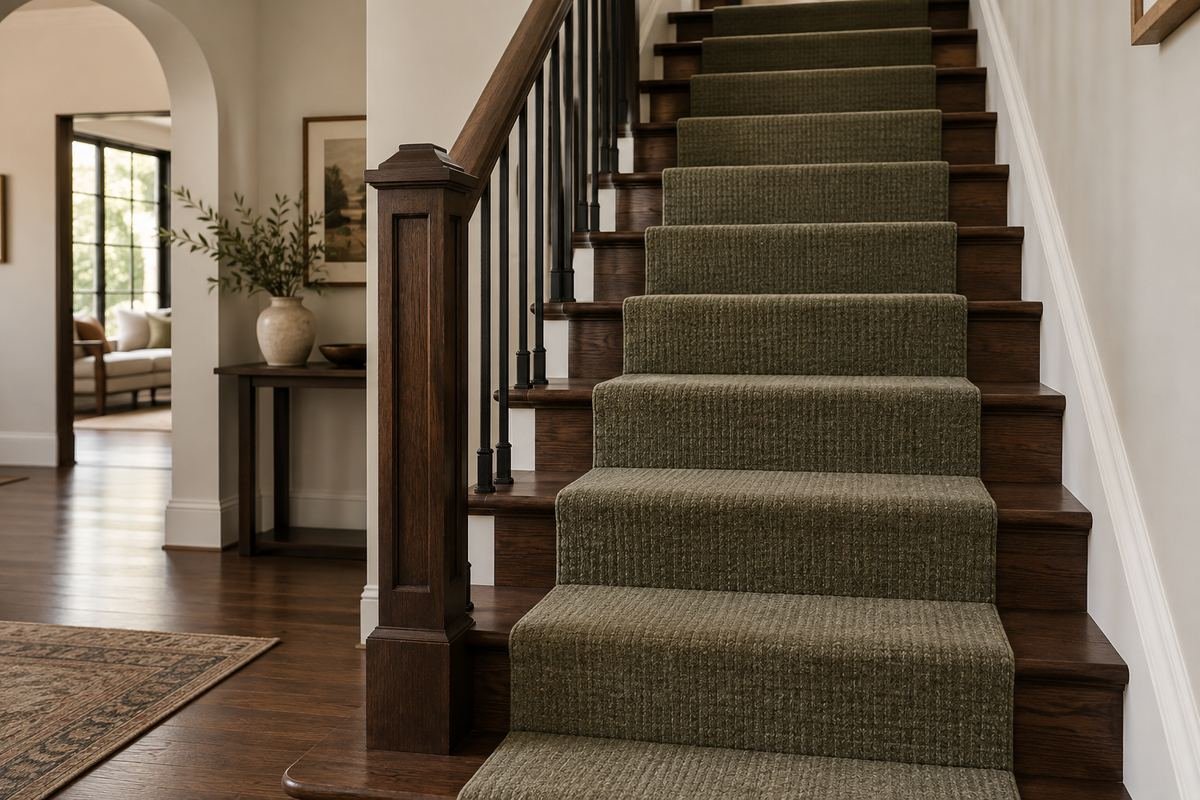
Olive can give dark or medium wood stairs an earthy color partner. It offers a different direction from a standard cream runner without requiring a vivid accent.
Look at the sample at the top and bottom of the flight. The light may make the olive appear more brown or green in different areas. Settle that relationship before choosing a contrasting border.
Practical tip: View the sample from both landings.
6. Warm the hall with a muted clay runner
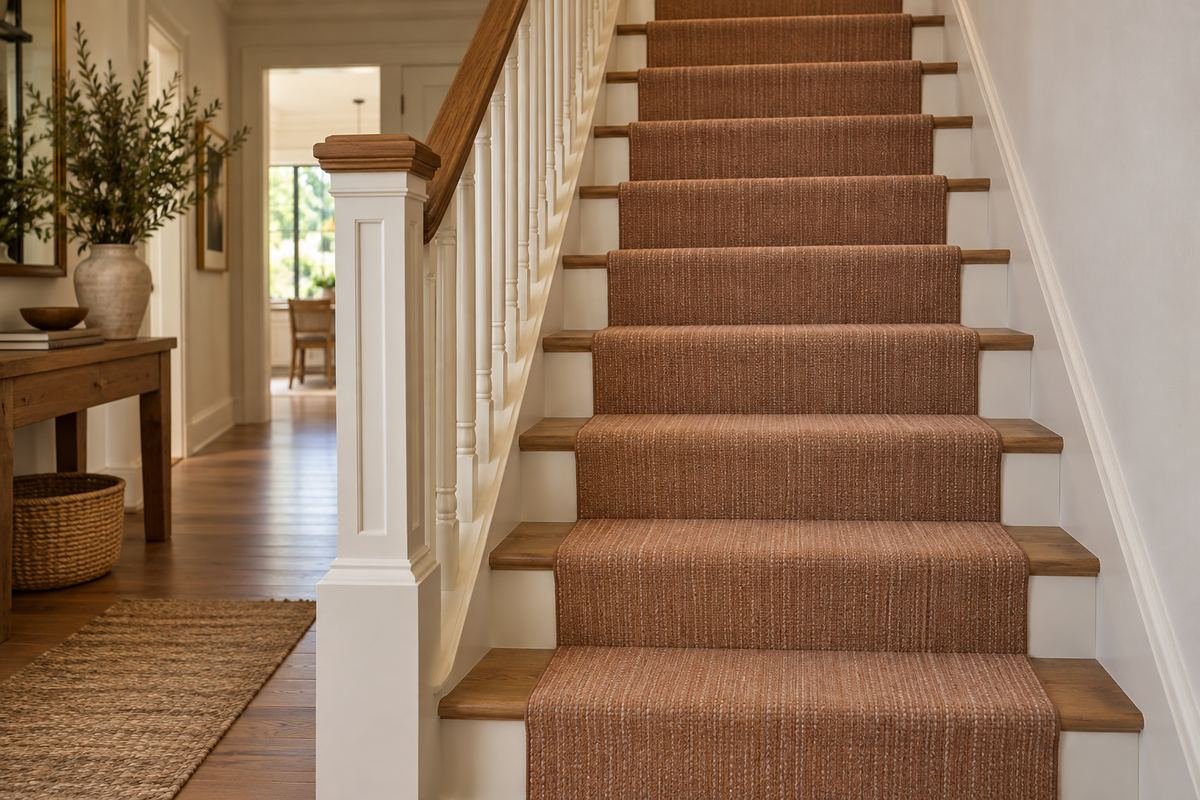
Muted clay brings a warm pink-brown note to the stairs. A pale wall and a quiet railing let the runner become the main color feature in the hall.
Compare it with the entry floor and visible stair finish. Several similar warm tones may connect or compete. Choose the exact shade from physical samples rather than assuming terracotta, rust and clay will behave alike.
Practical tip: Keep the entry floor sample in the color group.
7. Give charcoal a clear surrounding contrast
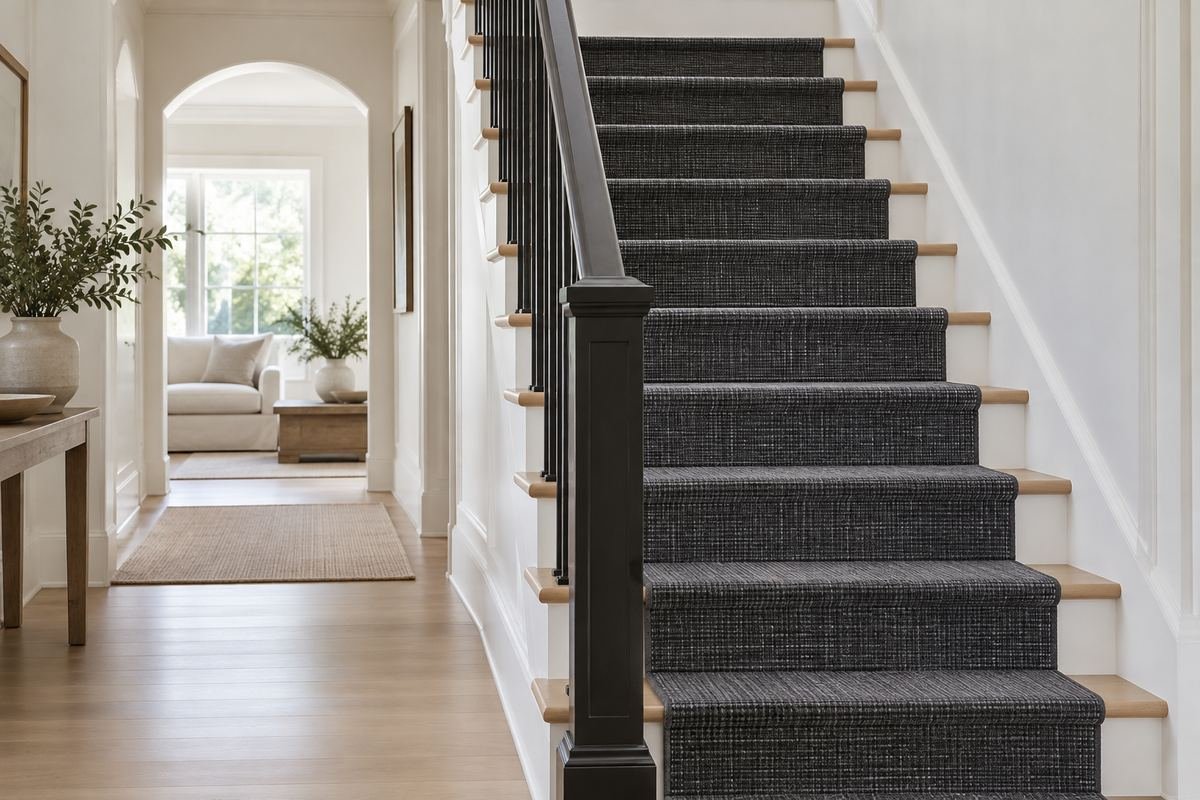
A charcoal runner creates a strong central line on a lighter staircase. It can connect to a dark handrail or nearby metal detail without adding a new bright hue.
Check the charcoal’s undertone beside those existing dark finishes. Brown-black and blue-gray can look different in the same hall. Choose the depth for the whole staircase rather than only the most attractive sample photograph.
Practical tip: Compare adjacent dark finishes under the same light.
8. Use a dark border on a natural-tone center
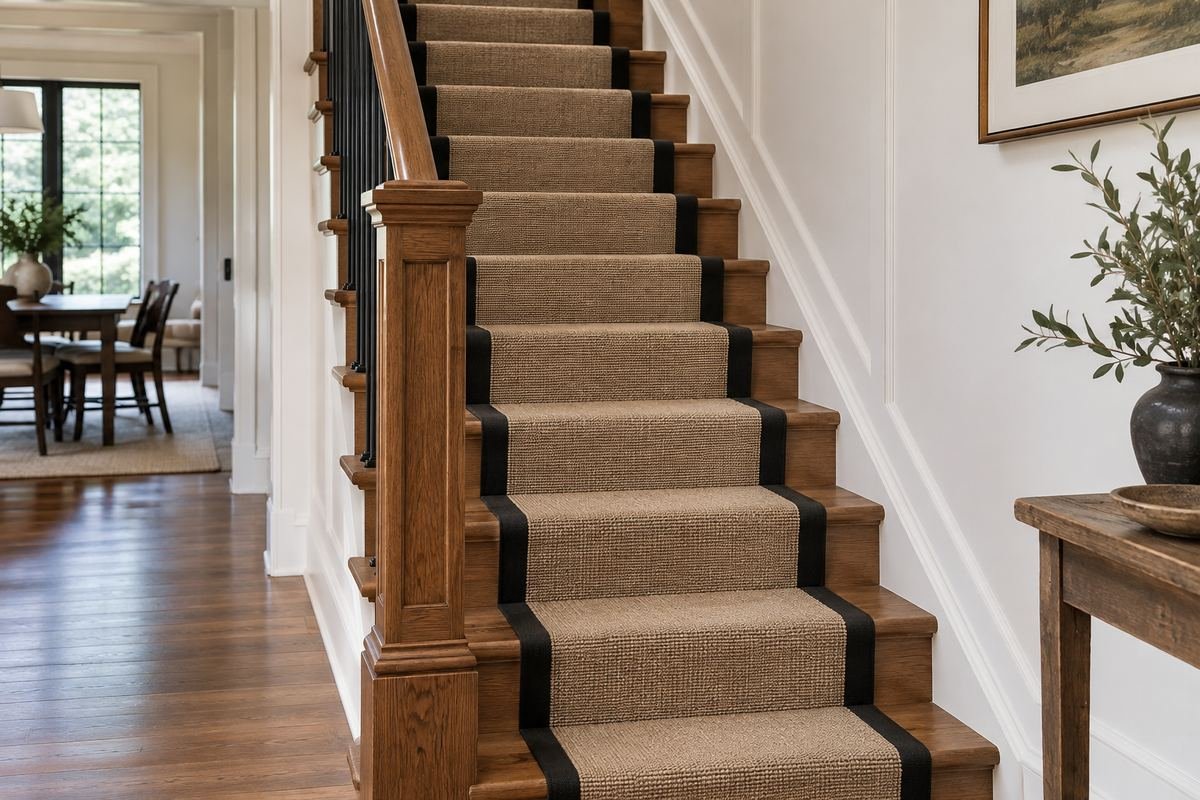
A dark border gives a natural-tone runner a defined edge. The contrast can connect the staircase to dark hardware or a simple handrail in the hall.
Compare the border width with the finished runner width. A broad dark edge changes the balance more than a narrow line. Have the actual construction and fitting details confirmed before treating the border as a purely decorative addition.
Practical tip: Compare narrow and broad border samples on the same center.
9. Keep the border close in tone
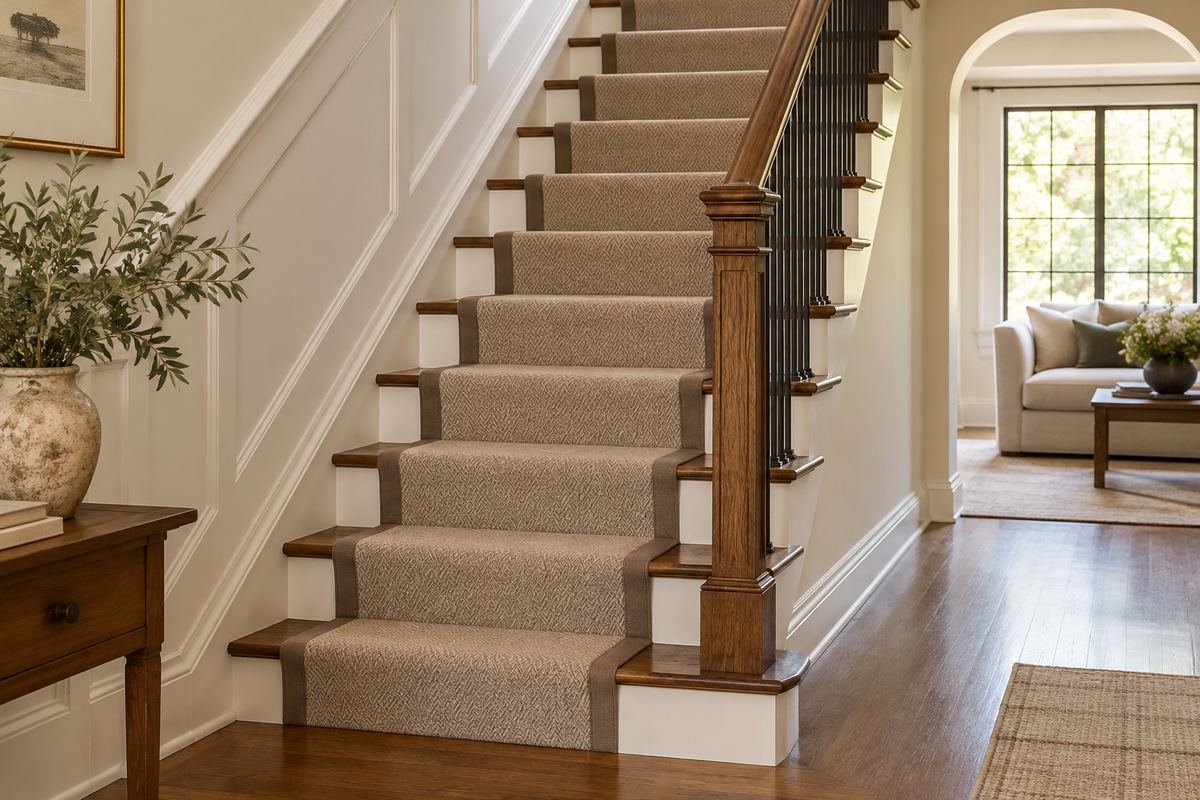
A border in a related color gives the runner a finished outline with less contrast. It suits a staircase where the architecture should remain more prominent than the carpet edge.
Use physical samples to check the relationship. Two almost-matching tones can look accidental if one is much warmer. A slight deliberate change in depth may read more clearly while preserving the quiet effect.
Practical tip: Choose a deliberate tonal difference rather than a near-match.
10. Try a broad border as the main graphic detail
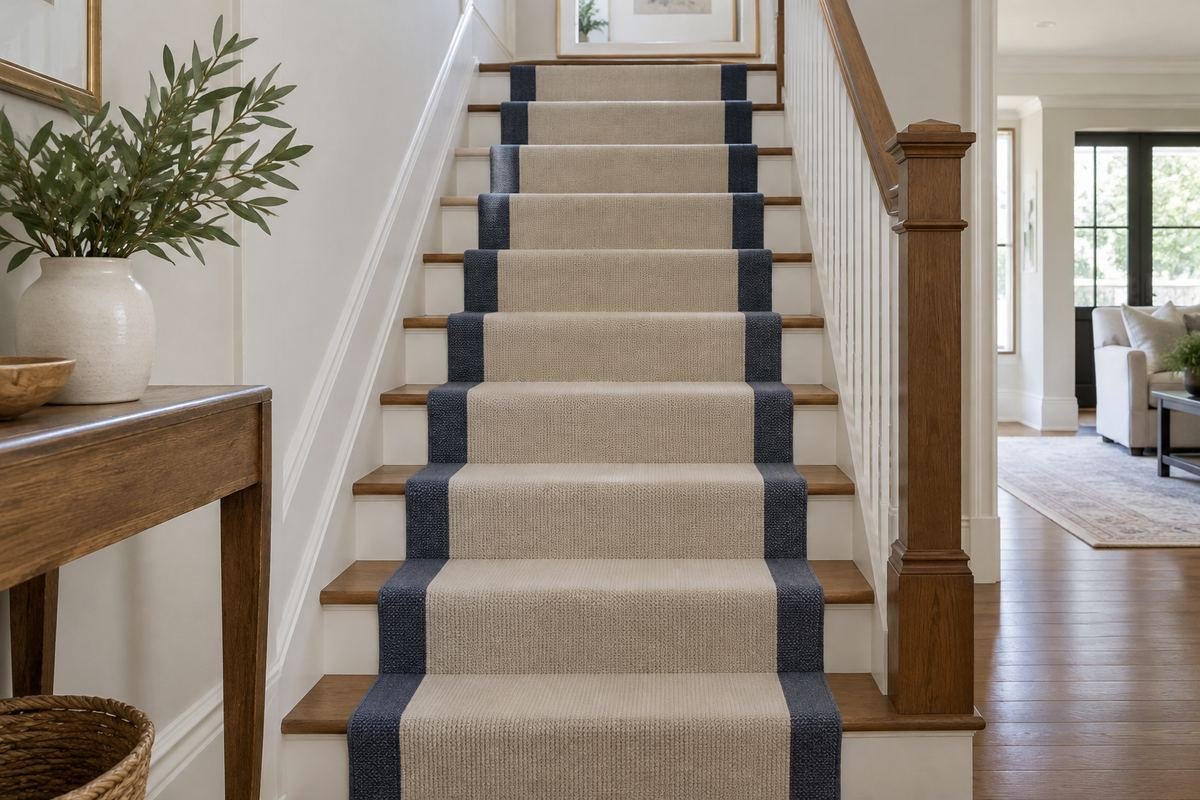
A broad border can give a simple runner a stronger visual structure. The center can remain quiet while the edge supplies the main contrast.
Review the proposed width on the actual staircase plan. The border should work at the turns and landing as well as on a straight sample. Ask the fitter to resolve those details before the material is ordered.
Practical tip: Include the border at the turn in the layout review.
11. Use a narrow binding for a restrained finish
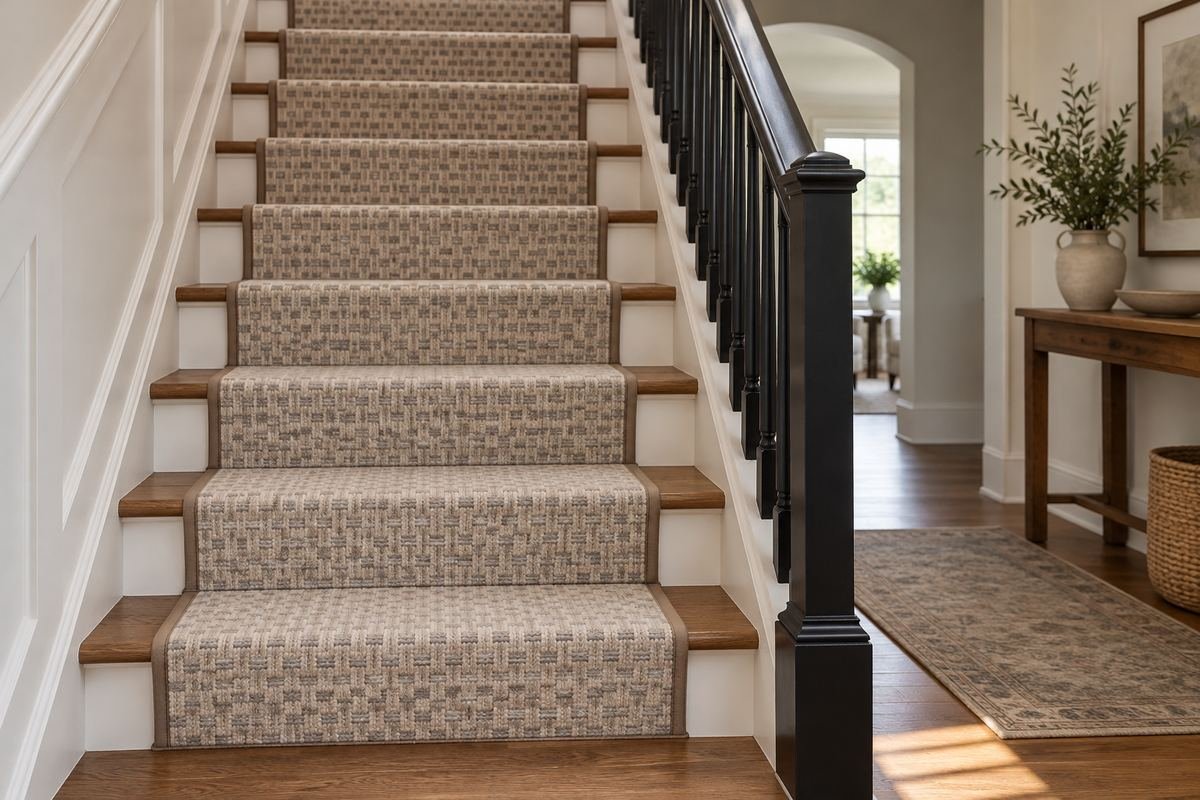
A narrow binding can finish a runner without making the edge its strongest feature. It works where the main carpet has enough pattern or texture on its own.
Choose the edge from a compatible specification and real sample. Its color can repeat the carpet background or introduce a small deliberate outline. Keep the stair geometry and finished width in the same review.
Practical tip: Choose binding with the actual carpet sample beside it.
12. Run a clear central stripe along the flight

A central stripe can make the runner’s direction clear. A limited palette keeps the design readable across the steps without several competing motifs.
Review the stripe placement with the fitter, especially if the flight changes width. The visible center and border need a considered relationship to the stair geometry. Do not assume the same pattern placement works on every step shape.
Practical tip: Plan the stripe position across the entire flight.
13. Try fine stripes for a quieter rhythm

Fine stripes can read as texture from the hallway and show more detail nearby. The effect can suit a relatively simple flight with quiet walls.
Compare the contrast as well as the spacing. Fine dark stripes may still create a strong visual pattern. Review enough of the material to judge how it reads across several treads and risers.
Practical tip: Judge the pattern from the bottom of the stairs.
14. Use an original chevron pattern deliberately
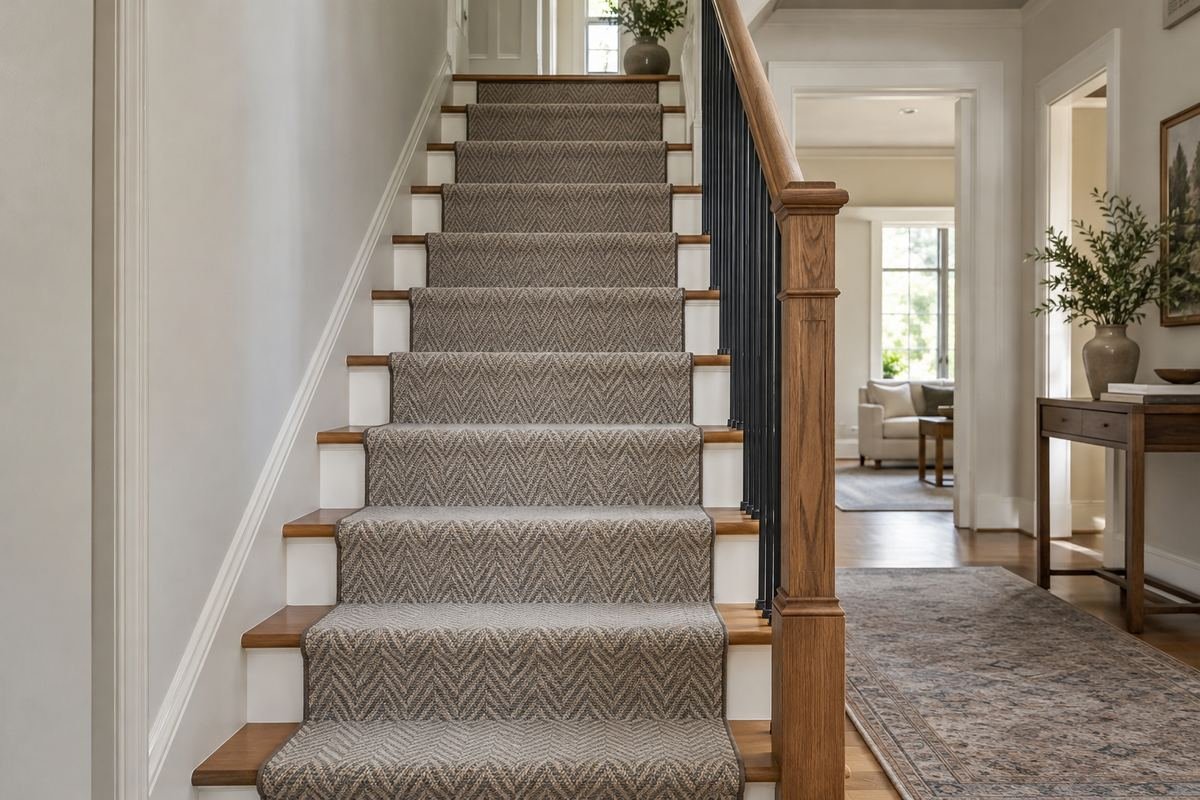
A chevron-like motif can give the runner a clear repeated direction. A restrained scale and palette allow the stair shape to remain understandable.
Discuss the pattern layout before ordering, particularly around a turn. The motif may look different when it moves from a tread to a riser. Choose the actual product and fit rather than relying on the concept image’s simplified pattern.
Practical tip: Review the motif across both treads and risers.
15. Try a herringbone-looking surface
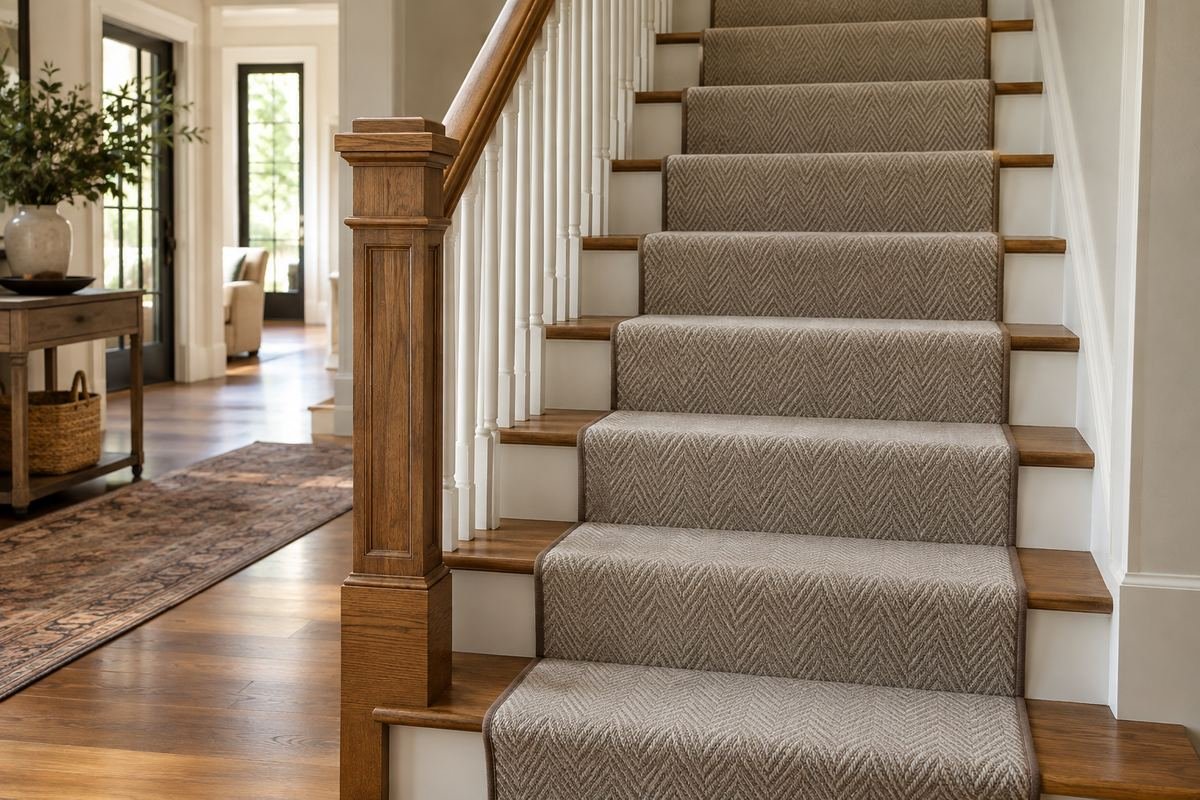
A herringbone-looking design can offer a regular texture without a large printed motif. It can sit quietly beside simple wood and painted stair details.
The appearance does not establish the material or stair suitability. Check the exact construction and product guidance, then compare the sample at the angle it will be seen on the stairs. A small texture can read differently across a full flight.
Practical tip: Check the specification separately from the texture name.
16. Choose a small geometric repeat
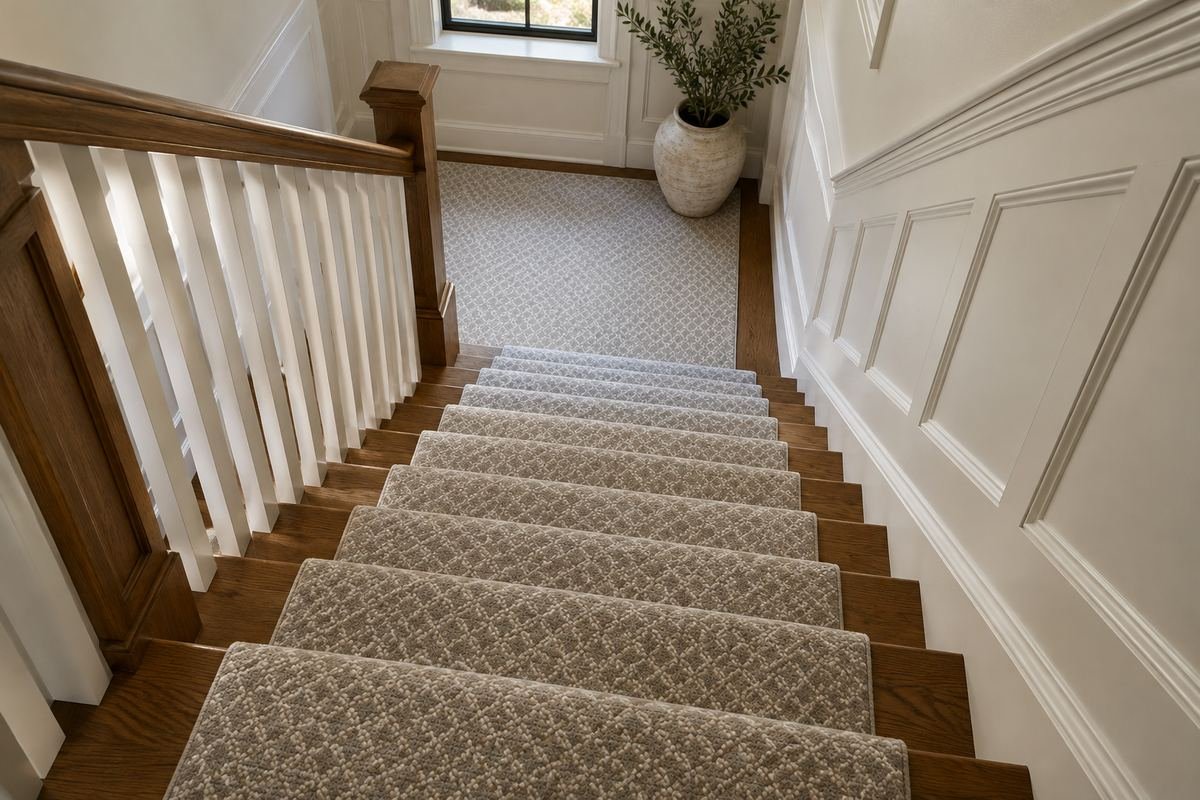
A small geometric repeat adds detail without making the staircase one large decorative picture. Closely related colors keep the pattern comparatively quiet.
Review the repeat across the stair edges and at the landing. A regular motif can make alignment decisions more noticeable. Have those decisions included in the professional layout rather than left to an improvised final cut.
Practical tip: Include the top landing in the pattern plan.
17. Use a softened traditional motif
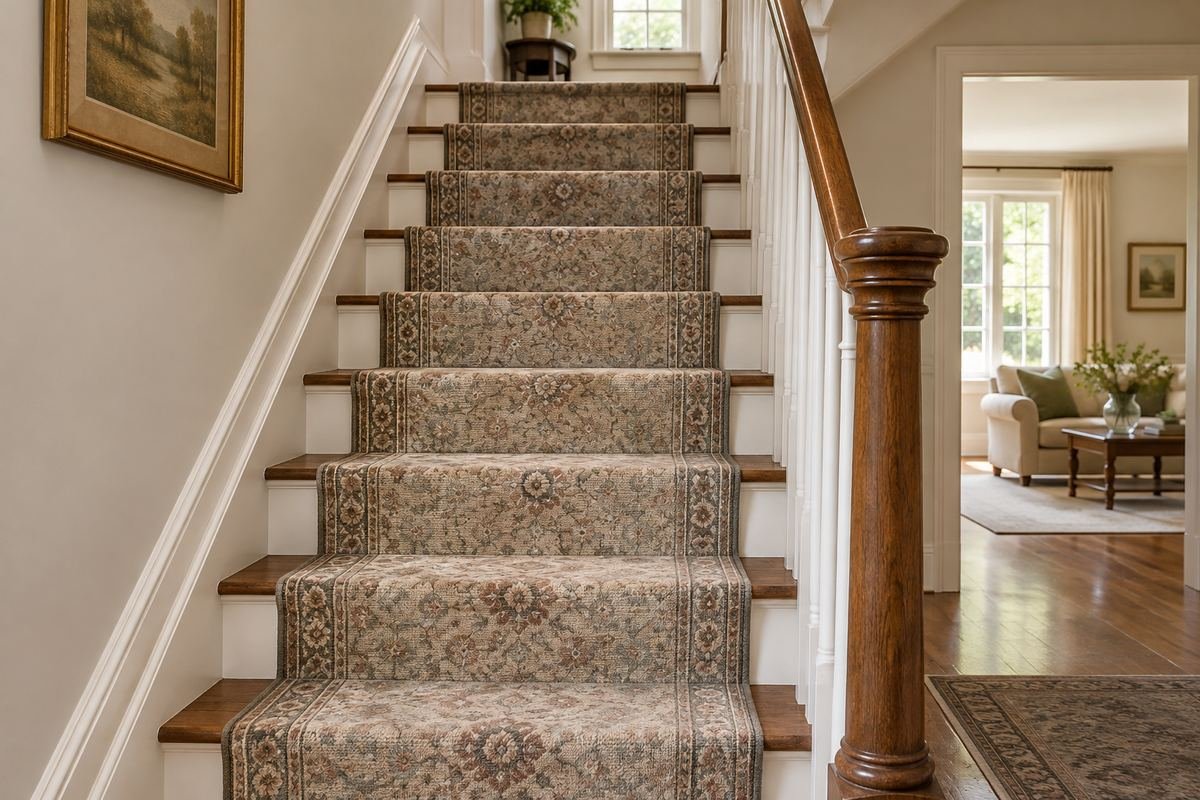
A muted traditional-style motif can bring color variation to a hall with restrained furniture. A faded-looking design can feel less graphic than a crisp high-contrast print.
Choose the product for its actual construction and suitability rather than treating a vintage appearance as evidence of quality or age. Compare the visible outer pattern, because the stair geometry may interrupt the motif’s center.
Practical tip: Review the whole repeat rather than one attractive detail.
18. Let white risers frame a warm runner
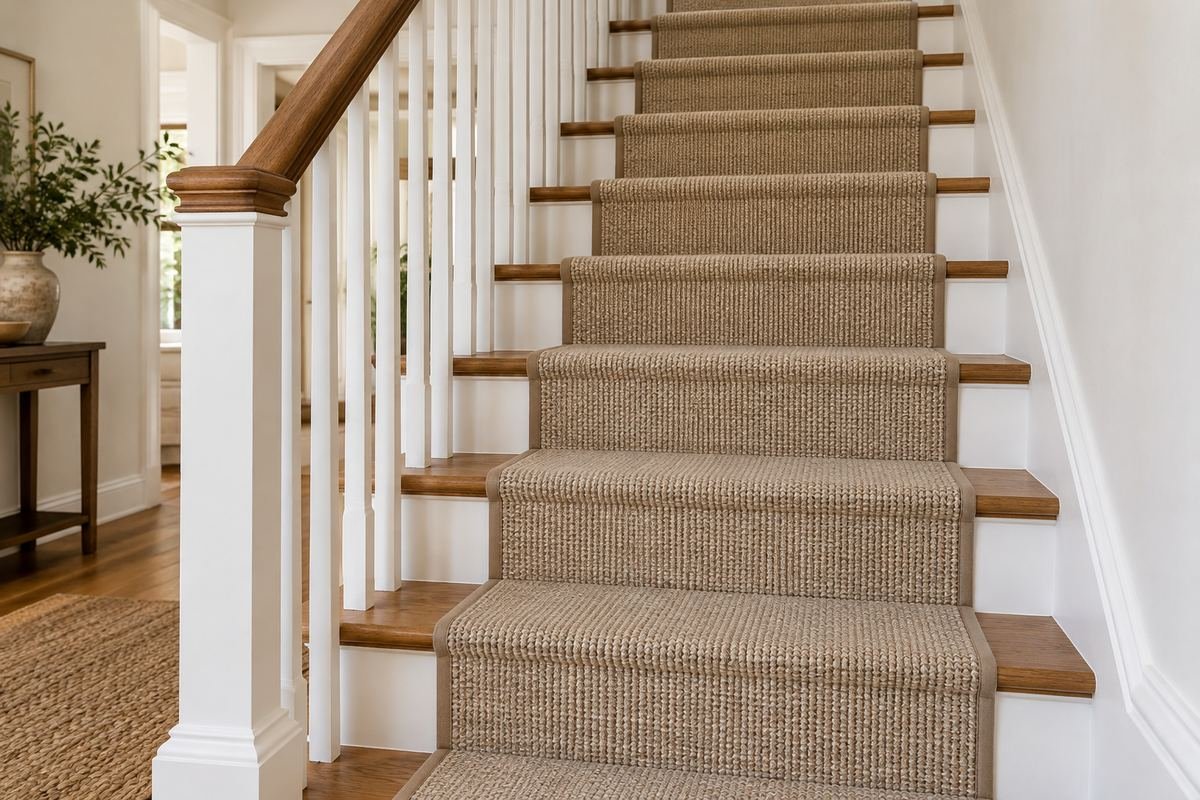
White risers and visible wood tread sides can give a warm neutral runner a clear frame. The limited palette lets the stair construction provide much of the interest.
Compare the runner with the selected white, which may be cool or creamy. Have the finish and runner specification considered together. Decorative color choices do not replace the practical requirements for a suitable stair surface and fit.
Practical tip: Check the runner beside the exact riser white.
19. Use a pale runner beside dark stair details
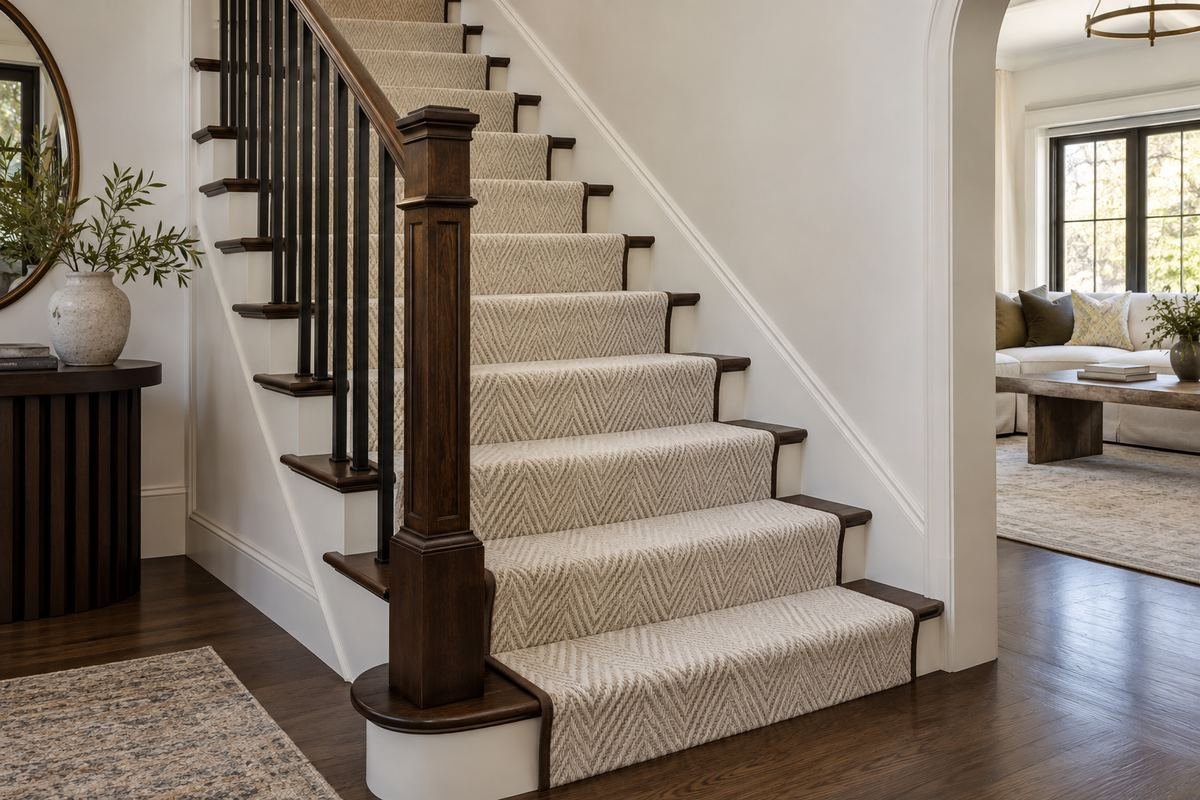
A pale runner can distinguish the central route from dark wood sides or a deeper painted surround. The contrast creates a clear visual composition in the hallway.
Review the sample under the stairwell’s actual light and consider its care requirements. The pale color is an aesthetic choice, not a promise about stain resistance. Choose a suitable product whose maintenance you can manage.
Practical tip: Read the care instructions before choosing a pale tone.
20. Coordinate a painted stair surround with the runner

A painted stair surround can connect to a color within the runner while remaining a separate material. The relationship works best when the two colors are deliberately similar or clearly different.
Compare the final paint and carpet samples together. The suitable finish and fitting still need to be specified for the actual staircase. Keep the handrail and wall color in view so the runner does not become an isolated palette.
Practical tip: Build one sample group for paint, carpet and railing.
21. Plan the pattern around a turning staircase
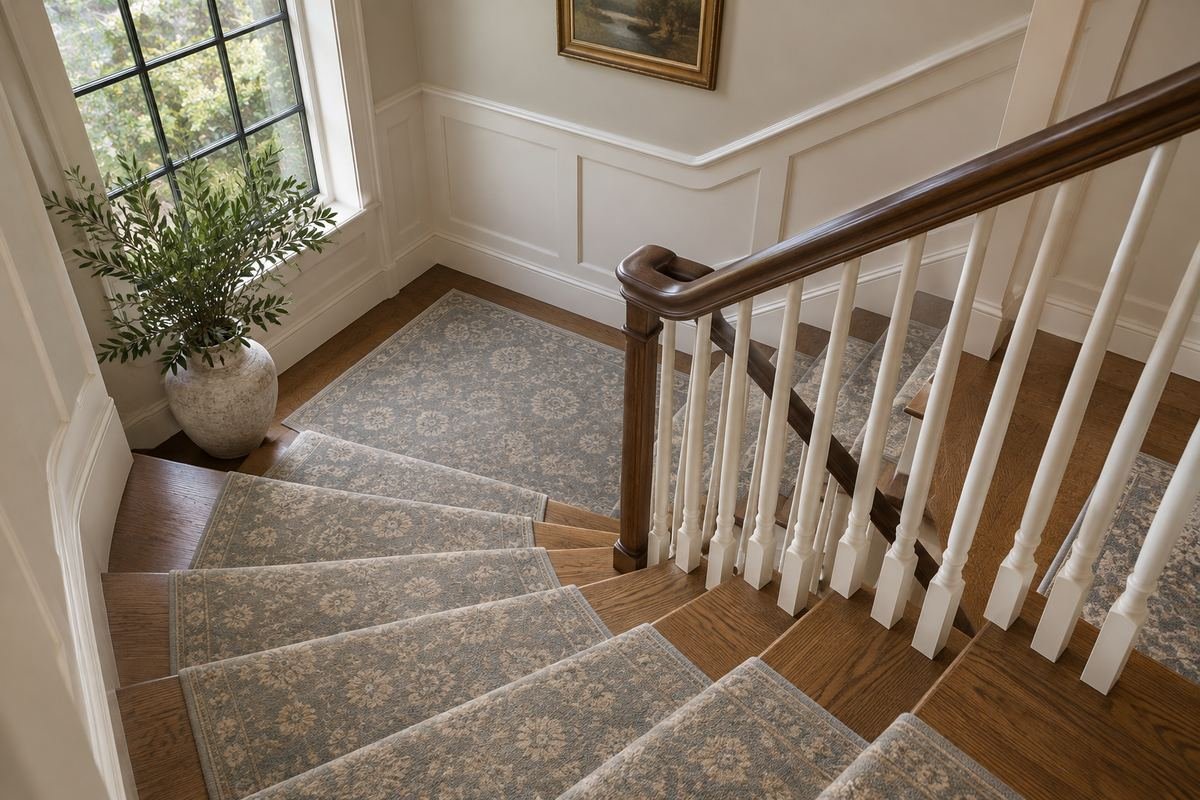
A turn changes how a runner’s borders and motifs meet. A carefully planned layout can make that change feel like part of the staircase rather than a break in the design.
Use professional measurement or templating for the actual geometry. Review the proposed pattern at every turning step before ordering. A simple motif may be easier to read than a strong stripe, but suitability and the fitter’s plan determine the result.
Practical tip: Approve the turn layout before the order is placed.
22. Resolve the landing transition as part of the design

The top landing is part of the runner composition. Continuing the material or ending it at a planned transition can each work when the practical details are resolved.
Review adjacent flooring, doors and the route at the landing with the fitter. Choose the appearance from that complete plan rather than ending the runner wherever a sample photograph happens to stop. A secure suitable transition belongs in the original specification.
Practical tip: Decide the landing treatment before final measurement.
Frequently Asked Questions
Can any long rug be used as a stair runner?
No. The exact product needs to be suitable for stairs and fitted using the appropriate specified method. Do not assume a loose hallway runner can simply be placed on steps.
How should I plan the width of stair runner ideas?
The useful finished width depends on the staircase, geometry and chosen product. Review the visible stair sides as part of the design and have the final dimensions confirmed professionally.
Do stair runner ideas need a border?
A border is a design and construction choice. It can create contrast or stay close in tone, but the edge finish must suit the selected product and installation.
Can patterned stair runner ideas work on turning stairs?
They can when the product and staircase are suitable and the layout is carefully planned. Have the turn measured or templated and review the pattern arrangement before ordering.
What is the difference between waterfall and contoured fitting?
They describe different ways a runner follows the tread edge and riser. The appropriate approach depends on the product and stair geometry, so discuss the desired appearance with the fitter rather than selecting from a photograph alone.
Choose the Details That Work in Your Home
Choose stair runner ideas as part of the whole stair and hallway palette. Compare the real samples, settle the pattern at turns and landings, and confirm a suitable product and professional fit. Those decisions give a simple neutral or a bold border a considered place in the home.
For related ideas, explore hallway lighting ideas, entryway rug ideas, entryway mirror ideas.
Planning References
Alternative Flooring: product-specific stair suitability and installation considerations; Alternative Flooring: stair runner planning, turns and fitting approaches; STARK: professional measurement and templating services. Follow the instructions for the exact products you choose.
Optional digital guide for this topic
If you prefer a structured workbook, explore this related paid guide.