Quick Recap of These Kitchen And Dining
Keep these kitchen and dining simple at first. You can always layer in more kitchen and dining once the basics are working.
A great kitchen and dining also helps define how the space is used day to day, so keep the kitchen and dining basics in mind before you commit to a plan.
Choosing the right kitchen and dining approach is one of the easiest ways to upgrade a space without a full remodel. When your kitchen and dining is planned correctly, everything else feels intentional rather than accidental.
Getting the kitchen and dining right makes the biggest difference in how the space actually feels day to day. A well-planned kitchen and dining balances function and style, and even small tweaks to your kitchen and dining can transform the whole area.
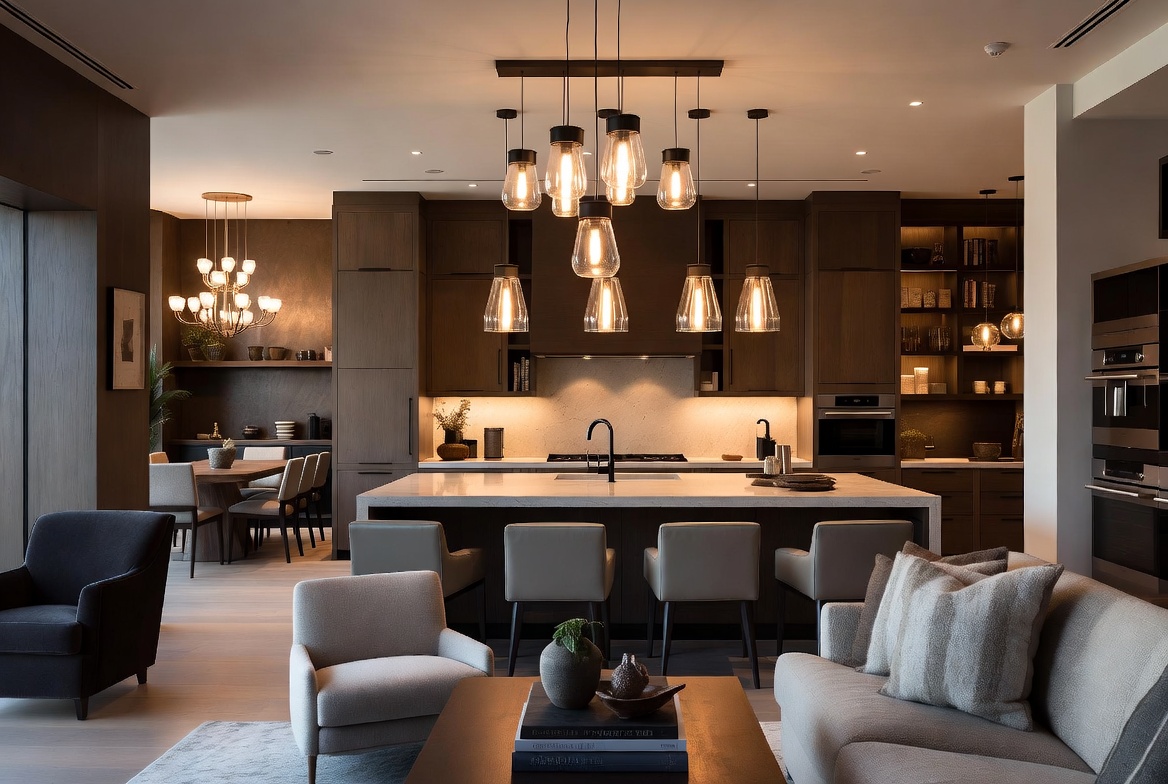
Your kitchen is either a space you rush through or a space you actually live in. The difference isn’t always square footage — it’s design. Too many kitchens sacrifice beauty for function or vice versa, leaving you with a room that looks styled but doesn’t work, or works perfectly but feels cold and empty.The best kitchens and dining areas I’ve seen blend both seamlessly. They’re spaces where meals blur into conversations, where the layout flows naturally, and where every design choice — from the island to the lighting to the storage — serves both beauty and everyday life. By the end of this article, you’ll know exactly how to make your kitchen and dining area a space you never want to leave.
1. The Island That Becomes the Heart of Your Home
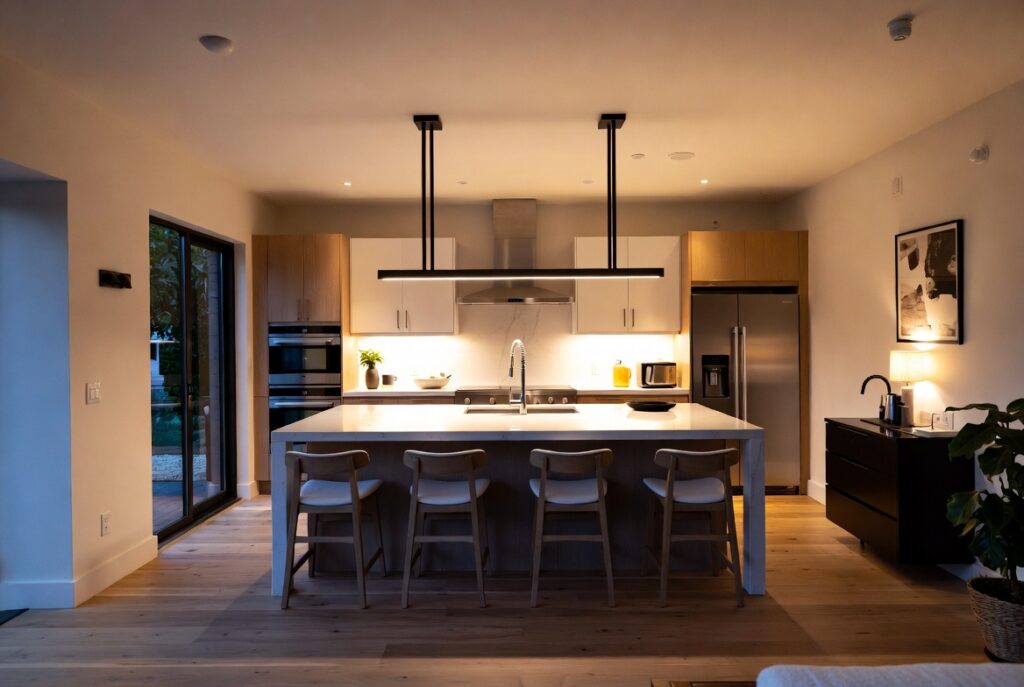
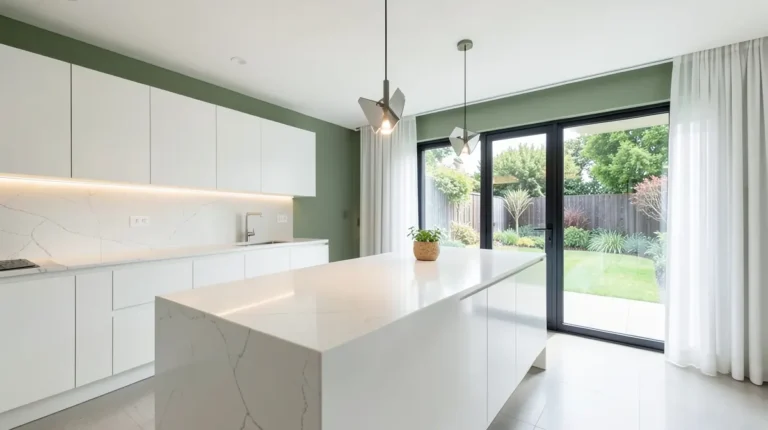
A well-designed kitchen island isn’t just a prep station — it’s where people naturally gather. The best islands have seating on one side and prep space on the other, making them destinations for both cooking and conversation. In my experience, a kitchen island transforms how families actually use the space. Suddenly the person cooking isn’t isolated, and the dining room becomes optional because everyone wants to hang around the island.
Smart tip: Choose an island with an overhang of at least 15 inches for barstool seating — instant dining without eating at the formal table.
Mistake to avoid: Don’t make the island so large that you can’t walk around it comfortably. A cramped kitchen with a massive island defeats the purpose.
2. Why Layered Lighting Transforms Every Meal
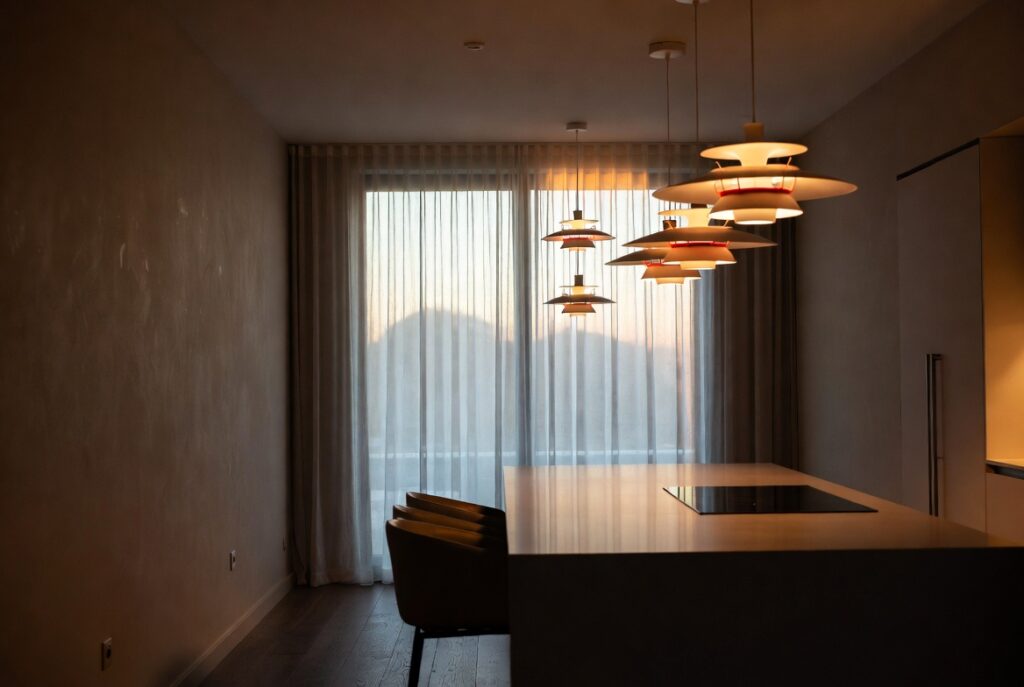
Kitchens and dining areas lit by a single bright overhead light feel sterile and uninviting. Layered lighting — a mix of task lighting under cabinets, pendant lights above the island, and ambient light from dimmers — creates the atmosphere that makes people want to linger at the table. We found that lighting is one of the highest-impact changes for making a dining moment feel special instead of rushed.
Smart tip: Add dimmable pendant lights above your island and warm-bulb under-cabinet lights — layered lighting that costs under $200.
Mistake to avoid: Don’t rely on one bright overhead light. It makes even a beautiful kitchen feel harsh and utilitarian.
3. Color-Blocking That Works in Modern Kitchens
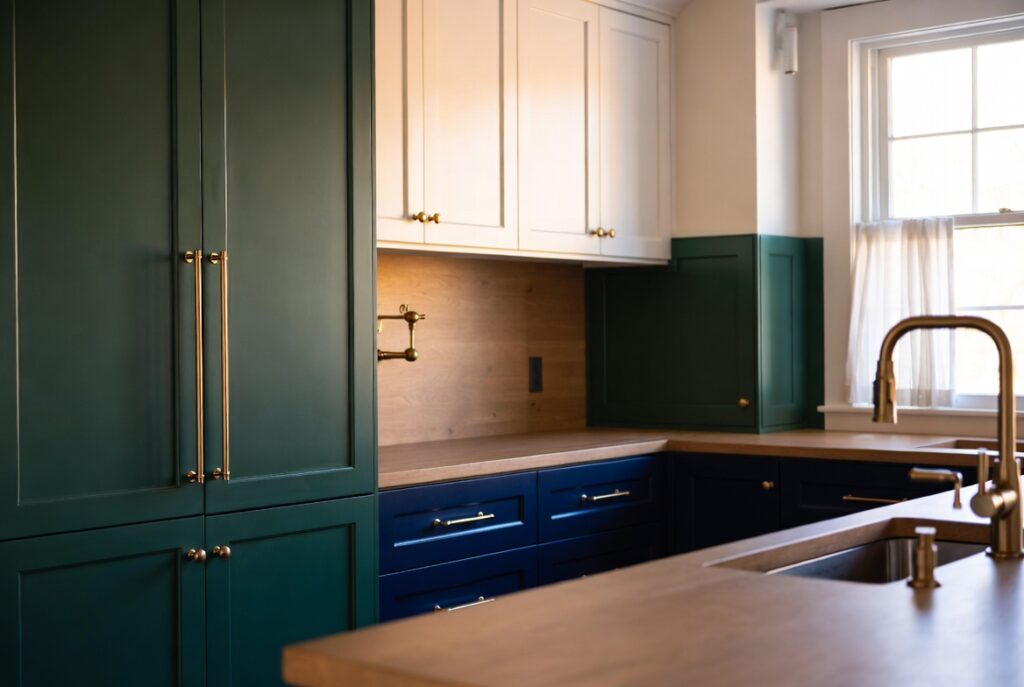
Bold color in kitchens is no longer off-limits — when done thoughtfully. Deep greens paired with warm brass accents, or navy cabinetry against soft neutrals, create visual interest without chaos. The key is using one bold color (usually on cabinetry) and letting it anchor the space, rather than painting every surface in different shades. One of the most common mistakes I see is timid color choices that leave a kitchen feeling bland.
Smart tip: Paint your cabinetry in one bold, moody tone and keep counters and walls neutral — one statement color that elevates everything.
Mistake to avoid: Don’t color-block every surface. Too much contrast creates visual chaos; let one bold element be the hero.
Loving These Ideas? Get the Step-by-Step Guide
Grab the full 5-day eBook and turn these ideas into a finished room.




4. Built-in Seating That Maximizes Your Space
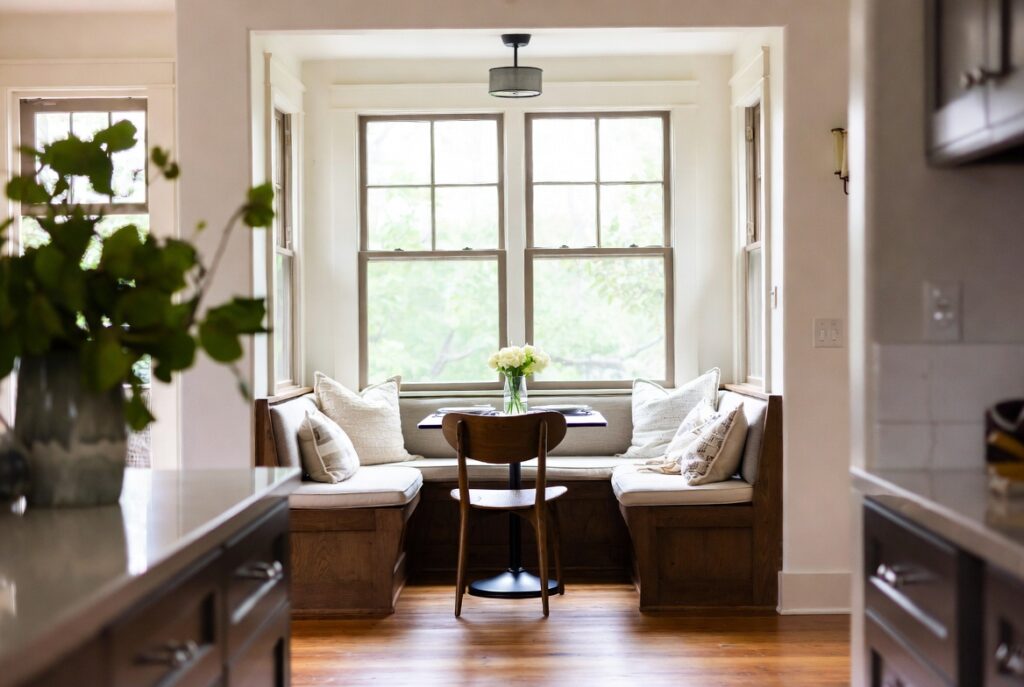
A built-in bench with a small bistro-style table takes up a fraction of the floor space a dining set requires, yet seats everyone comfortably. This trend is perfect for kitchens that double as dining areas or compact homes where a separate dining room doesn’t fit. Built-in seating transforms a corner into a functional gathering spot that feels intentional and permanent, like it was always meant to be there.
Smart tip: Install a corner bench with a small round table — a space-saving dining solution perfect for casual, everyday meals.
Mistake to avoid: Don’t pair a built-in bench with an oversized table. The proportion should feel snug and intentional, not cramped.
5. The Sculptural Dining Table as Your Room’s Anchor
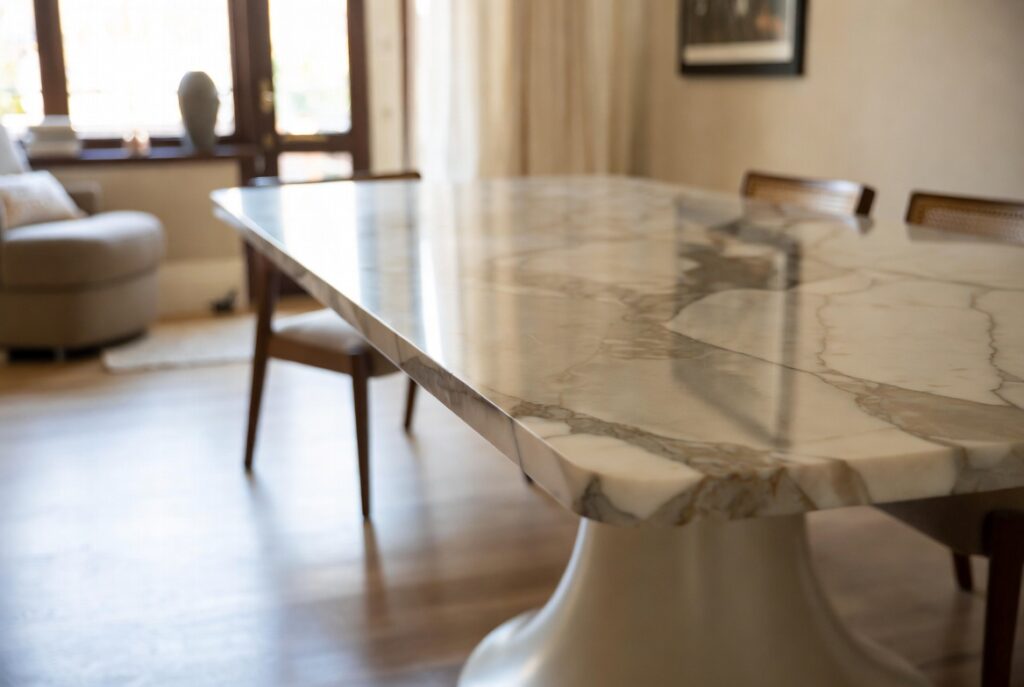
The dining table has become less about function and more about presence. Tables with curved pedestals, asymmetrical bases, or raw wood tops read as sculptural objects that anchor the entire room. A beautiful table is something you keep for decades, not a piece to replace every few years. The first time I saw a marble table with curved brass legs, I understood — it wasn’t furniture, it was art you could eat at.
Smart tip: Choose a table with a distinctive base or sculptural leg — one statement piece that becomes the room’s focal point.
Mistake to avoid: Don’t hide an interesting table under a tablecloth. Let beautiful bones show; they’re the design point.
6. Open Shelving Done Right: Storage as Design
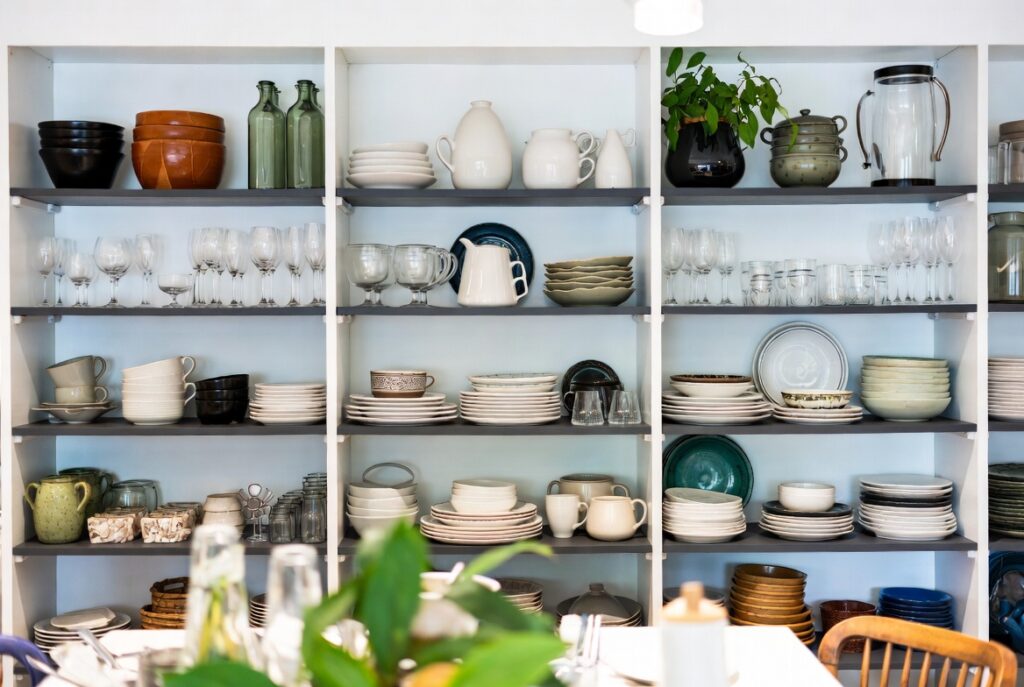
Open shelving feels modern and spacious — when it’s styled well. The secret is restraint: fewer, carefully chosen objects arranged with intentional space between them. Open shelving fails when it’s crammed with clutter; it succeeds when you actually love what’s on display. Think beautiful dishes, glass, and a few meaningful objects, not your entire kitchen inventory.
Smart tip: Open shelving is zero-cost if you’re replacing existing cabinetry; just remove the doors and style carefully — cost-effective transformation.
Mistake to avoid: Don’t fill every inch of open shelving. Spaces between objects are part of the design; clutter ruins the whole aesthetic.
7. Mixed Materials That Create Kitchen Warmth
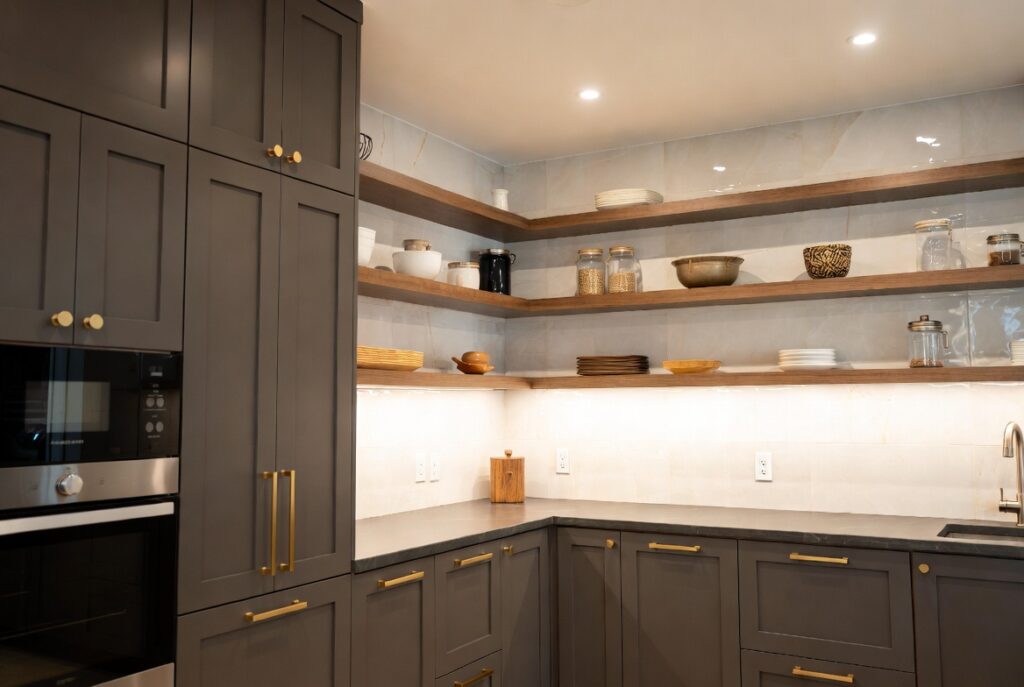
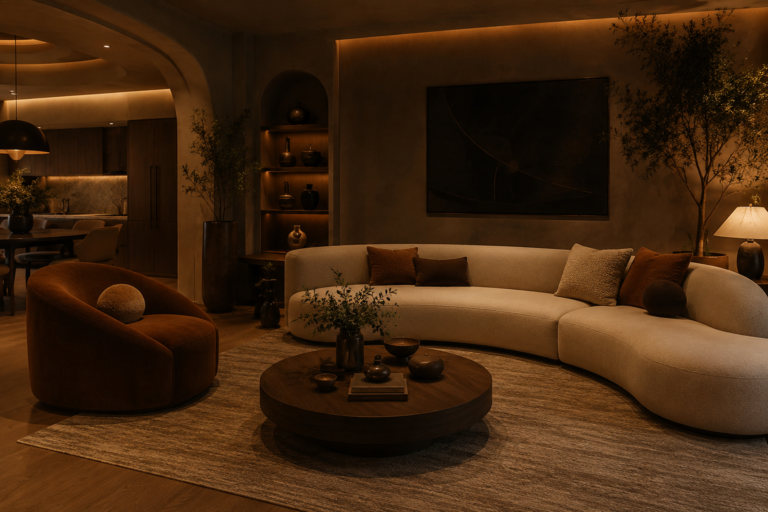
Pairing materials — warm wood with cool marble, soft textiles with sleek metal — creates kitchens that feel collected and alive rather than sterile. A kitchen that mixes matte charcoal cabinetry with warm wood and gold accents reads as thoughtful and layered. We found that mixing materials is what separates a “decorated kitchen” from one that feels like a home where people actually cook.
Smart tip: Combine your cabinetry color with contrasting hardware, counters, and a few warm wood elements — instant depth and warmth.
Mistake to avoid: Don’t match everything. A monochromatic kitchen feels flat; mixing materials adds character.
8. The Breakfast Nook: Making Every Space Count
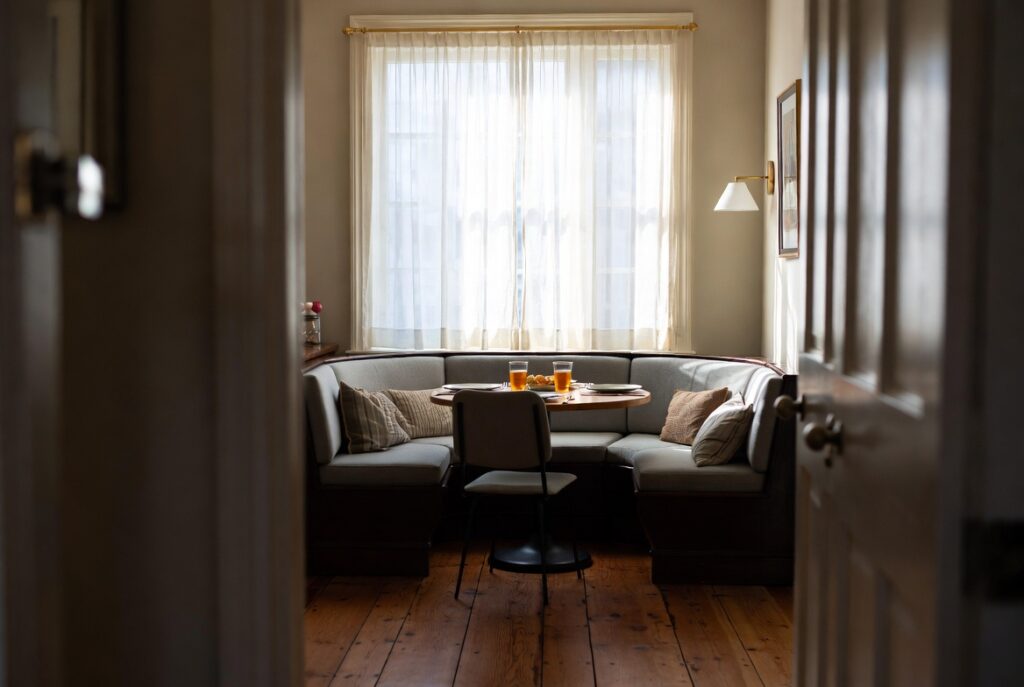
Even small kitchens have a corner that can become a breakfast nook. A simple bench, a small table, and a few cushions create a cozy gathering spot that feels separate from the cooking zone. It’s the difference between eating at the counter and having an actual dining moment. One of the most loved features I’ve seen in small kitchens is a breakfast nook that makes the space feel bigger than it is.
Smart tip: Add a corner bench with pillows and a small round table — cozy breakfast spot under $300.
Mistake to avoid: Don’t push the nook against a cold, blank wall. Add a window, a mirror, or a piece of art to make it feel like a real room.
9. Cabinet Hardware as Jewelry for Your Kitchen
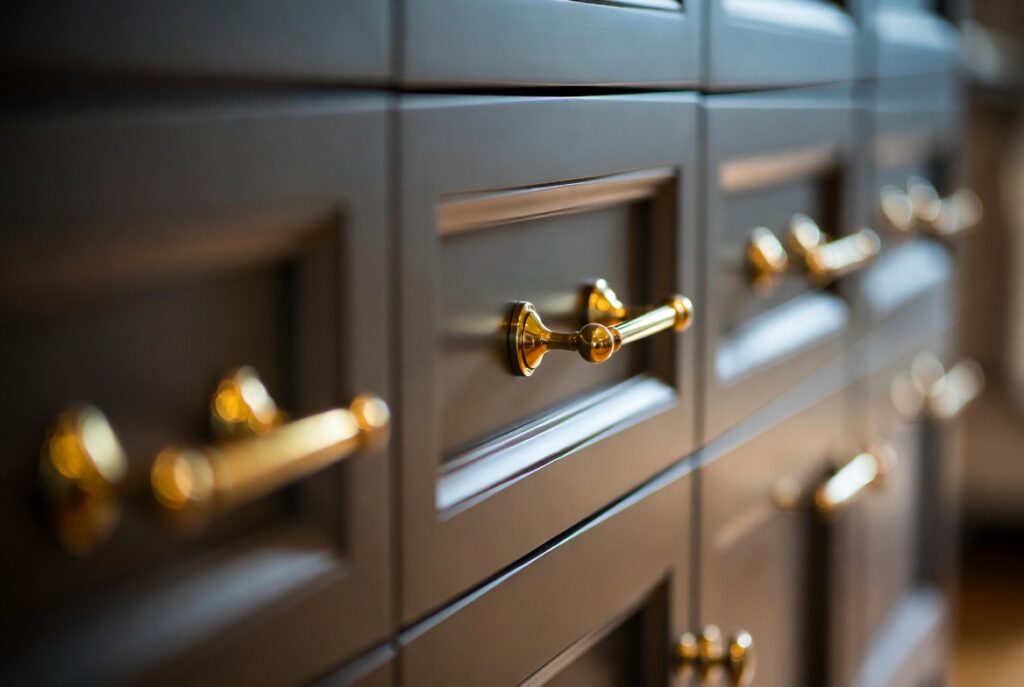
Cabinet hardware is the jewelry of your kitchen — small details that catch light and communicate intentionality. Warm brass pulls, sleek matte black knobs, or sculptural handles transform how cabinetry reads. I’ve seen kitchens that look completely different just by swapping hardware. It’s one of the easiest, lowest-cost updates that has an outsized impact on how finished a kitchen feels.
Smart tip: Invest in quality hardware in a metal finish that complements your counters — $50-100 for beautiful pulls transforms the whole space.
Mistake to avoid: Don’t skimp on hardware quality. Cheap pulls loosen and break; invest in pieces that last.
10. Quiet Luxury: Minimalism Meets Craftsmanship
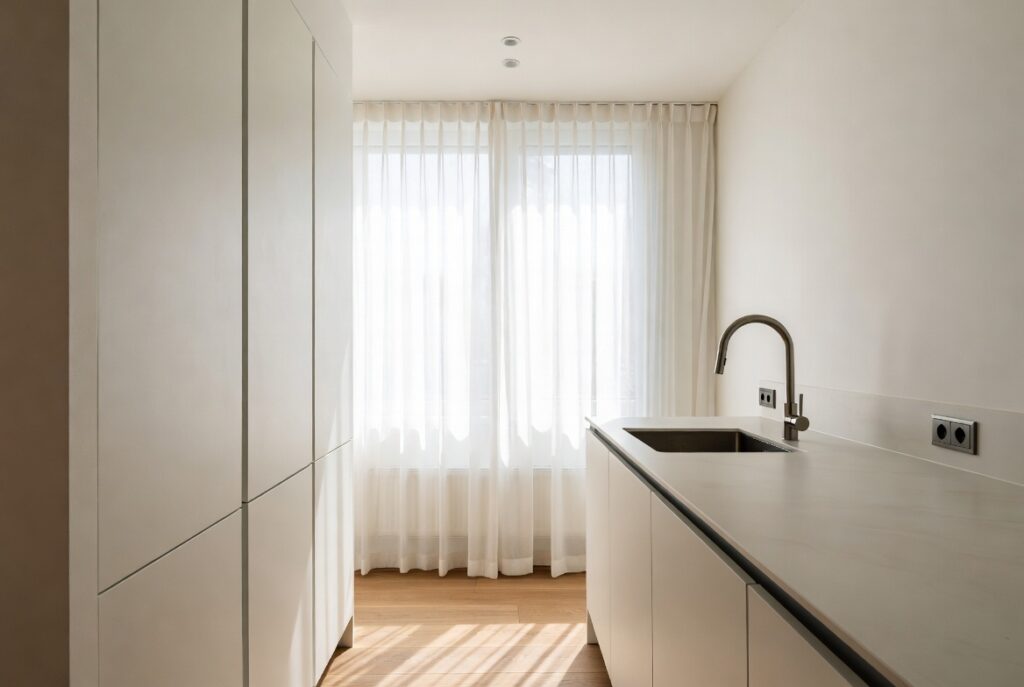
“Quiet luxury” in kitchens means clean lines with artisanal details — a minimalist layout that lets beautiful materials do the talking. Think a simple wood countertop with visible grain, cabinetry with subtle fluting, brass hardware that glints softly. It’s the opposite of flashy, which is exactly why it reads as expensive. Craftsmanship, not ornamentation, is what creates luxury in modern kitchens.
Smart tip: Choose one beautiful, naturally finished material — real wood, marble, or stone — and let it be the star.
Mistake to avoid: Don’t overcomplicate a minimalist aesthetic with too many finishes or ornate details. Quiet luxury is about restraint.
11. Curved Dining Chairs That Add Graceful Movement
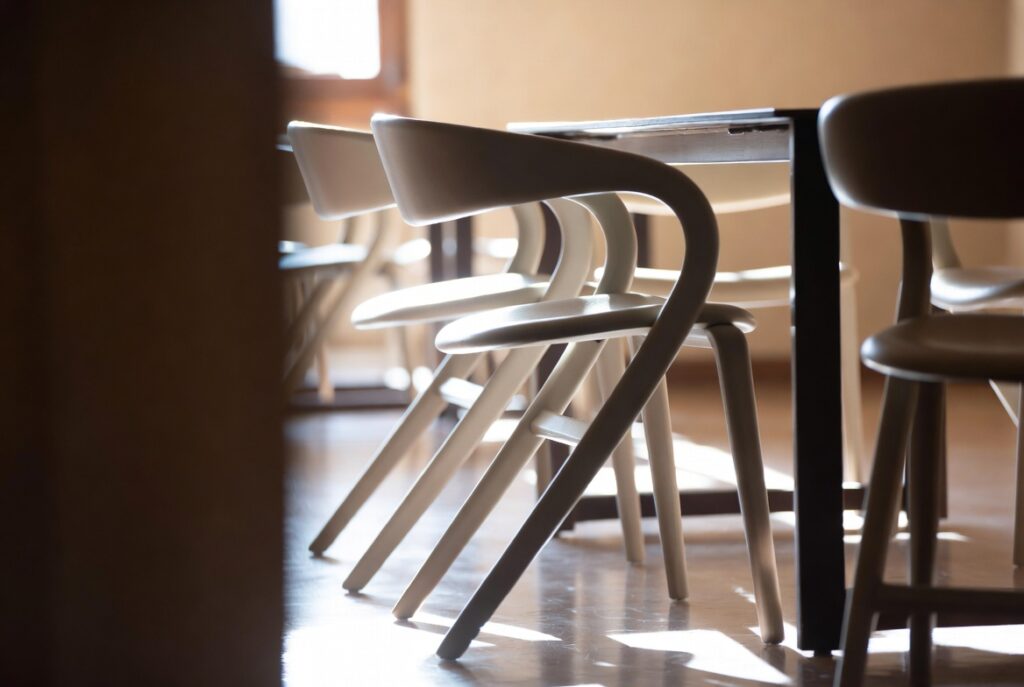
Curved and sculptural dining chairs have replaced straight-backed designs. Chairs with gentle arcs or swept-out bases add visual movement and feel more organic in a space. Mix curved chairs with a rectilinear table, and suddenly the whole room feels more dynamic. Curved lines signal that a dining area is for lingering, not rushing — which is exactly the energy you want at the table.
Smart tip: Choose dining chairs with gently curved frames — one small detail that shifts how the whole dining area feels.
Mistake to avoid: Don’t use only straight-backed, angular chairs. A room of only hard lines feels cold; curved forms add warmth.
12. Smart Storage That Keeps Counters Calm
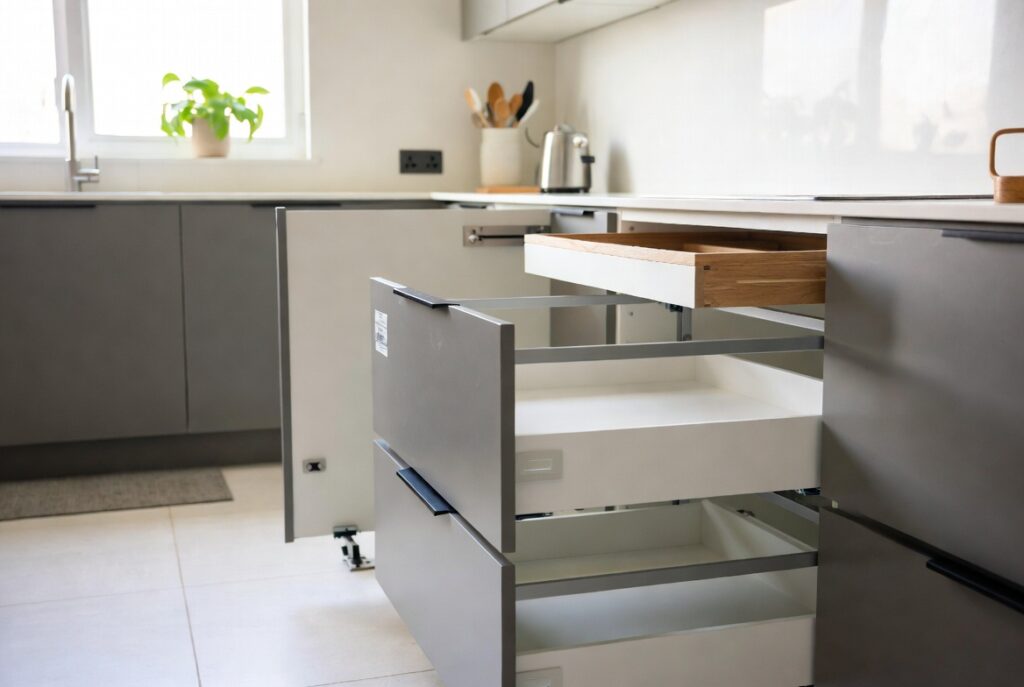
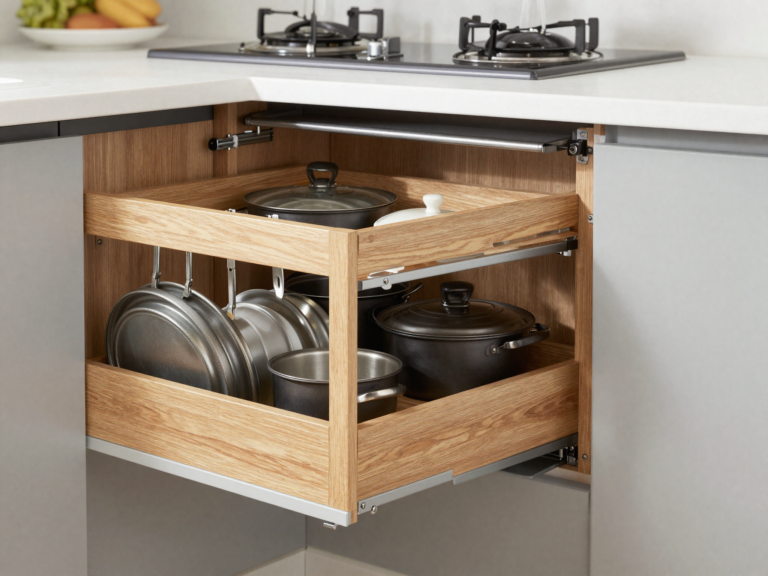
Modern kitchens hide everything: appliances in appliance garages, open shelving inside closed cabinetry, deep drawers instead of surface clutter. A clear counter is a calm mind, and when a kitchen has intentional hidden storage, the whole space feels larger and more serene. Every small appliance that lives out on the counter creates visual noise; strategic storage makes a kitchen feel designed.
Smart tip: Add an appliance garage under cabinets or use deep drawers for daily items — hidden storage that keeps counters peaceful.
Mistake to avoid: Don’t leave coffee makers, blenders, and small gadgets cluttering the counters. Hidden storage transforms a busy kitchen instantly.
13. The Sectional Island That Fits Tight Kitchens
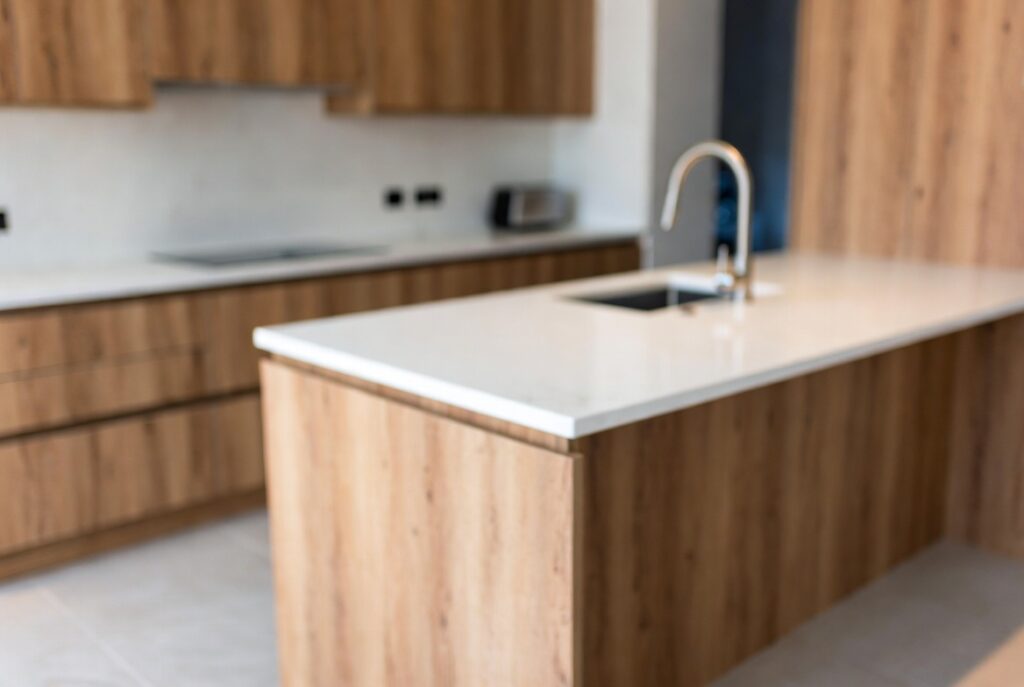
For kitchens that are short on floor space, an L-shaped or sectional island fits snugly into corners while still providing seating and prep space. This layout maximizes every inch without the bulky feel of a large rectangular island. We found that a sectional island works beautifully in transitional kitchens where the space needs to feel open yet organized.
Smart tip: Design an L-shaped island that hugs two walls — maximum functionality in a compact footprint.
Mistake to avoid: Don’t force a large island into a small kitchen. A sectional or wall-hugging layout is smarter than cramming a traditional island.
14. Marble Counters That Work for Everyday Living
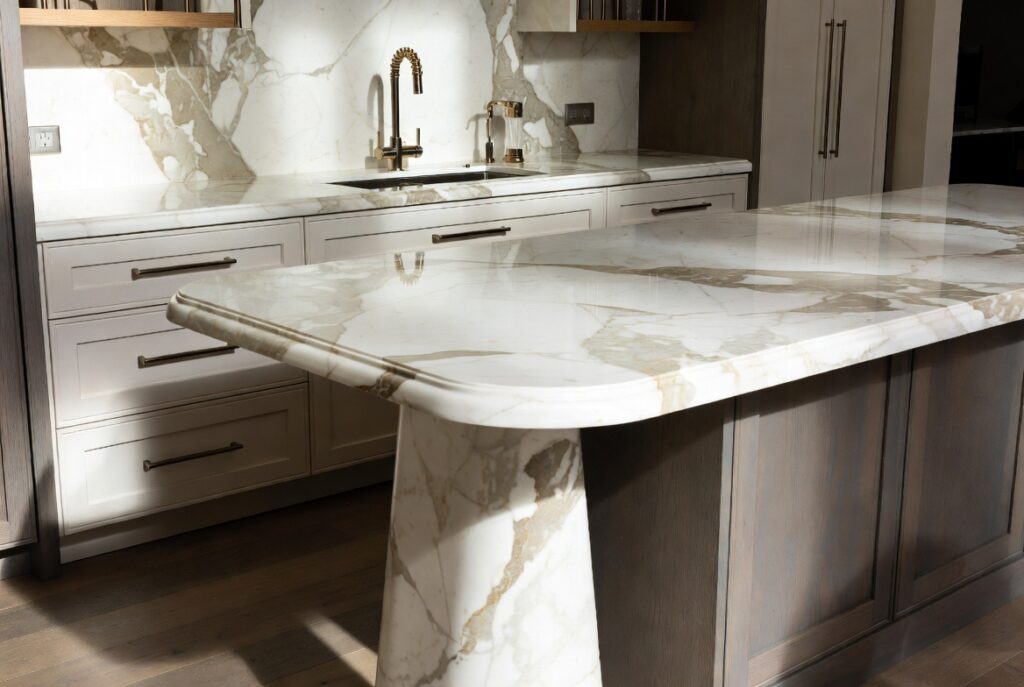
Marble has moved from “fancy but impractical” to genuinely livable. The key is understanding that marble patinas and stains over time — which is part of its charm, not a flaw. A marble island paired with more durable cabinetry gives you the luxury feel without the kitchen becoming a museum. Marble reads expensive and intentional, especially when it’s the hero of the kitchen’s design.
Smart tip: Use marble on an island or accent counter paired with durable cabinetry elsewhere — luxury in the right proportion.
Mistake to avoid: Don’t cover marble with a tablecloth or protect it obsessively. Embracing its patina is what makes it beautiful.
15. The Hidden Kitchen: When Cooking Disappears
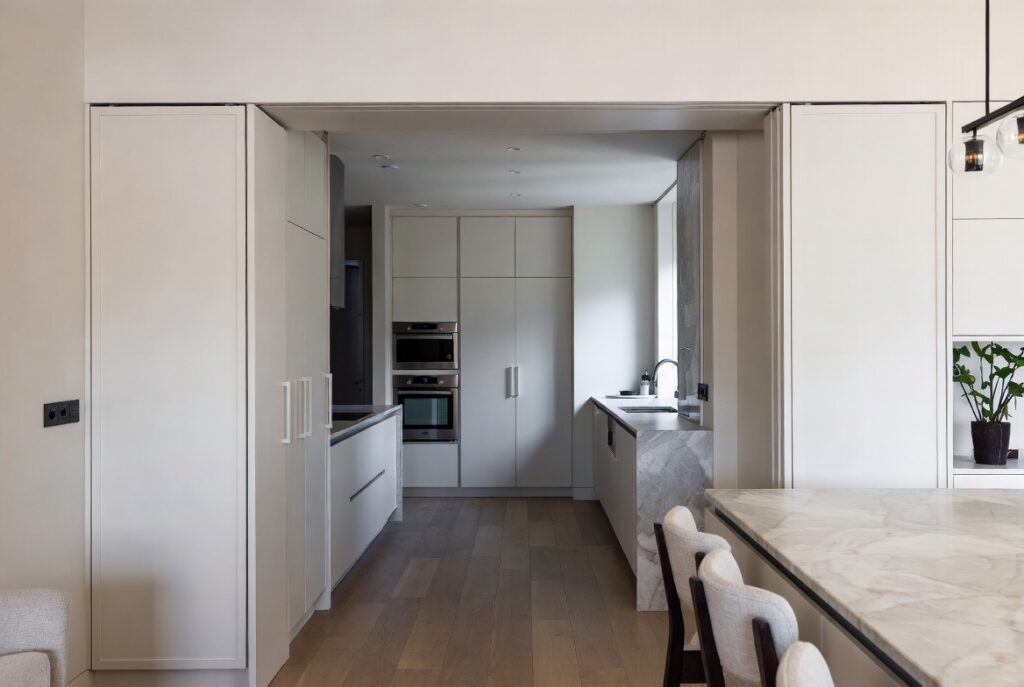
The newest trend is the “invisible kitchen” — cooking zones hidden behind sliding pocket doors or full-height cabinetry that close flush with the walls. When open, it’s a complete kitchen; when closed, the room becomes an elegant living or dining space with zero visible cooking equipment. It’s perfect for open-concept homes where entertaining is part of the design. One of the most forward-thinking kitchen ideas I’ve encountered, this actually works for real life.
Smart tip: If you’re planning a full remodel, consult an architect about hidden kitchen options — a transformative idea for open-concept homes.
Mistake to avoid: Don’t attempt a hidden kitchen as an afterthought. It requires planning during the initial design phase.
16. The Butler’s Pantry: Hidden Storage Magic
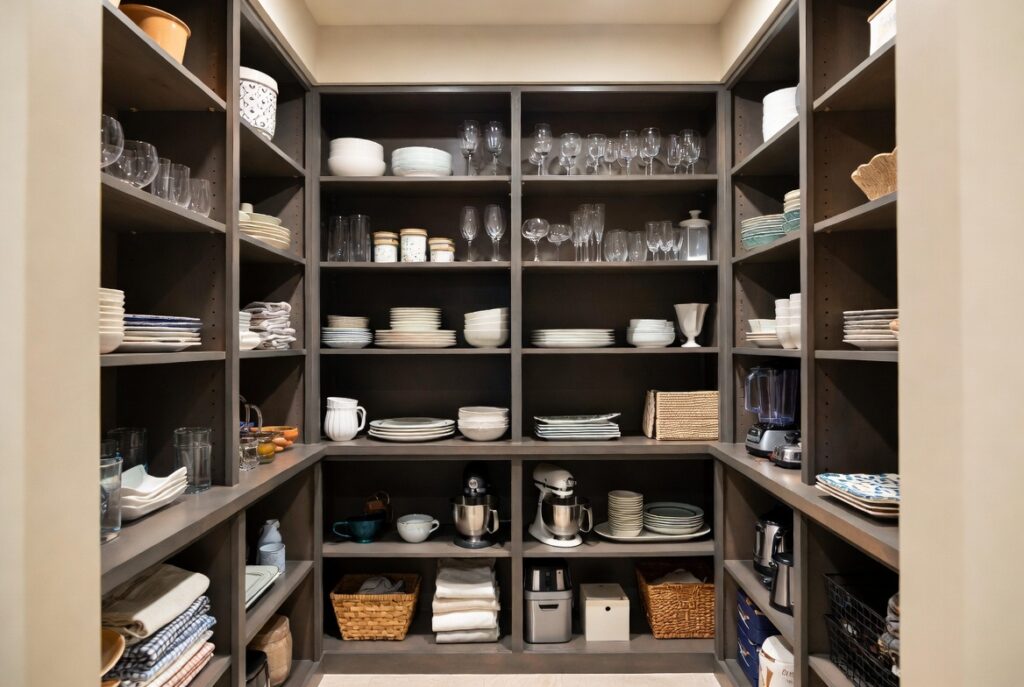
A secondary pantry or “butler’s pantry” between the kitchen and dining room solves a major problem: where do you store serving dishes, linens, and appliances? A small walk-in pantry with shelving becomes the hidden hero of entertaining, keeping the kitchen and dining area both clean and functional. It’s a feature that transforms how you can actually use your kitchen and dining space, turning entertaining from stressful to seamless.
Smart tip: Design a small pantry or walk-in storage for serving pieces and appliances — hidden storage that changes how you live.
Mistake to avoid: Don’t forget about storage for dishes, linens, and appliances. Build hidden space; it’s the secret to a functioning kitchen.
Beautiful kitchens and dining areas aren’t about having the biggest budget — they’re about understanding that every element, from lighting to storage to materials, shapes how you actually live in the space. Start with one idea from this list, and watch your kitchen transform from a utility room into a space worth gathering in.
Continue Your Home Transformation
Explore the full collection of step-by-step eBooks and get the guide that fits the room you're working on.