Hydrangea garden ideas begin with the right plant for the space. A panicle shrub, a bigleaf mophead and an oakleaf hydrangea can produce very different outlines, flowering effects and care routines. Choose the species and named selection before building a border around an appealing photograph.
These 25 concepts help you compare planting layouts, views and practical care access. Confirm local climate suitability, mature size, light and soil conditions before buying. The images illustrate composition rather than verified cultivars, permanent flower colors or tested performance.
Contents
- 1. Begin with one specimen that fits the available space
- 2. Use a short repeated group for a calm border
- 3. Choose a compact selection for a small garden
- 4. Set a front-yard group behind the approach
- 5. Keep foundation planting separate from the wall
- 6. Frame a path without narrowing it
- 7. Use the back of a mixed border for taller forms
- 8. Give an informal hedge enough width
- 9. Use a panicle form where its light needs fit
- 10. Compare round flowers for a softer composition
- 11. Choose lacecap texture for a lighter flowering effect
- 12. Use oakleaf foliage as part of the design
- 13. Consider smooth hydrangea as a separate plant choice
- 14. Use a tree form as one deliberate focal point
- 15. Use a container for one manageable display
- 16. Place a patio group outside the furniture footprint
- 17. Frame a bench from behind or to one side
- 18. Use a plain backdrop to make the flowers readable
- 19. Keep the flower palette limited and realistic
- 20. Use a low foliage foreground without burying the shrub
- 21. Give autumn color and fading flowers a place
- 22. Compare the winter silhouette before filling the border
- 23. Keep pruning access and identification together
- 24. Make soil and watering decisions from observations
- 25. Start with a trial group and expand from results
Choose the plant before refining hydrangea garden ideas
Record the mature footprint, growing conditions and identified flowering group for every selection. Avoid treating all hydrangeas as one interchangeable shrub. A garden can use a few strong forms and a clear route without becoming a collection of every flower color. Compare the leaf-on, flowering and dormant views before committing to a repeated group.
A first comparison of hydrangea forms
- Panicle: Conical flower form; check cultivar size and local sun/moisture guidance.
- Bigleaf: Mophead or lacecap forms; confirm bud hardiness and the exact selection.
- Oakleaf: Distinct lobed foliage; allow the chosen plant’s mature footprint.
- Smooth: A separate species with its own moisture and growth habit.
- Tree form or container: Include the training or year-round container care in the decision.
1. Begin with one specimen that fits the available space

One well-positioned shrub can give a small garden a clear focal point. Choose the species and named variety for the actual light, climate and mature spread before selecting its flower color. Leave room to see the outline rather than filling the base with unrelated plants. A single considered specimen also makes it easier to observe growth and care before repeating it elsewhere.
Try this: Mark the mature footprint on the plan and check the view from the house.
2. Use a short repeated group for a calm border

A short repeated group can carry a border without needing many different shrubs. Use one suitable selection where growing conditions match, and leave the required mature space between plants. Compare the full group with the lawn or path beside it. The repetition should give the view a rhythm while retaining enough access to care for each shrub individually.
Try this: Draw the full-size plants before deciding how many to buy.
3. Choose a compact selection for a small garden

A small plot is easier to manage when the variety naturally fits it. Compare named selections using mature dimensions from reliable plant information rather than assuming a young nursery plant will stay small. Keep a realistic gap beside the route. A compact choice should solve the space problem without depending on repeated hard cutting to preserve the same narrow footprint.
Try this: Record the exact cultivar and its expected size on the purchase list.
4. Set a front-yard group behind the approach

Place the group where it contributes to the entrance without occupying the approach. Check the view from the door and the ordinary walking direction, including the mature flowering spread. Keep required visibility, utilities and building access clear. A smaller group positioned well is more useful than a continuous mass that needs constant trimming away from the entrance.
Try this: Walk the approach with plant-size markers in place.
5. Keep foundation planting separate from the wall

A hydrangea can contribute to a border near the house where the site suits it. Leave the appropriate building inspection and maintenance space rather than planting directly against the wall. Check rain shadows, roof runoff and the actual light. Treat the wall as a site constraint, and choose a plant whose mature form fits without hiding a vent or blocking a window.
Try this: Include service positions and access on the bed drawing.
6. Frame a path without narrowing it

A flowering border can frame the route while keeping passage comfortable. Position the shrubs from their mature spread, including flowers that may lean after rain. Keep the path edge readable and leave room for care from a useful side. Do not base the arrangement on the distance between tiny new plants and the paving; that open first-season view will change.
Try this: Check the path with the expected flowering outline shown on the plan.
7. Use the back of a mixed border for taller forms

A taller form can give the back of a bed a useful flowering layer. Make sure the border has enough depth for the shrub and its foreground companions at mature size. Keep a care route available instead of hiding the whole base behind dense planting. The composition should remain understandable when the shrub is not flowering and the lower plants change through the season.
Try this: Draw a simple side view as well as the overhead plan.
8. Give an informal hedge enough width

An informal hedge needs room to behave like a group of shrubs. Choose the mature height and width before repeating the plants, and preserve the access needed on each side. Keep the expectation seasonal: deciduous hydrangeas will not provide the same visual enclosure in winter. Use the group for a flowering boundary where that changing character suits the garden.
Try this: Compare summer enclosure with the dormant-season view before ordering a full row.
9. Use a panicle form where its light needs fit

Panicle hydrangeas, Hydrangea paniculata, offer cone-shaped flower clusters and a range of named selections. NC State describes them as more sun-tolerant than other hydrangeas, but the best position still depends on climate, moisture and the exact plant. Choose the form for those conditions first, then use its upright flowers to give the composition a different shape.
Try this: Confirm the cultivar’s local light recommendation rather than treating every hydrangea alike.
10. Compare round flowers for a softer composition
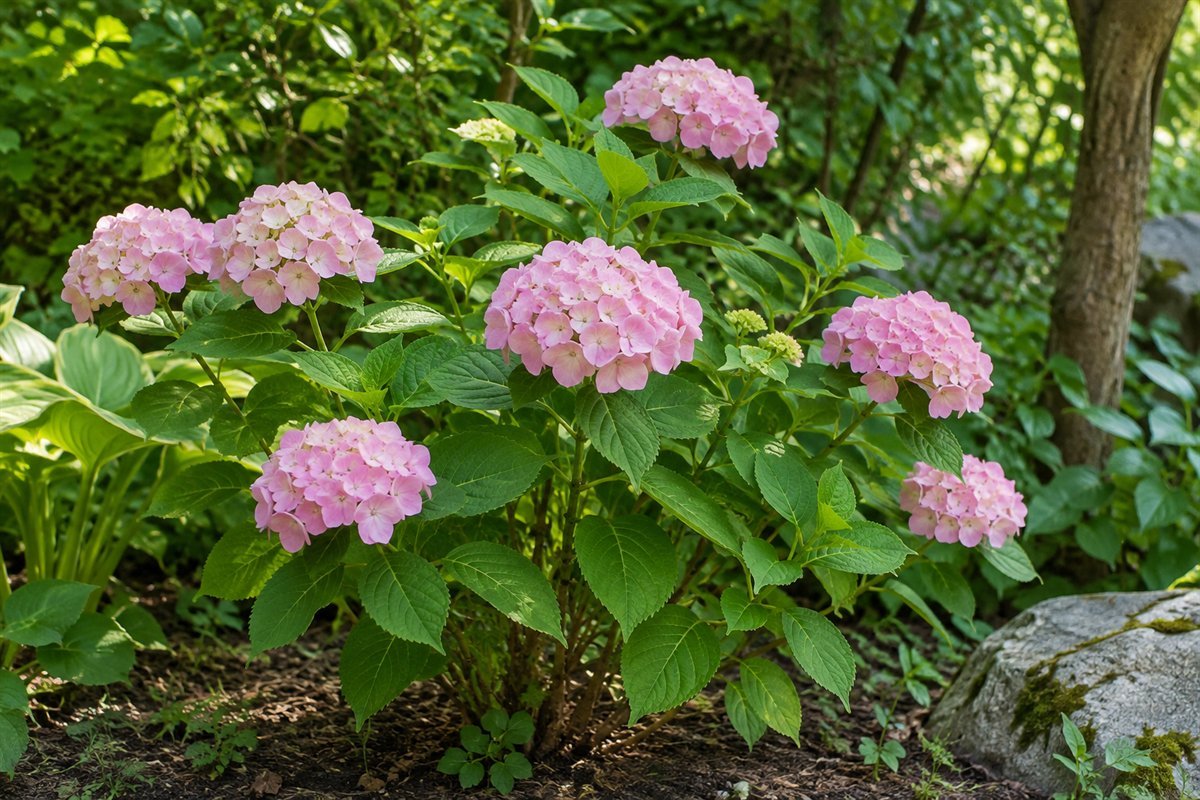
Rounded flower clusters can soften a simple garden outline. Check the exact plant rather than identifying its species only by flower shape. Bigleaf hydrangeas include mophead and lacecap forms, and smooth hydrangeas can also have rounded flowers. Keep the confirmed plant name with its care notes, then decide whether the rounded form relates well to the surrounding planting.
Try this: Buy from an identified plant record rather than a picture labeled only pink hydrangea.
11. Choose lacecap texture for a lighter flowering effect

A lacecap flower can give a lighter impression than a dense rounded mophead. Compare the shape from the distance at which the shrub will be seen. Keep the particular variety’s climate and site needs ahead of the decorative effect. This option is useful when the border already has strong rounded forms and needs a different flowering texture without another large object.
Try this: Compare a lacecap and mophead reference at the scale of the actual garden view.
12. Use oakleaf foliage as part of the design

Oakleaf hydrangea, Hydrangea quercifolia, offers a distinct leaf shape as well as flowers. Its mature size can make it a substantial plant, so check the named selection and available space. NC State notes its use as a specimen or informal group. Give the foliage room to be seen, and judge its fit outside the flowering period rather than choosing it only for the white clusters.
Try this: Include a leaf and dormant-stem reference with the flower photograph.
13. Consider smooth hydrangea as a separate plant choice

Smooth hydrangea, Hydrangea arborescens, deserves its own care record. NC State describes it as a deciduous shrub suited to well-drained soil with appropriate moisture. Different selections offer different flower forms. Check how the chosen plant behaves after rain and whether its mature habit fits the composition; a large rounded cluster in an illustration cannot establish stem strength or performance.
Try this: Ask for local observations of the exact selection before repeating it in a long border.
14. Use a tree form as one deliberate focal point

A tree-form panicle hydrangea can give a small composition a different vertical shape. Treat it as a trained shrub with its own maintenance needs rather than an ordinary shade tree. Preserve the intended framework when planning care, and keep the canopy’s mature spread clear of ordinary movement. One well-placed form is often enough for the view.
Try this: Keep the supplier’s training and care information with the plant record.
15. Use a container for one manageable display

A container can bring the flowering display closer to a seat or window. Choose an identified plant suitable for container growing, a vessel with drainage and a growing medium and care plan appropriate to it. Include watering and winter protection or storage before committing. A pot separates the planting from the ground, but it does not remove the plant’s climate or moisture needs.
Try this: Decide how the filled container will be cared for through the whole year.
16. Place a patio group outside the furniture footprint

The planting should frame the patio while leaving its useful space intact. Check chair pull-out, the route past the table and the mature shrub outline. Place the flowers where they can be enjoyed from sitting height without leaning across a chair. Keep the planting’s watering and maintenance route separate enough that caring for it does not require moving the whole furniture group.
Try this: Pull every chair out before marking the border.
17. Frame a bench from behind or to one side

A bench can turn the planting into a place to pause. Keep the seat and approach clear, then use the flowering group behind or to one side to frame the view. Compare the mature height with the seated eye level. The planting should make the destination feel considered while leaving enough space for ordinary use and garden care.
Try this: Test the view from the bench before selecting the tallest plant.
18. Use a plain backdrop to make the flowers readable

A quiet background can make flower shape easier to read. Keep a practical separation between the hydrangea and the backdrop so neither is forced into the other’s growing space. Check shade, root competition and access on both sides. A dark backdrop is a visual tool, not a reason to install a hedge where its own care and mature dimensions would be unsuitable.
Try this: Compare the view with a plain background before adding another decorative feature.
19. Keep the flower palette limited and realistic

A limited palette can connect the garden with the house or outdoor furniture. Choose plant selections that can actually produce the intended effect in the local site. Do not promise a fixed blue or pink result from a photograph, and do not assume every white hydrangea changes color with soil treatment. Let a reliable plant choice lead the decorative scheme.
Try this: Write the confirmed selection beside every color on the plan.
20. Use a low foliage foreground without burying the shrub
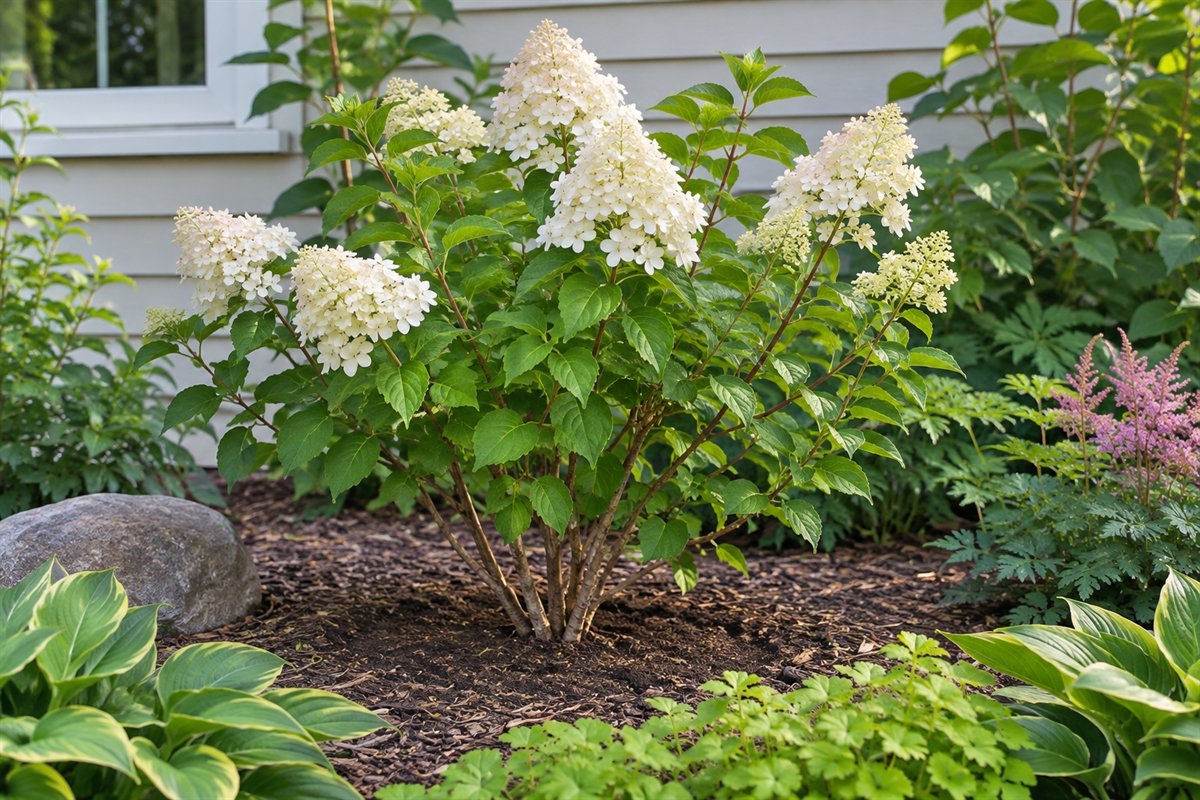
A low foreground can finish the view while keeping the shrub’s base inspectable. Choose companions for compatible conditions and allow both groups room to mature. Keep soil and mulch away from covering the stem bases, and leave access to assess watering. A foreground should connect the composition without hiding the signs needed to understand how the shrub is doing.
Try this: Check the base from the care route before adding another layer.
21. Give autumn color and fading flowers a place
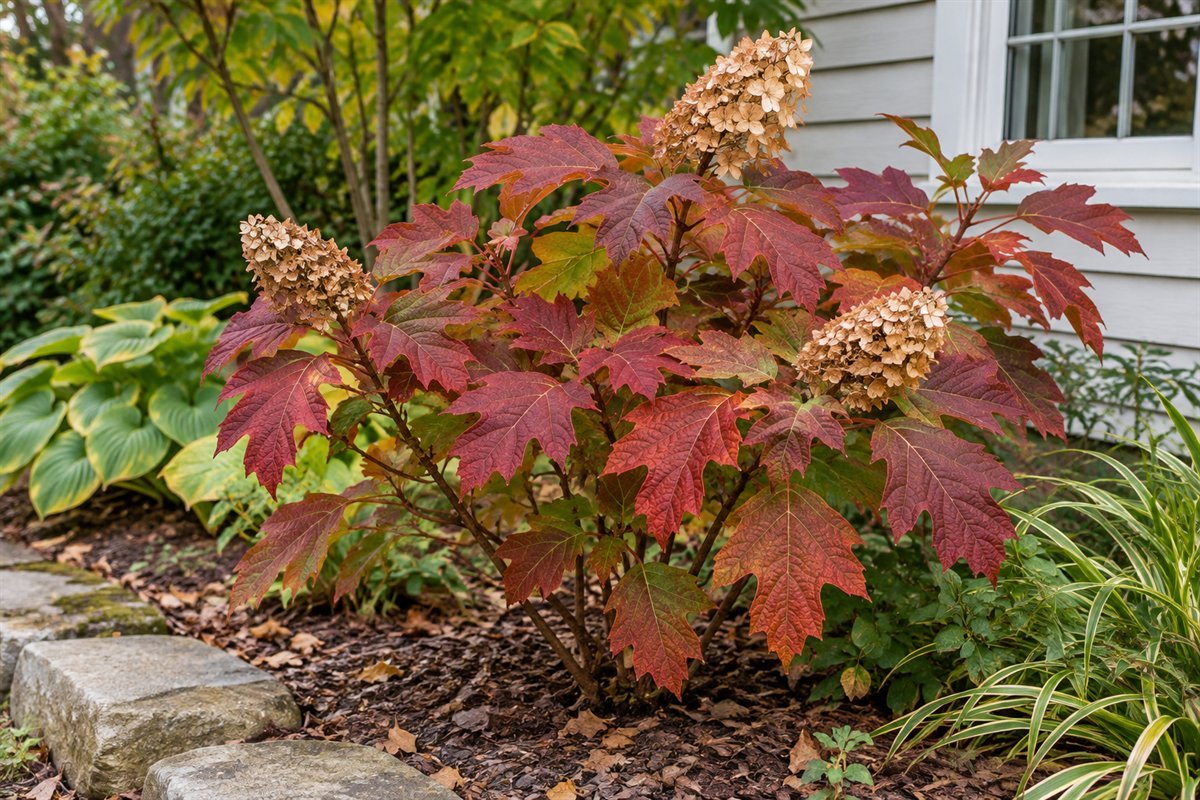
Autumn can be part of the design instead of an afterthought. Compare the selected plant’s foliage and fading flower character in your region, and keep the view simple enough to appreciate those changes. Seasonal color varies with conditions and selection. Do not expect a newly planted shrub to match an established display immediately or assume every hydrangea has the same autumn effect.
Try this: Keep one autumn reference for the exact plant under consideration.
22. Compare the winter silhouette before filling the border

The dormant outline matters in a garden viewed all year. Decide whether selected dry flowers and stems contribute to the composition, while keeping the plant’s actual pruning needs in mind. Check the view from indoors when surrounding perennials are absent. A simple pot or existing evergreen form can provide continuity without requiring the hydrangea to perform as an evergreen screen.
Try this: Sketch the border without leaves before calling the design complete.
23. Keep pruning access and identification together

Keep the exact plant identity with the care notes. Pruning timing depends on the flowering group, and a design that requires frequent size reduction may need a different selection. Leave a practical position from which to inspect the framework. Avoid turning the annual care routine into an attempt to force a large shrub into a space intended for a compact one.
Try this: Resolve the plant name before making a pruning calendar.
24. Make soil and watering decisions from observations
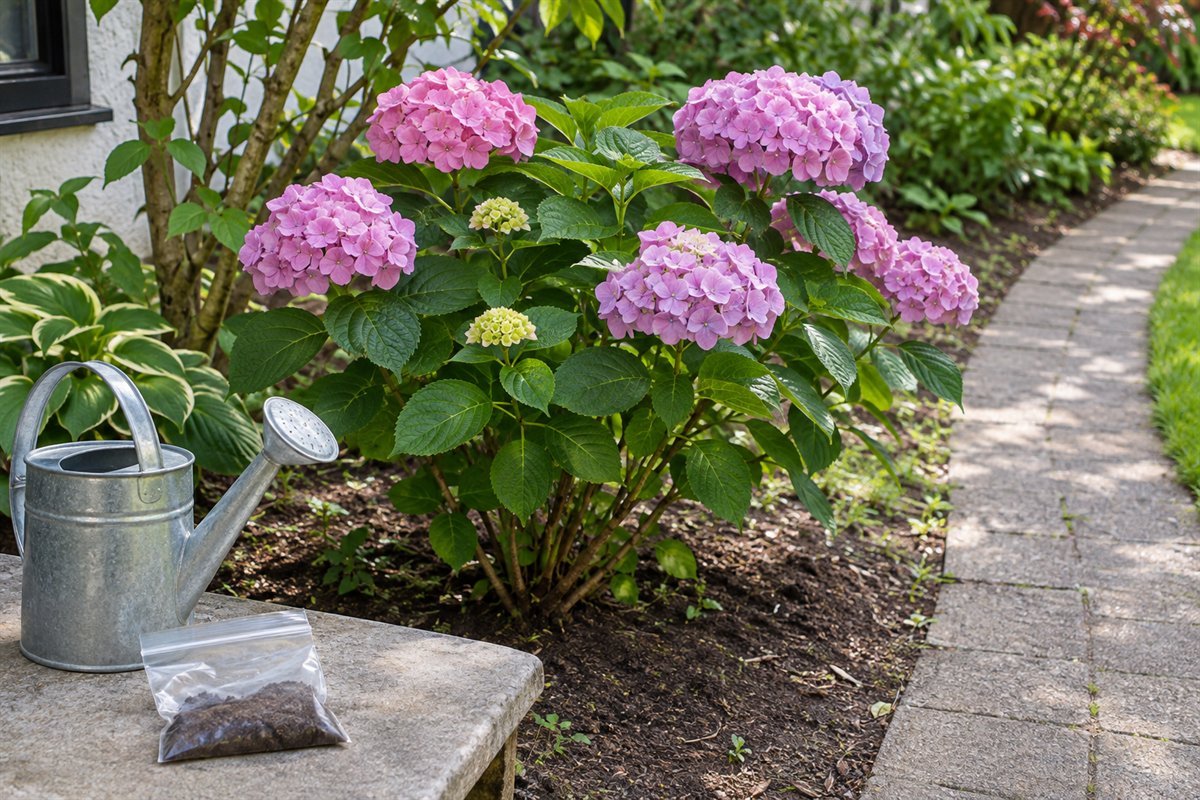
Keep a short site record for moisture, drainage and any soil test. Use those observations and plant-specific advice before adding fertilizer or changing soil chemistry. A flower color preference is not a complete soil-management plan. When a shrub struggles, record the symptoms and recent conditions so a local adviser can help distinguish water, weather, soil and other causes.
Try this: Save the test result and the exact plant name together.
25. Start with a trial group and expand from results

A trial group gives you useful evidence about the site, care effort and appearance across the season. Keep records of the selected plants and their growth before repeating them across the yard. Review the whole composition after flowering and in winter. Strong hydrangea garden ideas develop from what fits the actual garden rather than filling every open position with the same untested choice.
Try this: Set a review date before ordering the next group.
A hydrangea selection card to keep with the garden plan
For each plant, record the botanical name, cultivar, supplier, expected mature height and spread, local hardiness and site requirements. Add the intended role: one specimen, repeated border, informal hedge, container or trained focal point. Keep uncertain information marked until it is confirmed. The word dwarf or a small nursery pot does not replace mature dimensions.
Draw the plant at full size beside paths, chairs, gates, walls and service positions. Include an ordinary care position and a route for watering. Review the outline without flowers so the plan does not depend on one season. If the layout requires regular drastic size reduction, compare a naturally smaller selection.
Keep a separate pruning note. Maryland Extension explains that old-wood types develop buds before the flowering year, while new-wood types form flowers on current-season growth; some selections rebloom on both. Identify the exact group and follow appropriate local guidance before cutting. A tree-form panicle hydrangea also needs its intended trunk framework preserved. Do not apply one cutting schedule to every plant in the border.
For color, identify the plant before considering soil changes. Some bigleaf and mountain hydrangeas can produce blue or pink effects related to soil chemistry, but this does not apply to every hydrangea. Smooth hydrangea flower color is not changed by soil pH. Keep soil testing and suitable professional advice ahead of any amendment decision; this guide gives no chemical recipe or guaranteed color result.
After planting, record flowering, growth, care effort and any damage in your own garden. Keep the observations specific enough to discuss with a local extension adviser. A short dated record is more useful for the next purchase than a promise of continuous flowers or a comparison with an idealized illustration.
Can every hydrangea turn blue?
No. Color response depends on the species and selection. Do not assume white panicle or smooth hydrangeas can be turned blue by altering soil chemistry. Identify the plant and use soil-based advice before considering amendments.
Do all hydrangeas need the same pruning?
No. Identify whether the selected plant flowers on old wood, new wood or both before deciding on timing and technique. Keep trained tree forms and naturally compact selections in their own care records.
Will a hydrangea hedge provide privacy all year?
The commonly used types discussed here are deciduous. Plan for a changing seasonal view rather than expecting a permanent leafy screen.
A practical next step
Choose hydrangea garden ideas around an identified plant, realistic mature spacing and useful daily access. Keep the layout calm enough to work with foliage, flowers and bare stems. A small recorded trial provides a sensible basis for the next group.
Shade garden ideas for observing light and moisture before planting. Cut flower garden ideas for a separate, accessible picking plot.
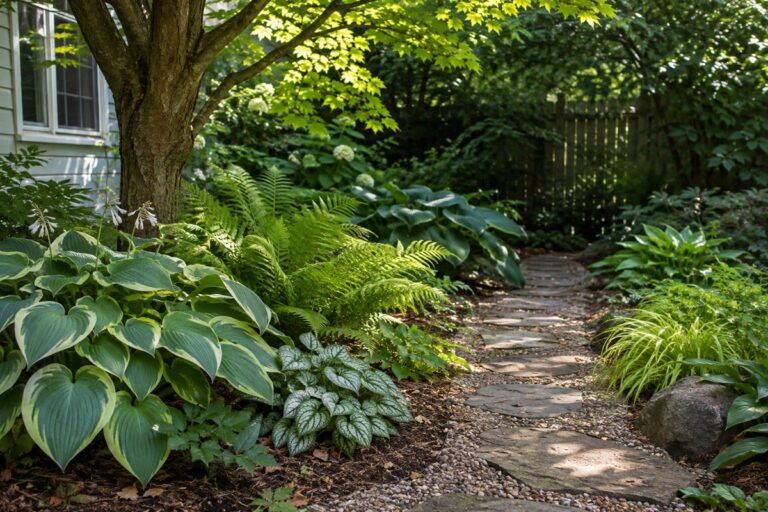
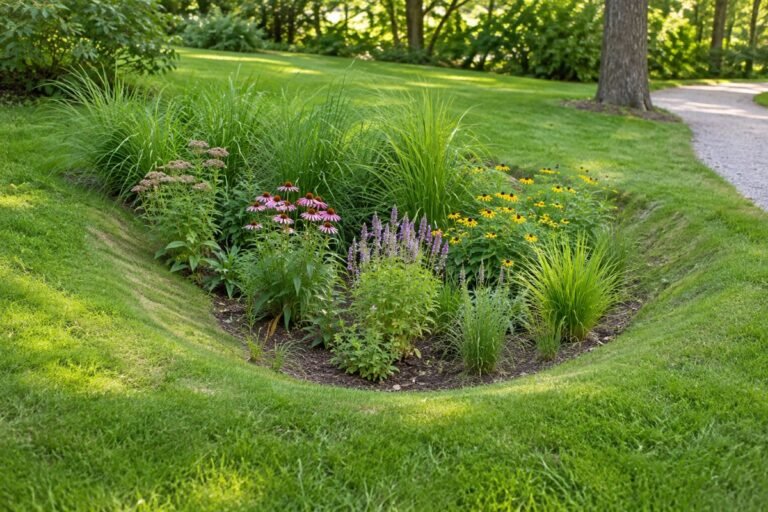
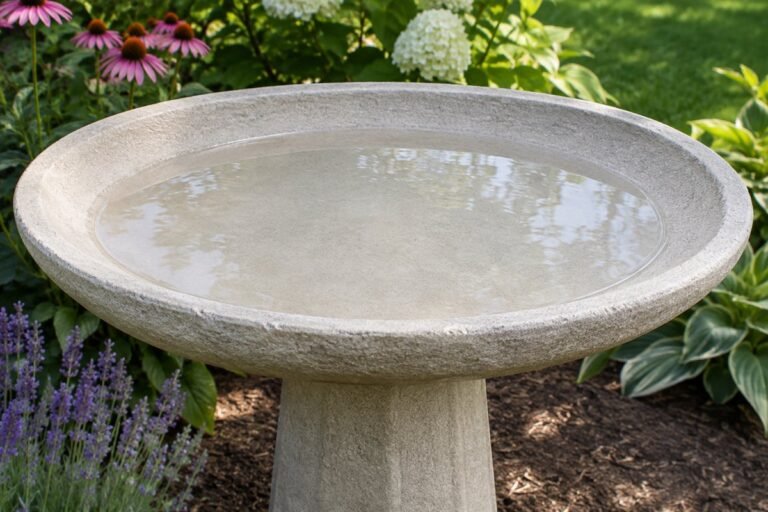
Images are original AI-generated garden concepts. They do not certify a cultivar, measured spacing, flower-color response, structural clearance or performance in your climate.
Sources and care references
- NC State Extension: panicle hydrangea form and growing conditions
- NC State Extension: bigleaf forms, selection differences and color context
- NC State Extension: oakleaf foliage, mature form and landscape uses
- NC State Extension: smooth hydrangea requirements and color limits
- University of Maryland Extension: identified flowering groups and pruning decisions
Optional digital guide for this topic
If you prefer a structured workbook, explore this related paid guide.