Rose garden ideas begin with a plant that suits the site and a layout you can maintain. A compact courtyard shrub, a short cutting strip and a climber on a suitable support solve different problems. Decide which role matters before choosing flower color.
These 26 concepts focus on home-garden design, selection and useful access. Confirm the cultivar’s mature dimensions, local winter suitability and growing needs before purchasing. The images illustrate compositions; they do not identify tested cultivars or prove a site’s sunlight, drainage or disease resistance.
Contents
- 1. Give a small courtyard one rose focal point
- 2. Build a side border from a repeated shrub
- 3. Use an island bed only where every side is reachable
- 4. Create a simple formal arrangement with open paths
- 5. Let an informal border follow a generous curve
- 6. Choose a compact rose for one substantial pot
- 7. Frame an entrance with pots set outside the route
- 8. Use a reachable raised bed where the site design supports it
- 9. Train a climbing rose against an appropriate wall support
- 10. Use a fence line as a long flowering backdrop
- 11. Keep a rose arch generous and structurally appropriate
- 12. Choose a modest climber for a bed obelisk
- 13. Make a loose flowering boundary from suitable shrubs
- 14. Keep a low foreground open with compact forms
- 15. Use white roses to simplify a small palette
- 16. Create a warm group with peach and apricot tones
- 17. Repeat one pink selection for a quieter garden
- 18. Compare open flowers with densely petalled forms
- 19. Place a scented rose within a comfortable seating view
- 20. Give cutting roses a separate reachable strip
- 21. Consider hips as a deliberate seasonal feature
- 22. Give the roses a calm evergreen background
- 23. Add companion plants without closing every gap
- 24. Make an ordinary care route part of the design
- 25. Refresh one tired section instead of replacing the whole garden
- 26. Keep a trial group and a practical cultivar record
Choose rose garden ideas from the site and the care routine
Observe the actual sun, drainage, available space and watering route. Illinois Extension emphasizes sunny sites, air movement and spacing appropriate to the rose type. Treat those principles as a starting point, then use local guidance for the exact cultivar and climate instead of applying one planting depth, pruning date or spray routine everywhere.
Match the first rose layout to its purpose
- Small patio: Compare a compact selection and a practical drained container.
- Long border: Repeat a suitable shrub using its actual mature width.
- Vertical accent: Match the climber and training access to an appropriate support.
- Flowers for the house: Keep a separate reachable cutting position.
- Lower care effort: Compare locally relevant cultivar performance before color alone.
1. Give a small courtyard one rose focal point

A single well-placed shrub can give a small courtyard a clear center of interest without filling every edge. Check sunlight and airflow in the enclosed space before choosing it. Position the mature plant where its canes stay outside the route to doors and furniture. Let the surrounding paving remain useful rather than shrinking the walking area to obtain a larger flower display.
Try this: Mark the full mature footprint on the ground before choosing the cultivar.
2. Build a side border from a repeated shrub

Repeating one suitable shrub can make a long edge feel coherent. Work from the actual cultivar’s width instead of multiplying an arbitrary spacing. Allow the plants to read as a group while preserving the air and care access they need. If the site changes from sun to shade along the line, shorten the rose section rather than forcing an identical planting into unsuitable conditions.
Try this: Compare the sunlight at both ends of the proposed border.
3. Use an island bed only where every side is reachable
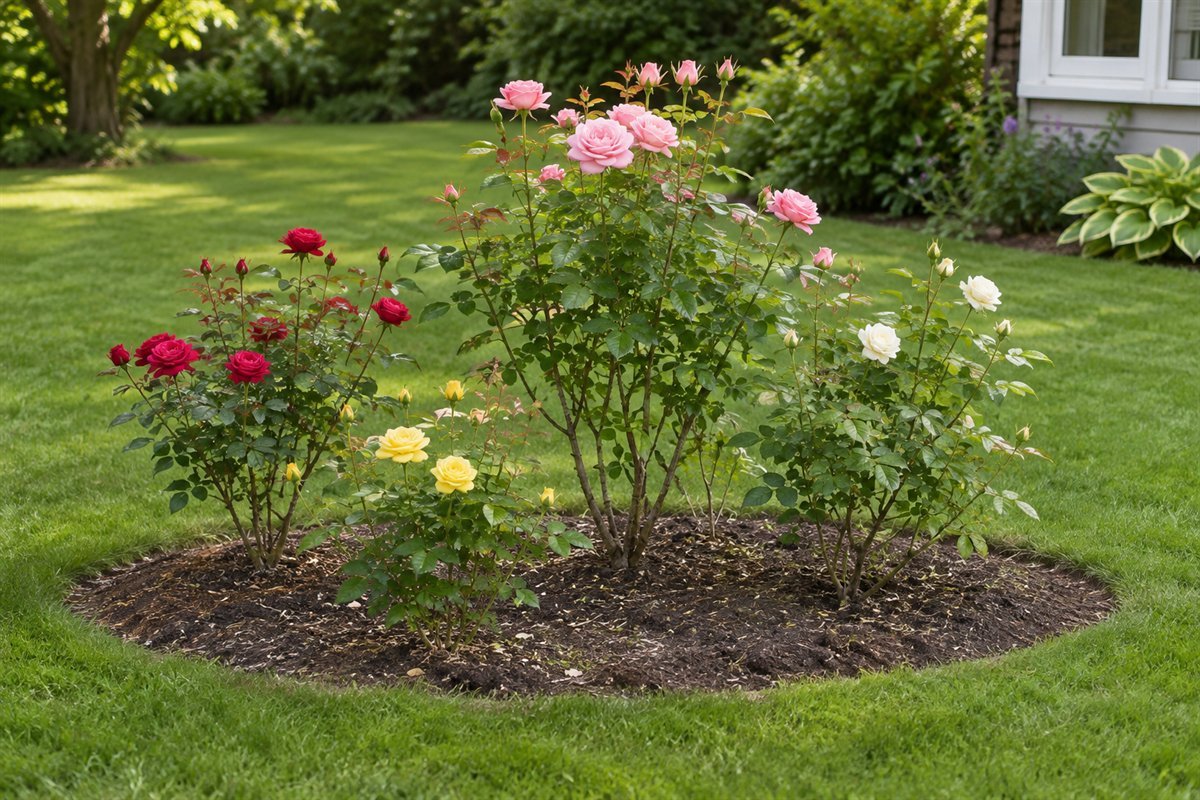
An island bed lets you see the roses from several directions. Keep the taller plants where they will not hide everything behind them and make the center reachable for ordinary work. A small island is often more practical than a wide bed that requires stepping between canes. Test the outline with the mower or other equipment normally used around it.
Try this: Plan the approach for care before adding the central plant.
4. Create a simple formal arrangement with open paths

Formal structure comes from the layout, not from forcing rose shrubs into rigid boxes. Use a small number of beds and clear paths that relate to the house or garden entrance. Keep the plants’ natural size compatible with the geometry. A design with fewer well-proportioned compartments is easier to use than a miniature maze whose paths become crowded when the roses mature.
Try this: Review the layout from an upstairs window as well as from ground level.
5. Let an informal border follow a generous curve

A broad curve can make a rose border feel relaxed. Use the same mature-space planning as a straight bed, especially on the inside of the bend. Keep the strongest flowering group where it can be seen from the main seat or window. Avoid adding extra plants simply to fill the curve on day one; the later width matters more than the nursery-pot outline.
Try this: Move temporary markers until the curve looks calm from the main viewing point.
6. Choose a compact rose for one substantial pot

A container is useful when a compact selection suits the available patio space. RHS identifies patio and miniature roses as options for containers, but the exact plant and vessel still need checking. Plan drainage, a suitable growing medium, watering and local winter care before buying. A decorative container should support the plant’s needs rather than act as a sealed outer bowl.
Try this: Include the pot’s care and moving requirements in the purchase decision.
7. Frame an entrance with pots set outside the route
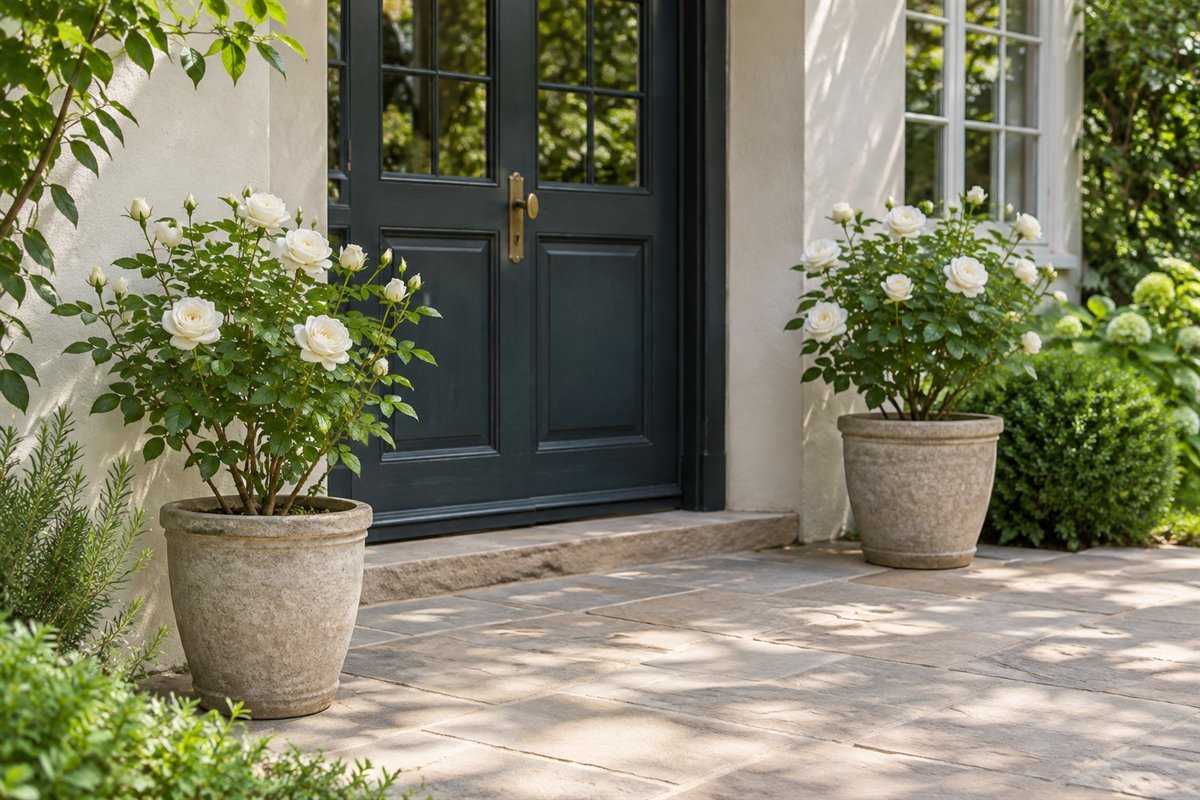
A pair of containers can mark an entrance without creating a permanent bed. Set them beyond door movement and the space needed for bags, deliveries and everyday passage. Check the actual sun on each side; a symmetrical position can expose the two plants differently. Matching pots can create the visual balance even when the best planting position is slightly offset.
Try this: Walk the entrance carrying the largest item normally brought through it.
8. Use a reachable raised bed where the site design supports it

A raised bed can define a small planting area and bring it closer to a convenient care position. It still requires a suitable soil and drainage arrangement; the edge alone does not solve a wet site. Keep the bed reachable and assess any construction appropriately. Choose the roses after the useful planting volume and mature width are understood.
Try this: Resolve where excess water goes before selecting the bed finish.
9. Train a climbing rose against an appropriate wall support
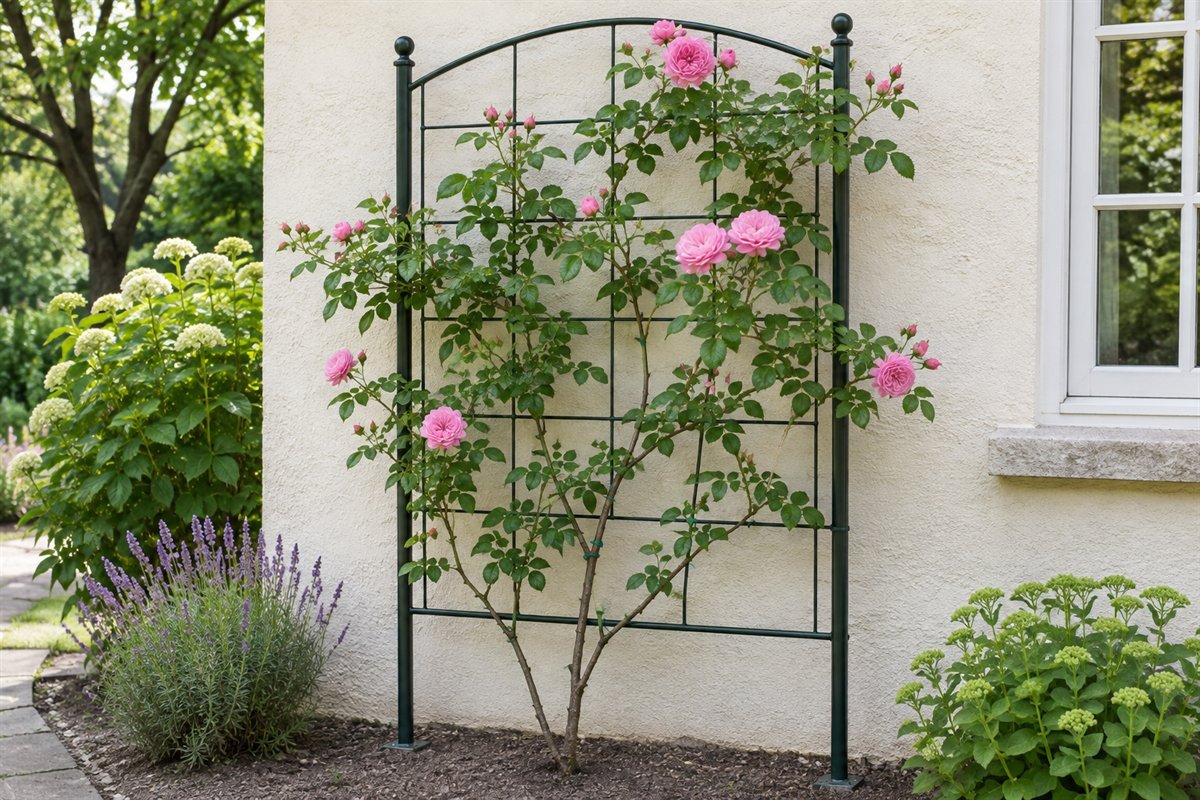
A climbing rose can give height to a small garden when the support, training and eventual size are planned together. RHS notes that wall positions can be dry, so check the growing conditions rather than assuming shelter is always helpful. Keep the structure suitable for the mature plant and reachable for care. This is a placement idea, not a fastening specification for a building.
Try this: Match the cultivar’s mature growth to the support before purchasing either.
10. Use a fence line as a long flowering backdrop

A fence-side rose can become a background to the rest of the garden. Confirm who maintains the boundary and keep access for both the plant and the structure. Avoid treating a lightweight fence as unlimited support for vigorous growth. Select a plant whose spread fits the actual length, and leave space to work without standing in another border.
Try this: Draw the future cane spread and the fence-maintenance route together.
11. Keep a rose arch generous and structurally appropriate
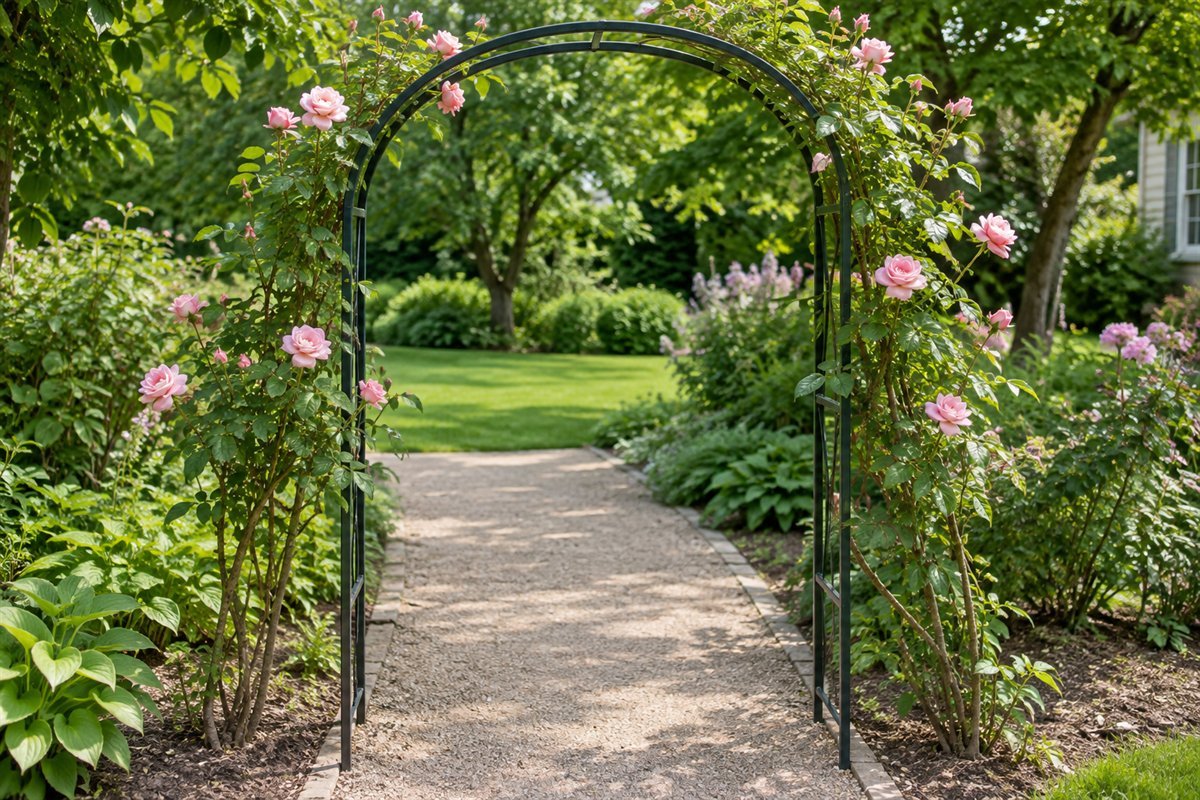
An arch is useful when it emphasizes a route that already makes sense. The mature canes must stay outside the head and shoulder space, and the support needs appropriate assessment for the eventual load and exposure. Keep pruning access on both sides. A lightly planted arch with a clear opening is more usable than a densely covered feature that requires brushing through prickles.
Try this: Check the route with two people passing before fixing the arch position.
12. Choose a modest climber for a bed obelisk

An obelisk can provide one vertical accent without spanning a path. Choose the rose for the size and strength of the support; not every vigorous climber belongs on a compact frame. Keep the base reachable for training and inspection. Let the rest of the bed stay lower so the feature reads clearly instead of competing with several unrelated structures.
Try this: Compare the plant’s mature cane length with the support’s real role.
13. Make a loose flowering boundary from suitable shrubs

A flowering boundary can suggest separation without behaving like a solid evergreen screen. Choose locally suitable shrubs and allow their natural width, airflow and care space. Decide whether the boundary needs to work when the roses are not flowering or are leafless. If privacy is essential, assess that requirement separately rather than expecting a seasonal rose line to supply it.
Try this: Sketch the winter outline before relying on the planting for separation.
14. Keep a low foreground open with compact forms

A lower selection can let you see into the border from the path. Compare its mature height with the actual viewing level and with the plants behind it. Do not select by a photograph of a young plant alone. Keep foreground gaps large enough to inspect and remove fallen material, rather than covering every inch with dense growth.
Try this: Check the border from the height of the usual seat.
15. Use white roses to simplify a small palette
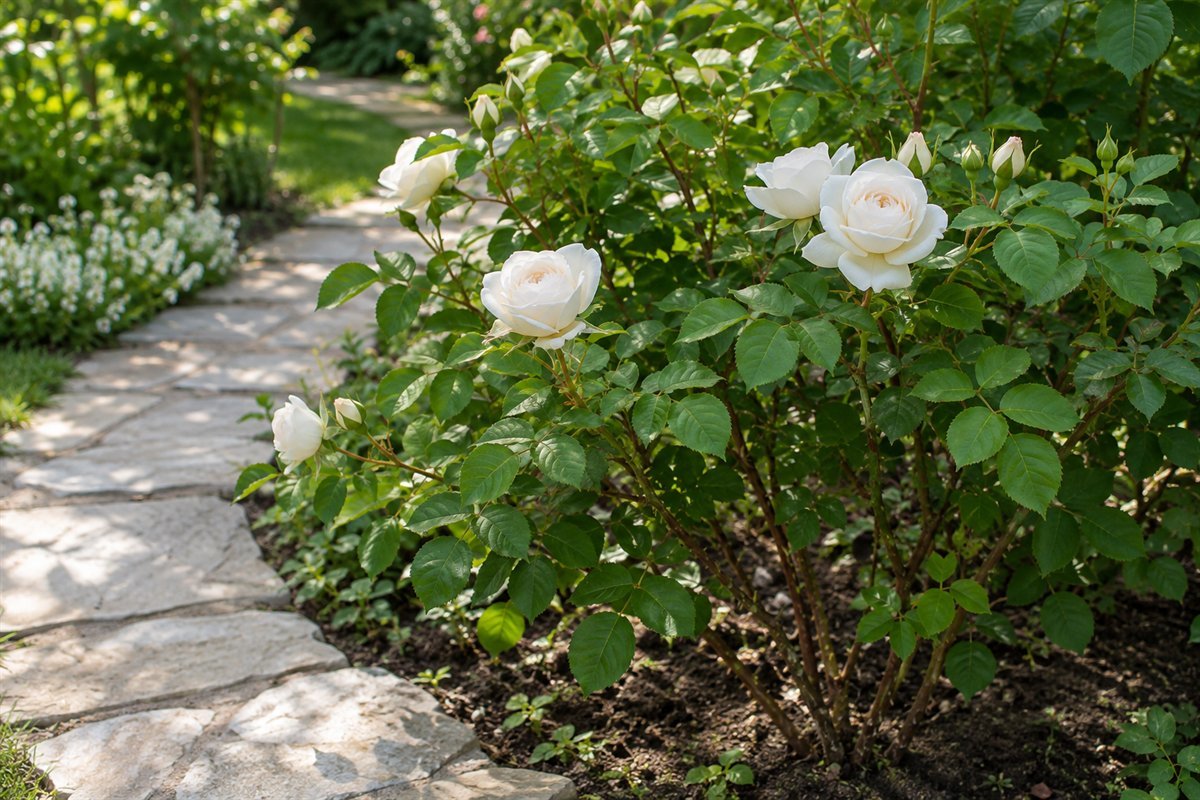
White roses can make a limited palette easier to read. Compare flower form and mature size as well as color, because two white selections may create very different outlines. Use a background that lets the flowers remain visible. Choose the growing requirements first and avoid promising that a pale flower will keep the same clean appearance through every spell of weather.
Try this: Compare the plant in ordinary daylight against the intended background.
16. Create a warm group with peach and apricot tones

Warm flower tones can connect a rose bed to brick, terracotta or warm paving. Limit the group to a few compatible selections so the composition remains clear. Compare the flowers at more than one stage; color can change as a bloom ages and with conditions. Keep the cultivar’s health and dimensions ahead of a perfect match to one photograph.
Try this: Place a material sample beside a real flower before repeating the color.
17. Repeat one pink selection for a quieter garden
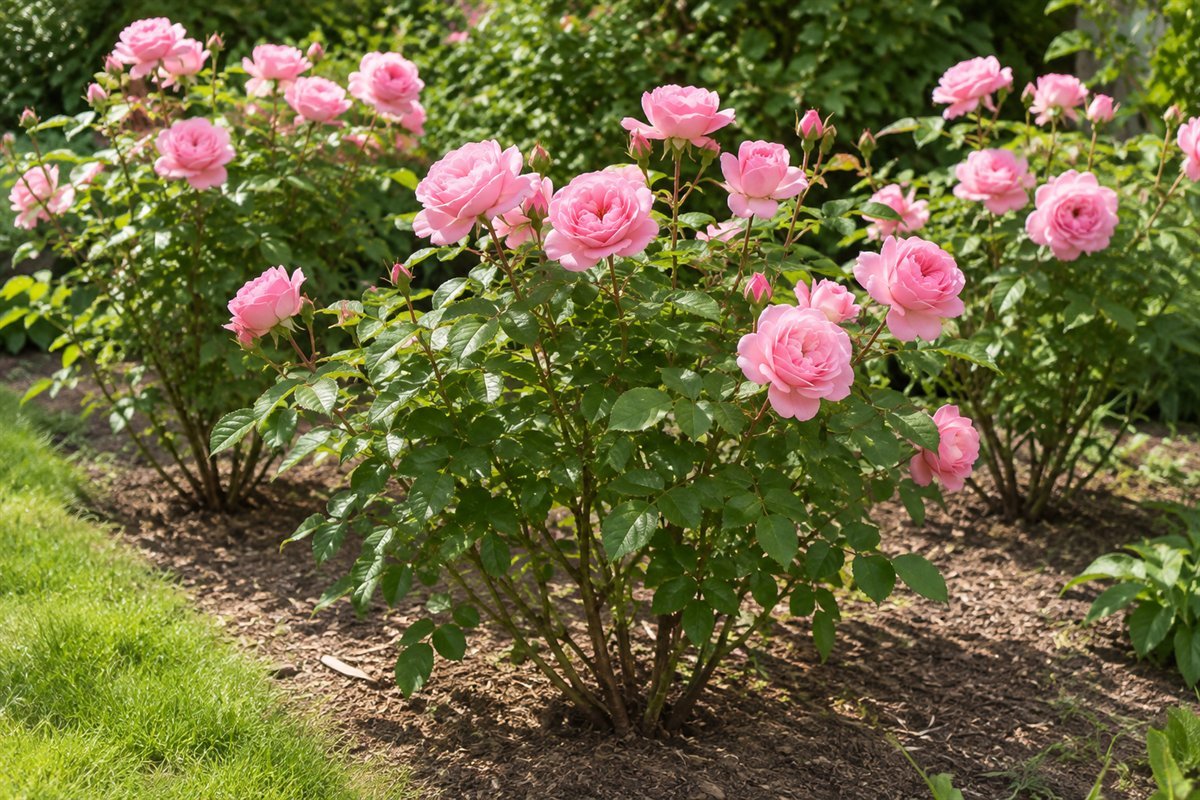
One pink selection can make a small garden feel settled while paths, furniture and other plants remain varied. Repetition is most useful when the plant has been chosen for the site, not solely for its color. Begin with a manageable group and leave the mature outlines clear. Keep a record of the exact cultivar so later additions do not unintentionally change the scale.
Try this: Record the cultivar name before buying the second group.
18. Compare open flowers with densely petalled forms

Flower form affects the texture of the border. Open flowers and densely petalled roses make different visual impressions, even in a similar color. Compare the whole plant rather than choosing from a cropped bloom alone. This idea does not claim that every open-flowered rose delivers the same wildlife value or that a particular flower form guarantees easy care.
Try this: Save one whole-plant reference alongside the flower close-up.
19. Place a scented rose within a comfortable seating view

If fragrance matters, inspect an actual flower when possible; a rose name or color does not establish the scent you will enjoy. Keep the shrub clear of the user and the approach. Place it where the garden remains comfortable for the household, including anyone who prefers flowers farther from the seat. Fragrance is one selection criterion alongside site and care needs.
Try this: Test the seat position before choosing the nearest rose.
20. Give cutting roses a separate reachable strip

A separate cutting strip makes the purpose clear and protects the main display from unplanned gaps. Choose plants for the local conditions and the kind of stems you want, then keep access practical. Include a reachable place for a bucket and tools. This is a home-garden layout concept, not a promise of stem yield or a substitute for cultivar-specific harvesting guidance.
Try this: Decide which plants are for cutting before the first flowering flush.
21. Consider hips as a deliberate seasonal feature
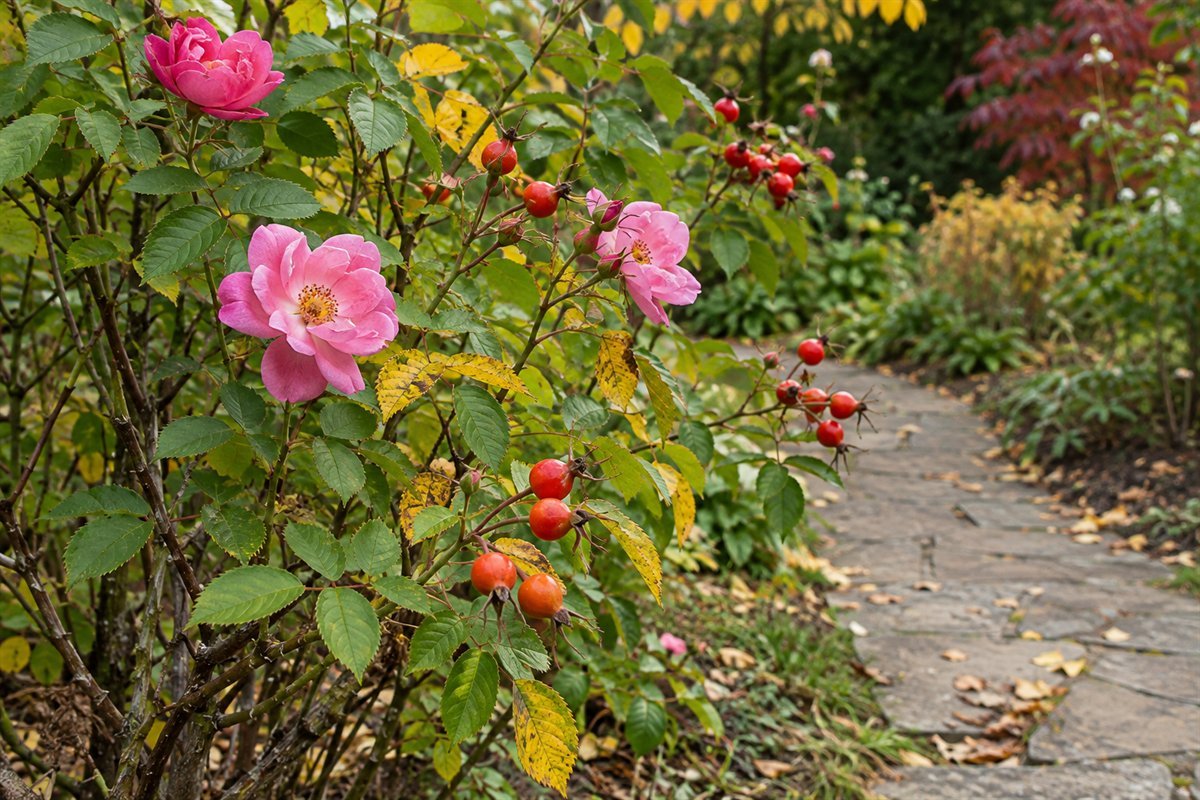
Some roses can contribute hips after flowering. If that seasonal feature matters, research the actual cultivar and make an intentional decision about spent flowers rather than deadheading everything automatically. Keep the plant’s overall suitability first. This guide does not identify hips for eating or recommend invasive roses; check regional restrictions and choose an appropriate named plant.
Try this: Add the desired autumn character to the cultivar comparison.
22. Give the roses a calm evergreen background

A simple background can help the flowers stand out and give the view structure outside flowering. Keep enough separation that the background does not shade or crowd the roses as both plantings mature. Check root competition and access rather than treating a green wall as decoration only. The rose layer still needs its own suitable light and air movement.
Try this: Draw the mature outlines of both layers on the same plan.
23. Add companion plants without closing every gap

Companions can soften the bed between flowering flushes. Choose plants whose actual site and watering needs fit, then keep enough space to inspect the roses and clear debris. A visually attractive combination is not automatically a sound care arrangement. Use fewer compatible companions before trying to fill every gap with a plant that will later hide the stems and soil.
Try this: Check mature spread and water needs before comparing flower colors.
24. Make an ordinary care route part of the design

The route used for watering, inspection and pruning should be planned as carefully as the flower view. Keep it wide and stable enough for the tasks and equipment actually used. Avoid making every plant accessible only by reaching through another rose. An easy care position also makes it simpler to notice changes early and seek appropriate local advice.
Try this: Walk the planned route while carrying an empty watering can or bucket.
25. Refresh one tired section instead of replacing the whole garden

When a border disappoints, identify the actual problem before buying more roses. A crowded position, unsuitable light or an awkward route may need a layout change rather than another cultivar. Keep useful plants while assessing one section at a time. Have unusual symptoms diagnosed appropriately; a concept image cannot distinguish a disease problem from environmental stress.
Try this: Write one specific reason for each proposed replacement.
26. Keep a trial group and a practical cultivar record

Record the cultivar, source, local winter suitability, expected dimensions and the reason it was chosen. Add dated notes on flowering, health and the work it required in your garden. Use that evidence before repeating the selection elsewhere. The strongest rose garden ideas combine an appealing view with a plant and routine that fit the actual site.
Try this: Review a full relevant growing cycle before expanding the group.
A rose cultivar card for a useful purchase decision
Write the cultivar name, supplier, plant type and intended role. Add the expected mature height and width, the support requirement and local winter guidance. A label such as shrub, climber or miniature helps organize the search, but it does not replace the dimensions of the actual selection.
Record the sunlight observations and the usable footprint at the proposed position. Include door movement, seat space, the care route and the full cane spread. Resolve soil and drainage problems with appropriate local advice before planting. A raised edge or decorative surface does not establish that the root zone is suitable.
Compare disease resistance using current regional information for the cultivar and the disease of concern. UC IPM emphasizes variety selection, air circulation and appropriate cultural care as parts of rose management. Resistance is not immunity and cannot be inferred from the generated image. Ask local extension or a knowledgeable nursery when the evidence is unclear.
Add the flower qualities that matter to you: whole-plant appearance, color as blooms age, flower form, fragrance and expected flowering character. Do not assume every rose repeats equally or that every climber is scented. If hips are wanted, research the named plant and consider that goal when deciding how to manage spent flowers.
Keep the care plan appropriate to the type and climate. A Minnesota winter-protection method is not a national rule; tender and hardy roses need different decisions. Likewise, a calendar or pruning instruction for one rose group should not be applied blindly to another. This design guide does not prescribe pesticides, graft depth, fertilizer rates or a universal irrigation interval.
Finally, record observations after planting: actual spread, flowering, leaf condition, unwanted crowding and the work needed. If something changes unexpectedly, obtain a suitable diagnosis before removing plants or treating them. Use the trial record to decide whether the selection earns more space in the garden.
Can I create a rose garden in a small space?
Yes, when an appropriate compact plant and a useful mature footprint fit the actual growing conditions. One shrub or a manageable container can be more practical than a crowded collection.
Do climbing roses climb without support?
Plan an appropriate support and ongoing training for the chosen plant. Match the mature growth and care access to the structure rather than assuming a small decorative frame suits every climber.
Does a disease-resistant rose need no care?
No. Resistance relates to the cultivar and particular disease conditions. Suitable placement, air movement, observation and locally appropriate care remain part of the decision.
A practical next step
Use rose garden ideas that make the planting attractive and workable at its mature size. Choose the role, site and care route first, compare named cultivars carefully and expand from evidence in your own garden.
Garden trellis ideas for choosing the role of a plant support. Cut flower garden ideas for a useful home picking area.
Images are original AI-generated garden concepts. They do not certify a cultivar, support structure, site condition, plant health or performance.
Sources and care references
- Illinois Extension: rose site preparation and growing conditions
- Illinois Extension: spacing varies with the rose type
- RHS: rose selection, plant forms and container options
- RHS: climbing rose forms, supports and wall positions
- UC IPM: variety selection and integrated rose management
- University of Minnesota Extension: regional winter-care differences
Optional digital guide for this topic
If you prefer a structured workbook, explore this related paid guide.