Bird bath ideas deserve the same practical attention as the rest of the garden. A bowl can look beautiful among flowers and still be awkward to clean, too steep inside or placed where birds have little view of their surroundings. Start with usable shallow water, a stable arrangement and a care routine you can sustain.
These 23 concepts compare basin forms, garden positions and useful details, including winter care. The original AI-generated images illustrate design rather than measured water depth, tested wildlife use or certified products. Check the actual feature, local conditions and current wildlife advice before putting it into service.
Contents
- 1. Begin with a wide, gently sloping basin
- 2. Use textured concrete for a quiet traditional focal point
- 3. Keep a ceramic accent shallow and simple
- 4. Choose a lightweight removable basin for manageable care
- 5. Try a shallow ground dish where the site permits
- 6. Lift the dish on a low, broad support
- 7. Use a pedestal to mark one garden destination
- 8. Let one dark basin contrast with pale paving
- 9. Use a purpose-designed deck mount only where it fits
- 10. Choose a hanging basin you can reach and steady
- 11. Set a patio-side bath apart from the busy route
- 12. Keep the immediate surroundings open
- 13. Plan summer shade without a debris canopy
- 14. Separate the water from falling seed
- 15. Add a gentle dripper as one focused feature
- 16. Keep a solar fountain small enough for the basin
- 17. Treat a recirculating feature as a system that needs care
- 18. Make winter care part of the original choice
- 19. Use only a compatible purpose-made winter heater
- 20. Keep a removable seasonal bowl in the plan
- 21. Add one stable perch without filling the bowl with stones
- 22. Give cleaning tools a nearby return place
- 23. Observe one bath before adding another
Choose bird bath ideas from the basin and care routine
Compare the interior slope and footing before the pedestal style. Audubon and Oklahoma wildlife guidance both describe shallow water, roughly 1–2 inches, with a gradual transition from the edge. For small birds, retain shallower usable areas. Measure the actual filled basin instead of guessing from its outer depth. Then plan a stable position and regular emptying, cleaning and refilling.
Five checks before choosing a birdbath
- Basin: Gradual entry, useful shallow water and a suitable interior surface.
- Support: A complete stable arrangement suited to the filled bowl and site.
- Location: Open immediate view, appropriate escape cover and manageable disturbance.
- Care: Access to empty, scrub, rinse and refill the whole feature.
- Season: Actual frost, storage, pump and heating instructions for the model.
1. Begin with a wide, gently sloping basin
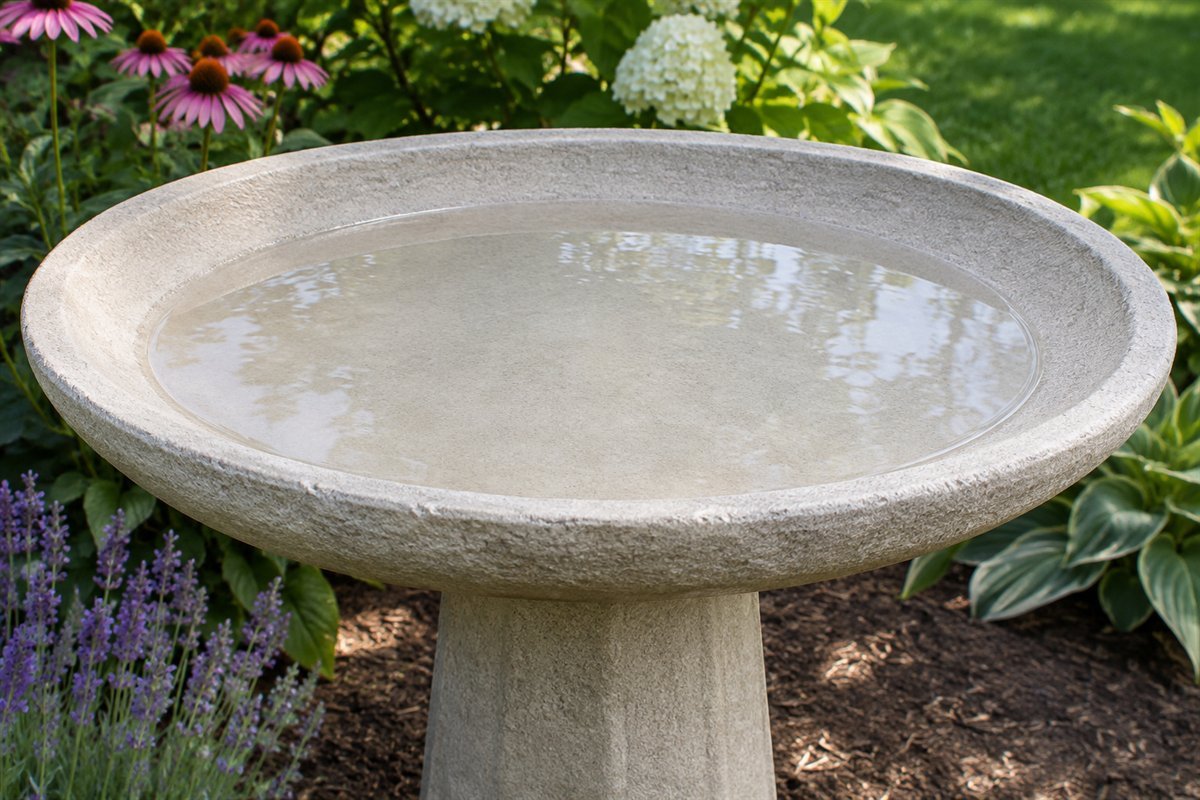
The useful part of a birdbath is the basin, not the ornament underneath it. Audubon describes shallow edges and a center no deeper than about 2 inches, with shallower water for small birds. Check the real basin with water in it. A wide rim can disguise a steep inner wall, and the outside dimensions do not tell you how much usable shallow space birds have.
Try this: Ask for the interior profile and measure the filled depth before choosing the decorative finish.
2. Use textured concrete for a quiet traditional focal point
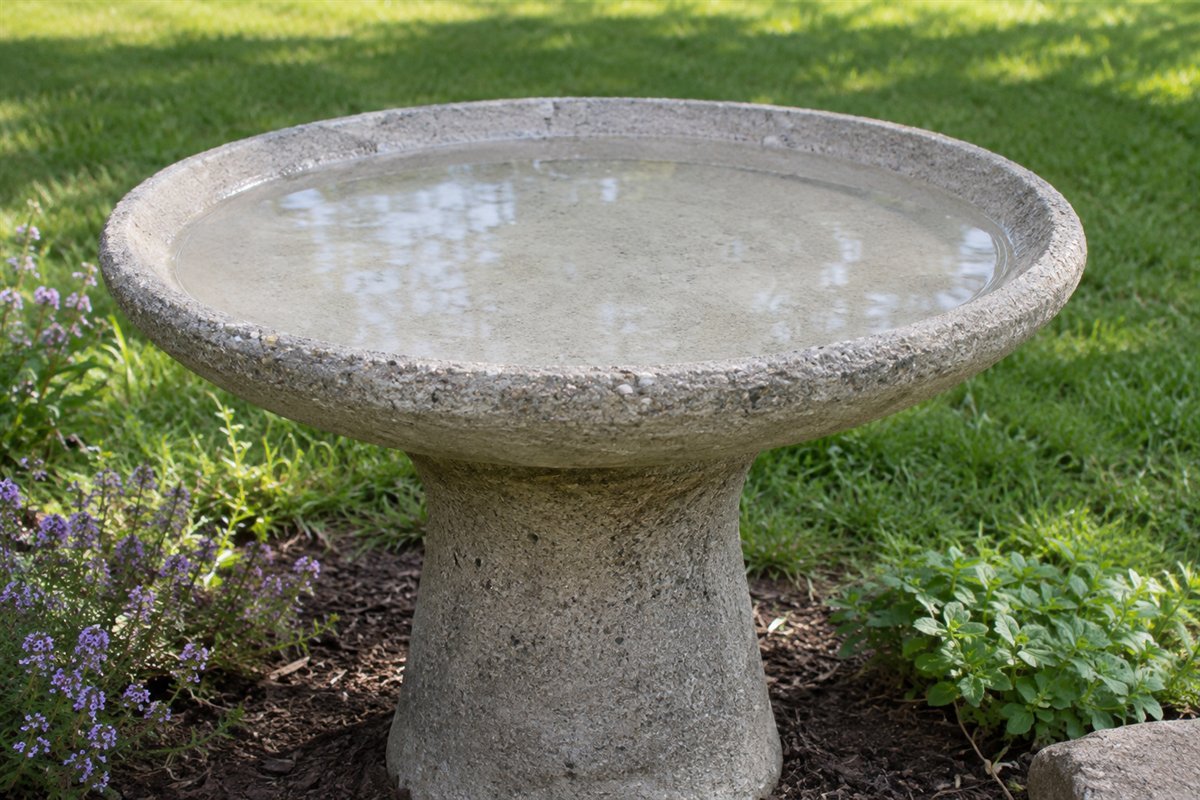
Textured concrete can sit quietly among mixed planting and natural stone. Oklahoma wildlife guidance identifies a rough basin surface as useful footing. Inspect the actual inside finish rather than assuming every concrete product feels the same. Compare its empty weight, cleaning access and manufacturer’s seasonal care instructions before choosing a position that would be difficult to change.
Try this: Check whether you can reach the entire basin comfortably without leaning into the planting.
3. Keep a ceramic accent shallow and simple
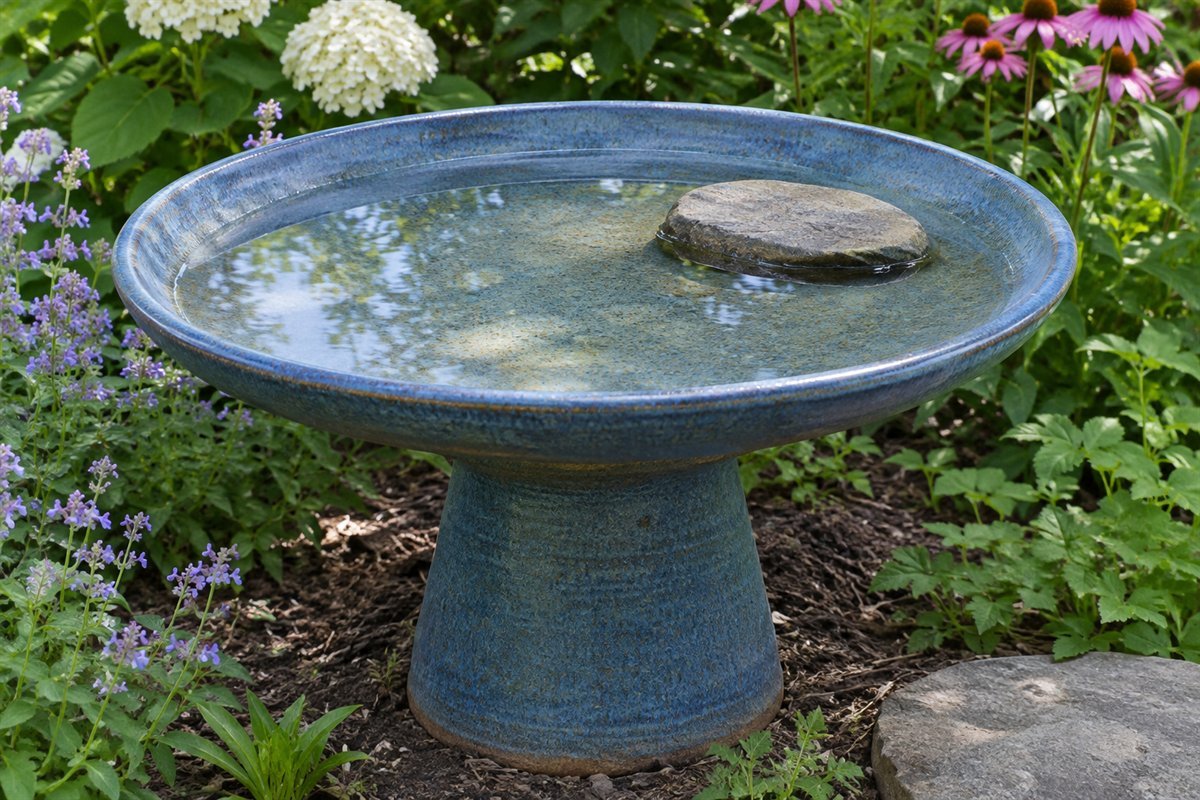
A colored ceramic bowl can supply one strong garden accent without adding several ornaments. Choose by the interior profile and usable footing as well as the exterior glaze. Look closely at the product’s surface and instructions; a decorative ceramic finish is not evidence that it offers good grip or can stay outdoors through local freezes.
Try this: Compare the inside surface and winter guidance before settling on the color.
4. Choose a lightweight removable basin for manageable care
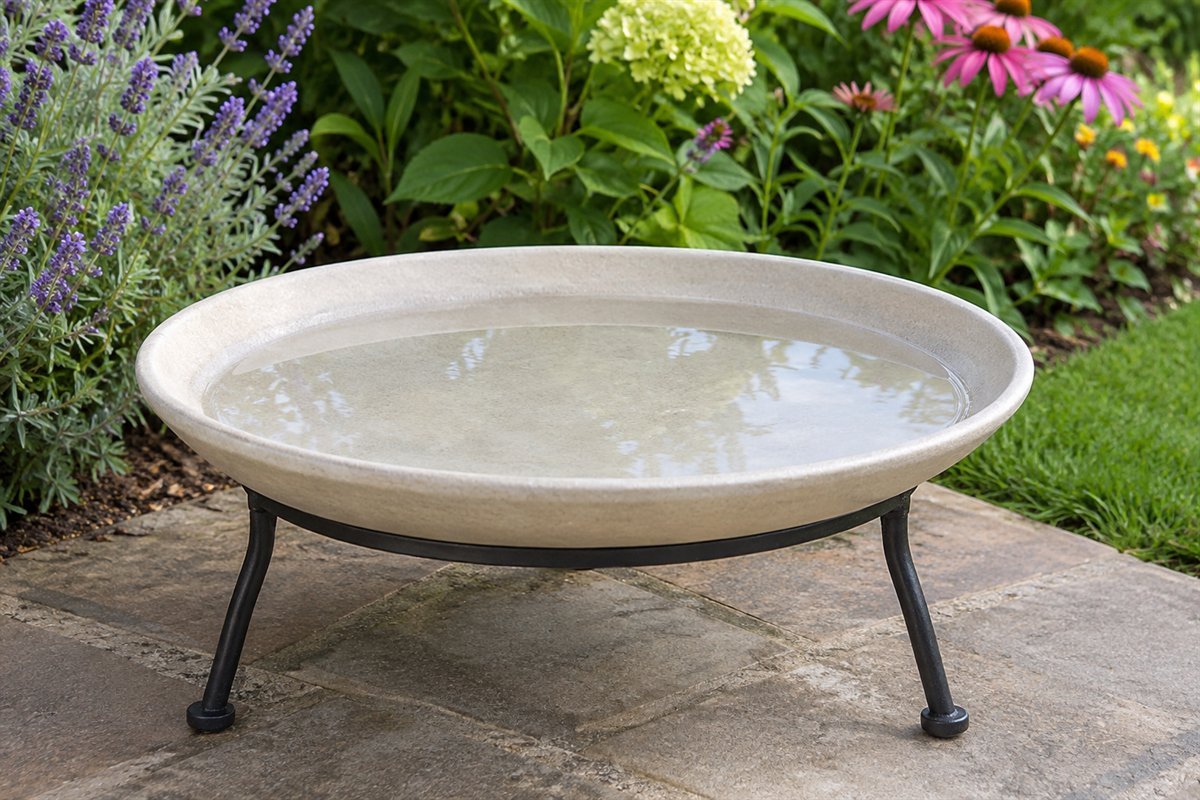
A removable bowl can make the daily empty-and-refill routine easier if its size and weight suit you. Check it when full as well as empty. The bowl must seat securely in the actual stand, and the full arrangement needs a stable position. Do not let the convenience of a light basin become an excuse for a support that tips or shifts during ordinary use.
Try this: Check the bowl-and-stand fit and your cleaning route before buying.
5. Try a shallow ground dish where the site permits

A shallow dish at ground level can be a modest way to begin. Audubon’s simple birdbath guide uses a shallow tray on level ground. Assess local predators and the surrounding view before adopting the idea. Ground placement is not automatically suitable where cats or other animals can approach unseen, even if the bowl looks natural among plants.
Try this: Inspect the approach from ground level and follow local wildlife advice for the site.
6. Lift the dish on a low, broad support
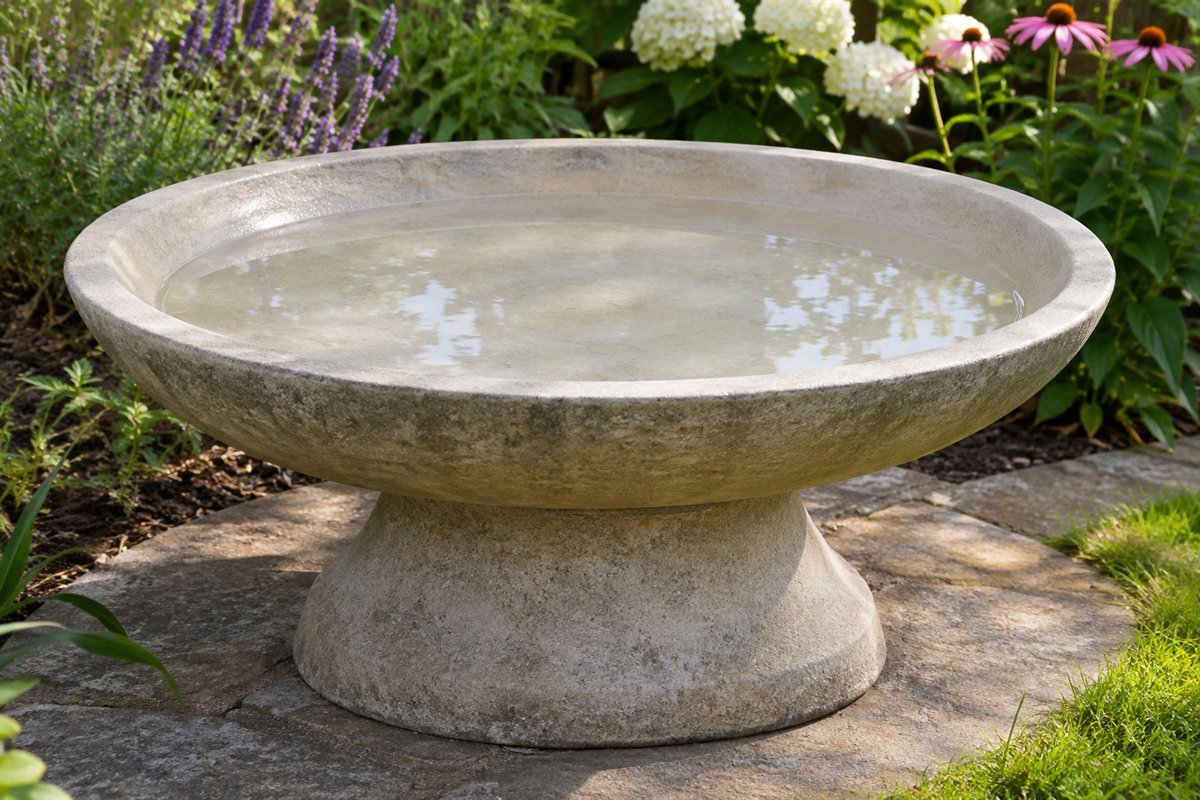
A low broad support gives a basin a clear garden position without the visual height of a traditional pedestal. Keep the support proportionate to the bowl and use a complete arrangement intended to work together. The attractive silhouette should not rely on a large bowl balanced on a tiny contact point. Leave space to inspect the base as part of routine care.
Try this: Compare the assembled footprint with the real ground surface.
7. Use a pedestal to mark one garden destination
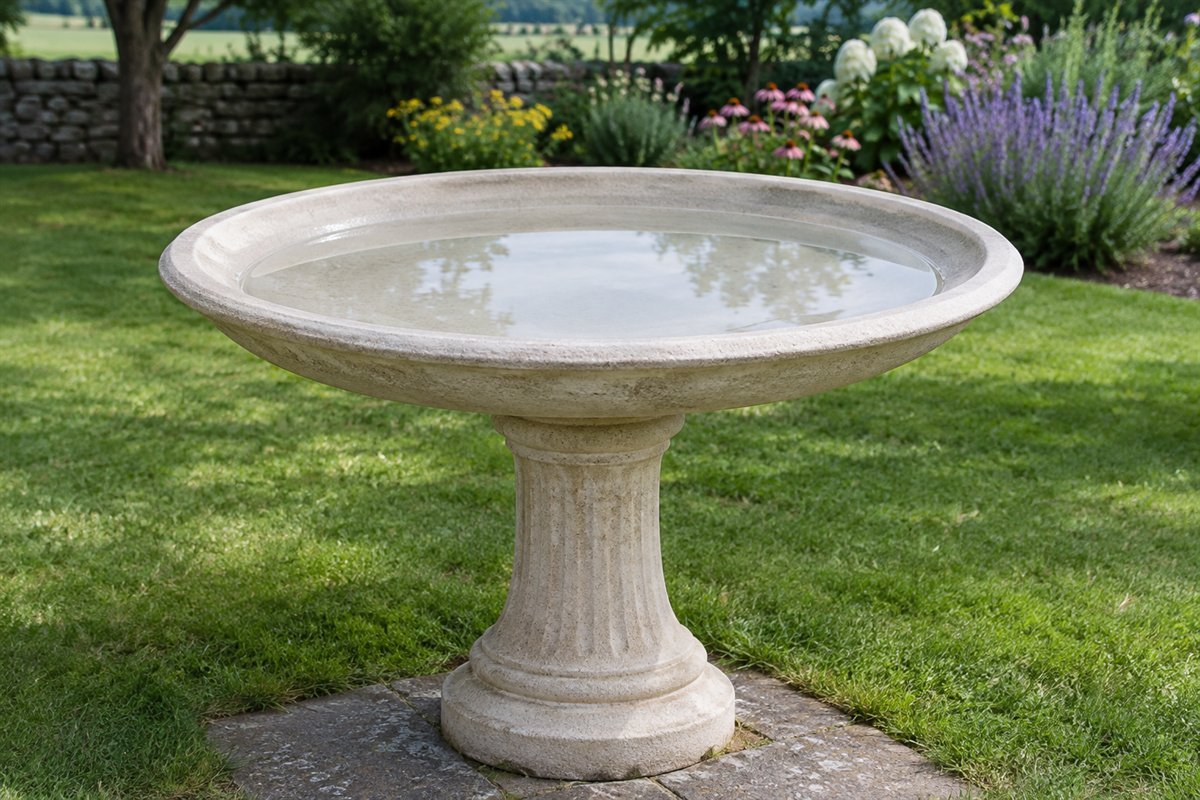
A pedestal can become the destination seen along a path or from a seat. Choose one main view so the feature feels placed rather than scattered into a gap. Keep the base on a suitable stable surface and the basin accessible. Height alone does not settle predator risk, water depth or maintenance; the complete position still needs attention.
Try this: Mark the pedestal footprint and the space needed to stand beside it before planting nearby.
8. Let one dark basin contrast with pale paving
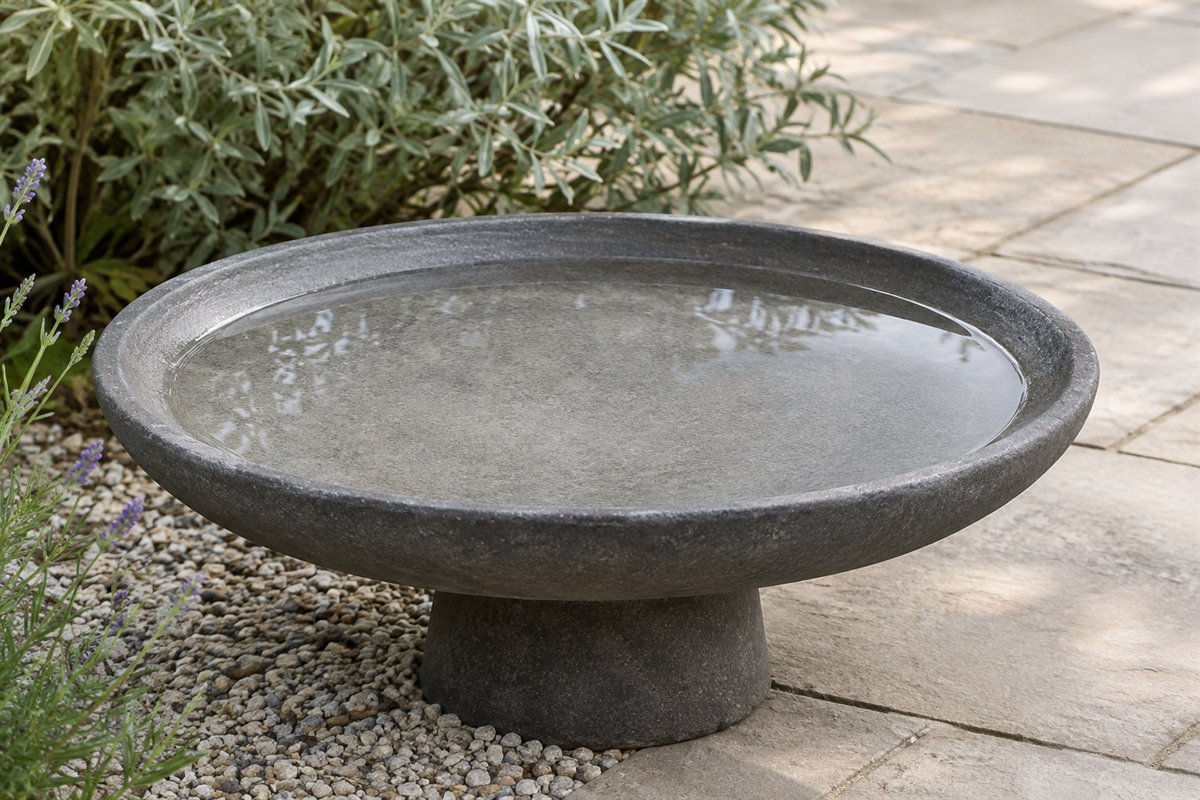
A dark bowl beside pale paving can read clearly without a tall sculpture. Test the contrast at the normal viewing distance, then check how the actual material performs in the site’s sun and weather. Keep the garden detail simple enough that the basin and its water remain easy to inspect. The visual effect should support a useful bath rather than conceal its condition.
Try this: View the sample in the actual light before adding matching dark accessories.
9. Use a purpose-designed deck mount only where it fits
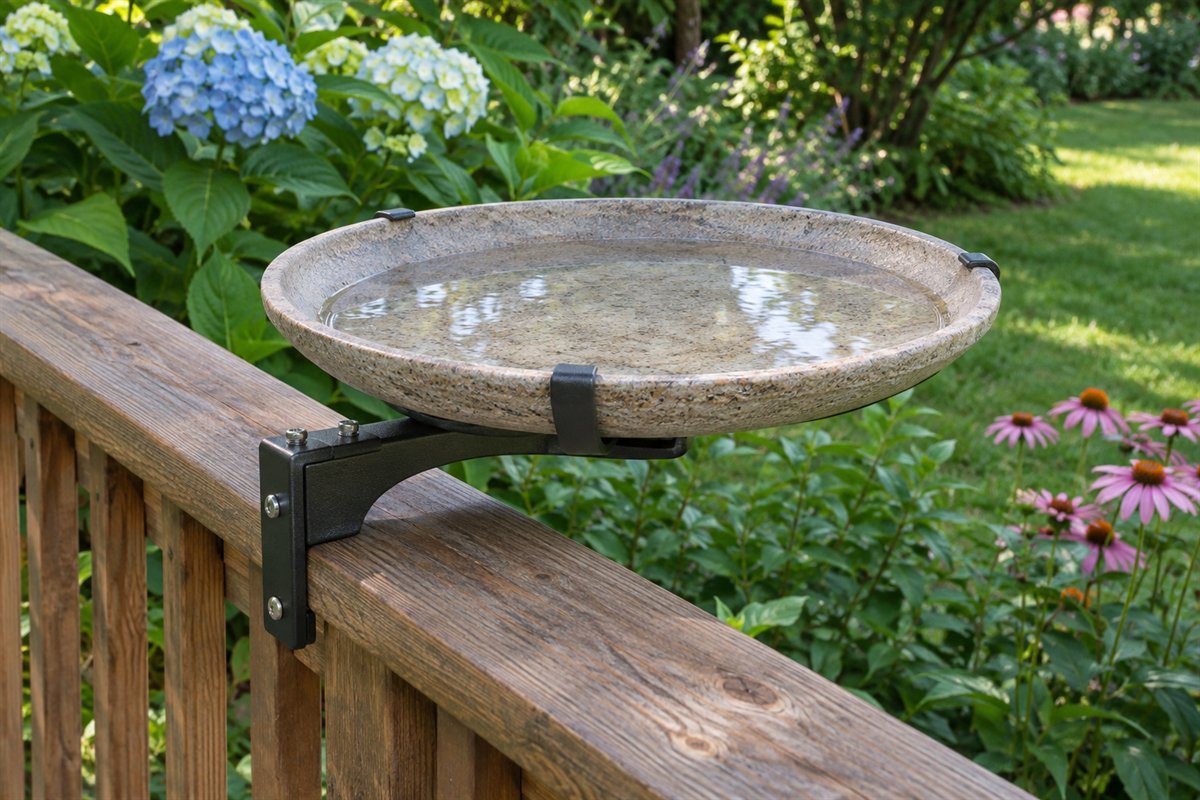
A rail-mounted bath can bring a small water source into a compact outdoor setting. Check the complete mount against the actual rail and the filled bowl, and keep it out of normal hand and walking space. Consider where water and cleaning debris will fall. A mount that fits one rail profile should not be assumed suitable for every deck or balcony.
Try this: Verify property rules, the exact mounting instructions and the cleaning route before installation.
10. Choose a hanging basin you can reach and steady

A hanging bowl creates a lighter visual effect than a pedestal. It also introduces movement and a different cleaning task. Use a complete supported system intended for the filled weight, and place it where it can be safely reached and stabilized for care. Avoid treating a loose decorative chain and an unverified branch as an installation plan.
Try this: Consider how the bath will be emptied without swinging water across the route.
11. Set a patio-side bath apart from the busy route

A bath near a patio is easier to notice and check, but the most convenient human route may be too busy for the position you have in mind. Place the feature beside the route, with room for ordinary walking and garden work. Judge the arrangement during the times the patio is actually used rather than only when it is empty.
Try this: Observe normal movement through the space before making the bath a permanent focal point.
12. Keep the immediate surroundings open

The Natural History Museum advises an open position with escape cover nearby, while avoiding cover so close that predators can lurk unseen. Apply that relationship to the actual garden rather than choosing a universal distance from a photograph. Trim or move surrounding plants if they close the view as they mature.
Try this: Reassess the site after the surrounding planting fills out.
13. Plan summer shade without a debris canopy
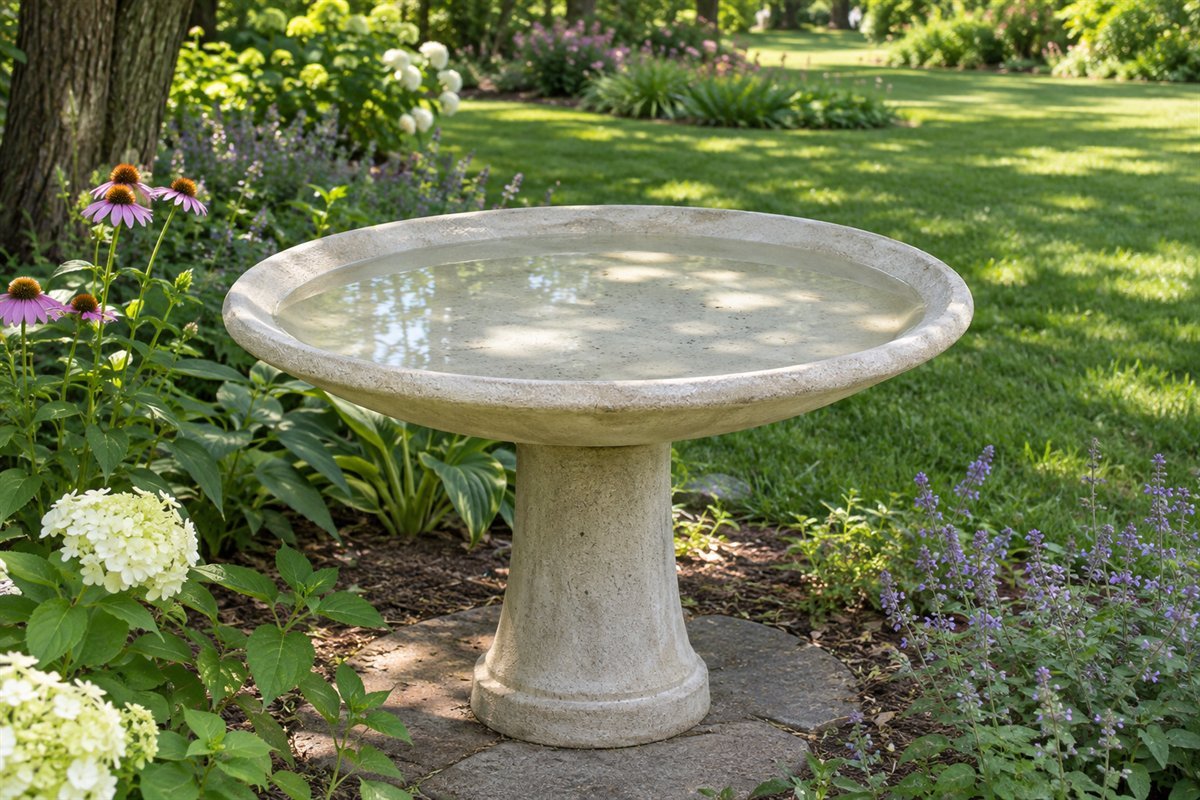
A partially shaded location can be worth comparing with a hot exposed position; Oklahoma wildlife guidance includes shade among its siting tips. Keep the basin visible and practical to maintain. Shade from the side is a different arrangement from tucking the bowl beneath a dense branch that continually drops material into it. Watch the light at several times of day.
Try this: Check the proposed location in morning and afternoon before moving a heavy bath there.
14. Separate the water from falling seed
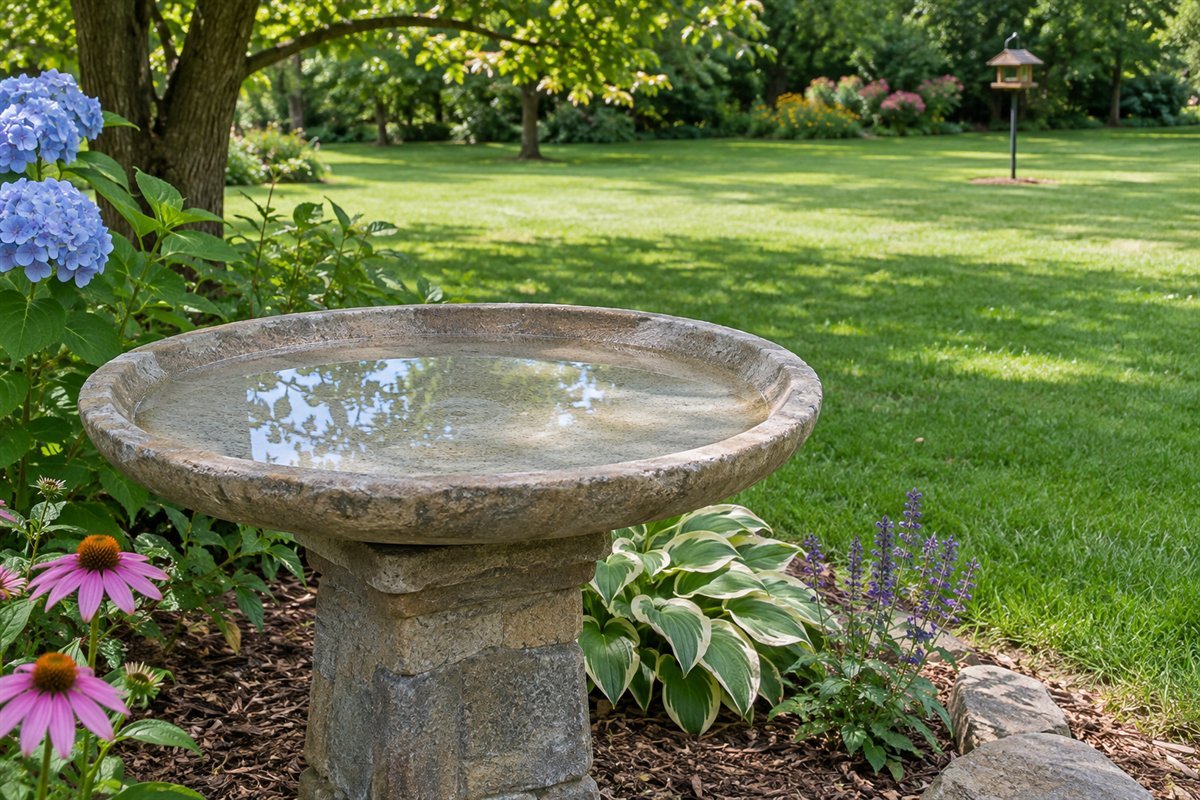
Keep the bath away from the area directly beneath feeders. Oklahoma guidance specifically separates them to reduce seed and droppings entering the water. Sketch the two care areas as different destinations instead of grouping every bird-related object together. The arrangement may look slightly less symmetrical but can make the water routine more manageable.
Try this: Check where seed hulls actually land during normal feeder use.
15. Add a gentle dripper as one focused feature
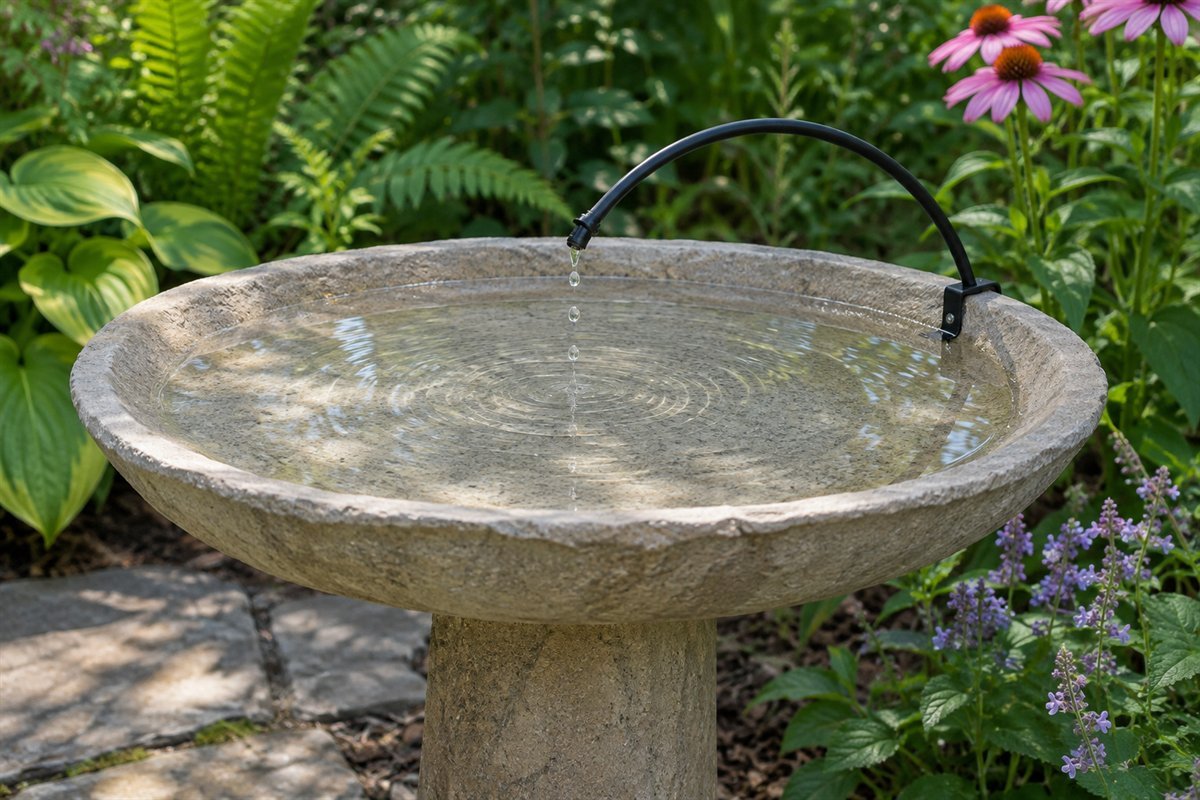
A gentle drip can add a small amount of movement without turning a shallow bath into a vigorous fountain. Oklahoma wildlife guidance describes dripping water as an option. Choose equipment appropriate to the basin and monitor the resulting water level and splash. Do not assume a constantly dripping supply keeps an otherwise neglected bowl clean.
Try this: Observe whether the drops stay within the bowl and whether the water routine remains practical.
16. Keep a solar fountain small enough for the basin

A compact solar feature may suit a basin with enough usable shallow area left around it. Compare the complete pump and basin instructions, including the required water depth. Watch how the actual feature behaves as light changes and check for splashing or a falling water level. A product photo showing a jet does not establish all-day operation in your garden.
Try this: Choose by the required operating depth and usable bathing space, not the tallest spray setting.
17. Treat a recirculating feature as a system that needs care

A recirculating feature includes more than the visible surface of the water. Make sure the bowl, pump and any hidden reservoir can be reached for the care specified by the manufacturer. Keep shallow usable space available. Moving water is a visual and functional choice; it does not remove the need to empty, clean, inspect and refresh the system.
Try this: Ask to see the maintenance access before choosing a feature with a concealed reservoir.
18. Make winter care part of the original choice

Before leaving a bath outdoors in freezing weather, check the actual product’s instructions for the basin and support. Audubon Great Lakes recommends a sturdy bath that can withstand freezing and discusses a suitable winter position. A material name alone is not a frost rating. Have a plan for a bowl that must be emptied or stored, instead of discovering the restriction after the first freeze.
Try this: Save the seasonal instructions with the exact product model.
19. Use only a compatible purpose-made winter heater

If you choose a heated birdbath, use equipment explicitly compatible with the bath and its operating depth. Follow the complete electrical and outdoor-use instructions and have any power work handled appropriately. Do not copy improvised wiring from a decorative image. Never add antifreeze, salt or chemical de-icer to the water; Audubon explicitly warns against chemicals used to prevent freezing.
Try this: Confirm the basin, heater and electrical setup as one complete system before use.
20. Keep a removable seasonal bowl in the plan

A seasonal bowl swap can be useful when the summer basin is unsuitable for the local winter or when a damaged piece must be replaced. Confirm that each basin is intended for the support and purpose. Store the spare clean and dry according to its instructions. Similar diameter alone does not establish a secure fit or compatibility with heating equipment.
Try this: Label the product records for each bowl and its allowed season of use.
21. Add one stable perch without filling the bowl with stones
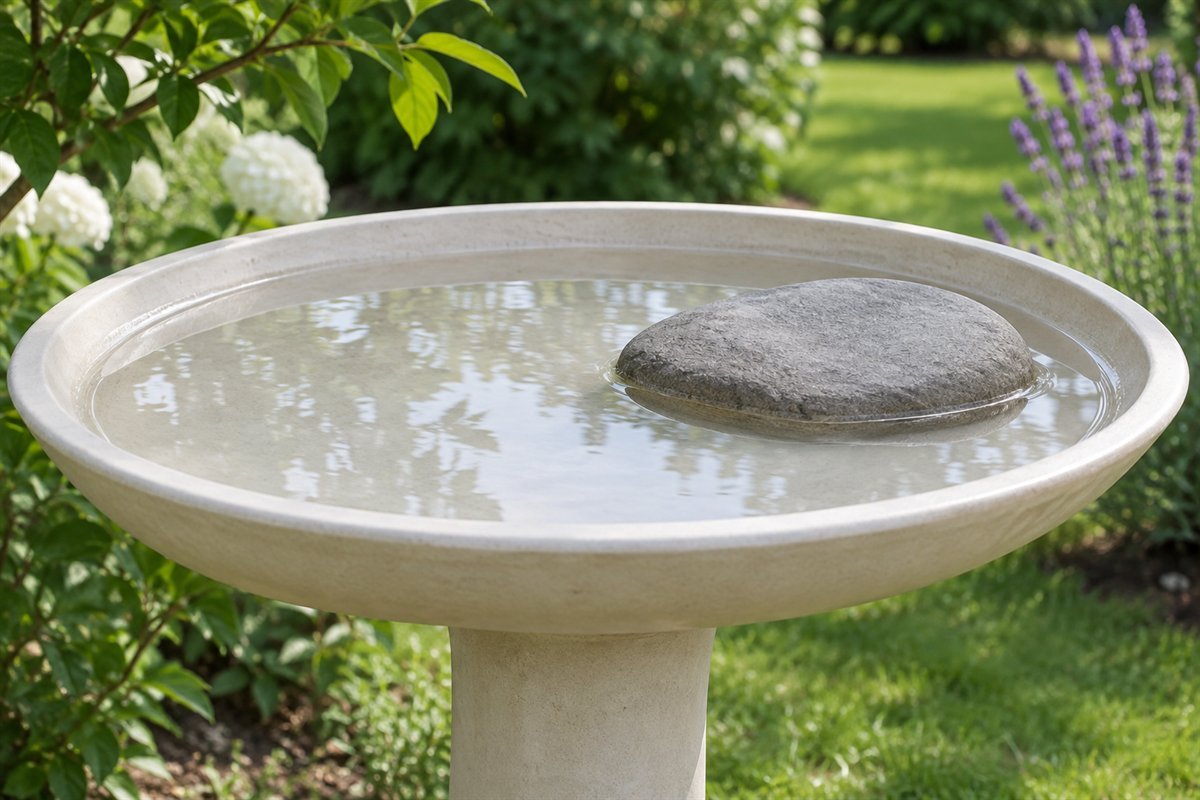
A flat stone or a few appropriate large pebbles can provide a visible landing option. Audubon’s simple bath guide includes this detail. Keep the pieces stable and leave usable shallow water around them. An attractive arrangement of rocks should not turn a wide basin into a cramped maze or make the bottom difficult to clean.
Try this: Remove and clean the perch as part of the basin routine.
22. Give cleaning tools a nearby return place

Choose a bath you can maintain, then give the routine a practical home. A dedicated brush and a clear route to fresh water are more useful than another ornament. The Natural History Museum recommends emptying, cleaning and refilling ideally every day, with extra water checks in hot weather. Keep tools separate from kitchen equipment and follow the basin’s care directions.
Try this: Walk the empty-clean-refill sequence before deciding where a heavy bath belongs.
23. Observe one bath before adding another

Begin with one well-maintained bath and record what happens rather than promising a particular number of visitors. Note the water level, debris, weather and observed use at consistent times. If the position is repeatedly unsuitable, change one factor and keep the care routine steady. Add another bath only when you can maintain it and its location has a clear purpose.
Try this: Keep observations separate from assumptions about why a bird did or did not visit.
A simple birdbath care and observation sheet
Keep a short record with the date, weather, measured water depth, visible debris, cleaning completed, refill and any observed visits. A normal daily check should include the support, basin condition, water level and surrounding access. Empty and remove visible debris, clean the basin as appropriate, rinse thoroughly and refill with fresh water. Inspect sooner if the water becomes dirty; a calendar reminder should not override what is in the bowl.
Keep the actual manufacturer’s care instructions with the record. Cleaning and disinfection are different tasks. For periodic disinfection or a suspected wildlife disease problem, follow current local wildlife authority guidance and the product directions, including rinsing requirements. Never mix cleaning chemicals, and never leave a cleaning solution as drinking water. If the site cannot be maintained safely, pause use while the problem is resolved.
For winter, record the basin’s outdoor limits, what must be removed or stored, and the exact compatibility of any heater or pump. Check water levels and equipment as instructed. A sunny position or moving water does not establish that the bath cannot freeze. Do not use salt, antifreeze or chemical de-icers in the basin.
Record only observations you actually make. An empty bowl in one short viewing session does not prove that birds never visit, while an attractive picture does not prove habitat success. Use the record to improve a manageable feature rather than adding more equipment without understanding the first bath.
How deep should a birdbath be?
For a typical small garden-bird bath, the cited Audubon and Oklahoma guidance describes shallow water around 1–2 inches, with gradual entry and shallower areas useful to smaller birds. Check the actual filled profile and the needs of local species; the outside bowl depth is not the water depth.
Does a fountain keep a birdbath clean?
No. A fountain or dripper can add movement, but the basin and equipment still need regular inspection, cleaning and fresh water. Choose a feature whose bowl, pump and reservoir you can actually reach.
Can any bowl be turned into a heated birdbath?
No. Use only equipment and a basin explicitly intended to work together at the required depth and outdoor conditions. Follow the complete electrical and product instructions. Do not add chemicals to prevent freezing.
A practical next step
Choose one of these bird bath ideas by its usable basin, setting and daily care. Make the water easy to inspect, keep the support and surrounding route practical, and plan seasonal changes before they are needed. A modest feature that you maintain consistently is a better starting point than an elaborate one you cannot look after.
Wildlife garden planning for the wider habitat and observation routine. Garden path ideas for maintaining a clear care route.
Images are original AI-generated garden concepts. They do not document measured basin depths, tested wildlife visits, verified mounting hardware or certified electrical installations.
Sources and care references
- Audubon FAQ: shallow birdbath profiles and winter water precautions
- Audubon: a shallow tray, level site and simple perch options
- Oklahoma Department of Wildlife Conservation: basin texture, drips and feeder separation
- Natural History Museum: open views, nearby escape cover and regular cleaning
- Audubon Great Lakes: a winter-suitable bath and local wildlife guidance
- Audubon: keeping the bath clean and clear of falling debris
Optional digital guide for this topic
If you prefer a structured workbook, explore this related paid guide.