Succulent garden ideas are most useful when the plants, growing medium and location work together. A drained patio trough, a low outdoor bed and a seasonal collection need different decisions. Start with the actual plant identities and conditions, then refine the shape, color and view.
These 25 concepts focus on manageable home-garden layouts and container displays. They do not assume that every succulent is frost-hardy, enjoys the same sunlight or belongs in one mixed pot. Confirm the names and care needs before buying, and keep drainage and a realistic winter plan central to the design.
Contents
- 1. Start with a small drained trough
- 2. Let one sculptural plant fill a plain vessel
- 3. Group individual pots for flexible placement
- 4. Make a low rosette bed where the climate suits it
- 5. Use a suitable stonecrop along a defined edge
- 6. Place a few rosettes in a small rock-garden pocket
- 7. Use a reachable raised planting area
- 8. Give a courtyard one compact planted corner
- 9. Keep a narrow border visually simple
- 10. Use one larger rosette as the focal point
- 11. Contrast rounded rosettes with upright foliage
- 12. Repeat a reliable selection instead of collecting every shape
- 13. Limit the foliage palette to a few natural tones
- 14. Let a trailing form soften one container edge
- 15. Give a larger branching specimen its own space
- 16. Use a restrained gravel surface as a visual backdrop
- 17. Place a low display where it can be viewed from above
- 18. Use a sturdy bench to lift a small collection into view
- 19. Provide a temporary acclimation position
- 20. Use separate stable levels with clear access
- 21. Keep a removable inner pot inside a decorative vessel
- 22. Choose a rain-sheltered position without sealing the plants in
- 23. Trial identified hardy rosettes before planting a larger bed
- 24. Leave an inspection gap between the plants
- 25. Plan the winter destination before enlarging the collection
Choose succulent garden ideas from the conditions you can provide
Distinguish a permanent outdoor planting from a container collection that moves seasonally. Montana State Extension notes that hardiness cannot be established by appearance alone. For containers, use genuine drainage and a suitable growing medium; Iowa State specifically warns that gravel in the bottom does not replace a drainage hole.
Choose a display from the real constraint
- A small patio: Begin with one drained trough or a few reachable pots.
- A permanent outdoor bed: Verify identified plants against the actual regional conditions.
- Different plant-care needs: Keep the plants in separate containers.
- Heavy seasonal rain: Assess an appropriate light-filled sheltered display.
- Tender plants in a cold climate: Confirm suitable winter space before expanding.
1. Start with a small drained trough

A trough gives a small collection a clear outline. Select plants whose light, water and temperature needs are compatible, and choose a container with real drainage. Keep enough room to inspect the growing medium between plants. A manageable first arrangement is easier to adjust than a large mixed display assembled only for its day-one appearance.
Try this: Write the plant names and drainage arrangement on the plan before filling the trough.
2. Let one sculptural plant fill a plain vessel
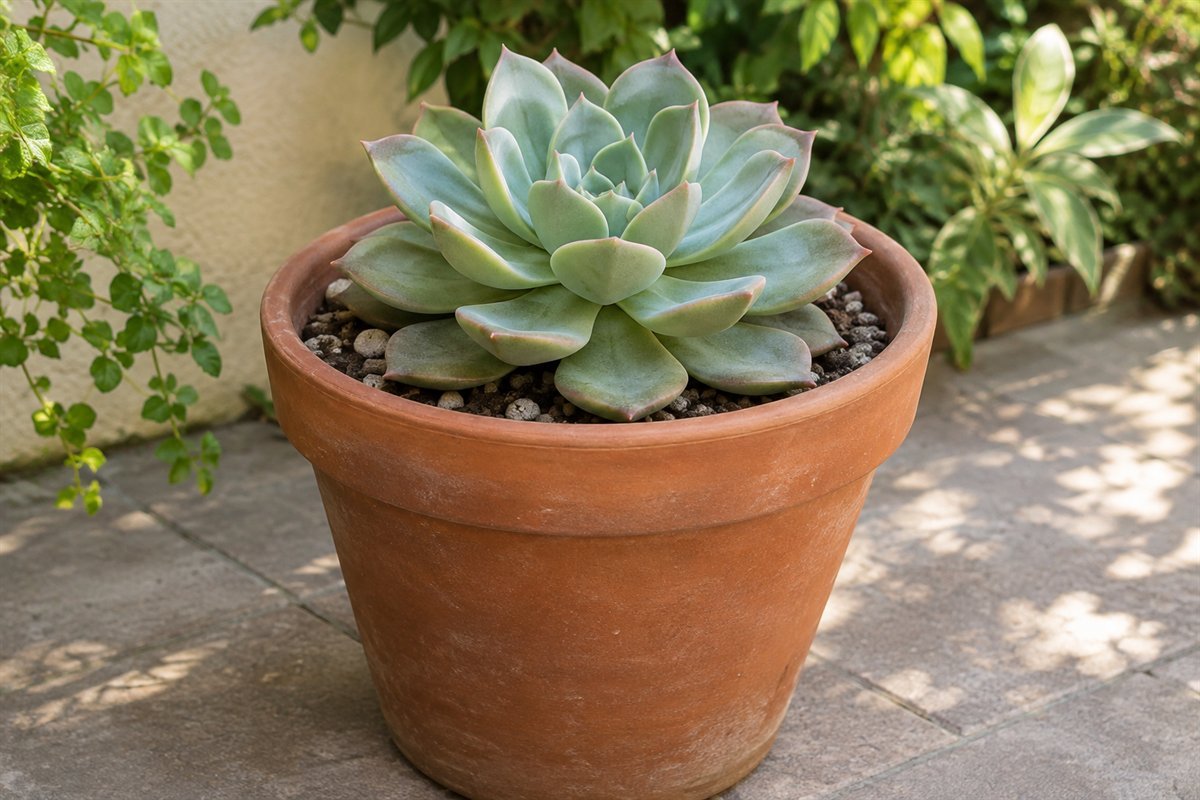
One strong plant can be enough for a focal point. Match the pot to the actual root system and mature plant rather than choosing an oversized vessel for visual weight alone. Keep the shape visible against a quiet background. The simplest succulent garden ideas often work because the container supports the plant and the surrounding space stays useful.
Try this: Compare the whole plant and vessel from the main viewing distance.
3. Group individual pots for flexible placement
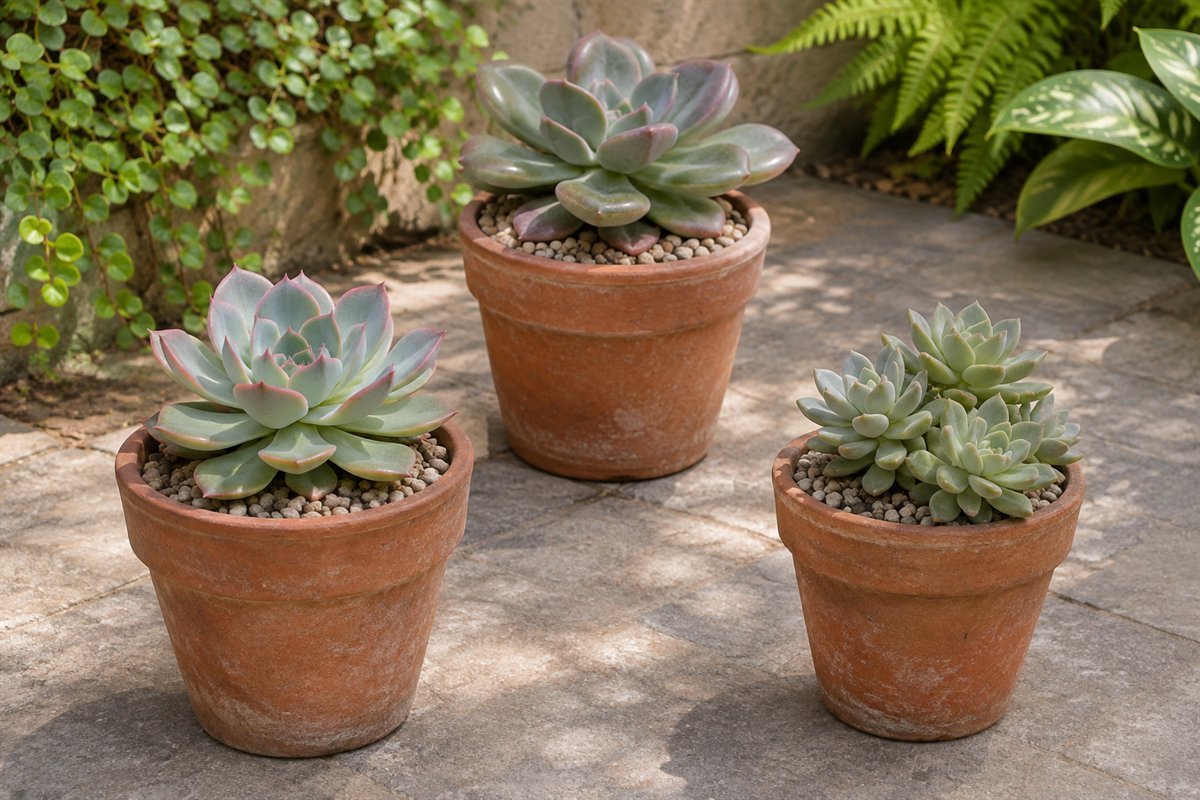
Separate pots let you move or replace one plant without disturbing the whole group. Use a common material or shape to connect them visually, then check each plant individually. Similar-looking pots can dry at different rates because of plant size, exposure and growing medium. Avoid letting a decorative group turn into one assumed watering schedule for everything.
Try this: Leave enough space to lift each pot out easily.
4. Make a low rosette bed where the climate suits it

A low bed makes the leaf patterns easy to see from above. Use plants verified for the local climate and actual exposure; a rosette shape does not prove winter hardiness. Resolve the ground conditions before planting, and leave room for the mature spread. In a climate where the chosen plants need moving under cover, containers may be the more realistic option.
Try this: Check the botanical name and local outdoor suitability before selecting the bed plants.
5. Use a suitable stonecrop along a defined edge
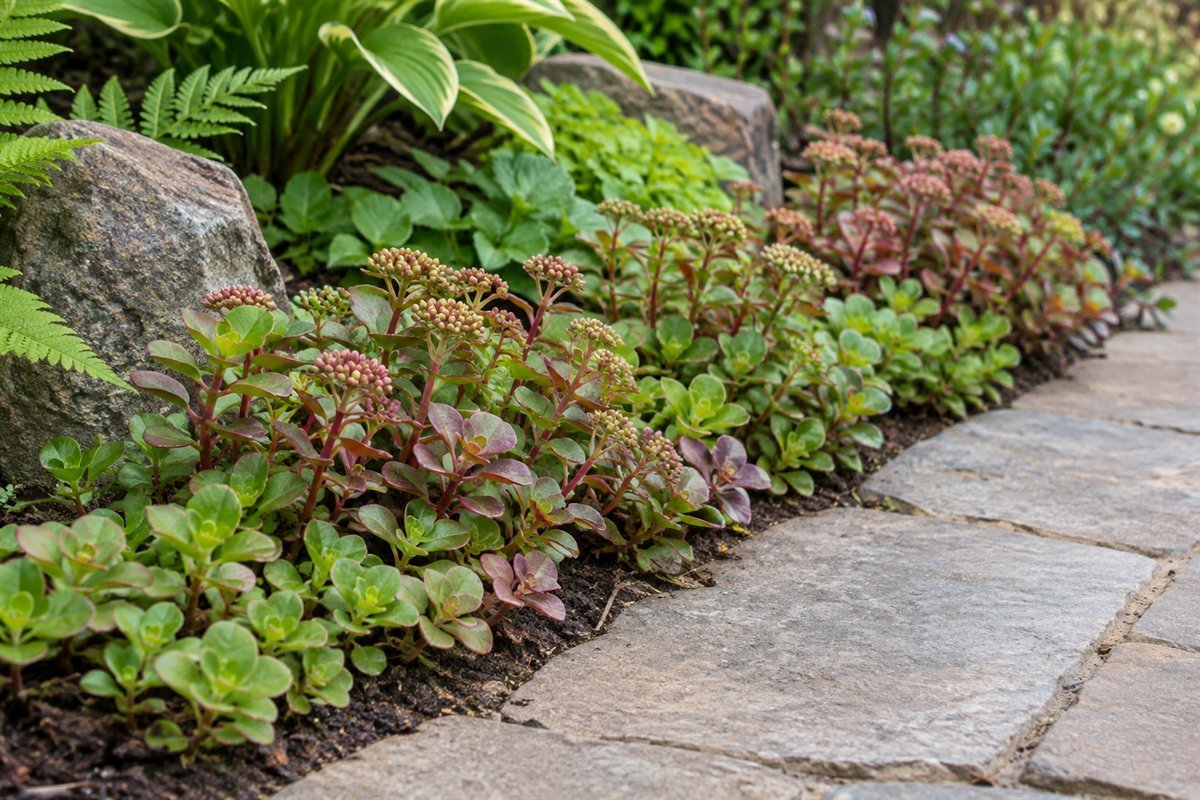
A low-growing stonecrop can define a small edge when the identified selection fits the site. The group includes plants with different forms and tolerances, so use the exact name rather than treating all sedums alike. Keep growth out of the path and plan how the edge will be inspected. Do not assume a groundcover needs no care once it has spread.
Try this: Check mature spread and local invasiveness guidance before repeating the plant.
6. Place a few rosettes in a small rock-garden pocket

A few plants among restrained rocks can create a small-scale composition. Treat soil drainage and the rock surface as separate decisions: a mineral finish does not correct an unsuitable root zone. Keep heavy placement and stability appropriately assessed. Use enough open space that the rosettes remain readable instead of filling every pocket with another species.
Try this: Settle the growing conditions before choosing the decorative stones.
7. Use a reachable raised planting area

A raised area can organize a compact collection where the complete site and drainage design support it. Keep the planting reachable without leaning across fragile leaves. Height alone does not establish drainage, and a decorative edge is not a substitute for a suitable soil arrangement. Choose the plants after the usable footprint and local winter conditions are understood.
Try this: Ask where excess water leaves the complete planting area.
8. Give a courtyard one compact planted corner

A single corner can provide the plant detail a courtyard needs while leaving space for everyday use. Observe actual light and reflected heat at that position. An enclosed paved space may be much hotter or shadier than the photograph suggests. Keep the plants within their mature footprint and leave access to the wall, drain or other features nearby.
Try this: Record the exposure at different times before choosing the plants.
9. Keep a narrow border visually simple

A narrow border benefits from a limited selection and a clear edge. Compare mature width with the real planting strip, including any offsets or trailing growth. Avoid choosing a plant that must be repeatedly damaged to keep it inside the line. If the strip is too small for suitable permanent planting, a removable container elsewhere may be easier to manage.
Try this: Mark the mature spread beside the narrowest section of the route.
10. Use one larger rosette as the focal point

A larger plant can anchor a small composition while the surrounding plants provide quieter detail. Check its eventual dimensions and suitability before assigning it the central position. Keep enough room to inspect the base and replace neighboring plants if their needs differ. The focal role should come from proportion and placement, not from packing the bed tightly around the largest specimen.
Try this: Leave the focal plant’s future outline open on the sketch.
11. Contrast rounded rosettes with upright foliage

Different growth forms can add variety without requiring many colors. Confirm the identities and compatible growing conditions before putting them in one root zone. A plant sold beside another succulent may still need a different exposure or watering approach. Keep the contrast to a few clear forms so the collection remains understandable and easy to inspect.
Try this: Compare the care information before selecting the visual partners.
12. Repeat a reliable selection instead of collecting every shape

Repetition can make a small succulent display look intentional. Begin with a plant that has been suitable in the intended conditions, then keep the exact name for later purchases. Similar rosettes are not necessarily the same plant or equally hardy. Leave space for normal growth and keep an expansion decision tied to actual performance.
Try this: Keep the supplier label with a dated photograph of the trial group.
13. Limit the foliage palette to a few natural tones

A limited palette makes the leaf shapes easier to appreciate. Compare real plants in the light they will receive, and do not assume that nursery color will remain identical in a different setting. Color is one part of selection, alongside hardiness, mature size and care. Avoid buying plants solely to reproduce an edited or unusually saturated image.
Try this: Choose two or three natural foliage tones before adding more selections.
14. Let a trailing form soften one container edge

A trailing form can soften a straight container outline. Check that it suits the exposure and the other plants if they share a pot. Keep the stems away from the walking route and from places where they will be caught when the vessel is moved. Allow the trailing detail to remain a deliberate accent rather than a curtain hiding the drainage and base.
Try this: Test the direction of the trailing growth before placing the pot.
15. Give a larger branching specimen its own space

A branching specimen needs room for its eventual outline and a stable, suitable container. Keep it out of a crowded mixed pot where smaller plants hide its base or prevent care. Research the named plant’s outdoor and winter needs before using it as a permanent garden feature. A dramatic silhouette should still be practical to inspect and move where required.
Try this: Include mature height and handling needs on the purchase card.
16. Use a restrained gravel surface as a visual backdrop

A modest mineral surface can make leaf shapes easier to see. Decide whether it suits the actual plants and growing medium, and keep the bases inspectable. Decorative gravel on top should not be confused with a drainage solution below. Leave enough open access to check moisture and remove debris without damaging the leaves.
Try this: Resolve the root-zone requirements before choosing the surface color.
17. Place a low display where it can be viewed from above

A low display can be enjoyed from above on a suitable stable table. Keep room for the table’s ordinary use and make watering easy without leaving runoff on a vulnerable surface. Match the plants to the light at that exact position. The arrangement should remain manageable when it needs lifting, inspection or seasonal relocation.
Try this: Check the full filled weight and care route before using the table.
18. Use a sturdy bench to lift a small collection into view

A broad bench can make a small collection easier to see without installing wall-mounted shelves. Confirm that the support is suitable for the filled containers and exposure, and keep each pot stable. Leave enough space to water and lift them independently. Avoid turning the display into a narrow crowded ledge where a slight movement can knock a plant over.
Try this: Test stability before filling or arranging the pots.
19. Provide a temporary acclimation position
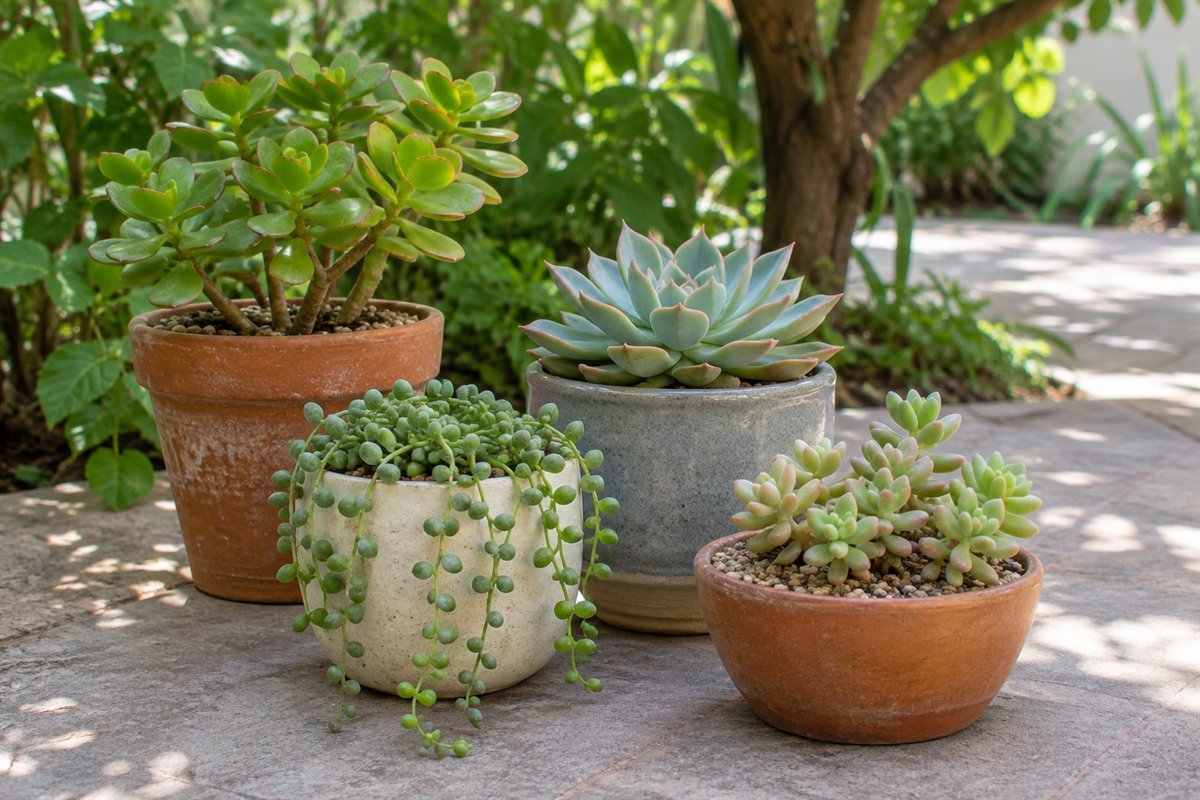
Plants moved outside need a suitable transition rather than an abrupt shift into strong sunlight. Montana State Extension describes starting in a partly shaded position and adjusting exposure gradually. Keep the process appropriate to the actual plant and local conditions. A temporary staging position can make this routine easier without becoming a permanent unsuitable low-light display.
Try this: Plan the transition location before moving the collection outdoors.
20. Use separate stable levels with clear access

Different levels can help you see several plants without covering the ground with containers. Use suitable stable supports and keep the heavier vessels where they can be handled appropriately. Every pot still needs a reachable watering and inspection position. A tiered look is not a structural installation plan, so assess the actual supports and conditions before using them.
Try this: Check that the back row can be removed without reaching through the front row.
21. Keep a removable inner pot inside a decorative vessel
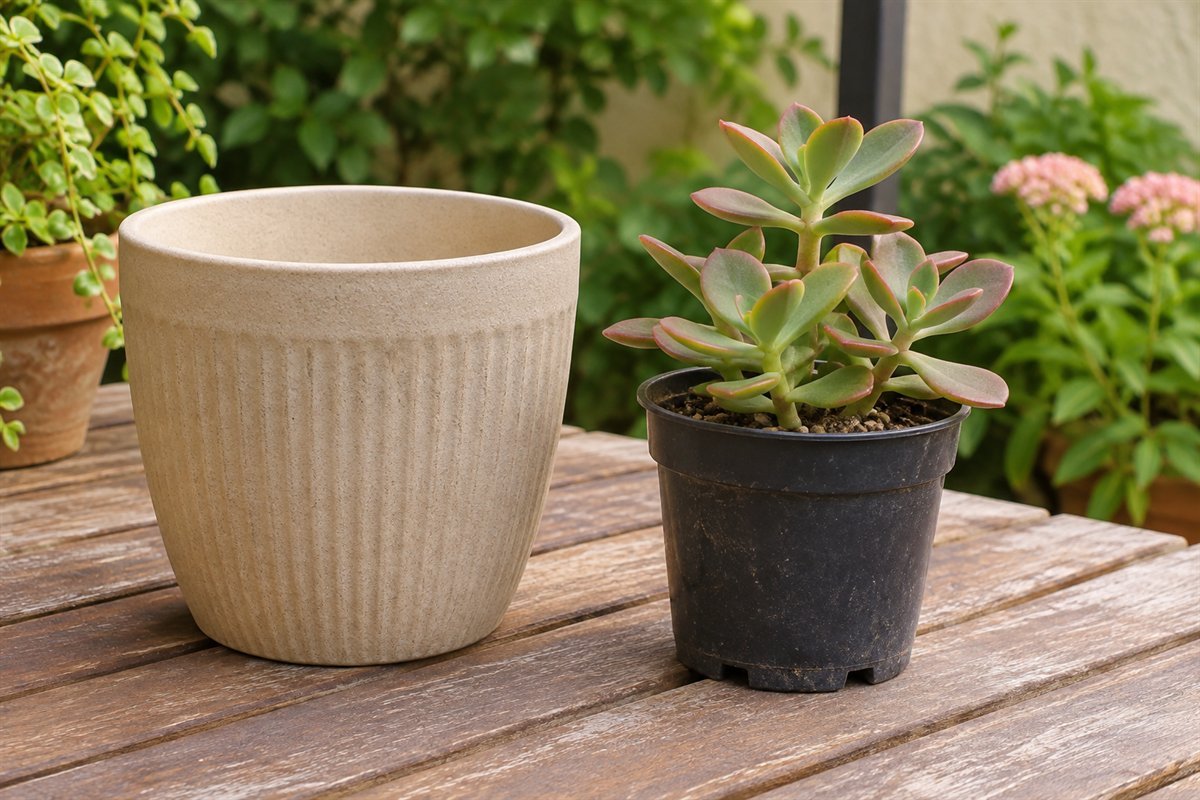
A removable inner pot can preserve the look of a decorative vessel that lacks drainage. Iowa State recommends a drained inner container for this arrangement. Lift it out for appropriate watering and let excess water drain before returning it; do not leave water trapped in the outer pot. Choose a shape that makes removal ordinary rather than difficult.
Try this: Test the fit while both containers are empty.
22. Choose a rain-sheltered position without sealing the plants in

In a rainy climate, an appropriate sheltered position can make a container collection easier to manage. It must still provide the light and air the plants need. UF/IFAS discusses containers as a way to control soil and irrigation in Florida’s rainy conditions; adapt the idea to your own exposure. Shelter is not proof that a tender plant can survive local winter temperatures.
Try this: Observe where roof runoff lands before placing the pots.
23. Trial identified hardy rosettes before planting a larger bed

Some identified Sempervivum and stonecrop selections are candidates for outdoor planting in suitable regions. Verify the exact plant and local guidance rather than judging hardiness by appearance or a common name. Start with a small trial and record how it handles the conditions that matter at the site. A successful-looking summer image cannot establish winter performance.
Try this: Keep the botanical name and local hardiness advice with the trial record.
24. Leave an inspection gap between the plants

Open gaps make it easier to inspect the growing medium, remove fallen material and notice changes without pushing through fragile leaves. Do not mistake a tightly packed display for the only attractive arrangement. Use the actual mature spread when deciding the spacing. If plants become crowded, reassess the composition rather than ignoring the hidden area beneath them.
Try this: Check that the base of each plant can be seen and reached.
25. Plan the winter destination before enlarging the collection

A collection that needs winter protection must fit the available suitable destination. Check light, temperature and care requirements for the named plants, as well as the route used to move them. Keep permanent outdoor and seasonal displays clearly distinguished in the plan. The best succulent garden ideas stay realistic about both the appealing summer view and the less visible work later.
Try this: Count the usable protected spaces before buying another pot.
A succulent collection card before buying plants
Record each plant’s botanical name, cultivar where known, source, expected size and growth form. Common names can refer to different plants; UF/IFAS gives hens and chicks as an example. Keep the name that lets you find reliable care information rather than assuming that all similar rosettes behave alike.
Write whether the display is permanent outdoors, seasonal outdoors or indoors. Add local winter guidance and the actual light at the proposed position. Moving a plant into stronger light may require a gradual transition. Do not use a generated photograph, foliage color or a broad label such as hardy as the only evidence for the decision.
For a shared pot, compare light, water, temperature and growth requirements. RHS distinguishes rainforest cacti from the drier-growing plants commonly associated with succulent displays. Keep incompatible plants separate even when their shapes look attractive together. This guide does not assign every succulent one watering interval or season of dormancy.
Record the drainage holes, suitable medium and the route for excess water. Choose a drained inner pot if a decorative vessel cannot provide drainage, and empty any trapped water. Some older extension pages suggest bottom gravel for undrained pots; this article follows Iowa State’s explicit guidance that such a layer is not a substitute for a hole. A decorative mineral surface is a separate choice.
Add the practical details: filled weight, stable support, access to each plant and where it will be inspected or moved. Leave the plant bases visible and allow room for growth. For a permanent ground bed, obtain appropriate site advice rather than applying a universal bagged-soil recipe to every soil and rainfall pattern.
Finally, keep dated notes on appearance, growth, watering observations, weather exposure and the effort required. Investigate changes before treating a plant or replacing the whole display. Use a small successful trial to guide expansion, and retain only the number of containers you can care for and protect realistically.
Can every succulent stay outdoors all year?
No. Verify the identified plant against the local climate and growing conditions. A similar leaf shape does not establish the same winter tolerance.
Can gravel replace a drainage hole?
No. Use a suitable container with drainage, or a removable drained inner pot inside a decorative vessel. Do not leave excess water trapped around the inner container.
Should every succulent in a collection share one watering schedule?
No. Compare the actual plant requirements and check the growing conditions. Container size, medium, exposure and plant type affect the decision, and some succulent groups require different care.
A practical next step
Choose succulent garden ideas that fit the plant, climate and care routine. Begin with a manageable drained display, keep incompatible plants separate and expand only after observing what works in the real position.
White rock landscaping ideas for evaluating a mineral surface. Garden edging ideas for a clear planting and care boundary.
Images are original AI-generated design concepts. They do not certify a plant identity, winter tolerance, growing condition, drainage system or support capacity.
Sources and care references
- Iowa State Extension: container drainage and removable inner pots
- Montana State Extension: plant identity, hardiness and gradual outdoor transition
- UF/IFAS: succulent forms, common names and rainy-climate containers
- RHS: diverse succulent growing needs and seasonal display considerations
Optional digital guide for this topic
If you prefer a structured workbook, explore this related paid guide.