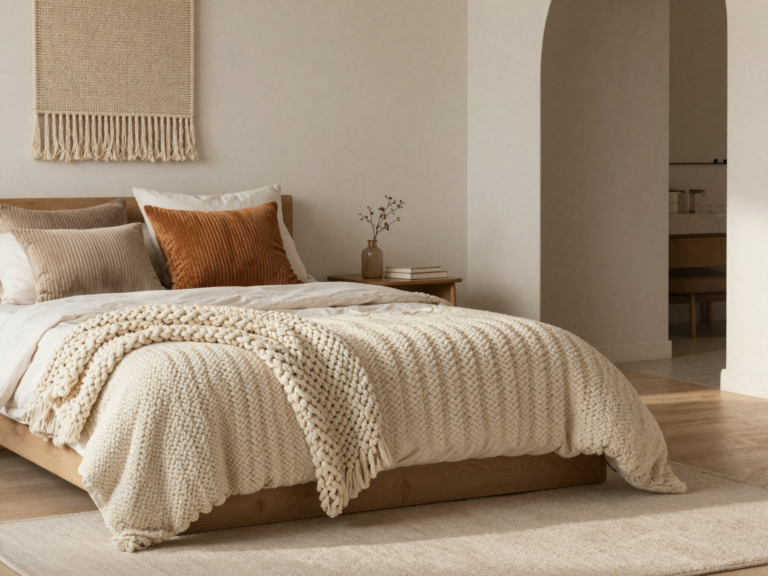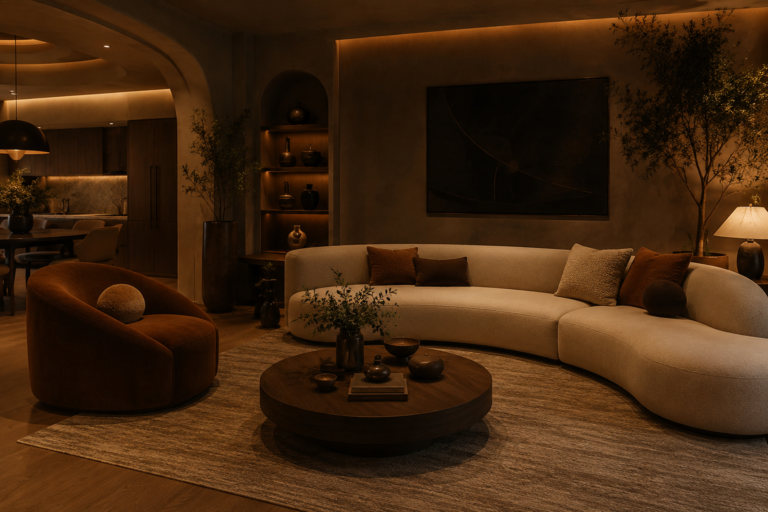
A rug that’s the wrong size is one of the most common reasons a bedroom feels slightly off, even when the furniture and paint color are exactly right.
Choosing the right bedroom rug approach is one of the easiest ways to upgrade a room without a full remodel. When your bedroom rug is scaled correctly, everything else feels intentional rather than accidental.
Getting the bedroom rug right makes the biggest difference in how the space actually feels day to day. A well-planned bedroom rug balances function and style, and even small tweaks to your bedroom rug can transform the whole area.
Too small, and it looks like an afterthought floating under the bed. Too large, and it swallows the room instead of anchoring it.
The frustrating part is that most people only realize the size is wrong after it’s already delivered and unrolled on the floor.
This guide breaks down exact sizing by bed type, the most common placement layouts, and the specific mistakes that throw off an otherwise well-designed room.
1. Know the Golden Rule: 18-24 Inches Beyond the Bed for Your Bedroom Rug
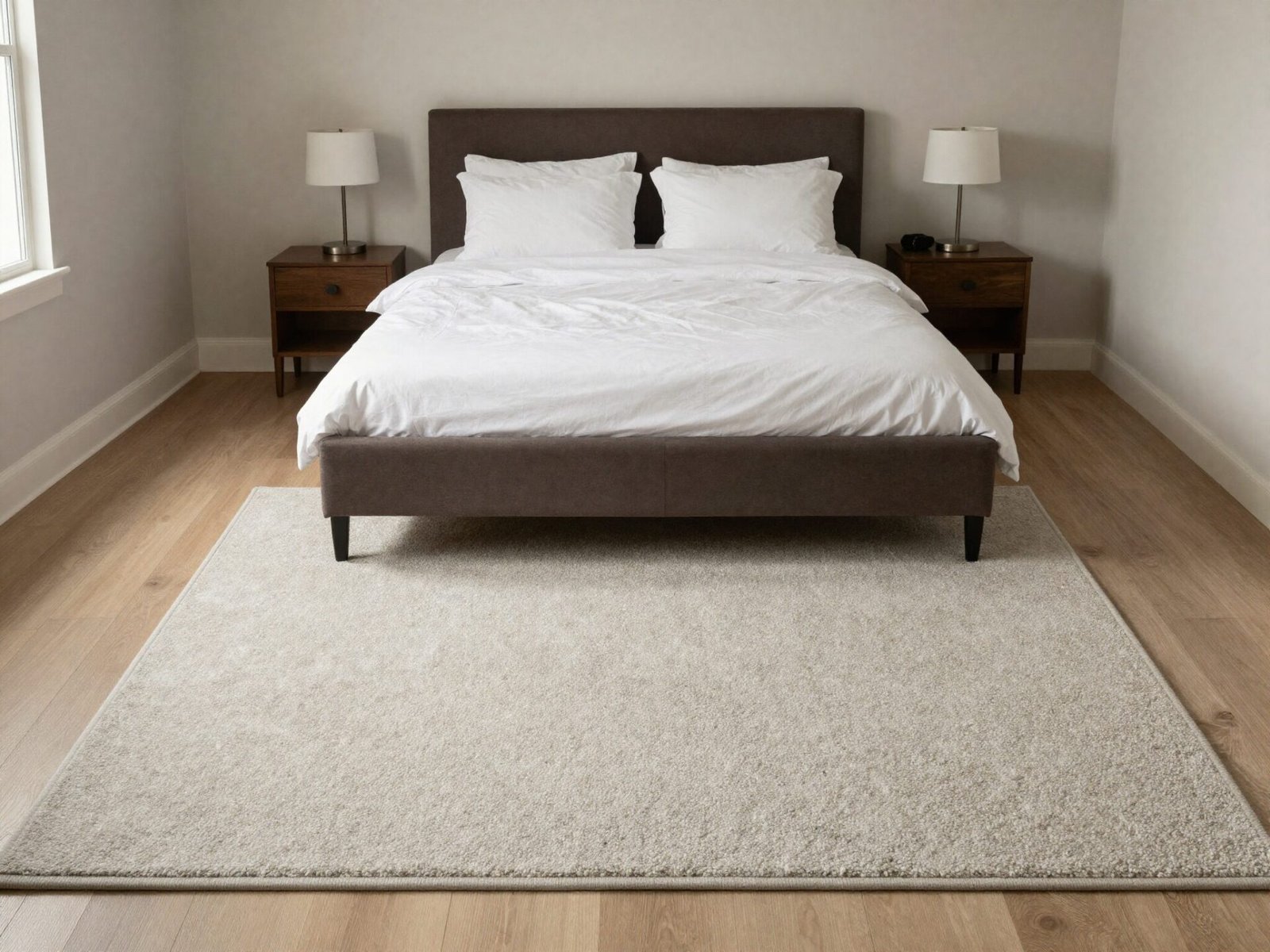
Every bedroom rug guideline traces back to one core measurement: the rug should extend 18 to 24 inches past the sides and foot of the bed.
That margin is what gives your feet a soft landing spot when you step out of bed, instead of hitting cold flooring within a single step.
It’s also the number that keeps the whole layout looking proportional rather than pinched or awkward.
💡 Smart tip: Measure your actual bed frame, not just the mattress size, since frames and headboards can add several inches on every side.
⚠️ Mistake to avoid: Don’t round down to save money on a slightly smaller rug. A rug that’s just a few inches short of this rule reads as noticeably undersized in person.
2. Choose the Right Rug Size for a Queen Bed for Your Bedroom Rug
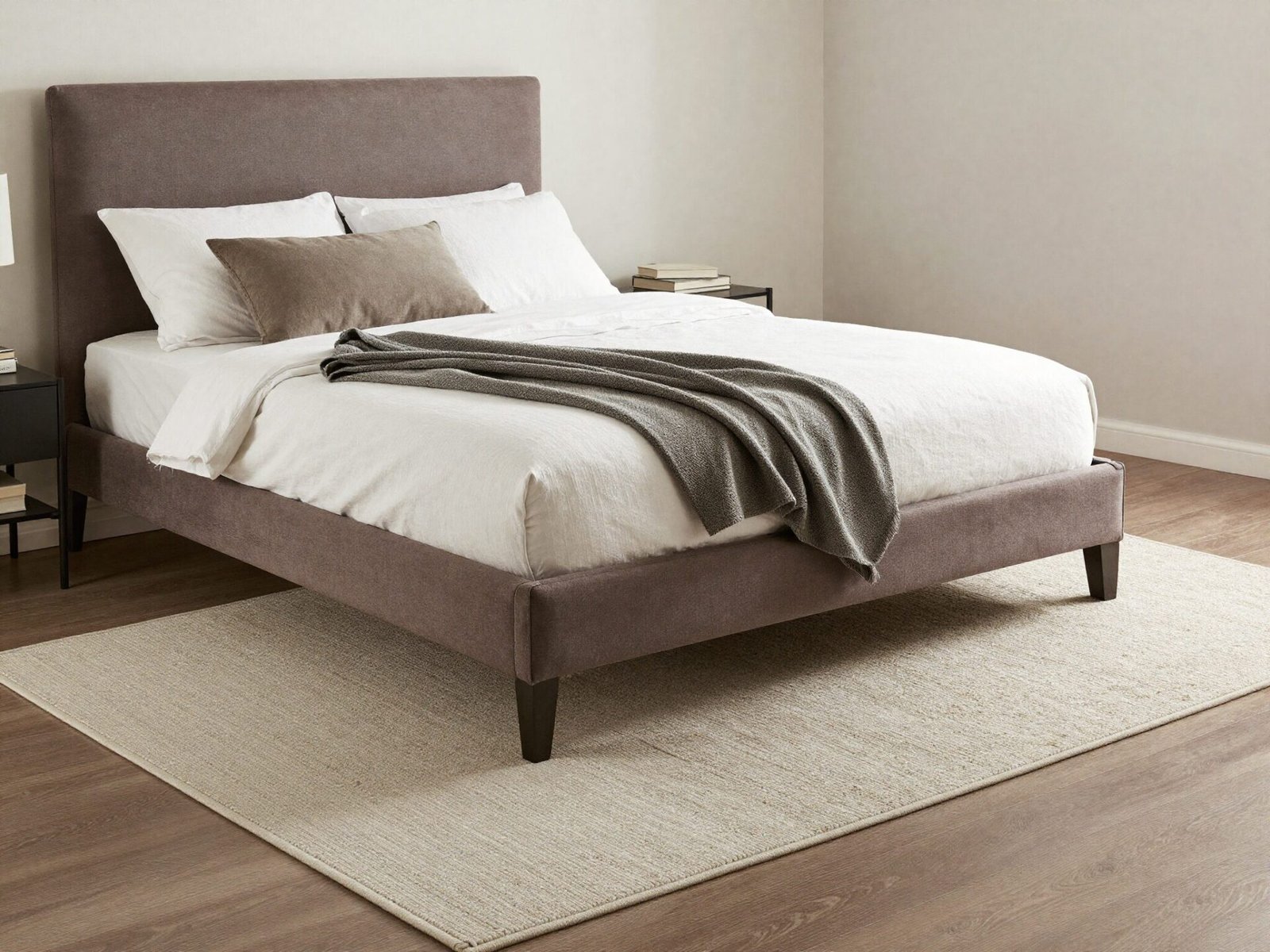
For a standard queen bed, an 8×10 foot rug is the size most designers reach for first. It’s large enough to satisfy the 18-24 inch rule on a typical bedroom footprint.
In a larger room, a 9×12 can work too, giving even more visible floor and a slightly grander feel around the bed.
The right choice mostly comes down to how much open floor space your room has left once the furniture is placed.
💡 Smart tip: If you’re deciding between two sizes, choose the larger one whenever your room allows it — an oversized rug reads as intentional far more often than an undersized one does.
⚠️ Mistake to avoid: Don’t assume a 5×8 rug will work under a queen bed. It’s a popular living room size, but it’s too small to properly frame a queen frame and nightstands.
3. Choose the Right Rug Size for a King Bed for Your Bedroom Rug
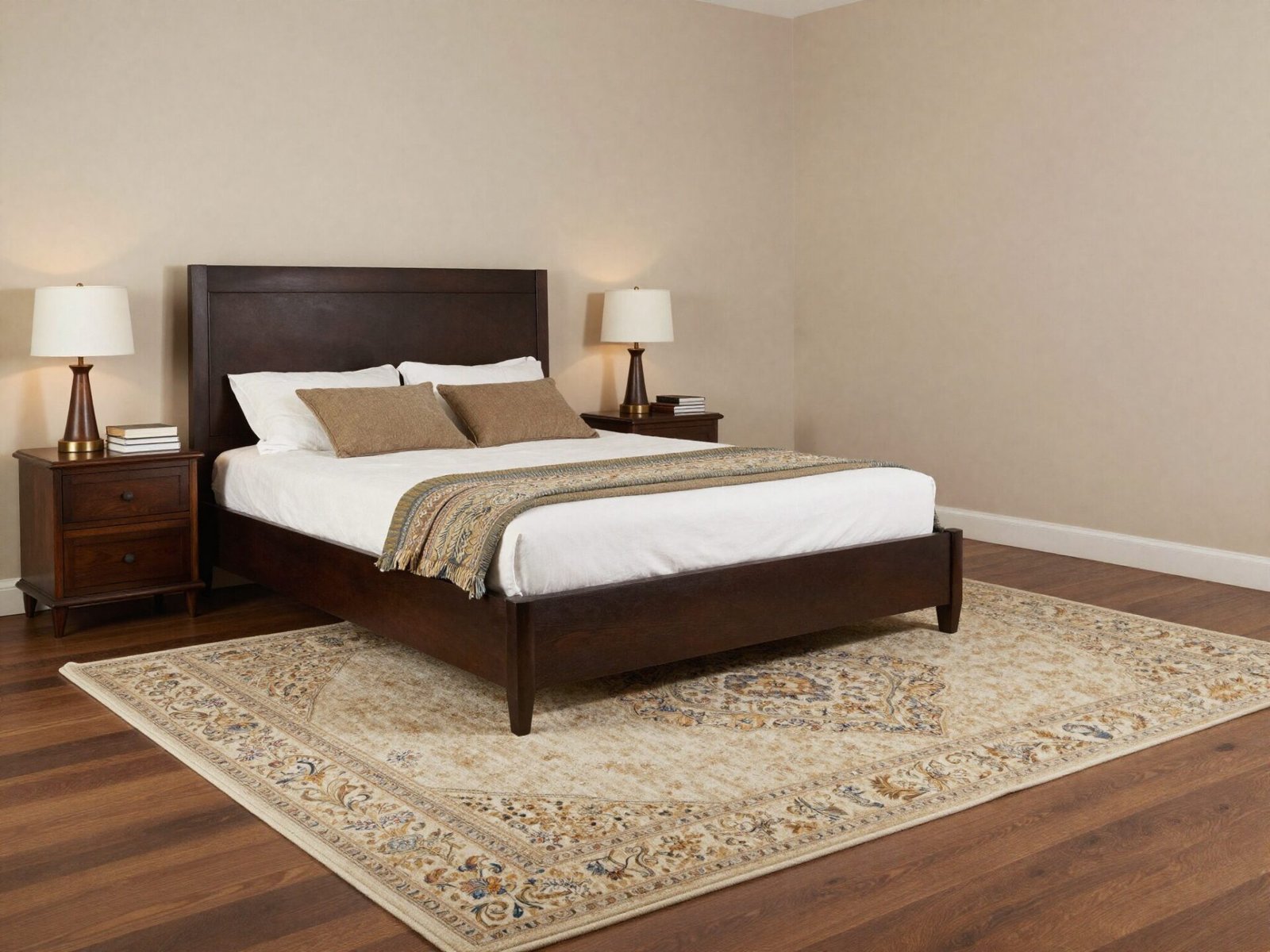
A king bed’s wider footprint changes the math. A 9×12 rug is the standard professional recommendation, since anything smaller risks getting visually lost under the frame.
In a spacious primary bedroom, a 10×14 rug can work beautifully, especially if you want the rug to reach all the way under both nightstands.
The goal is the same as with a queen: enough visible rug on every side that the bed looks placed on top of it, not squeezed onto it.
💡 Smart tip: Measure the full distance from wall to wall before ordering — king bedrooms vary more in size than people expect, and a 10×14 doesn’t fit every room.
⚠️ Mistake to avoid: Don’t reuse a queen-sized 8×10 rug when you upgrade to a king bed. It almost always ends up too narrow for the wider frame.
Loving These Ideas? Get the Step-by-Step Guide
Grab the full 5-day eBook and turn these ideas into a finished room.




4. Choose the Right Rug Size for a Twin or Full Bed for Your Bedroom Rug
Smaller beds need proportionally smaller rugs, but the same 18-24 inch rule still applies — it just results in a more modest final size.
A 5×8 or 6×9 rug typically works well under a twin or full bed, especially in a guest room or a kid’s room where floor space is often tighter.
Runners are also a strong option here, particularly if the bed sits against a wall rather than out in the open.
💡 Smart tip: In a shared kids’ room with two twin beds, consider one rug per bed rather than a single large rug spanning both — it defines each child’s space more clearly.
⚠️ Mistake to avoid: Don’t default to a tiny bath-mat-sized rug just because the bed itself is small. It still needs real coverage to feel intentional rather than like an afterthought.
5. The Two-Thirds Under-the-Bed Layout for Your Bedroom Rug
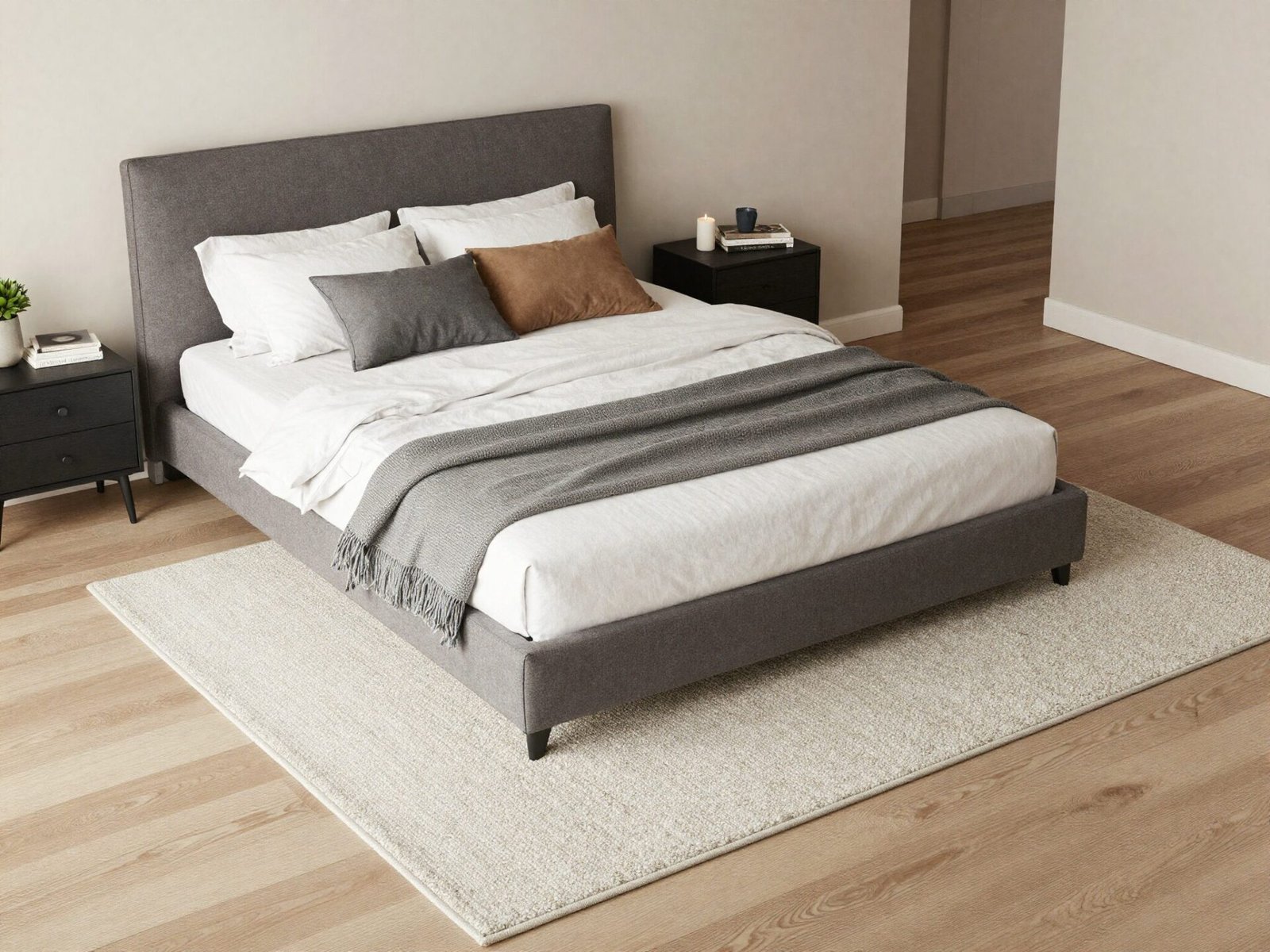
This is the most commonly recommended layout, and for good reason. The rug slides under the top two-thirds of the bed and extends out at the foot.
It keeps the nightstands off the rug in many setups, which works well if you’d rather not size up to a rug large enough to cover them too.
It’s a flexible middle ground between a minimal accent rug and a rug so large it covers the entire furniture footprint.
💡 Smart tip: This layout is especially forgiving for a mid-sized rug, like an 8×10, when the room itself isn’t quite large enough for full coverage.
⚠️ Mistake to avoid: Don’t let the rug stop exactly at the edge of the mattress. It should always slide at least partly under the frame, or the placement will look accidental.
6. The Fully-Under Layout for Larger Rooms for Your Bedroom Rug
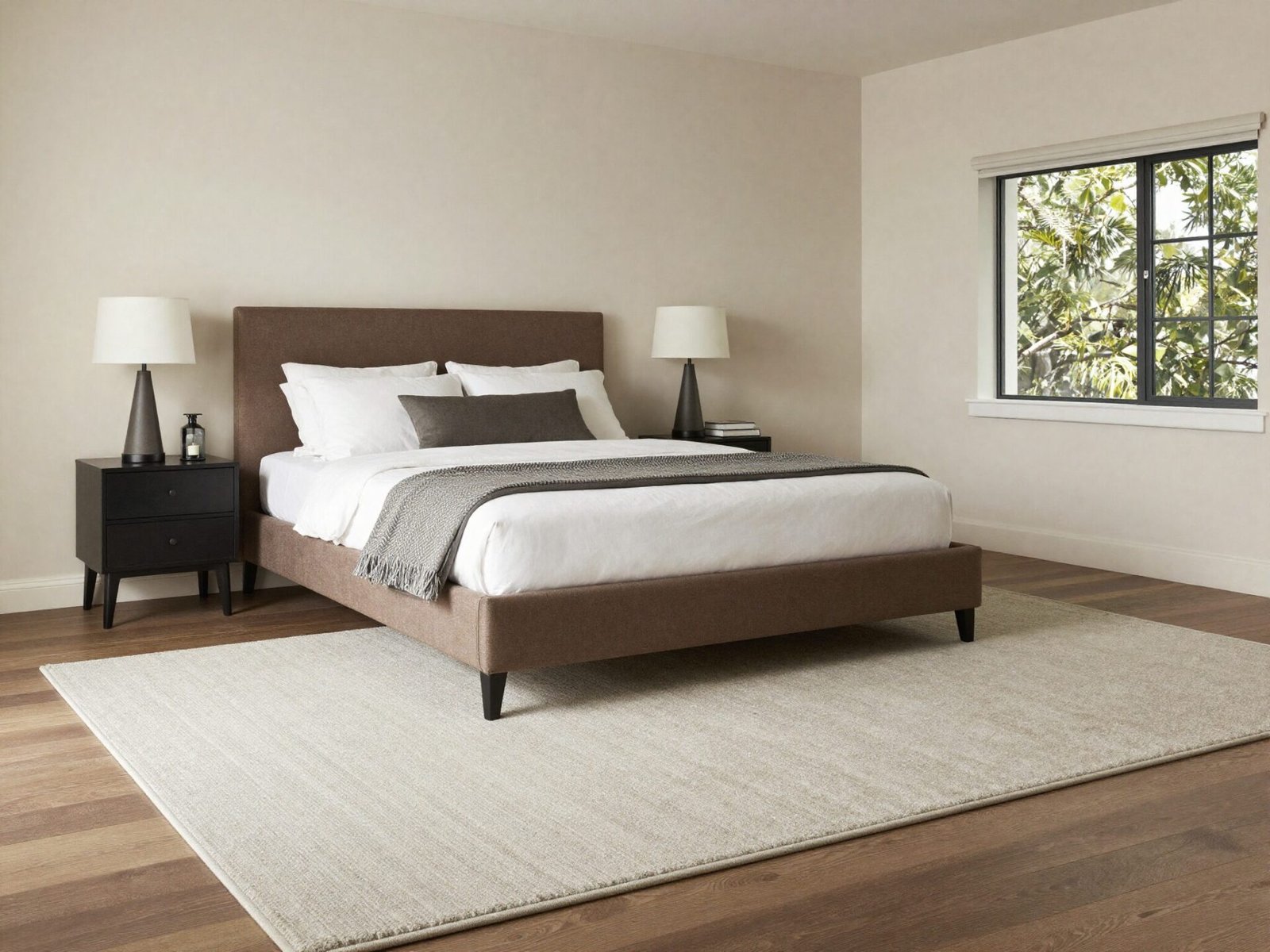
In a genuinely spacious bedroom, the most formal option is a rug large enough to sit fully under the bed, both nightstands, and sometimes even a bench at the foot.
This layout creates the most cohesive, unified look, since every major piece of furniture shares the same visual base.
It does require a larger, often pricier rug, so it’s usually the last layout people upgrade to once budget allows.
💡 Smart tip: This layout works best in primary suites with at least 200 square feet of floor space — anything smaller tends to feel cramped once the full rug is in place.
⚠️ Mistake to avoid: Don’t attempt a fully-under layout with a rug that’s just barely big enough. Leave real margin, or the nightstands will sit right at the rug’s edge.
7. Side Runners for Small or Narrow Bedrooms for Your Bedroom Rug
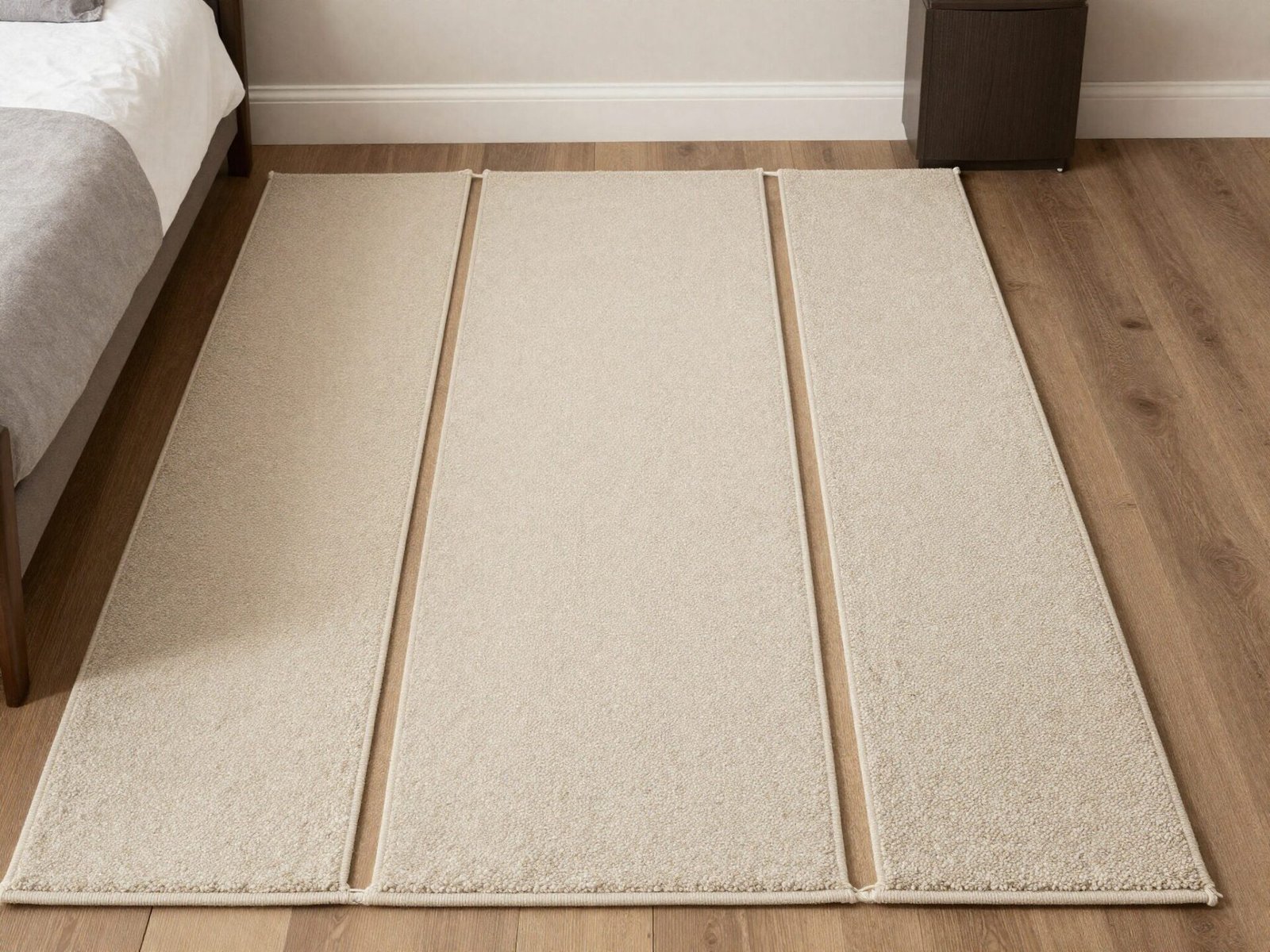
When a room can’t accommodate a large area rug, two runners placed on either side of the bed solve the same core problem: a soft landing spot for your feet.
Runners also tend to cost less than a full-size area rug, which makes this a practical choice for tight budgets as much as tight rooms.
The look reads as more casual and layered than a single large rug, which some people actually prefer.
💡 Smart tip: Choose runners that are at least 24 inches wide and extend the full length of the bed for the most balanced, proportional look.
⚠️ Mistake to avoid: Don’t use two mismatched runners on either side. Even if the patterns differ slightly, keep the size and general color family consistent.
8. Layering Two Rugs for Extra Texture for Your Bedroom Rug
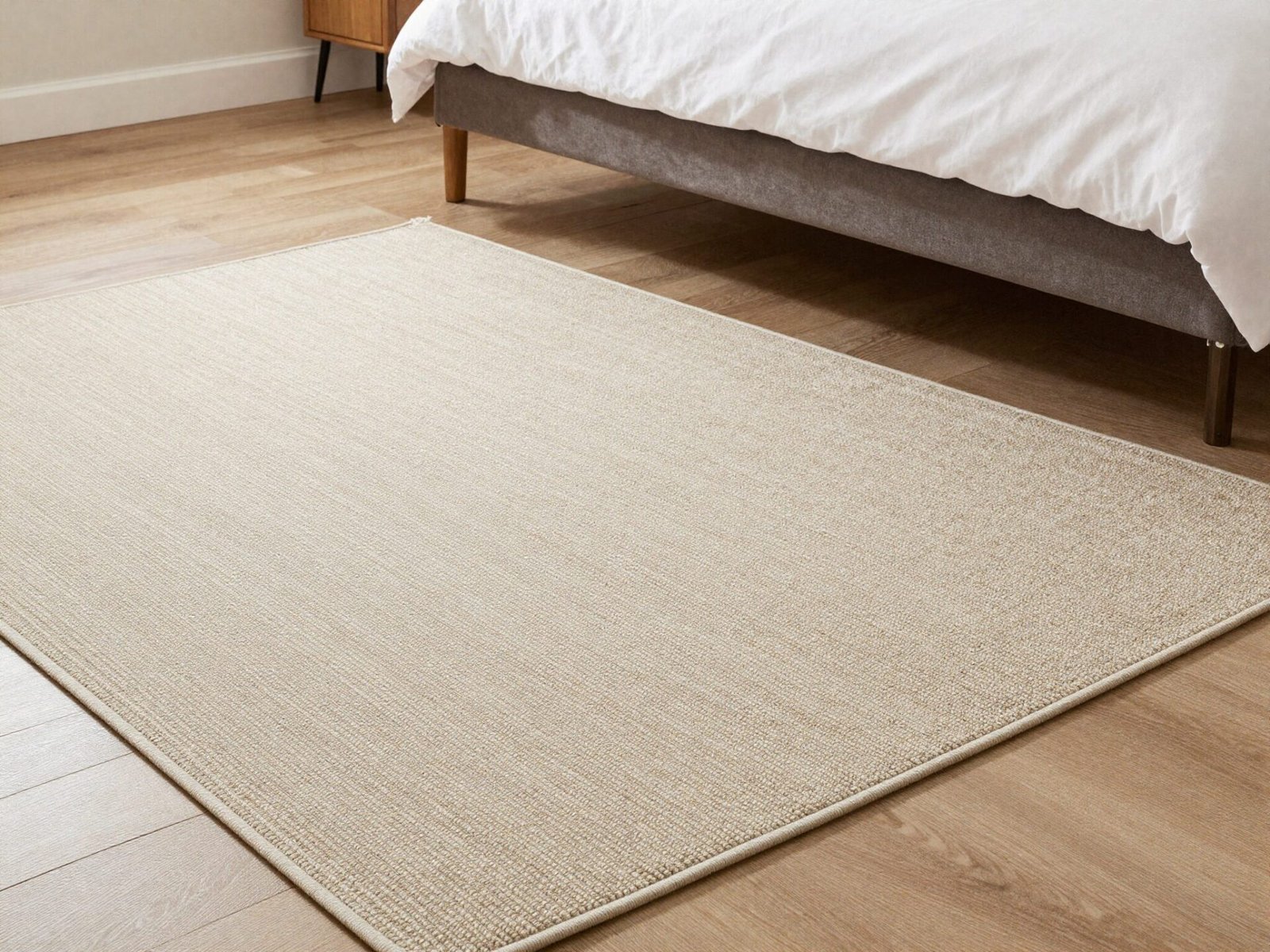
Layering a smaller, patterned rug over a larger flat-weave base adds texture and visual depth without the cost of one oversized, expensive statement rug.
The base layer, often a natural fiber like jute or sisal, handles the sizing requirements, while the top layer adds color and personality.
This approach borrows a trick from more traditional interiors that fits comfortably into a wide range of bedroom styles.
💡 Smart tip: Keep the base rug neutral and let the top layer carry the pattern, so the combination reads as intentional rather than cluttered.
⚠️ Mistake to avoid: Don’t layer two rugs of a similar size. The top rug should be noticeably smaller so the base layer still shows clearly around its edges.
9. Positioning a Rug for a Corner Bed
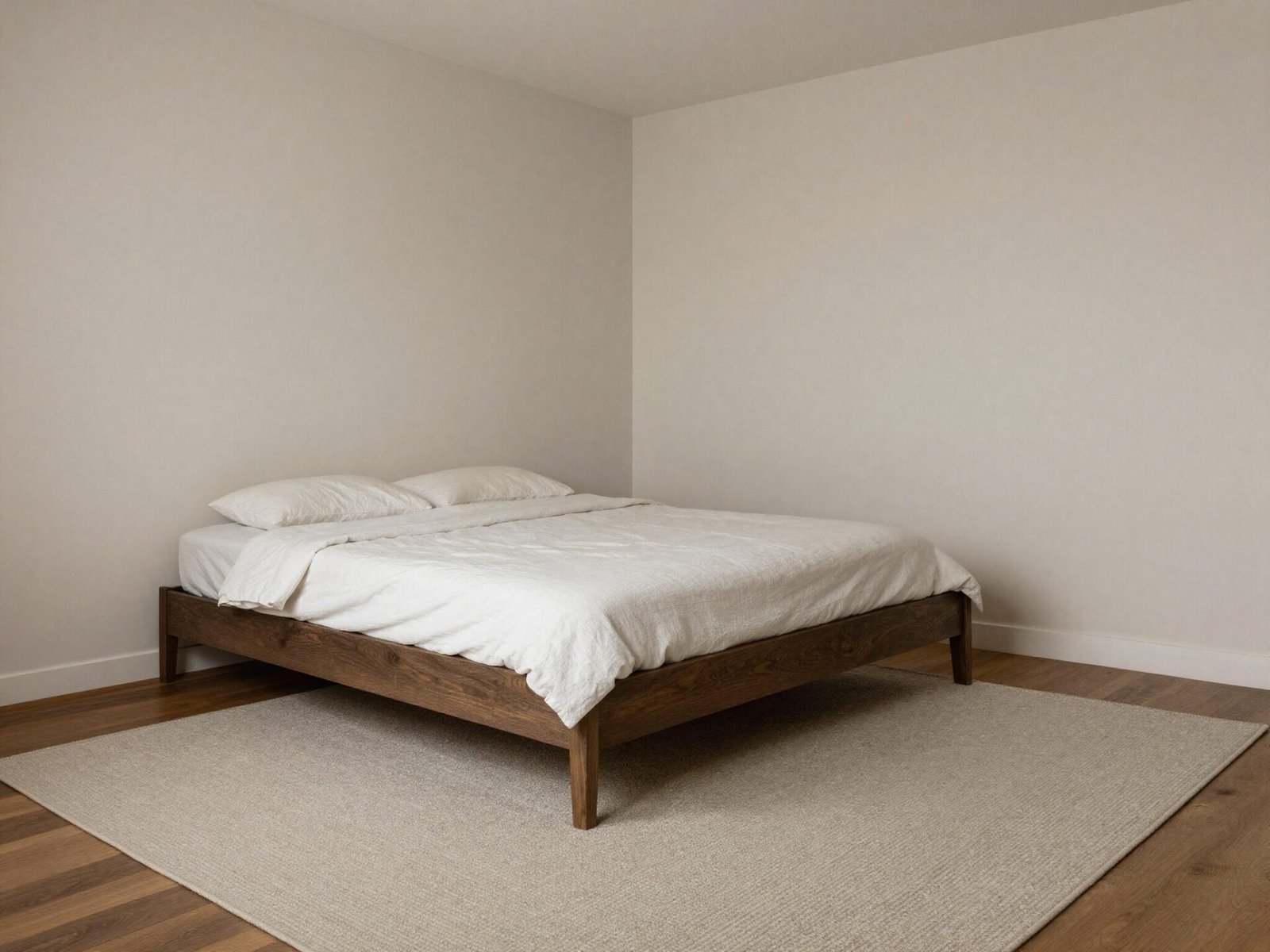
When a bed sits against two walls in a corner, standard centered placement doesn’t apply, since only one or two sides of the bed are actually exposed.
The rug should run along whichever sides remain open, maintaining the same 18-24 inch overhang rule on those exposed edges specifically.
This layout is especially common in small bedrooms or shared kids’ rooms where corner placement maximizes usable floor space.
💡 Smart tip: A runner along the single exposed long side often works better than a full rectangular rug in this layout, since it avoids wasting material under the wall-facing sides.
⚠️ Mistake to avoid: Don’t center a standard rectangular rug as if the bed were freestanding — it will look misaligned against a corner placement.
10. Choosing Round Rugs for a Softer Feel
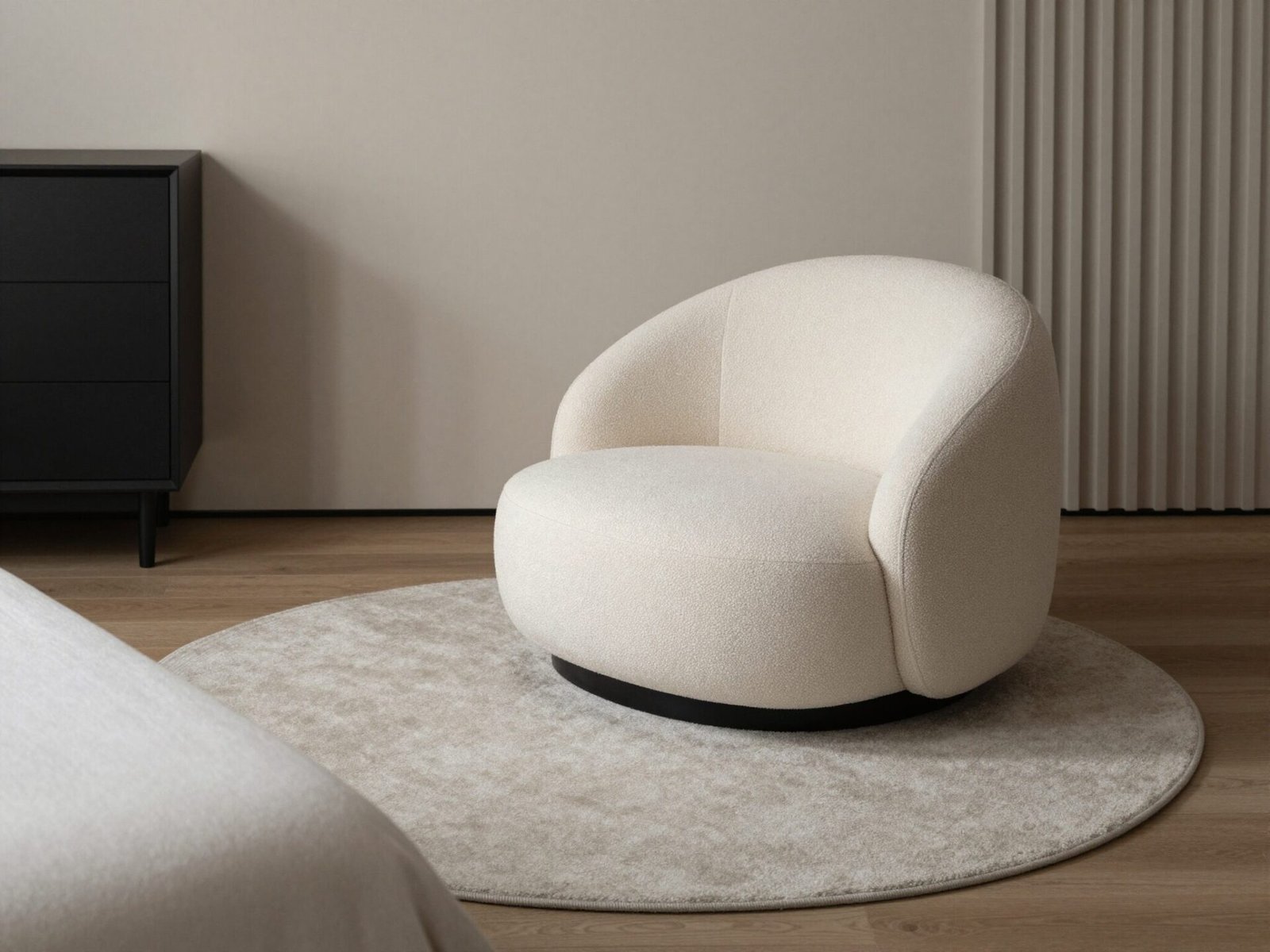
A round rug isn’t the default choice under a bed, but it works beautifully in a reading nook or beside an accent chair elsewhere in the room.
The curved shape softens a room full of rectangular furniture, and it draws attention to whatever sits at its center.
Think of it as an accent layout rather than a bed-anchoring one — it’s solving a different styling problem entirely.
💡 Smart tip: Size a round rug so it extends at least 12 inches beyond the chair or table it’s anchoring, the same overhang logic as a rectangular rug under a bed.
⚠️ Mistake to avoid: Don’t place a round rug directly under a rectangular bed frame — the mismatched shapes almost always look unintentional rather than eclectic.
11. Matching Rug Pile Height to Room Function
Pile height, meaning how thick and plush the rug feels underfoot, matters just as much as size, but it gets far less attention in most buying guides.
A high-pile, plush rug feels luxurious for bare feet first thing in the morning, but it can be harder to vacuum and slower to dry if spilled on.
A low-pile or flat-weave rug is easier to maintain and works better in bedrooms that double as a workspace or a pet-friendly room.
💡 Smart tip: If allergies are a concern in your household, a low-pile or flat-weave rug traps far less dust and dander than a deep, plush pile.
⚠️ Mistake to avoid: Don’t choose a high-pile rug for a bedroom with a rolling desk chair or frequent furniture rearranging — thick pile makes both noticeably harder.
12. Centering the Rug Correctly Under the Bed
Even with the right size in hand, a rug placed slightly off-center undoes a lot of the visual balance you were trying to achieve.
The simplest way to check alignment is to measure the gap on both sides of the bed and confirm they match before you settle on a final position.
This step is easy to skip when you’re excited to finally see the new rug in place, but it takes only a minute to verify.
💡 Smart tip: Use painter’s tape to mark your intended rug corners on the floor before unrolling it — it makes fine-tuning the position much easier.
⚠️ Mistake to avoid: Don’t eyeball the centering from a standing position. Small offsets are much easier to spot from across the room than from directly above the bed.
13. Using a Rug to Zone a Multi-Purpose Bedroom
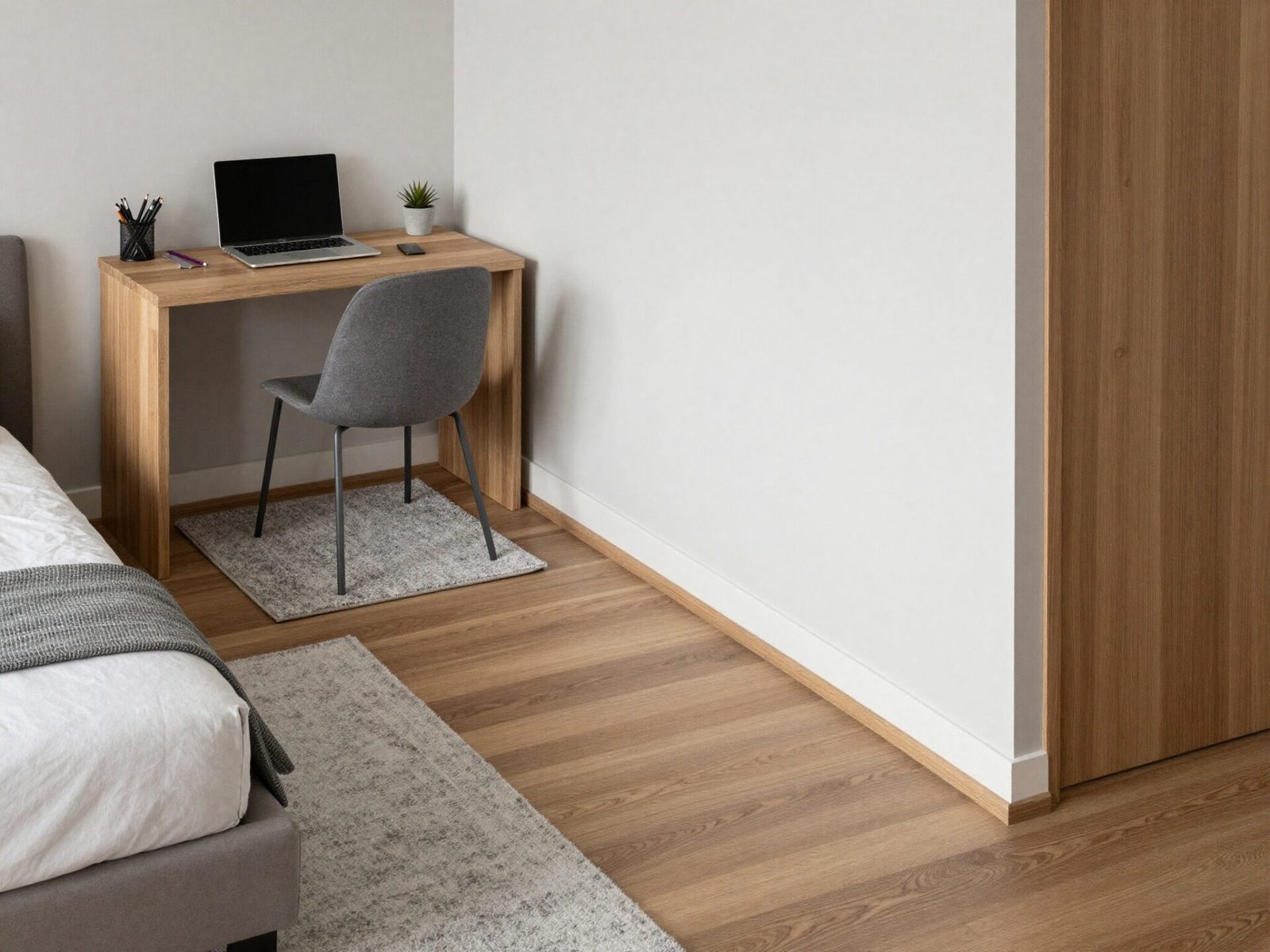
When a bedroom also serves as a home office or a reading space, a second, smaller rug can visually separate that zone from the sleeping area.
This is especially useful in open-plan or studio layouts, where there’s no wall to naturally divide the two functions.
Choosing a different rug texture or color for each zone reinforces the separation even further, without needing any actual furniture divider.
💡 Smart tip: Keep at least a foot of visible flooring between the two rugs so each zone reads as distinct rather than as one confused, overlapping area.
⚠️ Mistake to avoid: Don’t choose two rugs in wildly different styles for the same room — some visual thread, whether it’s color or material, should connect them.
14. Common Rug Placement Mistakes That Throw Off the Room
Beyond sizing, a handful of small placement errors show up again and again in real bedrooms, even ones that are otherwise carefully designed.
Rugs placed at an angle instead of aligned with the bed frame are one of the most common, along with rugs that only peek out from under one side.
Furniture legs resting exactly on the rug’s edge, rather than fully on or fully off it, is another subtle detail that quietly undermines an otherwise good layout.
💡 Smart tip: Walk the perimeter of the bed after placing the rug and check that every furniture leg is clearly either on the rug or off it, never balanced right on the edge.
⚠️ Mistake to avoid: Don’t assume a rug will “settle into place” after a few days. If the alignment looks off on day one, it will still look off a month later.
Effort & Cost Snapshot
| Idea | Effort | Approx. Cost |
|---|---|---|
| 1. Golden Rule Sizing | Low | $0 (measuring only) |
| 2. Queen Bed Rug (8×10) | Low | $150–$500 |
| 3. King Bed Rug (9×12) | Low | $200–$700 |
| 4. Twin or Full Bed Rug | Low | $80–$250 |
| 5. Two-Thirds Layout | Low | $0 (placement only) |
| 6. Fully-Under Layout | Low | $250–$900 (larger rug) |
| 7. Side Runners | Low | $60–$200 (pair) |
| 8. Layered Rugs | Low | $100–$400 (both rugs) |
| 9. Corner Bed Placement | Low | $0–$200 |
| 10. Round Accent Rug | Low | $70–$250 |
| 11. Pile Height Choice | Low | $0 (decision only) |
| 12. Centering Check | Low | $0 |
| 13. Multi-Purpose Zoning | Low | $60–$200 (second rug) |
| 14. Fixing Placement Mistakes | Low | $0 |
Getting rug size and placement right is one of the few bedroom upgrades that costs nothing beyond the rug itself, yet changes how the whole room reads.
Measure first, choose the layout that fits your room’s actual size, and double-check the centering before you call it done.
Continue Your Home Transformation
Explore the full collection of step-by-step eBooks and get the guide that fits the room you're working on.