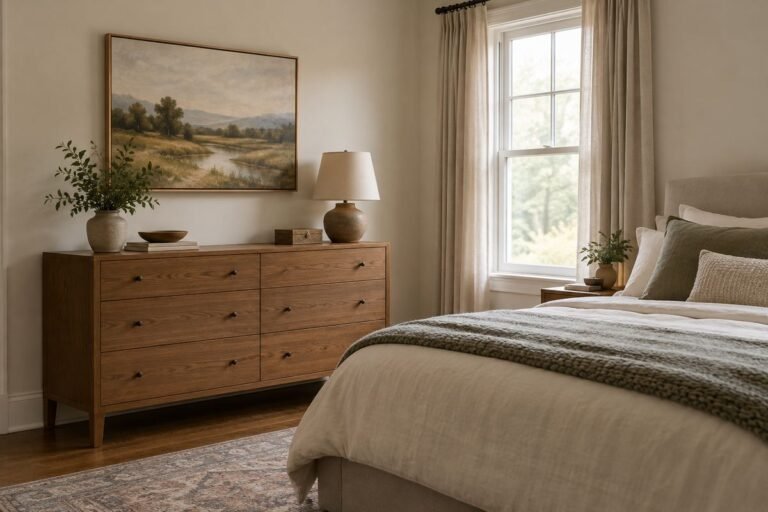
A bedroom makeover begins with the parts of the daily routine the current room makes awkward. Compare the bed, storage openings, useful light and routes before choosing another decorative layer.
Use these ideas as separate options rather than a required set of purchases or universal furniture measurements. Keep actual product guidance, retained finishes and the people using the room at the center of the plan.
Images are illustrative design concepts, including AI-generated scenes. They show arrangement ideas rather than verified installation or product-performance details.
1. Choose a Bedroom Makeover Focal Wall Deliberately
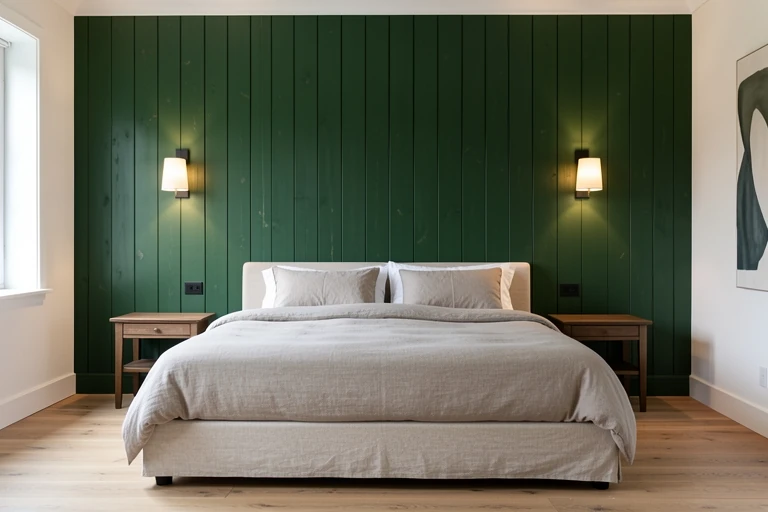
The wall behind the bed can provide a clear background through color, texture or a suitable panel treatment. Compare it with the retained headboard and the view from the entrance.
Next, test a substantial sample or outline before extending the finish. A particular bed shape does not require one panel direction or trim profile; choose the actual product and support for the intended surface.
2. Plan Bedside Light From the Actual Reading Position
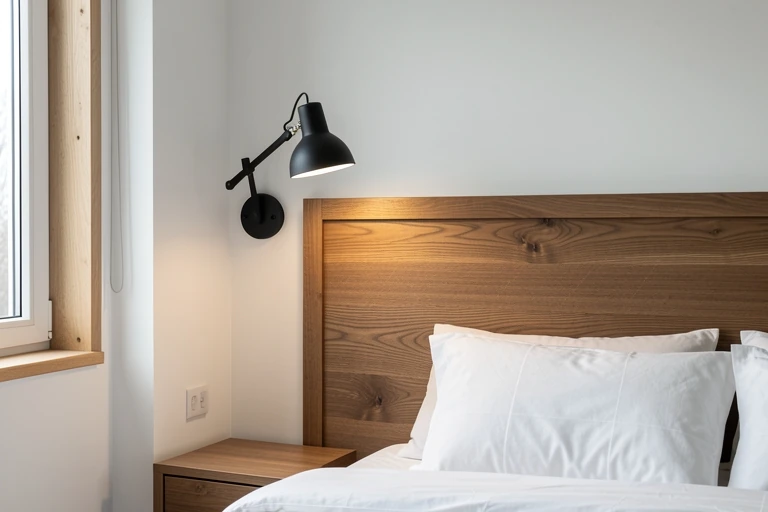
Try the reading light while sitting against the pillows normally used. Compare the useful beam, switch reach and glare with the mattress and headboard rather than choosing a fixed mounting height.
Use compatible equipment and appropriate installation for the actual room. For example, a plug-in fixture can offer one arrangement, but its cord route and support still need to work with the bed and bedside storage.
3. Choose Bedding Layers for Use and Care

Begin with the bedding that touches the body and the warmth the household wants, then compare additional layers. Texture and a related palette can provide a different look without requiring a heavy blanket or numerous pillows.
Check laundering, drying and storage before choosing the fabric. Next, give any decorative layer removed at bedtime a nearby suitable home so a styled bed does not create a new floor pile each evening.
4. Test the Nightstand From the Mattress
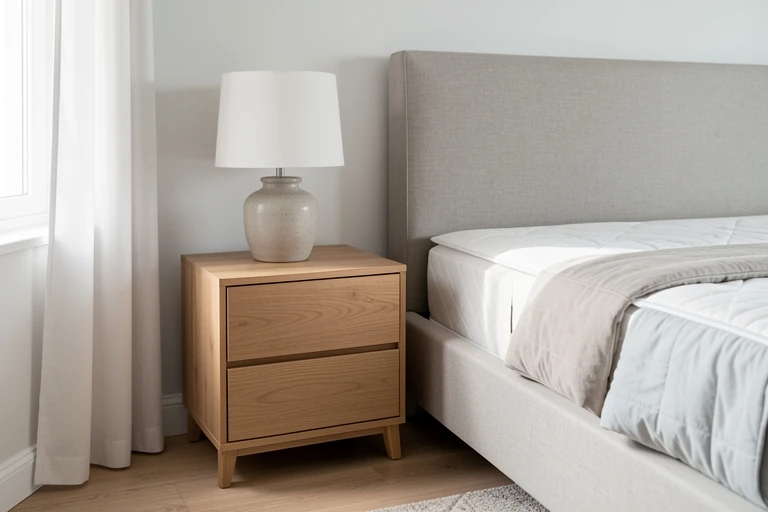
Compare the table with the actual mattress height and seated or lying reach. Set down the ordinary book, drink and lighting control before judging its outline as a separate object.
A fixed height difference cannot decide every bed and user. For example, a simple drawer may serve daily items well while a larger unit leaves less room to approach the bed or open the neighboring wardrobe.
5. Plan Bedroom Makeover Storage Around Retained Clothing

Sort the clothing and accessories that need a home before choosing rails, shelves or cabinetry. Measure long garments, folded groups and the full space needed to retrieve them.
Compare complete storage products and appropriate support before permanent work. A built-in appearance does not automatically eliminate the need for a dresser; choose capacity through the actual contents and keep doors and drawers useful when open.
6. Choose Curtains Through Light and Full Movement

Decide whether the window needs privacy, light filtering, darkness or a softer visual frame. Compare samples at the window during daylight and under evening room lighting.
Measure for the chosen product and its opening mechanism rather than adopting a fixed distance from the ceiling or window edge. Next, check ventilation, handles and heat sources while the curtains are fully open and closed.
7. Test a Bedroom Rug With the Whole Furniture Group

Mark the proposed outline around the complete bed frame, not a room-size label. Include wardrobe doors, drawers and the routes used while dressing.
Compare different sizes or a useful side runner where the layout is offset. There is no single rug dimension for every queen or king frame; follow the actual rug, backing and floor guidance and keep edges practical during normal use.
8. Give an End-of-Bed Bench a Real Task
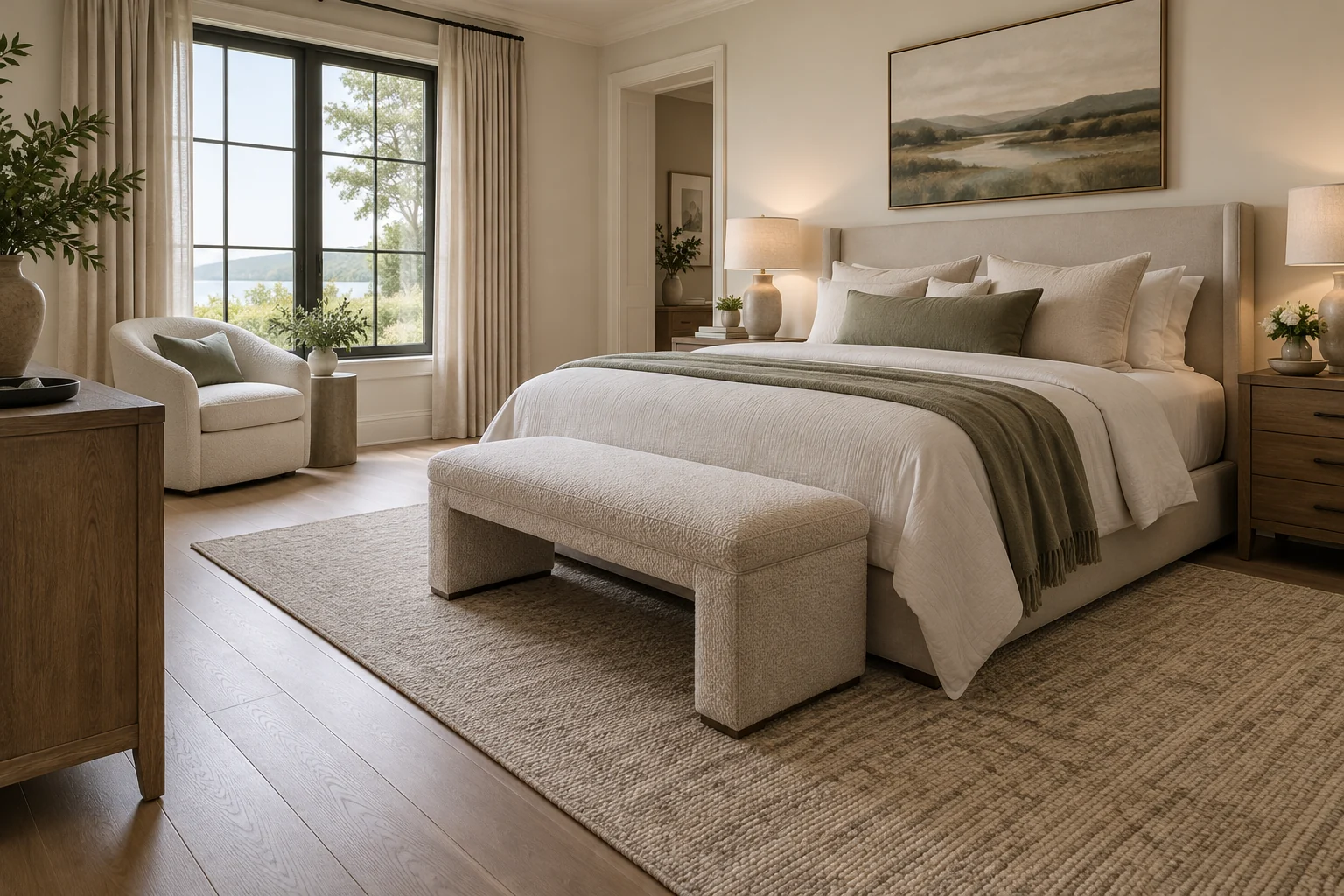
A bench can provide a dressing seat or another suitable role where its full footprint fits. Try sitting, standing and passing around it with the bed and storage in place.
Choose any storage mechanism for its actual instructions and contents. Next, compare the room without the bench; preserving a useful route may serve the bedroom better than adding furniture only to complete a symmetrical photograph.
9. Choose Plants for the Actual Growing Position

A living plant can add leaf shape where its identified species receives suitable light and care. Choose that growing position before selecting a decorative stand or an unused corner.
Keep the pot reachable for watering and inspection and protect nearby surfaces appropriately. Use plants for their appearance and the enjoyment of growing them rather than promising air purification or a measured sleep benefit from a small display.
10. Test a Reading Corner as an Occupied Group

A chair, light and small table can provide another activity where the complete arrangement fits. Include the occupied chair position, feet and the approach to the seat.
Next, check the light switched on and reach toward the table. For example, moving one existing chair may provide a useful corner while adding another broad seat would interrupt the only route to storage.
11. Sample Bedroom Makeover Color in the Real Light

Compare physical color samples beside the floor, bedding and retained furniture. View them under daylight and the lamps normally used rather than selecting from a screen alone.
A warm neutral, green or deeper tone is a choice to test, not a universal formula for rest. Follow the actual coating instructions for preparation, intended use and care, and choose the palette the household enjoys in the room.
12. Keep Charging and Cable Routes Appropriate

List the devices used at the bedside and choose suitable accessible connections. Keep cables clear of moving furniture and preserve the equipment ventilation and use guidance.
A drawer or box does not automatically establish an appropriate charging enclosure. Have new outlets or concealed in-wall wiring planned and installed appropriately rather than routing ordinary leads through a wall for appearance alone.
13. Style the Dresser Around Useful Open Surface
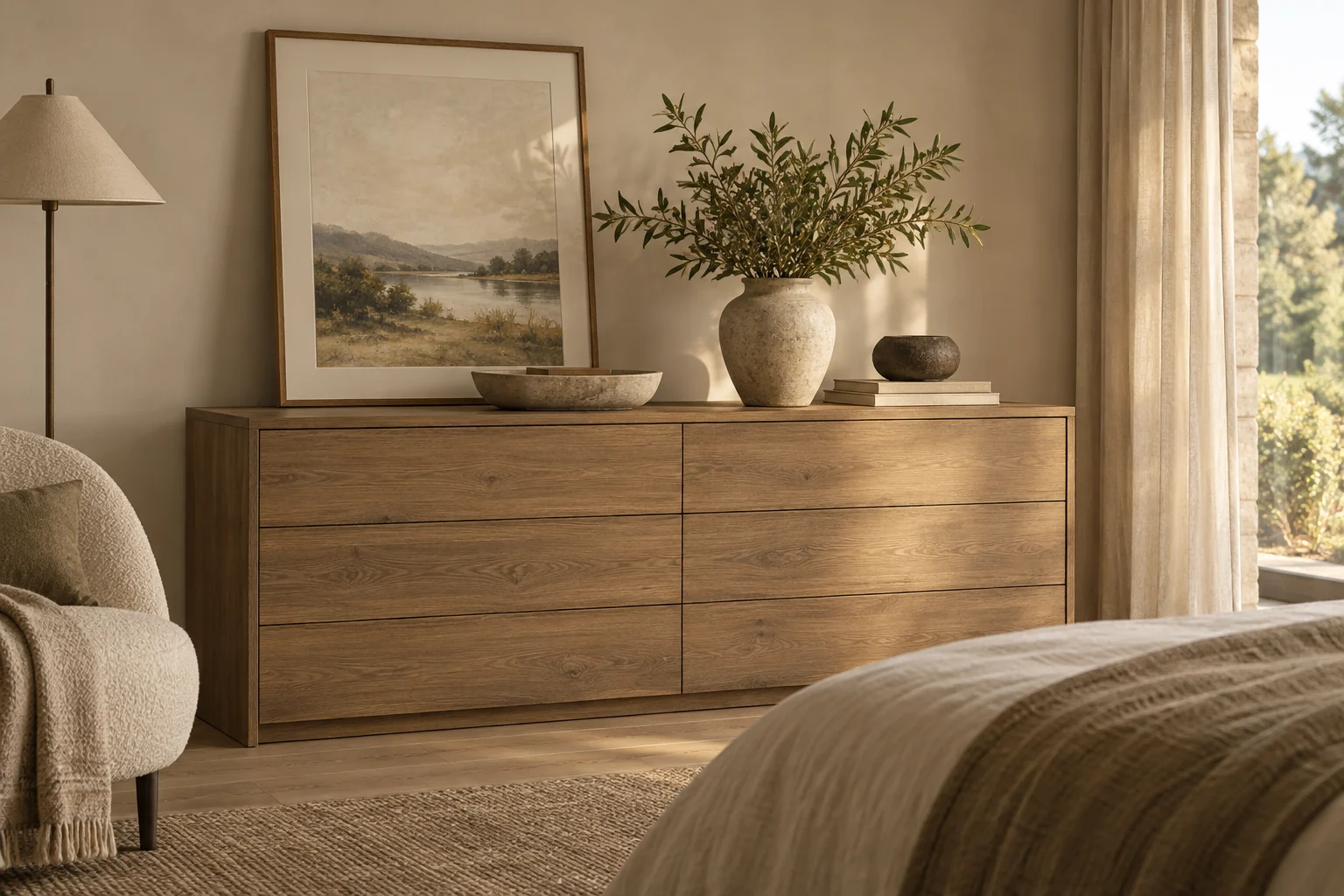
Place the daily items on the dresser first, then compare one retained artwork or small decorative group. Keep drawers, switches and the normal handling area practical.
Choose the group from its view rather than a required object count or empty-space percentage. Next, use appropriate secure support for the actual art or mirror; leaning an object and choosing a fixed gap above the furniture do not establish a complete fixing arrangement.
14. Position a Mirror for the Actual View

Test the reflection from the doorway and the normal dressing position before choosing the wall. Check glare and what the mirror reveals behind the viewer.
Use a mirror designed for its intended standing or wall-mounted arrangement and follow suitable mounting or restraint guidance. A large reflection can change the visual composition, but it does not create more physical floor area or replace appropriate support.
15. Choose Compact Furniture Through Its Full Use
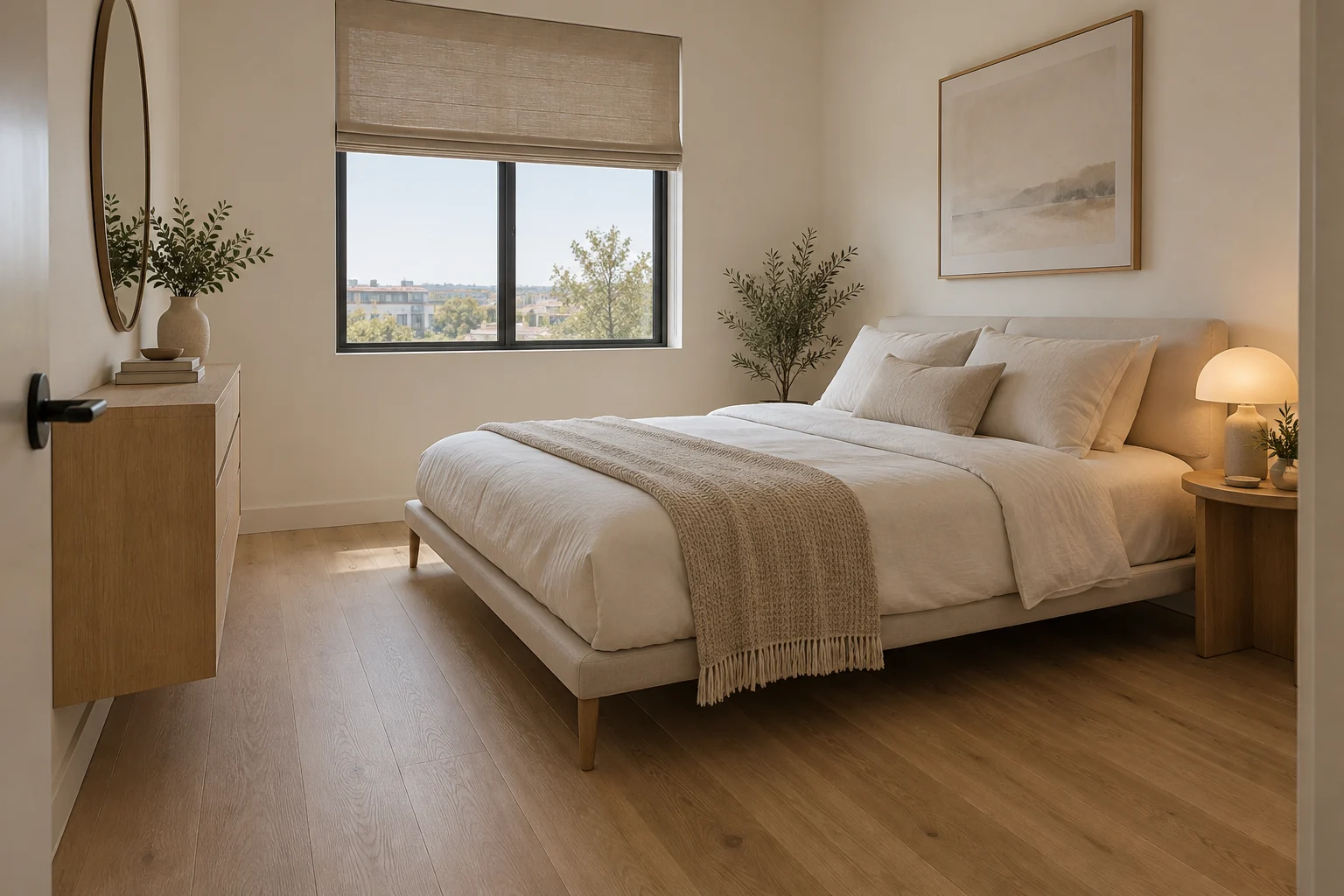
A lower bed or smaller cabinet offers another outline to compare in a compact room. Include the complete frame, supports, handles and the space needed to use it.
A floating nightstand still needs suitable support, and a light appearance does not remove its footprint or storage tradeoff. Next, compare a full-size template with the actual route before choosing a style by a wide-angle reference photograph.
16. Keep Ceiling Detail Connected to the Project Scope
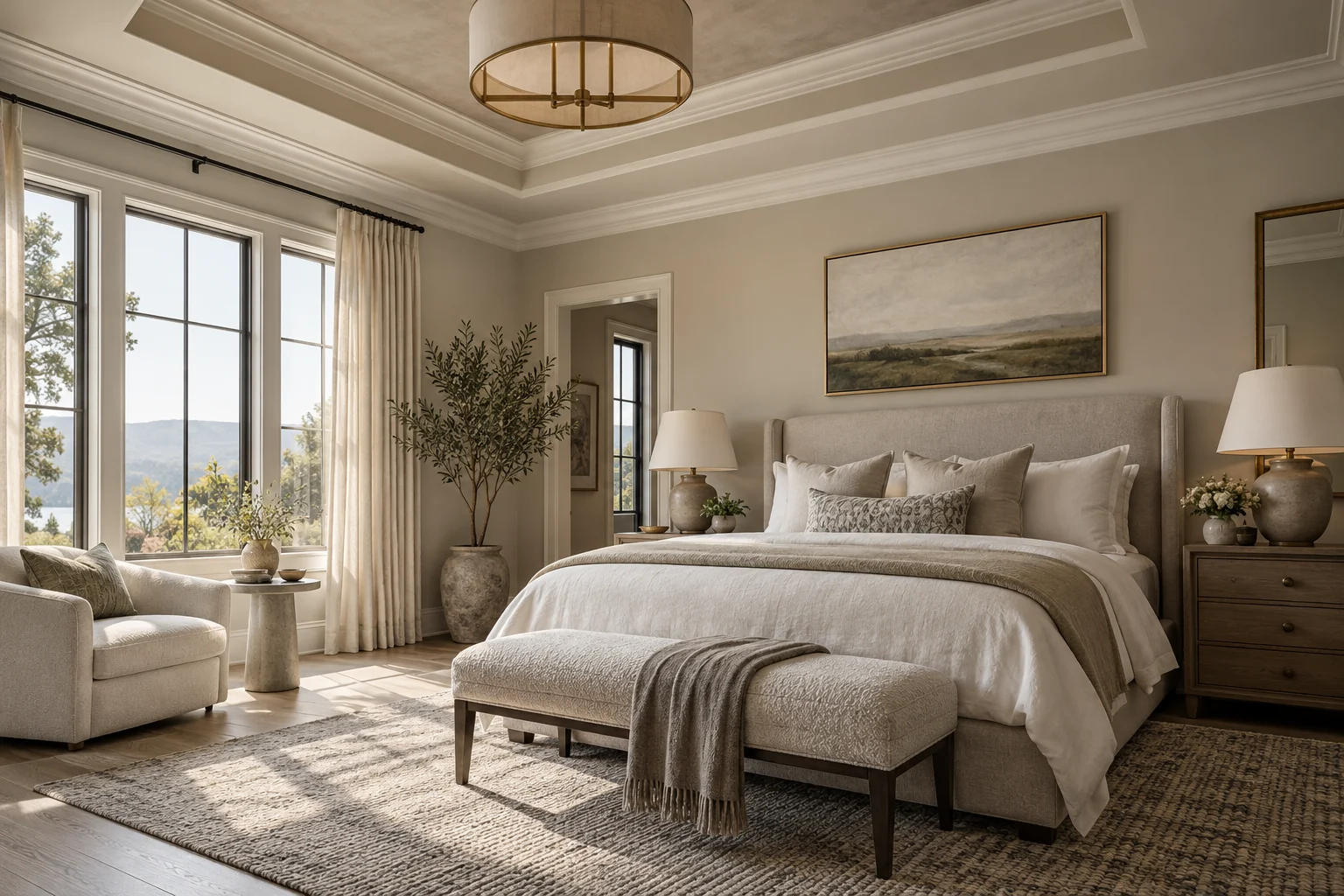
A sampled ceiling color or suitable molding can provide a quieter change than a new overhead assembly. Compare the finished depth with lights, access panels and retained room details.
Have support, services and substantial alterations assessed for the actual project. There is no required treatment for every ceiling height, and a decorative beam should not conceal an unexplained leak, damaged material or a service point that needs access.
17. Frame Art for Its View and Support

A larger mat or a different frame can give a retained photograph more visual room. Lay out the full dimensions before making permanent holes.
Choose spacing through the complete group and the furniture beneath it rather than one fixed gap. Next, compare reflections and use suitable secure support for the actual objects; a particular glazing label does not decide every picture or position above a bed.
18. Review the Bedroom Makeover During a Normal Evening
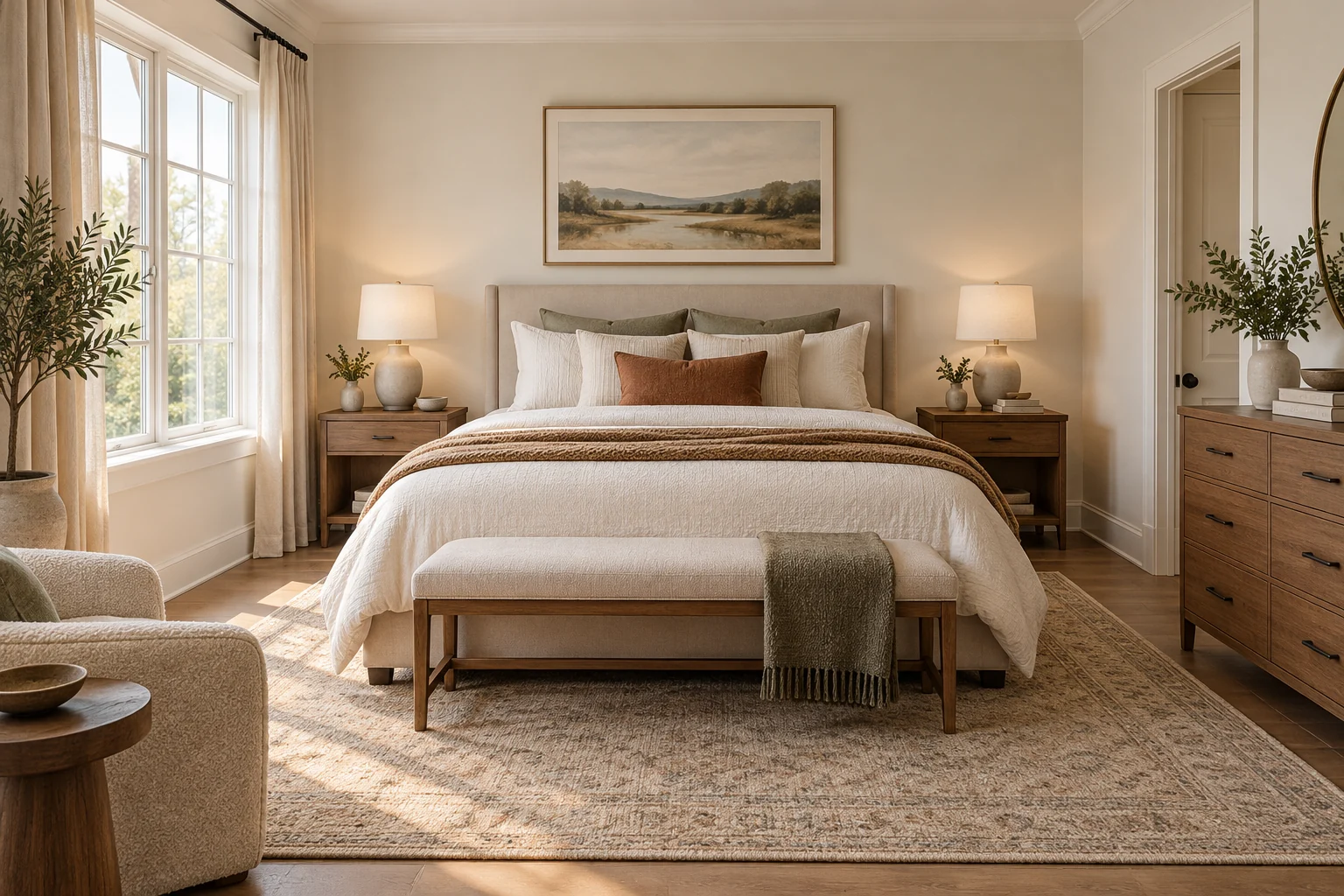
Use the bed, open storage, reach for the lights and walk the usual routes before calling the plan complete. Keep the arrangement that supports those repeated tasks.
A fixed walking-gap range cannot establish comfort or applicable access requirements for every room and user. Next, remove one competing decorative piece before adding another, and retain practical care and storage for the objects that remain.
Choose One Useful Change
Start the bedroom makeover with one repeated inconvenience and test a manageable change. Keep the bed, storage, light and routes connected, then add color and texture through samples and everyday use.
Furniture Stability Reference
Follow restraint guidance for storage furniture with drawers, doors or shelves and use appropriate fixing for the actual product and supporting wall. CPSC Anchor It!: furniture stability guidance.
Related Guides
- 14 Bedroom Rug Placement Ideas for Different Layouts
- 14 Closet Measurement Checks for the Clothing You Keep
- 13 Bedroom Style Ideas for Color, Texture and Personal Comfort
Plan the light around your bedroom routine
A bedside surface and its lamp need to work together. Compare the page-reading position, glare from the pillow and reachable controls before adding another fixture. Our dedicated guide includes a routine worksheet and illustrated options for bedside, wardrobe and dressing light. Explore our bedroom lighting ideas.
If the furniture layout already works, compare a small finish change before planning a complete makeover. Our bedroom ceiling ideas show ways to assess the view above the bed, while these bedroom paint colors can help connect the walls with the bedding. Test physical samples in your own room before choosing the final finish.
Optional digital guide for this topic
If you prefer a structured workbook, explore this related paid guide.