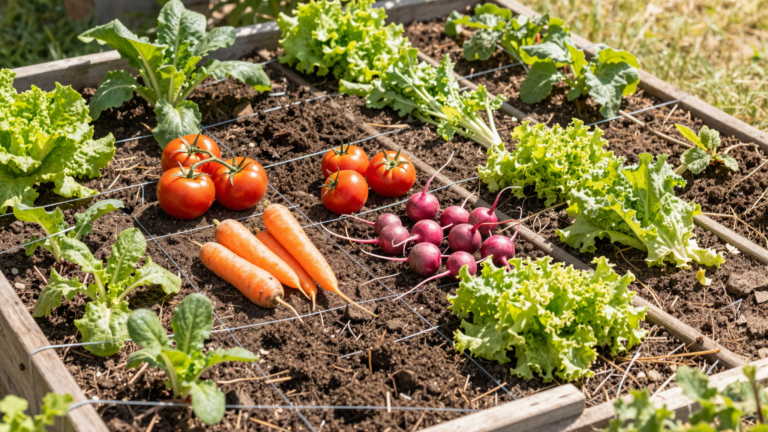
Useful courtyard garden ideas begin with the enclosure itself. Walls, house windows and narrow access can make a courtyard feel like another room, but they also change where light reaches, how planting is seen and which routes must remain available.
Study the courtyard from inside the home as well as from the place where you expect to sit. Record the doors, opening windows, existing drainage features and maintenance access before drawing furniture or containers. Observe the actual light across the space instead of treating every enclosed corner as the same growing position.
These 26 concepts focus on arranging and planting an existing ground-level courtyard. They are not instructions for altering walls, waterproofing, drainage, paving or building services. Use appropriate local plant guidance and a suitable project plan for permanent work. The original concept images show layout possibilities rather than verified plant identities or construction details.
The images are original AI-generated decor concepts, not installation diagrams or photographs of completed client projects.
Browse These 26 Courtyard Garden Ideas
Jump to an idea
- Keep the route between two courtyard doors readable
- Frame one main view from the living room
- Compare the courtyard from two different windows
- Give one outdoor chair a distinct garden position
- Use two compact chairs across a useful corner
- Let a suitable freestanding bench define one wall-side place
- Keep a breakfast table modest within the enclosure
- Leave a clear center between planted edges
- Concentrate the planting along one suitable side
- Use an offset focal container instead of a central obstacle
- Repeat a modest container shape along a blank edge
- Group different pot sizes into one readable composition
- Keep planting below the useful window view
- Keep foliage readable against a tall plain wall
- Give a sunny pocket its own appropriate planting group
- Treat the shaded corner as a separate growing position
- Plan one manageable climber as a wall-side feature
- Use a small trellis feature with room around it
- Compare a small tree through its mature courtyard role
- Keep one seasonal container easy to change
- Layer low and taller planting without hiding the rear
- Keep one section of wall visually quiet
- Relate containers to existing brick without matching everything
- Limit the permanent palette to a few useful elements
- Plan delivery and removal through the narrow gate
- Finish with a reachable courtyard care circuit
Plan courtyard garden ideas from the enclosure and the views
Draw the actual enclosed footprint, every opening and the routes required for ordinary use and care. Identify the main indoor view, the sitting position and the light at each proposed planting location. Keep existing drainage and building-service access available, and assess permanent changes through the appropriate site and professional requirements.
| Courtyard condition | Decision to compare | Check in the real space |
|---|---|---|
| Several house windows | One restrained shared composition | Views and opening access from each room |
| Two connecting doors | An open movement route with planting beside it | Both doors and the carrying task in use |
| A tall shaded wall | A plant group matched to that position | Actual light, moisture and mature spread |
| A sunny enclosed pocket | A modest appropriate container group | Exposure, root space and care needs |
| A narrow side gate | Manageable furniture and containers | Delivery, removal and maintenance access |
| A small sitting place | One complete chair or bench arrangement | Occupied furniture and reachable planting |
Assess the light at each planting position
The RHS shade guidance distinguishes different shade situations and advises matching plants to the available light. Apply that to the actual courtyard locations. A corner beside a high wall and an open patch under the sky can need different choices even within a very small enclosure.
Use containers as complete growing arrangements
The RHS small-space planting guide discusses containers, growing conditions and drainage. Keep those decisions together. Choose the actual plant, container, growing medium and care routine for the location, and plan how excess water is managed without treating a container as a repair for a courtyard drainage problem.
Separate a decorative refresh from a site alteration
Moving a suitable chair or choosing a modest container group is a different task from rebuilding a wall or changing the surface. Record the existing building and drainage requirements before planning permanent work. An attractive finish or gravel appearance does not establish a complete suitable assembly.
Review the garden from more than one room
An enclosed garden may be visible through several windows throughout the day. Compare the composition from the rooms actually used, then from the outdoor seat. Keep window movement and maintenance access independent of the decorative view, and avoid filling every sightline with a different focal object.
1. Keep the route between two courtyard doors readable

A courtyard connecting two doors needs a useful movement route before it needs a central feature. Place planting and a modest sitting position beside that route so the enclosure can feel like a garden while still connecting the rooms. Let the clear surface have a deliberate shape rather than treating it as leftover space.
Open both doors and test the actual movement, including whatever is normally carried between them. Review the mature planting outline as well as the containers. If the garden composition interrupts the connection, reduce or reposition it before adding another object to the center.
Practical tip: Test the full door-to-door movement before choosing a focal pot.
2. Frame one main view from the living room

A courtyard seen frequently from the living room can have one restrained composition directed toward that window. Choose a modest plant group or suitable focal container that reads clearly from the normal sitting position indoors. The enclosure can then feel considered even when nobody is using the outdoor seat.
Check the view at the real indoor eye level and keep the window’s operation and maintenance space available. A composition that works from the sofa may look different from the door. Compare both before adding further focal pieces, and choose plants for the actual growing position rather than the framing alone.
Practical tip: Choose the main indoor viewpoint before arranging the focal group.
3. Compare the courtyard from two different windows

Where two rooms overlook the same courtyard, one shared composition can make more sense than two competing displays. Keep the main plant group readable from both windows. A modest arrangement with space around it can relate the rooms without filling the enclosure with an object for every view.
Review the actual sill heights, window movement and lines of sight from each room. The same plant may conceal a useful view from one position while looking balanced from another. Compare a slightly offset group or a lower planting outline before increasing the number of objects.
Practical tip: Check both everyday viewpoints before committing to the center.
4. Give one outdoor chair a distinct garden position
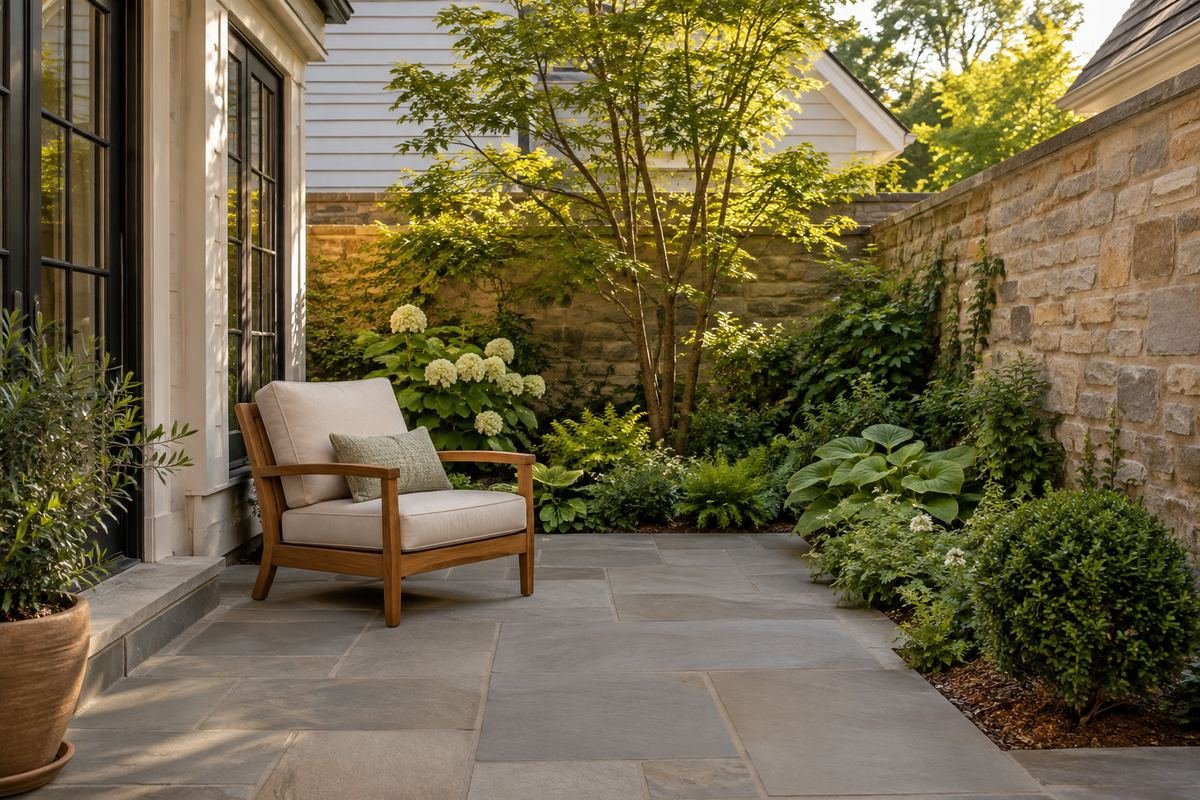
One suitable chair can be enough to make a small courtyard useful for a quiet break. Place it where the person can appreciate the planted view while remaining outside necessary routes. A complete modest sitting position can be more welcoming than a larger furniture group that leaves no room to move.
Test approaching, sitting and leaving with the actual chair. Keep the nearby planting reachable for care without requiring the seat to be repeatedly lifted. Review the light and exposure during the expected use period, and choose the real outdoor furniture for those conditions.
Practical tip: Test the occupied chair and plant-care approach together.
5. Use two compact chairs across a useful corner

Two appropriate compact chairs can give an enclosed corner a conversational role without making the courtyard a full lounge. Angle them according to the actual space and shared view. A small suitable side table can complete the task when it fits independently of the approach.
Compare the full furniture depth and the room used by occupied seats. Avoid relying on a compact-looking front profile. Keep the table reachable from both positions and preserve the door and care routes, reducing the group if the corner only works with the chairs pushed tightly against the walls.
Practical tip: Measure the full chair group before adding a side table.
6. Let a suitable freestanding bench define one wall-side place
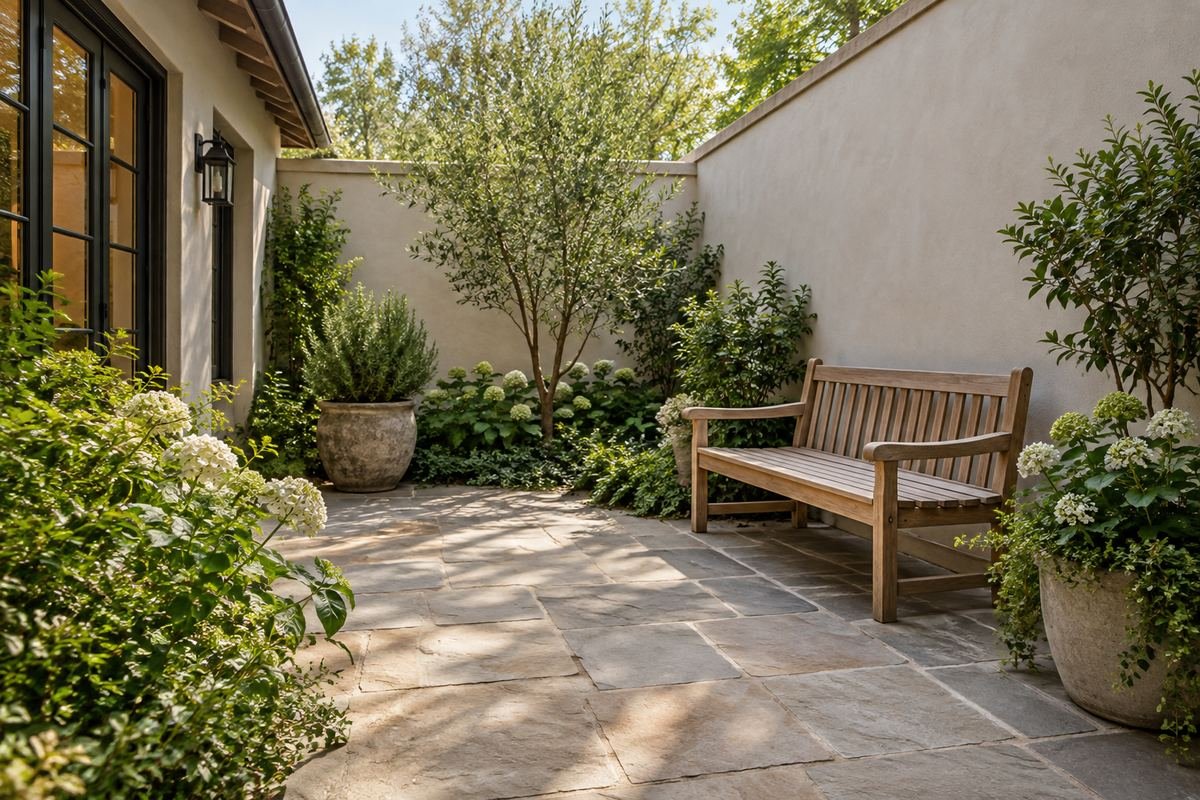
An appropriate freestanding outdoor bench can give a courtyard a clear sitting edge without requiring built-in construction. Keep the bench’s position distinct from the wall and nearby planting needs. Its continuous outline can make the enclosure readable while the rest of the surface remains open.
Follow the exact furniture requirements and test the occupied depth and approach. Leave the required building and maintenance access available. Do not assume a bench can be fixed to an existing wall or combined with a planter simply because the two elements look continuous in a photograph.
Practical tip: Compare a complete freestanding bench before planning permanent joinery.
7. Keep a breakfast table modest within the enclosure
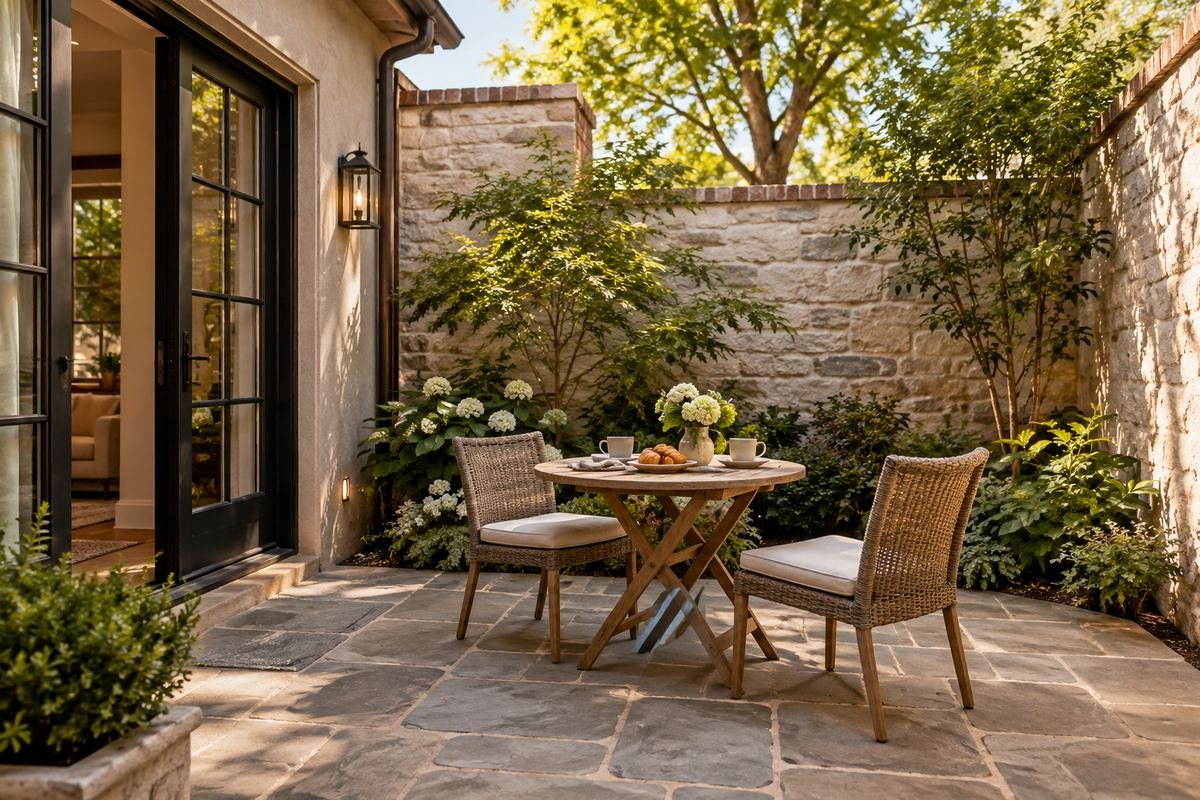
A small suitable table and two chairs can give a courtyard an everyday breakfast role. Choose the complete occupied group around the route from the house. A restrained dining setup can let the walls and planting provide the atmosphere without filling the space with extra serving furniture.
Test carrying a tray out, taking both seats and clearing away. Include the door movement and any required through-route. The table outline alone is not a usable dining footprint, so compare a smaller group or another suitable orientation if a chair backs into the necessary approach.
Practical tip: Rehearse one ordinary breakfast before choosing accessories.
8. Leave a clear center between planted edges

An open center can be a useful courtyard design decision, especially when several doors or windows face the enclosure. Keep planting in deliberate edge groups rather than scattering small containers across the surface. The composition can feel garden-like while the main space remains easy to understand.
Draw the mature foliage, complete containers and required access before defining the edge arrangement. Keep drainage and service features available. An empty-looking area may be doing important work for movement or care, so review that role before adding a central ornament simply to fill the photograph.
Practical tip: Give the open center a clear purpose in the layout.
9. Concentrate the planting along one suitable side

A single concentrated planting side can give a narrow courtyard a calmer outline than matching dense groups along every wall. Let the other side remain available for access and the seated view. The asymmetry can feel deliberate when the plants form one coherent background.
Choose the planting position from real light, moisture and mature spread rather than the wider-looking side alone. Keep containers and care access realistic. If the proposed side cannot offer appropriate growing conditions, change the composition instead of forcing the same plants into a visually convenient strip.
Practical tip: Assess the growing position before choosing the planted side.
10. Use an offset focal container instead of a central obstacle

One suitable focal container can give a courtyard a clear visual anchor when it sits outside the required movement. Compare an offset position visible from the house and the outdoor seat. The planting can draw attention without making every crossing detour around the middle.
Select the full growing arrangement for the plant and site, including mature size and care. Review the container’s complete occupied footprint and handling route. A large-looking pot is not automatically suitable for any plant or surface, and the visual anchor should not conceal drainage or building access.
Practical tip: Compare the focal container with every necessary route.
11. Repeat a modest container shape along a blank edge
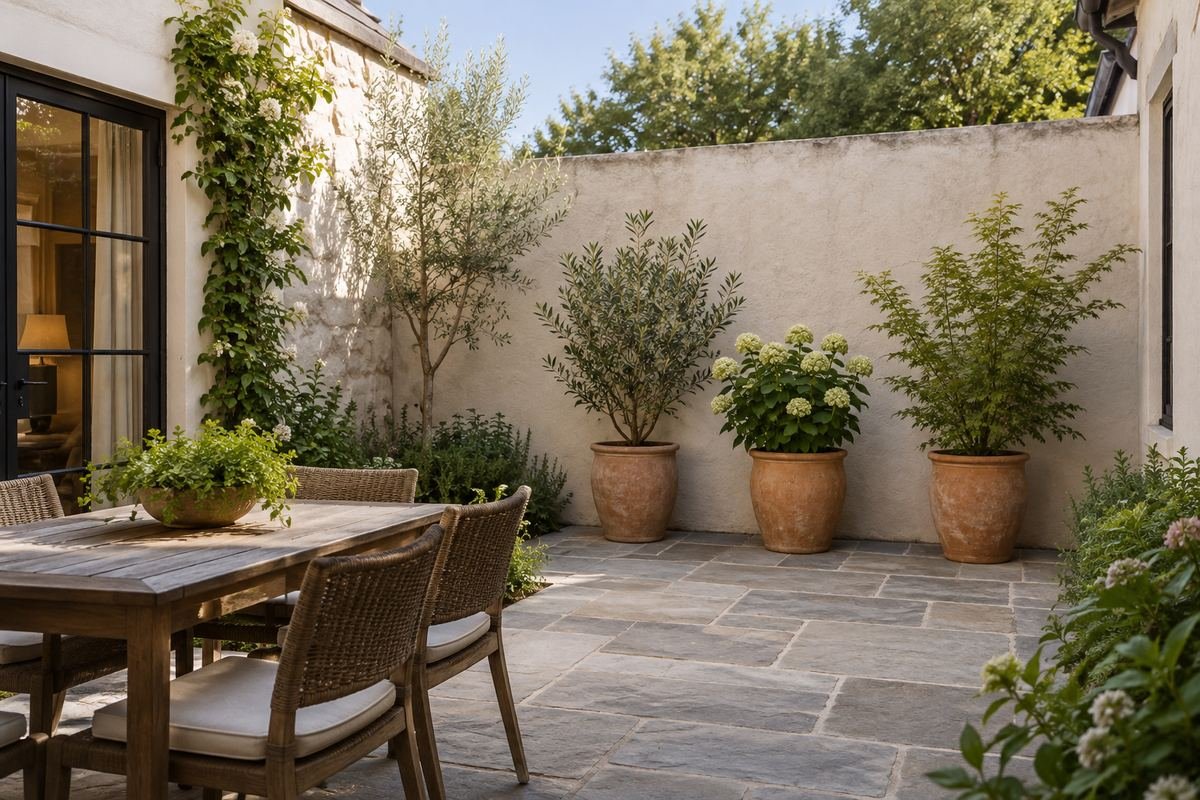
A restrained row of related containers can bring rhythm to one plain courtyard edge. Keep the group small enough that each plant and vessel remains readable. Repetition can relate the enclosure to the house without requiring the same plant in every position.
Compare each growing arrangement with its actual light and care needs. Keep appropriate spacing for mature foliage, the full container base and access behind or beside the group. If identical vessels do not suit the actual plants, repeat a material or color instead of forcing every growing arrangement to match.
Practical tip: Let plant needs determine the useful size within the repeated palette.
12. Group different pot sizes into one readable composition

A modest group of different container sizes can give an enclosed corner depth without scattering plants throughout the courtyard. Keep the complete vessels visible and the foliage separated enough to read. The changing heights can come from the actual growing arrangements rather than pots balanced on improvised supports.
Choose every plant and container for the real position and climate. Test reaching the rear pot and removing any item that needs attention. If the layered group hides care access, spread it along the edge or reduce the number rather than making the whole corner denser.
Practical tip: Reach the rear container before adding the front one.
13. Keep planting below the useful window view

Lower planting can relate a courtyard to the room behind a window while keeping the main view open. Compare the actual sill height with the intended mature foliage. A modest low group can soften the enclosure without making the window feel like a backdrop hidden behind a dense screen.
Check window operation, maintenance and any required building clearances independently of the view. Do not select a plant solely from its current nursery height. Review its mature spread and the care route, and choose another suitable location if it would repeatedly interfere with the opening.
Practical tip: Compare mature foliage with the actual opening and sill.
14. Keep foliage readable against a tall plain wall

A tall plain wall can give a modest foliage group a clear background without requiring the entire enclosure to be covered. Compare a few distinct plant outlines with the wall from the main indoor view. The space can feel planted through deliberate shapes and open intervals rather than a continuous dense screen.
Choose plants for the real light, climate and growing arrangement. A dramatic silhouette in a concept image does not identify a suitable species. Review mature height and care access, and keep any building inspection or maintenance requirements available behind and beside the group.
Practical tip: Choose the growing position before comparing leaf silhouettes.
15. Give a sunny pocket its own appropriate planting group
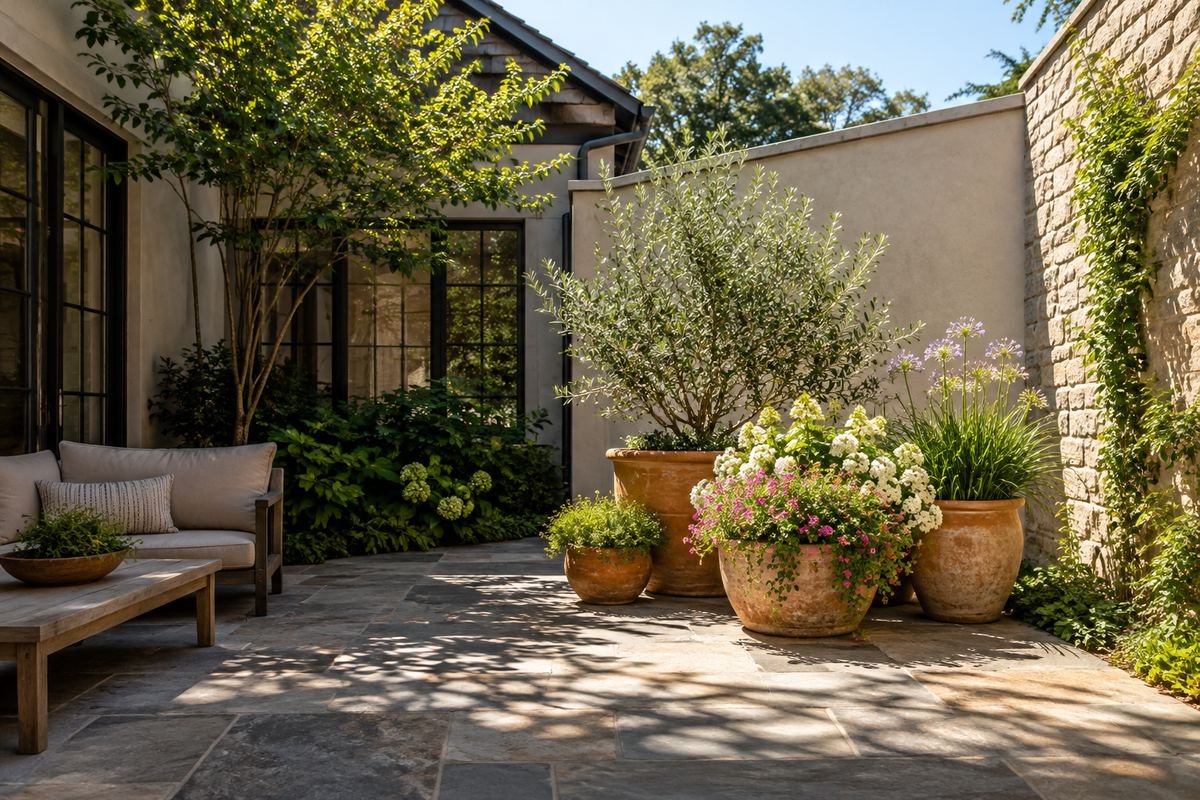
A sunny patch within an enclosure can support a different planting decision from the shaded wall beside it. Give that position a deliberate modest group instead of repeating the same plant throughout the courtyard. The composition can relate visually while allowing each growing location to be assessed independently.
Observe the actual exposure and local climate before choosing plants, containers and care. Enclosure does not automatically make a sunny pocket mild or sheltered in every condition. Keep the group manageable and review its water and root-space needs rather than choosing a familiar Mediterranean-looking plant from the photograph.
Practical tip: Record the sunny pocket separately from the surrounding shade.
16. Treat the shaded corner as a separate growing position

A shaded courtyard corner can have its own modest plant group when the actual conditions suit it. Let the arrangement respond to that position rather than copying the sunny side. A restrained foliage composition can make the corner feel deliberate without adding more furniture or dense vertical growth.
Assess light, moisture, climate and the surrounding wall conditions together. Shade tolerance varies, and a dark dry corner is not interchangeable with a bright shaded one. Use appropriate local plant guidance and keep care access available instead of assuming all foliage plants share the same needs.
Practical tip: Choose for the actual shade rather than the courtyard label.
17. Plan one manageable climber as a wall-side feature

An appropriate climber can give one courtyard wall a defined planted section when the plant, support and site suit one another. Keep the feature limited enough to inspect and care for. It can introduce vertical interest without requiring every boundary to become a dense planted surface.
Choose the real plant for the climate, light, mature growth and maintenance routine. Have any support and attachment plan selected appropriately for the actual wall and full mature load. Keep openings and building access available, and do not infer mounting details from a finished concept image.
Practical tip: Plan the mature plant and its support as one complete feature.
18. Use a small trellis feature with room around it

A suitable trellis can give a modest planted section a readable outline within an enclosure. Keep it distinct from windows and the main sitting approach. The feature can act as a quiet background when its scale relates to the courtyard rather than covering the whole wall.
Select the complete support arrangement for the real site, plant and mature load through an appropriate plan. A freestanding appearance does not establish wind stability or capacity. Review access around the planted feature and keep its maintenance task realistic before adding another vertical panel beside it.
Practical tip: Choose the complete support system before comparing decorative patterns.
19. Compare a small tree through its mature courtyard role
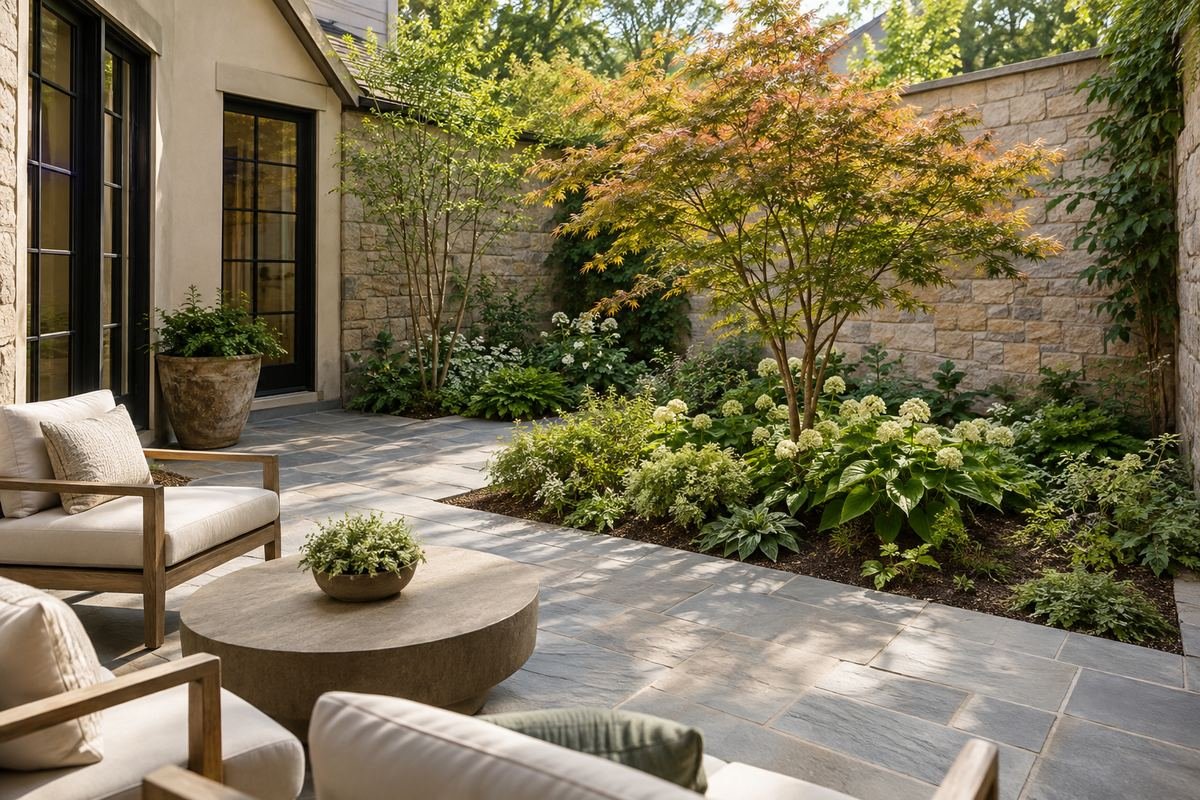
A tree can become a strong courtyard focal point only when the actual species and site support a long-term plan. Consider the canopy, roots and views from the house together. The useful idea is a deliberately chosen living feature rather than a nursery-sized tree added wherever a tall shape looks balanced.
Use appropriate local horticultural and professional guidance for mature size, climate, growing space and building relationships. A container or narrow crown does not establish suitability. If those requirements do not fit the courtyard, compare a lower planted composition rather than forcing the tree into the design.
Practical tip: Assess the long-term growing space before choosing the specimen.
20. Keep one seasonal container easy to change

One suitable reachable container can provide a changing seasonal detail while the main courtyard composition stays restrained. Position it where it is visible from the house and straightforward to care for. The rest of the enclosure does not need a new decorative layer each time that display changes.
Choose plants for the actual season, climate and container arrangement. Plan removal and care without reaching over the permanent group. If changing the seasonal container would require moving heavy neighboring objects, give it a simpler independent position rather than embedding it in the deepest corner.
Practical tip: Keep the seasonal display independently reachable.
21. Layer low and taller planting without hiding the rear

A modest planting composition can use different heights to create depth within a shallow enclosure. Keep the lower group readable in front of a taller appropriate outline. The relationship can make the courtyard feel considered from the house without requiring a large number of species or containers.
Compare mature spread and actual growing needs, then test reaching every part for care. Low plants should not conceal the bases or inspection space of the rear group. If the arrangement becomes a continuous inaccessible mass, simplify it or separate the groups along the edge.
Practical tip: Test care access to the rear before completing the front layer.
22. Keep one section of wall visually quiet

A plain wall section can be a useful part of a courtyard composition, allowing the planted areas to stand out. It can also make a small sitting place feel less crowded. Compare that quiet background with the main window view before adding wall decorations or another plant support.
Retain the existing wall’s appropriate maintenance and building requirements. If a finish refresh is planned, assess the actual material and compatible system through a suitable process. Do not cover a damp or damaged area simply to improve the view, and keep decorative choices separate from resolving the wall’s condition.
Practical tip: Review the existing wall before treating it as a decorative surface.
23. Relate containers to existing brick without matching everything
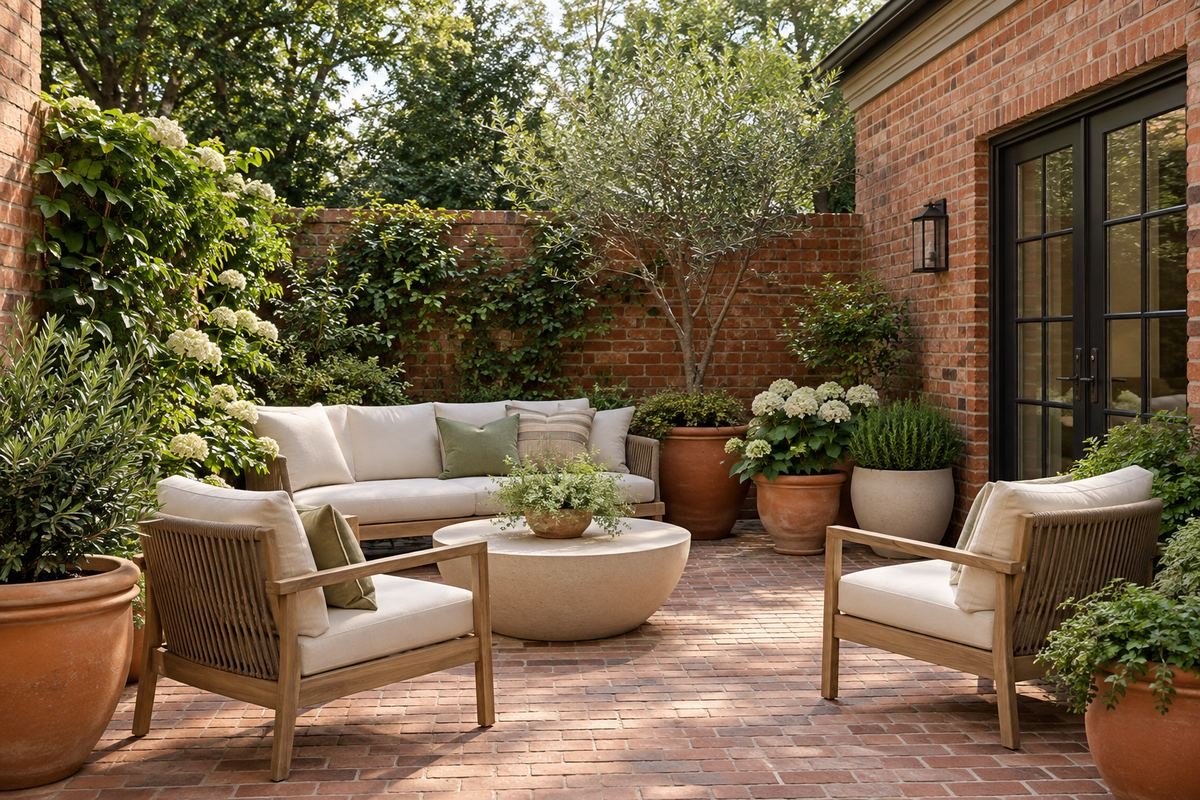
Warm containers can relate to a brick courtyard enclosure while allowing the plants to provide different shapes. Repeat a modest material tone in a few positions instead of copying the masonry color across every object. The existing wall can remain part of the garden’s character.
Compare actual vessel finishes with the wall in the courtyard light. Choose the full container and growing arrangement from plant needs independently of its color. If the repeated warm tones make the enclosure feel heavy, simplify the group or introduce a quieter related vessel rather than adding more matching pots.
Practical tip: Select the useful growing container before refining its color relationship.
24. Limit the permanent palette to a few useful elements
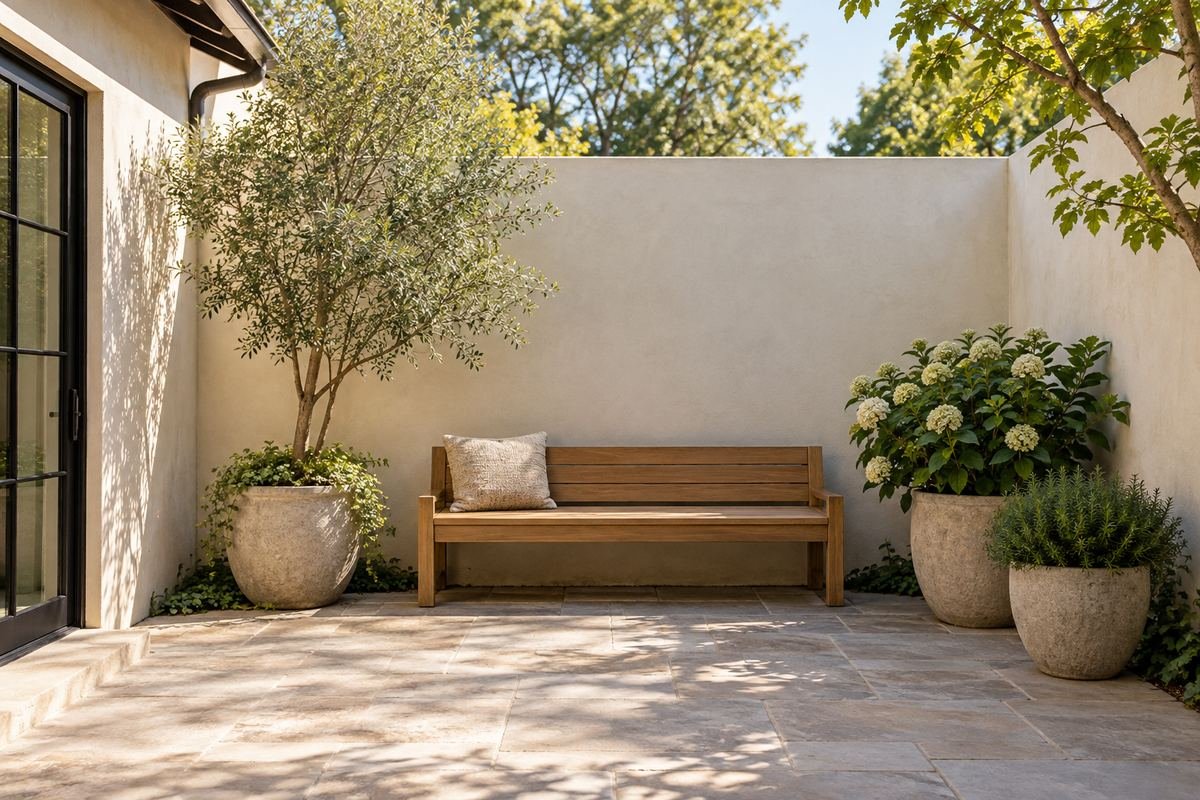
A restrained courtyard palette can make varied window and doorway views feel connected. Keep the furniture and containers related through a small number of materials or quiet colors. The plants can provide changing texture while the enclosure avoids competing decorative themes in every corner.
Compare the real materials with the site and their care requirements. Similar colors do not establish equivalent outdoor suitability. Keep the necessary furniture and planting tasks working before adding another accessory, and remove an unnecessary object from the plan if the composition loses its clear view or approach.
Practical tip: Make the useful objects coherent before adding another material.
25. Plan delivery and removal through the narrow gate
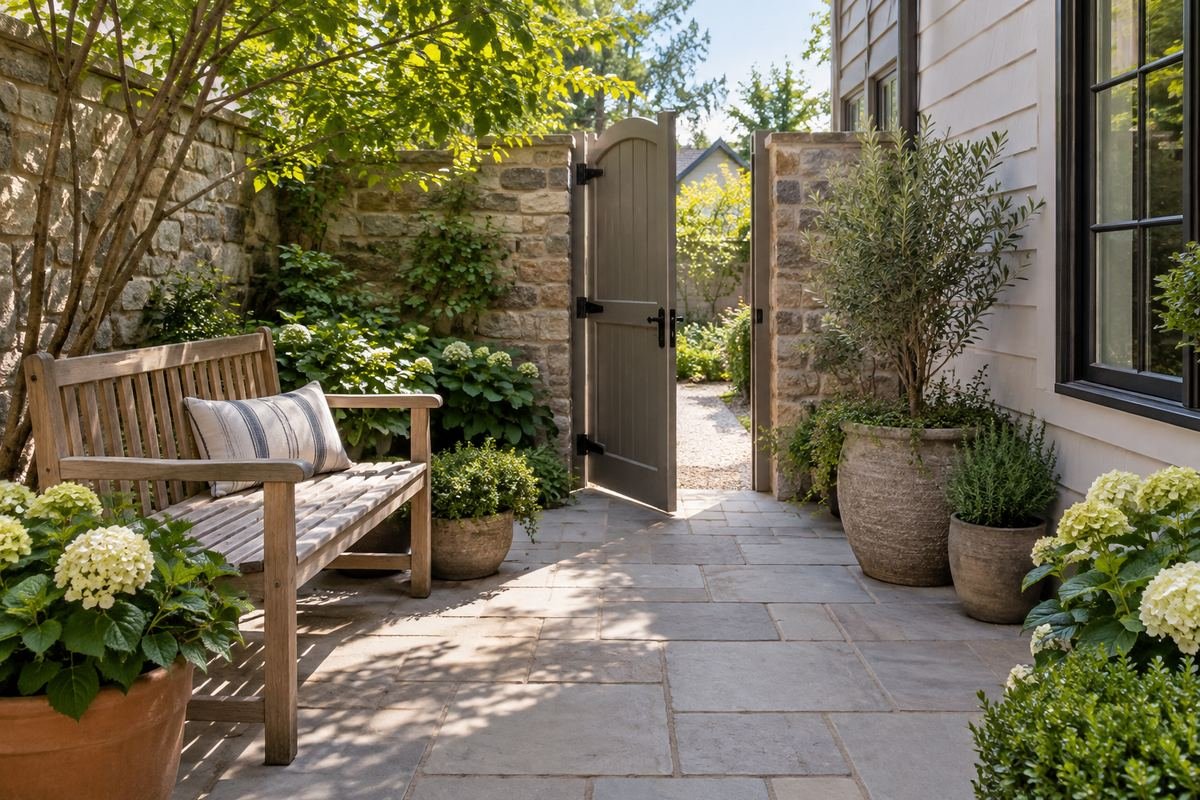
A courtyard with narrow access needs a realistic route for furniture, containers and ordinary care materials. Keep that route part of the design from the beginning. A modest arrangement that can be managed through the actual opening may be more useful than larger objects chosen solely from the final view.
Measure the real gate opening, turns and any relevant thresholds before ordering. Include the complete object, delivery method and future removal needs. Do not assume a pot can be moved easily once filled or that a bench will fit because its shortest dimension appears narrow in a product photograph.
Practical tip: Check the complete delivery route before choosing the largest piece.
26. Finish with a reachable courtyard care circuit

A courtyard feels more complete when every plant and required access point can be reached through an ordinary care routine. Walk the proposed circuit from the house, around the modest planting and back. Let that movement refine the arrangement before filling the last visible gap with another container.
Keep building-service and drainage access available according to the actual site requirements. Plan tools and watering equipment through appropriate storage and use arrangements without leaving them across routes. If one part of the garden can only be reached by moving several other objects, simplify the composition or choose another suitable position.
Practical tip: Walk the whole care circuit before adding the final object.
Frequently Asked Questions
What should I plan first in a courtyard garden?
Record the enclosure, openings, required routes and existing drainage or service access. Observe the light, then choose the main indoor view and outdoor activity. This gives planting and furniture a useful brief before decorative finishes are considered.
Are all courtyards suitable for shade plants?
No. Enclosed gardens can contain different light and moisture conditions, including exposed sunny pockets. Match actual plants to the individual growing positions and local climate rather than selecting a universal courtyard plant list.
Can containers solve poor courtyard drainage?
Containers provide individual growing arrangements when appropriately selected and cared for. They do not repair the surrounding courtyard’s drainage. Keep existing drainage routes and access useful and address site problems through an appropriate assessment before adding more objects.
Can a tree fit in a small courtyard?
Only when the actual species, mature size, roots, climate, site and long-term care requirements fit an appropriate planting plan. Do not infer suitability from a small nursery specimen or a concept photograph. A modest container or lower plant group may suit the brief better.
How can I make the courtyard feel less crowded?
Choose one main use, keep necessary movement distinct and use a restrained planting composition. Compare the complete occupied furniture and mature foliage outlines. Leaving part of the surface visually open can be a deliberate decision rather than an unfinished garden.
Should every courtyard wall be covered in plants?
No. Choose growing positions and support from the actual plants and building conditions. A plain section can make foliage easier to see and preserve access. Any attached support needs an appropriate plan for the real wall and mature plant load.
Choose the Details That Work in Your Home
Choose courtyard garden ideas through the enclosure you have: the windows that overlook it, the doors that cross it and the light that actually reaches the plants. Give one sitting place a clear role, keep care access practical and let a restrained composition work from several views. Add permanent features only when their complete site requirements have been resolved.
For related ideas, explore small garden planning, garden path ideas, manageable patio planting.
Planning References
RHS: planting design for small spaces and containers; RHS: assessing shade and choosing appropriate plants. Follow the instructions for the exact products you choose.
Optional digital guide for this topic
If you prefer a structured workbook, explore this related paid guide.