Plants and Nature Decor
Getting the patio plant right makes the biggest difference in how the space actually feels day to day. A well-planned patio plant balances function and style, and even small tweaks to your patio plant can transform the whole area.
If your balcony or patio has become the spot where things get stored rather than the spot where you actually relax, a few well-placed plants can change that faster than almost any other update. Even the smallest outdoor space can feel like a genuine retreat once greenery, texture, and a little intention come together.
By the end of this article, you’ll have 14 real, current ways to bring plants into your balcony or patio so it finally feels like an extension of your home rather than an afterthought.
Table of Contents
- 1. Frame the Entry With Large Planters
- 2. Build a Vertical Living Wall
- 3. Add a Potted Lemon Tree Corner
- 4. Use a Tiered Plant Stand
- 5. Mix Colorful Trailing Flowers
- 6. Build a Herb Corner With Seating
- 7. Add a Raised Boxwood Garden Bed
- 8. Line Up Succulents on a Metal Rod
- 9. Drape Climbing Roses Over an Arbor
- 10. Paint the Floor for a Color Oasis
- 11. Build a Low Cushion Green Nook
- 12. Create a Planter Privacy Wall
- 13. Style a Minimalist Sculptural Corner
- 14. Add a Copper Bowl Candle Vignette
- Effort & Cost Snapshot
1. Frame the Entry With Large Planters for Your Patio Plant
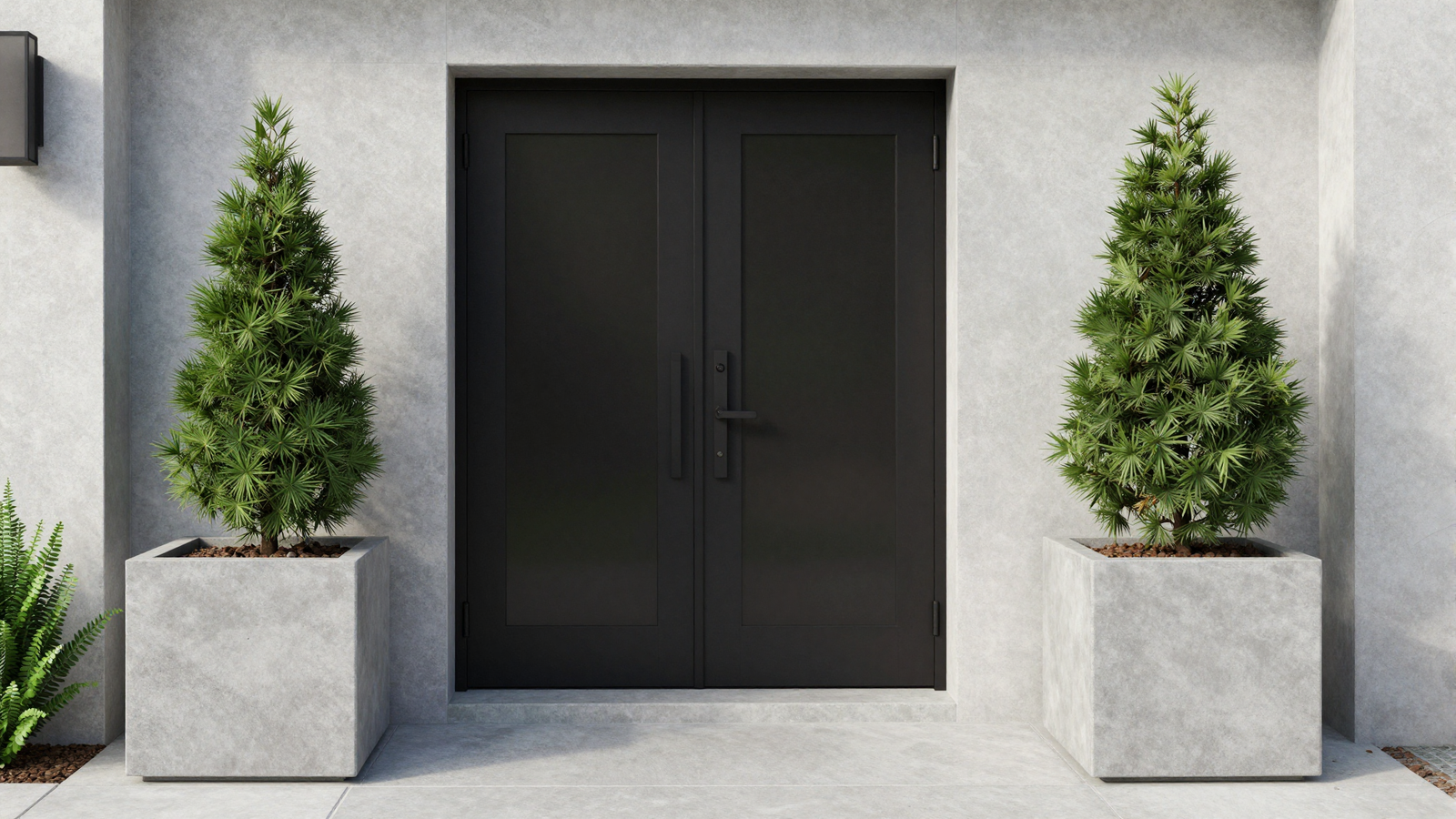
Placing two large, clean-lined planters on either side of a patio door or gate instantly makes the entry feel intentional, almost architectural. They act as anchors that guide people toward the door while giving the whole space a more finished, considered look.
💡 Smart tip: Choose tall, narrow planters if floor space is limited; the height does the visual work without eating into walking room.
⚠️ Mistake to avoid: Choosing mismatched planter styles for each side of the entry; a matching or clearly coordinated pair reads as far more polished than two random pots.
2. Build a Vertical Living Wall for Your Patio Plant
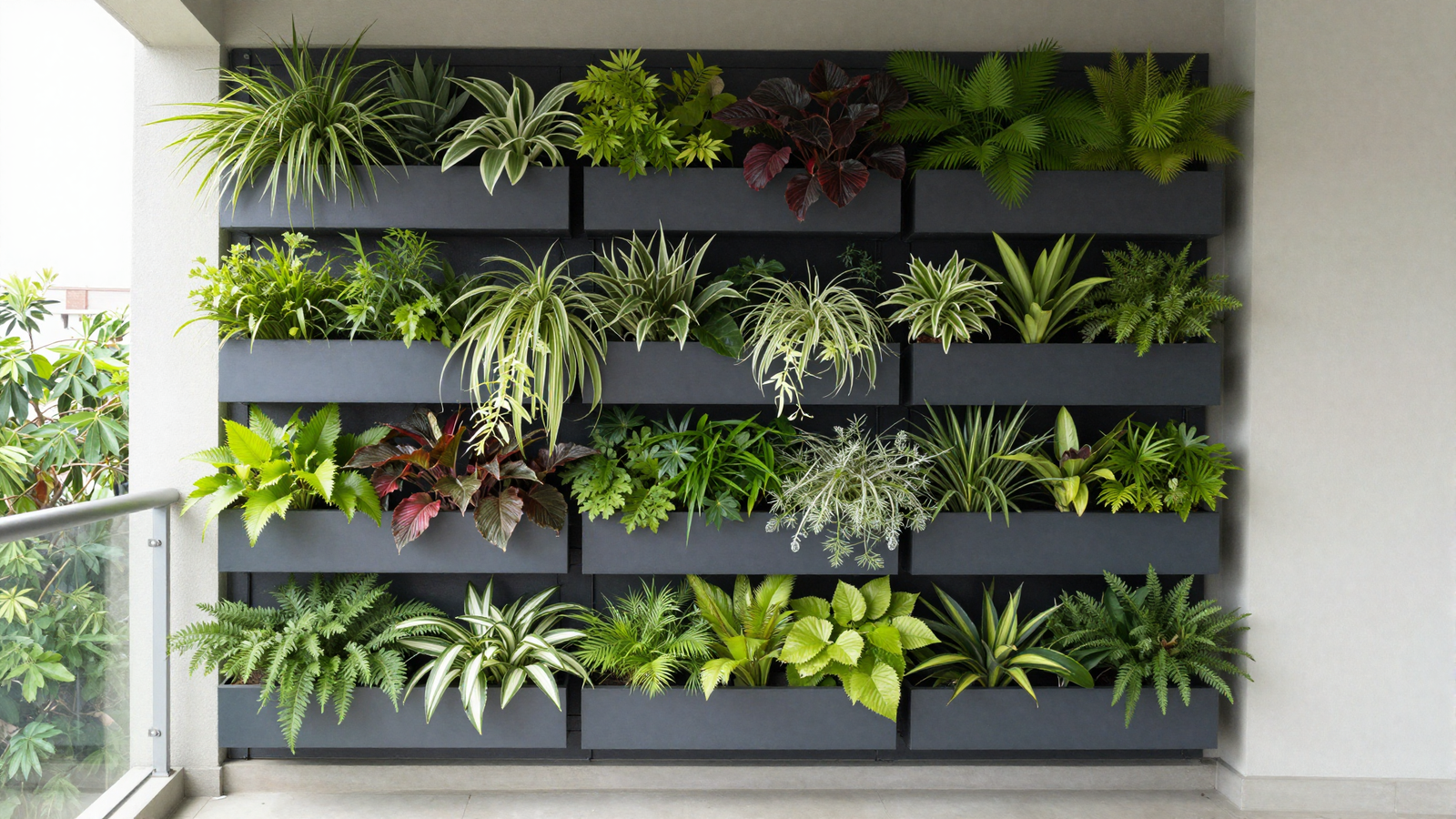
Growing upward instead of outward lets even the smallest balcony hold a genuinely lush amount of greenery, using wall space that would otherwise sit empty. Modular wall planter systems make this approach far more achievable than it used to be, with modern designs built specifically for tight footprints.
💡 Smart tip: Mix a few different leaf textures and shapes across the wall so the display reads as layered and full rather than flat.
⚠️ Mistake to avoid: Overloading a vertical wall system without checking its weight rating and mounting hardware; a fully watered wall garden is considerably heavier than it looks empty.
3. Add a Potted Lemon Tree Corner for Your Patio Plant
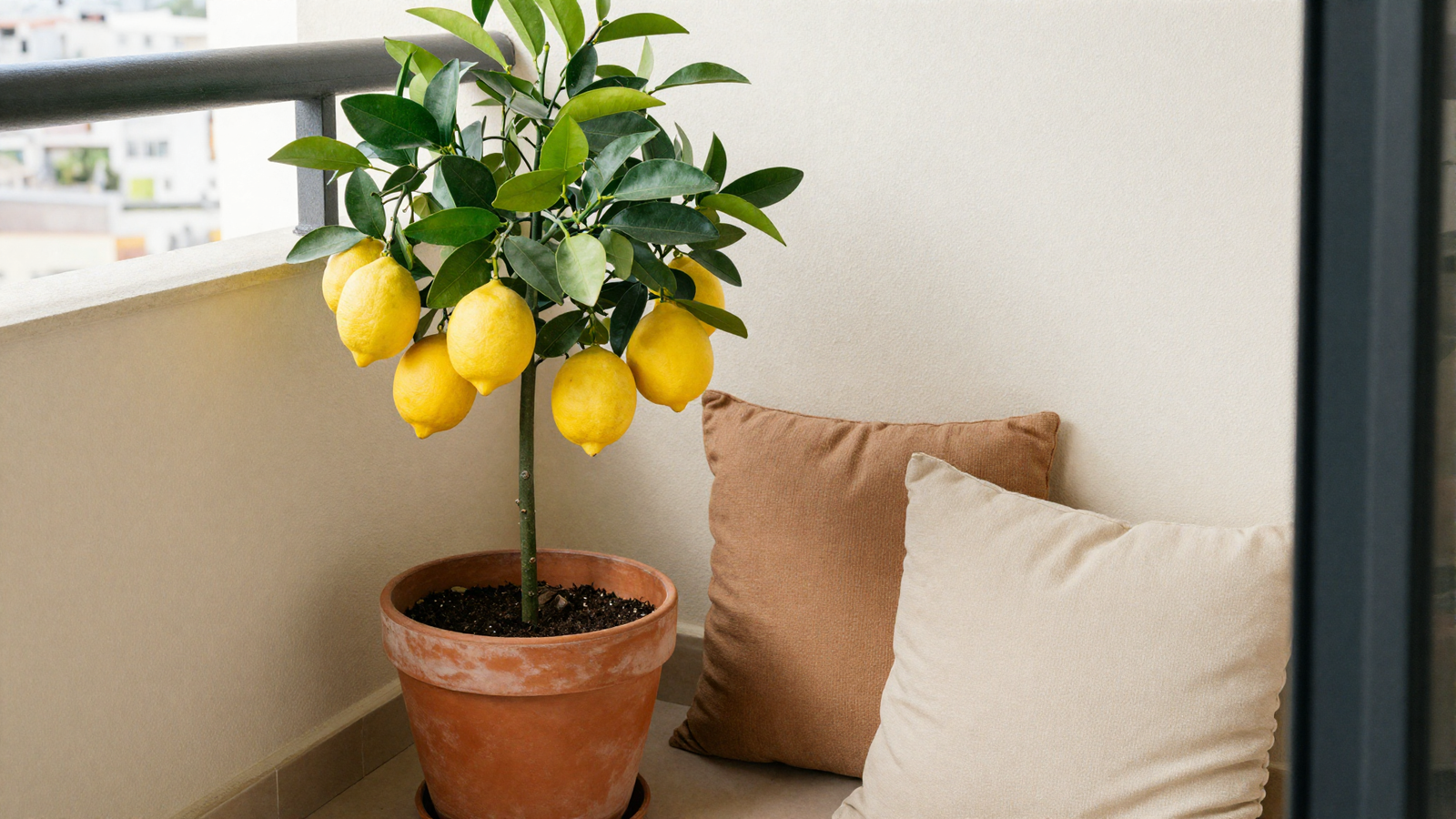
A single potted lemon tree brings color, fragrance, and genuine life to a compact balcony, doing more for the mood of the space than a handful of smaller plants combined. Paired with soft cushions nearby, it strikes a balance between playful and refined.
💡 Smart tip: Choose a dwarf citrus variety bred specifically for container growing, since standard lemon trees quickly outgrow balcony-sized pots.
⚠️ Mistake to avoid: Leaving a potted citrus tree exposed to frost or freezing temperatures; most varieties need to be moved indoors or given cover once temperatures drop.
Loving These Ideas? Get the Step-by-Step Guide
Grab the full 5-day eBook and turn these ideas into a finished room.




4. Use a Tiered Plant Stand for Your Patio Plant
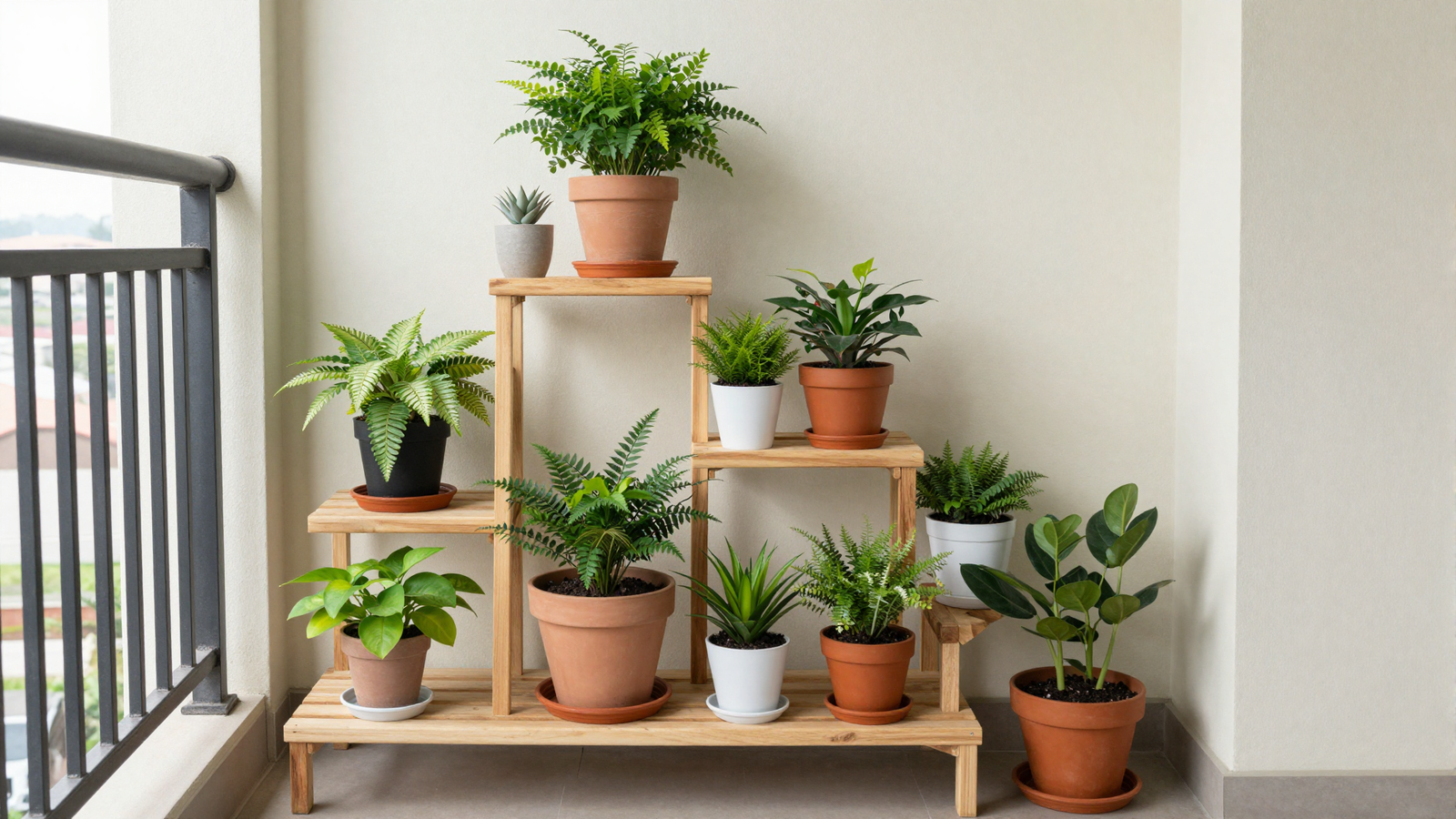
A tiered stand lets you fit considerably more greenery into a tight footprint by using height instead of floor space. Elevating plants also adds real dimension to a narrow balcony, breaking up what would otherwise be a single flat row of pots.
💡 Smart tip: Place trailing plants on the top tier so their vines can cascade down through the lower levels naturally.
⚠️ Mistake to avoid: Choosing a plant stand without checking its stability on an uneven balcony floor; a wobbly stand becomes a real hazard once fully loaded with watered pots.
5. Mix Colorful Trailing Flowers for Your Patio Plant
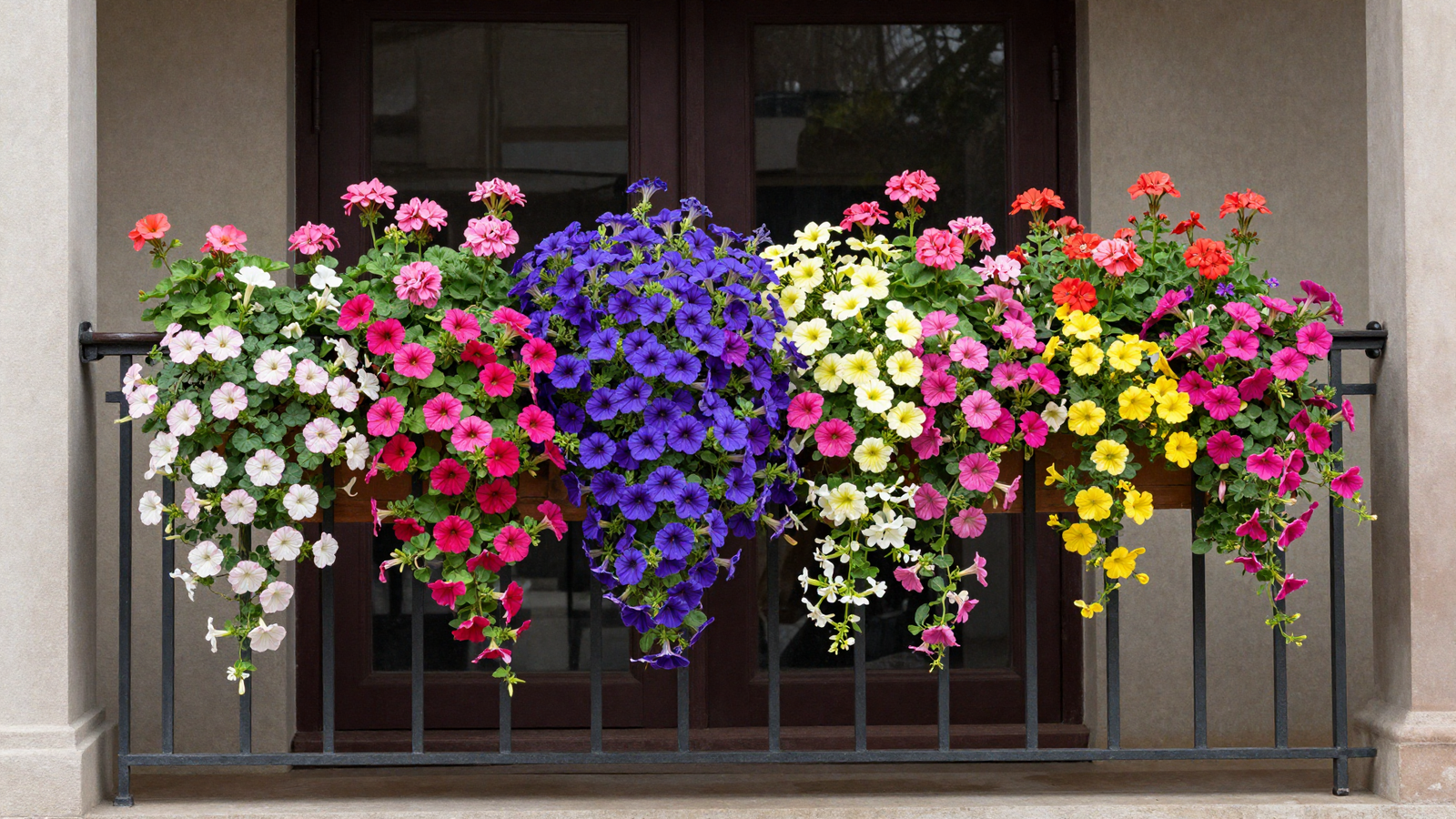
Combining a few flowering varieties with different bloom colors along a railing creates real movement and energy, especially compared to a single monochrome planting. The layered cascade effect makes even a narrow railing feel like a genuine garden feature.
💡 Smart tip: Stick to two or three coordinated colors rather than every hue at once, so the mix feels curated instead of chaotic.
⚠️ Mistake to avoid: Choosing flowering annuals without checking their sun requirements against your balcony’s actual light exposure; mismatched light needs are the most common reason railing plantings fail.
6. Build a Herb Corner With Seating for Your Patio Plant
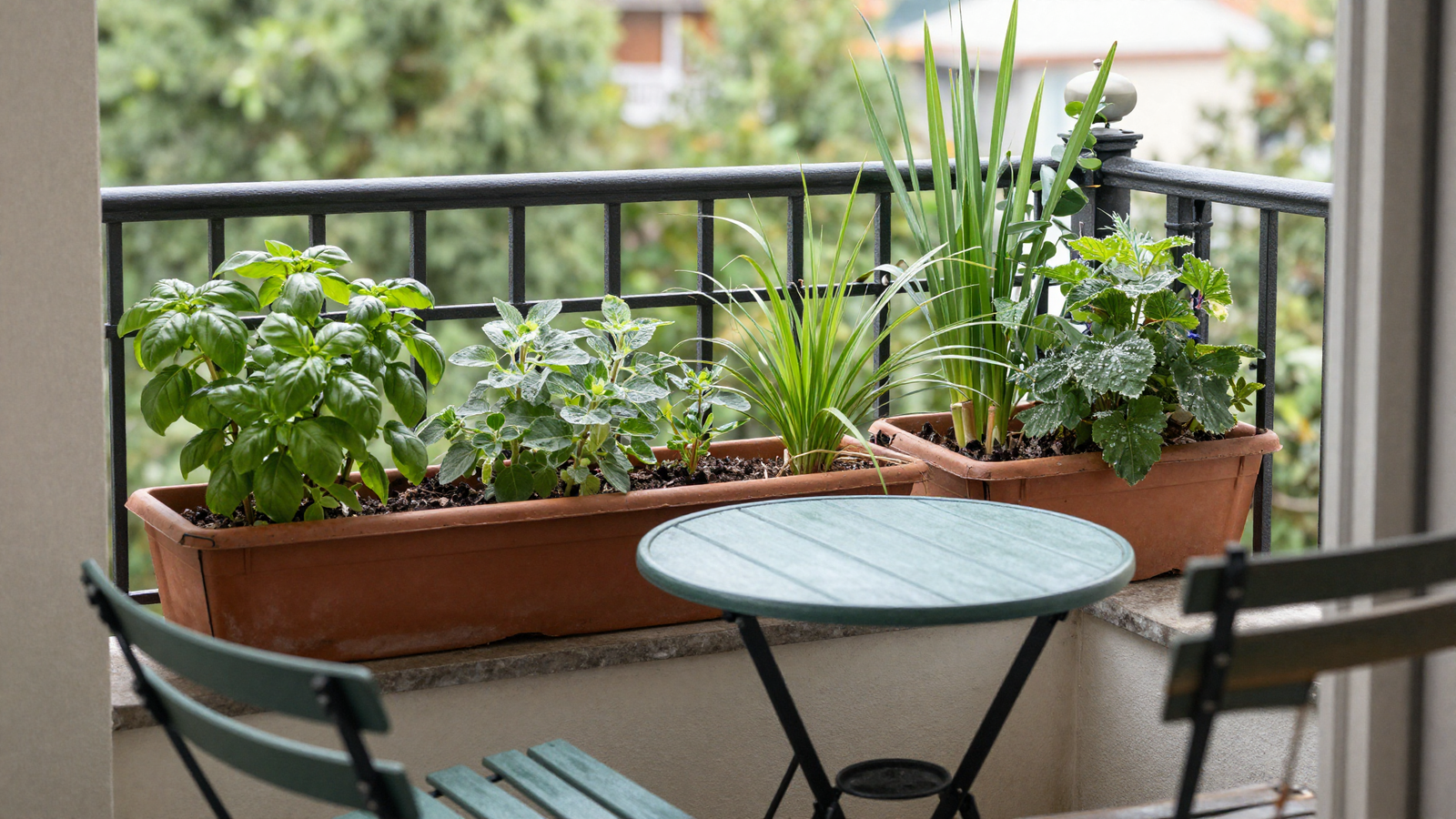
Growing aromatic herbs like basil, sage, and lemongrass right next to a small patio table turns a functional garden into a place you actually want to sit. The fragrance alone makes the corner feel more alive, and having fresh herbs within arm’s reach is a genuine everyday perk.
💡 Smart tip: Position window boxes along the railing closest to your seating so the herbs are easy to reach while you’re relaxing there.
⚠️ Mistake to avoid: Crowding too many herb varieties into one small box; give each plant enough room to establish healthy roots rather than competing for the same soil.
7. Add a Raised Boxwood Garden Bed for Your Patio Plant
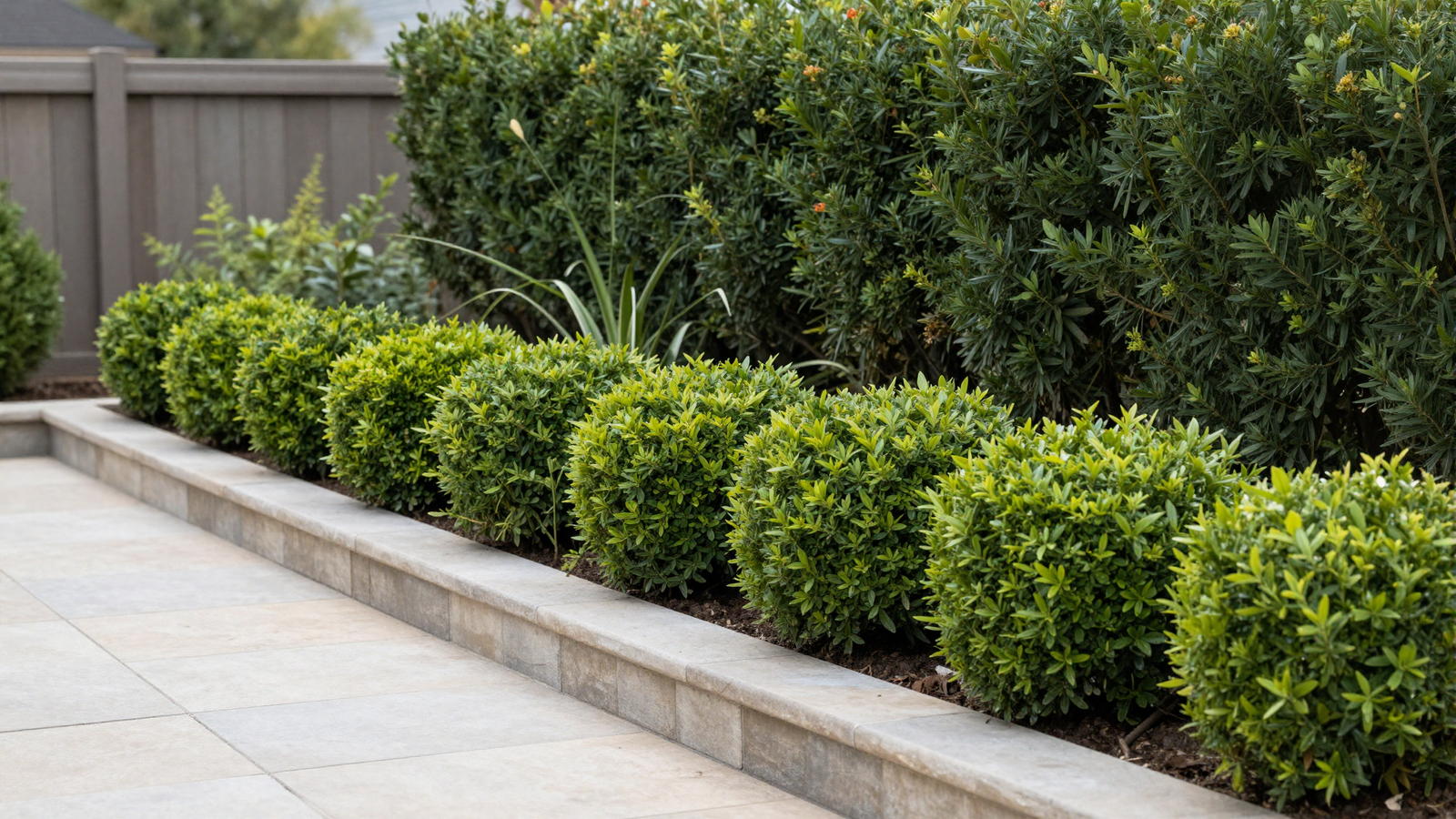
A raised bed lined with tidy boxwood shrubs brings a serene, structured feel to a patio, thanks to the uniform shape and low-maintenance nature of the plant. It’s a classic look that stays green year-round and requires far less upkeep than seasonal flowering plants.
💡 Smart tip: Trim boxwood shrubs on a regular schedule to maintain their clean uniform shape, since this look depends heavily on consistency.
⚠️ Mistake to avoid: Overwatering boxwood in a raised bed with poor drainage; root rot is one of the most common issues with this otherwise hardy plant.
8. Line Up Succulents on a Metal Rod for Your Patio Plant
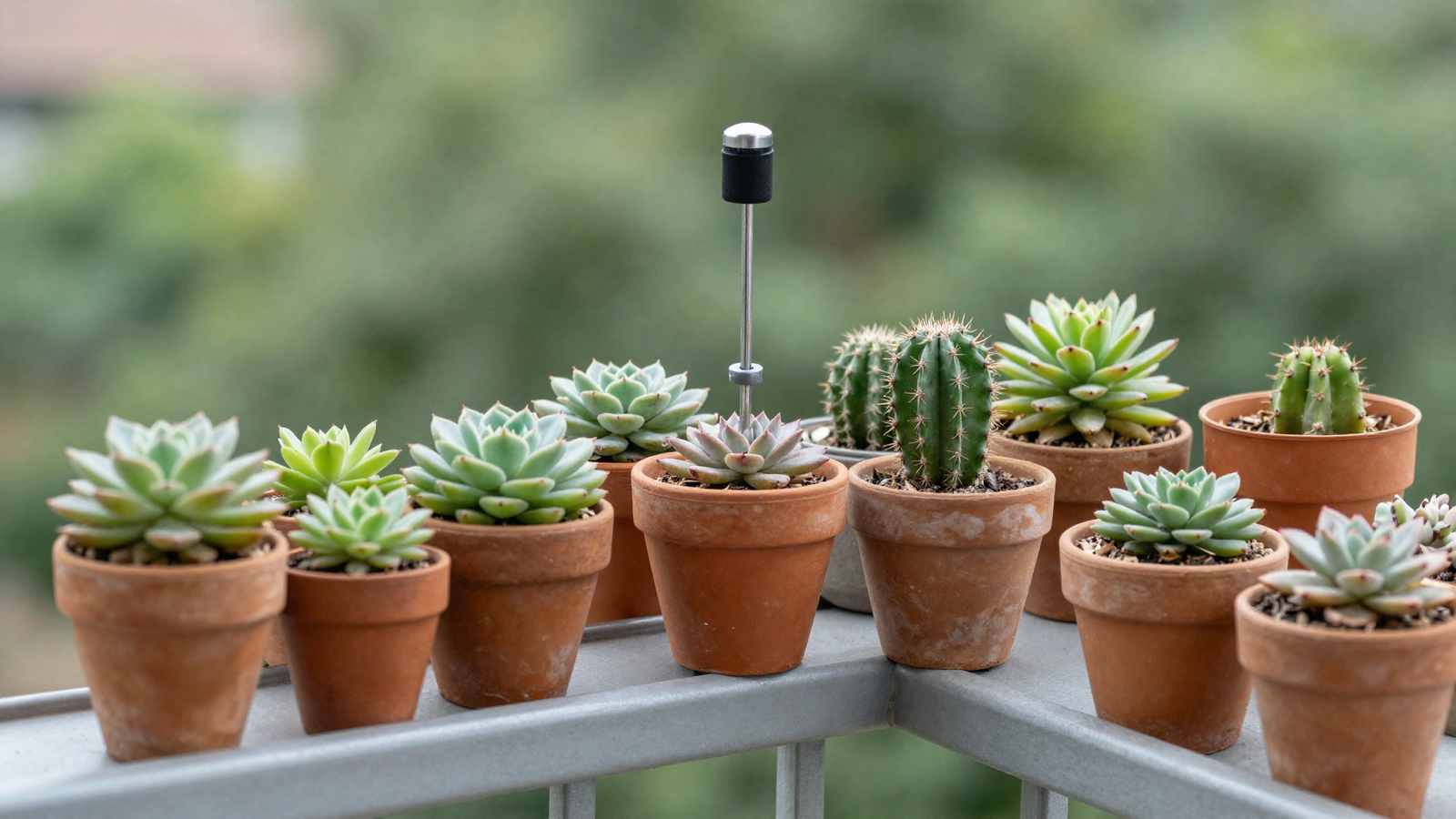
Succulents and cacti tolerate poor soil, drought, and small pots better than almost any other plant category, making them ideal for balconies with limited watering routines. Connecting a row of pots with a single metal rod also simplifies watering, letting you tend the whole line from the top in one pass.
💡 Smart tip: Use a well-draining cactus-specific soil mix rather than standard potting soil, which retains too much moisture for these drought-tolerant plants.
⚠️ Mistake to avoid: Watering succulents on the same schedule as other balcony plants; overwatering is the single most common way these low-maintenance plants actually die.
9. Drape Climbing Roses Over an Arbor
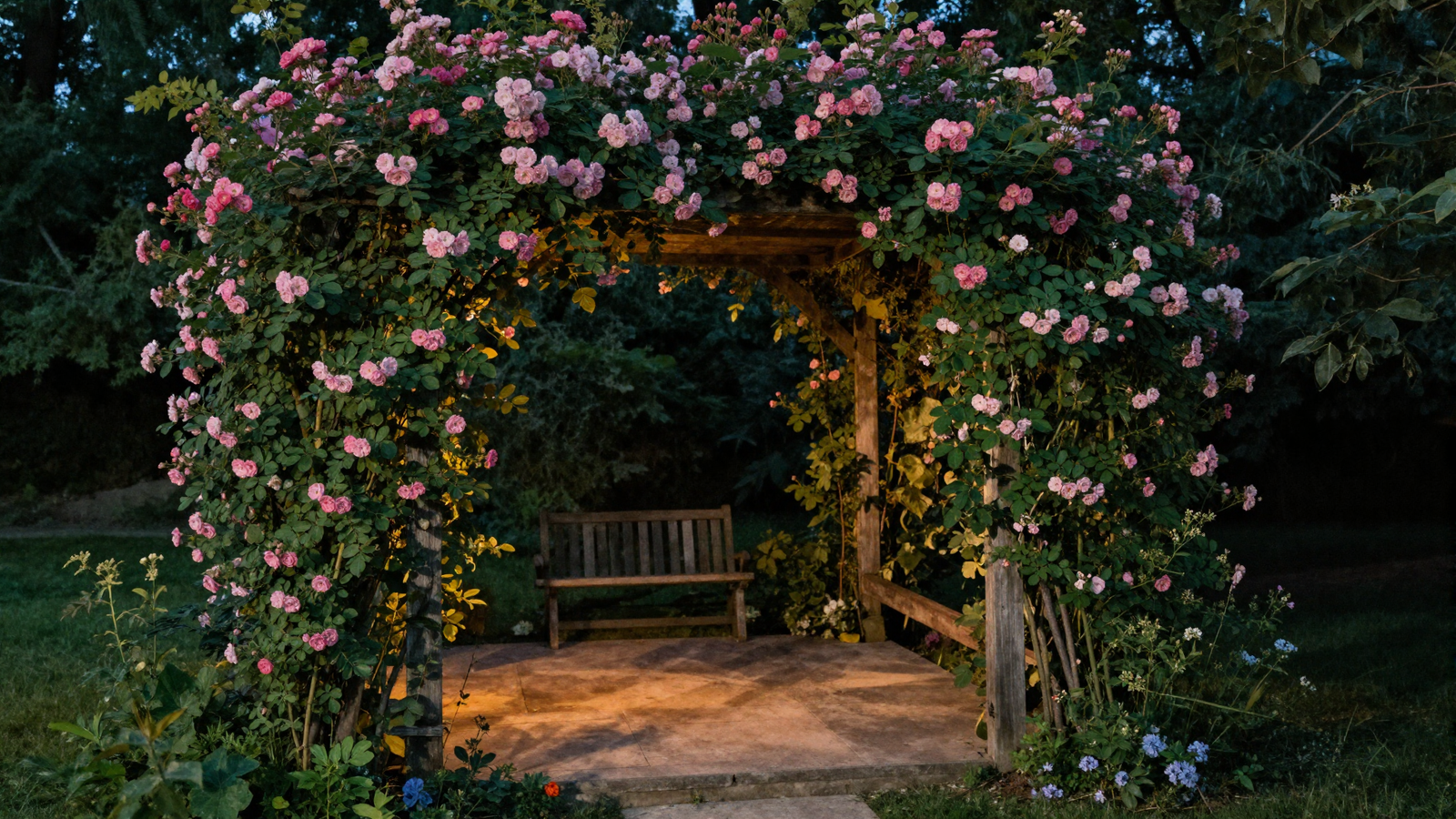
A wooden arbor covered in climbing roses brings genuine romance to a small patio, creating an entrance or seating area that feels almost cinematic. The greenery doesn’t just decorate the space — it essentially sets the whole mood on its own.
💡 Smart tip: Train young climbing roses along the arbor structure early with soft ties, guiding their growth before the canes become too rigid to redirect.
⚠️ Mistake to avoid: Choosing an arbor material that can’t support the eventual weight of mature, fully grown climbing roses; check the structure’s load capacity before planting.
10. Paint the Floor for a Color Oasis
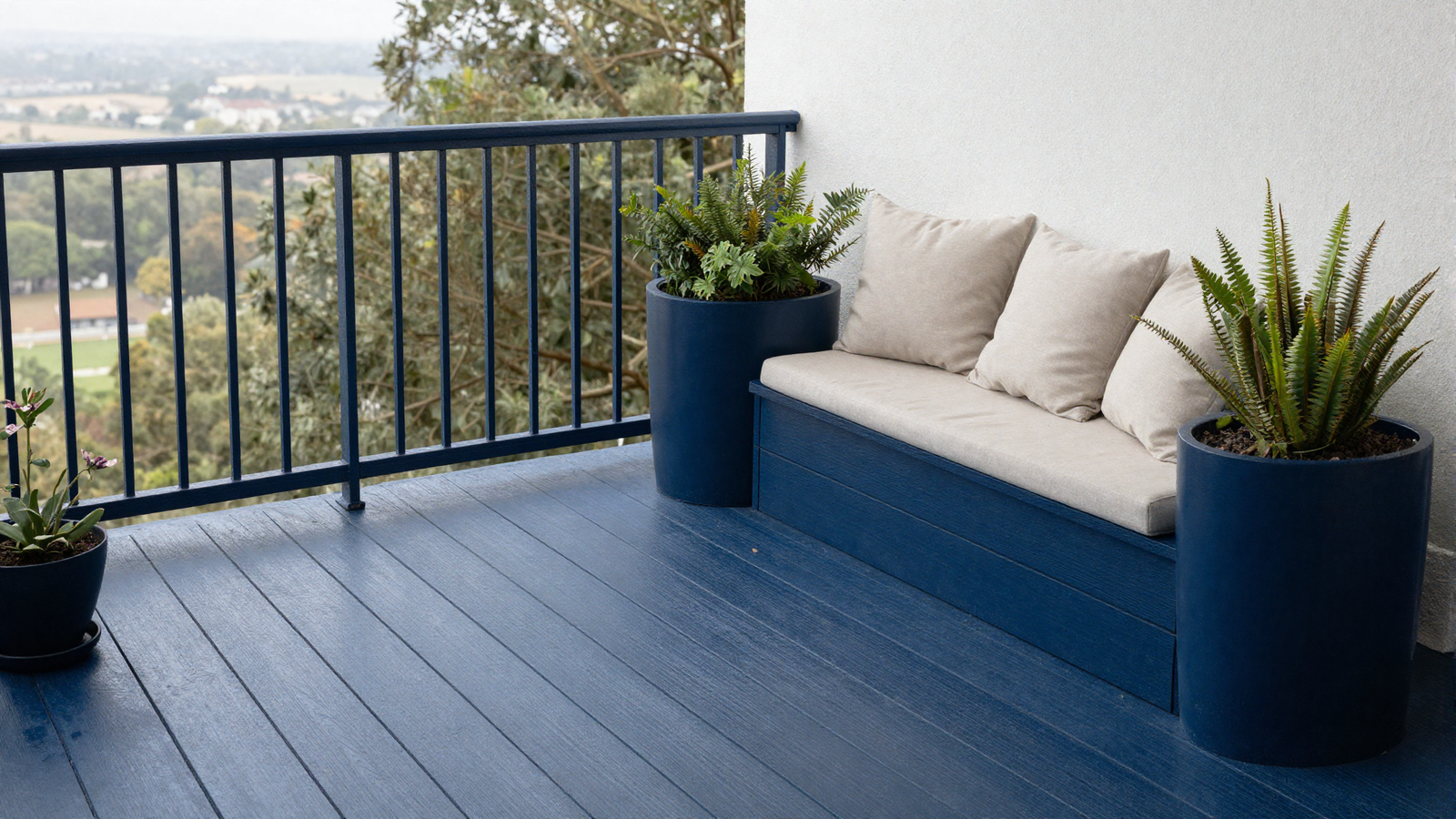
Painting balcony floor tiles a calming color like navy blue and matching a few planters to it creates a cohesive, peaceful oasis rather than a mismatched collection of furniture and pots. The color continuity is what pulls the whole small space together visually.
💡 Smart tip: Choose an exterior-rated paint specifically formulated for wood or composite decking, since standard interior paint won’t hold up to outdoor weather exposure.
⚠️ Mistake to avoid: Painting the entire floor a single saturated color without any neutral break; a few cream or beige accents keep the space from feeling one-dimensional.
11. Build a Low Cushion Green Nook
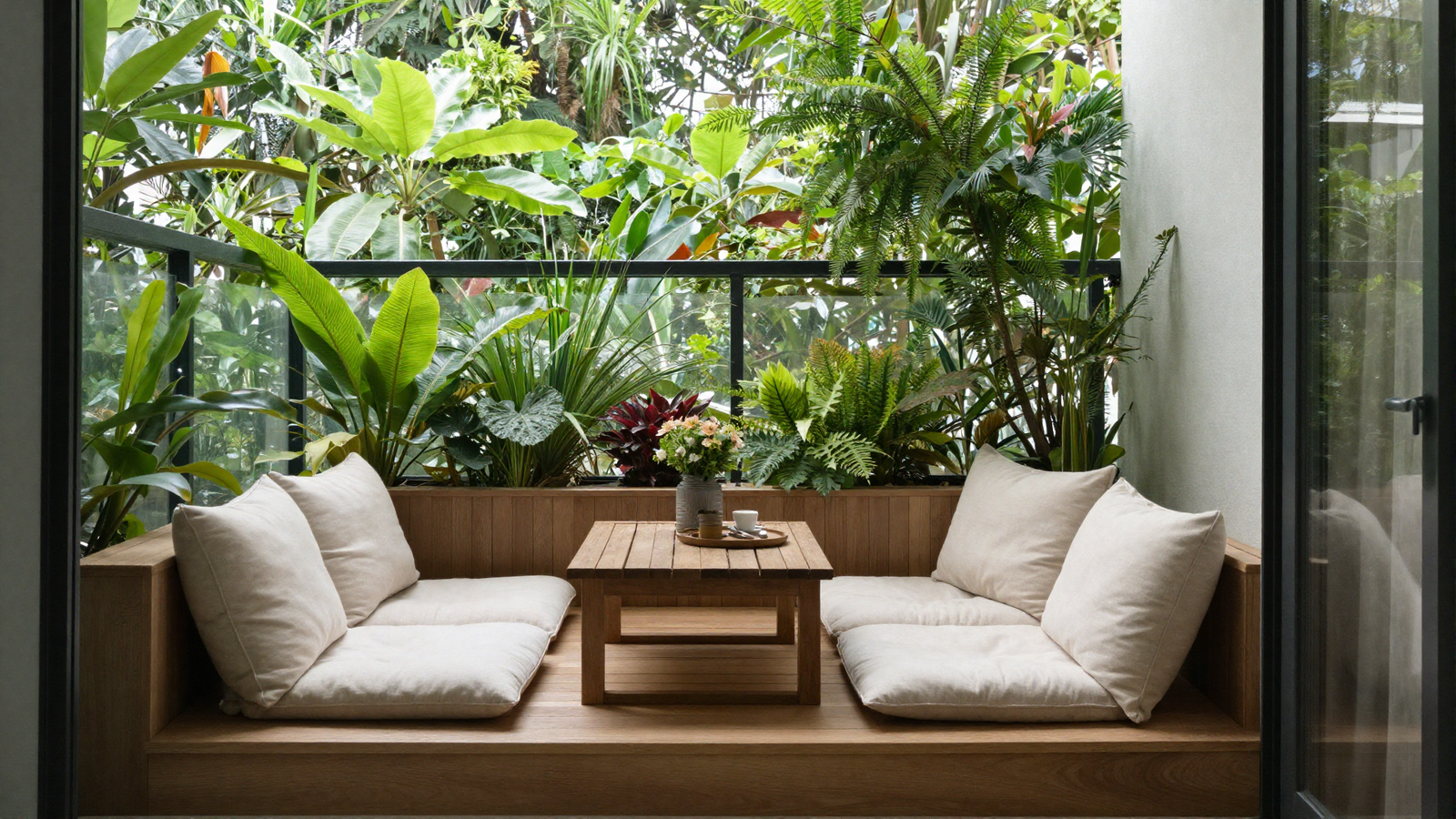
Skipping standard patio furniture for low floor cushions and a small table creates a relaxed, almost outdoor-living-room feel that standard chairs rarely achieve. Surrounding the seating with plants completes the sense of a fully enclosed, intimate retreat.
💡 Smart tip: Choose outdoor-rated cushion fabric that resists moisture and fading, since low seating tends to stay outside rather than being brought in each night.
⚠️ Mistake to avoid: Placing too many tall plants directly around low seating; keep taller greenery at the edges so it doesn’t block sightlines or make the nook feel closed in.
12. Create a Planter Privacy Wall
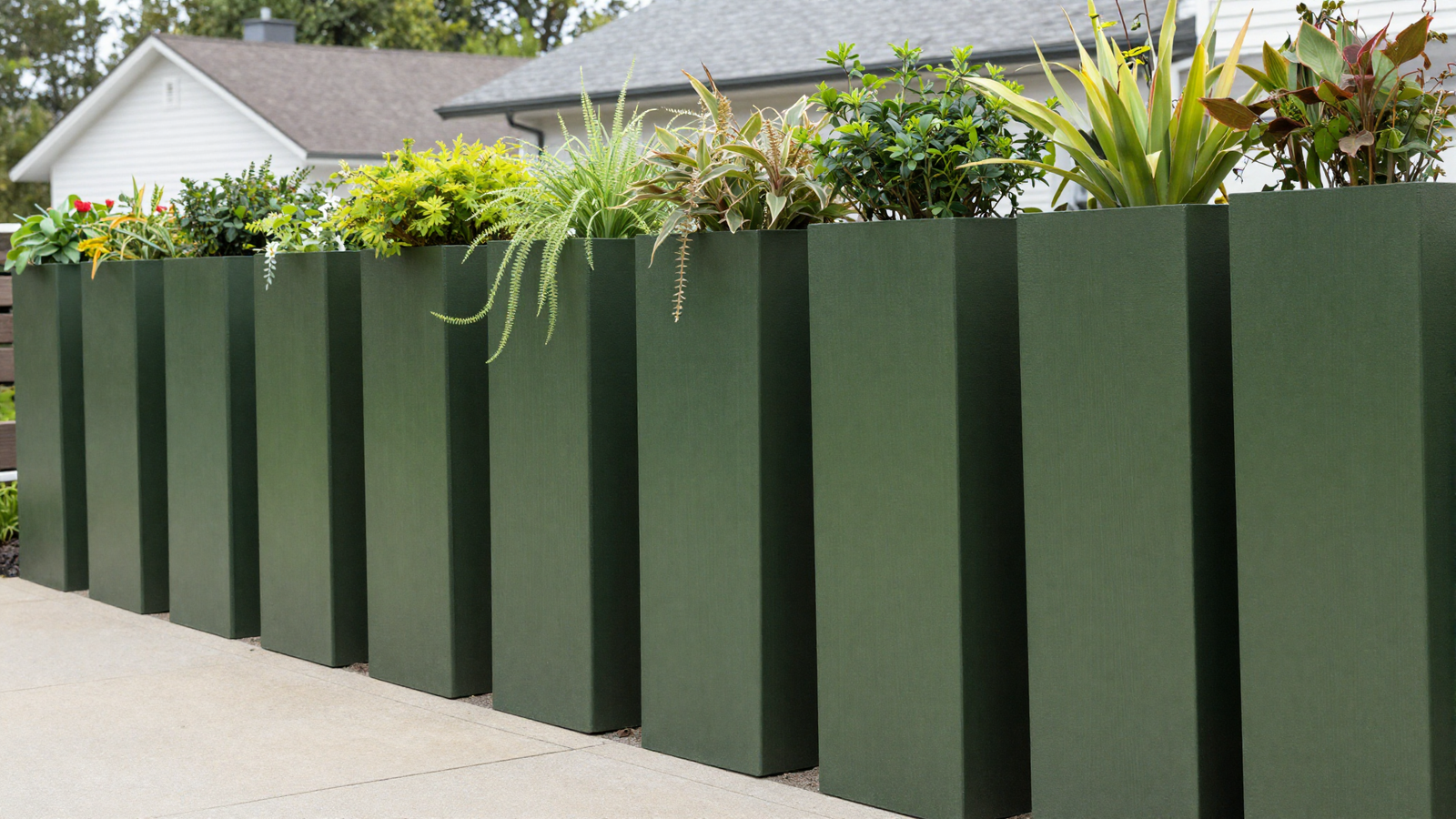
A row of tall planters along a patio edge does double duty, softening the space with greenery while also blocking sightlines from a neighboring window or busy street. Staggering the heights slightly gives the wall a more organic, less rigid feel than a perfectly uniform line.
💡 Smart tip: Choose evergreen varieties for a privacy planting so the screening effect holds up year-round, not just during the growing season.
⚠️ Mistake to avoid: Underestimating the mature size of fast-growing privacy plants; research full-grown dimensions before planting so the screen doesn’t outgrow its intended footprint.
13. Style a Minimalist Sculptural Corner
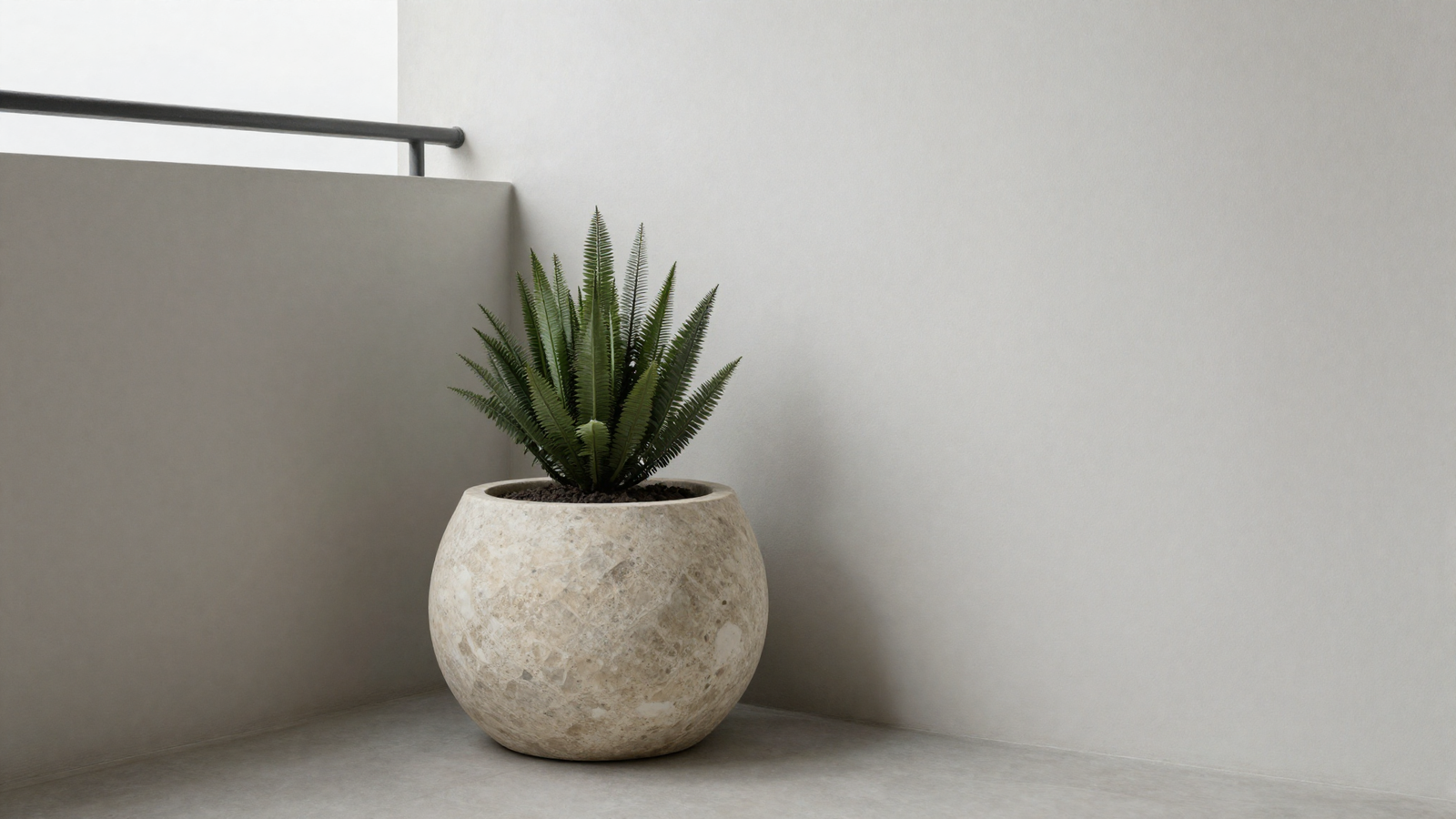
Rather than filling every inch, a minimalist balcony corner uses one strong sculptural planter and a single architectural plant to create a space that feels almost meditative. The restraint is the whole point — letting shape and texture carry the design instead of sheer volume.
💡 Smart tip: Choose one plant with genuinely striking form, like an architectural succulent or sculptural grass, so it can stand alone as the corner’s focal point.
⚠️ Mistake to avoid: Adding “just one more” small plant to a minimalist arrangement; resisting that urge is what keeps the look intentional rather than gradually cluttered.
14. Add a Copper Bowl Candle Vignette
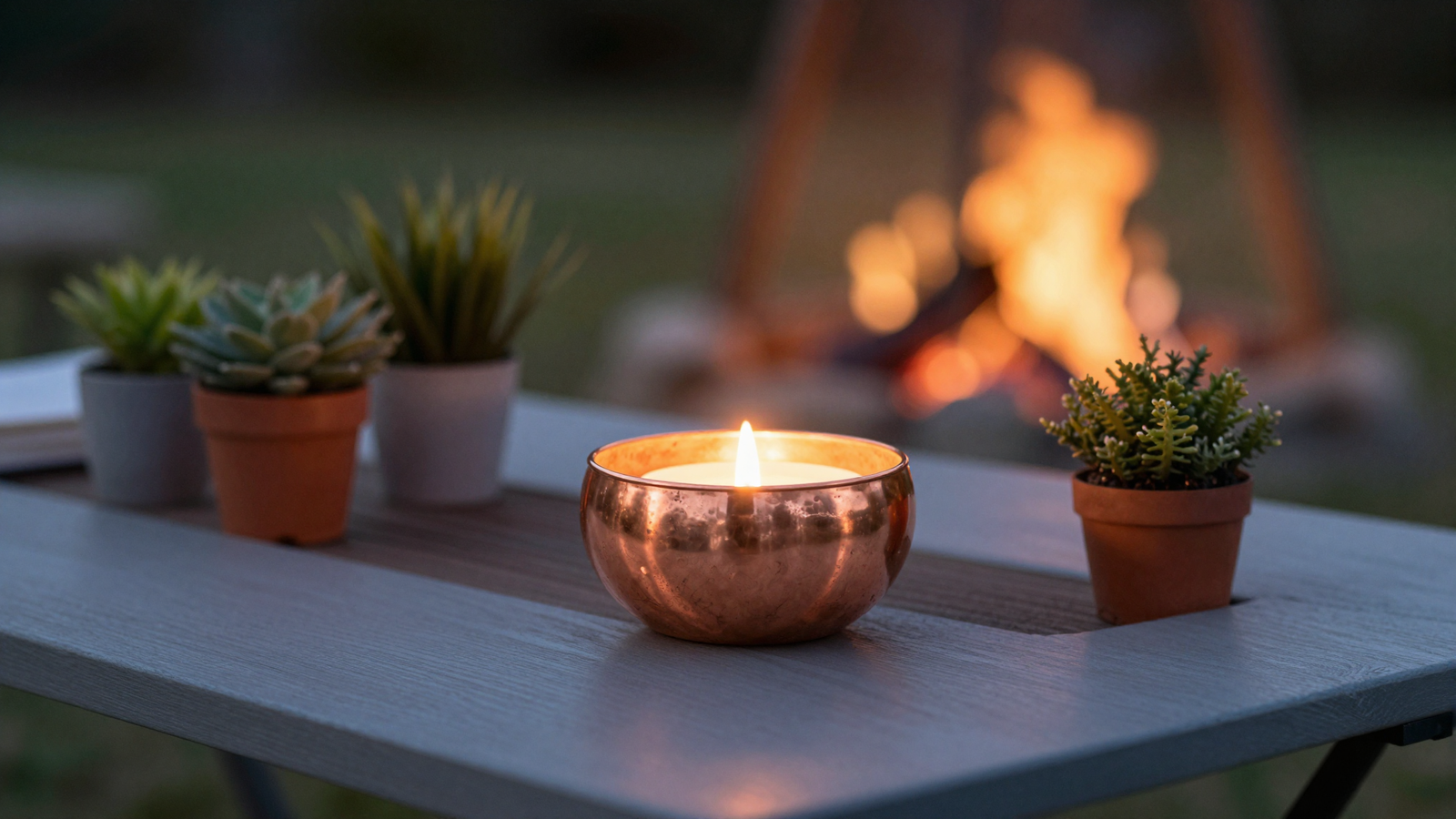
A copper bowl holding a lit candle, tucked among a few small potted plants, creates a warm evening focal point that turns a simple table into a genuine gathering spot. It’s a small styling detail that makes a real difference once the sun starts to set.
💡 Smart tip: Choose a wide, shallow copper bowl so the candlelight reflects off the metal surface, amplifying the glow beyond just the flame itself.
⚠️ Mistake to avoid: Placing an open flame too close to dry foliage or hanging plants; leave clear space between any candle and nearby greenery.
Effort & Cost Snapshot
| Idea | Effort | Approx. Cost |
|---|---|---|
| 1. Large Entry Planters | Low (purchase and place) | $100–$500 (pair) |
| 2. Vertical Living Wall | Medium (DIY install) | $100–$500 |
| 3. Potted Lemon Tree | Low (purchase and place) | $50–$200 |
| 4. Tiered Plant Stand | Low (assembly) | $40–$150 |
| 5. Colorful Trailing Flowers | Low (planting) | $30–$120 |
| 6. Herb Corner With Seating | Low–Medium (DIY setup) | $100–$400 |
| 7. Raised Boxwood Garden Bed | Medium–High (DIY build) | $150–$700 |
| 8. Succulent Metal Rod Row | Low (DIY) | $30–$100 |
| 9. Climbing Rose Arbor | Medium (DIY build) | $100–$400 |
| 10. Painted Floor Oasis | Medium (DIY paint) | $60–$200 |
| 11. Low Cushion Green Nook | Low (purchase and style) | $100–$400 |
| 12. Planter Privacy Wall | Medium (purchase and place) | $150–$600 |
| 13. Minimalist Sculptural Corner | Low (purchase and place) | $80–$300 |
| 14. Copper Bowl Candle Vignette | Low (purchase and style) | $30–$100 |
A small outdoor space doesn’t need to be big to feel like a genuine retreat — it just needs enough greenery and a little intention to come together. Save this list to Pinterest so you can bring these ideas into your own balcony or patio at your own pace.
Continue Your Home Transformation
Explore the full collection of step-by-step eBooks and get the guide that fits the room you're working on.