Plants and Nature Decor
Getting the kitchen herb garden right makes the biggest difference in how the space actually feels day to day. A well-planned kitchen herb garden balances function and style, and even small tweaks to your kitchen herb garden can transform the whole area.
If you’ve ever reached for dried herbs while cooking, only to find them flavorless and years past their prime, you already know the case for growing your own. A kitchen herb garden solves that problem completely, and it does something else at the same time — it fills an often-overlooked surface with real color and life.
By the end of this article, you’ll have 10 real, current ways to bring fresh herbs into your kitchen so the space feels both more functional and more alive.
Table of Contents
- 1. Line the Windowsill With a Herb Row
- 2. Mount a Vertical Planter Wall
- 3. Hang Trailing Herbs Near the Window
- 4. Style Herbs in a Reclaimed Wood Crate
- 5. Build a Mason Jar Herb Wall
- 6. Grow a Countertop Hydroponic Plant
- 7. Light Up a Dark Corner With Grow Lights
- 8. Collect Bold Painted Herb Pots
- 9. Layer Herbs With a Tiered Hanging System
- 10. Display Herbs in a Glass Terrarium
- Effort & Cost Snapshot
1. Line the Windowsill With a Herb Row for Your Kitchen Herb Garden
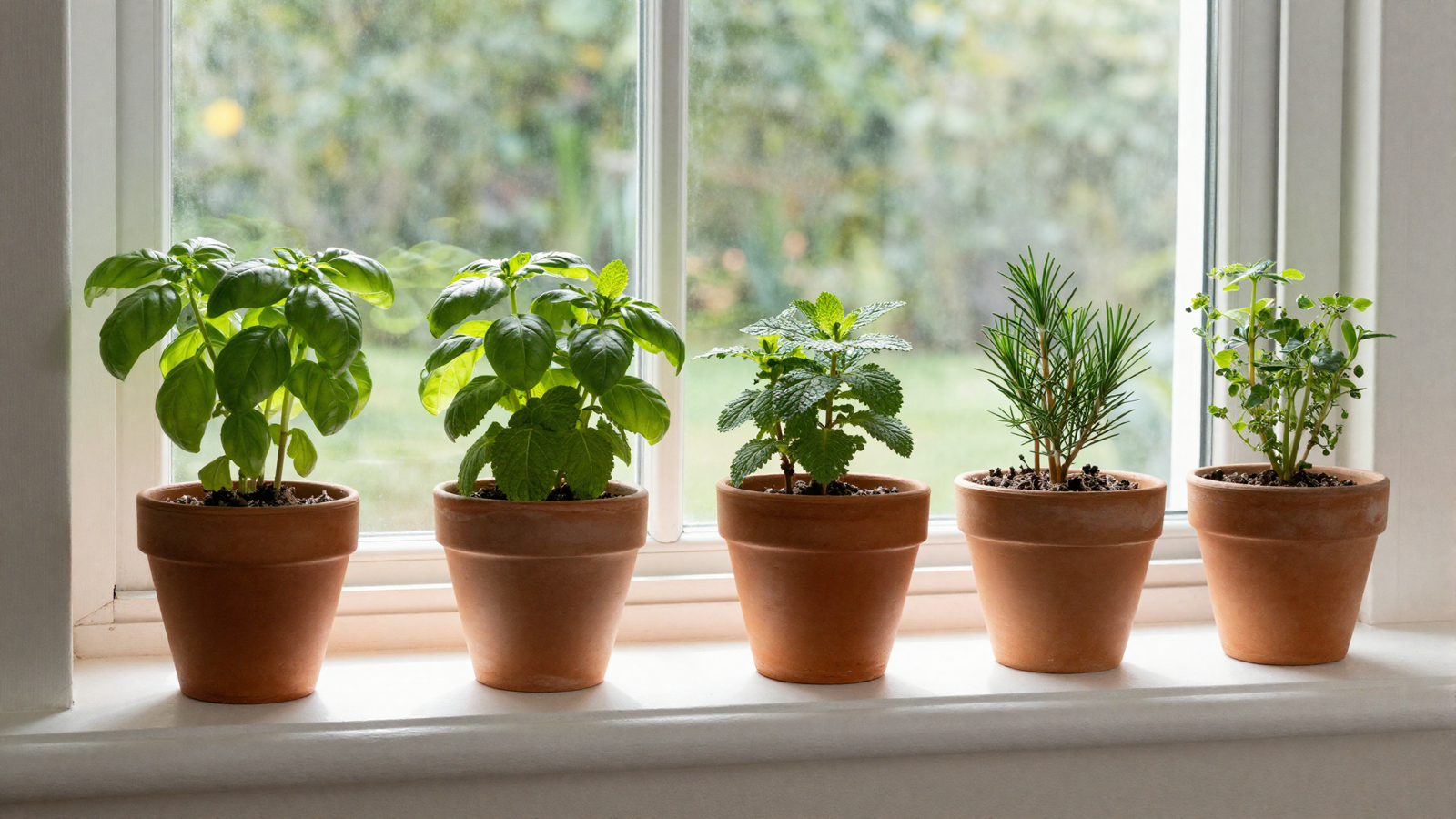
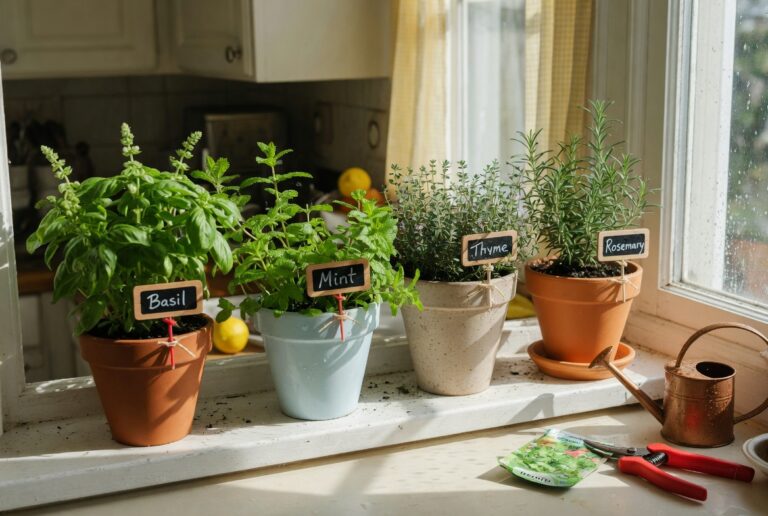
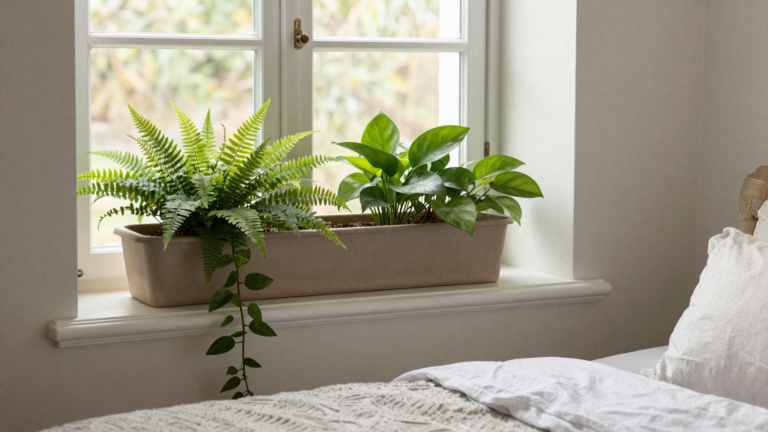
A simple row of pots along a sunny windowsill remains the easiest way to start an indoor herb garden, since it needs no extra hardware or installation. Basil, mint, and rosemary all thrive in this setup, and having them in clear view makes you far more likely to actually use them while cooking.
💡 Smart tip: Group herbs with similar watering needs together on the sill, so you’re not overwatering one plant while underwatering its neighbor.
⚠️ Mistake to avoid: Placing herbs on a windowsill that gets scorching afternoon sun without any relief; some herbs like mint can wilt in prolonged direct heat despite loving bright light overall.
2. Mount a Vertical Planter Wall for Your Kitchen Herb Garden
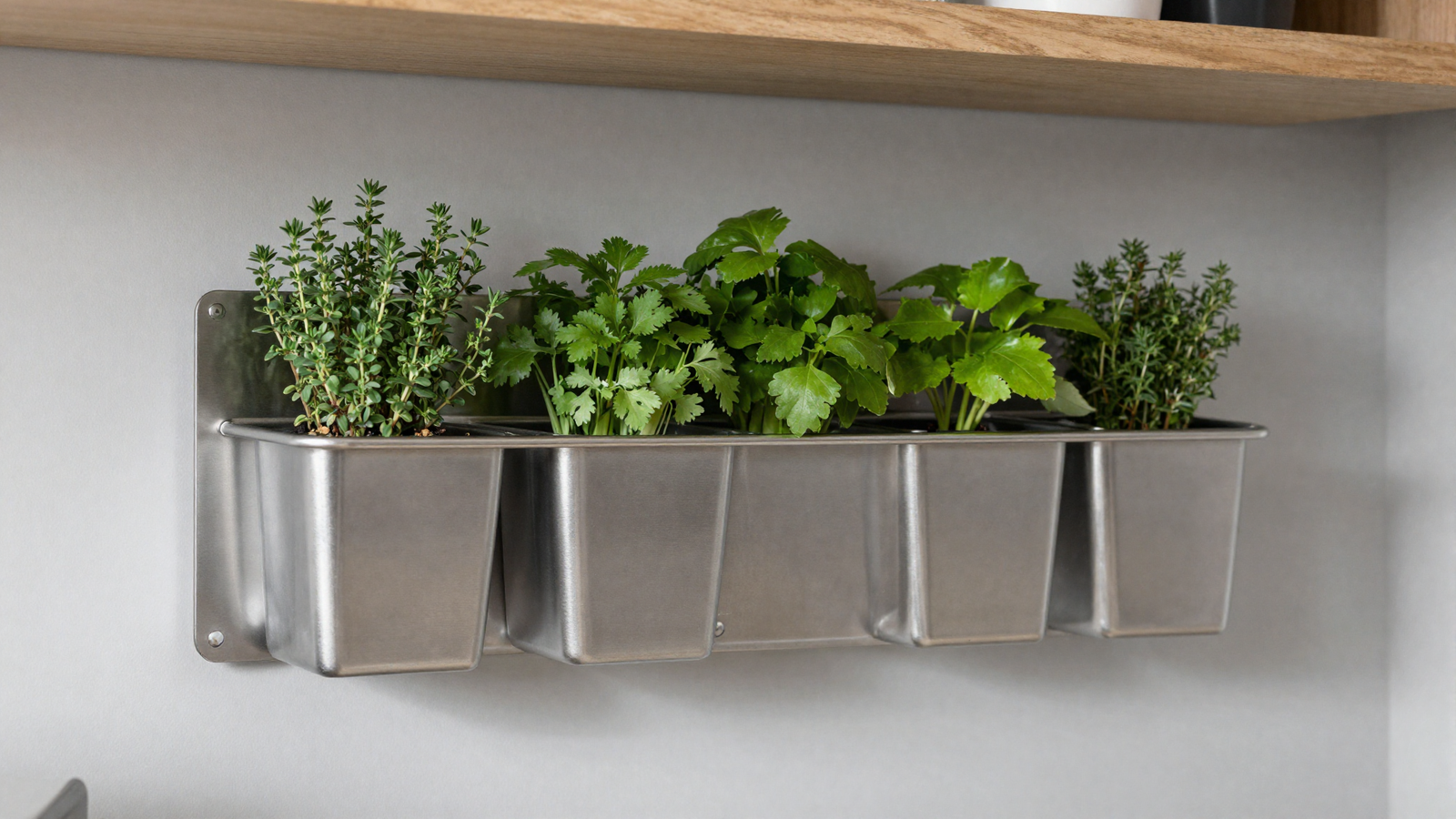
A wall-mounted vertical planter system turns a blank kitchen wall into a living herb garden without using an inch of counter space. Metal or ceramic containers give the setup a clean, modern look that contrasts beautifully against the vibrant green of the herbs themselves.
💡 Smart tip: Mount the system near your prep area rather than across the kitchen, so snipping fresh herbs mid-recipe stays quick and convenient.
⚠️ Mistake to avoid: Installing a vertical wall planter without a drip tray or sealed backing; water runoff can damage drywall behind the mounted system over time.
3. Hang Trailing Herbs Near the Window for Your Kitchen Herb Garden
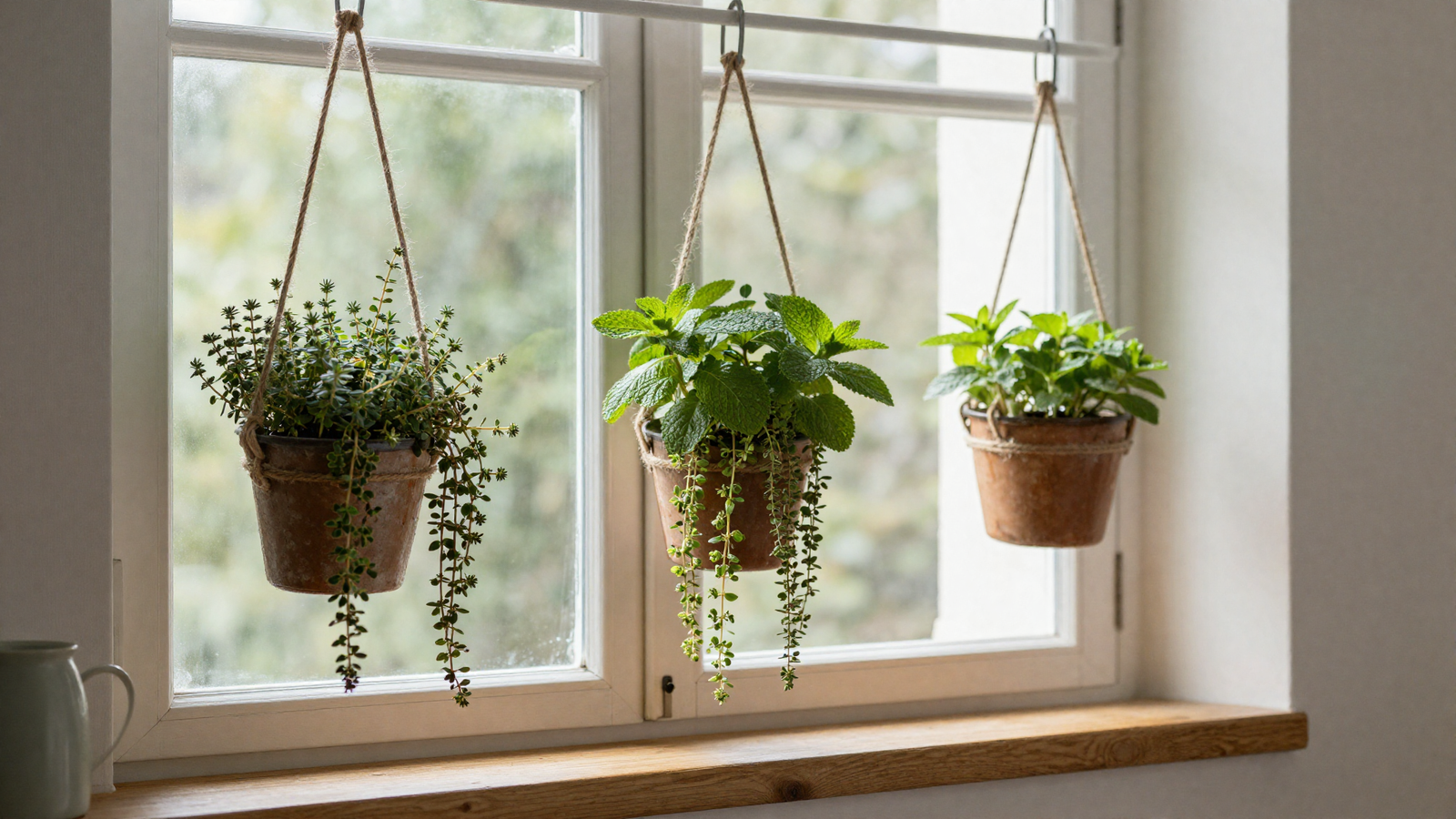
Suspending baskets from wall brackets or a ceiling hook near a bright window creates a stylish, space-saving herb garden that trails gracefully as it grows. Herbs like oregano, thyme, and mint handle this setup particularly well, since their natural growth habit already leans toward spilling over the edges of a pot.
💡 Smart tip: Use sturdy twine or rope rather than thin string for hanging baskets; soil gets noticeably heavier once watered, and a weak line can snap unexpectedly.
⚠️ Mistake to avoid: Hanging baskets too close to the window glass in winter; cold glass can chill roots even when the rest of the kitchen feels warm.
Loving These Ideas? Get the Step-by-Step Guide
Grab the full 5-day eBook and turn these ideas into a finished room.




4. Style Herbs in a Reclaimed Wood Crate
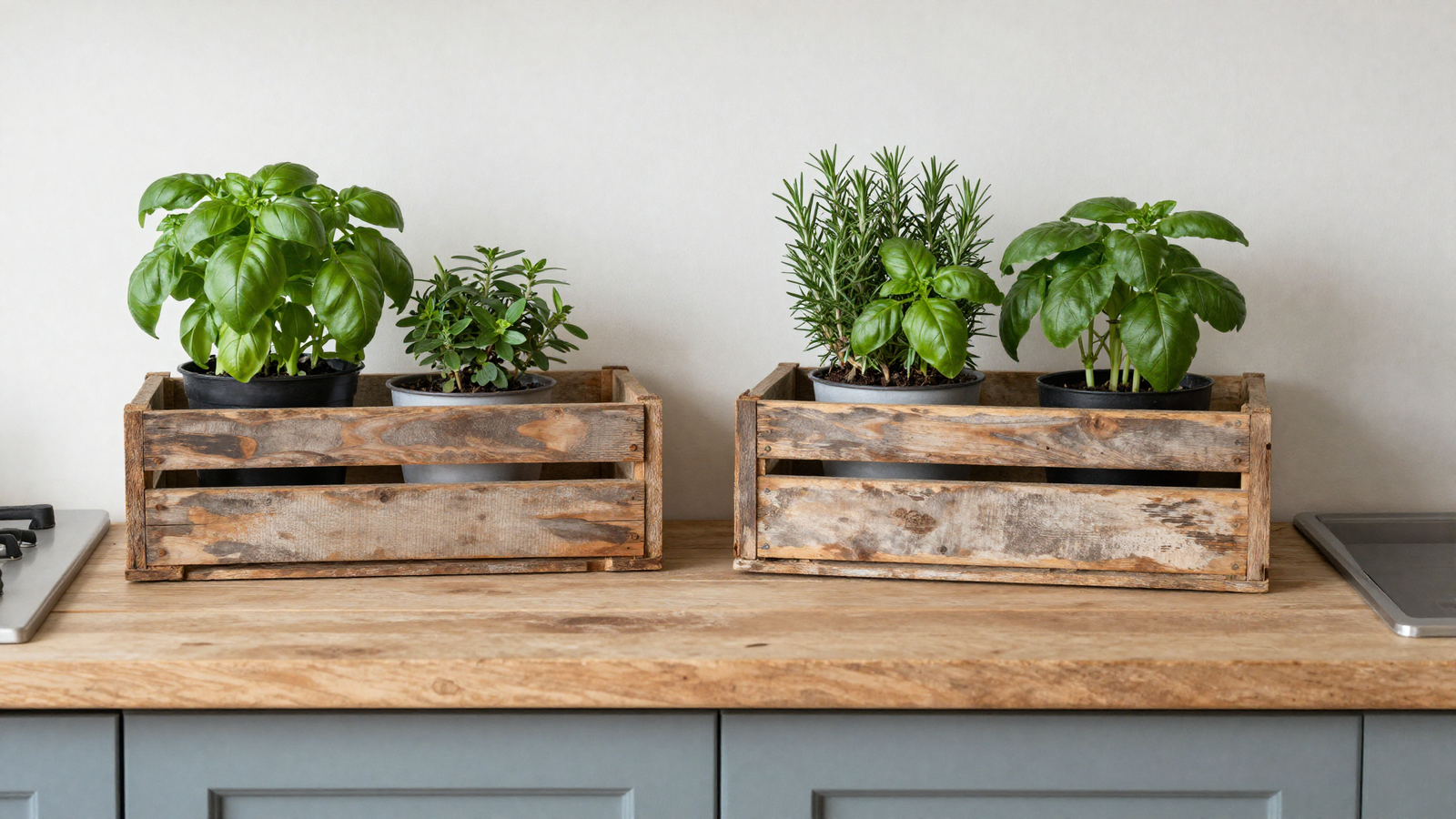
A weathered wooden crate lined with small potted herbs brings an instant rustic, farmhouse feel to a countertop without much effort at all. It’s a simple way to group several herbs into one cohesive display rather than scattering individual pots across the counter.
💡 Smart tip: Line the inside of the crate with a waterproof tray or liner before adding pots, so watering doesn’t warp or stain the reclaimed wood underneath.
⚠️ Mistake to avoid: Overcrowding a small crate with too many pots; herbs need enough airflow between them to avoid mildew in a humid kitchen environment.
5. Build a Mason Jar Herb Wall
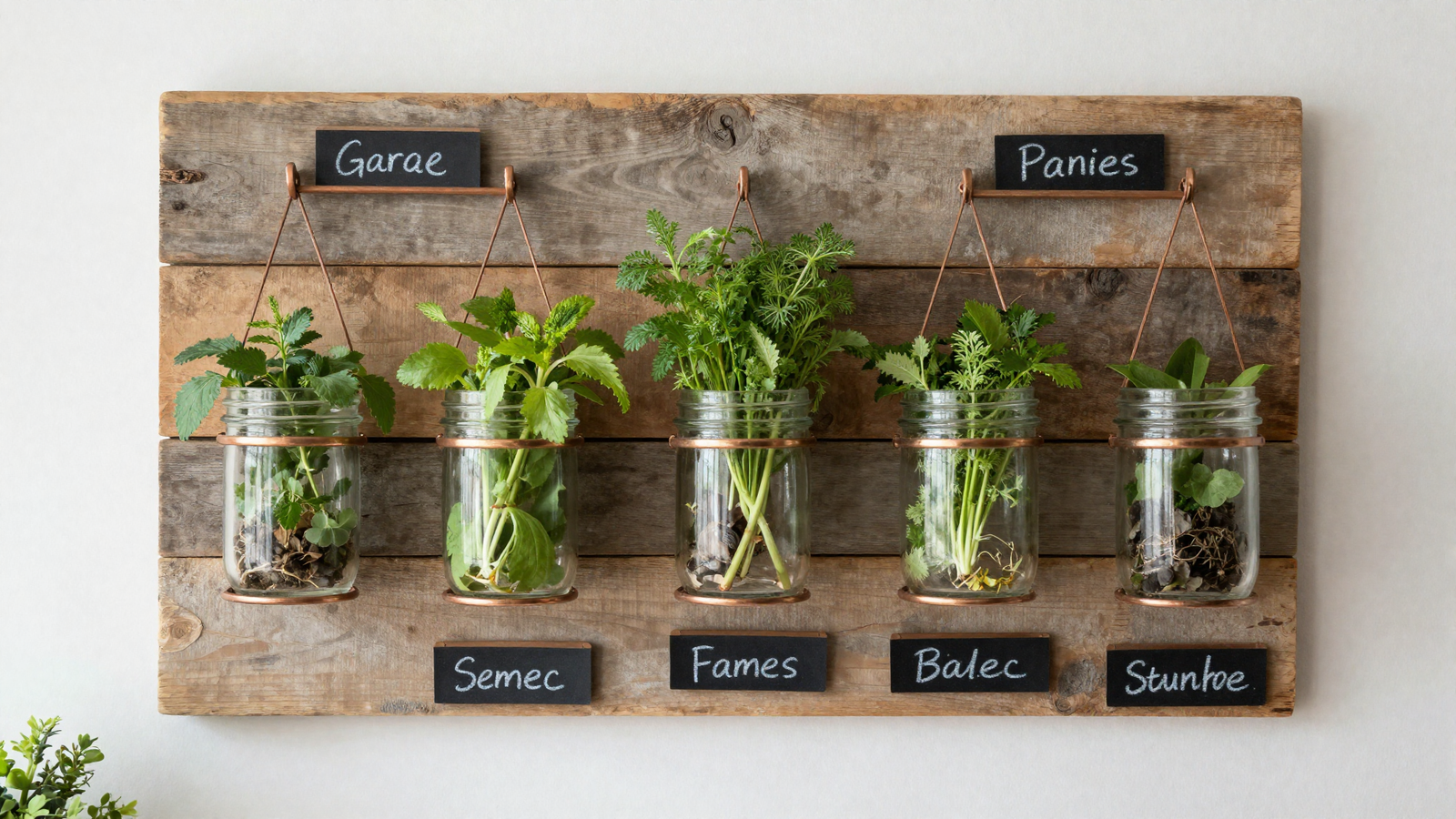
Mason jars mounted on a reclaimed wood plank with copper bands create a vertical, functional herb display that’s unmistakably handmade in the best way. Adding chalkboard labels for each jar means you can rewrite them easily as your herb rotation changes with the seasons.
💡 Smart tip: Drill or punch small drainage holes in the base of each mason jar before planting, since standard jars have no built-in drainage of their own.
⚠️ Mistake to avoid: Skipping drainage entirely and hoping the herbs will adjust; standing water at the bottom of a sealed jar leads to root rot fairly quickly.
6. Grow a Countertop Hydroponic Plant
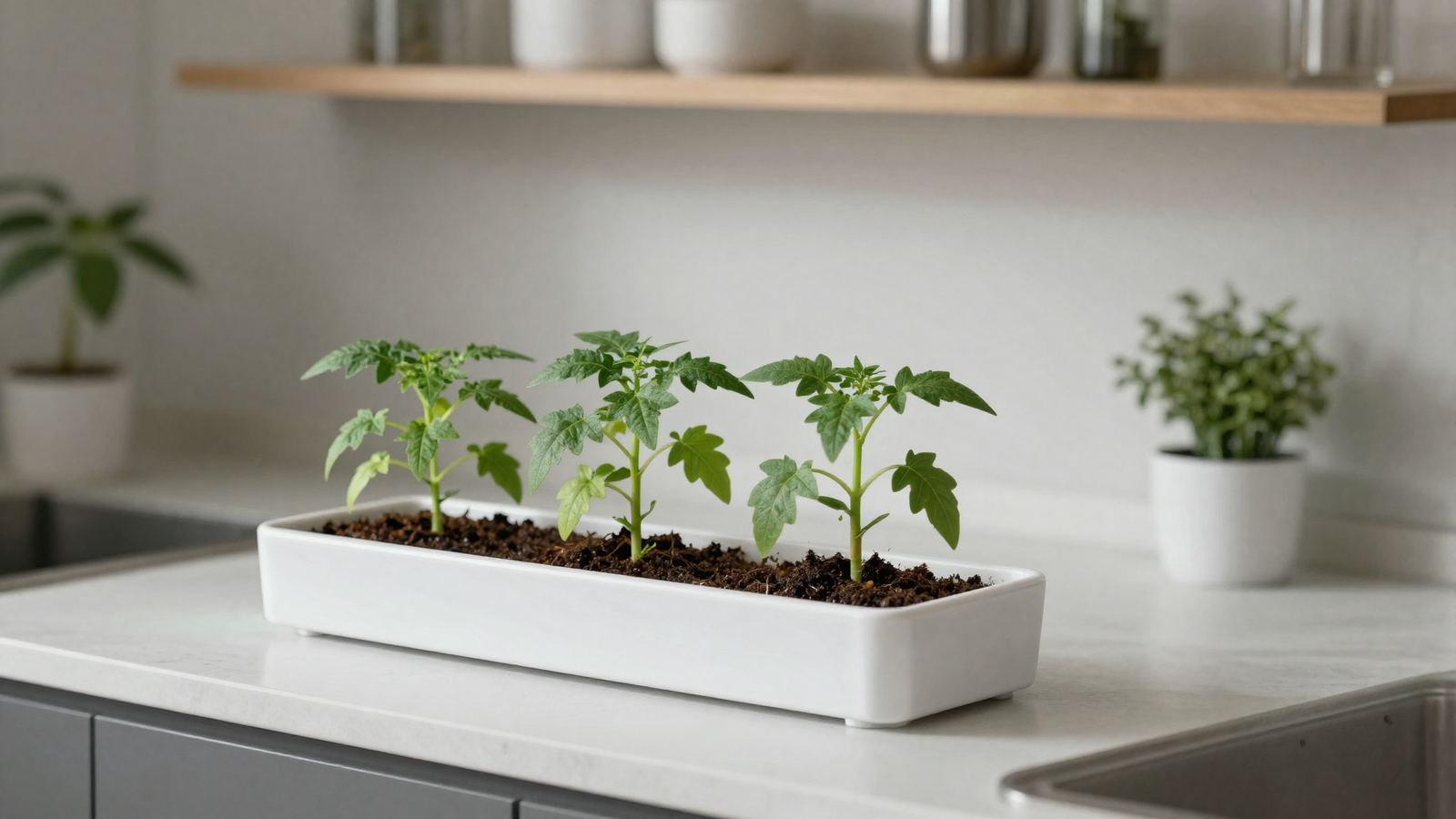
Tabletop vegetables are having a real moment, and a compact hydroponic setup growing dwarf tomatoes or peppers doubles as both decor and a genuine food source. Unlike a bouquet of cut flowers, this kind of living centerpiece keeps producing for weeks or months rather than fading within days.
💡 Smart tip: Choose a hydroponic system with a built-in light indicator for nutrient levels, which takes the guesswork out of feeding schedules for beginners.
⚠️ Mistake to avoid: Placing a hydroponic unit somewhere it doesn’t get enough direct sunlight through a window; most fruiting plants need considerably more light than leafy herbs do.
7. Light Up a Dark Corner With Grow Lights
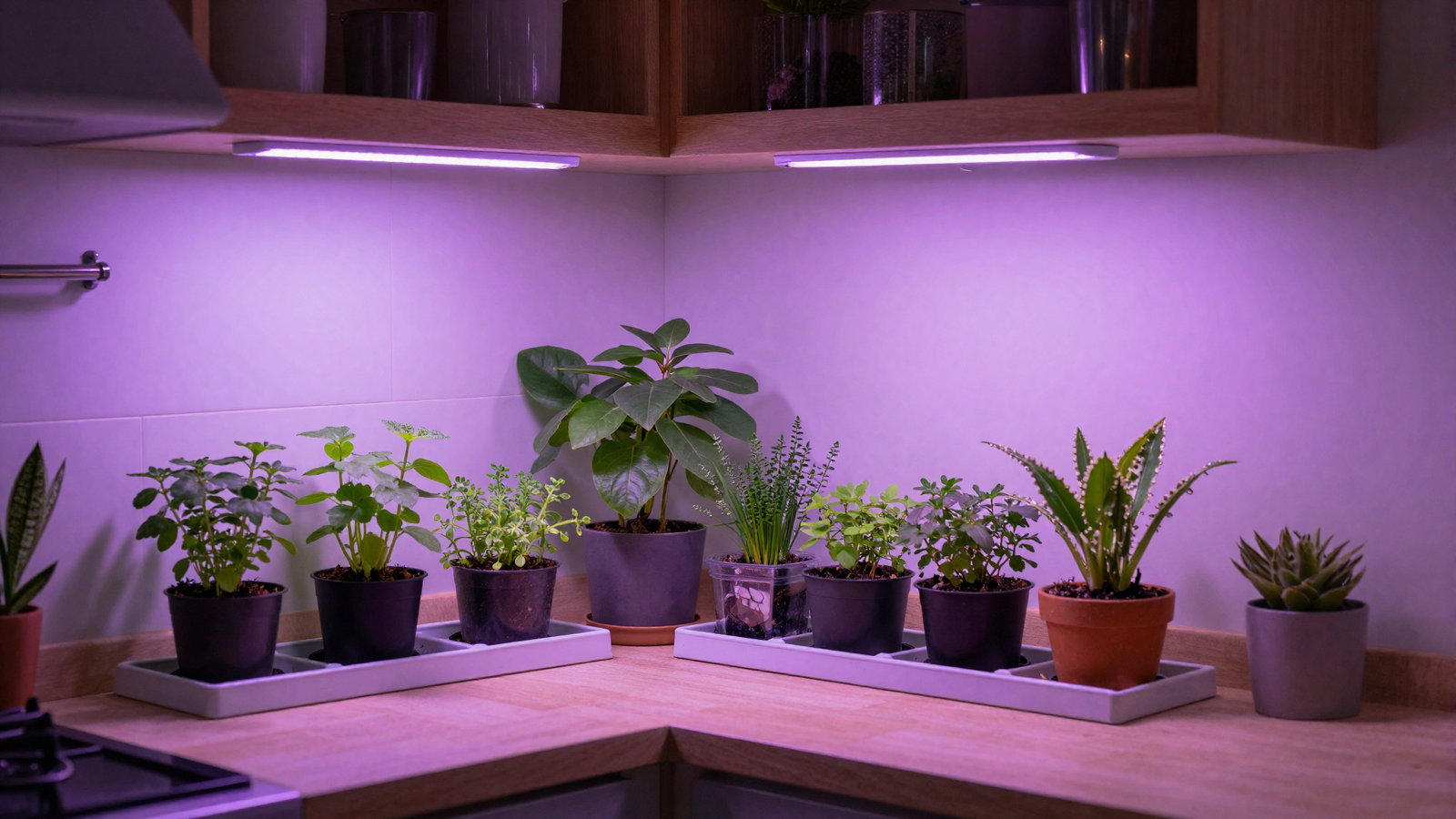
A dim, underused kitchen corner can become a thriving herb garden with the addition of a simple LED grow light strip, no natural window access required. The soft glow adds an unexpected decorative element after dark, beyond just the practical benefit of healthy plant growth.
💡 Smart tip: Put grow lights on a timer set for 12 to 14 hours a day, since most herbs need a consistent light cycle rather than round-the-clock exposure.
⚠️ Mistake to avoid: Positioning the grow light too far from the plants; most LED grow lights need to sit within several inches of the foliage to be genuinely effective.
8. Collect Bold Painted Herb Pots
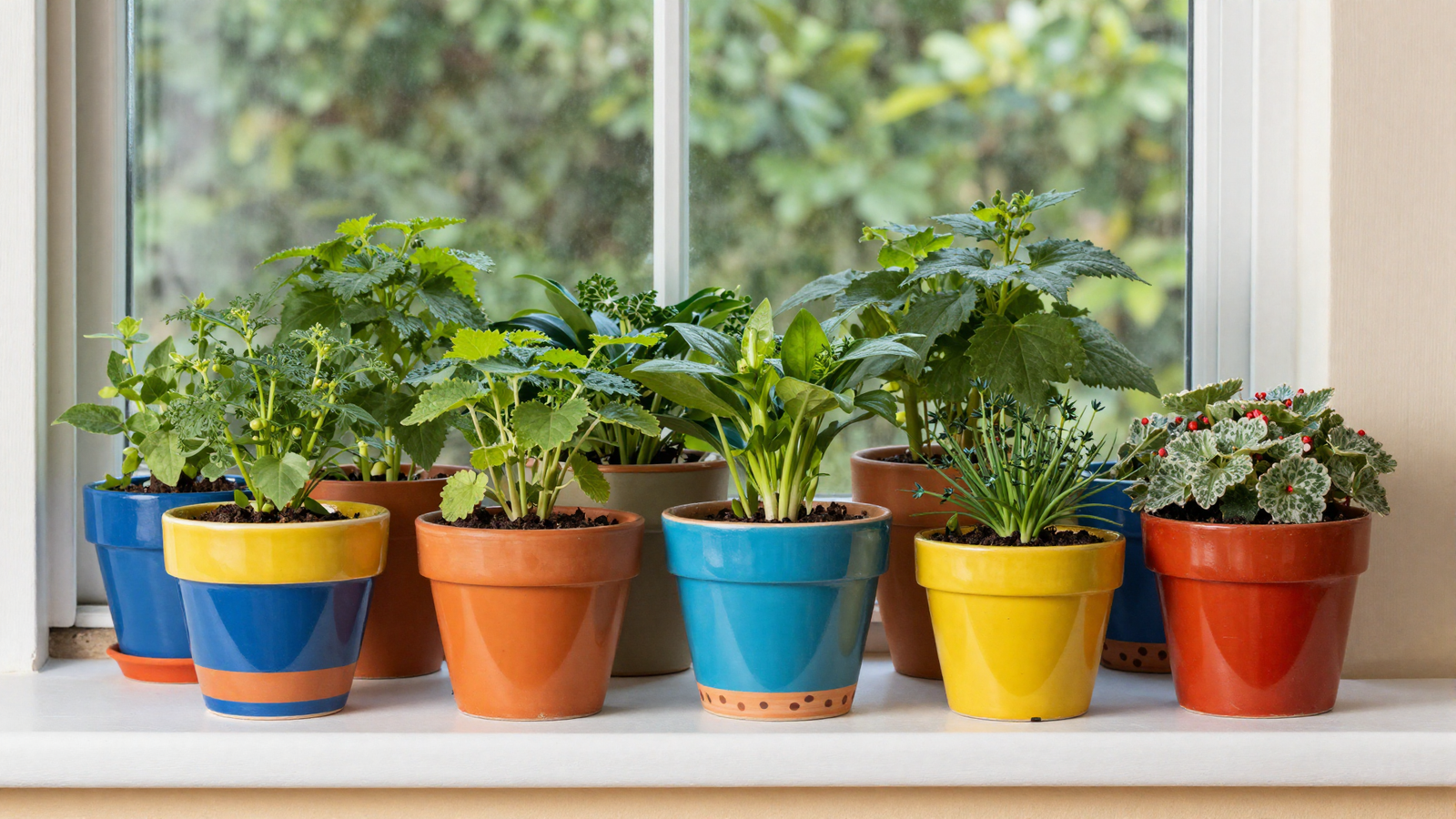
Swapping plain terracotta for vibrant, painted pots turns a functional herb garden into a genuine style statement on the windowsill. Bold hues or playful patterns bring a lively pop of color to a kitchen, especially in a space that otherwise leans neutral.
💡 Smart tip: Pick two or three coordinating colors rather than a completely random mix, so the collection reads as curated instead of mismatched.
⚠️ Mistake to avoid: Choosing painted pots without drainage holes for the sake of appearance; add a layer of gravel at the bottom or drill holes yourself before planting.
9. Layer Herbs With a Tiered Hanging System
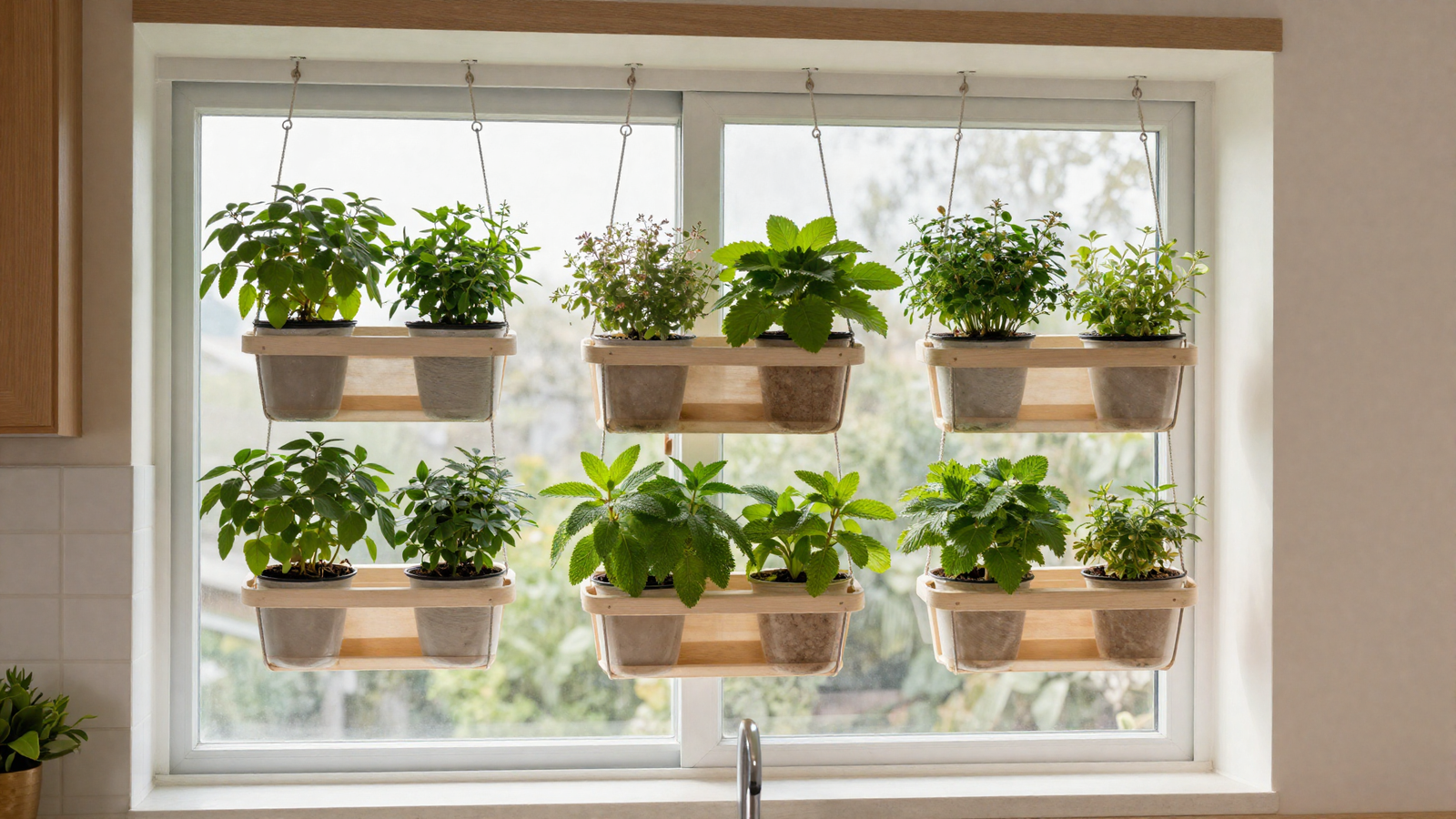
Suspending multiple planters at different heights near a window creates a layered, floating herb garden that adds real dimension without taking up any counter space at all. It’s an especially smart solution in small kitchens where surface area is already at a premium.
💡 Smart tip: Place herbs that need the most light on the top tier, since lower tiers will naturally receive somewhat less direct sun throughout the day.
⚠️ Mistake to avoid: Overloading the top hook of a tiered system beyond its weight rating; the combined weight of several watered planters adds up faster than it looks.
10. Display Herbs in a Glass Terrarium
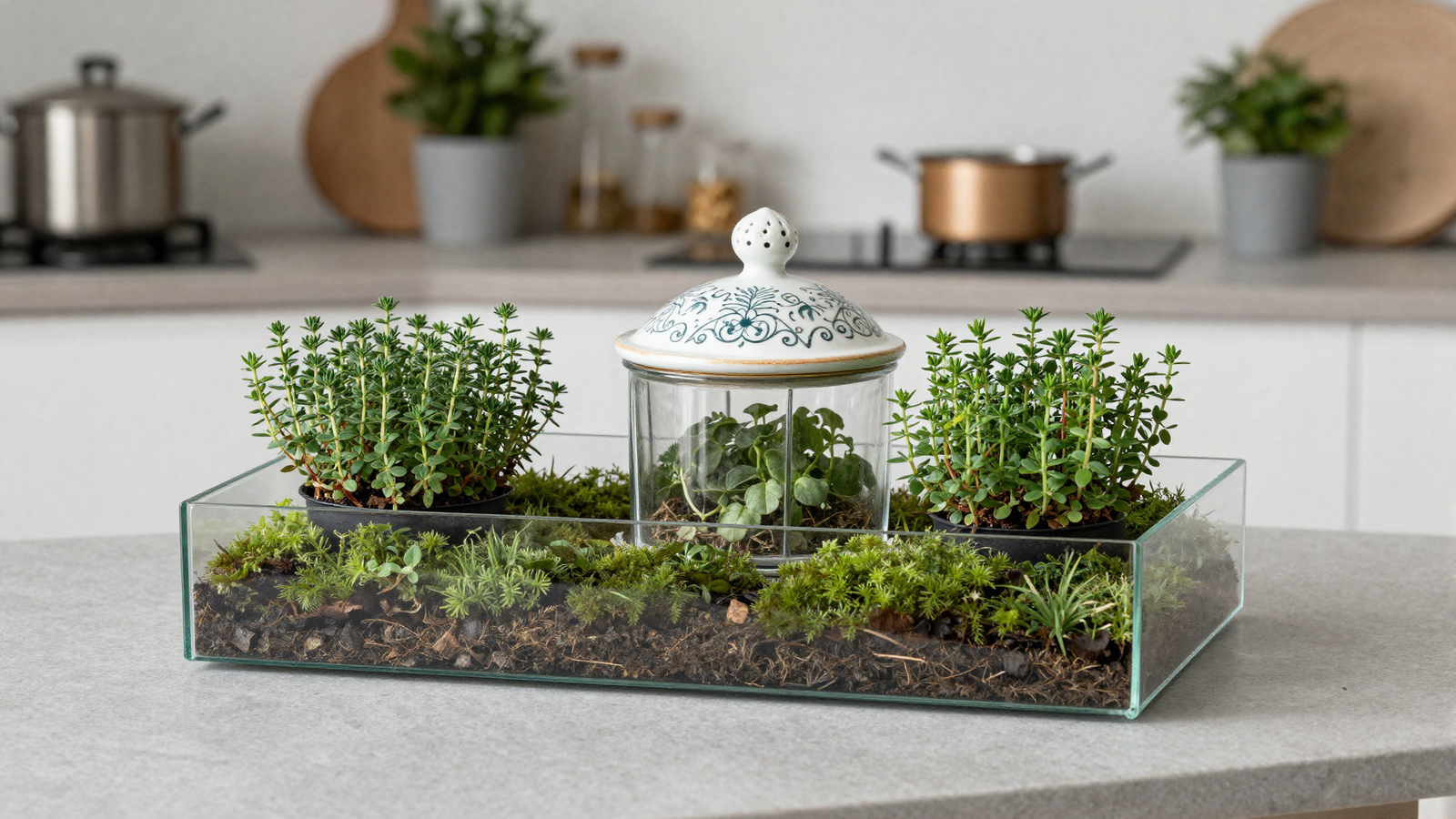
A compact terrarium filled with miniature herbs like thyme and moss makes for a genuinely decorative centerpiece that also happens to be functional. The glass container maintains humidity naturally, which suits smaller herbs that prefer more consistent moisture than an open pot provides.
💡 Smart tip: Choose a terrarium with a removable or vented lid so you can control humidity manually rather than letting condensation build up unchecked.
⚠️ Mistake to avoid: Overwatering inside a closed terrarium; the enclosed environment retains moisture far longer than an open pot, so it needs noticeably less frequent watering.
Effort & Cost Snapshot
| Idea | Effort | Approx. Cost |
|---|---|---|
| 1. Windowsill Herb Row | Low (purchase and place) | $20–$80 |
| 2. Vertical Planter Wall | Medium (DIY install) | $50–$250 |
| 3. Hanging Trailing Herbs | Low (DIY install) | $25–$100 |
| 4. Reclaimed Wood Crate Display | Low (DIY or purchase) | $20–$90 |
| 5. Mason Jar Herb Wall | Medium (DIY build) | $40–$150 |
| 6. Countertop Hydroponic Plant | Low (purchase and place) | $60–$250 |
| 7. LED Grow Light Corner | Low–Medium (DIY install) | $30–$150 |
| 8. Painted Pot Collection | Low (purchase or DIY paint) | $25–$100 |
| 9. Tiered Hanging Planters | Medium (DIY install) | $40–$180 |
| 10. Glass Terrarium Display | Low (purchase and style) | $25–$120 |
A kitchen herb garden gives back almost immediately — better flavor in your cooking and more life in a room that’s often the busiest in the house. Save this list to Pinterest so you can find the setup that fits your own kitchen’s light and space.
Continue Your Home Transformation
Explore the full collection of step-by-step eBooks and get the guide that fits the room you're working on.