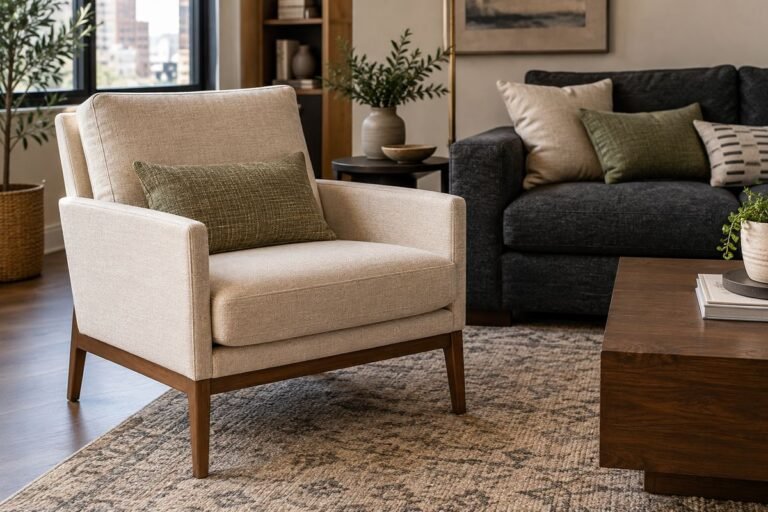
End table decor ideas should leave room for the things you reach for from the sofa. A lamp, a drink and a small personal object can make a considered arrangement, but they need to fit the table without turning every useful inch into a display.
Begin with the table’s normal job and its position beside the seat. Decide whether you need reading light, a place for glasses or a home for the remote before choosing another decorative object. The 27 concepts below show different ways to balance those practical needs with color, shape and texture.
Use the actual tabletop material and product instructions when selecting surface protection and cleaning methods. The images are original AI-generated decor concepts, not proof that a pictured lamp or object fits every table. Check complete base dimensions, stability, cord routing and useful reach in your room.
The images are original AI-generated decor concepts, not installation diagrams or photographs of completed client projects.
Browse These 27 End Table Decor Ideas
Jump to an idea
- Start with a lamp and a clear drink spot
- Use one shallow tray for the remote
- Try simple end table decor ideas with one ceramic form
- Pair a low bowl with a taller lamp
- Let a small stack of books have a clear role
- Use the lower shelf for a limited book group
- Choose one small plant with appropriate surface protection
- Keep a round end table arrangement compact
- Give a square tabletop a clear working corner
- Use pale ceramics on a dark table
- Try one dark object on pale wood
- Use a tonal group with different textures
- Let muted blue connect to an existing textile
- Choose an earthy accent beside cream upholstery
- Use a small personal object instead of a generic ornament
- Let the lamp shade provide the main texture
- Keep a sculptural table mostly clear
- Style a narrow table with one slim main element
- Give a shared end table two reachable edges
- Keep nesting tables easy to separate
- Use a small lidded box for one appropriate category
- Connect the table decor to a nearby artwork
- Keep a glass tabletop arrangement visually light
- Use a metal detail as one deliberate connection
- Choose a small seasonal change that preserves the routine
- Leave one end table almost empty
- Edit end table decor ideas after a week of use
Test end table decor ideas from the seat
Sit in the usual place and reach for the tabletop without moving the furniture. Mark the space needed for a drink or glasses, then compare the complete lamp base and any proposed tray. Keep the table stable and the walking route clear. Choose only the objects that leave those daily functions convenient, and check that a lampshade or cord does not interfere with seating or movement.
| Everyday need | A useful starting group | What to check |
|---|---|---|
| Reading light | A suitable lamp and a clear useful area | Light at the seat, base fit and cord route |
| Remote storage | One appropriately sized tray | Whether the remote is still easy to reach |
| Small tabletop | One main object plus a useful clear spot | Actual dimensions rather than object count |
| Open lower shelf | A limited suitable book group | Stability, cleaning and access |
| Wood surface | Suitable protection for the exact finish | Manufacturer care and moisture guidance |
Choose end table decor ideas around the surface material
Room & Board’s wood-care guidance notes that moisture and heat can damage finishes and recommends suitable surface protection and promptly drying moisture. It also distinguishes care by finish. Use the instructions for your actual table before choosing pads, coasters or cleaners. A tray or planter does not automatically protect the surface beneath it, and stone, metal, glass and wood can need different care.
Keep the lamp useful as well as attractive
Check the light from the actual seat, the complete base on the tabletop and the shade beside the sofa. Keep cords from crossing walking routes or becoming pinched by furniture. A small lamp may leave more space, but it still needs to provide the light you want. Select the product and electrical arrangement from its actual specifications rather than the photograph alone.
1. Start with a lamp and a clear drink spot

A lamp can give the end table its main shape while a clear area keeps the surface useful. The arrangement is complete when it supports the seat rather than needing more ornaments.
Check the entire lamp base and the space beside it. Use suitable protection for the actual surface and keep the drink position within comfortable reach. If the base fills the table, choose a different lighting arrangement before adding decor.
Practical tip: Measure the complete lamp base first.
2. Use one shallow tray for the remote

A shallow tray can give the remote a defined return place. Its outline makes a daily object feel considered without needing to hide it in a difficult container.
Choose a size that leaves another useful area on the tabletop. Check the tray underside against the table’s care instructions and avoid letting it overhang. Keep the remote easy to remove while seated.
Practical tip: Choose the tray from the actual daily items.
3. Try simple end table decor ideas with one ceramic form

One ceramic object can provide shape without several competing details. A simple silhouette often reads more clearly from the sofa than a collection of tiny ornaments.
Compare the base and surface contact with the actual table. Keep the object stable and leave room for the table’s normal use. Select the shape from the seating view rather than only from a close-up photograph.
Practical tip: Judge the silhouette from the normal seat.
4. Pair a low bowl with a taller lamp
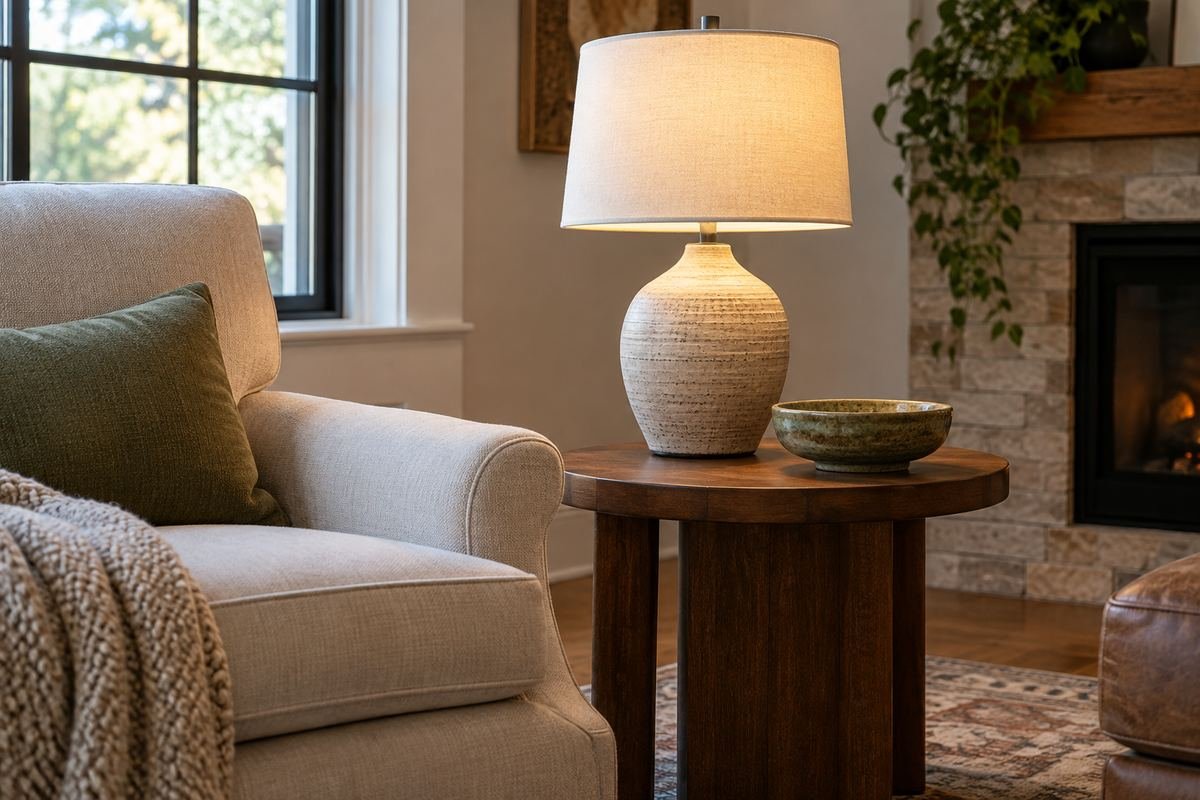
A low bowl can give a lamp a quiet partner without competing with its height. The different outlines make the arrangement clear even within a limited palette.
Use the bowl for a defined appropriate purpose or leave it as a single decorative shape. Keep it away from the lamp base and cord. If the group crowds the useful surface, remove the bowl before shrinking every object.
Practical tip: Leave a clear separation between the two bases.
5. Let a small stack of books have a clear role
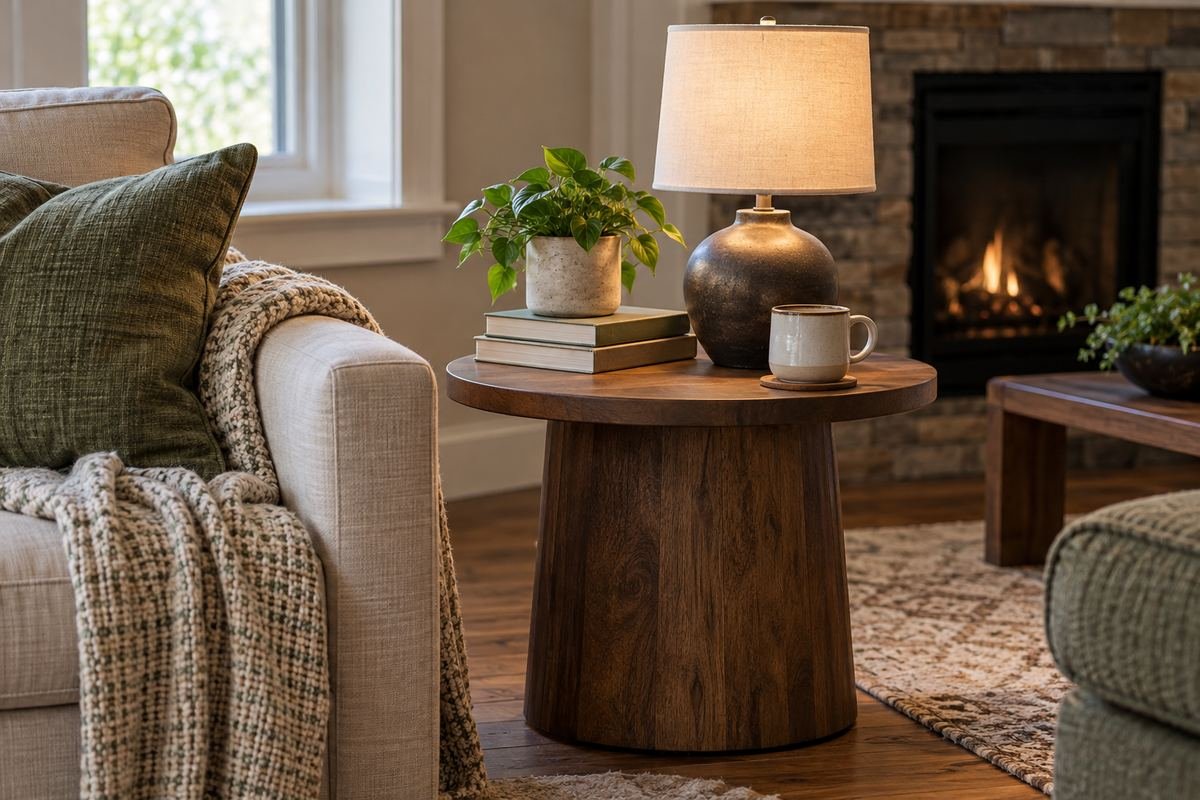
A short book group can add color and a personal subject to an end table. The books work best when they are genuinely part of the reading routine.
Keep the stack stable and away from drinks. Do not build a tall platform simply to raise a lamp or fragile object. Choose another location if the books prevent comfortable reach or make the lamp arrangement unstable.
Practical tip: Keep the book group short and useful.
6. Use the lower shelf for a limited book group

An open lower shelf can keep the tabletop clearer while giving a few books a defined place. A restrained group leaves the shelf easy to clean.
Check that the books fit fully and do not project into the route beside the sofa. Keep the load suitable for the actual table. Avoid treating the lower shelf as a place for every item without another home.
Practical tip: Keep every book within the shelf outline.
7. Choose one small plant with appropriate surface protection

A small plant can add a living shape beside the seating area. Its size should fit the table without leaning across the lamp or the route.
Match the plant to the actual light and household needs. Use an appropriate container and surface protection, and check for moisture rather than assuming a decorative outer pot is leakproof. A separate plant stand may be more suitable if the table is small.
Practical tip: Check the surface beneath the planter regularly.
8. Keep a round end table arrangement compact
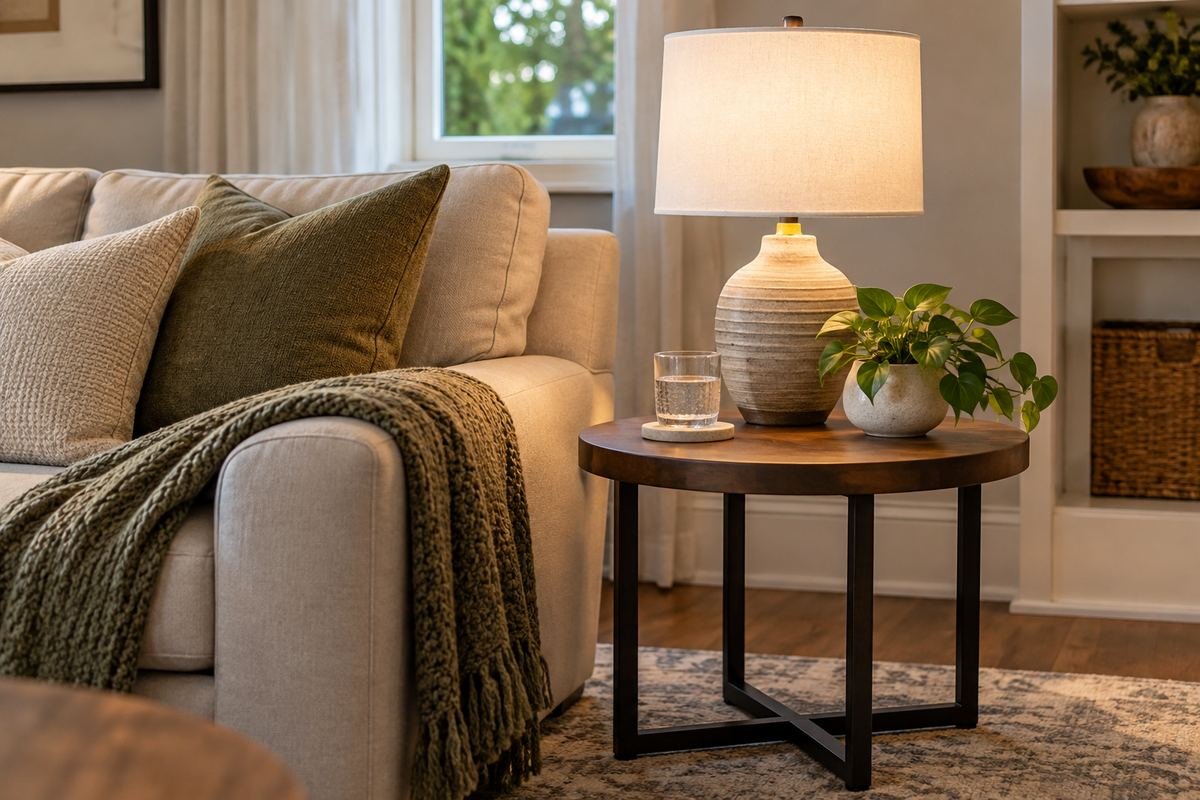
A round top can suit a compact central group with an accessible edge. A small lamp or one sculptural form may provide enough visual interest.
Compare the complete object bases with the actual circle. Objects that fit on a larger rectangular top may crowd a round one. Keep the table stable and leave a comfortable place to set down everyday items.
Practical tip: Test the arrangement against the actual circular outline.
9. Give a square tabletop a clear working corner
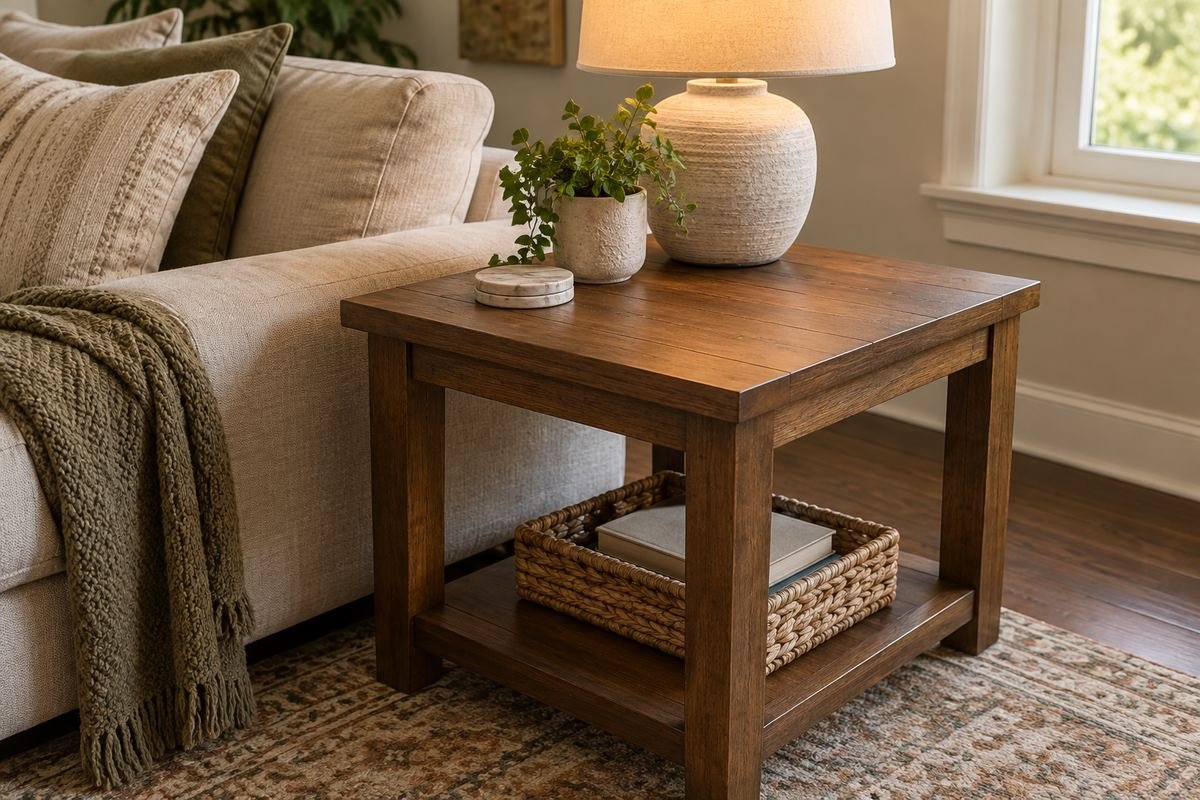
A square top can divide naturally between a lamp area and a useful clear corner. The arrangement remains simple when the two roles are visible.
Keep objects from collecting along every edge. Check the reach from the sofa and the walking route at the outer corner. The table should remain easy to use and move around without needing to rearrange the display.
Practical tip: Choose the clear corner from the seated reach.
10. Use pale ceramics on a dark table
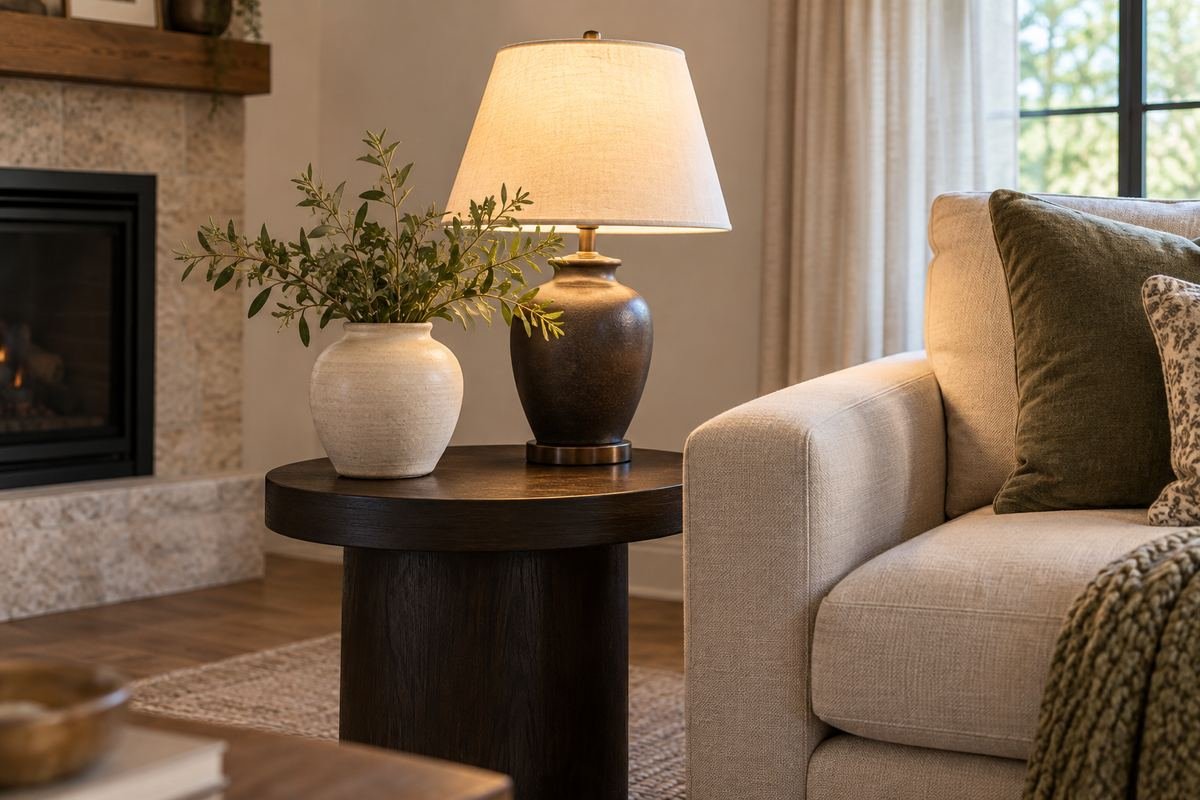
Pale ceramics can outline a clear shape against a dark surface. The contrast adds detail without requiring several accent colors in the seating area.
Compare warm ivory and cool white with the upholstery and wall. Choose a stable object with a suitable base, and keep the useful surface visible. One strong pale shape can be enough beside a darker table.
Practical tip: Compare the ceramic undertone with the sofa fabric.
11. Try one dark object on pale wood

A dark bowl or sculptural piece can give pale wood a deliberate contrast. Its outline becomes the main detail while the grain remains visible.
Connect the dark color to one existing element in the room, such as a frame or chair leg. Keep the remaining objects quiet. Avoid covering the whole tabletop when the wood is part of the appeal.
Practical tip: Leave enough surface to see the wood grain.
12. Use a tonal group with different textures

A tonal arrangement can make several materials feel calm together. Matte ceramic, a textured lampshade and a quiet tray offer differences without a large color change.
Choose distinct shapes so the items do not merge into one pale cluster. Compare the group under the room’s normal evening light. Reduce the object count if the textures become difficult to read.
Practical tip: Vary shape within a limited color group.
13. Let muted blue connect to an existing textile

A small blue object can connect the end table to a cushion or artwork already in the room. The repetition can remain subtle rather than becoming a theme.
Compare the actual shade with the fabric in daylight and lamplight. Choose one clear connection and keep other accessories restrained. The table does not need a second blue object simply to repeat the accent again.
Practical tip: Use one considered color connection first.
14. Choose an earthy accent beside cream upholstery

Clay or warm brown can give cream upholstery a grounded companion. One small object can carry the accent while the tabletop stays useful.
Compare it with the floor and other wood finishes. Several almost-matching warm tones may feel unresolved, so choose a deliberate difference in depth. Keep the object’s scale modest enough for the table’s actual job.
Practical tip: Review the accent with the floor in view.
15. Use a small personal object instead of a generic ornament

A meaningful object can give the seating area a personal detail. It need not be large or expensive to have a clear place within the arrangement.
Choose something stable and appropriate for an everyday tabletop. Keep fragile or irreplaceable items in a more protected location if the table is regularly bumped or used for drinks. The most useful place may be a shelf elsewhere.
Practical tip: Choose the display location from the object’s care needs.
16. Let the lamp shade provide the main texture

A textured shade can add interest without another object on the table. It keeps the composition useful when the base and a drink spot already fill the surface.
Check the shade beside the sofa and wall, including the view of the light source from the seat. Confirm the actual lamp specification and suitable bulb. Texture should support comfortable light rather than become the only reason for the choice.
Practical tip: View the lamp illuminated from the normal seat.
17. Keep a sculptural table mostly clear

A table with a distinctive shape already adds decoration to the room. A quieter surface lets that form remain visible rather than competing with a large accessory group.
Start with the one function the seat needs most. A small useful object or a protected drink area may be enough. Compare the complete table from across the room before deciding that the surface needs another layer.
Practical tip: Treat the table itself as part of the decor.
18. Style a narrow table with one slim main element

A narrow end table may work better with one suitable slender lamp than a wide arrangement. The aim is a useful reachable surface beside the seat.
Measure the complete base, shade and table footprint. A slim appearance does not guarantee stability or enough light. Keep cords and the walking route considered, and choose another lighting option if the table cannot accommodate the lamp properly.
Practical tip: Compare the whole lamp with the narrow table.
19. Give a shared end table two reachable edges

A table between two seats can serve both people when the arrangement leaves access from each side. One central lamp may be enough to establish the composition.
Sit in both positions and test useful reach. Keep a tray or decorative object from occupying the only accessible edge for one chair. Choose the lighting and table size together with the actual seating layout.
Practical tip: Test the arrangement from both seats.
20. Keep nesting tables easy to separate
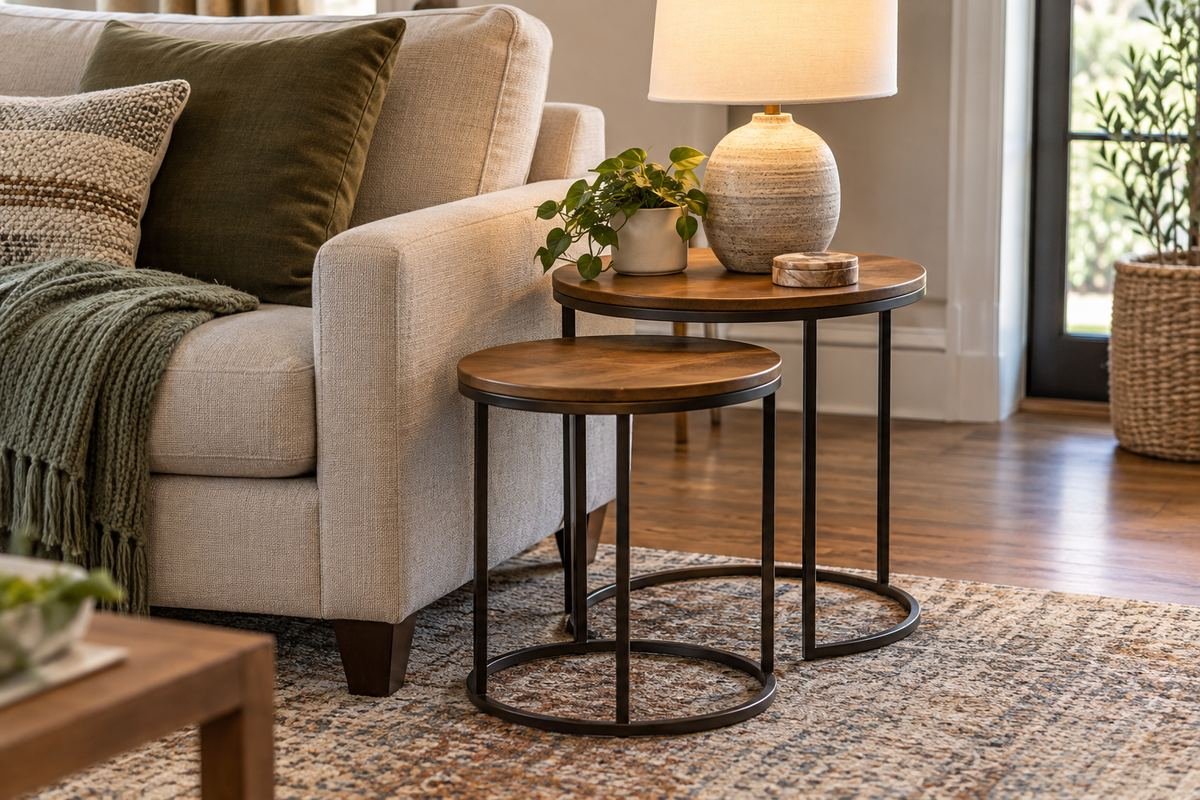
Nesting tables offer more than one useful surface when they can still be moved as intended. A restrained arrangement keeps the smaller piece available.
Avoid using one display across both tables that makes them awkward to separate. Check stability and the path needed to move the smaller piece. Use suitable surface protection on each table according to its material.
Practical tip: Test the normal nesting movement after styling.
21. Use a small lidded box for one appropriate category

A small box can keep a defined everyday category together without a visually busy pile. It is useful when the lid remains easy to open from the seat.
Choose the box from its actual contents and the household’s access needs. Keep it modest enough to leave useful tabletop space. Do not store items requiring special restricted access in an ordinary decorative container.
Practical tip: Give the box one clear purpose.
22. Connect the table decor to a nearby artwork
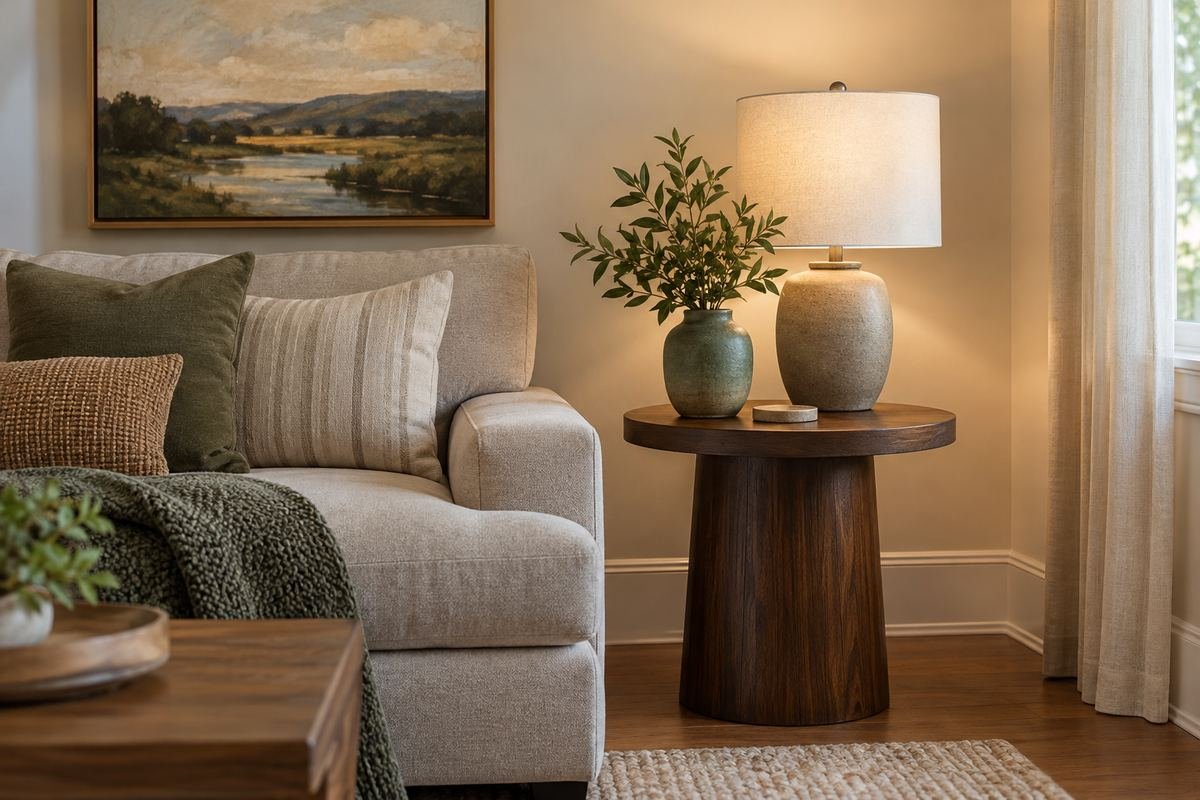
One color or shape repeated from an artwork can make the end table feel part of the wall composition. The connection does not require a matching accessory set.
Compare the table and artwork from the room’s main view. A subtle link is often enough when the picture already carries strong detail. Keep the table’s useful clear area in place while testing the visual relationship.
Practical tip: Judge the table and artwork in one room view.
23. Keep a glass tabletop arrangement visually light

A glass top makes the objects and the table structure visible together. A small number of clear shapes can prevent the surface from becoming visually crowded.
Use suitable protection and care for the exact glass and frame. Check the complete bases and stability, and keep the edge easy to recognize in the room. The transparent appearance does not make a crowded arrangement more useful.
Practical tip: Review the visible structure beneath the objects.
24. Use a metal detail as one deliberate connection

A small metal object or lamp finish can connect the table to another room detail. One clear relationship can feel considered without matching every fitting.
Compare the finish with the room’s existing warm and cool metals. Keep sharp or rough bases from damaging the surface and follow product care guidance. Choose the object for its useful shape rather than only for the finish.
Practical tip: Connect one existing finish instead of matching everything.
25. Choose a small seasonal change that preserves the routine

A seasonal color shift can be one replacement object rather than an additional full display. The useful lamp and drink area can remain consistent.
Store the previous accessory before setting out the new one. Choose a stable appropriate object and keep the table clear enough for ordinary use. Avoid adding several fragile or dangling pieces to a frequently used surface.
Practical tip: Replace one item rather than accumulating a second display.
26. Leave one end table almost empty

An almost-clear end table can be the right choice beside a seat that needs a flexible surface. The furniture material and nearby room details already provide interest.
Use the table for several days before adding anything. If a lamp is supplied elsewhere and the surface is often used for daily items, a suitable coaster or one small detail may be enough. Keep the result intentionally simple.
Practical tip: Let actual use decide whether decoration is needed.
27. Edit end table decor ideas after a week of use

A good arrangement should still work after normal evenings on the sofa. The objects that are repeatedly moved aside are the clearest candidates for removal.
Keep the pieces that support reading, reach and the room’s palette. Relocate an unnecessary ornament before buying another container. The strongest end table decor ideas often leave more usable space than the first styled version.
Practical tip: Remove the object you keep moving out of the way.
Frequently Asked Questions
How many objects belong on an end table?
Start with the table’s useful job rather than a fixed number. A lamp and a clear drink area may be enough. Add another item only if it fits and improves daily use.
Which end table decor ideas suit a small surface?
One compact main object, such as a suitable lamp, can leave more useful space than several small ornaments. Check complete dimensions and reach from the seat.
Should end table decor ideas match on both sides of a sofa?
They can relate through color or material while serving different needs. One side may need reading light while the other works better with a clearer surface.
Can a tray replace surface protection?
Not automatically. Its underside and any moisture beneath it may still affect the finish. Follow the care instructions for the actual table and accessories.
How can end table decor ideas hide daily clutter?
A defined tray or suitable small container can group the items you actually use. Keep it easy to reach and remove objects that do not belong to the seating routine.
Choose the Details That Work in Your Home
Choose end table decor ideas from the seat, the tabletop and the task. A useful lamp, one considered personal detail and a clear place for daily items can make the arrangement feel finished without giving up the table’s practical role.
For related ideas, explore round coffee table decor, living room paint colors, living room bookshelf styling.
Planning References
Room & Board: wood and veneer care, surface protection and finish-specific instructions. Follow the instructions for the exact products you choose.
Optional digital guide for this topic
If you prefer a structured workbook, explore this related paid guide.