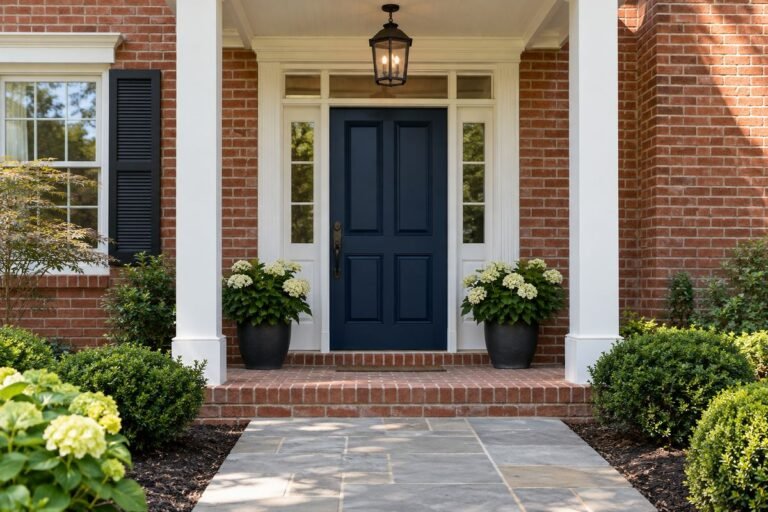
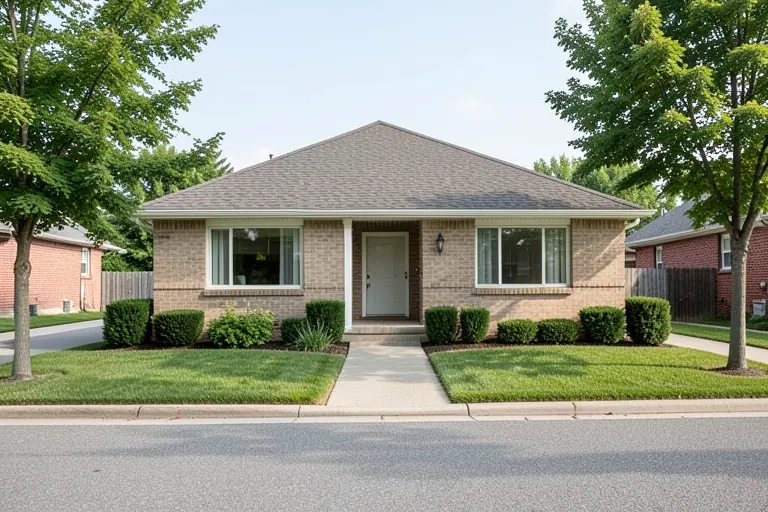
A front porch doormat is a small detail with several jobs: marking the entrance, helping manage dirt and completing the space around the door. The right choice depends on the porch's exposure as much as its color. A roof overhead does not automatically keep wind-driven rain away from the mat.
Choose an appropriate outdoor product first, then decide on proportions, texture and color. These front porch doormat ideas cover simple single mats, broad entrances, small steps and layered looks, with attention to door movement and maintenance. The concept images show arrangements, not proof of a pictured material's weather or slip performance.
Contents
- 1. Use one generously proportioned rectangular mat
- 2. Keep a small porch to one simple shape
- 3. Choose a dark border to frame a pale porch
- 4. Pair a black door with a warm neutral mat
- 5. Echo a colored door with a small accent
- 6. Try a half-round mat where the landing supports it
- 7. Use a restrained stripe on a plain facade
- 8. Let patterned tile remain the main feature
- 9. Use a wider mat for a broad double-door entrance
- 10. Keep a narrow side entrance understated
- 11. Layer only when both products and the doorway allow it
- 12. Use texture instead of a written greeting
- 13. Coordinate the mat with porch lighting
- 14. Keep planters beside the mat rather than on it
- 15. Choose an easy-to-clean arrangement for a garden entrance
- 16. Leave the step edge completely visible
- 17. Use a quiet gray palette on a modern entrance
- 18. Choose a removable seasonal accent around a year-round mat
- 19. Allow the mat to dry during maintenance
- 20. Check thickness with an outward-opening door
- 21. Give an exposed porch a product-led design
- 22. Use a single accent to connect door and path
- 23. Build a quick monthly condition check
Check the product's intended location before the styling
Read the actual manufacturer's indoor or outdoor designation, cleaning directions and backing information. For example, IKEA's TRAMPA page specifies indoor use; a coir appearance does not make that product suitable for an exposed porch. Measure the threshold, the full door swing and the mat's thickness, including any layer beneath it. Choose a product appropriate for the surface and conditions, and check the entrance regularly for movement, curled edges, debris and trapped moisture.
Compare the storage or placement options
- Single plain mat: Simple to position and maintain; choose the actual outdoor suitability first.
- Bordered or striped mat: Adds a controlled accent; keep the rest of the entrance restrained.
- Half-round shape: Softens straight lines; keep the whole curve on a level supported landing.
- Layered arrangement: Adds pattern and thickness; verify both products, edges and full door clearance.
1. Use one generously proportioned rectangular mat
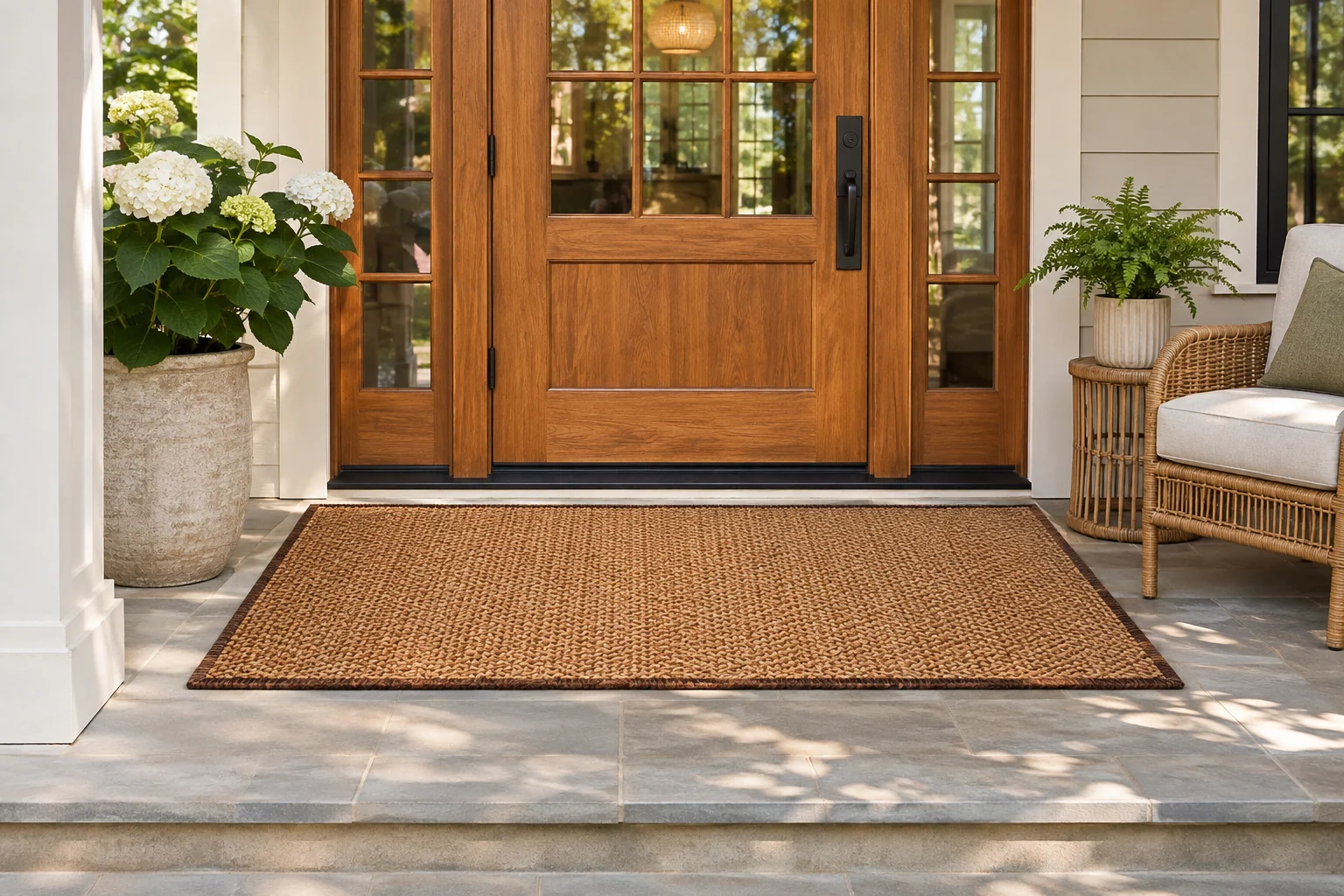
A single rectangle can make the entrance feel complete without extra layers. Compare its width with the door and the available landing, then leave the surrounding route clear. Avoid choosing purely from a cropped product photograph. Mark the proposed outline on the porch first and open the door fully so the mat's size relates to the actual entrance rather than an imagined larger space.
2. Keep a small porch to one simple shape
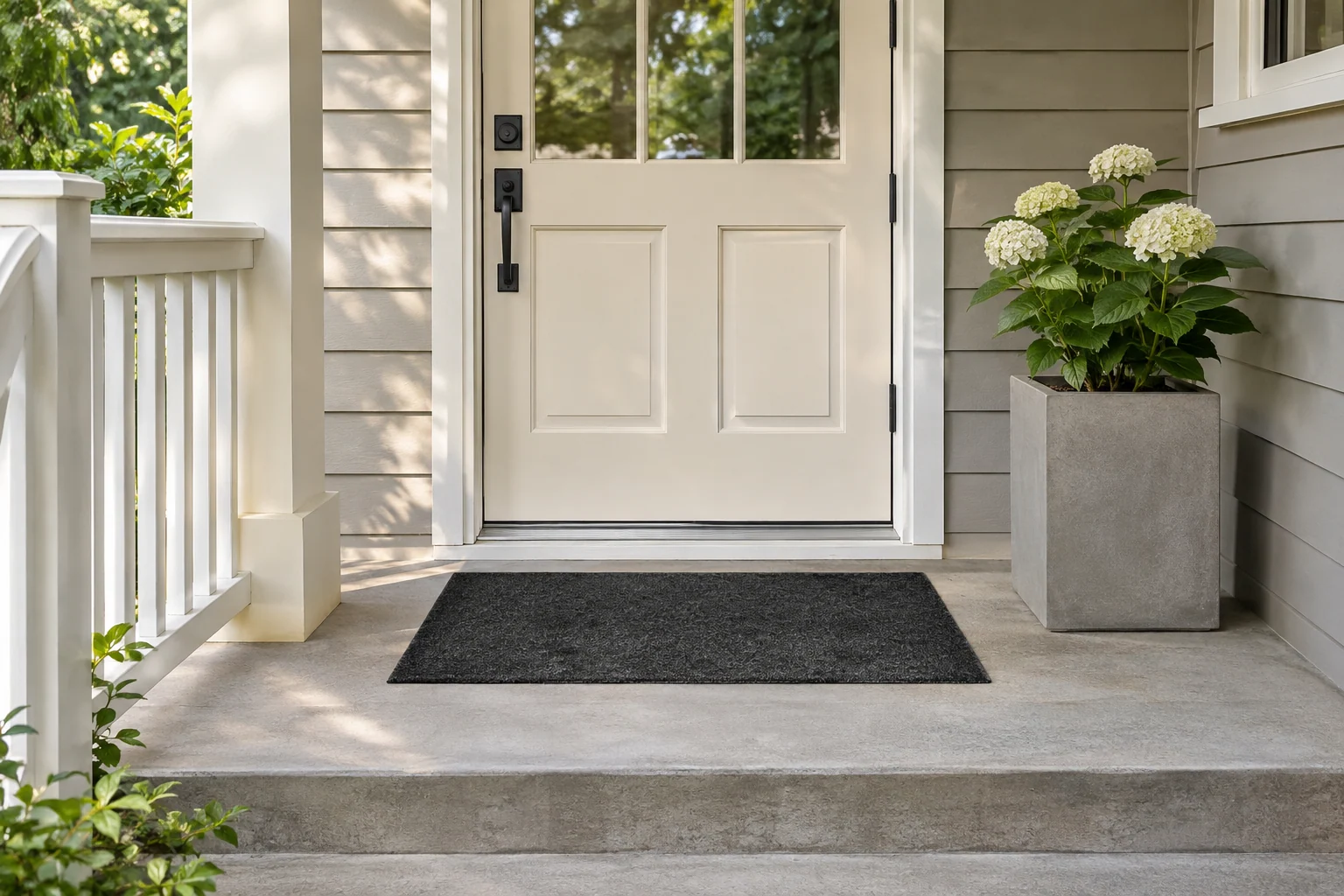
A compact entrance often benefits from a plain single mat instead of a layered rug arrangement. Use the landing's proportions to choose between a broader or narrower rectangle. Keep furniture and planters outside the path. The small space will feel more considered when the door, mat and walking route remain easy to understand than when every available corner contains another accessory.
3. Choose a dark border to frame a pale porch
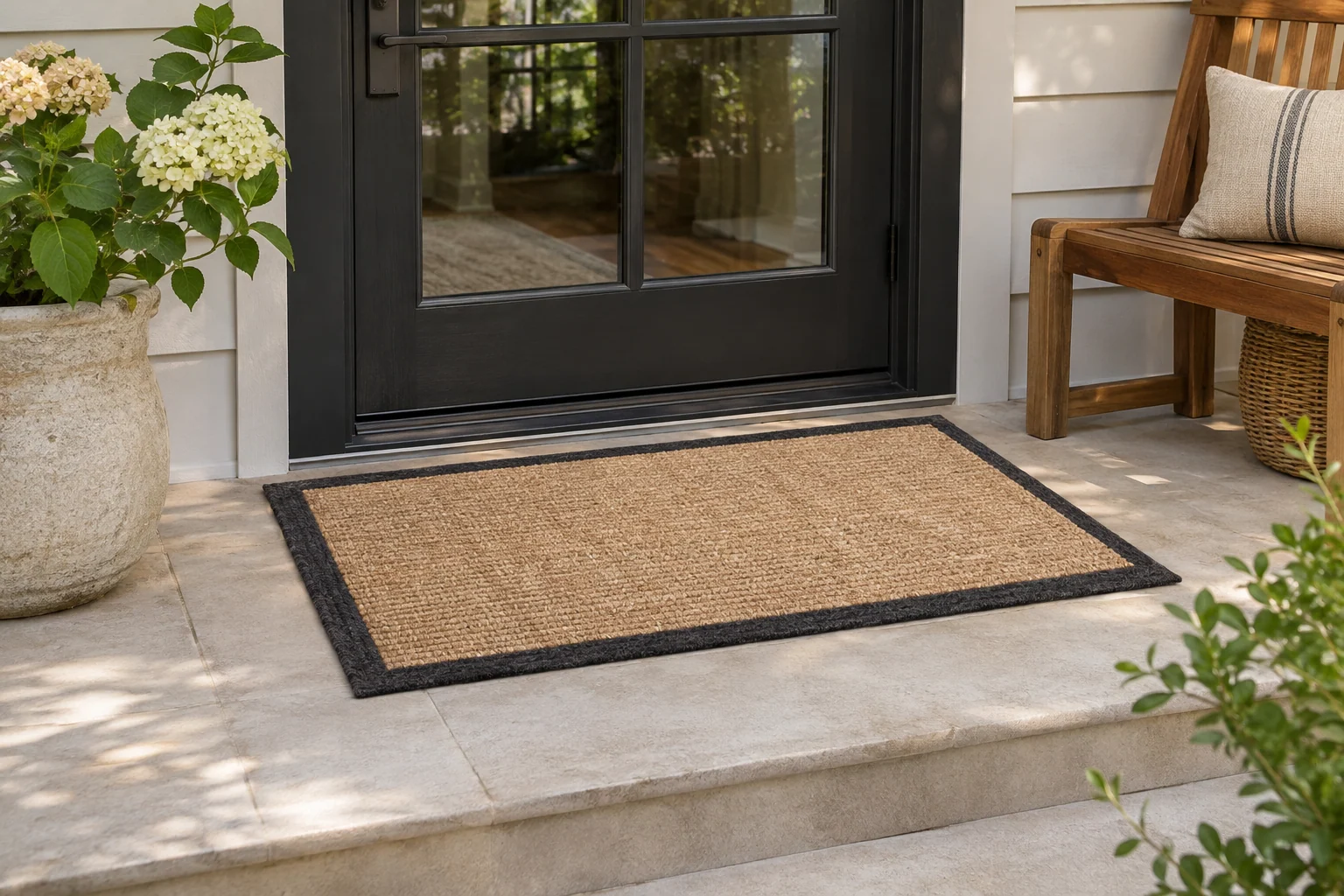
A restrained dark border can define a mat against light paving or painted floorboards. Repeat the tone in the door handle or house trim if it already appears there. Keep the center simple so the entrance does not become visually busy. Check the product's actual outdoor suitability and edge construction; a printed border alone tells you nothing about durability or how the mat will sit.
4. Pair a black door with a warm neutral mat
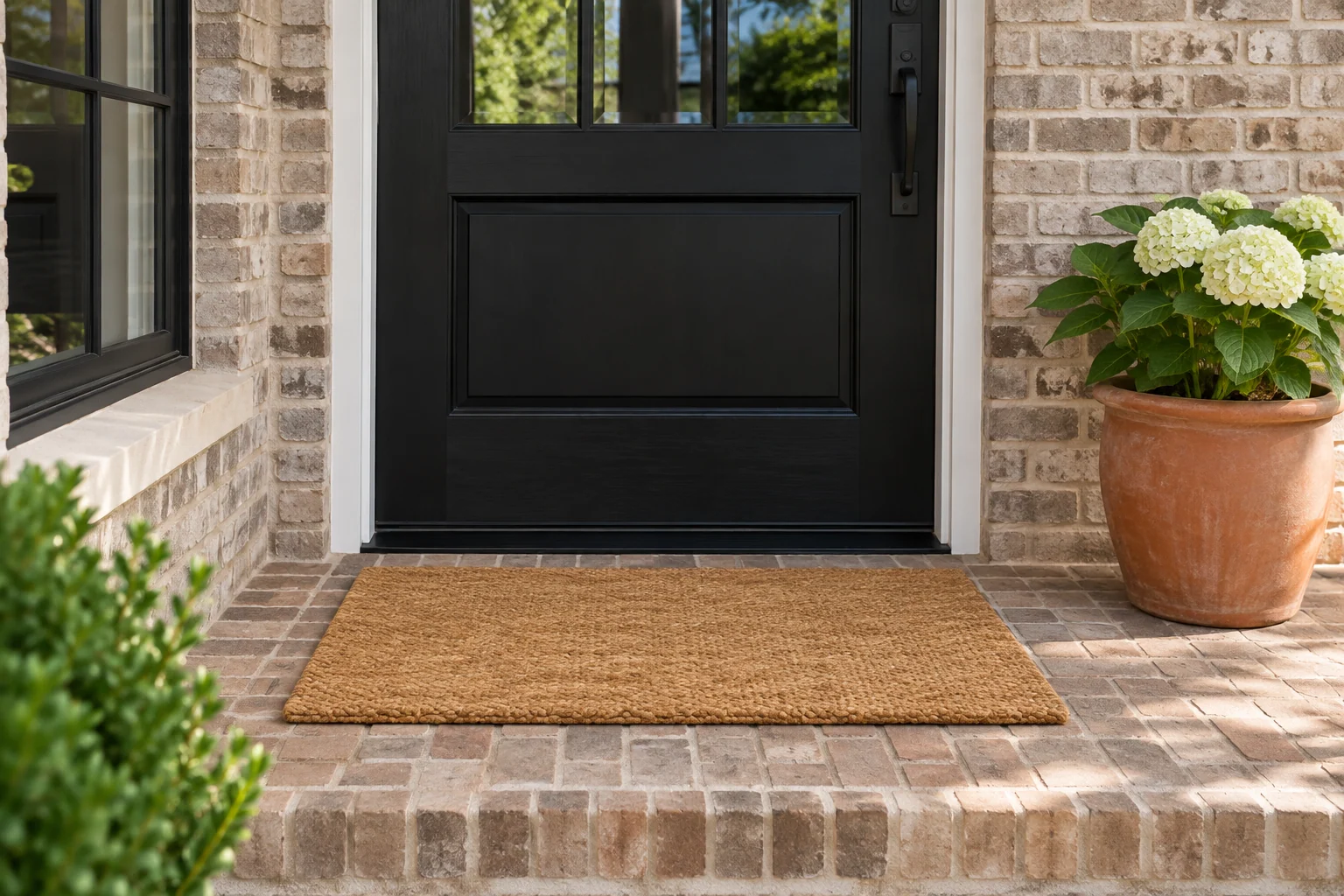
A tan or warm gray mat softens the contrast around a black front door. Add wood or muted terracotta nearby if those materials already suit the house. Keep the mat practical for the entrance exposure rather than choosing a fiber only for its color. A warm tone can come from several outdoor products, so appearance need not dictate an unsuitable material.
5. Echo a colored door with a small accent
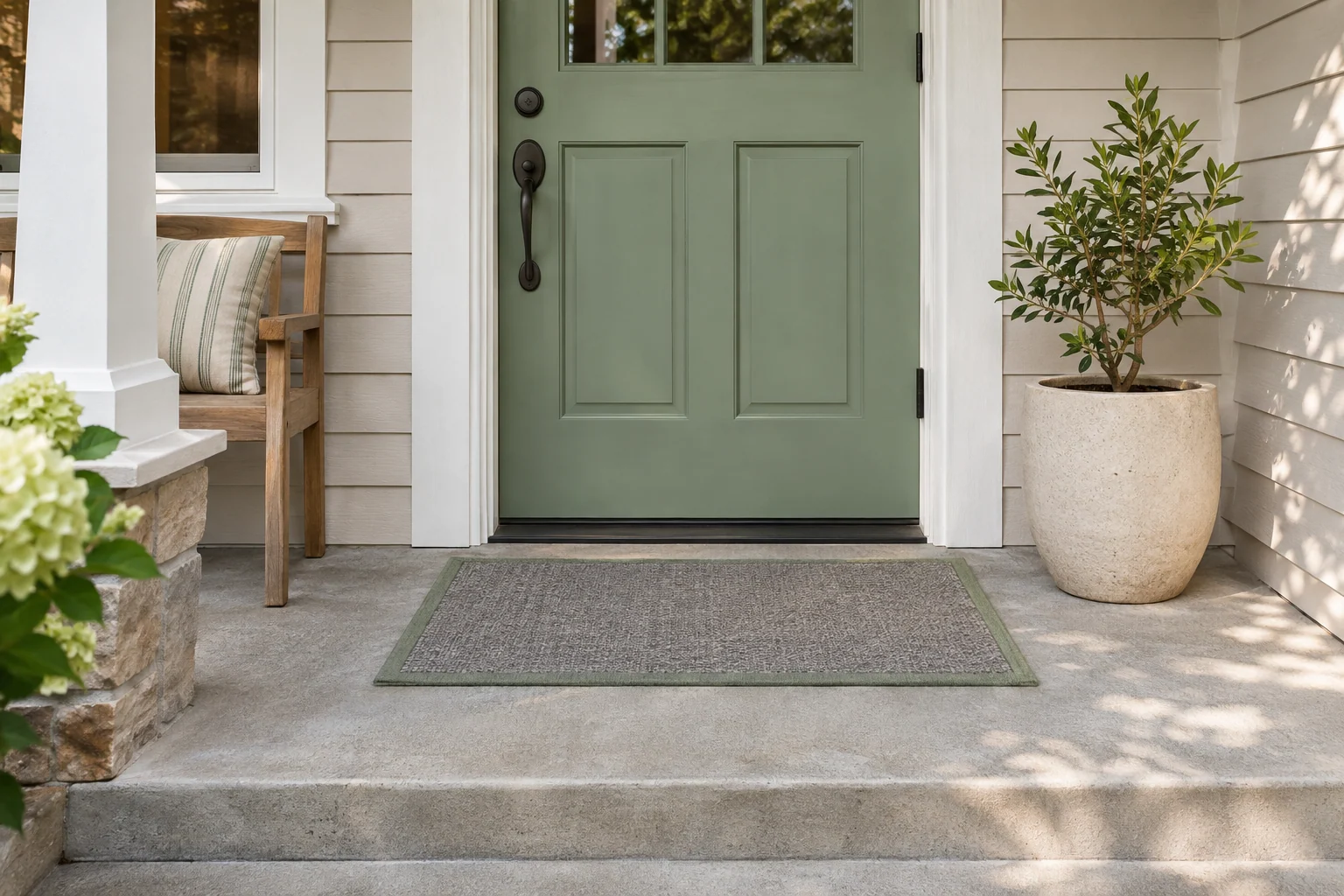
A muted blue or green door can connect with a narrow stripe or border in the mat. Use the color sparingly and leave the rest of the porch quiet. Compare samples or photographs in natural light where possible; a near match can feel more relaxed than trying to reproduce the door paint exactly. Product suitability should remain the first filter.
6. Try a half-round mat where the landing supports it
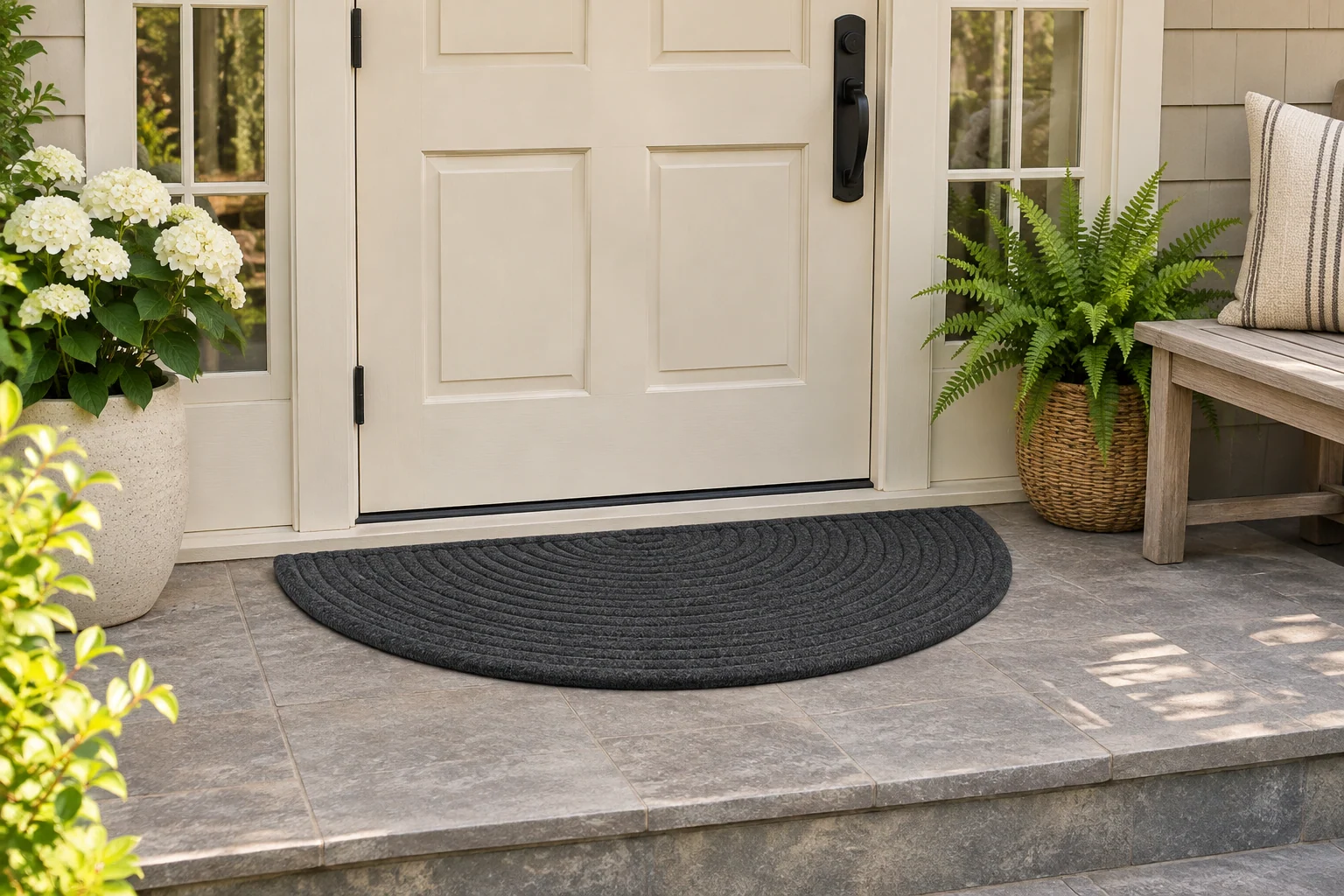
A half-round shape can soften a straight door and rectangular step. Check that its curved front remains entirely on the landing and that it does not reduce the useful standing area. Use a single shape rather than layering another curved rug beneath it. A rounded outline should suit the actual approach and door movement, not just repeat an arch elsewhere on the house.
7. Use a restrained stripe on a plain facade

A striped mat adds rhythm to an entrance with simple siding and minimal trim. Choose a scale that remains readable from the approach without competing with nearby paving. Keep other patterned accessories limited. Check the manufacturer's placement and care guidance for the specific product, especially if the stripes are part of a textile mat rather than a molded outdoor surface.
8. Let patterned tile remain the main feature
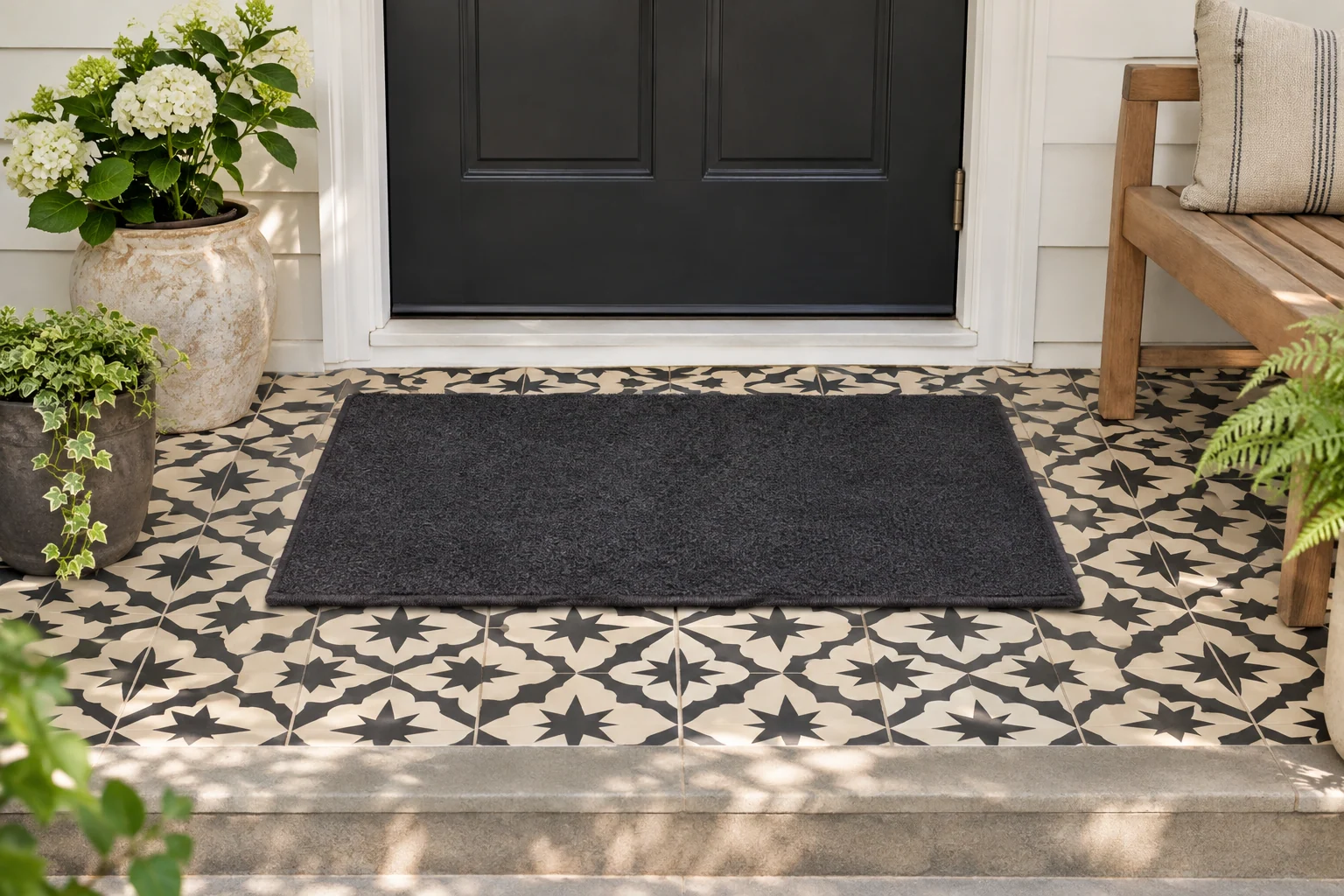
When the porch already has patterned tile, a plain mat can make the entrance easier on the eye. Choose a tone from the tile and avoid covering the most interesting part of the layout unnecessarily. Check whether the mat's backing is compatible with the actual surface. Keep the edges visible so the mat reads as a deliberate small element rather than an awkward patch over the floor.
9. Use a wider mat for a broad double-door entrance
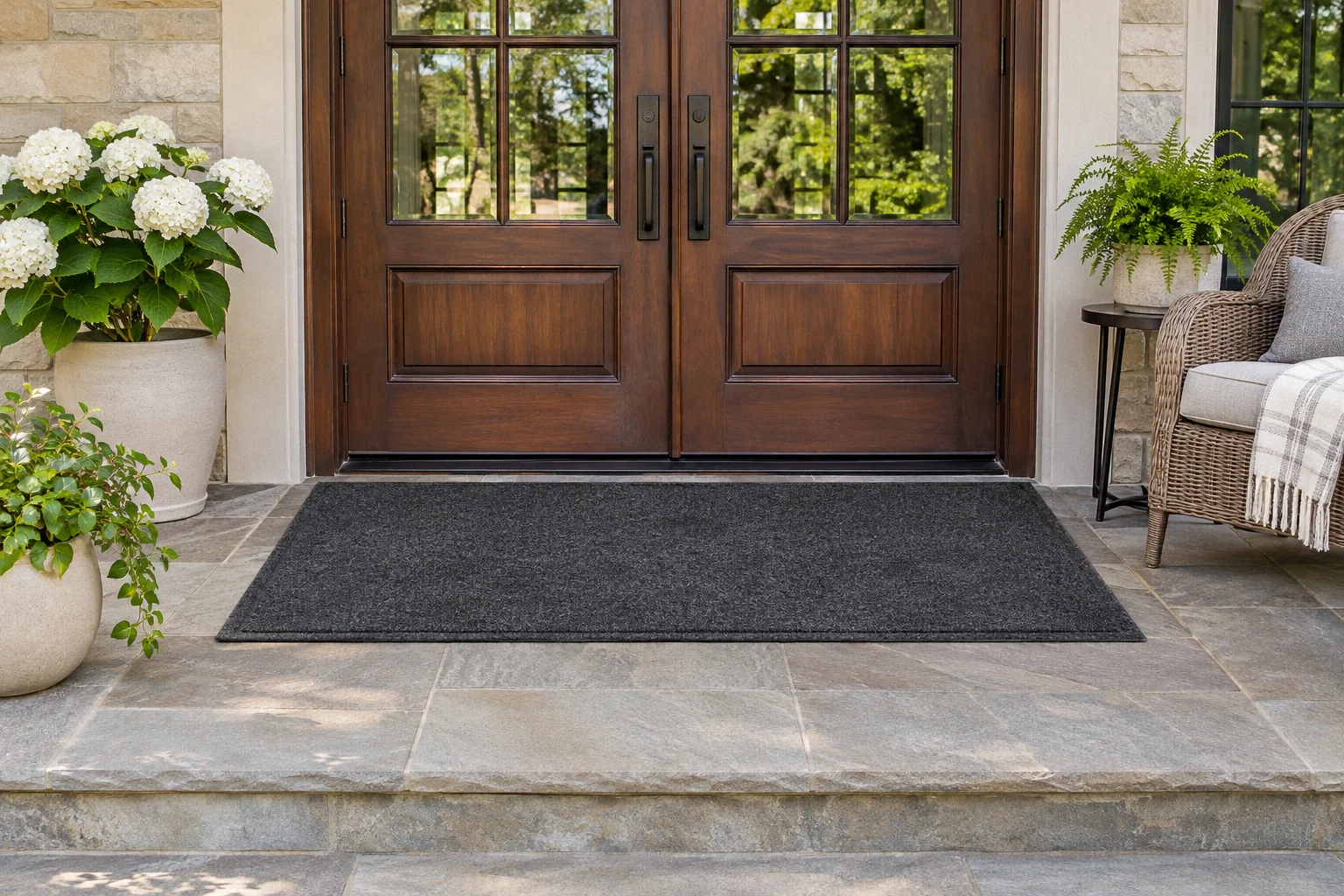
A broad doorway may need a wider product to look proportional, but confirm which leaf opens and where people actually stand. Keep the mat within the level landing and away from a step edge. Measure the full active door movement rather than assuming a symmetrical arrangement will work. One appropriate wide mat can create a calmer entrance than two small unrelated pieces.
10. Keep a narrow side entrance understated
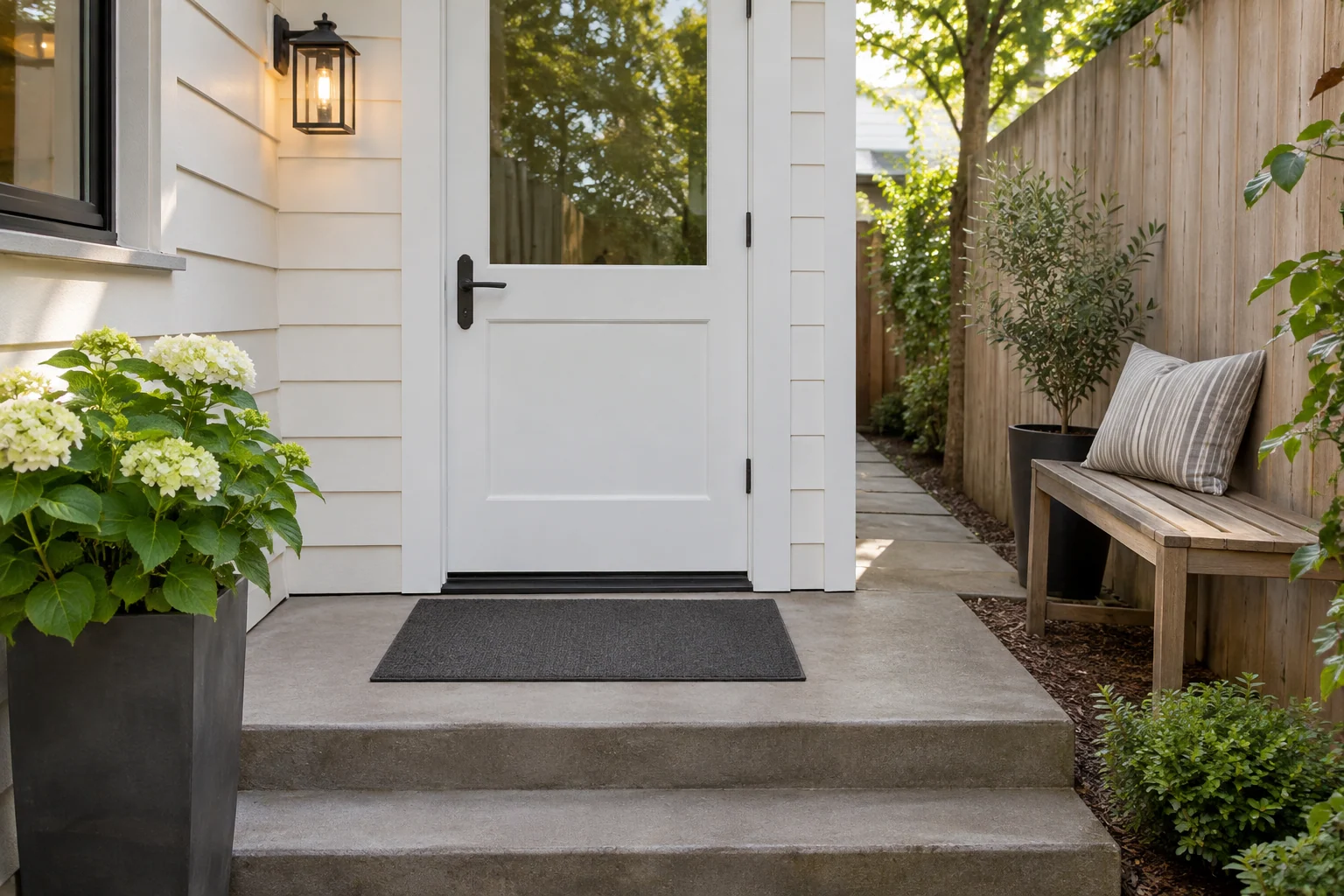
A side entrance often works hardest while receiving the least styling attention. Choose a compact suitable mat that fits the available landing and lets the door move freely. Repeat an existing practical tone such as charcoal, brown or gray. Keep delivery items, bins and planters out of the landing area so the mat does not become the only clear patch in a crowded entrance.
11. Layer only when both products and the doorway allow it
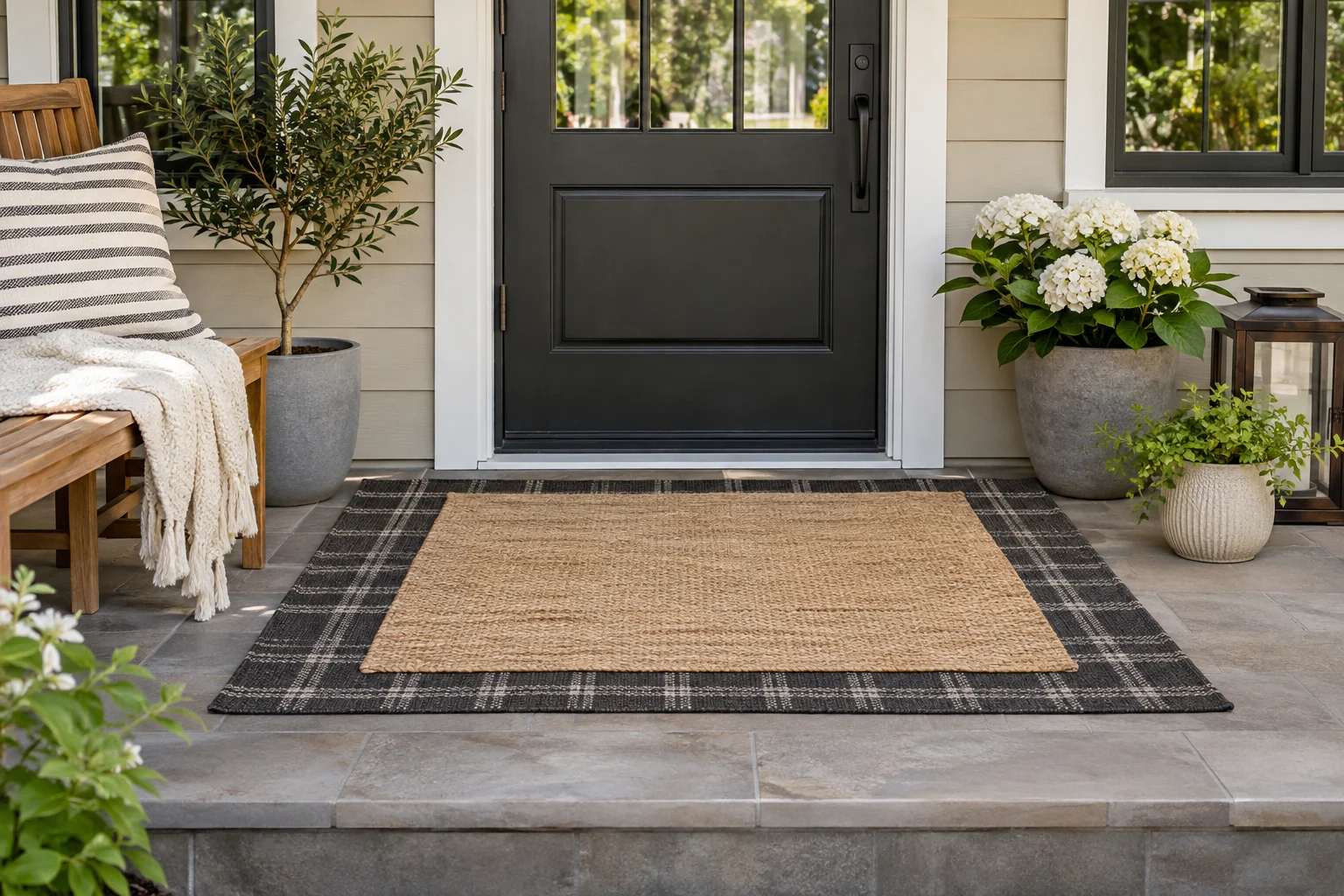
A small mat over a larger rug can add pattern, but it also adds thickness and two sets of edges. Confirm that both products suit the location and surface, then test the complete arrangement for movement and door clearance. Skip layering if the top mat creeps, curls or interferes with opening. A simple single mat is a complete design choice on its own.
12. Use texture instead of a written greeting
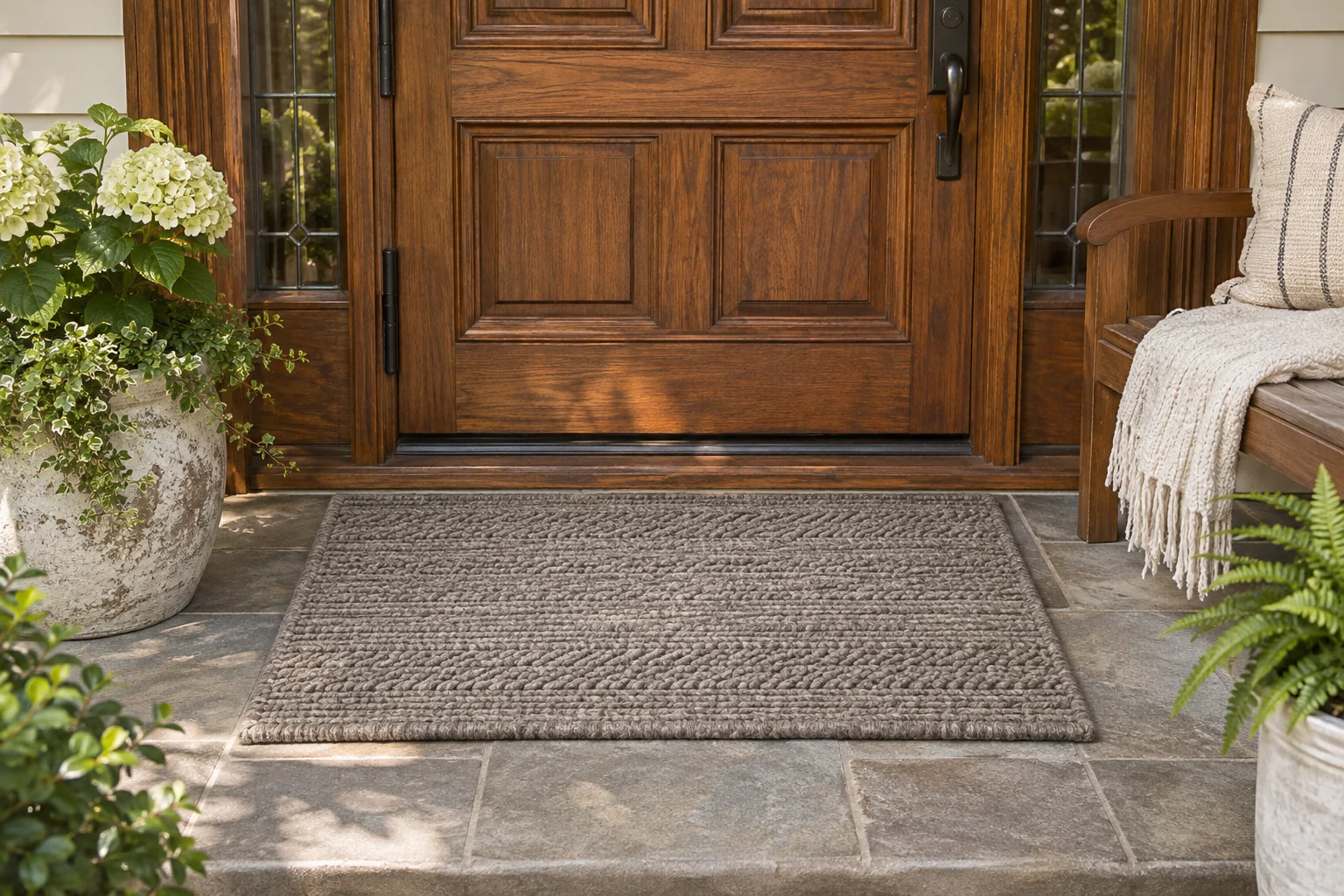
A quiet textured surface can make the entrance welcoming without lettering. This is useful when the door already has decorative glass, detailed hardware or strong color. Compare textures for the actual cleaning routine as well as their appearance. Avoid treating a coarse-looking surface as proof of scraping effectiveness or weather resistance; look for the maker's intended use and maintenance information.
13. Coordinate the mat with porch lighting
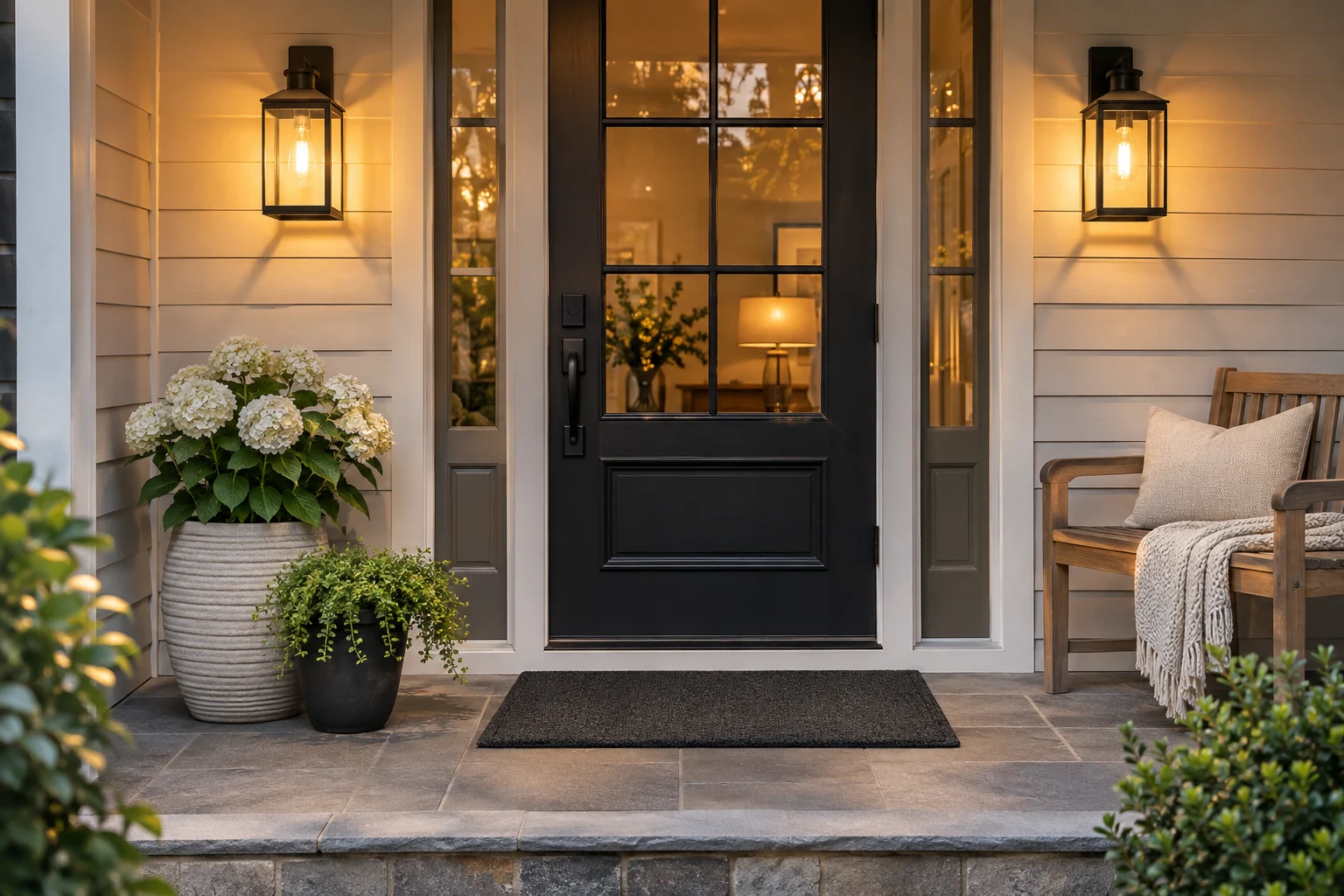
A dark mat can relate to black wall lanterns, while a warm neutral can connect with bronze-toned details. Use that relationship to simplify the palette rather than adding another finish. Look at the entrance after dark to check that the mat and its edges remain visible in your normal lighting. This is a visual check, not a substitute for suitable entrance lighting or product selection.
14. Keep planters beside the mat rather than on it

Give planters their own stable positions beyond the standing and door area. Placing pots on the mat reduces its usable surface and can hide wet patches beneath them. Check the entrance with the door open and someone imagined at the threshold. If the landing is too small for both mat and planters, move the plants to the approach or use fewer objects.
15. Choose an easy-to-clean arrangement for a garden entrance
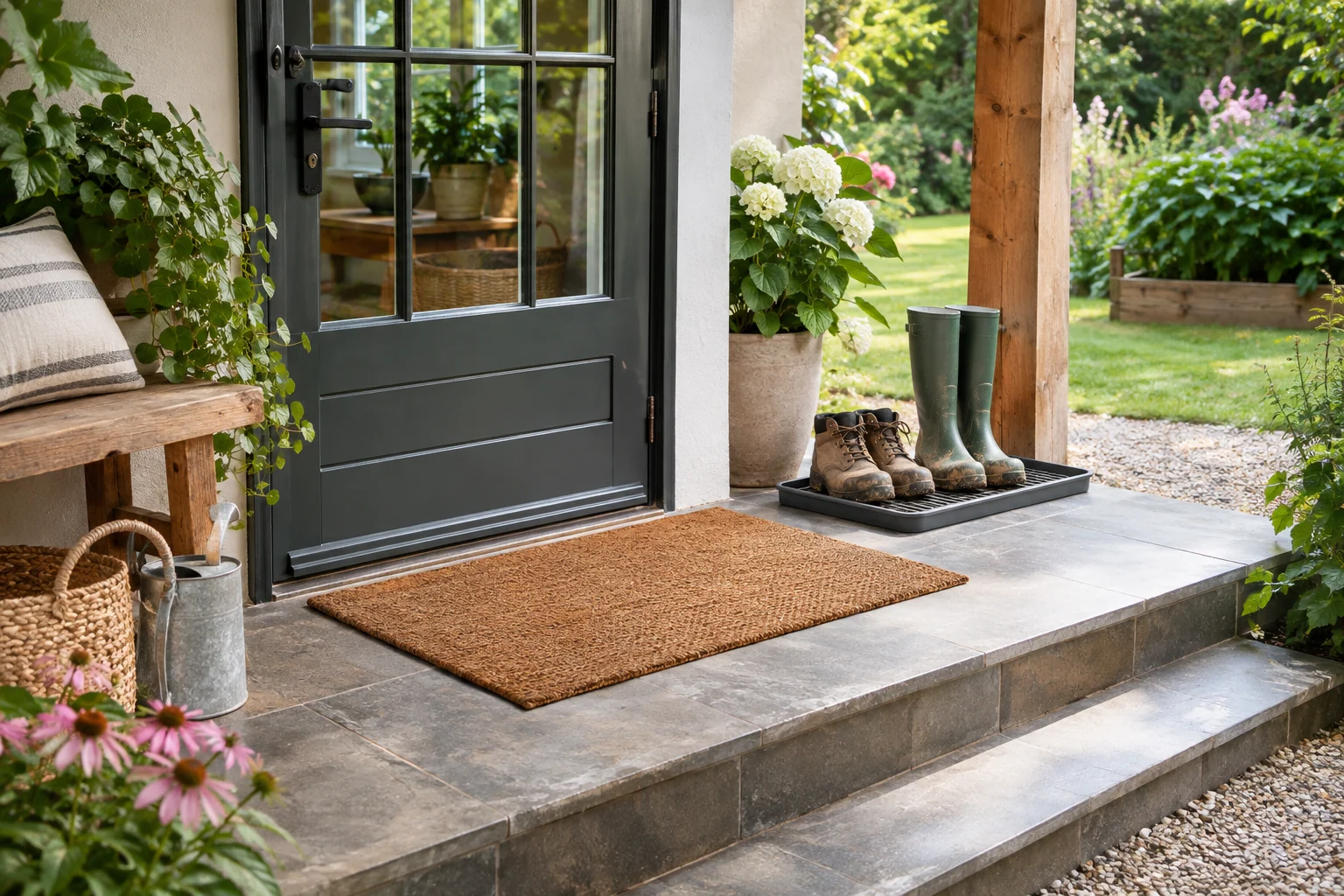
An entrance used after gardening needs a cleaning routine that suits the real dirt and the product's instructions. Keep boots in a separate appropriate area rather than covering the mat with them. Check the surface below regularly. Choose a mat you can lift and maintain conveniently; a large decorative layer that stays damp or traps soil may add work without improving the entrance.
16. Leave the step edge completely visible
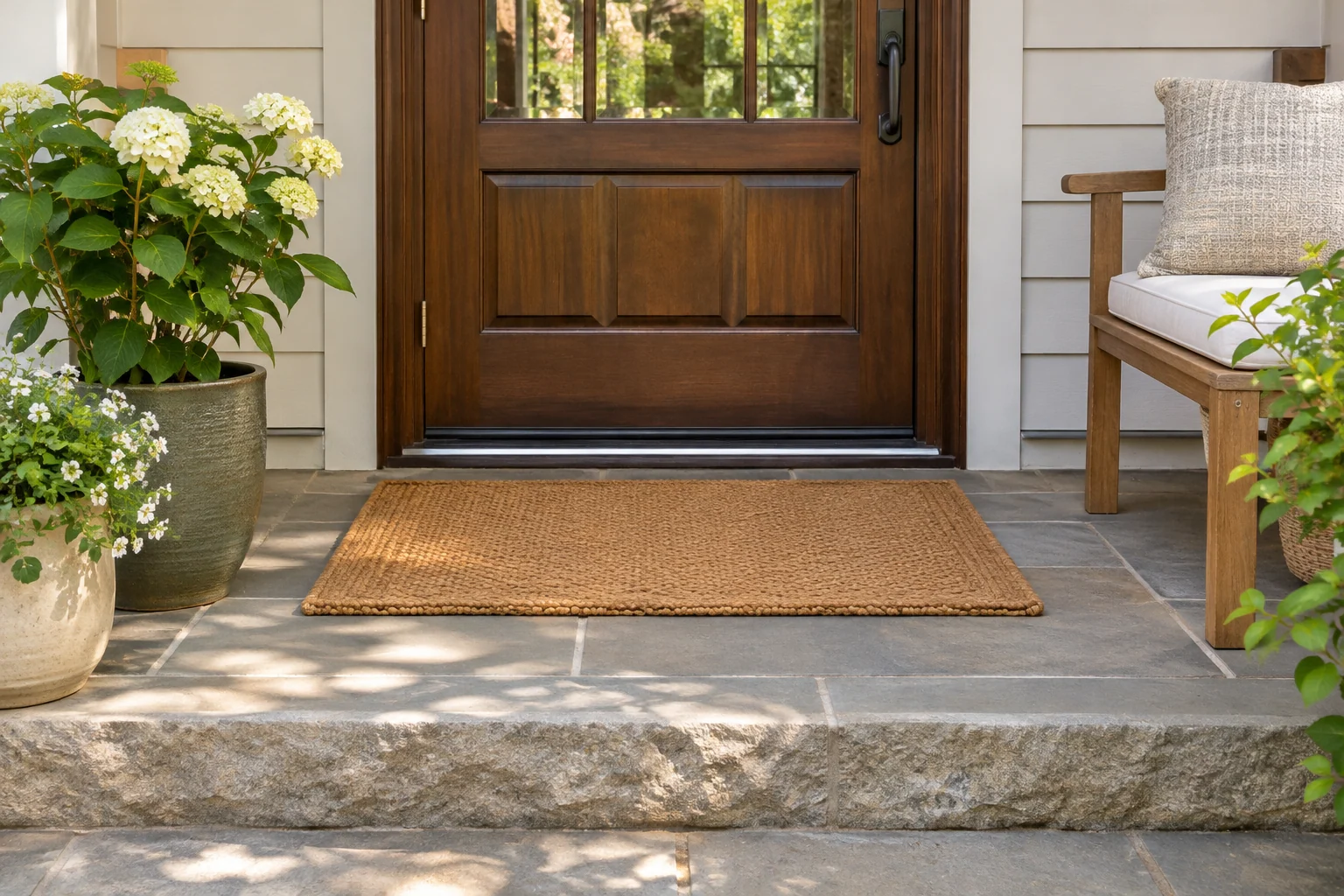
Keep the mat fully supported on the level landing with space between it and any step edge. Do not use a long mat to bridge a change in level. Check the view when approaching from the path as well as from inside. If the available landing cannot accommodate the desired size comfortably, choose a smaller suitable product instead of forcing the larger decorative look.
17. Use a quiet gray palette on a modern entrance
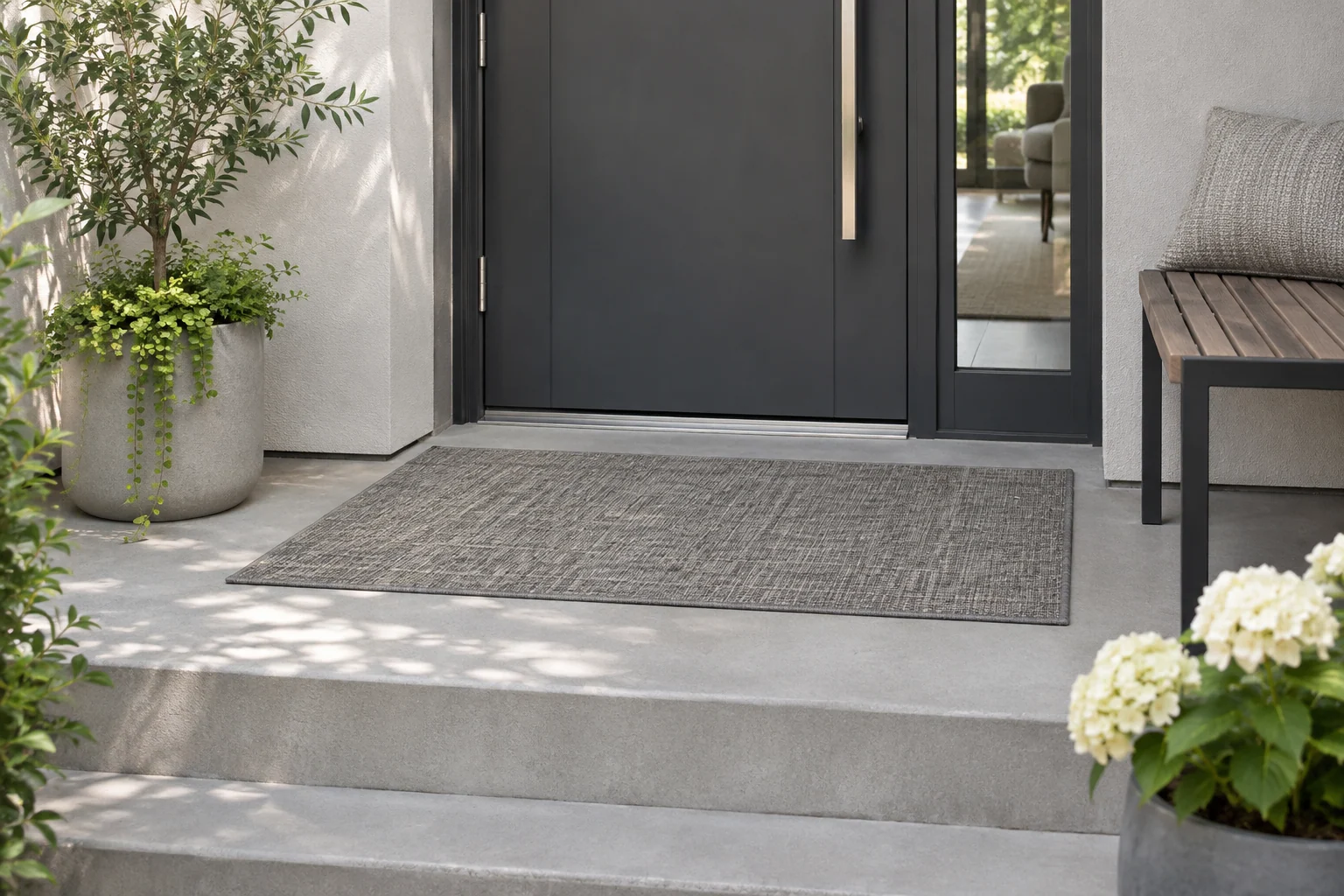
Warm or cool gray can connect a modern door with concrete, stone or metal details. Compare the mat against the actual paving so it remains visible rather than disappearing completely into the surface. Add interest through a subtle border or texture if needed. Keep the arrangement restrained and let the building's lines provide the stronger visual structure.
18. Choose a removable seasonal accent around a year-round mat
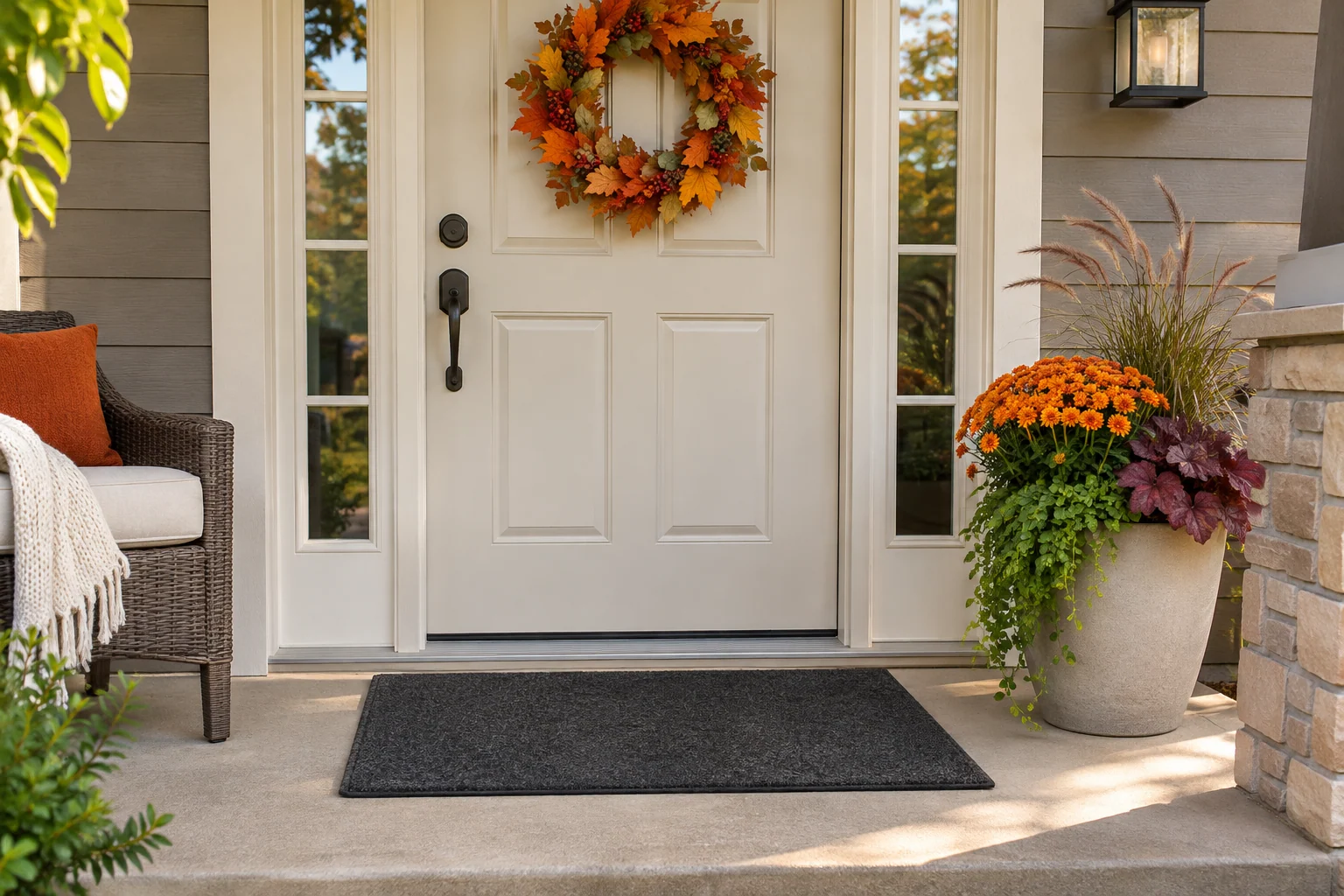
A reliable everyday mat can stay while a nearby wreath or planter changes with the season. This keeps the practical part of the entrance consistent and reduces the need to store several large mats. Use only decorations suitable for their exposure and keep them out of the walking route. Let the seasonal color appear beside the mat rather than covering its useful surface.
19. Allow the mat to dry during maintenance
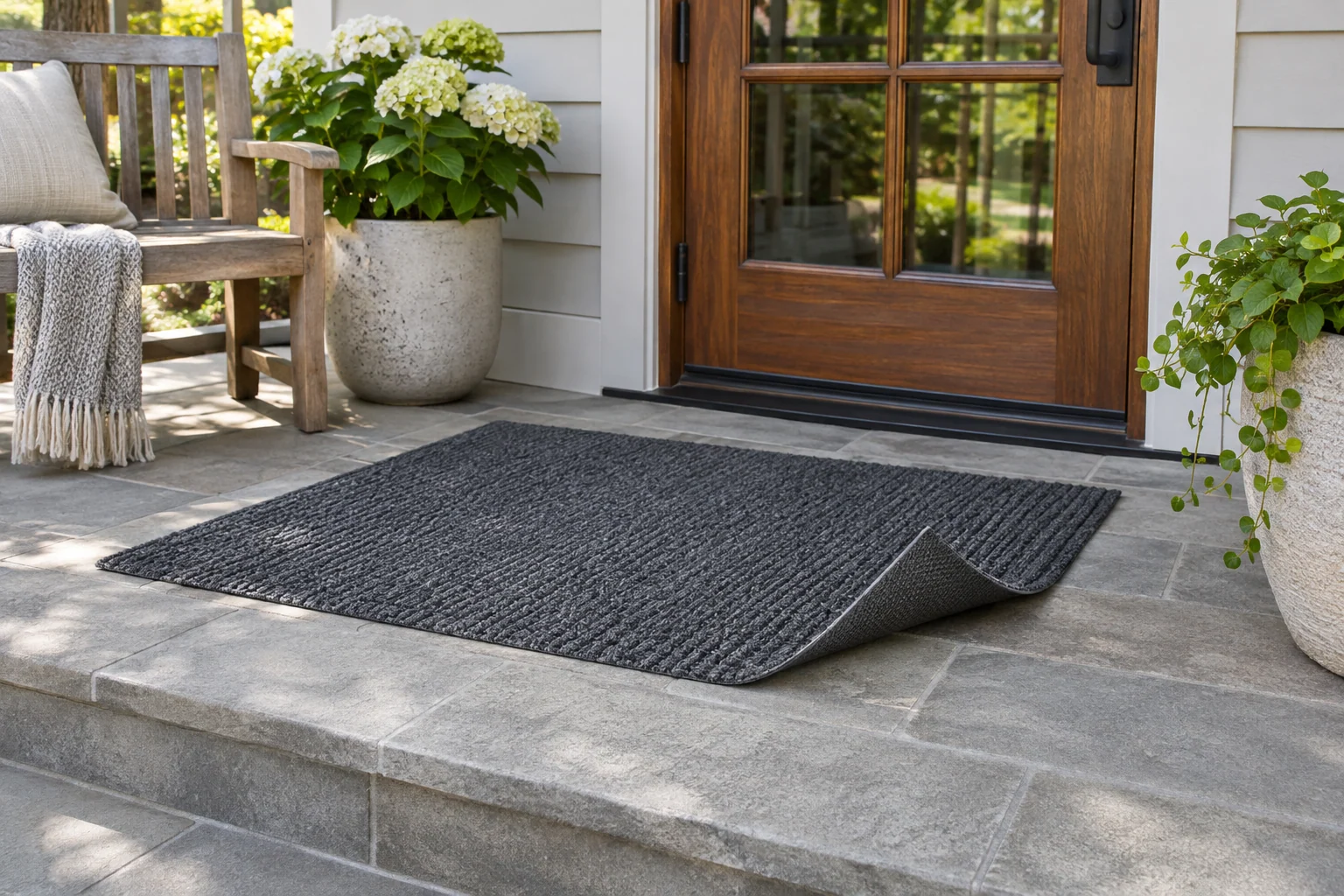
Follow the maker's cleaning and drying directions for the actual product, including the backing. Lift it as appropriate to inspect and clean the surface below. Do not assume a mat that feels dry on top is dry underneath after rain. Persistent moisture needs attention to the entrance conditions and product suitability, rather than being hidden beneath another decorative layer.
20. Check thickness with an outward-opening door
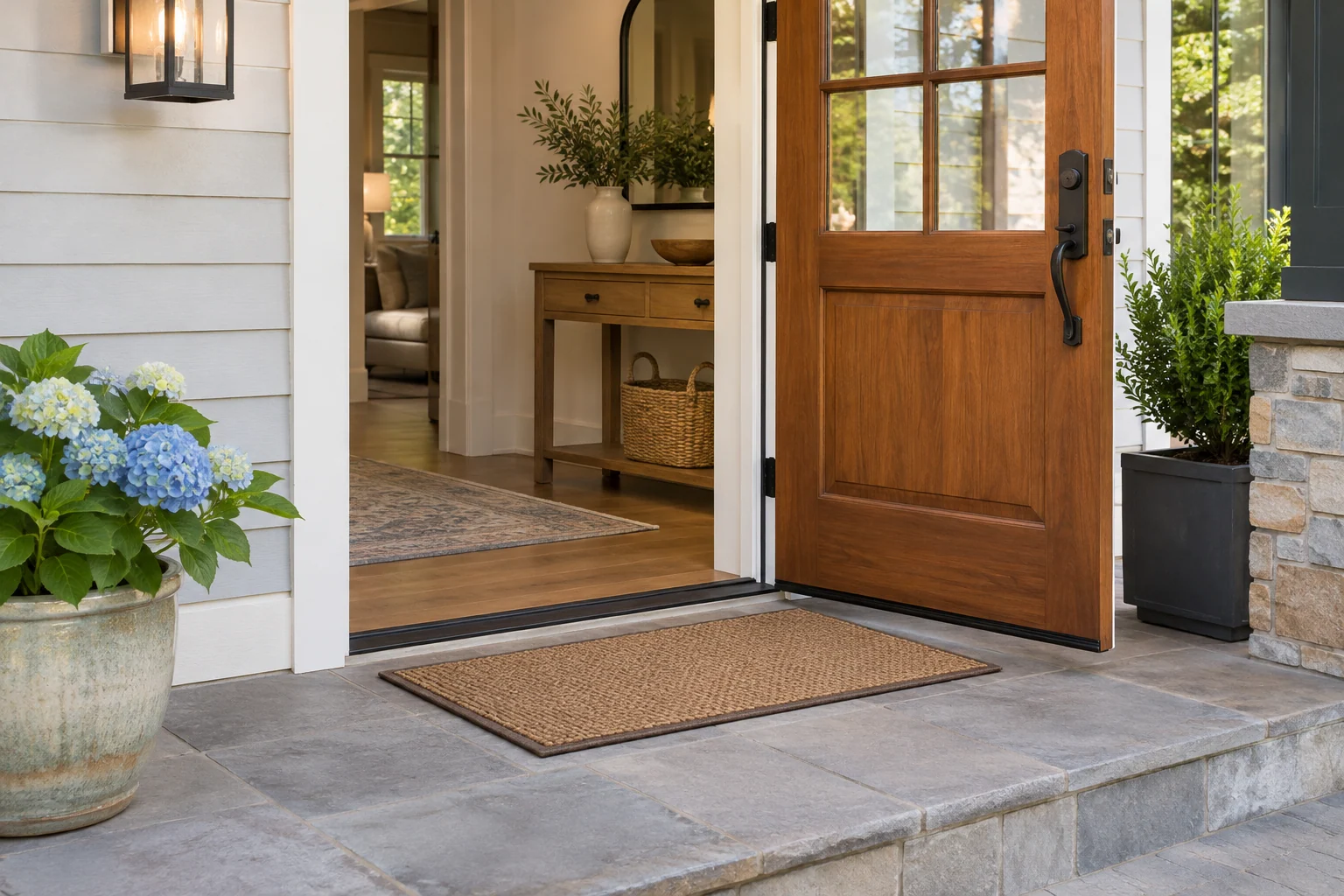
An outward-opening door can catch a mat that looked fine while the door was closed. Test the entire swing with the actual mat thickness, including any backing or lower rug. Check corners as well as the middle. Choose a lower-profile suitable product or a different position if needed; repeatedly pushing the door over a raised edge can distort the arrangement.
21. Give an exposed porch a product-led design
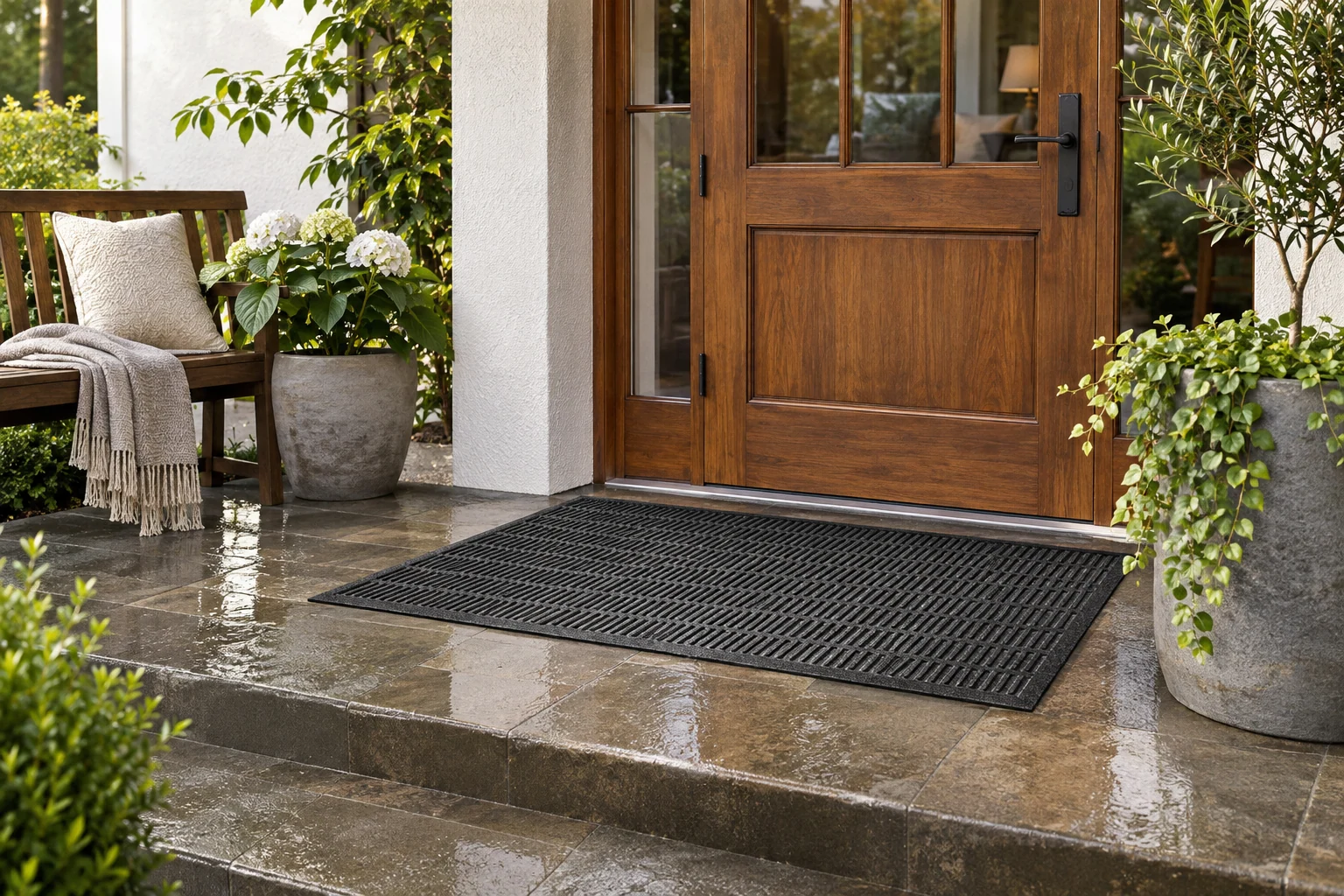
Where rain reaches the entrance, choose from products explicitly intended for those outdoor conditions before selecting a color. Read the drainage, surface and care guidance for the actual model. A sheltered-porch inspiration image may not translate to an open step. Keep the design simple enough that inspection and cleaning remain easy after wet weather, and replace a product that no longer sits properly.
22. Use a single accent to connect door and path
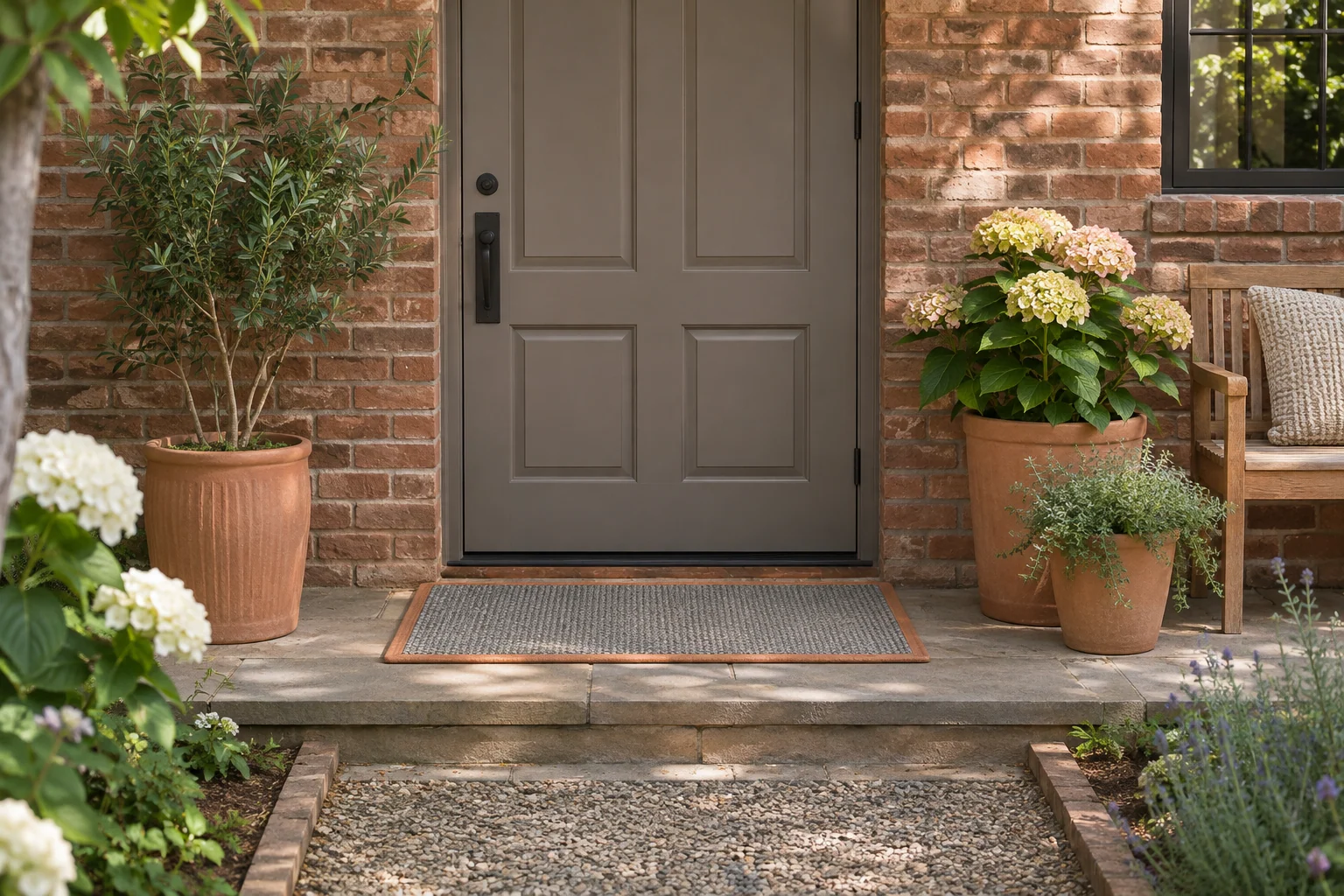
A narrow warm border, muted stripe or familiar neutral can link the front door to the approach planting or masonry. Choose one visual connection and leave the rest quiet. Stand at the gate or path to judge the entrance as a whole. The mat should help define where to arrive without becoming a large graphic that competes with the house.
23. Build a quick monthly condition check
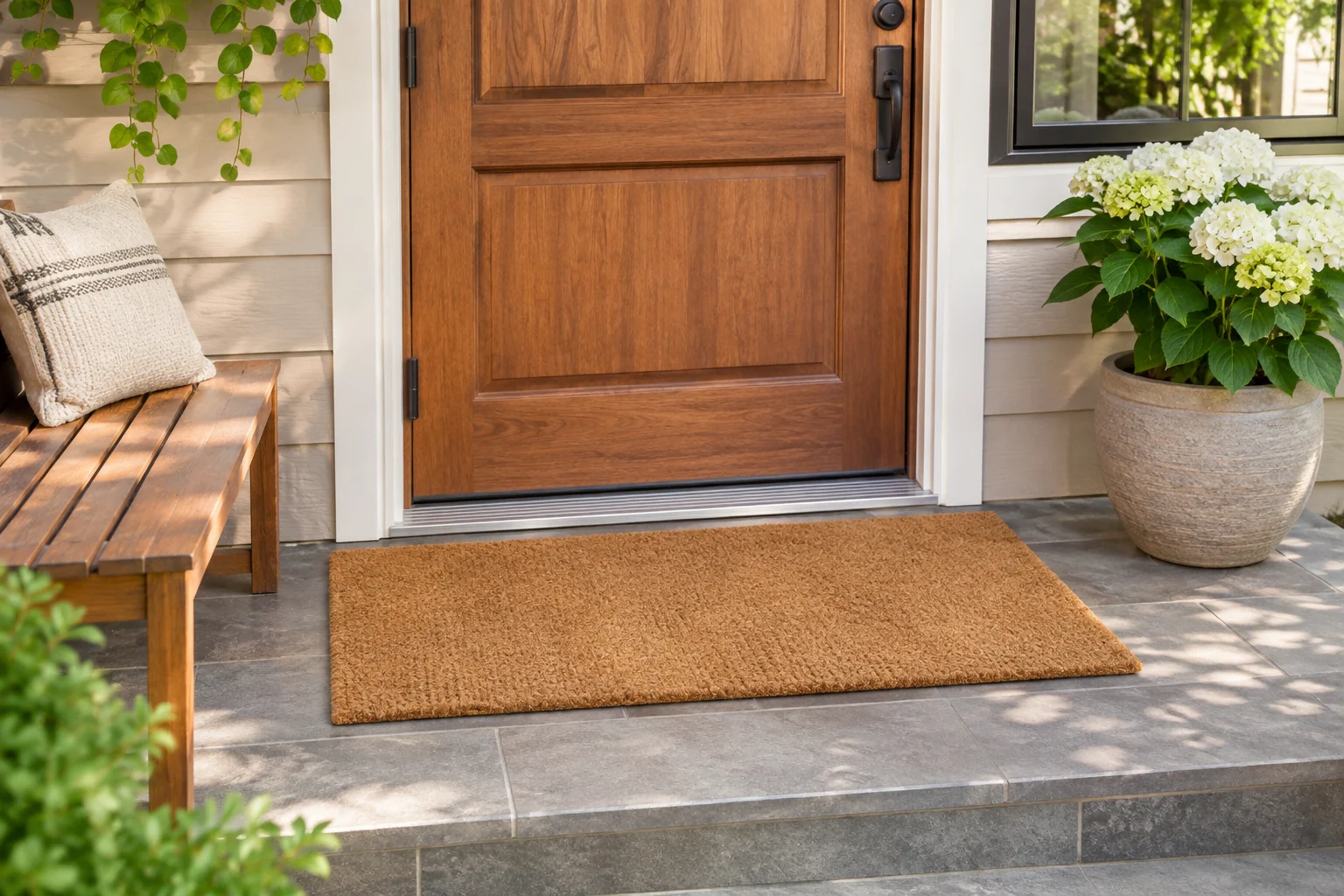
Look for curled corners, movement, accumulated dirt and backing changes while cleaning the entrance. Recheck door clearance after rearranging furniture or replacing a lower layer. Follow the product's maintenance instructions and remove an unsuitable or damaged mat from use. A well-proportioned entrance depends on the condition of the everyday objects as much as their original styling.
A porch-mat fit and exposure card
Record whether rain reaches the landing, the usable level area, the door's full movement and the clearance available for the complete mat thickness. Compare those facts with the product's stated location and care guidance. For a hypothetical 36-inch door on a broad landing, first mark a proposed mat outline and test the swing; the door width alone does not determine the right mat width. Add a reminder to lift the mat and inspect underneath during normal cleaning. This is a planning method, not a slip-performance test.
A practical next step
The best front porch doormat ideas begin with the weather, surface and doorway, then add style. Choose a suitable product that sits properly, leaves the step visible and can be maintained easily. Color, texture and proportion will make that practical choice feel like part of a welcoming entrance.
The images are original AI-generated design concepts. They illustrate arrangements rather than tested products, installations or measured performance.
Sources and care references
Related reading on Nestroxe
- Choose a front door color to work with your entrance
- Plan the indoor rug beyond the threshold
- Organize shoes inside the entrance
Optional digital guide for this topic
If you prefer a structured workbook, explore this related paid guide.