A tissue box cover can make a small everyday object feel part of the room without hiding it where nobody can reach it. The useful choice fits the actual refill, dispenses comfortably and opens in a way the furniture allows. Begin with those details before deciding whether wood, ceramic or a plain metal finish suits the space.
Choose the case around the paper product you use, not the word 'standard' in a listing. Some designs hold a boxed refill; others are intended for loose packets or a particular size. Follow the actual cover's loading and care instructions instead of forcing the packaging into a decorative shell.
Contents
- 1. Use a compact square cover on a small table
- 2. Choose a low rectangle for a wider surface
- 3. Keep a lift-off lid clear of the shelf above
- 4. Check the route for a slide-in base
- 5. Use a soft cover for a relaxed textile connection
- 6. Let a wood lid connect to nearby furniture
- 7. Choose matte metal for a simple outline
- 8. Use ceramic as a restrained decorative object
- 9. Use a woven form with an appropriate interior
- 10. Add texture to a plain neutral room
- 11. Use contrast to make the case easy to locate
- 12. Blend the cover into a quiet shelf palette
- 13. Keep the nightstand's daily objects distinct
- 14. Put a living-room case near the seat that uses it
- 15. Give the desk case its own small zone
- 16. Make a guest bedroom's case visible
- 17. Keep bathroom paper away from the working splash area
- 18. Check a shelf's usable depth
- 19. Use a mounted dispenser only as designed
- 20. Match loose packets only to cases intended for them
- 21. Use a tray only when it leaves the opening accessible
- 22. Pair the cover with one simple decorative detail
- 23. Store spare refills separately and visibly
- 24. Finish with an ordinary refill test
Compare the inside with the box
Measure refill width, depth and height and check how it is inserted. Yamazaki's Rin square case, for example, lists an exterior height around 6.1 inches while its FAQ limits compatible boxes to 5.5 inches high. Those different measurements show why outside dimensions do not establish usable space. Check the exact version and refill rather than treating that example as a universal case size.
Compare the storage or placement options
- Small bedside table: A fitting compact case with an unobstructed pull and refill route.
- Low shelf: Check lid movement and dispensing clearance as well as the outside height.
- Loose-packet design: Use only the refill form intended for that case.
- Bathroom position: Keep paper dry and follow the actual case's location and care guidance.
1. Use a compact square cover on a small table
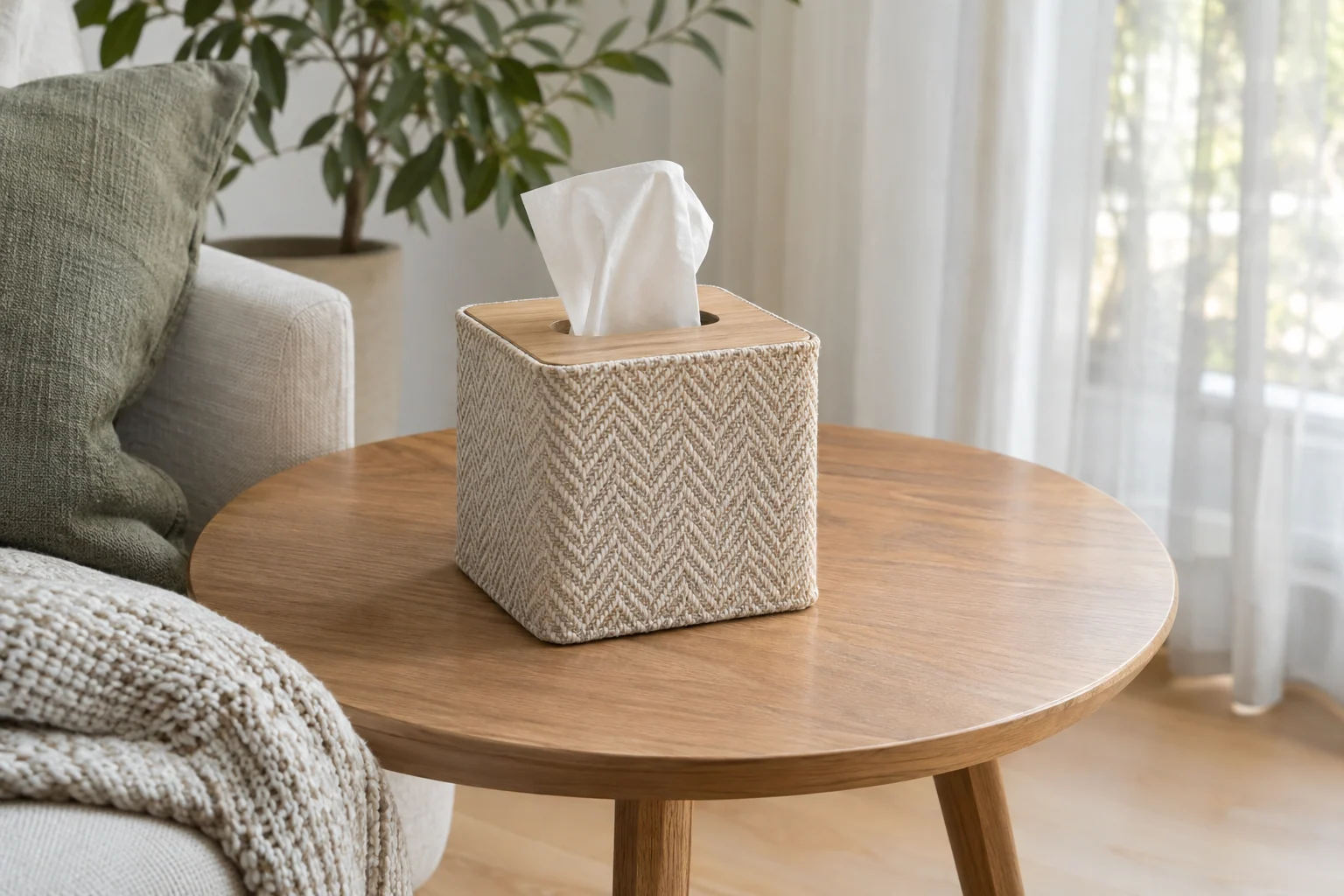
A square case can keep the tissue footprint contained when it fits the actual refill. Leave room around the opening for a normal upward pull, especially beneath a shelf. Keep the surrounding surface useful for a lamp or personal items. A compact outside shape is helpful only when the case can still be opened and refilled comfortably.
2. Choose a low rectangle for a wider surface
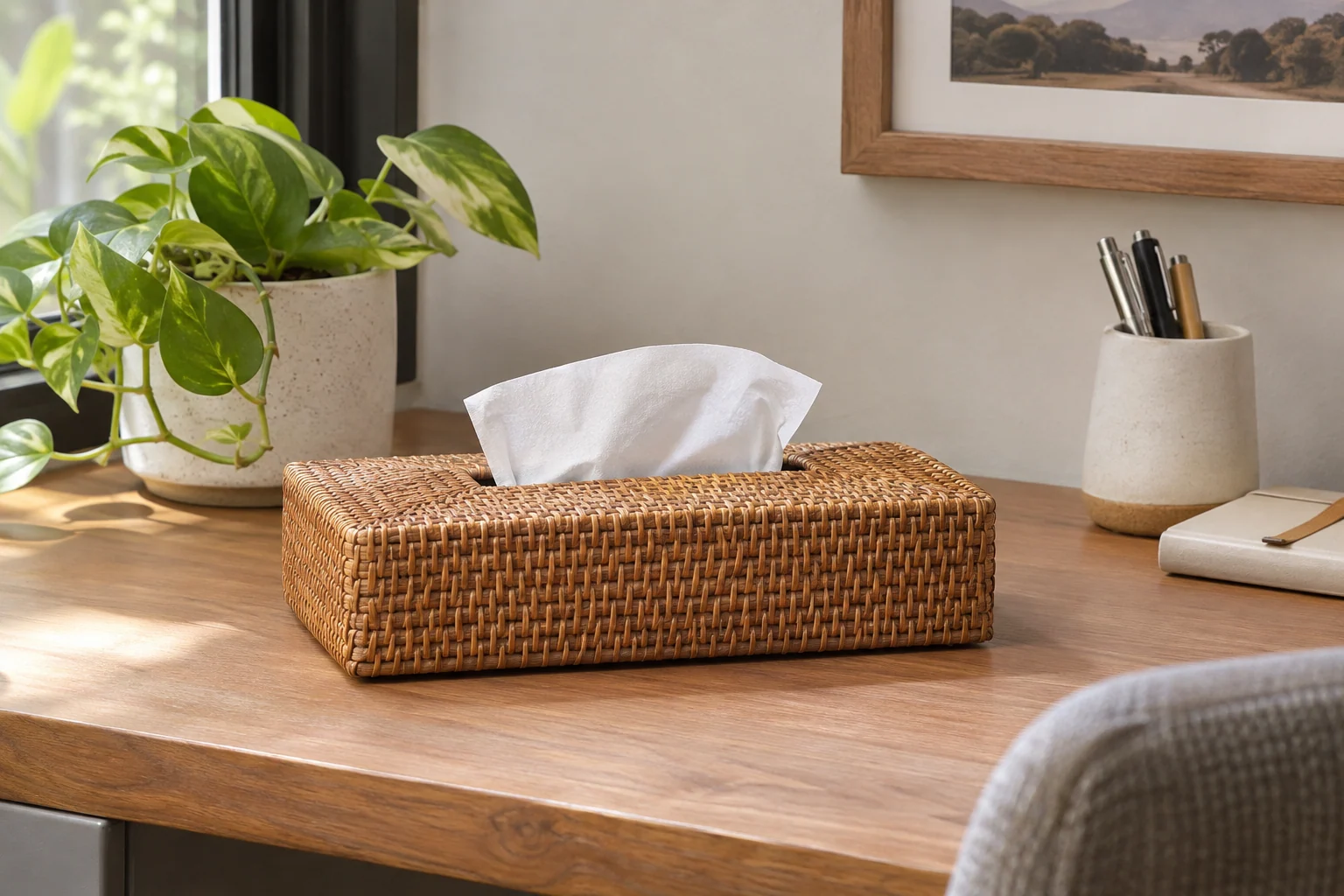
A rectangular case can suit a longer tissue box and a broad console or desk. Compare the usable internal dimensions with the refill, then check the complete outer footprint on the furniture. Leave its dispensing slot accessible from the position where it is used. A long case should not have to be moved from behind a decorative arrangement each time someone reaches for it.
3. Keep a lift-off lid clear of the shelf above
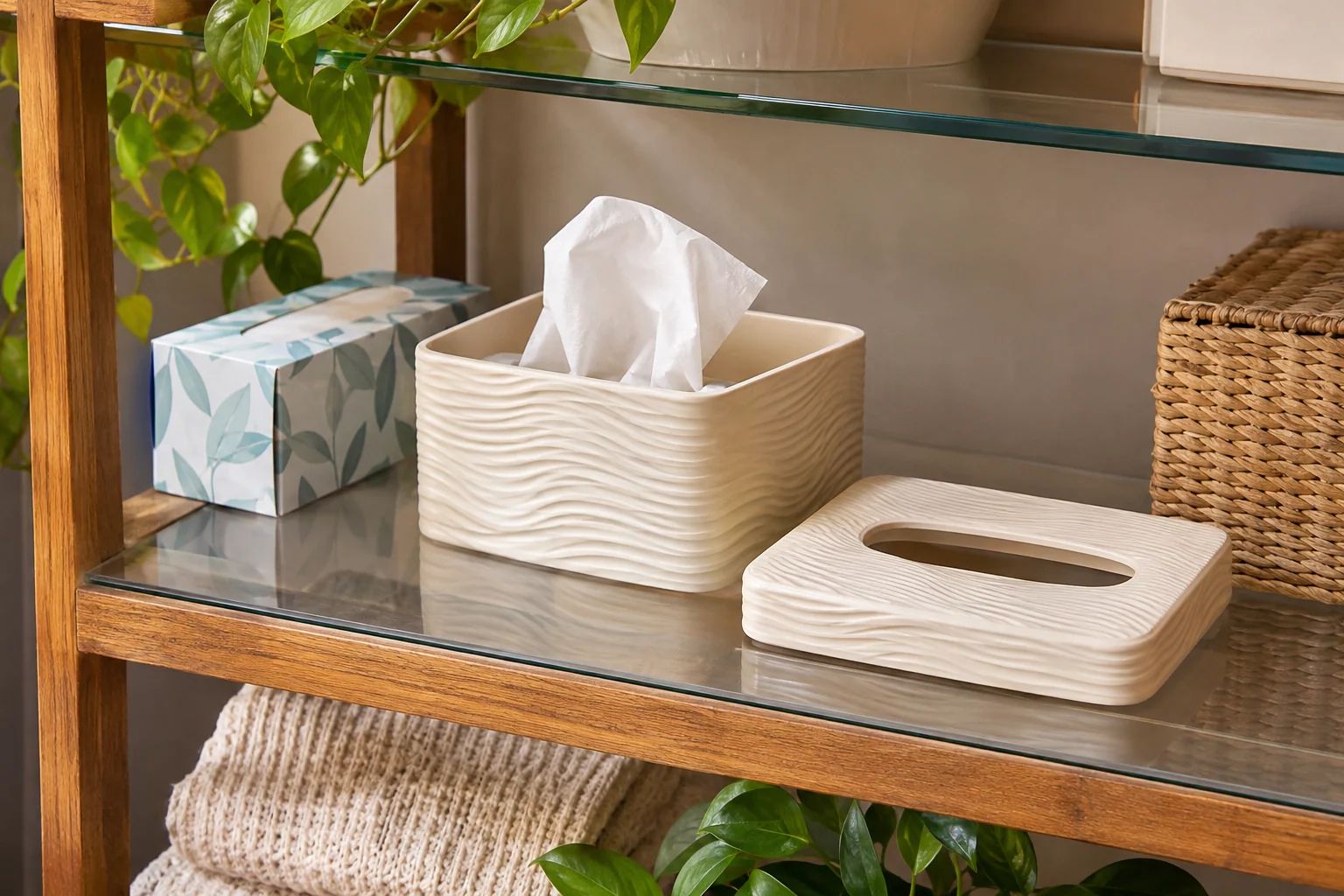
A top-opening case can be easy to refill when the lid has enough space to lift away. Test that movement in the actual furniture position. A case may fit beneath a shelf while still needing to be removed for every refill. Decide whether that extra movement is acceptable before choosing its permanent home.
4. Check the route for a slide-in base
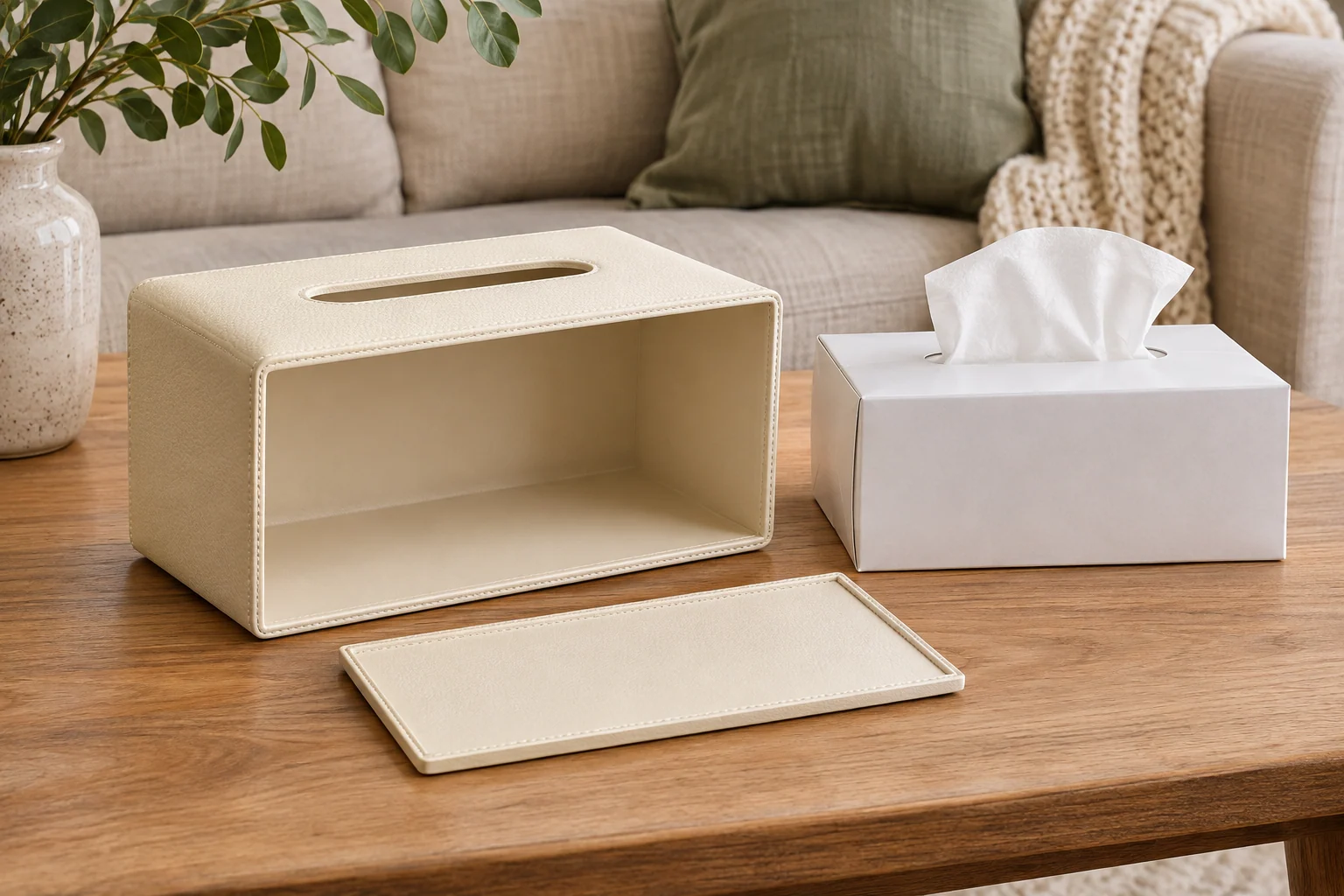
A cover that loads from below or through a sliding base needs a different refill routine. Check whether the whole case must be lifted and how the base is retained. Keep the nearby surface clear enough for that ordinary task. Follow the actual construction rather than assuming a familiar exterior shape means it opens like another case.
5. Use a soft cover for a relaxed textile connection
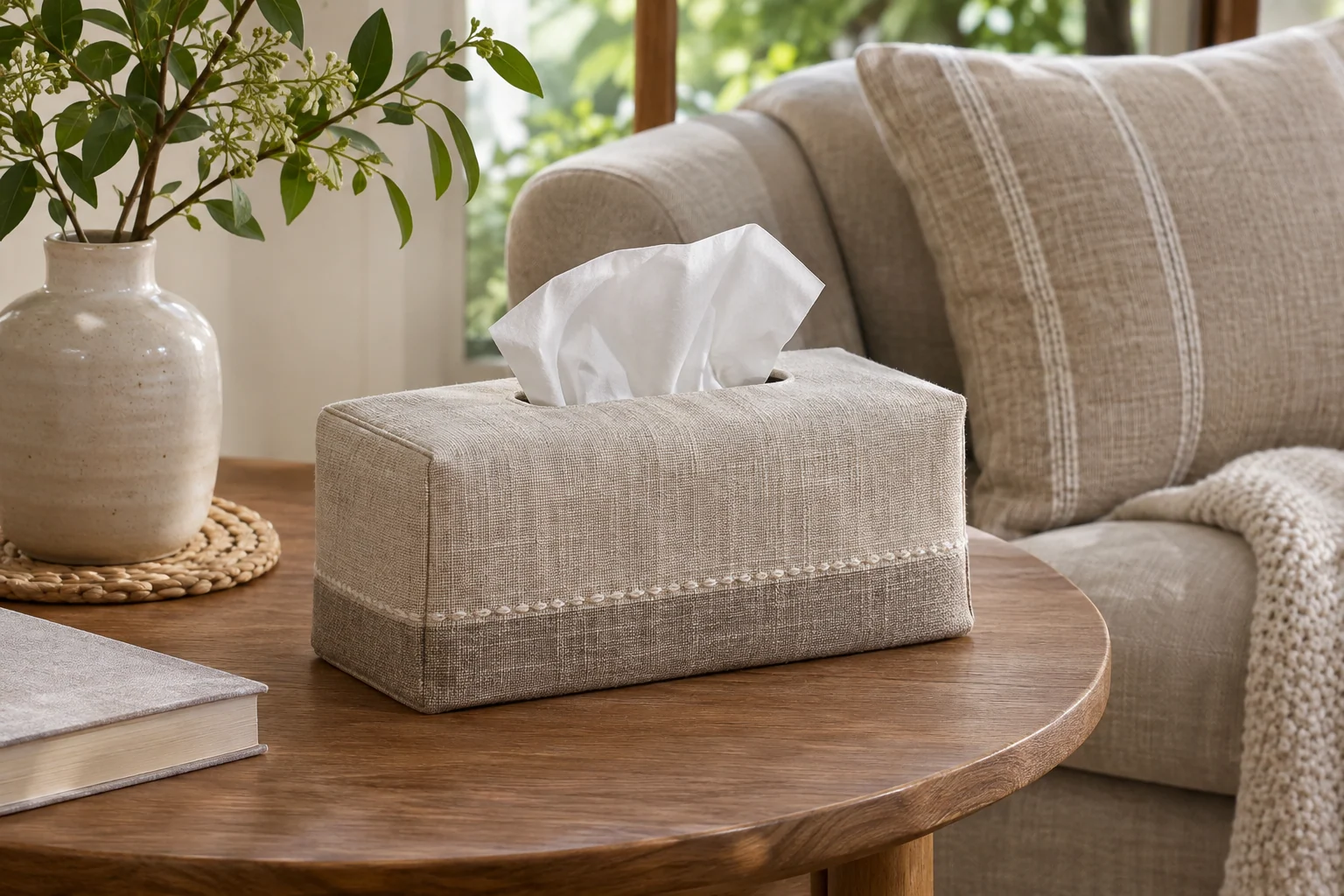
A purpose-made fabric cover can relate to a throw or cushion while making the packaging less visually prominent. Choose a construction intended for the refill and check its care label. Keep the dispensing opening unobstructed by loose fabric. The cover should be easy to maintain without assuming that its seams or lining can be washed like another textile in the room.
6. Let a wood lid connect to nearby furniture
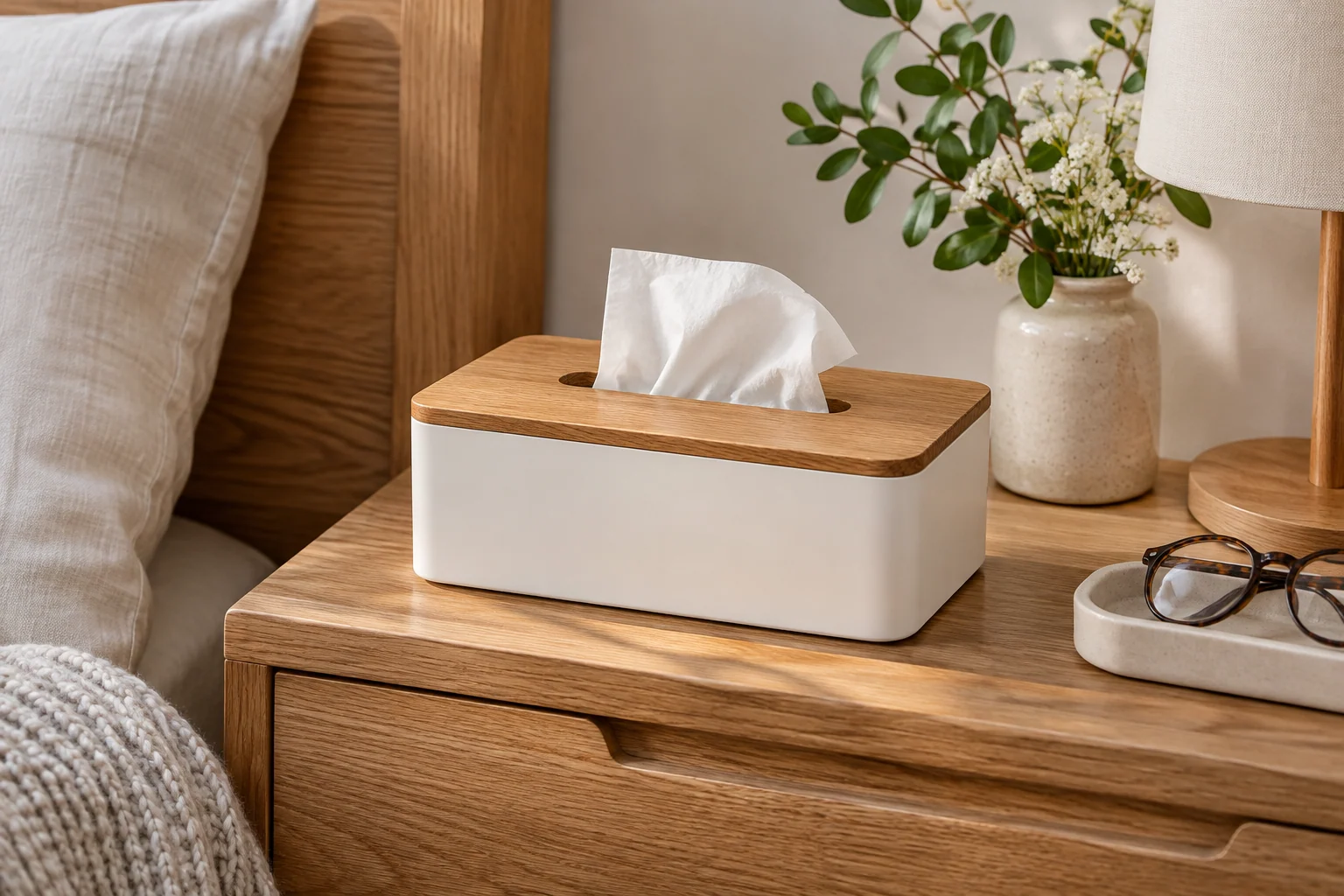
A small wood detail can relate a plain case to a cabinet or bedside table. Match the general warmth rather than searching for an exact grain. Check the lid's actual opening and care instructions, especially near a bathroom or drinks area. The decorative connection should remain secondary to easy dispensing and a refill that fits.
7. Choose matte metal for a simple outline
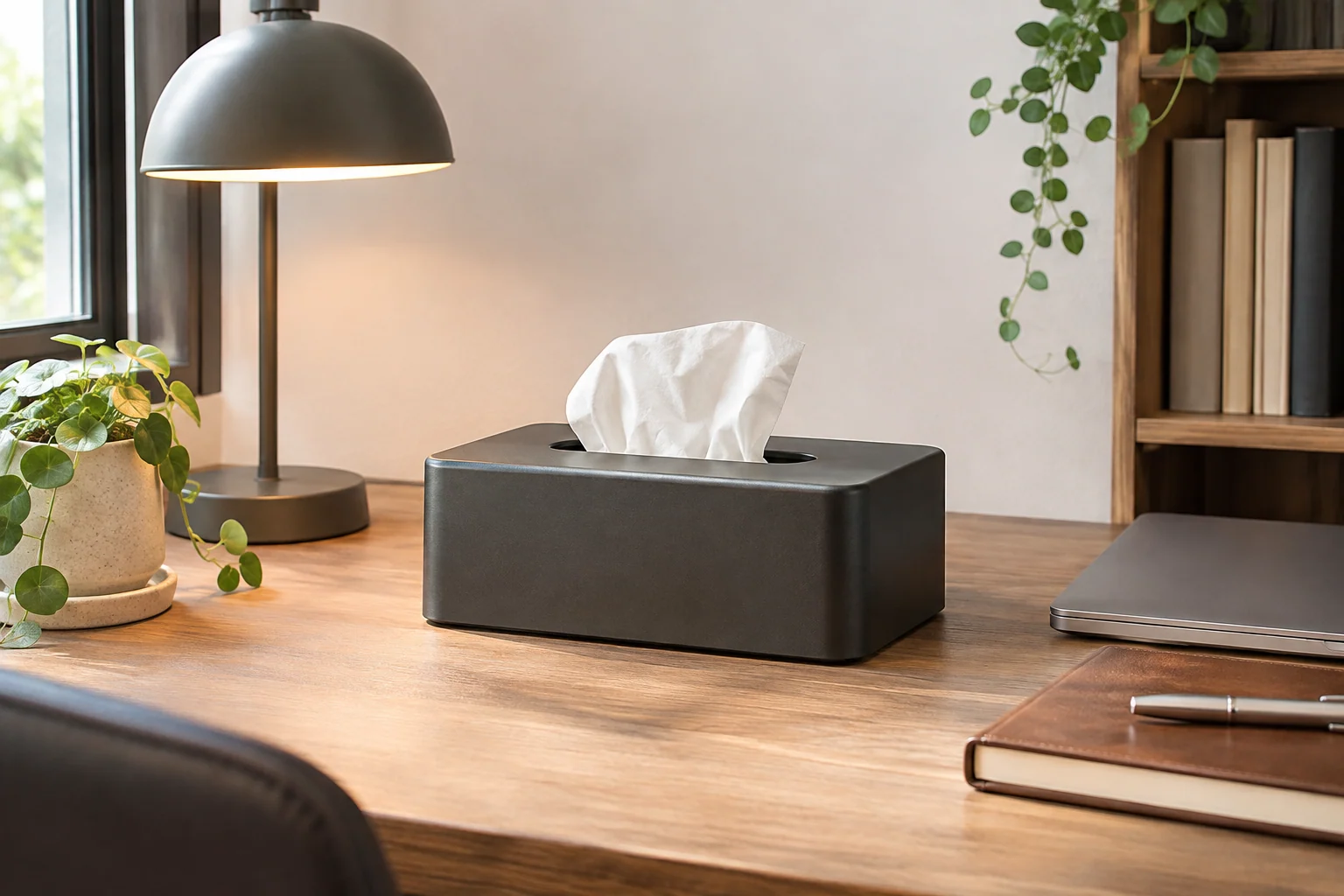
A plain metal case can suit a room with dark frames, a desk lamp or other quiet hardware details. Compare its weight, base and dispensing behavior with the intended furniture surface. Follow its care guidance rather than assuming every painted metal finish tolerates the same cleaner. Keep the case accessible so its simple appearance supports an equally simple routine.
8. Use ceramic as a restrained decorative object
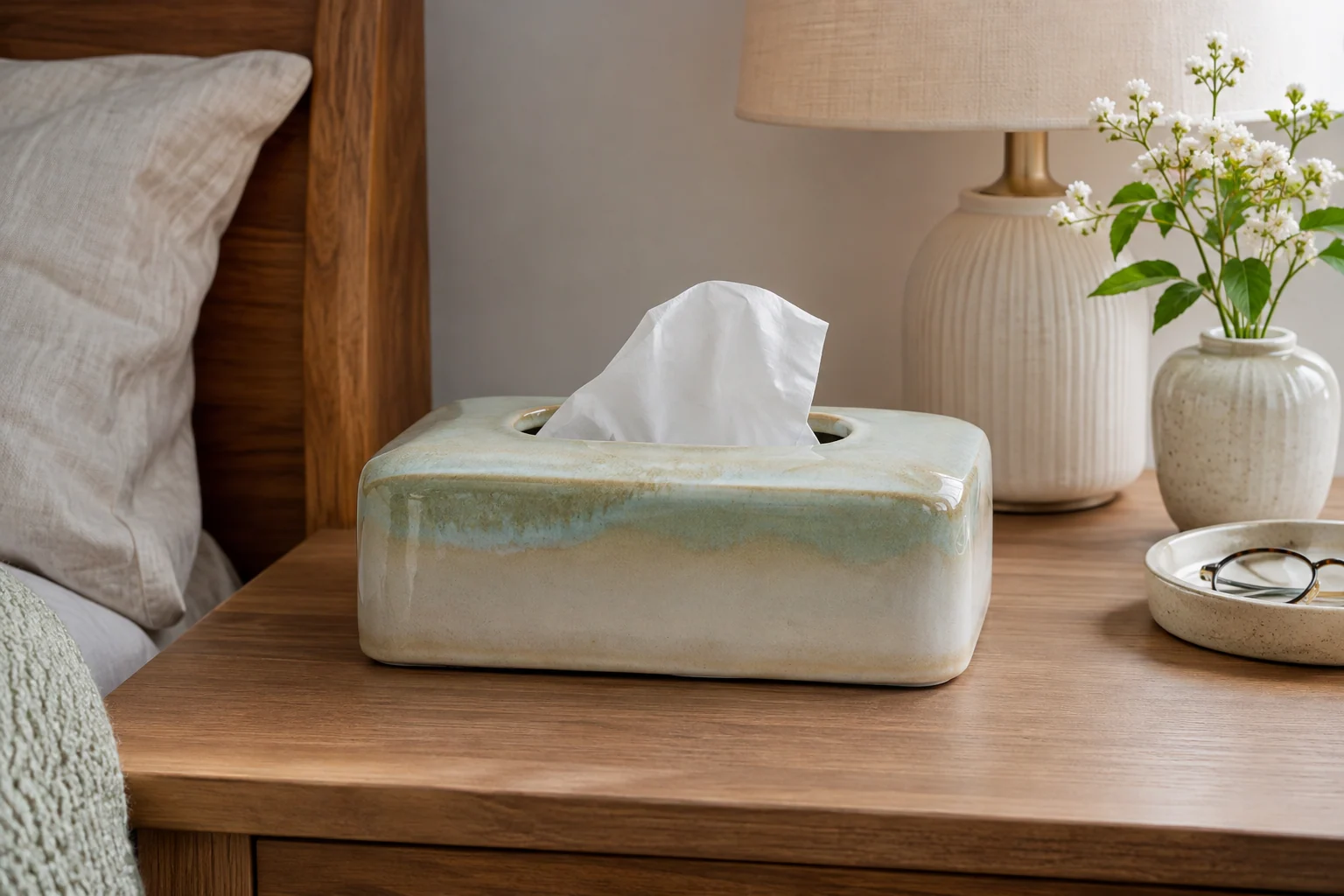
A ceramic-looking cover can bring texture or a soft glaze to a quiet room. Check the actual case's weight, internal fit and intended care. Keep it on a suitable stable surface with enough room to lift it for refilling. A sculptural form is less useful when its narrow opening catches the paper or its position makes the whole case awkward to handle.
9. Use a woven form with an appropriate interior
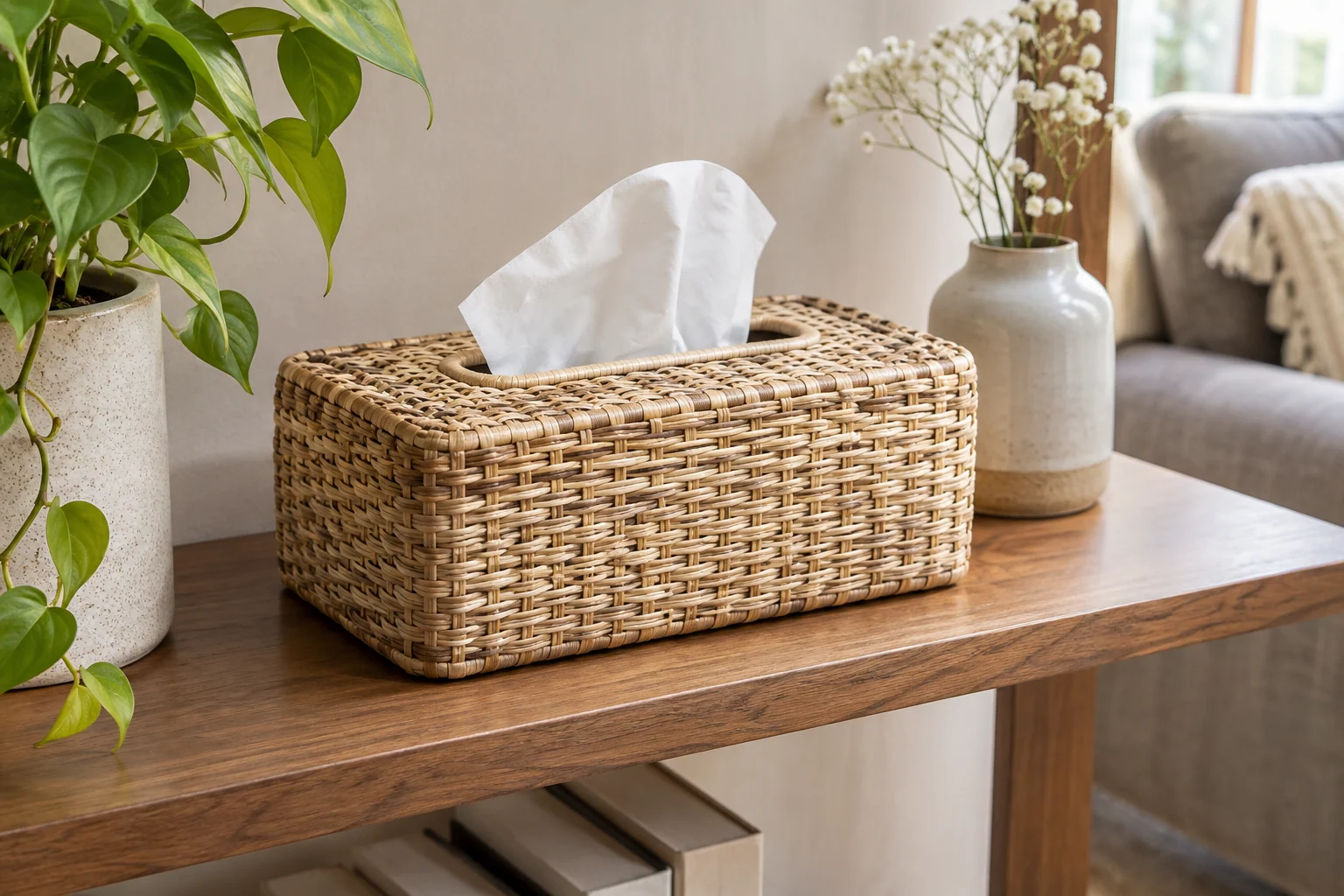
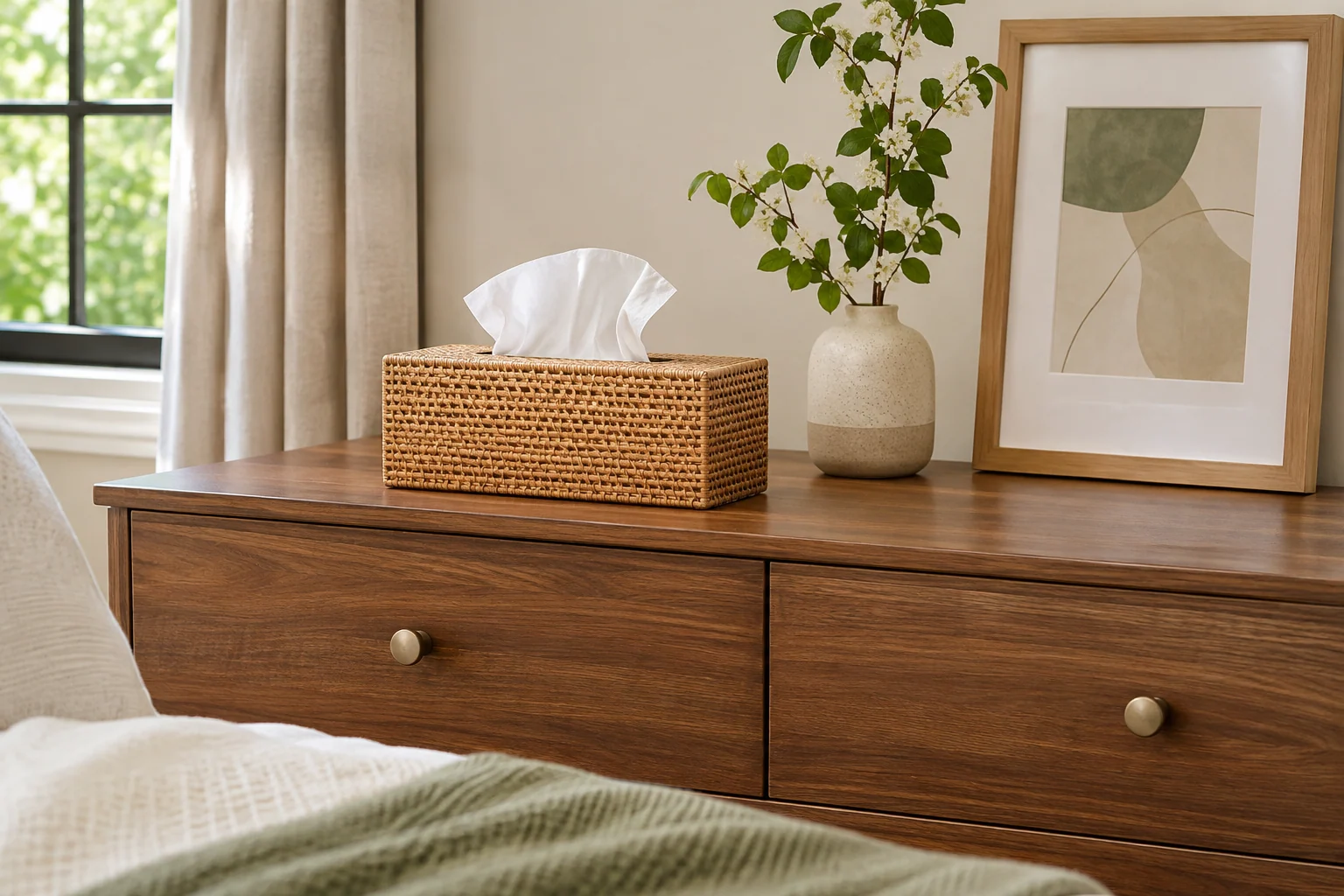
A purpose-designed woven case can connect baskets or cane furniture without adding another strong color. Check the opening and interior around the actual tissue product. Keep the paper from catching on rough edges, and follow the case's guidance about cleaning and moisture. An attractive weave is a surface choice, not proof that an ordinary basket works as a dispenser.
10. Add texture to a plain neutral room
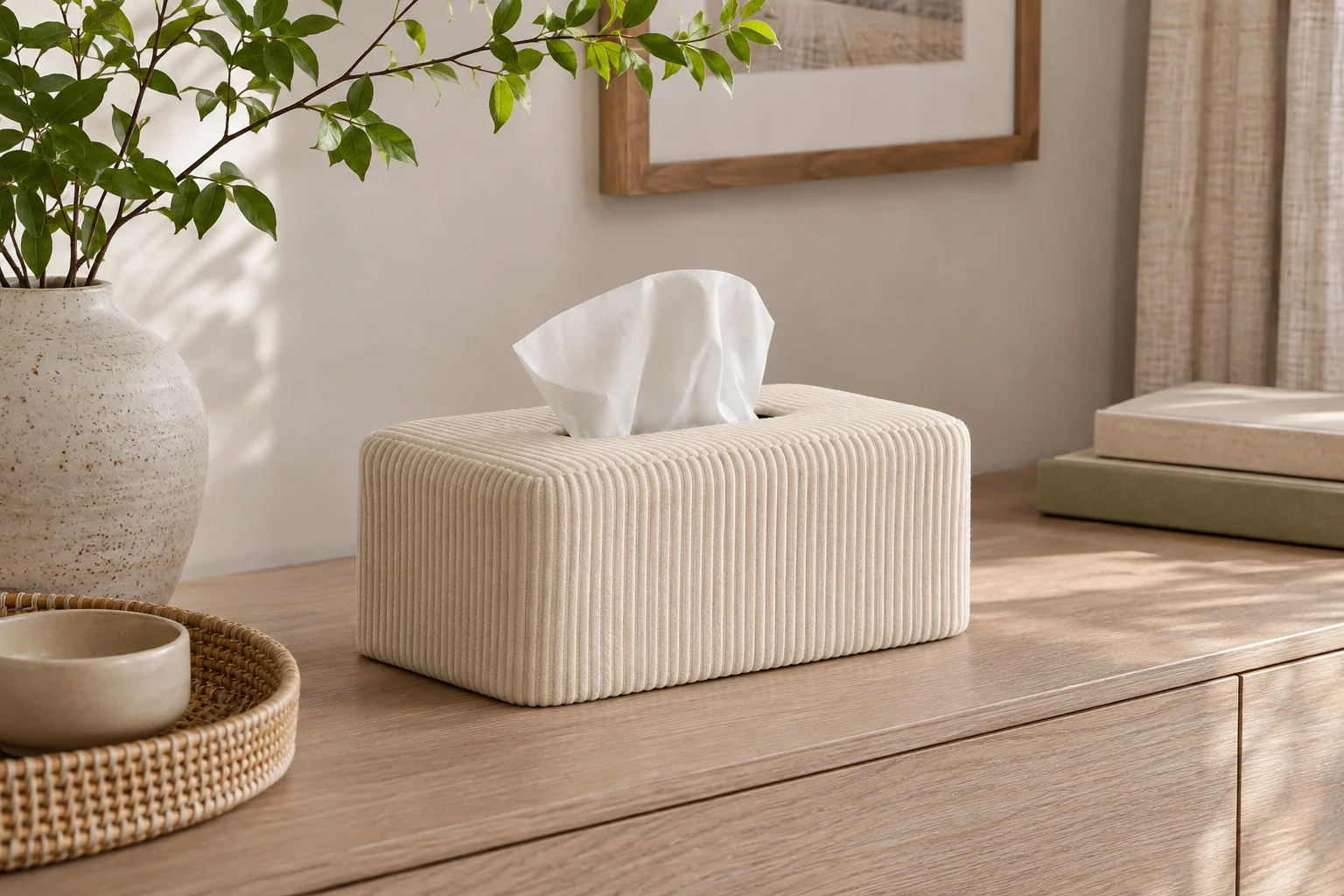
A subtle ribbed or sculpted exterior can make the cover interesting while keeping the color quiet. Compare it with the room's existing textures and leave the surrounding surface restrained. Keep the refill and dispensing shape practical. A useful everyday object can be the small tactile detail without becoming a large ornament that dominates the table.
11. Use contrast to make the case easy to locate
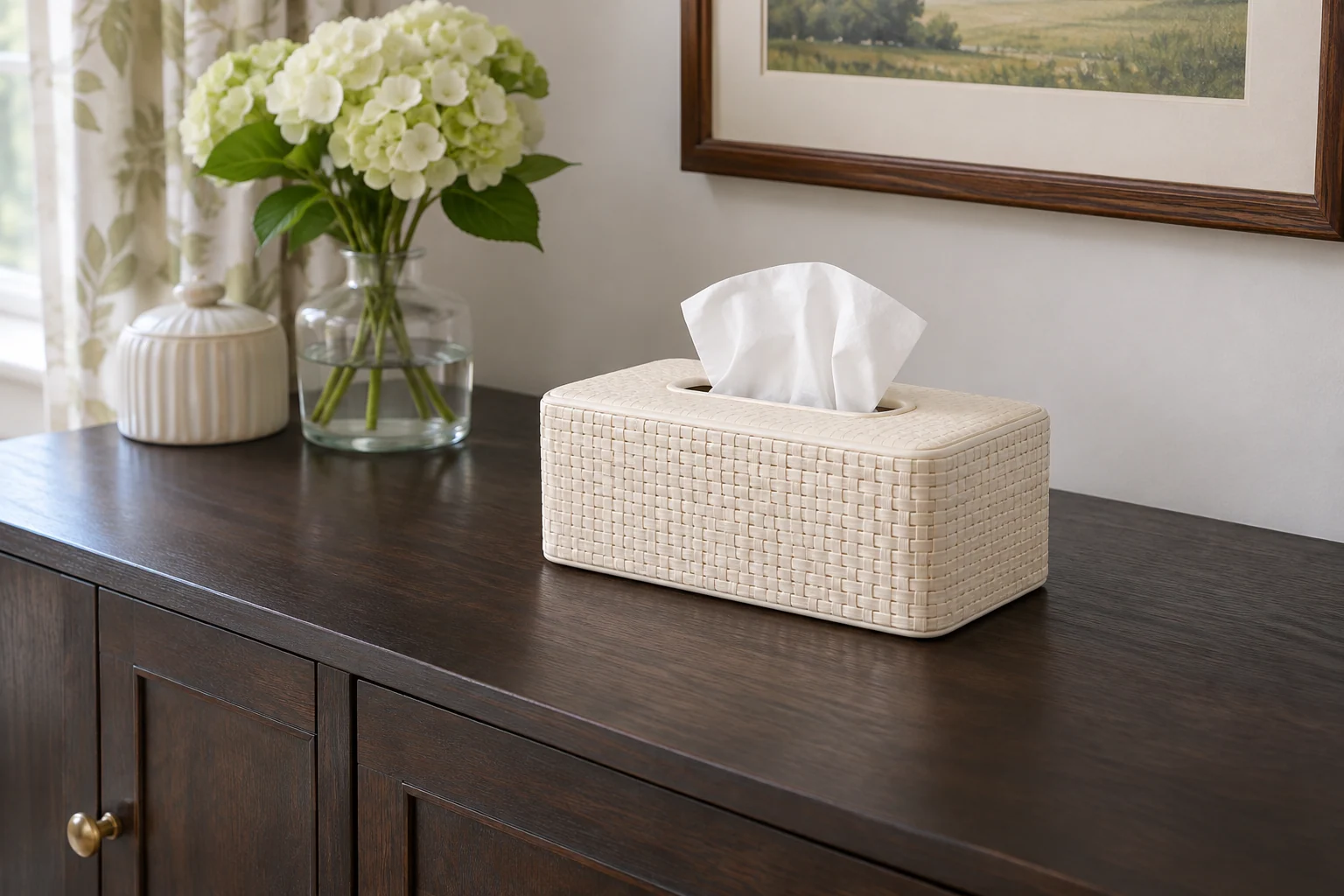
A darker cover against a pale wall or a pale one on dark wood can make the everyday object visually clear. Choose a modest contrast that suits the room instead of hiding the box behind other accessories. Check its position from the seat where it is normally used. An obvious, reachable case often needs less styling around it.
12. Blend the cover into a quiet shelf palette
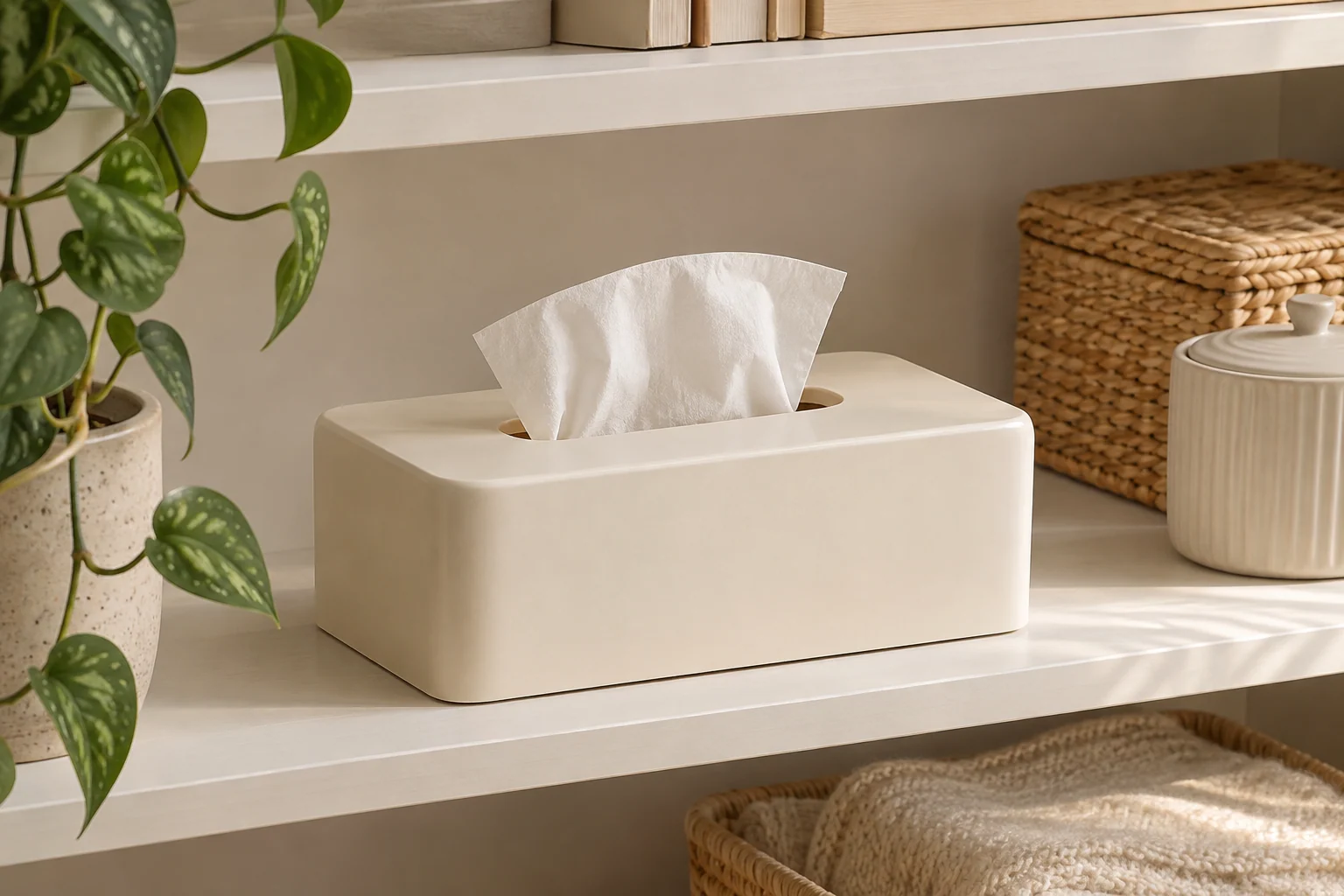
A similar tone to the shelf or wall can reduce visual clutter when the room already has several necessary objects. Keep the actual dispensing opening visible and reachable. A case that blends with the backdrop should not disappear behind books or become difficult for a guest to identify. Use the furniture arrangement to give it a clear place.
13. Keep the nightstand's daily objects distinct
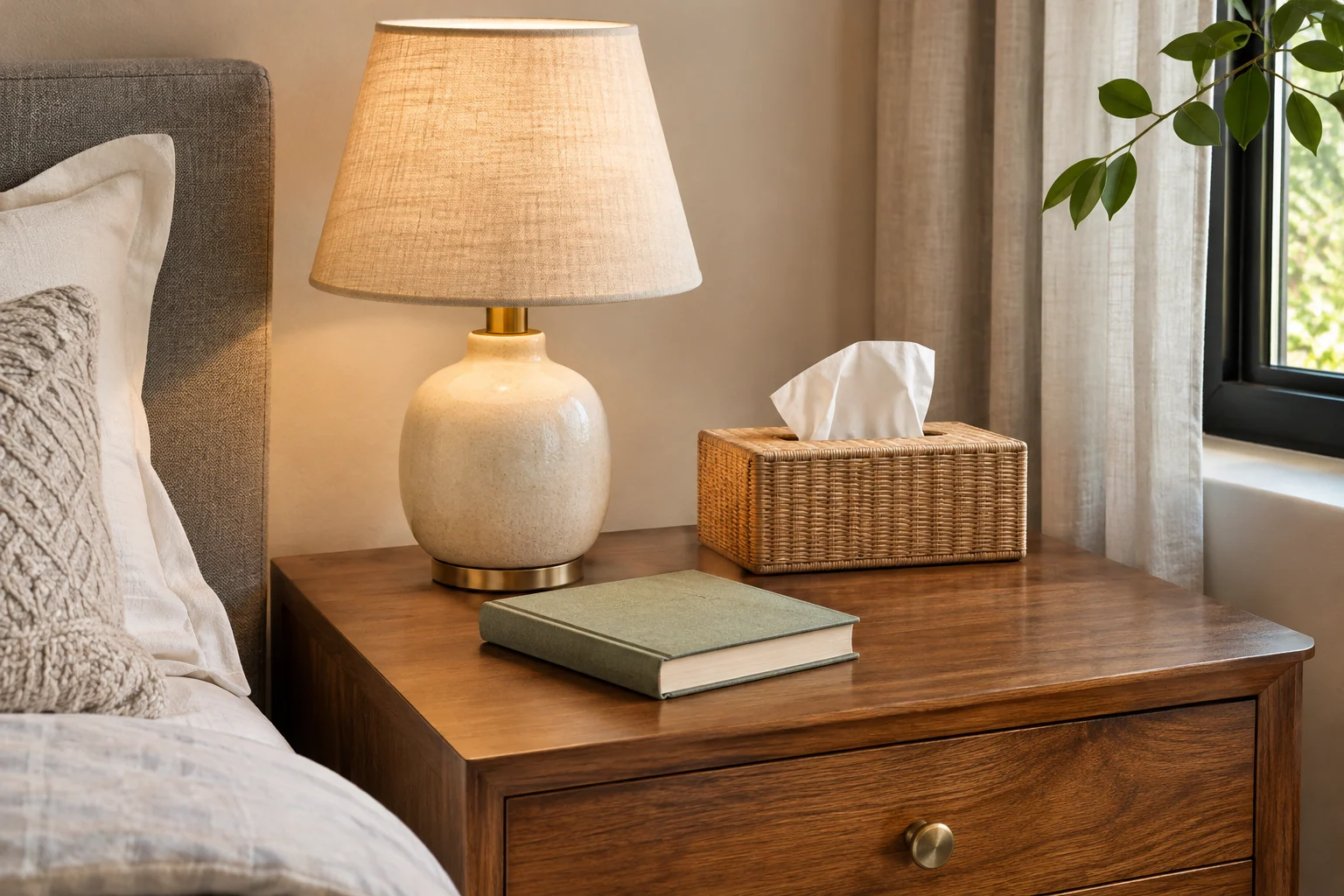
A tissue case can sit beside a lamp and book when each has a clear usable area. Check the case's footprint with the furniture occupied as usual. Leave room for the person using the bed to reach it comfortably. Avoid placing it beneath a lamp arm or behind a water glass simply because that produces a tidy photographed row.
14. Put a living-room case near the seat that uses it
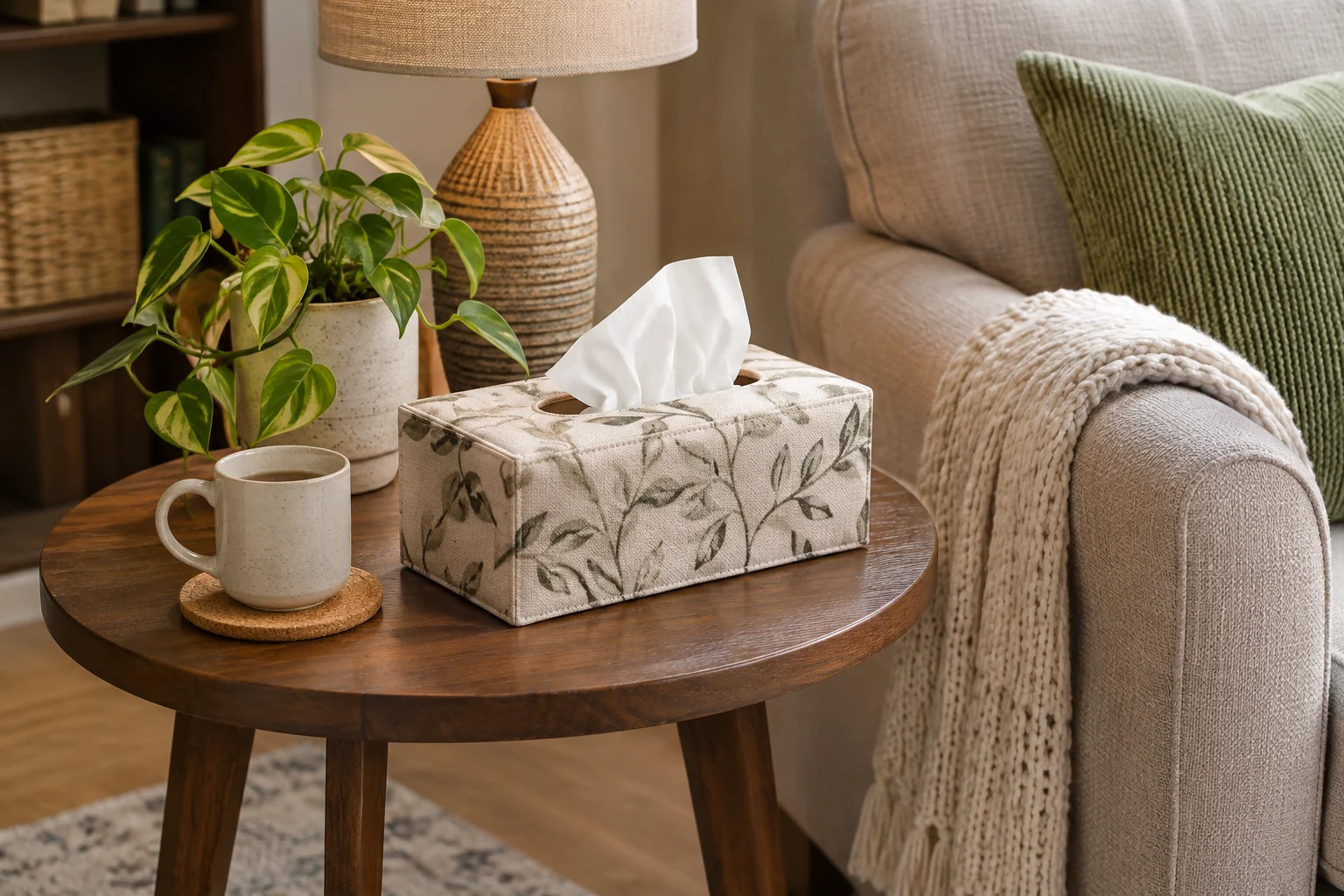
A reachable side table may serve the room better than a central shelf chosen for symmetry. View the case from the actual seat and check the pull direction. Keep it clear of a narrow passage and the table's other regular jobs. The goal is a simple everyday reach, without needing to stand and move several decorative objects.
15. Give the desk case its own small zone
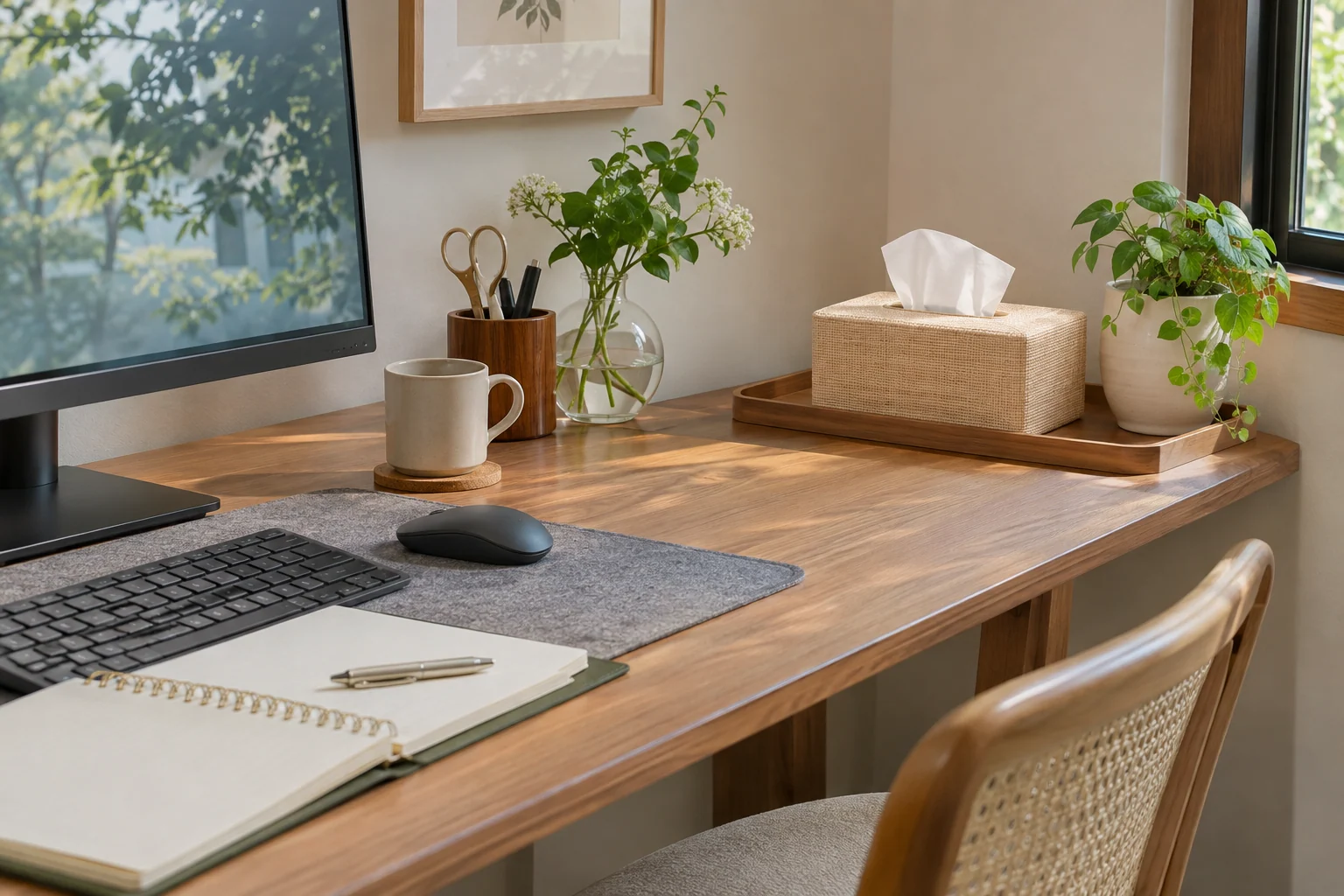
A case at a home-office desk should stay out of keyboard, mouse and paper-working space. Choose a location that remains available when the desk is actually in use. Check any shelf above it for dispensing and refill clearance. Keeping the case in one defined position can prevent it moving between piles whenever the work surface becomes crowded.
16. Make a guest bedroom's case visible
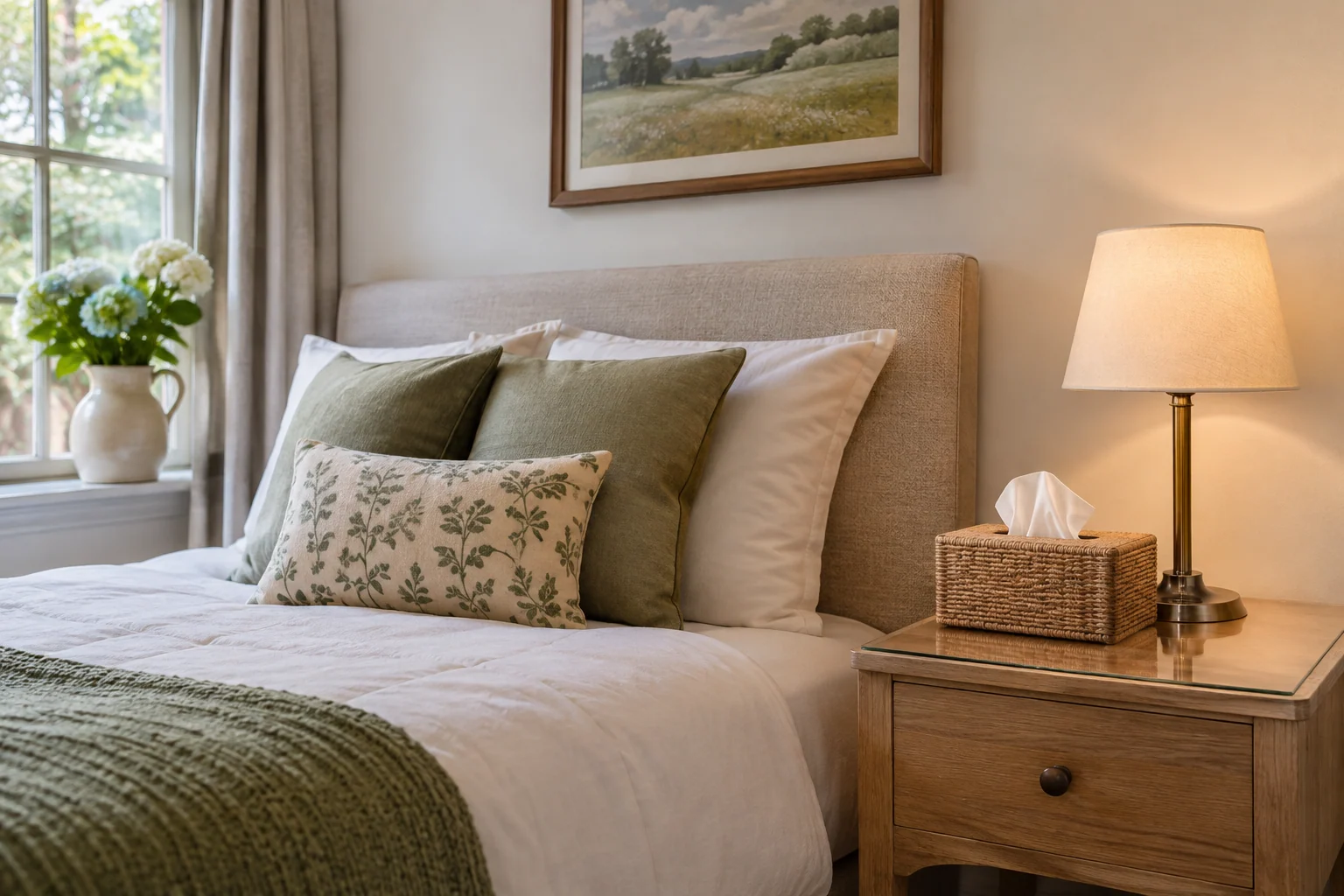
A plain accessible cover can make a guest room feel considered without covering the table in amenities. Keep its purpose obvious and leave the refill straightforward. Avoid putting it inside a drawer unless that is a deliberate arrangement the guest can understand. A modest case beside a usable lamp can be enough.
17. Keep bathroom paper away from the working splash area
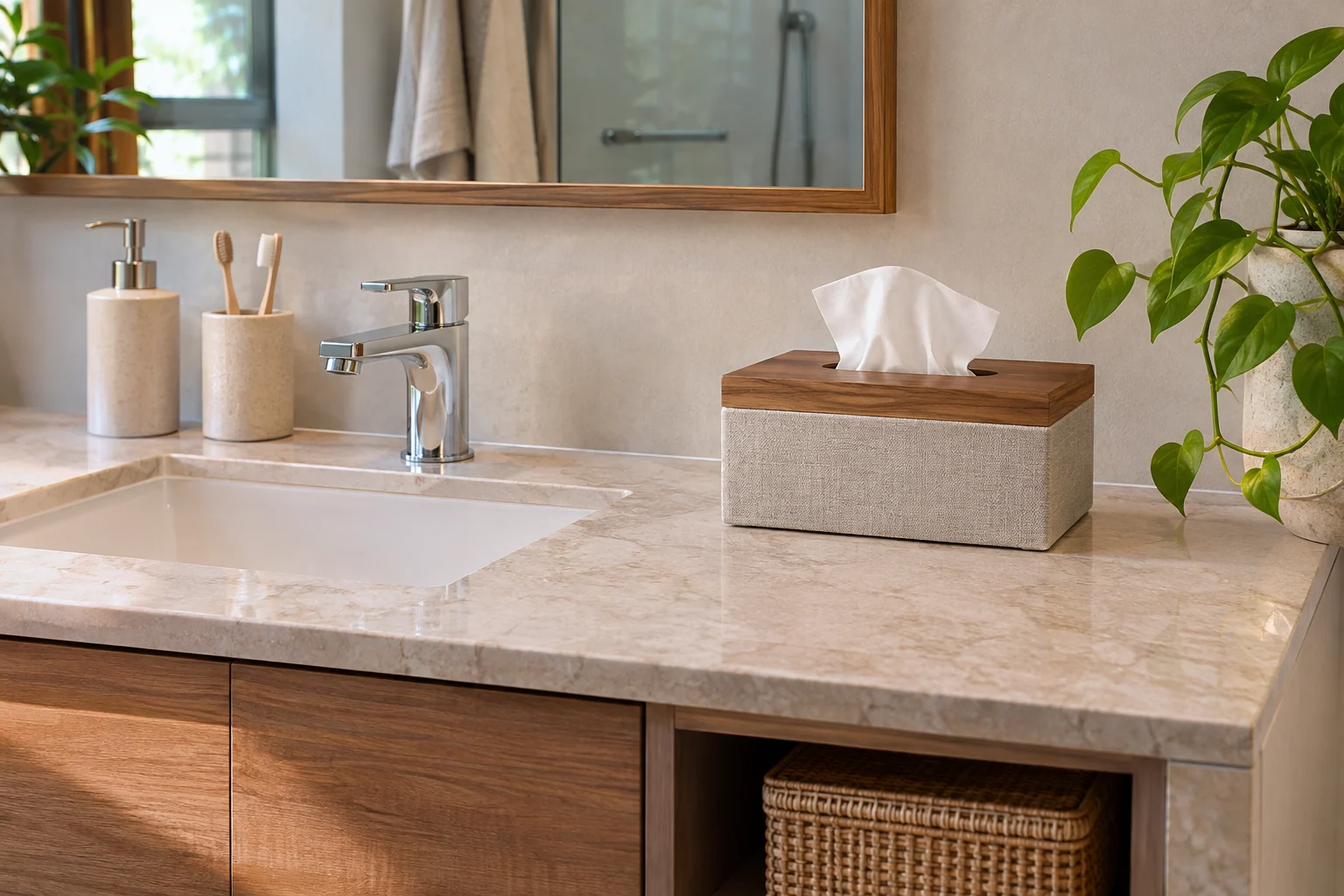
A suitable vanity position can hold a tissue case without placing it beside the tap's main activity. Choose the actual case and location around its moisture and care guidance. Keep paper dry and the refill accessible. A decorative cover should not be assumed watertight because its exterior looks like tile, metal or ceramic.
18. Check a shelf's usable depth
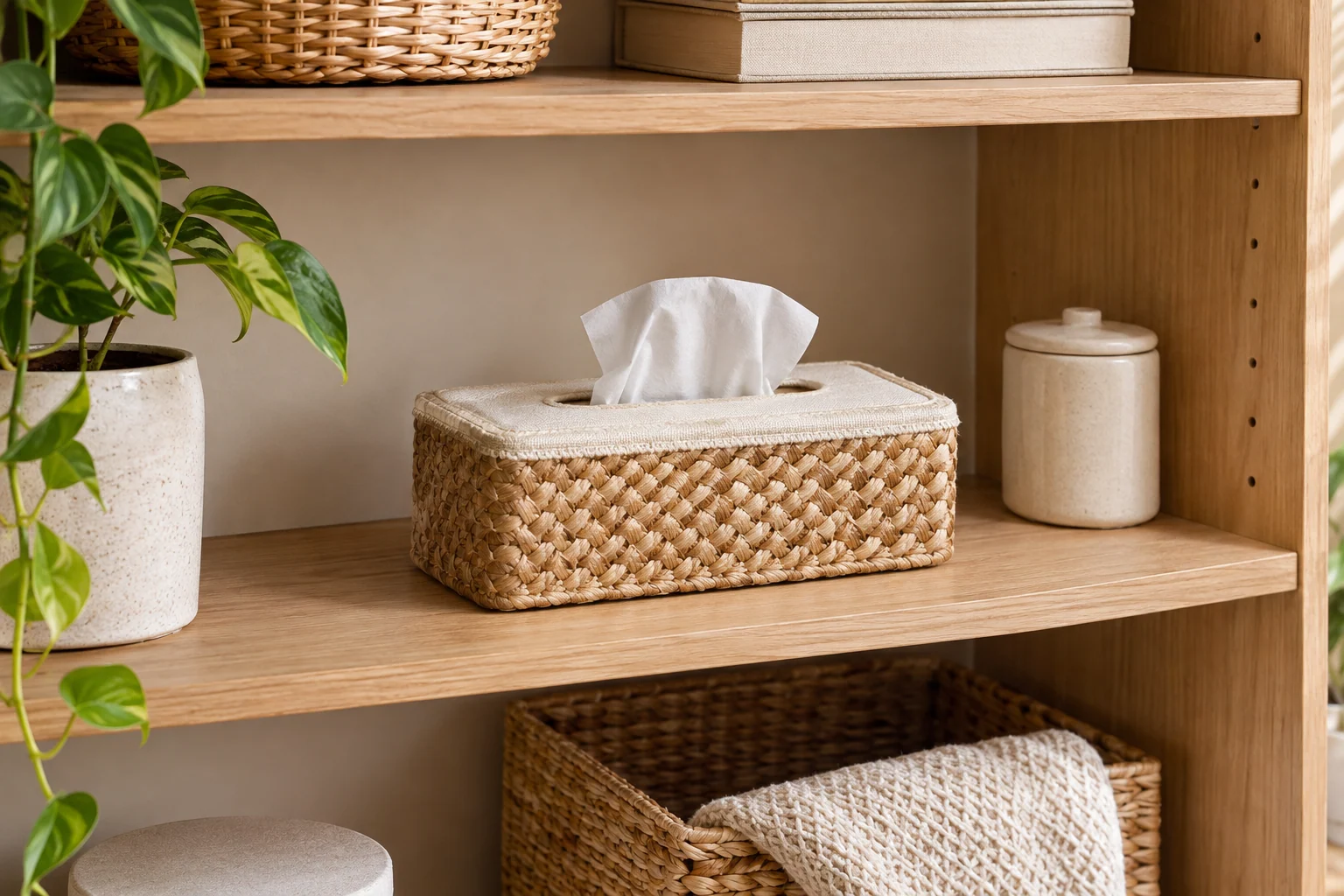
A case should sit fully supported inside the available shelf depth. Include any projecting lid, base or decorative foot in the measurement. Leave a comfortable route for dispensing rather than wedging the case between taller objects. A deeper shelf may provide a more useful position than the narrow ledge whose color happens to match.
19. Use a mounted dispenser only as designed
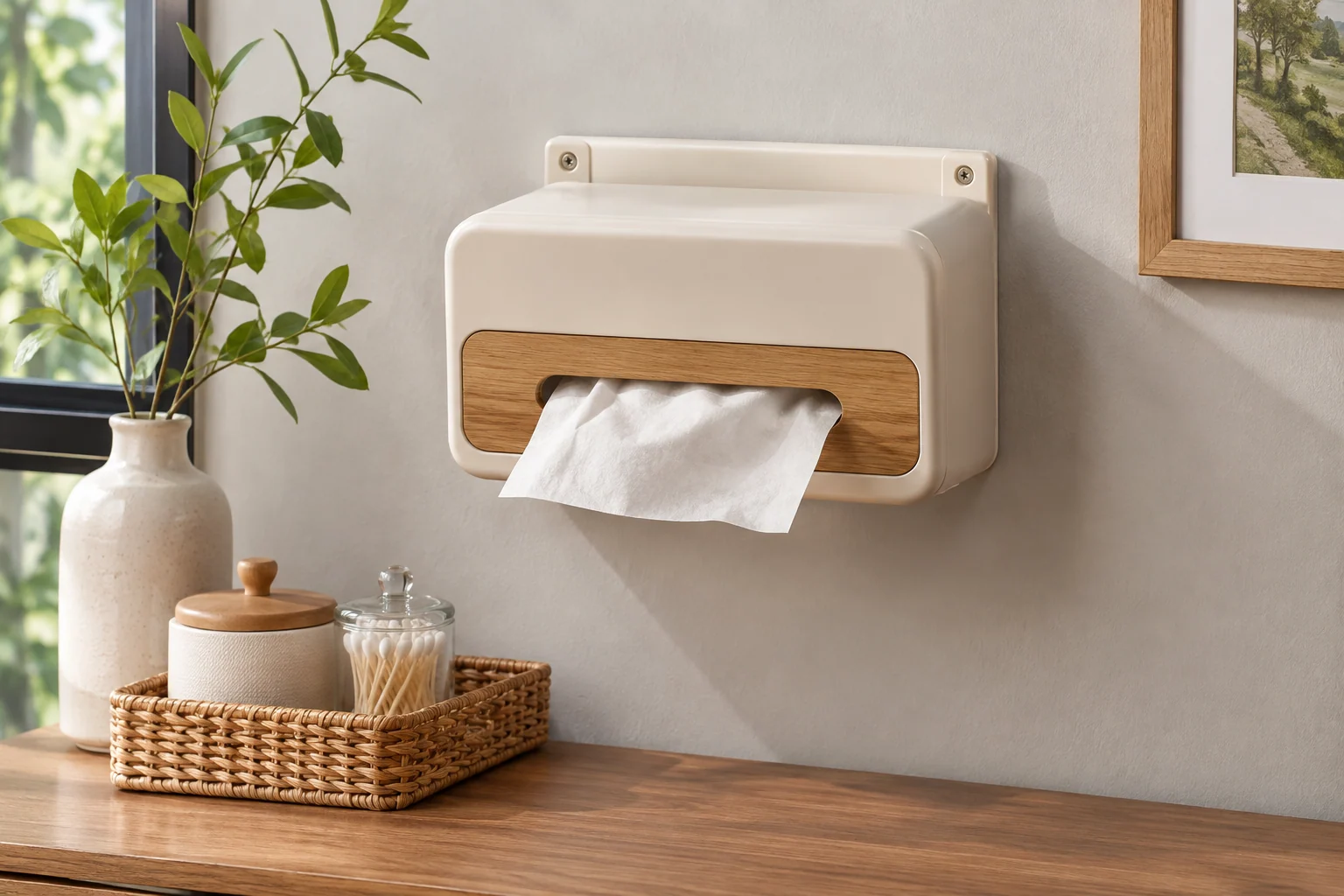
A purpose-designed mounted case can serve some small rooms when the surface, fixings and refill method suit the product. Check how the complete case opens and where the paper exits. Follow the actual mounting and loading instructions. Do not attach an ordinary tabletop cover with improvised hardware to imitate a wall-mounted design.
20. Match loose packets only to cases intended for them
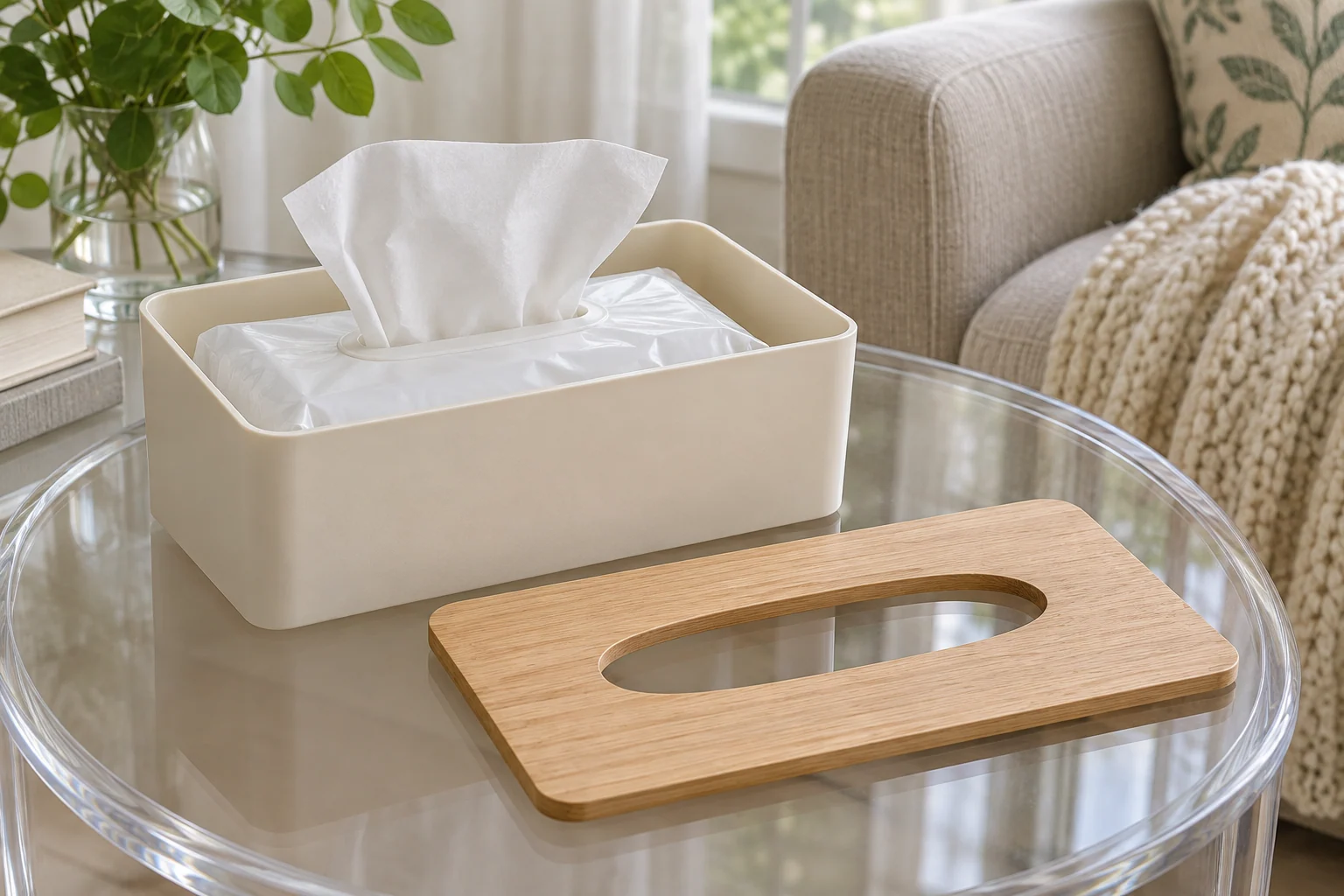
Some cases take an unboxed packet while others rely on a cardboard box to support the tissues. Check the actual design before removing packaging or compressing a refill. Keep the paper arranged as the maker intends. A case can have enough apparent room yet dispense poorly when the wrong refill form is inserted.
21. Use a tray only when it leaves the opening accessible
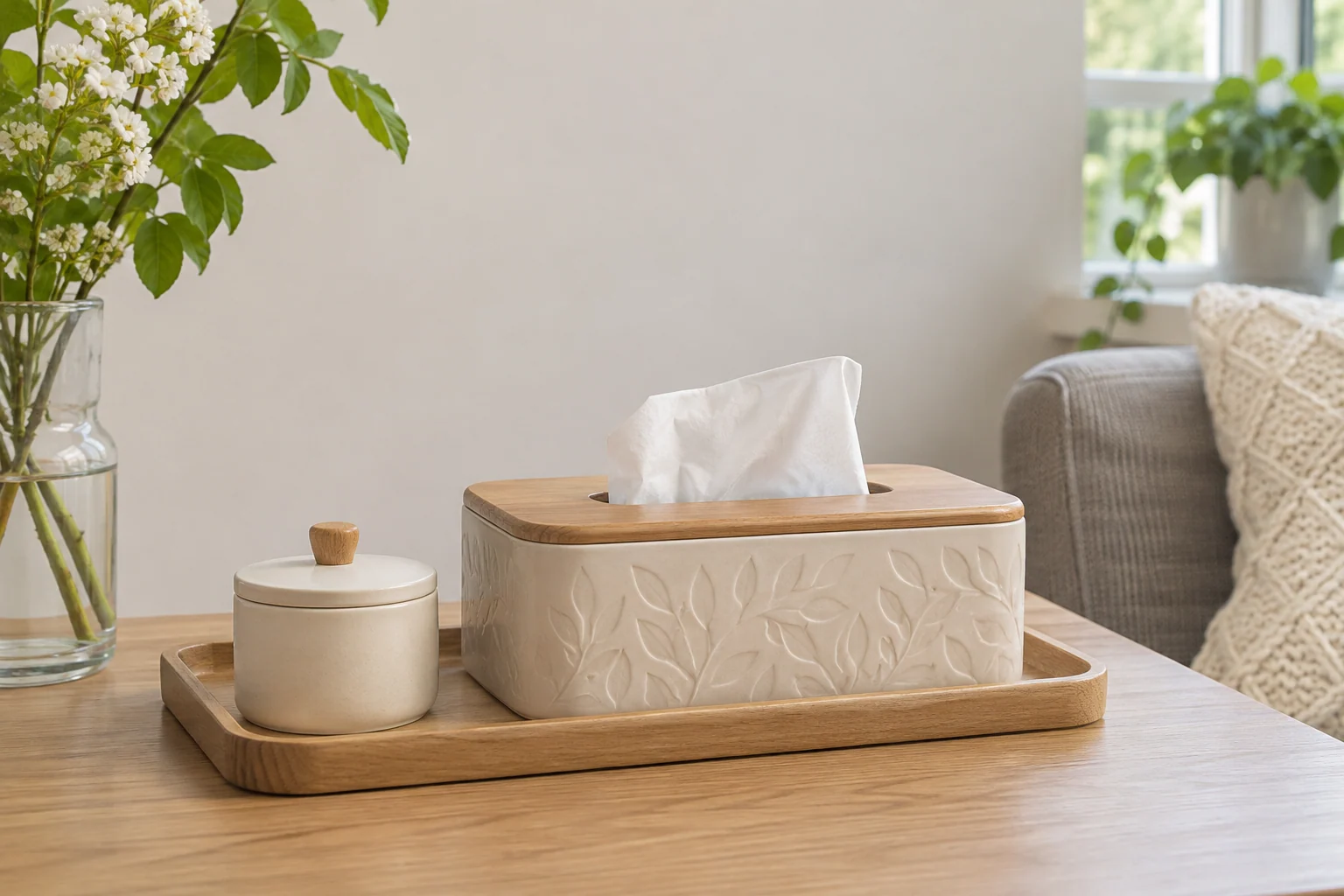
A small tray can group the tissue case with one suitable everyday object. Keep the complete case supported and the dispensing route clear. Avoid surrounding it with tall containers that require an awkward reach. The tray's purpose is a defined return area, rather than a reason to add several objects that make the case harder to use.
22. Pair the cover with one simple decorative detail
A small picture or dry decorative object can connect the case to the room when there is enough usable surface. Let the case remain easy to refill and avoid a crowded group. A restrained pairing often feels more deliberate than matching several different covers across the same table. Choose the arrangement around the furniture's actual daily use.
23. Store spare refills separately and visibly
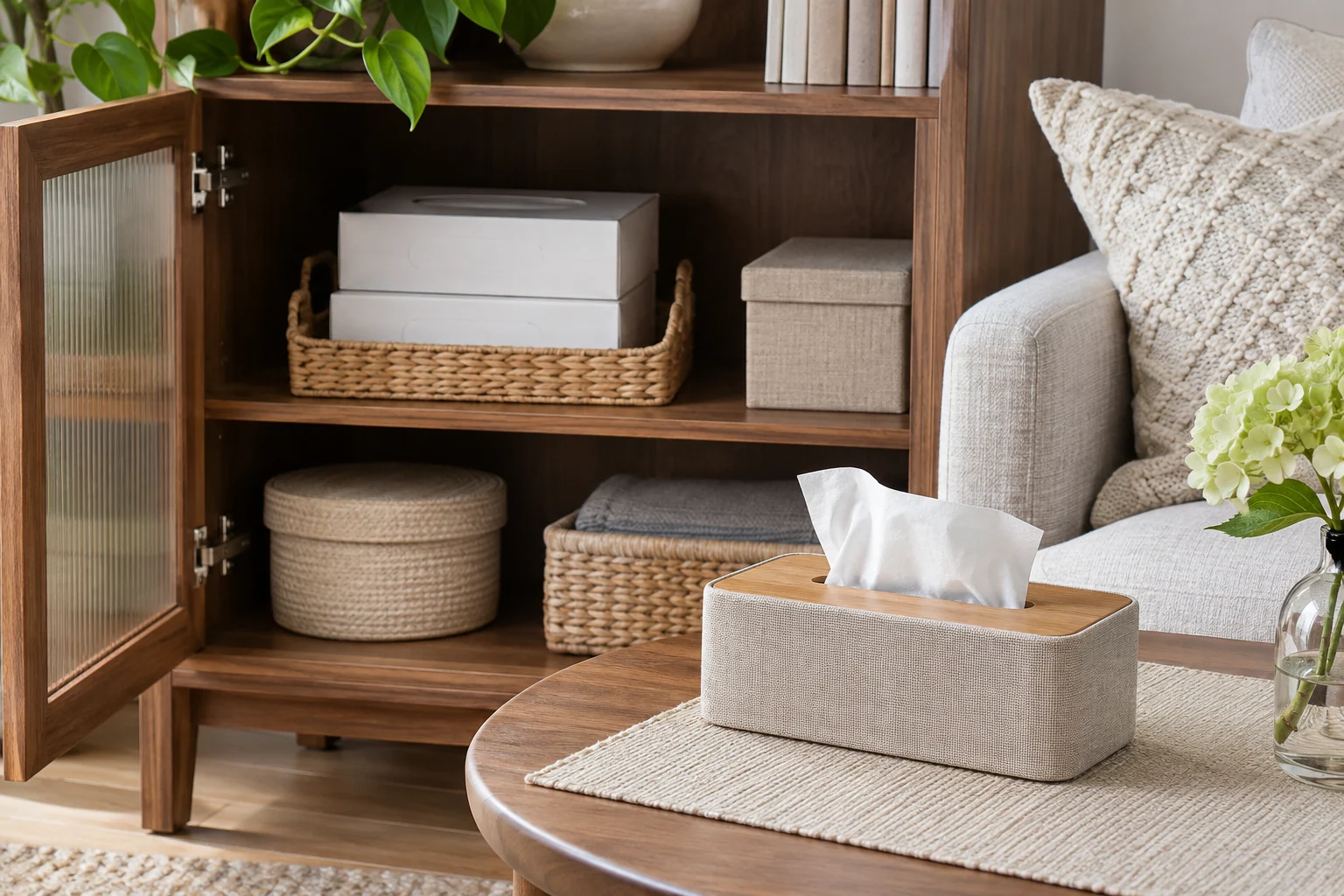
A small reserve can make the routine easier when the compatible boxes are identifiable and stored appropriately. Keep them in a defined dry cabinet area instead of placing a second full stack beneath the decorative cover. Check the actual refill size when the product changes. Familiar packaging color does not guarantee identical dimensions.
24. Finish with an ordinary refill test
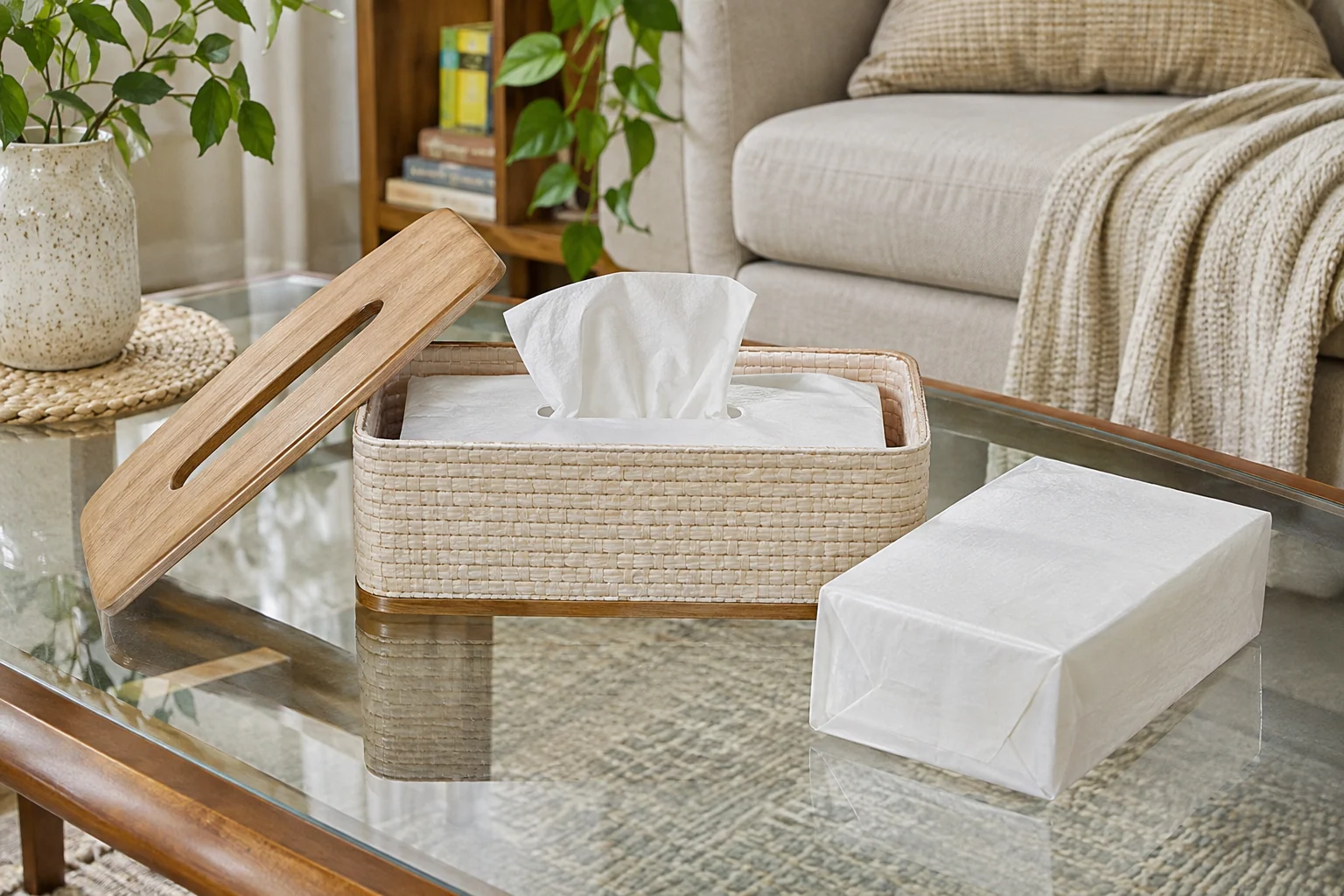
Open the cover, remove the empty packaging and insert the actual replacement following its guidance. Notice any lid that catches a shelf or box that needs to be forced. Correct that repeated problem before buying another matching case. A useful cover looks considered because it has a clear place and remains straightforward to use.
A tissue-cover fit card
Record refill width, depth and height; whether it remains boxed; internal case dimensions or stated compatible-box limits; insertion direction; and the clearance needed above the opening. The Rin example's 6.1-inch outer height does not make a 6-inch-tall box compatible when the stated internal box-height limit is 5.5 inches. Check the exact current case and refill instead of subtracting an assumed wall thickness.
A practical next step
Choose the refill fit and opening movement first, then use finish and placement to connect the case to the room. A small everyday object can look intentional without becoming difficult to refill or reach.
The images are original AI-generated design concepts. They illustrate arrangements rather than tested products, installations or measured performance.
Sources and care references
Related reading on Nestroxe
Optional digital guide for this topic
If you prefer a structured workbook, explore this related paid guide.