You organized everything last spring. You bought the bins. You watched the videos. And three months later it looks exactly the same. I did this cycle four times before I understood the problem: organization isn’t about storage — it’s about systems.
The homes that stay organized aren’t full of expensive containers. They have fewer things, smarter habits, and storage that works with real life instead of against it. These 25 ideas changed how my home felt permanently — not just for a weekend.
1. Why Buying More Storage Always Makes Things Worse
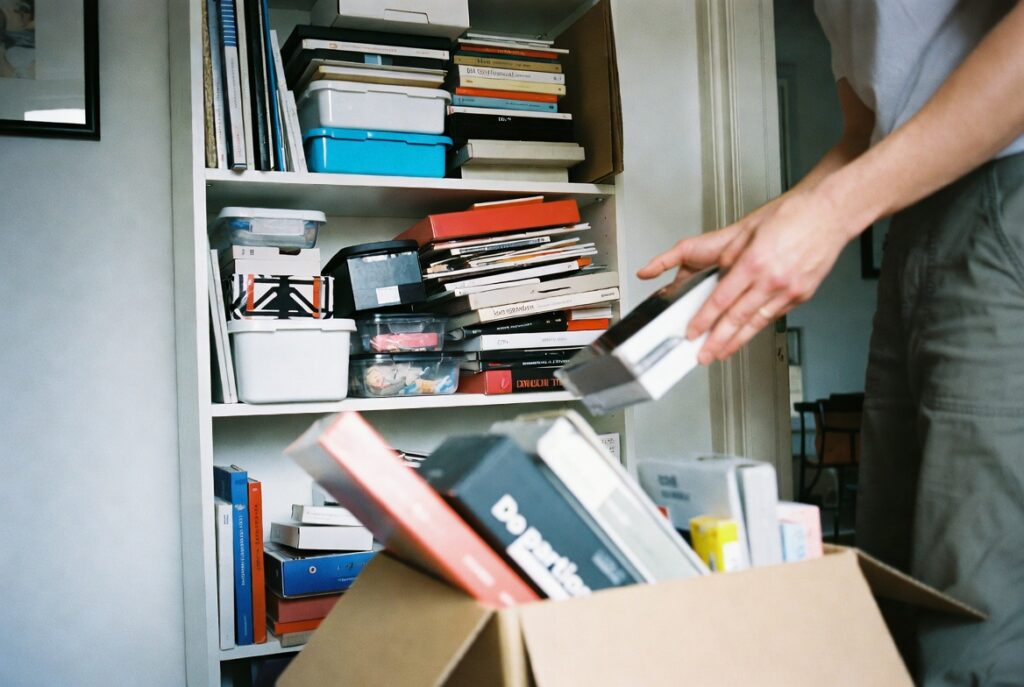
The first instinct when a home feels cluttered is to buy more bins. We found that this almost always backfires — more storage just gives more space to accumulate more things. The real first step is always removing, not containing.
Smart tip: Before buying a single organizer, remove everything from one space and only return what earns its place. Free, and it changes the whole approach.
Mistake to avoid: Don’t buy storage solutions before decluttering. You’ll organize things you should have removed and wonder why nothing feels better.
2. The One-In One-Out Rule That Keeps Clutter Gone Forever
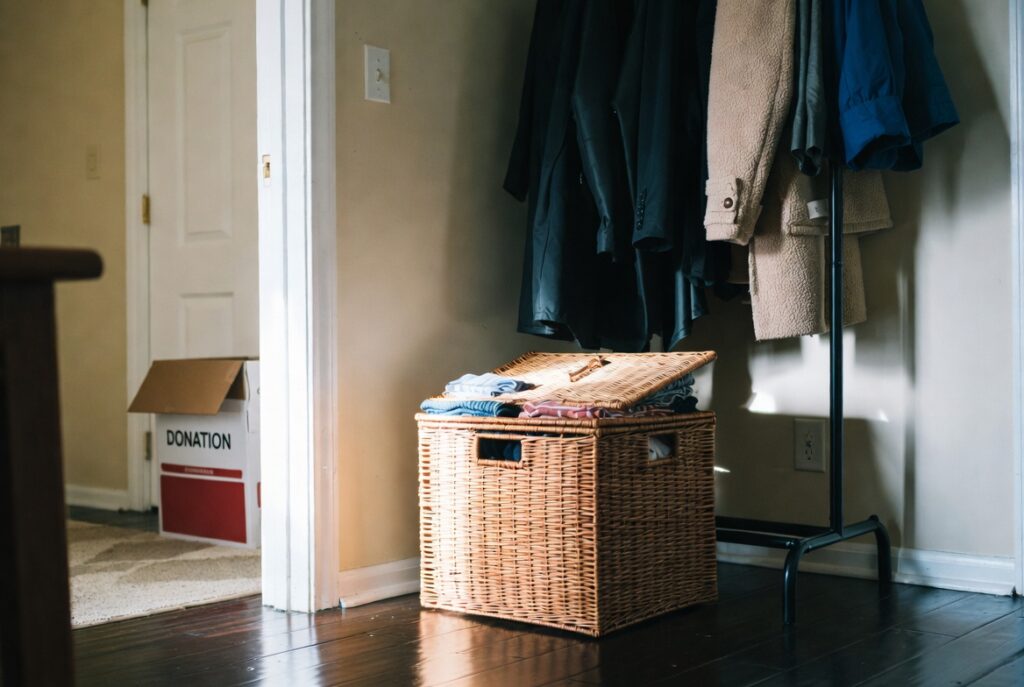
Every organizing system eventually fails without a rule to stop new things coming in. One-in one-out is the simplest and most effective: every time something new enters the home, something leaves. I’ve maintained an organized home for two years on this rule alone — no other system required.
Smart tip: Keep a donation box in a cupboard. When it fills up, it leaves. No decision fatigue, no buildup — a quiet system that sticks.
Mistake to avoid: Don’t make exceptions for “just this once.” Every exception becomes a habit and the clutter quietly returns.
3. How Zones Stop You Searching for the Same Thing Twice
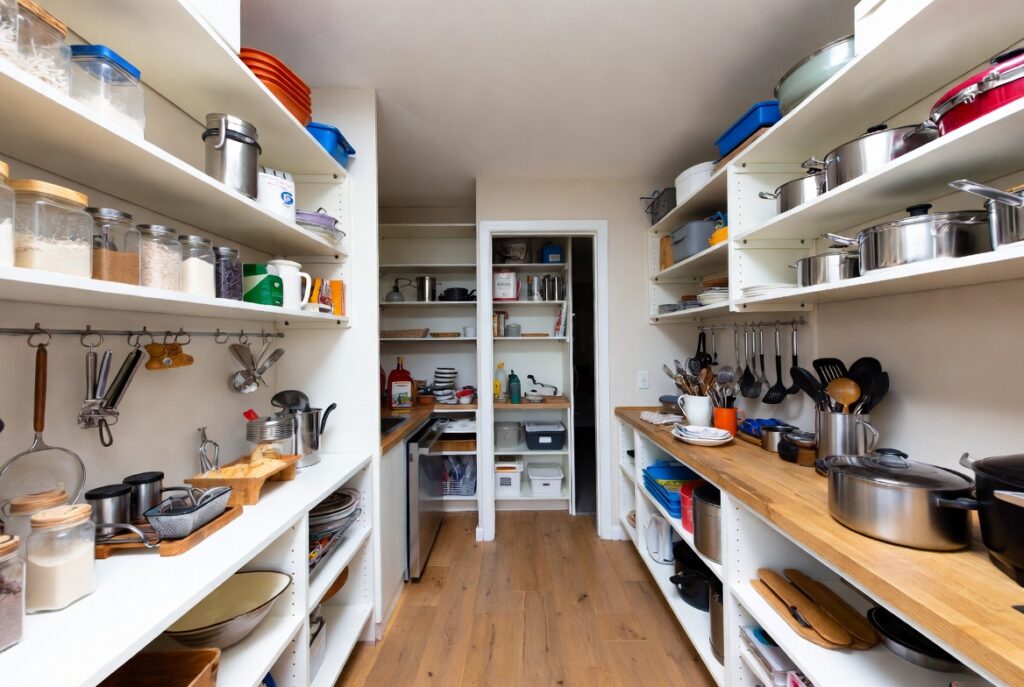
A home without zones is a home where nothing has a real address. In 2026, professional organizers are unanimous: zone-based organization — where everything in a space relates to one activity — dramatically reduces the daily friction of finding things. The kitchen has a baking zone, a coffee zone, a snack zone. Everything lives with its purpose.
Smart tip: Reorganize one drawer into a dedicated zone without buying anything — a fifteen-minute reset that immediately reduces daily searching.
Mistake to avoid: Don’t create zones based on categories alone. Create them based on how you actually move through the space and what you reach for together.
Loving These Ideas? Get the Step-by-Step Guide
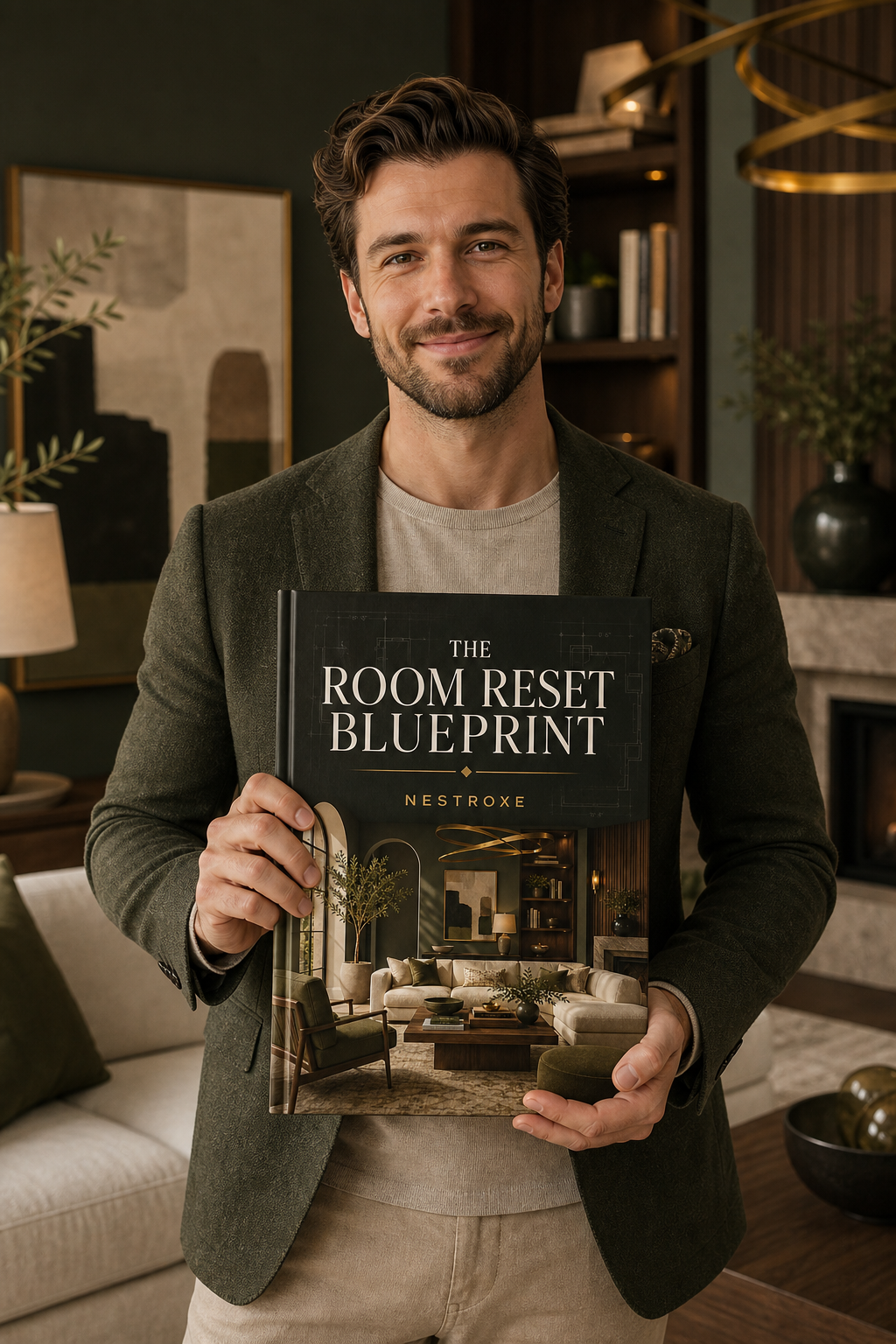
Grab the full 5-day eBook and turn these ideas into a finished room.



4. The Woven Basket That Hides Chaos in Plain Sight
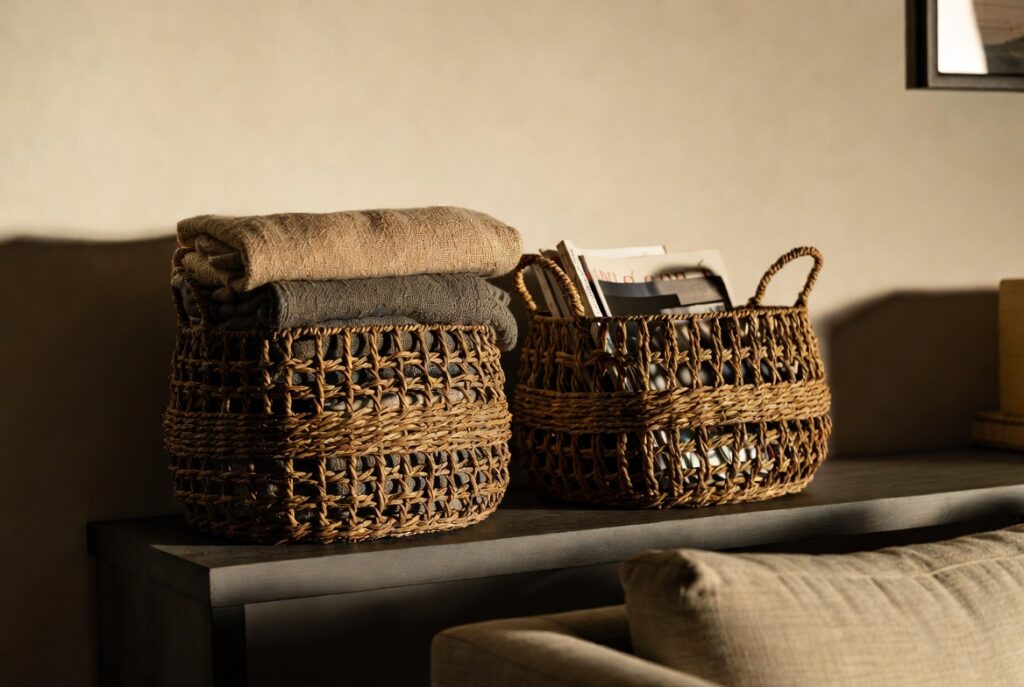
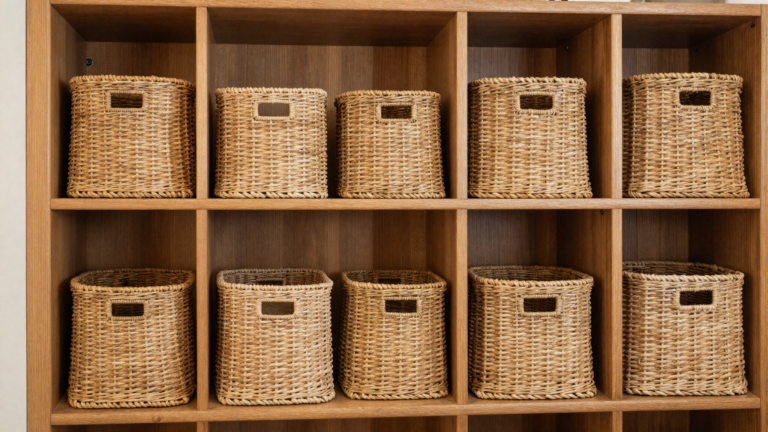
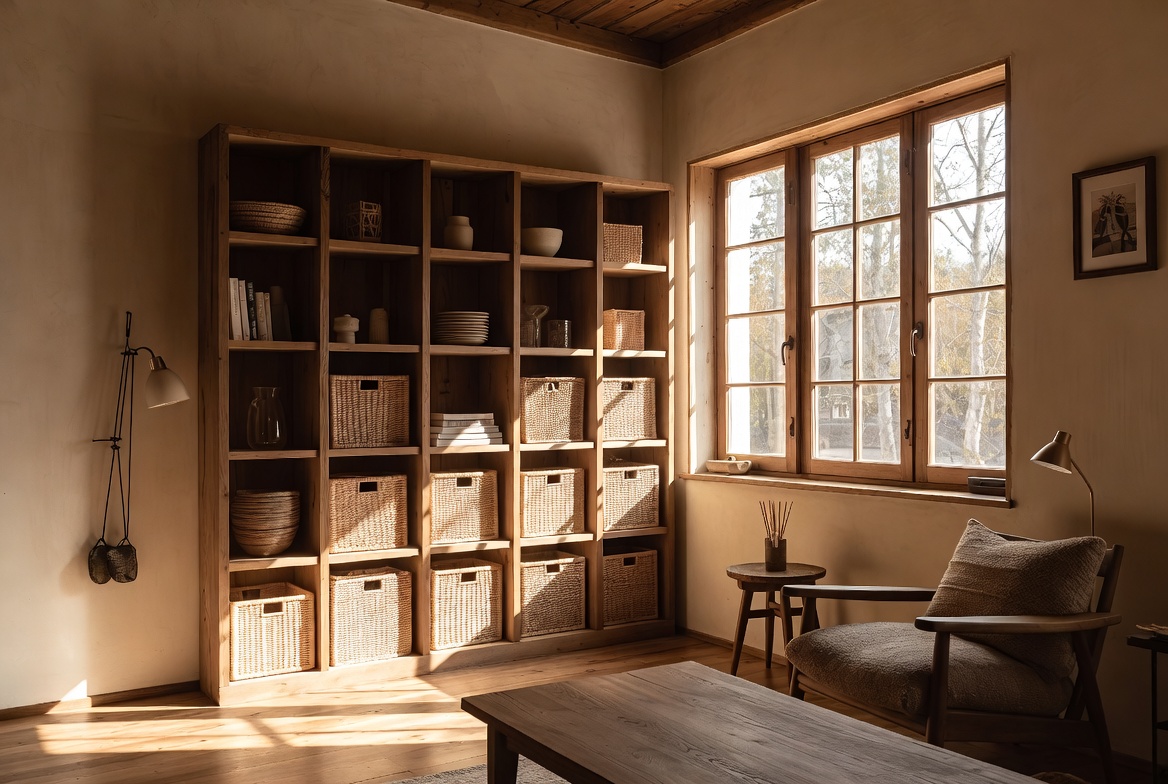
Natural material storage — woven seagrass, rattan, jute, linen — is the top organization trend of 2026 because it hides clutter while adding warmth and texture. A woven basket in the living room holds remotes, chargers, and magazines without making the room look like a storage unit. It functions and decorates simultaneously.
Smart tip: One large woven basket per room corrals daily clutter beautifully — a budget-friendly organization hack with genuine decorative value.
Mistake to avoid: Don’t stuff baskets so full they become impossible to find things in. A half-full basket is a useful basket; an overflowing one is just hidden chaos.
5. Why Vertical Storage Is the Most Wasted Space in Every Home
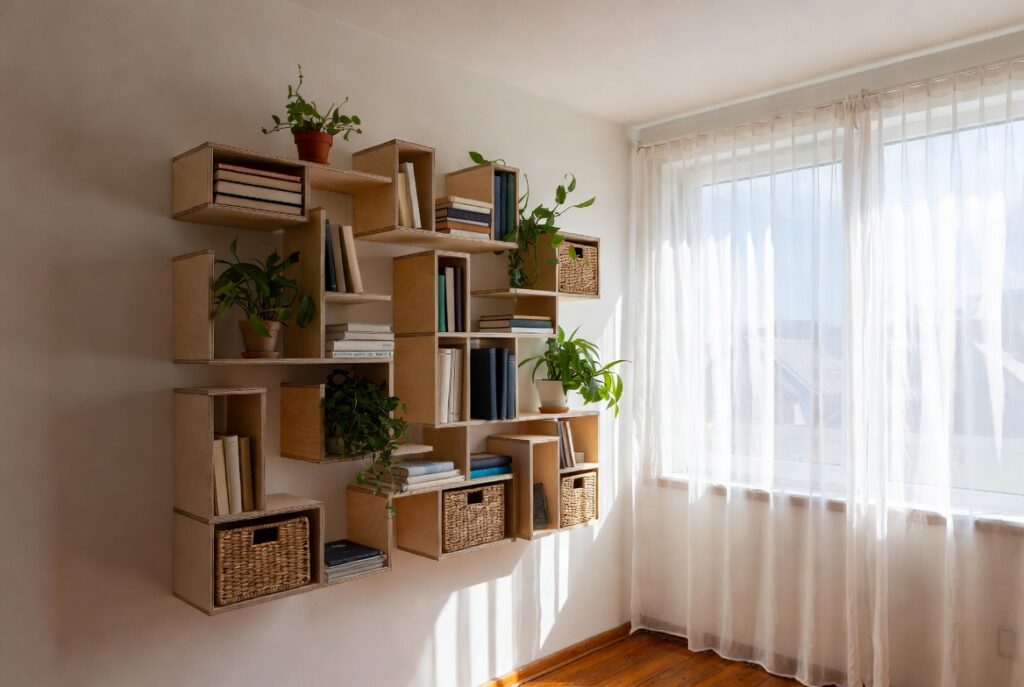
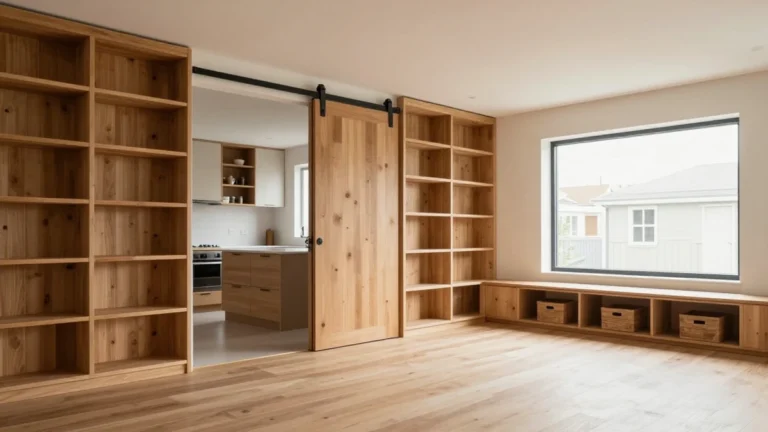
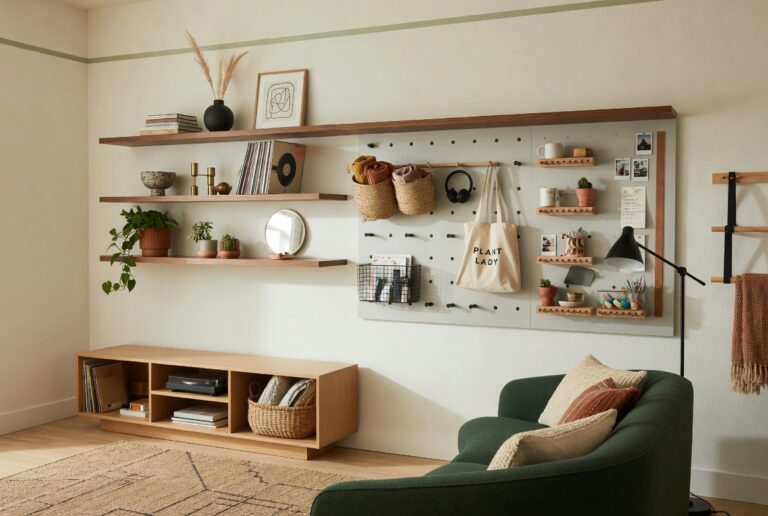
Floor space is limited. Wall space is almost always unused. Floating shelves, pegboards, wall-mounted hooks, and tall bookcases take storage off the floor and onto the walls — which is where significant hidden capacity lives in almost every room. The detailed guide to space-saving wall storage ideas for clutter-free homes covers exactly which systems work best in which rooms.
Smart tip: Install one floating shelf above a desk or counter — immediate vertical storage that costs very little and frees significant surface space.
Mistake to avoid: Don’t mount shelves too high. Storage above shoulder height gets ignored and collects dust instead of serving its purpose.
6. The Drawer Divider That Stops Morning Chaos
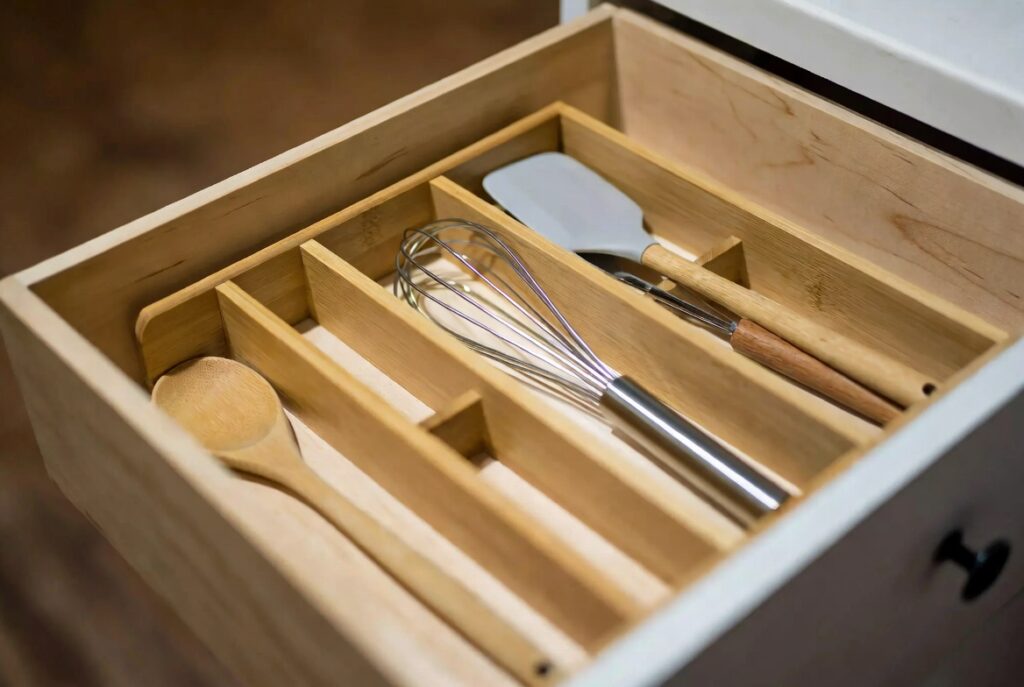
An undivided drawer is where small things go to disappear. Dividers give every object a fixed address and make retrieval instant. In my experience, adding drawer dividers to just the kitchen junk drawer and the bedroom accessories drawer changed my morning routine more than any other single change.
Smart tip: Bamboo adjustable drawer dividers fit any size drawer and cost almost nothing — done in one focused hour, lasting impact on daily life.
Mistake to avoid: Don’t over-compartmentalize. A divider for every single object creates rigidity; divide by category and leave room for the system to breathe.
7. How Under-Bed Storage Doubles Your Bedroom Space
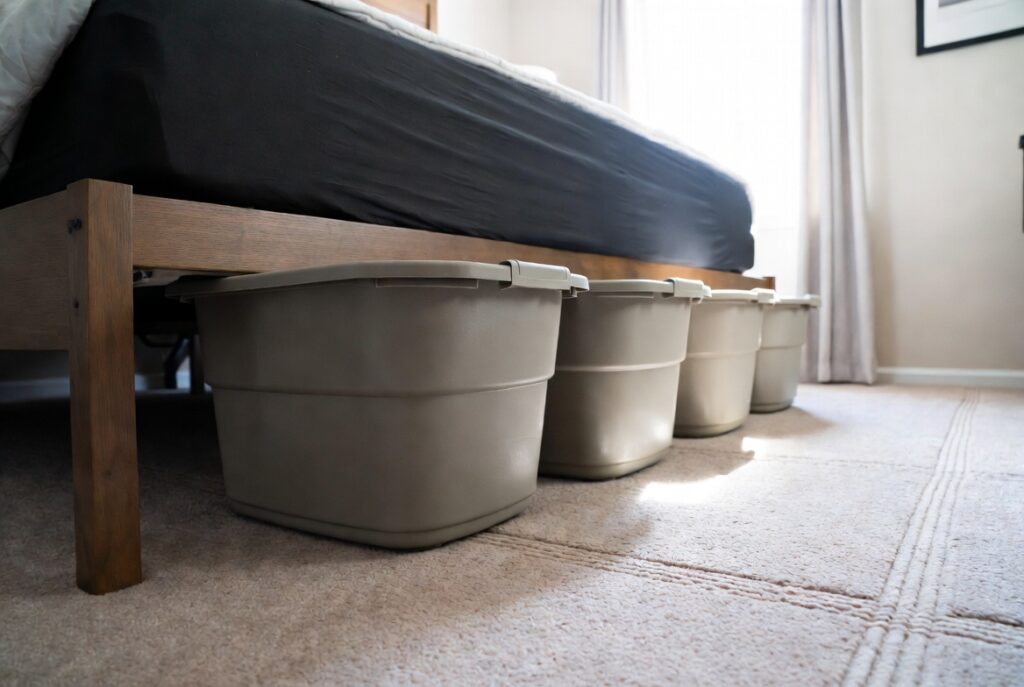
The space under a bed is often the largest unused storage zone in a home. Flat rolling bins, vacuum storage bags, and purpose-built under-bed drawers can hold seasonal clothing, extra bedding, and shoes without consuming a single square foot of visible space.
Smart tip: Vacuum storage bags compress bulky seasonal items to a fraction of their size — a clever space-saving move that costs almost nothing to implement.
Mistake to avoid: Don’t store things under the bed without containers. Loose items under a bed become impossible to retrieve and collect dust rapidly.
8. The Pantry Reset That Makes Cooking Feel Effortless
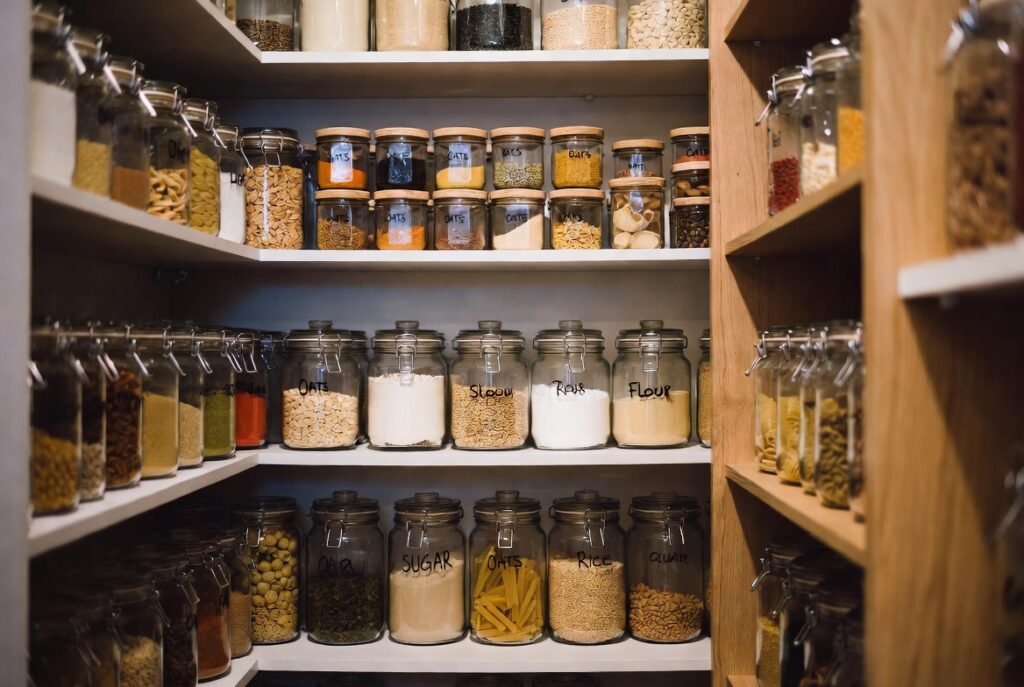
A disorganized pantry makes cooking feel like an expedition. Grouping items by category — baking, grains, canned goods, snacks — with clear containers and labels turns cooking from a search into a flow. We found that a pantry reset also reveals duplicates and expired items that have been hiding for months.
Smart tip: Remove everything, wipe the shelves, and return only what’s current and grouped by use — a calming weekend reset with zero extra purchases required.
Mistake to avoid: Don’t rush to fill every pantry shelf back up. Empty shelf space is organizational breathing room — not wasted space.
9. Why Labeling Is the Step Most People Skip
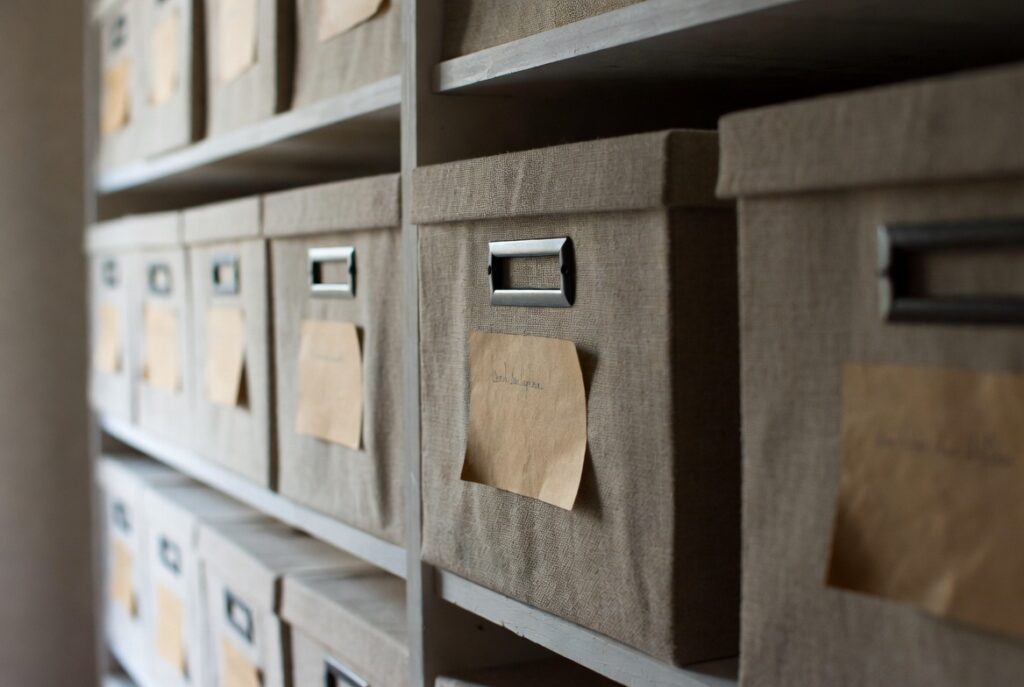
A system without labels depends entirely on memory — which fails. Labels make organization accessible to everyone in the household, not just the person who created it. They also make restocking and returning things intuitive rather than effortful. The first time I labeled my pantry jars, my partner started putting things away in the right place without being asked.
Smart tip: A simple label maker or even handwritten kraft labels on baskets and containers cost almost nothing and make every system self-explanatory.
Mistake to avoid: Don’t use overly decorative labels that are hard to read quickly. Clear, readable, simple labels serve the function better than beautiful ones that require squinting.
10. The Wall Storage Trick That Frees Up Your Floor
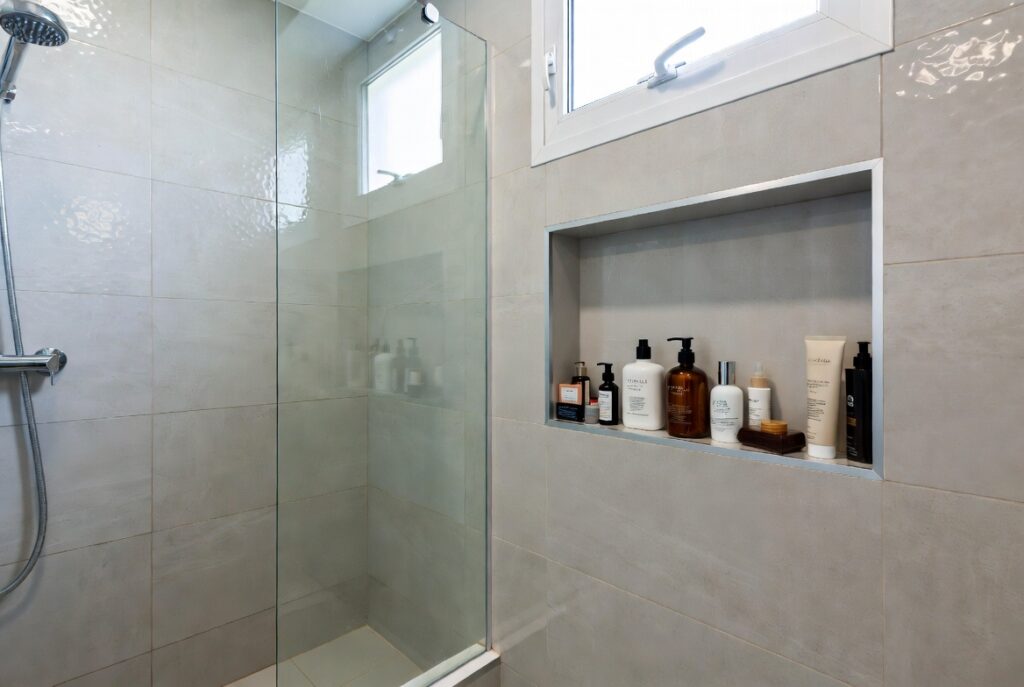
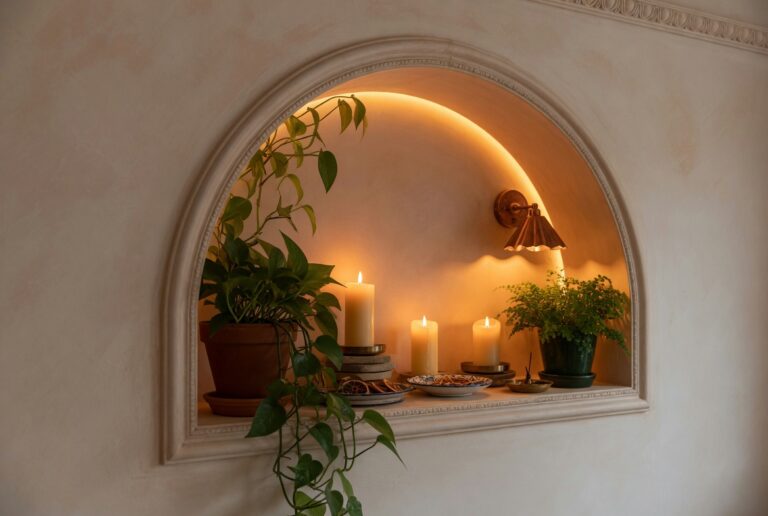
Wall niches, recessed shelving, and built-in cabinetry are the most permanent and satisfying storage solutions in any home because they add space without consuming any. Even a single wall niche in a bathroom or hallway reclaims surface area and adds architectural interest simultaneously, as explored in our complete guide to wall niche ideas for stylish home organization.
Smart tip: A shallow floating shelf above the toilet or beside the bed reclaims dead wall space instantly — no renovation, immediate visual peace.
Mistake to avoid: Don’t create wall storage that requires climbing or stretching to reach daily items. Accessibility determines whether storage actually gets used.
11. The Entryway System That Ends the Daily Scramble
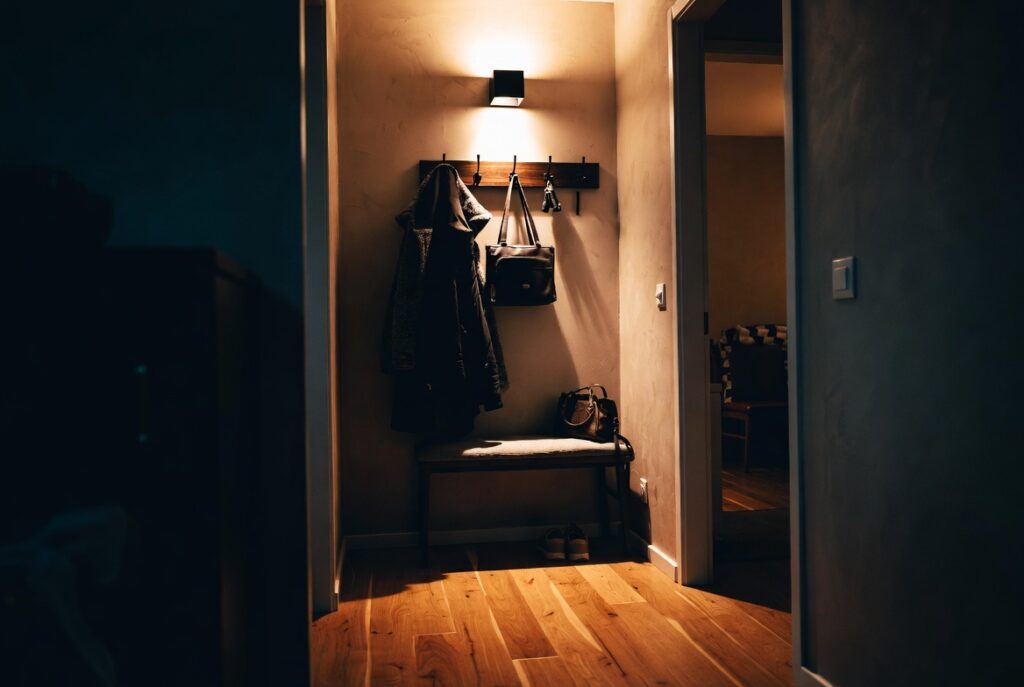
Keys, bags, shoes, coats — the entry is where daily life collides with home organization most visibly. A simple hook rail, a small bench, a basket for shoes, and a key bowl give every arrival object a fixed home. Without a system here, the entry becomes the place where the whole house unravels every evening.
Smart tip: A wall-mounted hook rail with six hooks installs in twenty minutes and immediately ends the daily where-are-my-keys scramble — a one-time setup with lasting results.
Mistake to avoid: Don’t create an entry system with too many steps. If putting something away requires more than one action, it won’t happen consistently.
12. How a Capsule Wardrobe Makes Getting Dressed Calming
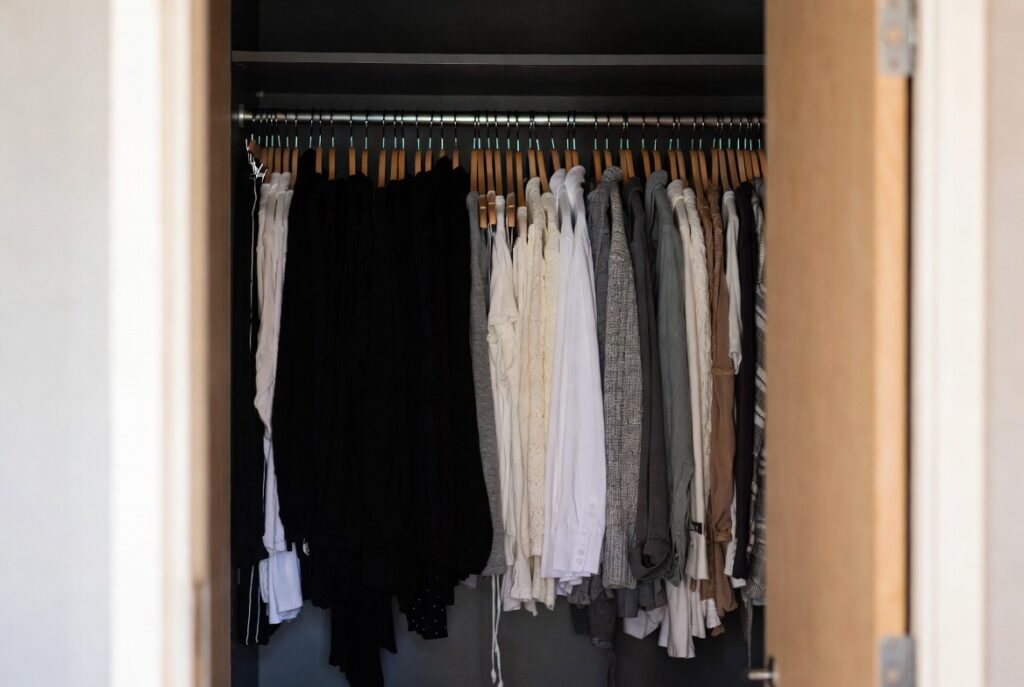
A wardrobe full of things you never wear creates decision fatigue every morning. A capsule wardrobe — a small, intentional collection where everything works together — makes getting dressed fast, easy, and genuinely pleasant. In 2026, digital wardrobe inventories are helping people identify what they actually wear versus what they keep for someday.
Smart tip: Turn every hanger backwards at the start of the month — after 30 days, donate everything still backwards. A simple system that reveals the truth about your wardrobe.
Mistake to avoid: Don’t attempt a full wardrobe edit in one day. It’s overwhelming and leads to keeping things out of exhaustion rather than intention.
13. The Forgotten Space Under Your Stairs
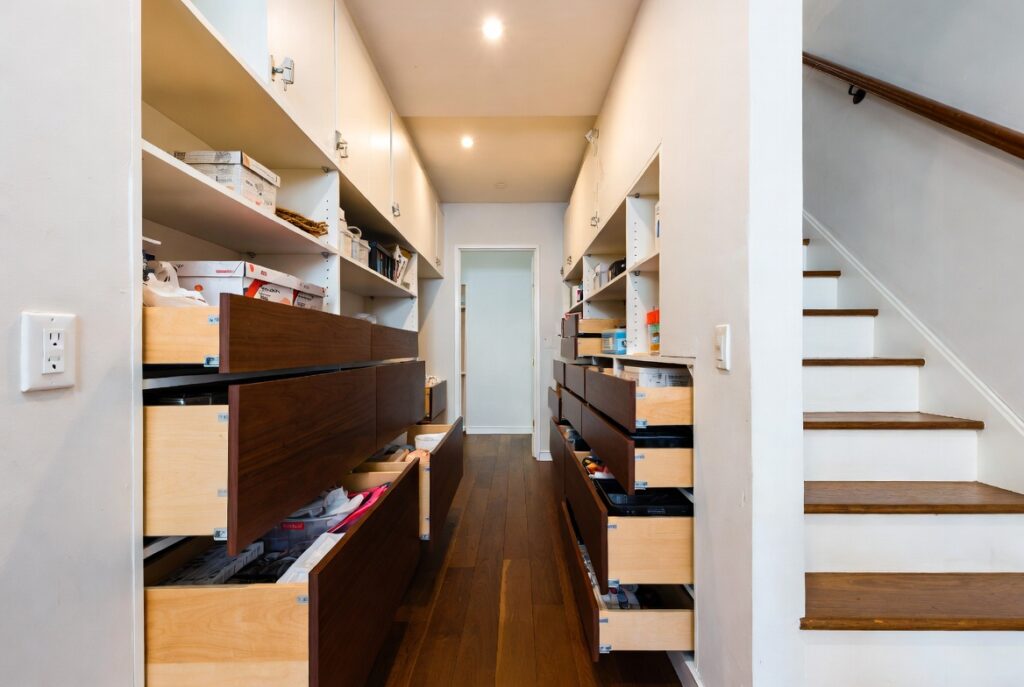
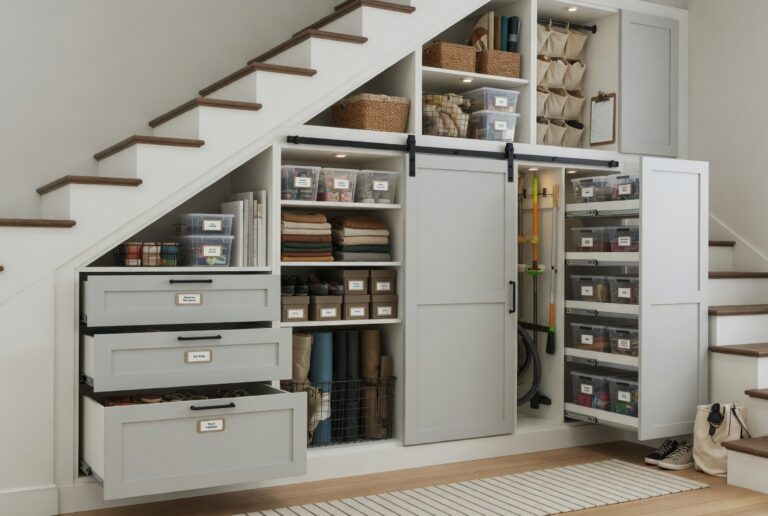
Under-stair space is one of the most overlooked storage opportunities in any home. Pull-out drawers, a small home office, wine storage, or a coat cupboard can all be carved from what most homes leave as dead space. The creative and practical range of what’s possible is covered fully in our guide to under-stair storage ideas to maximize every inch.
Smart tip: Even a simple curtain across the under-stair opening creates contained storage instantly — no construction, immediate impact.
Mistake to avoid: Don’t use under-stair space as a general dumping ground without a system. It becomes the hardest-to-clear clutter spot in the whole house.
14. Why Your Bathroom Counter Is Collecting Anxiety
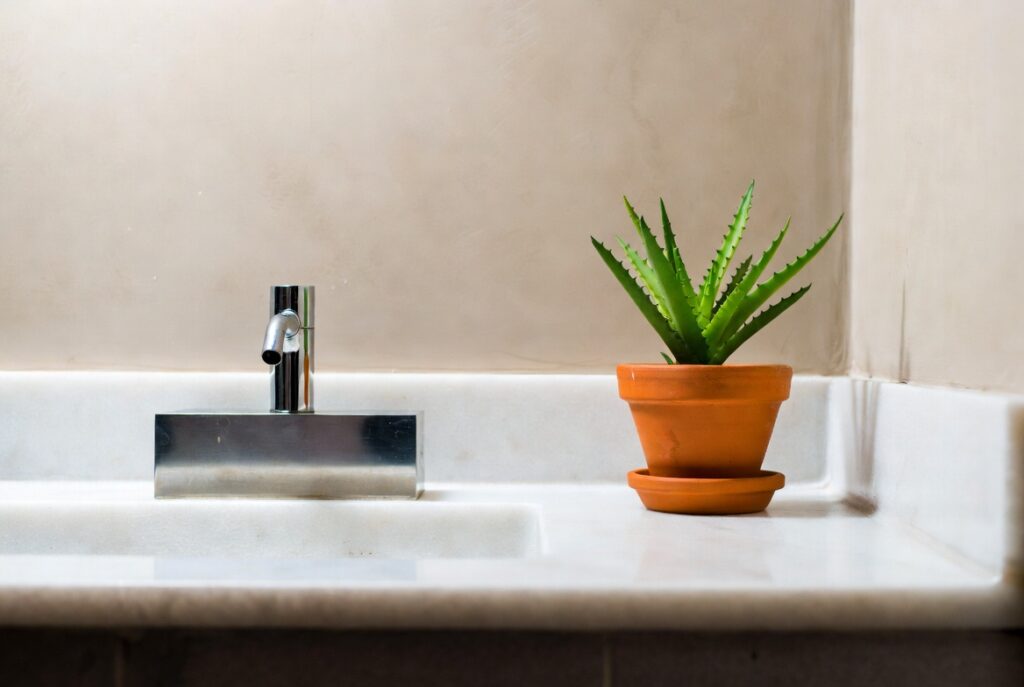
Every object on a bathroom counter that doesn’t need to be there adds low-level visual noise that compounds through the day. Clearing down to only the daily essentials — one soap dispenser, one item per person — and storing everything else inside drawers or cabinets makes the bathroom feel like a spa rather than a storage shelf.
Smart tip: A small drawer organizer under the sink corrals daily products out of sight instantly — no special tools needed and the difference is immediate.
Mistake to avoid: Don’t store products you haven’t used in three months on the counter. If it’s not daily, it doesn’t earn visible space.
15. The Natural Material Swap That Makes Storage Beautiful
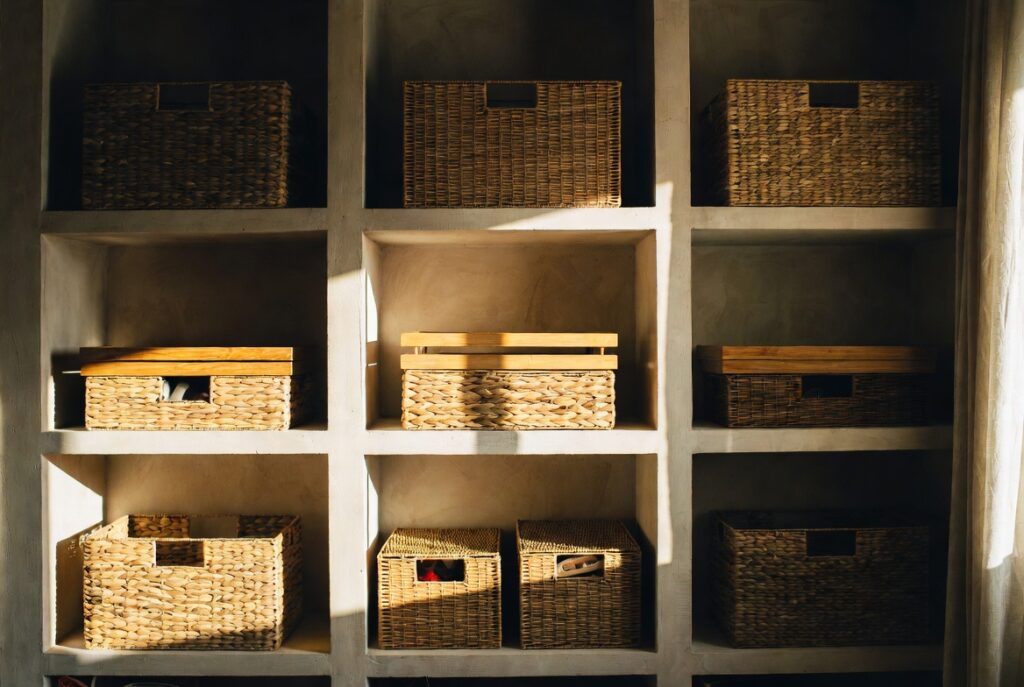
Plastic bins in 2026 are being replaced by storage that doesn’t look like storage — seagrass baskets, linen boxes, wood trays, rattan organizers. The shift is intentional: when storage looks beautiful, it stays on shelves in living spaces instead of being hidden away, which means it actually gets used rather than avoided.
Smart tip: Replace three plastic bins with matching woven baskets — a budget-friendly swap that instantly makes shelves look styled rather than utilitarian.
Mistake to avoid: Don’t mix too many natural material types. Two coordinating textures — say, seagrass and wood — read as curated; four different materials read as collected without intention.
16. The Home Office Reset That Doubles Your Focus
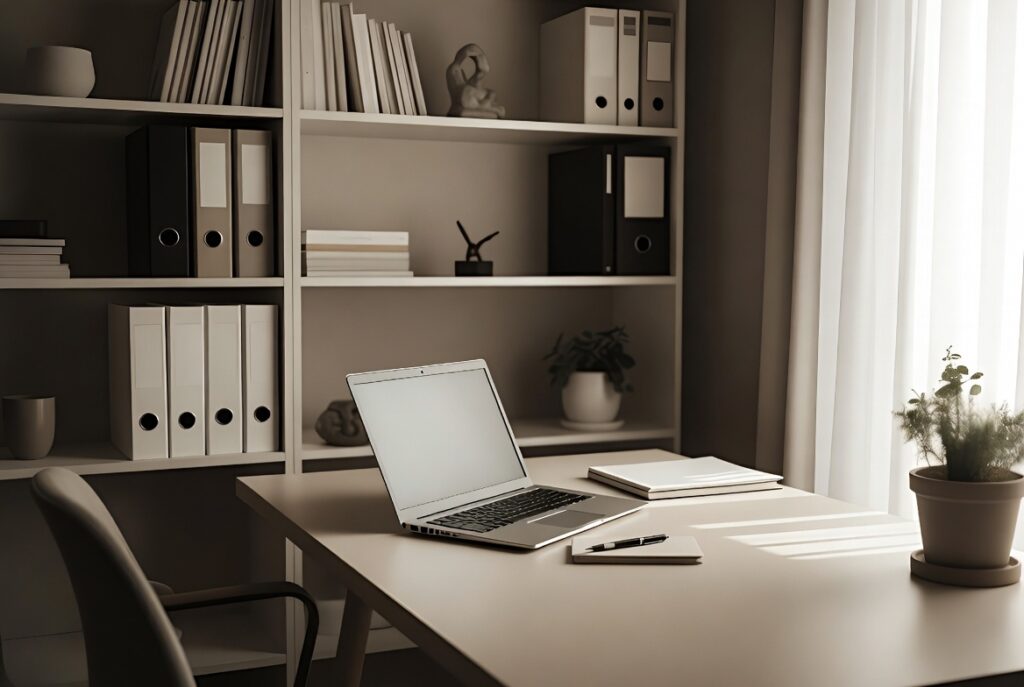
A cluttered desk is a cluttered mind. In my experience, clearing a workspace down to only the current project — everything else off the surface and into designated storage — doubles productive focus without changing anything about the work itself. The home office ideas that support this kind of focused environment are explored fully in our guide to home office ideas for a productive stylish workspace.
Smart tip: A desktop organizer with three compartments — in, out, current — costs almost nothing and creates instant desk clarity.
Mistake to avoid: Don’t leave cables unmanaged. Visible cable chaos is one of the most productivity-disrupting forms of visual noise in any workspace.
17. How Decanting Transforms a Kitchen Overnight
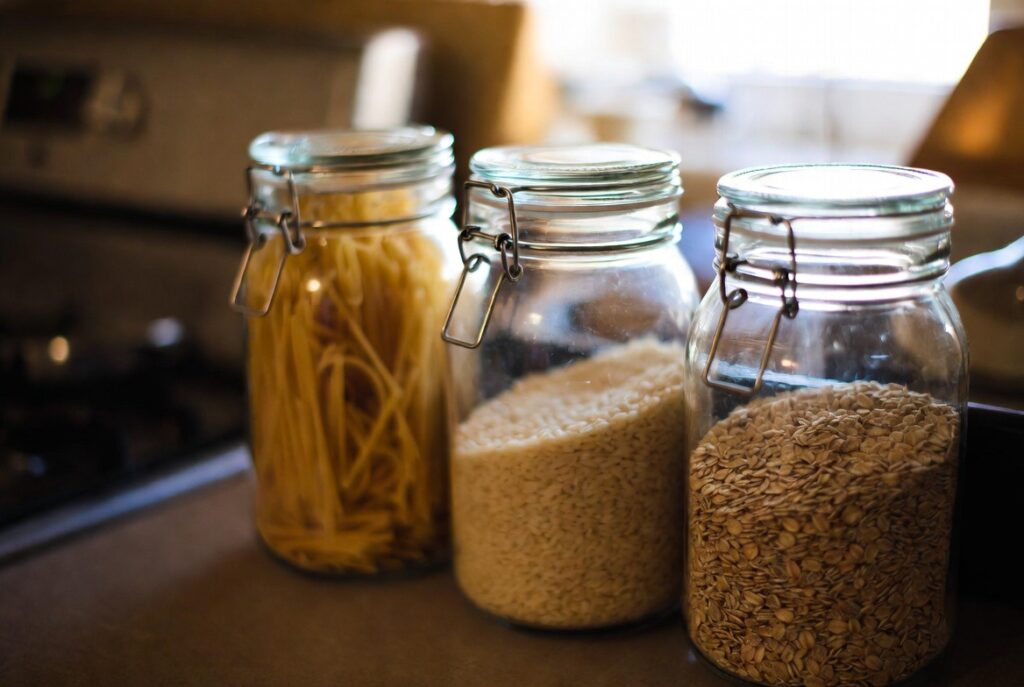
Transferring dry goods — pasta, rice, oats, flour — from their original packaging into matching glass or ceramic containers removes visual chaos and makes pantry contents immediately clear. The uniform look signals order, the contents stay fresher, and the kitchen gains a calm, considered quality that packaging never delivers.
Smart tip: Start with just five matching jars for daily staples — a single purchase that changes how the kitchen looks and feels immediately.
Mistake to avoid: Don’t decant everything at once before you know what containers you’ll need. Audit your pantry first, then buy only for what you actually store.
18. The Digital Wardrobe Inventory Changing How People Dress

One of the biggest organization trends of 2026 is photographing your wardrobe and keeping a digital inventory — either in a dedicated app or simply a phone album. It reveals exactly what you own, eliminates “I forgot I had this” and “I have nothing to wear” in the same stroke, and makes getting dressed faster every single morning.
Smart tip: Photograph every item on a hanger against a white door — takes one afternoon, and the clarity it creates lasts the whole year.
Mistake to avoid: Don’t photograph things you’re unsure about to decide later. The inventory only works if it reflects what you actually wear and love.
19. Why Multi-Function Furniture Is the Smartest Storage of All
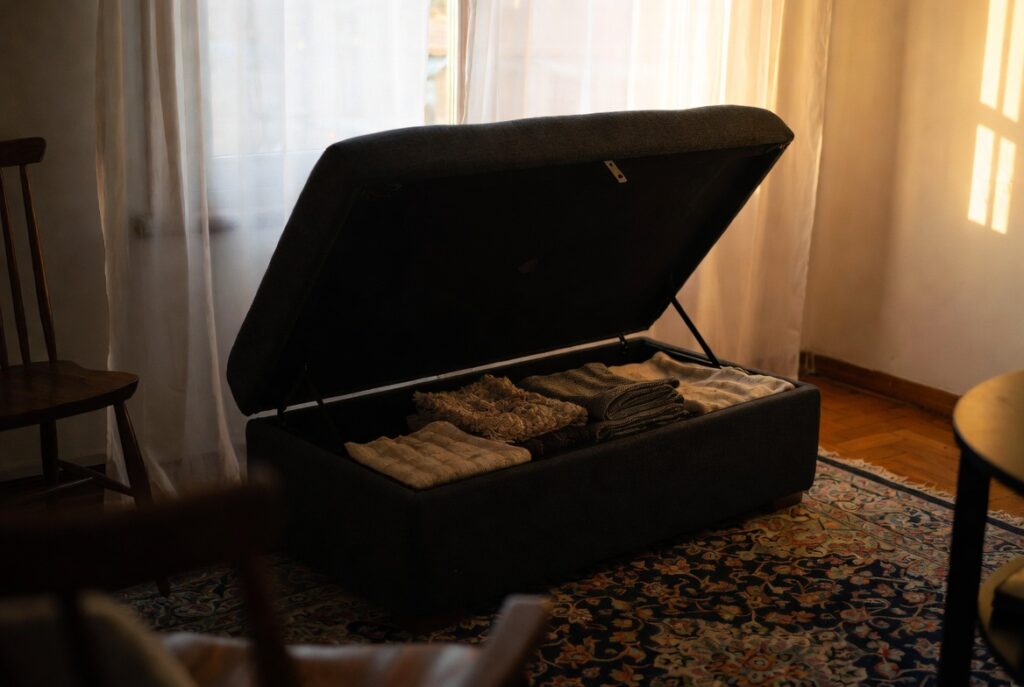
Storage ottomans, beds with drawers, dining benches with lift lids, coffee tables with compartments — furniture that stores while it functions is the most space-efficient investment in any home. Every piece that serves only one purpose is a missed opportunity in a home that needs storage.
Smart tip: A storage ottoman in the living room holds blankets, games, and remotes while serving as seating — minimal investment, maximum order without adding a single piece of furniture.
Mistake to avoid: Don’t fill multi-function storage with things you never access. Furniture storage works best for seasonal or occasional items, not daily essentials.
20. The Micro-Reset Habit That Keeps Homes Organized Daily
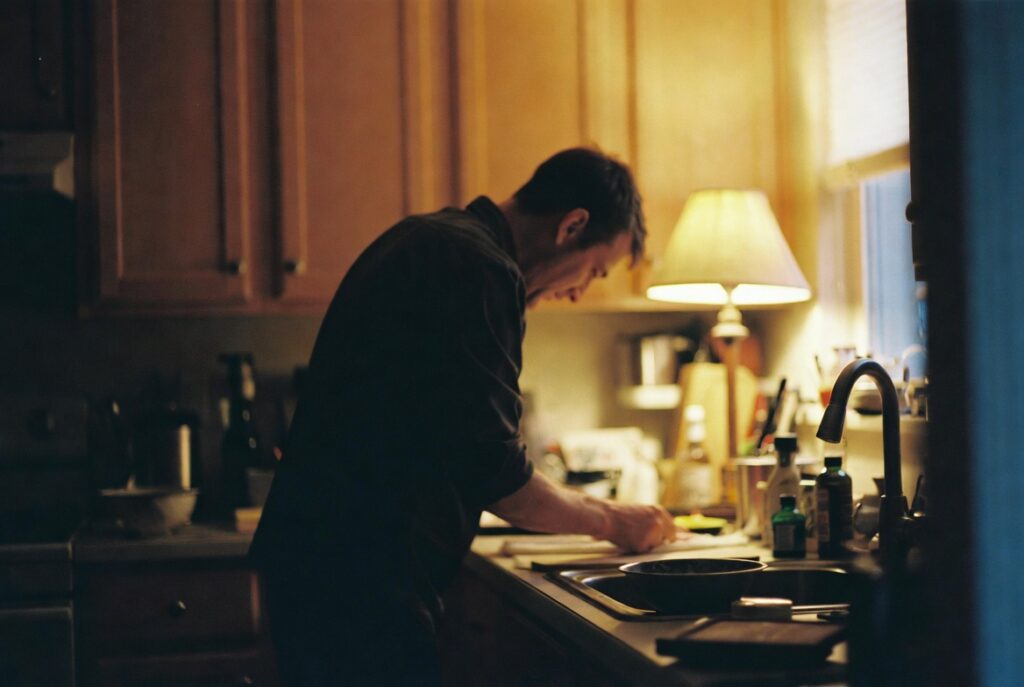
The homes that stay organized aren’t cleaned in marathons — they’re reset in minutes. A ten-minute evening micro-reset: dishes away, surfaces cleared, items returned to their zones. This single habit prevents the accumulation that requires a full weekend to undo. We found it takes about two weeks to become automatic and then requires almost no thought.
Smart tip: Set a ten-minute timer each evening and reset only visible surfaces — effort-free maintenance once the habit is established after two weeks.
Mistake to avoid: Don’t try to do a full clean during the micro-reset. Speed and consistency beat thoroughness every time when it comes to daily maintenance.
21. The Sentimental Clutter Problem Nobody Talks About
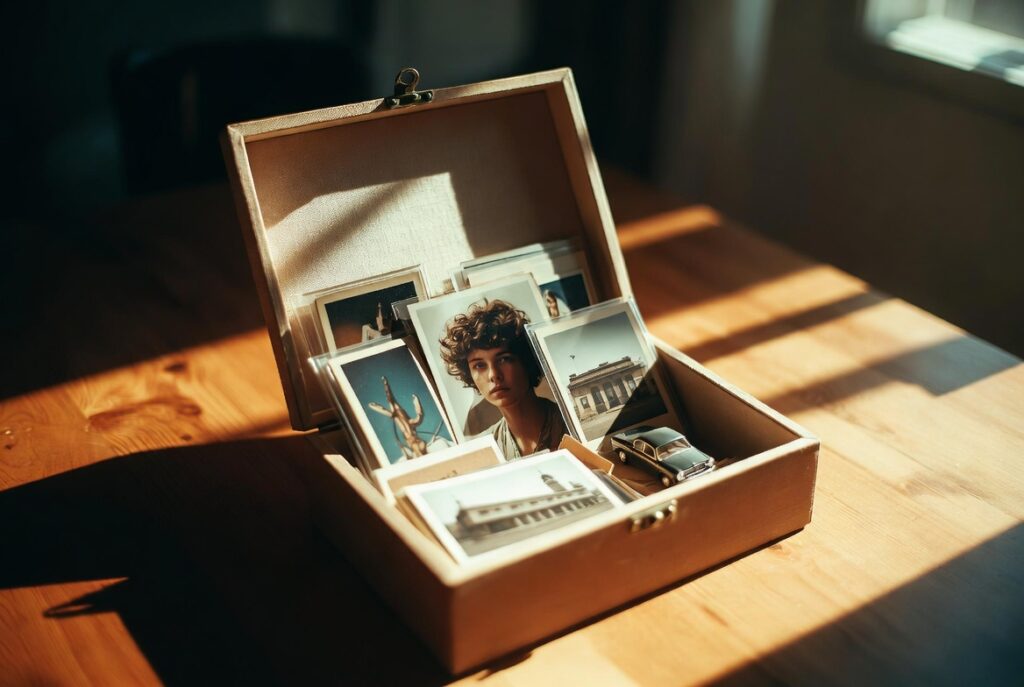
Sentimental items are the hardest to organize because the decision isn’t practical — it’s emotional. The 2026 approach that professional organizers are recommending is creating a dedicated keepsake box per person: a fixed size that contains everything meaningful, with nothing overflowing out of it. When the box is full, something leaves before something enters.
Smart tip: Digitize flat sentimental items — letters, cards, children’s drawings — and keep only three-dimensional originals. The memory survives; the clutter doesn’t.
Mistake to avoid: Don’t store sentimental items mixed with functional storage. They get lost, unseen, and unappreciated — give them their own designated home.
22. How Corner Shelves Solve the Room’s Hardest Space
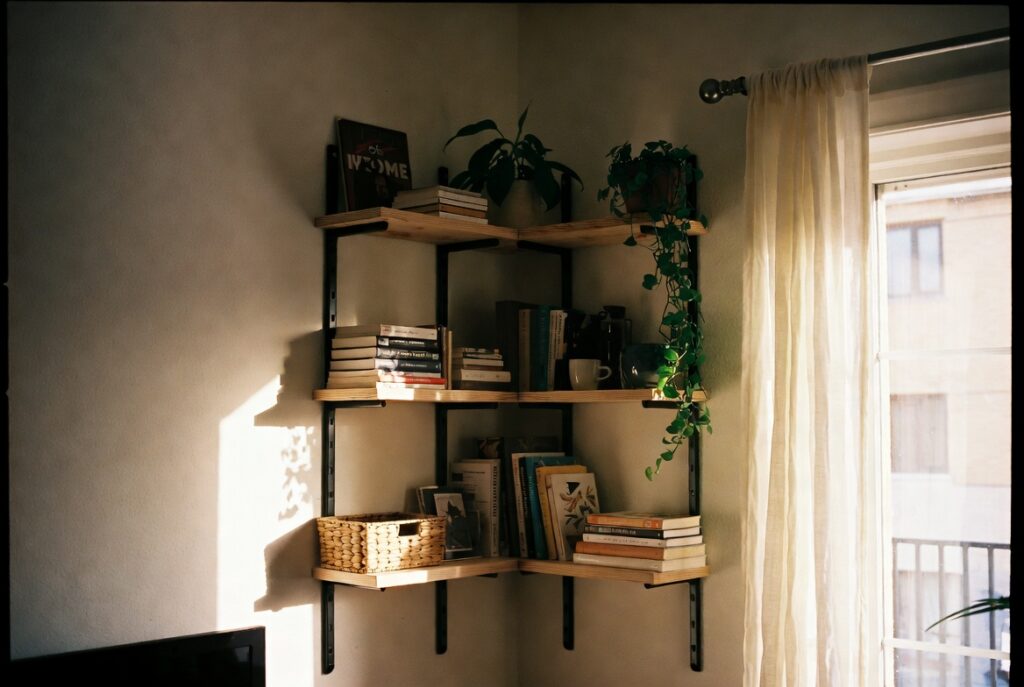
Corners are the most consistently wasted space in every room — awkward to furnish, easy to ignore, and quietly accumulating clutter. A corner shelf unit, a tall corner cabinet, or even a simple floating corner shelf turns dead space into intentional storage without consuming any of the room’s usable floor area.
Smart tip: A set of floating corner shelves installs in under an hour — immediate vertical storage in the room’s least-used space with no renovation required.
Mistake to avoid: Don’t leave corner shelves unstyled. An organized corner shelf with a few curated items is a design moment; a loaded one is just a corner full of things.
23. The Linen Closet Edit That Takes One Afternoon
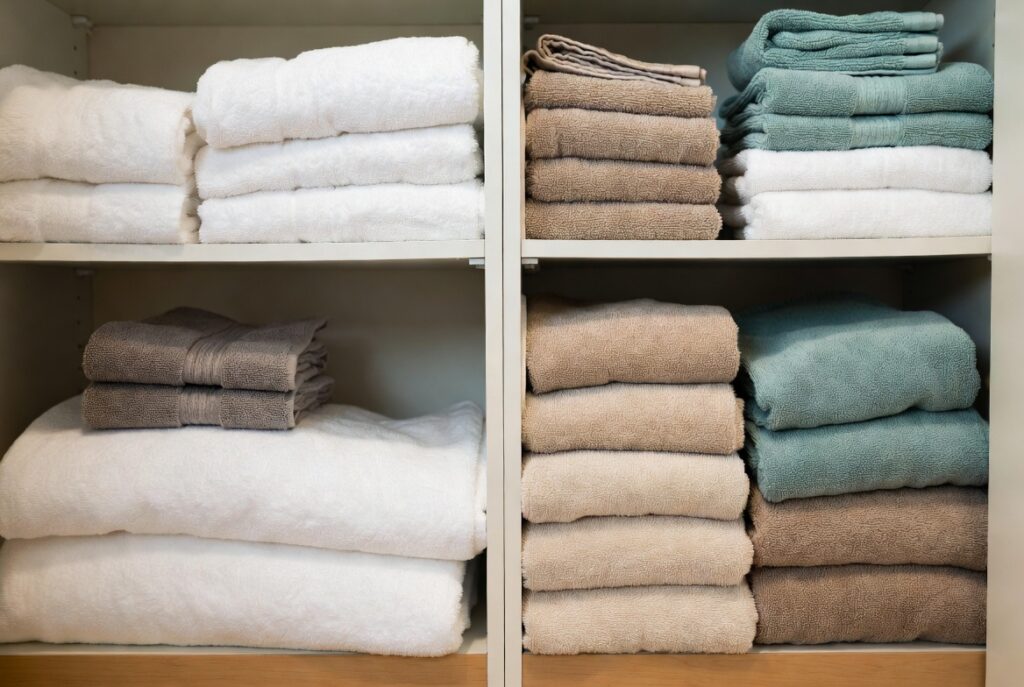
A linen closet stuffed with mismatched towels, orphaned pillowcases, and products from three years ago is one of the most common hidden stresses in any home. Editing down to one full set per bed and two towel sets per person, then folding everything consistently, turns a chaotic closet into one that feels genuinely organized every time you open it.
Smart tip: Fold towels in thirds and store them face-out on the shelf — a simple system that sticks and makes the closet look boutique rather than cluttered.
Mistake to avoid: Don’t keep “backup” linens you never use. They occupy prime closet real estate and contribute to the feeling of overflow without providing any practical value.
24. Why Adjustable Shelving Beats Fixed Storage Every Time
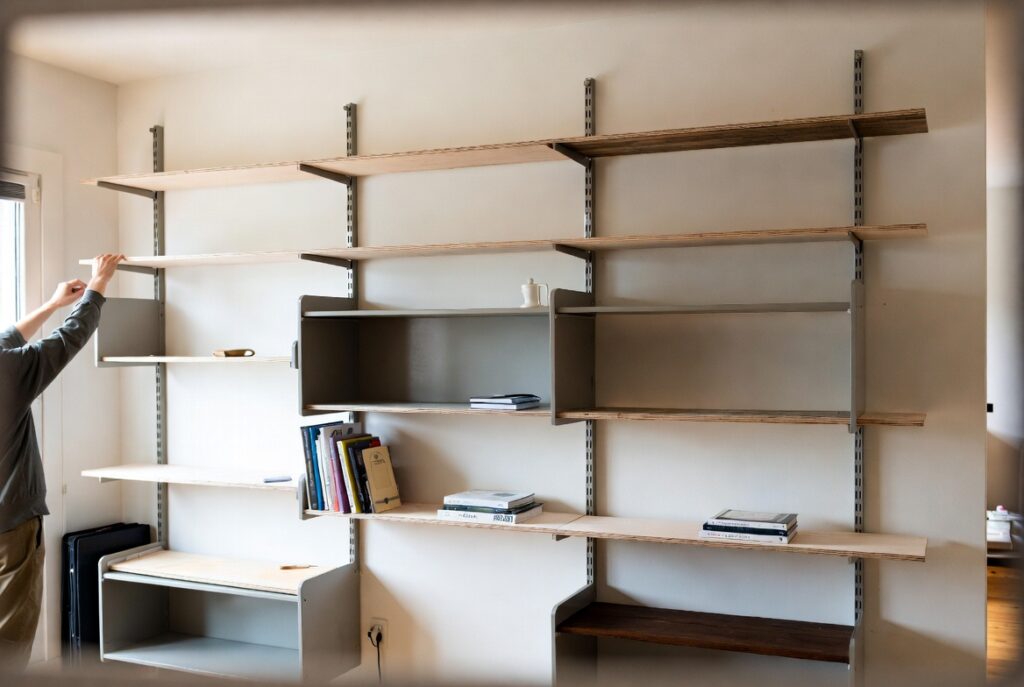
Fixed shelving is designed for the items you own today — but storage needs change. Adjustable shelving systems adapt as life changes: a toddler’s toy shelf becomes a teen’s book shelf becomes an office credenza. In 2026, the biggest shift in storage furniture is toward modular, reconfigurable systems that serve the home long-term rather than for a single season.
Smart tip: Replace one fixed bookcase with an adjustable shelving unit — a one-time setup that adapts to your needs for years without replacement.
Mistake to avoid: Don’t fill adjustable shelving to capacity immediately. Build in flexibility intentionally so the system can grow with your life rather than fighting it.
25. The Final Edit That Makes a Home Feel Truly Calm
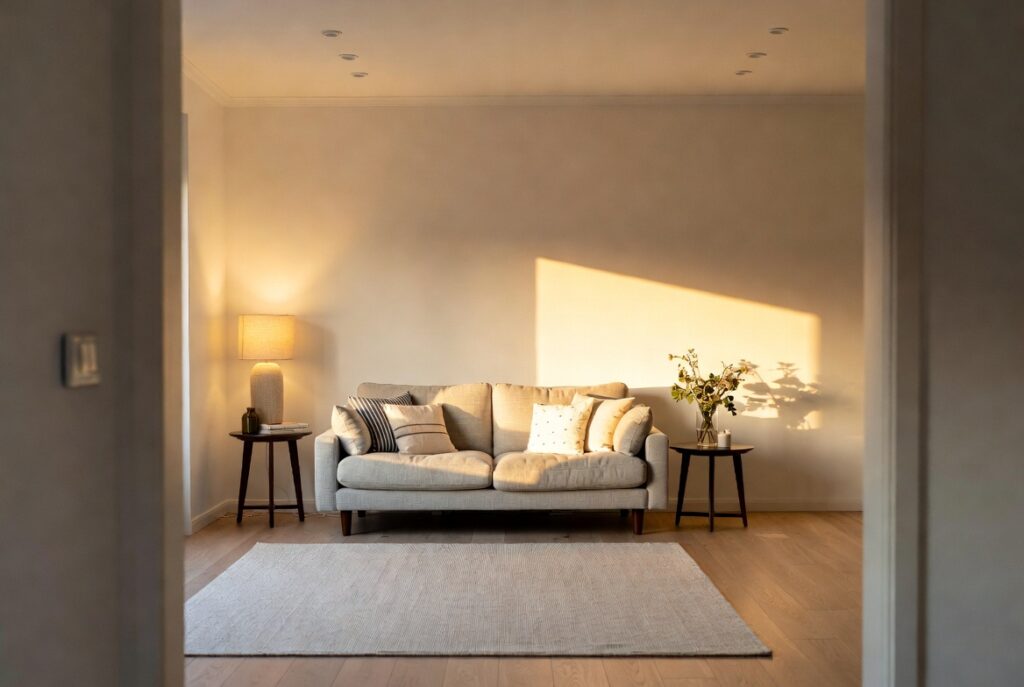
Organization isn’t a project you finish — it’s a state you maintain through small, consistent decisions. The final edit isn’t about perfection; it’s about removing the things that drain your energy without serving your life. A home with less always feels larger, calmer, and more personal than one with more — no matter the square footage.
Smart tip: Walk through your home with a donation box and trust your first instinct on each item. The first feeling is almost always right.
Mistake to avoid: Don’t organize as a substitute for deciding. The real work of a calm home is always in the editing, not the containing.
An organized home isn’t built in a weekend — it’s built in dozens of small decisions made with intention. Start with the one space that frustrates you most, give it a single afternoon, and let the calm that follows show you where to go next.
Continue Your Home Transformation
Explore the full collection of step-by-step eBooks and get the guide that fits the room you're working on.