Organization and Storage
Getting the home office organization right makes the biggest difference in how the space actually feels day to day. A well-planned home office organization balances function and style, and even small tweaks to your home office organization can transform the whole area.
If your workspace has quietly taken over a corner of the bedroom, a slice of the dining table, or a closet nobody uses anymore, you already know the real problem isn’t a lack of space — it’s a lack of system. Most home offices fail because everything competes for the same small desk surface instead of having its own dedicated spot.
By the end of this article, you’ll have 12 real, practical ways to organize a small home office so it finally feels functional, calm, and easy to sit down and work in.
Table of Contents
- 1. Mount a Floating Wall Desk
- 2. Build a Pegboard Cable Wall
- 3. Tuck a Desk Under the Stairs
- 4. Add Floating Shelves Above the Desk
- 5. Corral Small Items With a Desktop Tray
- 6. Roll In a Flexible Utility Cart
- 7. Convert a Closet Into a Cloffice
- 8. Add Drawer Divider Organizers
- 9. Mount a Wall File Organizer
- 10. Slide a Bookcase Under the Desk
- 11. Hang a Cork or Magnetic Board
- 12. Build a Dedicated Printer Station
- Effort & Cost Snapshot
1. Mount a Floating Wall Desk for Your Home Office Organization
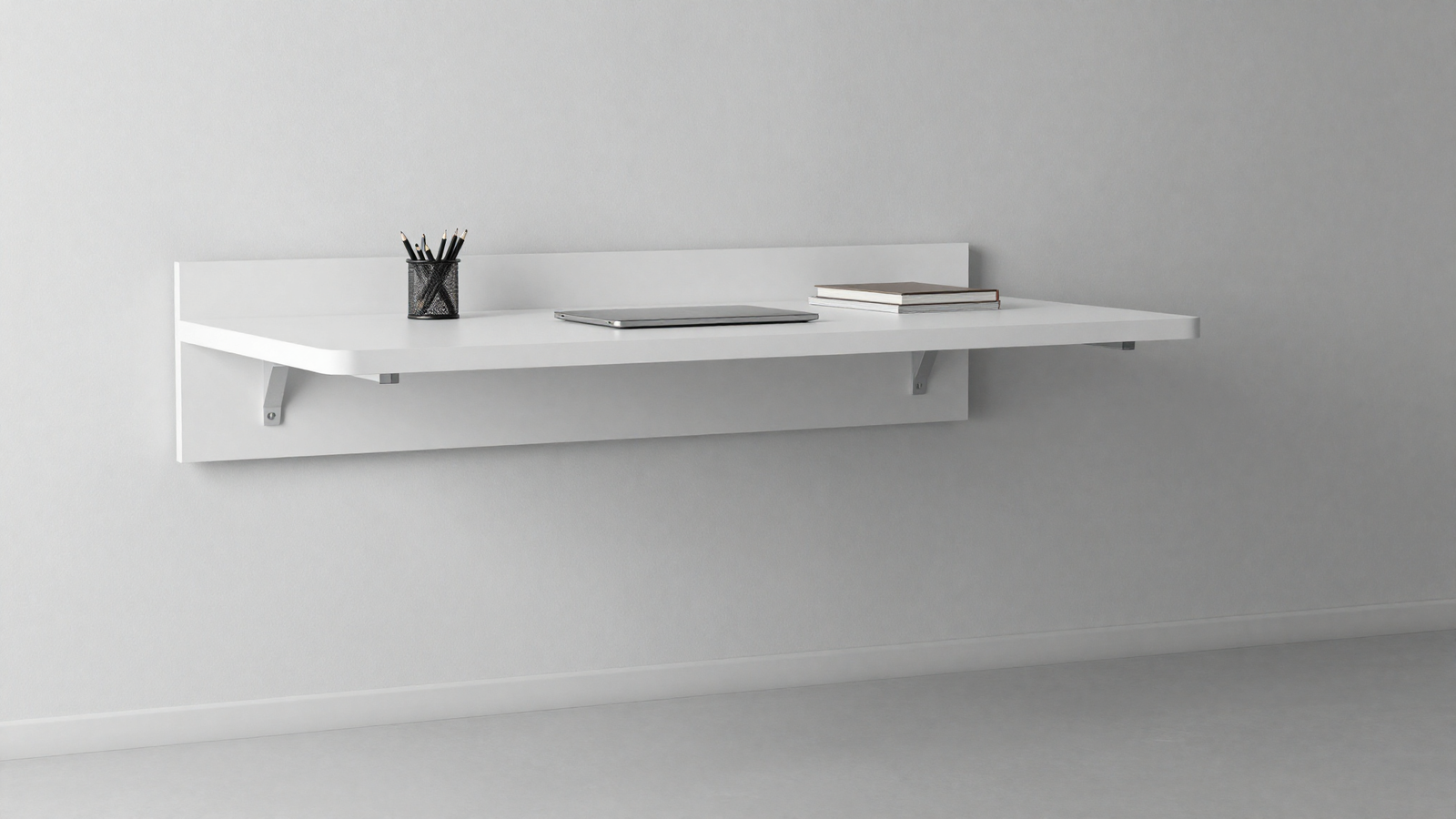
A wall-mounted desk solves two problems at once: it frees up the entire floor and gives even the smallest room a cleaner, more architectural feel. Because the desk attaches directly to the wall, there’s no bulky frame or legs taking up visual or physical space underneath.
💡 Smart tip: Mount the desk into wall studs rather than drywall alone, since a loaded desk surface needs real structural support behind it.
⚠️ Mistake to avoid: Mounting the desk at a fixed height without testing it while seated first; a floating desk is much harder to adjust after installation than a standard one.
2. Build a Pegboard Cable Wall for Your Home Office Organization
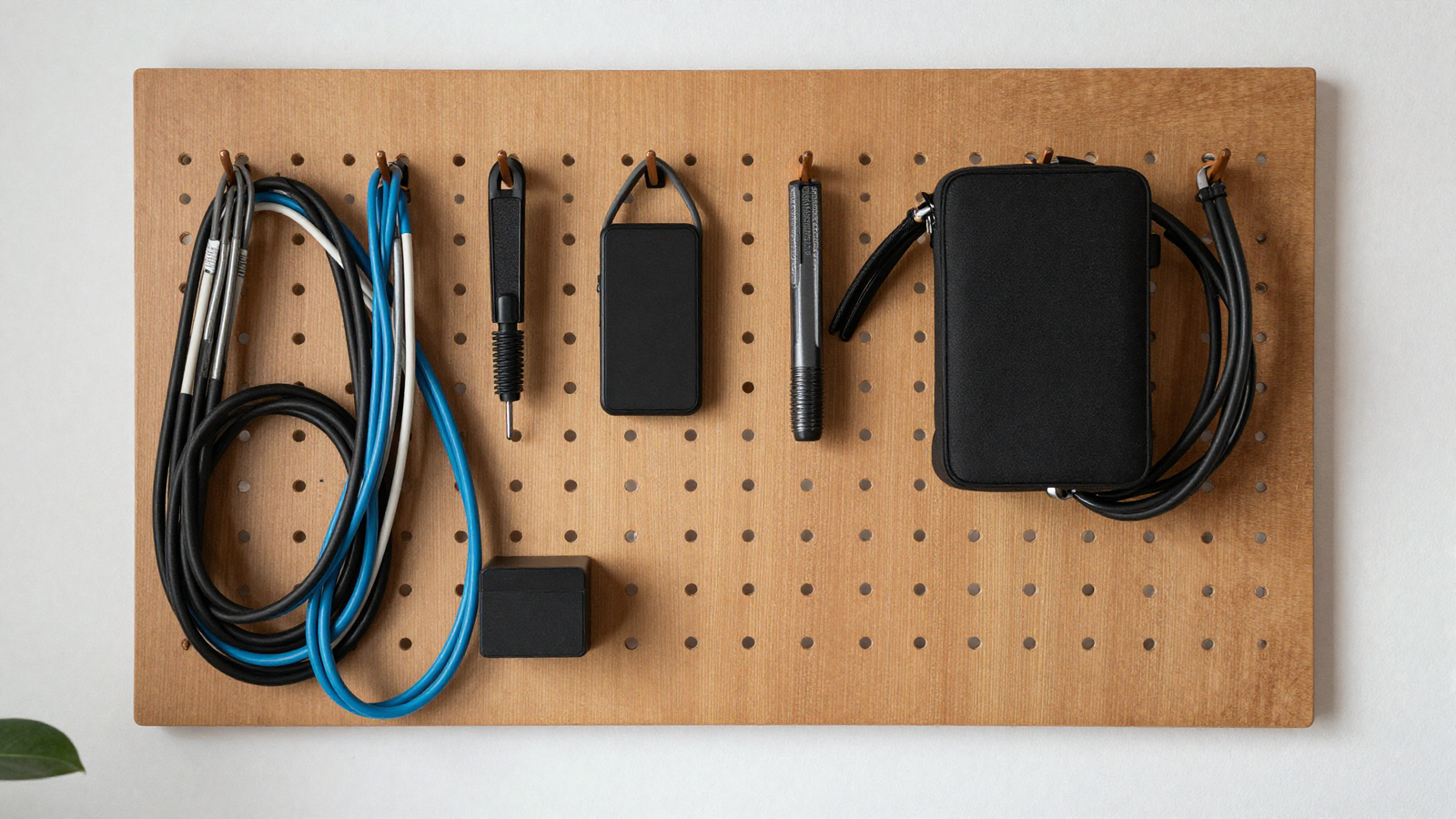
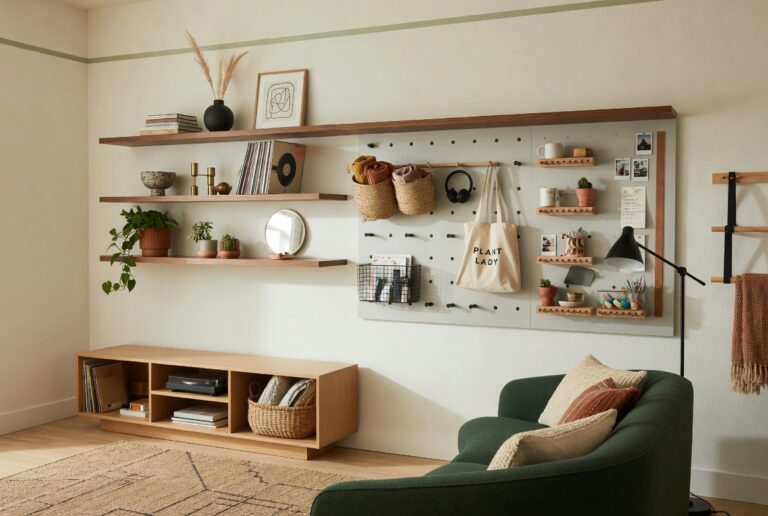
A pegboard gives every cable, tool, and small accessory its own visible hook, which sounds chaotic until you realize it’s actually the opposite — nothing is hidden in a drawer waiting to get tangled. It’s especially useful for anyone whose work involves constant task switching between physical tools and a screen.
💡 Smart tip: Group hooks by task rather than by item type, so everything you need for one activity is in the same section of the board.
⚠️ Mistake to avoid: Overloading a single hook with a heavy accessory; distribute weight across multiple hooks so the pegboard doesn’t sag or pull away over time.
3. Tuck a Desk Under the Stairs for Your Home Office Organization
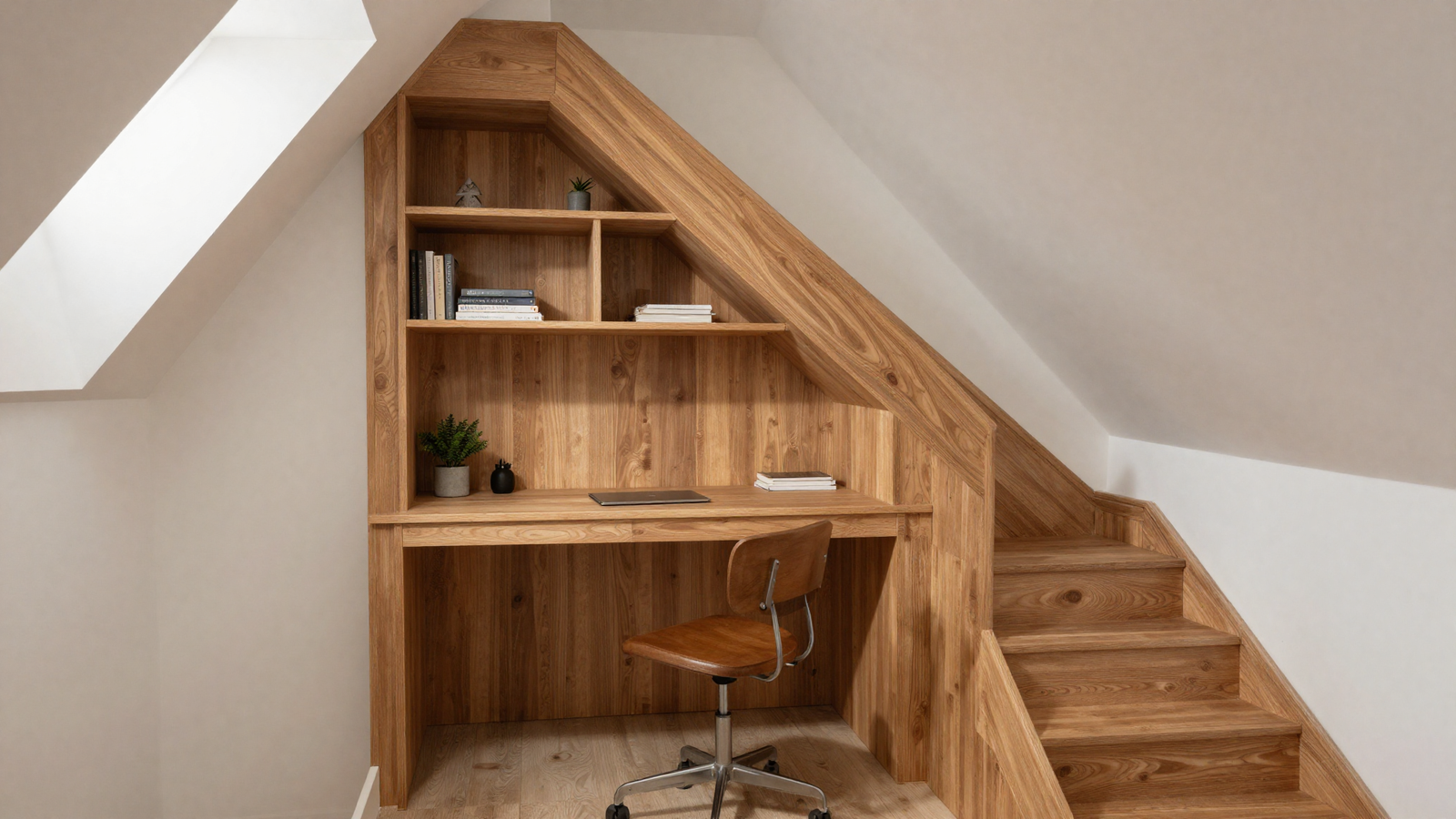
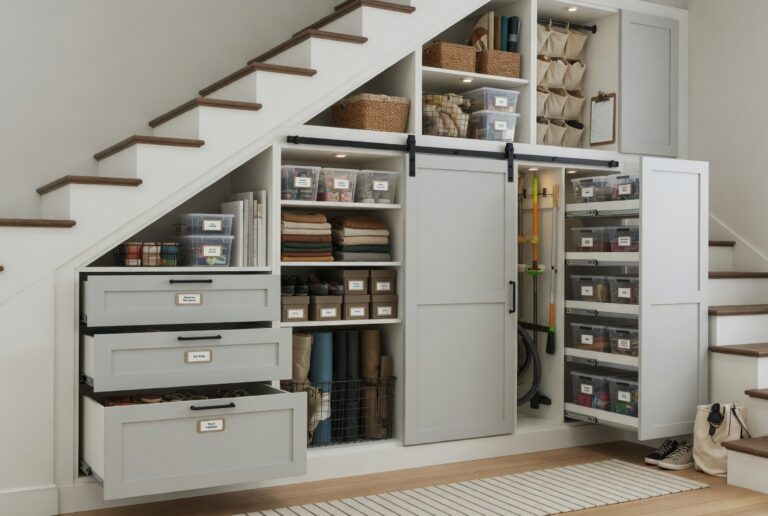
The space under a staircase is one of the most commonly wasted areas in a home, yet its odd angles make it a surprisingly good fit for a compact desk setup. A custom-built desk and shelving tailored to the sloped ceiling means no inch of that awkward space goes unused.
💡 Smart tip: Add a layer of soft LED strip lighting under any shelving in this nook, since staircase corners rarely get much natural light.
⚠️ Mistake to avoid: Buying a standard off-the-shelf desk for this spot; the irregular angles almost always require custom or adjustable dimensions to fit properly.
Loving These Ideas? Get the Step-by-Step Guide
Grab the full 5-day eBook and turn these ideas into a finished room.




4. Add Floating Shelves Above the Desk for Your Home Office Organization
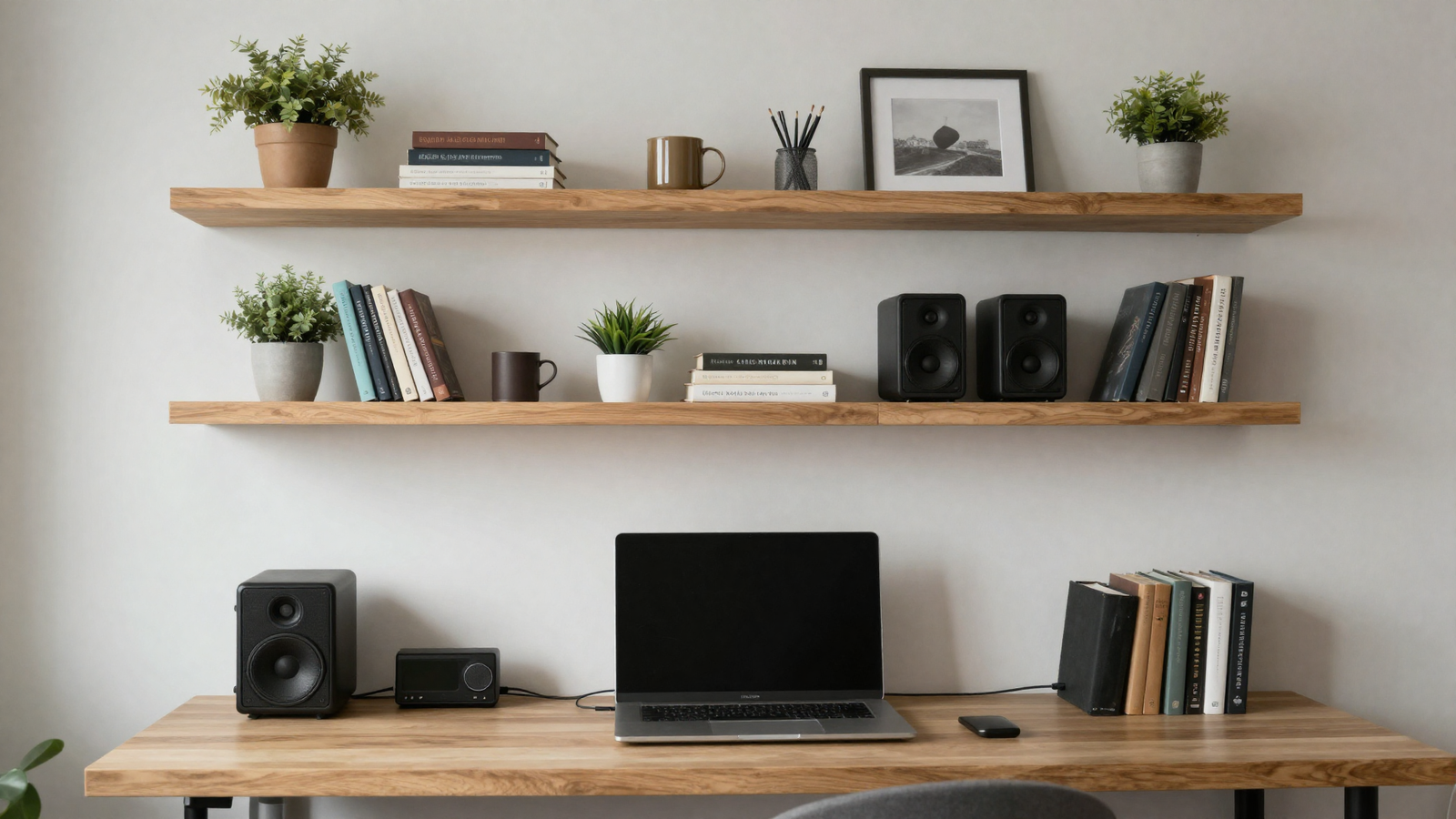
Two shelves mounted above the desk can absorb reference books, a small plant, and the speakers that were otherwise eating up desk corners. It’s not really about display — it’s about relief, giving the desk surface room to breathe instead of collecting everything within reach.
💡 Smart tip: Keep the shelf directly above your monitor empty, or reserve it only for lightweight items, so nothing feels like it’s looming over your screen.
⚠️ Mistake to avoid: Overloading floating shelves with heavy binders; check the weight rating before stacking anything substantial on brackets meant for lighter decor.
5. Corral Small Items With a Desktop Tray for Your Home Office Organization
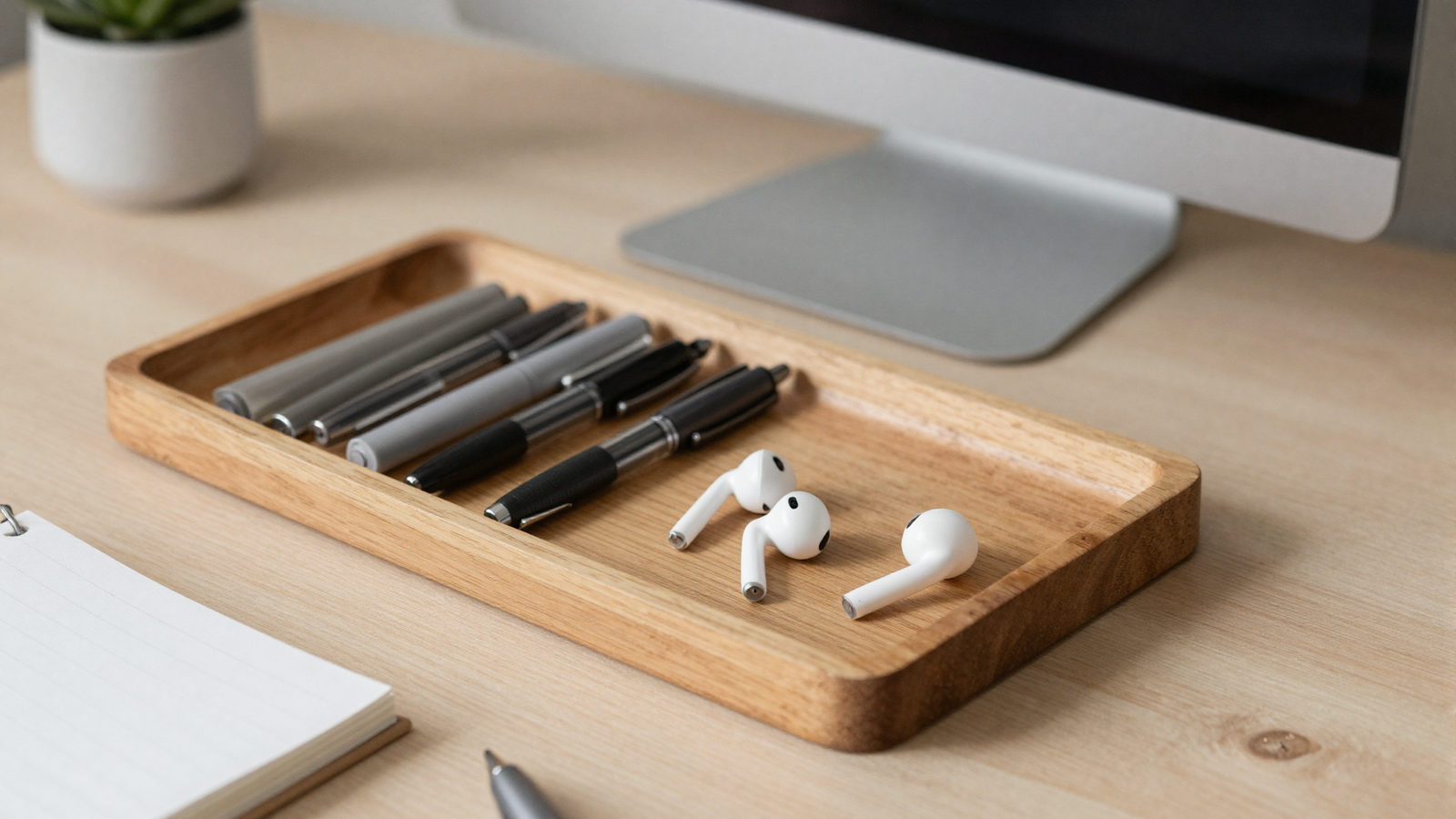
A shallow tray turns a scatter of small items into a single visible block that’s easy to ignore when it’s tidy and easy to clear when it isn’t. Pens, notes, and earbuds otherwise multiply quietly across a desk surface until the whole thing feels cluttered without any one culprit to blame.
💡 Smart tip: Use a second, smaller tray on a nearby side table for secondary clutter like chargers or documents in transit, separate from your daily essentials tray.
⚠️ Mistake to avoid: Choosing a tray too small for your actual daily items; if things constantly spill over the edges, the system stops doing its job.
6. Roll In a Flexible Utility Cart for Your Home Office Organization
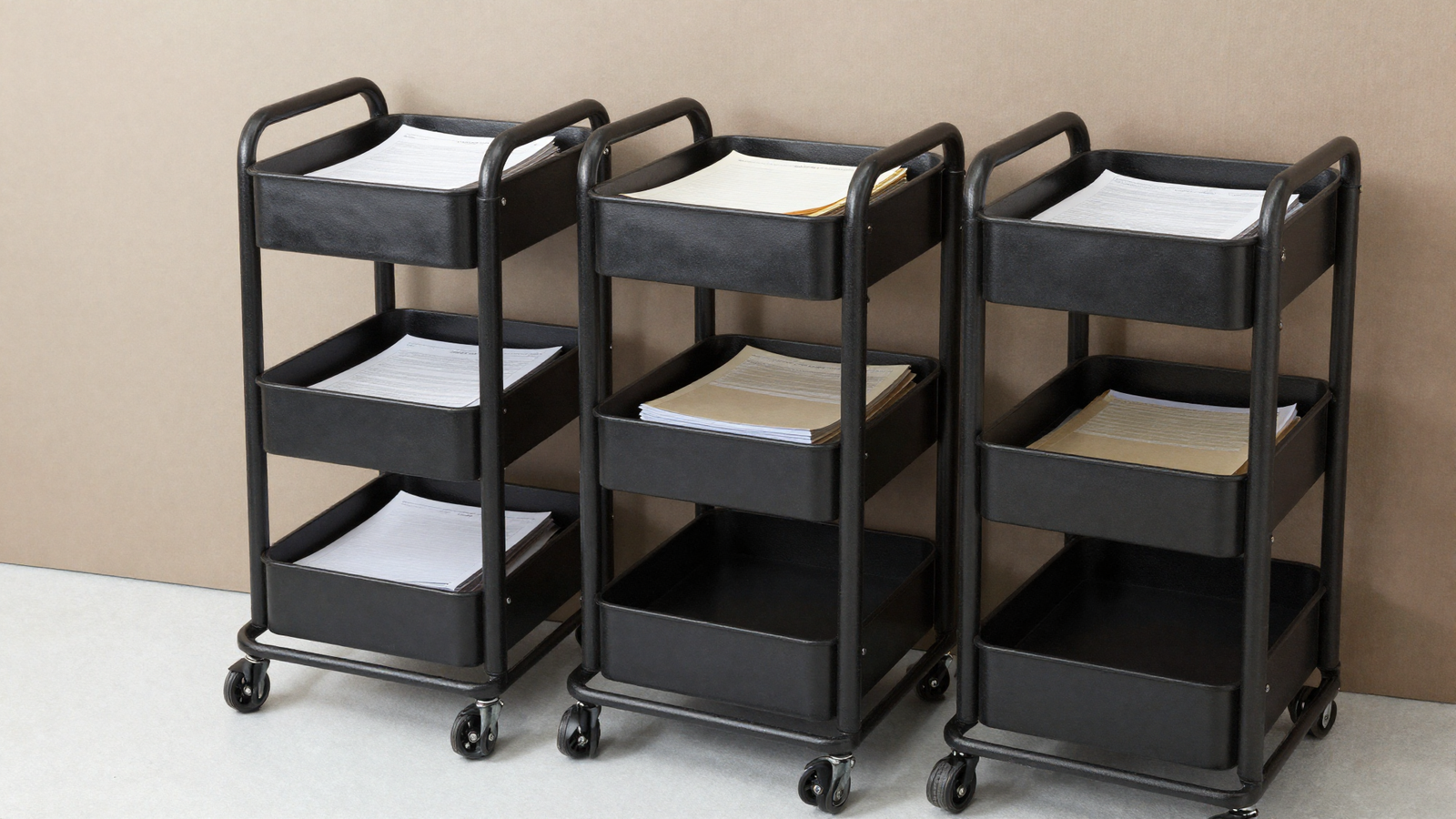
A rolling cart is one of the most flexible pieces of furniture a small office can have, since it can shift roles depending on what a project needs that day. It works as extra desk surface, a printer stand, or mobile file storage, and it tucks out of the way completely when it isn’t needed.
💡 Smart tip: Assign each tier of the cart one clear function so it stays a working tool rather than turning into a rolling junk pile.
⚠️ Mistake to avoid: Choosing a cart with wheels that don’t lock; an unlocked cart can drift away from the desk mid-task in a busy household.
7. Convert a Closet Into a Cloffice for Your Home Office Organization
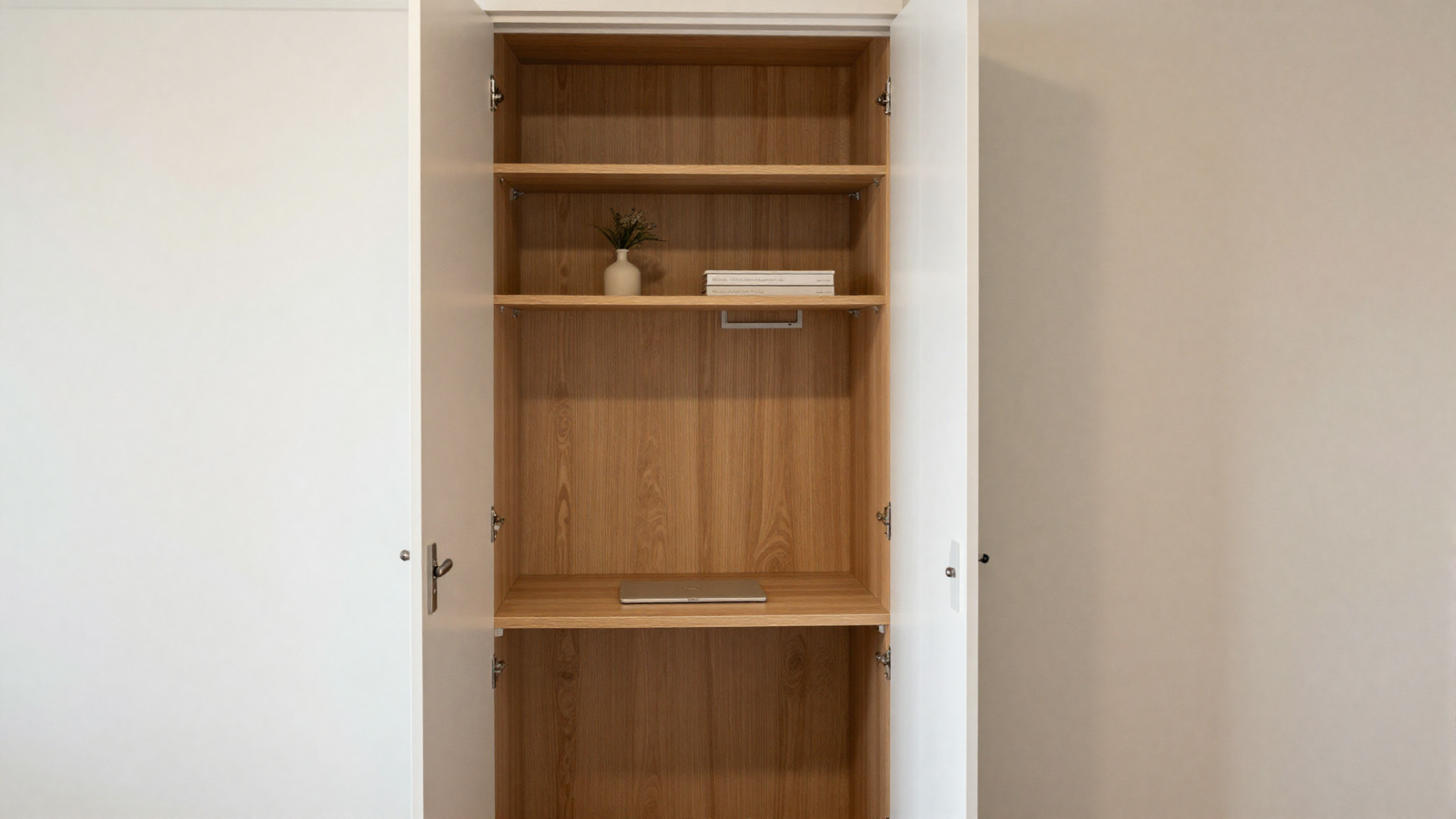
Turning an unused closet into a “cloffice” creates a workspace that essentially disappears the moment you close the doors, which matters most in shared or multi-purpose rooms. It’s a genuinely smart solution in smaller homes where a dedicated office room simply isn’t an option.
💡 Smart tip: Add a power strip and cable pass-through inside the closet before installing the desk, so you’re not fishing cords through a finished space later.
⚠️ Mistake to avoid: Skipping ventilation planning; a closed closet with a laptop running all day can get warmer than expected without some airflow.
8. Add Drawer Divider Organizers for Your Home Office Organization
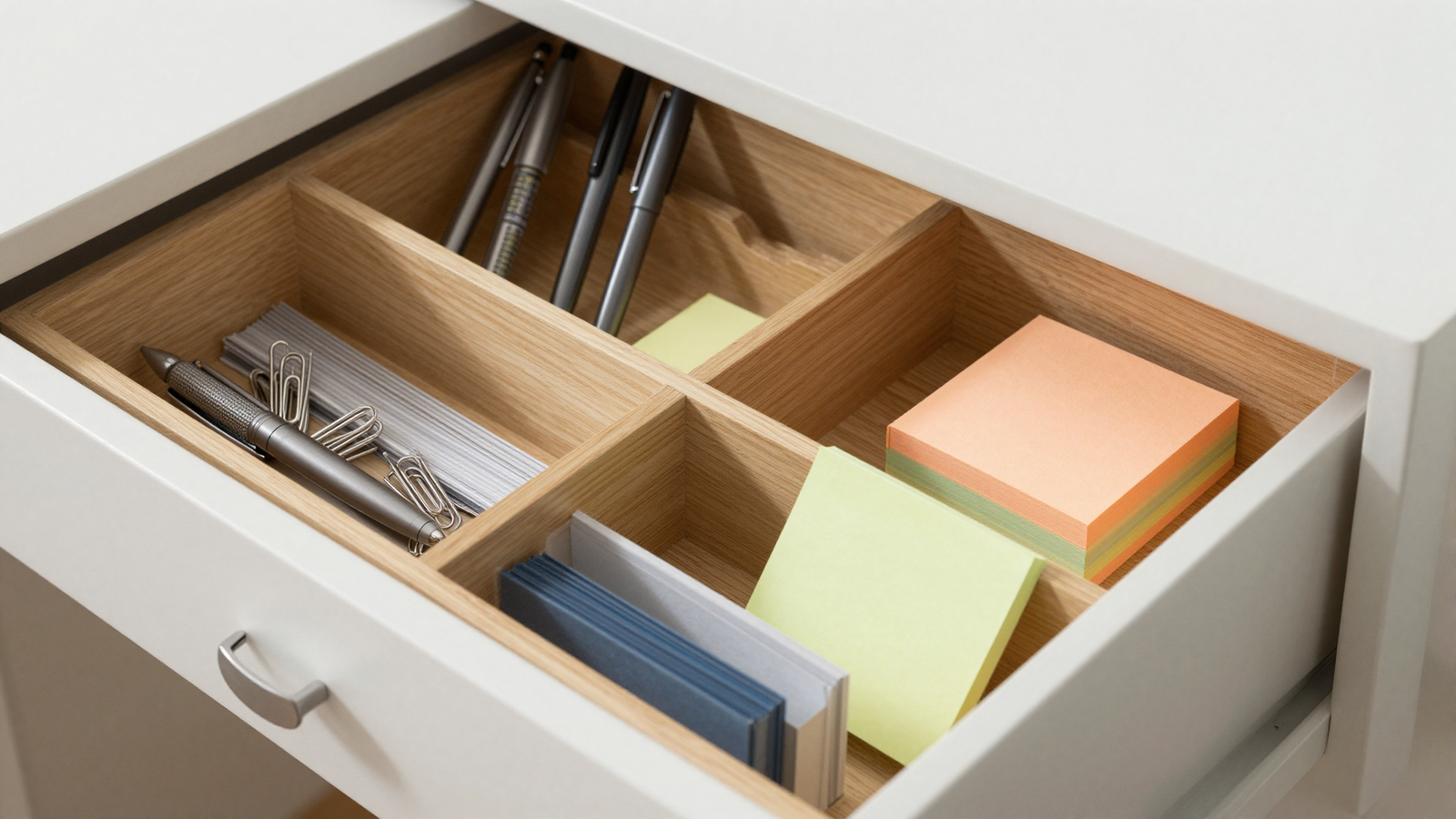
Without dividers, even a single drawer can turn every small office supply into one jumbled, disorganized mess within a few weeks. Adding simple dividers gives every paperclip, pen, and sticky note pad its own compartment, so nothing gets lost at the bottom.
💡 Smart tip: Measure your drawer’s interior before buying dividers; adjustable or modular divider sets adapt better to irregular drawer sizes than fixed trays.
⚠️ Mistake to avoid: Sorting items by type alone instead of by frequency of use; keep your most-reached-for items in the front compartments, not the back.
9. Mount a Wall File Organizer
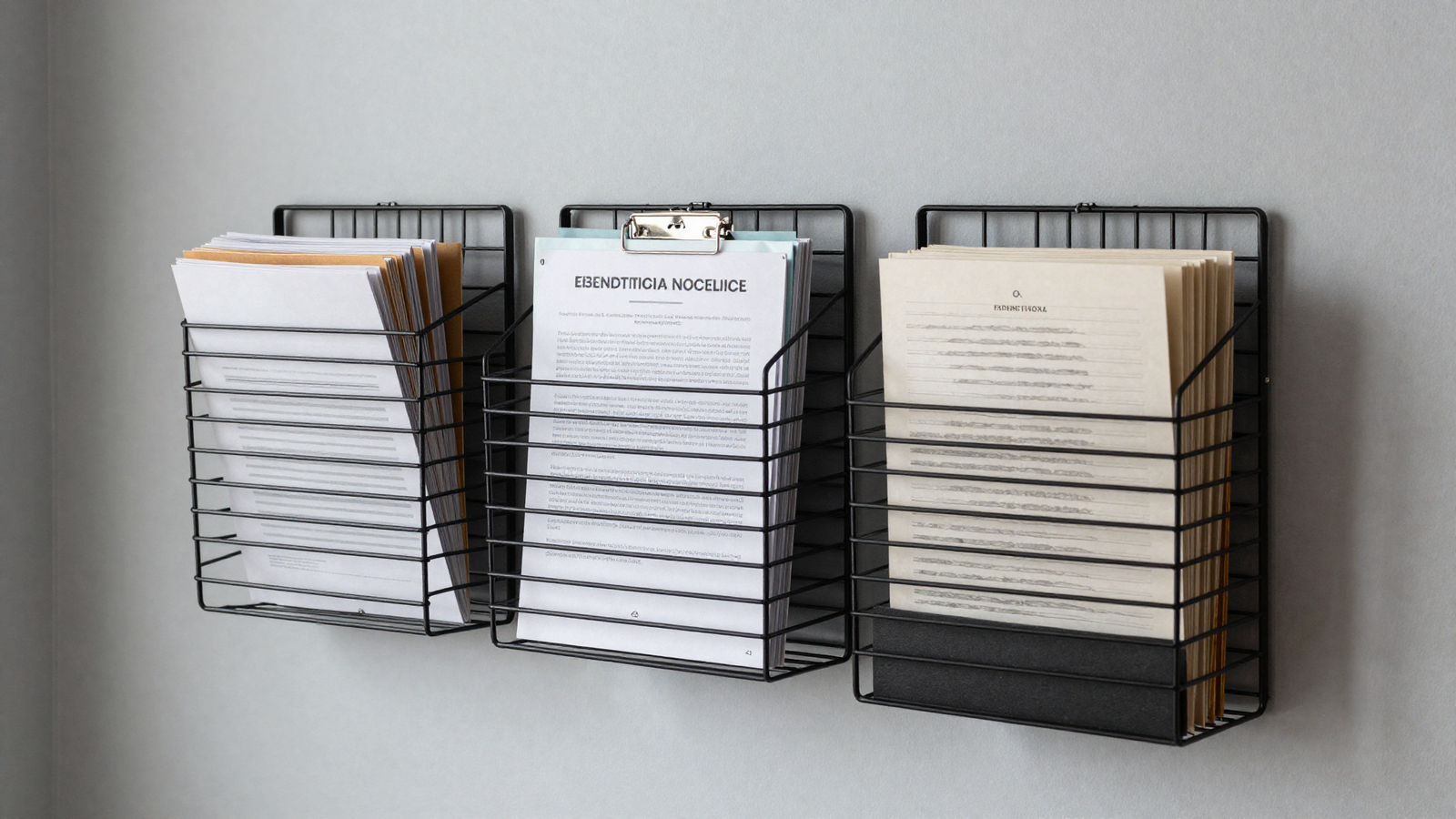
A wall-mounted wire or acrylic file organizer keeps important papers visible and within reach without eating into desk space at all. It’s a small-space storage solution that works especially well for documents you need often, like bills, active projects, or reference sheets.
💡 Smart tip: Label each slot clearly by category rather than by date, so grabbing the right folder doesn’t require remembering when something was filed.
⚠️ Mistake to avoid: Using a wall file organizer as long-term archive storage; it works best for active, rotating paperwork rather than years of accumulated documents.
10. Slide a Bookcase Under the Desk
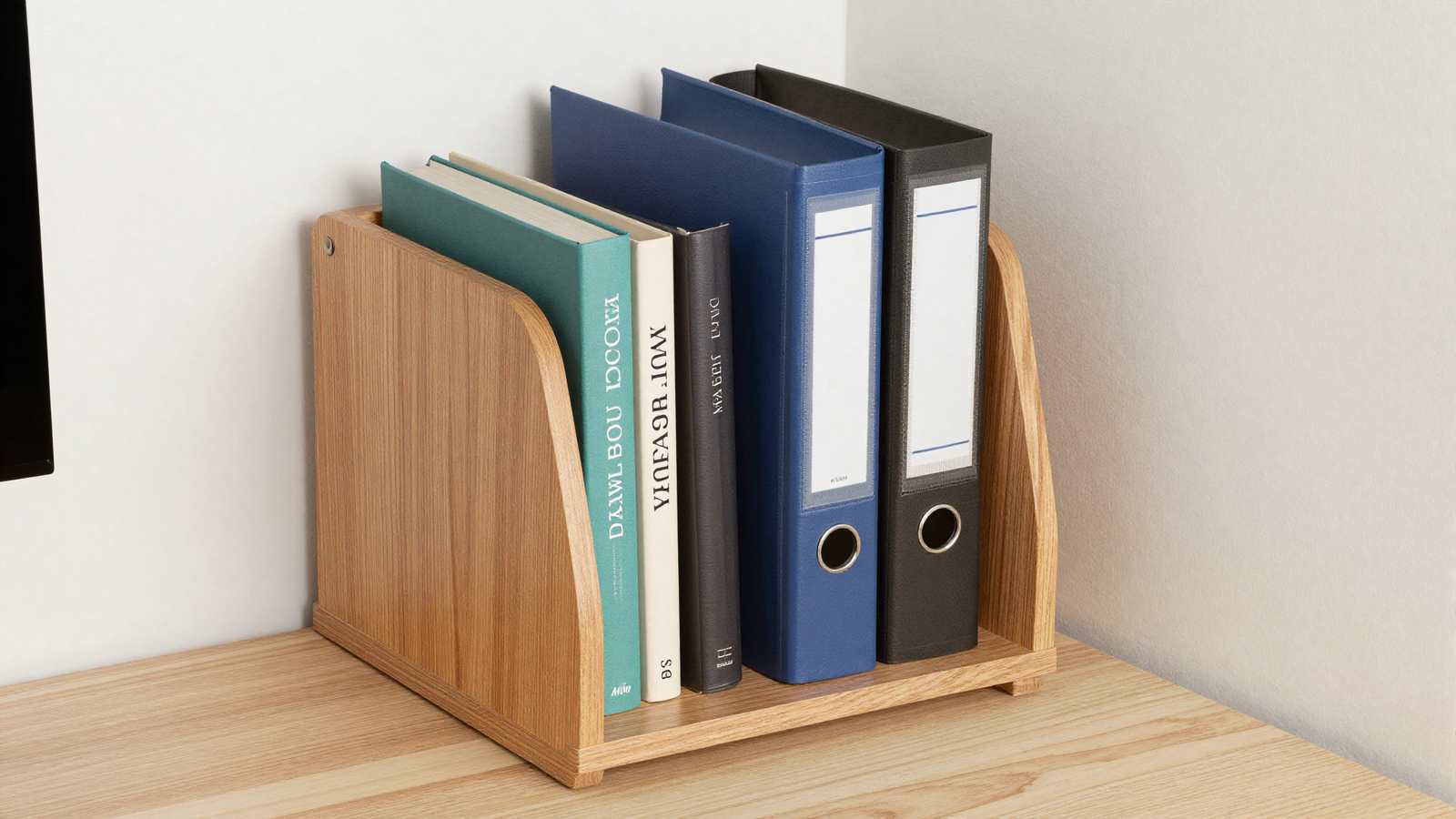
The area under a desk is often left completely empty, but a small bookcase tucked there can absorb books, binders, and reference materials without expanding the room’s footprint. It keeps materials close at hand while staying out of the direct line of sight from the chair.
💡 Smart tip: Measure your leg room while seated before choosing a bookcase height, so the piece doesn’t end up cramping your knees during the workday.
⚠️ Mistake to avoid: Placing the heaviest books on the top shelf; keeping weight lower improves stability, especially if the bookcase sits on carpet.
11. Hang a Cork or Magnetic Board
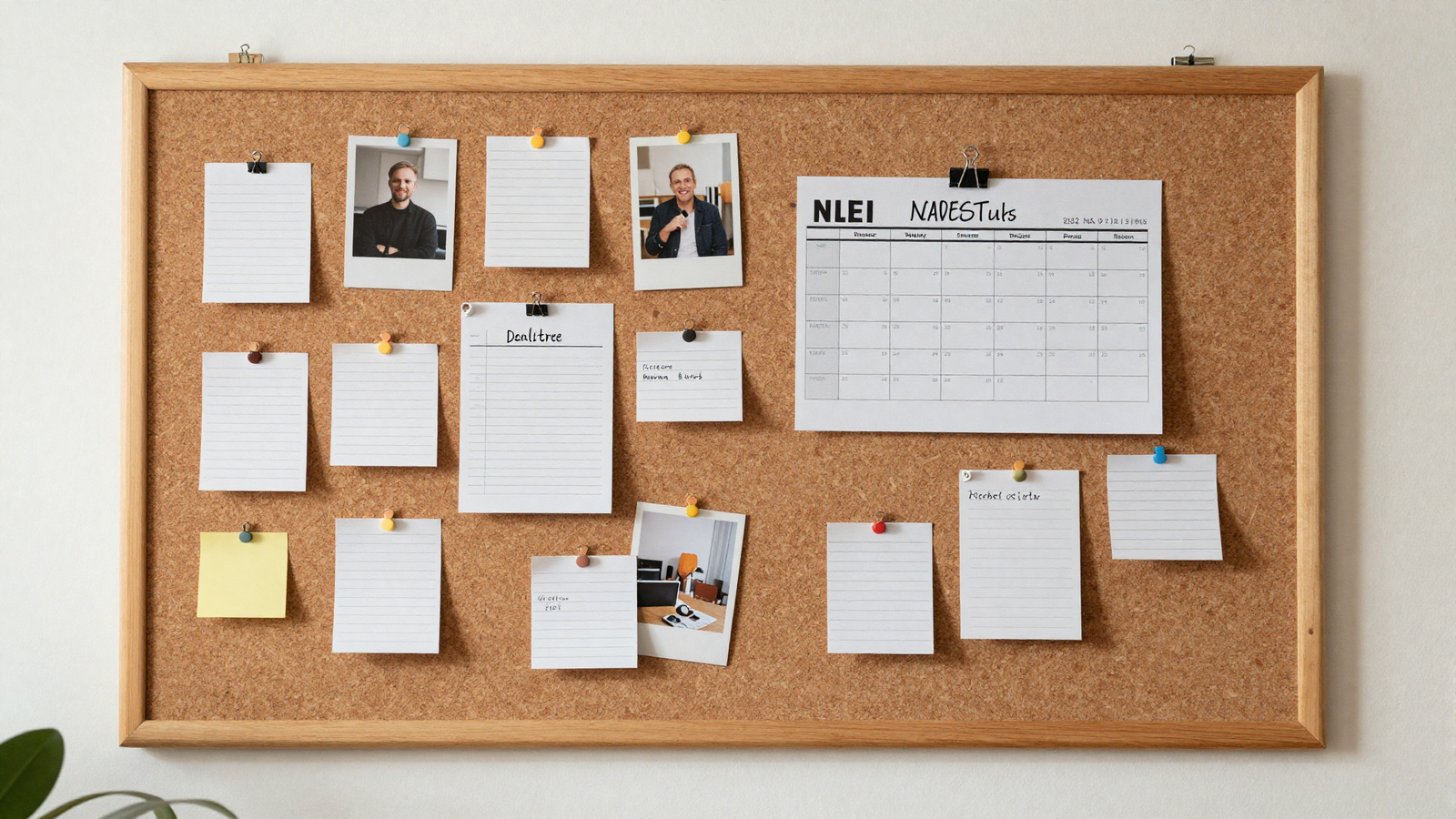
A cork or magnetic board gives reminders, schedules, and notes a fixed spot instead of letting sticky notes drift across the desk and get buried. It’s one of the simplest additions on this list, and it does real double duty as both an organizational tool and a personal touch on the wall.
💡 Smart tip: Divide the board into loose zones — active tasks, upcoming, reference — so it stays a working tool rather than a wall of accumulated clutter.
⚠️ Mistake to avoid: Letting outdated notes pile up indefinitely; set a regular time, like once a week, to clear anything that’s no longer relevant.
12. Build a Dedicated Printer Station
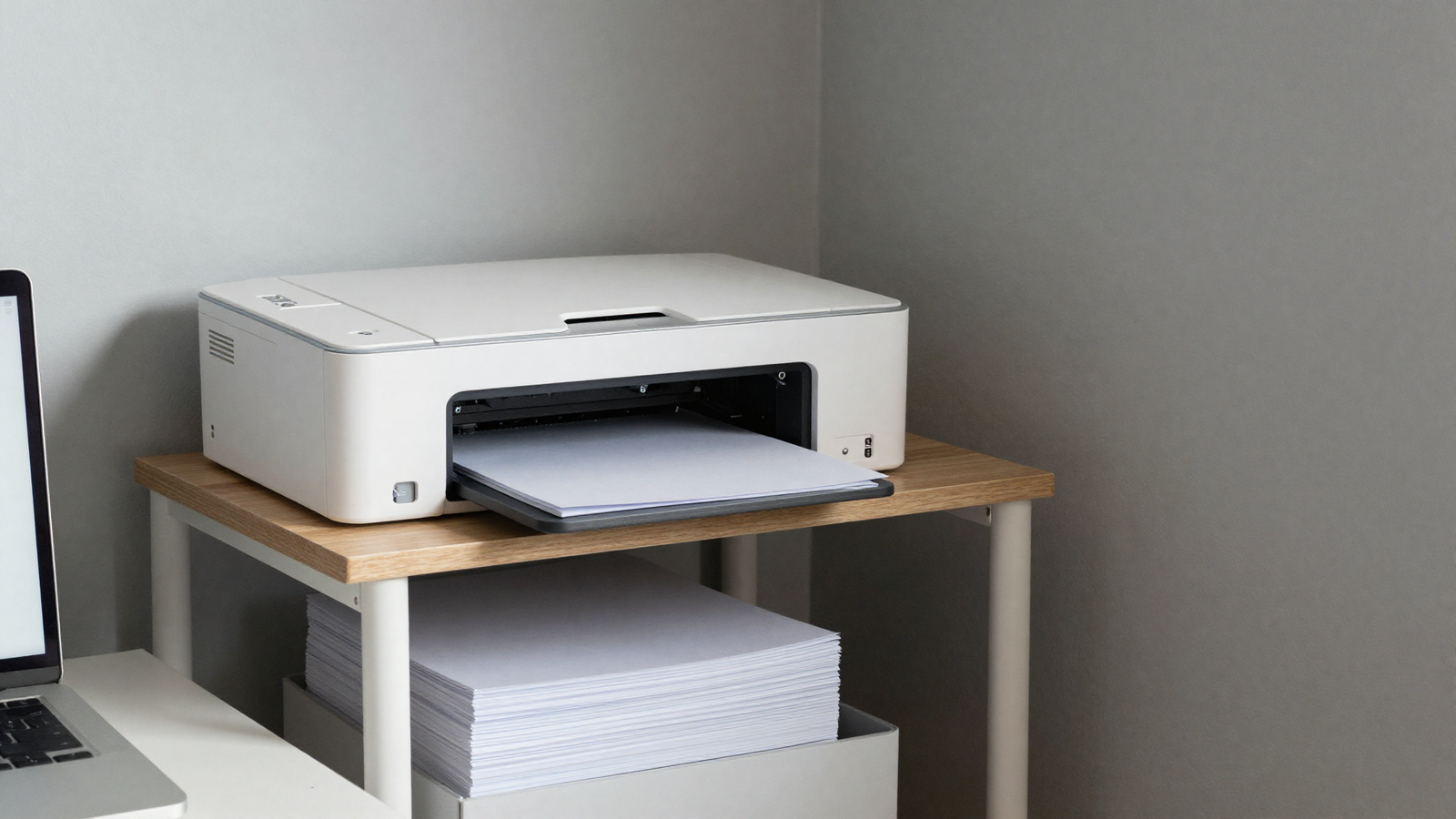
Printers and their related supplies take up valuable desk real estate if they don’t have a spot of their own, so giving them a dedicated shelf or small station keeps them out of the way but still accessible. Storing paper and ink together in the same nook means you’re never hunting through drawers mid-print.
💡 Smart tip: Position the printer station near an outlet from the start; running an extension cord across a small office becomes a tripping hazard fast.
⚠️ Mistake to avoid: Placing the printer directly against a wall with no clearance behind it; most printers need a few inches of space for paper trays and ventilation.
Effort & Cost Snapshot
| Idea | Effort | Approx. Cost |
|---|---|---|
| 1. Floating Wall Desk | Medium (DIY install) | $100–$500 |
| 2. Pegboard Cable Wall | Low (DIY) | $30–$150 |
| 3. Under-Stairs Desk Nook | High (custom build) | $500–$3,000 |
| 4. Floating Shelves Above Desk | Low–Medium (DIY install) | $40–$180 |
| 5. Desktop Tray System | Low (purchase) | $15–$60 |
| 6. Rolling Utility Cart | Low (assembly) | $50–$200 |
| 7. Closet Cloffice Conversion | Medium–High (DIY or pro) | $200–$1,200 |
| 8. Drawer Divider Organizers | Low (DIY) | $15–$60 |
| 9. Wall File Organizer | Low (DIY install) | $20–$80 |
| 10. Under-Desk Bookcase | Low (assembly) | $40–$180 |
| 11. Cork or Magnetic Board | Low (DIY install) | $20–$100 |
| 12. Dedicated Printer Station | Low–Medium (DIY) | $40–$200 |
A functional home office doesn’t require more square footage — it just needs every item to have its own clear spot, whether that’s a hook, a tray, or a shelf. Save this list to Pinterest so you can work through your own workspace one small fix at a time.
Continue Your Home Transformation
Explore the full collection of step-by-step eBooks and get the guide that fits the room you're working on.