
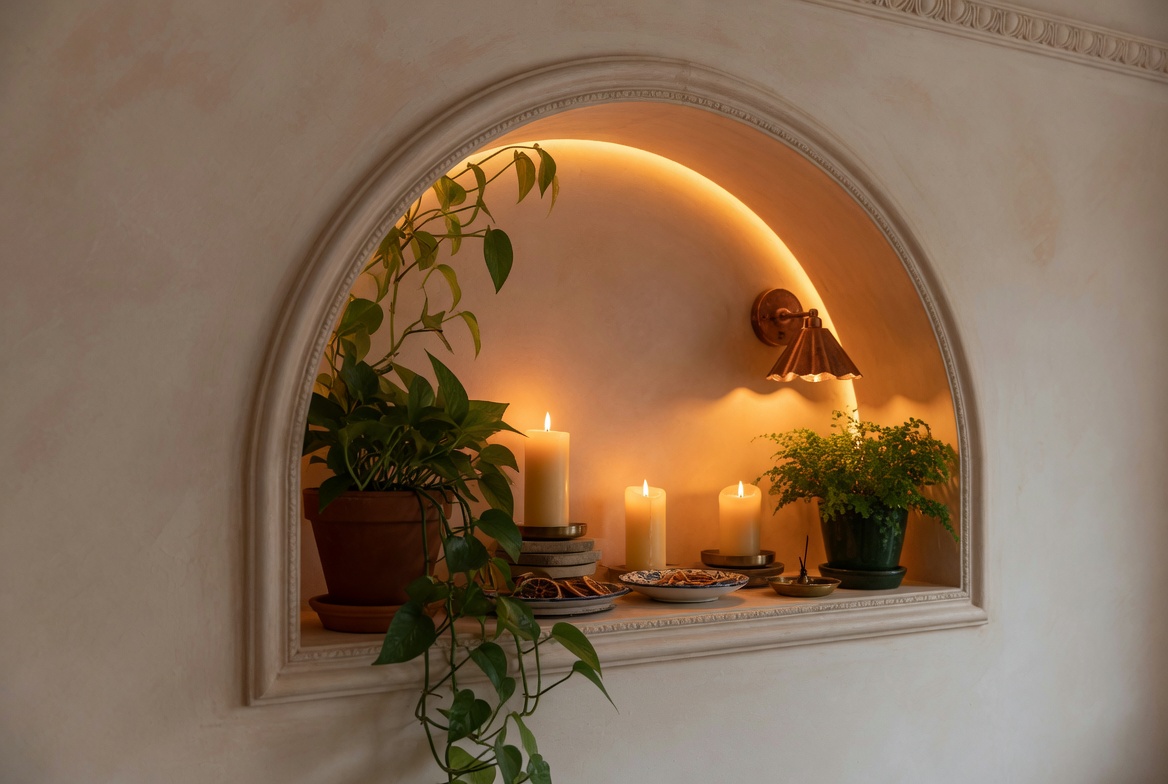
A wall niche can provide useful storage or a small display without another freestanding piece of furniture. Start with its dimensions, light and location, then choose contents that fit comfortably.
Creating a new wall niche is a different project from styling an existing one. Structure, services, fire protection and wet-area construction can affect what is possible. Have proposed openings assessed before cutting into a wall; the images illustrate design ideas rather than construction details.
Images are illustrative design concepts, including AI-generated replacement images. They are not installation drawings or verified product-performance evidence.
Style an existing niche or build a new one?
An existing dry-wall recess can often be improved by editing its contents, changing the background color or adding a removable shelf. A new opening is a building project: the wall may contain structure, services or an exterior envelope. A shower niche is a different assembly again because its corners and seams form part of the waterproofing system.
Before You Choose
First, decide whether you are styling an existing opening or proposing a new one. For example, a shallow display shelf may solve the problem without cutting into the wall. Record the finished wall niche dimensions, including the space taken by any lining or shelf supports.
| Project | First decision | What a picture cannot verify |
|---|---|---|
| Style an existing dry recess | Which objects will stay and how they will be reached | Shelf capacity or hidden wall conditions |
| Create a new dry recess | Whether the actual wall can accommodate the opening | Structure, services and finished usable depth |
| Install a shower niche | The selected waterproofing assembly and finished tile layout | Waterproof continuity, seams or installation approval |
For a product-specific wet-area example, Schluter’s KERDI-BOARD-SN niche uses a defined system with waterproof seam treatment. This describes that manufacturer’s assembly; it does not make every tiled recess equivalent. Resolve the system before choosing tile and trim.
1. Let an Arched Niche Hold a Small Collection
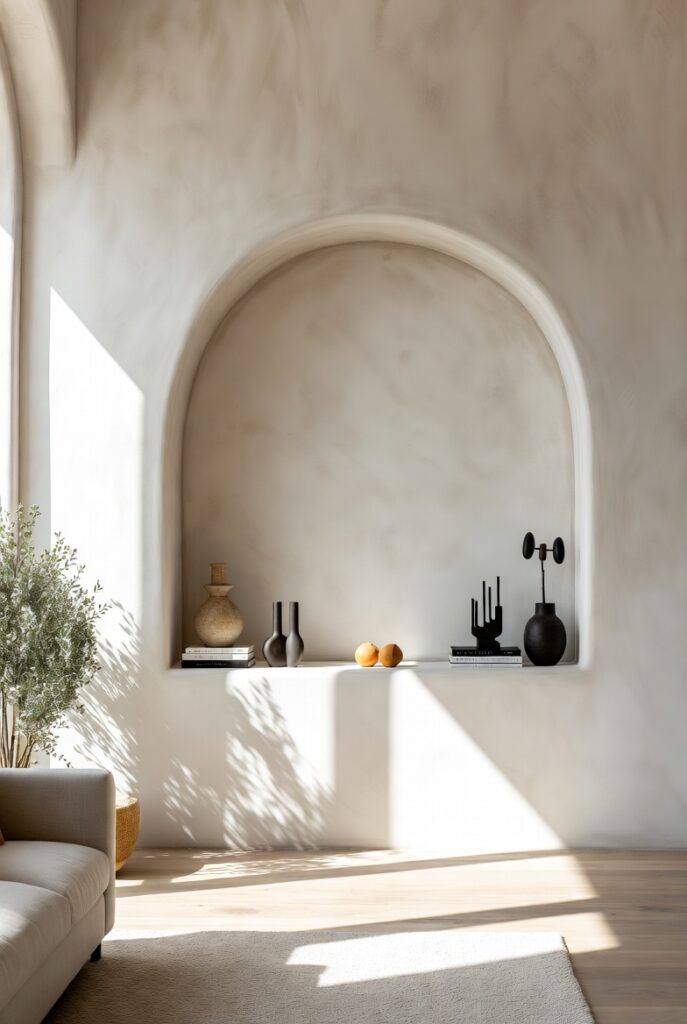
Choose a few objects that leave the curved outline visible. Compare their heights and depth from the main viewing position. The niche does not need to be filled from edge to edge to provide a useful focal point.
Try this: Try one larger object before adding smaller pieces.
2. Plan a Shower Niche as Part of Waterproofing
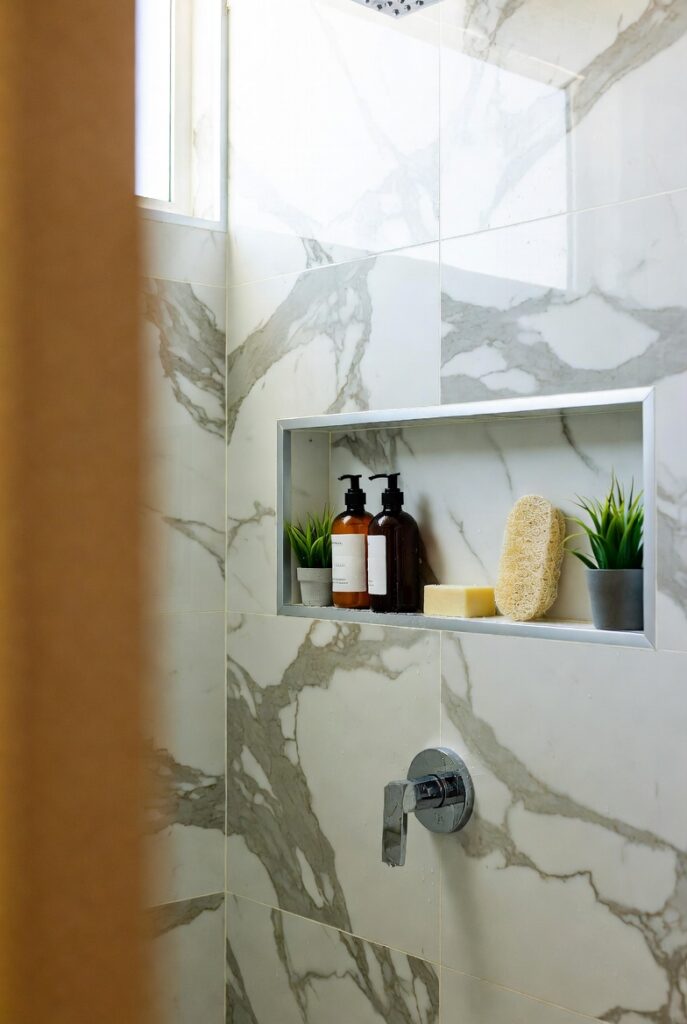
Measure the bottles it must hold and consider the shower layout. The recess, corners and surfaces must belong to a suitable waterproof assembly. Decorative tile alone does not establish that the installation will remain watertight.
Try this: Confirm the complete detail with the installer before tiling.
3. Size a Wall Niche Bookcase for Your Books
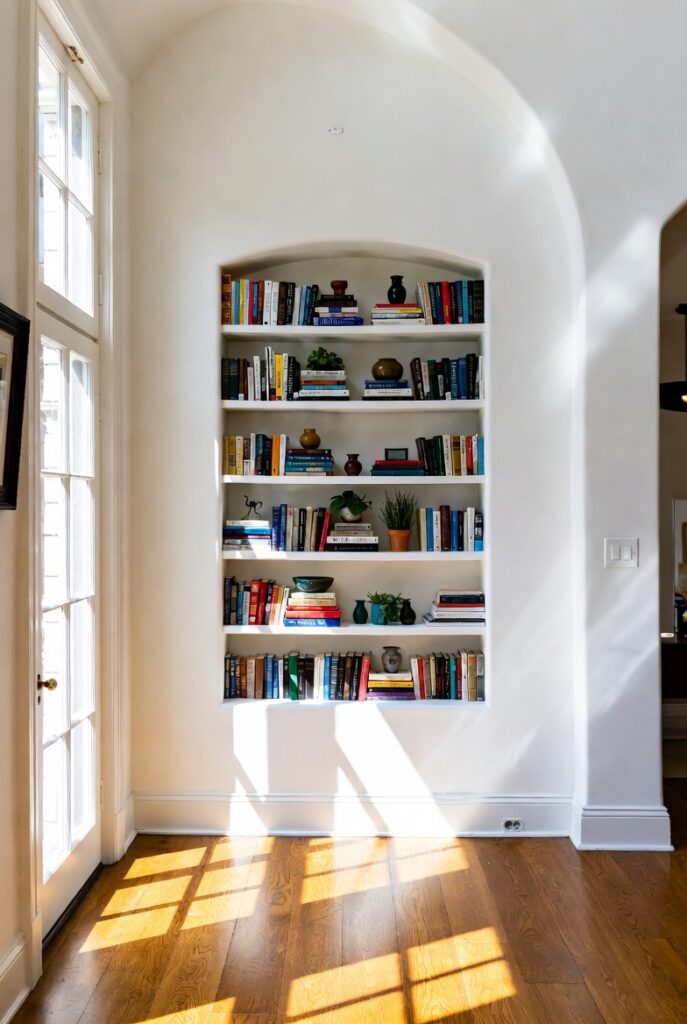
Measure book depth and height as well as the opening. Leave room to remove individual volumes. Decide whether the recess should contain the whole collection or a few frequently read books.
Try this: Keep heavier books where lifting them feels comfortable.
4. Check Equipment Requirements in a Media Niche
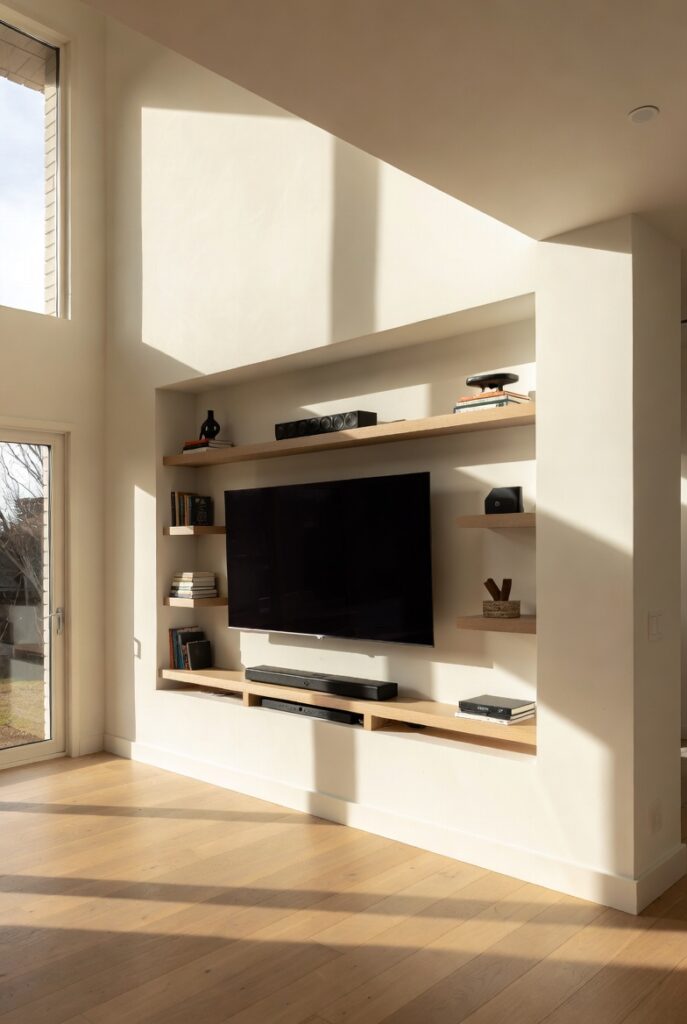
A screen or media device needs the mounting, ventilation and servicing conditions specified for it. Include cables and the space to reach connections. A close-fitting recess may be less practical than a simple wall mount.
Try this: Choose the equipment before finalizing the opening.
5. Use Niche Lighting for a Clear Purpose
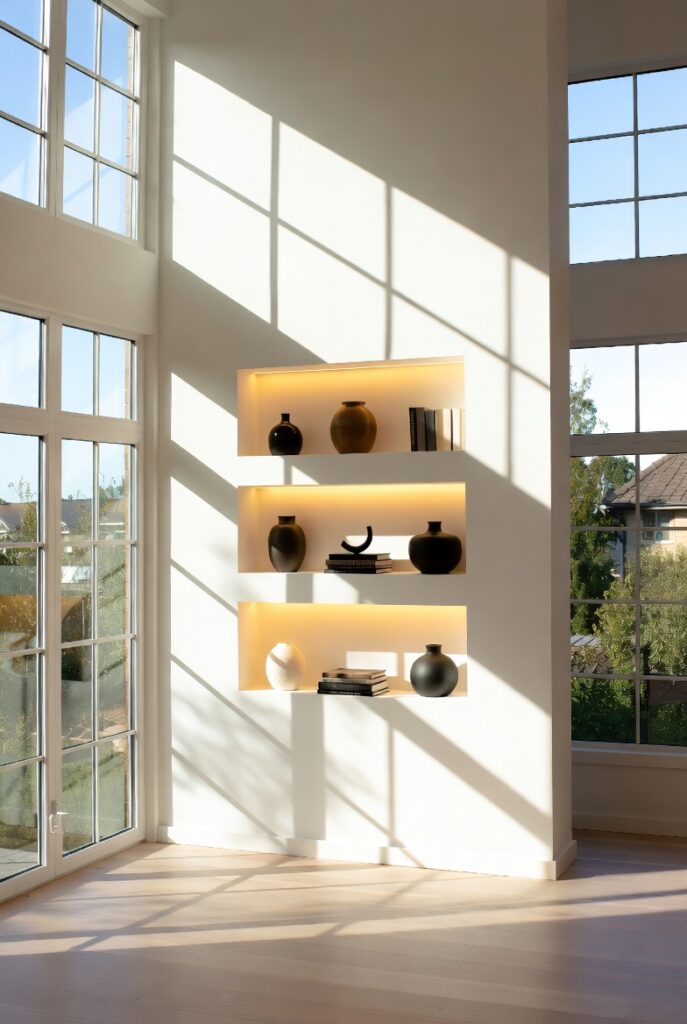
A small light may make displayed objects easier to see, but it should not create glare or conceal maintenance access. Choose equipment and installation appropriate to the position. Keep the display useful with the light switched off.
Try this: View the niche from the usual seated position.
6. Create an Entry Landing Place
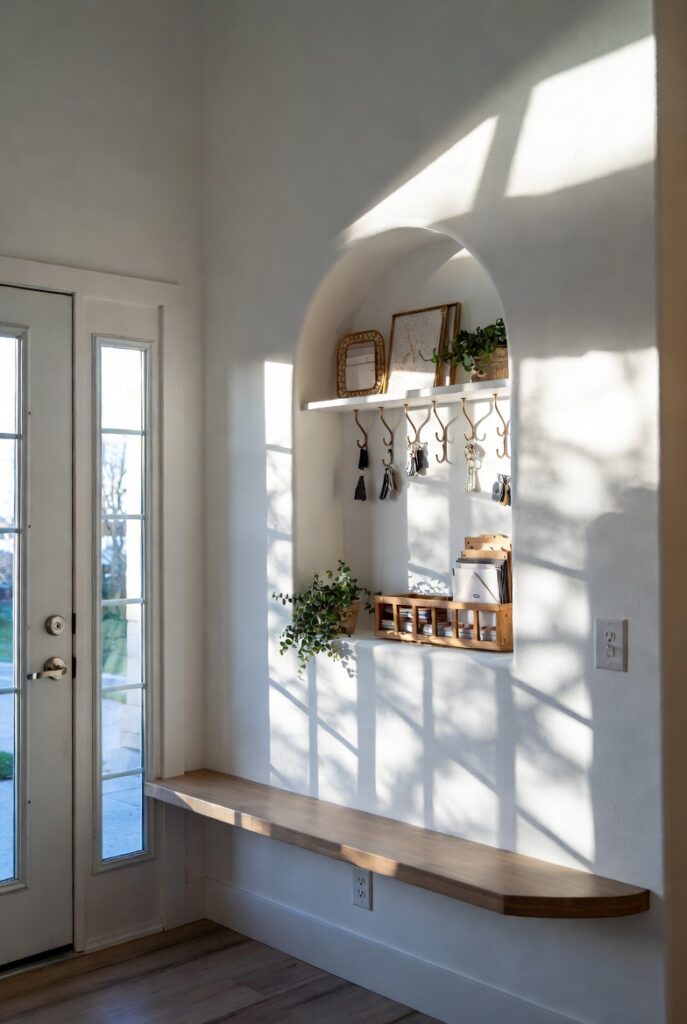
A shallow recess can hold a small tray for keys and incoming mail. Keep the contents limited so important items remain visible. Give paperwork an onward destination instead of making the niche a permanent pile.
Try this: Clear the tray when the mail is processed.
7. Choose a Plant for the Wall Niche Light
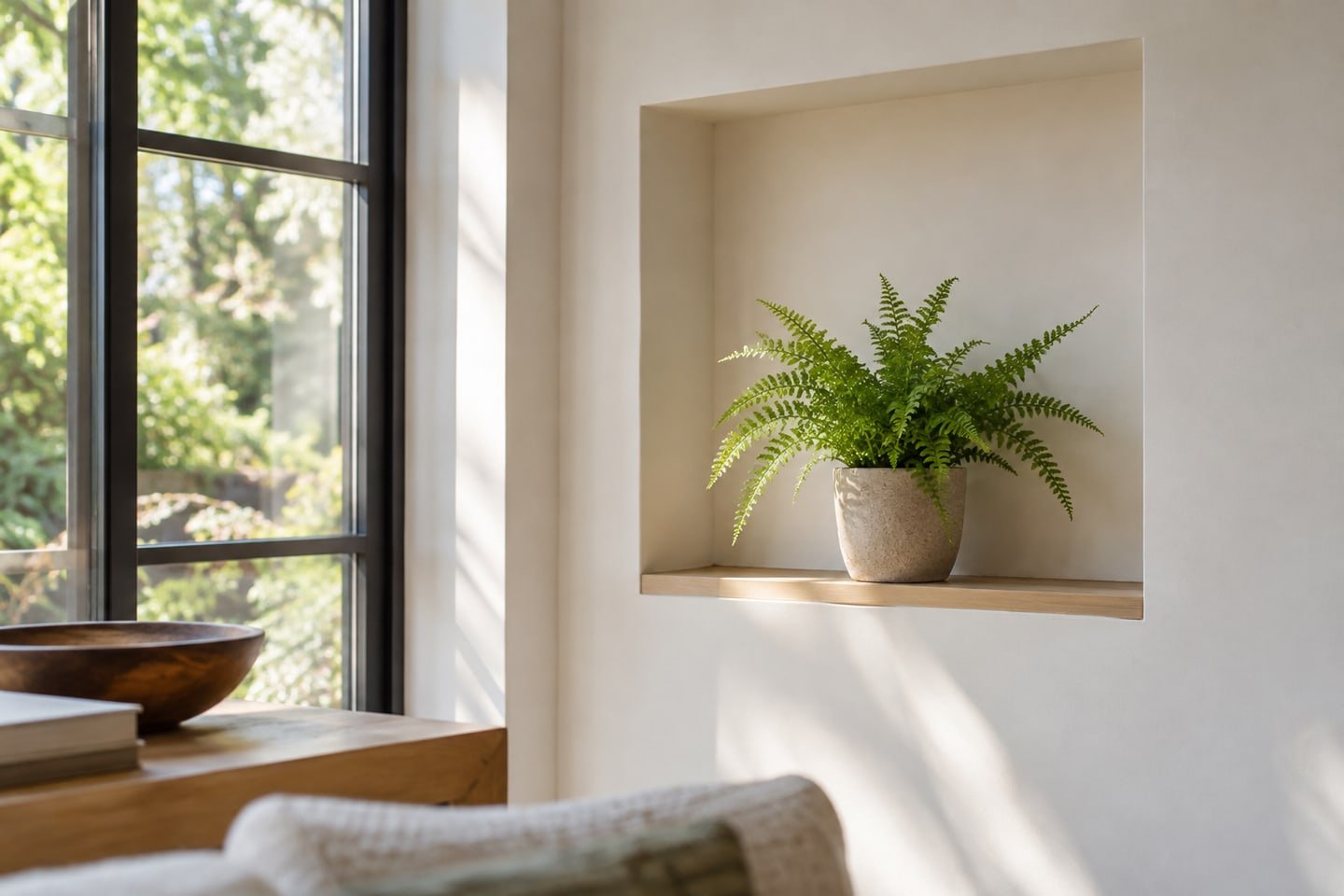
A recess can be darker than the window beside it. Check available light, mature spread and the space needed to water the plant. Protect the shelf beneath the pot and avoid overfilling the opening with trailing foliage.
Try this: Start with one manageable plant.
8. Keep Fireplace Niches Separate From Operating Needs
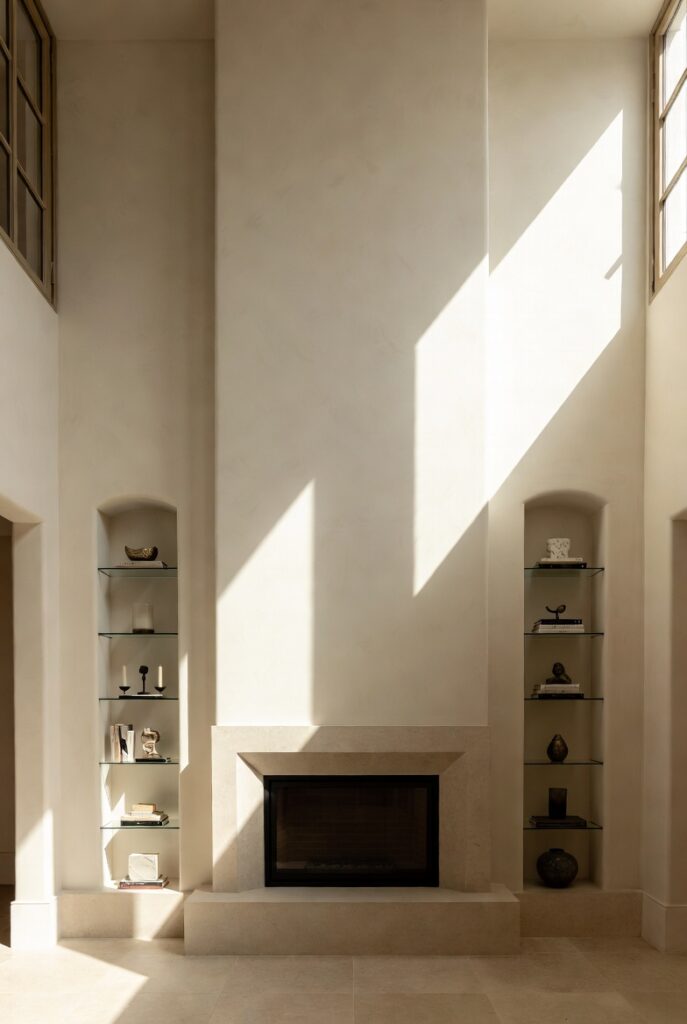
Adjacent display openings can balance a fireplace wall, but they must respect the appliance and installation requirements. Do not treat a photograph as evidence of safe material clearances. Keep stored belongings out of the appliance’s required space.
Try this: Plan the fireplace and surrounding cabinetry together.
9. Make a Reading Recess Comfortable to Enter
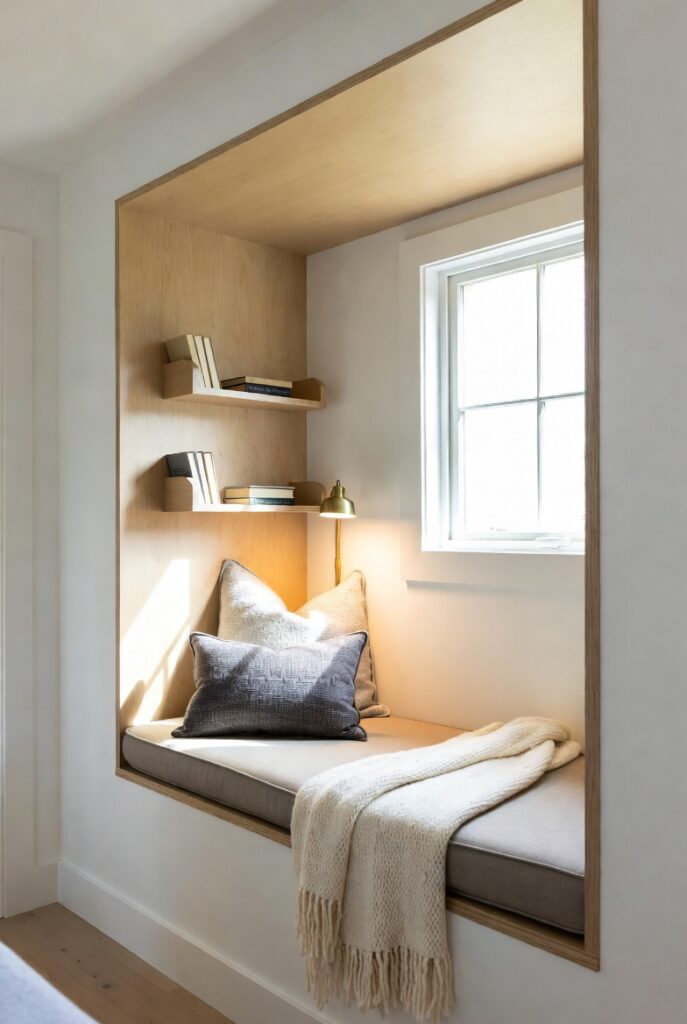
Check seat depth, headroom and the route into the opening. A useful light and a nearby surface may matter more than extra shelves. Try a movable seat before committing to a fitted bench.
Try this: Leave room to sit and stand without ducking awkwardly.
10. Put Kitchen Niche Contents Near Their Task
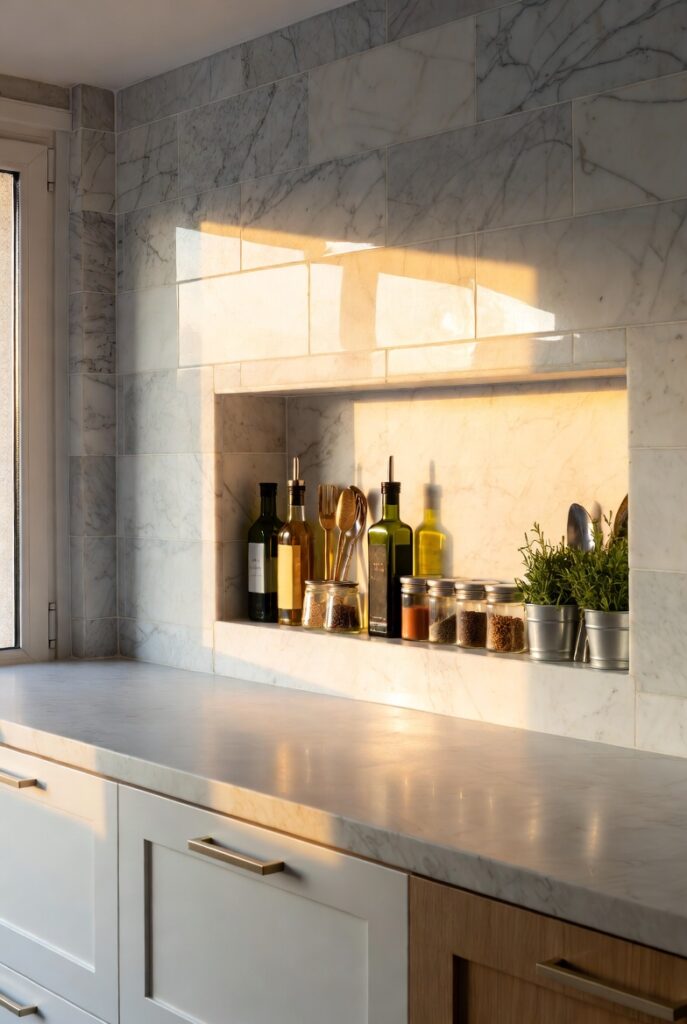
A shallow kitchen recess can hold a small group of useful items. Keep them suitable for the local heat, moisture and cleaning routine. Avoid placing frequently handled objects where reaching crosses a hot appliance.
Try this: Choose the contents before deciding the shelf spacing.
11. Give a Drinks Station a Clear Working Surface
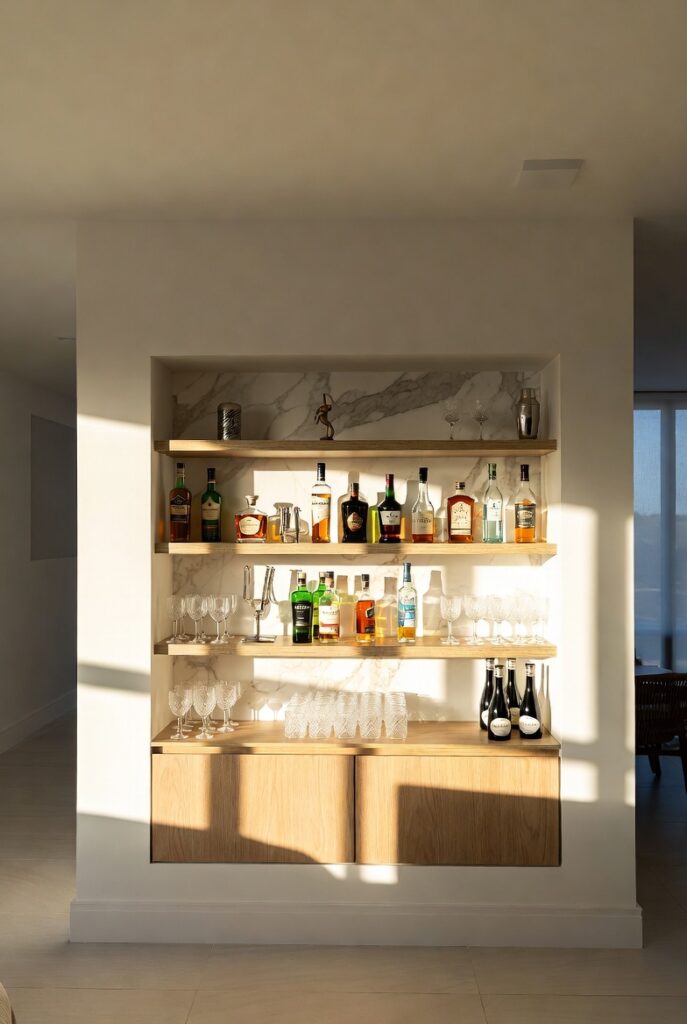
Store the glasses and supplies needed for the way the area is used. Leave space to set down a tray and to clean spills. Keep equipment within its operating requirements rather than treating a recess as a universal appliance cupboard.
Try this: Separate display bottles from the surface used for serving.
12. Keep a Headboard Recess Practical
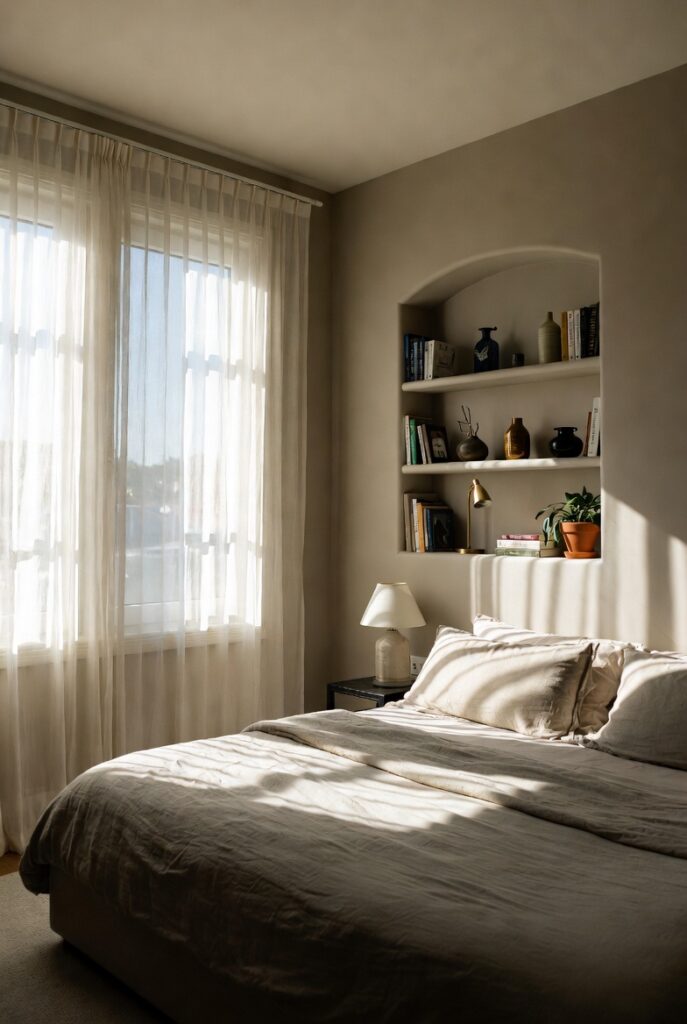
A bedroom niche can hold a book or a small object when it is easy to reach. Avoid crowding the area above a sleeping position with heavy or unstable items. Plan lighting and controls as part of the installation.
Try this: Check reach from the actual pillows.
13. Use Tile to Define an Existing Opening
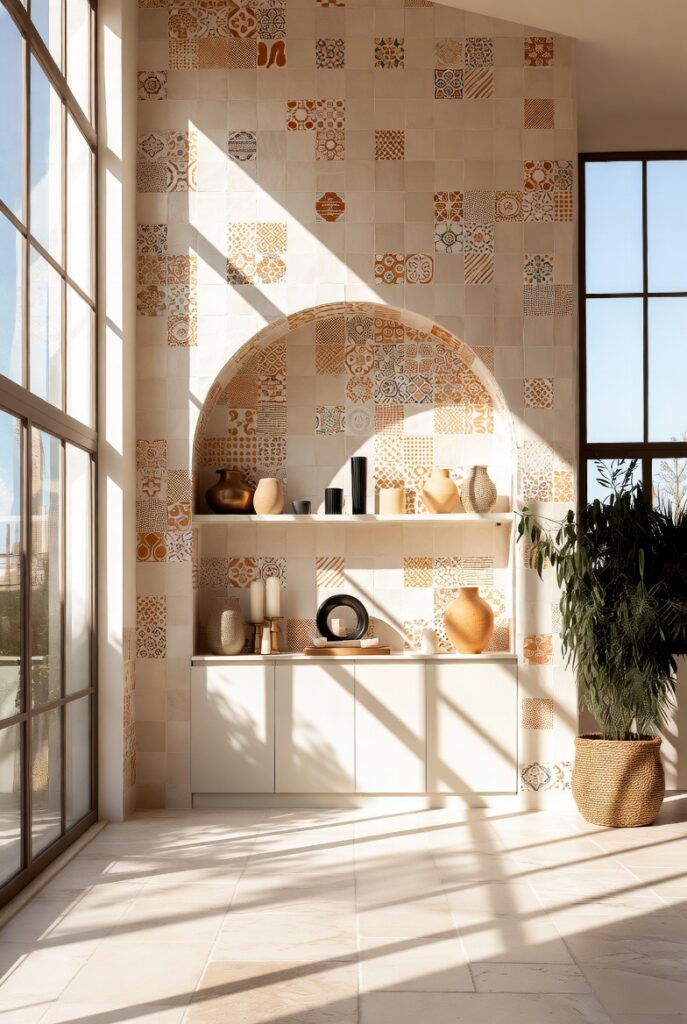
A different tile size or color can make a niche readable against a plain wall. Plan corners and cuts before installation. Choose the material and assembly for its exposure, especially where water is involved.
Try this: Compare the niche tile with the surrounding grout and finish.
14. Divide a Tall Wall Niche Into Reachable Areas
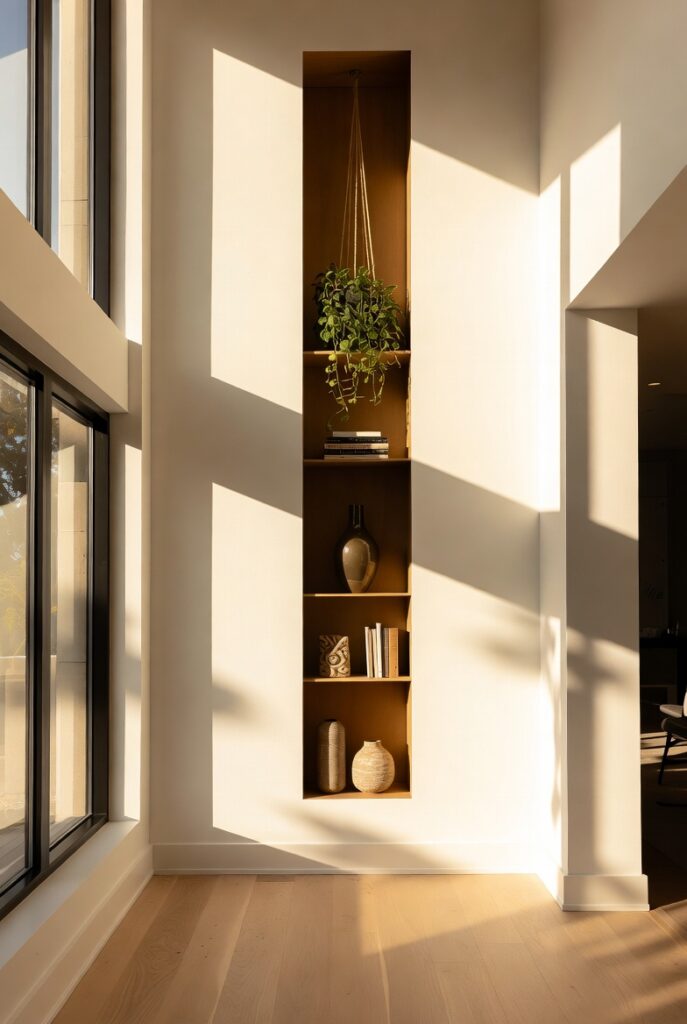
A vertical opening can hold several small displays without each shelf serving the same purpose. Use the lower portion for regularly handled items and keep high contents appropriate to retrieval. Confirm shelf support for the loads.
Try this: Do not rely on a precarious stool to use daily storage.
15. Keep Hallway Displays Shallow
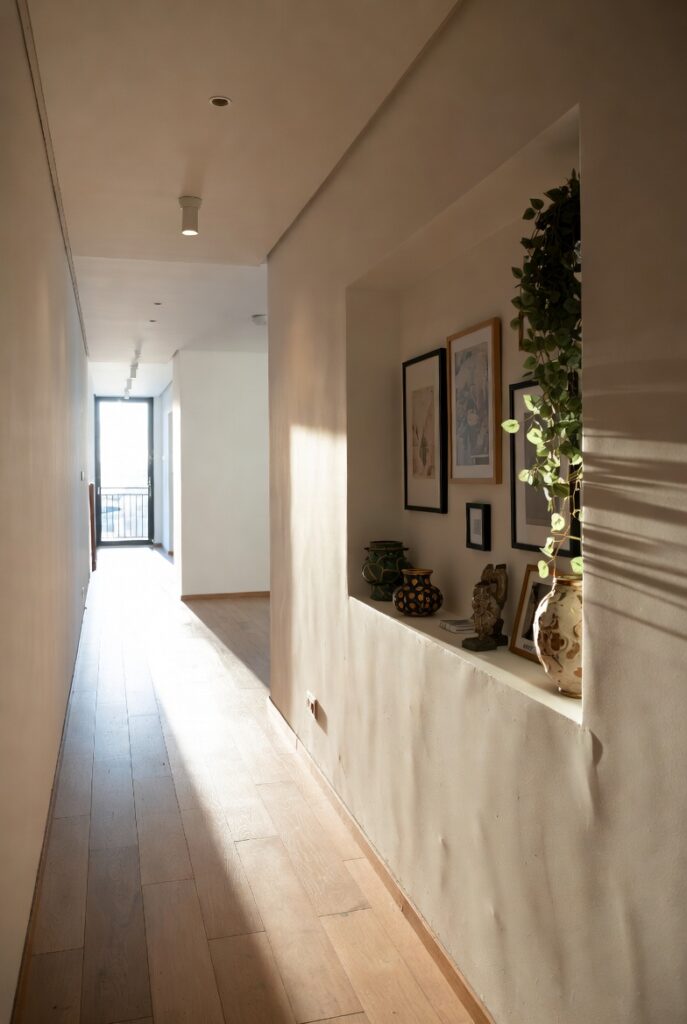
Choose objects that sit inside the recess rather than projecting into the walking route. A small display can give character to a passage without narrowing it. Consider how bags, coats or mobility equipment move past.
Try this: Check the view and clearance from both directions.
16. Give a Grid of Niches a Common Thread
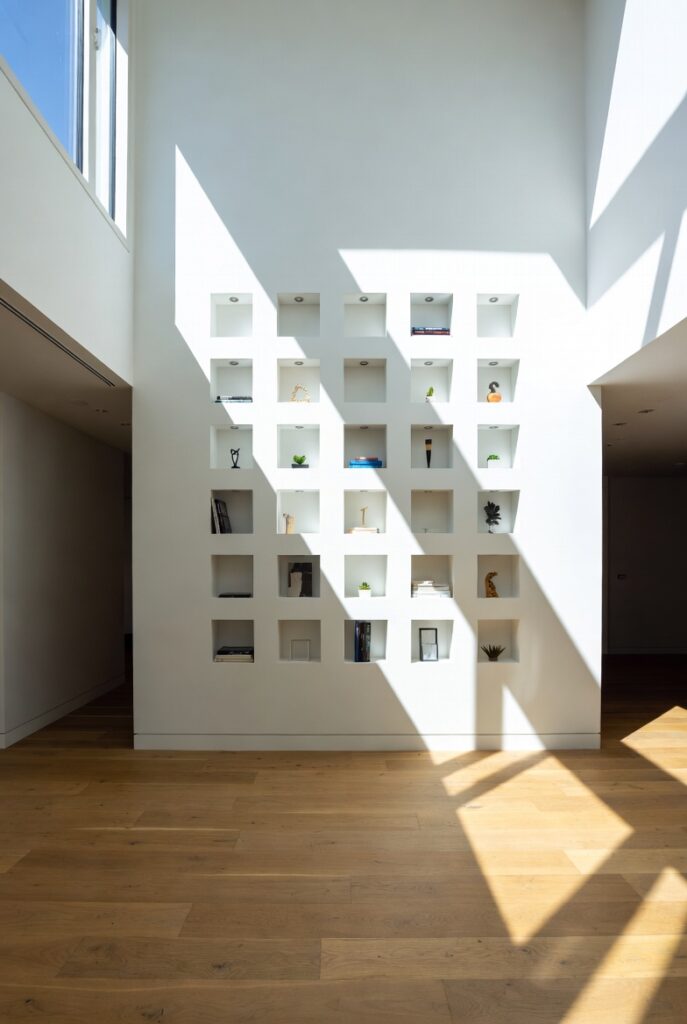
Repeat a material, color or type of object across some openings while leaving others quieter. Too many unrelated little displays can make a plain wall busy. Use the grid for a few meaningful groups.
Try this: Style one opening at a time and step back.
17. Connect Textured Finishes With a Separate Display
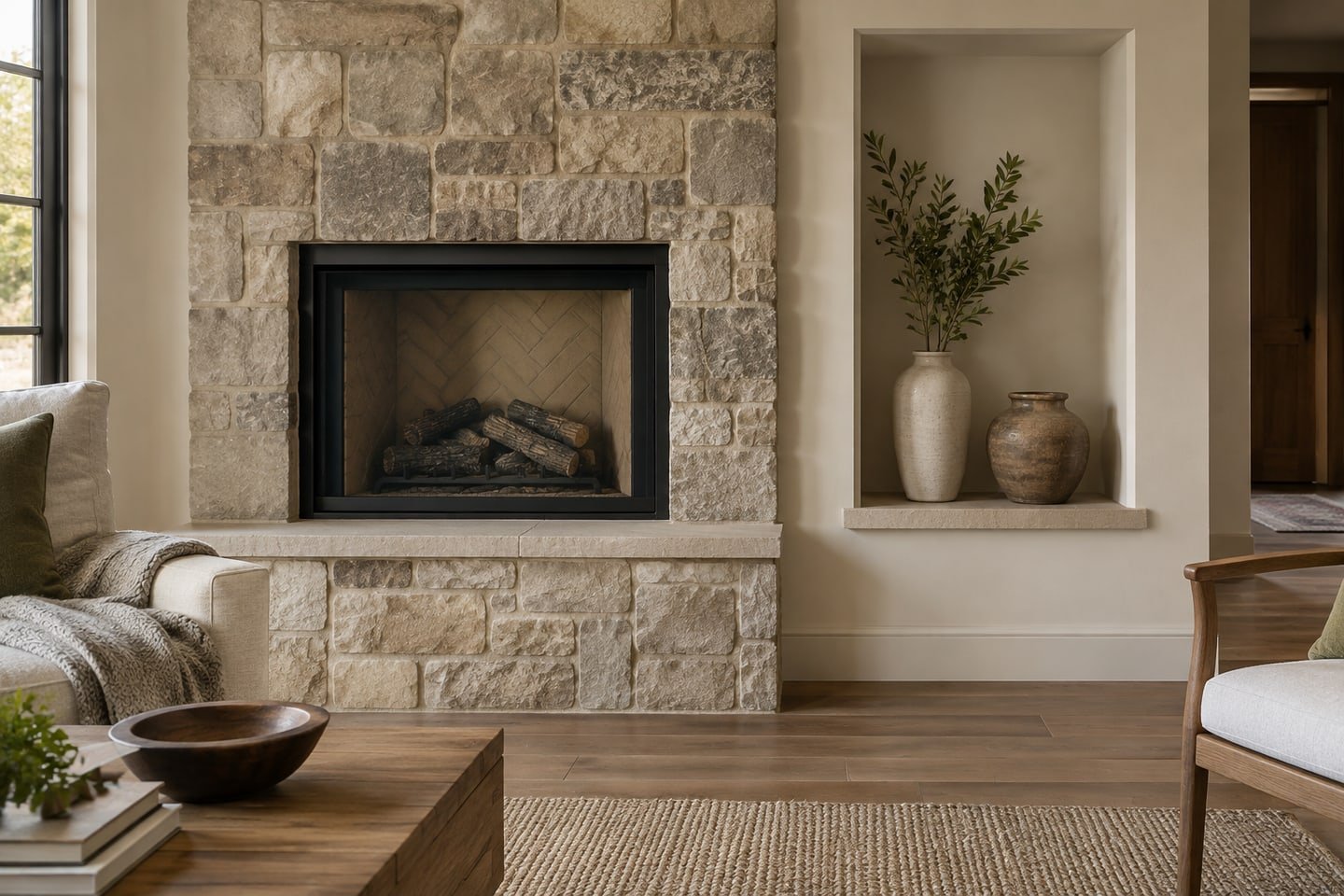
A stone or textured fireplace wall can sit beside a simpler display niche. Let the material contrast provide interest instead of filling the opening with many objects. Keep the display independent of the fireplace’s operating requirements.
Try this: Compare two substantial objects before adding a collection.
18. Check a Desk Niche as a Working Position
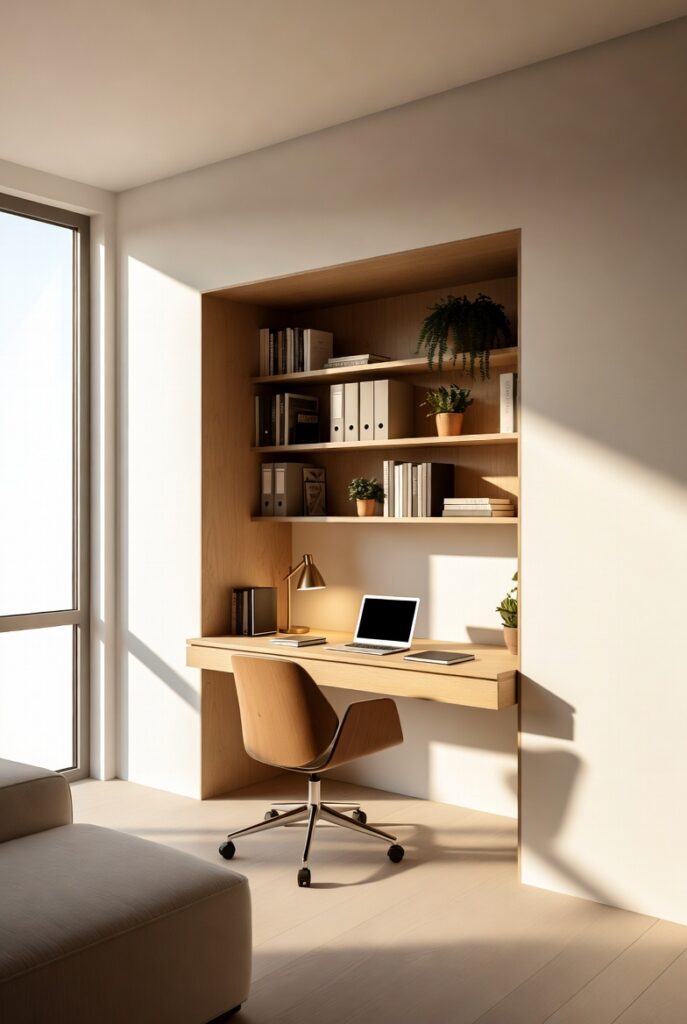
Measure usable depth, leg space, light and chair movement. A recess that fits a desktop may still be awkward for a person and equipment. Keep cables and storage from occupying the useful leg area.
Try this: Test the workstation with the equipment in place.
19. Use a Curved Corner for a Simple Vignette
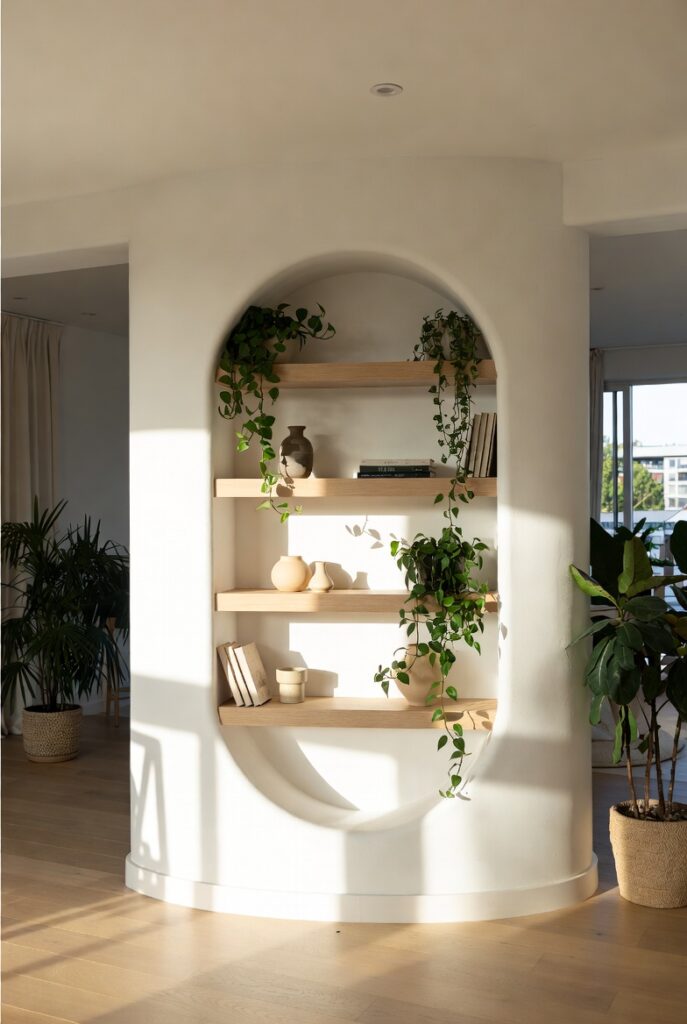
A curved recess can suit one sculptural object or a small plant where conditions allow. Check how the corner is seen from the adjoining rooms. Leave the outline visible rather than disguising it behind too many items.
Try this: Keep contents stable and fully supported by the shelf.
20. Choose Between Styling and Building a Wall Niche
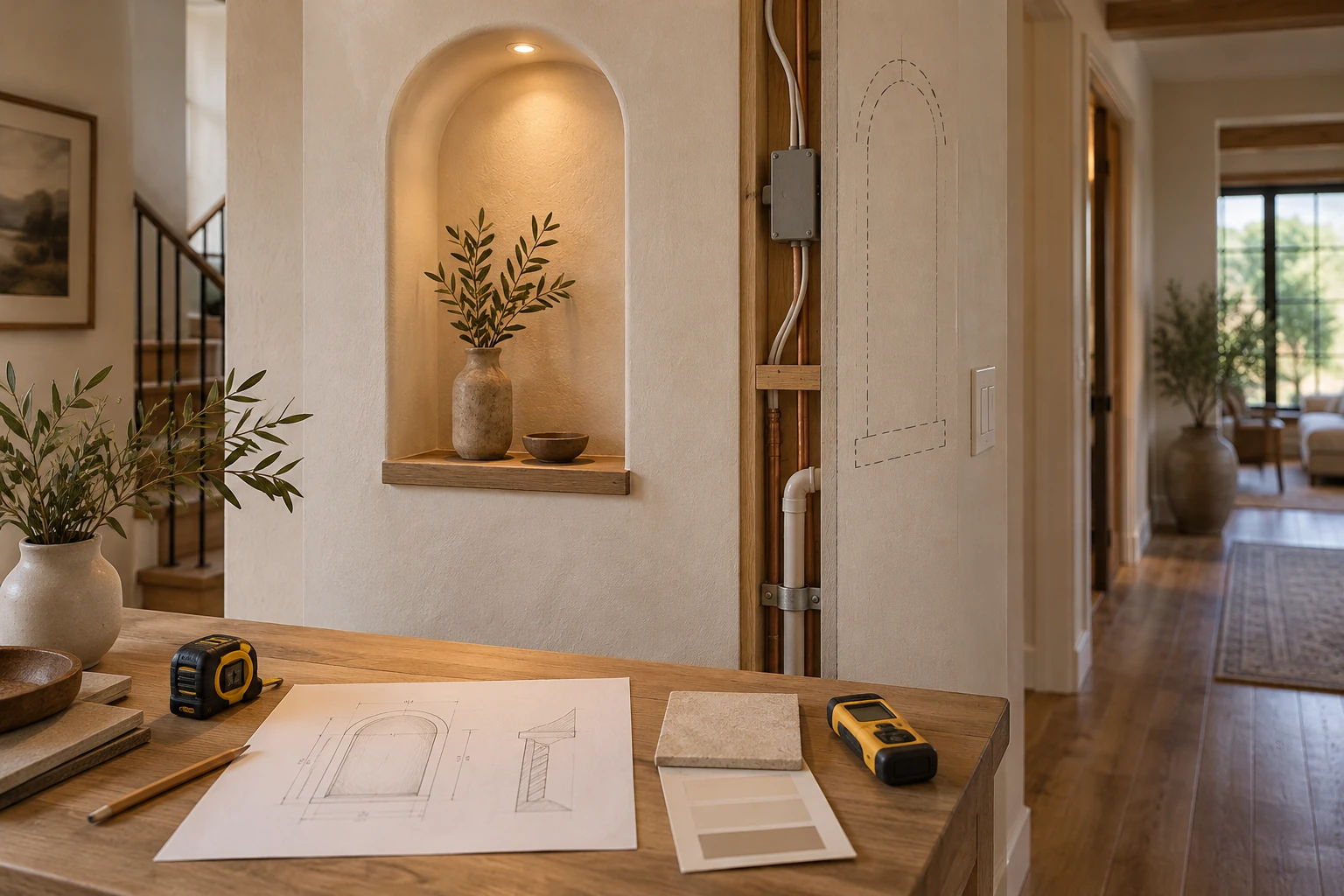
If an existing niche suits the room, start by changing its contents or finish. If a new opening is proposed, assess the wall, services and assembly first. A surface-mounted shelf may sometimes achieve the practical goal with less intervention.
Try this: Decide the storage or display purpose before drawing the recess.
Work backward from the finished niche opening
Record the finished inside width, height and depth, the tallest and deepest object, the shelf thickness, the access needed to lift an item, and any frame or tile trim that reduces the opening. Keep “rough opening” and “finished clear opening” in separate columns. A catalog’s outside dimension is not necessarily the storage space available after installation.
Illustrative fit calculation: suppose an existing dry niche has 24 in of finished clear width. Two baskets that are each 10 in wide occupy 20 in, leaving 4 in total. That could be divided into a 2 in center gap and 1 in at each side; it is an arrangement to test, not a construction tolerance. If a shelf divides the niche, subtract its actual thickness before assigning the two clear heights.
For books, test one large hardback rather than judging the recess with a small ornament. For a bathroom, measure bottles with pumps fully raised and check whether the hand movement fits. For a media niche, retain the equipment maker’s ventilation and service-access requirements; a neat visible fit can still leave nowhere for cables or heat to go.
If cutting the wall would introduce too many constraints, use the surface-mounted storage worksheet to compare a shelf or cabinet. The useful result is a reachable home for the objects, whether or not it is recessed.
Choose Your First Change
Choose a niche’s job before its decorative theme. A useful opening holds the right contents, remains easy to clean and works with the wall’s actual construction. Small displays often benefit from fewer, better-positioned objects.
Related Guides
- 20 Small Bathroom Wall Ideas That Work in Tight Spaces
- 20 Wall Storage Ideas for Useful Everyday Organization
- 13 Stunning Mudroom Organization Ideas for a Beautiful Entryway
Optional digital guide for this topic
If you prefer a structured workbook, explore this related paid guide.



One Comment