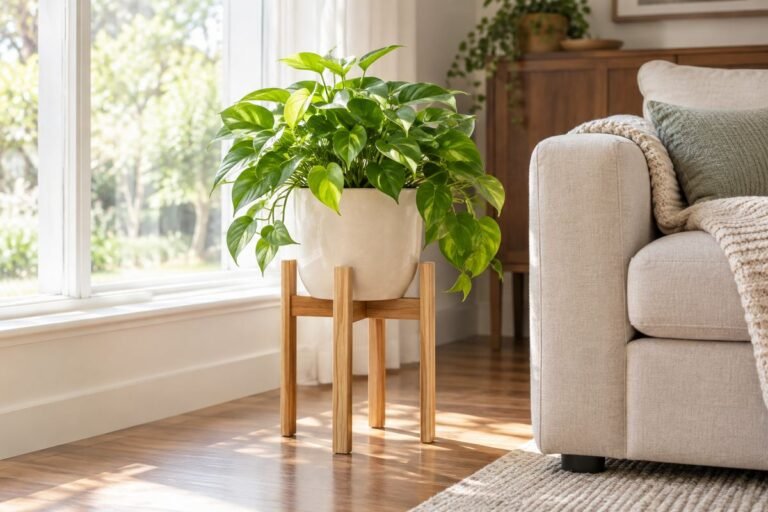
An indoor plant pot cover changes the appearance of the container without requiring the plant to be repotted for decoration alone. The useful arrangement is a decorative outer cachepot around a separate growing pot with drainage.
Choose the plant and its care position first, then fit the outer cover around the actual nursery pot. A beautiful sleeve should still allow you to lift the plant out, inspect the inside and manage excess water without damaging the furniture beneath it.
The images are original AI-generated decor concepts, not installation diagrams or photographs of completed client projects.
Browse These 22 Indoor Plant Pot Cover
Jump to an idea
- Choose matte cream ceramic for a quiet base
- Use a glossy glaze as a small reflective accent
- Bring warmth with an earthy outer pot
- Add a ribbed surface to plain furniture
- Use a low rounded cover for a broad plant outline
- Give a narrow plant a simple cylindrical sleeve
- Use a woven basket as a removable decorative sleeve
- Choose a tightly woven geometric texture
- Try a metal outer cover with a separate inner arrangement
- Use a dark cover to define pale foliage displays
- Connect muted green pottery to the room palette
- Use a small blue cover as the color accent
- Choose a restrained two-tone surface
- Let a hand-painted motif be the single pattern
- Pair two covers through a shared finish
- Group three modest covers with one connecting detail
- Use an oval outer container for separate small pots
- Leave a useful grip above the outer rim
- Use a removable inner catcher in a delicate sleeve
- Protect the surface beneath a substantial cover
- Choose a manageable cover for the lifting route
- Finish with one easy lift-out watering routine
Fit the Indoor Plant Pot Cover Around the Draining Inner Pot
Iowa State University Extension describes a double-pot arrangement as a decorative outer sleeve around a smaller container with a drainage hole. Its guidance also explains that gravel does not replace drainage in a growing container. Keep the plant in an appropriate draining inner pot, water according to its needs, and remove excess water rather than leaving the roots standing in it. Mississippi State Extension likewise warns against allowing the container bottom to remain in collected water.
| Part | Purpose | Fit question |
|---|---|---|
| Growing pot | Holds the plant and suitable growing medium | Does it drain and suit the plant? |
| Outer cover | Supplies the decorative appearance | Can the whole inner pot be lifted out? |
| Water protection | Manages incidental moisture at the display | Can every inner surface be inspected and dried? |
| Display position | Provides the plant’s actual growing conditions | Is light and access suitable before styling? |
A Cachepot Fit Example
A nursery pot with a 7-inch-wide upper lip inside an outer cover with an 8-inch usable internal diameter leaves 1 inch of total width, or about half an inch on each side if centered. That does not guarantee a useful fit: the cover may taper, the nursery pot may bulge lower down, and your fingers still need a way to lift it. Measure the narrowest interior at the depth the inner pot will occupy, not the outside diameter on a product listing.
Copy This Six-Field Pot Cover Record
Write the nursery pot’s widest diameter and full height; the cover’s narrowest usable interior and depth; the lift-out grip; the water-catching arrangement; the outer material’s care; and the plant’s assigned position. Try lifting the empty inner pot before adding the weight of a plant. After watering elsewhere and draining as appropriate, inspect the outer container and return the plant only when the arrangement is ready. This is a decor fit record, not a watering calendar for every species.
1. Choose matte cream ceramic for a quiet base
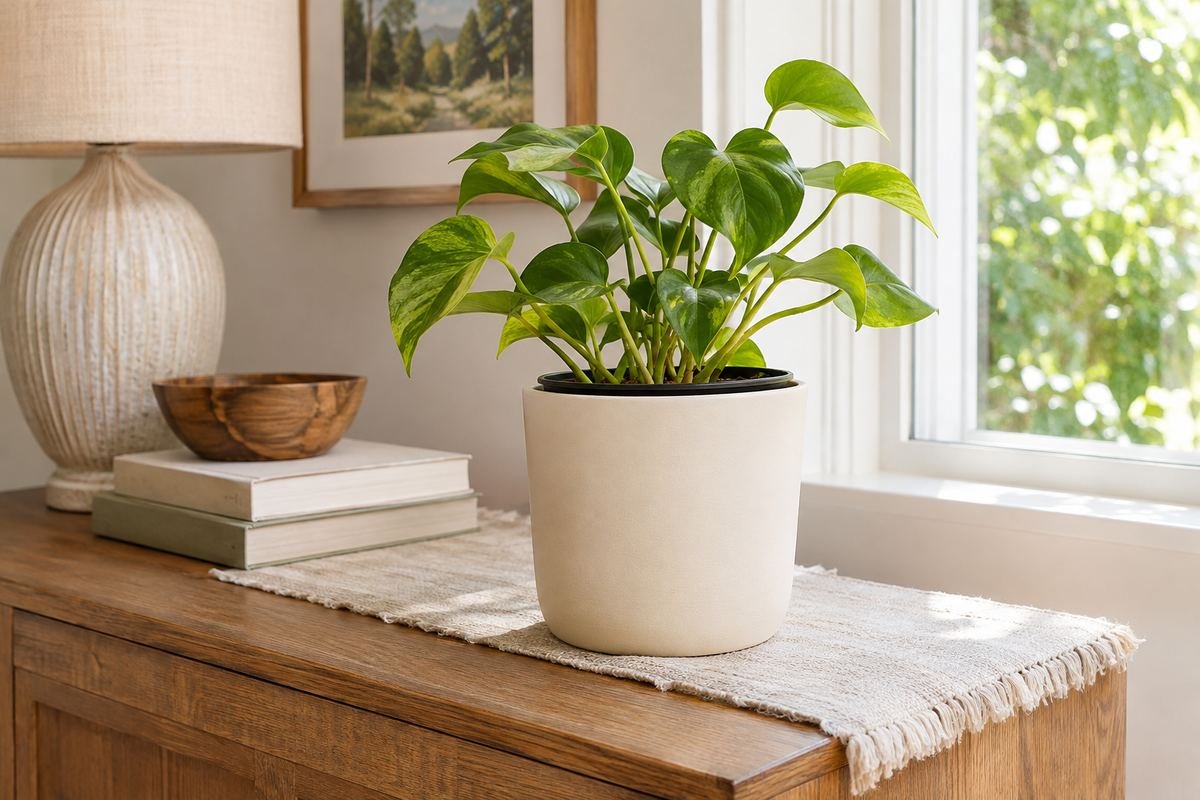
A matte cream cachepot can sit quietly beside warm walls and natural wood. Its restrained surface lets the plant’s outline remain the main feature of the display.
Compare the actual ceramic tone with nearby paint and textiles. Keep the separate nursery pot removable and inspect the inside for collected water. A soft-looking exterior does not establish that the container or its base is suitable against every furniture finish.
Practical tip: Check the underside as carefully as the visible glaze.
2. Use a glossy glaze as a small reflective accent
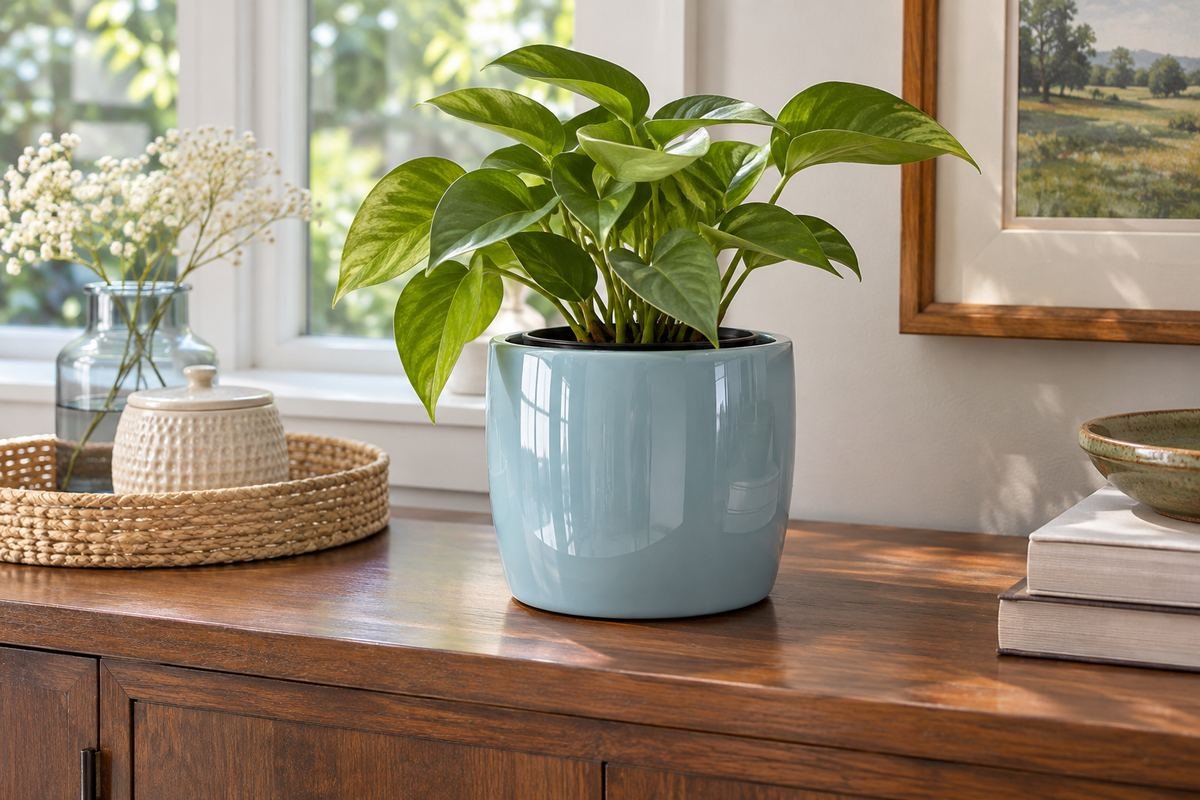
A glazed cover can introduce a small area of reflection without adding another mirror or metal accessory. A simple rounded form works well beside mostly matte room finishes.
Choose the sheen from the whole room view rather than a close product photograph. Check the interior and any joints instead of assuming a glossy surface guarantees watertight construction. The growing pot should still lift out without scraping or becoming wedged.
Practical tip: Try the cover beside the actual lamp or window reflection.
3. Bring warmth with an earthy outer pot
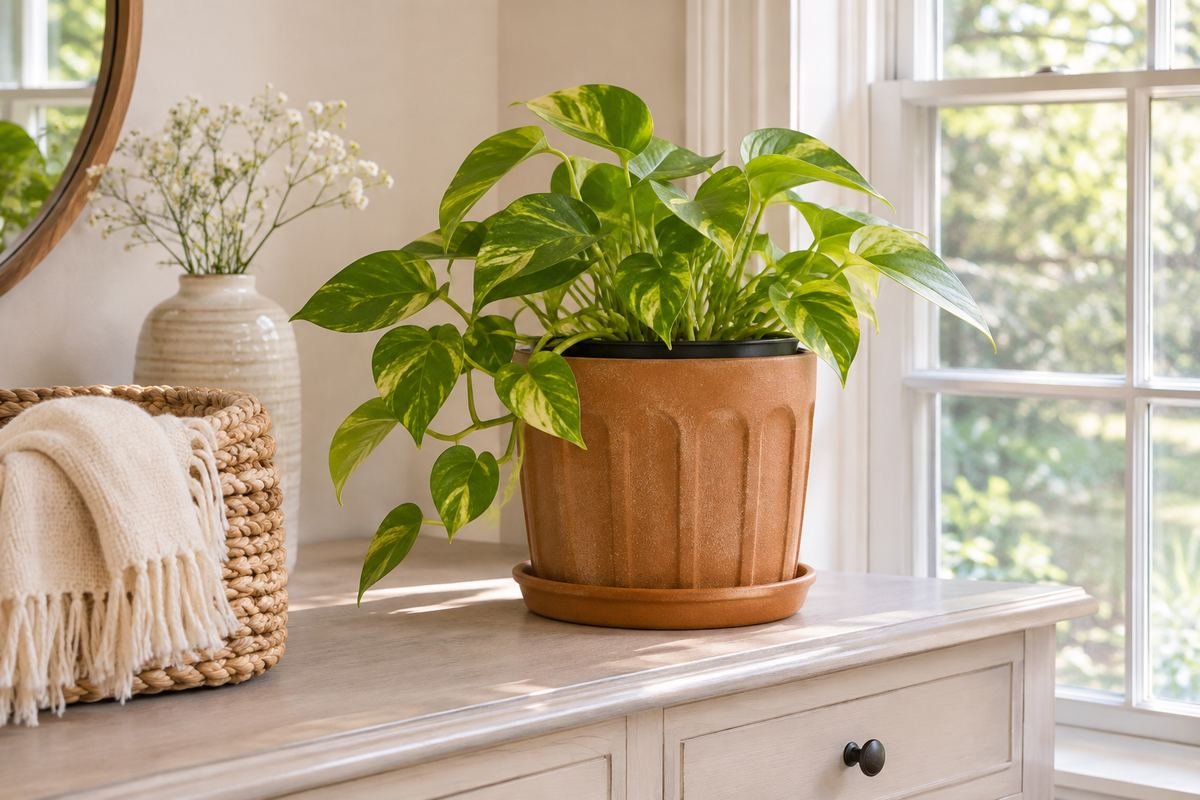
An earthy clay-colored sleeve can connect a plant display to terracotta, rust or warm wood elsewhere in the room. It can be used decoratively without changing the growing pot inside.
Confirm whether the outer material is porous and what protection the surface below needs. Do not place a damp porous base directly on delicate furniture by assumption. Keep the plant’s own pot and care routine distinct from the color you want to introduce.
Practical tip: Choose surface protection for the actual material, not only the color.
4. Add a ribbed surface to plain furniture

A vertically ribbed cachepot can provide texture against a plain cabinet or side table. One clearly textured cover can be enough when the plant already has a detailed leaf pattern.
Look at the ribs from across the room and compare them with nearby fluted furniture. Repeating the same strong lines everywhere may reduce the distinction. Measure the usable inside independently because a thick textured outer wall can conceal a much smaller opening.
Practical tip: Use internal dimensions instead of estimating from the outer ribs.
5. Use a low rounded cover for a broad plant outline

A low rounded cover can balance a wider plant silhouette without adding another tall vertical shape. The outer curve gives the display a softer base.
Check the interior depth and taper against the actual nursery pot. A broad exterior does not mean a broad flat interior. Keep enough room to lift the growing pot without pulling on the stems or forcing a hand through the leaves.
Practical tip: Try the empty inner pot in the cover before placing the plant.
6. Give a narrow plant a simple cylindrical sleeve
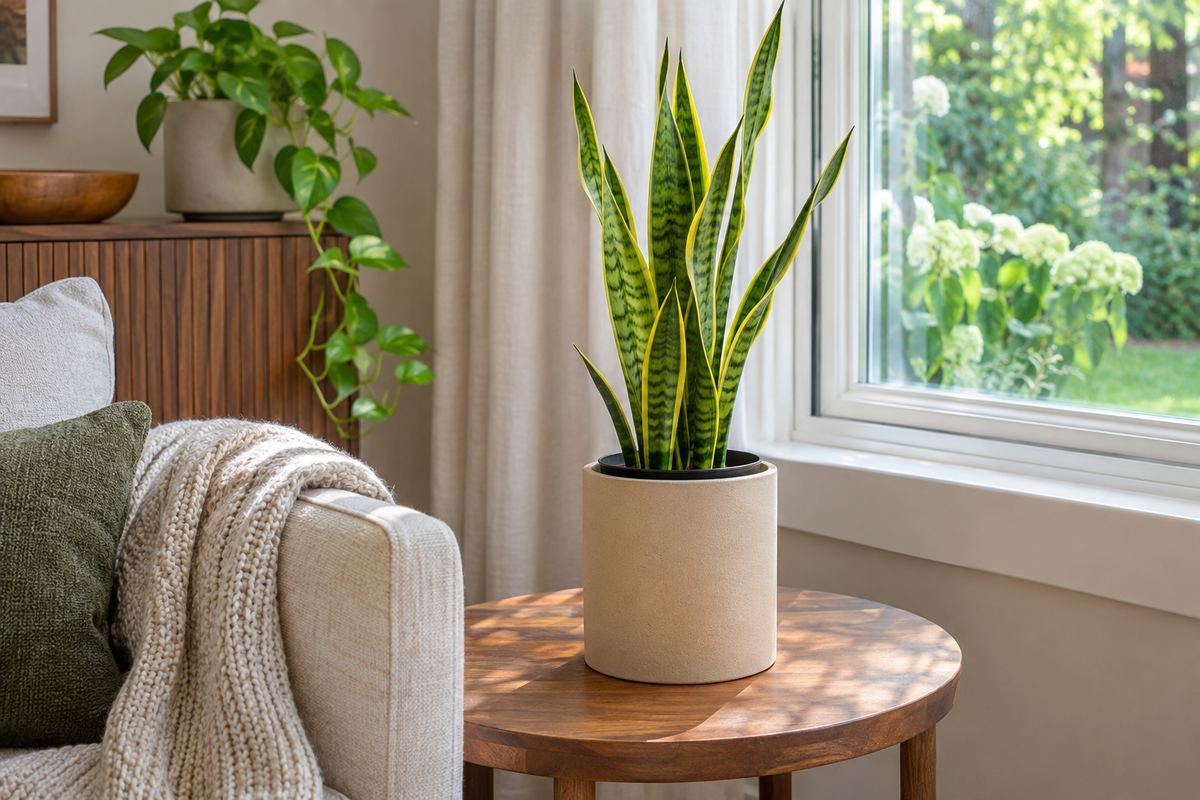
A straight cylindrical cover can create a clear, calm outline beneath a more upright plant. Its simple geometry can work well beside a patterned rug or detailed wall finish.
Confirm the interior is actually straight rather than heavily tapered beneath the rim. Leave a practical grip for removal. Choose the plant’s location for its needs first, then use the cylinder to relate the container to the room’s proportions.
Practical tip: Measure at the depth where the nursery pot base will sit.
7. Use a woven basket as a removable decorative sleeve
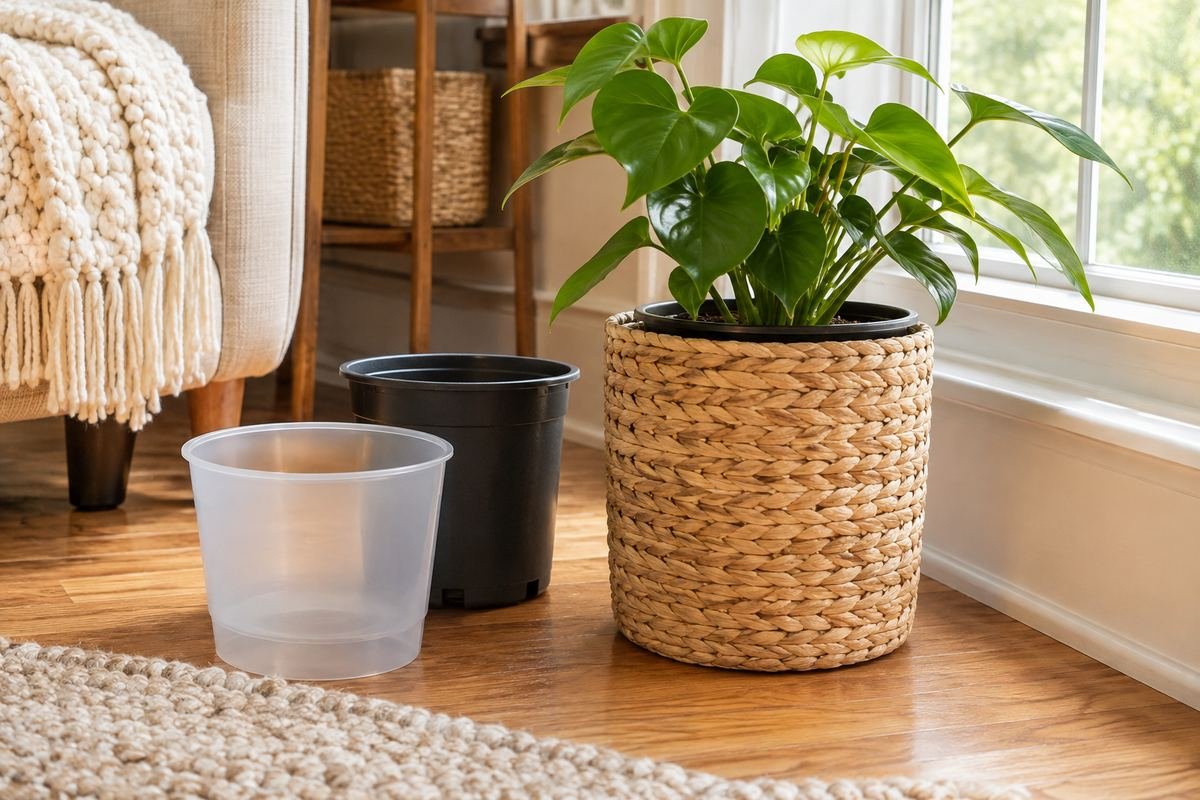
A woven cover can bring a natural texture to a room with mostly smooth surfaces. The basket supplies the appearance while a suitable removable arrangement inside manages the separate growing pot and incidental water.
Do not assume the weave or a decorative lining is watertight. Inspect every layer and lift the plant out for watering when practical. Keep the basket away from repeated damp contact and follow its material care instructions.
Practical tip: Check inside the sleeve instead of relying on its clean exterior.
8. Choose a tightly woven geometric texture
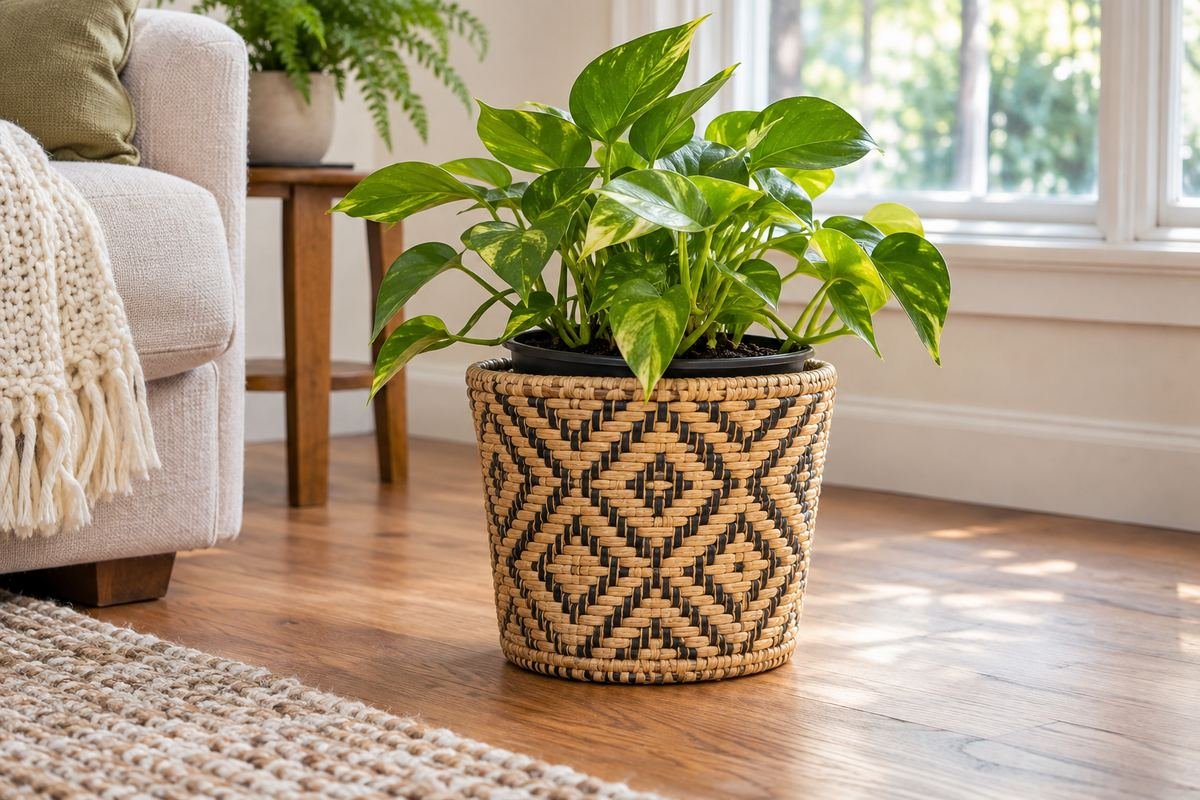
A more structured weave can give a basket sleeve a distinct shape beside plain upholstery. A single geometric texture can work without adding several other patterned accessories.
Check that the woven edge does not make the nursery pot difficult to grip. Keep the internal water-catching arrangement removable for inspection. The visual pattern should remain a decoration choice rather than hiding a poorly fitting or persistently wet inner setup.
Practical tip: Keep the top edge clear enough to lift the inner pot.
9. Try a metal outer cover with a separate inner arrangement

A metal sleeve can connect a plant display to existing dark or warm metal details. Its surface gives a different contrast from pottery or woven material.
Check the exact finish, seams and care instructions. Metal appearance alone does not guarantee corrosion resistance or watertight joints. Keep a separate suitable growing pot and inspect the inside so collected moisture does not remain hidden behind a polished exterior.
Practical tip: Choose the finish for the room and verify the construction separately.
10. Use a dark cover to define pale foliage displays

A charcoal or deep brown cover can give a plant a clear base against a pale wall. It can relate to a small dark picture frame or existing furniture legs.
Compare the complete silhouette from the doorway. Keep the surrounding accessories limited so the dark container does not become one of many unrelated small accents. Confirm its actual internal fit before choosing a larger exterior solely for stronger visual weight.
Practical tip: Repeat one existing dark tone instead of adding another color family.
11. Connect muted green pottery to the room palette

A sage or olive cover can create a gentle relationship between the plant and a room accent. A plain finish keeps that connection readable without making every object green.
Compare the glaze with the actual leaf color and nearby textiles. Greens that almost match may look different under evening light. Keep the separate inner pot accessible, since a coordinated color scheme does not change the basic watering and inspection routine.
Practical tip: Choose one muted green accent from an existing room detail.
12. Use a small blue cover as the color accent

A blue cachepot can add a controlled color note to a neutral room. The container may be enough to connect the plant to an artwork or a subtle patterned textile.
Choose the size from the actual nursery pot before deciding how much color the display should carry. A small blue cover can still be visually strong. Keep neighboring pots quieter if the purpose is one deliberate accent rather than a collection of competing colors.
Practical tip: Let the container supply the accent without adding another ornament.
13. Choose a restrained two-tone surface

A two-tone pot cover can connect warm and cool details within one small object. A clear lower band or single color division usually reads more deliberately than several unrelated patches.
Check the real finish near the room materials rather than selecting from a tiny online image. Keep the form straightforward so the color division has a role. Internal fit and lift-out access still need to be checked independently from the decorative surface.
Practical tip: Use one clear color division rather than multiple competing bands.
14. Let a hand-painted motif be the single pattern

A modest painted motif can make one pot cover feel like a considered decorative object. Plain neighboring accessories give the small pattern space to be seen.
Choose a repeat that remains clear at the scale of the container. Compare it with the largest nearby curtain or rug pattern before creating another busy area. Keep the interior suitable for the separate growing pot and use the maker’s actual cleaning guidance.
Practical tip: Start with one patterned cover before building a whole matching group.
15. Pair two covers through a shared finish
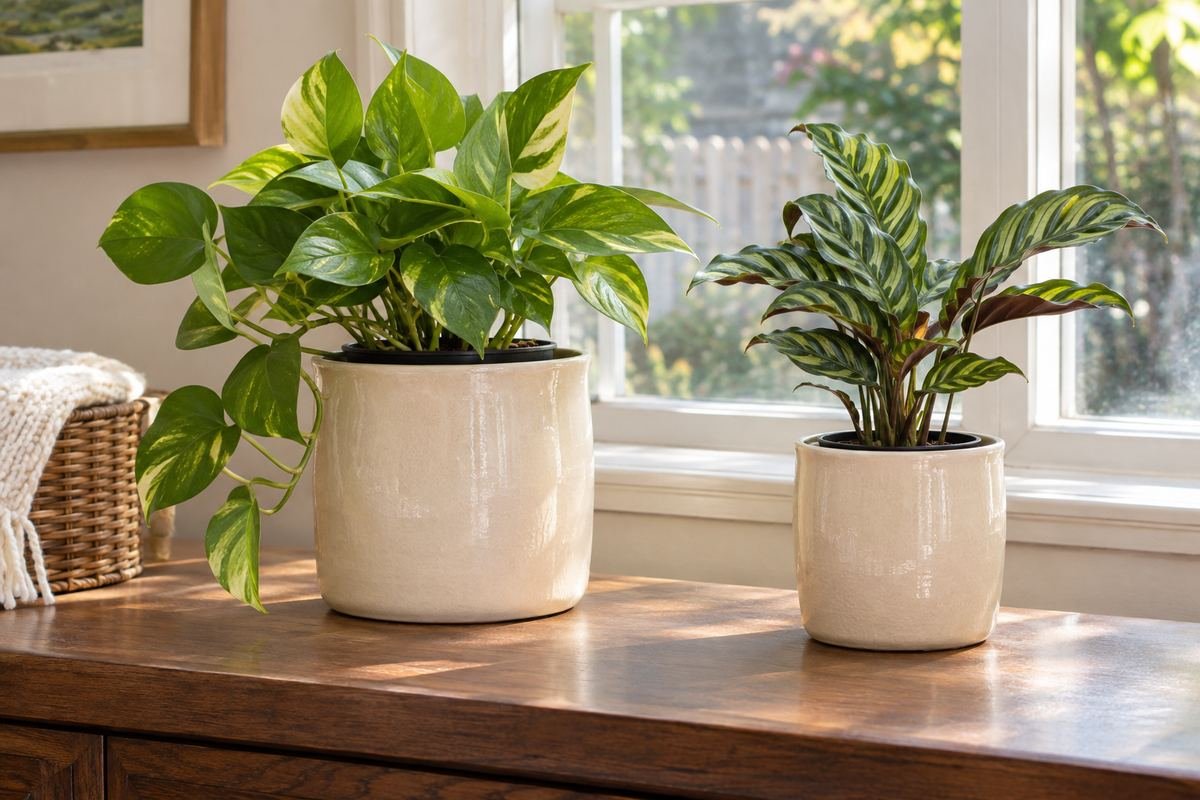
Two covers can look related through the same glaze even when their sizes differ. This can connect two suitable plant positions within one room without creating an identical pair at every window.
Fit each cover to its own nursery pot and keep each plant’s care needs independent. Similar-looking containers do not mean the plants need the same watering. Leave enough space between them to lift each pot without disturbing the other display.
Practical tip: Measure both inner pots before ordering a coordinated pair.
16. Group three modest covers with one connecting detail

A small group can feel coherent when the covers share one material, color or shape. A limited connection leaves room for different plant outlines and appropriate individual pot sizes.
Avoid increasing the collection simply to fill a surface. Keep the water-catching arrangement accessible for each plant and leave a clean removal route. A group is easier to care for when no plant has to be lifted over several fragile decorative objects.
Practical tip: Choose one shared detail and let the other features vary.
17. Use an oval outer container for separate small pots

A suitable oval outer container can visually connect two small plants while keeping their growing pots separate. It offers a broader horizontal composition than one round cachepot.
Check that both inner pots sit stably and can be removed independently. Manage collected water rather than treating the shared outer vessel as one combined growing container. The two plants may need different care even when the covers appear to form one display.
Practical tip: Keep the individual pot rims reachable from above.
18. Leave a useful grip above the outer rim

A slightly visible nursery rim can be a practical design decision. It gives you a place to hold the growing pot without pulling the plant by its stems.
Choose an outer depth that relates to the inner pot height and the way you will remove it. A perfectly hidden rim is less useful if the pot becomes trapped. You can make the visible edge intentional through a quiet dark or neutral relationship.
Practical tip: Test the lift with the pot empty before adding plant weight.
19. Use a removable inner catcher in a delicate sleeve

A decorative sleeve made from a moisture-sensitive material needs a separate practical water-catching arrangement. Removability matters because hidden moisture should be inspectable.
Choose compatible parts that sit stably without forcing the nursery pot against the sleeve. Empty collected water as appropriate and follow the material instructions. Do not rely on a thin decorative liner that cannot be removed or checked after watering.
Practical tip: Keep every layer easy to remove and dry.
20. Protect the surface beneath a substantial cover
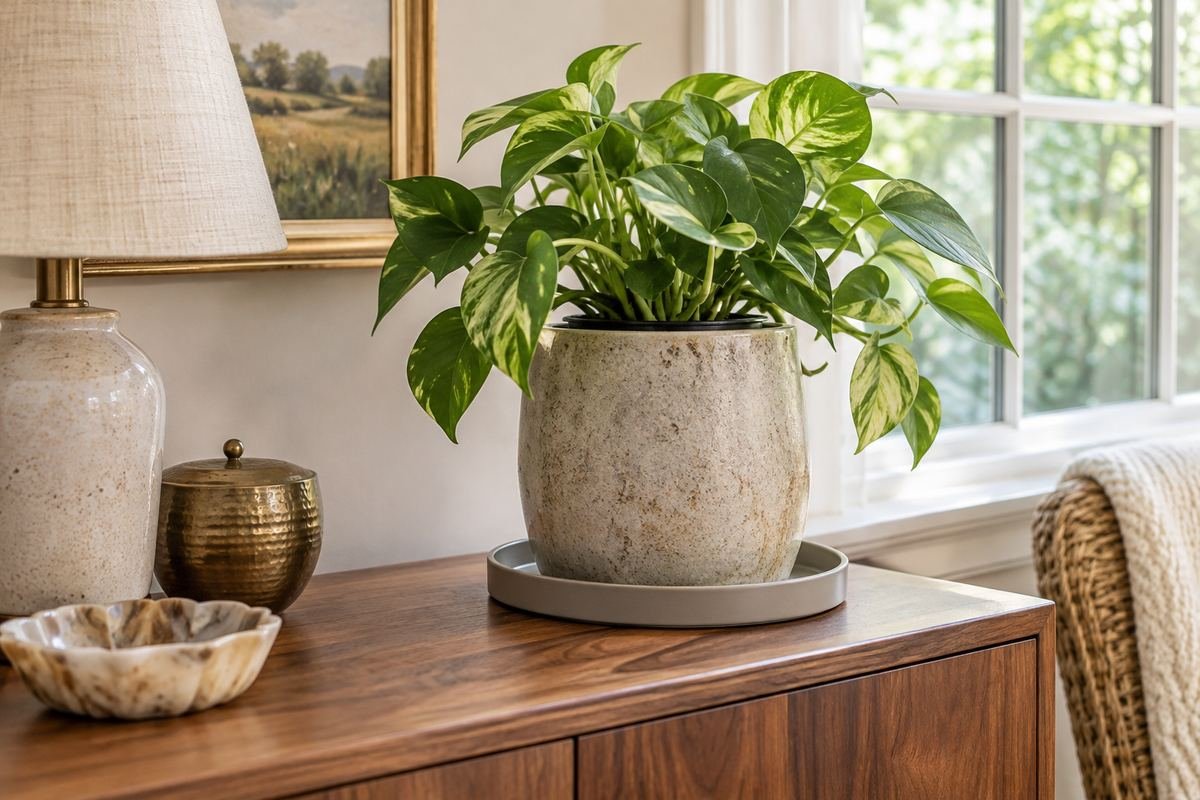
A heavy ceramic cover can leave marks through its rough base or incidental moisture. The display should include protection suitable for the furniture or floor beneath it.
Inspect the actual underside and follow both container and surface care guidance. A small pad may address abrasion while another arrangement is needed for water, so do not assume one accessory solves every issue. Keep the protected position stable and easy to inspect.
Practical tip: Separate scratch protection from water management in the fit record.
21. Choose a manageable cover for the lifting route

A large decorative sleeve may look impressive but can make ordinary plant care difficult if the complete arrangement becomes hard to lift. Select the parts around the actual route to the watering area.
Keep the nursery pot removable and compare the total dimensions with doors and nearby furniture. Ask for assistance or a more manageable arrangement when needed rather than pulling on foliage. The visual scale should suit both the room and the routine.
Practical tip: Plan the removal route before choosing a much heavier outer container.
22. Finish with one easy lift-out watering routine
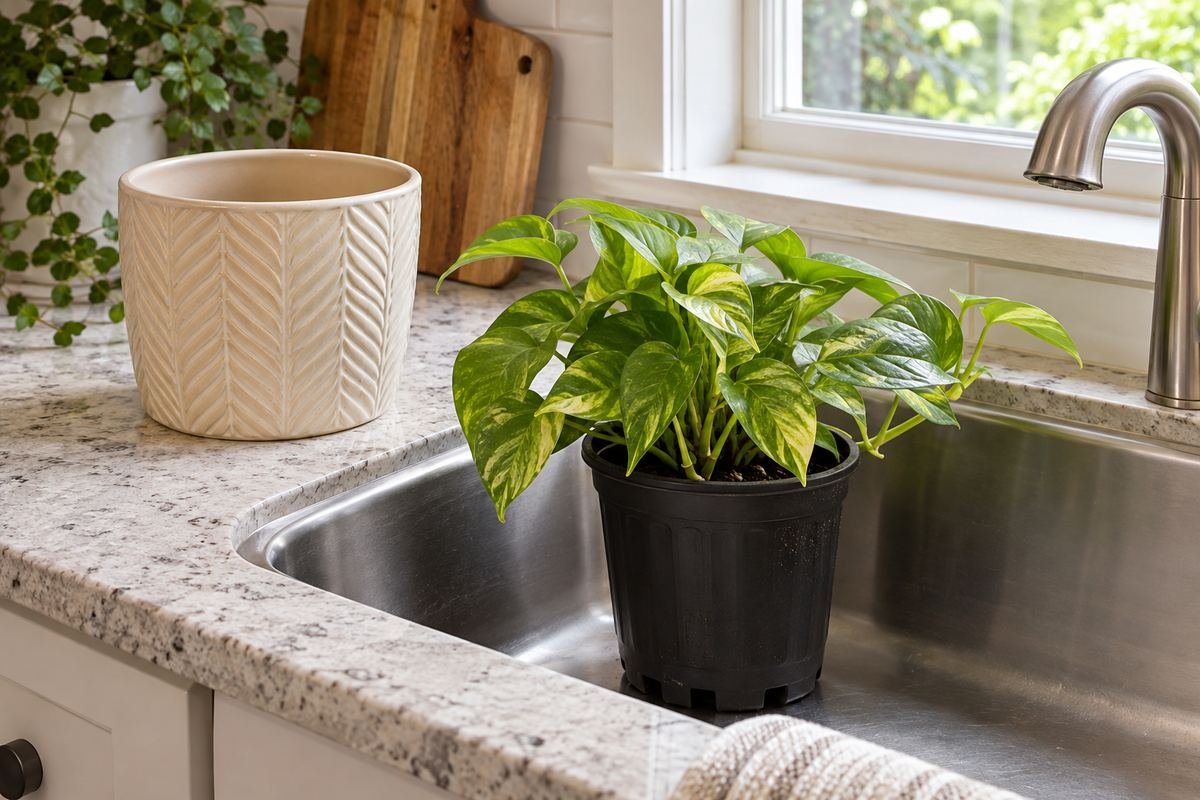
A useful cachepot display can be returned to the room without hiding the last watering step. Keep the inner pot, outer sleeve and protected surface straightforward to inspect.
Water the plant according to its needs, allow appropriate drainage and remove excess water before returning the growing pot. Check the outer container rather than assuming it stayed empty. An indoor plant pot cover succeeds when the decorative finish and the care routine work together.
Practical tip: Keep the fit record with the plant care information.
Frequently Asked Questions
Does a decorative cachepot need its own drainage hole?
The growing pot inside should provide appropriate drainage. An outer decorative cover can have a different purpose, but collected water must be managed and the inner pot must not remain standing in it. Do not use a closed decorative sleeve as an excuse to ignore drainage.
Can a woven basket protect a wood floor by itself?
Do not assume so. A basket is a decorative sleeve, not necessarily a watertight container. Use a suitable removable water-catching arrangement, inspect it and protect the surface according to its requirements. Watering the inner pot elsewhere can make that routine easier.
Should I buy a much bigger nursery pot to match a large cover?
Choose growing-pot size from the plant’s horticultural needs, not only the desired decorative scale. A separate appropriately sized inner pot can sit within a compatible outer cover. Confirm stable support, lift-out access and water management for the exact arrangement.
Choose the Details That Work in Your Home
Use an indoor plant pot cover to connect the container to the room while keeping plant care straightforward. A visible material relationship, a measured double-pot fit and an easy route for lifting and draining are more useful than a decorative sleeve that cannot be managed.
For related ideas, explore plant stand ideas, indoor plant shelf ideas, decorating with plants.
Planning References
Iowa State University Extension: drainage, saucers and double-pot containers; Mississippi State University Extension: indoor plant watering and collected water. Follow the instructions for the exact products you choose.
Optional digital guide for this topic
If you prefer a structured workbook, explore this related paid guide.