Useful drinking glass storage ideas make a glass easy to pick up and return without touching a crowded row of neighboring rims. Start with the glasses used every day, then give taller pieces and occasional sets a place that suits their size and frequency of use. Clear access matters more than squeezing the maximum number onto a shelf.
This guide covers upright shelves, supported drawer compartments and suitable racks for particular glass types. The spacing example and storage card help you test your own collection. Follow the actual glass and organizer instructions, especially for stacking; similar-looking tumblers can have different requirements.
Contents
- 1. Give everyday tumblers an accessible upright row
- 2. Use a shallow cabinet for a single visible row
- 3. Split tall glasses and low tumblers across two shelves
- 4. Use supported upright compartments in a suitable drawer
- 5. Keep a small set near the dishwasher unloading route
- 6. Put water glasses near the usual serving area
- 7. Use a dining sideboard for an occasional table set
- 8. Choose a glass-front cabinet for a restrained display
- 9. Use short stacks only for a verified stackable design
- 10. Give non-stackable glasses individual positions
- 11. Keep delicate stemware separate from everyday tumblers
- 12. Use a stemware rack only when the glass and rack fit
- 13. Leave the shelf edge clear around the front row
- 14. Use a quiet backdrop to make mixed glasses readable
- 15. Reserve one bay for taller highball glasses
- 16. Keep small juice glasses together in a low bay
- 17. Separate drinking glasses from heavy plate stacks
- 18. Use a suitable compartmented case for occasional storage
- 19. Keep the glass cupboard away from strong-smelling supplies
- 20. Store a small serving group on a stable cabinet tray
- 21. Use a modest dry set on a protected open shelf
- 22. Keep the occasional reserve separate from daily access
- 23. Finish with a simple glass-return check
Drinking Glass Storage Ideas Start with the Widest Piece
Group the collection by actual size and use before arranging the cabinet. Measure the widest part, overall height and any handle or stem, then choose a stable accessible surface. Return only clean, completely dry glasses to storage. Keep the care guidance for each set: RIEDEL’s glass-care page advises keeping its glasses away from strong-smelling stored items, while individual products can differ in washing and handling requirements.
Match glass storage to the shape and access needed
- Daily tumblers: Accessible upright row — Room to grip one without touching neighbors
- Tall drinking glasses: A dedicated taller shelf bay — Loaded height and lift-out path
- Low drawer available: Supported upright compartments — Clear drawer height and stable movement
- Occasional stemware: Separate shelf or compatible purpose-designed rack — Base, bowl and stem fit
- Limited shelf area: Only manufacturer-approved stacking — Exact model guidance and comfortable stack removal
1. Give everyday tumblers an accessible upright row
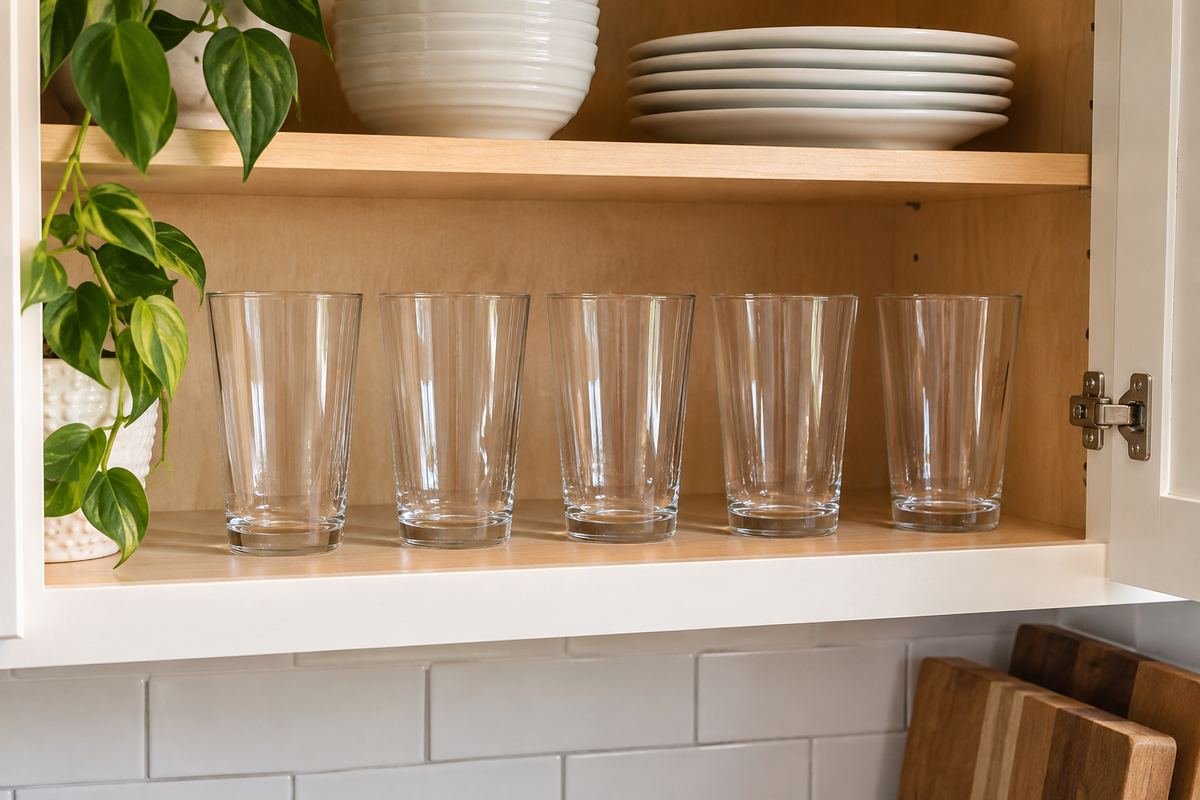
An upright row on an accessible shelf makes the daily glasses easy to see and choose. Keep the group close enough to the front to reach comfortably while leaving the bases fully supported. Each glass needs a clear return position instead of an exact packed outline.
Test the grip with neighboring glasses in place. A row can look spacious from the doorway and still require fingers to press against two rims at once. Reduce the number or spread the group across another suitable area if a comfortable reach is unavailable.
Try this: Try picking up the middle glass first.
2. Use a shallow cabinet for a single visible row
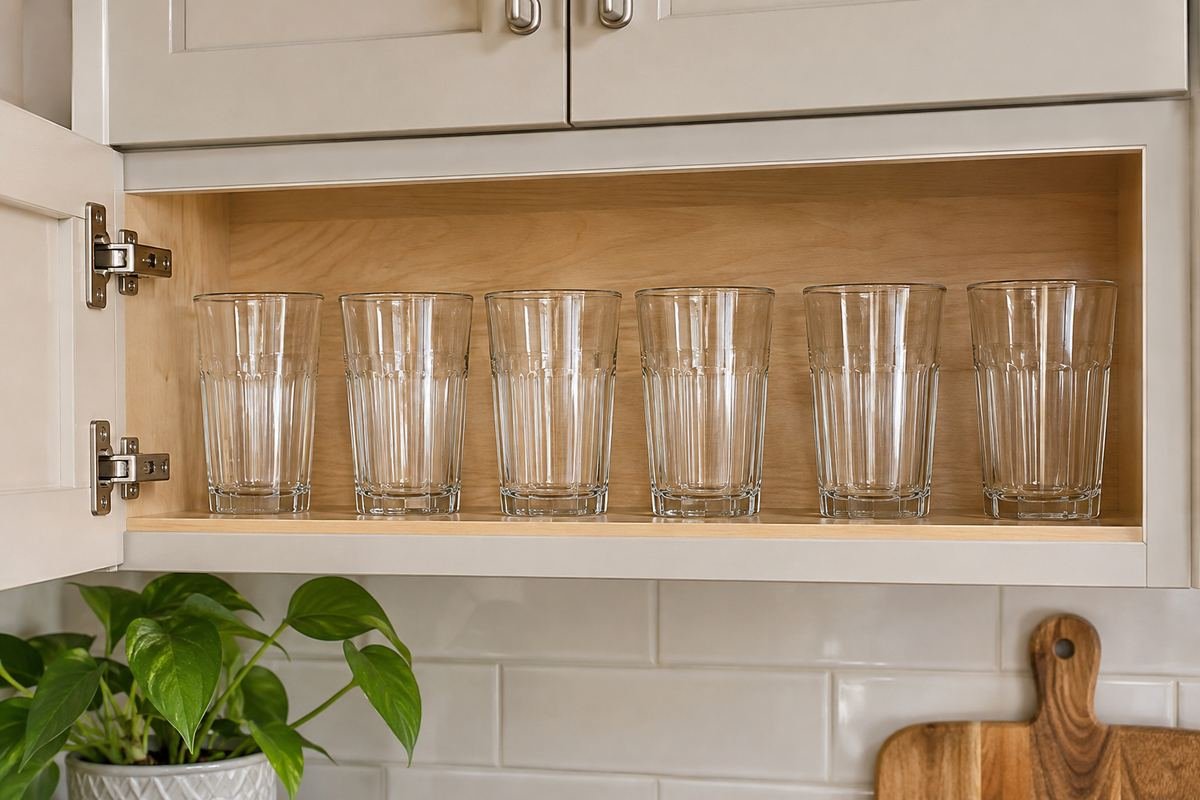
A shallow shelf can make a small daily set easy to manage because nothing is hidden behind the front row. Choose glasses whose complete bases sit comfortably within the shelf depth. Keep the door and hinges clear of the outer pieces.
Avoid adding a second row merely because the rims seem to fit. The front glasses should not have to move every time you reach the rear. A clear single row can be more useful than a larger but awkwardly layered arrangement.
Try this: Measure usable shelf depth beyond the hinge projection.
3. Split tall glasses and low tumblers across two shelves
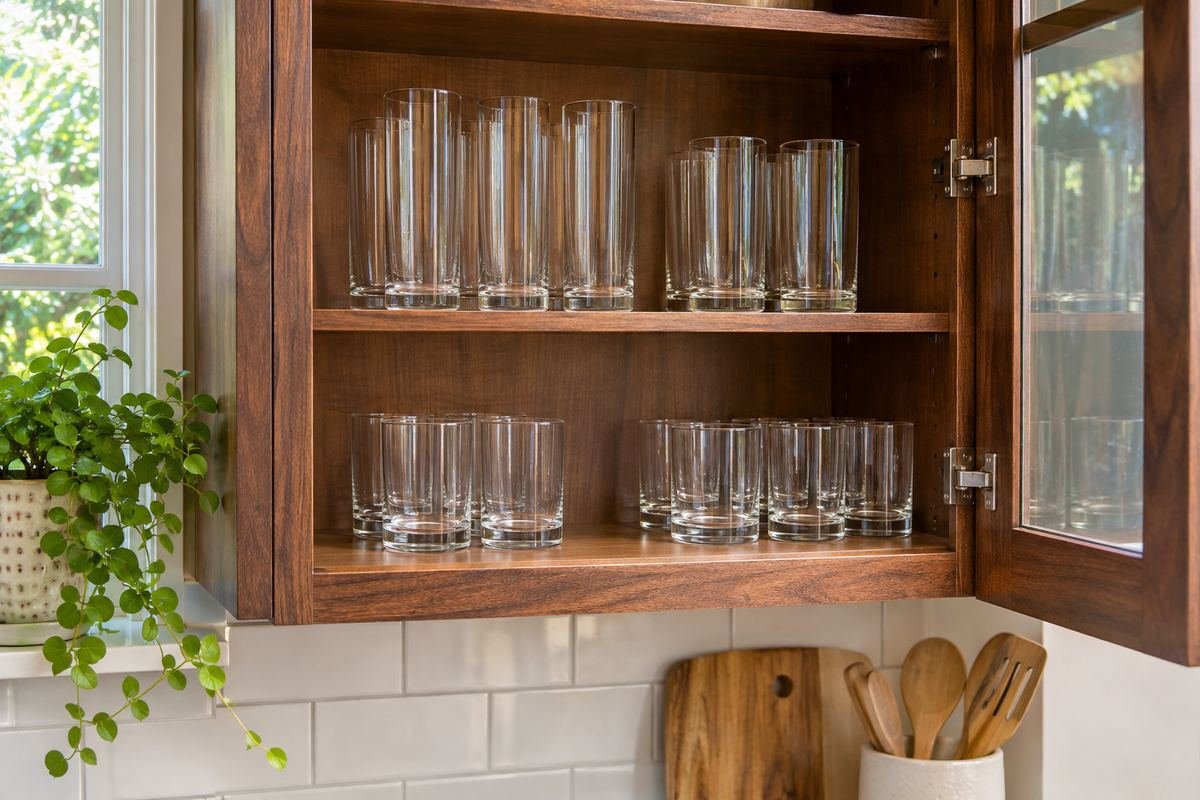
Different heights can use cabinet space more comfortably when they have separate shelf bays. Put taller glasses where the full height and lifting route fit, with shorter tumblers in the lower-clearance area. Adjustable shelving can help when it is used according to the cabinet system’s requirements.
Keep either group easy to reach without stretching across another. The purpose is a useful fit rather than a perfectly symmetrical display. Check shelf support and loading guidance before changing positions or adding another level.
Try this: Measure the tallest actual glass before moving a shelf.
4. Use supported upright compartments in a suitable drawer
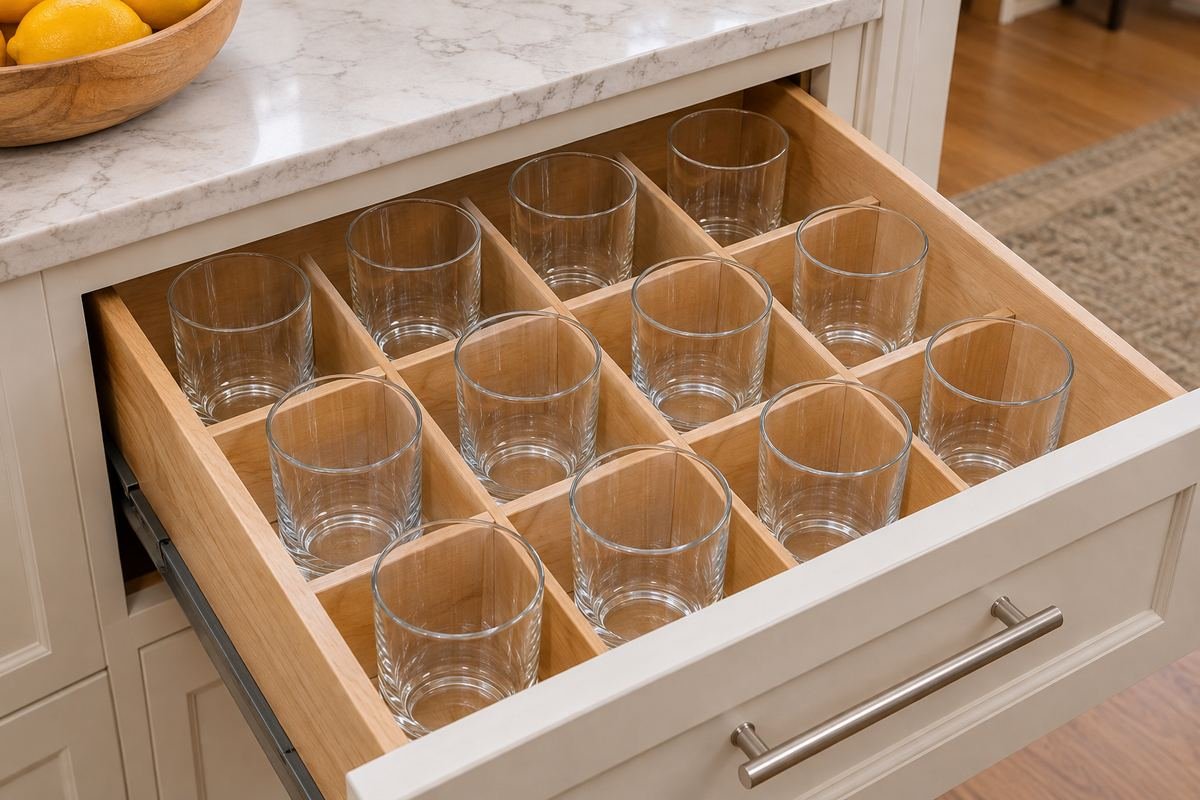
A drawer can make everyday glasses accessible when it provides enough clear height and appropriate support. Use an organizer intended for the glass sizes and the drawer’s movement. Keep each piece upright and avoid loose dividers that shift around the bases.
Check the full opening and closing path with the intended arrangement. Tall glasses should not brush the cabinet frame, and the drawer should not be overfilled. If the available height or support is unsuitable, choose a shelf instead of forcing the collection into the drawer.
Try this: Measure internal height beneath the frame, not the drawer front.
5. Keep a small set near the dishwasher unloading route
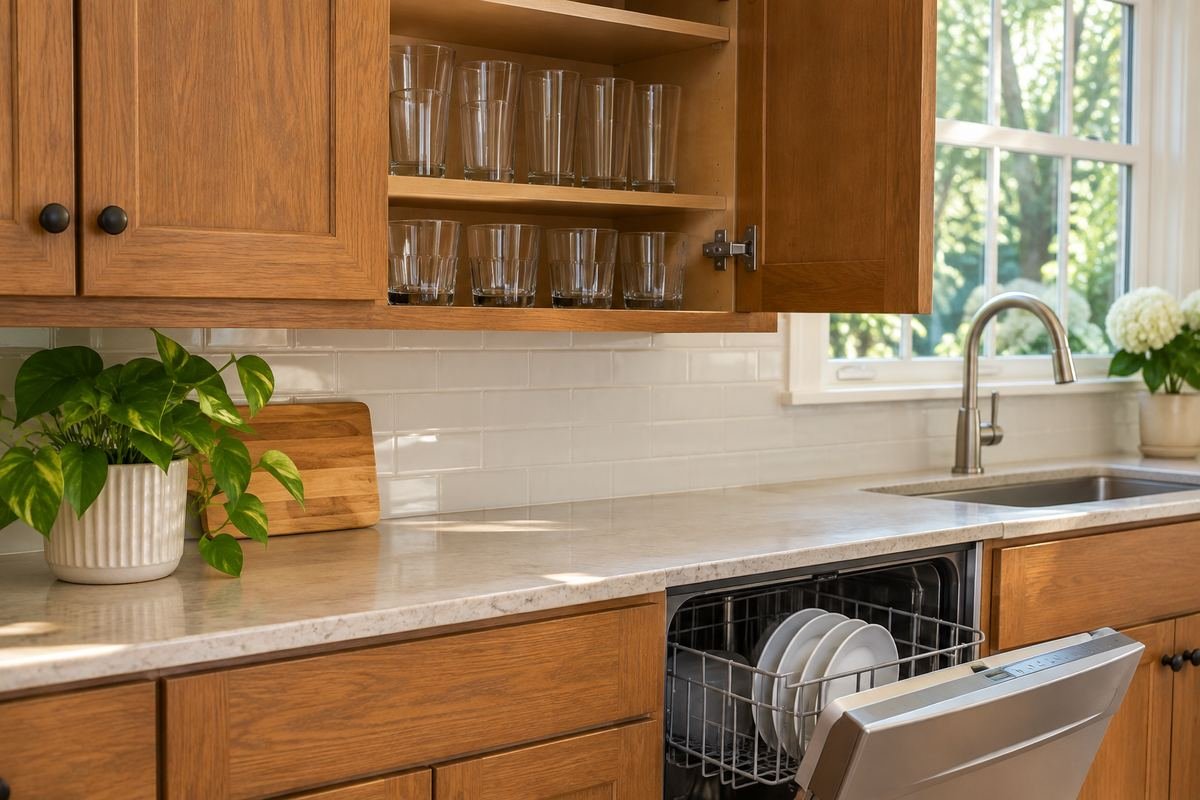
A convenient storage position can make putting away clean, dry glasses straightforward. Choose a shelf or drawer that can be reached comfortably from the usual unloading position. Keep its access independent from the open dishwasher door where possible.
Try the actual movement before reorganizing the whole cabinet. The closest cupboard is not always the most comfortable if a door or another drawer blocks it. A modest daily group in a clear position can simplify the route without occupying every convenient shelf.
Try this: Test the reach with the dishwasher in its normal open position.
6. Put water glasses near the usual serving area
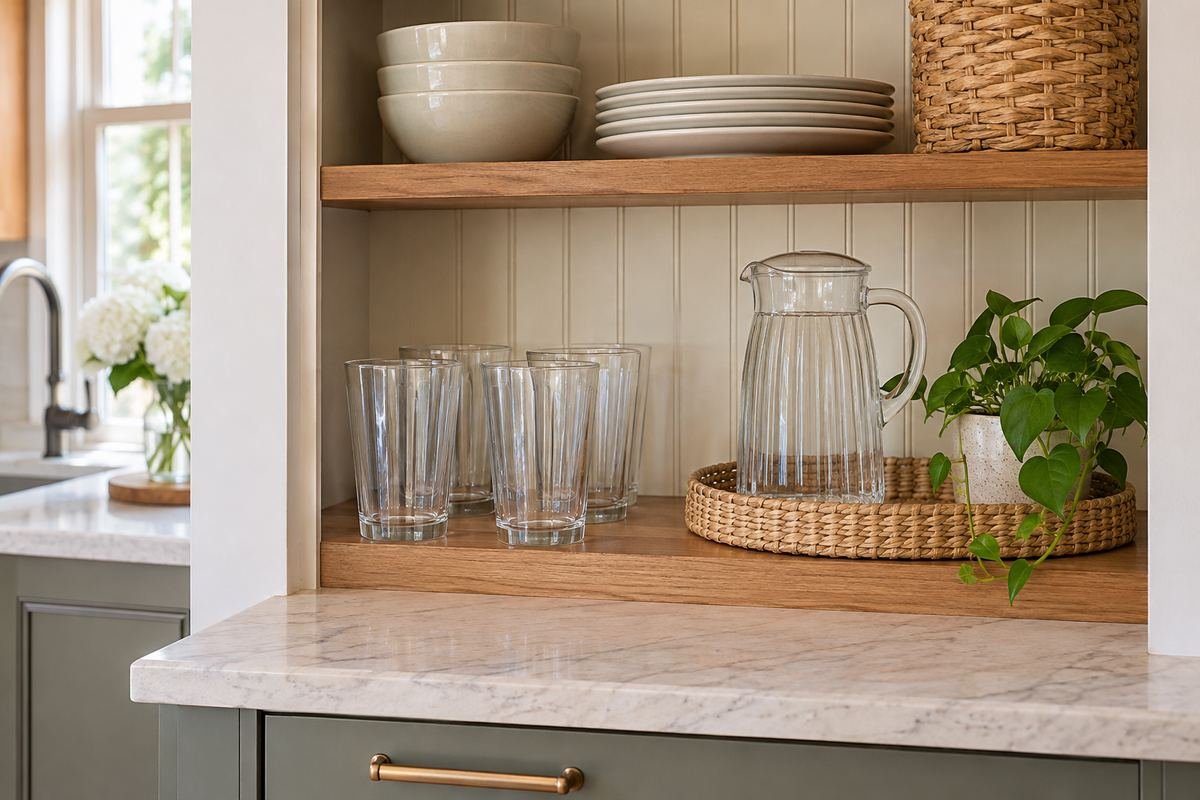
A small defined group near the place where water is served can support an ordinary routine. Choose suitable enclosed or shelf storage with stable bases and clear access. Keep only a practical working amount there rather than spreading the full glass collection across a counter.
Check the route to the sink and table as well as the appearance. A serving position should not block the main preparation surface or place glasses close to an edge. If the kitchen is compact, one accessible cabinet can serve the same purpose without another station.
Try this: Choose the storage position after tracing the serving route.
7. Use a dining sideboard for an occasional table set
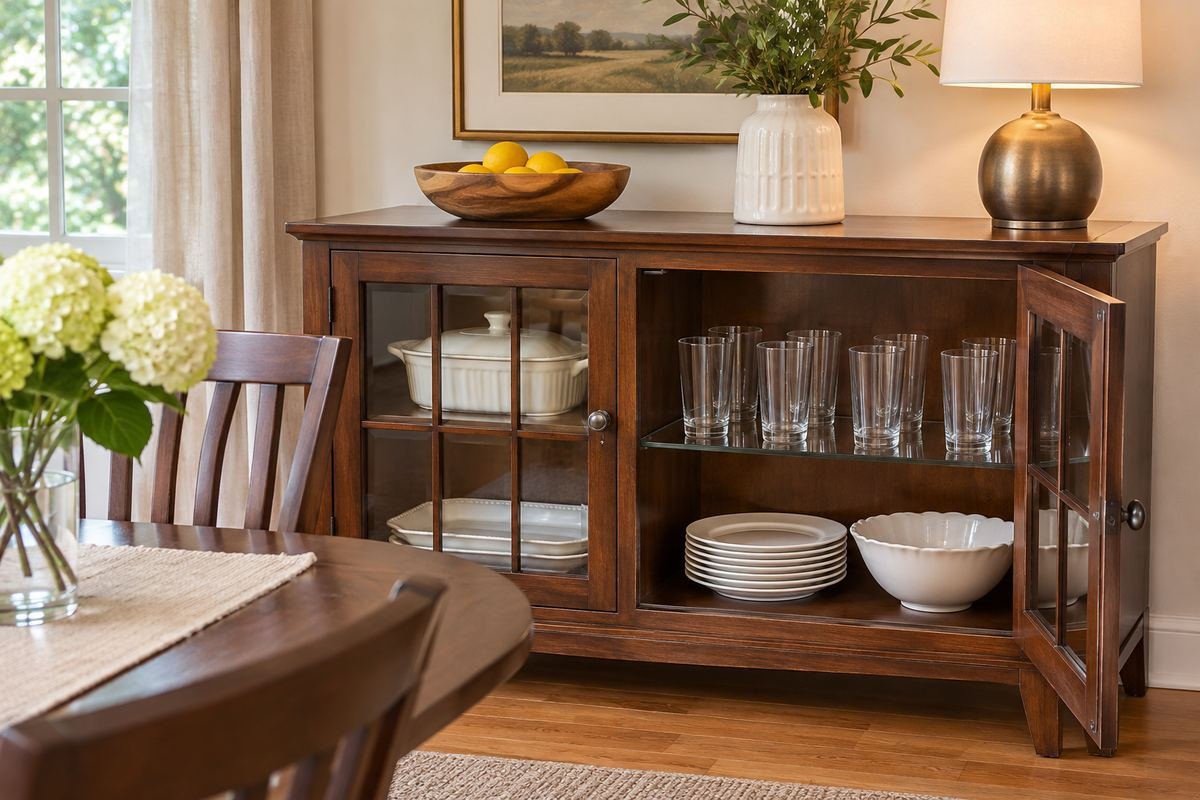
An occasional set can live in a suitable dining sideboard while everyday glasses remain in the kitchen. Give the pieces a dedicated shelf area with clear lifting space. Keep the group visible when the door opens instead of hiding it behind heavy serving dishes.
Measure the tallest and widest pieces in the set. A sideboard’s shelf can be lower than a kitchen cupboard, and hinges may reduce access near the sides. Keep the storage arrangement modest enough that removing one glass does not require shifting the entire set.
Try this: Test the middle and side positions with the door fully open.
8. Choose a glass-front cabinet for a restrained display
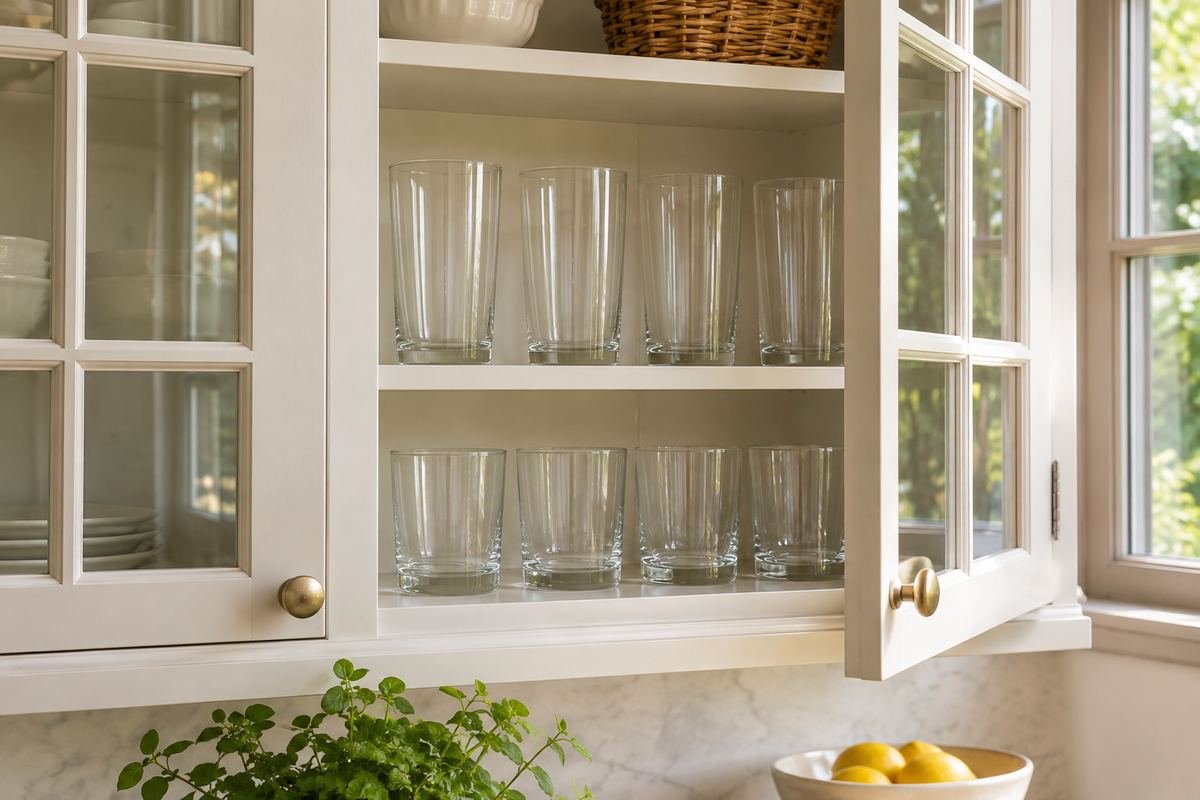
A glass-front cabinet can turn a useful everyday collection into a quiet visual feature. Repeat a few shapes and leave enough open shelf around them to keep the arrangement readable. The display works best when the pieces remain easy to remove and return.
Do not add glassware simply to fill the visible space. Keep the daily and occasional groups clear, and preserve headroom. A calm backdrop and a modest quantity can make ordinary glasses look considered without complicated styling.
Try this: Arrange the practical group before adding decorative pieces.
9. Use short stacks only for a verified stackable design
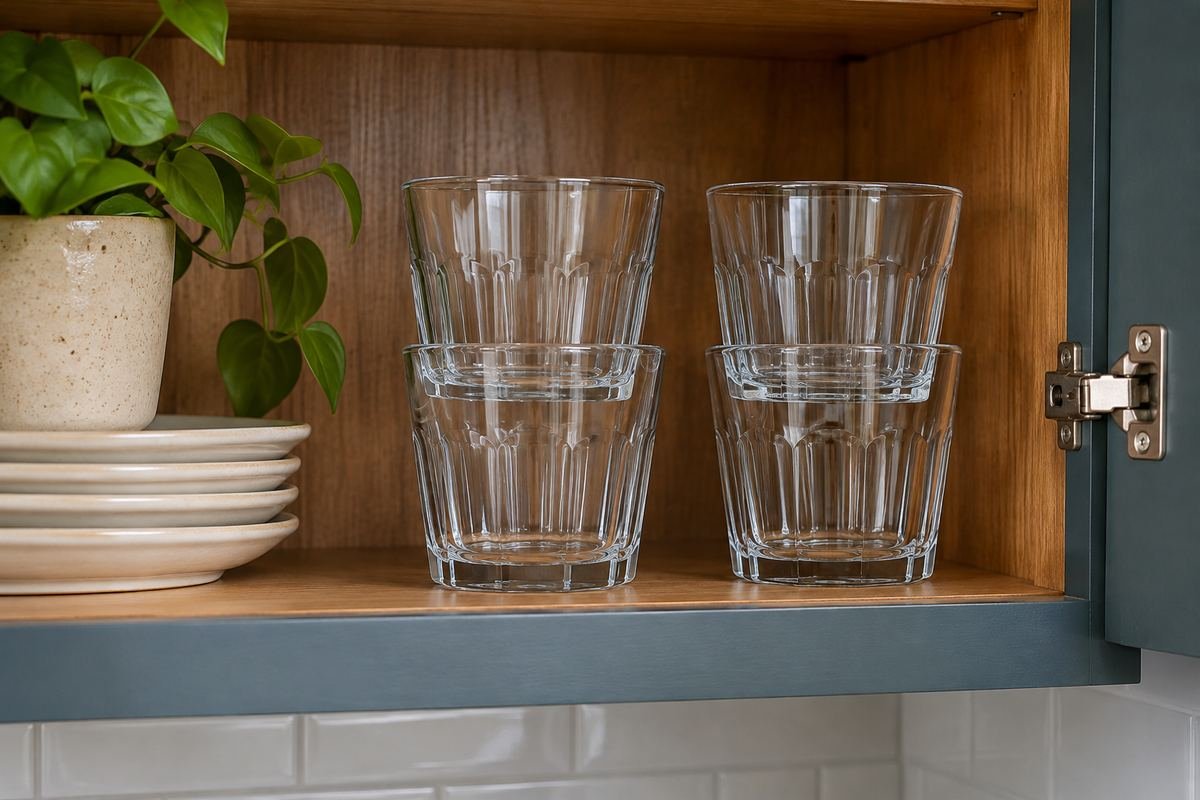
A design specifically made to stack can reduce the shelf footprint when used as directed. Confirm the exact model’s guidance first. Keep the arrangement manageable and easy to grip rather than building a tall tower because the shapes appear to nest.
Stacking permission is not a material-wide rule. The storage card’s IKEA and Duralex examples show how instructions can differ between everyday glasses. If you cannot verify the model, give the glasses separate supported positions instead.
Try this: Keep the product guidance with the set’s details.
10. Give non-stackable glasses individual positions
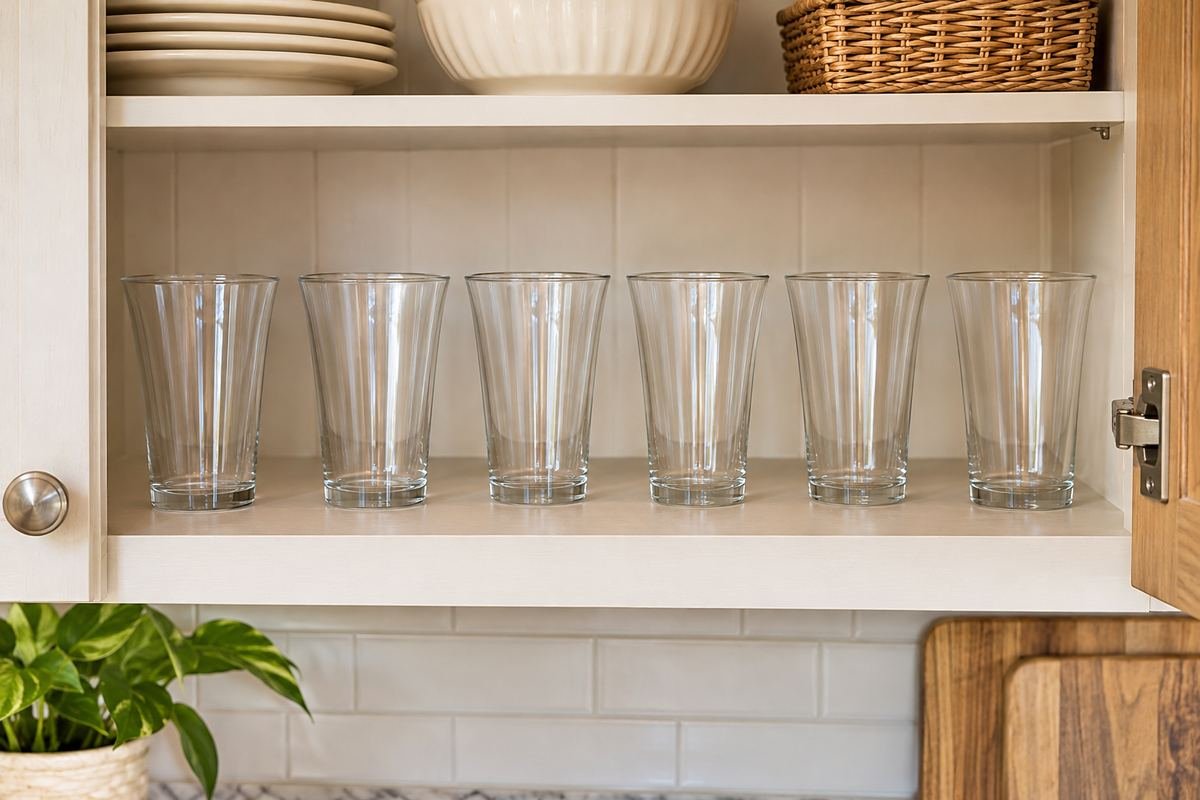
A non-stackable set needs its own footprint for each glass. Arrange the pieces in a visible row or a modest supported group, leaving a comfortable gap for removal. The result may occupy more shelf area, but it follows the way those glasses are intended to be stored.
Avoid treating a matching shape as proof that nesting is allowed. If the cabinet becomes crowded, reduce the daily group or use another suitable shelf. An organizer should support the product’s requirements rather than encourage a storage method the maker rules out.
Try this: Check the model instructions before changing its arrangement.
11. Keep delicate stemware separate from everyday tumblers
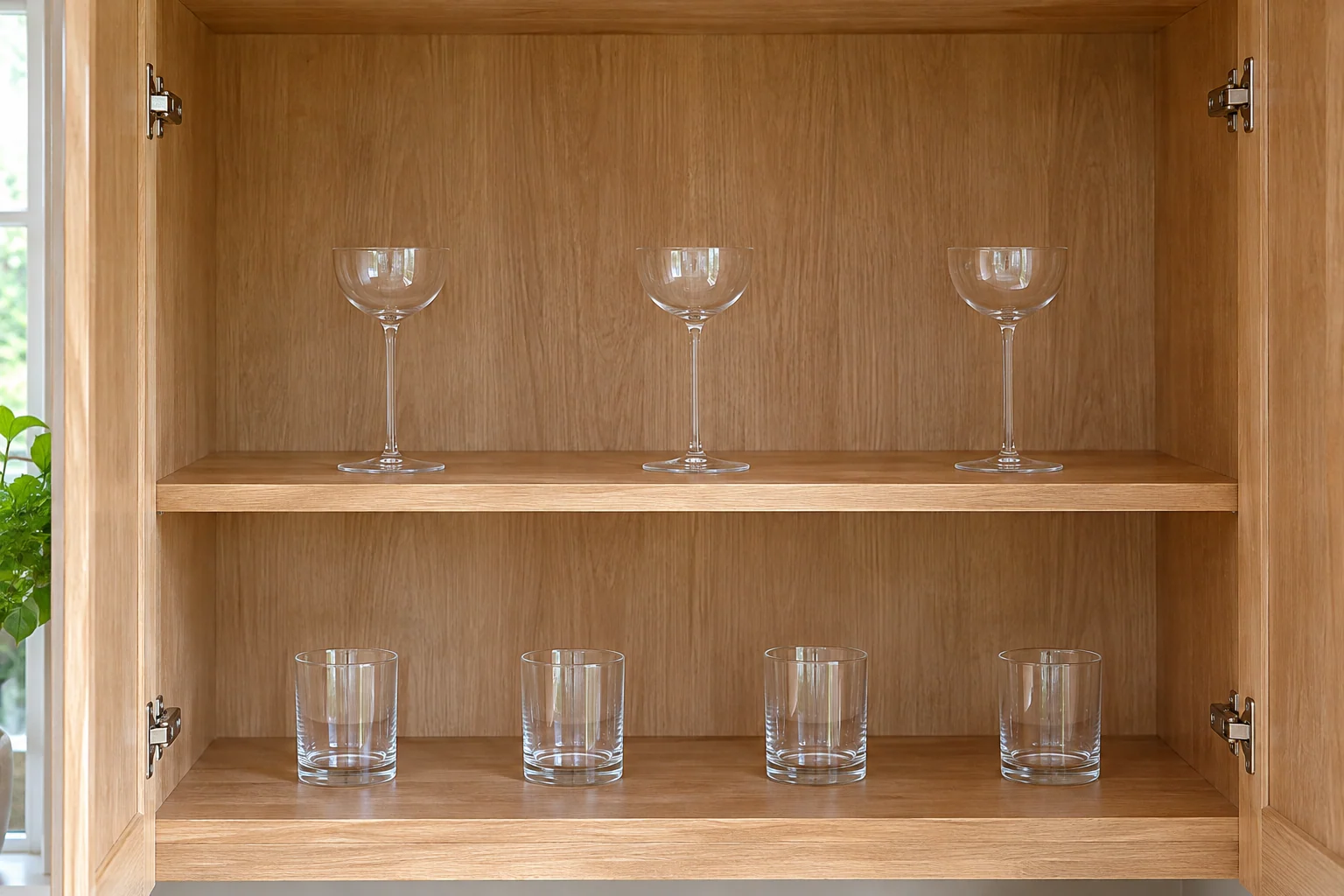
Stemmed glasses can need a different footprint and gripping route from low tumblers. Give them a defined shelf area rather than mixing stems into a tight daily row. Keep the bowls and bases clear of heavy dishes and projecting cabinet hardware.
Choose a position that can be reached comfortably without grasping a stem awkwardly through other objects. Follow the set’s care guidance and handle it accordingly. If the collection is occasional, a separate suitable dining cabinet can keep it accessible without crowding the kitchen’s working shelf.
Try this: Measure the bowl’s widest point as well as the base.
12. Use a stemware rack only when the glass and rack fit
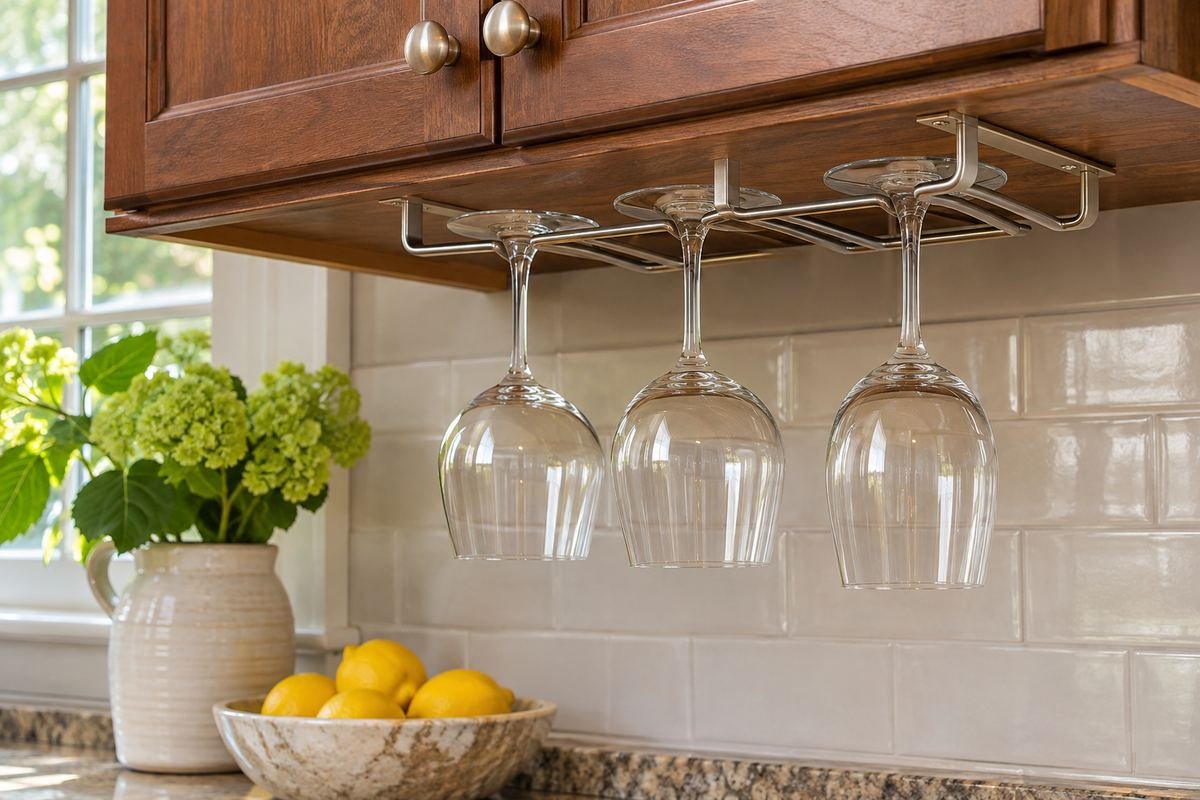
A purpose-designed hanging rack can suit compatible stemware when its channels support the actual bases and the bowls have enough clearance. Check the rack’s mounting and loading instructions. A decorative rail or improvised hook is not a substitute for that support system.
Measure the glass length below the rack and the space needed to slide each piece out. The first glass should not have to be removed simply to reach every other position. If the geometry is awkward, use a suitable upright shelf arrangement.
Try this: Test both the base channel and the bowl spacing.
13. Leave the shelf edge clear around the front row
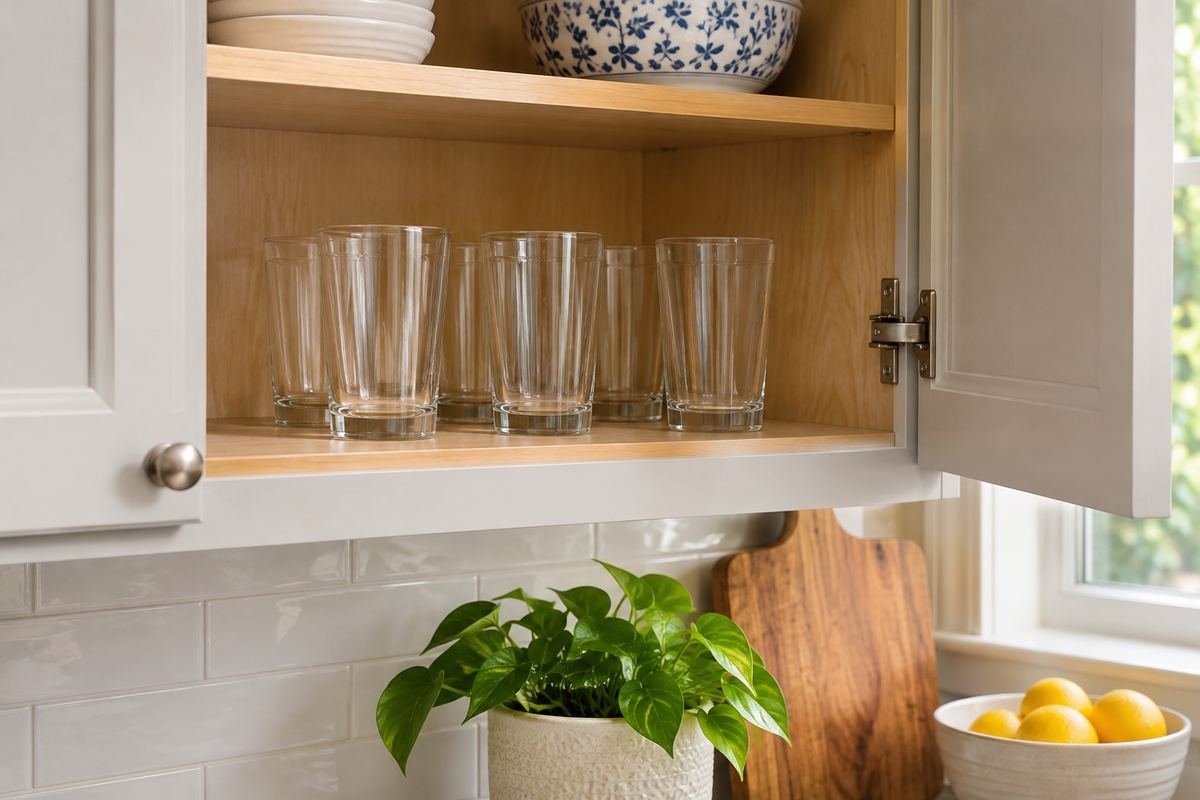
A visible margin at the shelf edge can make the return position easier to judge. Keep the complete base supported without pushing the front glasses against the cabinet door. Choose the margin around the actual shelf and your comfortable reach rather than a universal measurement.
Include door movement in the test. A projecting hinge or deep door frame may reduce the space that looked available with the cabinet empty. Move the row inward or choose fewer glasses when the front position is crowded.
Try this: Check the front bases with the cabinet door closing normally.
14. Use a quiet backdrop to make mixed glasses readable
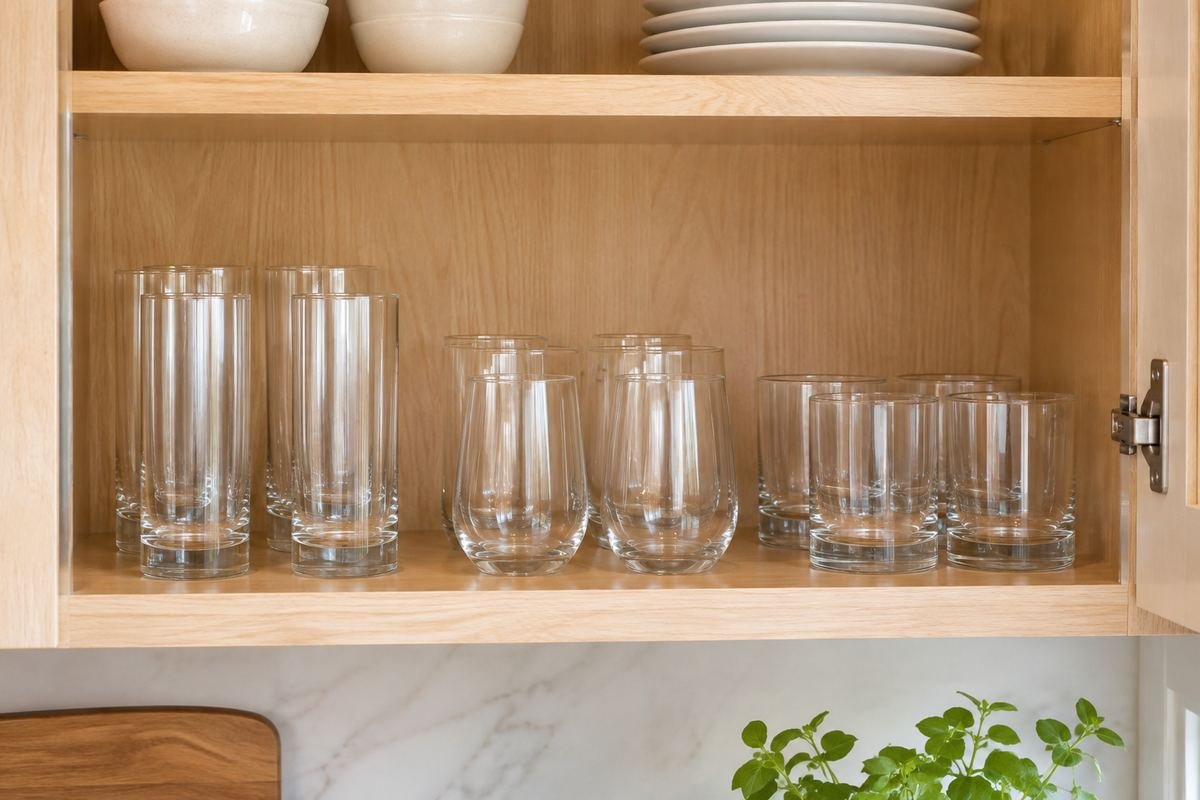
Different everyday glasses can look orderly when the storage backdrop is simple. Group similar heights together and let the clear material remain the common feature. A pale or restrained wood shelf can connect the collection without requiring a perfectly matched new set.
Keep the arrangement based on reach and size. Visual balance should not place a frequently used glass behind an occasional one. Edit the visible group to what is useful, with a separate defined place for the rest.
Try this: Group by height before deciding whether anything needs replacing.
15. Reserve one bay for taller highball glasses
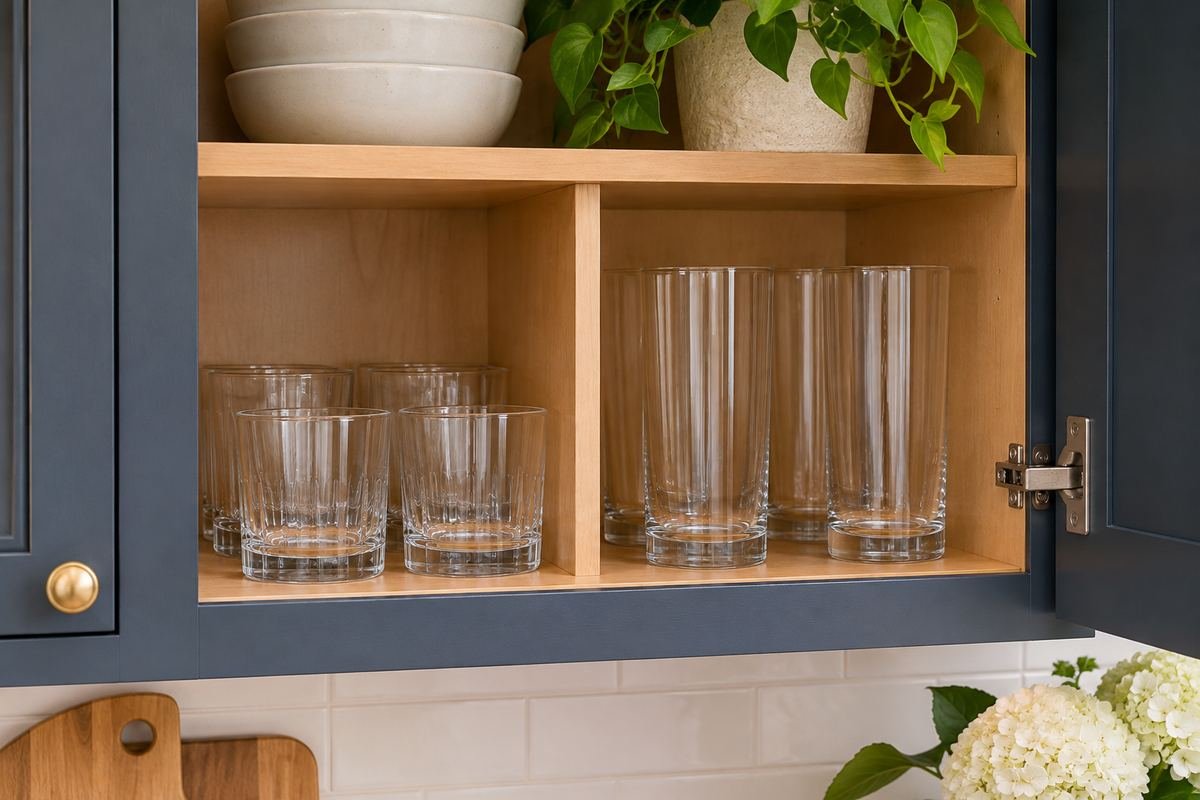
Tall glasses can be easier to manage in a dedicated bay with enough lifting height. Keep the complete base on a stable shelf and leave room around the rim for the removal route. The tallest point may become relevant before the shelf above appears visually crowded.
Try the largest highball with the neighboring pieces in place. A tall narrow glass can feel awkward if it must tilt around another rim. Use another suitable shelf when the available clearance requires an uncomfortable movement.
Try this: Test height with the actual tallest piece.
16. Keep small juice glasses together in a low bay
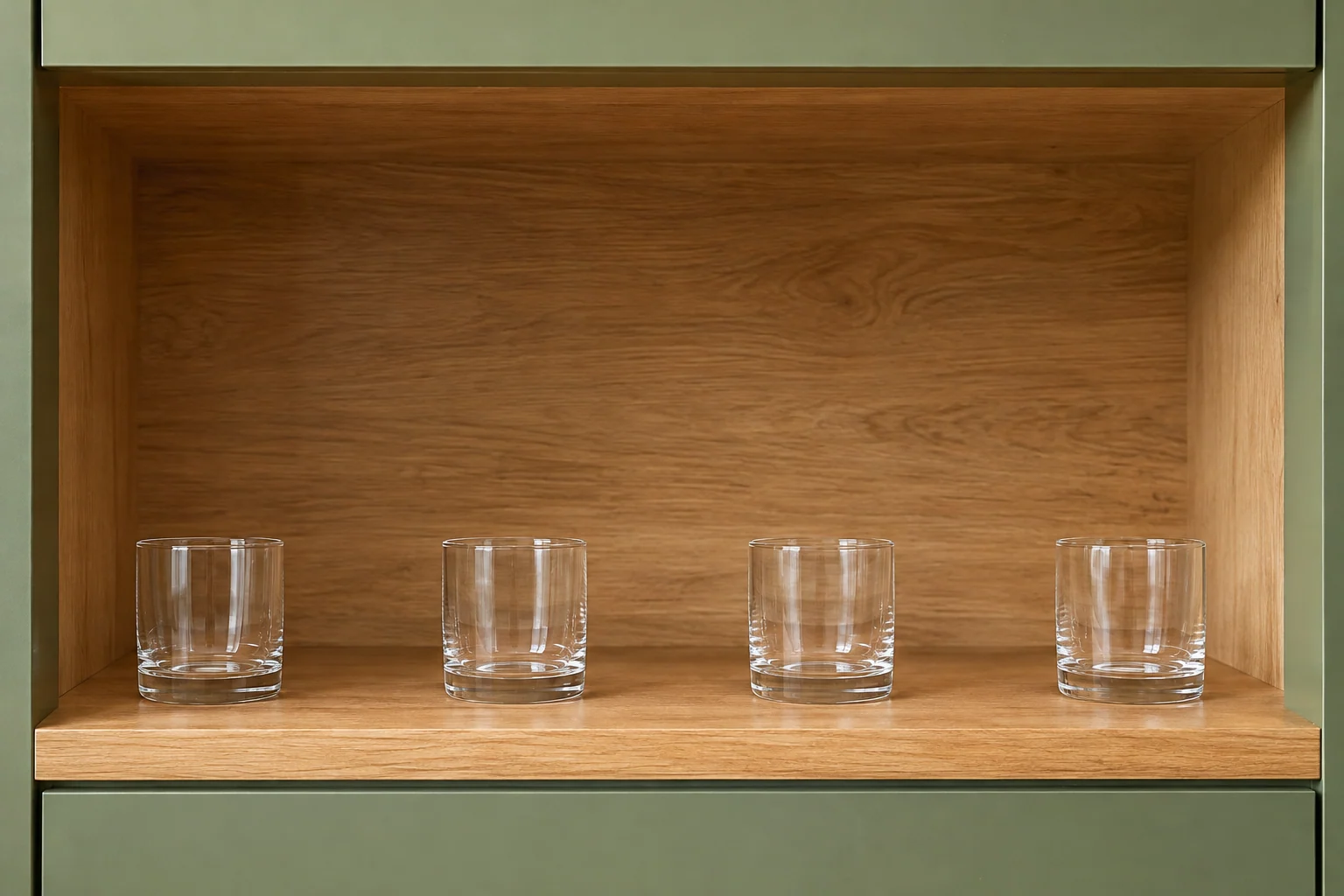
A short everyday glass can use a lower-clearance shelf without being hidden behind taller drinkware. Keep the group together in an accessible row. The smaller footprint can be useful, but leave enough room to grip each glass rather than packing them tightly because they are small.
Make the return place obvious through the layout itself. A clear separate bay can be easier to maintain than several tiny categories. Store the group where it serves the household’s routine and suits the actual glass guidance.
Try this: Give small pieces their own visible front row.
17. Separate drinking glasses from heavy plate stacks
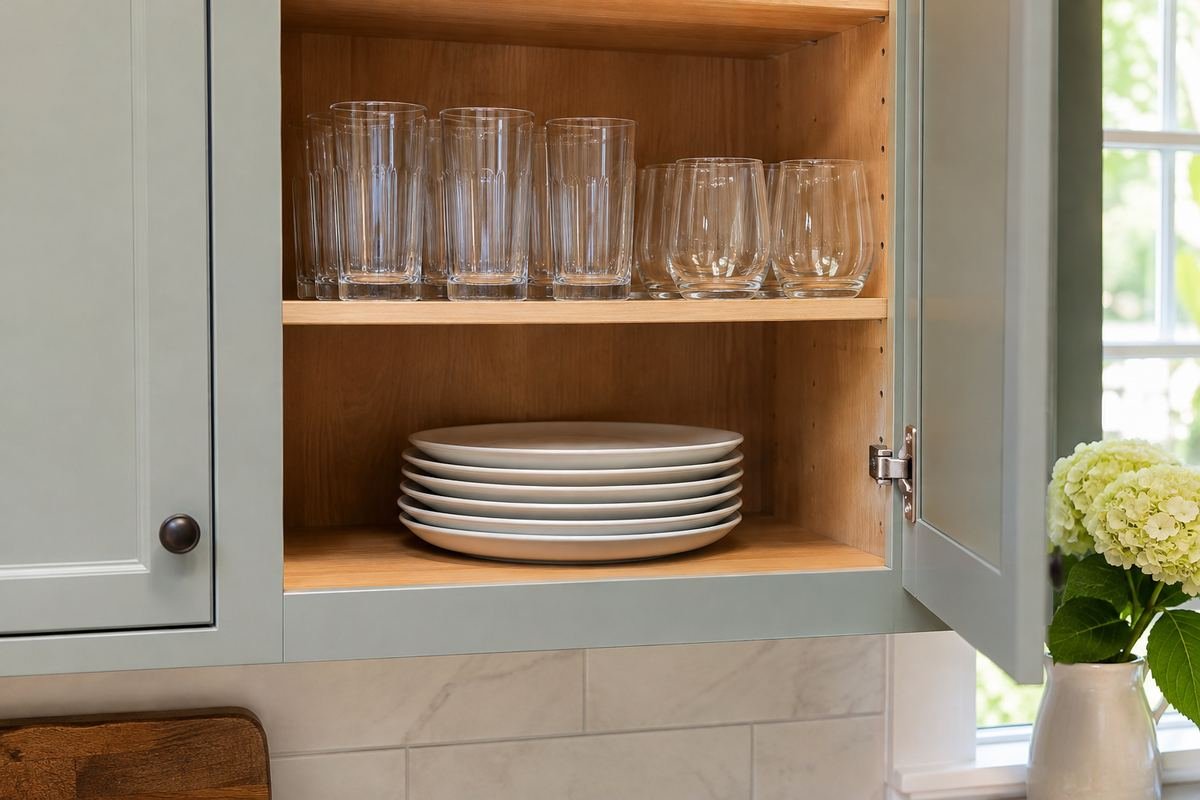
A dedicated glass area can keep access clear of heavy dishes that are lifted frequently. Put plate stacks in their own supported position rather than above or immediately against delicate glass rims. Use the shelf and cabinet loading guidance for the whole arrangement.
Watch the ordinary removal path, not just the resting positions. A large plate passing across a crowded row of glasses may make a shared shelf awkward. Reassign the groups when the movements conflict, even if the empty shelf could technically hold both.
Try this: Test the widest plate’s route past the glass area.
18. Use a suitable compartmented case for occasional storage
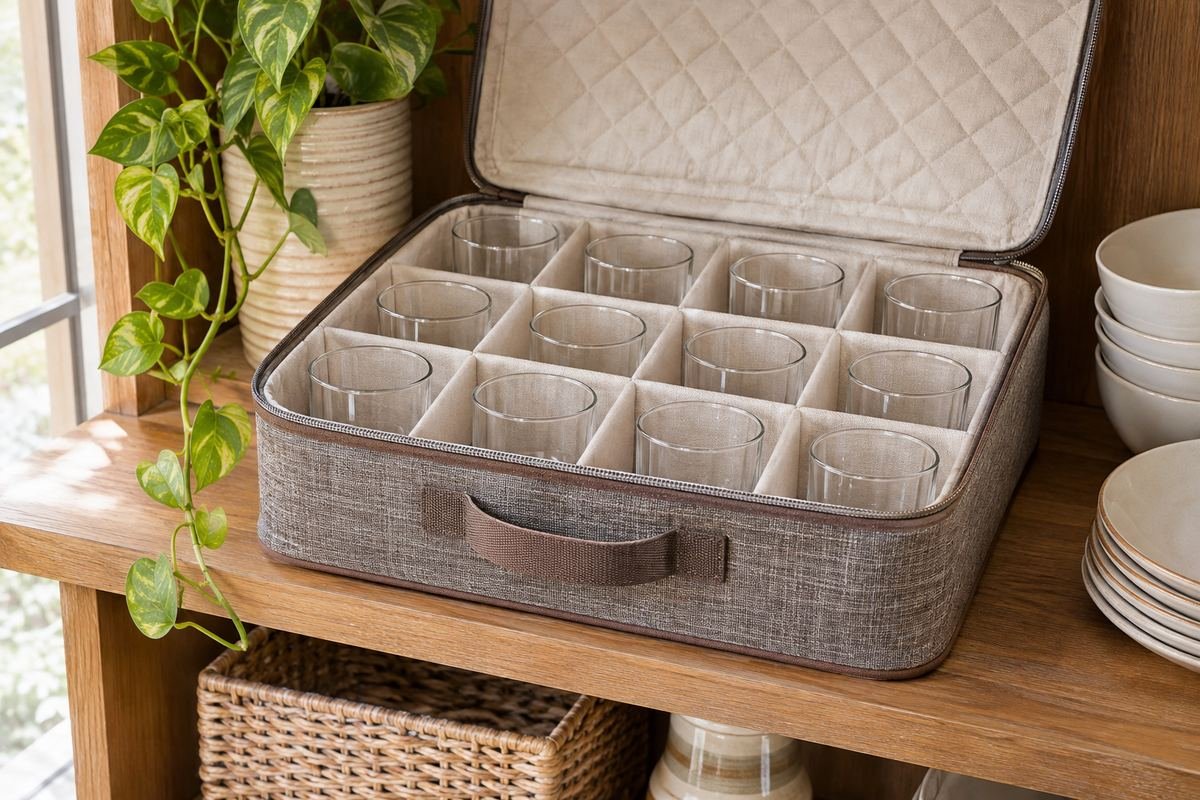
Individual compartments can keep an occasional set organized when the case is designed for the glass sizes and intended use. Choose a stable location and follow both the case and glass care guidance. Return only clean, completely dry pieces to the compartments.
Check internal height and diameter rather than buying by the number of slots alone. A case with the right count may still crowd broad bowls or tall rims. Keep it accessible enough that retrieving the set does not require unloading heavy boxes above it.
Try this: Measure the largest piece against one actual compartment.
19. Keep the glass cupboard away from strong-smelling supplies
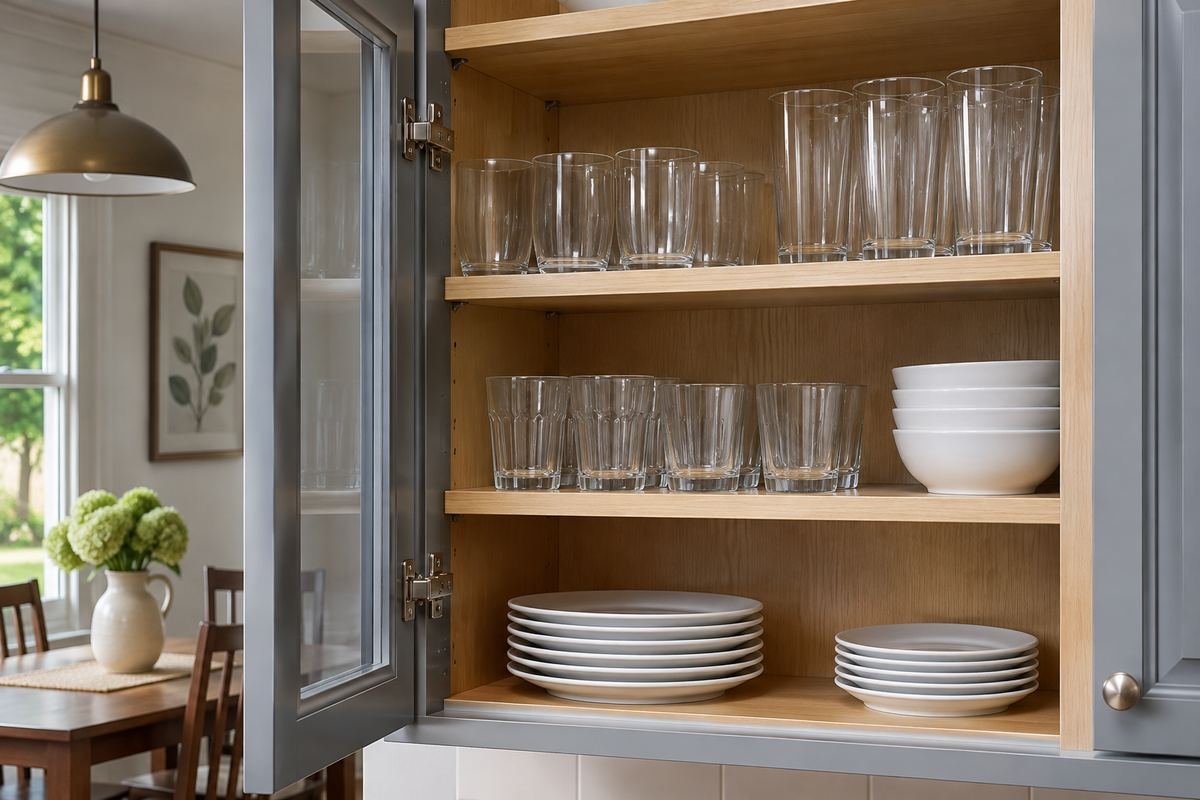
A dedicated glass cupboard is easier to manage when it is not shared with strongly scented supplies. RIEDEL specifically advises avoiding strong-smelling storage neighbors for its glasses. Keep the layout centered on tableware and follow the guidance for the actual set.
This is a storage choice rather than a claim about every glass material. Avoid mixing care instructions between products, and keep cleaning supplies in an appropriate separate location. A clear tableware bay can also make it easier to see and reach the working collection.
Try this: Choose the cupboard’s contents as carefully as its shelf arrangement.
20. Store a small serving group on a stable cabinet tray
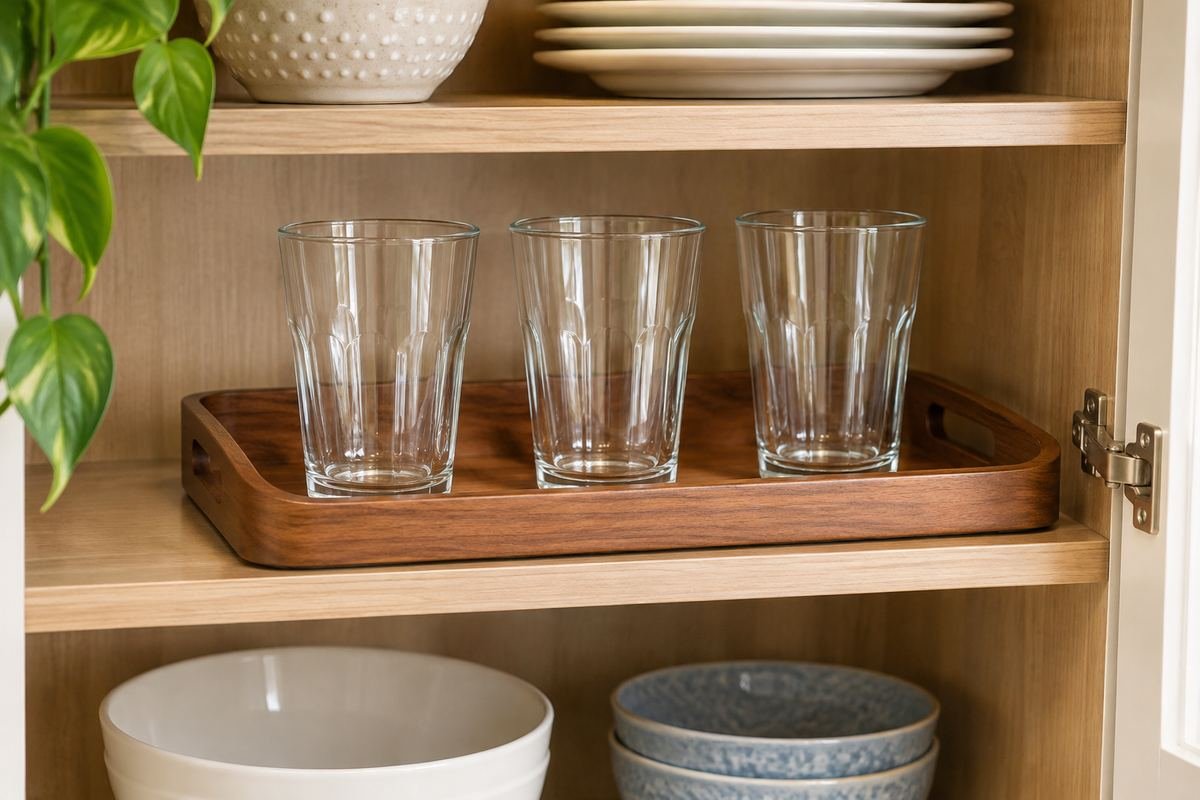
A shallow tray can define a small group when it sits fully supported on a suitable cabinet shelf. Use it as a return boundary rather than filling it with loose crowded glasses. Make sure the tray’s rim and surface do not interfere with stable glass bases.
Do not assume a decorative tray is a safe carrying system for a loaded glass collection. Follow its intended use, and move pieces individually when appropriate. Keep the group small enough that a middle glass can be removed without shifting the others.
Try this: Check base support inside the tray before arranging the group.
21. Use a modest dry set on a protected open shelf
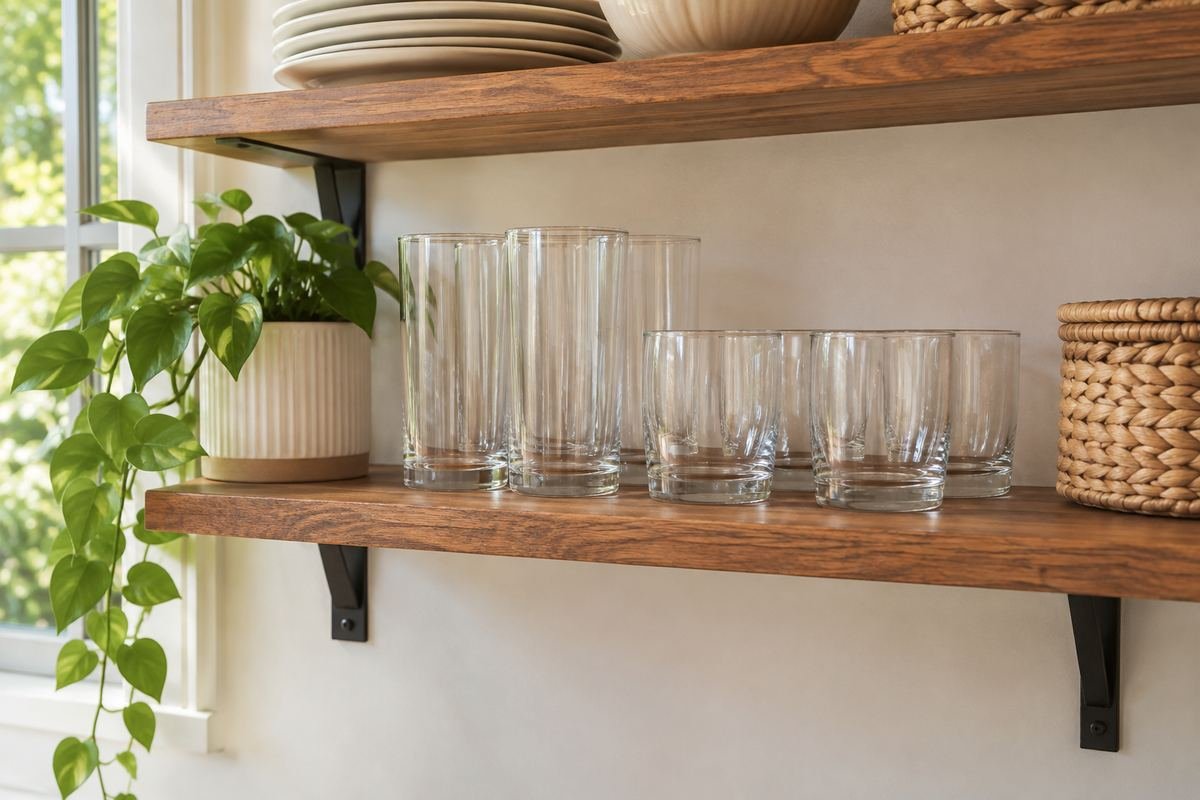
An open shelf can suit a small frequently used set when the shelf, support and position are appropriate. Keep the glasses away from the edge and from a crowded cooking or splashing area. Choose a quantity that can be reached and returned comfortably.
Open display adds a regular care and inspection step, so decide whether it fits the household’s routine. An enclosed cabinet may be more practical for an occasional set. Use the storage method that serves the glasses and the room rather than preserving a display for appearance alone.
Try this: Start with the smallest useful open-shelf group.
22. Keep the occasional reserve separate from daily access
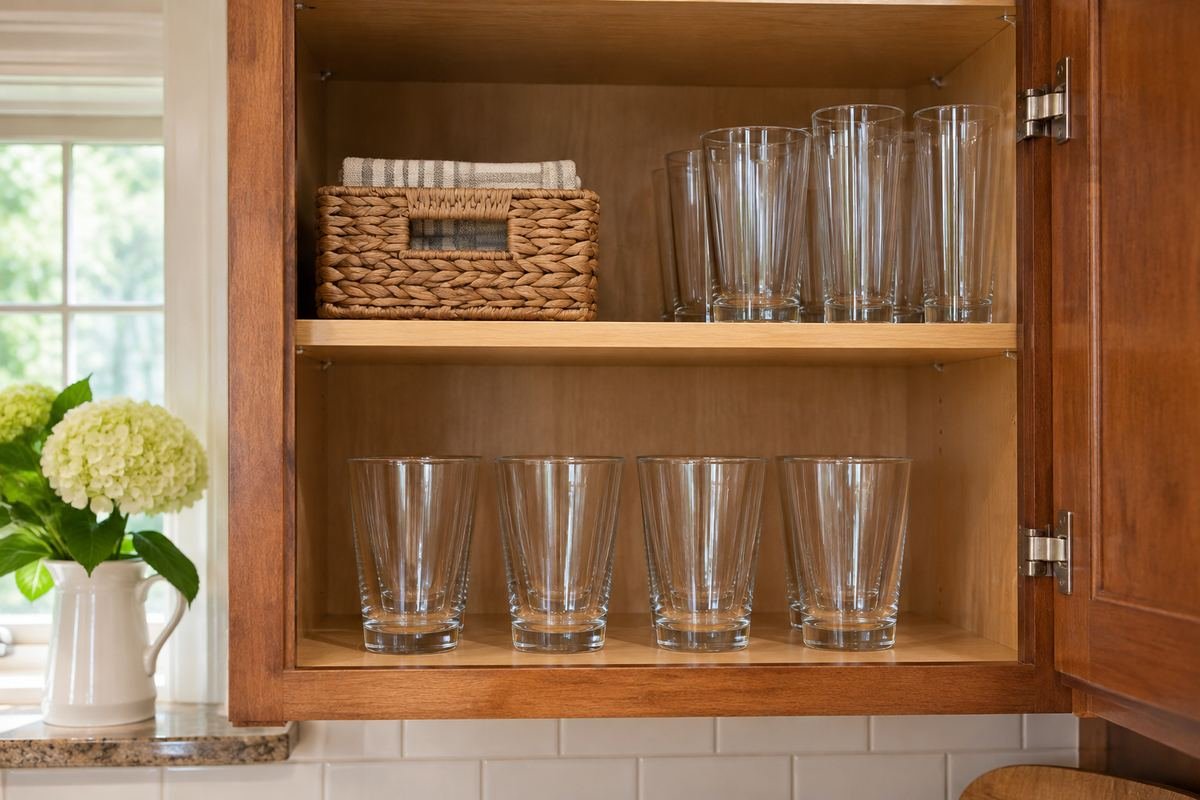
A reserve group can live in another suitable shelf bay while the daily row stays easy to manage. Keep the reserve visible and defined instead of spreading spare glasses behind every other item. This can free a convenient cabinet without discarding a useful occasional set.
Review how often the reserve is actually used. Its location should remain reachable and suitable for the glasses, with enough headroom and stable support. The daily shelf can then be arranged for comfortable access rather than maximum density.
Try this: Assign a clear reserve location before reducing the daily row.
23. Finish with a simple glass-return check
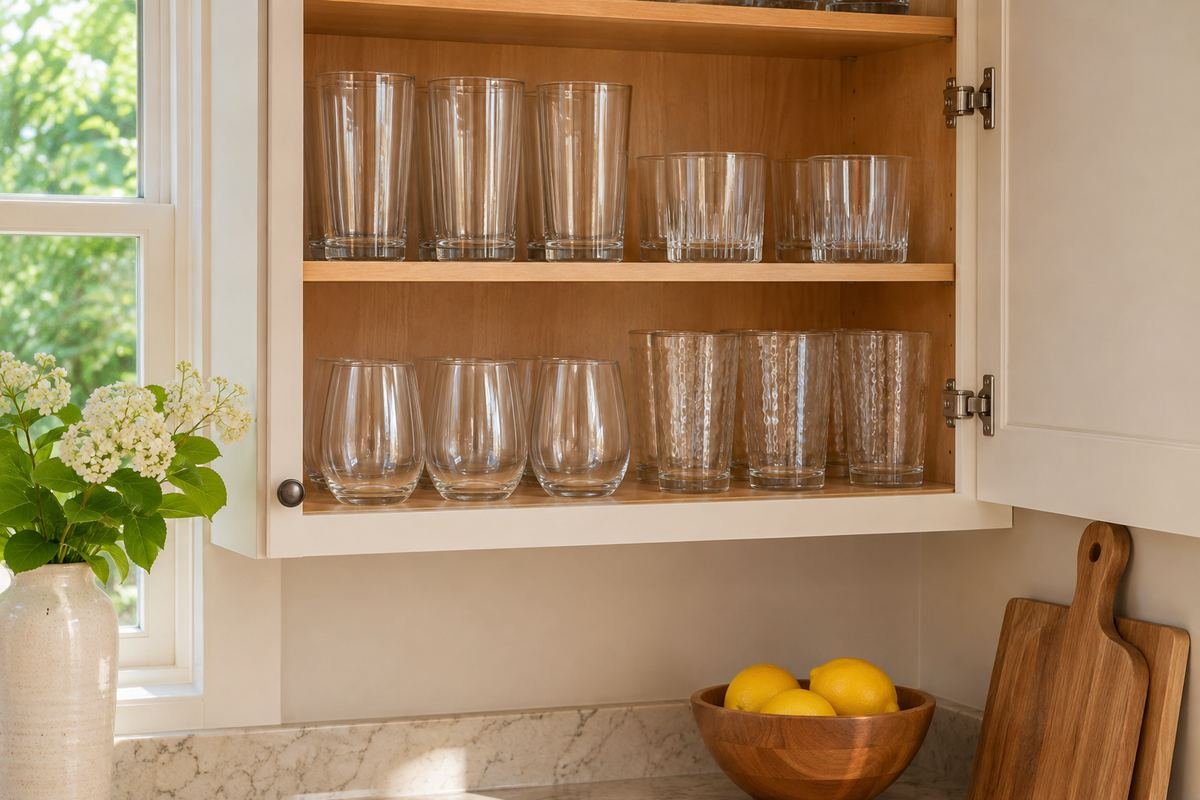
A storage system stays useful when one glass can be returned to its position without rebuilding the row. Test the shelf or drawer after a normal meal, with the neighboring spaces occupied. Keep the most-used pieces in the easiest positions and correct any repeated awkward reach.
If the arrangement becomes crowded, review the daily quantity, grouping and actual shelf size before buying another organizer. Follow each glass’s care and stacking guidance. The final layout should feel straightforward during ordinary use as well as looking orderly when the cabinet is opened.
Try this: Improve one repeated return problem at a time.
An Original Shelf-Spacing Example
Suppose an actual glass is 3¼ inches across its widest point and your shelf has 24 inches of clear width. Six glasses use 19½ inches before any gaps. If you choose an illustrative ½-inch gap between neighboring glasses, five gaps add 2½ inches, giving a 22-inch arrangement and 2 inches left for the ends. That is a planning example, not a safety minimum or capacity rating. Test the grip with your own hand, the shelf edge and the cabinet door before settling on the number.
Copy This Drinking Glass Storage Card
Record the widest diameter, total height, shelf or drawer’s clear internal size, a comfortable gripping gap, any door or hinge projection, and whether the maker expressly permits stacking. Keep a separate note for the occasional set’s location. IKEA’s POKAL page explicitly says that model is not designed to stack; Duralex describes stackable designs in its Picardie collection. Those examples show why shape or tempered-glass material alone cannot decide the storage method.
Frequently asked questions
Can I stack all drinking glasses?
No. Follow the exact glass maker’s guidance. Some designs are made to stack, while others expressly prohibit it. A flared shape or tempered-glass description does not establish compatibility. Keep any permitted arrangement modest and easy to remove as directed.
Should everyday glasses go in a drawer or cabinet?
Choose the location that provides stable support, sufficient clear height and a comfortable grip. A drawer needs an appropriate supported arrangement and gentle unobstructed movement. A cabinet shelf needs clear access around the glasses and the door. Test the actual collection before buying organizers.
How do I keep occasional glasses separate without hiding them?
Give the set a defined shelf bay or suitable individual storage compartments, and keep a simple location note if needed. Store the pieces clean and completely dry according to their care guidance. Avoid burying delicate glasses behind heavy dishes or loose decorative objects.
A practical next step
Arrange the everyday glasses first, then give tall and occasional pieces their own clear positions. Test picking up and returning one glass with the neighboring spaces occupied. A useful storage layout leaves enough room for that ordinary movement and follows the actual glass’s guidance rather than a universal styling rule.
The images are original AI-generated decor concepts, not installation diagrams or photographs of completed client projects.
Sources and care references
- RIEDEL: glass care and storage guidance
- IKEA: POKAL glass, model-specific no-stacking guidance
- Duralex USA: Picardie collection and stackable designs
Related reading on Nestroxe
Optional digital guide for this topic
If you prefer a structured workbook, explore this related paid guide.