A record collection needs more than a shelf that looks wide enough. Sleeves need support, the furniture must suit a concentrated load, and the album you want should come out without bending the copies beside it. Good vinyl record storage ideas connect those requirements to the way you browse and return music.
Start with the collection you actually own, including larger sleeves and boxed sets. The photographs illustrate storage concepts rather than named furniture or tested capacities. Check the exact unit's loading, assembly and restraint instructions before using it for records.
Contents
- 1. Use a purpose-sized upright record bay
- 2. Divide a long shelf into supported groups
- 3. Choose forward browsing for a small current selection
- 4. Keep the player on a separate supported surface
- 5. Give boxed sets their own bay
- 6. Separate different record sizes
- 7. Use a low cabinet to keep browsing approachable
- 8. Keep cabinet hinges clear of the outer sleeves
- 9. Choose a crate for its construction
- 10. Leave a useful amount of browsing room
- 11. Keep the current listening group small
- 12. Store sleeves upright instead of building a flat display stack
- 13. Group by artist when that matches your search
- 14. Use broad listening groups for a mixed household
- 15. Keep new arrivals in one supported intake space
- 16. Make the return place visible
- 17. Keep collection storage away from a sunny display window
- 18. Keep records separate from watering routines
- 19. Use a purpose-designed door-front unit for visual calm
- 20. Check a modular unit one bay at a time
- 21. Keep the listening corner's route clear
- 22. Use a supported display holder for a short rotation
- 23. Keep a small collection from spreading across every room
- 24. Plan expansion before the last bay fills
- 25. Give maintenance supplies a separate compartment
- 26. Keep a simple collection index
Plan support before styling the collection
The Library of Congress recommends upright storage for grooved discs, sturdy shelving and dividers that support sleeved records. It also advises protecting collections from unsuitable heat, light and environmental conditions. These principles do not establish the capacity of a particular cube unit or decorative crate. Measure the real sleeves and verify the furniture, then choose the browsing arrangement.
Compare the storage or placement options
- Everyday collection: Upright supported bays with comfortable removal room and a consistent return rule.
- Small current selection: A compatible browsing holder with modest contents and a regular return routine.
- Mixed sizes or boxed sets: Separate appropriately sized groups rather than one tight universal row.
- Growing library: A simple location index and a planned suitable expansion before overfilling.
1. Use a purpose-sized upright record bay
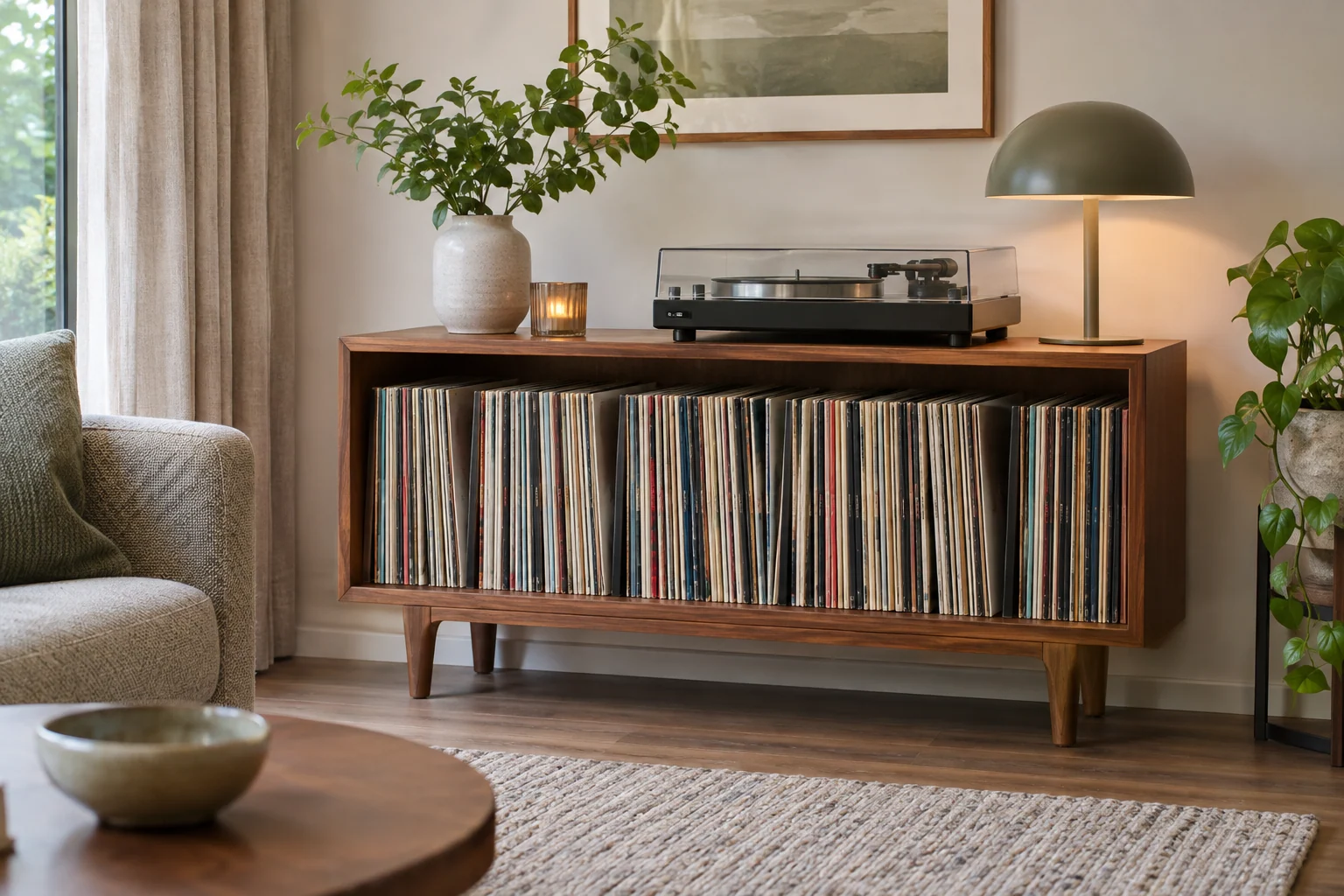
A bay with enough internal height and depth can keep the collection upright without sleeves protruding into the room. Measure the largest sleeve rather than assuming the record's diameter describes its package. Keep the whole group supported, with room to remove one album. Check the unit's actual load guidance before arranging a dense row that fills every available inch.
2. Divide a long shelf into supported groups
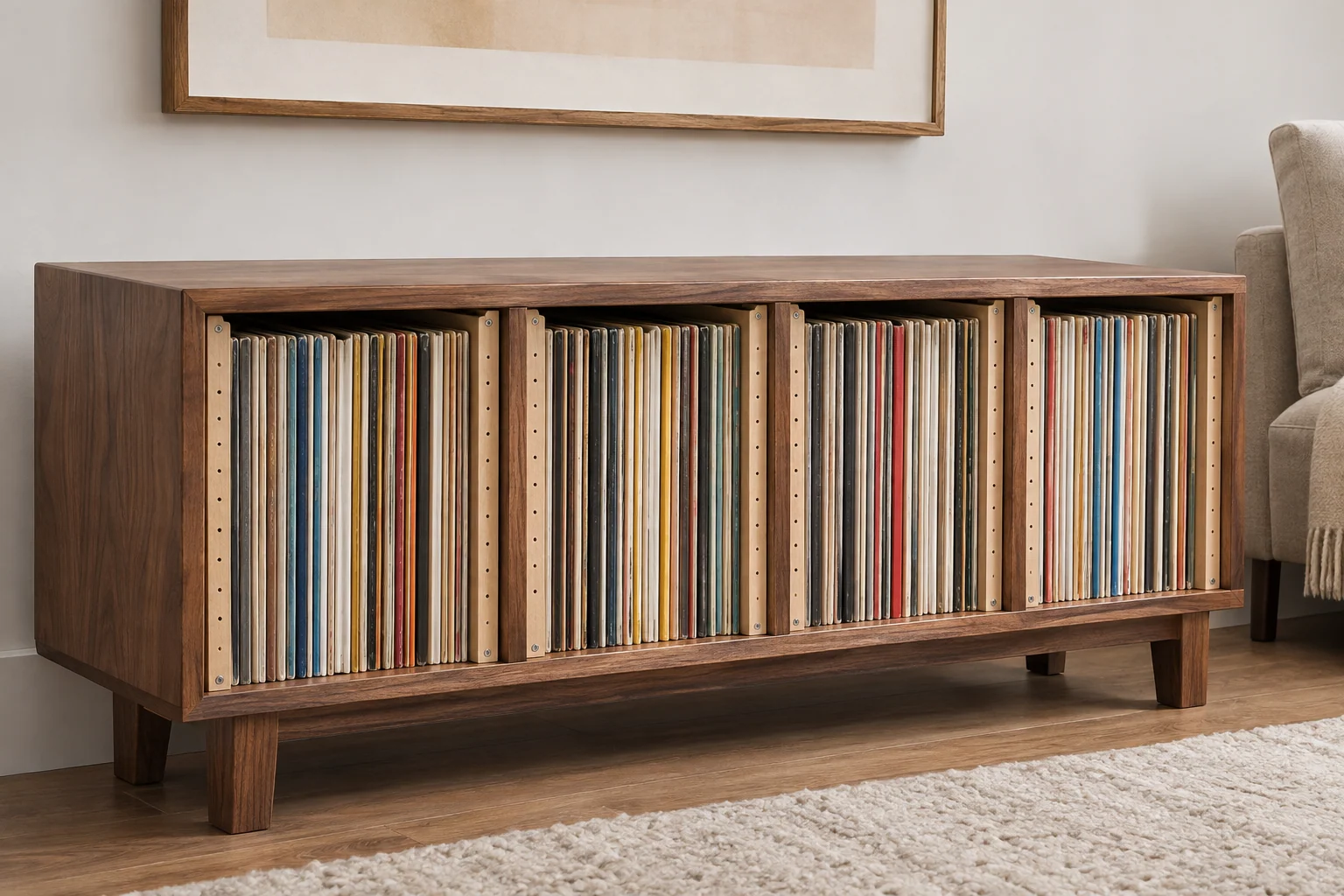
A long uninterrupted row can become awkward when part of the collection is removed. Suitable fixed dividers can give smaller groups their own support, provided the system is intended for that use. Compare the divider height with the entire sleeve face. Small decorative bookends may not provide the same support as a correctly sized record-storage system.
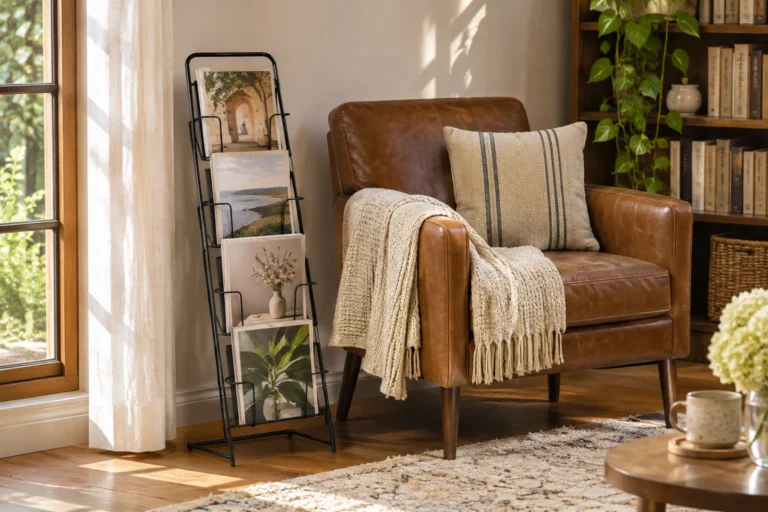
3. Choose forward browsing for a small current selection
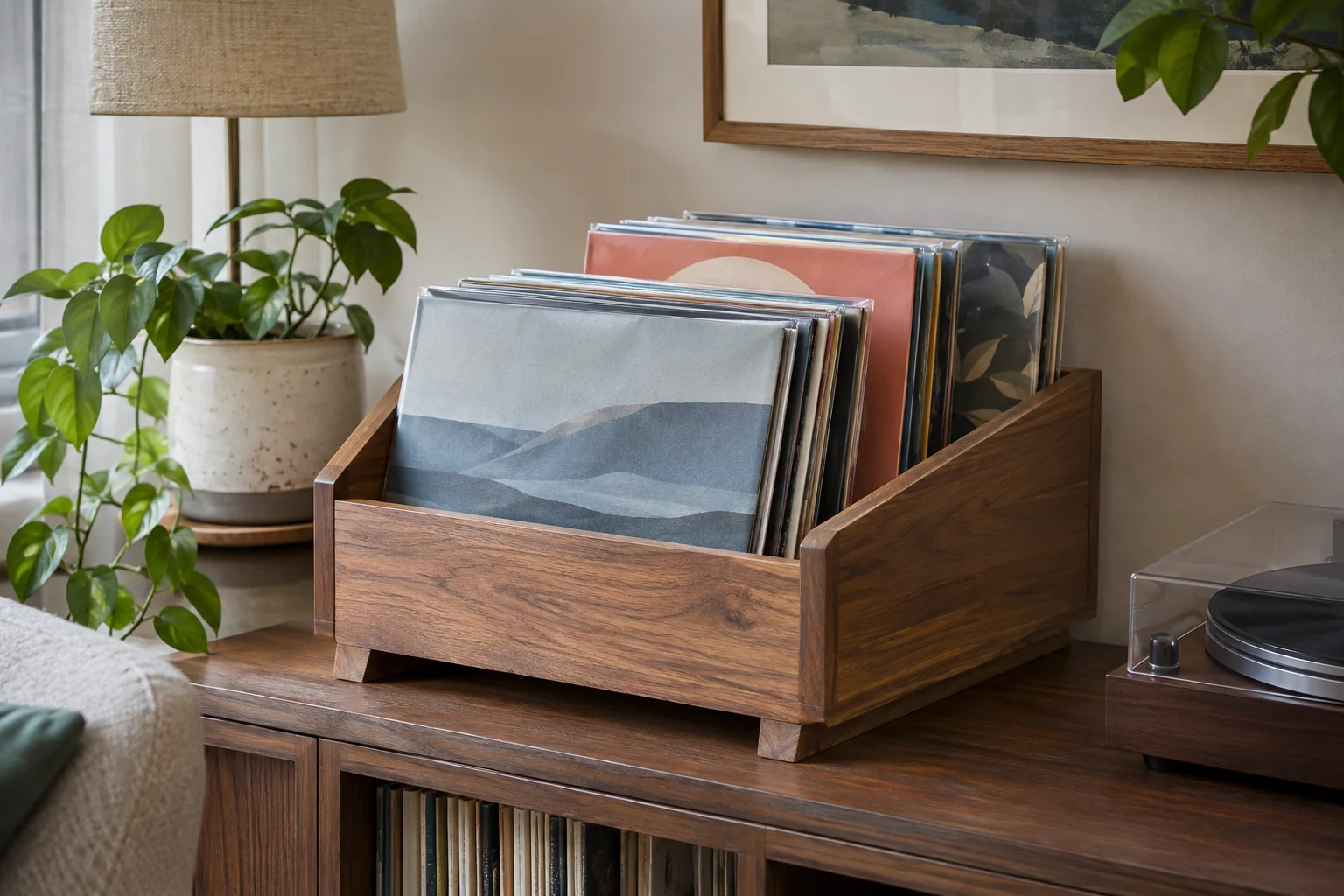
A purpose-designed flip-through bin can make a short working selection inviting. Check that it supports the sleeves in its intended position and leaves enough room to browse without squeezing the jackets. Keep the rest of the collection in appropriate upright storage. A browsing bin becomes less useful when every record is packed into it and the fronts can no longer move comfortably.
4. Keep the player on a separate supported surface
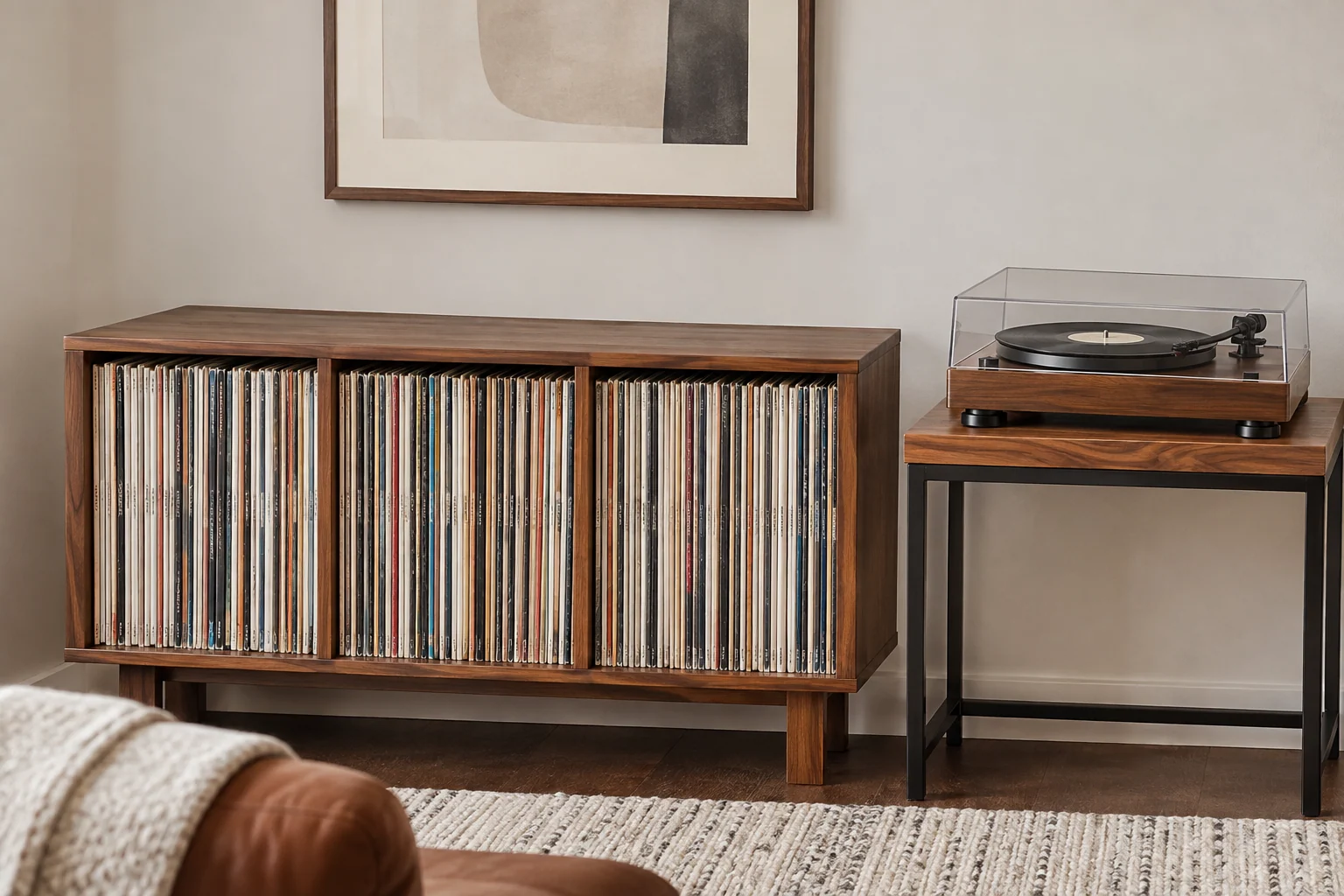
A storage unit may have a useful top, but it needs to suit the equipment as well as the records below. Compare its assembly and loading guidance with the intended arrangement. Keep the player accessible without putting loose sleeves beneath it. A separate stable furniture position can be simpler when the cabinet top is too small or the collection makes access crowded.
5. Give boxed sets their own bay

A boxed set can differ substantially from ordinary sleeves in thickness, height and handling. Keep it in a supported position suited to its construction rather than forcing it between tightly packed single albums. Test the removal route with the cabinet door open. Separating these larger items can make both the regular row and the occasional set easier to retrieve.
6. Separate different record sizes
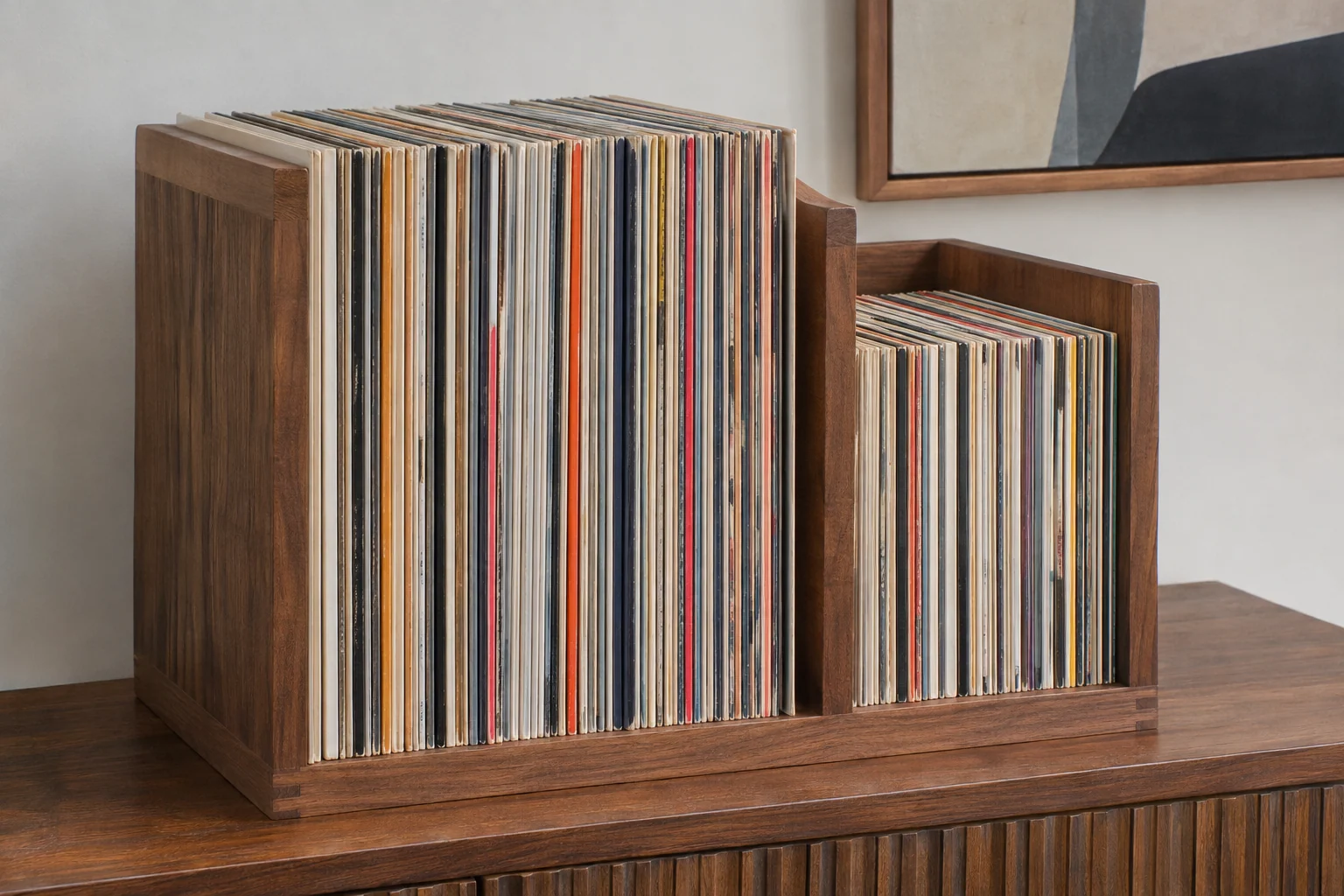
Smaller formats need an appropriate enclosure and support instead of disappearing among larger sleeves. Library of Congress guidance distinguishes storage by disc diameter. Give each size a defined group with enough support for the actual packaging. A separate small box or bay can be easier to browse than a mixed row in which the shorter sleeves cannot be seen.
7. Use a low cabinet to keep browsing approachable
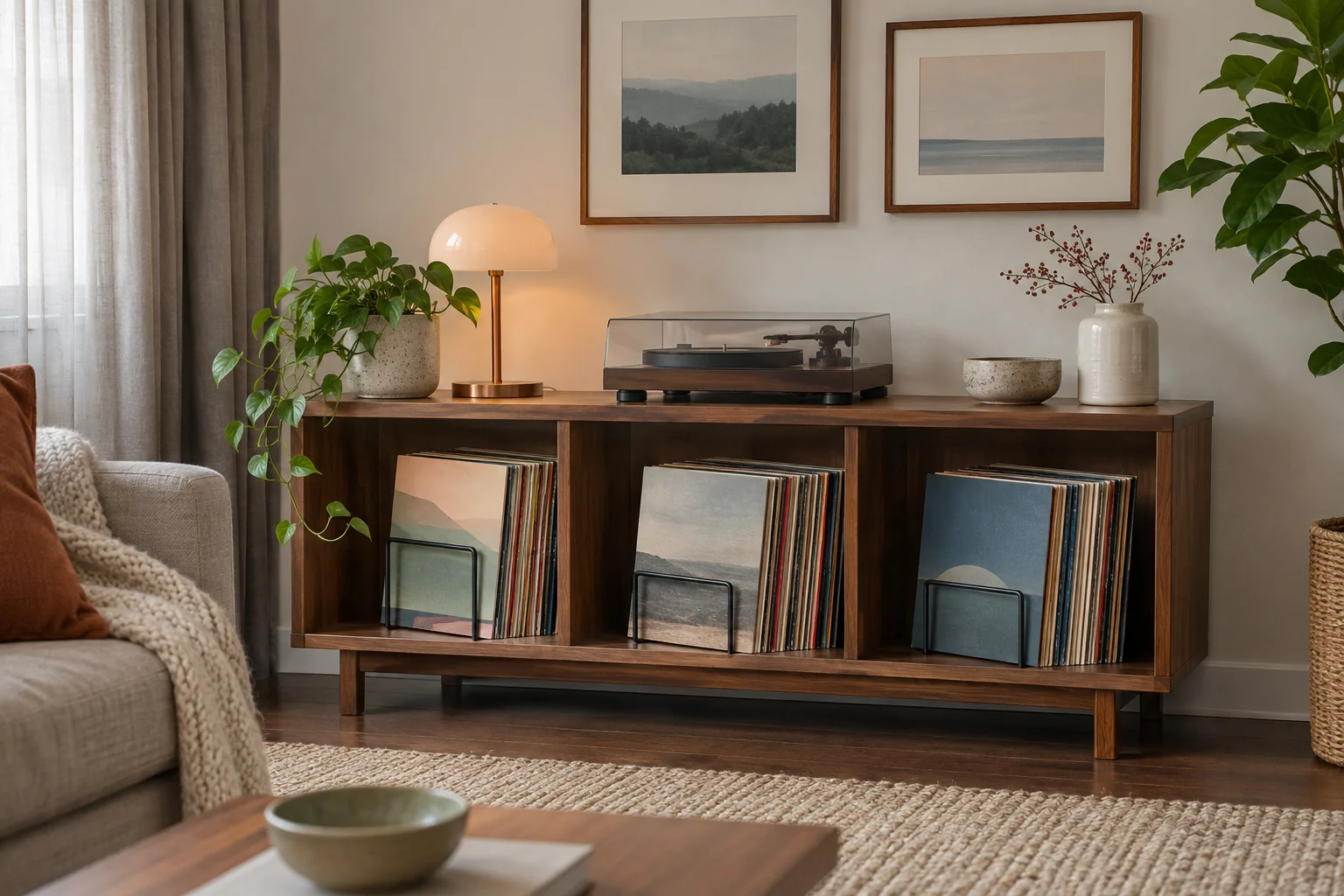
A lower unit can make a collection part of the seating area while leaving the wall above available. Check whether its bays are comfortable to reach from your usual browsing position. Do not assume a low cabinet is immune to tipping or suitable for an unlimited load. Follow the furniture's complete guidance, including any required wall restraint.
8. Keep cabinet hinges clear of the outer sleeves
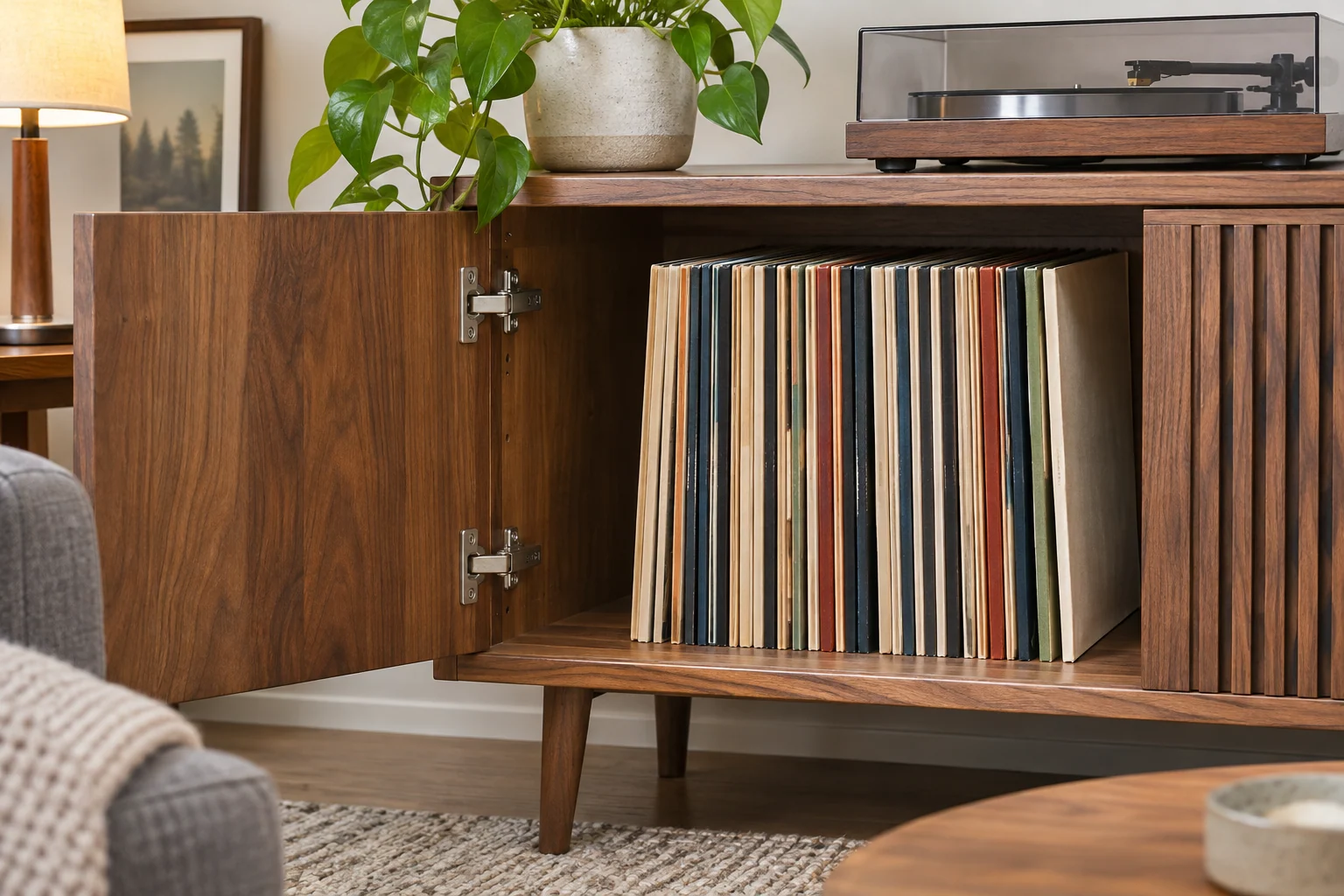
Enclosed storage can look calm, but door hardware may reduce the useful opening. Test the outer positions using a sleeve the size of the largest album. The row should not rub a hinge or require bending a jacket to remove it. Leave the needed hand space and move the collection inward when the apparent shelf width includes an unusable edge.
9. Choose a crate for its construction
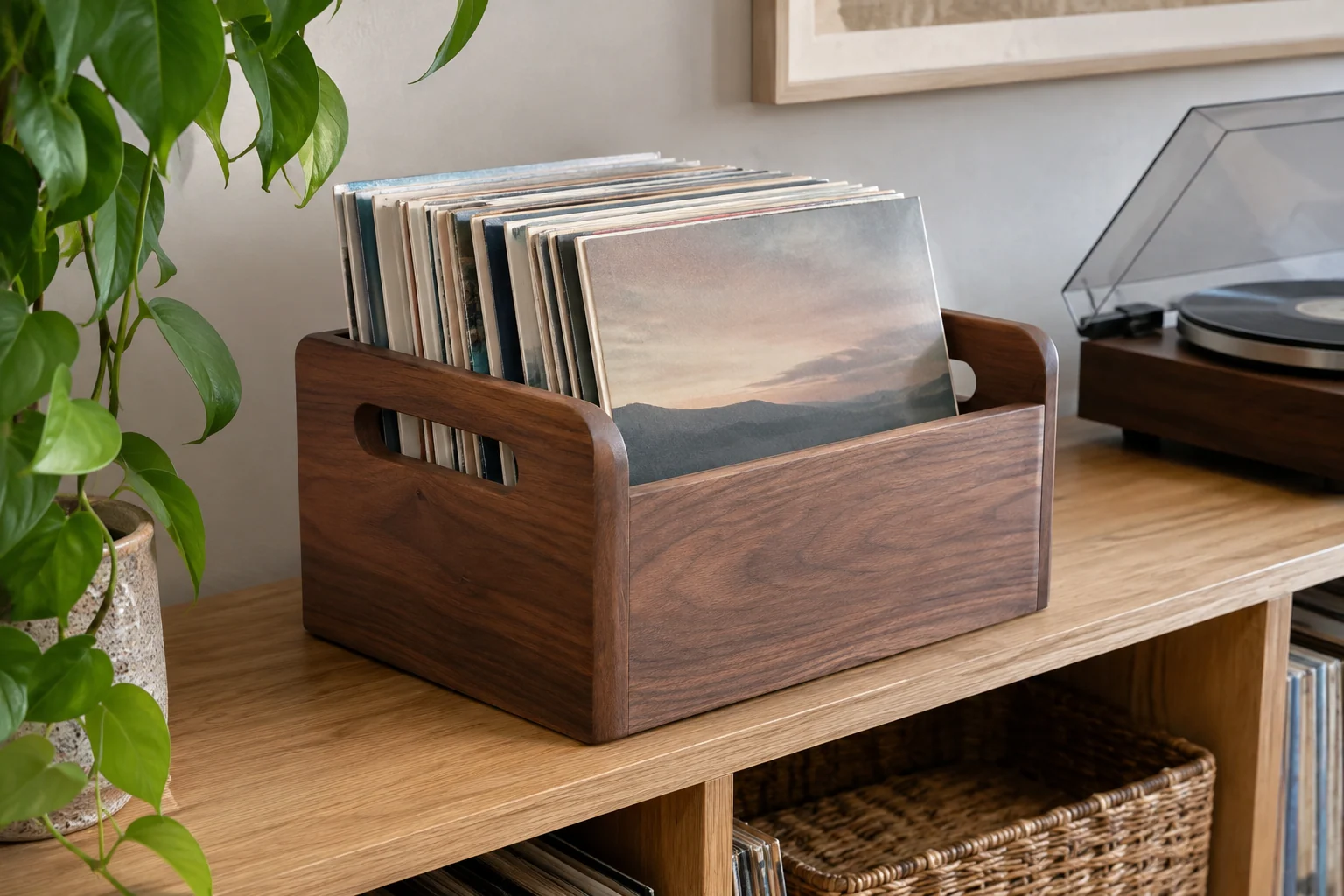
A record crate needs a smooth suitable interior, enough support and loading guidance appropriate for its intended use. A rustic appearance does not prove that a decorative container can carry a dense music collection. Check the base, corners and complete sleeve fit. Keep the crate in an accessible supported position rather than placing several uncertain boxes in a precarious tower.
10. Leave a useful amount of browsing room
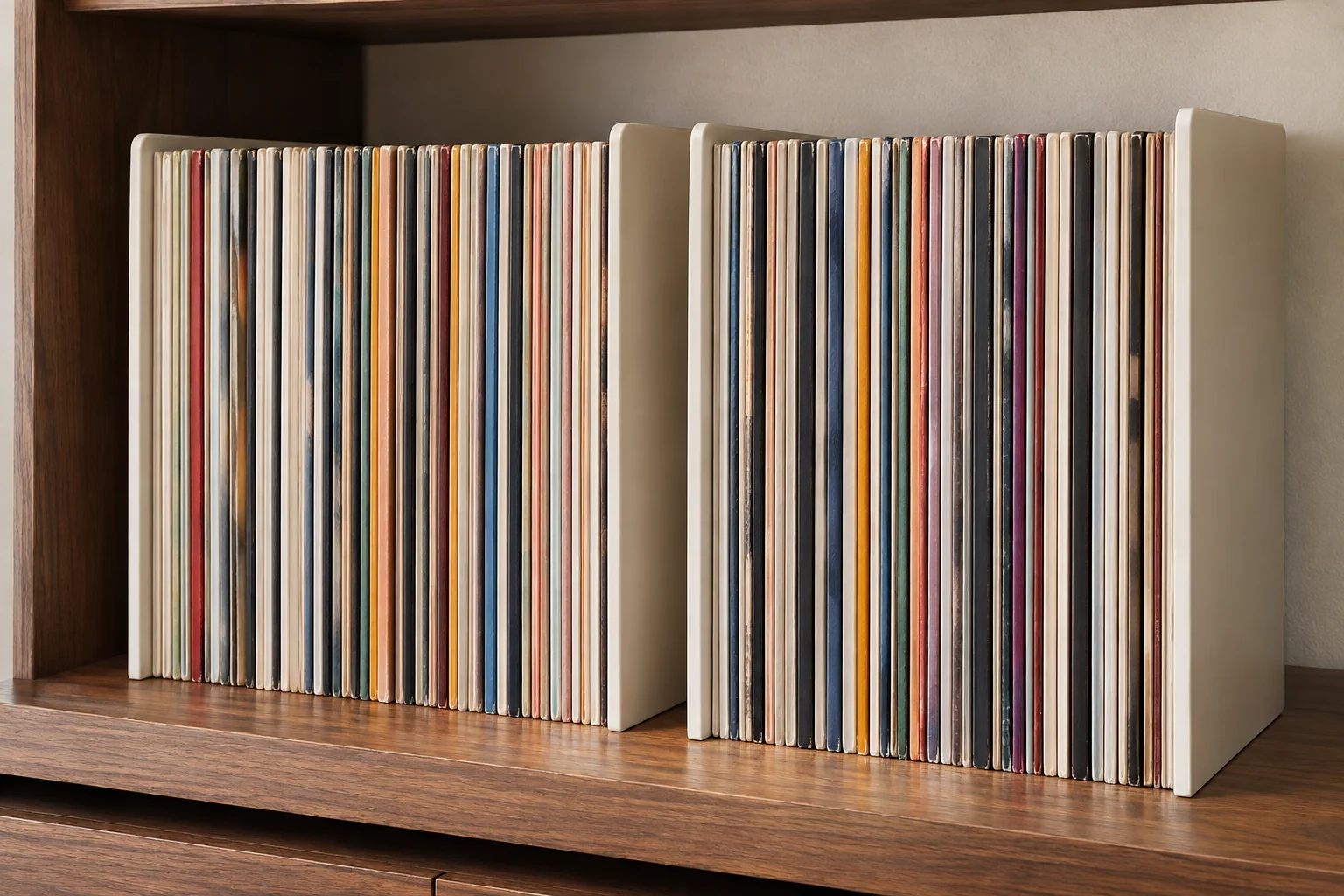
A row that is too tightly packed can make choosing an album an awkward tug. Leave enough space for the actual sleeves to move comfortably while keeping the group appropriately supported. Review the arrangement as the collection changes. More empty space is not automatically better when records lean heavily; the useful balance depends on the storage system and support.
11. Keep the current listening group small
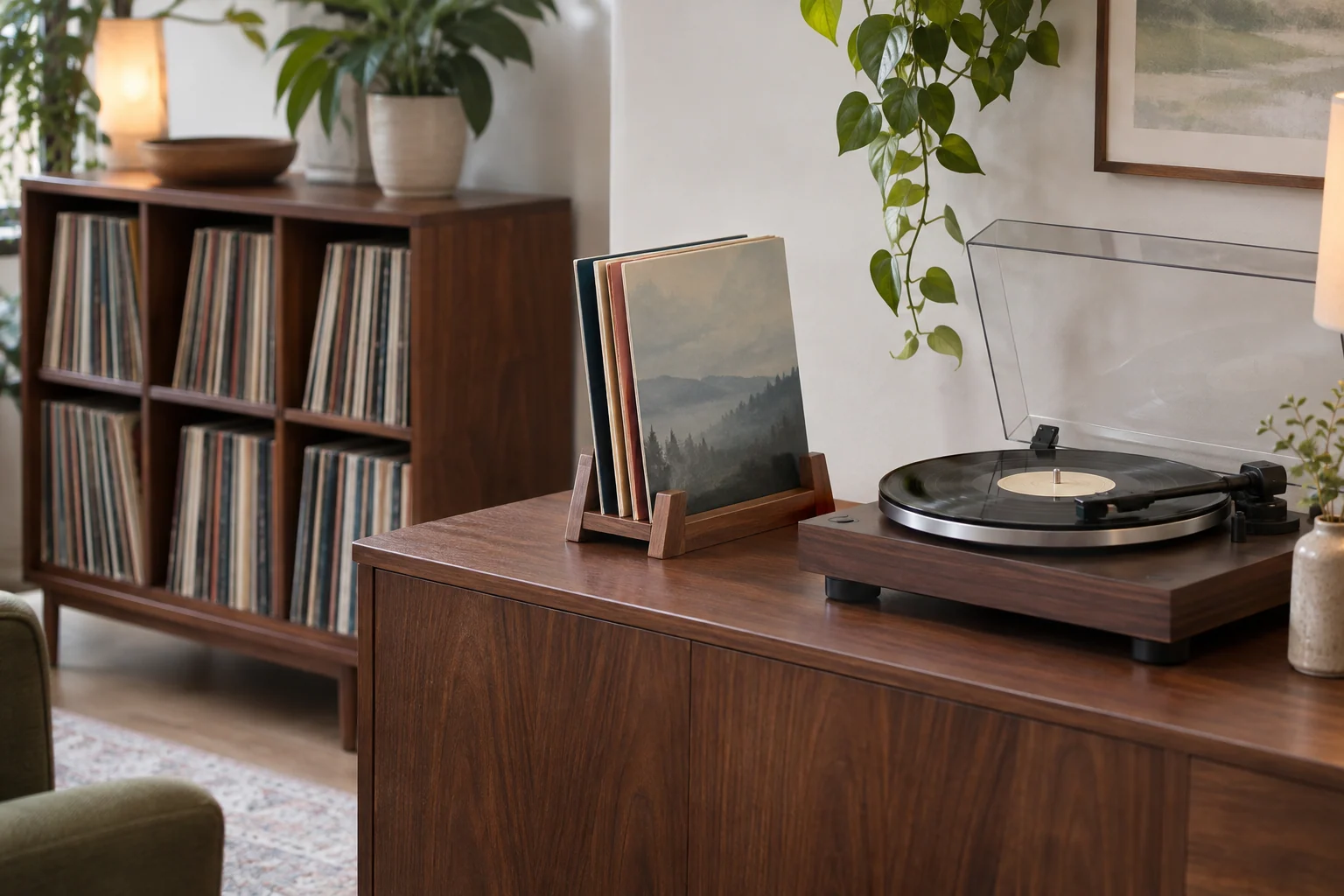
A defined group near the player can simplify a listening session without replacing the main filing system. Choose a suitable supported holder and return albums to their normal locations afterward. Keep the group limited to what you intend to play. A large temporary pile beside the equipment can become harder to manage than the collection it was meant to simplify.
12. Store sleeves upright instead of building a flat display stack
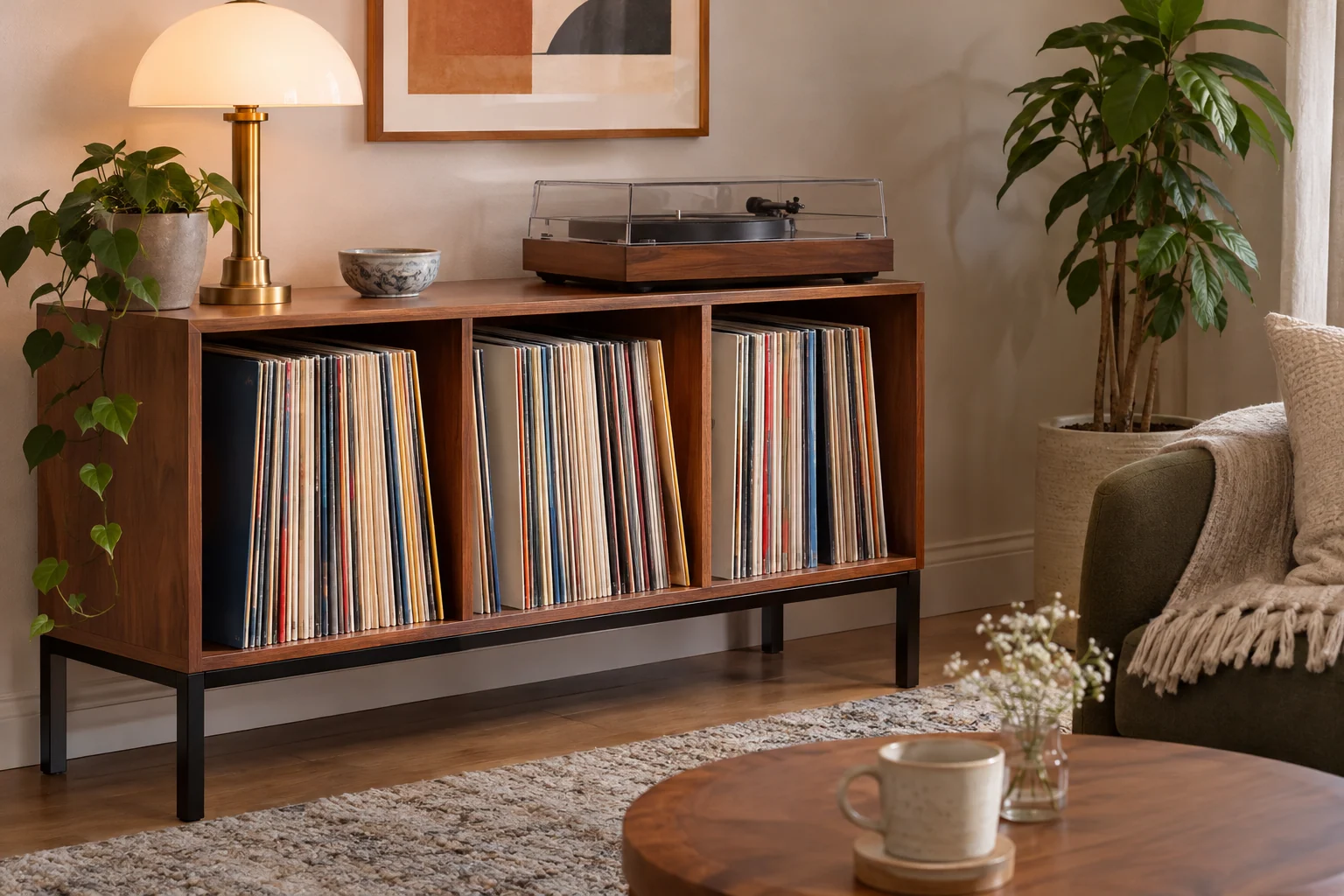
A tall horizontal album pile can be visually tempting as a styling object, but it does not follow the upright storage approach recommended for grooved discs. Let the cabinet or holder provide support instead. Keep the jackets useful as protective packaging, rather than treating them as a table for ornaments. An album should be straightforward to retrieve without lifting the weight of several others.
13. Group by artist when that matches your search
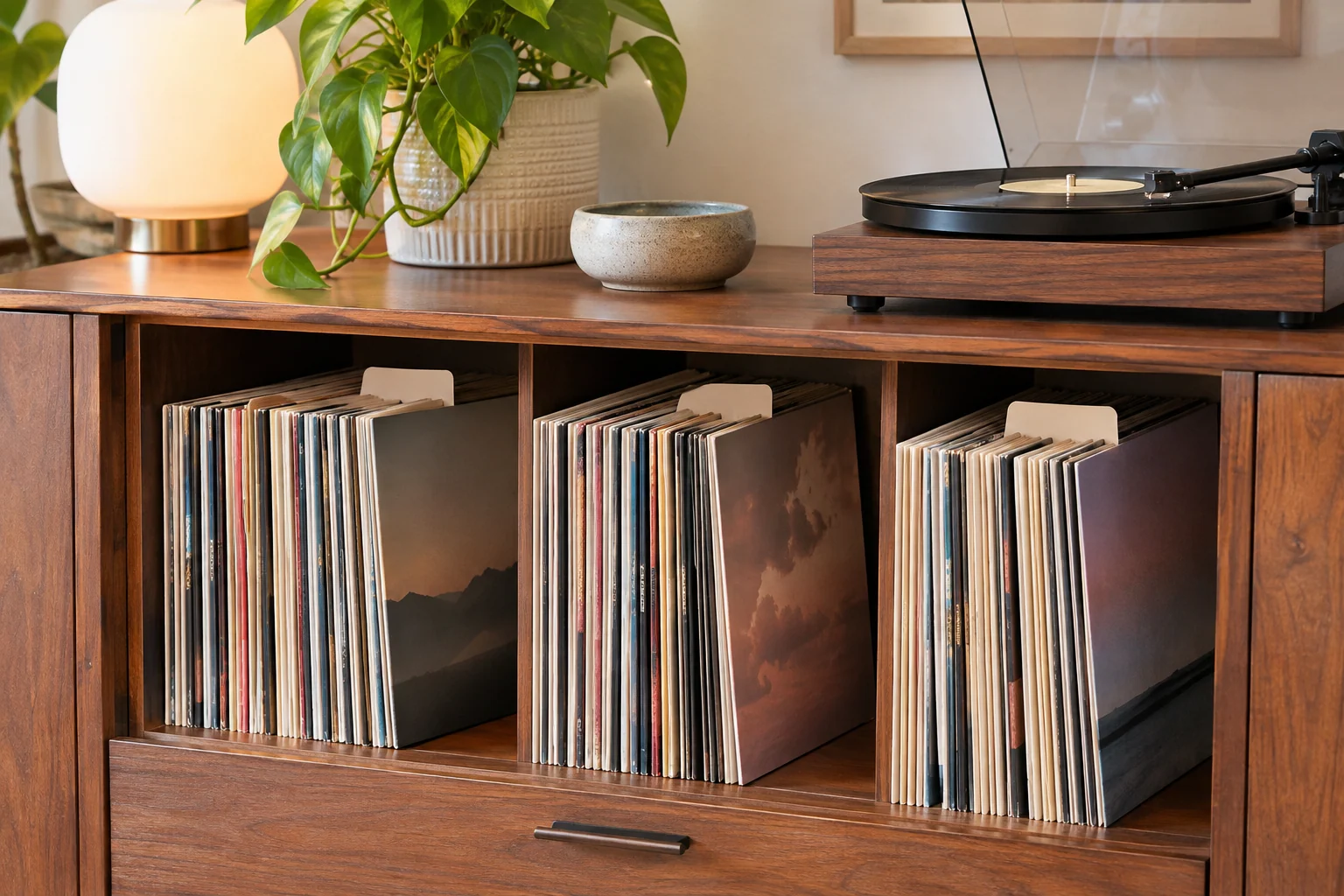
An artist-based order can suit a collection whose albums are usually chosen by name. Decide how to handle collaborations and compilations so the same choice does not need to be made every time. Keep a brief note if the rule is not obvious to everyone using the collection. The system should describe how you find music, not merely produce an appealing color sequence.
14. Use broad listening groups for a mixed household
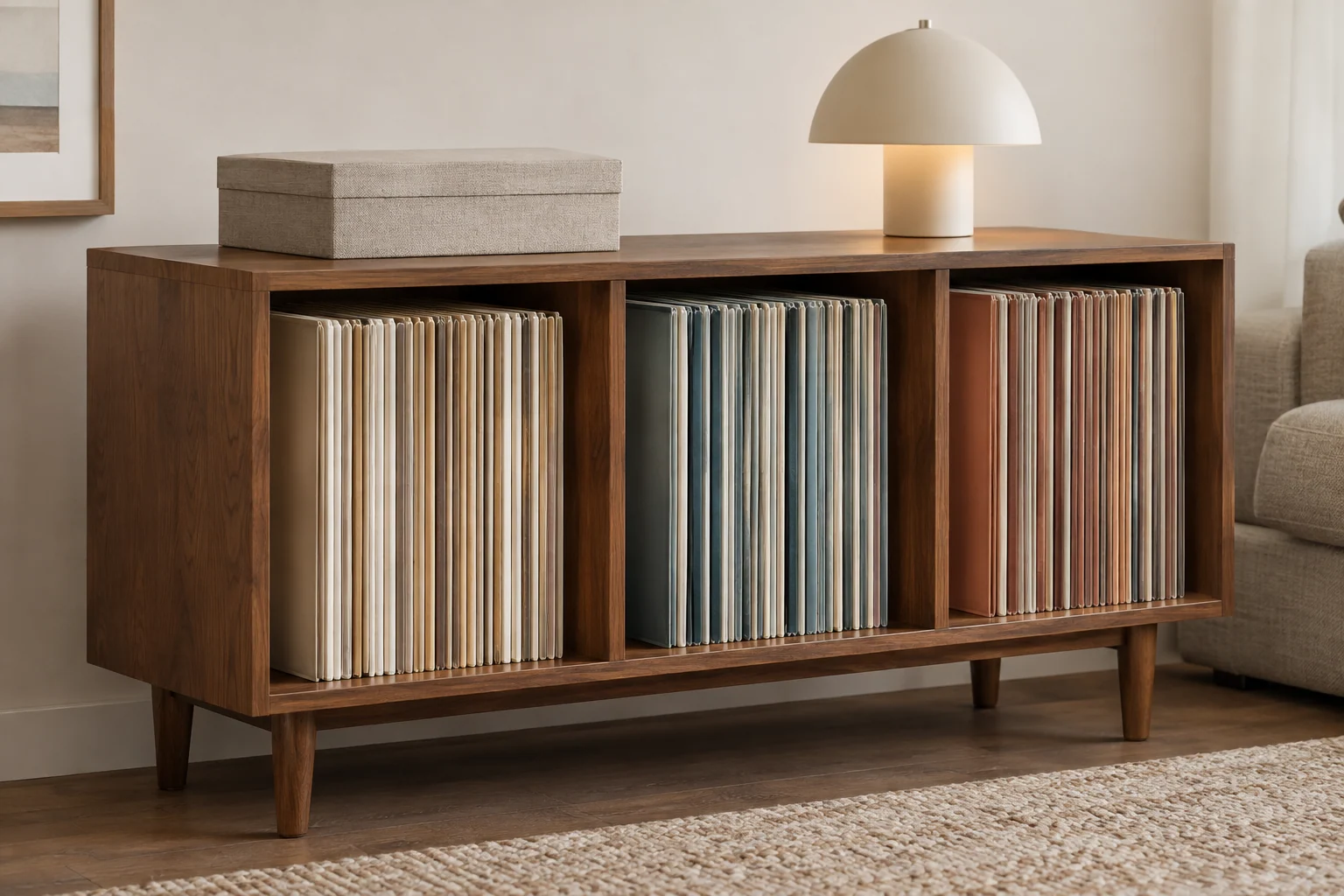
A small number of broad categories may be easier to share than a detailed personal filing system. Choose categories around the household's actual browsing habits and keep unusual albums easy to place. Avoid creating so many subdivisions that several contain only one record. Clear physical boundaries and a simple agreed rule can matter more than elaborate labels.
15. Keep new arrivals in one supported intake space
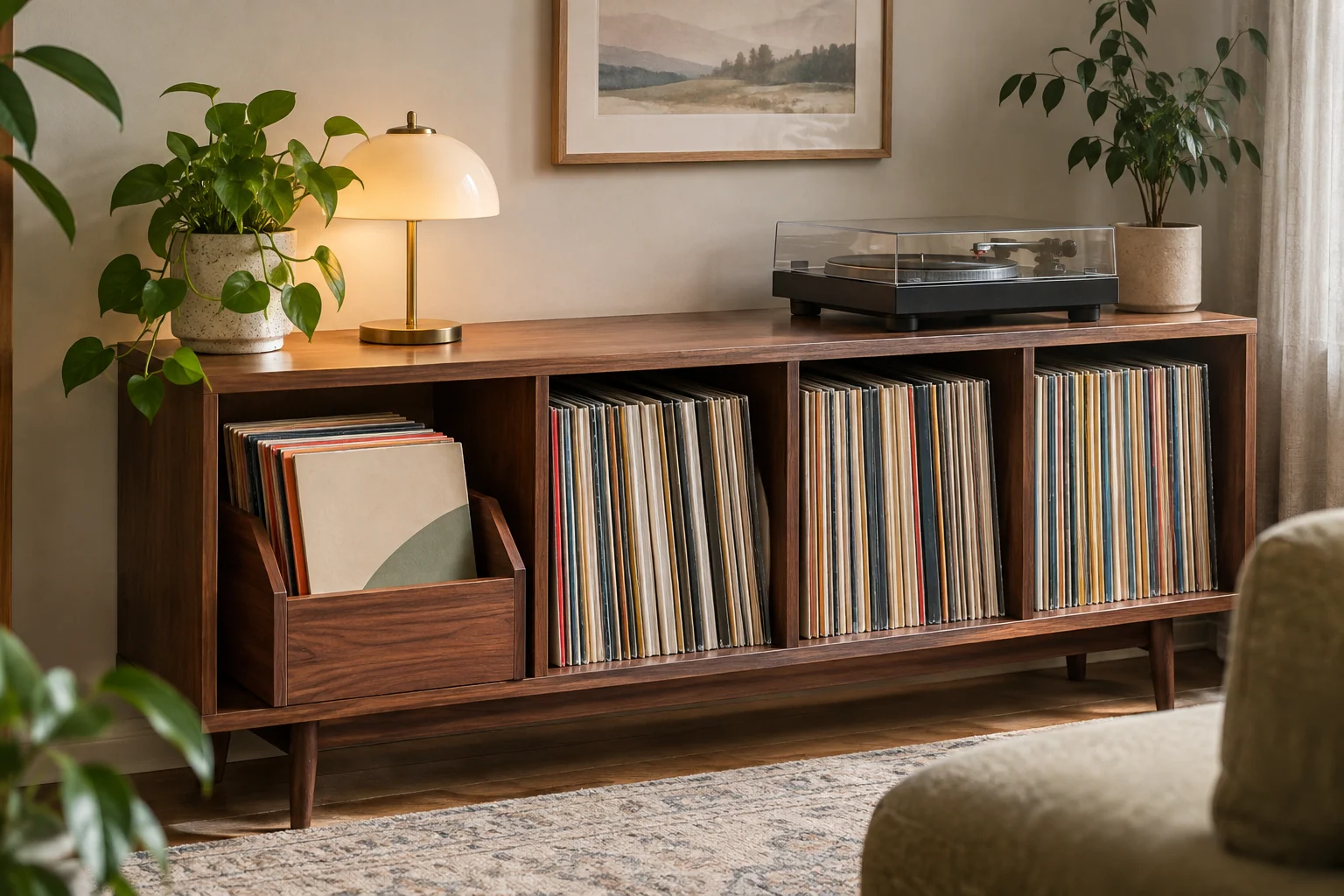
A short intake area can hold additions while you decide their regular location. Keep the records supported and protected in their sleeves, with no drinks or unrelated objects mixed in. Give the intake space a modest capacity and a routine for clearing it. Otherwise, the temporary group can become a second collection with no consistent order.
16. Make the return place visible
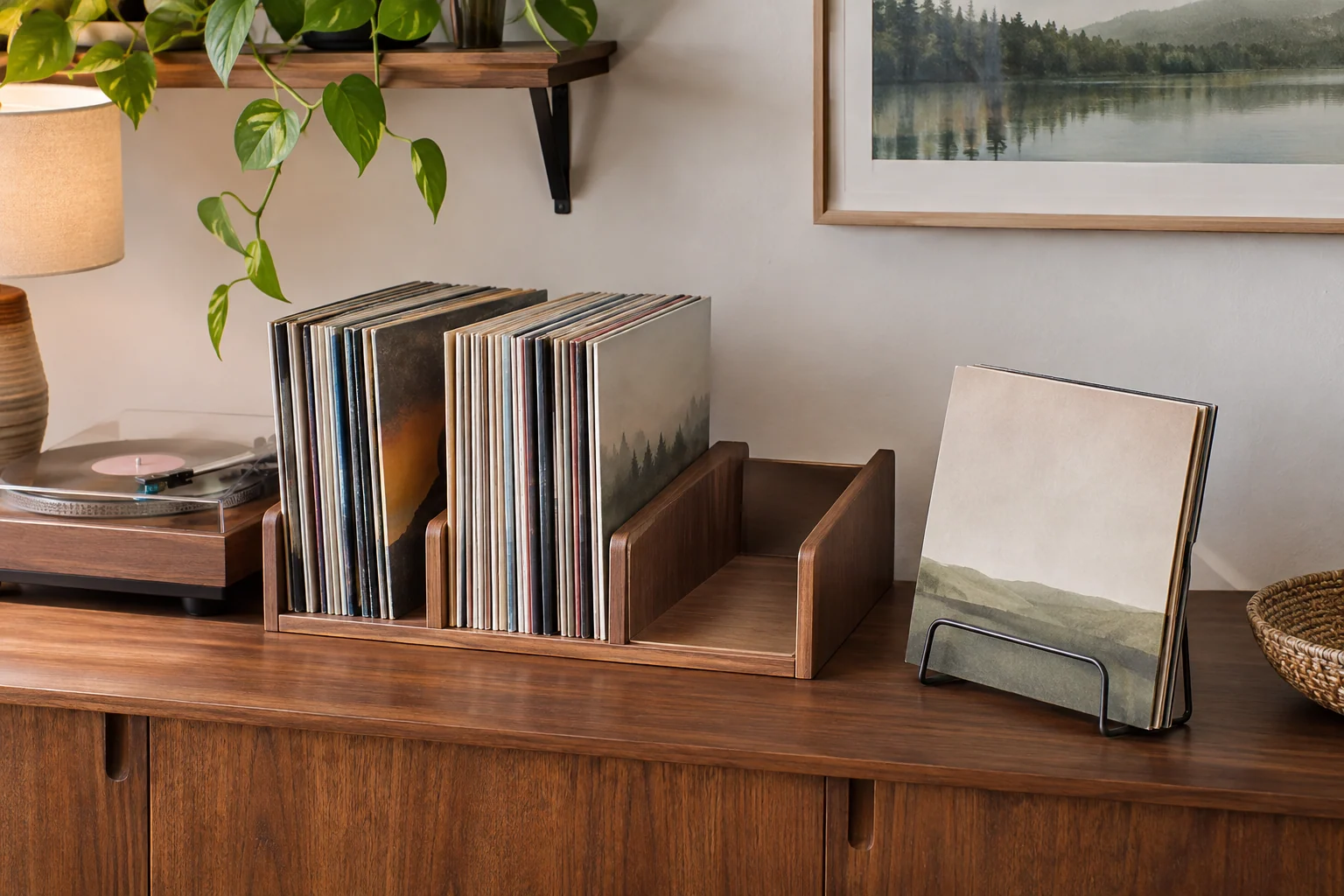
A collection stays usable when an album has an obvious home after playing. Leave the relevant divider or group recognizable rather than filling every gap with a new arrival immediately. Keep loose inner sleeves and jackets together with their own record according to the chosen packaging. A simple return routine reduces repeated searching without requiring a complex catalog.
17. Keep collection storage away from a sunny display window
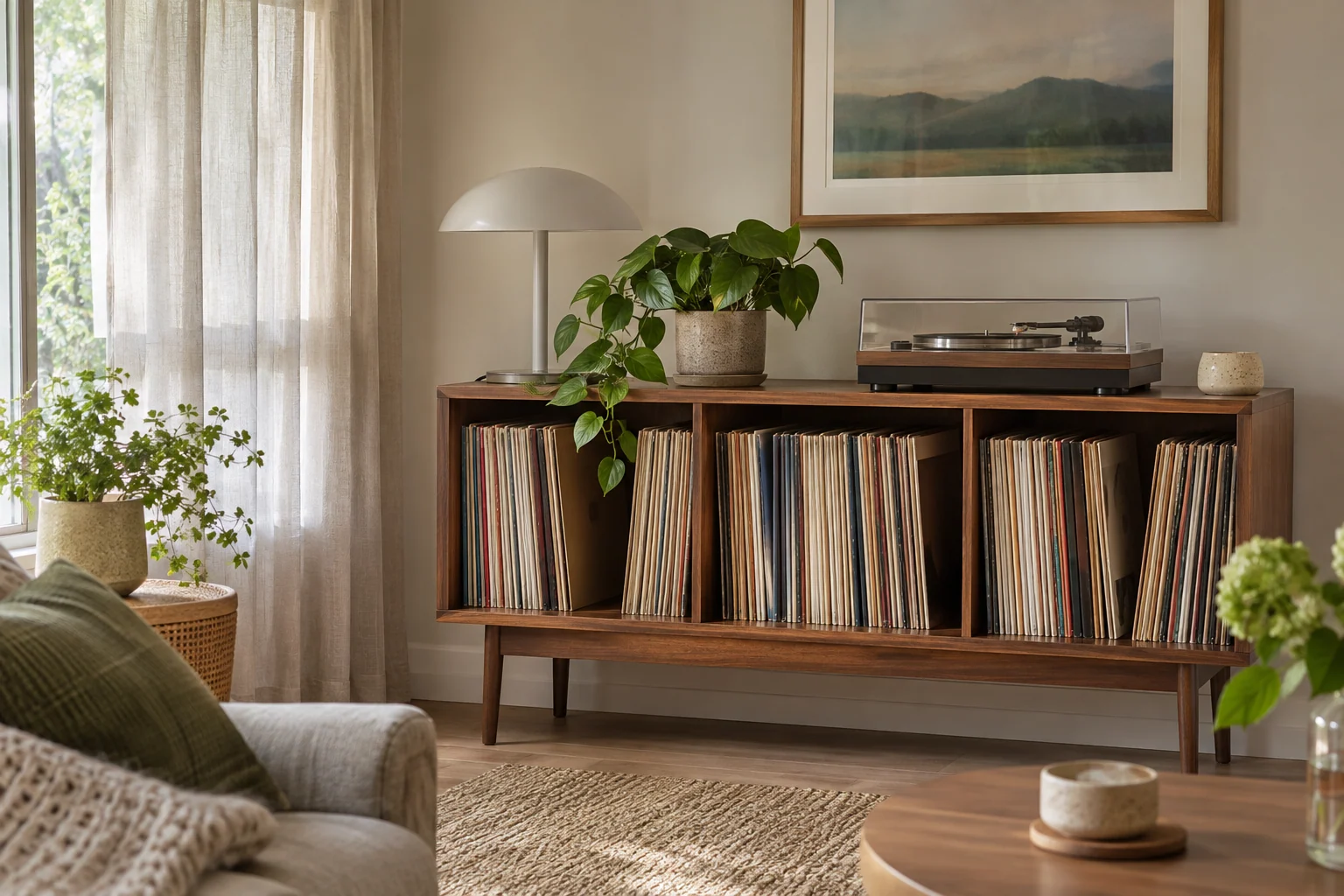
A wall near daylight can be attractive, but stored records need consideration beyond the color of their jackets. Follow preservation guidance about direct or intense light and unsuitable heat. Choose an interior position when the window area exposes the collection. The goal is a useful listening corner whose environment suits the material, rather than a dramatic display that becomes the only available storage.
18. Keep records separate from watering routines
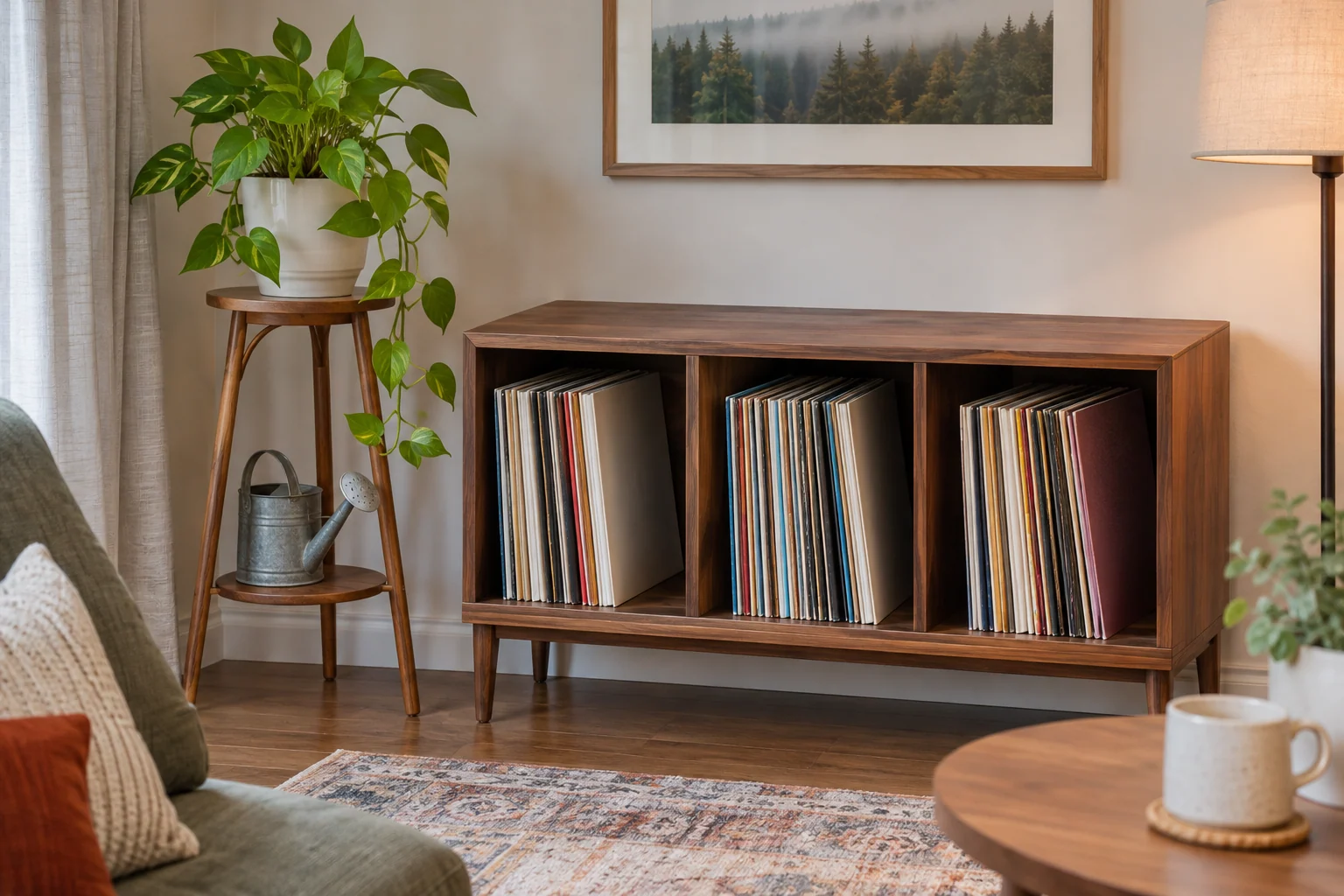
A plant can belong in the listening area without sitting above the collection. Give watering and drainage a separate suitable location so a spill does not pass through an open record bay. Avoid using a record cabinet as the catch-all for plant supplies. A little distance can preserve both the decorative role of the plant and the practical role of the storage.
19. Use a purpose-designed door-front unit for visual calm
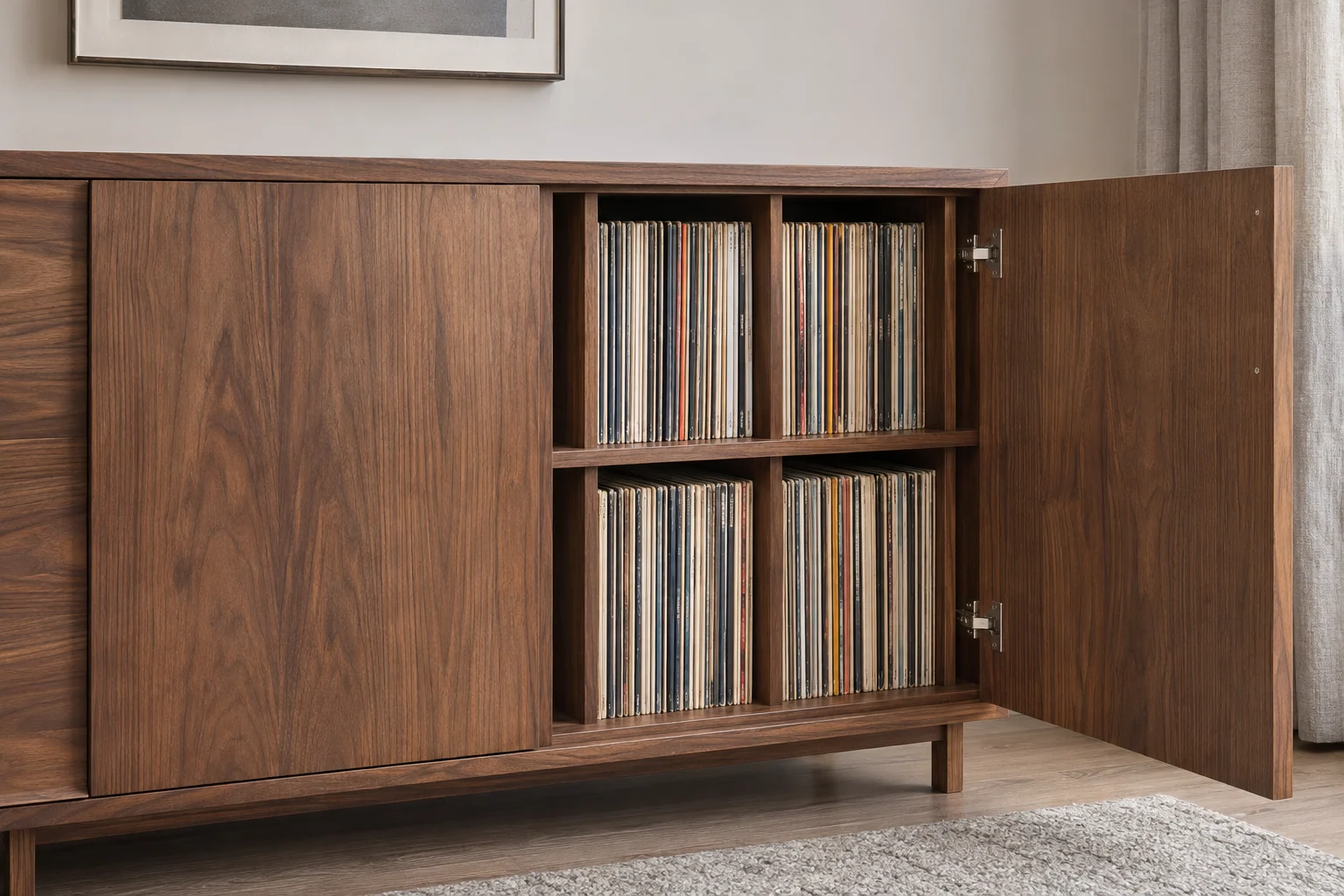
Closed doors can give a large collection a quieter appearance in a multipurpose room. Check the complete opening and make sure the cabinets remain easy to use with nearby seating occupied. Keep the interior organized into supported groups. Hiding the sleeves does not remove the need for appropriate loading, environment and a comfortable removal route.
20. Check a modular unit one bay at a time
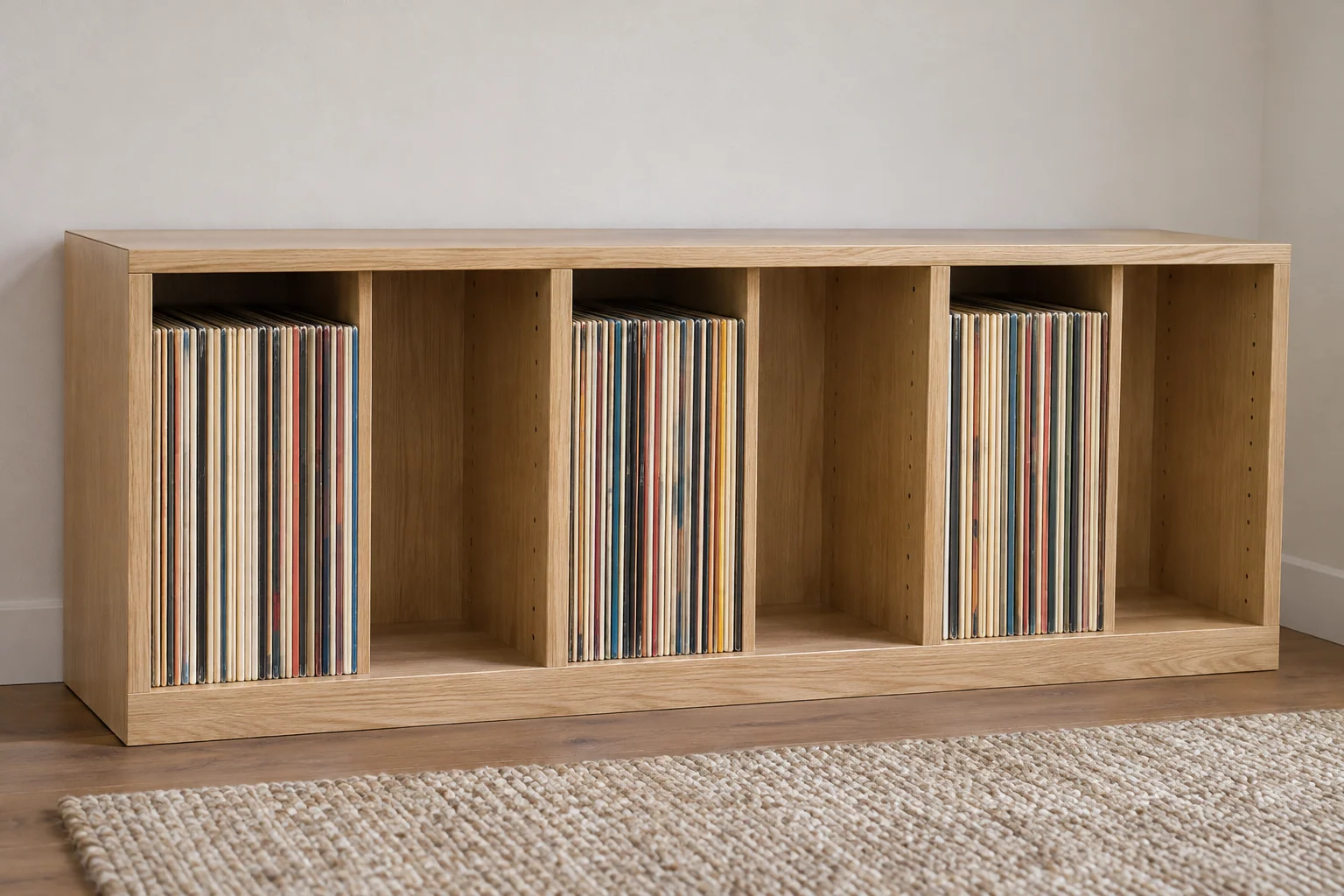
Modular furniture can divide a collection into manageable groups when the exact system is suitable. Confirm each shelf's instructions and how the complete unit is assembled and restrained. Similar-looking cubes can have different construction. Do not transfer another model's load figure or a social-media example to the unit in front of you.
21. Keep the listening corner's route clear
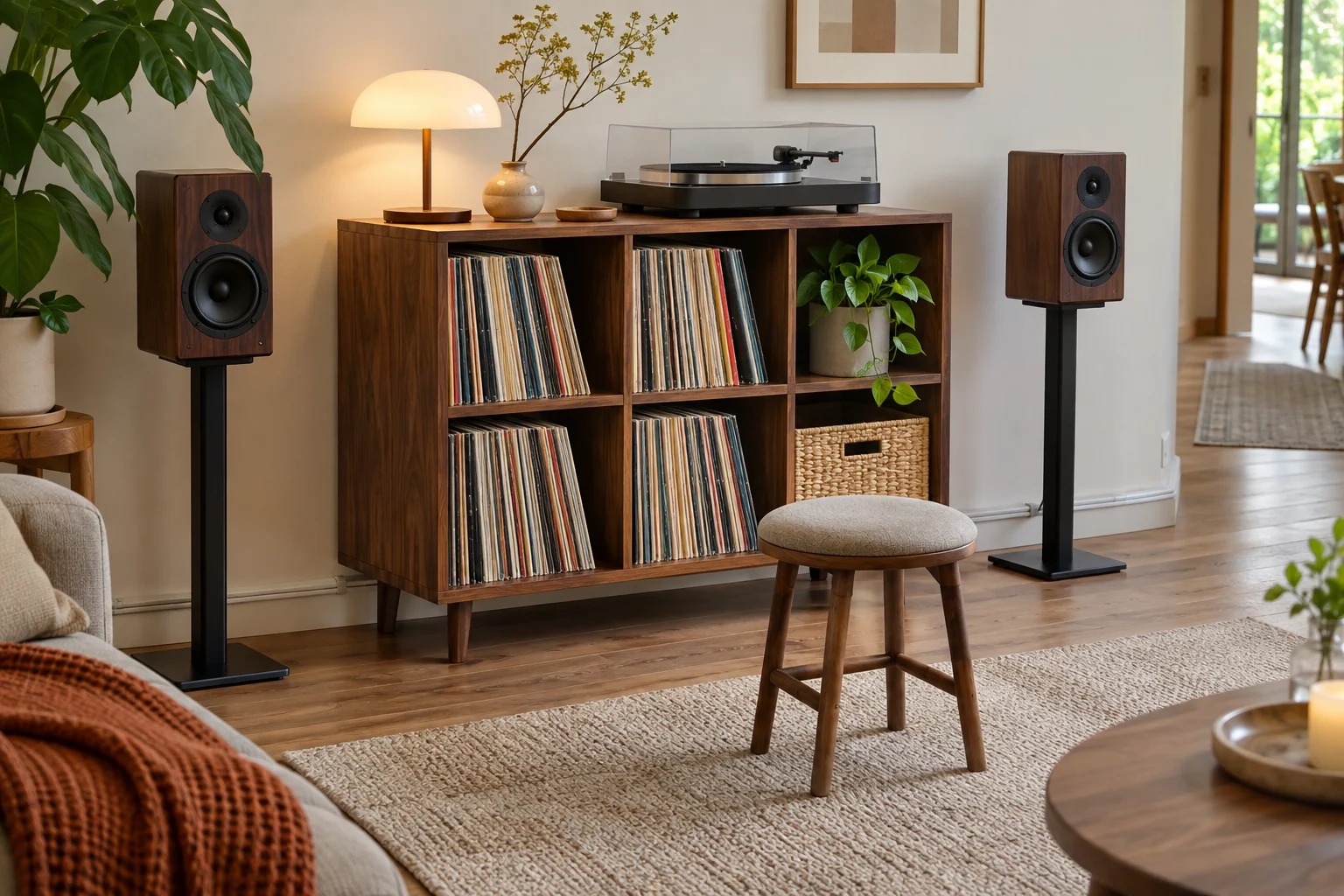
Cabinet doors, speakers, stools and browsing bins can occupy the same small area. Try the ordinary sequence of selecting, playing and returning an album with everything in place. Move the portable parts when they interfere with that movement. Keep record storage distinct from equipment cables and the route used to enter the room.
22. Use a supported display holder for a short rotation
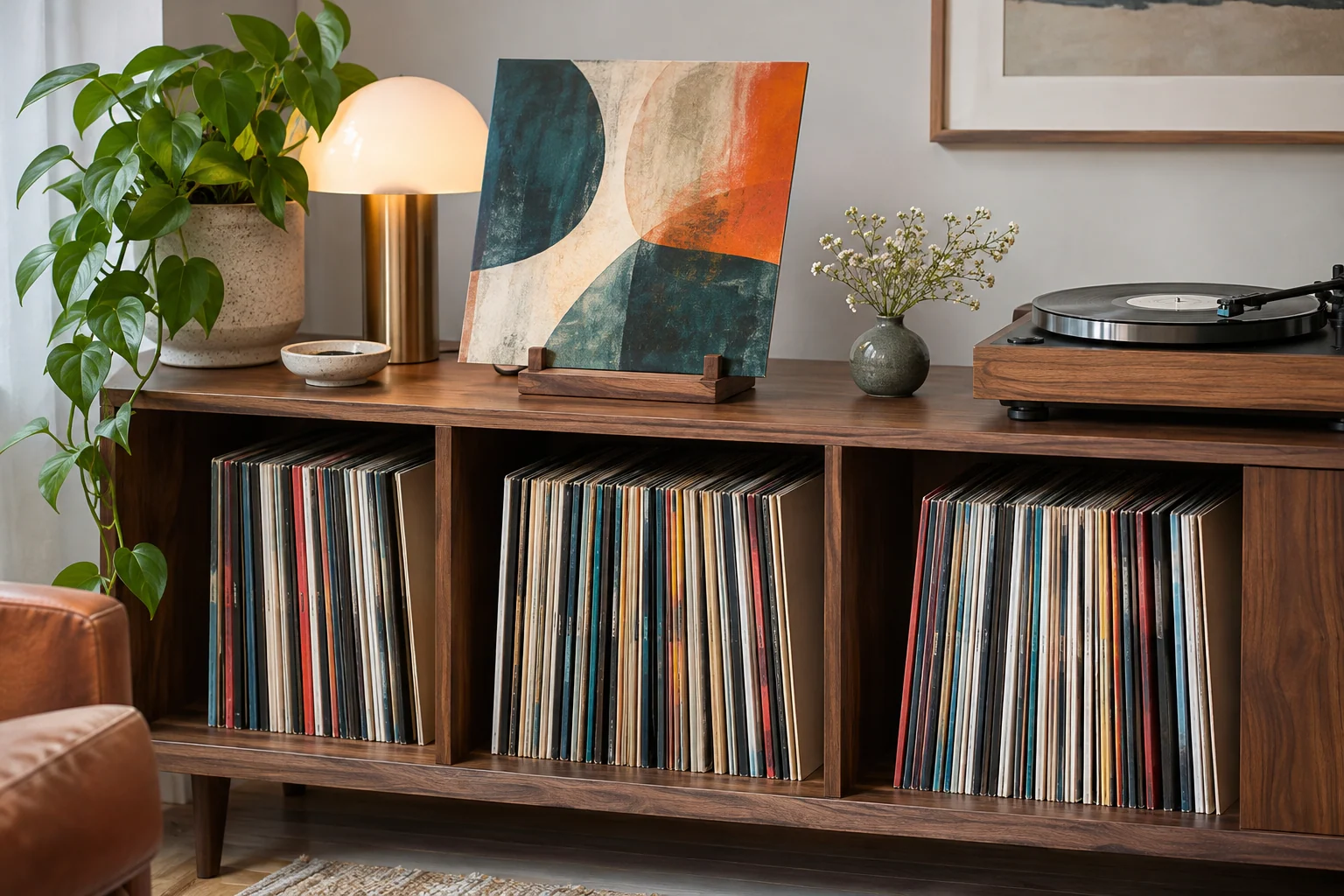
A favorite jacket can be shown in a suitable holder while its record is used or stored appropriately. Keep the display modest and follow guidance for the material and environment. Avoid balancing a jacket against unstable decor or exposing a valued cover to harsh light. A rotating display should not make the rest of the collection harder to retrieve.
23. Keep a small collection from spreading across every room
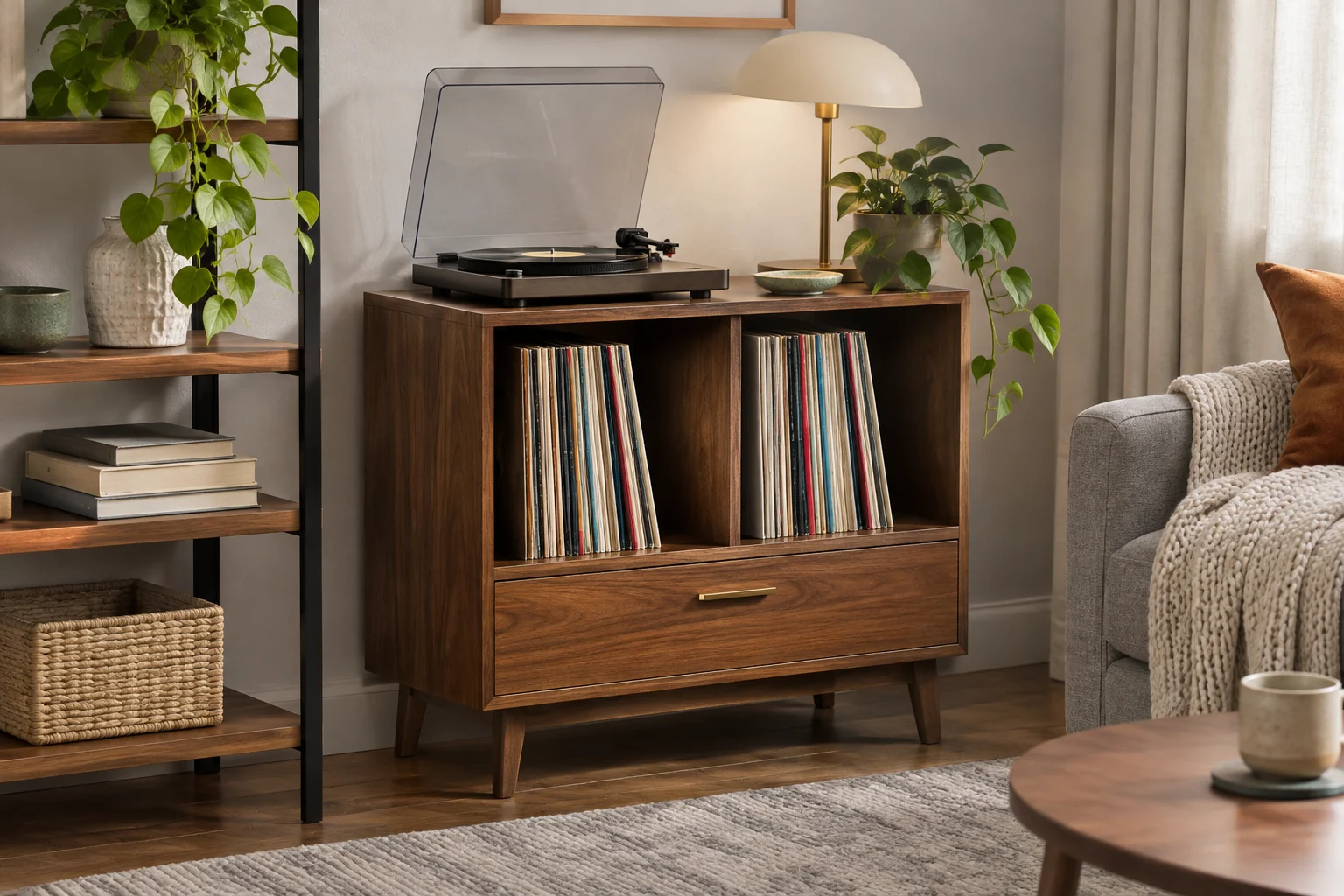
One defined furniture area can make a modest collection easier to manage than several half-filled baskets. Choose a home that suits the records and ordinary listening routine. Keep a short current-selection holder if useful, then return it regularly. Consolidating the collection can reveal whether another cabinet is needed or whether the existing group simply lacks a consistent home.
24. Plan expansion before the last bay fills
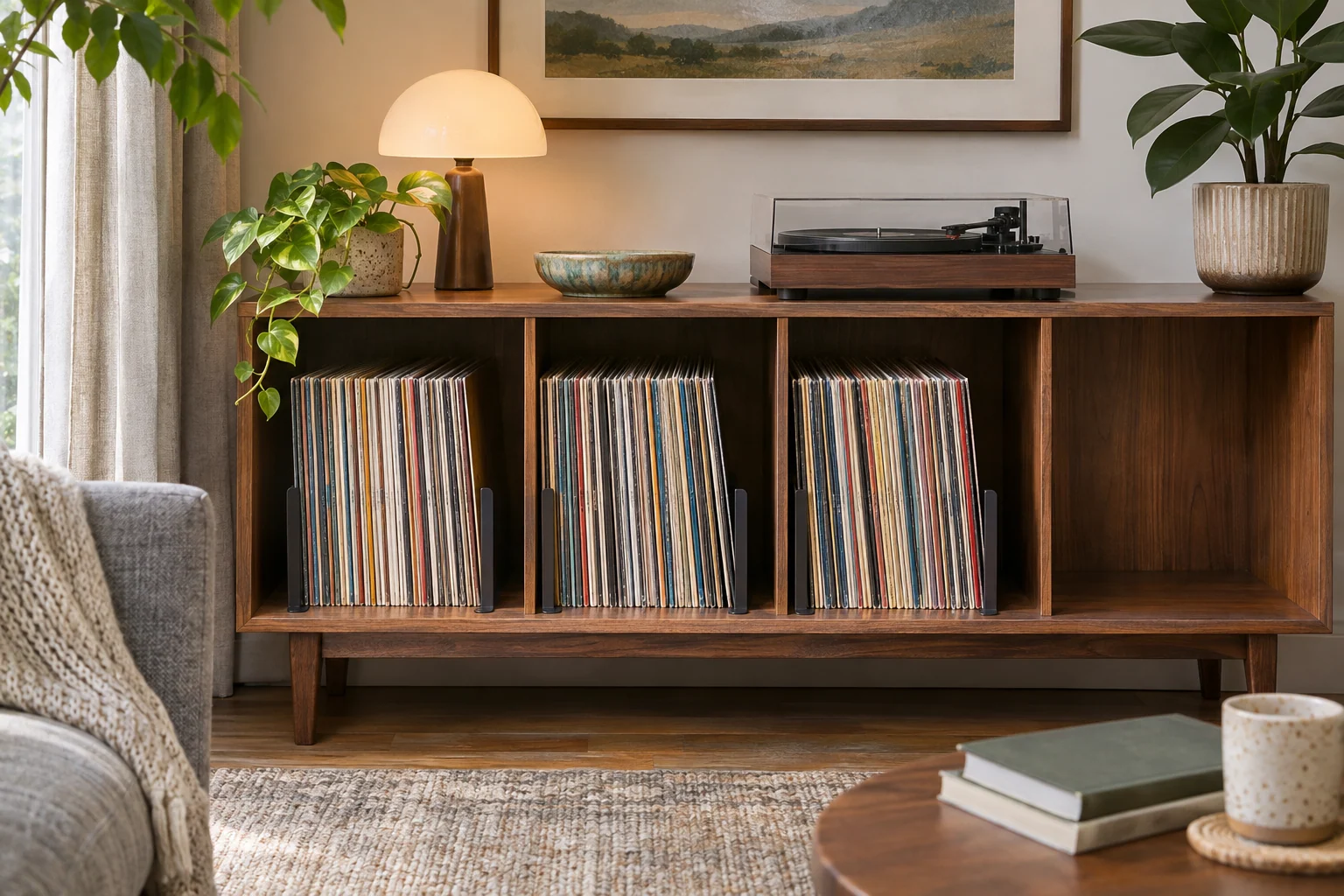
Keep a note of the usable storage you have and the pace at which the collection is changing. When the space becomes crowded, compare a suitable expansion with reviewing the collection. Avoid compressing sleeves to postpone the decision. The new arrangement should preserve support, comfortable retrieval and the room's movement rather than merely add the greatest number of slots.
25. Give maintenance supplies a separate compartment
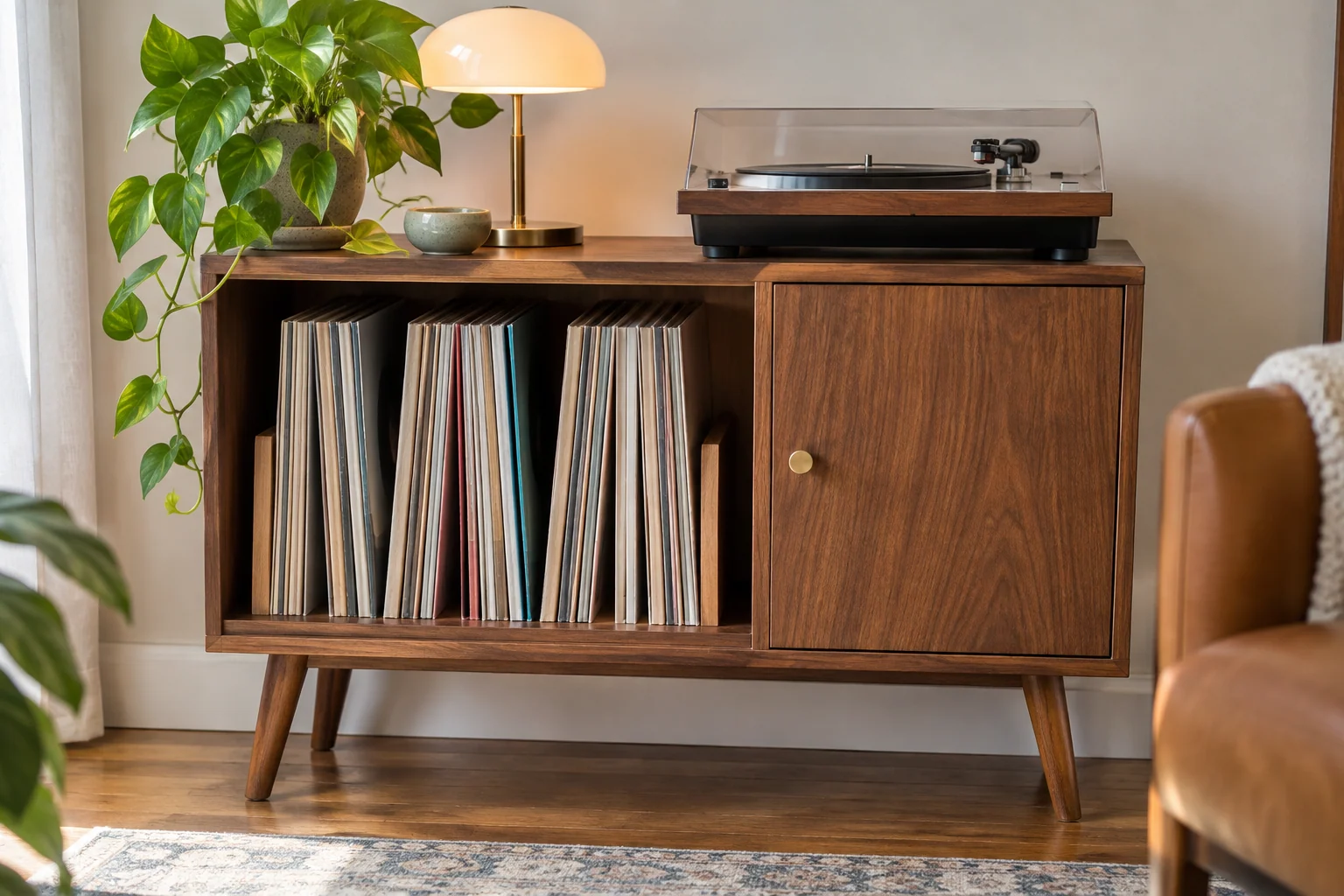
Store any record-care accessories according to their own instructions in a defined compartment away from the sleeve row. Do not assume a household cleaner is suitable for discs or jackets. Keeping supplies separate makes the collection easier to browse and reduces the chance of an unrelated liquid or loose object sharing the record space.
26. Keep a simple collection index

A list of artist, release and cabinet location can help a growing collection stay searchable. Add distinguishing details only when you need them to tell editions apart. Keep the index consistent with the actual shelves and update it when albums move. An accurate short list is more useful than a complicated database that describes an arrangement the room no longer has.
A record-cabinet compatibility card
Record the largest sleeve's height and depth; the actual thickness of a representative group; usable internal bay dimensions; the unit's stated loading and restraint requirements; and the planned divider system. If ten measured sleeves occupy 2 inches, that one sample suggests 20 comparable sleeves occupy 4 inches before browsing space. It does not predict mixed boxed sets or establish a shelf capacity. Keep thickness planning separate from the furniture's verified load limit.
A practical next step
Choose record storage around support, loading and retrieval, then make the cabinet feel part of the room. A collection that stays upright, traceable and comfortable to browse is easier to enjoy than one arranged mainly to fill a photograph.
The images are original AI-generated design concepts. They illustrate arrangements rather than tested products, installations or measured performance.
Sources and care references
- Library of Congress: Care, Handling and Storage of Audio Visual Materials
- CPSC Anchor It: Furniture Tip-Over Prevention
Related reading on Nestroxe
Optional digital guide for this topic
If you prefer a structured workbook, explore this related paid guide.