Magazine storage works better when the newest issue has a different job from the collection you intend to keep. A handful beside a chair can invite reading; years of back issues need supported storage and a way to find a particular copy. Start by separating those groups before choosing a rack.
These ideas cover ordinary reading areas, shelves and cupboards. Valuable or fragile issues deserve conservation guidance tailored to their condition. A decorative basket or wall display is a convenient home for current reading, not a promise of archival preservation.
Contents
- 1. Keep one slim rack beside the reading chair
- 2. Use a soft sling for a small working group
- 3. Give a coffee table one low reading stack
- 4. Put a shallow basket on the lower table shelf
- 5. Stand ordinary issues in fitted magazine files
- 6. Separate oversized issues into a flat bay
- 7. Use a cabinet bay for completed reading
- 8. Choose a wall rack around the loaded projection
- 9. Display one cover and store the rest nearby
- 10. Group back issues by publication
- 11. Use annual sets only when the thickness fits
- 12. Keep reference topics separate from casual reading
- 13. Leave borrowed issues in a separate return tote
- 14. Use the side of a suitable end table
- 15. Choose a smooth-lined basket for flexible issues
- 16. Keep the collection above the cleaning route
- 17. Let a guest room have a very small reading set
- 18. Create a shared household reading basket
- 19. Use a box for a defined keep collection
- 20. Keep an index beside a large collection
- 21. Give outgoing issues their own temporary place
- 22. Set the capacity around the shelf you can spare
Decide what the collection needs to do
Make three groups: reading now, keeping for reference, and leaving the home. Measure the largest issue in each group, including its thickness if several will share a holder. Library of Congress guidance on stored publications emphasizes appropriate support and protection from unsuitable light and environments. Apply that care principle to a valued collection; choose everyday displays around the smaller group actually being read.
Compare the storage or placement options
- Reading now: Small accessible rack, table shelf or smooth-lined basket; review it regularly.
- Ordinary back issues: Supported files or flat groups chosen around actual issue size and retrieval.
- Oversized issue: Full flat support or another correctly sized enclosure; avoid forced bending.
- Valued or fragile material: Appropriate conservation guidance and suitable enclosures; display convenience is a separate decision.
1. Keep one slim rack beside the reading chair
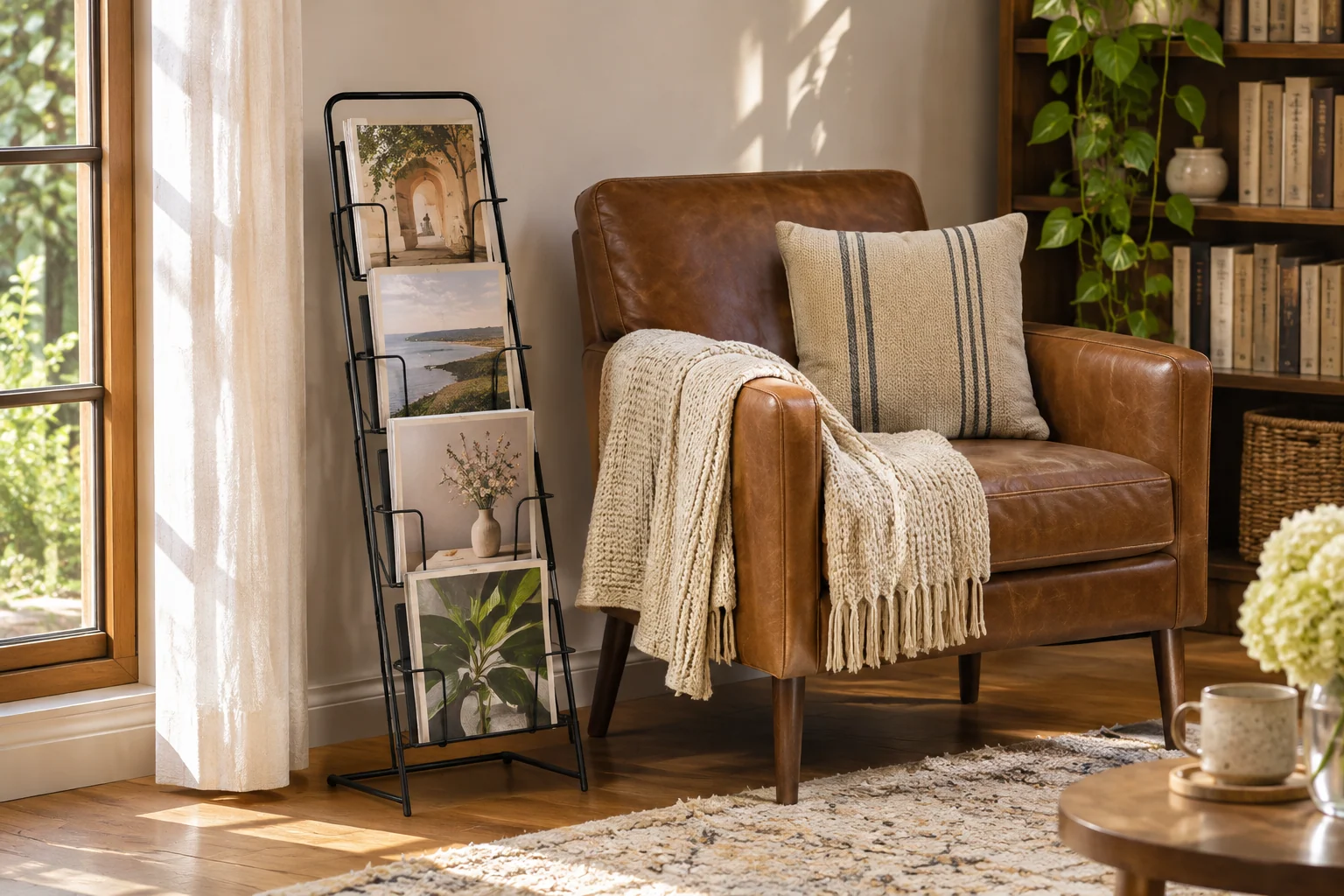
A floor rack can make the current reading group easy to reach without covering the chair's side table. Choose a shape that supports the issues without sharply bending their lower edges. Leave the rack outside the space used to sit down and stand up. Limit it to current reading so it does not gradually become a heavy, awkward archive that needs moving whenever the room is cleaned.
2. Use a soft sling for a small working group
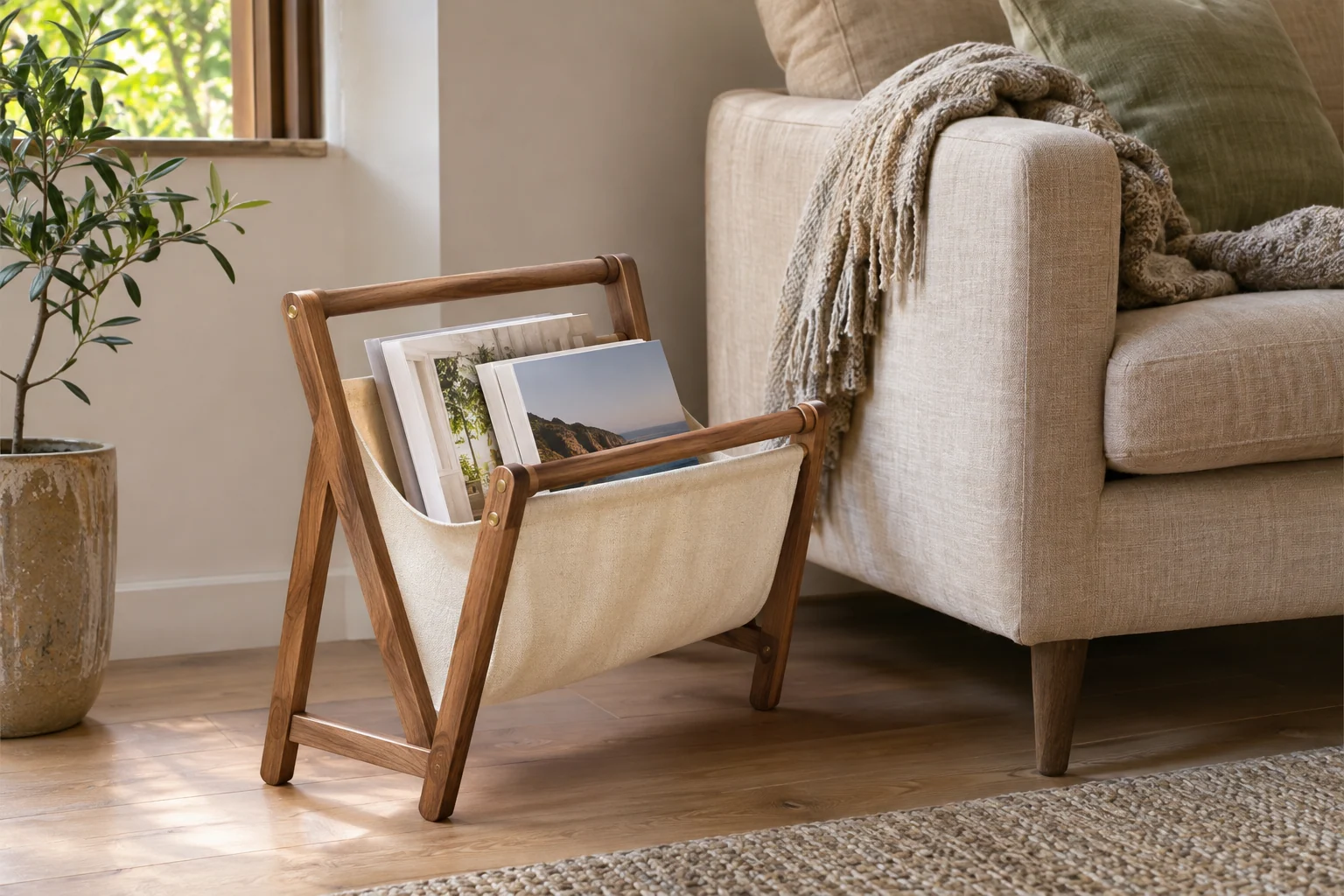
A purpose-designed fabric sling can suit a few ordinary current issues when its support keeps them from slipping or folding. Check the depth with the actual magazine: a wide-format issue may lean or curl in a narrow holder. Put the sling where the collection is used, then remove finished issues regularly. Its appeal is convenient access rather than the ability to hold every back issue.
3. Give a coffee table one low reading stack
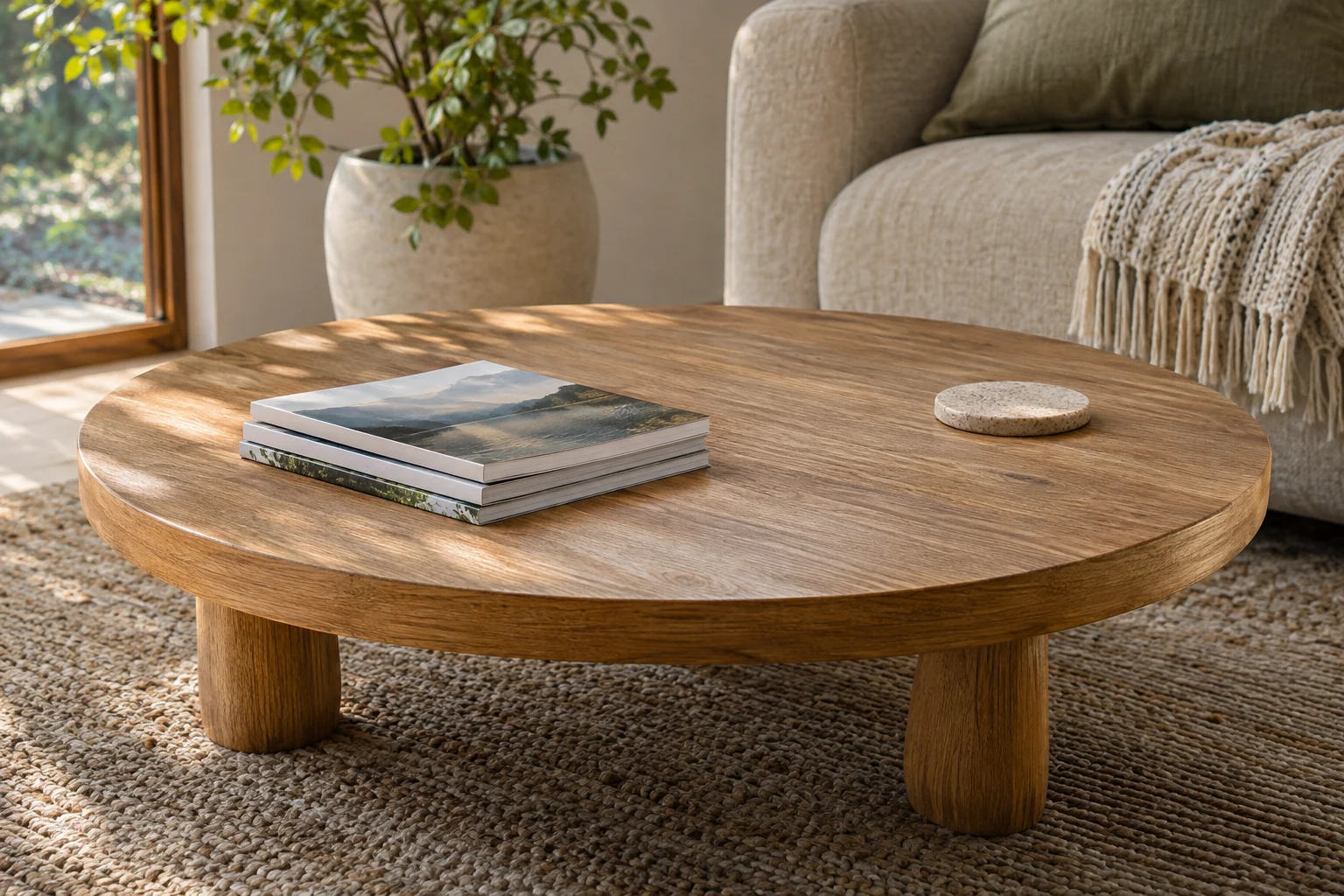
A modest horizontal stack can make a coffee table feel lived in while preserving room for other uses. Choose the few issues someone might actually open, and keep them fully supported on the surface. If removing the lowest issue requires rebuilding the whole display, reduce the stack. Give the table's decorative objects another position when they turn reading into an exercise in moving things.
4. Put a shallow basket on the lower table shelf
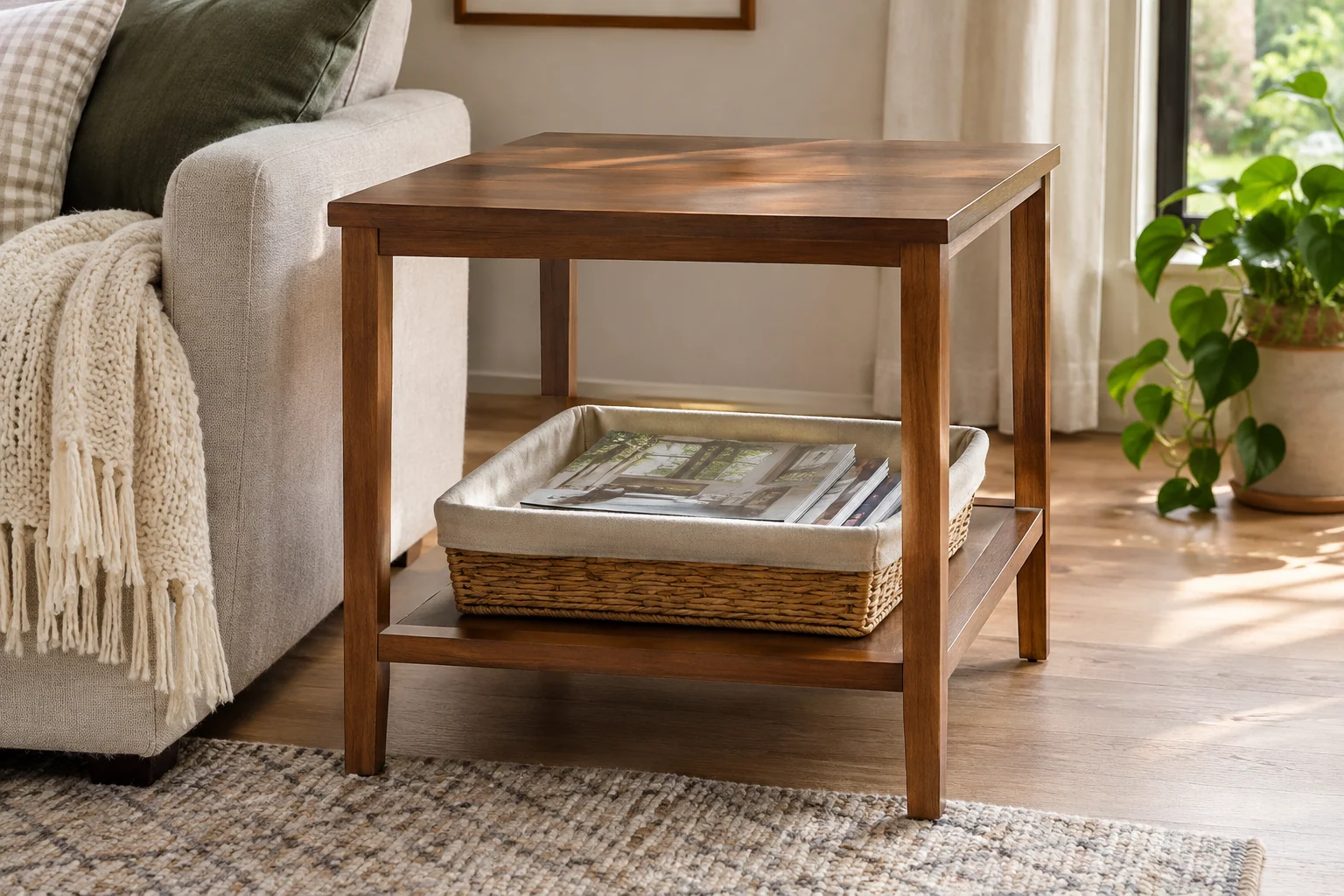
A lower shelf can hold the reading collection while the tabletop stays available. Choose a smooth interior and a basket that fits fully on the shelf. Check how the issues are lifted out; a deep container under a low tabletop may be harder to use than an open rack. Avoid packing the basket tightly enough that corners catch on its sides during every return.
5. Stand ordinary issues in fitted magazine files
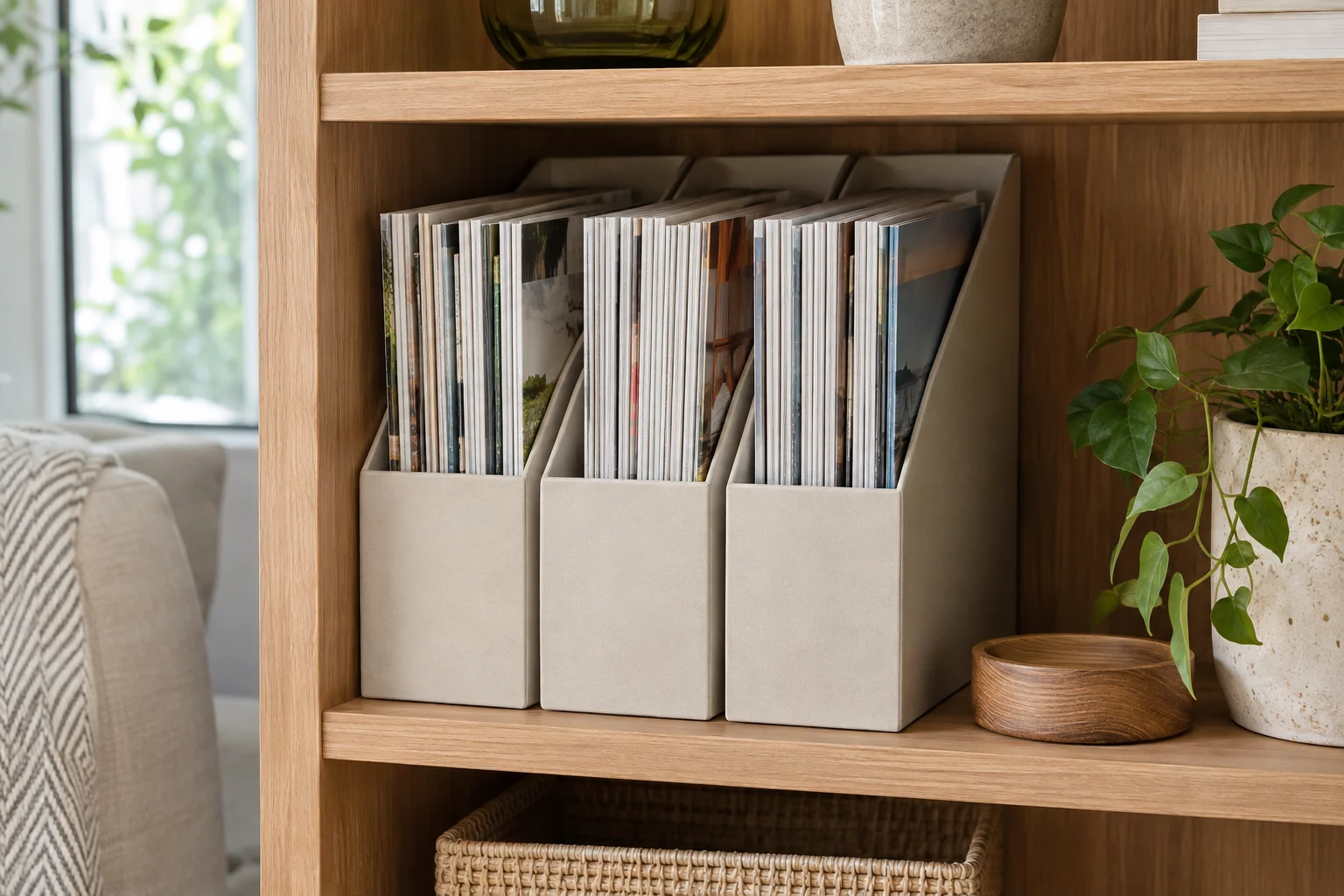
Magazine files can turn thin issues into groups that are easier to retrieve from a bookcase. Compare the holder's internal height and depth with the largest issue, not just the outside dimensions. Keep each file light enough to handle comfortably. For material kept for its long-term value, choose appropriate conservation-quality enclosures rather than assuming every decorative cardboard file offers the same protection.
6. Separate oversized issues into a flat bay
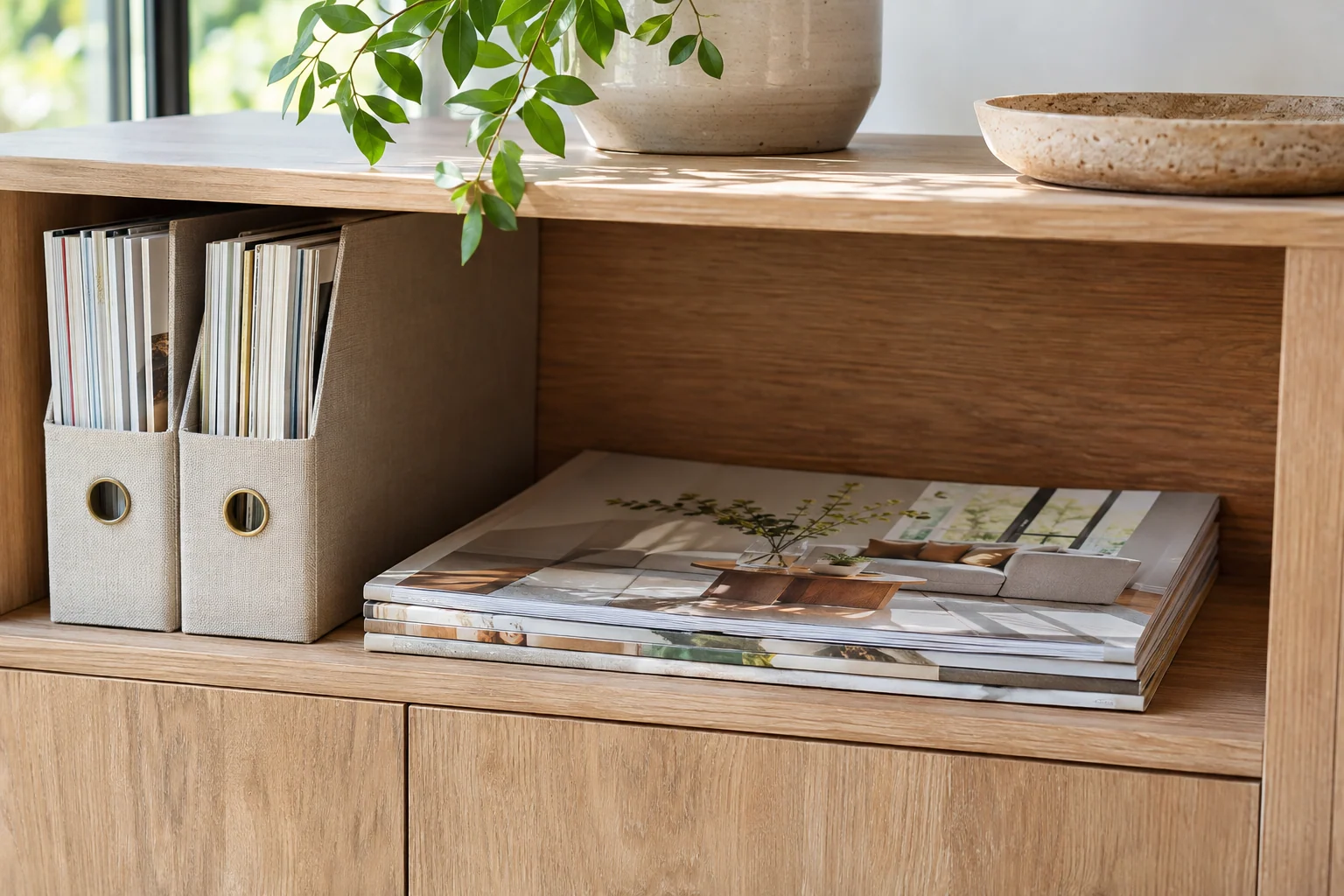
A tall or unusually wide magazine may need a different position from the regular collection. Give it a flat, supported shelf area or another suitable enclosure instead of bending it into a standard file. Check that the full issue stays inside the shelf's edge. Keep the group small enough to lift without flexing several large covers around a narrow opening.
7. Use a cabinet bay for completed reading
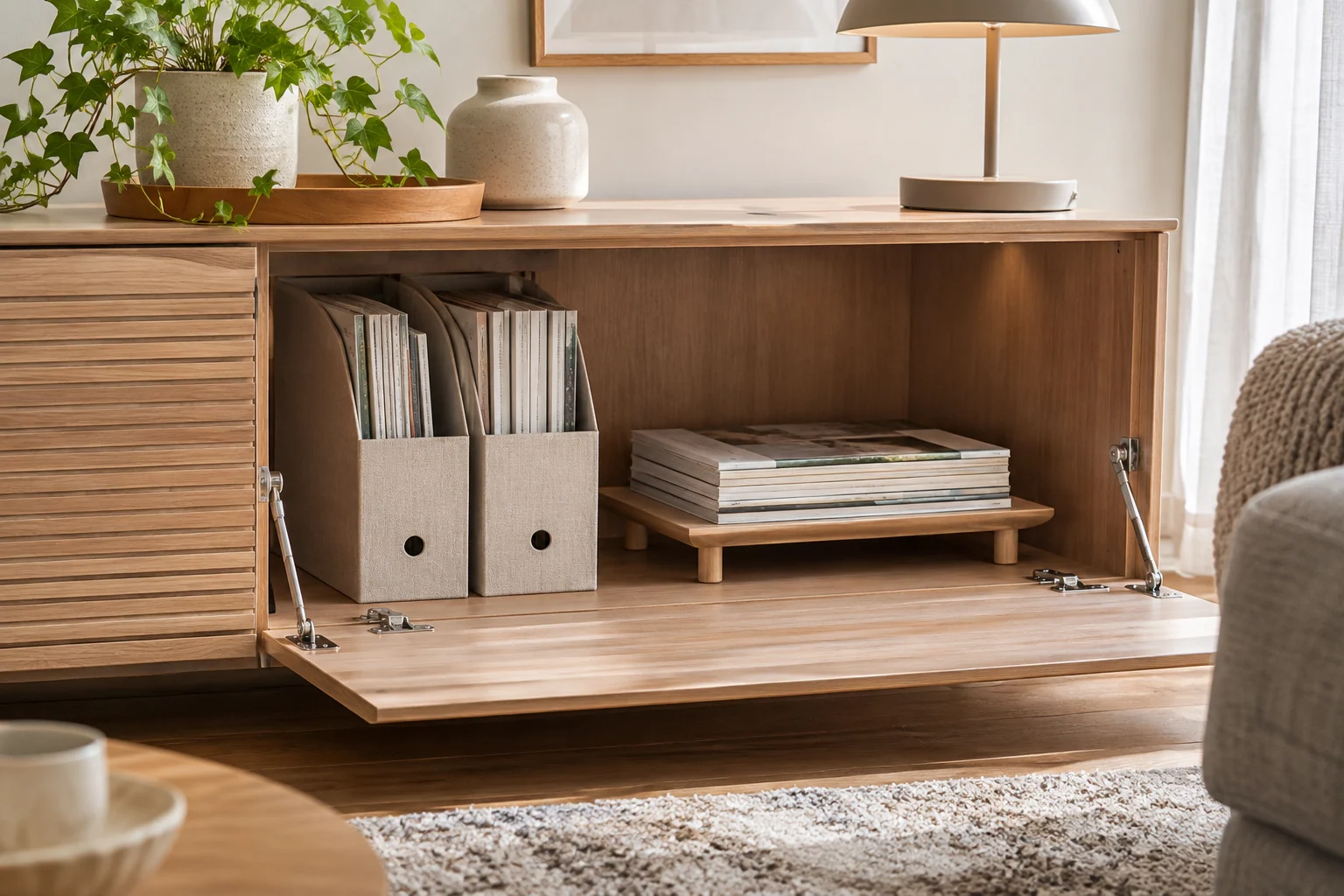
A closed cupboard can keep the room visually quiet while preserving a defined place for issues you still want. Group them in accessible files or supported stacks rather than pushing them loose into the back. Leave room for your hand and for the cabinet hinges. The collection should be understandable when the door opens, without pulling every item onto the floor to find one issue.
8. Choose a wall rack around the loaded projection
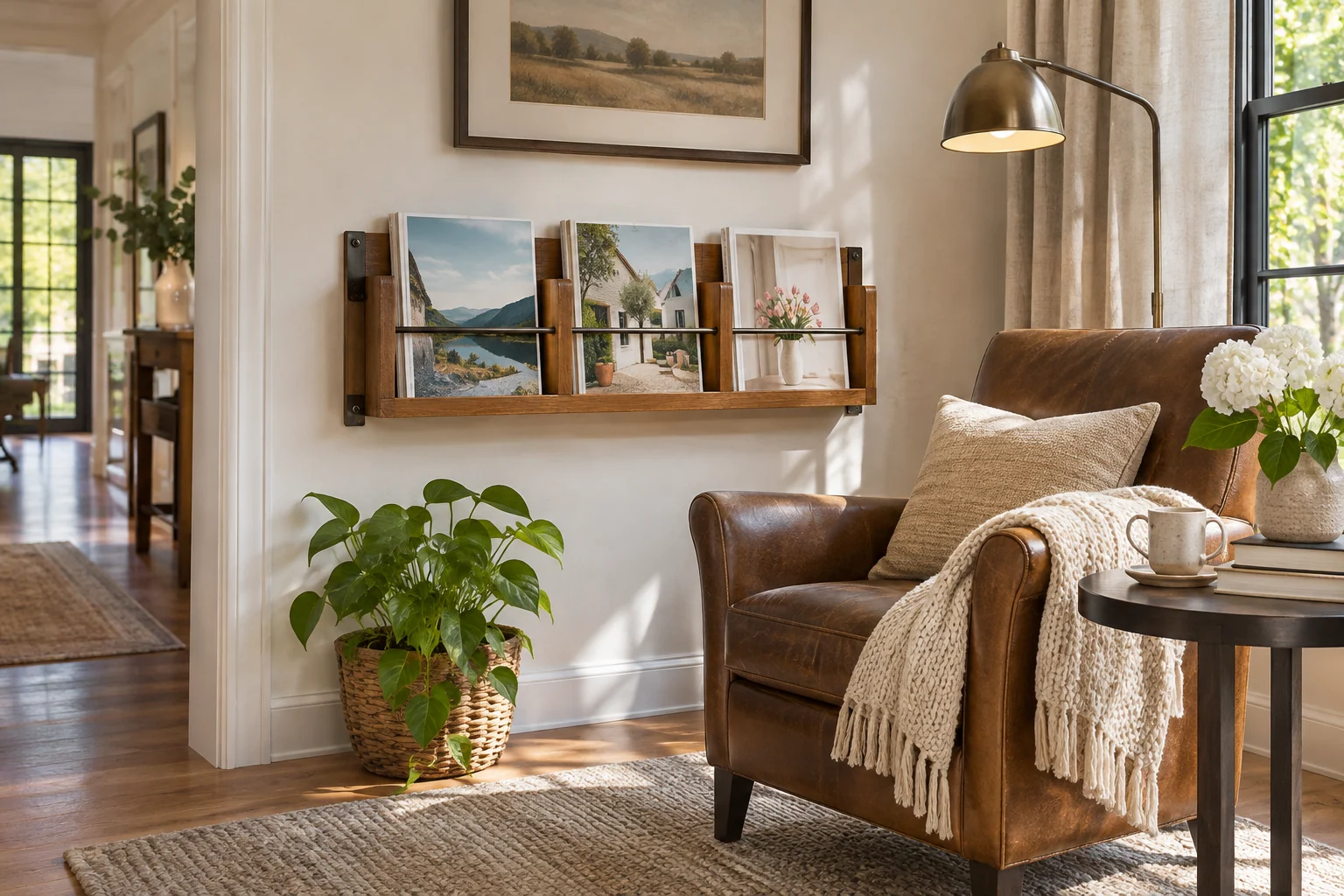
A purpose-designed wall rack can free a small amount of floor space when the wall, fittings and loaded weight suit it. Check the complete projection with magazines inside; bulging paper can extend beyond an empty rack's outline. Follow the actual mounting and loading instructions. Place it away from a tight passage where sleeves or carried bags would catch the exposed corners.
9. Display one cover and store the rest nearby
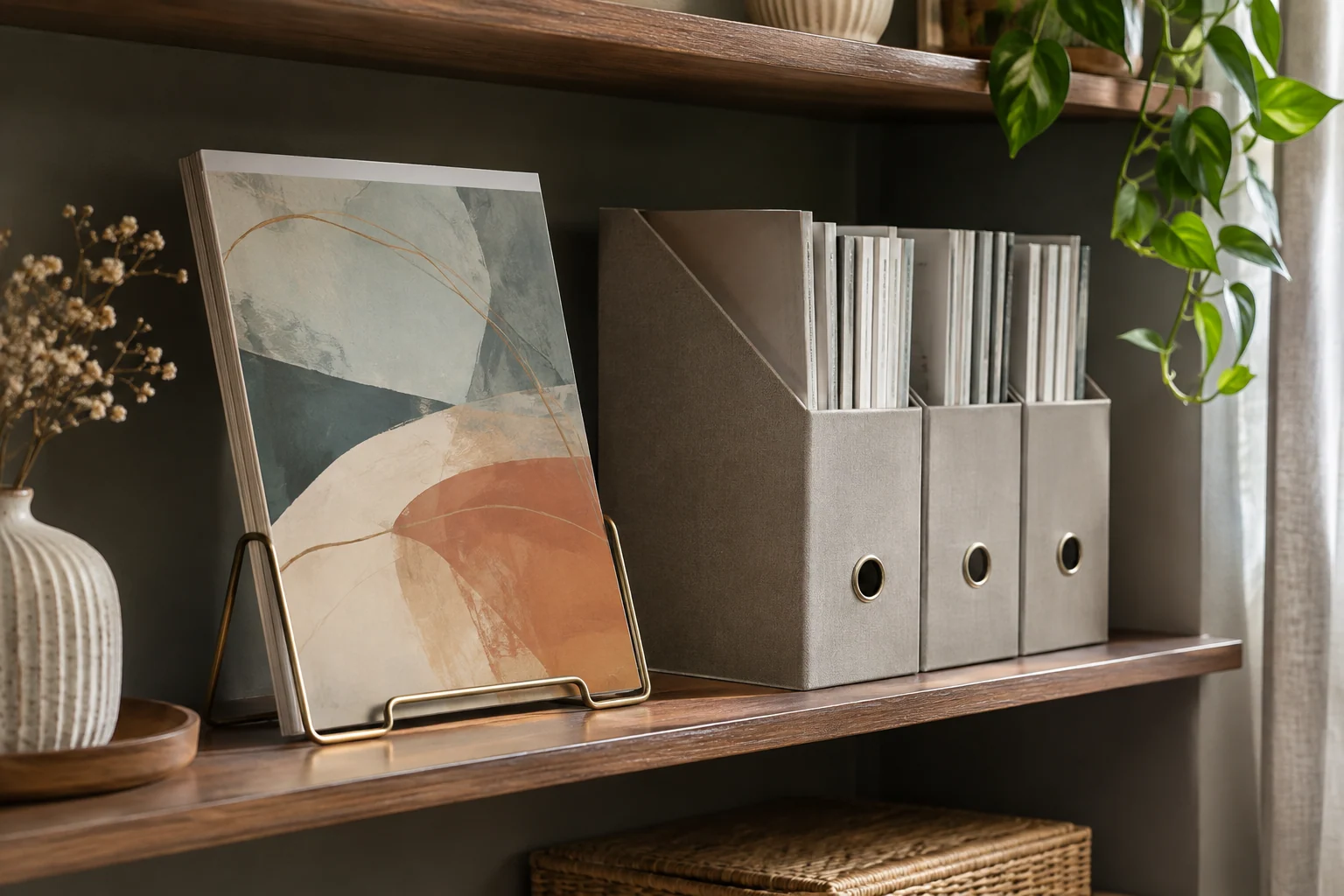
A single visible cover can add color without turning the wall into a dense collection. Use a suitable supporting holder, then give the remaining issues a normal shelf position. Rotate the display for everyday interest rather than exposing a treasured copy indefinitely. Read the guidance for valuable paper before choosing a sunny wall simply because the light makes the cover look attractive.
10. Group back issues by publication
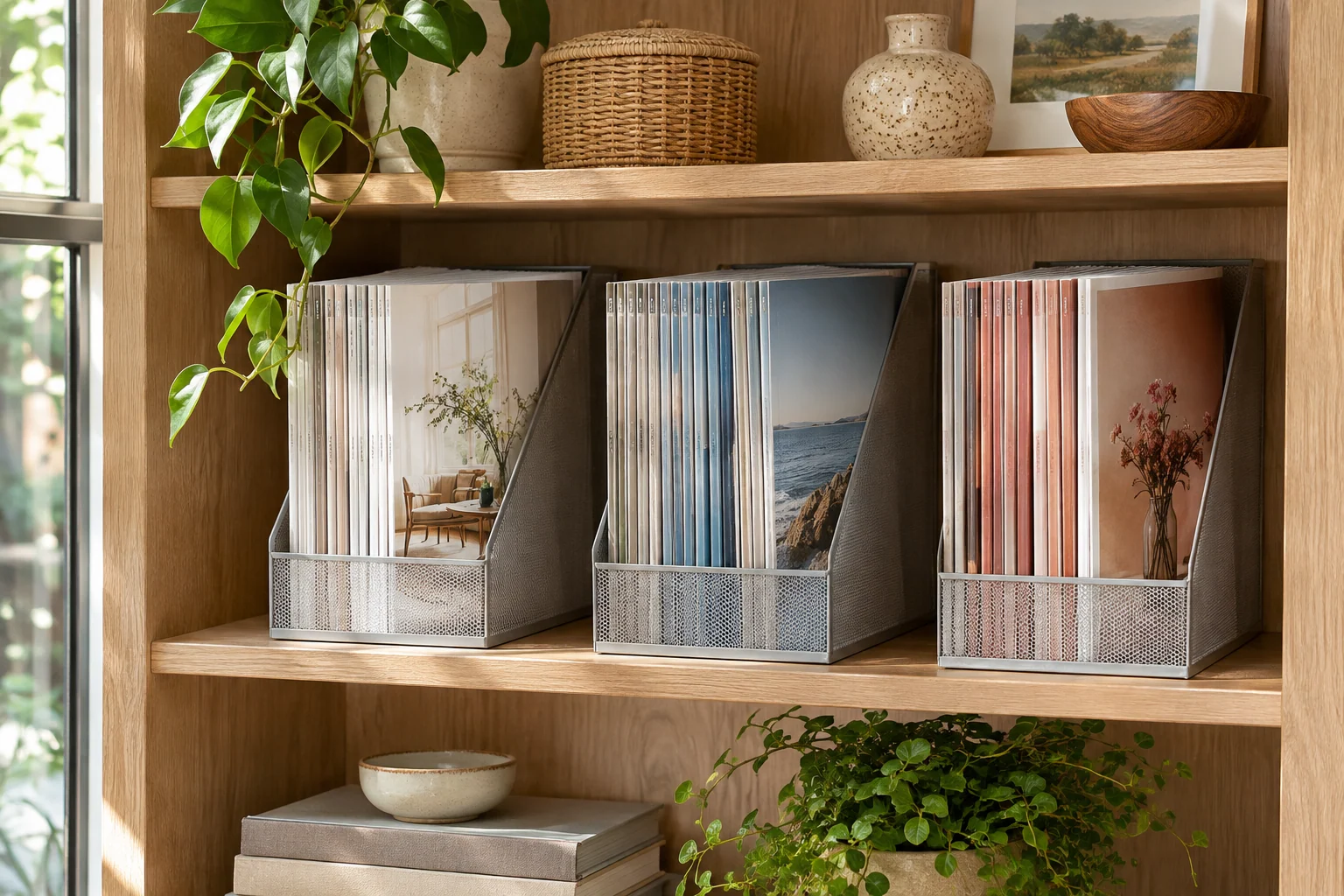
Keeping one publication together can make a specific issue easier to find than mixing the collection by cover color. Use separate files or shelf groups, with enough space to add the issues you actually expect to keep. Record the grouping in a simple private index if needed. The organization should follow how you search for information, even when the spines do not form a perfectly coordinated display.
11. Use annual sets only when the thickness fits
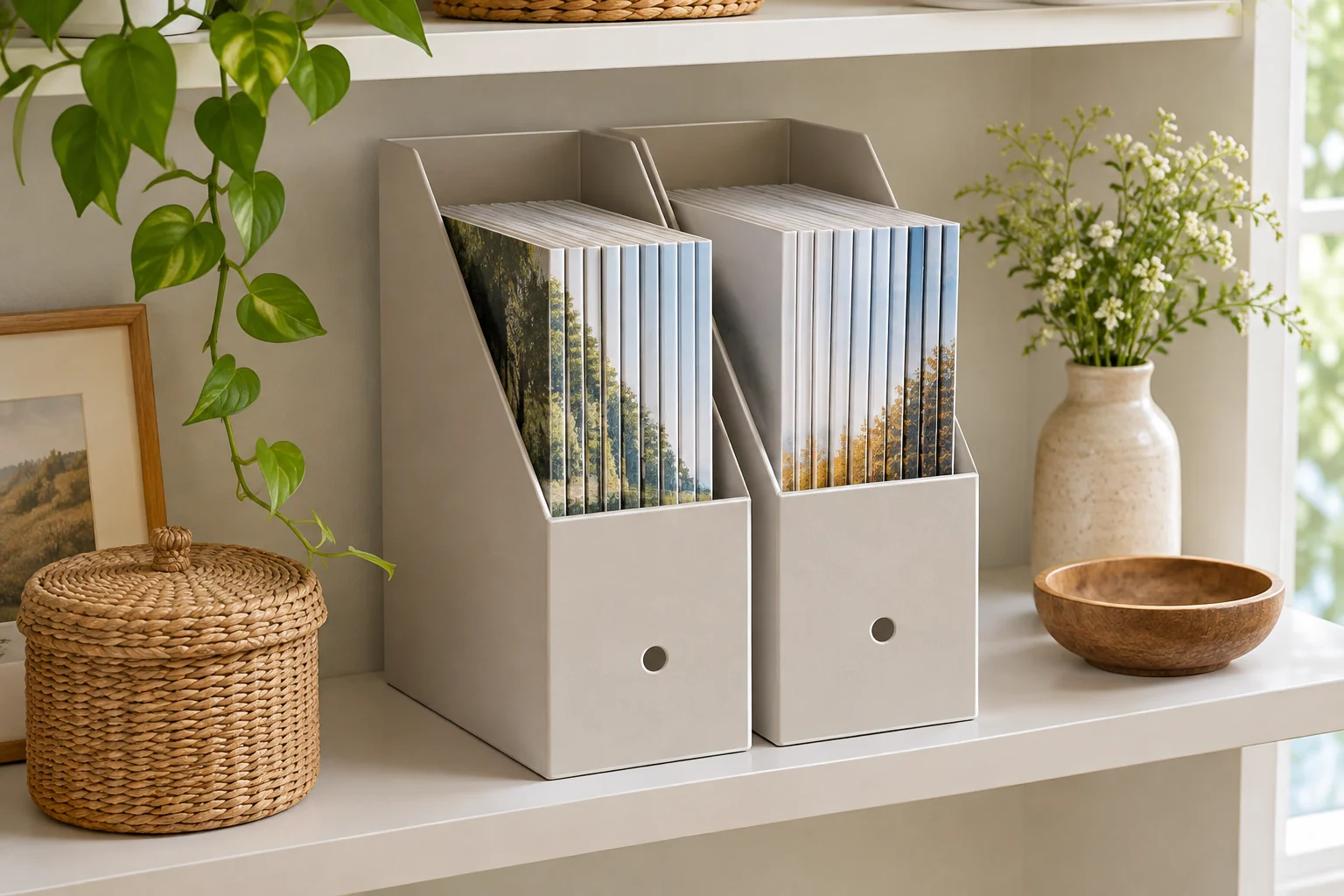
A year's issues may suit one holder for one publication and exceed it for another. Measure the group rather than assuming every annual set is the same size. Split the year into two logical groups when necessary, and leave comfortable retrieval room. A packed file that requires squeezing the paper to remove it is a sign to change the division.
12. Keep reference topics separate from casual reading
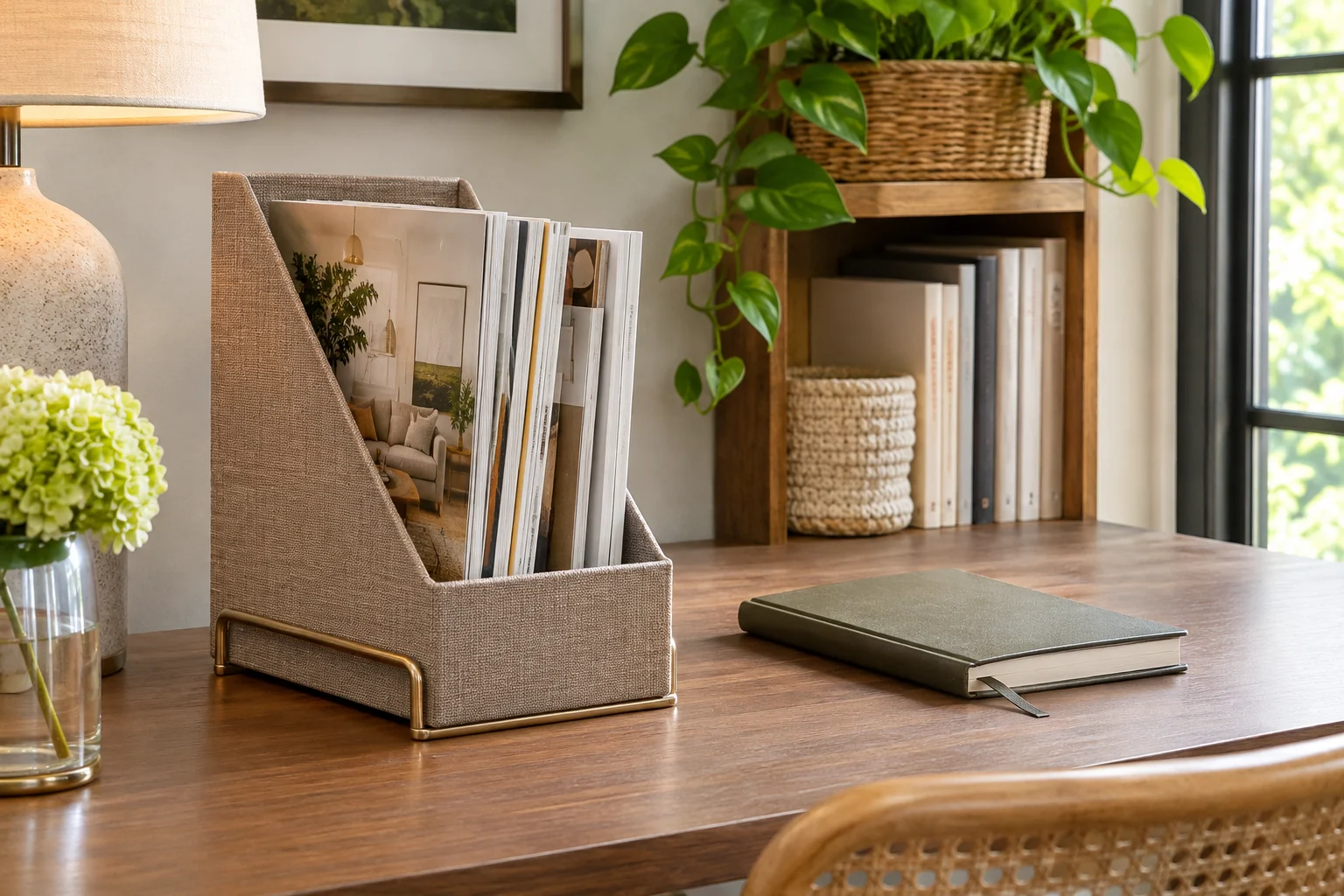
A small reference group can serve a hobby or project better when it sits near that work. Keep the original issues intact unless you have decided otherwise, and record the page you want in a separate note. Topic grouping is useful when it reflects repeated use. Avoid creating so many tiny categories that returning a magazine takes longer than finding it did before.
13. Leave borrowed issues in a separate return tote
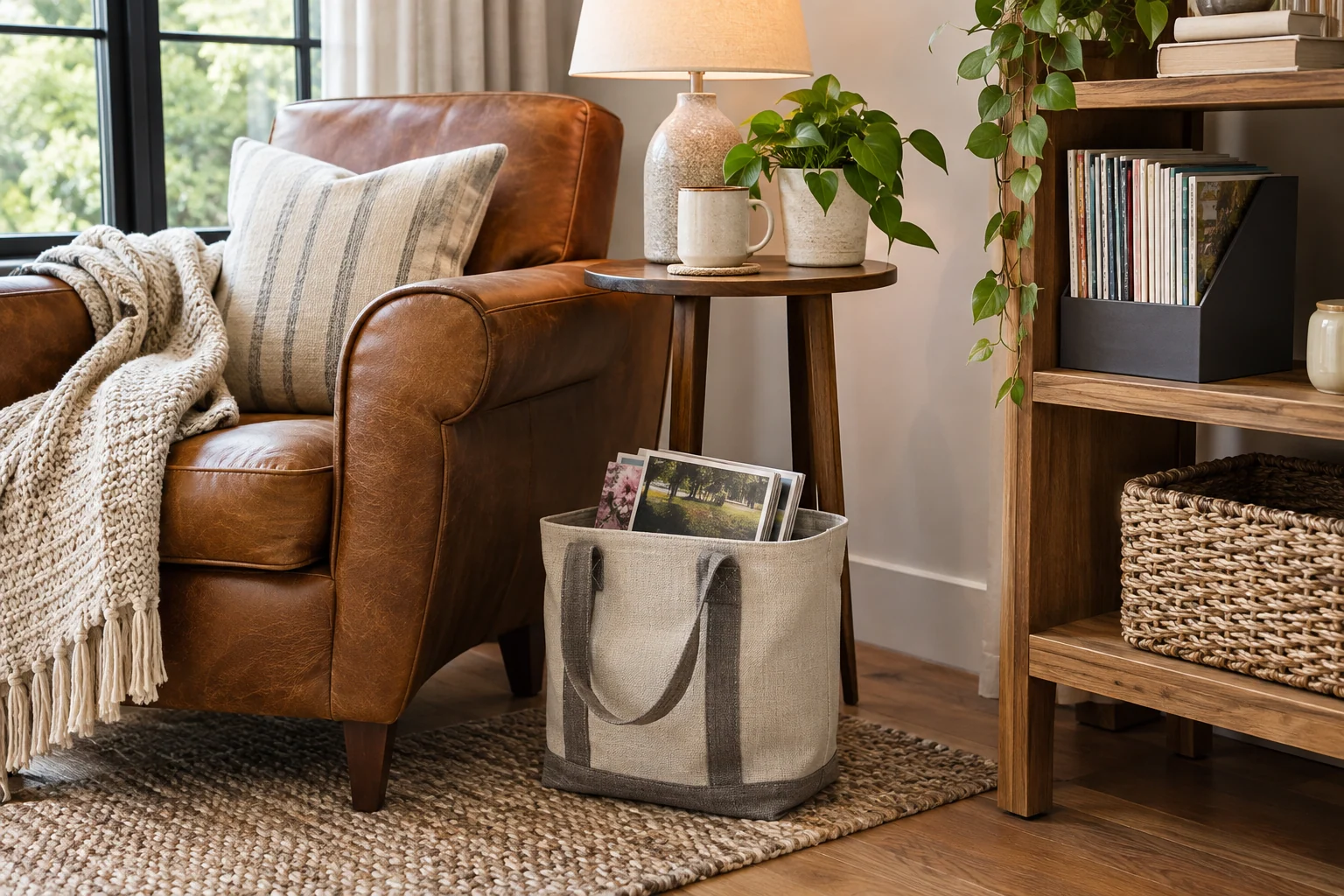
Library or borrowed magazines need a return routine rather than a permanent place among owned back issues. Put a small clean tote or defined holder near the normal reading area, with a private reminder of where each item belongs. Keep it separate from recycling and from papers awaiting a decision. Check the tote before the next planned trip rather than relying on an issue's cover to jog your memory.
14. Use the side of a suitable end table
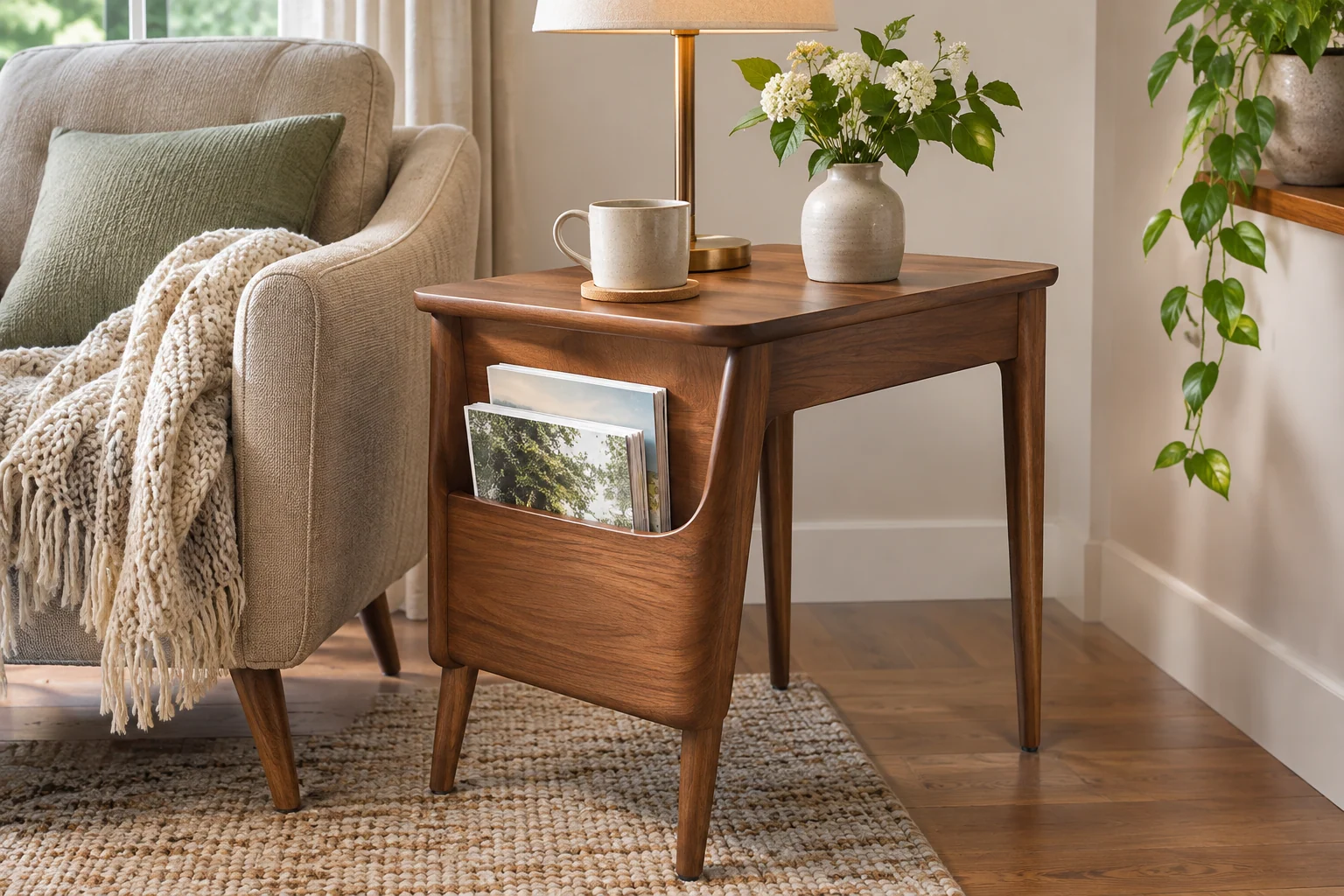
A table designed with a magazine pocket can combine two small functions in one piece. Check whether its pocket supports the full issue and leaves it easy to remove while seated. Keep the table stable under its intended use and follow its instructions. An attractive pocket is less useful when it faces a wall or requires leaning across a lamp to reach the paper.
15. Choose a smooth-lined basket for flexible issues
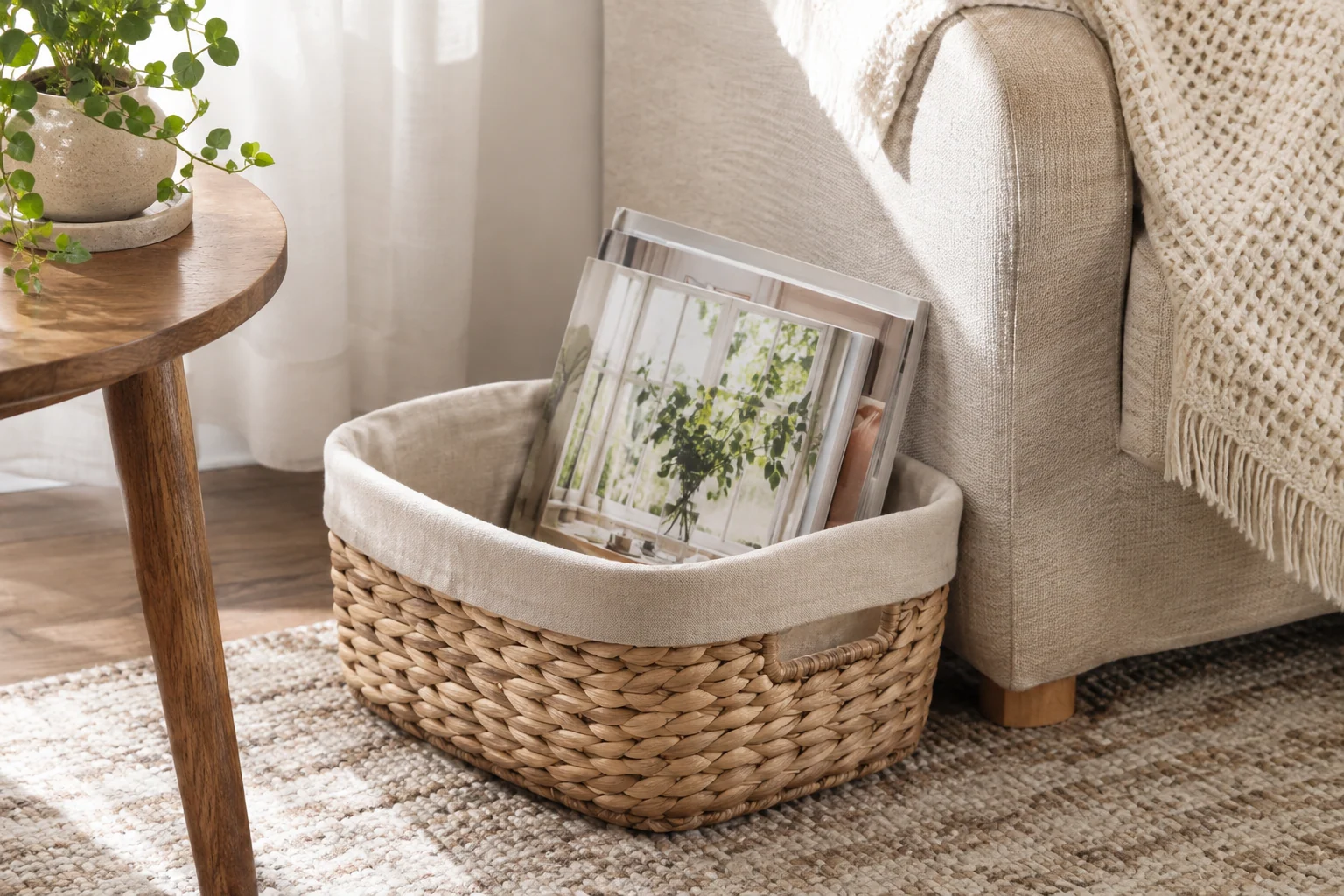
A lined basket can make a mixed-size current collection look calm while keeping rough woven edges away from paper. Choose a shallow enough shape that the issues stay visible. A flexible basket is not the same support as a fitted enclosure, so use it for ordinary current reads that suit the arrangement. Move delicate or valued pieces into more appropriate storage.
16. Keep the collection above the cleaning route
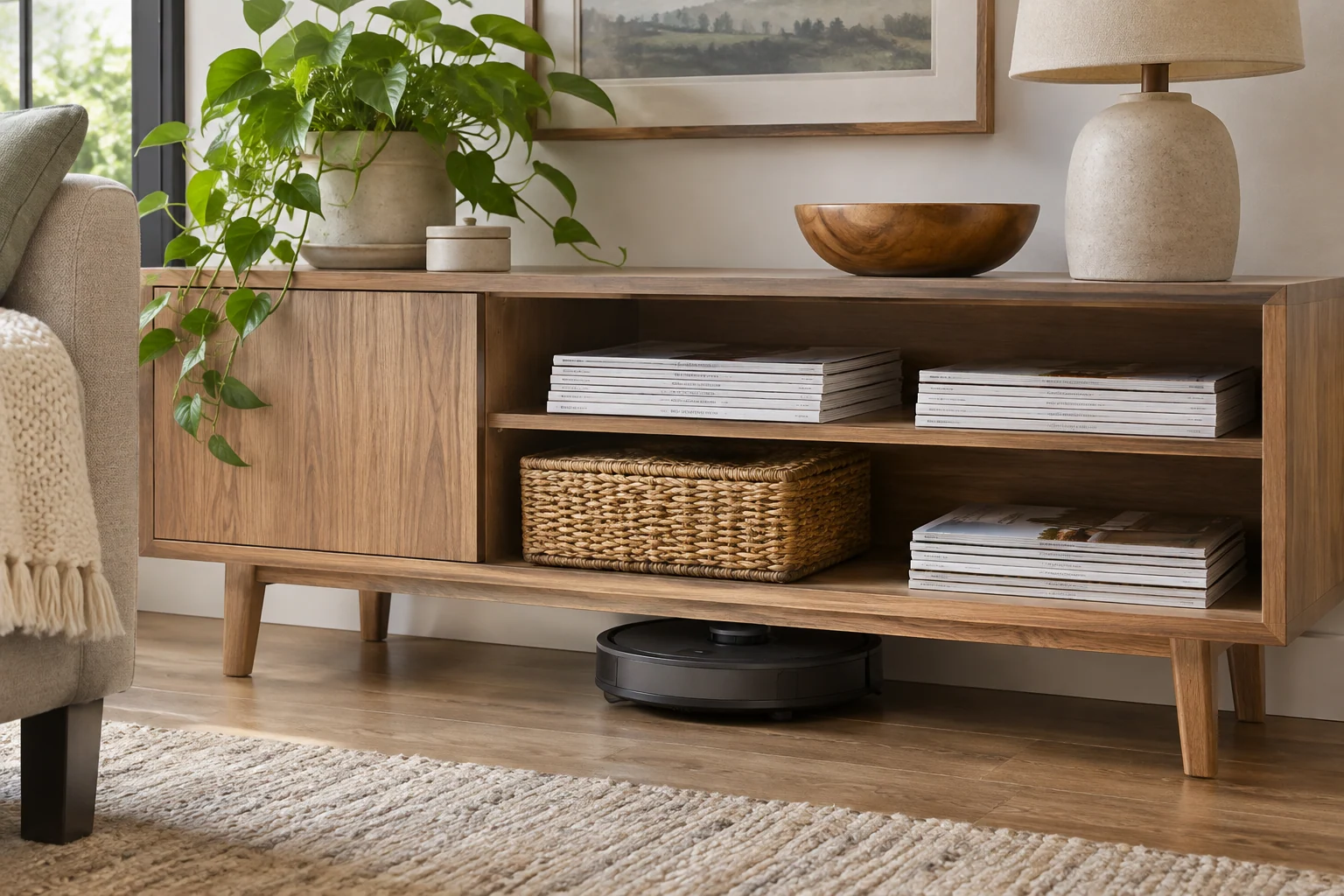
A shelf or low cabinet can be easier to maintain than piles directly on the floor. Give the magazines a complete supporting surface, with the lowest group clear of the route used for ordinary cleaning. Check the room for leaks or splashes before choosing a position. A bottom shelf near a source of water is a different environment from a dry interior living room bay.
17. Let a guest room have a very small reading set
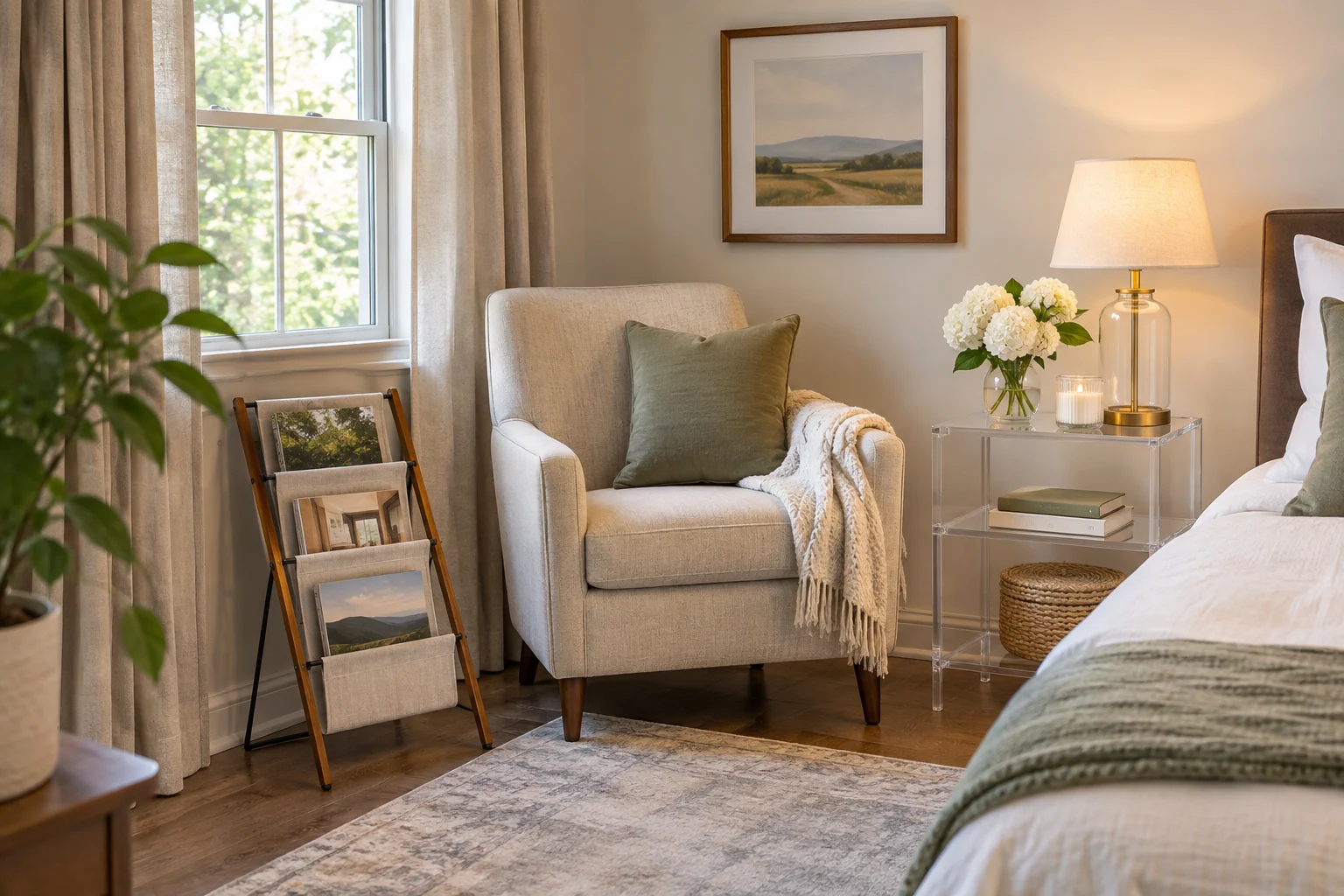
Two or three current issues can make a guest room welcoming without becoming another storage overflow area. Choose a simple holder near a comfortable seat and leave the nightstand useful for the guest's own things. Review the set between visits. A small, current selection usually serves this purpose better than every issue that no longer fits the main bookcase.
18. Create a shared household reading basket
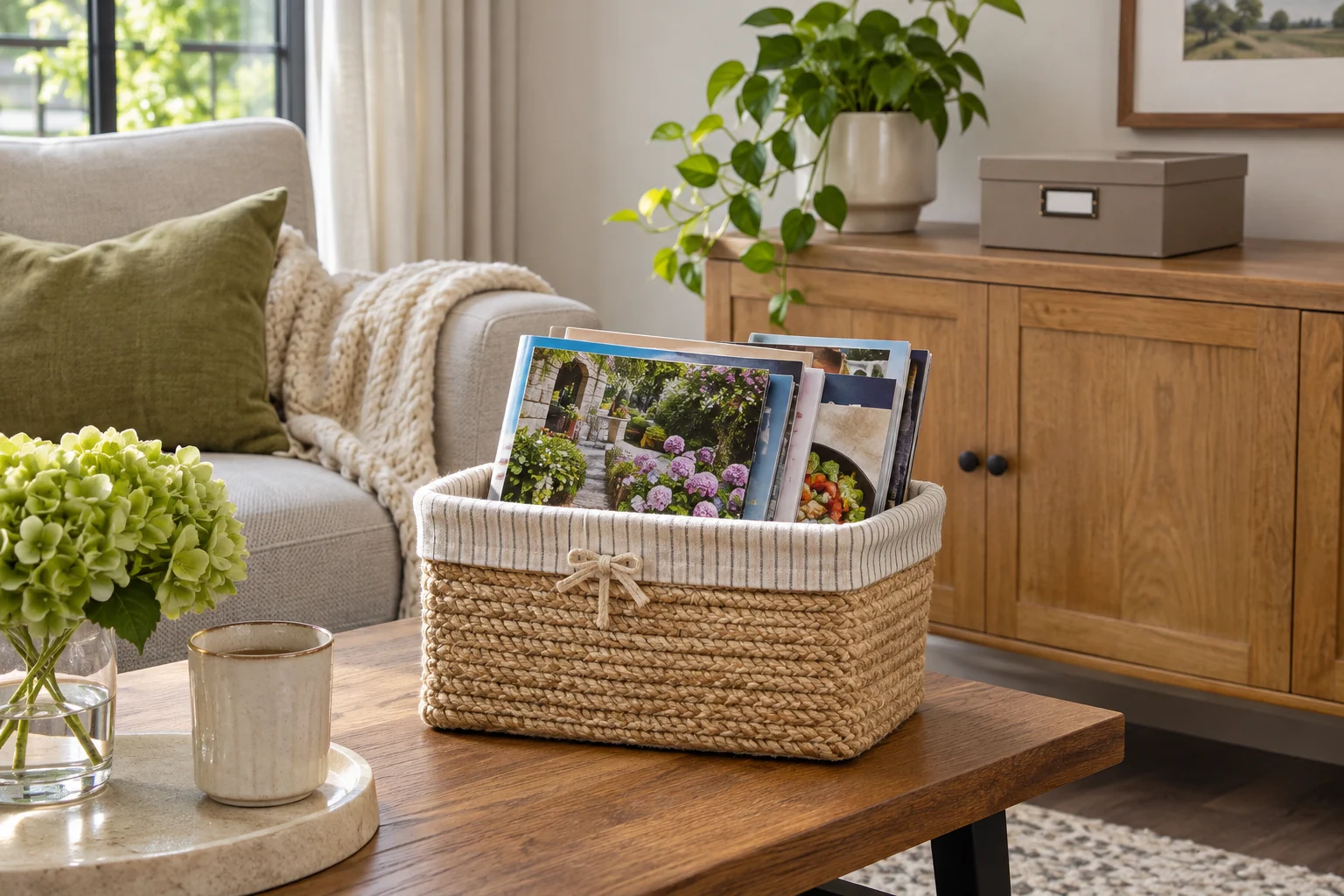
One accessible basket can collect magazines that several adults are reading. Agree on what belongs there and where finished items go, then keep the grouping visible. Avoid mixing bills, receipts and fragile documents into the same container merely because they are also paper. Separate purposes make the basket easier to reset without deciding the fate of unrelated paperwork each time.
19. Use a box for a defined keep collection
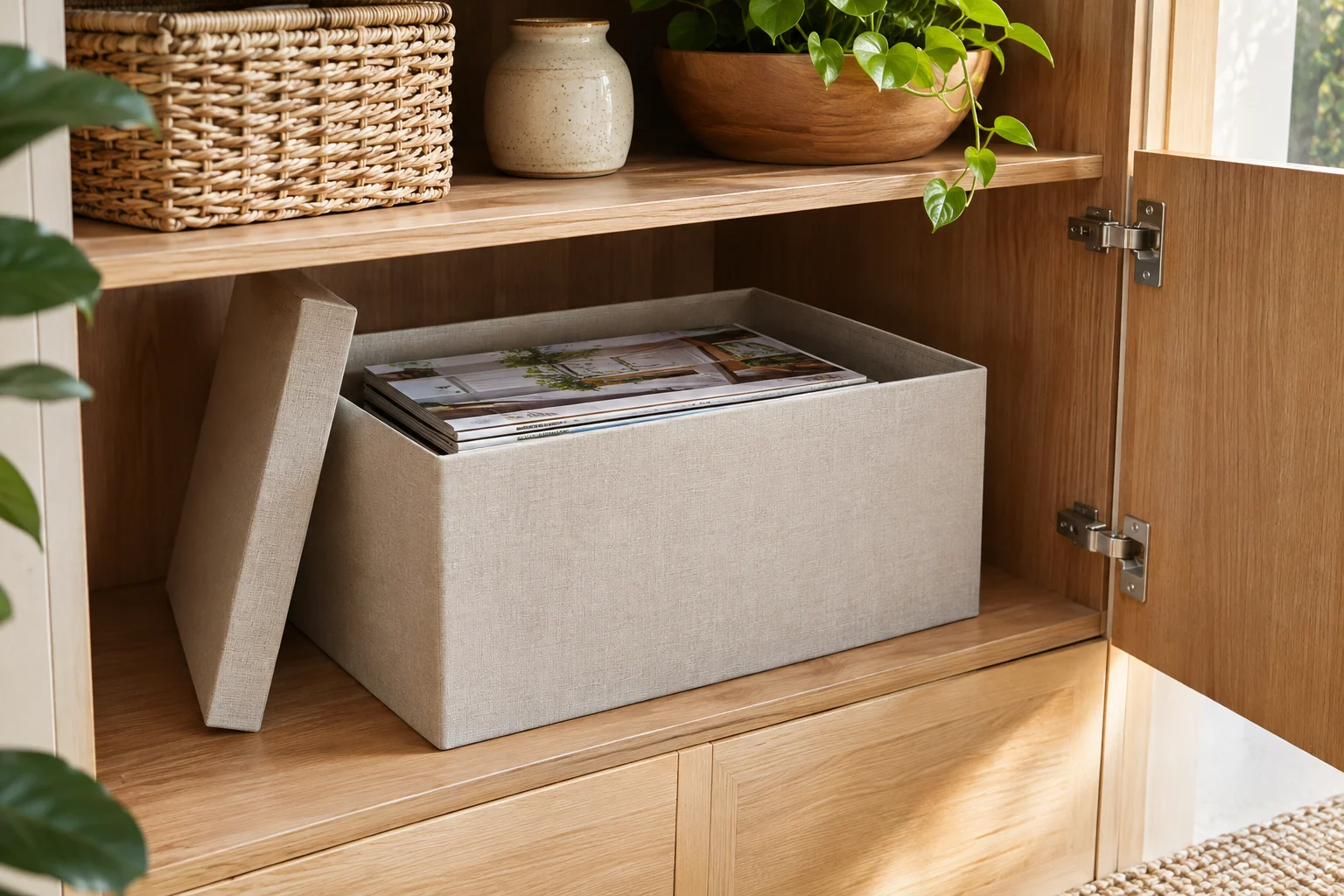
A box can contain a selected group when its size and materials suit the issues and the intended storage period. Keep the paper supported, and do not force a bowed stack beneath a tight lid. Store the box where it remains accessible and away from unsuitable damp or hot conditions. Valuable issues may need specialist enclosure advice instead of a decorative household box.
20. Keep an index beside a large collection
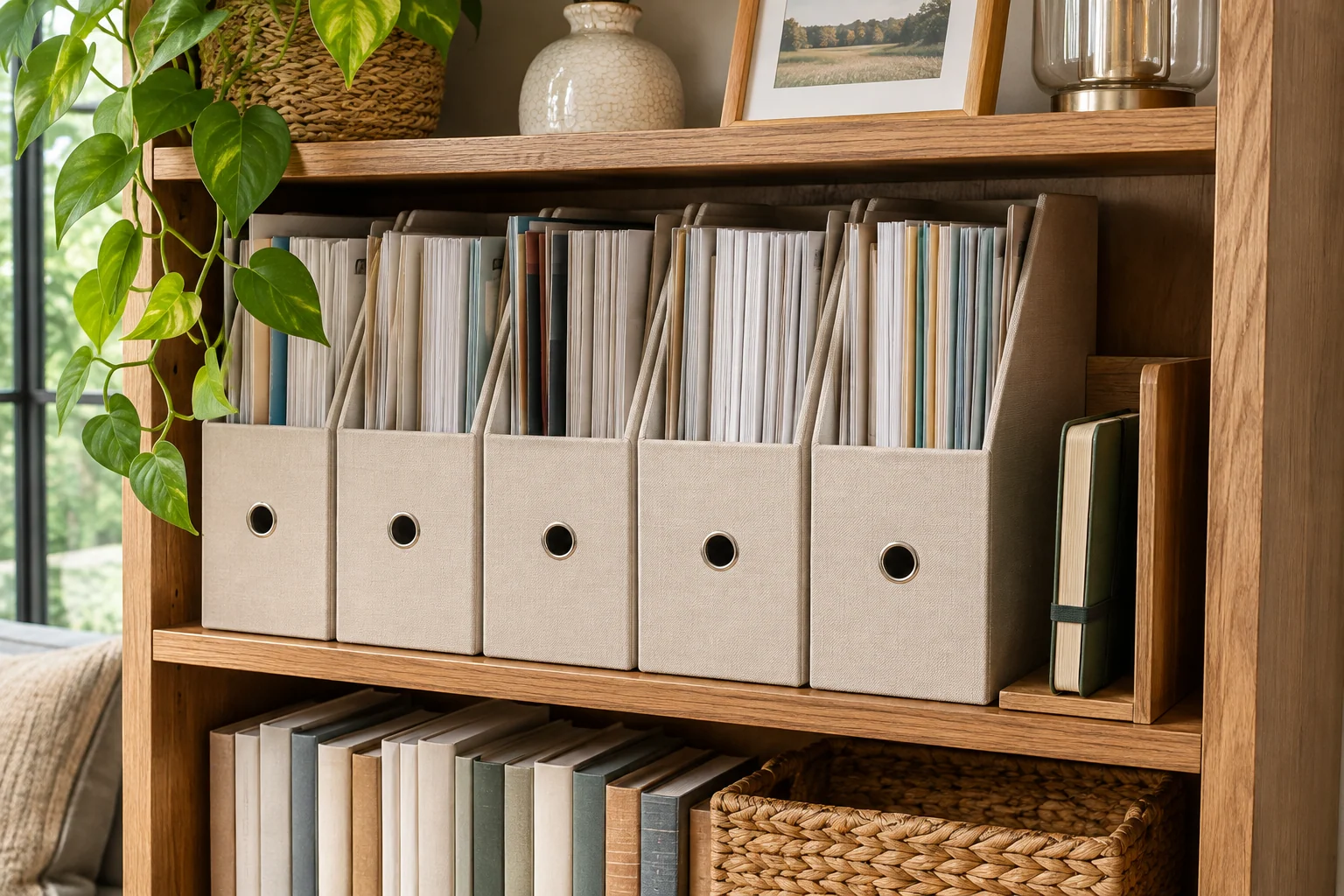
A simple list can prevent repeated searching through many similar covers. Record the publication, issue date or number, and its holder location. Add a brief topic note only when it helps you find something you know you will use. The index should describe the actual collection; an elaborate catalog that is never updated creates a second source of confusion.
21. Give outgoing issues their own temporary place
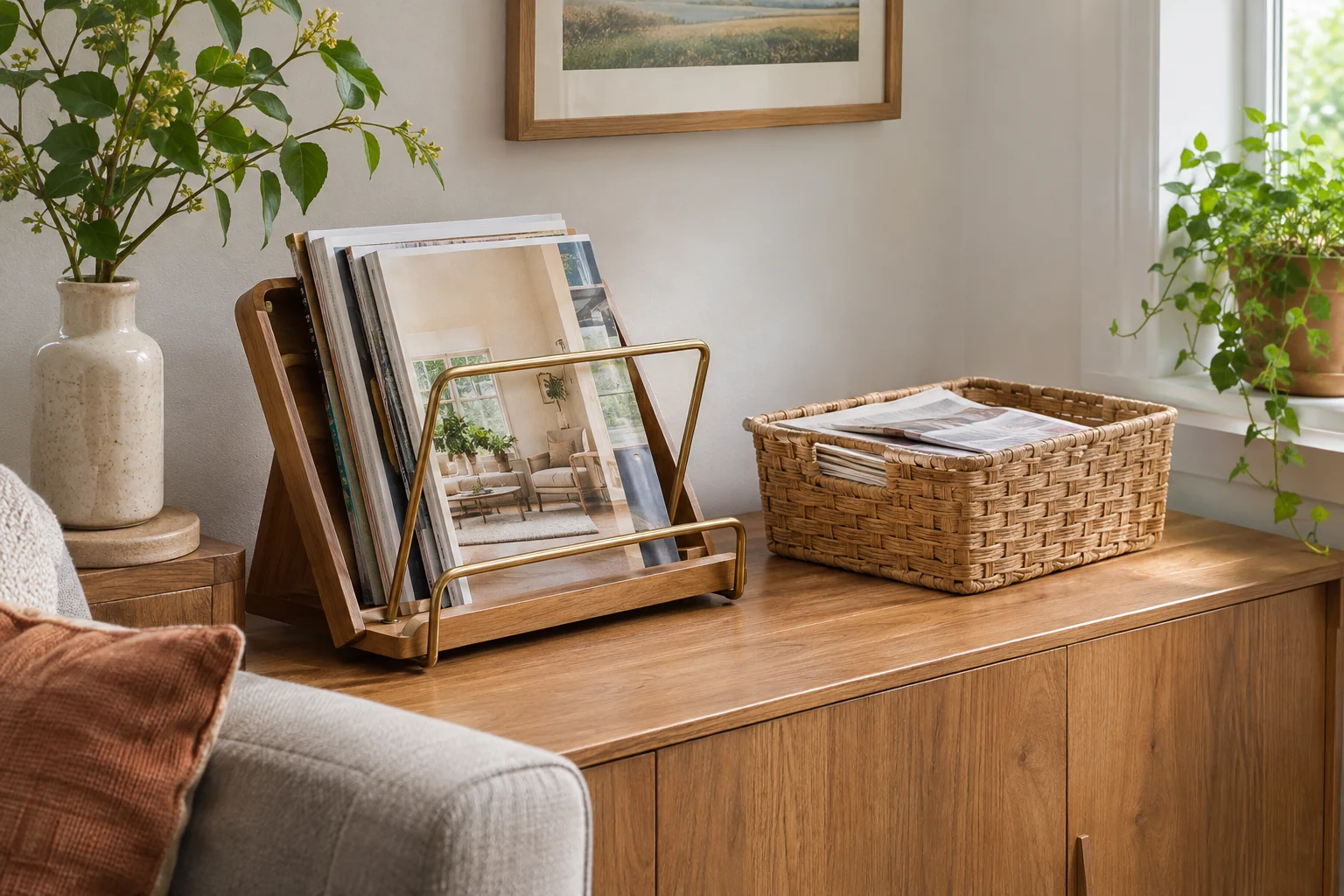
A separate container for issues leaving the home can stop them returning to the reading rack. Decide whether they are being passed on or handled through the appropriate local recycling route. Keep this group modest and give it a real next step. A large undecided pile labeled mentally as 'later' consumes the same space as a collection you intended to keep.
22. Set the capacity around the shelf you can spare
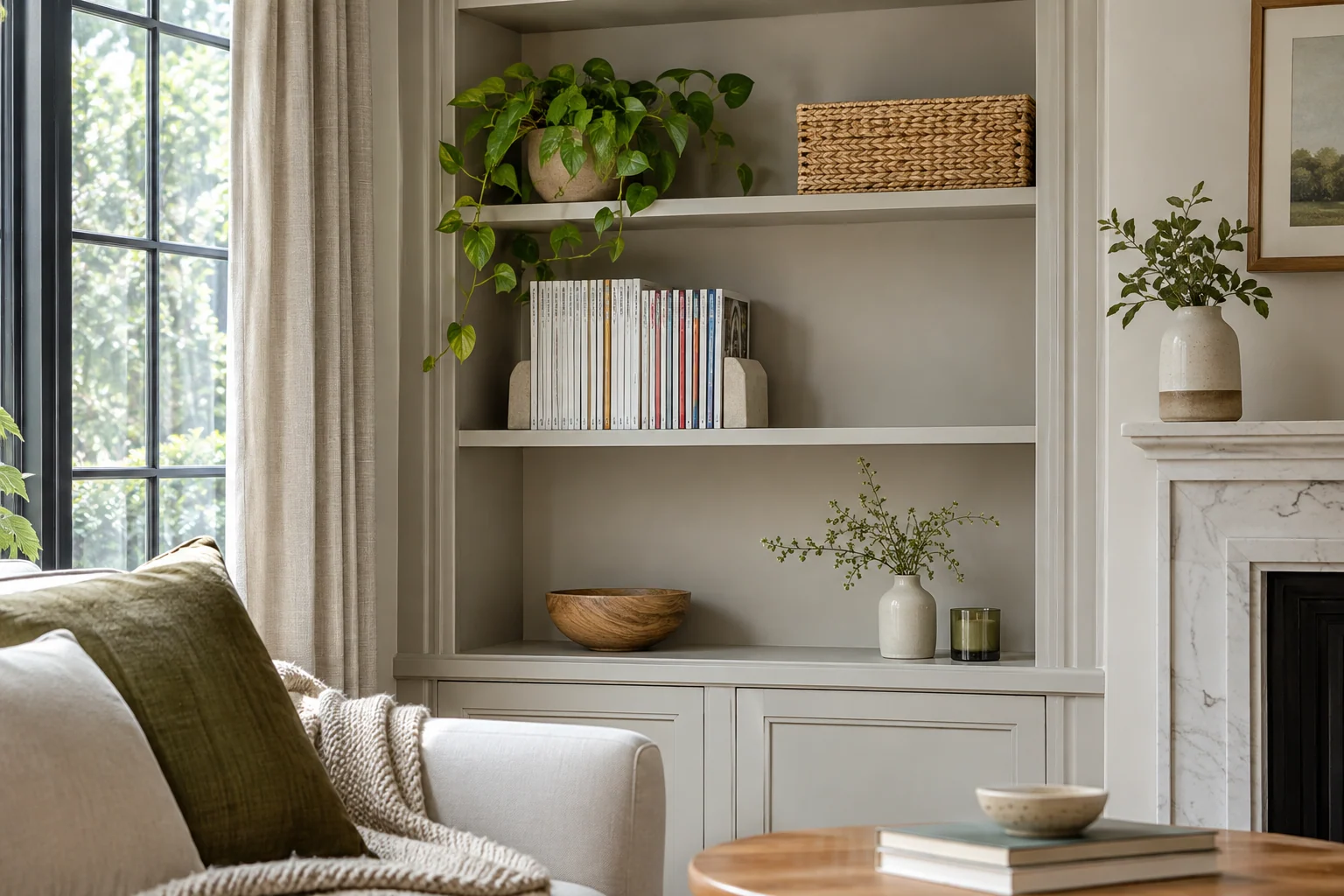
Choose a real boundary for the keep collection, such as two files or one cabinet bay. When that area fills, review the contents before adding another rack. Keep the copies that matter for reference, enjoyment or personal value, and give the rest an intentional destination. The useful result is a collection you can read and retrieve, not a room arranged around avoiding a decision.
A magazine-holder fit card
Record the widest issue, tallest issue, thickness of the intended group, internal holder dimensions, retrieval direction and the shelf's usable opening. In a hypothetical 30-inch bay, three 9-inch-wide holders occupy 27 inches, leaving 3 inches total before door and hinge intrusions. That calculation checks width only: depth, height, loaded weight and hand access still need separate checks. A decorative file's outside width may be greater than its paper opening.
A practical next step
Give current reading an inviting, limited place, then organize kept issues around how you find them. Start with one rack and one reference area, measure the actual paper, and preserve a simple route for finished copies to leave.
The images are original AI-generated design concepts. They illustrate arrangements rather than tested products, installations or measured performance.
Sources and care references
Related reading on Nestroxe
Optional digital guide for this topic
If you prefer a structured workbook, explore this related paid guide.