Floor cushions can give an adult living area a flexible extra seat, a low reading spot or a relaxed place for a short activity. They work best when the room already has a comfortable way to sit down, get up and move around them. A cushion should earn its place through use, rather than remain in the walkway because it completes a photograph.
Start with one cushion and try the position before buying a group. If low sitting does not suit someone in the household, keep a normal chair available. These are furnishing ideas, not claims about posture, treatment or the suitability of a position for every body.
Contents
- 1. Start with one substantial square cushion
- 2. Put a pair beside a low coffee table
- 3. Make a reading position beside a normal chair
- 4. Use a supportive back cushion as a separate element
- 5. Leave the center of a small room clear
- 6. Choose round cushions for a softer outline
- 7. Connect a pair through fabric rather than exact size
- 8. Use a quiet neutral base for a colorful room
- 9. Add one deliberate accent color
- 10. Keep a removable cover easy to access
- 11. Give occasional cushions a dedicated shelf
- 12. Use a roomy basket for suitable soft pieces
- 13. Stand a firm cushion in a suitable return slot
- 14. Make game-night seating easy to deploy
- 15. Use a low window area without blocking the treatment
- 16. Leave door and cabinet movement unobstructed
- 17. Keep the cushion separate from the lamp base
- 18. Choose a purpose-designed outdoor version for outside use
- 19. Store indoor and outdoor cushions as distinct groups
- 20. Keep one cushion available in a multipurpose room
- 21. Compare firmness through the actual activity
- 22. Keep a small folded throw nearby
- 23. Reset the room after the floor-seating session
Choose the filling, cover and storage together
Compare the cushion's full dimensions, its feel under use and how it returns to shape. A removable cover is useful only when its care instructions fit your routine; the cover and filling may require different treatment. Sunbrella's upholstery-care guidance, for example, applies to specified fabrics and methods rather than every cushion. Check the actual maker's instructions, including any limits on outdoor use.
Compare the storage or placement options
- Occasional adult seat: Start with one cushion and a normal chair alternative; try the intended activity.
- Frequent use: Choose a workable care routine and a convenient return place.
- Firm structured cushion: Compare a fully supporting shelf or suitable upright slot with the maker's guidance.
- Patio or balcony: Use a complete product intended for outdoor conditions and follow its storage instructions.
1. Start with one substantial square cushion
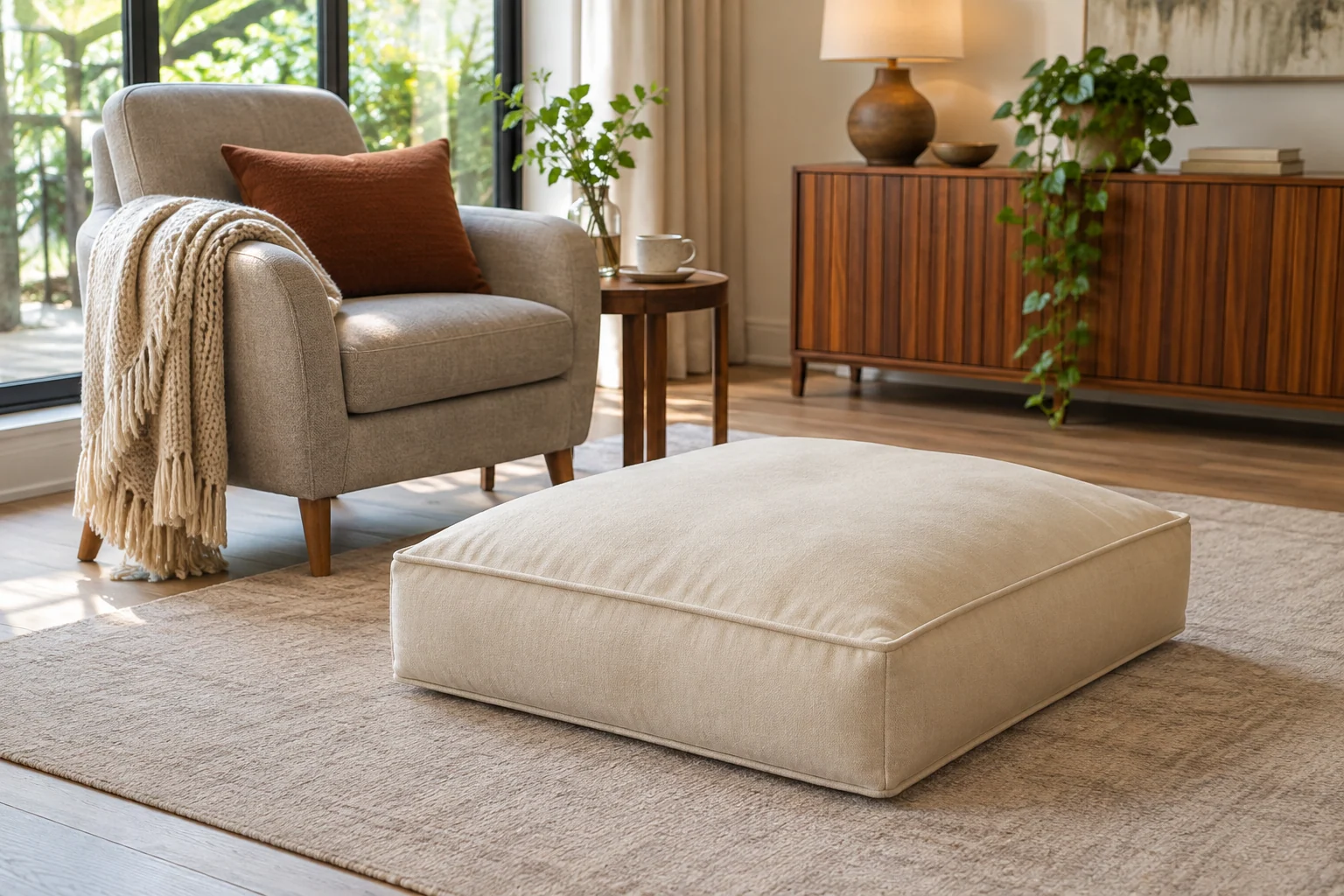
A single large square can establish whether floor seating suits the room without taking over its layout. Place it on a suitable clean dry surface and try the space needed around it. Notice how you approach and leave the position, not just how it feels once seated. Keep its dimensions modest enough that it has a realistic home when ordinary walking space is needed again.
2. Put a pair beside a low coffee table
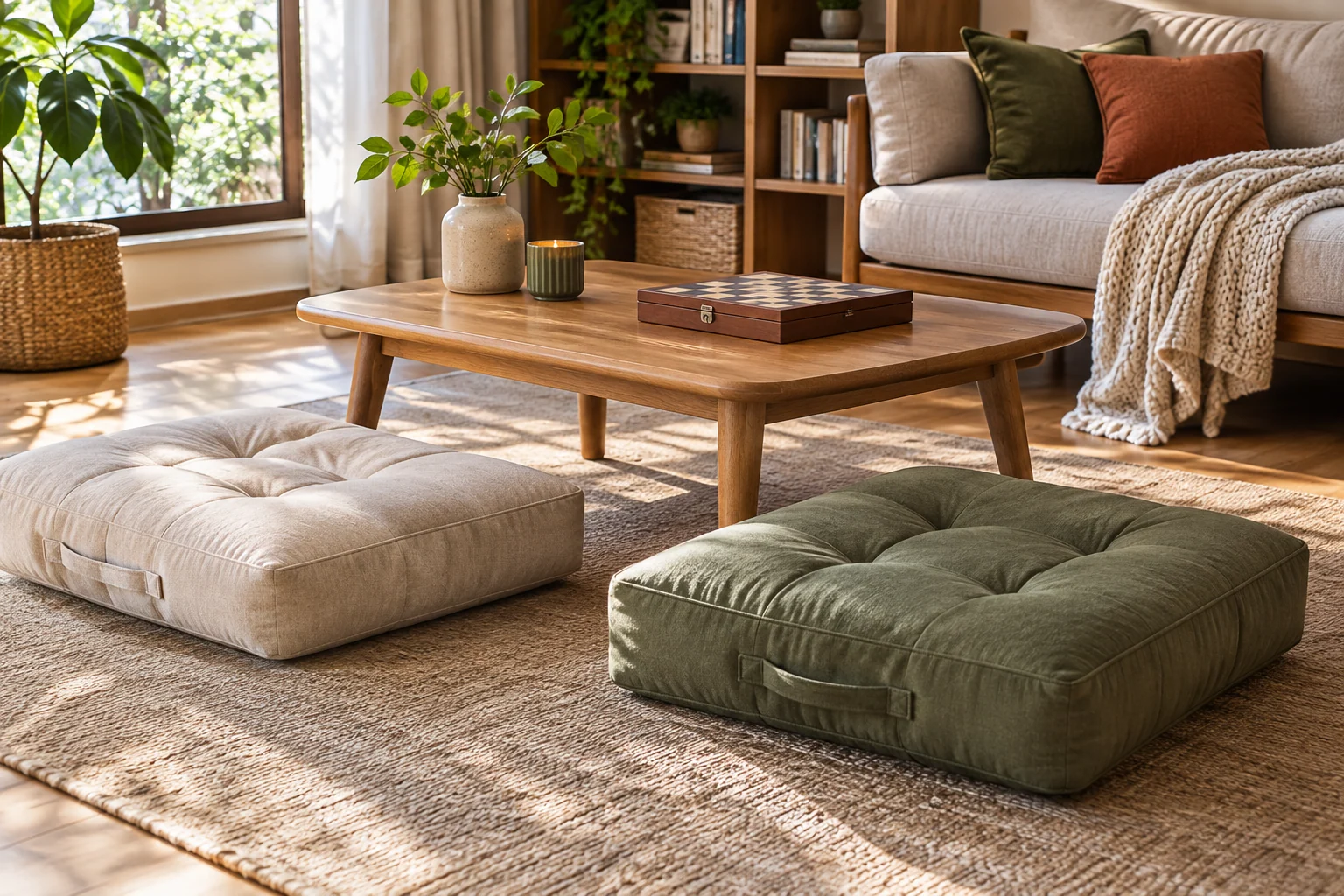
Two cushions can suit a short tabletop activity when the table height and reach feel comfortable for the people using them. Keep enough room for legs without pushing the cushions beneath a surface that restricts movement. Try the actual activity before arranging a larger group. A low table and cushions should work together as furnishings, without treating every coffee table as a dining or work surface.
3. Make a reading position beside a normal chair
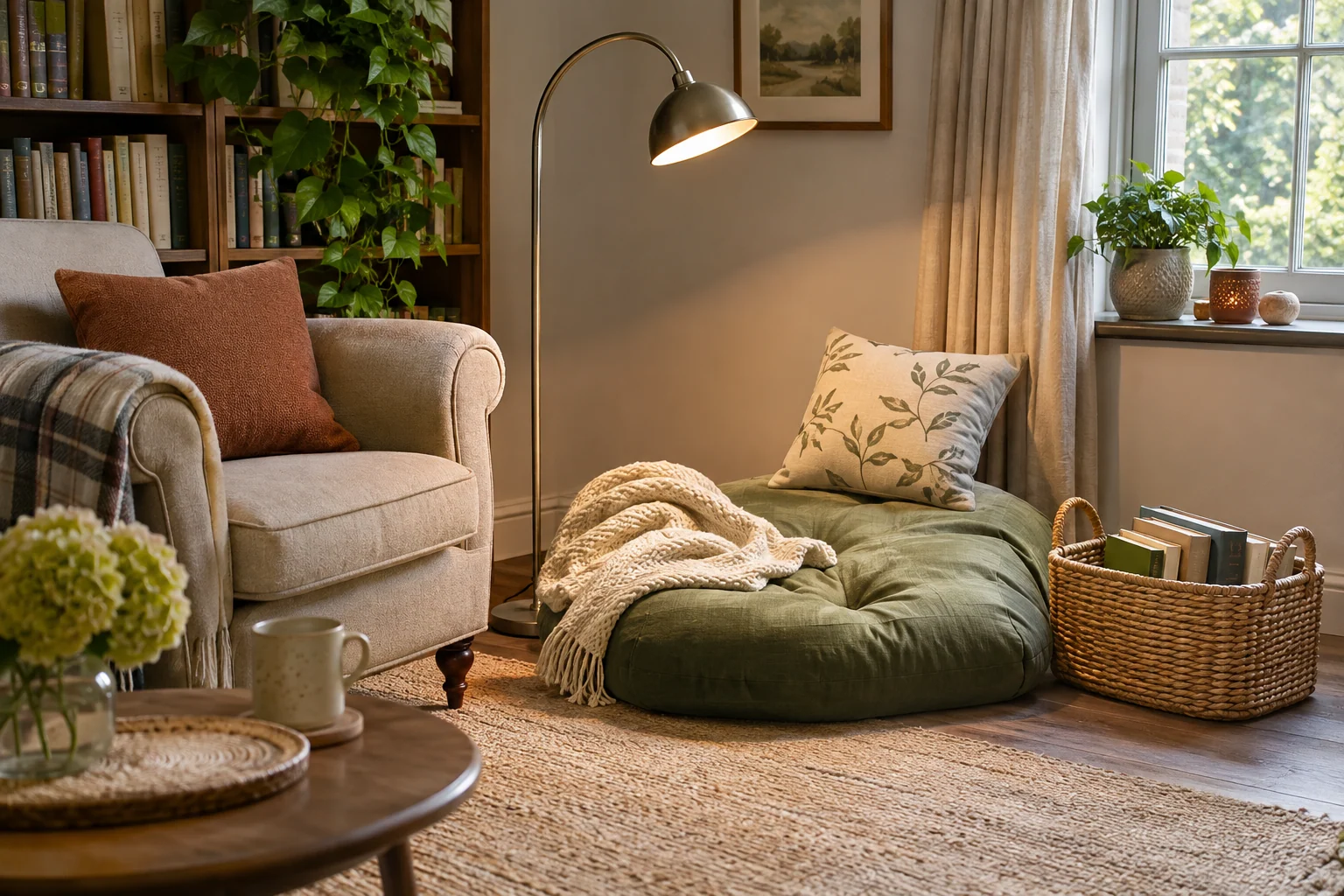
A floor cushion can offer an alternative reading position within the same area as a chair. Keep the book, lamp controls and ordinary return space within a comfortable arrangement. Choose a different seat when the floor position becomes tiring. A well-planned corner gives someone a choice of positions rather than presenting the cushion as the only way to use the room.
4. Use a supportive back cushion as a separate element
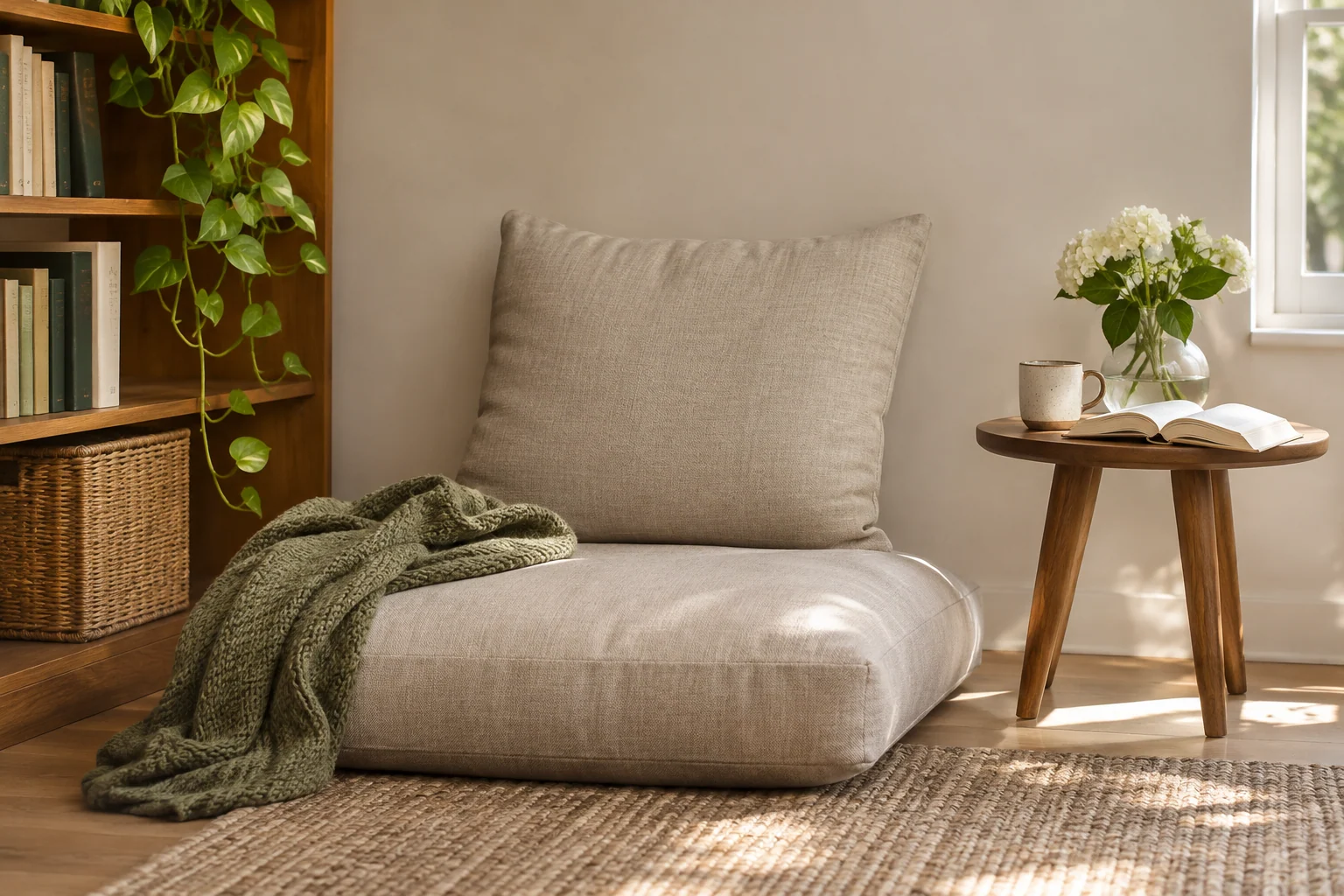
A separate cushion against an appropriate fixed backdrop may make a low seating arrangement feel more inviting. Check that it stays where intended and does not push the seat cushion into a passage. Avoid stacking loose pieces into an unstable improvised chair. The arrangement should remain straightforward to reset, and a normal seat should remain an option when more support is wanted.
5. Leave the center of a small room clear

A cushion can sit near the perimeter during use while the room's main route stays open. Decide where feet and personal items go as well as the seat itself. Move it back to storage when the activity is finished. A floor cushion that remains in the center because there is no return place can make a compact room feel less flexible.
6. Choose round cushions for a softer outline
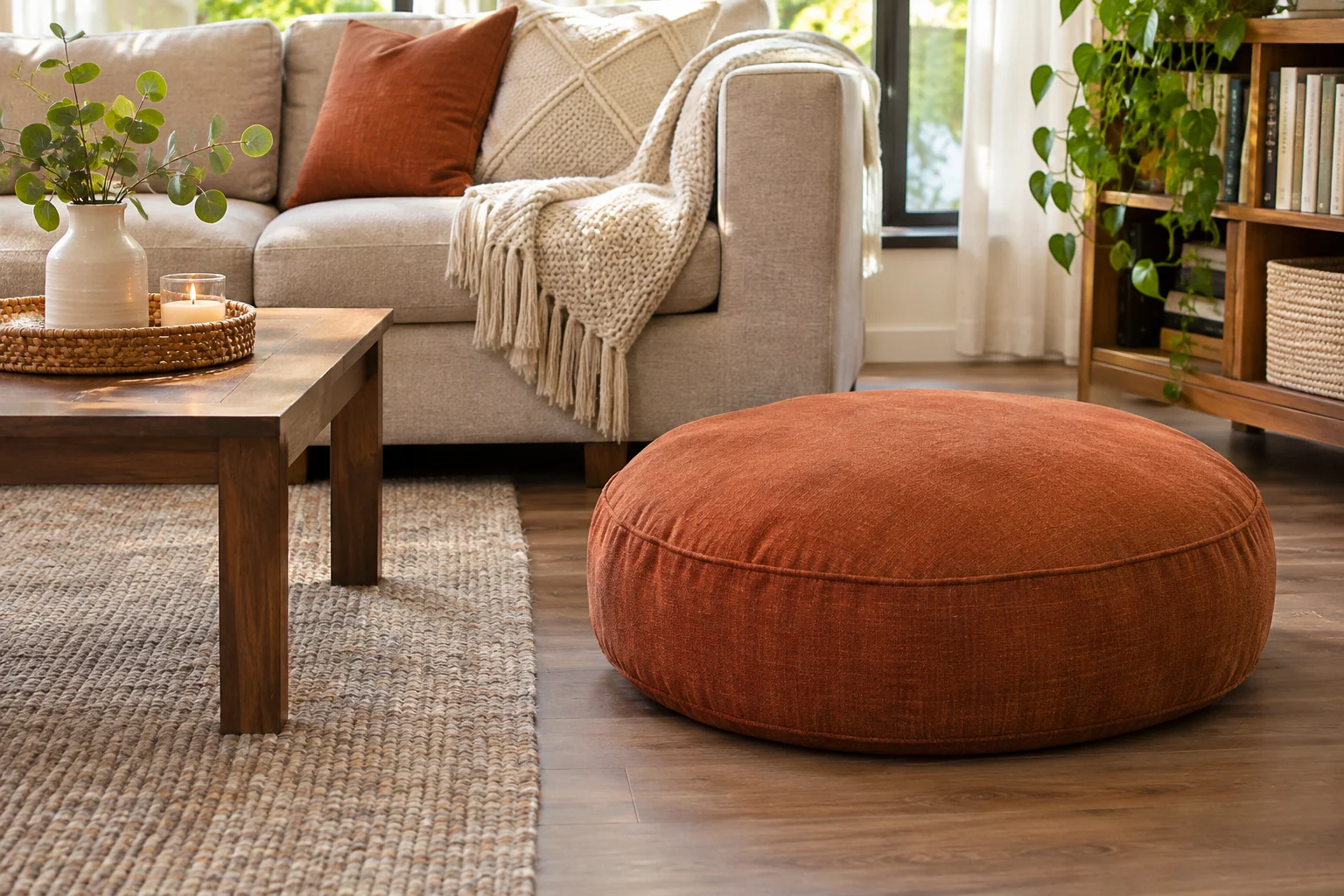
A round form can contrast with straight furniture and work well as one occasional seat. Compare the actual usable surface with your needs; the widest diameter does not describe how firm the cushion remains near its edges. Check the complete product rather than choosing by a styled top-down image. Keep the round outline clear of table legs and moving doors.
7. Connect a pair through fabric rather than exact size
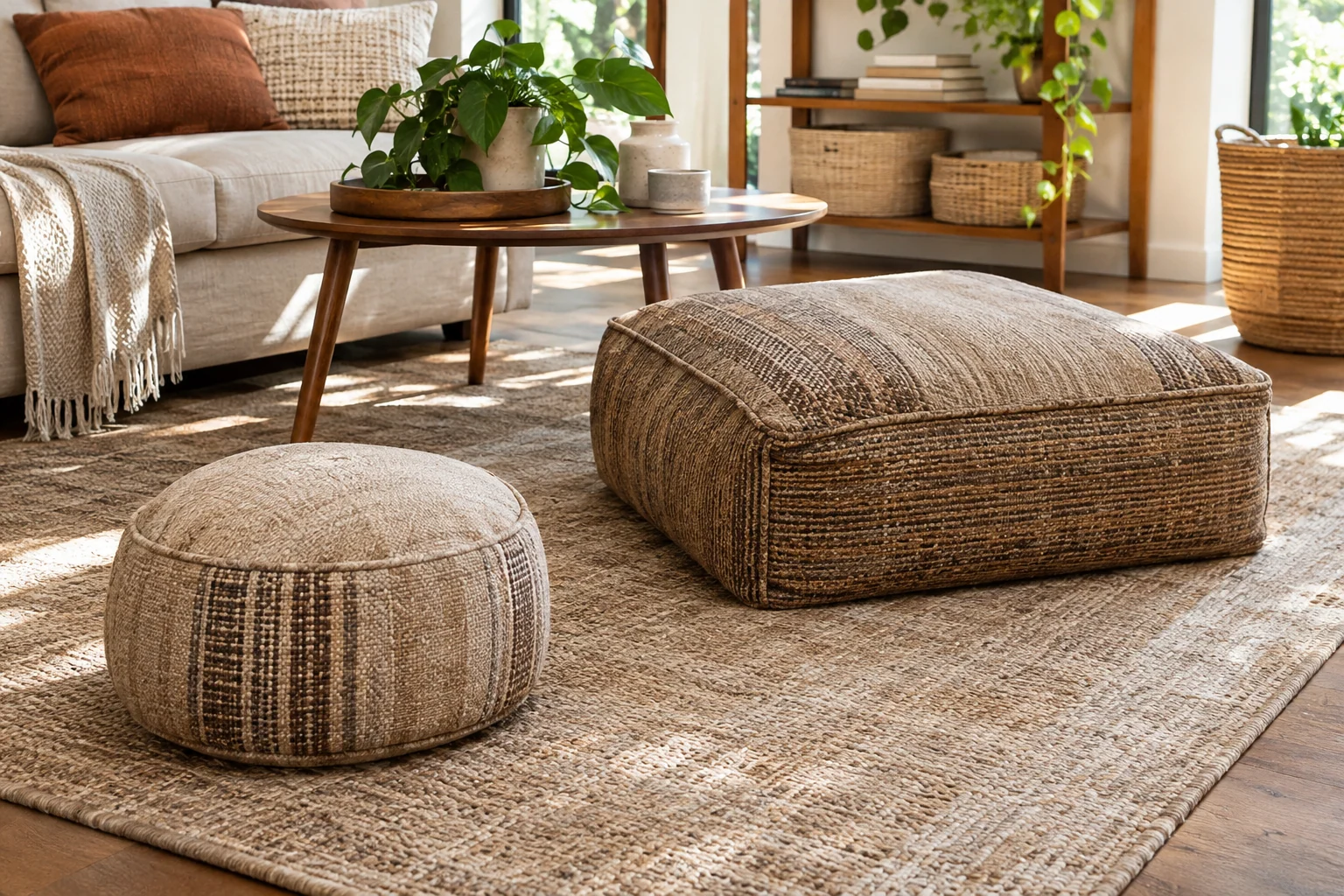
Two cushions can share a color or texture while accommodating different preferences. Keep each one appropriate for its intended user and activity. Similar fabric can make the pair feel considered when stored together, without requiring every seat to have identical dimensions. Test both on the actual floor surface, especially if one is much softer or has a different filling.
8. Use a quiet neutral base for a colorful room
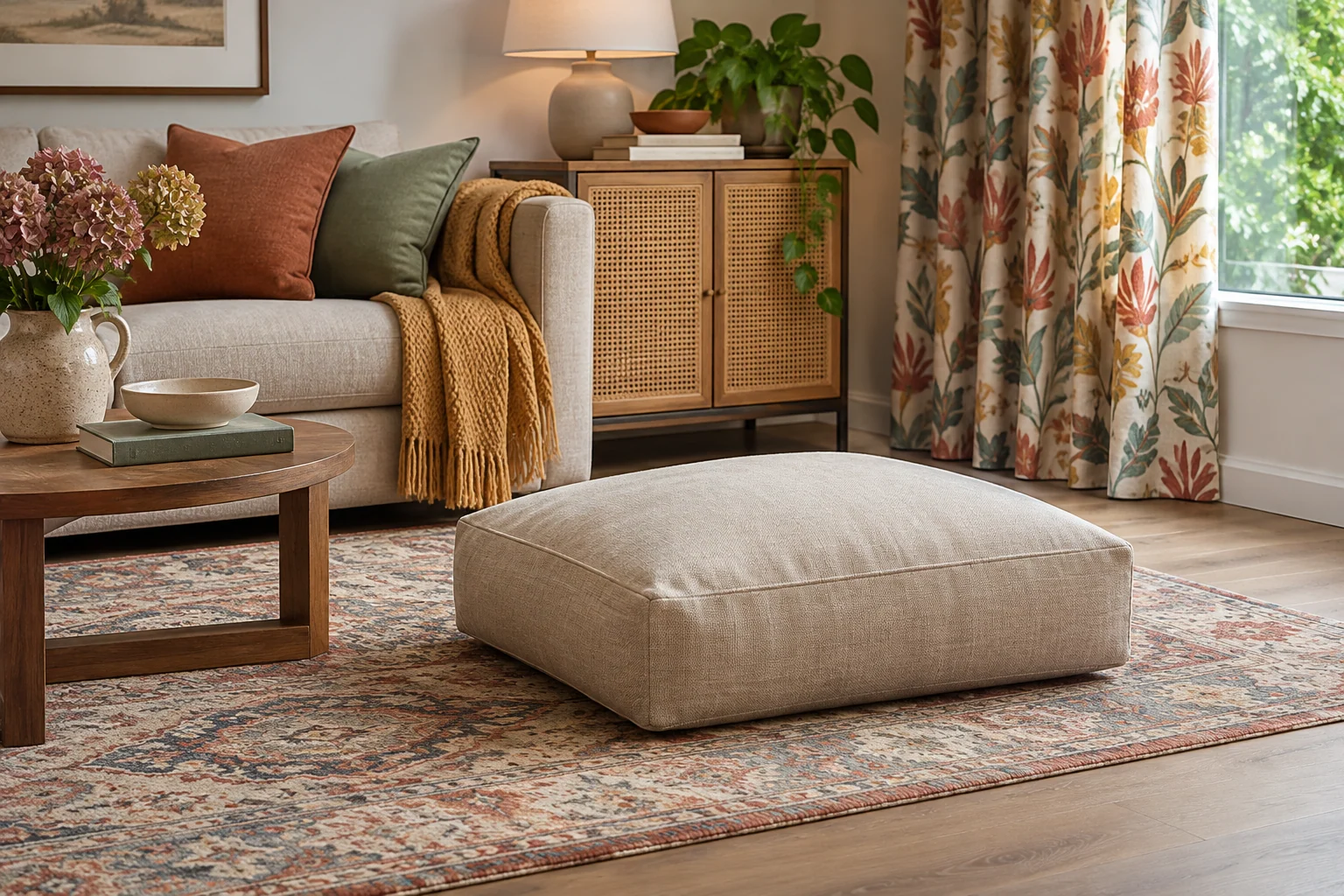
A plain cover can keep occasional seating from competing with patterned curtains or a busy rug. Choose a texture that still feels pleasant and suits its care routine. View it beside the existing fabrics before deciding a new color is necessary. The cushion can repeat an understated background tone and let the room's stronger elements remain the focus.
9. Add one deliberate accent color

A single contrasting cushion can connect a small color elsewhere in the room, such as a framed print or throw. Keep the connection loose enough that the space does not look like a matching set. Check the cover's actual fabric and care label before choosing a pale or strongly dyed option solely for appearance. A useful seat needs a workable maintenance routine.
10. Keep a removable cover easy to access
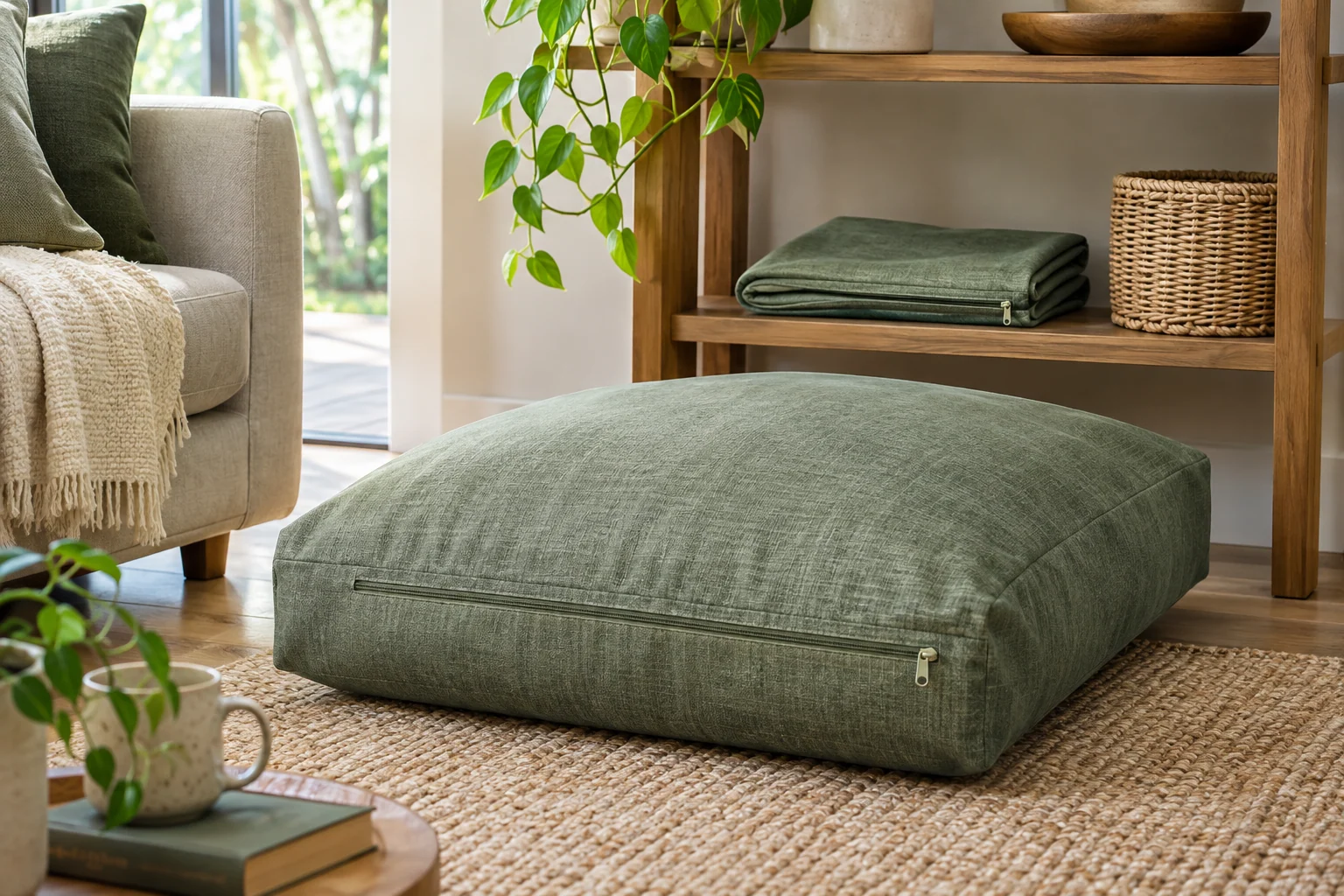
Choose a cover that can be removed and replaced without an awkward struggle if regular care is part of the plan. Check the zipper or opening and read the instructions for both parts. A washable cover does not establish that the filling can go into the same machine cycle. Keep the instructions somewhere you can find them rather than relying on the word 'easy-care' in a listing.
11. Give occasional cushions a dedicated shelf
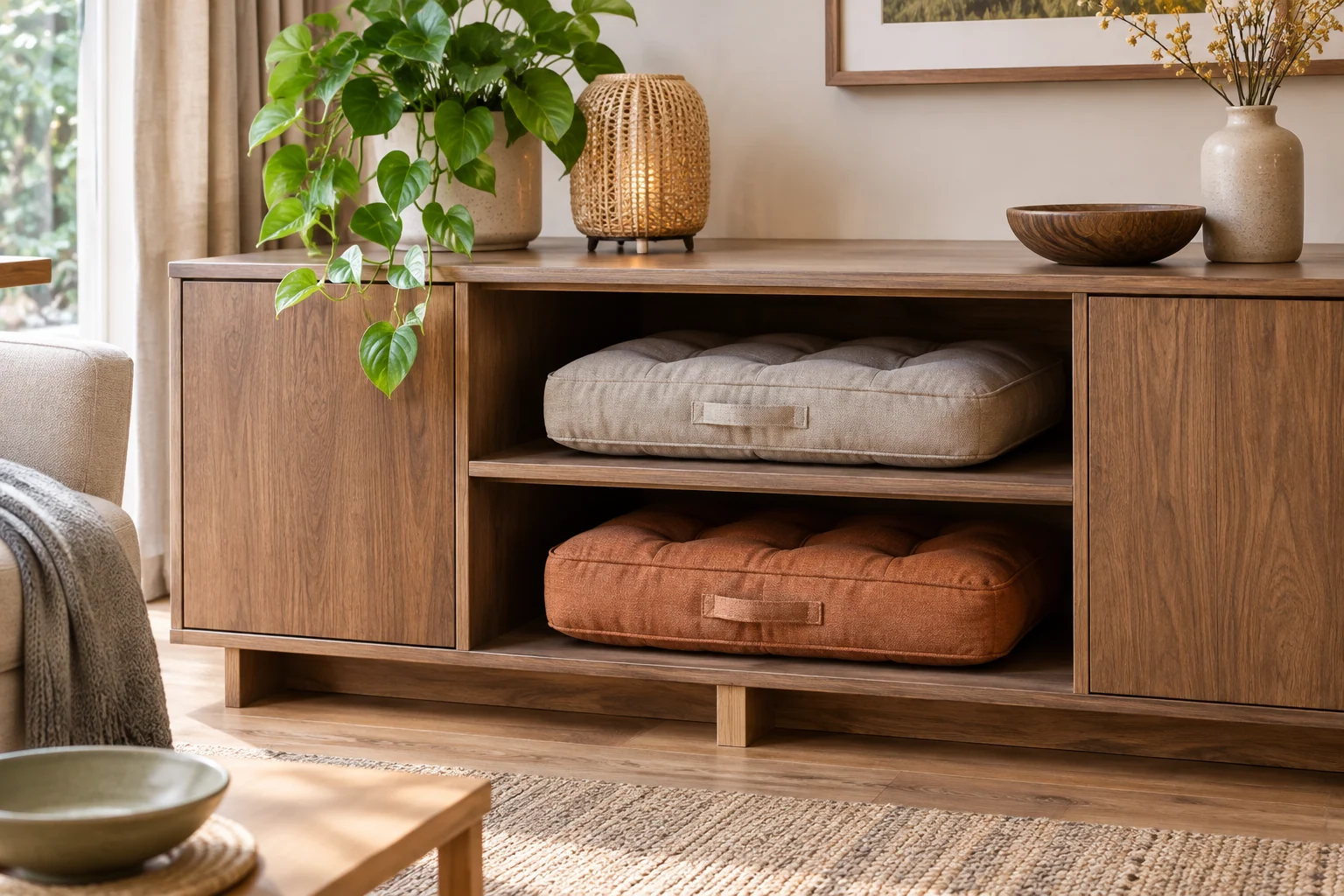
A wide low shelf can provide a defined return place when it fully supports the cushions and suits their weight. Leave enough clearance to remove one without pulling the entire pile forward. Follow the furniture's loading and restraint guidance as applicable. The shelf should fit the cushion naturally, rather than compress it sharply to make an attractive empty-space measurement work.
12. Use a roomy basket for suitable soft pieces
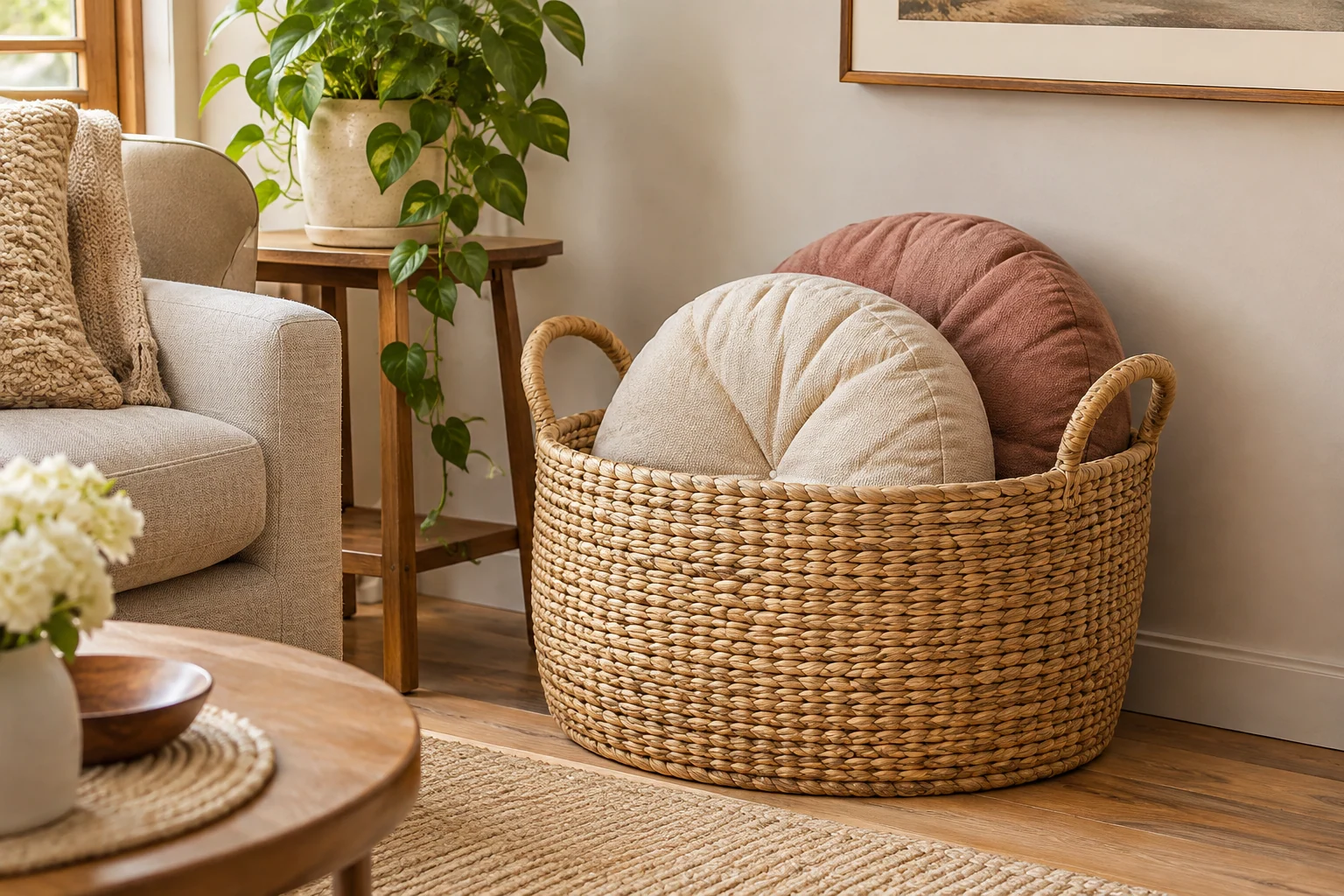
A smooth-lined basket can suit flexible cushions whose shape and care allow that kind of storage. Compare its opening with the cushion and avoid forcing a firm structured seat into a narrow container. Keep the basket light enough to handle in its intended place. A separate upright return slot may be better for a thicker pad that should keep its shape.
13. Stand a firm cushion in a suitable return slot
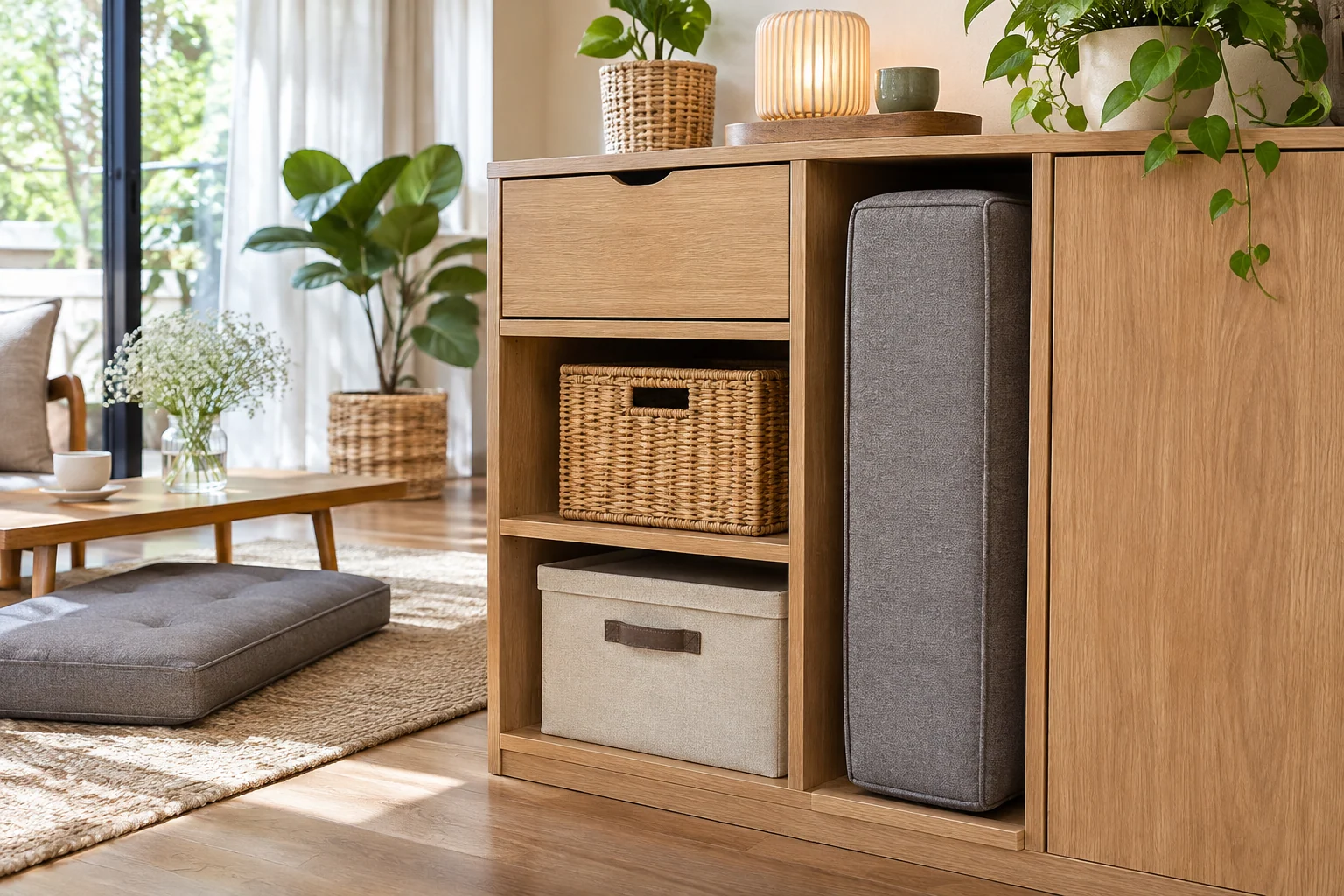
A structured cushion may fit a broad supported upright slot when its maker permits that storage position. Keep it from leaning into a walkway or against a hot or unsuitable surface. Check that the cover is completely dry before putting it away. The return arrangement should preserve the cushion's intended shape while keeping it easy to retrieve.
14. Make game-night seating easy to deploy
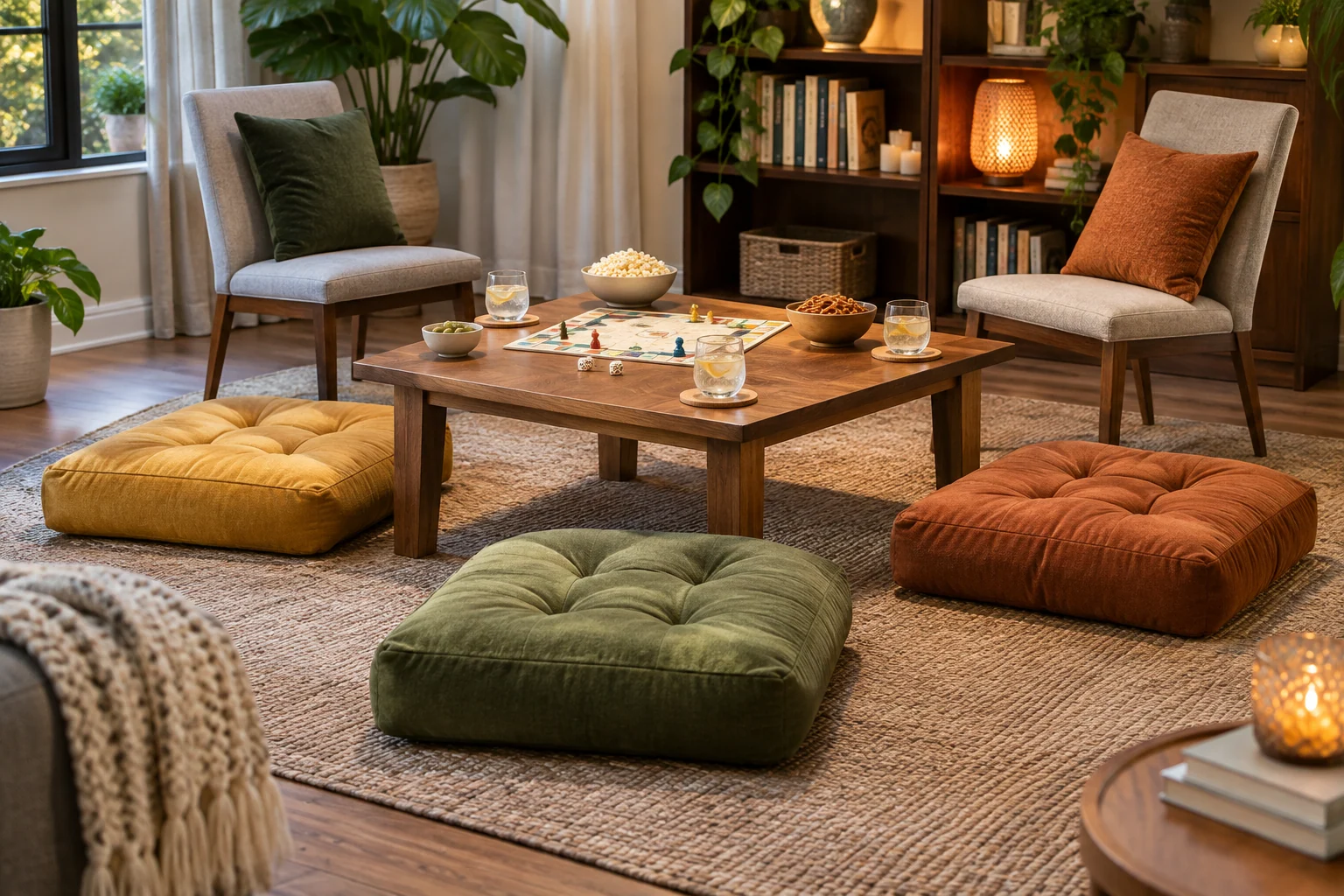
A small cushion group can expand the seating around an appropriate low activity surface. Arrange the group for the number actually playing, with a clear route for getting in and out. Keep normal chairs available rather than assuming every guest wants a floor seat. Return the cushions after the game so their temporary footprint does not become a permanent obstacle.
15. Use a low window area without blocking the treatment
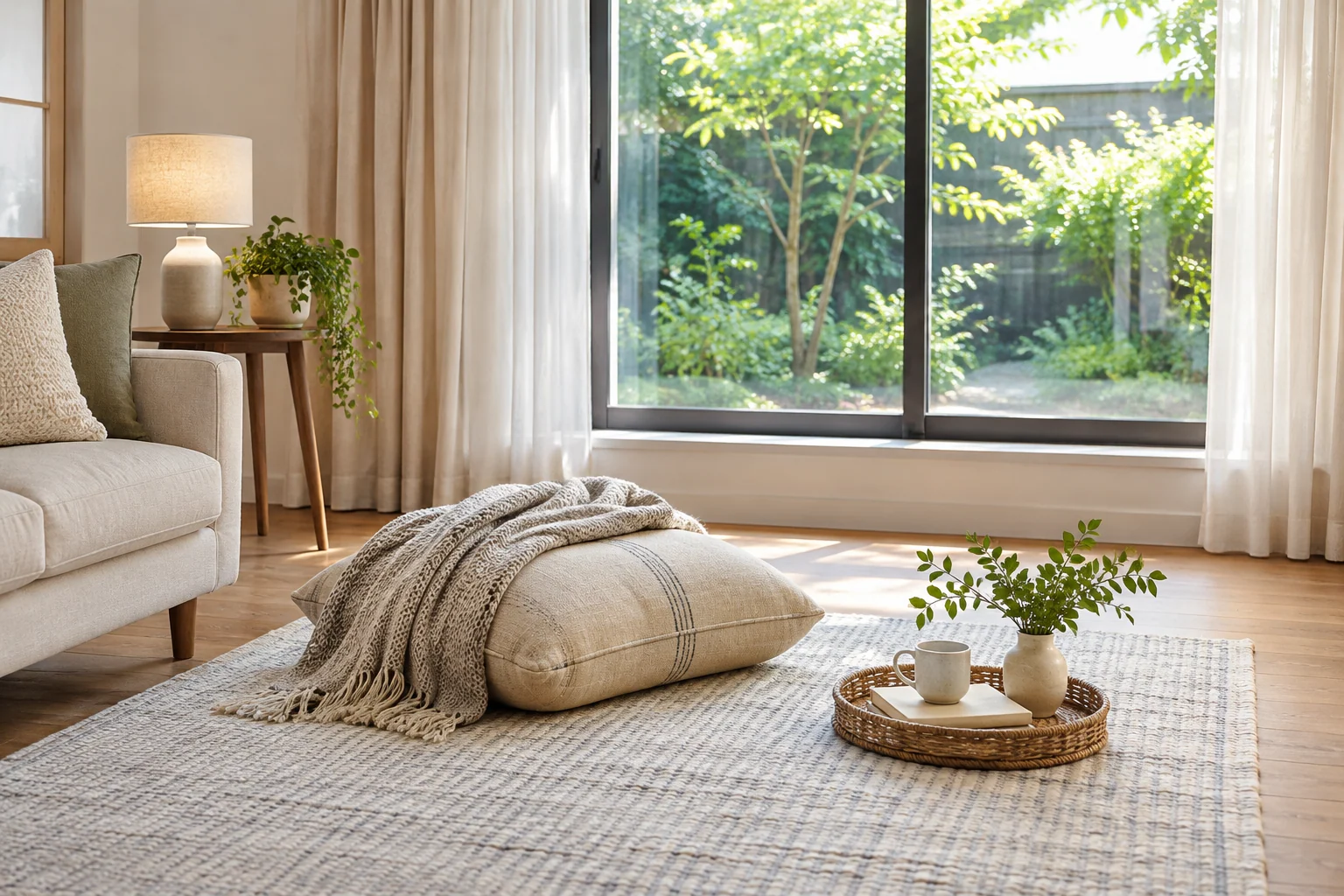
A cushion near a window can create a pleasant place to read when the floor area and environment suit it. Keep the window, curtain and any opening mechanism usable. Check the position under the conditions in which it will be used, including direct sun and drafts. Do not turn a narrow window ledge into seating merely because the cushion seems to fit its width.
16. Leave door and cabinet movement unobstructed
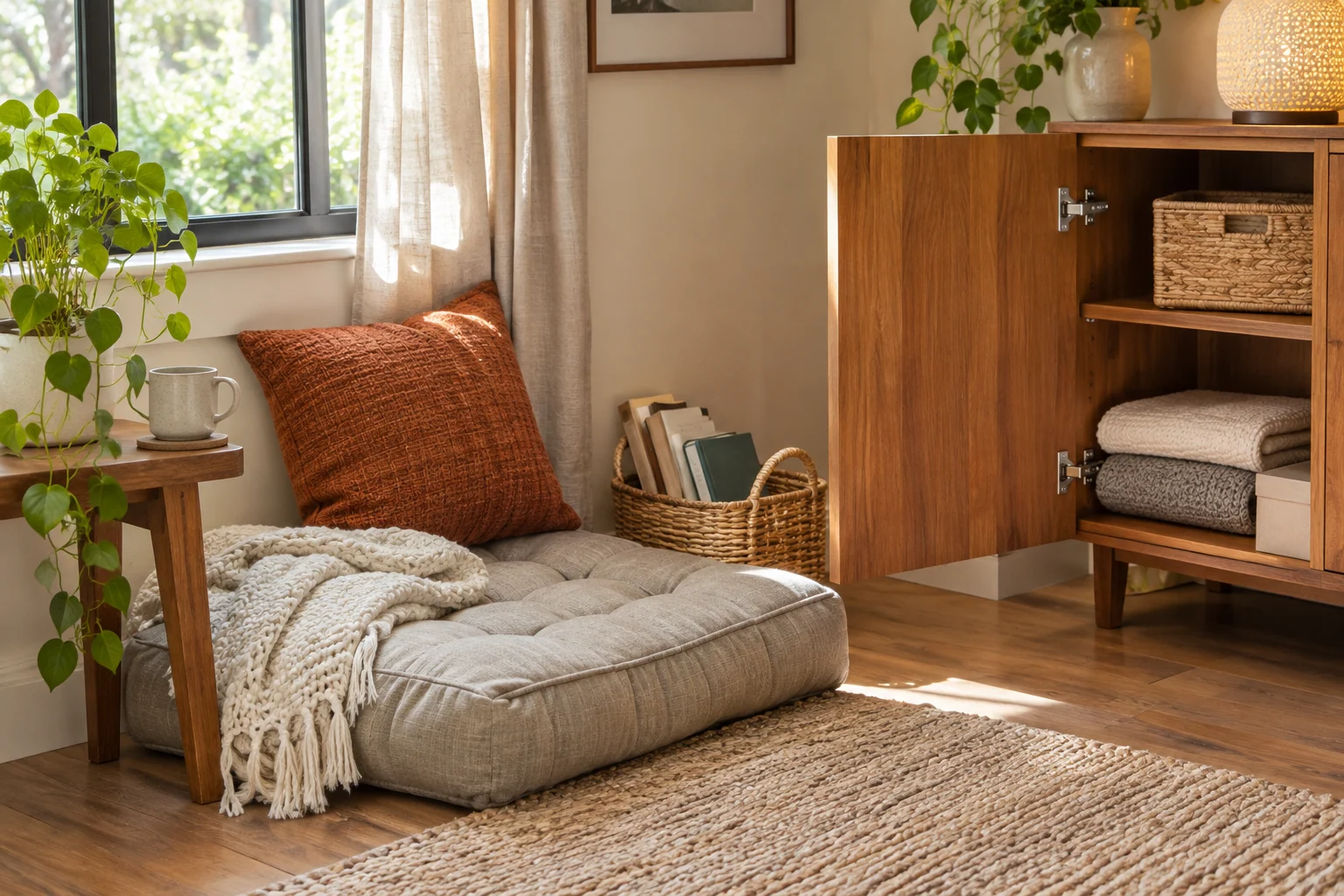
A cushion's soft shape can hide how much space it occupies until a door pushes against it. Test nearby doors and drawers with the cushion in the used position. Include any basket or book group beside it. Move the arrangement to another area when ordinary storage access requires repeatedly lifting the cushion away.
17. Keep the cushion separate from the lamp base
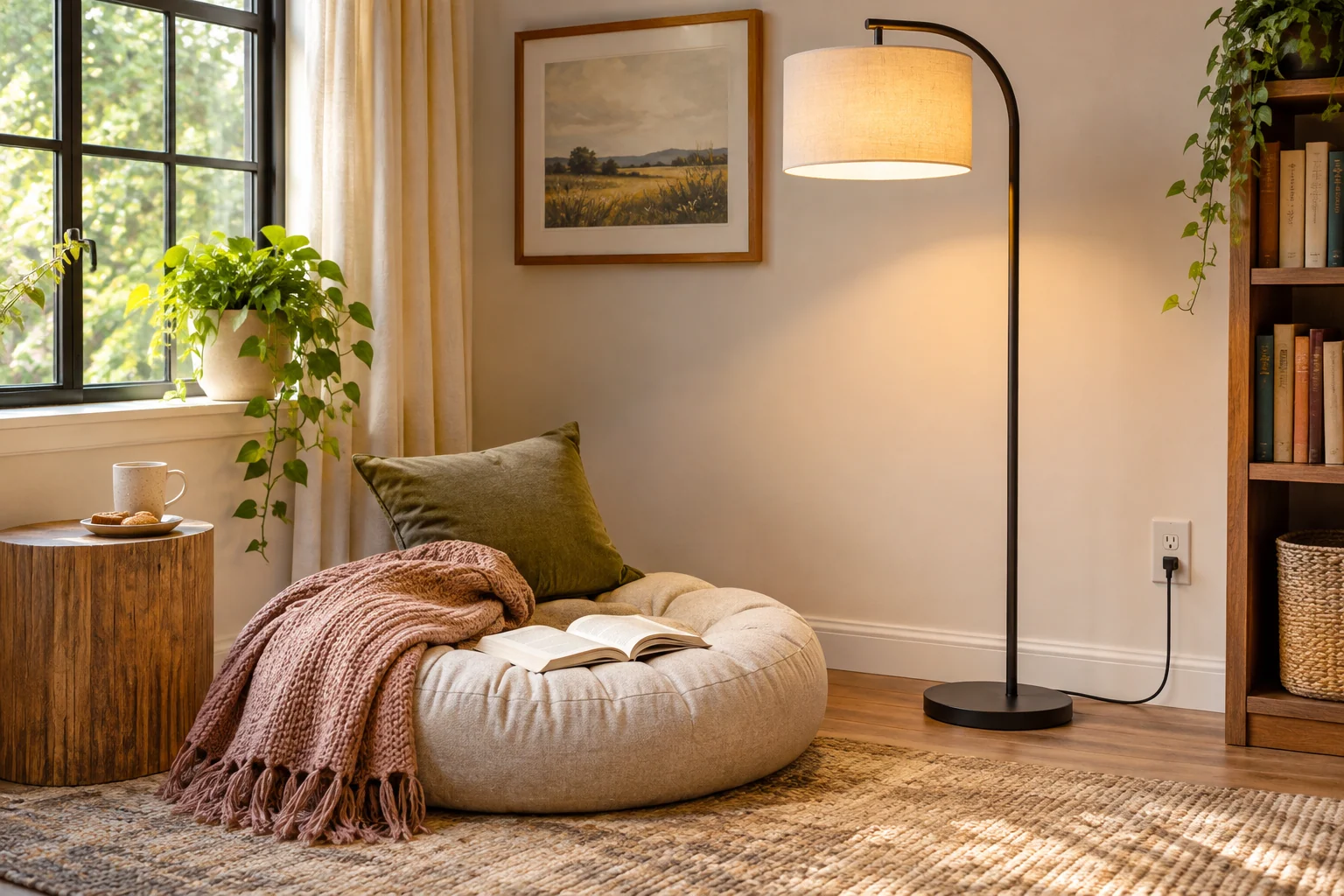
Lighting can make a reading spot useful, but the cushion and the fixture need distinct positions. Keep feet, fabric and the normal movement around the seat clear of the lamp and its cord, following the fixture's guidance. Choose a different lighting arrangement when the corner becomes cramped. A cushion should not be used to disguise a cord or support an unstable lamp.
18. Choose a purpose-designed outdoor version for outside use
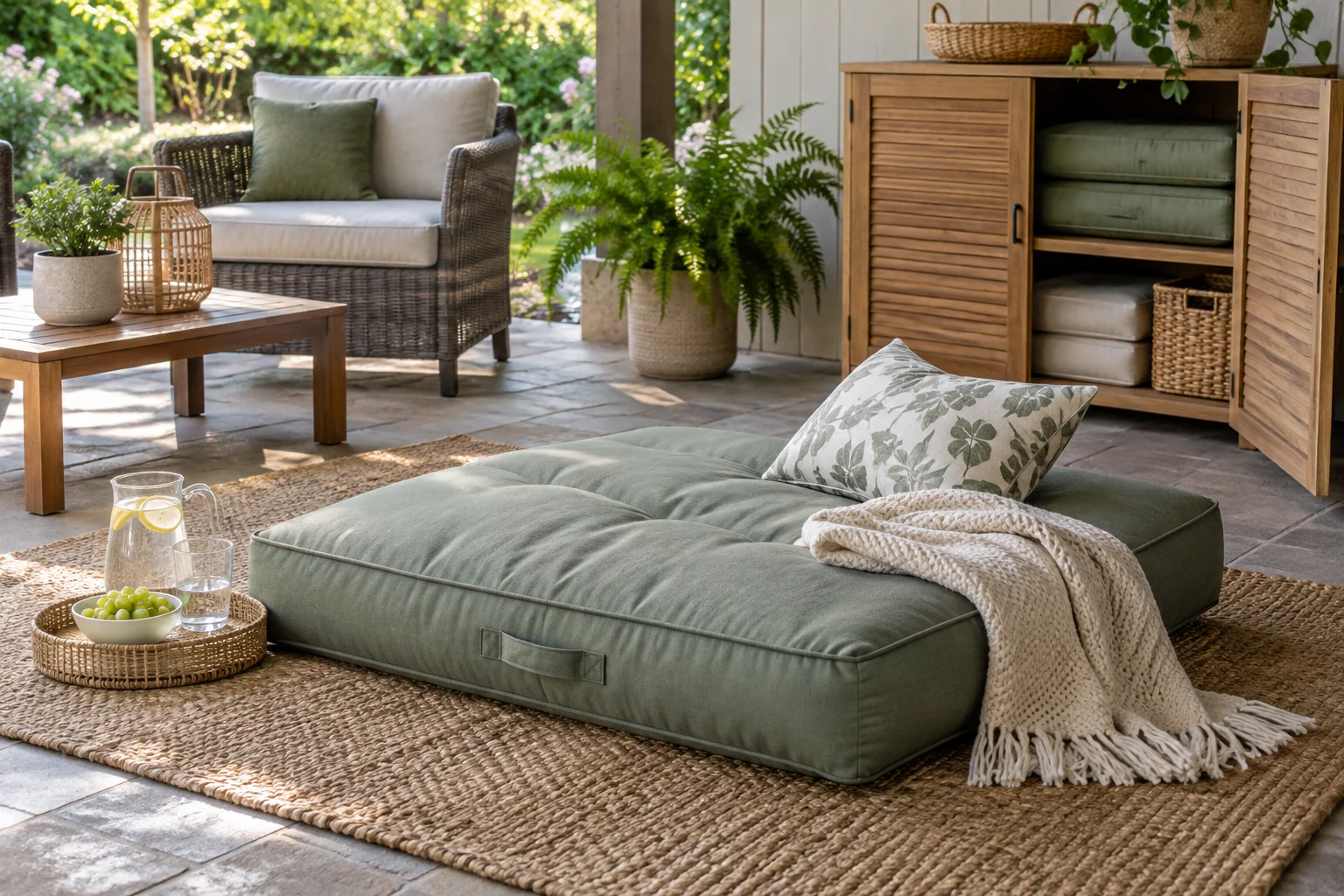
An indoor cushion should not be assumed suitable for a balcony or patio. Choose a product expressly intended for the setting and follow its weather, cleaning and storage instructions. Keep a dry return place available when required. A fabric's outdoor description alone does not establish that the complete cushion can be left outside indefinitely.
19. Store indoor and outdoor cushions as distinct groups
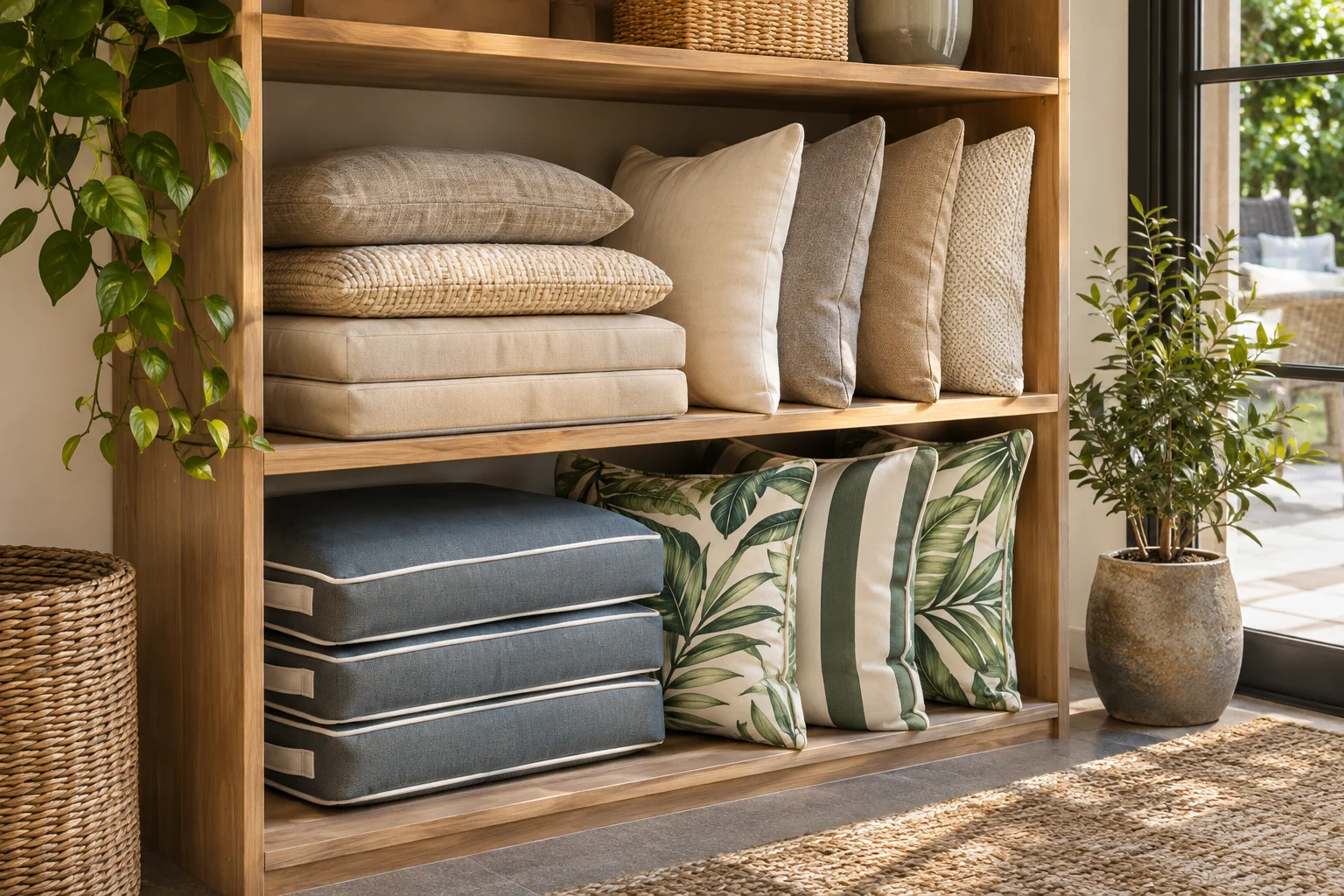
If the household uses both, give each group a clear return place. Keep dirt or moisture from an outside session out of an enclosed indoor cushion pile. Check the actual products' care instructions before putting either group away. A simple separation by use can be more practical than organizing all cushions by color and having to identify the outdoor ones each time.
20. Keep one cushion available in a multipurpose room

A home office or guest room may benefit from one temporary low seat for a brief activity. Make sure it has a return position that leaves the room's main function intact. Keep the desk chair, bed opening and storage routes clear. The cushion should add a choice without becoming another item moved between the bed and the floor every day.
21. Compare firmness through the actual activity
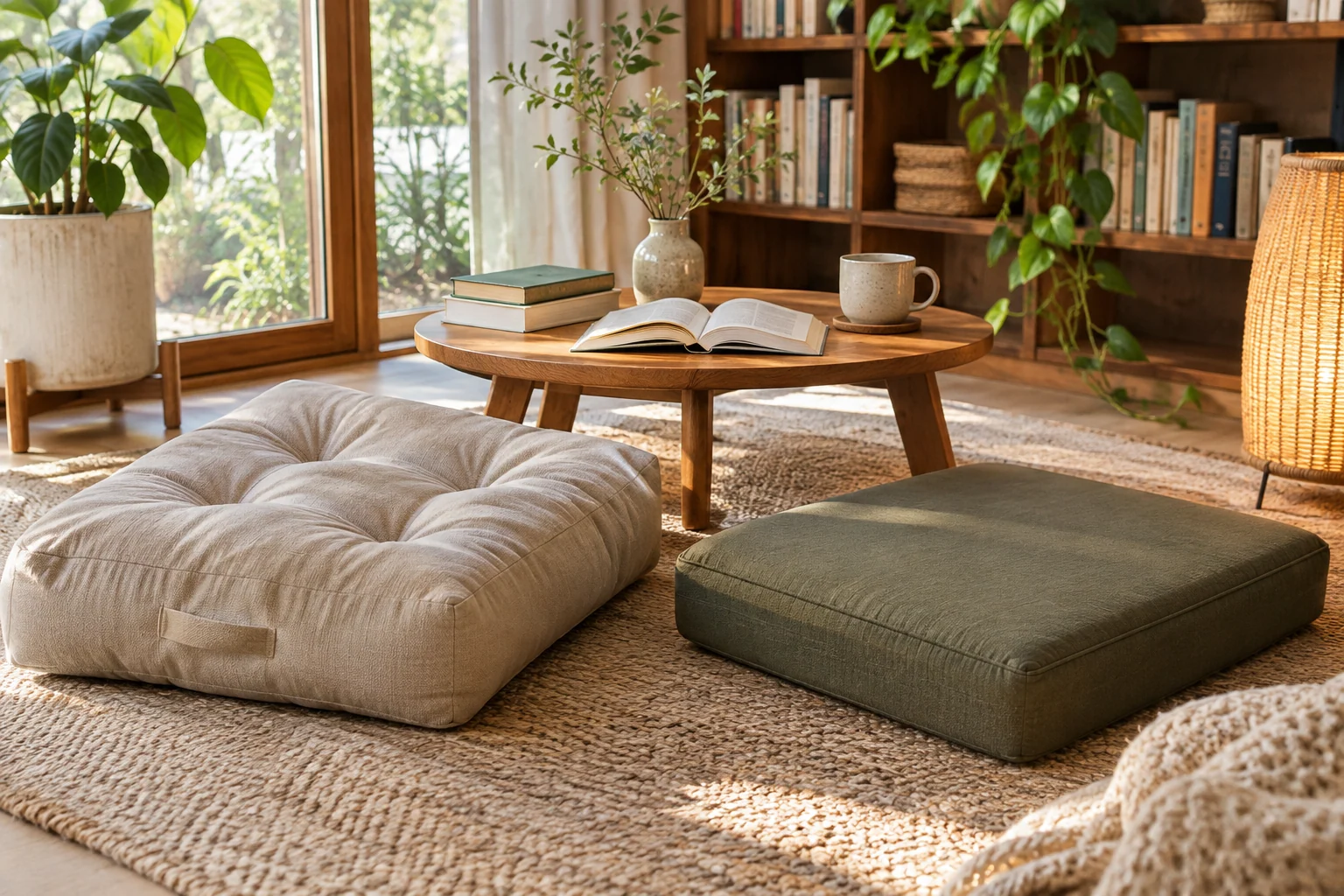
A cushion that feels pleasant for a moment may behave differently during reading or a tabletop task. Try the intended activity, notice whether the seat feels usable, and choose another chair when needed. Avoid assuming that extra thickness guarantees the same support. Construction, filling and the surface underneath all contribute to how the individual product feels.
22. Keep a small folded throw nearby
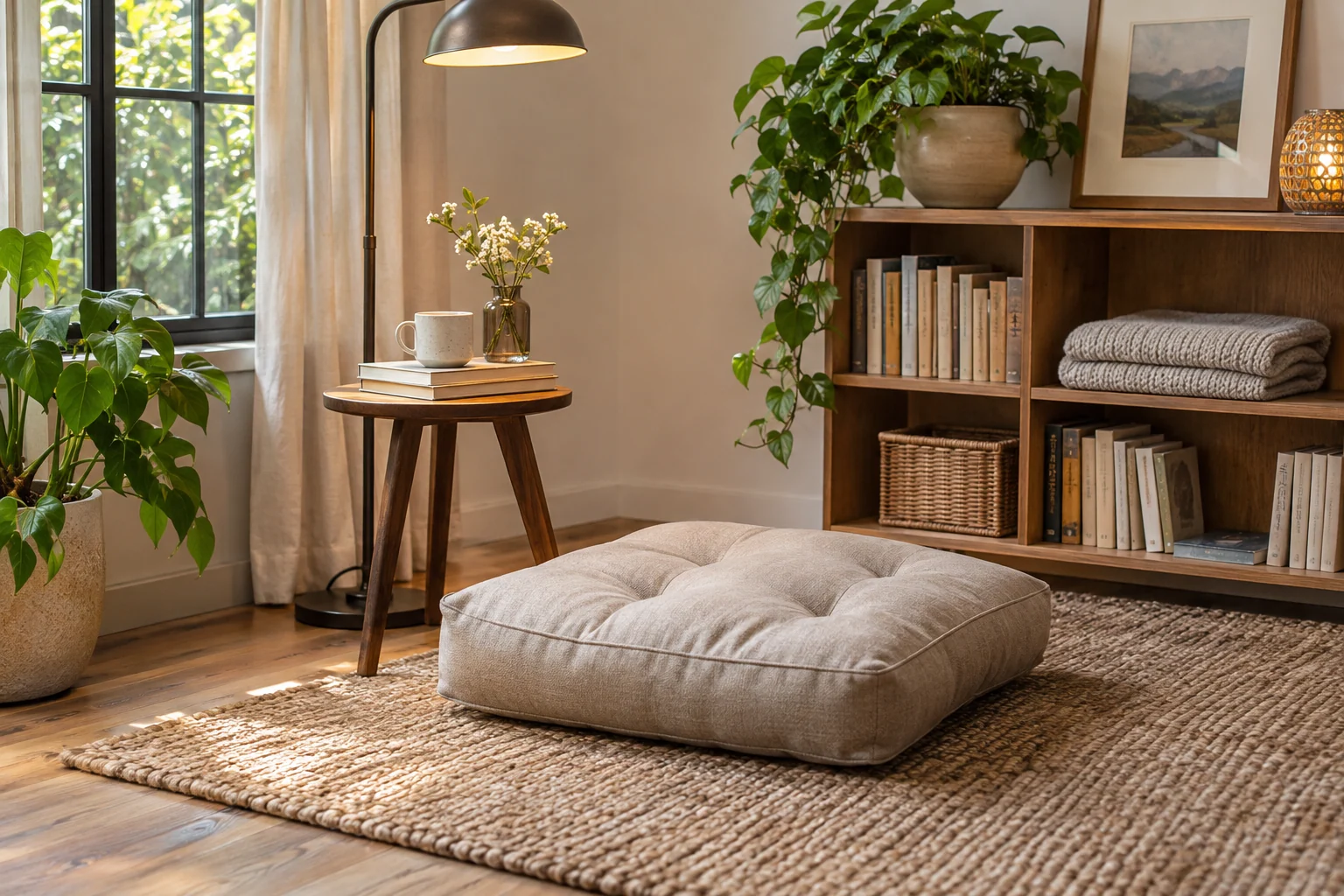
A separate throw can make a relaxed seating area feel inviting without being permanently layered onto the cushion. Give it its own reachable place and follow its care instructions. Keep loose fabric out of the route used to stand up. The arrangement should let someone choose the extra layer instead of requiring it to hold the seat together.
23. Reset the room after the floor-seating session
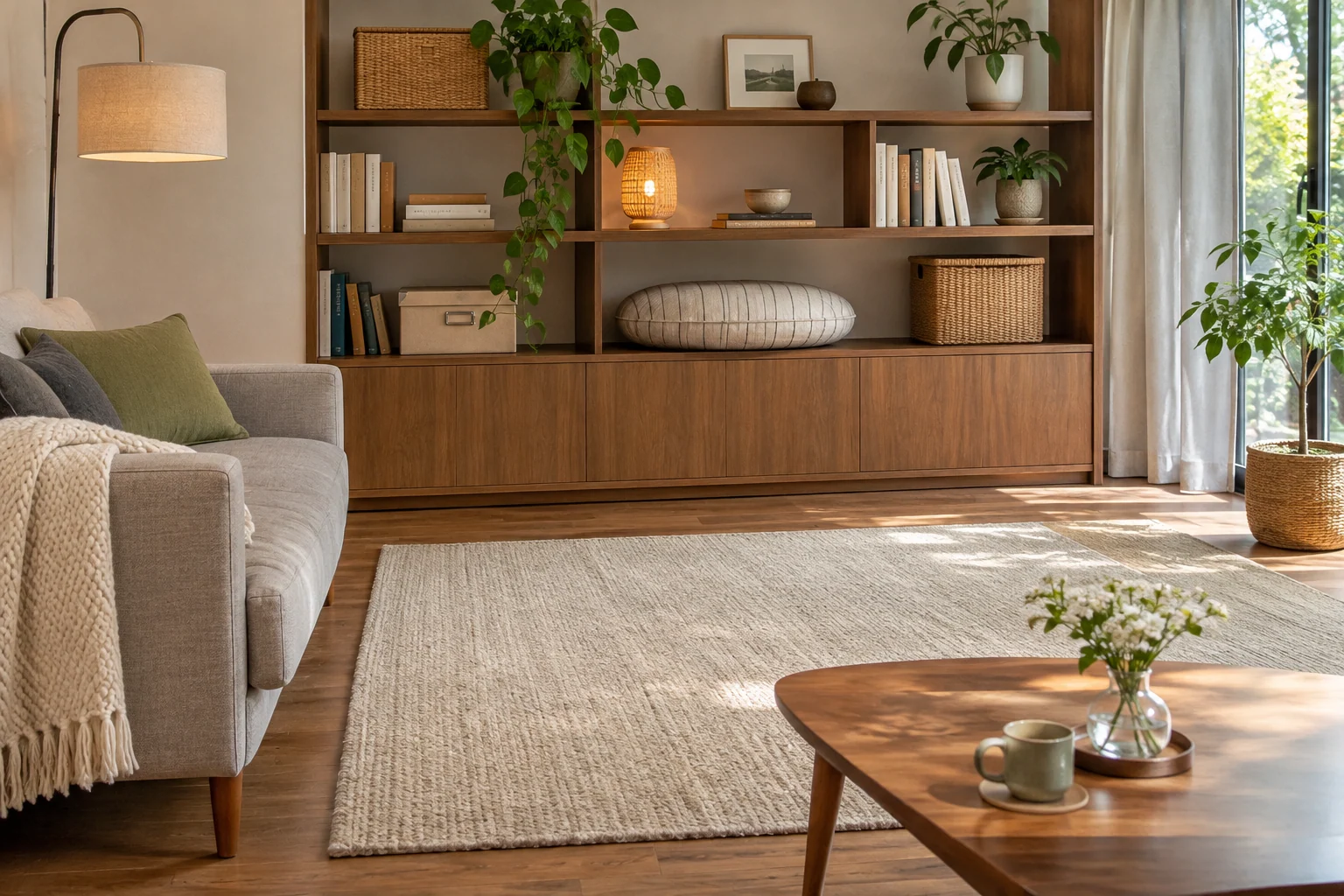
Put the cushion, book and other temporary items back in their defined places. Check the cover and floor surface as part of that ordinary routine. If returning the cushion is awkward, reconsider its size or storage before adding another one. A flexible room depends on an easy reset as much as it does on an appealing moment of use.
Plan the seat and its return place
Write down cushion width, depth and thickness; cover and filling care; intended activity; preferred approach; and the exact storage opening. A hypothetical 30-inch-wide cushion will not fit flat inside a 28-inch-wide rigid shelf bay, regardless of how much spare height the bay has. That is a fit example, not a recommendation to compress the cushion. Check the actual construction and intended storage instead.
A practical next step
Choose floor cushions as flexible furnishings with a clear job and an easy home between uses. Begin small, preserve the room's normal routes and keep a comfortable chair available; the right arrangement is the one the household wants to use and can reset.
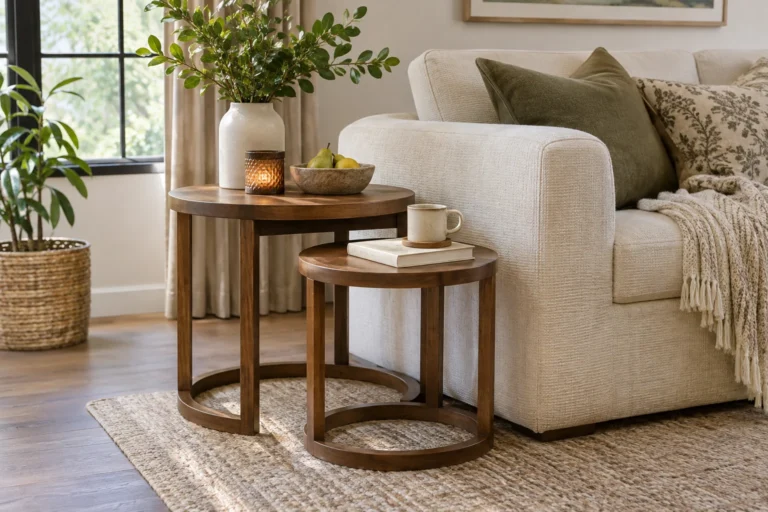
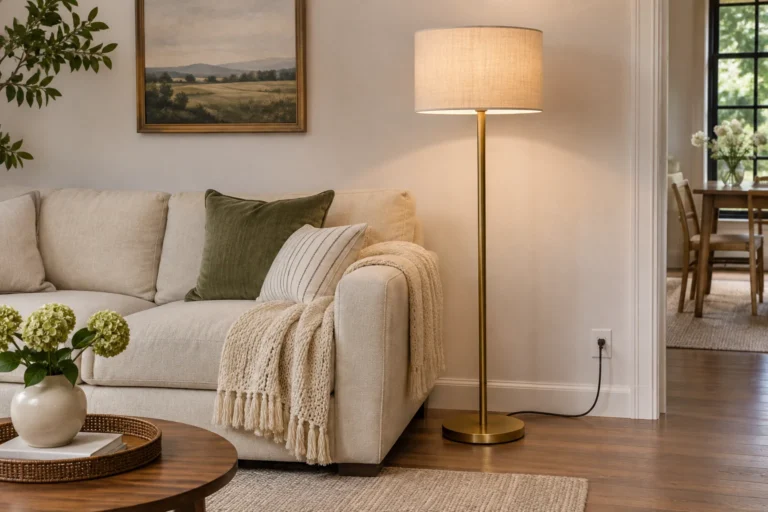
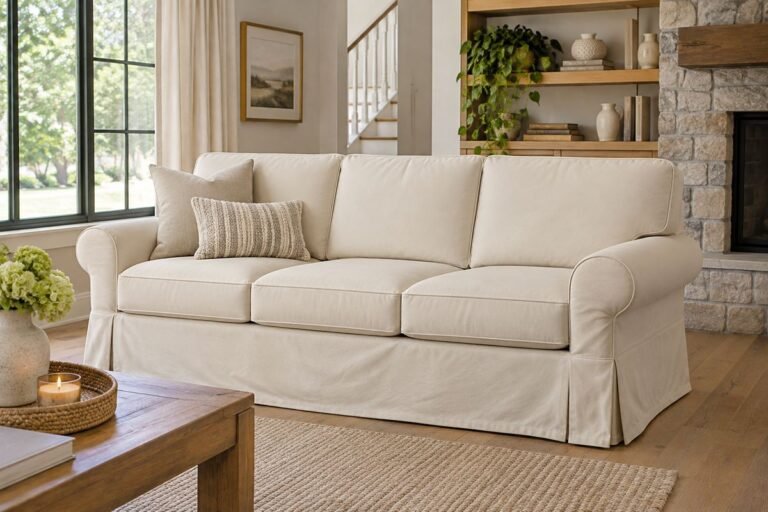
The images are original AI-generated design concepts. They illustrate arrangements rather than tested products, installations or measured performance.
Sources and care references
Related reading on Nestroxe
Optional digital guide for this topic
If you prefer a structured workbook, explore this related paid guide.