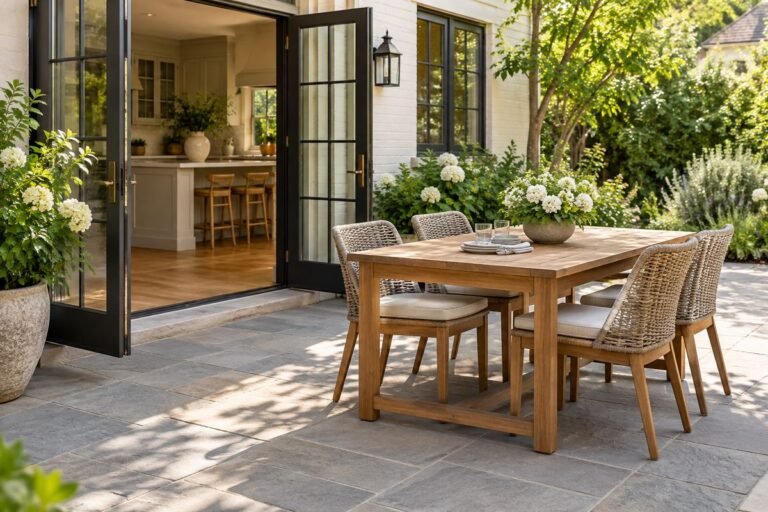
A garden bench becomes inviting when it gives you a reason to sit: a view of planting, a pause along a path or a comfortable place near the house. Choosing the position before the furniture helps you see what size, backrest and surrounding space will actually work. A bench hidden in an awkward corner may remain unused, however beautiful its finish.
These garden bench ideas focus on freestanding furniture and practical placement rather than structural building instructions. Consider the view from the seat as well as the view of the bench from the house. Then compare the chosen product's outdoor suitability, care requirements and intended use with the conditions in your own garden.
Contents
- 1. Face the bench toward your best planting view
- 2. Create a pause beside a garden path
- 3. Use a backless bench where the view goes both ways
- 4. Choose a backrest for a longer garden pause
- 5. Frame a bench with planting rather than hiding it
- 6. Make a small courtyard bench visually light
- 7. Repeat the color of an existing gate or fence
- 8. Use warm wood against a pale wall
- 9. Let one colored bench become the focal point
- 10. Set a bench beneath existing shade thoughtfully
- 11. Keep a sunny seat close to another shaded option
- 12. Place a bench at the end of a clear garden view
- 13. Use a compact bench near the kitchen garden
- 14. Add a separate side table for everyday objects
- 15. Keep cushion storage close enough to use
- 16. Use a bench along a broad patio edge
- 17. Choose a restrained metal design for a formal garden
- 18. Soften a contemporary bench with informal planting
- 19. Give a reading bench a quiet orientation
- 20. Use two benches for a sociable arrangement
- 21. Keep a small bench beside the back door
- 22. Plan a view that works beyond peak flowering
- 23. Keep maintenance access behind the bench
- 24. Use an outdoor cushion color already found nearby
- 25. Make a narrow garden bench run with the space
- 26. Avoid isolated feet on soft or uneven ground
- 27. Choose a bench you can care for realistically
- 28. Finish the area with enough empty space
Try the view and the route before choosing the bench
Mark the bench footprint on a stable, suitable surface and check the approach, sitting space and room to stand up. Visit the position at different times to understand sunlight, shade and exposure. Follow the actual furniture instructions for ground conditions, assembly, loads and care. Outdoor wood is not automatically maintenance-free: IKEA's NÄMMARÖ care guidance, for example, includes cleaning, protective treatment and appropriate protection. Apply the instructions for your exact product rather than generalizing one bench's care to every material.
Compare the storage or placement options
- Backed bench: Useful for a longer pause; compare comfort and allow the full footprint.
- Backless bench: Can serve views on both sides; check intended use and access.
- Path-side bench: Creates a destination; keep the route clear even when occupied.
- Patio-edge bench: Adds seating near the house; check doors, chairs and changes in level.
1. Face the bench toward your best planting view
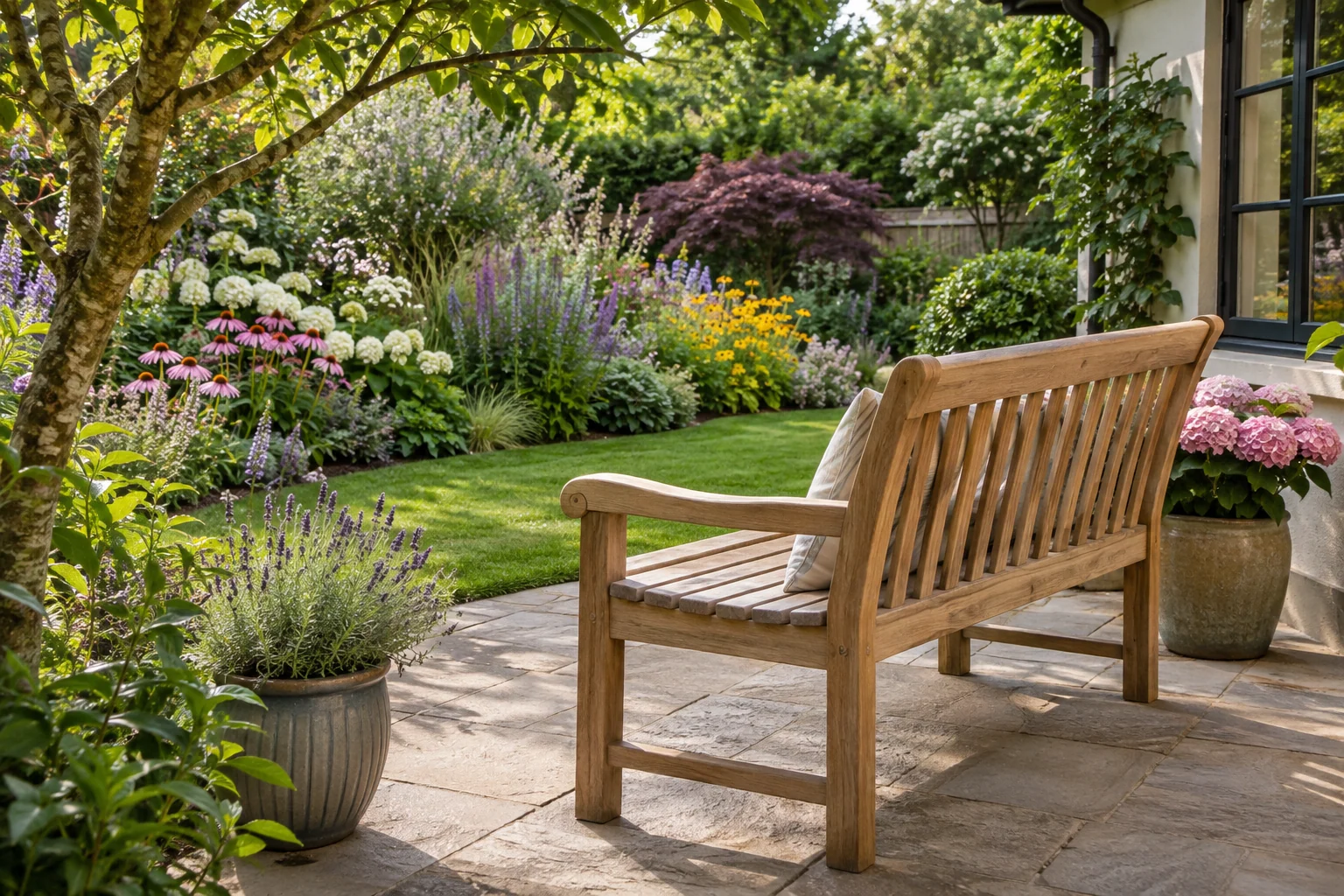
Choose a view that is pleasant at seated height, not only from the path. A layered border, flowering tree or interesting foliage can give the bench a clear purpose. Keep enough distance to see the composition without sitting inside the plants. Try the position with a temporary chair first, checking that the view remains appealing as nearby growth changes through the season.
2. Create a pause beside a garden path
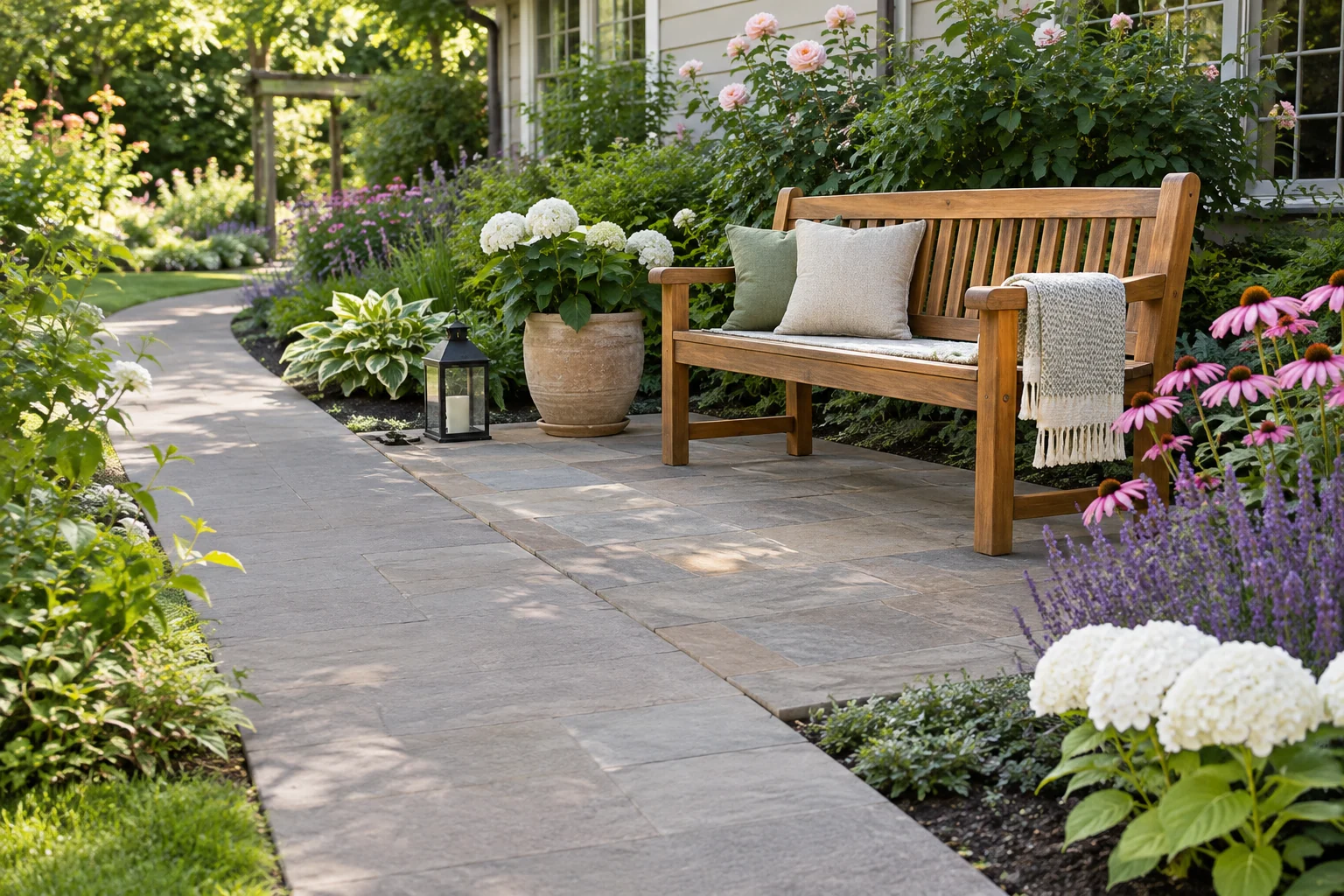
Place a bench beside the route rather than across it. Leave the full intended path clear when someone is seated and when another person passes. A small widened area can make the bench feel intentional without interrupting circulation. Follow appropriate guidance for any ground or paving work; the bench itself should rest on a suitable stable surface with all feet properly supported.
3. Use a backless bench where the view goes both ways
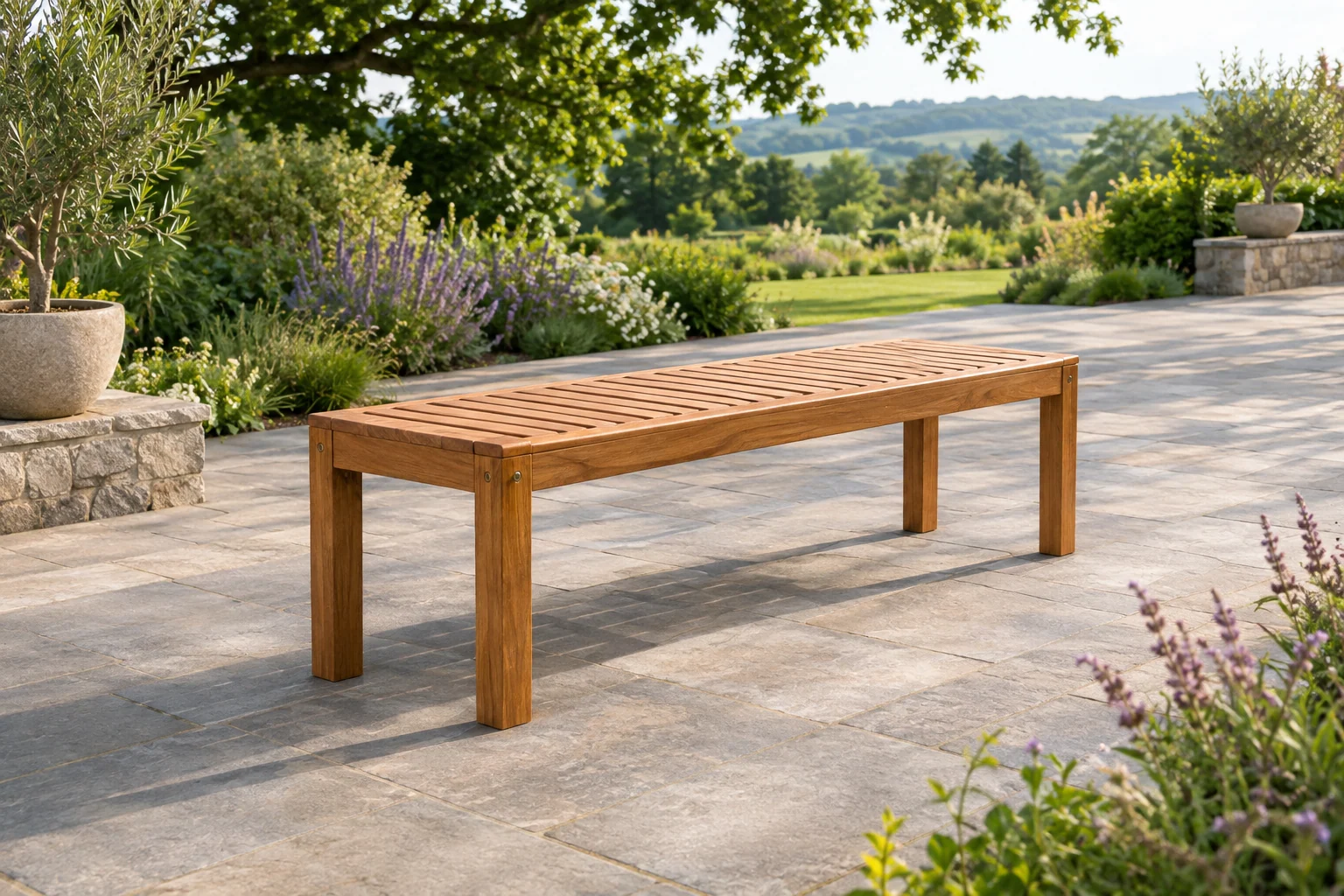
A backless design can suit a terrace between two appealing views or a flexible gathering area. Check the product's intended use and comfort for the people who will sit there. Avoid assuming a narrow decorative bench works as everyday seating. Place it so either side has a sensible approach and enough room for feet without encroaching on planting or a drop.
4. Choose a backrest for a longer garden pause
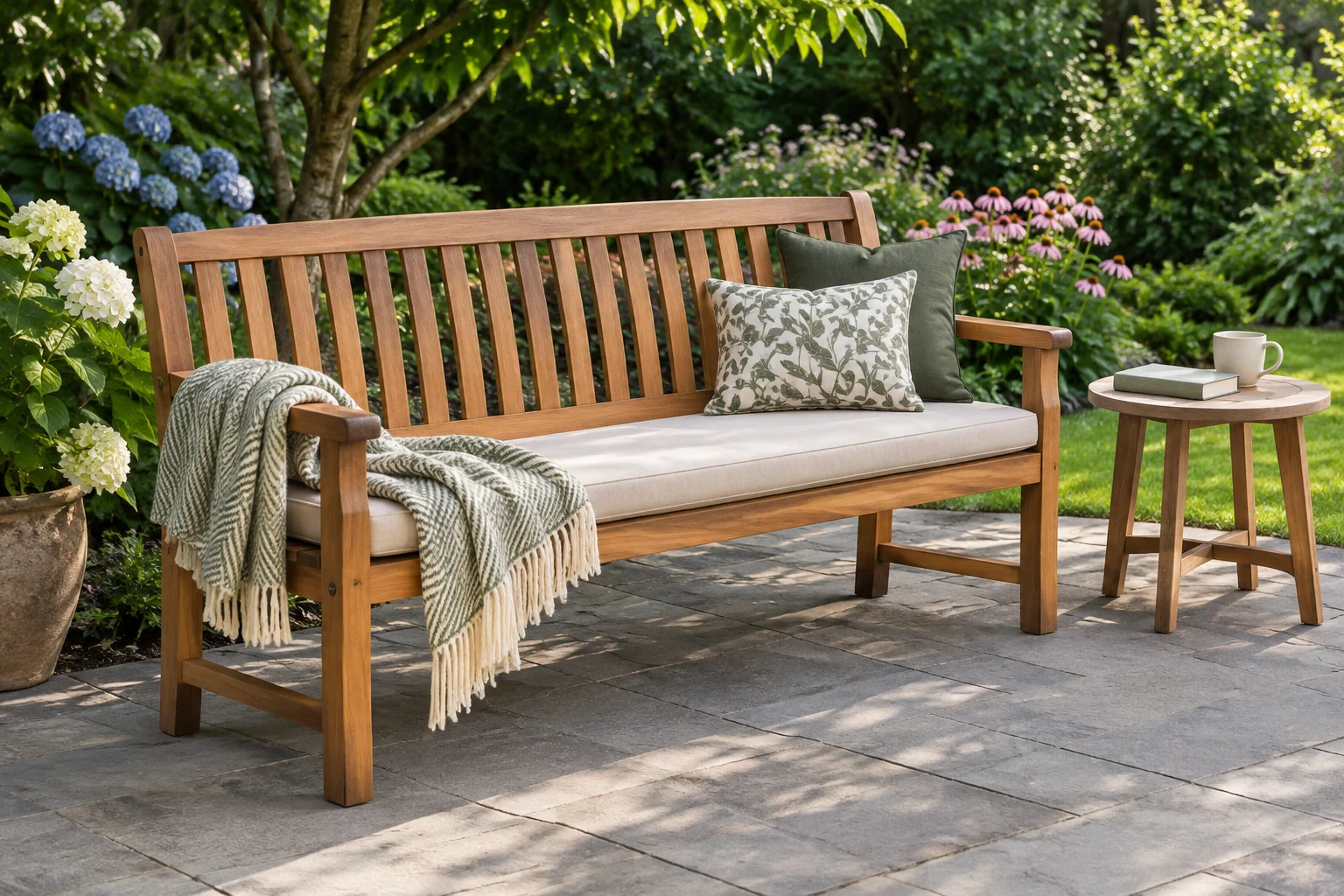
If the bench is meant for reading or a leisurely drink, compare backrest shape and seat depth in person when possible. A sculptural outline does not tell you how the furniture feels. Leave room behind and beside the bench according to its design and care needs. A small side table nearby can support a book or cup without covering the seat.
5. Frame a bench with planting rather than hiding it
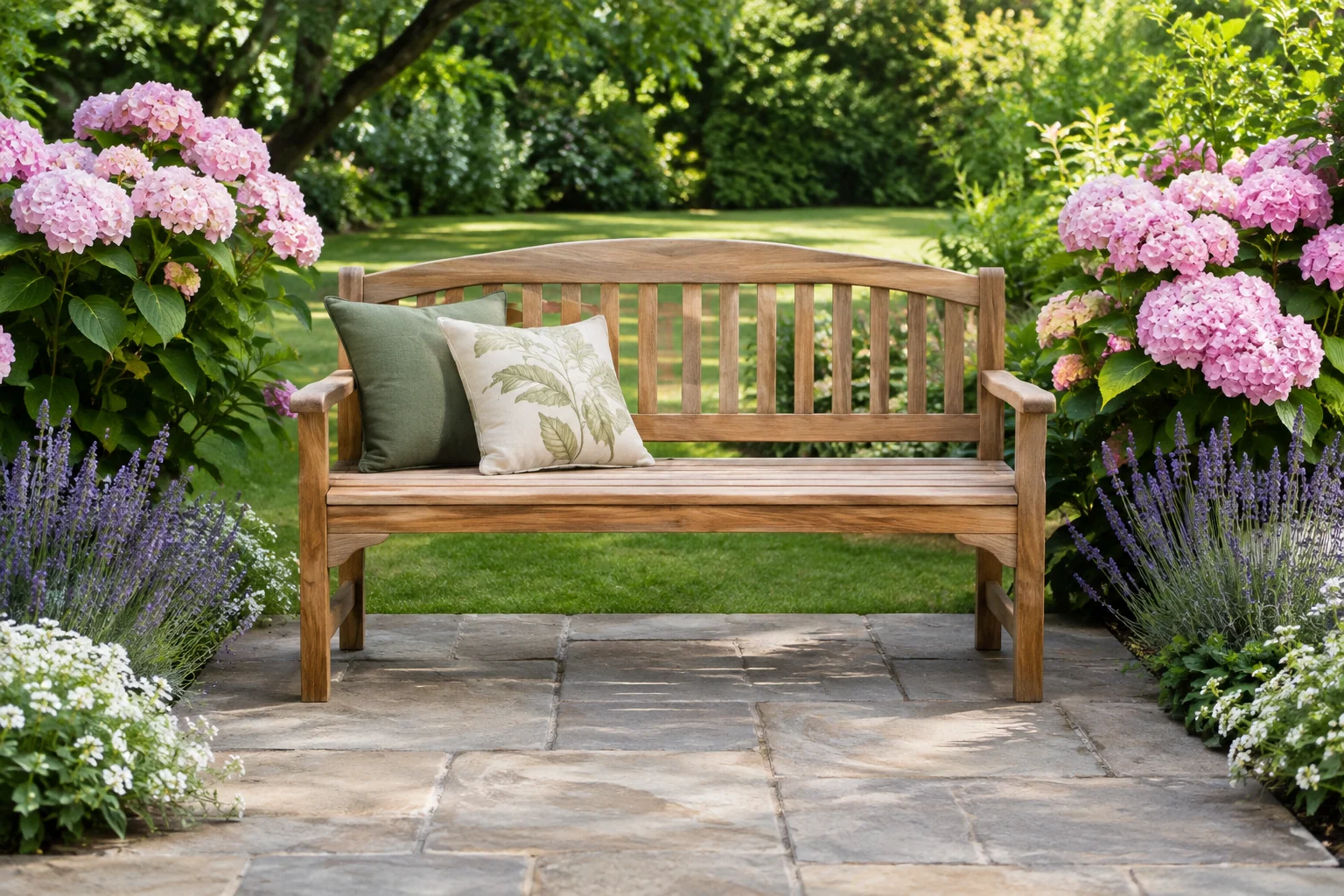
Use plants at the sides and behind the bench to define the sitting area while keeping the approach open. Consider mature growth rather than arranging everything around nursery-sized plants. Leave space for cleaning and furniture maintenance. The bench should remain easy to reach and dry according to its material's needs, instead of disappearing into foliage that presses against the seat.
6. Make a small courtyard bench visually light
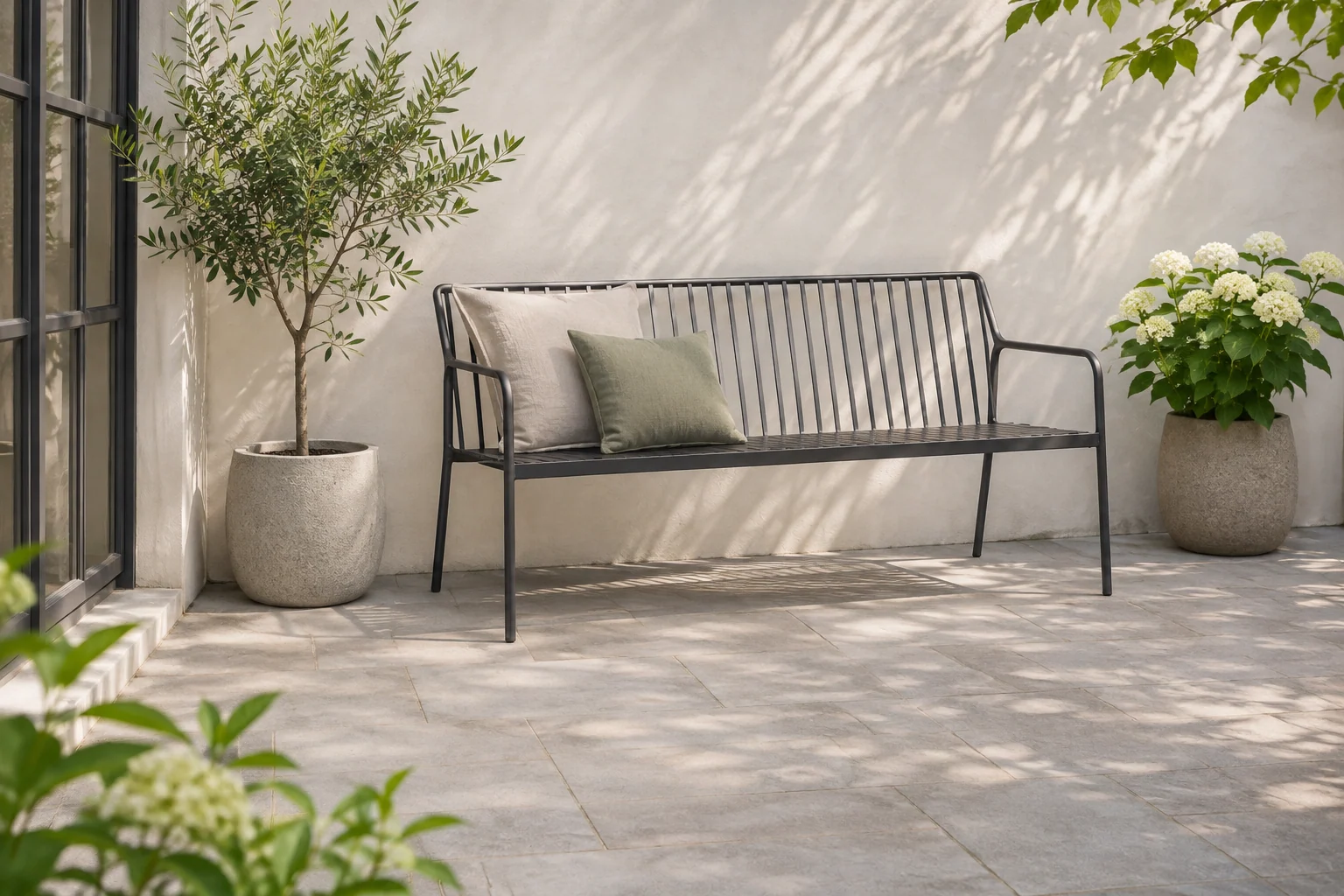
A slim frame and open back can feel less bulky in a compact courtyard. Measure the real seating and circulation needs rather than choosing the smallest-looking photograph. Keep surrounding pots to a deliberate few. A lighter visual outline works best when the bench is still appropriately supported and sized for its intended users, with enough floor visible around it to make the courtyard usable.
7. Repeat the color of an existing gate or fence
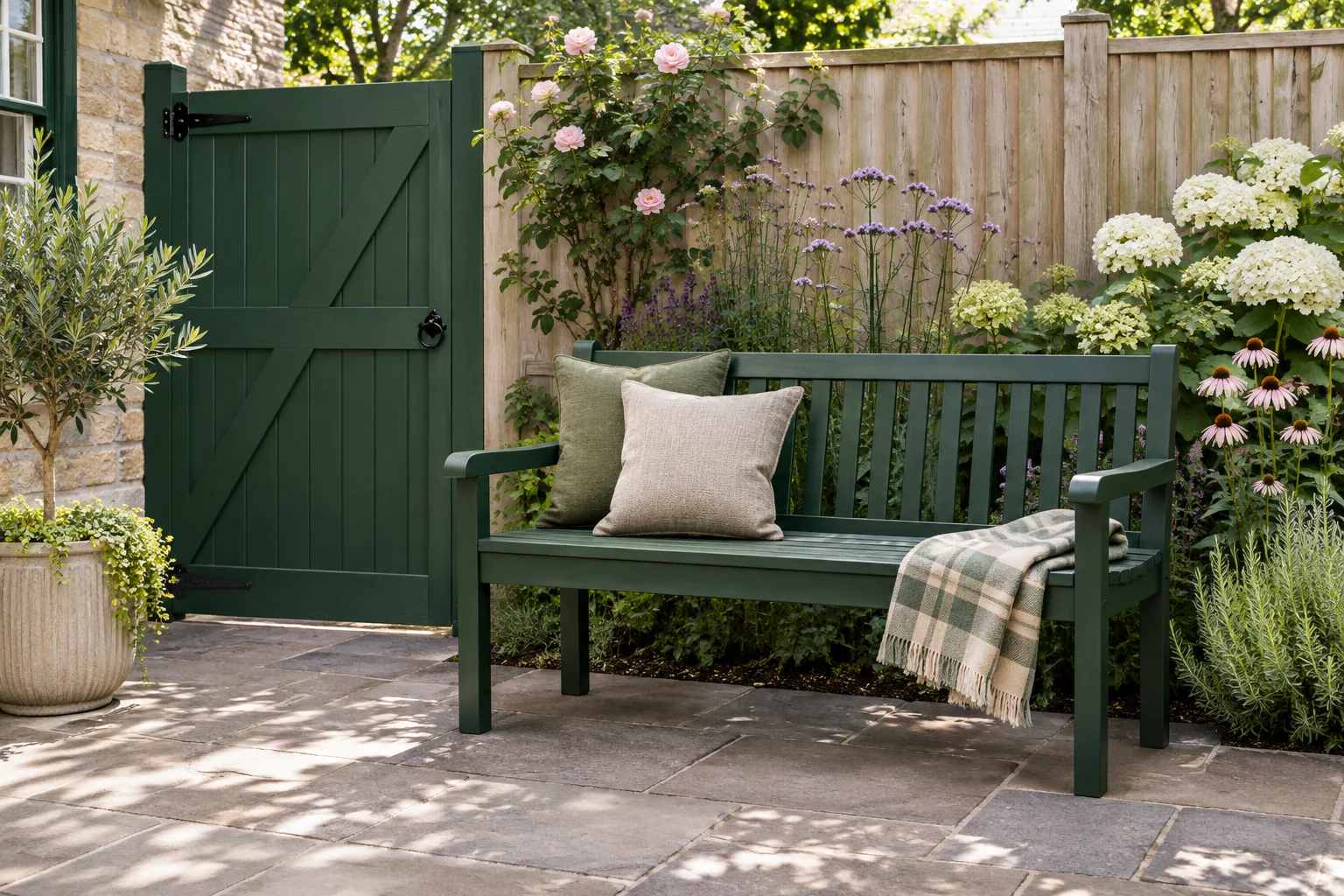
A bench in a related tone can connect the seating area with the garden's existing structure. Dark green, charcoal or a warm wood finish may already appear in a gate, fence or door. Choose a product or coating system intended for the material and outdoor conditions. Let that repeated tone provide cohesion while planting contributes the changing color around it.
8. Use warm wood against a pale wall
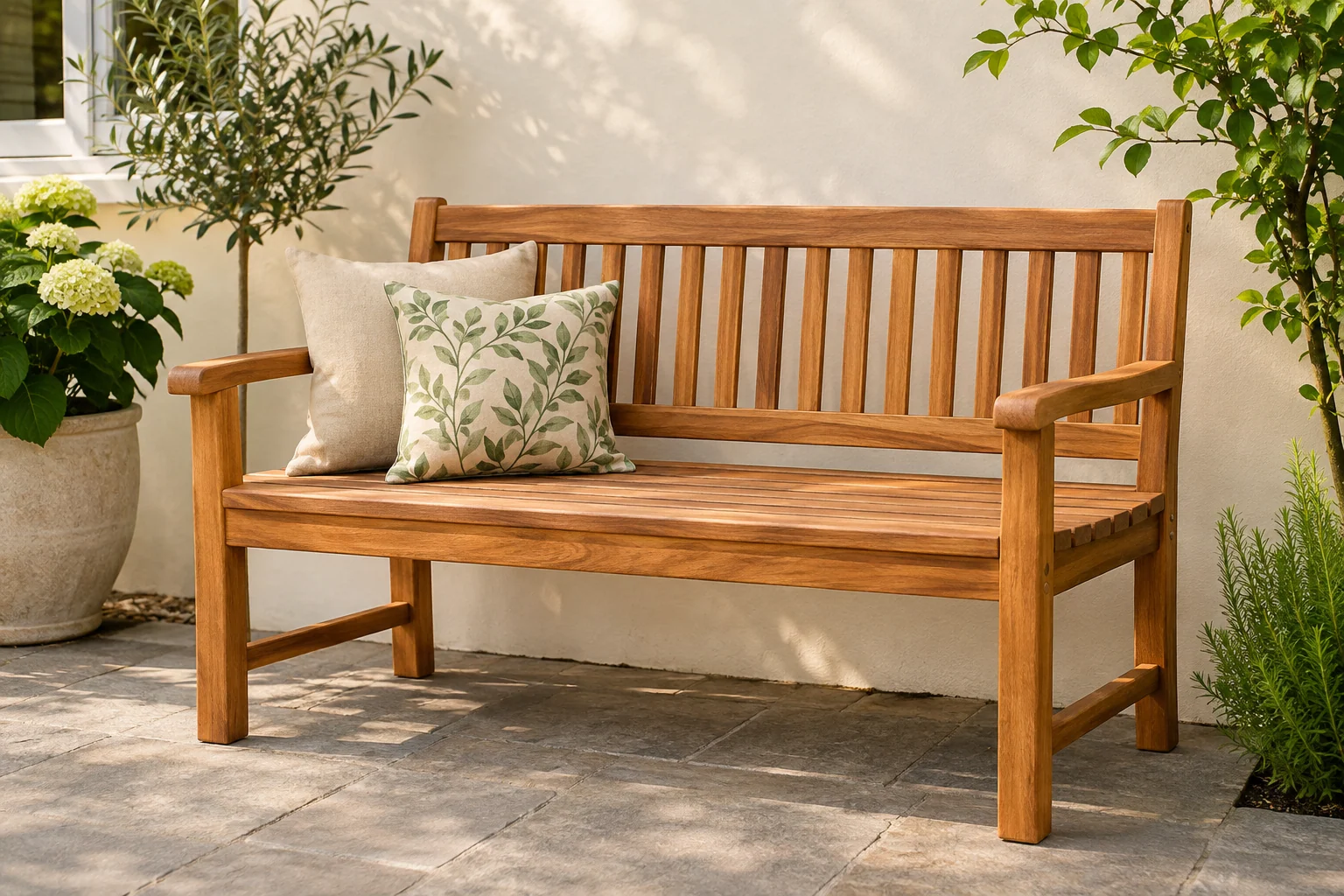
A natural-looking wood bench can soften a bright rendered wall or pale stone terrace. Leave space as required by the product and access needs rather than pressing the furniture tightly against the wall. Follow the exact outdoor care instructions and expect the appearance to change with use and weather. Pair it with simple planting so the warmth of the material remains visible.
9. Let one colored bench become the focal point
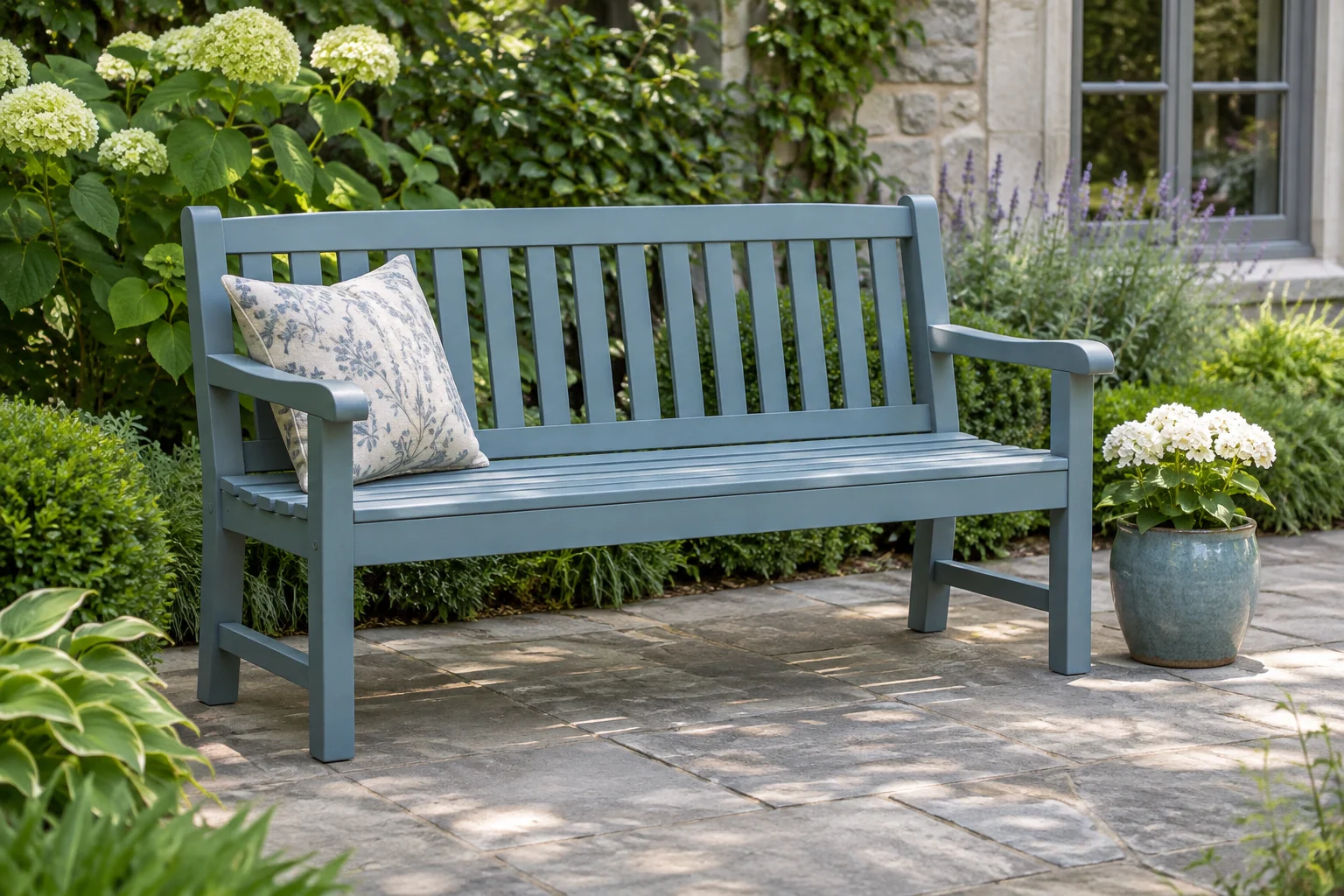
A muted blue or ochre bench can give a mostly green garden a clear destination. Repeat the accent sparingly, perhaps in one nearby pot, and leave other furniture quieter. Check the finish's maintenance requirements before choosing a strong color. The result should be a place you want to sit, with a useful approach and stable setting, rather than a decorative object marooned in the border.
10. Set a bench beneath existing shade thoughtfully
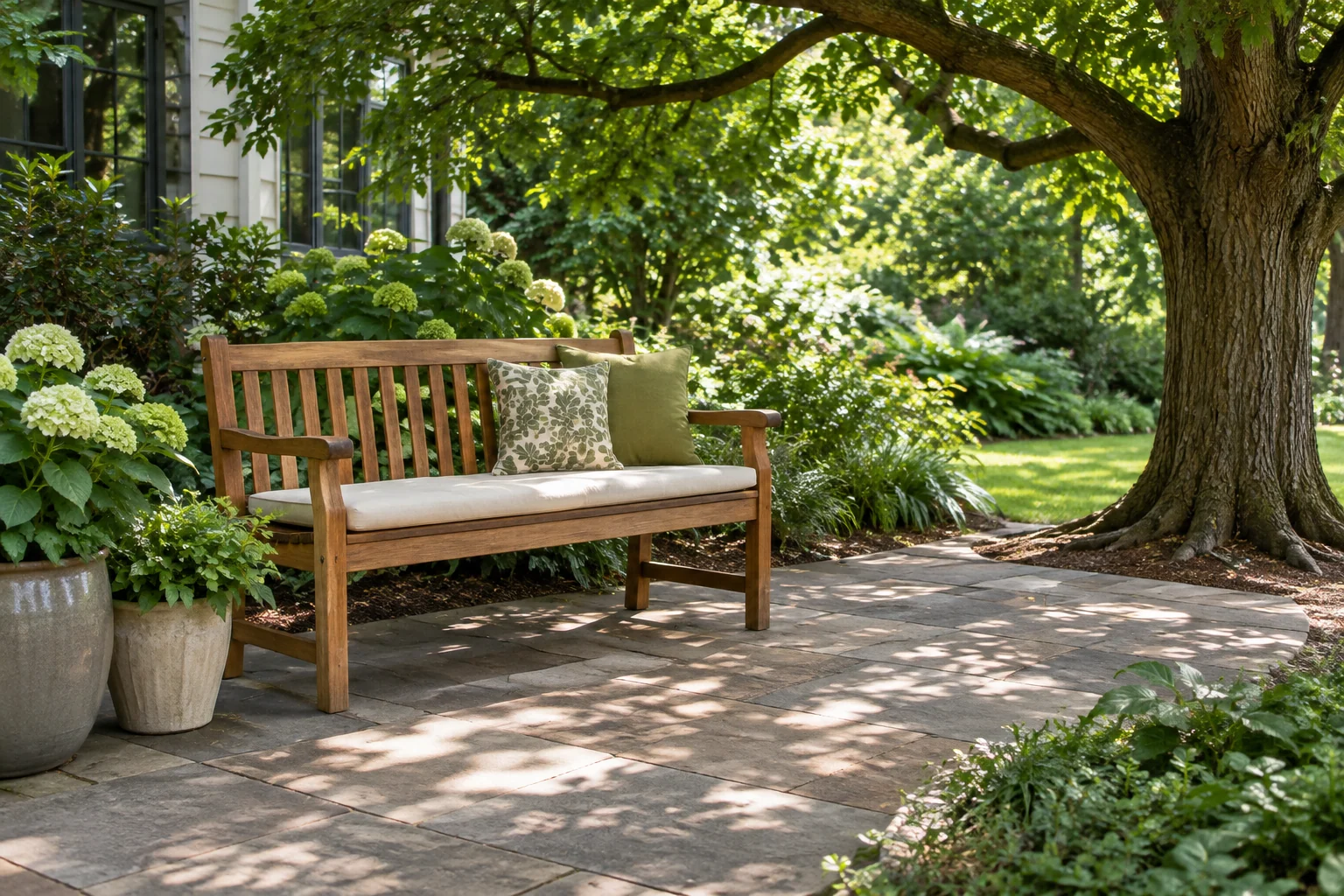
Observe the actual shade pattern and inspect the proposed area for practical issues such as falling debris or uneven roots. Keep the bench on a suitable stable surface without improvising support around root growth. Avoid attaching furniture to a tree or altering roots as a styling shortcut. A nearby shaded position may give the desired comfort while leaving both the tree and the bench better accommodated.
11. Keep a sunny seat close to another shaded option
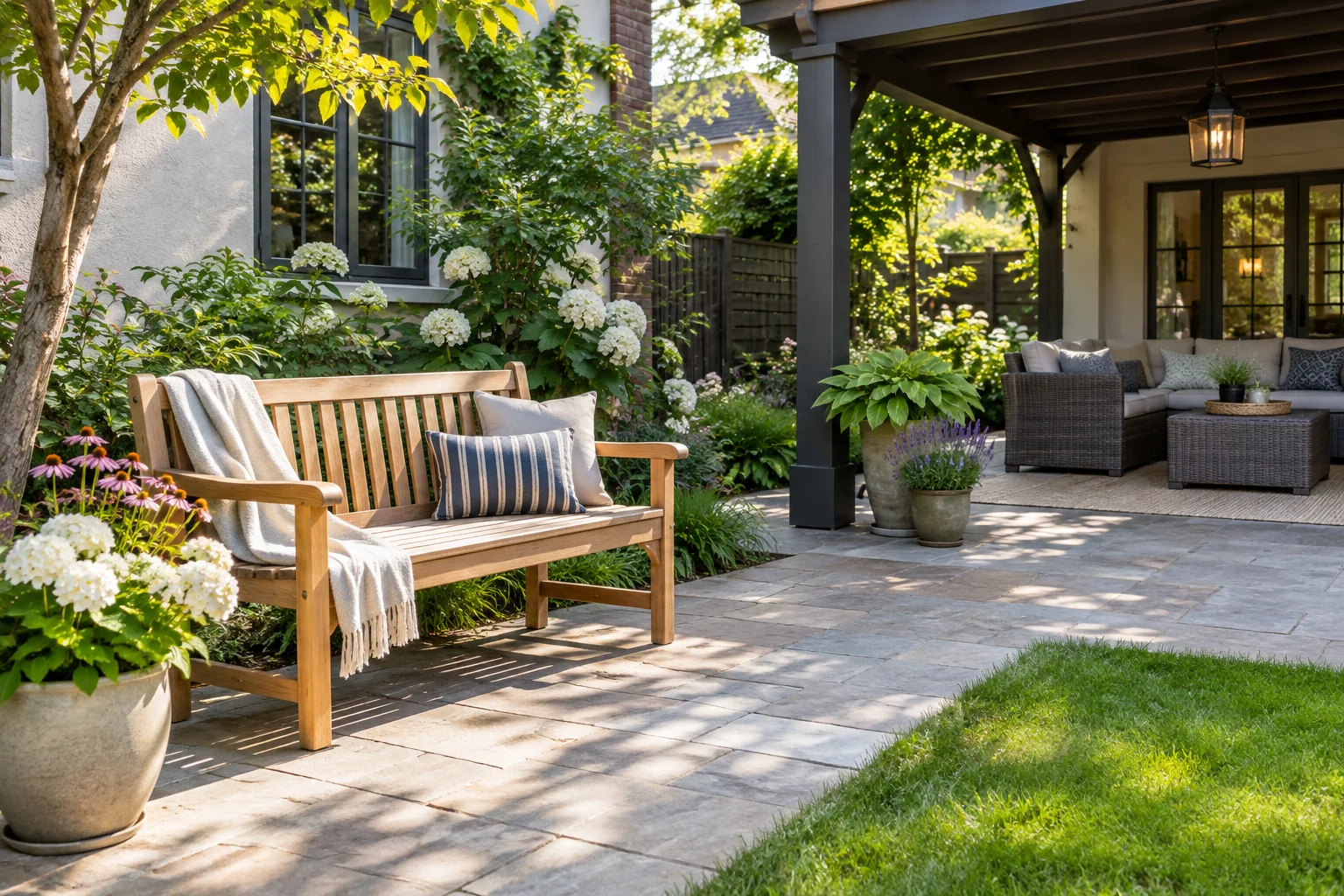
A sunny bench is appealing during cooler parts of the year, but the same position may be uncomfortable at other times. If space allows, relate it to an existing shaded seating area rather than expecting one bench to suit every condition. Observe the site during the hours you actually use the garden. Choose cushions and finishes according to their own outdoor care guidance.
12. Place a bench at the end of a clear garden view
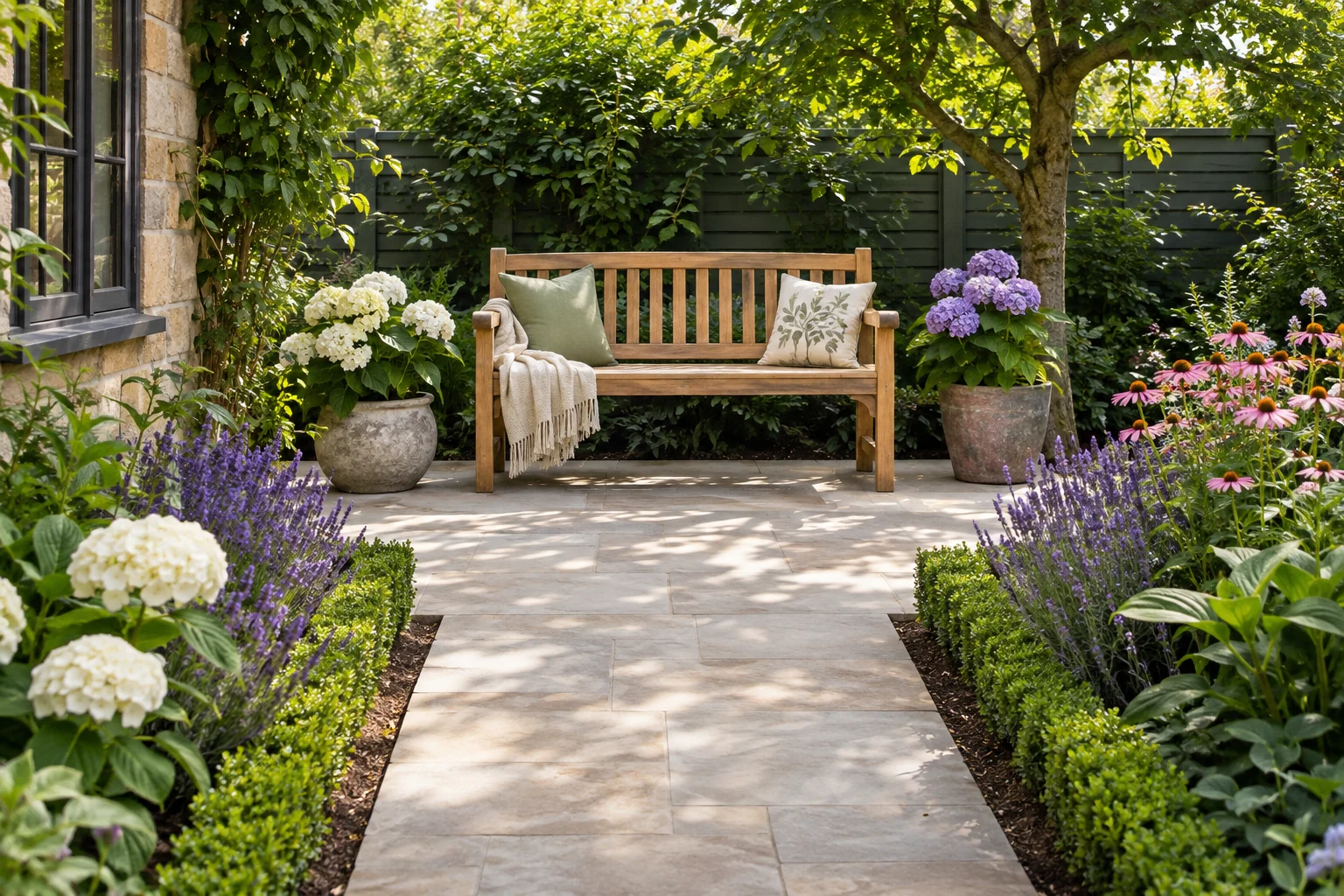
A bench can finish a view from the house or a straight path. Check that the position also works when you reach it: the seat needs useful space, not merely visual alignment. Keep the approach open and avoid making the bench block access to a gate, shed or maintenance route. The strongest focal point is a destination that functions naturally.
13. Use a compact bench near the kitchen garden
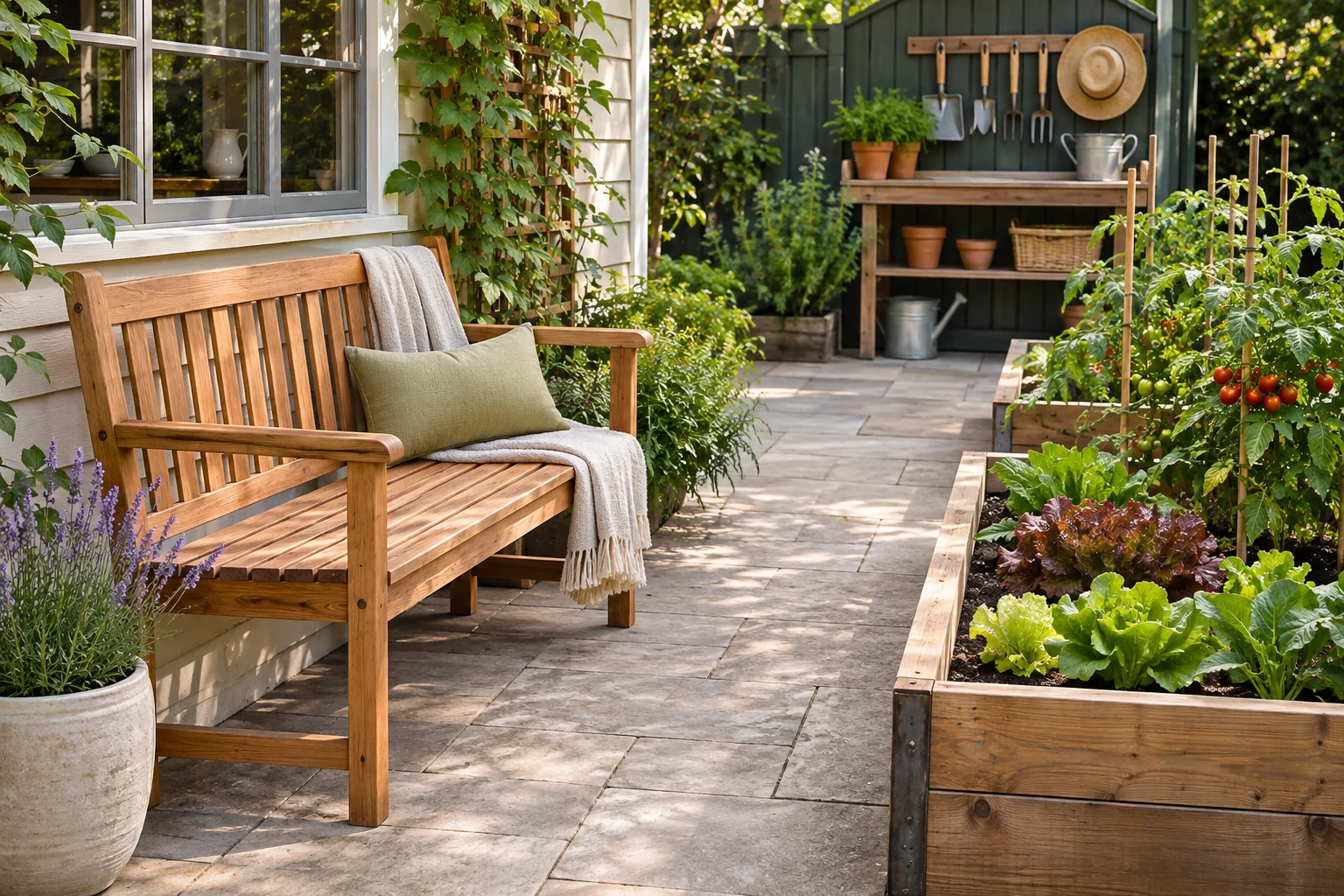
A small seat near vegetable beds offers a place to pause or review the garden without using a work surface. Keep it separate from tools, soil storage and watering routes. Check that the bench does not narrow access to the beds. A nearby practical garden view can be as rewarding as an ornamental border when the furniture supports the way you actually use the space.
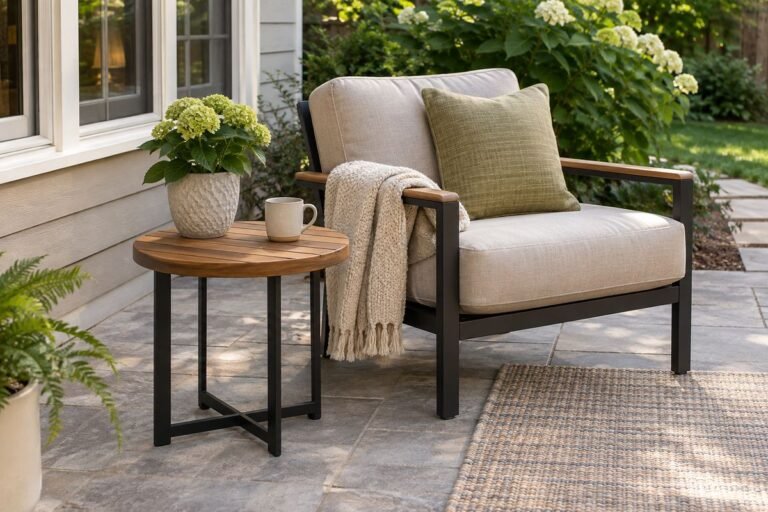
14. Add a separate side table for everyday objects
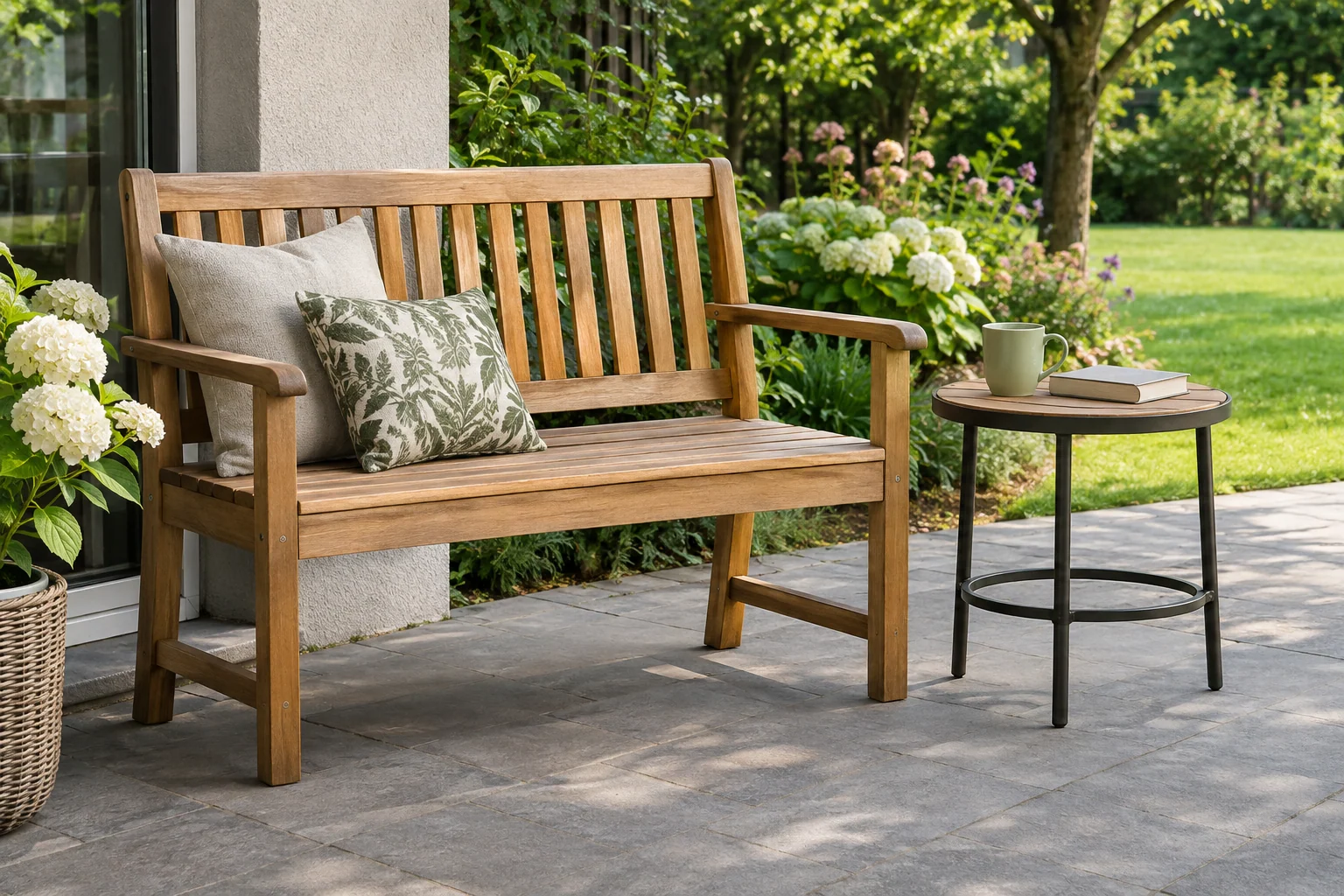
A small appropriate outdoor table can make a bench more useful for a cup, book or glasses. Place it where a seated person can reach it without twisting around planting, while leaving the approach clear. Check the table's stability and intended use independently from the bench. Avoid turning a narrow armrest into a serving surface unless the furniture is designed for that purpose.
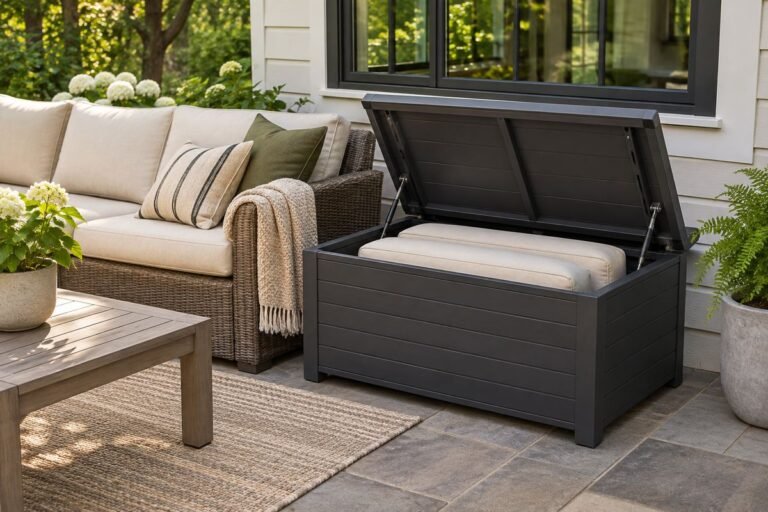
15. Keep cushion storage close enough to use
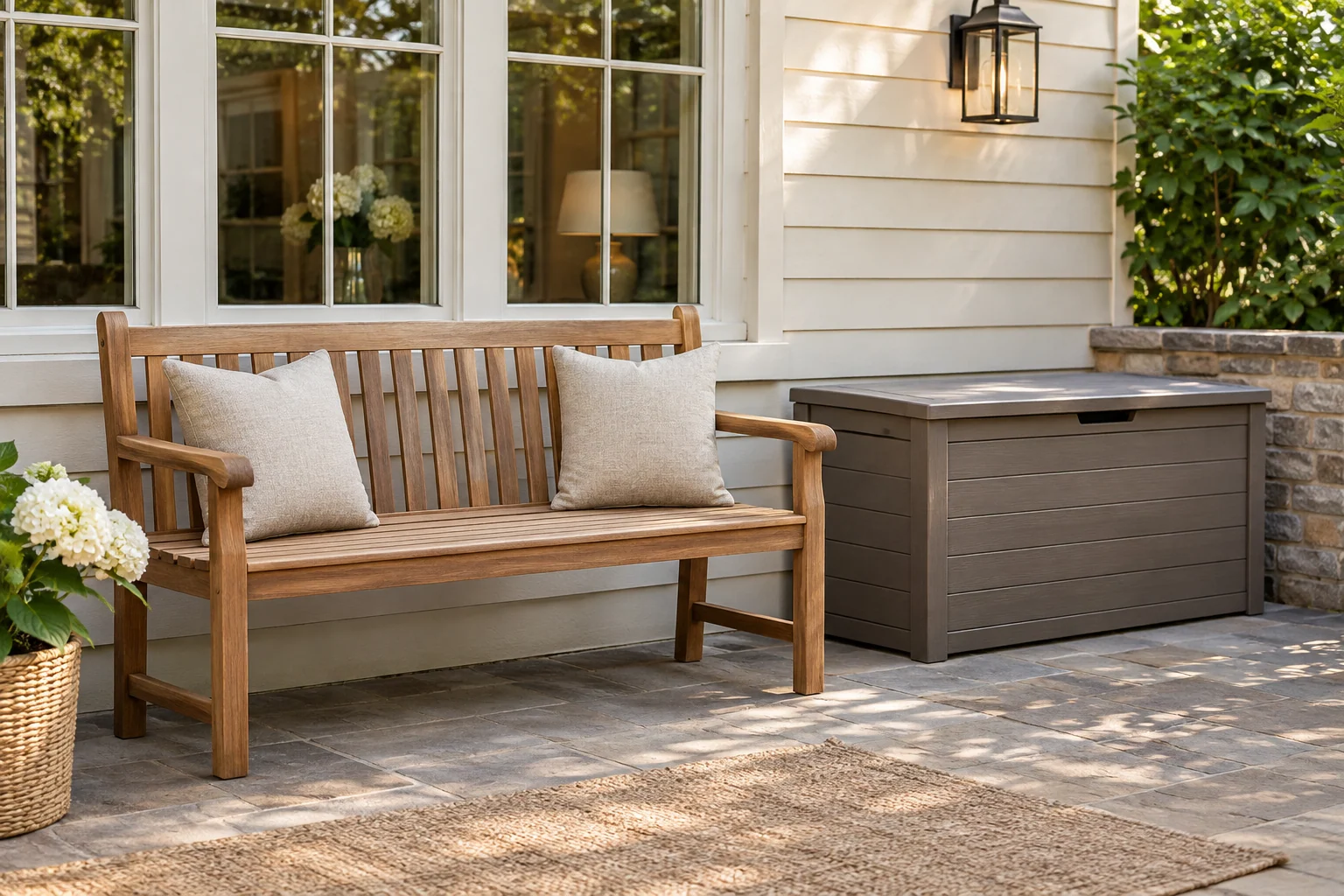
If the bench uses cushions, plan their return before choosing a fabric color. Follow the complete product's weather and care instructions; a water-resistant-looking cover does not establish that its filling can stay wet. Use suitable storage nearby when needed and keep cushions dry before storing. A manageable routine makes the bench more likely to be comfortable when you actually want to sit.
16. Use a bench along a broad patio edge
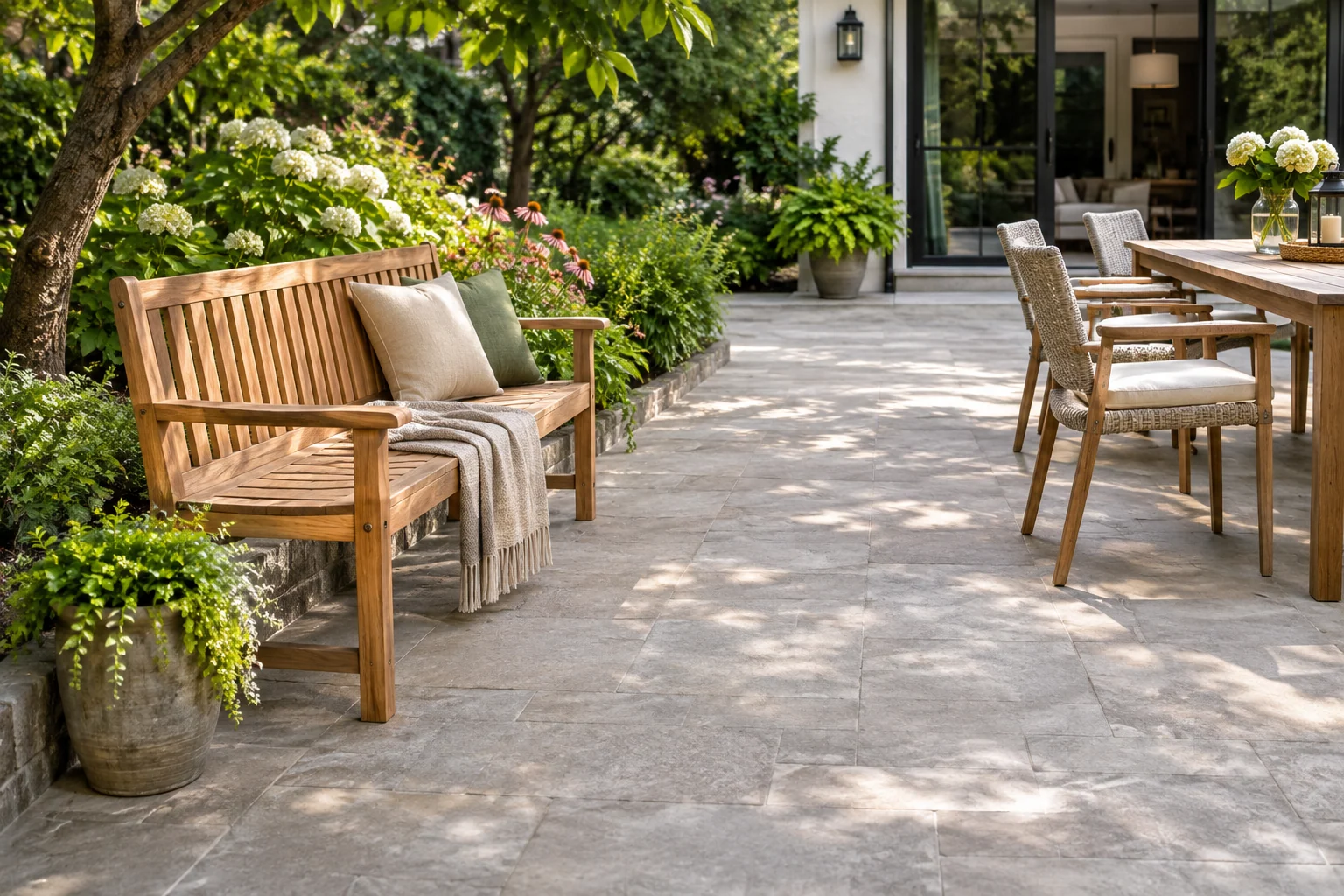
A bench can provide additional seating at the edge of a patio without introducing several separate chairs. Keep it within the usable level surface and away from an unprotected change in level. Test the arrangement with dining chairs pulled out and doors open. The edge position should preserve movement through the patio rather than create a bottleneck between furniture groups.
17. Choose a restrained metal design for a formal garden
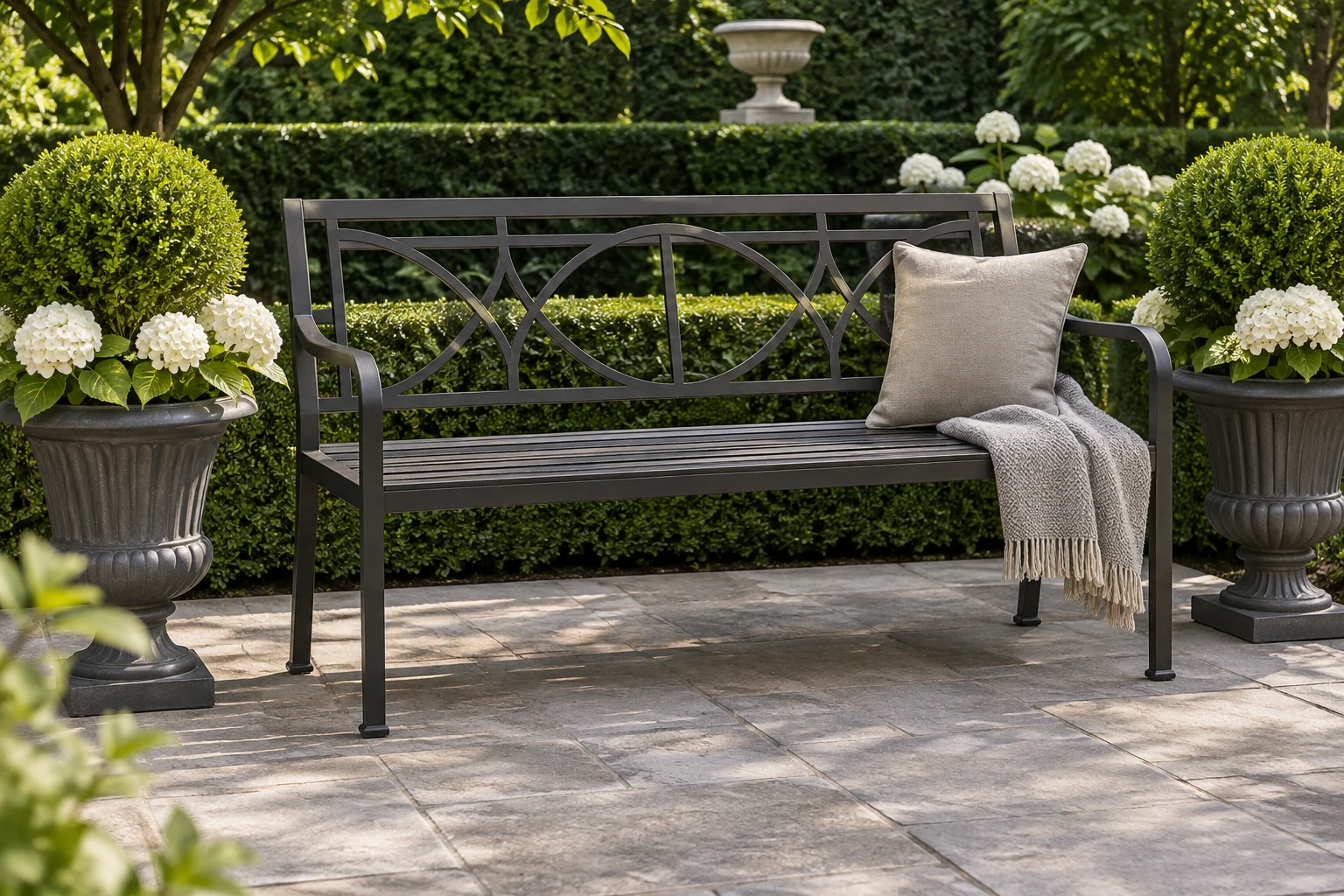
A simple metal frame can relate to clipped planting, straight paths and repeated pots. Confirm the bench's outdoor suitability, finish care and intended loads with its maker. Keep the surface beneath the feet appropriate for the actual design. Formal styling does not require ornate scrollwork; a clean outline can provide structure while the plants carry the detail.
18. Soften a contemporary bench with informal planting
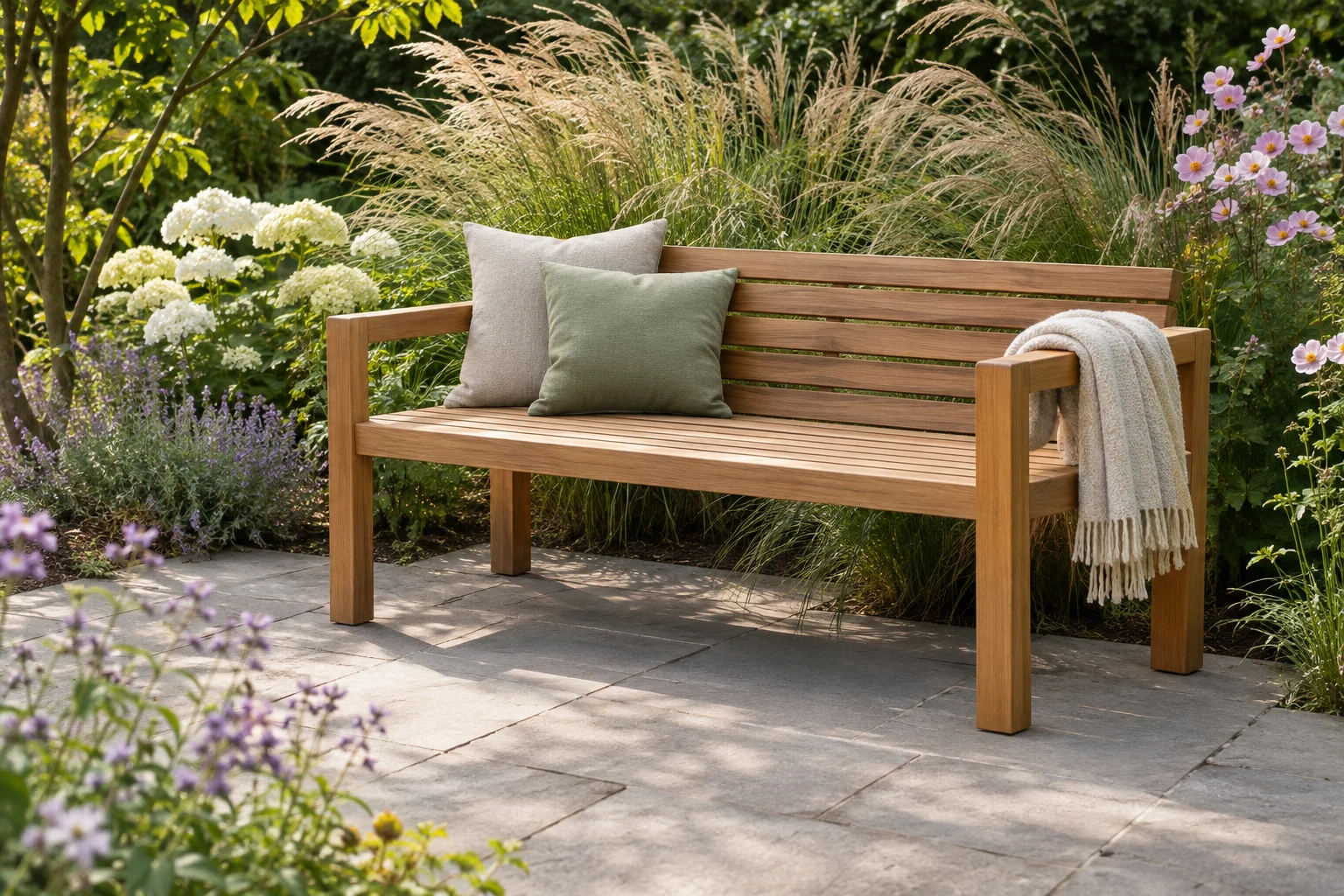
A bench with a clear geometric shape can look welcoming beside looser grasses and flowering perennials. Keep the planting from spilling across the seat or walking route. Compare mature plant size with the furniture footprint and leave space for maintenance. The contrast works when both elements remain legible: a visible clean bench outline against a lively but managed garden.
19. Give a reading bench a quiet orientation
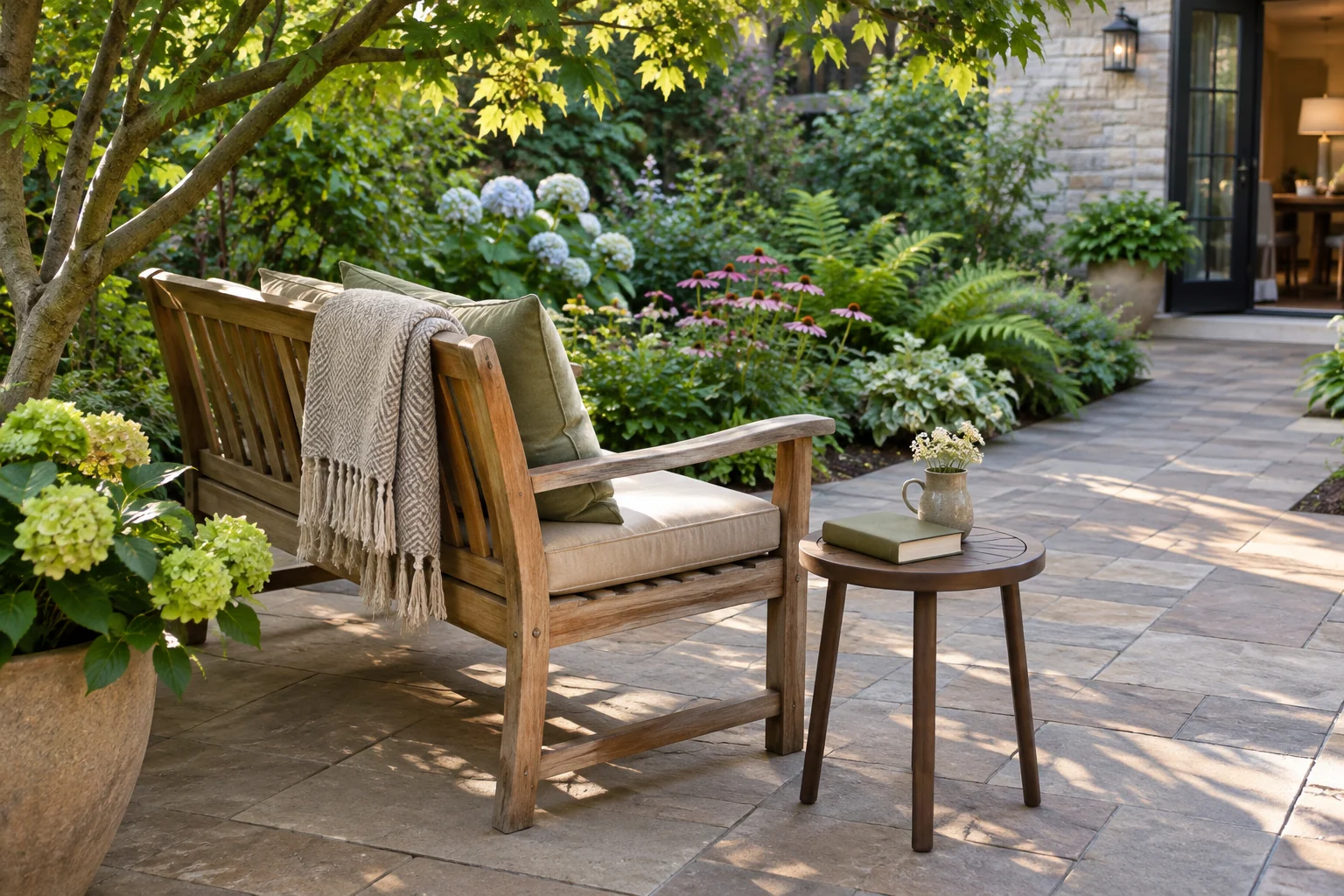
A reading position may work best looking across planting rather than directly toward a busy doorway or work area. Check ordinary noise, light and access during the hours you intend to sit. Choose furniture you find comfortable and a separate surface for a book. Avoid adding elaborate screening before testing the location; changing the bench's angle can sometimes improve the experience.
20. Use two benches for a sociable arrangement
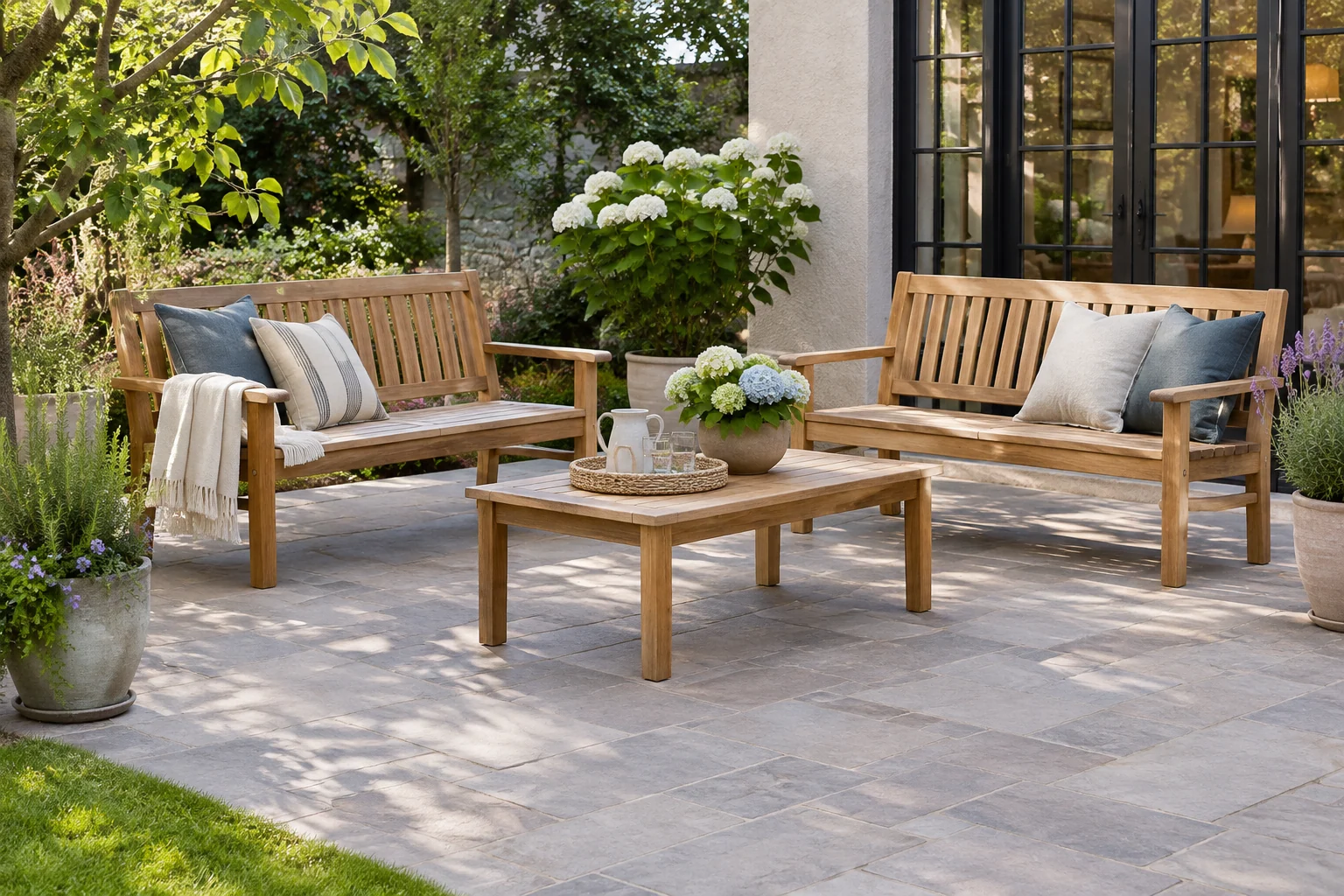
Two suitable benches can form a simple conversation area when the patio has enough room. Arrange them around an appropriate table or open center and test leg space and access from both ends. Do not assume face-to-face symmetry is the best fit for every garden. A slight offset may preserve a useful route or view while making the group feel less rigid.
21. Keep a small bench beside the back door
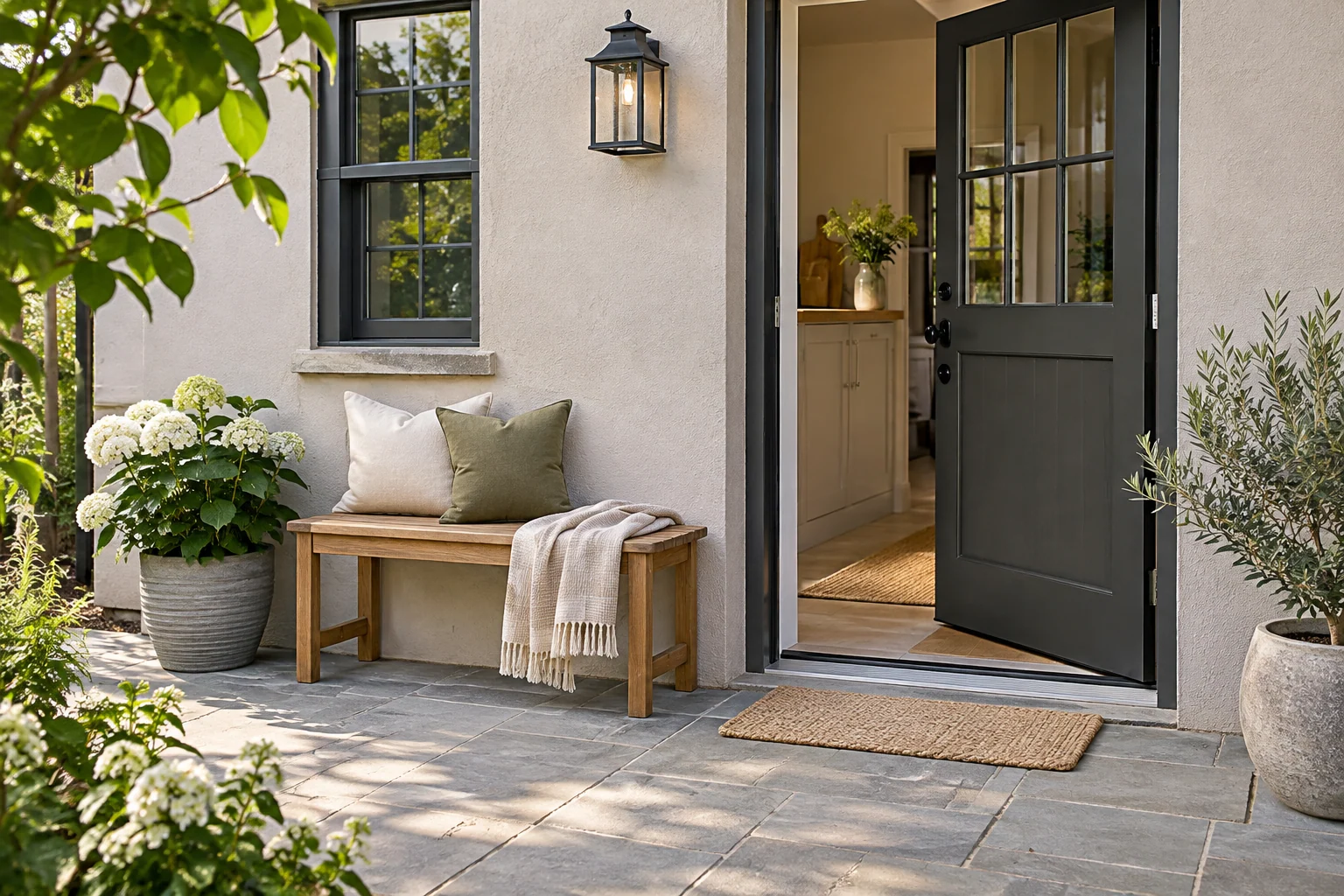
A compact bench near the house can offer a quick place to sit without committing to a full garden room. Keep it clear of the door swing, vents and normal service access. Test the position with bags and footwear in mind. If the space is too narrow, move the bench farther along the wall rather than making the doorway harder to use.
22. Plan a view that works beyond peak flowering
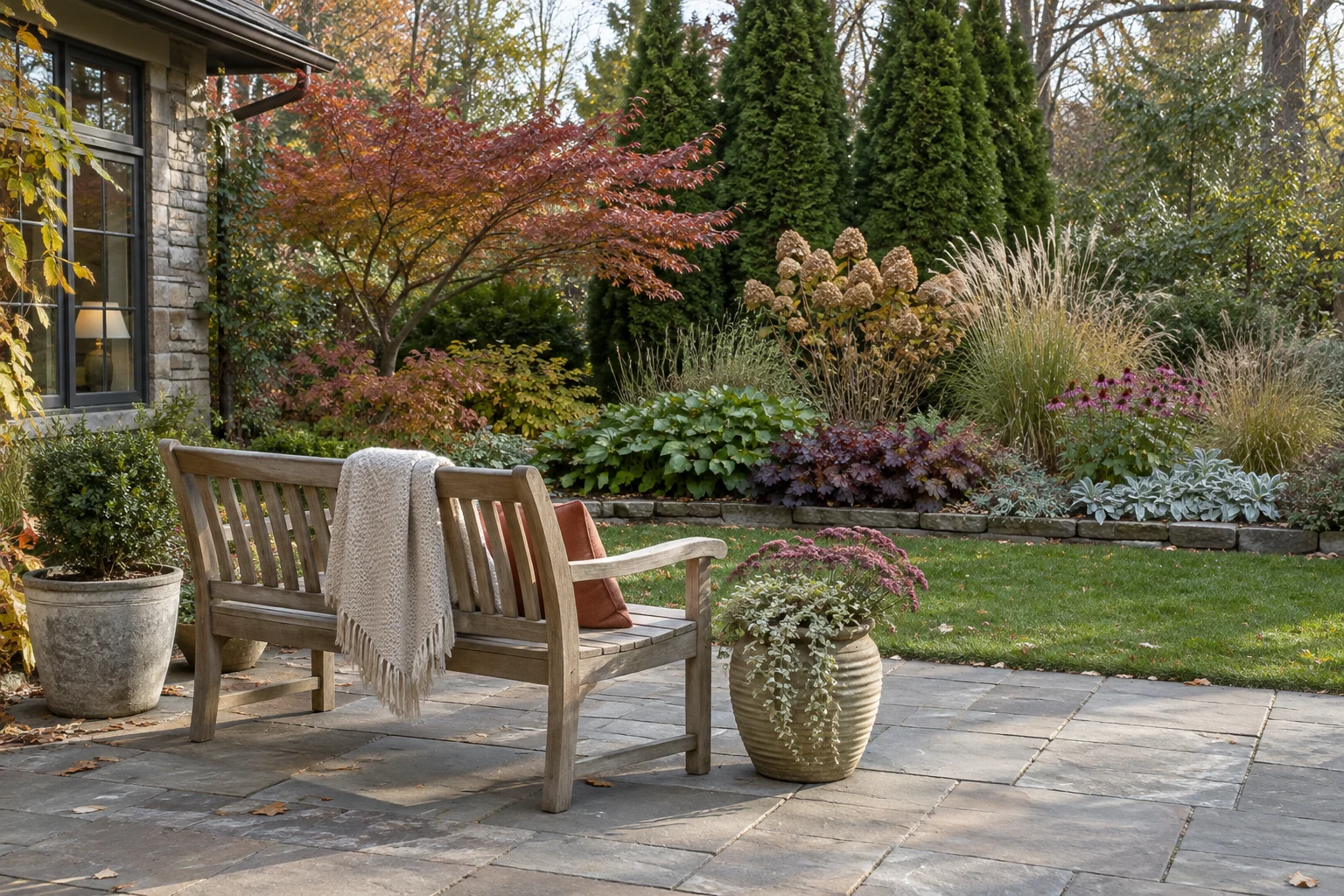
A bench aimed only at a short-lived floral display may feel less inviting later in the year. Include structure such as a tree form, evergreen planting, a wall or an attractive path in the view. Observe what remains when flowers fade. This does not require a formal year-round planting scheme; a stable visual anchor can make an ordinary seasonal border feel more complete.
23. Keep maintenance access behind the bench
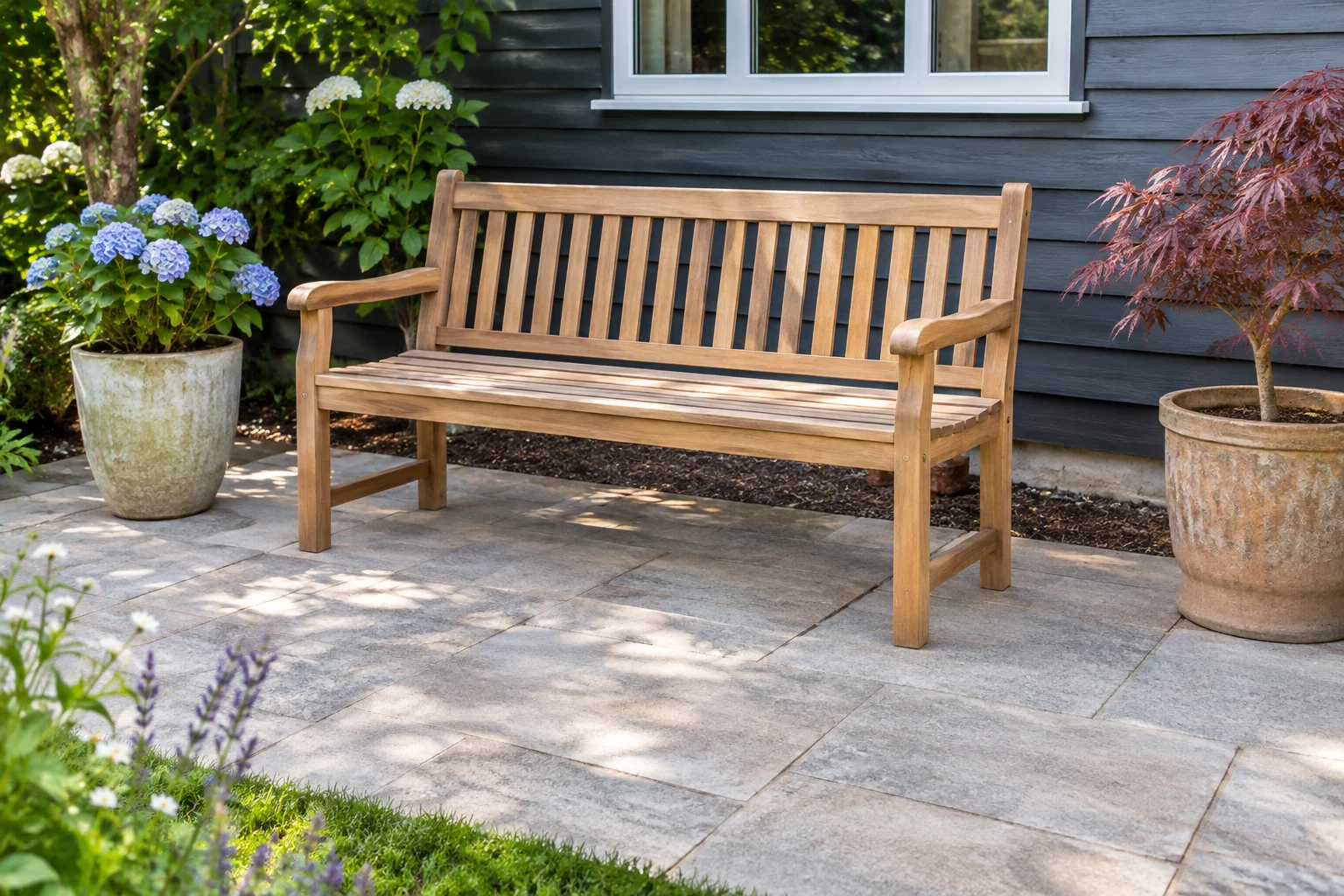
Leave enough practical room to clean the furniture and care for plants or surfaces behind it. Check whether the bench can be moved safely when empty according to its instructions. A position tightly trapped between pots may look lush but make maintenance awkward. Simplifying the surrounding arrangement can keep the sitting area usable without repeatedly dismantling half the garden.
24. Use an outdoor cushion color already found nearby
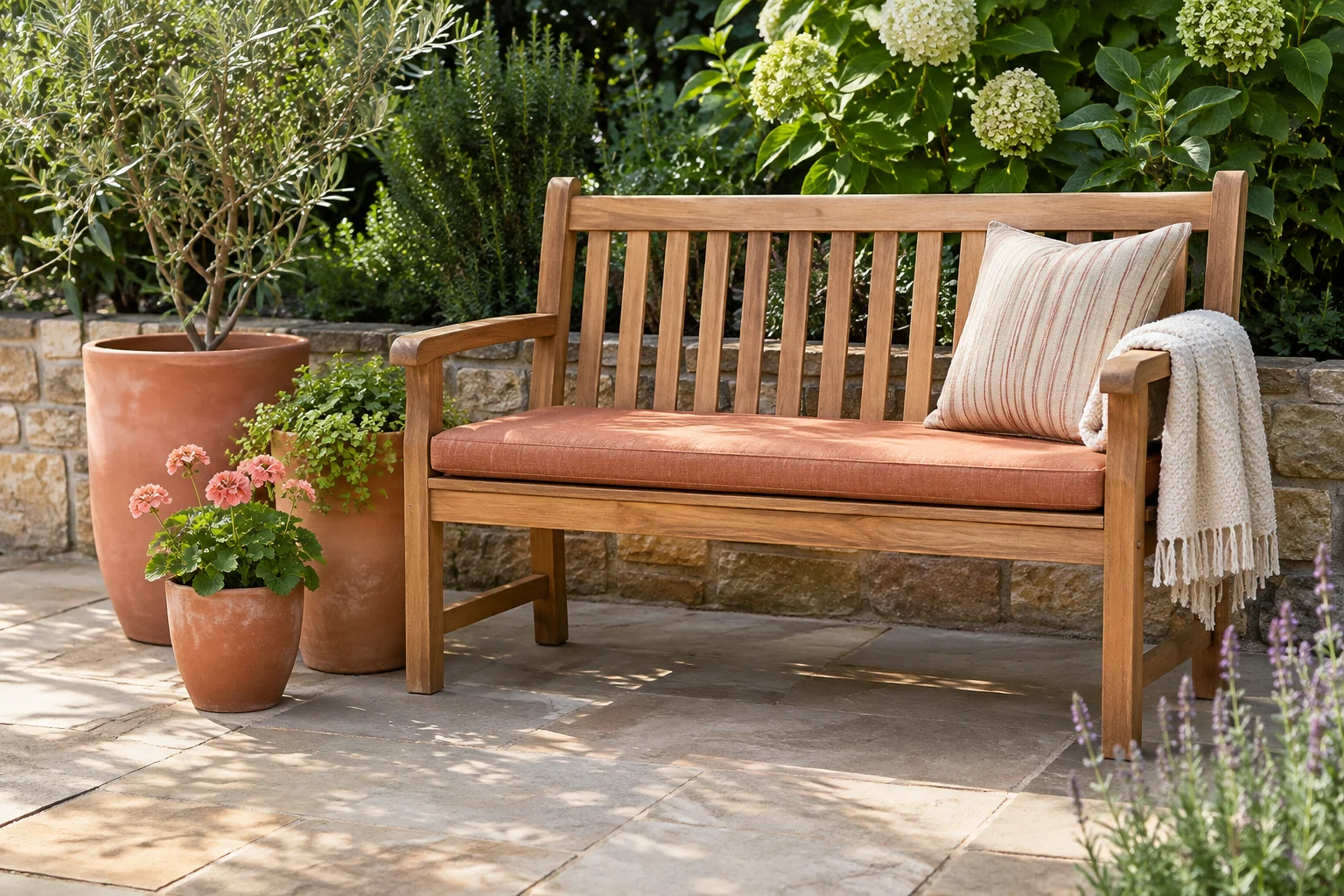
A restrained green, clay or cream cushion can connect the bench to nearby planting or masonry. Choose the actual cushion's outdoor suitability and care requirements before finalizing the palette. Keep the number modest so the bench remains easy to prepare and clear. One useful seat pad may suit the routine better than several decorative pillows that need separate storage after every use.
25. Make a narrow garden bench run with the space
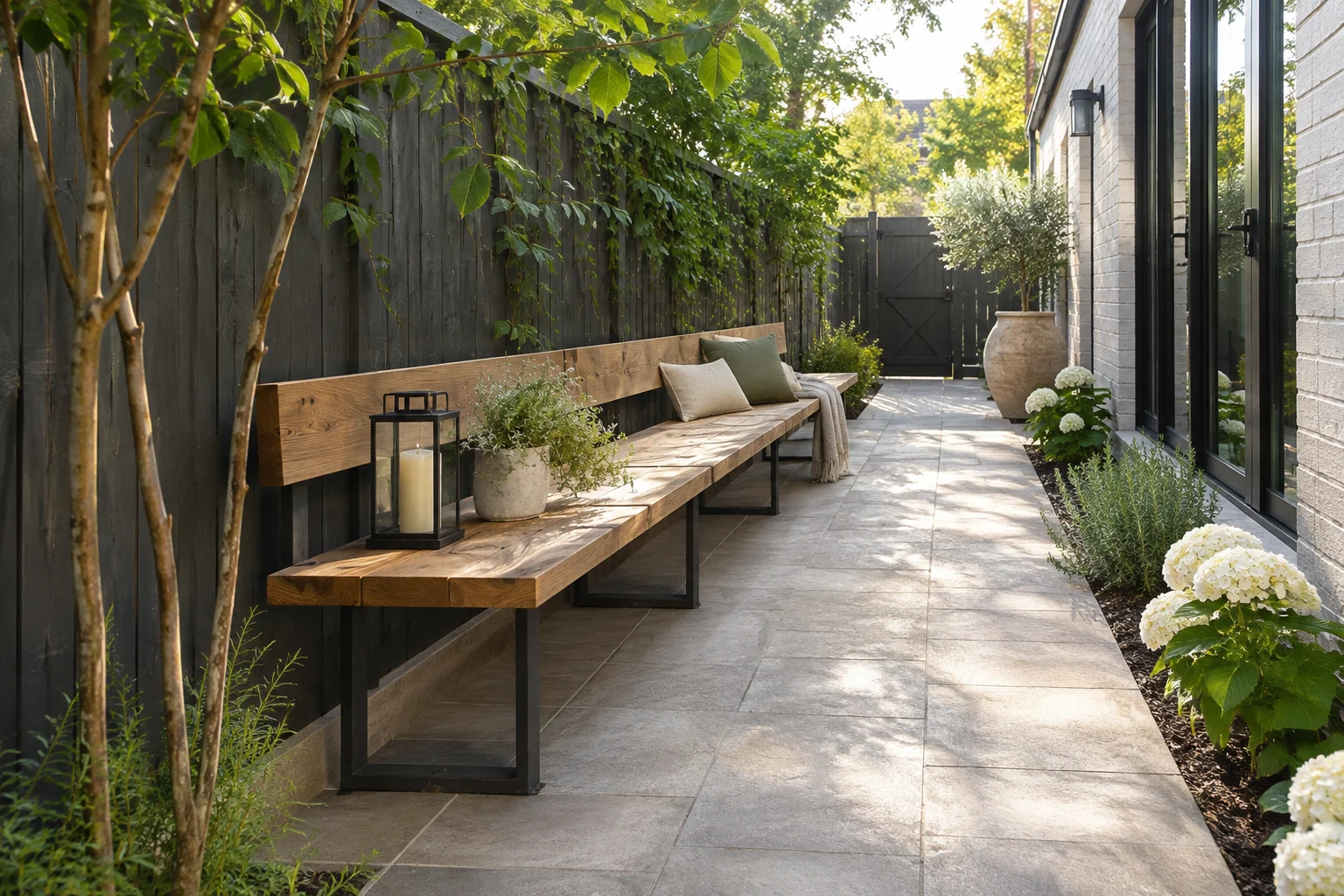
In a long narrow garden, placing the bench along the boundary can preserve the central route. Check that seated feet and the bench's full depth still leave comfortable circulation. Use a temporary footprint before choosing furniture. Keep boundary planting restrained around the seat rather than adding a deep screen that turns a modest sitting area into another obstacle.
26. Avoid isolated feet on soft or uneven ground
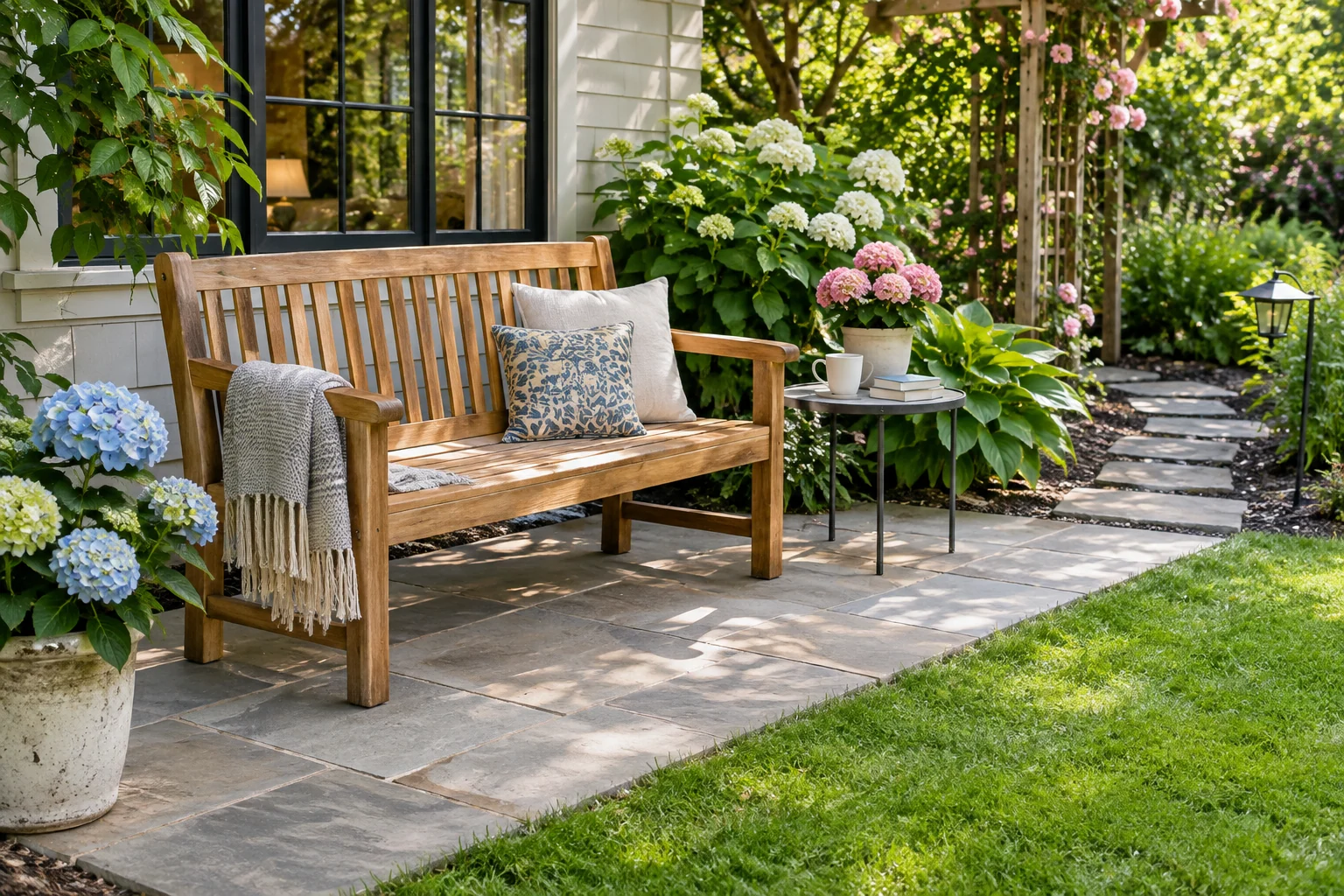
Check the furniture's requirements for the surface beneath it and keep every support point stable. A bench that rocks or sinks needs an appropriate solution rather than an ornamental cushion over the problem. Do not improvise a structural installation from an inspiration image. Choose a suitable existing position or obtain proper guidance for preparing the area before placing the furniture.
27. Choose a bench you can care for realistically
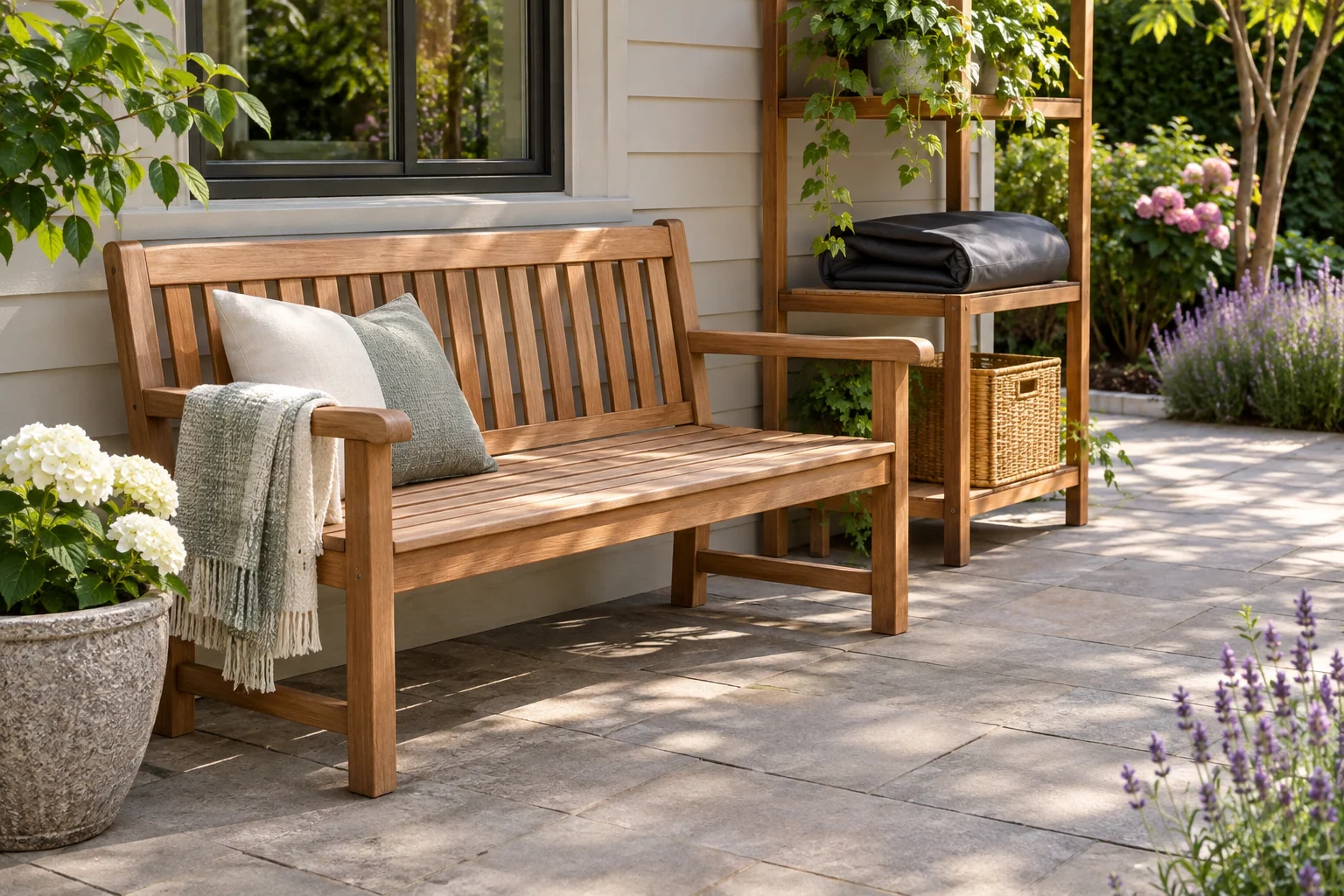
Compare the maintenance requirements with the time and storage you have. Some finishes need treatment, some cushions need regular indoor storage and some products have specific cover instructions. Read those details before buying instead of assuming all outdoor furniture tolerates the same exposure. A simple design that matches your routine can remain more inviting than an elaborate piece you struggle to maintain.
28. Finish the area with enough empty space
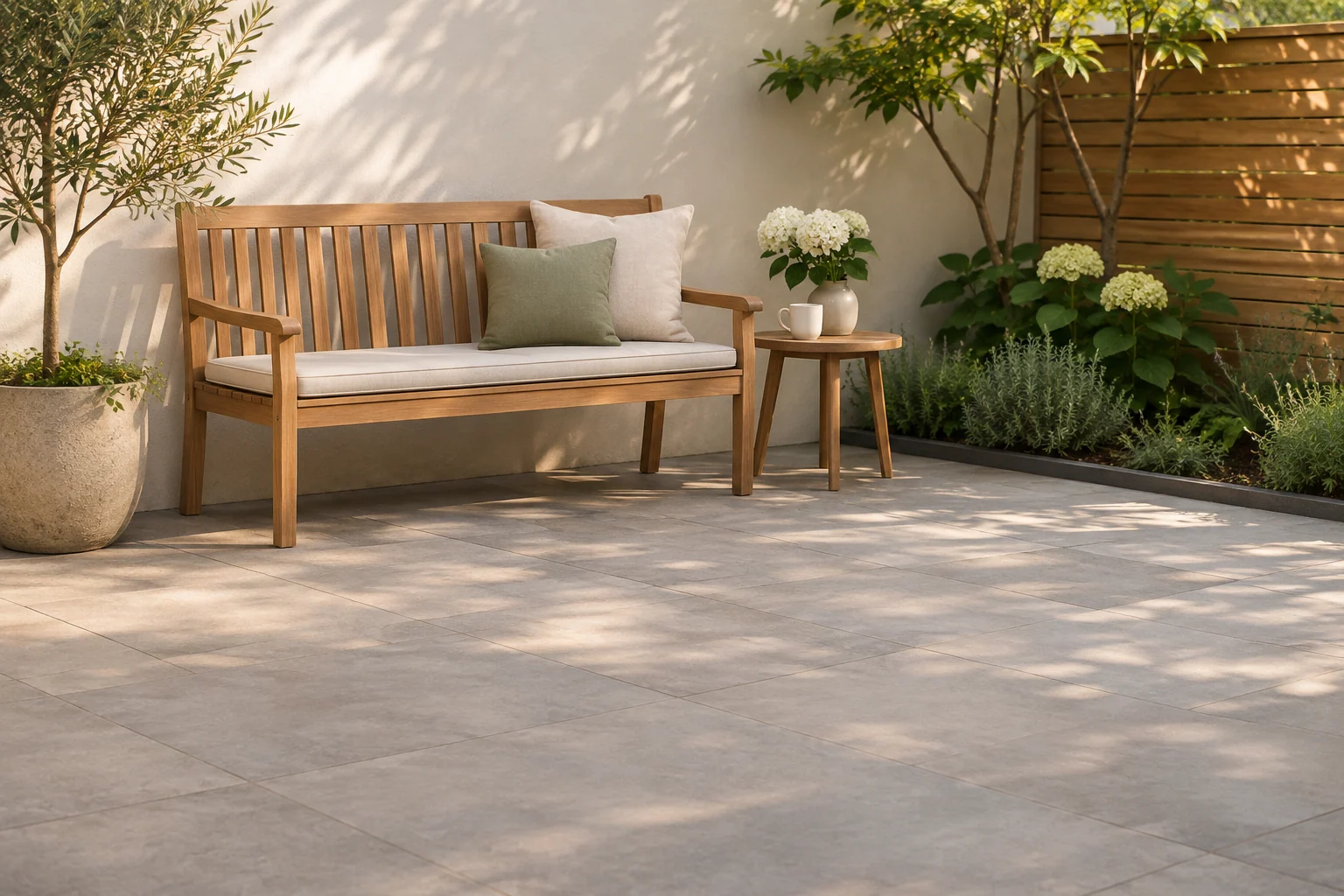
After placing the bench, side table and planting, remove anything that does not support sitting or the view. Keep a clear approach and a comfortable place to stand before sitting down. Visit the area as you would during an ordinary day. A garden bench corner often feels most inviting when it has fewer objects and a clear purpose rather than every possible decorative accessory.
A garden bench placement worksheet
Record the seated view, sun and shade during your intended hours, the complete furniture footprint, the route to the seat and the care needs of both bench and cushions. Mark the footprint and try the view with an ordinary chair. In a hypothetical narrow garden, a bench placed lengthwise along the boundary may preserve the main path better than one across its end; the actual seat depth and space for feet determine whether it works. Photograph the proposed view at two times of day before committing. This is a planning exercise, not a ground-stability or structural assessment.
A practical next step
Choose the view and the route first, then the bench. Suitable footing, practical access and a care routine make the seat useful, while color and planting help it belong in the garden. A clear, comfortable place to pause can improve a backyard without filling it with more furniture.
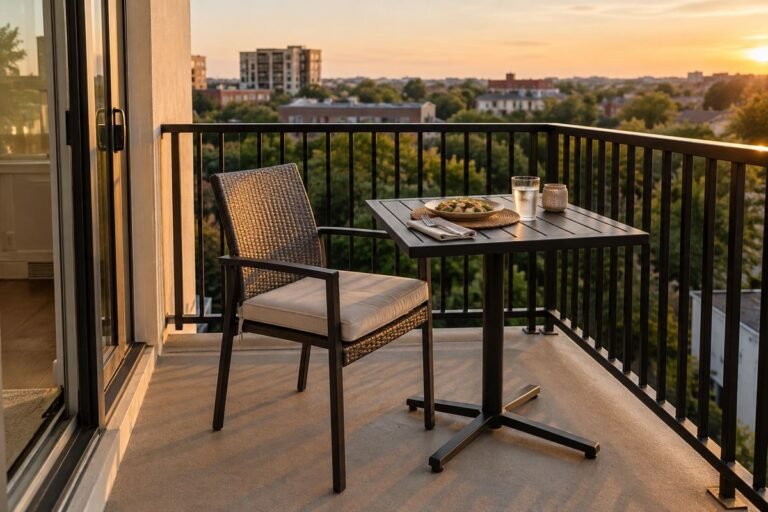
The images are original AI-generated design concepts. They illustrate arrangements rather than tested products, installations or measured performance.
Sources and care references
Related reading on Nestroxe
- Connect the bench with a useful garden path
- Add a separate surface beside the seat
- Plan where cushions go after use
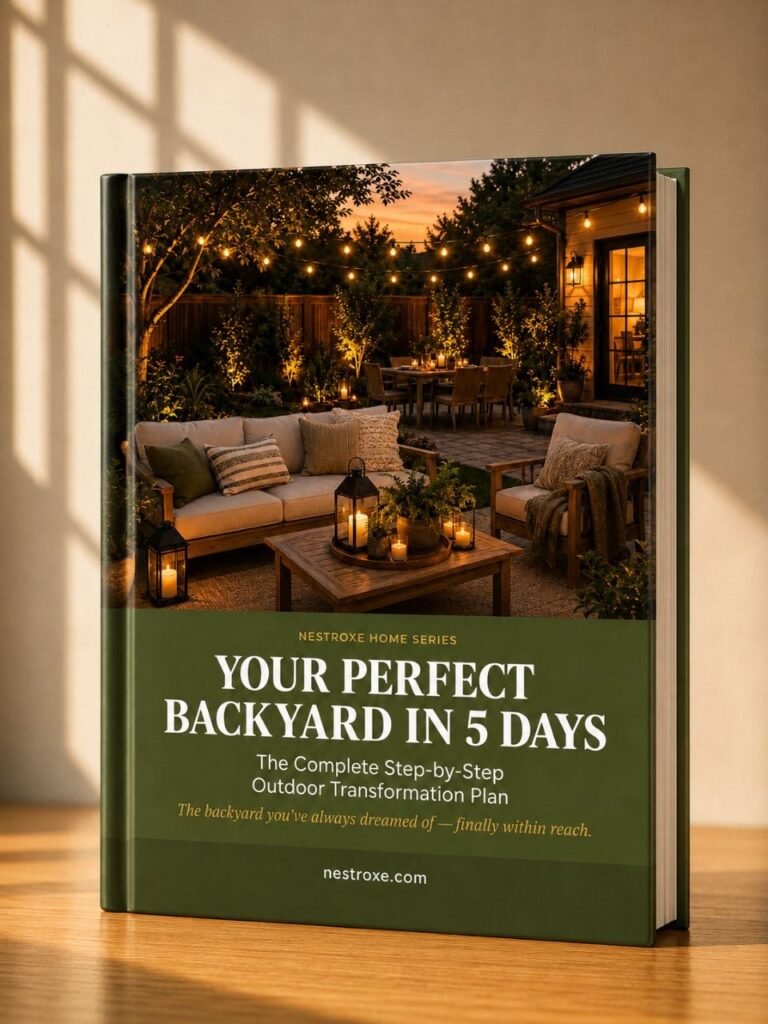
Optional digital guide for this topic
If you prefer a structured workbook, explore this related paid guide.