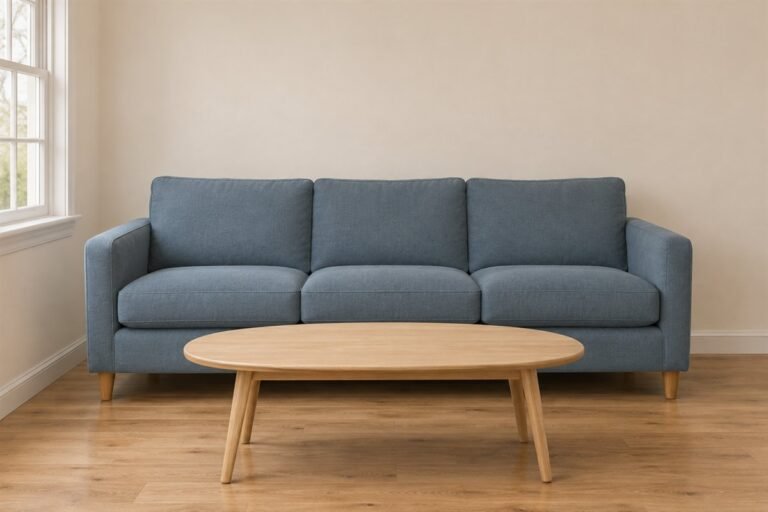
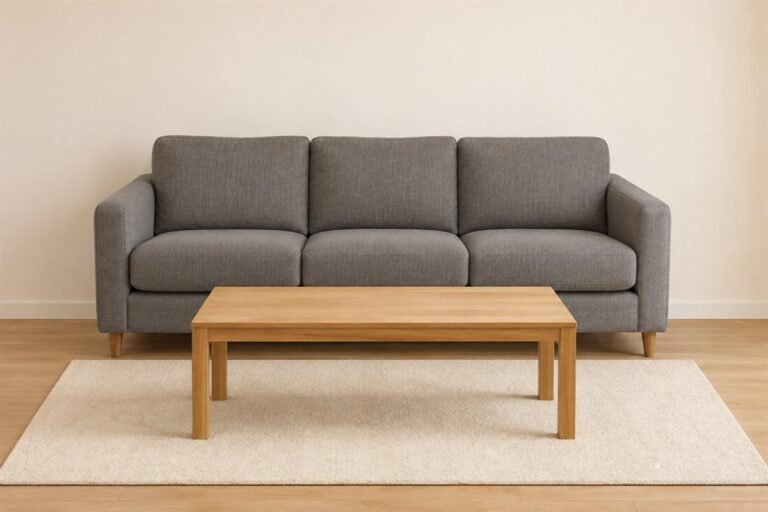
Black living room ideas can begin with the sofa you already own, a dark wall behind pale seating or a single useful storage piece. Black does not need to cover the whole room to make its presence clear. The useful question is how those dark surfaces relate to the seats, daylight and activities you want to keep.
This guide compares complete seating groups and smaller changes, from black-and-cream rooms to wood, camel and muted color accents. Use the ideas selectively: the rug, curtain, chair and artwork are alternative ways to finish a room, not a shopping list to combine all at once.
The 24 images are original AI-generated decor concepts. They show visual relationships rather than exact paint formulas, named products or measured room layouts.
Contents
- 1. Put a pale sofa in front of a complete black wall
- 2. Let a black sofa lead a room with light walls
- 3. Give a black sectional one uninterrupted pale floor area
- 4. Keep a black leather sofa distinct from dark wood
- 5. Try a softer near-black with oatmeal upholstery
- 6. Use black lower paneling beneath a lighter wall
- 7. Let one black bookcase replace scattered small accents
- 8. Use closed black storage for a mixed collection
- 9. Frame a dark television with a quieter storage group
- 10. Give black side curtains a broad light companion
- 11. Outline a pale window wall with dark trim
- 12. Choose a coffee table with a visible pale top
- 13. Use a round black table to simplify several straight edges
- 14. Bring retained oak into a room with black walls
- 15. Keep walnut visible with a light textile nearby
- 16. Let a pale rug show a restrained black line
- 17. Keep a black-and-white stripe to one textile
- 18. Use camel as a full supporting seat
- 19. Try one muted clay cushion against black upholstery
- 20. Give a black room one dusty-blue companion
- 21. Put a warm-metal lamp where it serves a seat
- 22. Use cooler metal for a precise black-and-gray group
- 23. Let one monochrome artwork carry the wall pattern
- 24. Keep a small black living room centered on useful seats
Review the room from the seats you actually use
Choose three ordinary positions: the main sofa seat, a reading chair and the doorway. At each one, note which dark surface is most prominent, which furniture edge is hard to distinguish and what the activity needs. Repeat the record in daylight and under your usual evening lamps. Keep the same positions and furniture during the comparison so the observations are useful.
An original daylight-to-evening review record
- Position: Name the actual seat or doorway so the comparison can be repeated.
- Daylight view: Note the wall, sofa and floor relationship without changing the furniture.
- Evening view: Use the lamps and curtain position that belong to an ordinary evening.
- Activity: Try the actual reading, conversation or viewing task at that position.
- One adjustment: Change one sample, textile or lamp arrangement and repeat the same record.
- Decision: Keep the useful adjustment; postpone additions that do not answer an observed need.
1. Put a pale sofa in front of a complete black wall

A cream sofa can remain the most visible shape when the wall behind it becomes black. Use the full wall boundary to make the relationship deliberate, and let the sofa stand clear of extra side furniture. A pale rug can extend that quiet area through the seating group.
Compare the proposed wall with your actual upholstery before choosing paint. Sit down as well as standing at the doorway: the wall occupies a different part of your view from the sofa. Keep the nearby table simple while judging whether that amount of dark surface feels right.
2. Let a black sofa lead a room with light walls
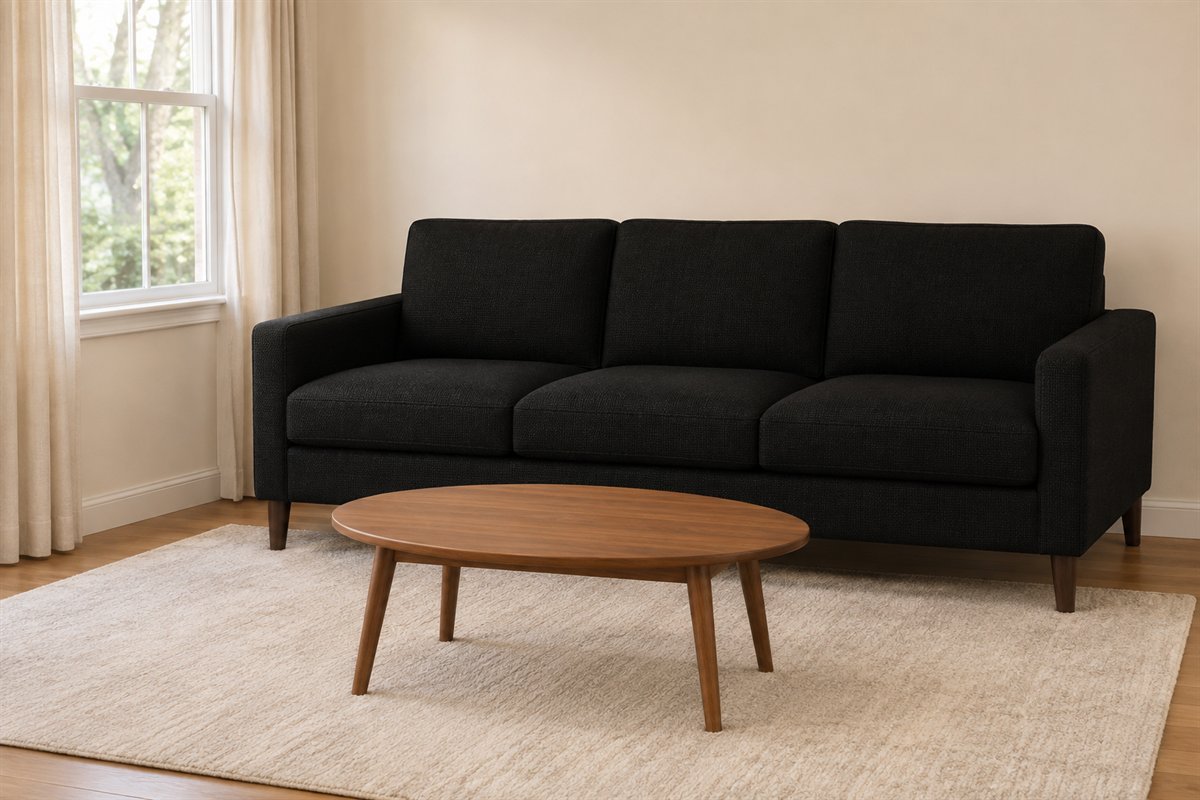
A black sofa can give an otherwise pale room its main dark shape without any wall change. Keep enough exposed upholstery to understand the arms and seat; a row of contrasting cushions can hide the very outline you chose. A quiet light rug separates the sofa from the floor.
Start with the sofa you already own if it is comfortable and useful. View its darkest and most reflective areas together, especially if it has a leather-like surface. Choose companions from the real fabric or finish, rather than expecting all black materials to look identical.
3. Give a black sectional one uninterrupted pale floor area

A sectional introduces a larger dark mass than a small sofa. A broad quiet rug can help its whole outline read as one seating group. Keep the chaise direction and the ordinary approach to each seat clear before adding another chair.
Use the real footprint in the room, including the projecting chaise and the position of a person sitting there. If access is awkward, adjust the arrangement before changing the wall color. A light rug can clarify the composition, but it cannot correct a furniture plan that is too crowded.
4. Keep a black leather sofa distinct from dark wood

Black leather and deep timber can make a handsome material pair, but both may occupy similar visual depth. A light wall, rug or cloth-covered chair can supply a larger separating area. Let the leather creases and wood grain provide detail instead of adding several small patterns.
Compare the actual pieces under your usual lamps. If the coffee table disappears against the sofa, try its position or a lighter rug before replacing it. Keep the furniture that performs its job, and change the smallest surrounding surface that gives the group the distinction you want.
5. Try a softer near-black with oatmeal upholstery

A softened charcoal-like black can give oatmeal seating a gentler background than a sharper black. The difference is worth comparing on a useful sample area, with both the wall and fabric in view. Leave other colors out of the first comparison.
Do not select the final shade by its name alone. Observe the candidate near the window and in the corner after dark. Keep the room’s usual lighting in place so that you are comparing the wall choice rather than an entirely different lighting arrangement each time.
6. Use black lower paneling beneath a lighter wall

A clearly defined dark lower section creates a different room from a full-height black wall. Relate its boundary to the existing doors, sofa and wall proportions. Keep the upper area plain while judging the division.
Mock up the boundary with a method suitable for the actual surface before fitted or coating work. From the sofa, check whether the line cuts awkwardly across the furniture. Choose the real panel system, support and finish separately from the appearance shown in the concept.
7. Let one black bookcase replace scattered small accents
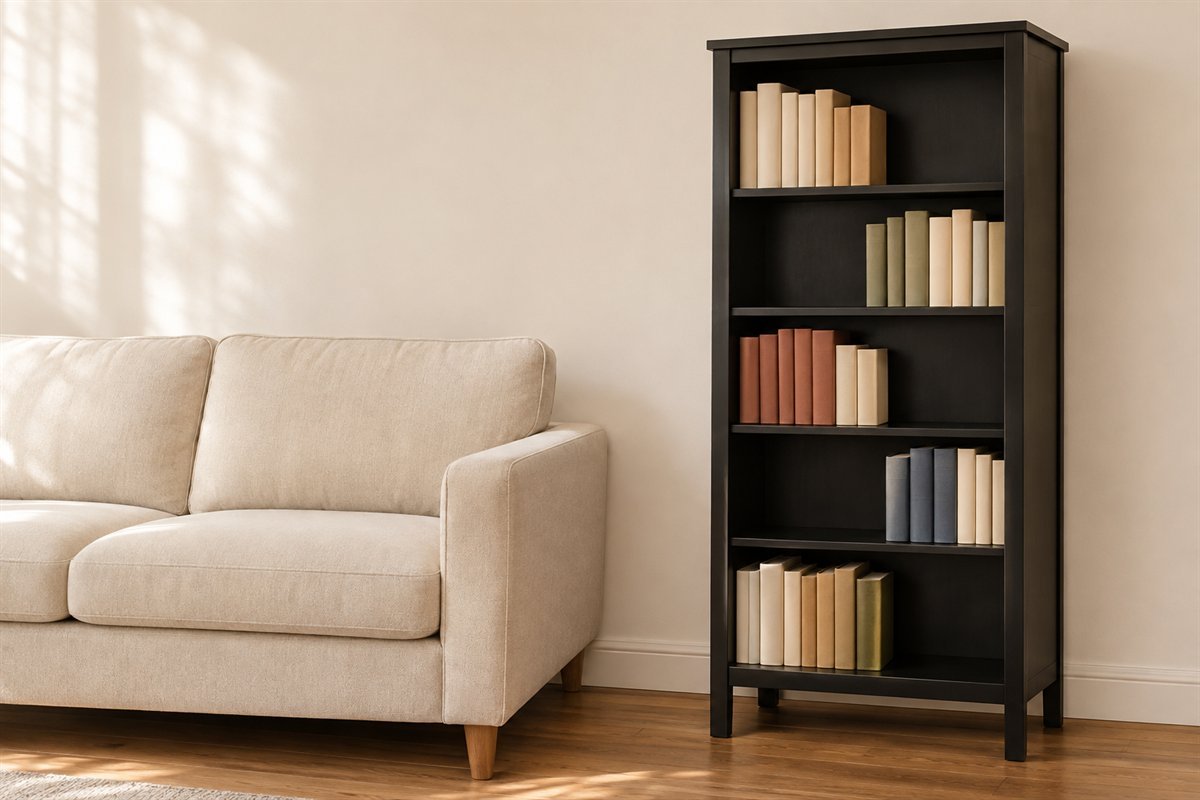
A useful black bookcase can concentrate the dark color into one understandable piece. Organize the contents by how they are retrieved, leaving enough visible structure to read the shelving. This can be more convincing than adding a black object to every table.
Count the belongings that need a home before selecting the unit. Keep the sofa and nearby wall quieter, and follow the selected furniture’s securing and loading guidance. A few well-used shelves do not need an arrangement of ornaments to justify their place in the room.
8. Use closed black storage for a mixed collection
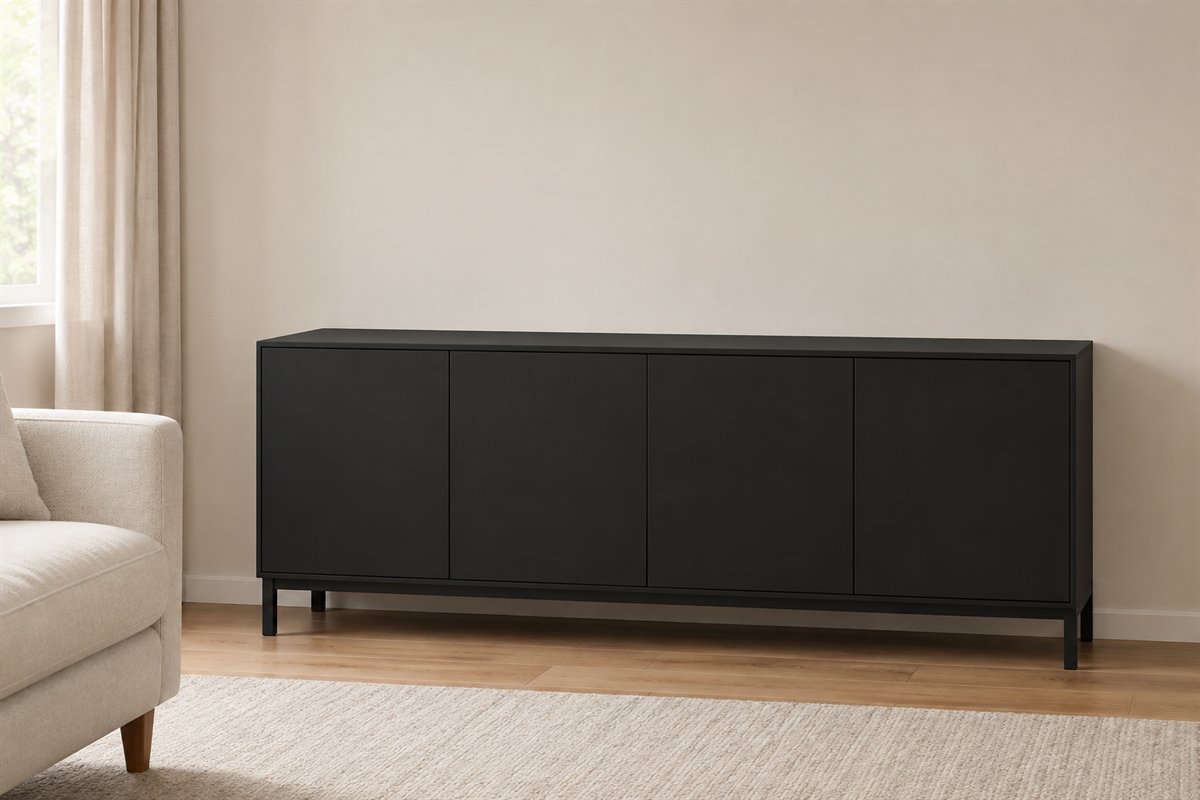
Plain closed fronts can make a mixed collection of games, cables and occasional supplies less prominent. Choose a low unit that actually belongs near the activity it serves. Its top can remain useful without becoming a permanent decorative display.
Try the doors and drawers with the seating in place. Give the loose items a clear interior assignment, then assess the room with the fronts closed. Keep the unit’s support and ventilation requirements with the actual product rather than assuming a plain box suits every use.
9. Frame a dark television with a quieter storage group
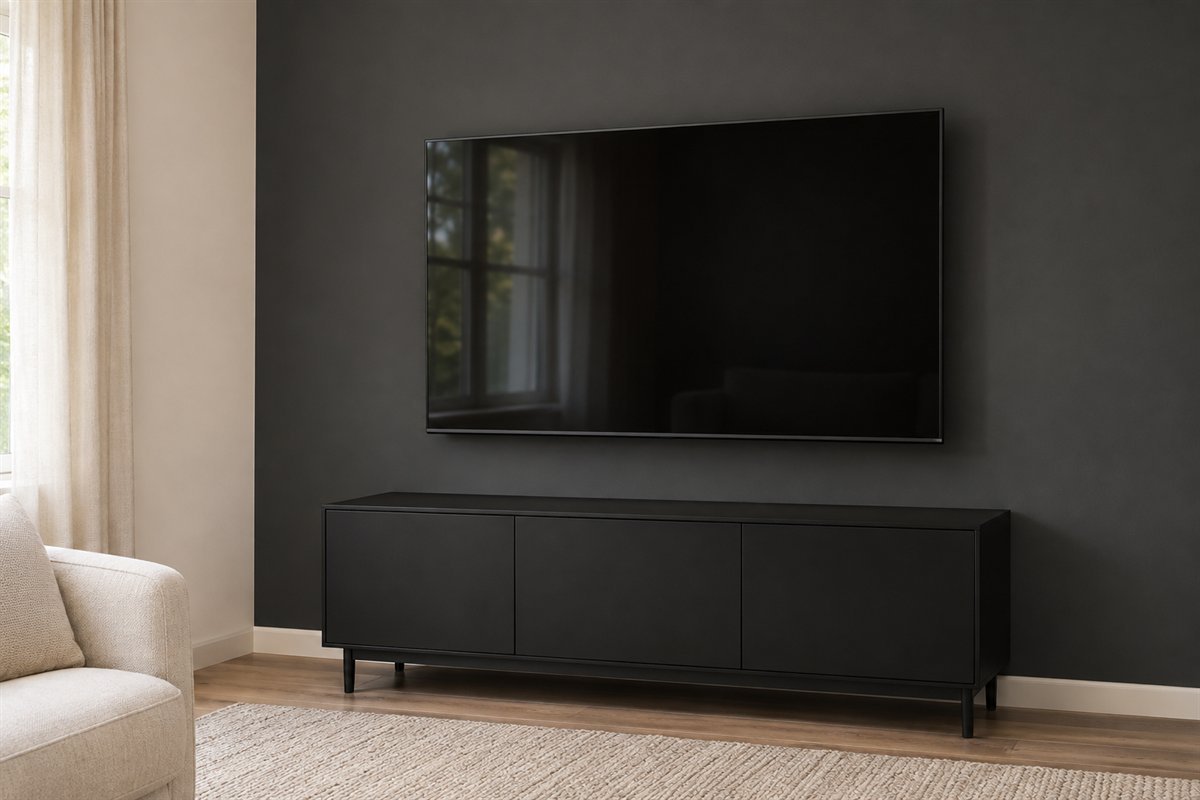
A black storage group can let an idle television sit within a larger dark area instead of standing alone on a pale wall. Start with the screen you use and the equipment that needs access. Keep the group’s edges simple enough to remain legible.
Review the arrangement with the screen off and during ordinary viewing. Use the actual equipment’s support, ventilation and connection requirements. A dark backdrop is a visual choice; it does not establish glare control, display performance or an installation method.
10. Give black side curtains a broad light companion

Black curtains create a substantial vertical area even when most of the fabric is stacked beside the window. Compare them with the sofa and rug as one group. A pale upholstered piece can keep that window wall from being the room’s only strong boundary.
Observe the cloth in the position it normally occupies, including its closed evening position. Select the actual treatment for privacy, light control and operation; the color by itself does not specify those functions. Keep the approach to the window practical as you plan the folds.
11. Outline a pale window wall with dark trim
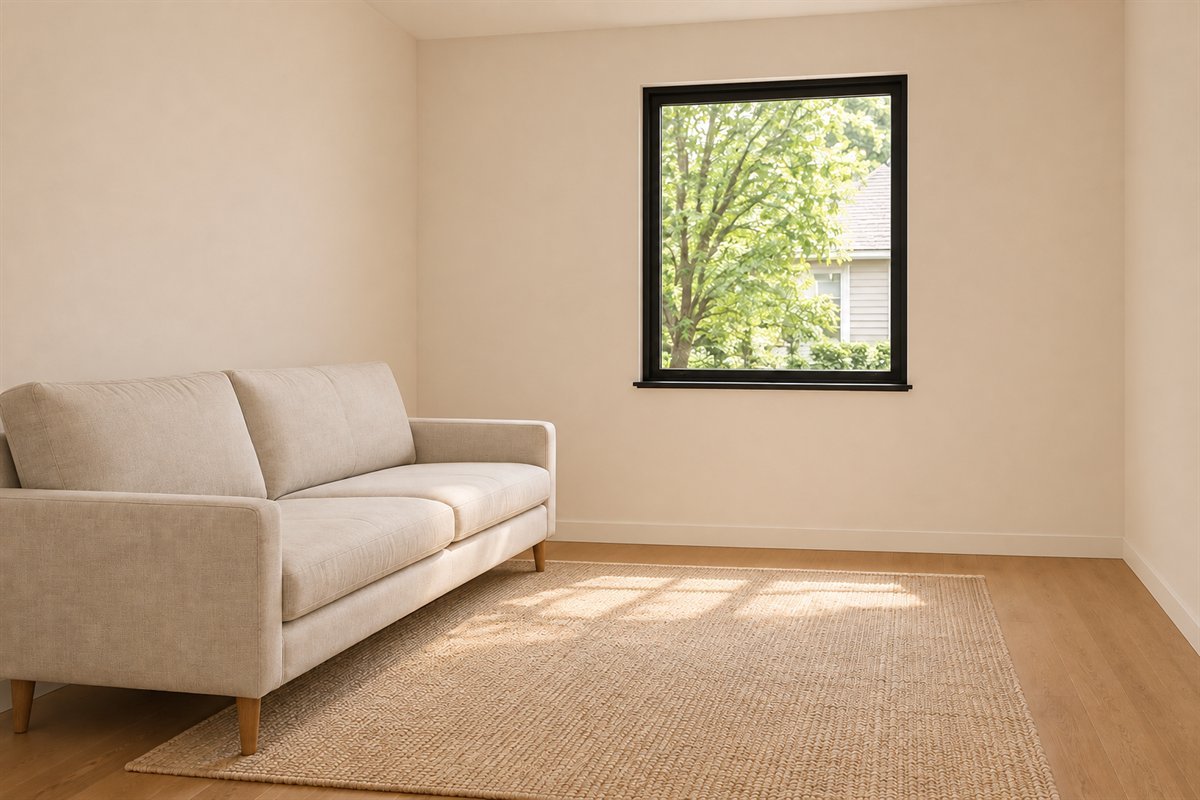
Dark window trim can introduce black through architecture while leaving the wall light. Let the window shape supply the pattern, with a plain sofa and restrained curtain beside it. This is a useful direction when you prefer outlines to large painted fields.
Compare the real frame and neighboring wall together. If coating is proposed, identify the frame material and a suitable system first; permission may also matter in a rented property. The generated black edge describes the intended composition, not a universal refinishing process.
12. Choose a coffee table with a visible pale top

A black frame beneath a pale tabletop can give the seating group a dark outline without adding another solid black block. Let the top remain largely clear so the two materials are visible. This can work with either black or neutral upholstery.
Check the table where it is used rather than judging an isolated product image. Keep the route, reach and everyday cup position practical. Choose the real top for its weight, care and edges; a pale stone-like illustration does not identify a material or prove its performance.
13. Use a round black table to simplify several straight edges

A simple round table can introduce one clear dark shape among a rectangular sofa and rug. Keep its base understandable and the surrounding furniture modest. There is no need to repeat the circle in several wall objects to explain the choice.
Compare the actual table from the doorway and from a seat. Its shape still needs to suit the room’s reach and passage. If it occupies the place where everyone walks, try a smaller useful piece or an alternate position before treating the silhouette as the main goal.
14. Bring retained oak into a room with black walls
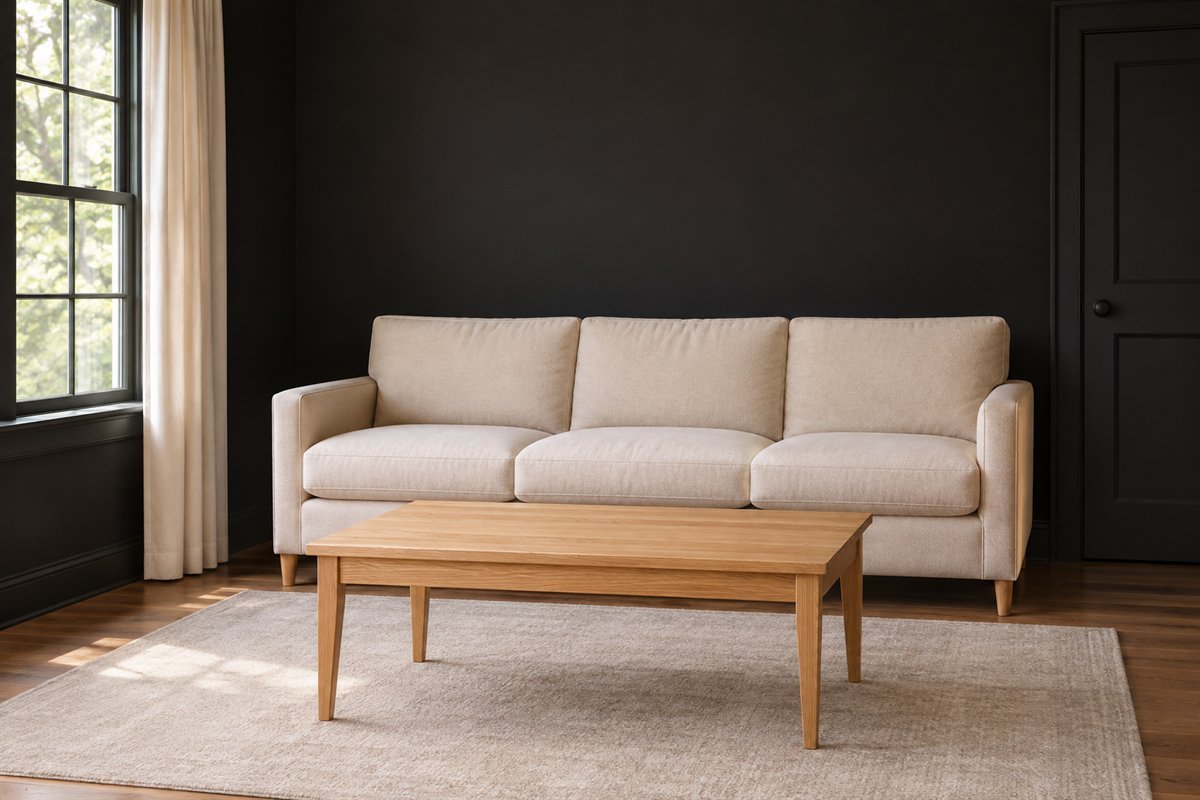
An existing oak table can supply visible grain against a black background. Give the timber a useful role near the seating and leave part of its surface exposed. The room can feel warm through the retained material without acquiring a set of matching rustic accessories.
Bring the wall sample beside the largest wood area. If the oak looks more yellow than you enjoy, compare another dark sample before deciding the table is wrong. Keep some variation between timber pieces rather than trying to match every grain and tone exactly.
15. Keep walnut visible with a light textile nearby
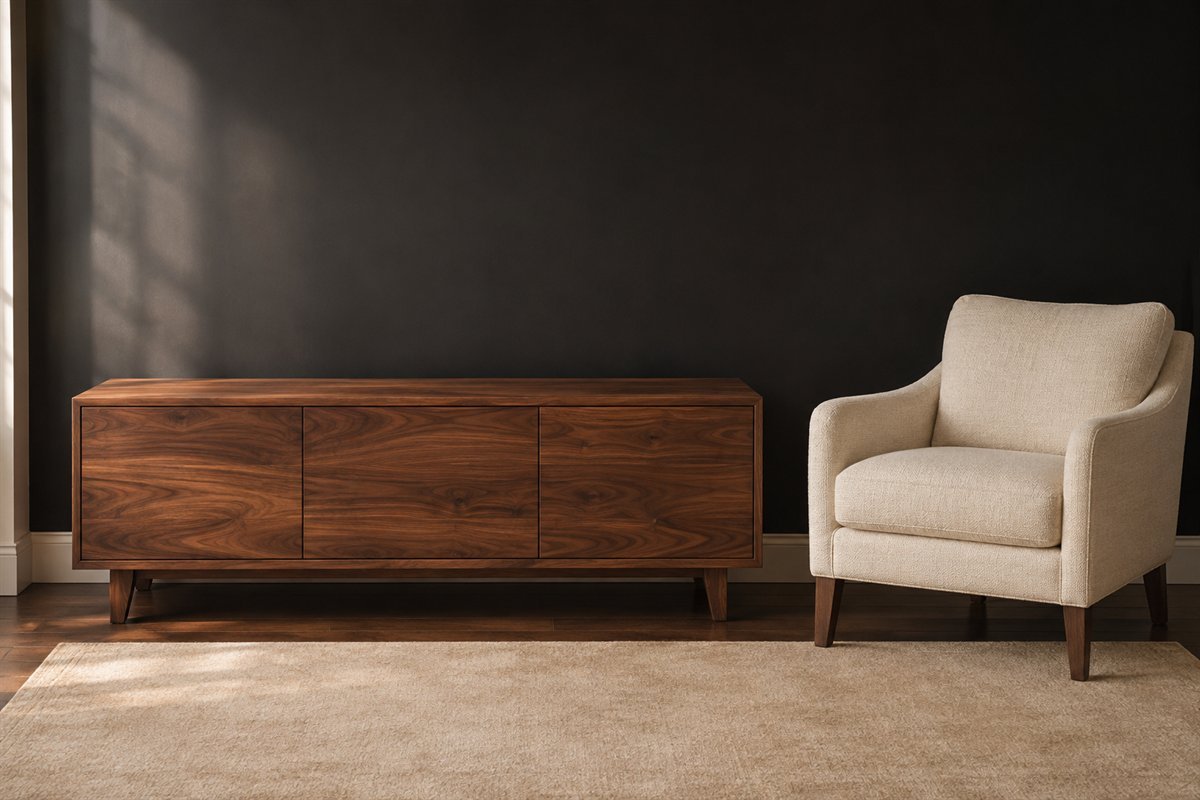
Walnut beside black can create a deeper, quieter material relationship than pale oak. Place a substantial cream textile nearby so the wood edge remains visible. A pale upholstered chair can provide that separation while also adding a useful seat.
Look at the pair under evening lamps as well as daylight. If both surfaces merge, adjust the companion or position rather than scattering small white objects around them. Use the actual furniture and finish samples so the choice reflects the pieces that will stay.
16. Let a pale rug show a restrained black line

A light rug with a simple black line can relate black furniture to a pale room. Keep enough of its repeat visible after the table is in place. The rug can be the main pattern while the sofa and curtains remain plain.
Compare the full pattern layout rather than a tiny online crop. Check the actual rug dimensions, floor suitability and care before choosing it. If only a few busy edges remain visible around the furniture, a quieter pattern may contribute more to the room.
17. Keep a black-and-white stripe to one textile
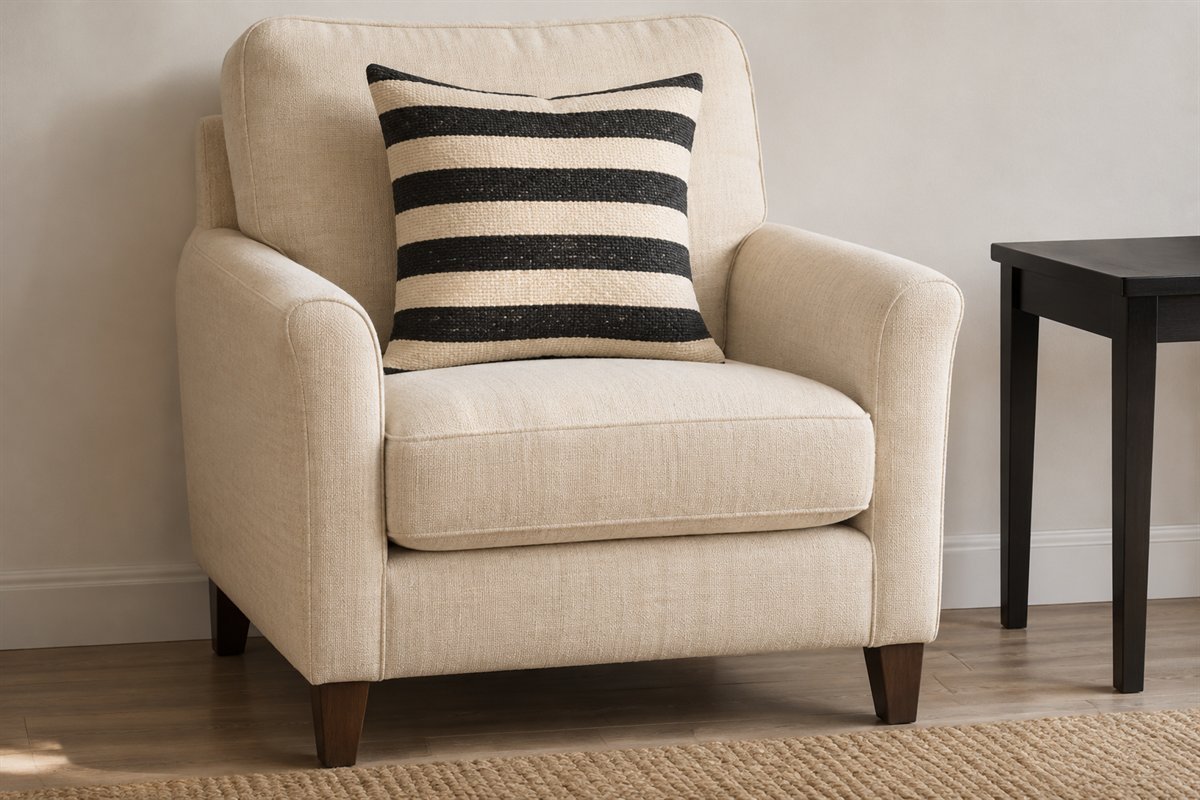
One striped cushion can connect black furniture to pale upholstery without making every fabric patterned. Choose a stripe broad enough to read from the normal seating distance. Leave the neighboring cushions plain or remove them while making the comparison.
Try the actual cushion on the chair or sofa you use. A stripe seen flat in a sample changes across seams and folds. If the rug already carries the strong repeat, keep this textile quieter instead of adding a second pattern simply because the colors match.
18. Use camel as a full supporting seat

A camel chair gives a black-and-cream room a substantial warm area. Keep the chair shape simple and place it within the conversation group, not as an isolated color sample in a corner. A quiet rug can connect it with the main sofa.
Compare the real camel fabric with the floor. Yellow-brown, tan and reddish leather-like finishes create different relationships with black. Let that chair be the warm accent before adding several smaller brown accessories, and choose it for comfort as well as color.
19. Try one muted clay cushion against black upholstery

A clay-colored cushion can provide a warm accent on a black sofa while the large surfaces stay neutral. Use one clear area of color rather than several unrelated oranges and reds. Leave some black fabric visible around it.
Compare the cloth in the room before choosing more accents. If the floor is already strongly orange, a quieter clay may be easier to relate to it. Keep a fabric you like to use; a cushion that needs constant rearranging can add work without improving the seating.
20. Give a black room one dusty-blue companion

A dusty-blue chair can introduce a cool note without shifting the room toward a bright multicolor scheme. Keep the chair visibly different in depth from the black wall or sofa. A pale rug gives the two darker areas some space between them.
Compare the blue beside the black under your usual lamps. If the chair disappears more than you want, try a lighter fabric rather than repeating blue in every corner. The useful contrast is between the pieces you see and use, not the color names on their labels.
21. Put a warm-metal lamp where it serves a seat
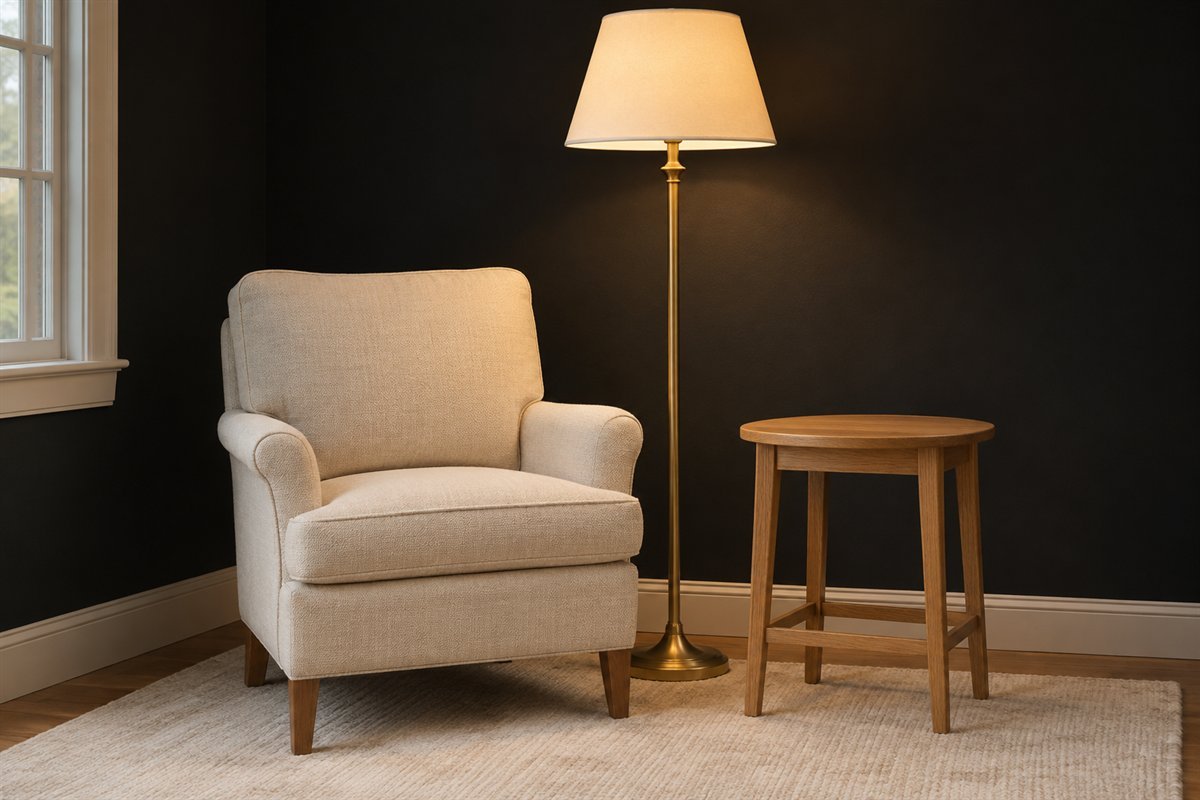
A brass-colored lamp can provide a small highlight against black without a room full of metallic ornaments. Choose a place where a lamp is useful, such as beside the reading chair. A plain shade keeps the finish from competing with a strong patterned rug.
Assess the actual light, controls and reach from the seat. A reflective finish is not a substitute for useful illumination. Check compatibility and installation for the real fixture, then judge the metal beside any hardware that will remain in the room.
22. Use cooler metal for a precise black-and-gray group

A silver-colored lamp can relate black upholstery to pale gray cloth without adding another warm accent. Keep the metal in one useful place and let the larger fabric areas remain calm. Its outline can supply enough detail on its own.
Compare a real finish sample with the sofa and any existing hardware. Brushed and highly reflective surfaces create different appearances even when described with the same color. Select the fixture for its actual purpose before deciding whether that cooler highlight belongs in the room.
23. Let one monochrome artwork carry the wall pattern
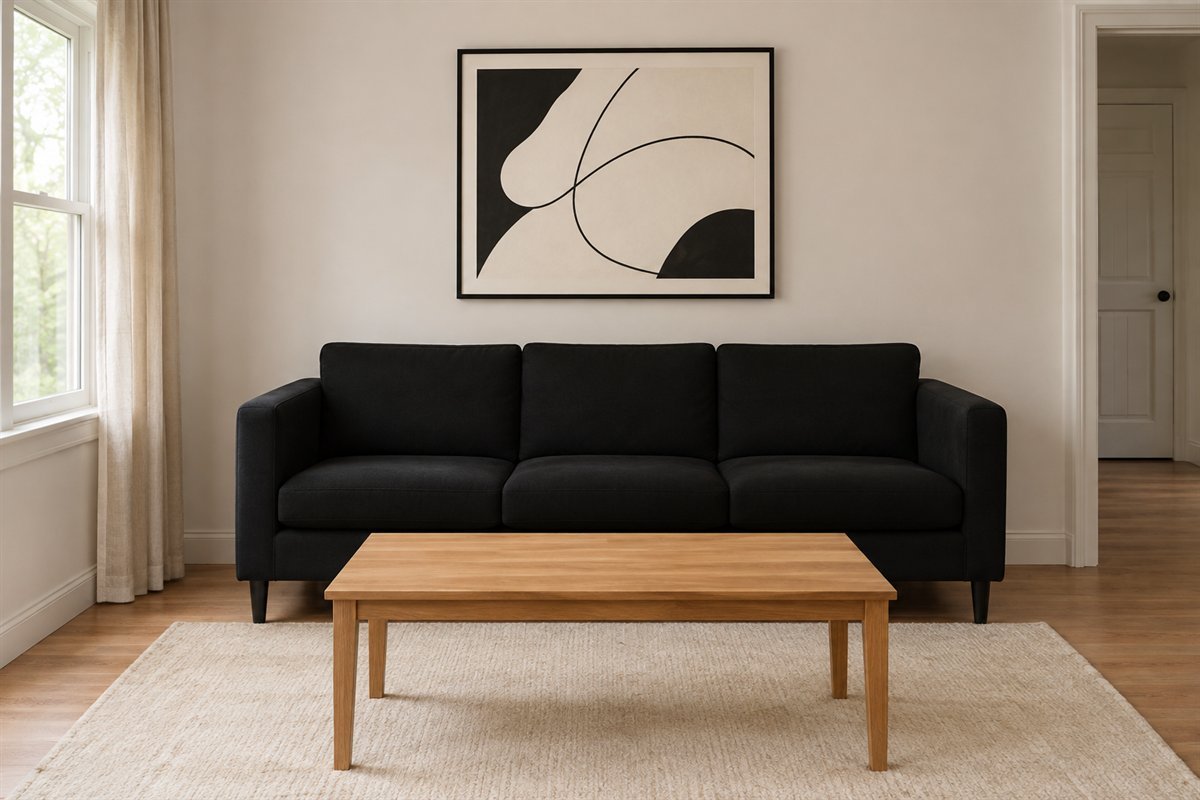
A single black-and-white abstract can connect dark furniture with a pale wall. Give it enough quiet surrounding area to read independently of the sofa. Keep the other textiles plain while judging the complete arrangement.
Choose art you want to see rather than buying it only to fill a gap in the palette. Compare its scale with the actual furniture before fixing it. Use appropriate support for the real wall and frame; the concept illustrates composition, not hanging instructions.
24. Keep a small black living room centered on useful seats

A compact room can use a black sofa or wall while keeping the furniture modest. Begin with the seats that are actually used, then choose only the reachable surfaces they need. A large central table and several decorative stools may be unnecessary.
Walk the normal route from the doorway to the seat and window with the furniture in place. Check ordinary openings before buying. Neither dark nor light color guarantees an apparent increase in size; the useful result is a clear room that supports your own routine.
A worked example: separate a color problem from an activity problem
Imagine a hypothetical living room with a black sofa, dark walnut table, pale walls and one ceiling light. From the doorway, the table edge is difficult to distinguish from the sofa. From the reading seat, the book is also awkward to read after dark. These are two observations, not proof that black is the wrong color.
First compare the table-and-sofa relationship with an appropriate pale rug sample or another position for the existing table. Keep the light arrangement the same while judging that visual change. Then review the reading task with a suitable lamp in a practical position, assessing the actual fixture and controls. A paler rug does not establish adequate reading light, and another lamp does not necessarily create the furniture contrast you prefer.
Record the results in words: table edge is clearer from the doorway; reading task still needs attention. Change the next item only when you know which problem remains. This is an original hypothetical planning example, not a measured lighting assessment, completed client project or product test.
Keep the black surfaces different in texture, not merely in name
A woven black sofa, a plain painted cabinet and a metal table frame can all be called black while showing light differently. Put actual samples beside one another before ordering a full group. Look at broad areas as well as edges; a sheen that seems quiet on a tiny swatch can become more prominent across a large front.
Retain a useful piece when its material gives the room variety. A slightly warmer dark table does not have to match the sofa exactly. If two surfaces merge more than you want, compare the adjacent pale area or their position before trying to replace every dark item with an identical finish.
Choose the real surface or coating for its use and care. Appearance, fabric comfort, cleaning requirements and a product’s suitable application are separate questions. Use generated imagery to compare relationships, then make those practical selections from the actual materials.
Finish the room after an ordinary evening
Return the cushions and everyday belongings to their normal positions after the room has been used. Notice which chair needs a reachable surface, which cabinet is inconvenient to open and which decorative item must move before anyone can sit down. Those observations identify a more useful next change than an empty styled photograph.
Keep a short postponement list. If the black sofa and pale rug already form the relationship you enjoy, matching black curtains may wait. If one useful lamp supplies the metal accent, a collection of metal ornaments may add little. The room can feel finished without every corner repeating the palette.
In a rented room, begin with movable furniture and textiles that suit the space and tenancy conditions. Treat painting, fixtures and fitted work as separate proposals. A successful smaller change is a valid stopping point.
What the primary references support
Dulux’s black-color article presents black as a backdrop or limited accent rather than requiring an entirely black room. Benjamin Moore’s sampling guidance recommends observing actual samples in changing light and explains that its liquid color samples represent color rather than the final coating.
Our seating review record, hypothetical example and 24 arrangements are original. The illustrations do not reproduce either brand’s products or establish a paint match.
Do black living room ideas require black walls?
No. A black sofa, useful cabinet, curtain or table frame can supply the main dark area while the walls remain pale. Choose an arrangement around the furniture and finishes you can sensibly keep.
What rug works with a black sofa?
A broad pale rug, restrained black-and-cream pattern or quiet gray textile can be worth comparing. Use the actual sofa, floor and furniture footprint to judge it, and check the selected rug’s care and floor requirements separately.
How can a black living room feel warmer?
Try retained wood, cream cloth, a camel seat or one muted clay accent. Compare real materials before buying several matching accessories. Useful texture and a practical lamp can contribute without changing every large surface.
Can a small living room use black furniture?
Yes, if the furniture fits the activities and routes. Check the actual sofa footprint, door movement and approach to the seats. Color alone does not guarantee that a room will seem larger or smaller.
Can I copy an exact paint color from these images?
No. The images show generated color relationships, and screen display cannot specify the final paint. Compare physical samples beside the retained furniture and choose the final product for the actual surface.
A practical next step
Choose the dark surface you want to keep, then review the room from its ordinary seats in daylight and evening light. Make one useful adjustment at a time. Comfortable seating, readable furniture shapes and accessible everyday storage can give black a convincing place in the home.
Compare a broader range of living room paint palettes. Review living room lighting for ordinary activities. Check a living room rug against the actual furniture footprint.
Images are original AI-generated decor concepts, not photographs of named products, measured layouts or verified installations. The seating review record and hypothetical example are original planning aids.
Sources and care references
- Dulux: using black as a considered backdrop or accent
- Benjamin Moore: physical color sampling and viewing conditions
Optional digital guide for this topic
If you prefer a structured workbook, explore this related paid guide.