Green living room ideas become more useful when you decide where the color should do its main work. A sofa, a full wall and a patterned rug each give green a different role. You can choose one of them as the starting point without making every surface match.
Begin with the furniture and finishes that stay. A brown leather sofa may lead you toward green walls; a room with good neutral walls may need only a green chair. Compare the actual materials and leave room for conversation, reading, storage and the ordinary route through the space.
The 25 concepts below cover pale sage, olive and deeper greens through several furniture and surface choices. They illustrate color-family relationships rather than exact paint formulas or named products. Every image is an original AI-generated decor concept, with practical decisions to test in your own room.
Contents
- 1. Let a green sofa carry the room’s color
- 2. Give a sage sofa a quiet chalky background
- 3. Put an olive sofa beside warm oak
- 4. Make emerald upholstery the clear focal point
- 5. Try a forest-green sofa with a muted pink chair
- 6. Keep a green sectional visually simple
- 7. Let green armchairs update a neutral sofa
- 8. Use a single green reading chair as the first step
- 9. Give pale green walls a charcoal sofa to frame
- 10. Use a deep green wall to define pale upholstery
- 11. Keep olive walls and leather distinct
- 12. Connect green with a restrained clay accent
- 13. Let a green-and-cream rug lead the palette
- 14. Use green curtains around an otherwise neutral group
- 15. Give a green storage cabinet enough quiet space
- 16. Bring green into an existing bookcase deliberately
- 17. Pair green with black furniture outlines
- 18. Use a pale stone-look surface as the quiet companion
- 19. Let one striped chair connect green and cream
- 20. Keep the green low in a compact living room
- 21. Use two greens with a clear difference in depth
- 22. Make a cream throw a large simple companion
- 23. Repeat green across a small living-and-dining space sparingly
- 24. Let art supply a second green without matching the sofa
- 25. Finish the room with one purposeful green detail
Choose the main green before choosing its companions
Write one sentence describing the intended role: green sofa is the focal point; green wall frames neutral seating; green rug connects existing furniture. Keep that sentence beside the samples. When another green item appeals to you, check whether it supports the chosen role or starts a separate scheme.
An original green-placement guide for an existing living room
- Walls stay neutral: Try green upholstery, a substantial curtain or one rug before changing the paint.
- Sofa stays neutral: Compare green walls or a pair of green chairs with the fabric and floor.
- Dark furniture stays: Choose the green’s depth so the outlines you want remain visible.
- Several patterns stay: Let one be the leader; choose a quieter green surface as its companion.
- Space is tight: Set the seating footprint and walking route before deciding how much green to repeat.
1. Let a green sofa carry the room’s color

A substantial green sofa can make the room feel green while the walls remain off-white. Choose the shade beside the floor and the largest rug, then let those surfaces support it. This is particularly useful when painting is inconvenient or the existing wall finish is worth keeping.
Judge a fabric sample across its folds as well as flat. Texture and the direction you view it can change how the green looks. Select the sofa for real comfort, size and care requirements first; its role as the color anchor should work with those decisions rather than replace them.
2. Give a sage sofa a quiet chalky background

A pale sage sofa can sit within a light room without becoming a sharp contrast. Off-white walls and an oatmeal rug let the upholstery’s gray-green quality remain visible. Use a small dark furniture detail if the pale surfaces merge more than you like.
Check the actual fabric beside the wall before choosing the remaining textiles. Sage can lean gray, yellow or blue, and the product name does not settle that relationship. Keep the first cushion pair simple so you can see the sofa’s own color rather than several competing accents.
3. Put an olive sofa beside warm oak

An olive sofa and oak-toned furniture can form an earthy pairing without requiring a rustic room. The wood’s visible grain and a pale rug provide material variety. Keep the walls quieter if the sofa has a strong yellow-green cast.
Compare the olive against the timber you actually own. A very golden floor may call for a more muted upholstery, while a paler oak can allow a stronger green. Look at the sofa sample beside the largest wood surface instead of buying several small matching accessories to force the connection.
4. Make emerald upholstery the clear focal point
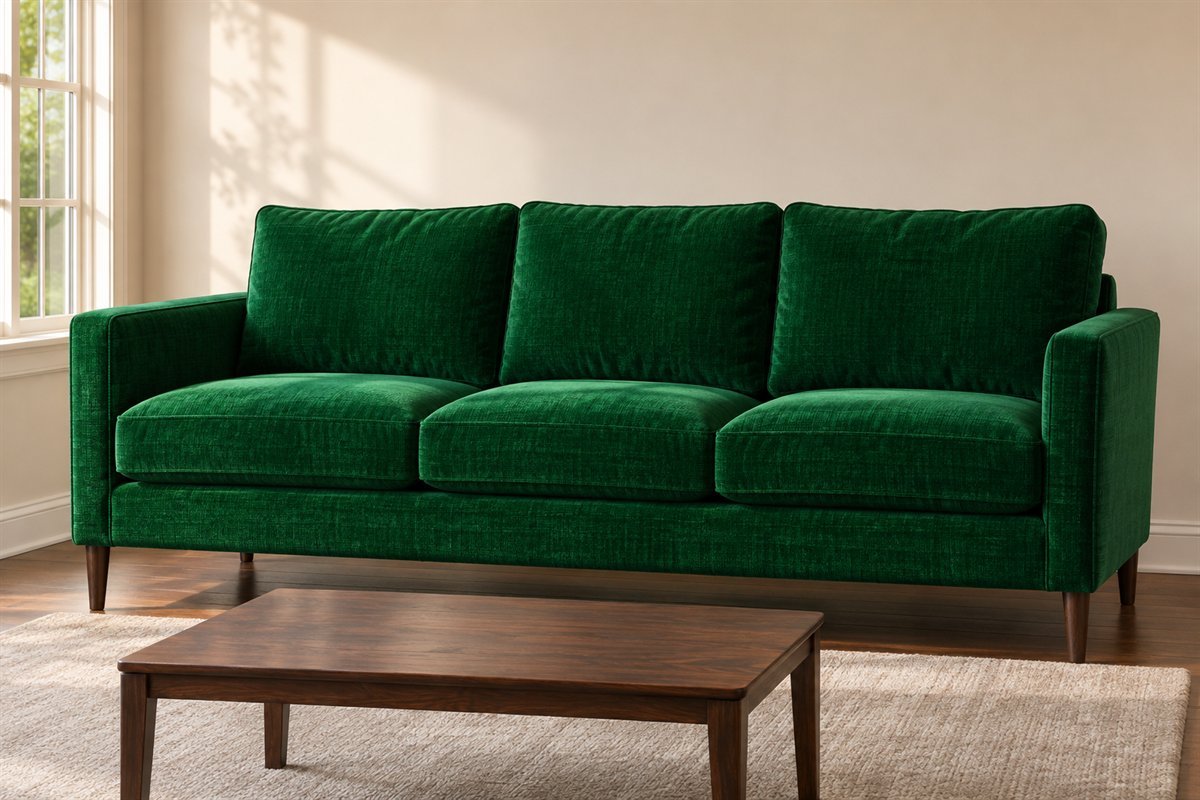
An emerald sofa has enough presence to lead a room with plain walls and a restrained floor. Let the furniture shape stay readable; a simple arm and leg profile can be more effective than extra ornament. A quiet pale rug gives the saturated fabric a broad companion.
Look at the green under your ordinary evening lamps before committing. If it reads much darker than expected, decide whether that is the effect you want. Avoid relying on a brightly exposed product photograph to predict the appearance of a whole sofa in your room.
5. Try a forest-green sofa with a muted pink chair

A dusty pink accent chair can provide a deliberate contrast to a dark green sofa. Let one piece remain the stronger color and keep the rug plain. The pairing becomes easier to understand when the two upholstery shapes have some visual space between them.
Compare full fabric samples together rather than adding pink after the green is already fixed. A pale blush, a peachier cloth and a brown-pink create different relationships. Keep the remaining furnishings practical and restrained so the room does not acquire several unrelated color stories.
6. Keep a green sectional visually simple

A green sectional is a large color area, so its outline and the space around it matter. Choose a simple profile and a quieter rug, then leave the main route through the room obvious. Extra side chairs may be unnecessary when the sectional already supplies enough seating.
Check the real footprint, including the chaise direction, before deciding where the color belongs. A sectional that blocks access cannot be rescued by a pale wall. Test the arrangement with the furniture you use and treat the generated room as a composition rather than a measured layout.
7. Let green armchairs update a neutral sofa
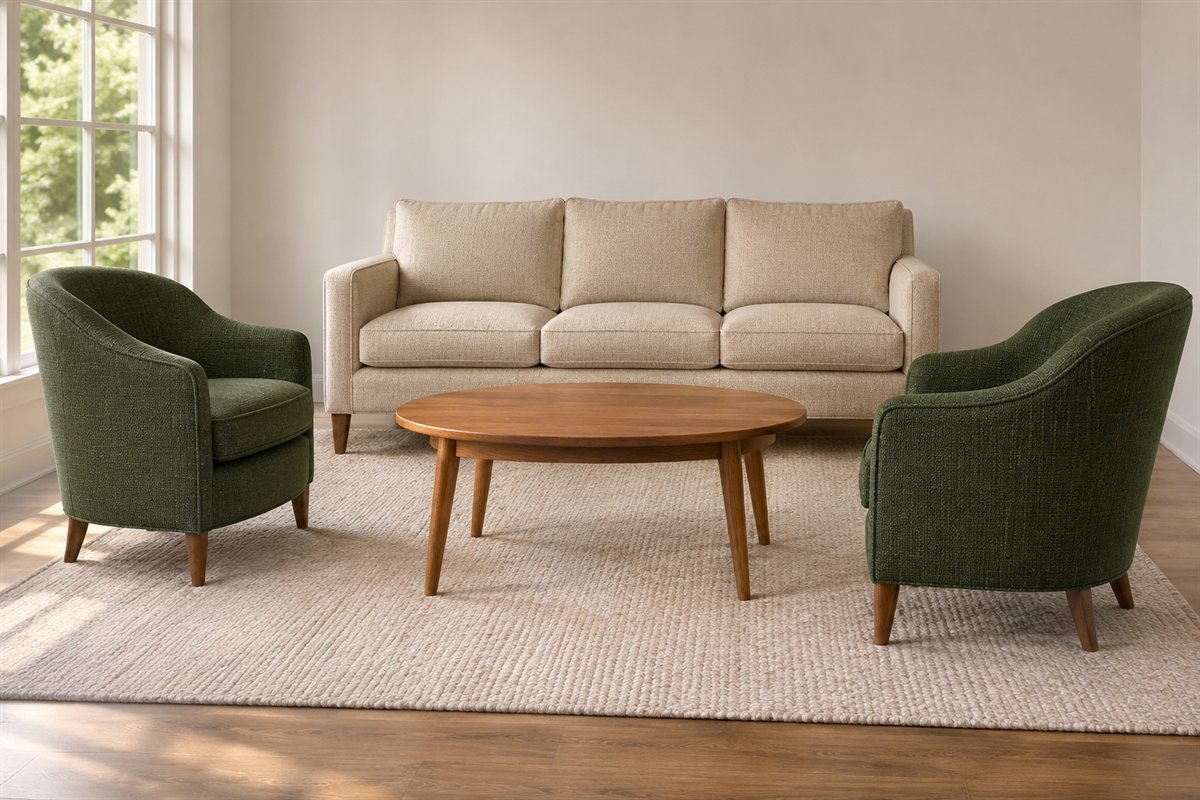
Two compact green chairs can introduce the color without changing a useful neutral sofa. Position them as part of the conversation group rather than as decorative objects at the room’s edges. Their smaller size can allow a deeper green than you would choose for the main sofa.
Repeat the green only if a second textile improves the group. The chairs already create a clear pair, so matching curtains and cushions may be more than the room needs. Check the chairs’ actual comfort and approach space before choosing them for their visual symmetry.
8. Use a single green reading chair as the first step

One green chair can be a useful trial when you are unsure about a large colored sofa. Give it an ordinary reading position with a reachable surface and suitable lamp. The color then belongs to an activity rather than a collection of small accents.
Look at the chair from both the main sofa and the doorway. If it seems disconnected, change its position before purchasing several matching objects. A rug or wood finish shared with the main seating may be enough to make it part of the room.
9. Give pale green walls a charcoal sofa to frame
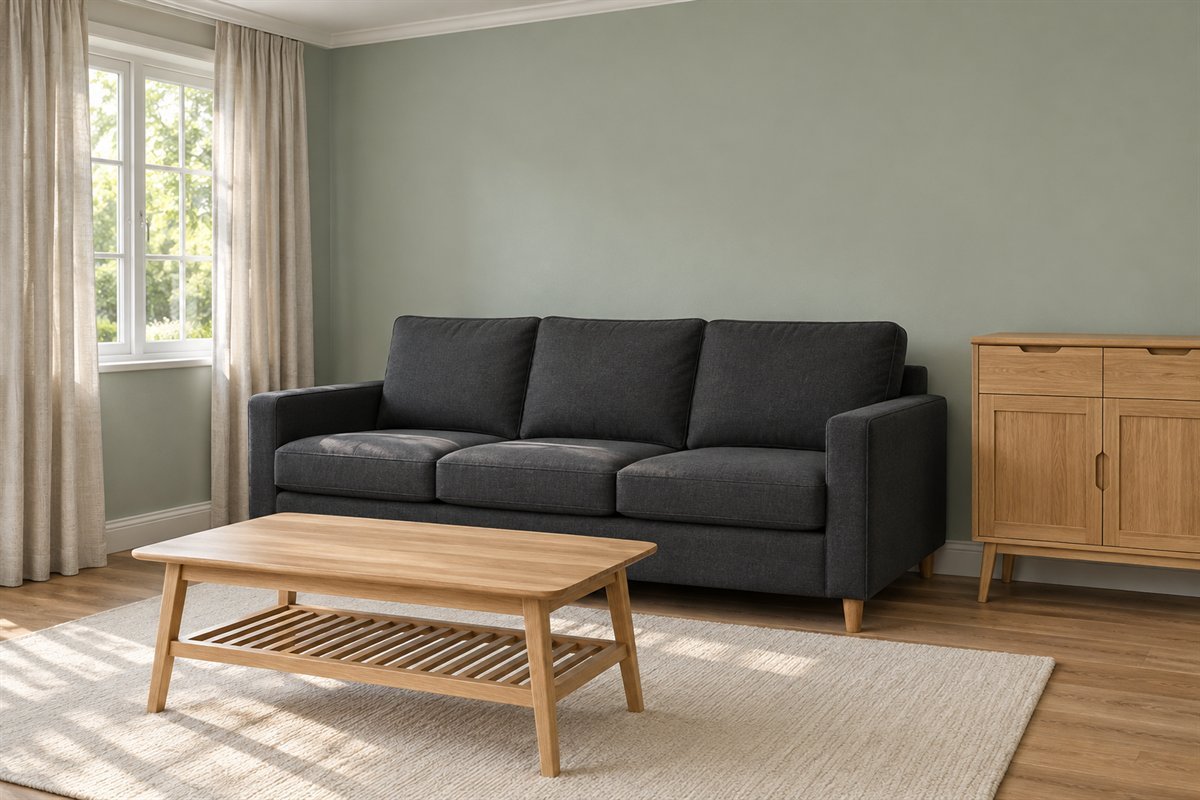
A light muted green wall can make charcoal upholstery more distinct while keeping the palette restrained. Choose a green that works beside the actual gray fabric, then let pale curtains and a quiet rug provide larger light surfaces.
Compare the wall with the sofa under your normal lamps. A gray that appears neutral alone may show blue or violet beside a particular green. Change one candidate at a time so you can identify which relationship you prefer instead of trying to correct it with more accessories.
10. Use a deep green wall to define pale upholstery

A dark green seating wall gives an off-white sofa a clear setting. Let the sofa and curtain provide substantial pale areas so the contrast is carried by useful furnishings. A few small white objects scattered around the room cannot do the same work.
Choose where the green stops by the room’s actual architecture. A complete wall may be simpler than an arbitrary painted rectangle behind the sofa. Compare the depth in the corner and at the window before deciding on the final finish or adjoining trim.
11. Keep olive walls and leather distinct

Olive walls can sit beside a retained brown leather sofa, with pale cloth or a rug keeping the surfaces separate. Let the leather remain the warm substantial material instead of trying to match its brown in every wood piece.
Test the wall beside more than one part of the leather. Smooth highlights and creased areas can create different apparent colors. If the pair feels too close in depth, try a lighter olive or a larger pale textile before deciding the sofa needs replacing.
12. Connect green with a restrained clay accent

A clay-colored cushion can add a warm note to a green sofa without turning the whole room orange. Keep the accent broad enough to read but limited to one role. A neutral wall and rug make the two colors easier to judge.
Compare the cushion against the sofa in person. A terracotta that leans red creates a different contrast from a brownish clay. If both fabrics have strong texture or pattern, simplify one before adding another color to explain the combination.
13. Let a green-and-cream rug lead the palette
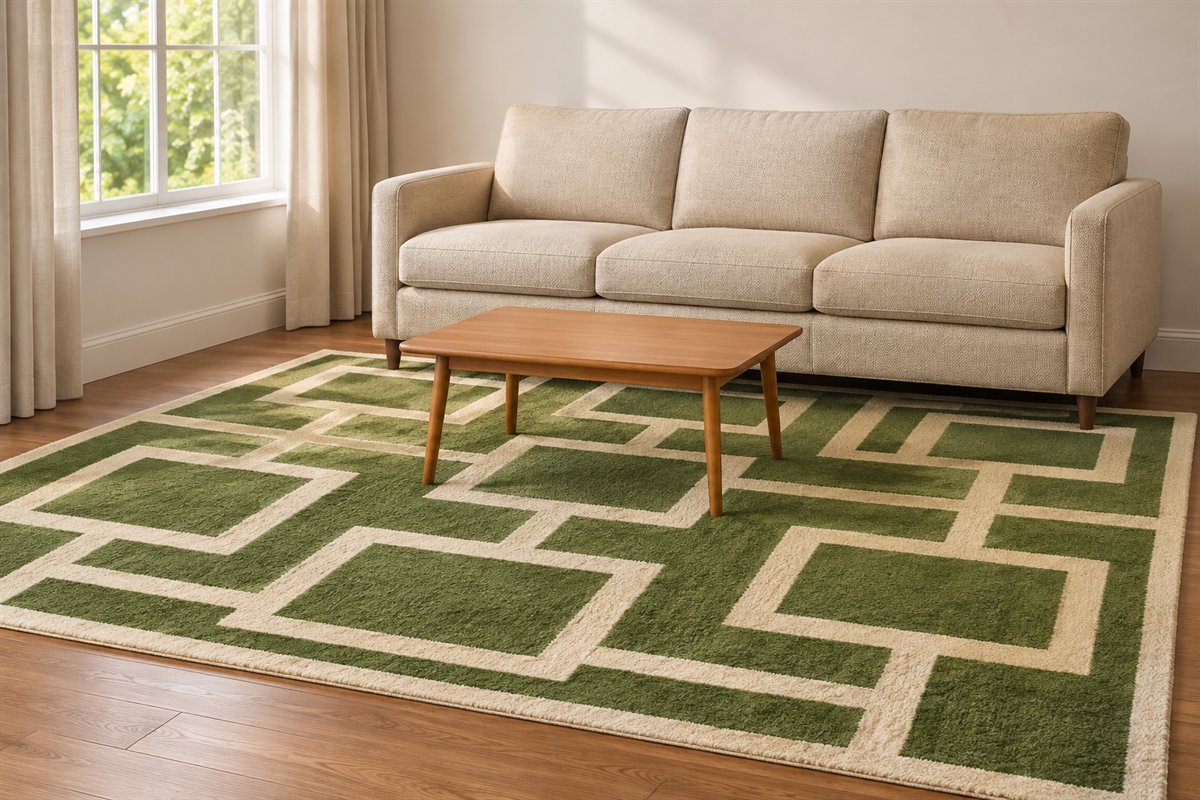
A rug with green in a clear pattern can be the room’s color source while the sofa remains neutral. Choose a pattern whose main areas are visible after the table and seating are in place. Tiny exposed corners do not show the scheme very clearly.
Take colors from the actual rug rather than a small online crop. A quiet green cushion may connect the pattern to the sofa, but it does not need to repeat every shade. Check the rug’s size, care and floor suitability independently of the image.
14. Use green curtains around an otherwise neutral group

Full-length muted green curtains introduce a tall color area without changing the sofa. Leave their folds visible in the usual open position and relate the depth to one other substantial surface. The remaining upholstery can stay plain.
Check how the cloth looks with daylight behind it and with the curtains closed at night. Appearance does not establish opacity or privacy, so choose the actual treatment for the function needed. Keep the window’s ordinary use and the floor route clear when planning the stack.
15. Give a green storage cabinet enough quiet space

A green low cabinet can supply a deliberate color block in a neutral living room. Plain fronts and a visible top make its shape readable. Place it where storage is useful rather than buying it solely to repeat a cushion color.
Assess the doors or drawers in their open positions and follow the specific unit’s securing instructions. Keep the neighboring wall simple while judging the color. If the cabinet and sofa compete, allow one to become the quieter surface rather than surrounding them with more small accents.
16. Bring green into an existing bookcase deliberately
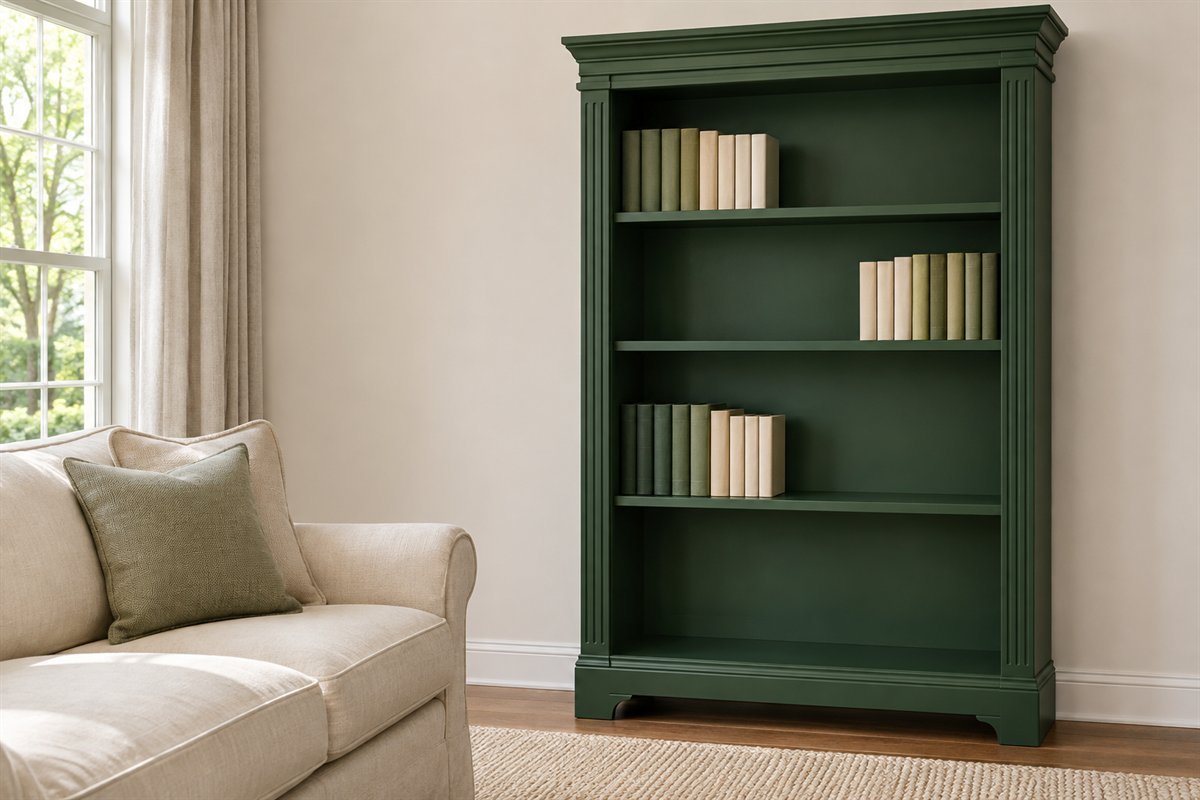
A green bookcase can become a room feature when the shelves are organized into readable groups. Keep some visible green around the books so the color is not entirely hidden. A quiet sofa gives the shelving a clear role in the room.
Work with the storage you actually need. Leave breathing room where it is useful, but do not remove essential belongings simply to imitate an empty styled shelf. Check the furniture maker’s loading and securing guidance; the concept illustrates appearance rather than installation.
17. Pair green with black furniture outlines
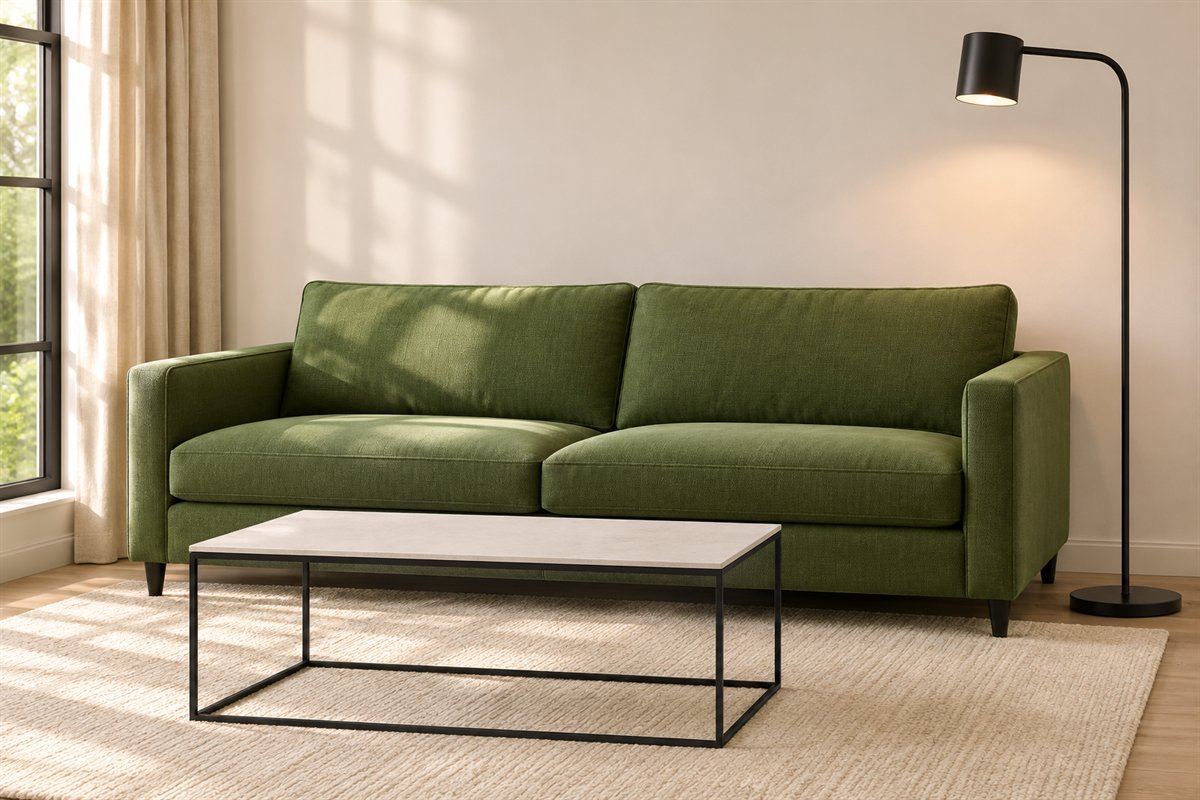
A green sofa can sit well beside a fine black table frame or lamp. Use the dark line where it clarifies a useful shape, then let the rug and wall remain quieter. Too many separate black accessories can break the room into small competing points.
Compare the green and black after dark. If the table disappears into the sofa, a pale top or a lighter rug may give the outline enough separation. Choose tables and lighting for actual use rather than adding repeated dark marks solely to complete a color rule.
18. Use a pale stone-look surface as the quiet companion
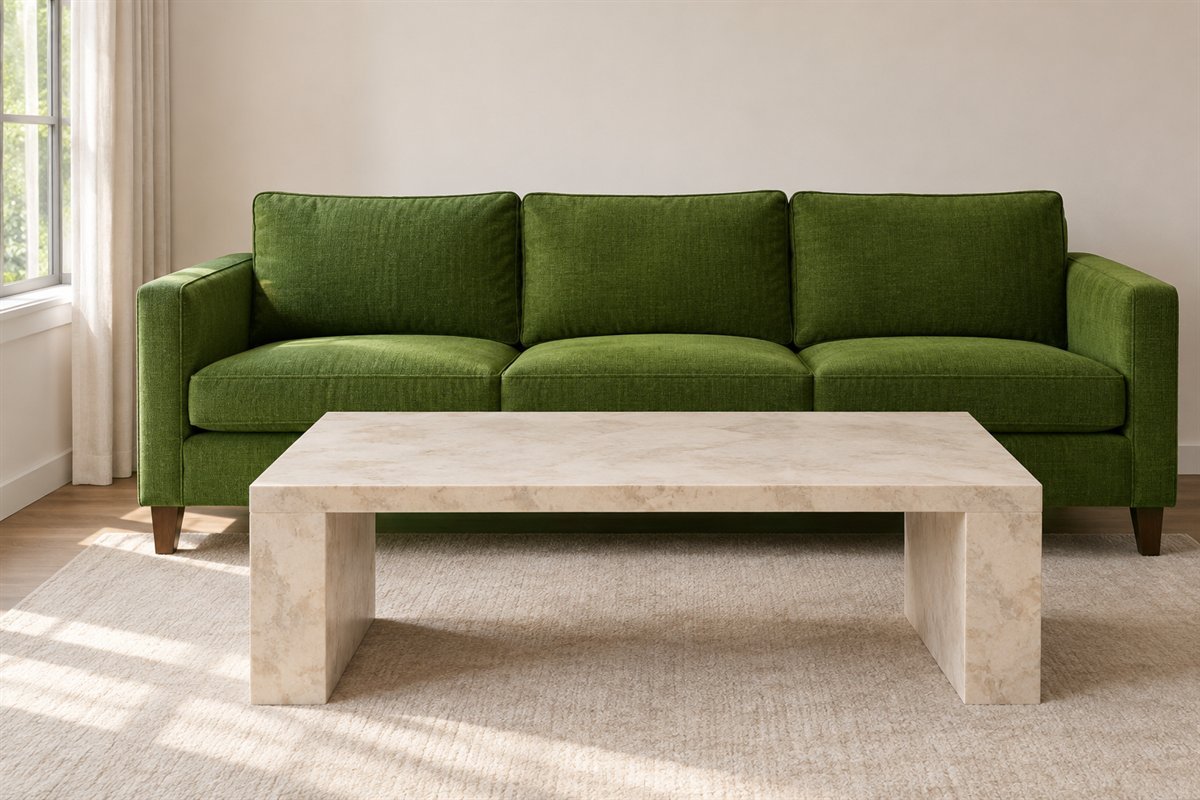
A pale stone-look table can provide a broad light surface beside a saturated green sofa. Its restrained variation offers material interest without another strong textile pattern. Keep the table shape simple enough for both the green and pale surface to remain clear.
Look at the real surface pattern before choosing. A small sample can hide a strong vein that becomes prominent across the top. Check weight, edge, maintenance and actual material separately; a generated stone-like texture cannot identify composition or suitability.
19. Let one striped chair connect green and cream

A green-and-cream striped armchair can link a neutral sofa to a small green detail elsewhere. Keep the stripe readable on a whole furniture panel, with a quiet rug beneath it. The chair becomes the pattern leader without turning the room into a matching suite.
Compare the repeat with any patterned curtains already in the room. If both demand attention, choose which one you want to keep visible and simplify the other. A stripe in the same color family does not automatically create a calm relationship when its scale is very different.
20. Keep the green low in a compact living room
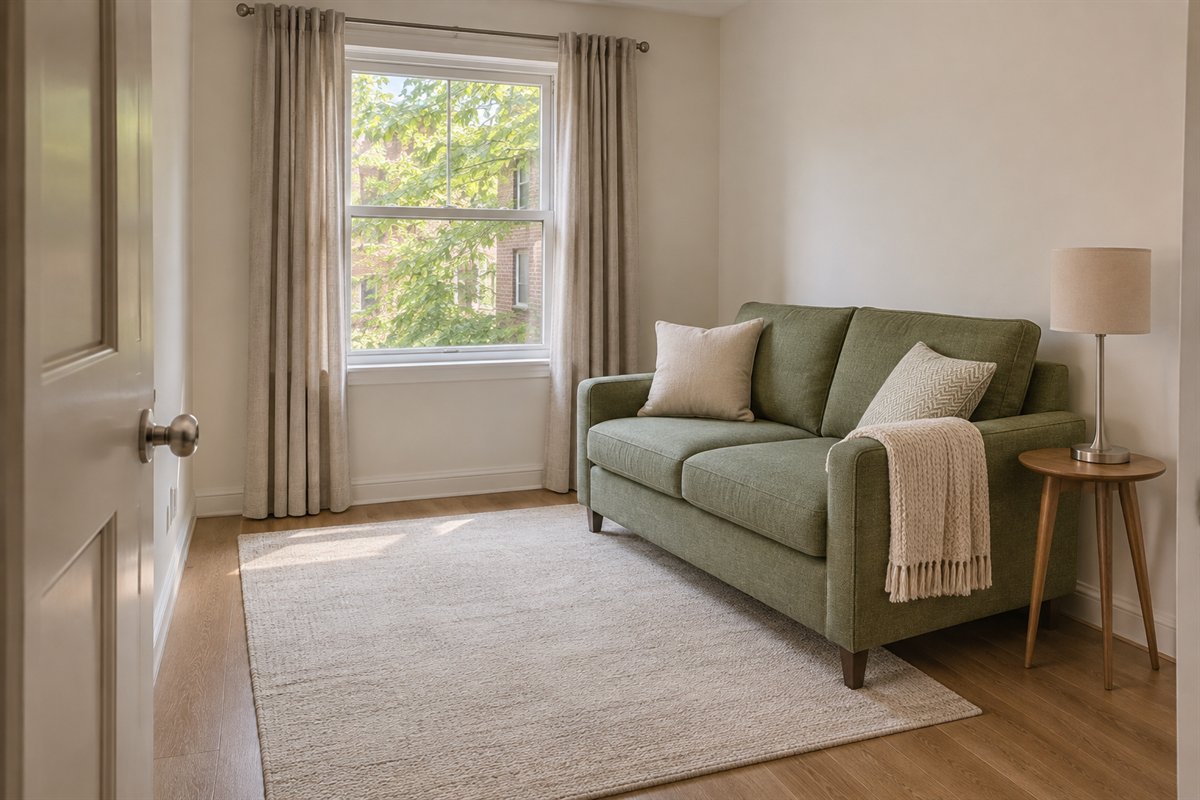
A small green sofa and a plain low rug can concentrate color near the seating while the walls remain light. Choose modest furniture that suits the room rather than assuming pale walls will compensate for an oversized sofa. One reachable side table may be more useful than a large central table.
Trace your normal route from the entrance to the seat and window. Check the actual dimensions and door movement before buying. The green should help define a useful seating area; it is not a technique that guarantees the room will look larger.
21. Use two greens with a clear difference in depth

A deeper green sofa against a lighter muted green wall can create a tonal room while preserving the furniture outline. Keep the floor and main table in a different material so the arrangement is not entirely fabric and paint.
Compare the actual samples together. Greens with very different undertones may feel like separate colors even when both are called sage. Decide whether you want that contrast or a closer family relationship, then test the pair under the lamps you use most.
22. Make a cream throw a large simple companion
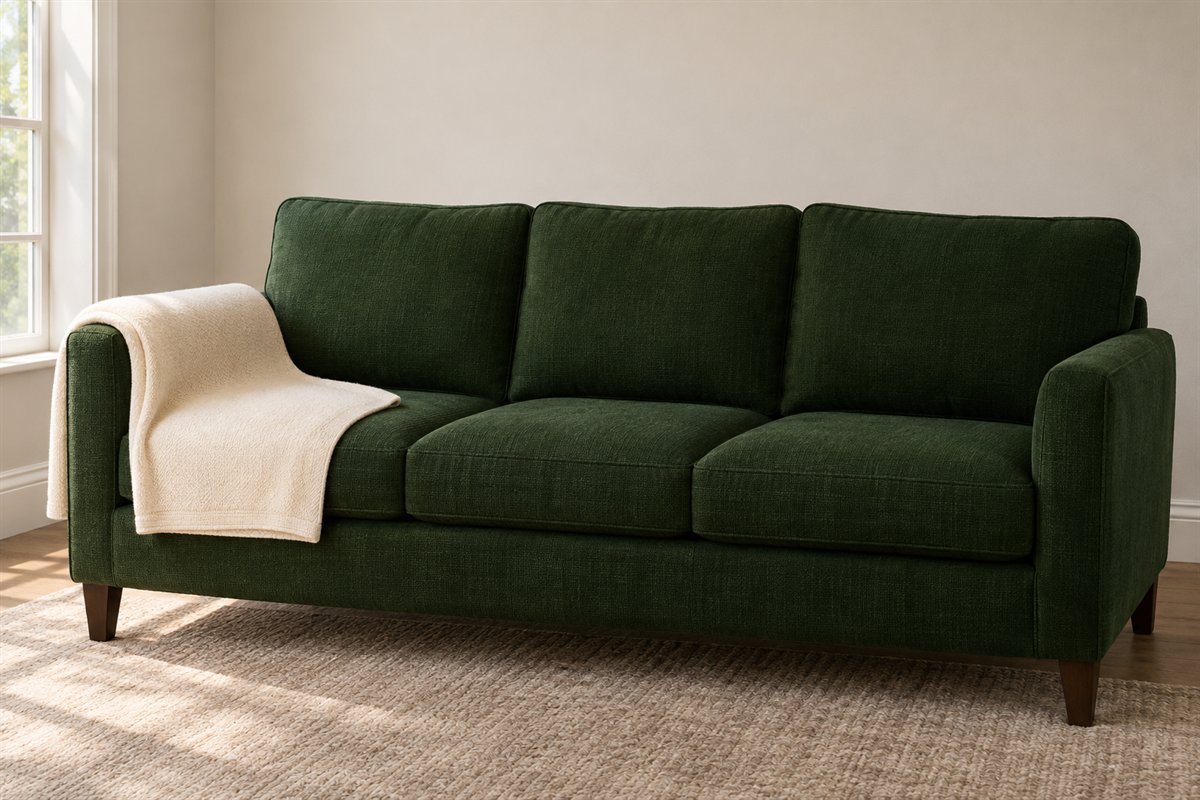
A generously folded cream throw can soften the appearance of a dark green sofa without covering all of its color. Let the fold create a clear pale area across one arm or seat, leaving the rest of the upholstery visible.
Choose a throw that suits your own use and care routine. If it slips or needs constant rearranging, remove it rather than adding cushions to hold a styled pose. The best arrangement is one you can sit on and restore easily, not a photograph that depends on hidden supports.
23. Repeat green across a small living-and-dining space sparingly
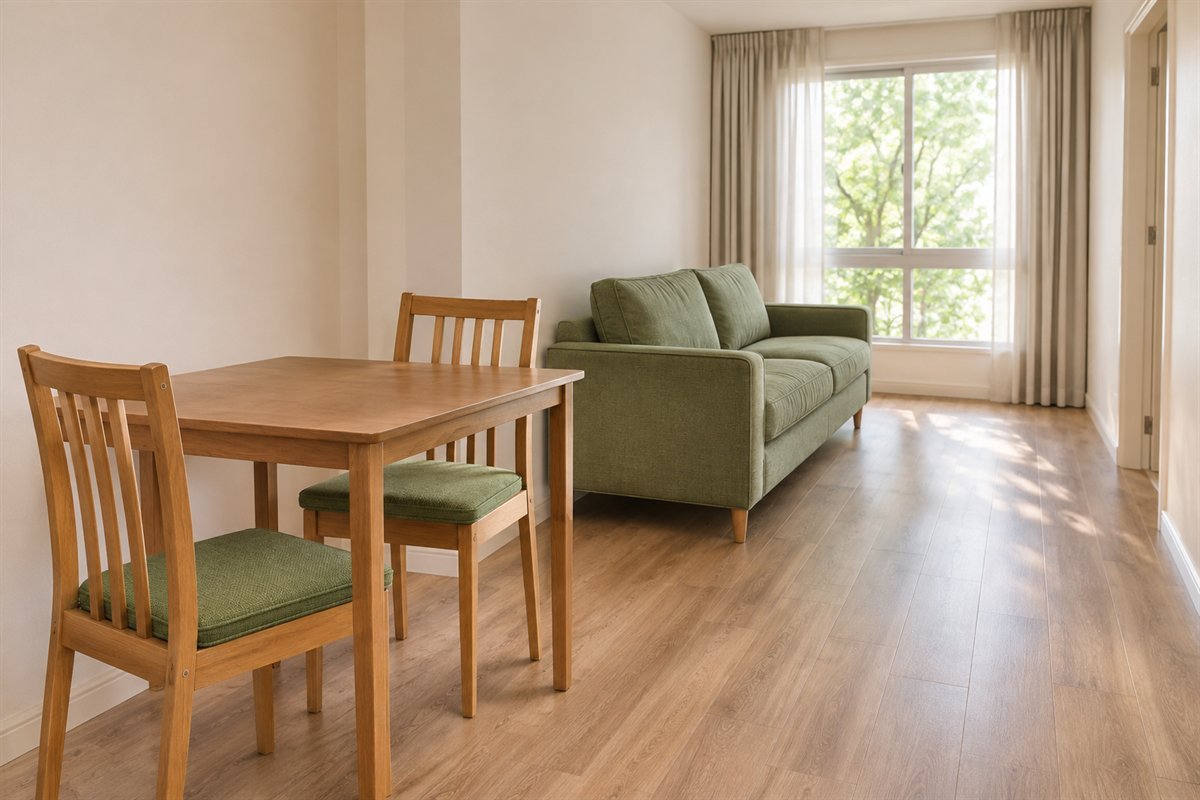
In one shared room, a green sofa and a pair of green dining-seat pads can connect the activities without painting every wall. Keep the main furniture shapes and walking route understandable. The repeated color should be visible from the normal entry view.
Check whether the fabrics need to match exactly. A related green may be easier than trying to source identical upholstery for two different uses. Keep care, comfort and the dining table’s practical spacing in the decision; color repetition does not establish a workable layout.
24. Let art supply a second green without matching the sofa

An abstract with a small green area can relate to a green sofa through color family rather than an exact match. Give it a quiet surrounding wall and let its other tones remain restrained. One substantial piece may connect the room more clearly than several tiny prints.
Choose art you want to look at independently of the sofa. Compare it in the intended group with the furniture and lamp before deciding on scale. Use appropriate fixing for the actual wall and frame; the concept is a visual arrangement, not hanging instructions.
25. Finish the room with one purposeful green detail
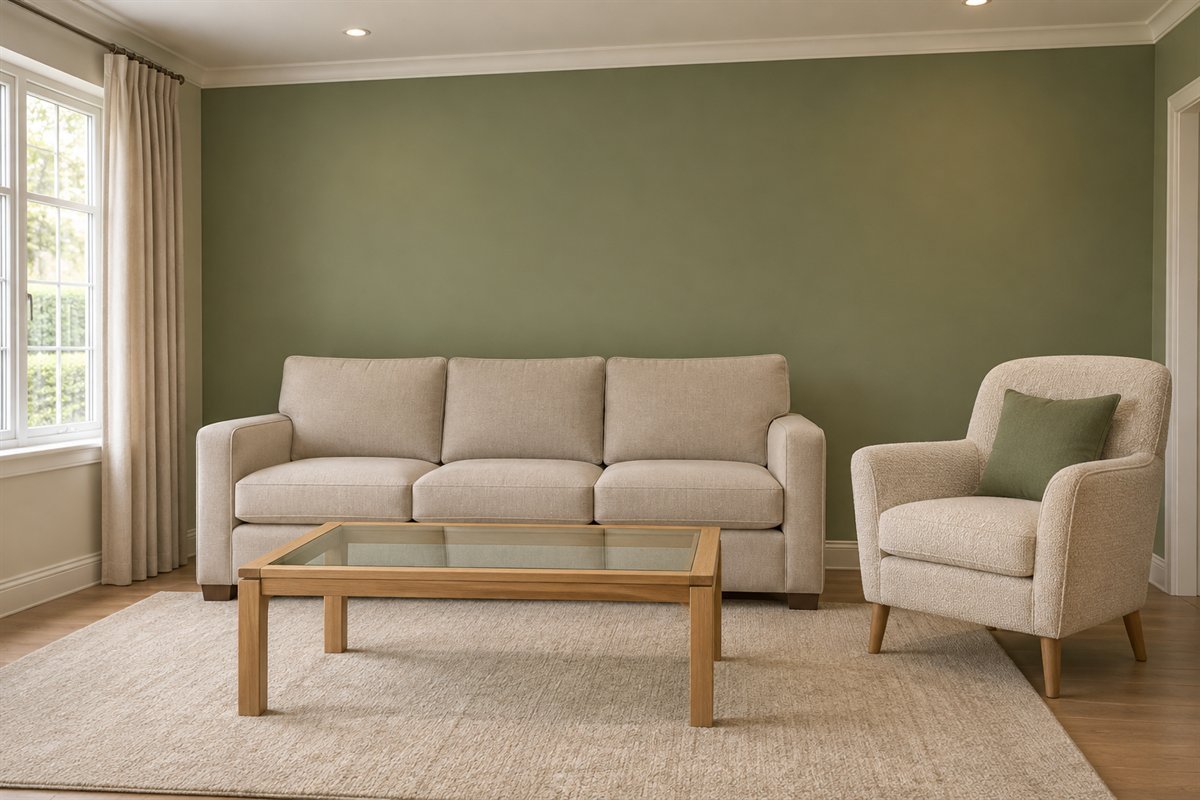
If a green wall already supplies the main color, a single small green cushion on a neutral chair may be enough repetition. Leave other useful surfaces clear and let wood, cloth and ordinary lighting provide the remaining variety. Finishing does not mean finding a green object for every corner.
Look at the room after a normal evening of use. Notice what needs a place and which decorative items make that harder. Remove one unnecessary accent before adding another, and keep the choices that make the seating comfortable and the color relationships easy to understand.
A green-placement worksheet you can use with your own room
List the five largest visible areas: walls, sofa, floor or rug, window treatment and storage. Mark each keep or change. Then assign the proposed green to just one changeable area. This is an original planning aid, not a design formula requiring a fixed color percentage.
Write a companion next to that green: pale upholstery, retained wood, cream curtain or muted contrasting chair. Check a real sample pair in the room. Record an observation such as green makes the wood look more golden or the charcoal sofa stays distinct. These notes are more useful than naming a palette without the materials.
Finally, make a temporary stop list of items you do not need yet. If the sofa is green and the rug already has a pattern, matching green curtains can wait. Live with the large relationship before filling every smaller space.
Three hypothetical ways to keep the useful furniture
A room with a cream sofa and a large patterned rug might begin with the rug’s quieter green on the wall, leaving the sofa plain. Compare the wall beside a full section of the rug rather than a single thread. If the pattern already dominates, one green chair may be enough instead.
A room with a dark brown leather sofa can start by testing an olive wall and a broad pale rug. Keep the existing wood table while judging the two large materials. Do not assume the leather and timber both need replacing to create a green room.
A light rented room with a useful neutral sofa might begin with a green reading chair or curtain. Choose the item for its daily function and keep any installation within the tenancy conditions. These are hypothetical decor briefs, not measured layouts, product tests or claims about every rental.
Use the references for sampling, then make your own arrangement
Benjamin Moore’s green living-room guidance advises considering furnishings and room lighting when comparing greens. Its color-sampling resource also clarifies that color samples are not the final coating. Check the actual product requirements separately from the appearance.
IKEA’s example of a pale-green sofa with pink and restrained patterns shows one retailer interpretation of a coordinated room. It is a useful reminder that green can live on furniture rather than every wall. Our placement worksheet and room combinations are original, and the generated images do not show IKEA products.
What colors go with a green living room?
Cream, natural wood, charcoal, clay and muted pink are possible companions. Choose from the actual furniture and finishes that stay, then compare samples rather than assuming one green works with every version of those colors.
Should I choose a green sofa or green walls?
Choose the surface you can sensibly change. A green sofa can lead a neutral room; green walls can frame a sofa you already want to keep. Check practical use and actual samples before adding matching accessories.
Can a small living room use dark green?
Yes, if you enjoy the effect. Check the furniture footprint, lighting for activities and clear route through the room. A dark or pale color does not guarantee that a room will seem larger.
Do green shades have to match?
No. A lighter wall and deeper sofa can form a tonal scheme, but undertones still matter. Compare the real materials together and decide whether the difference feels intentional.
Can I choose an exact green paint from these images?
No. Generated color and screen display cannot specify a paint formula or final coating. Use the images to choose a relationship, then compare physical samples in the room.
A practical next step
Choose where green belongs first, then give it practical companions. A clear seating arrangement, useful storage and a small number of considered material relationships can make a green living room feel personal without replacing everything or repeating the color in every detail.
Compare broader living room paint-color relationships. Refine cushion combinations while keeping the sofa usable. Work with an existing brown leather sofa.
Images are original AI-generated decor concepts, not photographs of named products, completed client rooms or measured installations. The placement worksheet and hypothetical room briefs are original planning aids.
Sources and care references
- Benjamin Moore: green living-room colors, furnishings and light
- Benjamin Moore: color samples and viewing conditions
- IKEA: one pale-green and pink living-room interpretation
Optional digital guide for this topic
If you prefer a structured workbook, explore this related paid guide.