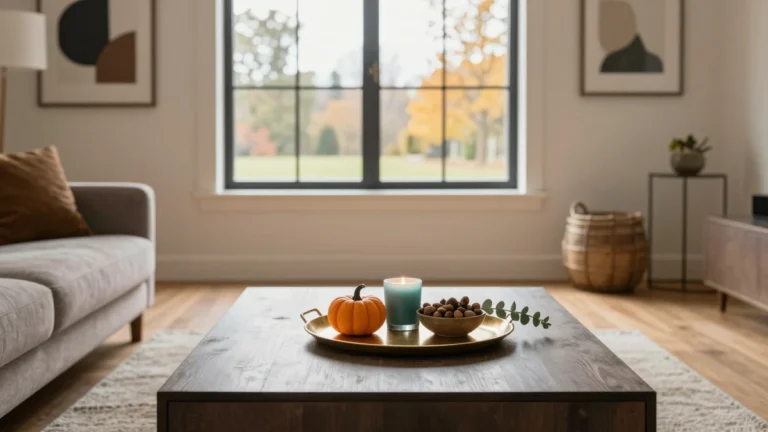
Getting your living room rug size right is the foundation of a well-designed space. An undersized rug is the single fastest way to make an otherwise well-furnished living room look unfinished. Designers call it the “postage stamp” effect, and once you notice it, you can’t unsee it.
The good news is that rug sizing follows a fairly small set of clear rules, not personal taste. Get the size and placement right, and the whole room reads as intentional.
This guide covers standard sizes, the two main placement approaches designers use, and the specific measurements that keep a rug from looking like an afterthought.
1. All-Legs-On vs Front-Legs-On: Choose Your Layout Style
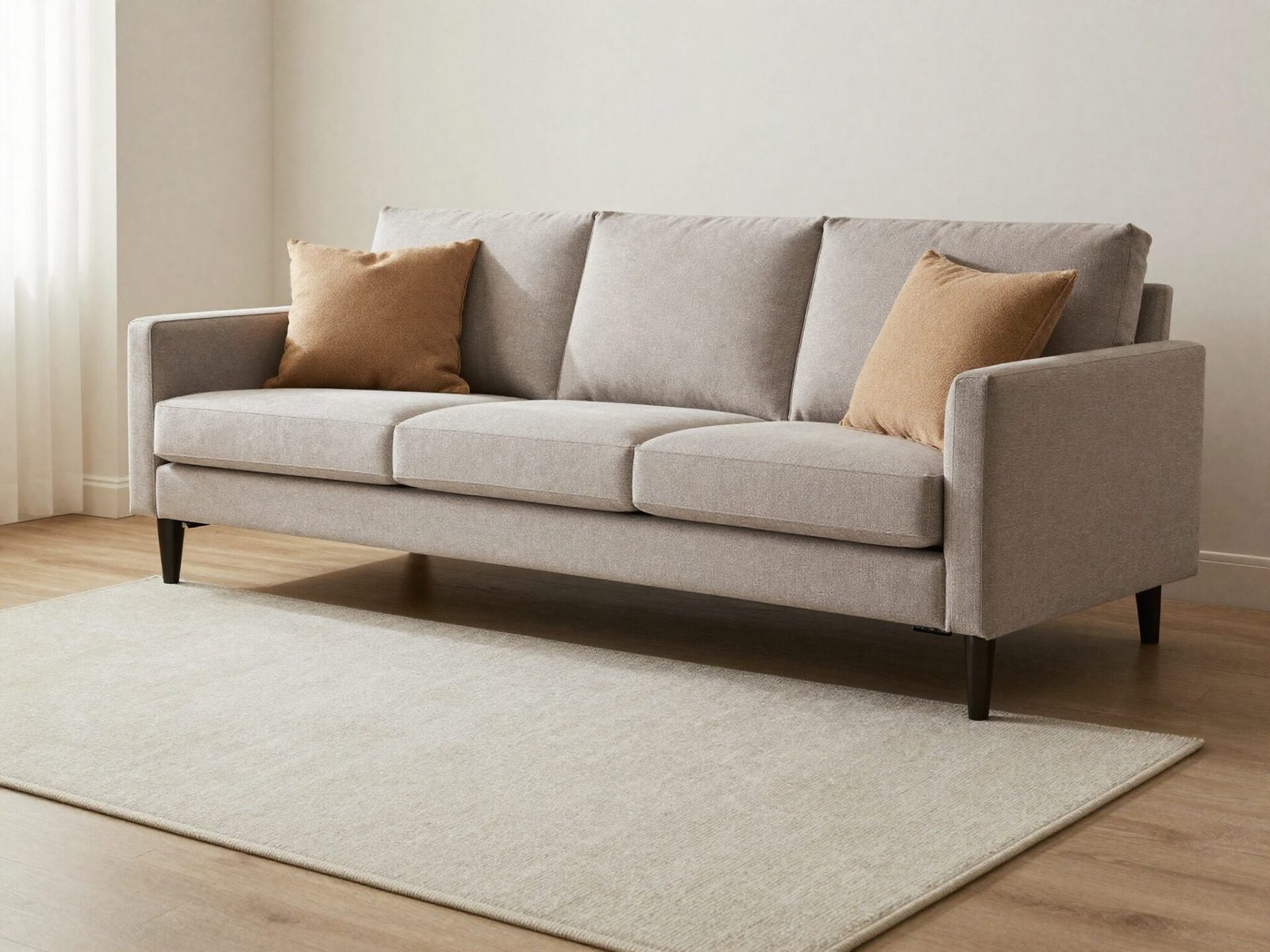
There are two accepted approaches to rug placement, and both are correct depending on your room and furniture.
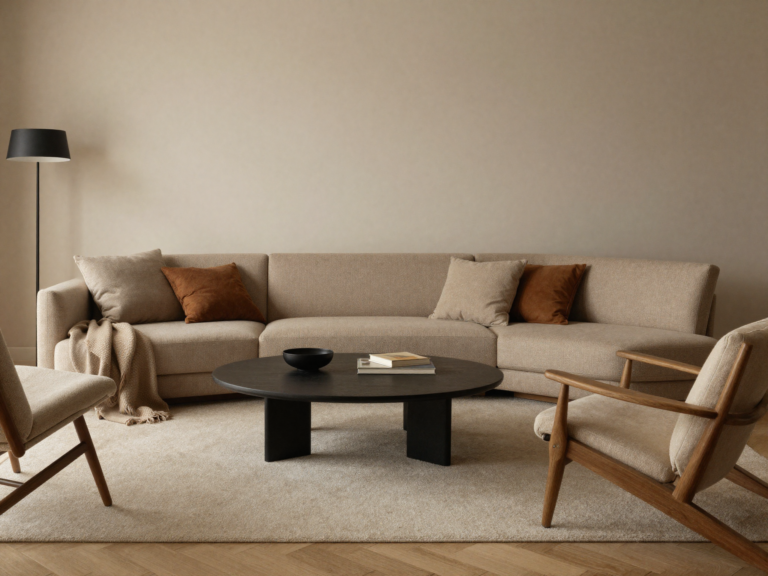
Front-legs-on is the most common and forgiving layout: the front two legs of the sofa and chairs rest on the rug while the back legs stay on the floor.
All-legs-on creates a more formal, unified, hotel-like feel and works best in larger rooms or when the rug needs to define a zone within an open floor plan.
💡 Smart tip: If you’re unsure which to choose, front-legs-on is the safer default for most standard-sized living rooms.
⚠️ Mistake to avoid: Don’t leave all four legs of every furniture piece completely off the rug. That disconnected look is the most common rug sizing mistake there is.
2. The Floating Layout for Small Apartments
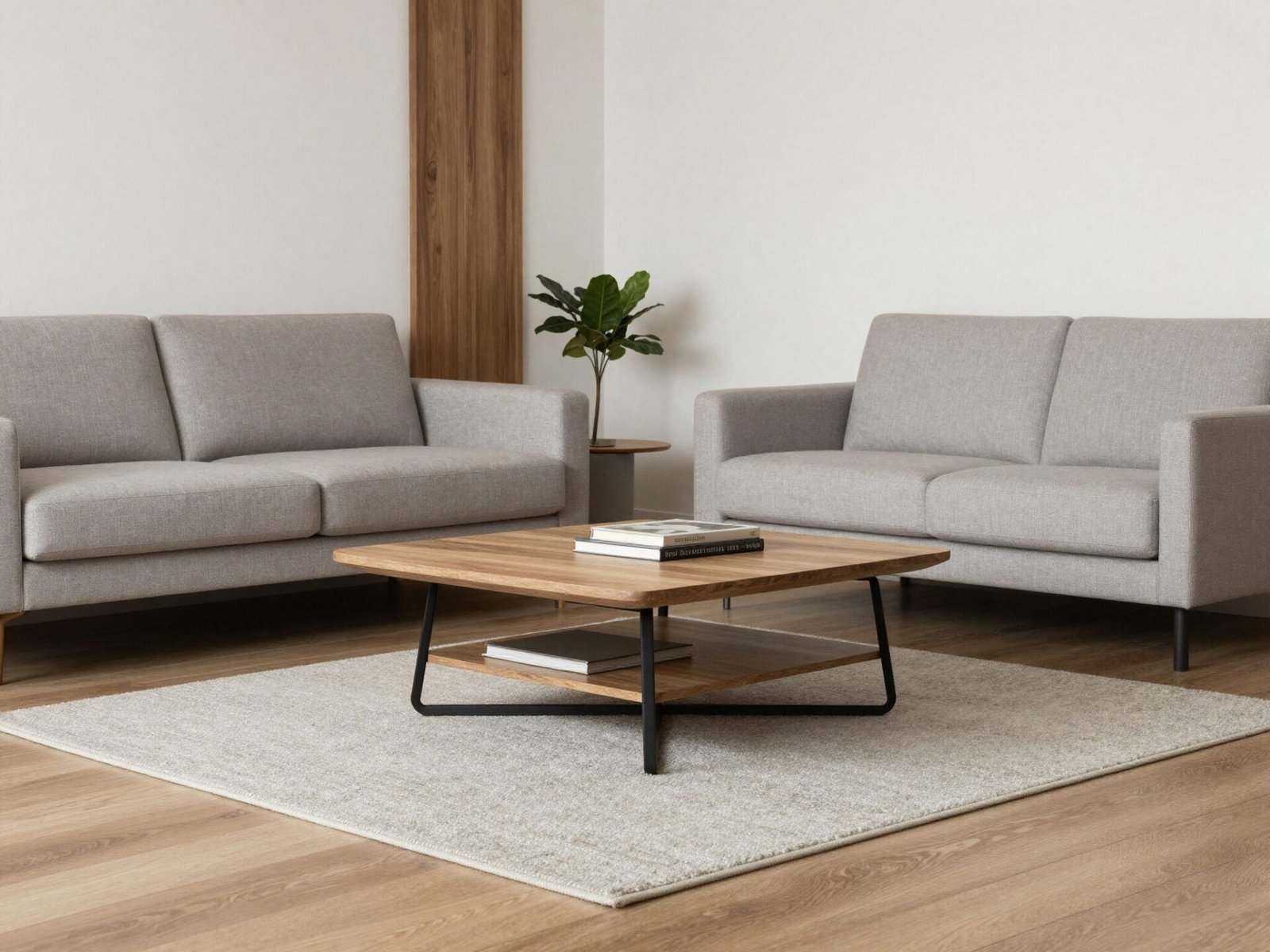
In a genuinely tight apartment, a smaller rug that “floats” beneath just the coffee table, with no furniture legs touching it at all, can still work.
This is really the exception to the general rule, and it only reads as intentional when the room is small enough that a larger rug simply isn’t realistic.
Choosing a rug with bold, clean lines helps this smaller-scale approach feel more expansive rather than sparse.
💡 Smart tip: A 5×8 rug is usually the smallest size that still works for this floating approach in a compact sitting area.
⚠️ Mistake to avoid: Don’t use the floating approach in a room large enough to fit an 8×10. It only reads as intentional in genuinely small spaces.
3. Size an 8×10 Rug for a Standard Living Room
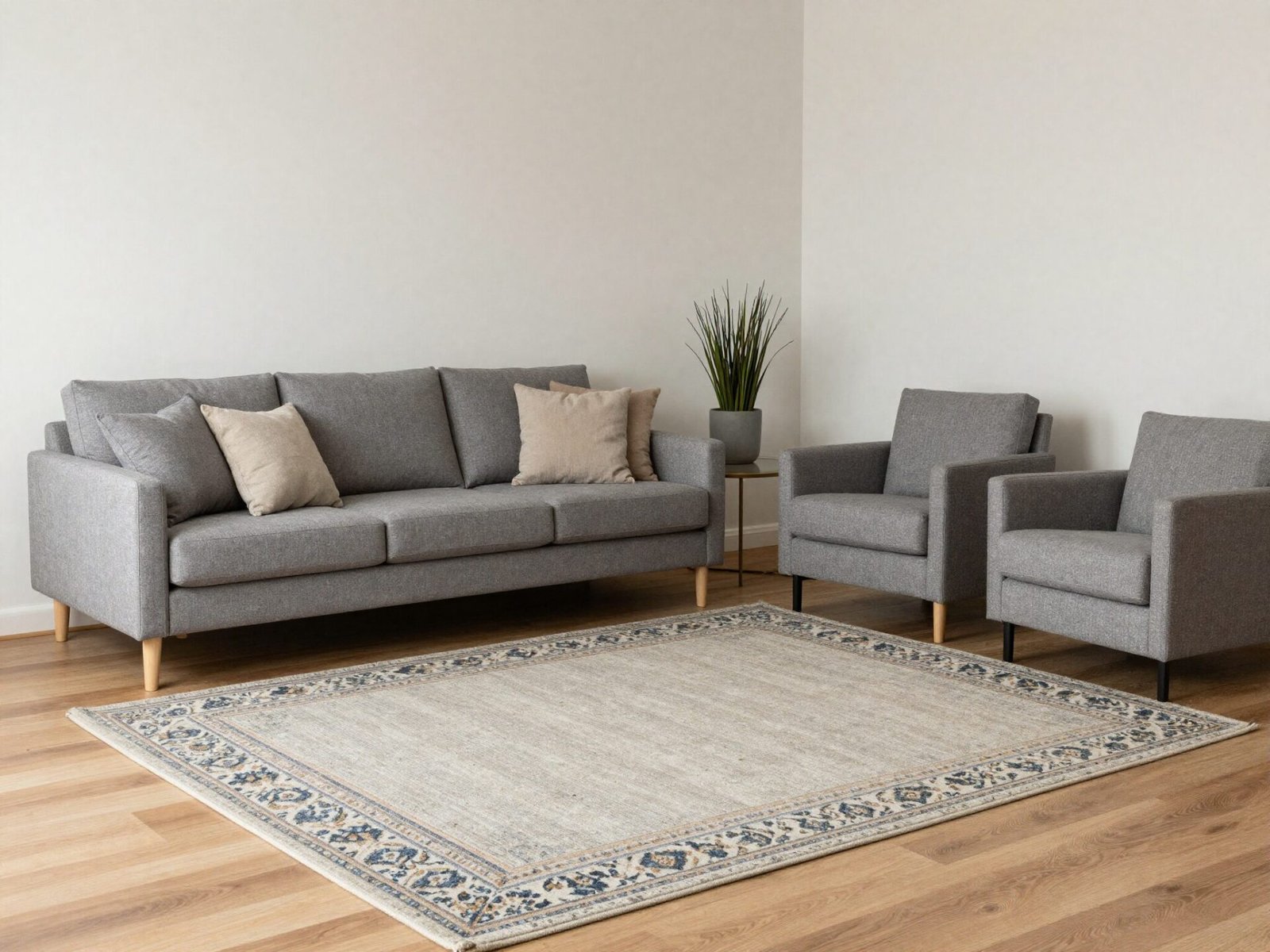
An 8×10 rug is the most popular living room size, and it’s almost always the right default answer if your room is a standard residential size.
It fits the front-legs-on layout comfortably in most rooms, giving enough coverage to anchor the furniture without requiring an oversized purchase.
If you’re genuinely unsure what size to buy and don’t want to overthink it, 8×10 is the safest starting point.
💡 Smart tip: When deciding between 8×10 and the next size up, check your room’s total square footage first — 8×10 fits most rooms under roughly 12×15 feet.
⚠️ Mistake to avoid: Don’t assume 8×10 works in every room just because it’s the most common size. A genuinely large or open-plan space will need something bigger.
Loving These Ideas? Get the Step-by-Step Guide
Grab the full 5-day eBook and turn these ideas into a finished room.



4. Size a 9×12 Rug for a Large Room or Sectional
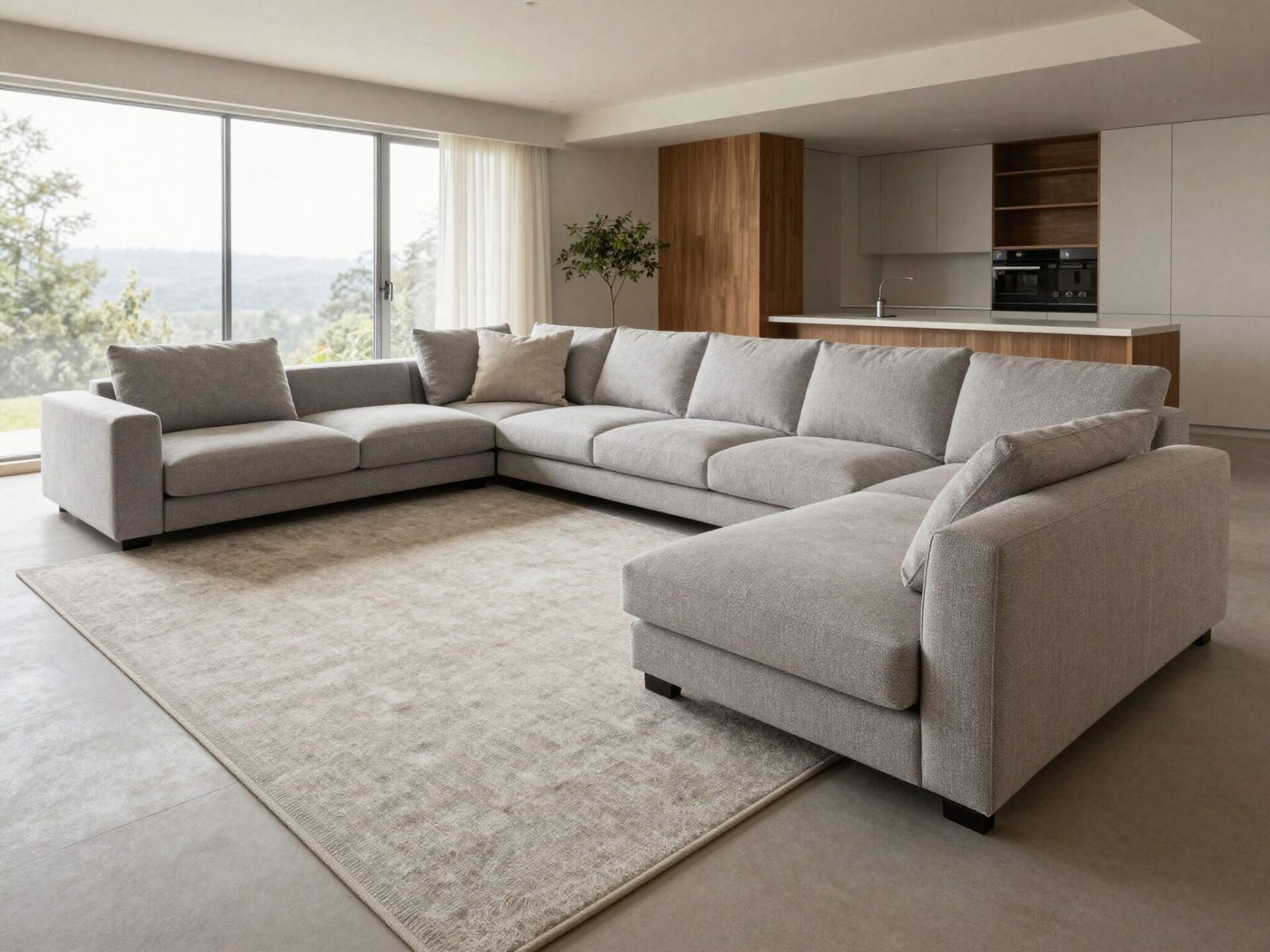
A 9×12 rug suits larger living rooms and oversized sectional sofas, especially when you want all four legs of the main furniture pieces resting on the rug.
It fits comfortably in a 12×18 foot room or larger, and it’s the standard size for open floor plan spaces where the rug needs to define a real zone.
Sectionals in particular tend to need this larger size, since their footprint is wider than a standard three-seat sofa.
💡 Smart tip: If your sectional includes a chaise section, measure its full depth separately, since it often extends further than the main seating run.
⚠️ Mistake to avoid: Don’t size a rug for a sectional using only the main seating length. The chaise or extended arm needs coverage too, or one section will look stranded off the rug.
5. Size a 10×14 Rug for a Great Room
A 10×14 rug suits very large living rooms and grand open-plan spaces, generally rooms above 15×20 feet.
At this size, the rug fits a room at least 11.5×15.5 feet while still allowing 18-36 inches of visible floor space between the rug’s perimeter and the walls.
This size is less common in standard homes, but it’s the right call in genuinely oversized great rooms where a smaller rug would look lost.
💡 Smart tip: In a room this large, consider whether one oversized rug or two zoned rugs better serves how the space is actually used day to day.
⚠️ Mistake to avoid: Don’t jump to a 10×14 just because your room is large overall. Confirm the seating area itself, not just the total room, actually needs coverage that size.
6. Extend the Rug 6-12 Inches Past the Sofa
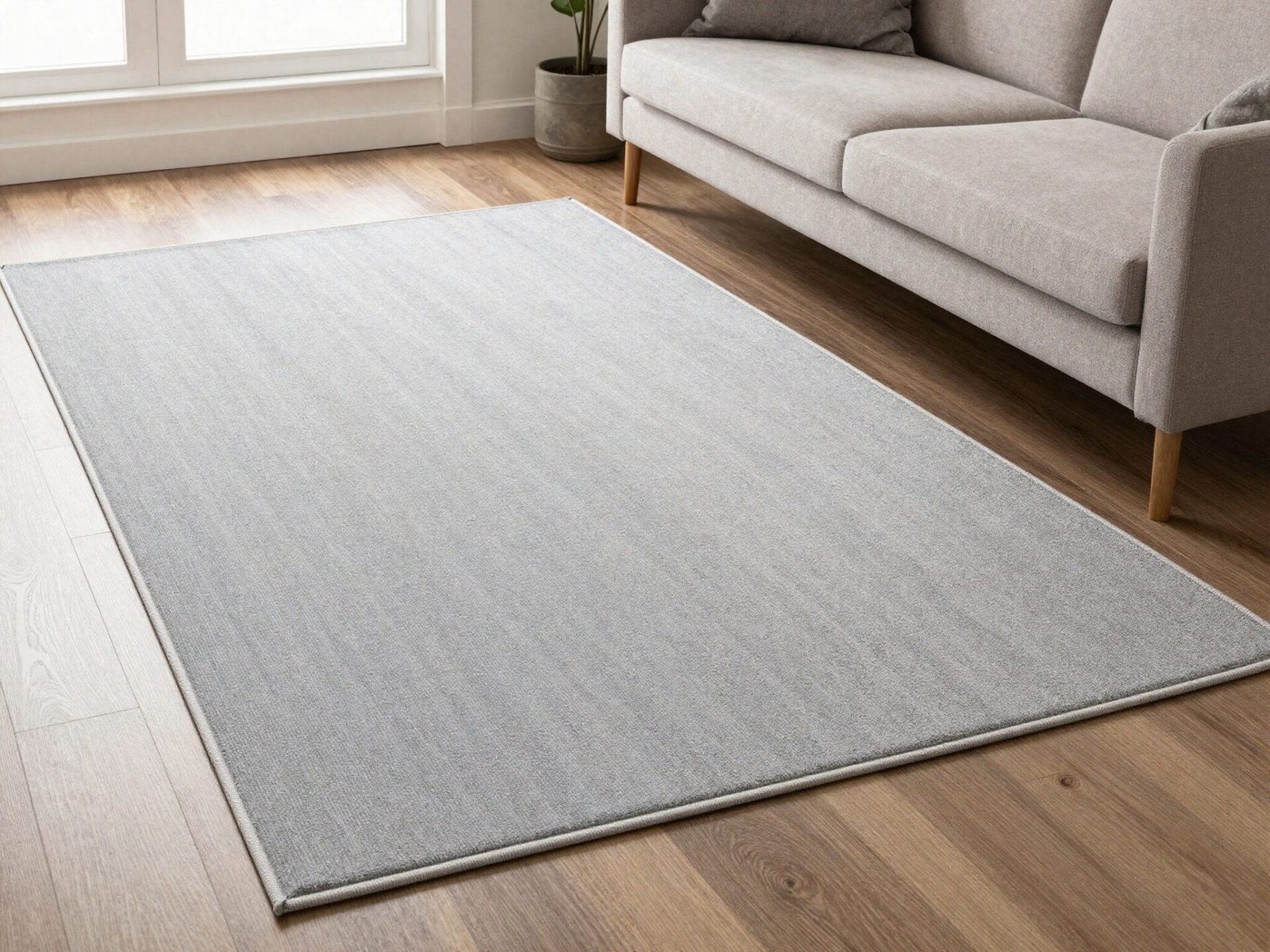
Regardless of which layout style you choose, the rug should extend at least 6-12 inches past each side of the sofa.
This overhang is what makes the rug read as sized for the furniture rather than randomly placed underneath it.
Falling short of this margin is one of the quiet reasons a rug can look technically fine but still feel slightly off.
💡 Smart tip: Measure your sofa’s total width, including the arms, before calculating this overhang — the frame width alone can undersell how much rug you actually need.
⚠️ Mistake to avoid: Don’t measure overhang from the seat cushions alone. Always measure to the outer edge of the arms, which is the sofa’s true full width.
7. Leave 12-18 Inches of Bare Floor Around the Edges
On the room side, aim for 12-18 inches of visible bare floor between the rug’s outer edge and the walls.
Too little bare floor and the rug looks like it’s trying to be wall-to-wall carpet; too much and it starts to look undersized for the room again.
In larger rooms, this margin can stretch up to 24-36 inches without looking disconnected, as long as the furniture-to-rug relationship still follows the rules above.
💡 Smart tip: Use this bare-floor margin as a sanity check after you’ve already sized the rug to your furniture — it should confirm the size, not be the primary factor driving it.
⚠️ Mistake to avoid: Don’t prioritize a specific bare-floor margin over proper furniture coverage. Furniture relationship comes first; the wall margin is the secondary check.
8. Sizing a Rug for a Sectional Sofa
A sectional’s irregular footprint makes rug sizing slightly more complex than a standard sofa-and-chairs arrangement.
Measure the sectional’s full outer dimensions, including any chaise, and apply the same front-legs-on or all-legs-on rules to that complete shape, not just the straight run.
Most sectionals end up needing at least a 9×12, simply because their total footprint is larger than what a three-seat sofa requires.
💡 Smart tip: For an L-shaped sectional, the all-legs-on approach with backs off for the pull-out or chaise section often balances comfort and rug coverage best.
⚠️ Mistake to avoid: Don’t treat a sectional like a standard sofa when sizing. Its total footprint is almost always wider and deeper than it initially appears.
9. Layering a Smaller Rug Over a Larger Base
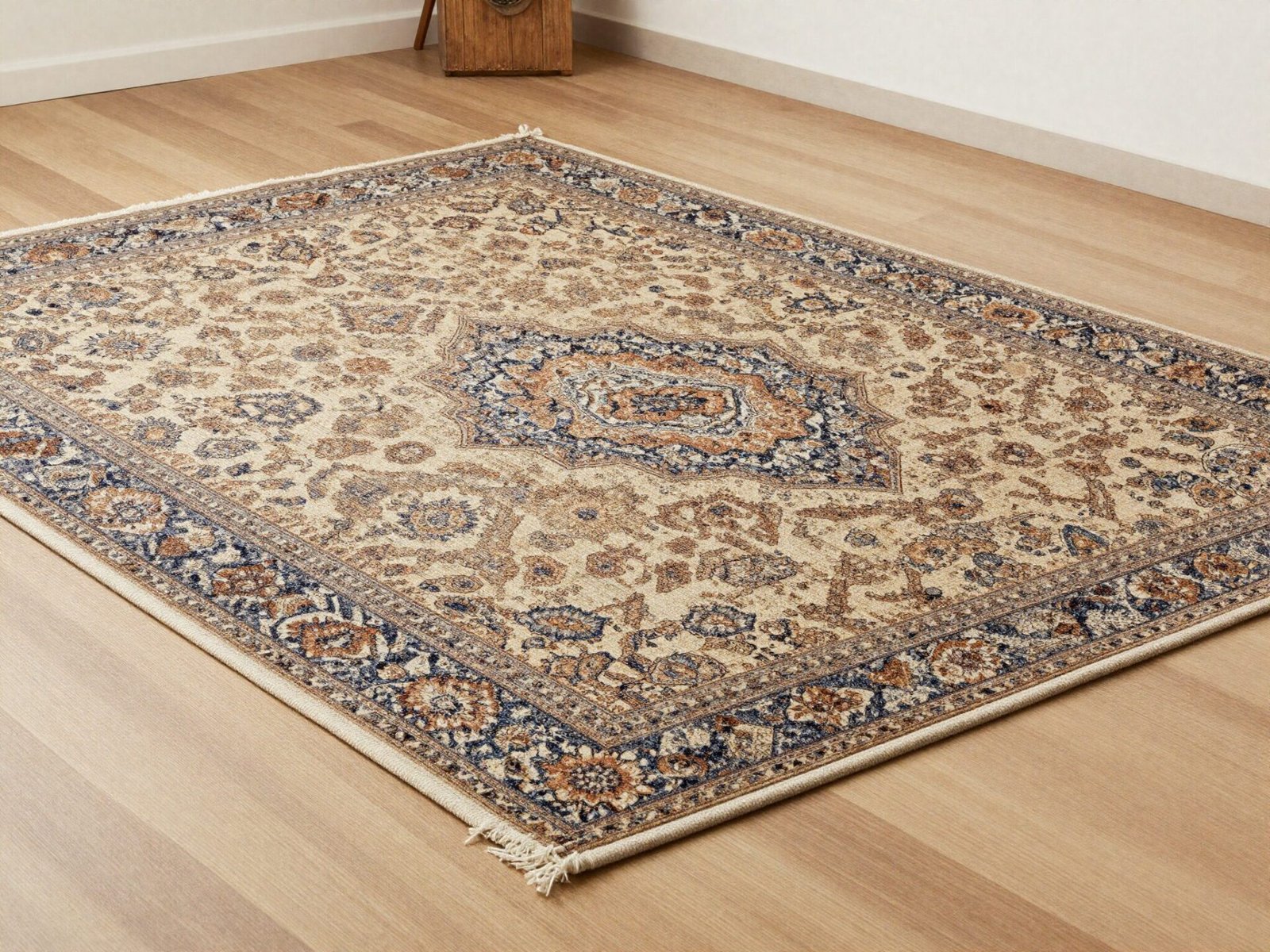
Layering a smaller, patterned rug over a larger flat-weave base adds texture and personality without the cost of one oversized, elaborate statement rug.
The base rug, often jute or sisal, handles the sizing requirements described above, while the top layer carries color and pattern.
This approach has become a genuine 2026 styling trend, especially for adding warmth to a more minimal or neutral room.
💡 Smart tip: Keep the top layer roughly two-thirds the size of the base rug so the base still shows clearly around its edges.
⚠️ Mistake to avoid: Don’t layer two rugs of similar size. Without a clear size difference, the layering effect reads as a mistake rather than an intentional styling choice.
10. Choosing a Round Rug Under a Coffee Table Only
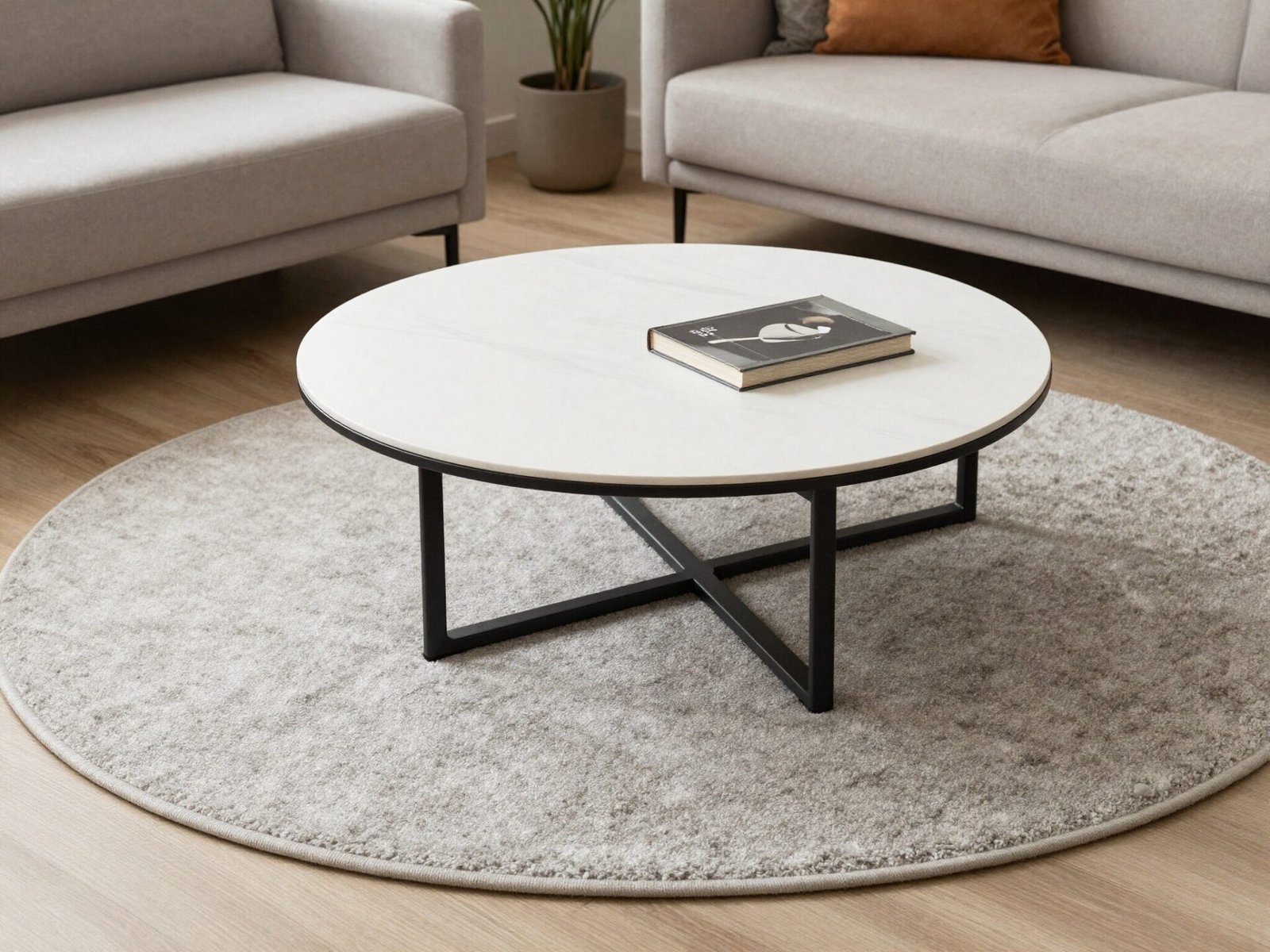
A round rug placed under just a round coffee table, without extending to the seating, works as an accent layer rather than the room’s main rug.
This isn’t a substitute for a properly sized rectangular rug under the full seating arrangement — it’s an additional, smaller styling layer.
The round shape also softens a room full of rectangular furniture, which is part of why designers reach for it as an accent choice.
💡 Smart tip: Size the round rug so it extends a few inches beyond the coffee table’s edge on every side, mirroring the same overhang logic used elsewhere in this guide.
⚠️ Mistake to avoid: Don’t rely on a round accent rug as your only rug in a larger seating area. It reads as a decorative touch, not the room’s primary anchor.
11. The Subtract-36-Inches Formula
For a quick estimate, measure your seating area’s total footprint, then add 24-36 inches on all sides to land on your target rug size.
A 12×15 foot room, for example, typically maxes out around a 9×12 rug once you account for necessary wall clearance.
This formula gives a fast starting point before you fine-tune based on the specific placement rules covered earlier in this guide.
💡 Smart tip: Round down to the nearest standard size, like 8×10 or 9×12, rather than special-ordering a custom size based on the exact formula output.
⚠️ Mistake to avoid: Don’t treat this formula as a replacement for actually checking your furniture layout. It’s a starting estimate, not a final answer.
12. Orient the Rug Correctly (Width vs Length)
Rug dimensions are always listed width by length, so an 8×10 is 8 feet wide and 10 feet long, taller than it is wide.
A 10×8 orientation, wider than tall, is uncommon and typically won’t align with a standard seating arrangement the way the taller orientation does.
Double-checking this before ordering avoids a rug that technically matches your intended square footage but doesn’t fit the room’s actual shape.
💡 Smart tip: Sketch your room’s rough shape and compare it to the rug’s true orientation before finalizing an order, especially for a non-square room.
⚠️ Mistake to avoid: Don’t assume “8×10” and “10×8” are interchangeable. The order of the numbers matters for how the rug will actually sit in your space.
13. Add a Non-Slip Pad Underneath
A rug pad isn’t just about comfort underfoot — it also prevents bunching, sliding, and premature wear on both the rug and the floor beneath it.
On hard flooring especially, an unpadded rug can shift with regular foot traffic, which undermines even a perfectly sized layout over time.
Pads also add a small amount of cushioning that makes a lower-pile rug feel noticeably more comfortable.
💡 Smart tip: Choose a rug pad slightly smaller than the rug itself so it stays fully hidden underneath, with no visible edge peeking out.
⚠️ Mistake to avoid: Don’t skip the pad on a rug placed over hardwood or tile. Without one, both the rug and the floor finish wear down faster than expected.
14. Test Your Size with Tape Before Buying
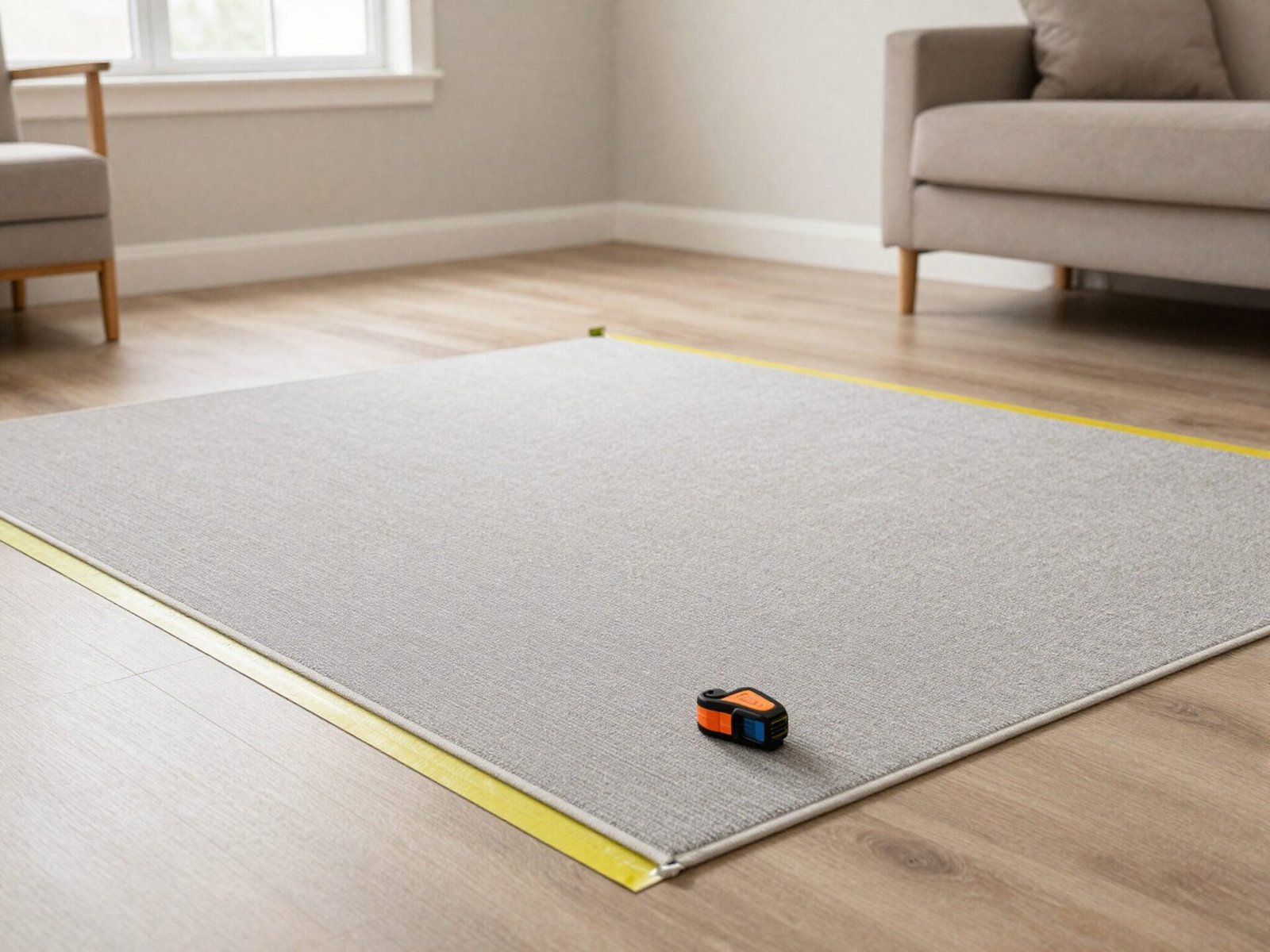
Before ordering, outline your intended rug size directly on the floor with painter’s tape, then live with that layout for a day before committing.
This makes sizing problems obvious in a way that measurements on paper simply can’t replicate, especially for a large, expensive purchase like a rug.
It takes only a few minutes to set up and can save you from an expensive return or an awkward-looking room.
💡 Smart tip: Arrange your actual furniture within the taped outline, not just the bare rectangle, to see exactly how the front-legs-on or all-legs-on layout will look.
⚠️ Mistake to avoid: Don’t skip this step just because you’ve done the math carefully. Seeing the size in person consistently reveals things calculations miss.
15. Common Living Room Rug Sizing Mistakes
A handful of sizing mistakes repeat across otherwise well-decorated living rooms, regardless of budget or style.
Buying a rug based on price or pattern before checking it against the room’s actual dimensions is the most frequent one.
Choosing a rug that only fits under the coffee table, leaving every other piece of furniture floating off it entirely, is a close second.
💡 Smart tip: Revisit this guide’s sizing rules any time you replace a major piece of furniture — a new sofa or sectional often changes what rug size actually works.
⚠️ Mistake to avoid: Don’t choose a rug size purely based on what’s in stock or on sale. A slightly higher price for the correct size beats a discount on the wrong one.
Effort & Cost Snapshot
| Idea | Effort | Approx. Cost |
|---|---|---|
| 1. Layout Style Choice | Low | $0 (planning) |
| 2. Floating Layout (Small Space) | Low | $100–$350 (5×8) |
| 3. 8×10 Rug | Low | $150–$600 |
| 4. 9×12 Rug | Low | $250–$900 |
| 5. 10×14 Rug | Medium | $400–$1,500 |
| 6. Sofa Overhang Rule | Low | $0 |
| 7. Bare Floor Margin | Low | $0 |
| 8. Sectional Sizing | Medium | $0 |
| 9. Layered Rugs | Low | $150–$500 (both rugs) |
| 10. Round Accent Rug | Low | $70–$250 |
| 11. Subtract-36-Inches Formula | Low | $0 |
| 12. Orientation Check | Low | $0 |
| 13. Non-Slip Rug Pad | Low | $30–$100 |
| 14. Tape-Testing the Size | Low | $5–$10 (tape) |
| 15. Avoiding Sizing Mistakes | Low | $0 |
Sizing a rug correctly costs nothing beyond a tape measure and a little patience before you order, and it makes a bigger visual difference than almost any other single purchase in the room.
When in doubt, size up rather than down — an oversized rug reads as intentional far more often than an undersized one does.
Continue Your Home Transformation
Explore the full collection of step-by-step eBooks and get the guide that fits the room you're working on.