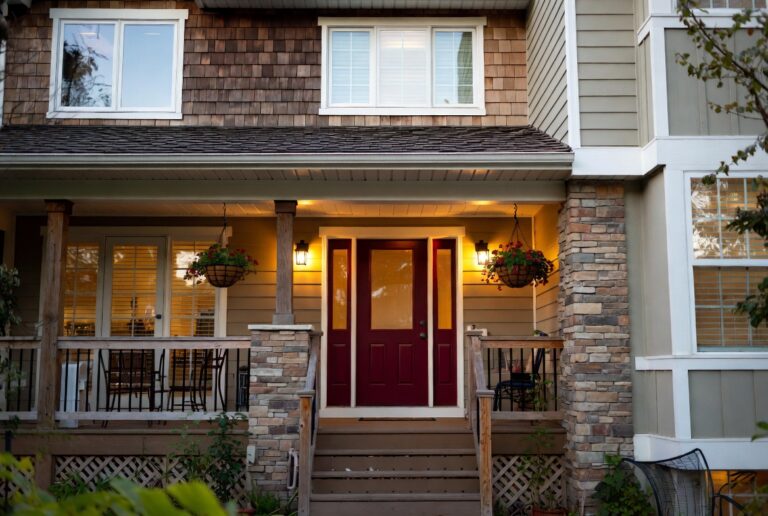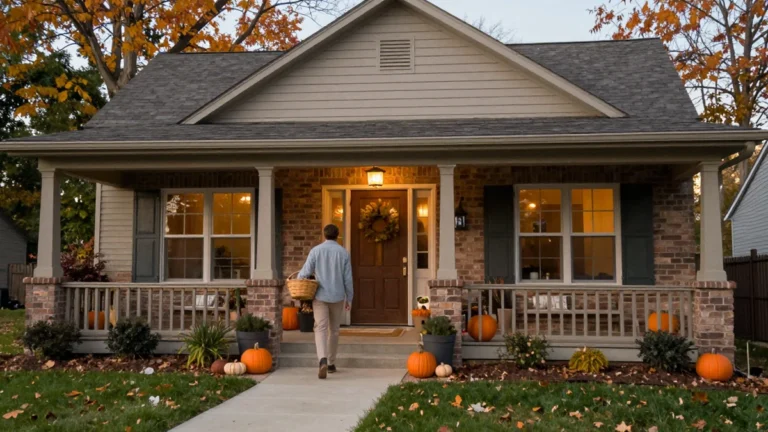
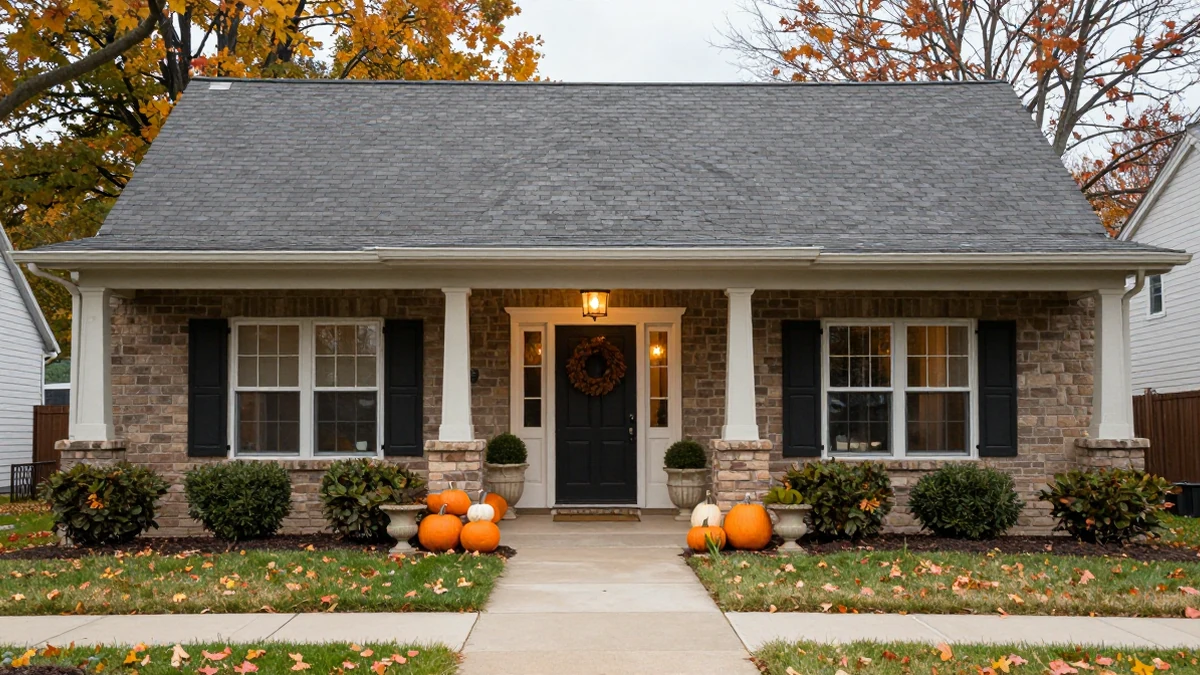
Fall front door decor works best when it looks intentional without making everyday entry harder. Before buying pumpkins or hanging a wreath, account for the door’s swing, foot traffic, weather exposure, lighting, and the fixed colors already present.
The following ideas range from compact renter-friendly updates to fuller porch arrangements. Each one includes a practical way to choose materials, control visual clutter, or reduce maintenance.
You do not need every element. Select a focal point, add supporting pieces at different heights, and leave enough open space for the entrance to remain comfortable and functional.
1. Start With a Clear-Door Plan
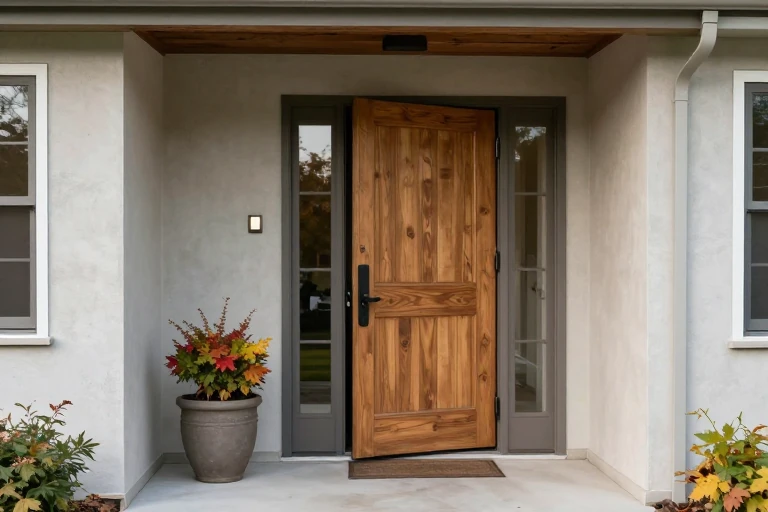
Open the door fully and note where its edge, storm door, packages, and usual walking path need clearance. This usable zone is the boundary for your display, not the total size of the porch.
Choose one focal area: the door, the latch-side corner, or matching planters. Then remove unrelated summer accessories before adding anything.
This sequence prevents a common problem: an attractive arrangement that must be shifted whenever someone enters, carries groceries, or receives a delivery.
2. Pull a Palette From the House
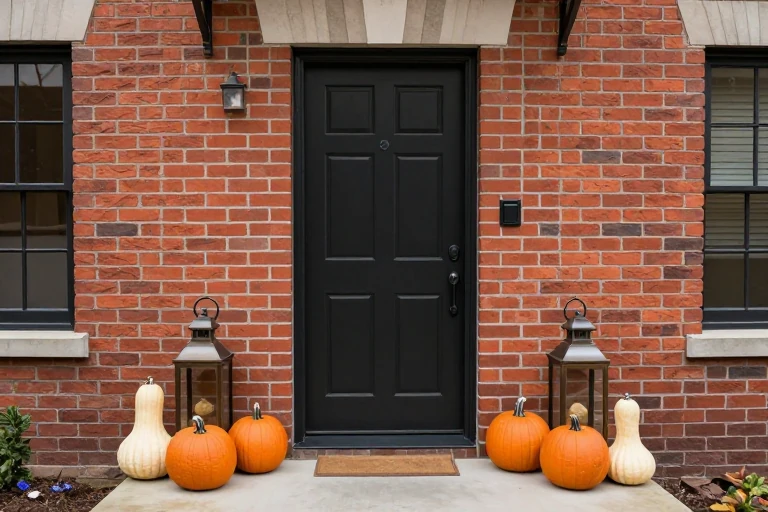
Use the door, siding, brick, stone, and metal hardware as your color guide. A navy door might suit rust, tan, and muted gold; red brick often works well with cream, deep green, and weathered orange.
Limit the display to a dominant neutral, a seasonal color, and one dark grounding tone. Repeating each color at least once makes separate objects feel connected.
If the entrance already has strong color, choose quieter natural materials rather than adding another competing accent.
Loving These Ideas? Get the Step-by-Step Guide
Grab the full 5-day eBook and turn these ideas into a finished room.




3. Scale the Wreath to the Door
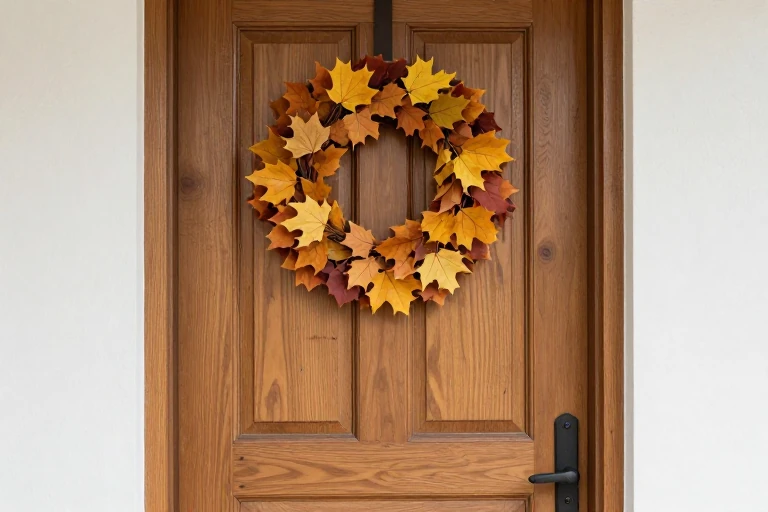
A wreath should relate to the visible door surface rather than the entire porch. Before purchasing, mark the proposed outer edge with removable painter’s tape and view it from the sidewalk.
Keep the wreath from covering the handle, knocker, peephole, or decorative glass you use for visibility. Check that thick branches do not catch against a storm door.
On a paneled door, centering the wreath within the largest visual panel usually creates a calmer result than centering it by instinct.
4. Layer Wreaths for More Depth
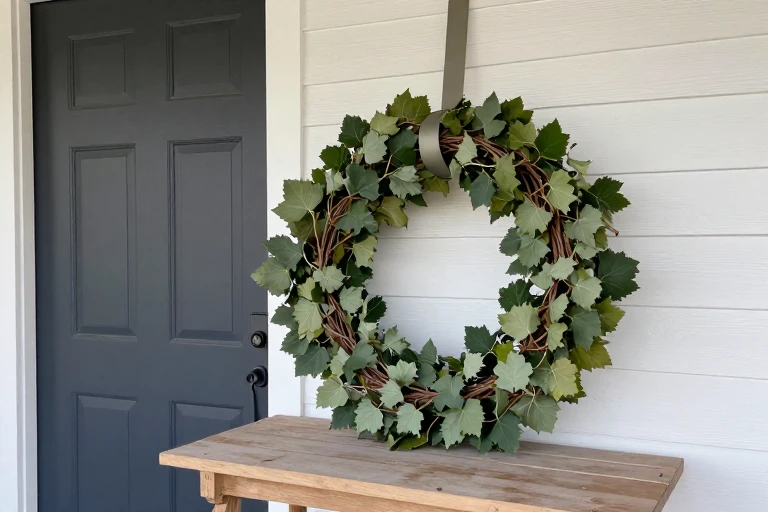
Layering a smaller wreath over a plain grapevine or preserved base can create depth without requiring one oversized piece. Use contrasting textures, such as smooth leaves over twiggy vines, so the layers remain visible.
Secure the pieces to each other before hanging them. Floral wire can work for sheltered natural materials; coated ties are less conspicuous on darker bases.
The tradeoff is extra thickness. Test the completed wreath against storm doors and trim, and remove loose stems that could scrape the finish.
5. Try an Asymmetrical Door Swag
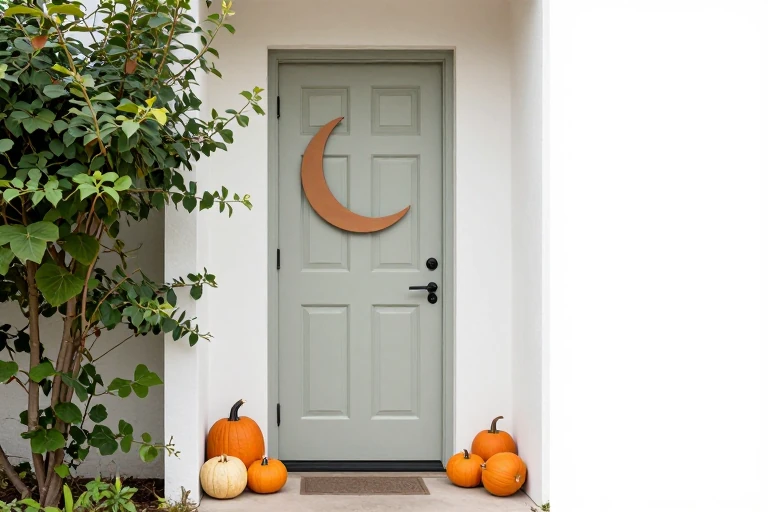
A vertical or crescent-shaped swag offers an alternative when a round wreath fights the door’s panel layout. Position the fullest portion away from the handle and let the narrow end follow a panel edge.
Combine flexible foliage with one sturdy anchor material, such as grapevine. Avoid long stems that can whip against painted surfaces in wind.
Asymmetry creates movement, but it needs a counterweight. A planter or pumpkin grouping on the opposite side of the entry can balance the composition.
6. Refresh Existing Planters
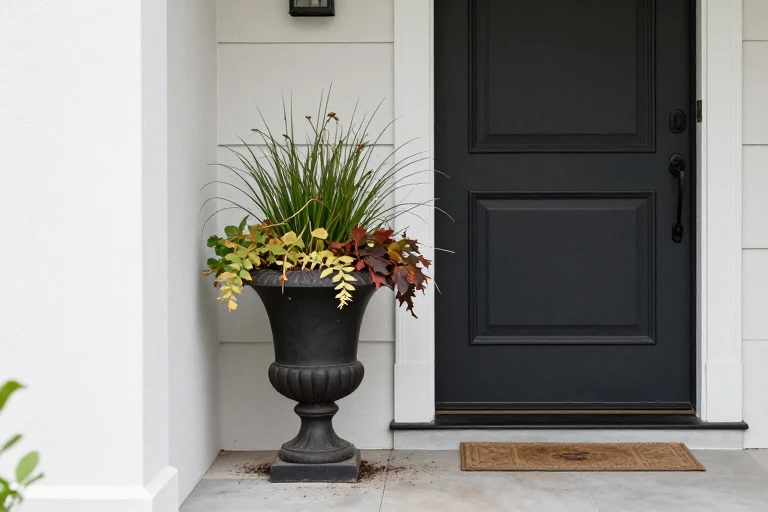
Reuse sturdy outdoor pots instead of buying containers that spend most of the year in storage. Remove tired summer plants, check drainage openings, and clean the visible rim before restyling.
Build height with a compact evergreen, ornamental grass, or secured branches, then soften the base with seasonal foliage. Plant suitability and watering needs vary by climate and exposure.
Heavy ceramic offers stability but is difficult to move. Lightweight resin is easier to store, though it may need added weight in a windy location.
7. Add Height With Collected Branches
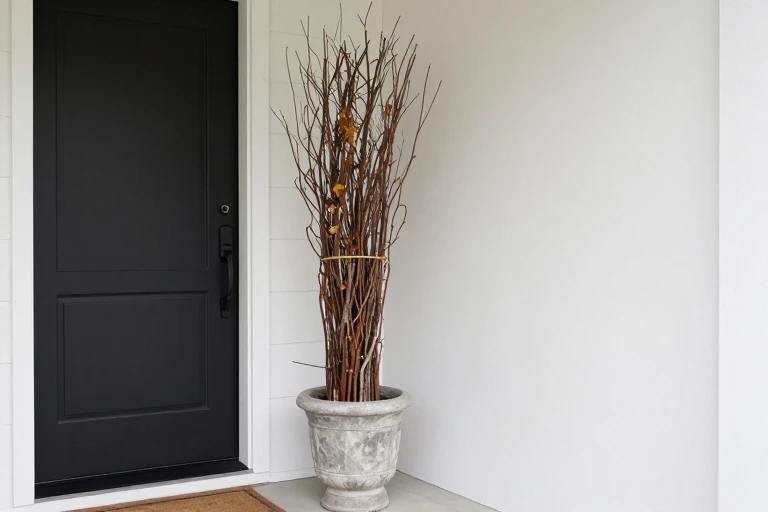
Bare or leafy branches add height without consuming much floor space. Select sound, dry pieces that are free of loose bark, visible insects, and sharp ends near eye level.
Place them in a weighted container, then bind the stems below the rim so they move as one bundle. Do not rely on a narrow vase outdoors.
Branches look especially effective beside a tall door or transom. Keep their spread inside the porch edge, where they are less likely to snag clothing or catch wind.
8. Arrange Pumpkins in a Graduated Group
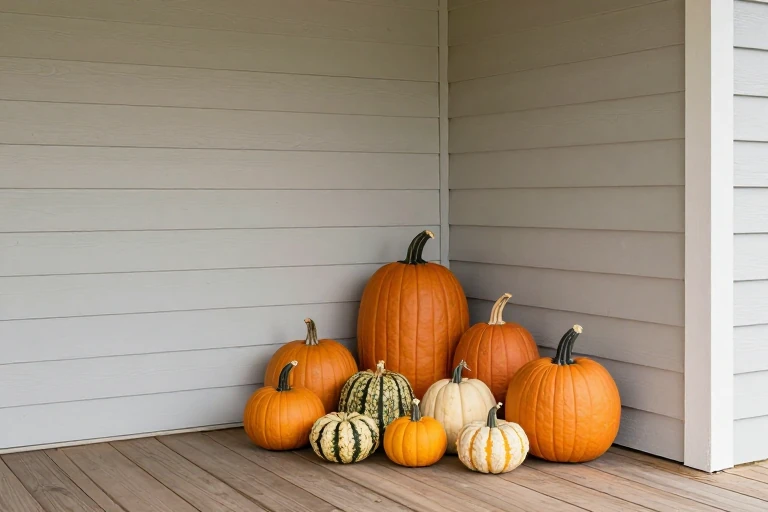
Instead of lining pumpkins evenly across the threshold, cluster them from tallest at the back to smallest at the front. This preserves depth and makes fewer pieces feel purposeful.
Turn the best sides toward the approach, but leave small gaps for airflow and inspection. Set pumpkins on dry, stable surfaces rather than damp soil or absorbent fabric.
Natural pumpkins bring distinctive color and shape but require monitoring for soft spots. Faux versions store for reuse yet need weighting or concealment in exposed locations.
9. Mix Gourds Without Visual Clutter
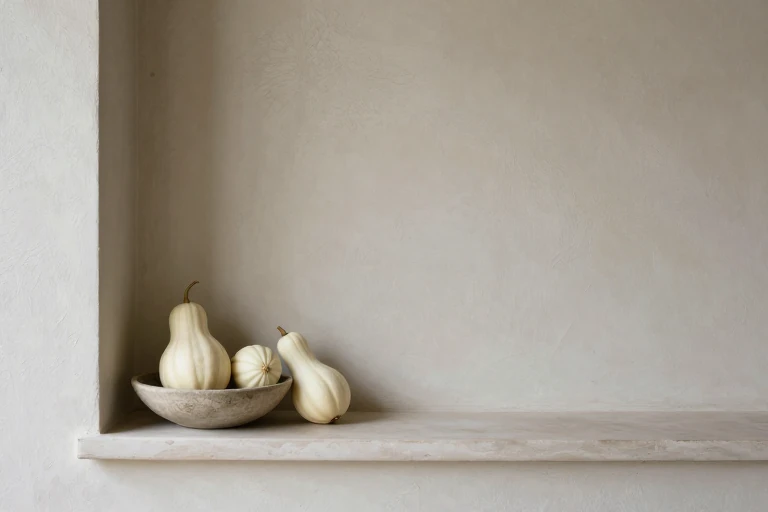
Unusual gourds can supply pattern, but too many shapes quickly make an entrance look busy. Repeat one color or surface quality—such as pale skins or deeply ribbed forms—to create a visual link.
Place the most irregular specimen where it can act as an accent, not at every edge of the arrangement. A shallow weather-tolerant bowl can contain smaller pieces on a sheltered porch.
Inspect natural gourds regularly and remove deteriorating pieces before moisture damages the container or porch surface.
10. Ground the Entry With Layered Mats
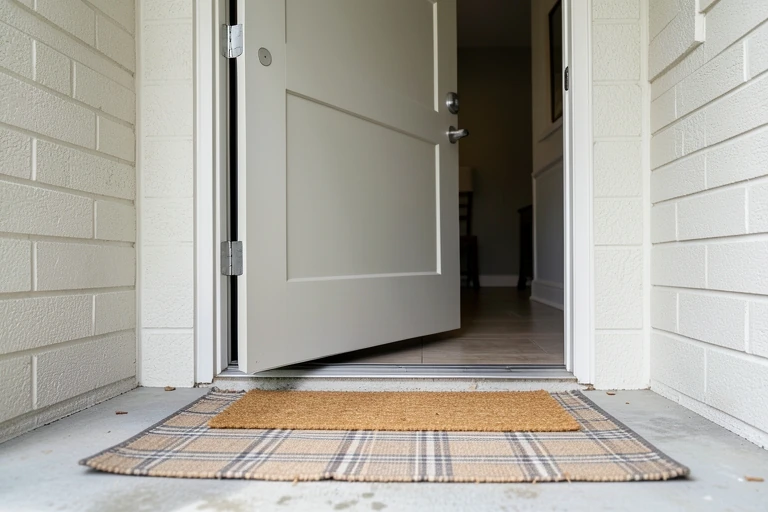
A larger flat-weave outdoor rug can frame a smaller coir mat and introduce pattern at floor level. Keep the combination thin enough that the door clears it without dragging.
Place both layers on a dry, level surface and confirm that edges lie flat. If the lower rug shifts, curls, or traps persistent moisture, use a single properly sized outdoor mat instead.
Pattern hides seasonal debris better than a very pale solid, but textured materials generally demand more shaking, vacuuming, and drying.
11. Use Lanterns as Dark Anchors
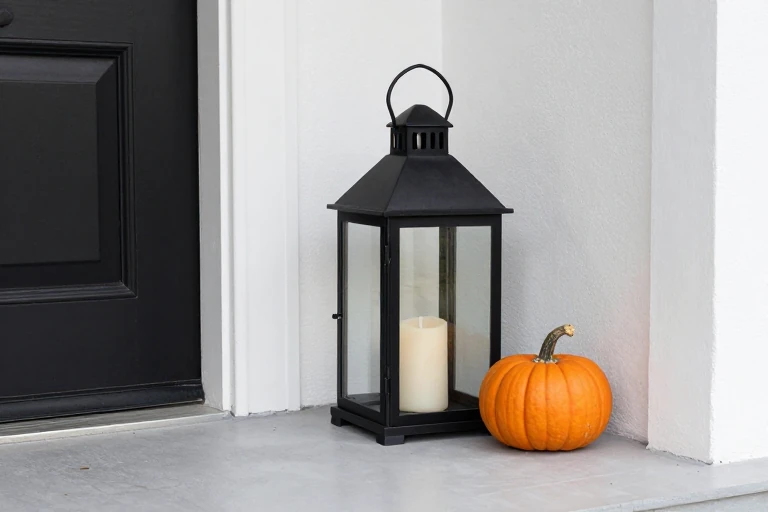
Lanterns add structure among rounded pumpkins and loose foliage. Choose a finish that echoes existing hardware, lighting, or window frames instead of introducing an unrelated metal color.
For an unattended display, enclosed battery-operated lights avoid the open flame and dripping wax associated with candles. Check the product’s stated location rating before outdoor use.
Position lanterns away from the door swing and walking line. A heavy base is useful in exposed entries, while lightweight designs are easier to bring inside during severe weather.
12. Fill a Basket for a Sheltered Porch
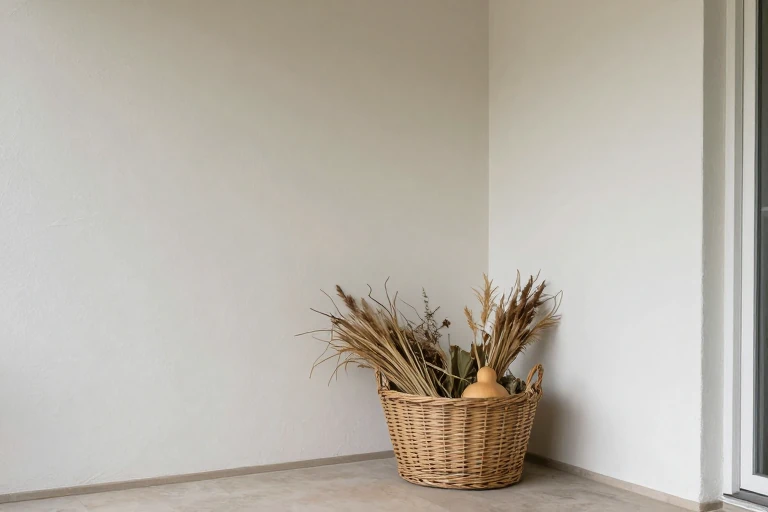
A handled basket can soften a covered entrance with dried grasses, faux leaves, or small gourds. Choose a broad, flat base so the arrangement does not tip when brushed.
Natural wicker absorbs moisture and can deteriorate when repeatedly wet. Reserve it for a deeply sheltered spot, or place a removable liner inside to keep damp plant material from touching the weave.
A basket also simplifies cleanup: lift the entire display away when sweeping, receiving a large package, or preparing for rough weather.
13. Frame the Door With Corn Stalks
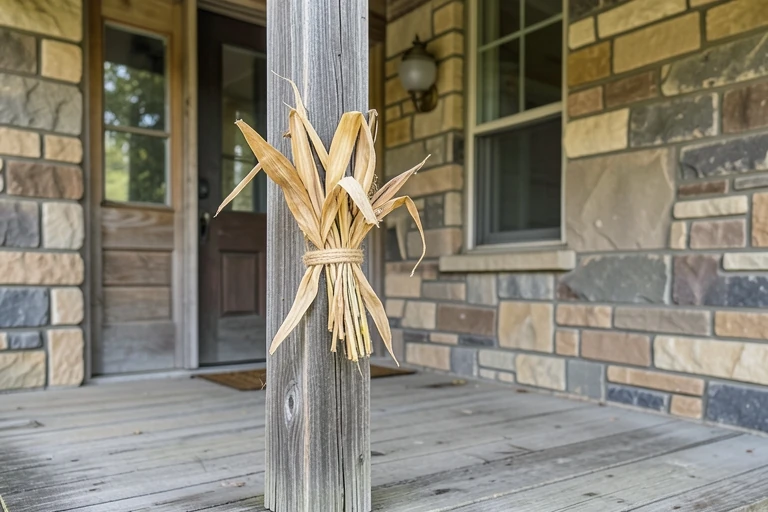
Bundled corn stalks suit entrances with enough vertical clearance and visual weight, particularly beside posts or broad trim. Tie each bundle tightly in more than one place and anchor it to a stable support.
Keep dry material away from light fixtures, heat sources, handles, and the walking path. Actual placement requirements depend on the fixture, site conditions, and local fire rules.
Stalks shed and can hold moisture, so inspect ties after wind or rain and remove the bundle once it becomes unstable or deteriorated.
14. Bring in Living Seasonal Color
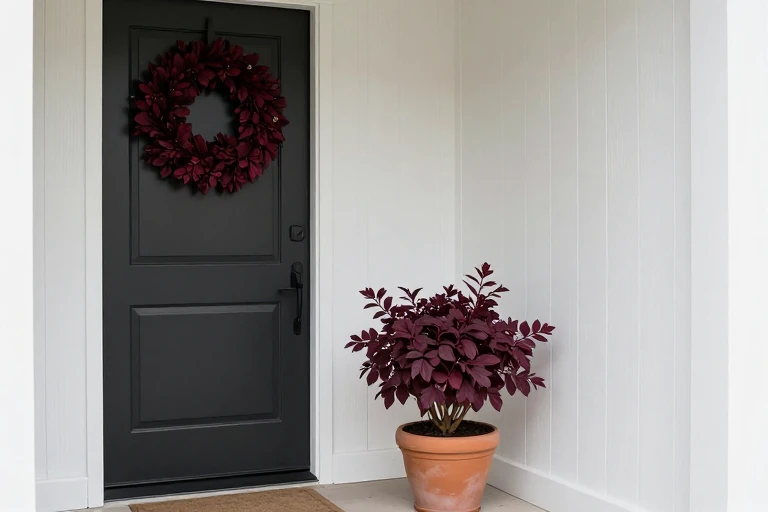
Living plants add softness and changing color, but they are a maintenance choice rather than a disposable prop. Select plants suited to the light, temperature, and exposure at your actual entrance.
Check the soil rather than watering automatically, and use containers with functional drainage where runoff will not create a slippery path or stain a vulnerable surface.
For a coordinated look, repeat the flower color in only one other element, such as a wreath accent. Too many blooming colors can compete with the door.
15. Reserve Dried Botanicals for Cover
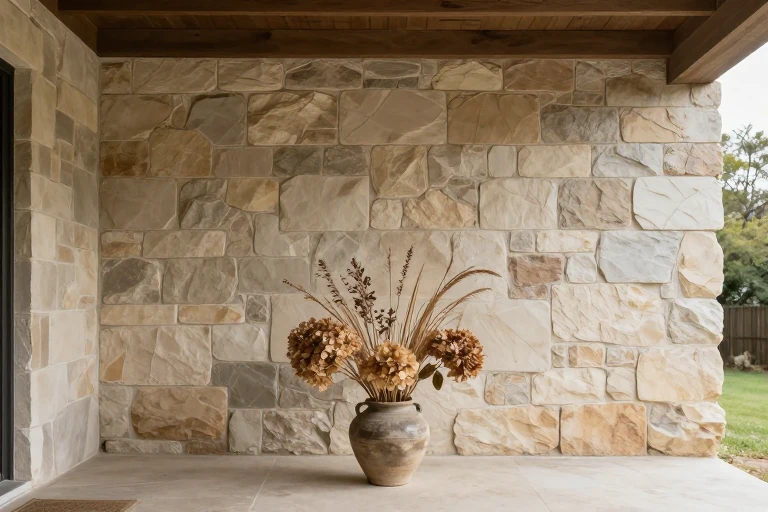
Dried hydrangeas, grasses, seed heads, and leaves offer muted color that suits stone, brick, and weathered wood. Their delicate surfaces perform best where rain and strong wind cannot reach them directly.
Build the arrangement indoors, shake out loose fragments, and secure stems below the container rim. Avoid placing brittle pieces where coats, pets, or deliveries will brush them.
Dried material provides authentic texture but sheds and fades. Faux stems are easier to clean and reuse, though overly uniform color can look less convincing.
16. Choose Faux Decor for Tough Exposure
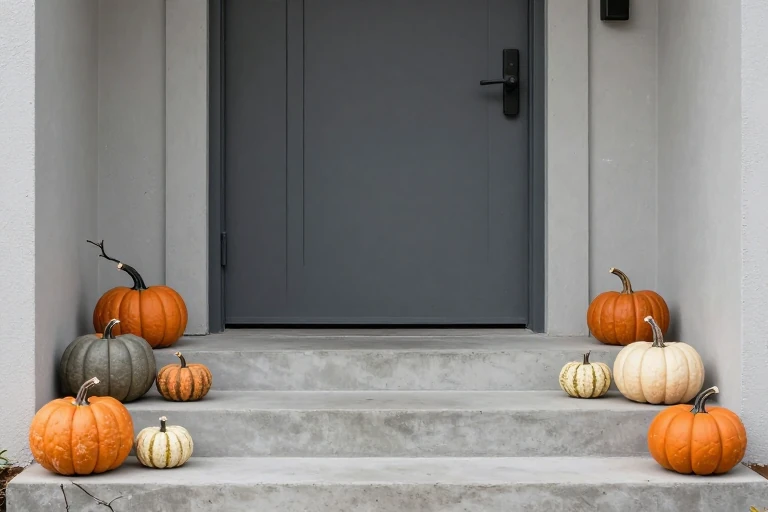
An uncovered, windy, or frequently wet entrance may be easier to maintain with outdoor-suitable faux pumpkins and foliage. Inspect seams, finishes, and attachment points before placing them outside.
Mixing a few irregular sizes and subdued colors helps prevent a mass-produced appearance. Add real branches or a textured coir mat for contrast rather than trying to imitate every natural material.
Faux decor requires storage and occasional cleaning. Choose pieces that nest, disassemble, or serve in several seasonal arrangements so they earn their storage space.
17. Edit the Look for a Small Entry
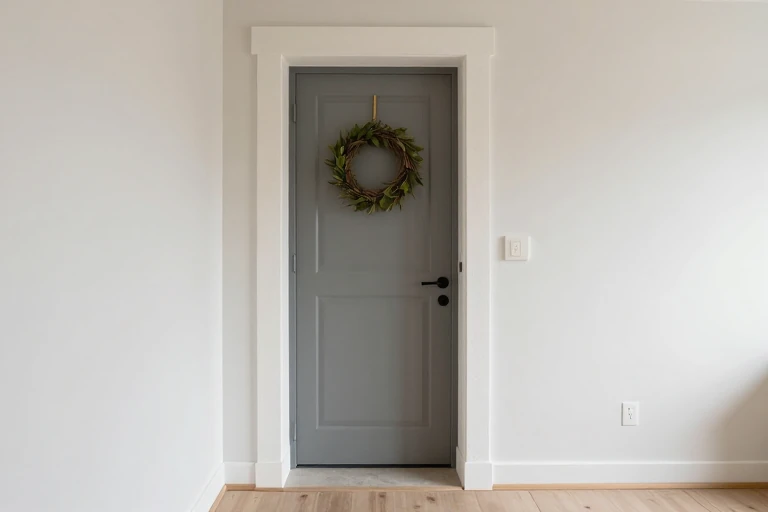
For a narrow stoop or apartment landing, move the decoration off the floor. A slim wreath, removable garland, or compact hanging basket preserves circulation better than several containers.
Choose one floor element only if space allows—perhaps a narrow planter on the latch side. Open the door while standing outside to verify that the arrangement does not trap the person entering.
Repeating one material, such as grapevine or dark metal, creates cohesion without the bulk of a full porch display.
18. Make the Display Renter-Friendly
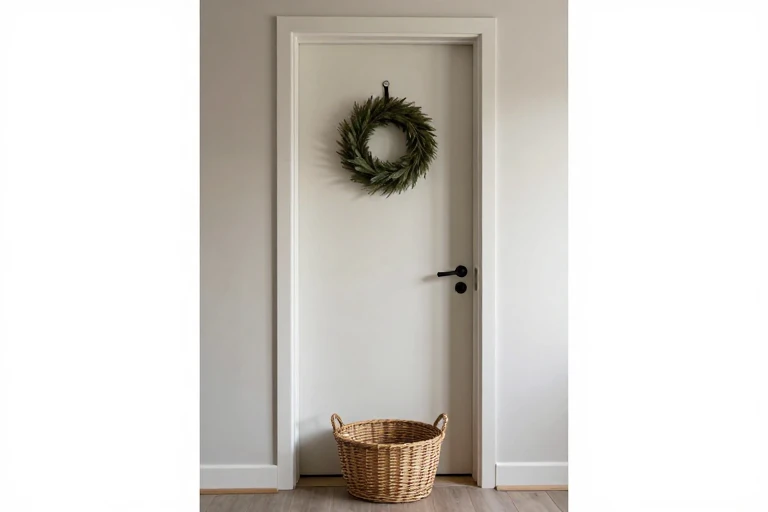
Renters can build front door fall decor around removable, freestanding pieces. First check the lease or building rules for hallway objects, door attachments, and seasonal decorations.
Use an over-door hanger only when it fits without affecting door closure or seals. Removable hooks must be compatible with the surface and used according to the manufacturer’s directions.
A weighted planter or self-contained basket avoids wall fasteners, but shared paths still need clearance. Photograph the undecorated surface before installation and remove adhesives carefully.
19. Common Fall Front Door Decor Mistakes
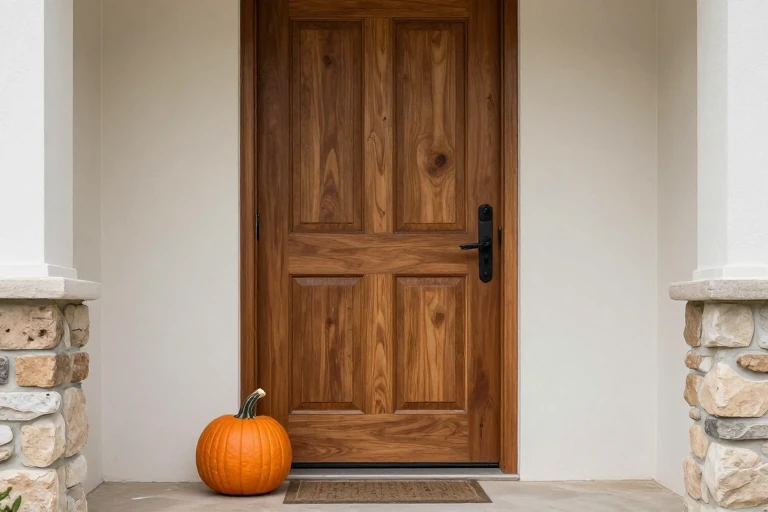
Overfilling the threshold is the most consequential mistake. Decorations should not obstruct the handle, visibility, door swing, stairs, railings, lighting, deliveries, or the normal route in and out.
Other problems include unweighted objects in wind, absorbent textiles left wet, incompatible hanging hardware, and natural materials allowed to decay against finished surfaces.
Finish by viewing the entry from the street and then using it normally. Remove the weakest item rather than adding another; better spacing often makes the remaining display feel more polished.
Effort & Cost Snapshot
| Topic | Effort | Cost Note |
|---|---|---|
| 1. Start With a Clear-Door Plan | Low | Often achievable with existing furnishings or simple updates |
| 2. Pull a Palette From the House | Low | Often achievable with existing furnishings or simple updates |
| 3. Scale the Wreath to the Door | Medium | Varies by materials, scope, and local labor |
| 4. Layer Wreaths for More Depth | Low | Often achievable with existing furnishings or simple updates |
| 5. Try an Asymmetrical Door Swag | Medium | Varies by materials, scope, and local labor |
| 6. Refresh Existing Planters | Low | Often achievable with existing furnishings or simple updates |
| 7. Add Height With Collected Branches | Low | Often achievable with existing furnishings or simple updates |
| 8. Arrange Pumpkins in a Graduated Group | Low | Often achievable with existing furnishings or simple updates |
| 9. Mix Gourds Without Visual Clutter | Low | Often achievable with existing furnishings or simple updates |
| 10. Ground the Entry With Layered Mats | Low | Often achievable with existing furnishings or simple updates |
| 11. Use Lanterns as Dark Anchors | Medium | Varies by materials, scope, and local labor |
| 12. Fill a Basket for a Sheltered Porch | Low | Often achievable with existing furnishings or simple updates |
| 13. Frame the Door With Corn Stalks | Medium | Varies by materials, scope, and local labor |
| 14. Bring in Living Seasonal Color | Low | Often achievable with existing furnishings or simple updates |
| 15. Reserve Dried Botanicals for Cover | Low | Often achievable with existing furnishings or simple updates |
| 16. Choose Faux Decor for Tough Exposure | Low | Often achievable with existing furnishings or simple updates |
| 17. Edit the Look for a Small Entry | Low | Often achievable with existing furnishings or simple updates |
| 18. Make the Display Renter-Friendly | Medium | Varies by materials, scope, and local labor |
| 19. Common Fall Front Door Decor Mistakes | Medium | Varies by materials, scope, and local labor |
Frequently Asked Questions
When should I put up fall front door decor?
Start when local weather begins to feel seasonal or when summer plants decline. Neutral wreaths, branches, and planters can appear first; pumpkins can follow when conditions suit them. Add overt Halloween pieces later if desired, then remove them while keeping the broader autumn arrangement.
How can I keep pumpkins from rotting on the porch?
Choose firm pumpkins without damaged areas, keep them on a dry surface, and inspect the underside regularly. Avoid leaving them against damp fabric or soil. Weather and pumpkin condition affect longevity, so remove any piece that softens, leaks, or develops visible decay.
How do I decorate a front door without a porch?
Concentrate the display on the door with a shallow wreath or swag, then add one weather-suitable planter if the landing has safe clearance. Select durable materials, secure lightweight pieces, and avoid absorbent rugs or delicate dried botanicals in direct exposure.
Should fall door decor match the interior?
It does not need to match exactly. The exterior should respond first to the home’s door color, siding, masonry, and hardware. Repeating one interior color or material can create continuity, but outdoor durability and entry function are more important than a perfect stylistic match.
The strongest fall front door decor begins with the entrance itself. Preserve the walking path and door operation, then use the home’s fixed colors and materials to guide the palette.
Build outward from one focal point with varied heights, repeated textures, and enough empty space for each element to register. Choose natural materials for character, faux pieces for reuse and difficult exposure, or a thoughtful mix of both.
Finally, inspect the display after wind and rain. Timely cleanup, secure attachments, and a little editing will keep the entrance welcoming throughout the season.
Sources & Further Reading
- Choosing Your Front Door | NAHB
- 21 Budget Friendly Fall Door Decor Ideas – Thistlewood Farm
- 5 "Grab & Go" Fall Front Door Decor Combos (Halloween Too:)) – Emily Henderson
Continue Your Home Transformation
Explore the full collection of step-by-step eBooks and get the guide that fits the room you're working on.