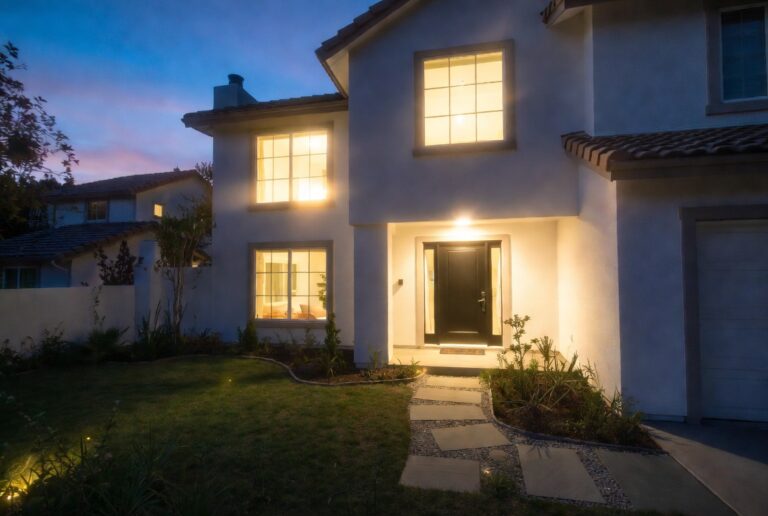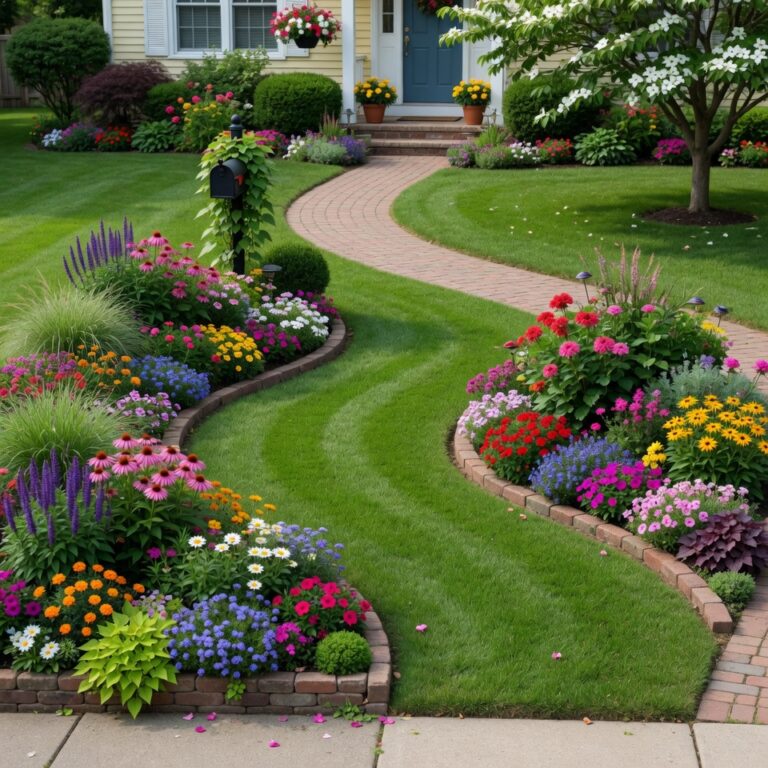
Curb Appeal
Most curb appeal advice focuses on the front door. The paint color, the hardware, the welcome mat.
But long before anyone reaches that door, they’ve already walked or driven across the single largest hard surface on your property.
Straight concrete driveways and narrow poured walkways have quietly become the most dated element on plenty of otherwise well-kept homes.
2026’s front yard trends are shifting the focus toward hardscaping itself. Curved lines instead of straight ones, natural materials instead of poured concrete, and function that doubles as genuine design.
By the end of this article, you’ll have 16 real ways to rethink the ground people actually walk and drive across before they ever reach your door.
1. Replace a Straight Path With a Winding Flagstone Trail
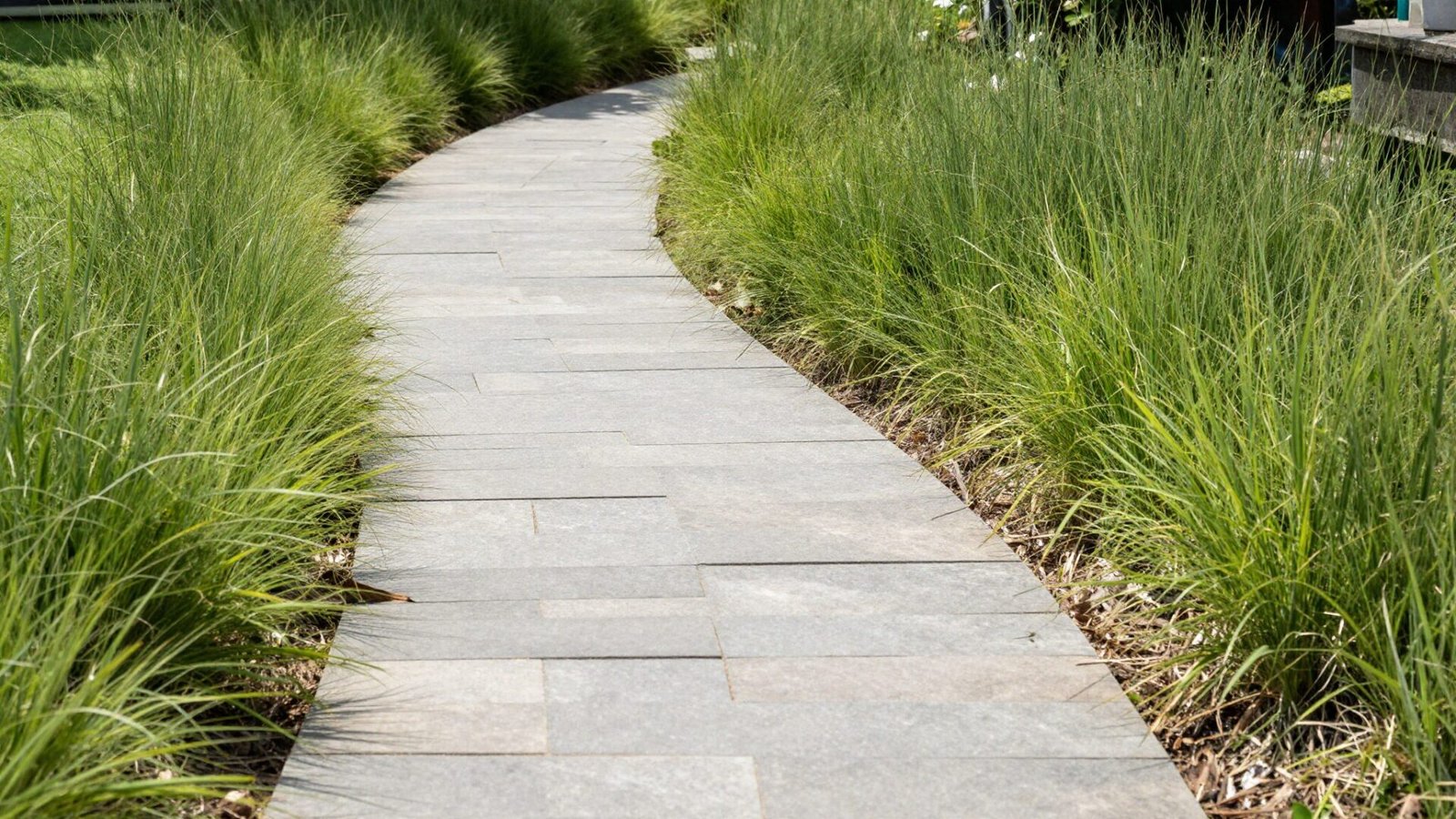
A straight concrete strip tells the eye exactly what’s coming. A curved flagstone path makes the approach feel considered instead of purely functional.
Irregular stone shapes set into gravel or low groundcover soften the whole entry sequence before a guest even reaches the porch.
💡 Smart tip: Vary the spacing between stones slightly rather than keeping it perfectly even. Natural irregularity reads as more authentic than a rigid grid.
⚠️ Mistake to avoid: Setting stones without a proper compacted base beneath them. Without it, individual stones shift and become uneven within a single season.
2. Break Up a Lawn With Turf and Boulder Pockets
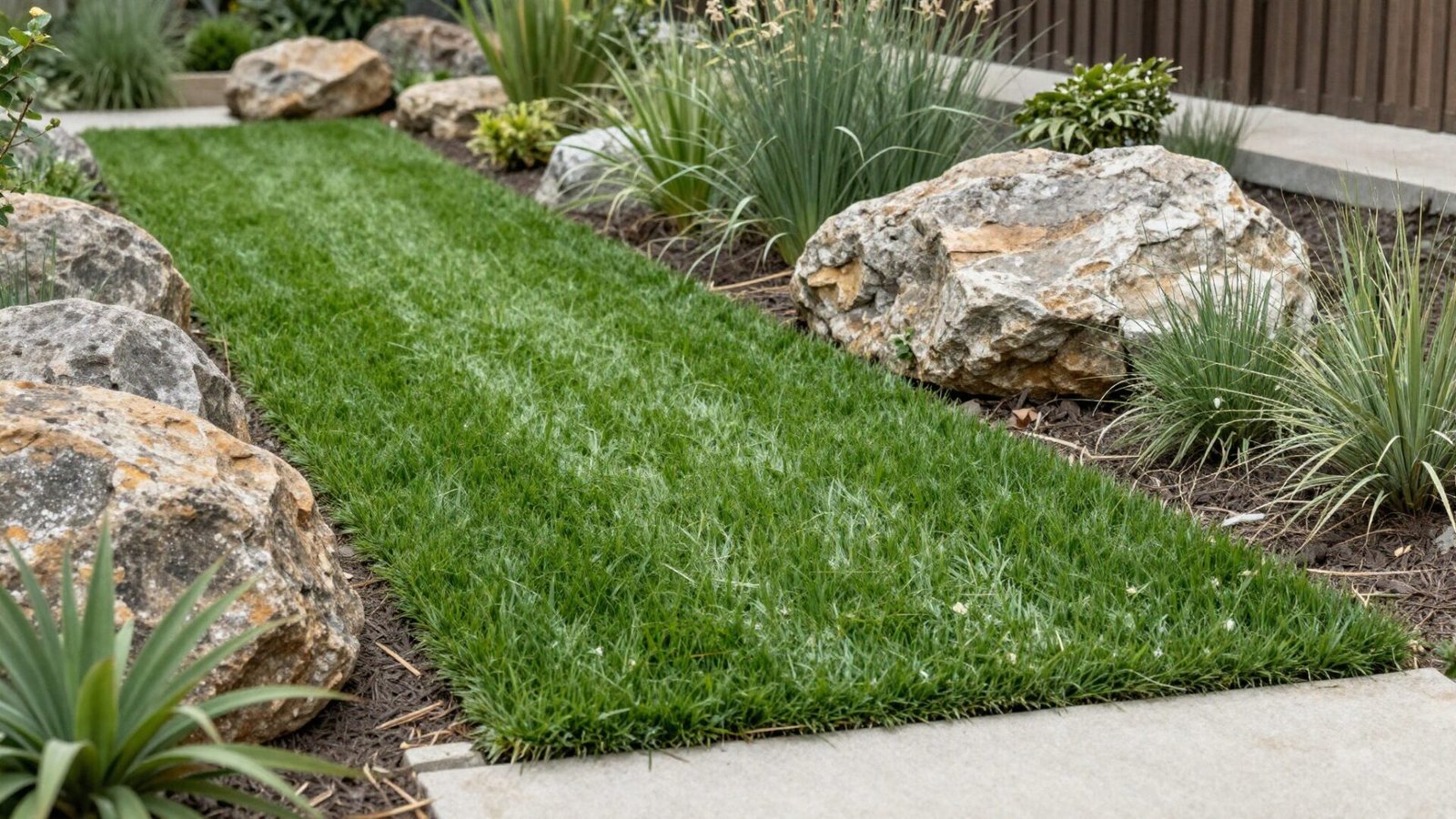
Instead of one flat lawn, small turf pockets set between boulders and low-water perennials create a front yard with genuine texture and rhythm.
This approach is sometimes called wild refinement. Loose and natural in feeling, but clearly planned in execution.
💡 Smart tip: Keep boulder placement asymmetrical. A perfectly even arrangement undercuts the natural look this style is going for.
⚠️ Mistake to avoid: Choosing boulders too small for the scale of the yard. Undersized rocks read as scattered gravel rather than intentional focal points.
3. Turn a Drainage Channel Into a Design Detail
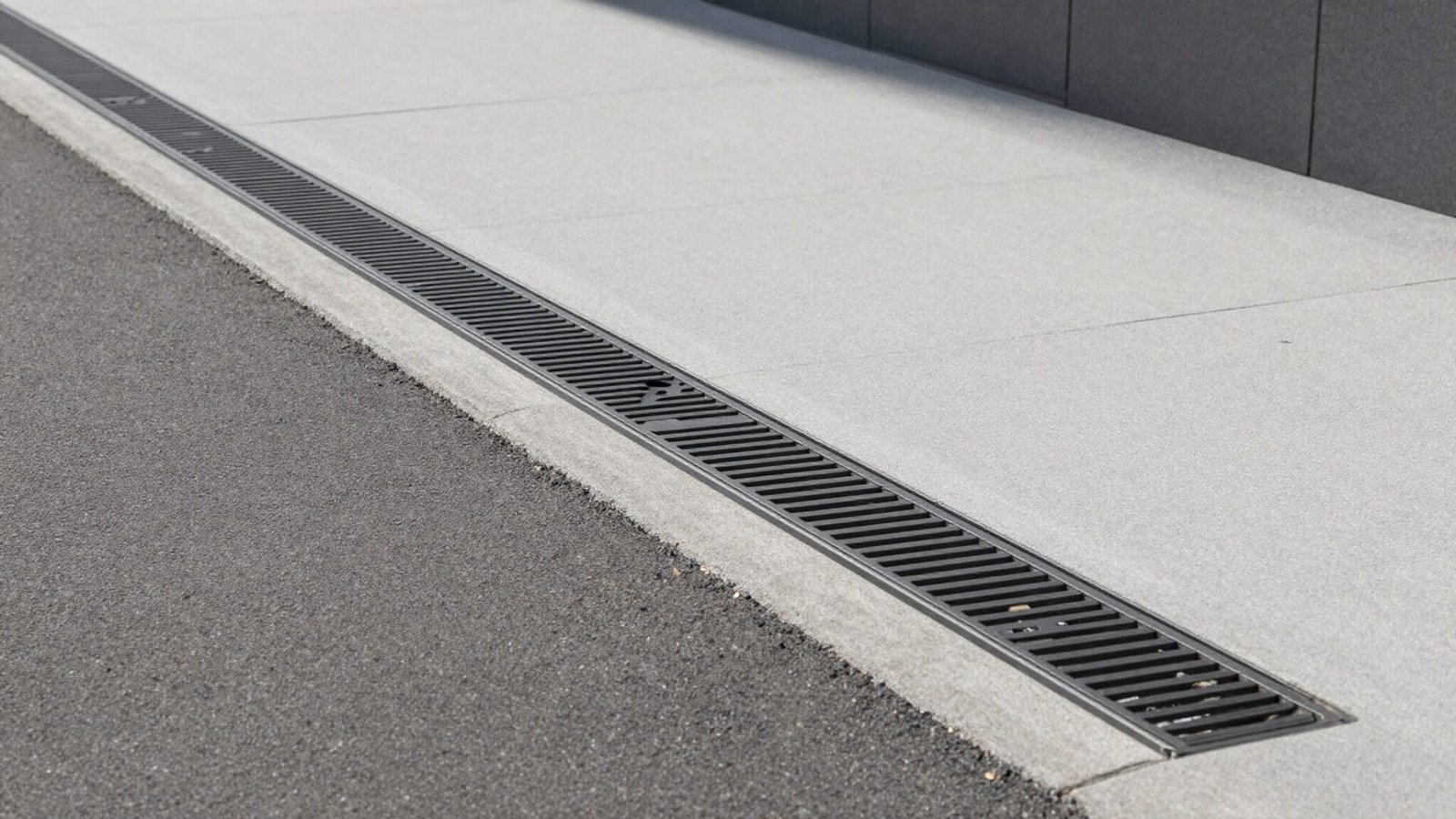
Every driveway needs somewhere for water to go. A linear drain channel with a clean metal grate makes that function part of the design instead of hiding it.
Positioned along the driveway’s edge, it adds a crisp architectural line that a hidden drain never could.
💡 Smart tip: Choose a grate finish that matches your home’s existing hardware, like matte black or brushed steel, so it reads as intentional rather than utilitarian.
⚠️ Mistake to avoid: Undersizing the channel for your region’s rainfall intensity. A drain that can’t keep up during a heavy storm defeats its own purpose.
Loving These Ideas? Get the Step-by-Step Guide
Grab the full 5-day eBook and turn these ideas into a finished room.



4. Make a Decorative Drain Cover the Focal Point
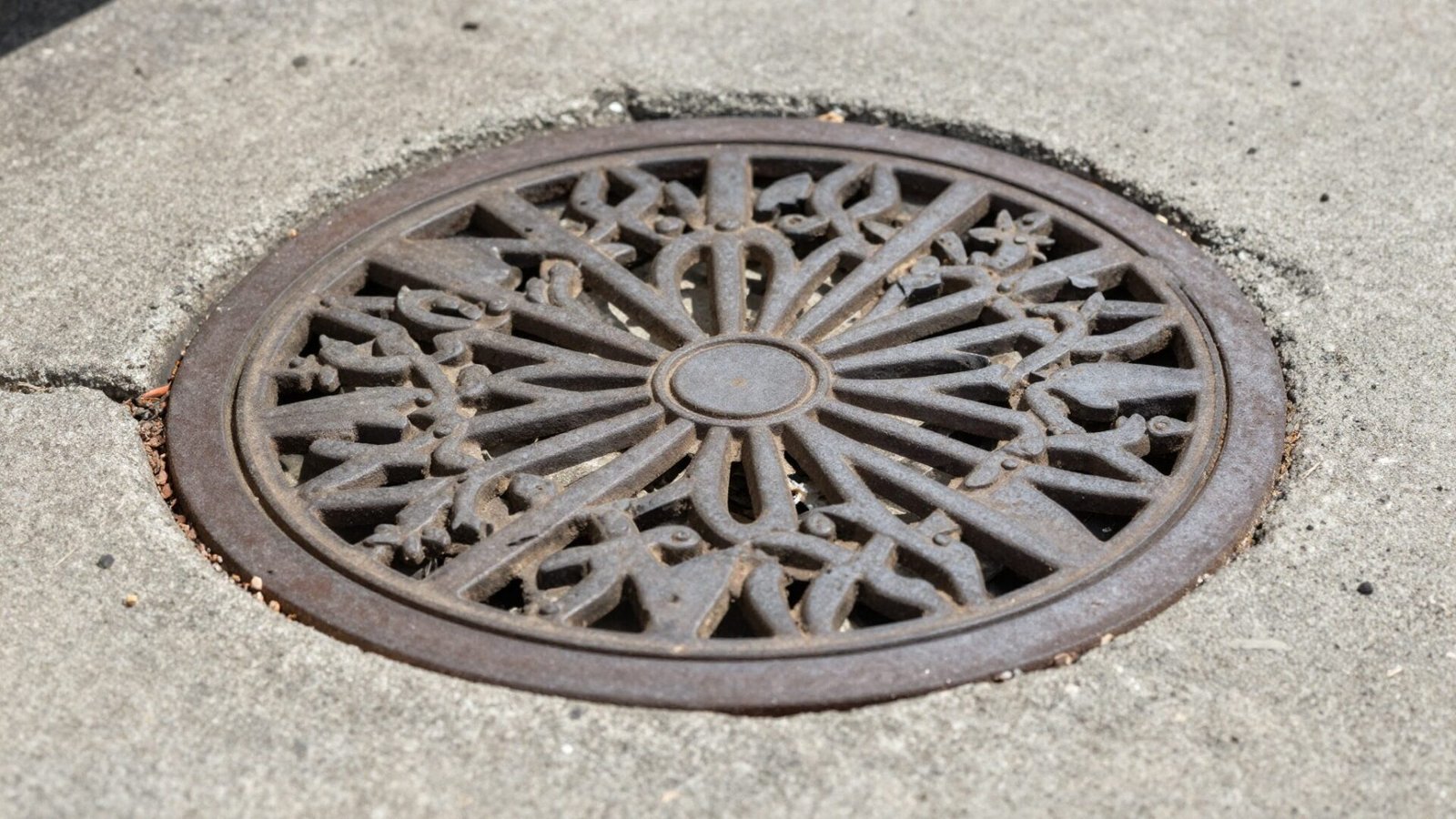
A patterned drain cover set directly into a walkway turns a purely functional element into a small, deliberate design moment underfoot.
It’s a detail most guests will never consciously register, but it’s exactly the kind of finishing touch that separates a considered entry from a purely functional one.
💡 Smart tip: Position ornamental covers at natural pause points along the walkway, like near the front door, where people are more likely to actually look down.
⚠️ Mistake to avoid: Choosing a decorative cover without checking its load rating. Not every ornamental design is rated for vehicle or heavy foot traffic.
5. Replace Cracked Concrete With Natural Stone
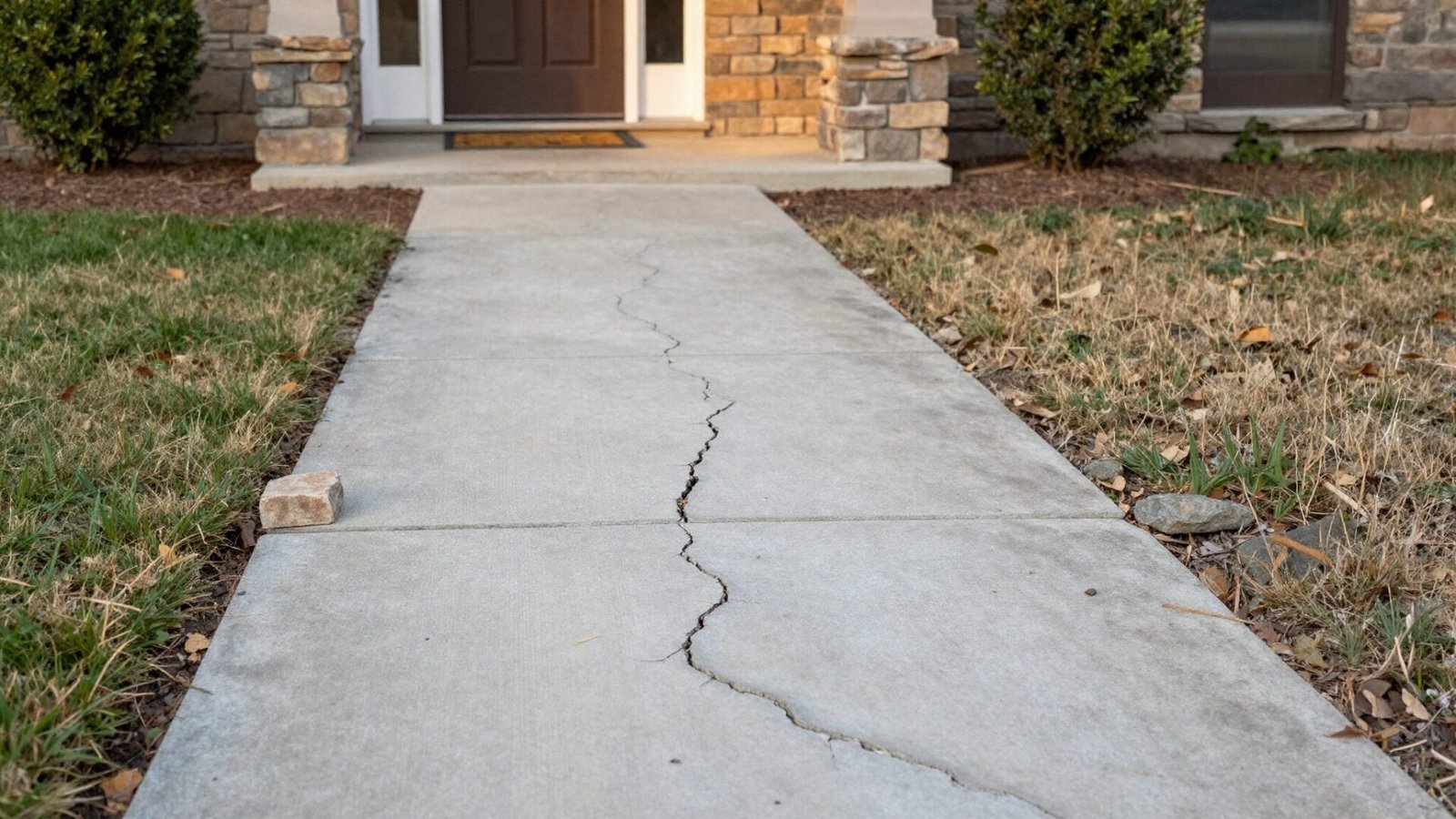
A cracked, aging concrete path is one of the fastest ways to date an otherwise well-maintained front yard.
Swapping it for natural flagstone doesn’t just fix the damage. It changes the entire character of the approach to your home.
💡 Smart tip: Reuse broken concrete as sub-base fill beneath the new stone rather than hauling it away entirely. It’s a genuine cost and labor saver.
⚠️ Mistake to avoid: Laying new stone directly over old, cracked concrete without addressing the underlying cause of the cracking. The same shifting soil will eventually crack the new surface too.
6. Layer Textures Instead of One Flat Surface
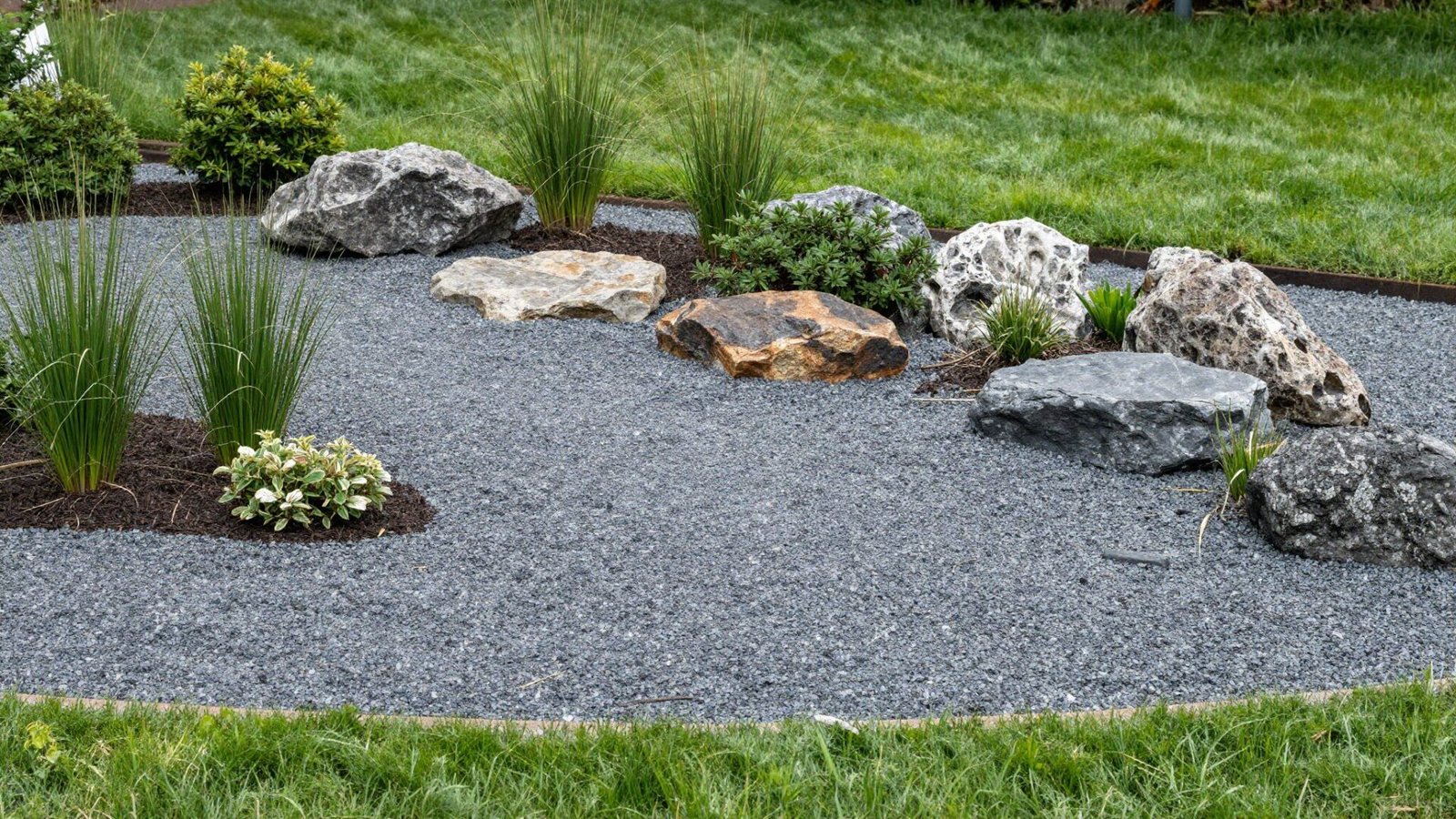
Gravel, boulders, ornamental grasses, and low shrubs together create genuine dimension that a single flat lawn simply can’t offer.
Each material catches light differently, which means the yard actually looks different depending on the time of day.
💡 Smart tip: Repeat two or three key textures throughout the yard rather than using a different one everywhere. Repetition reads as cohesive, not cluttered.
⚠️ Mistake to avoid: Overcrowding the layers so densely that maintenance becomes genuinely difficult. Leave enough breathing room between elements for actual upkeep access.
7. Extend Your Interior Style to the Entrance
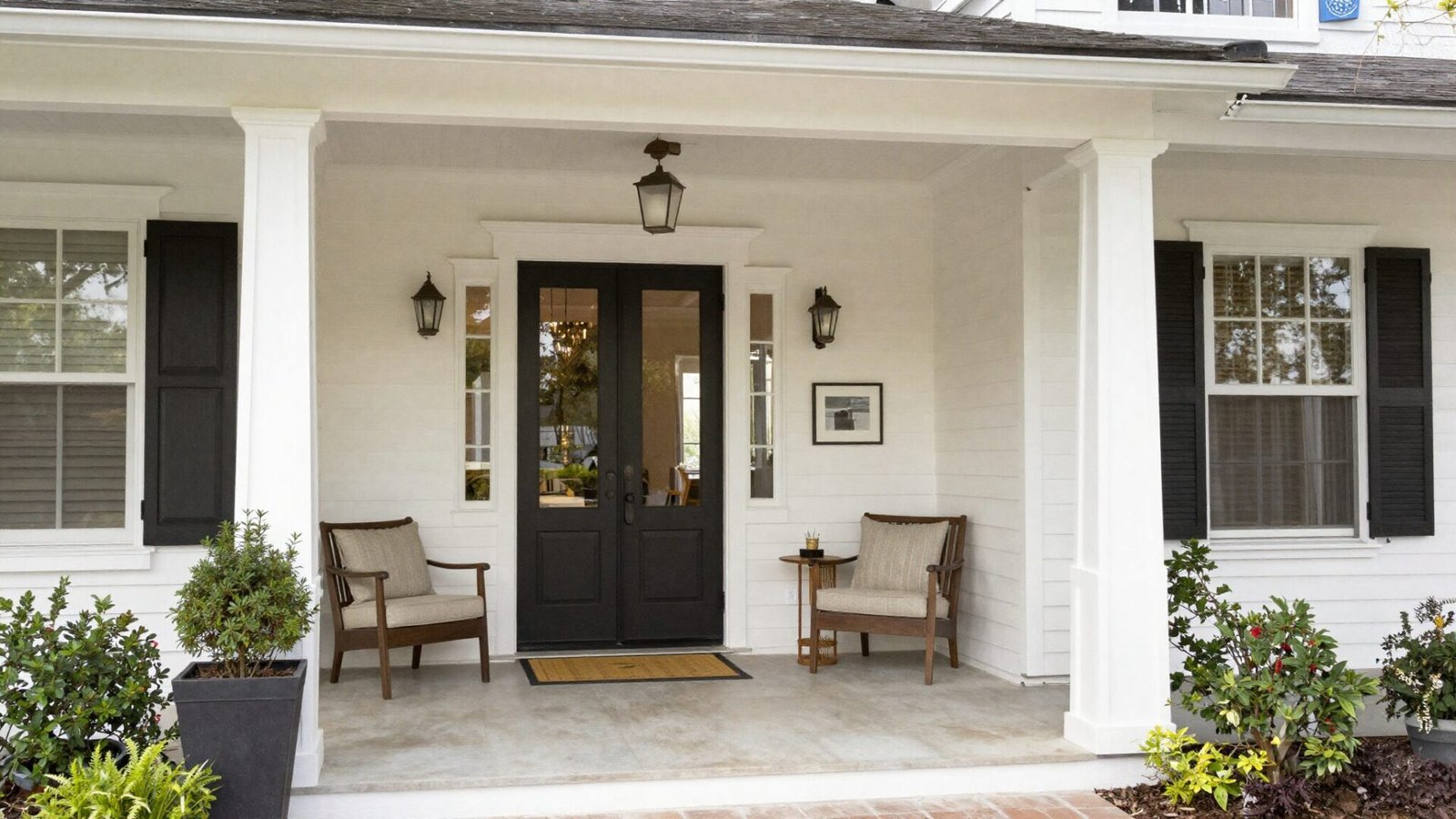
2026’s design conversations keep circling back to one idea: personal expression extending fully outdoors, not stopping at the front door.
Matching your outdoor furniture and planters to your actual interior style makes the entry feel like a genuine extension of your home rather than a generic staged front yard.
💡 Smart tip: Pick one or two signature colors or materials from your interior and repeat them in exterior planters or furniture for a cohesive thread.
⚠️ Mistake to avoid: Choosing indoor-only furniture or fabrics for this transition zone. Confirm every piece is genuinely outdoor-rated before committing.
8. Choose a Permeable Driveway Surface
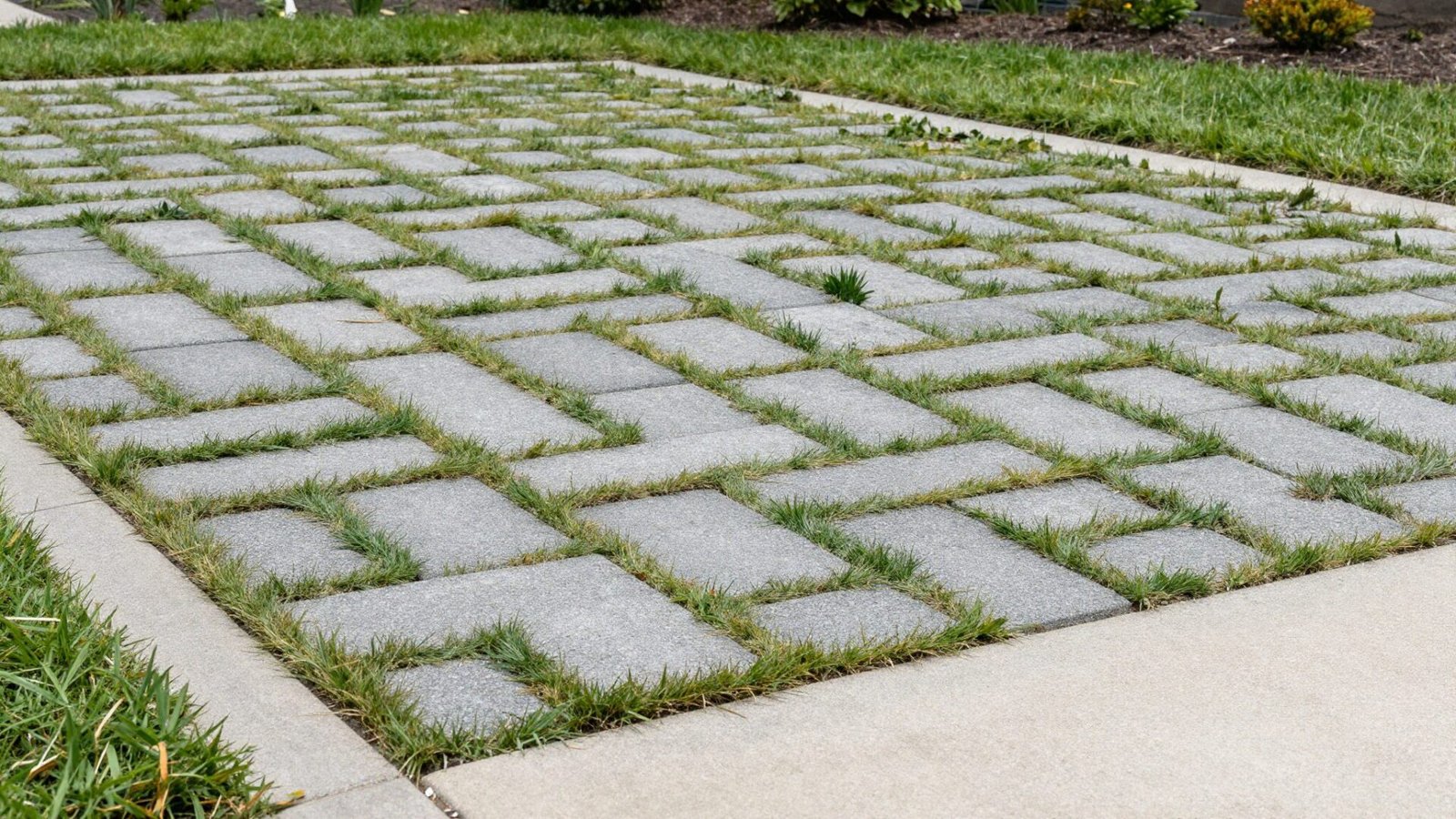
Standard concrete sends every drop of rain straight into the storm drain. A permeable grid paver lets grass grow through the gaps while still supporting vehicle weight.
The green lines running through the driveway also break up what would otherwise be one large, flat gray surface.
💡 Smart tip: Check with your local municipality before installing. Some areas offer rebates specifically for permeable paving as part of stormwater management programs.
⚠️ Mistake to avoid: Skipping the proper gravel sub-base beneath permeable pavers. Without it, the surface settles unevenly under vehicle weight over time.
9. Hide Trash Cans and Utility Boxes Behind a Screen
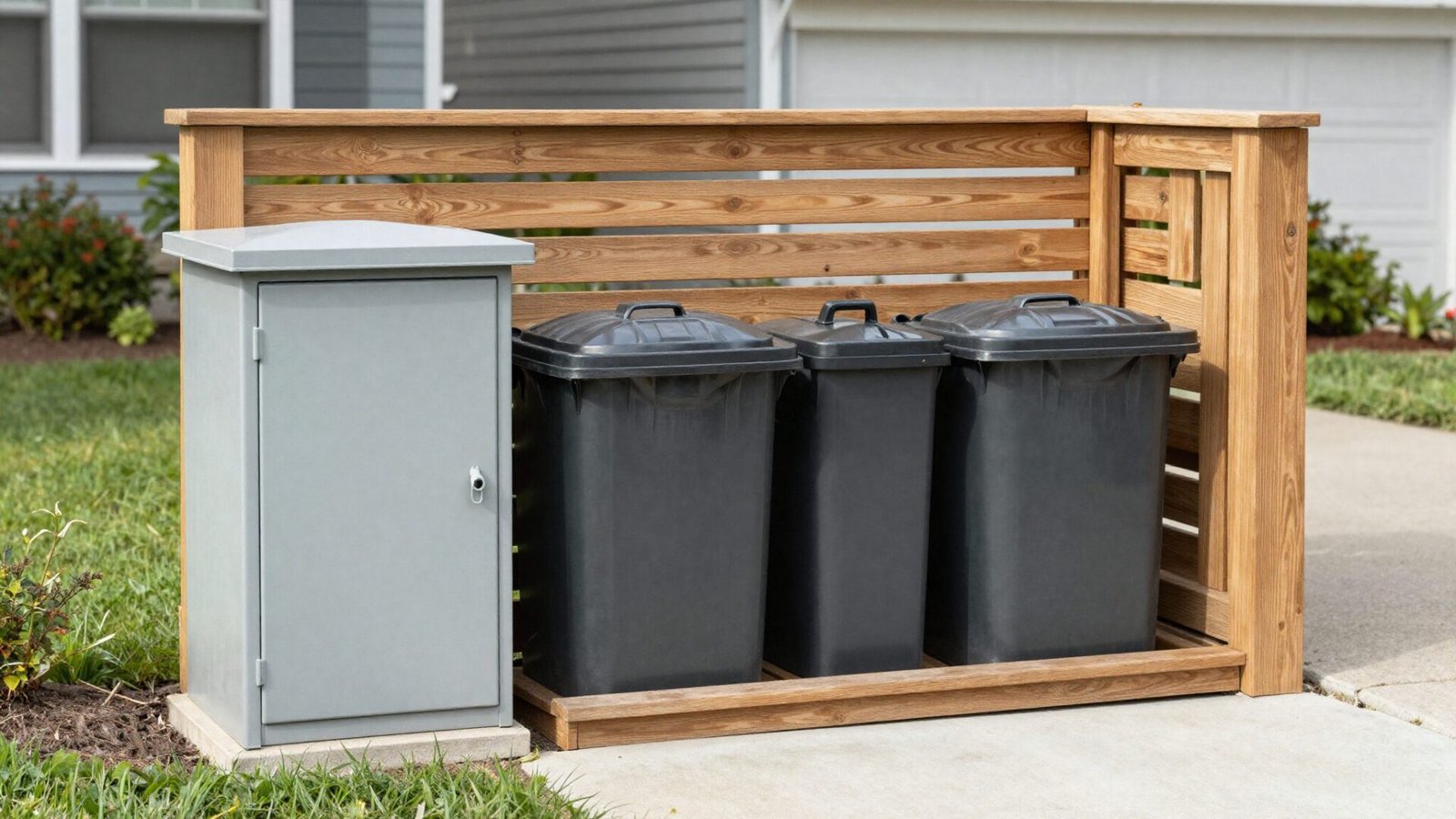
Trash cans, recycling bins, and utility boxes rarely get considered in curb appeal planning, yet they’re often right in the main sightline.
A simple slat screen tucked to the side keeps the essentials accessible while letting the actual landscaping take center stage.
💡 Smart tip: Build the screen tall enough to fully conceal standard bin height, typically around 40 inches, without looking oversized for the space.
⚠️ Mistake to avoid: Making the screen harder to access than simply leaving items visible. If it’s inconvenient, it won’t get used consistently.
10. Add Structure With Boxwood Along the Walkway
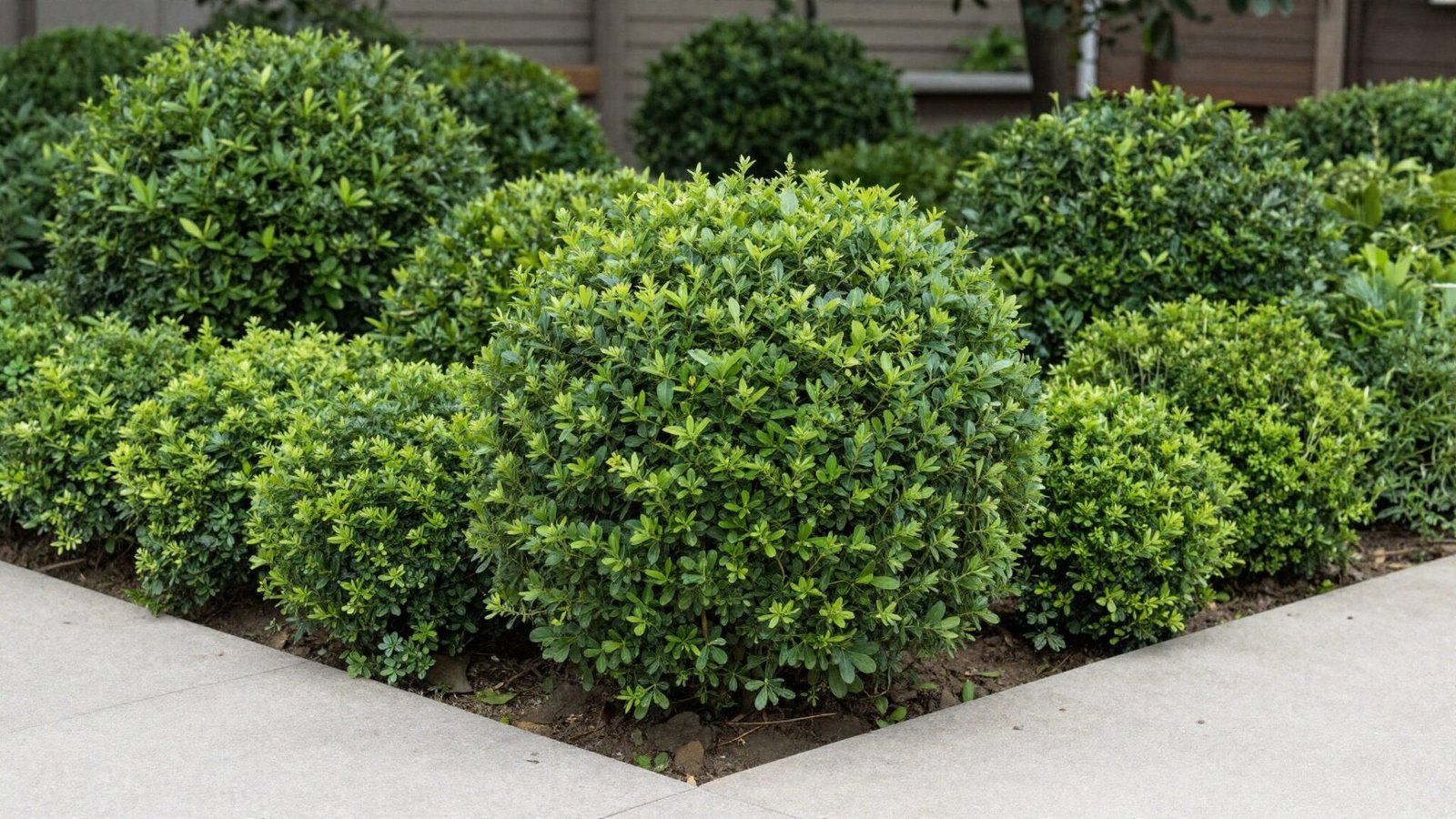
Boxwood remains one of the most reliable ways to add formal structure to a walkway without feeling stiff or overdone.
Varying the shrub sizes slightly along the path, rather than keeping every one identical, gives the line real rhythm.
💡 Smart tip: Space boxwood based on mature width, not current nursery size. Overcrowded shrubs lose their individual shape as they grow together.
⚠️ Mistake to avoid: Skipping a consistent pruning schedule. Boxwood left unshaped for a full season can be difficult to bring back into clean form.
11. Plant a Privacy Row of Arborvitae
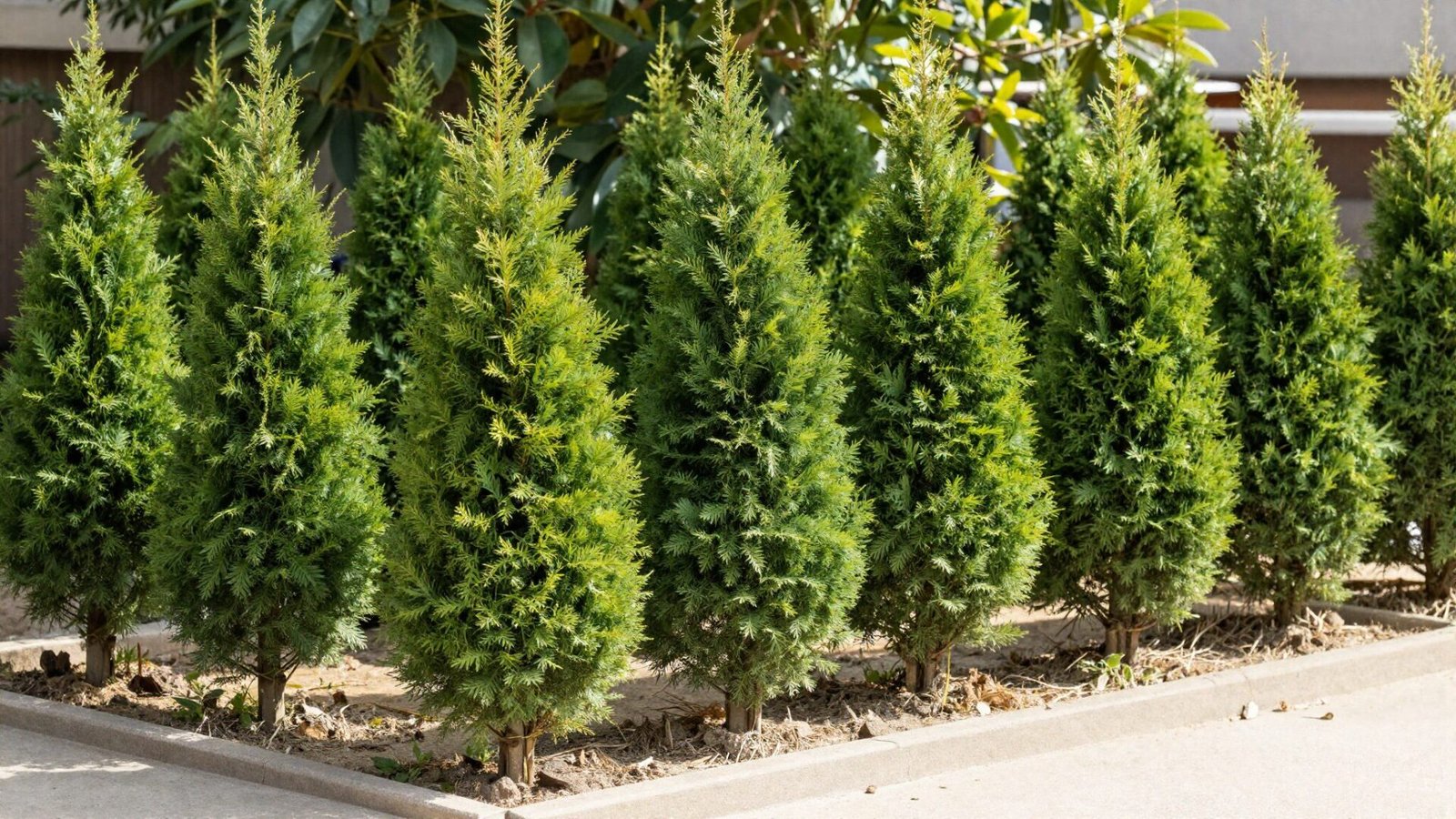
A row of emerald arborvitae along a property line softens a boundary while adding genuine year-round screening from the street.
Unlike a fence, it grows more substantial and more visually interesting with each passing year.
💡 Smart tip: Space arborvitae according to mature width, generally 3 to 4 feet apart for a dense screen, rather than planting too far apart initially.
⚠️ Mistake to avoid: Planting too close to the driveway or walkway edge. Mature arborvitae can encroach on hardscape within just a few growing seasons.
12. Add a Crisp Edging Line Between Materials
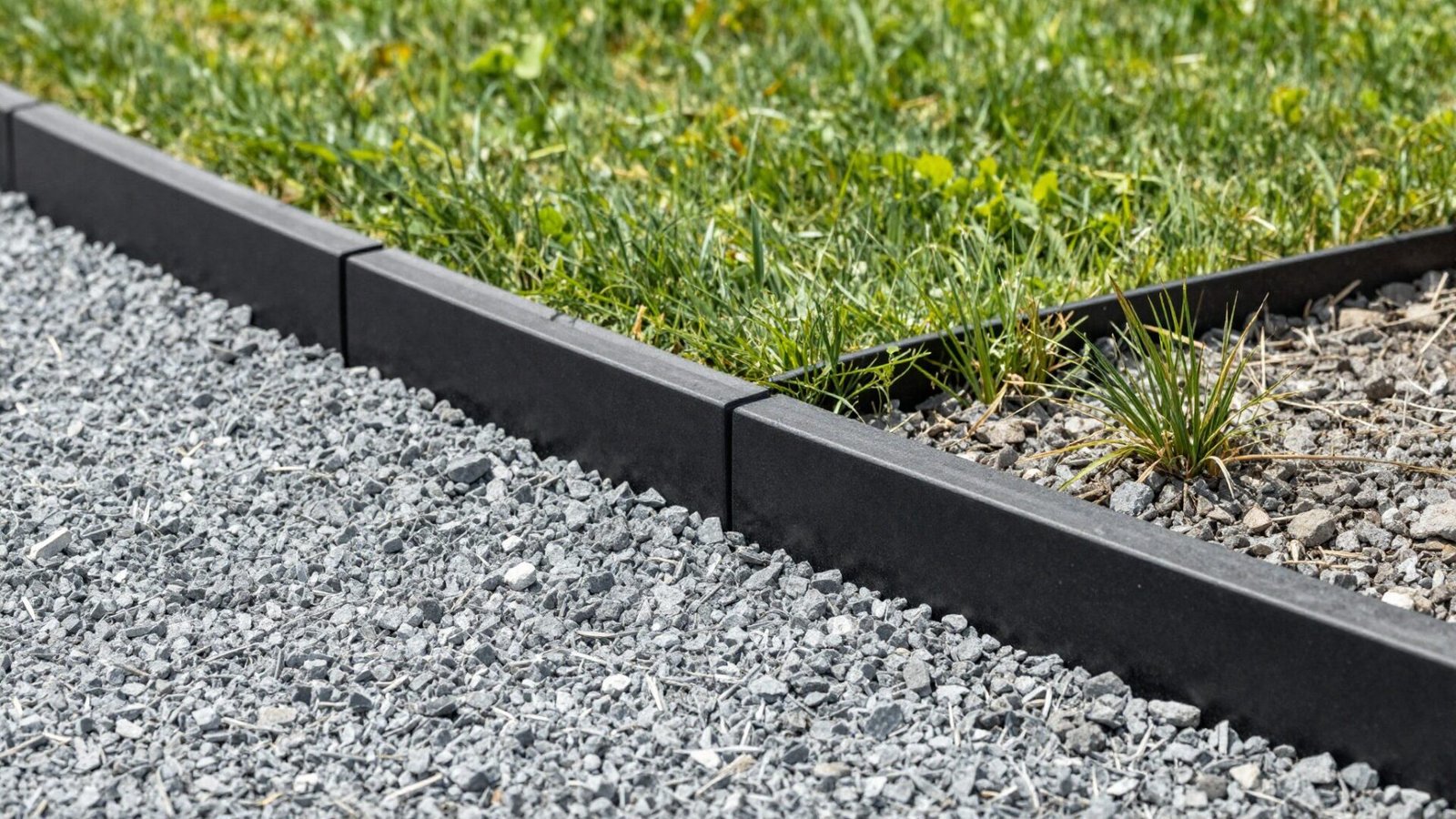
A clean edging strip between gravel and lawn does more visual work than either material alone. It’s the line itself that reads as intentional design.
Without it, gravel migrates into the grass and the whole boundary looks like it’s slowly falling apart.
💡 Smart tip: Choose steel or aluminum edging over plastic for a longer-lasting, straighter line that won’t warp under seasonal freeze and thaw.
⚠️ Mistake to avoid: Installing edging without accounting for lawn mower access. A poorly planned edge height can catch or damage mower blades.
13. Let a Rain Garden Handle Downspout Runoff
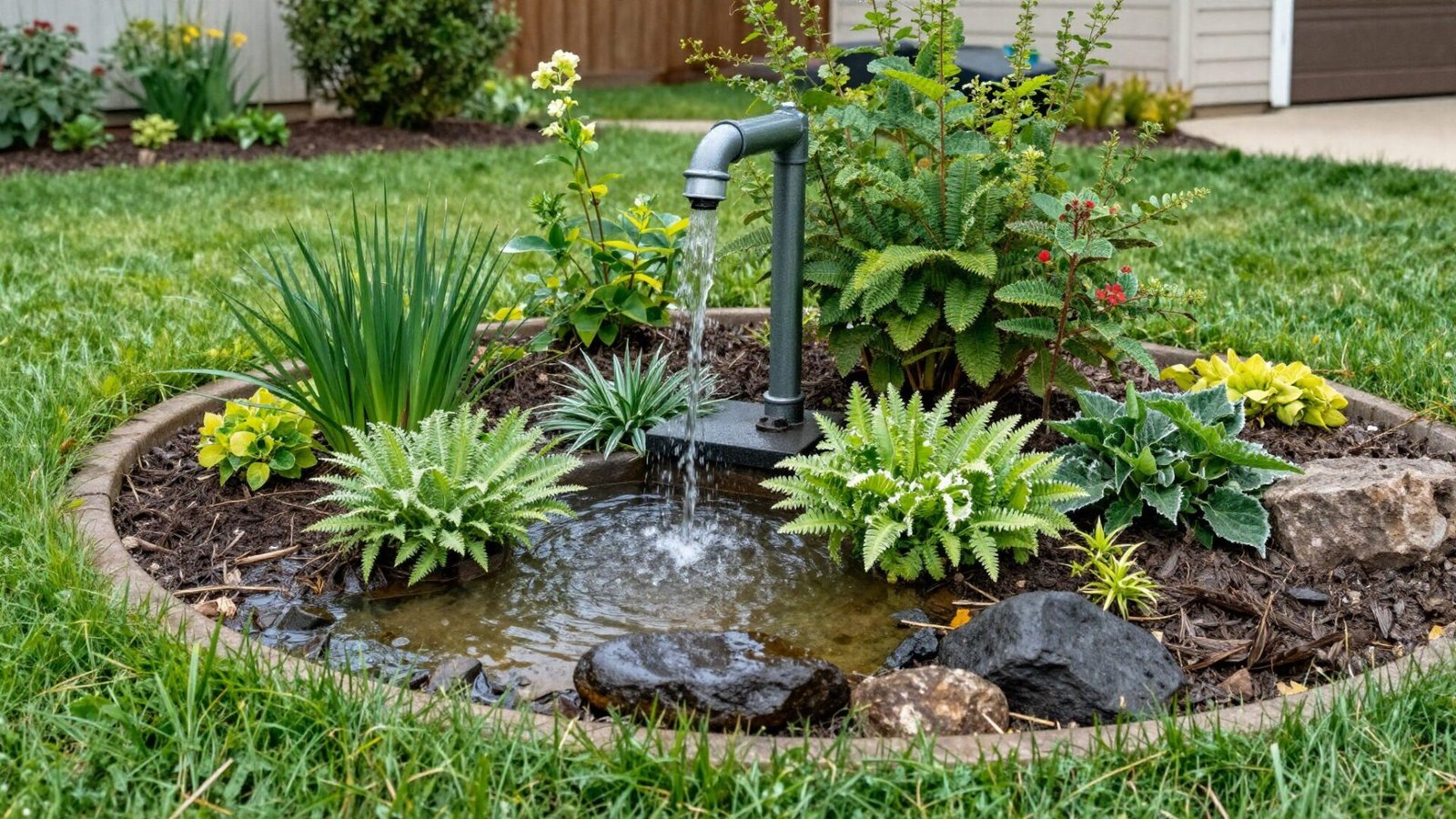
Instead of letting downspout water pool or run into the street, a shallow planted basin captures it and puts it to use.
Native, water-loving plants thrive here with essentially no supplemental irrigation, since the runoff does the watering for you.
💡 Smart tip: Position the rain garden at least 10 feet from your home’s foundation to keep excess water safely away from the structure.
⚠️ Mistake to avoid: Choosing plants that can’t tolerate both flooding and dry spells. Rain gardens need species built for both extremes.
14. Soften a Driveway Edge With Groundcover
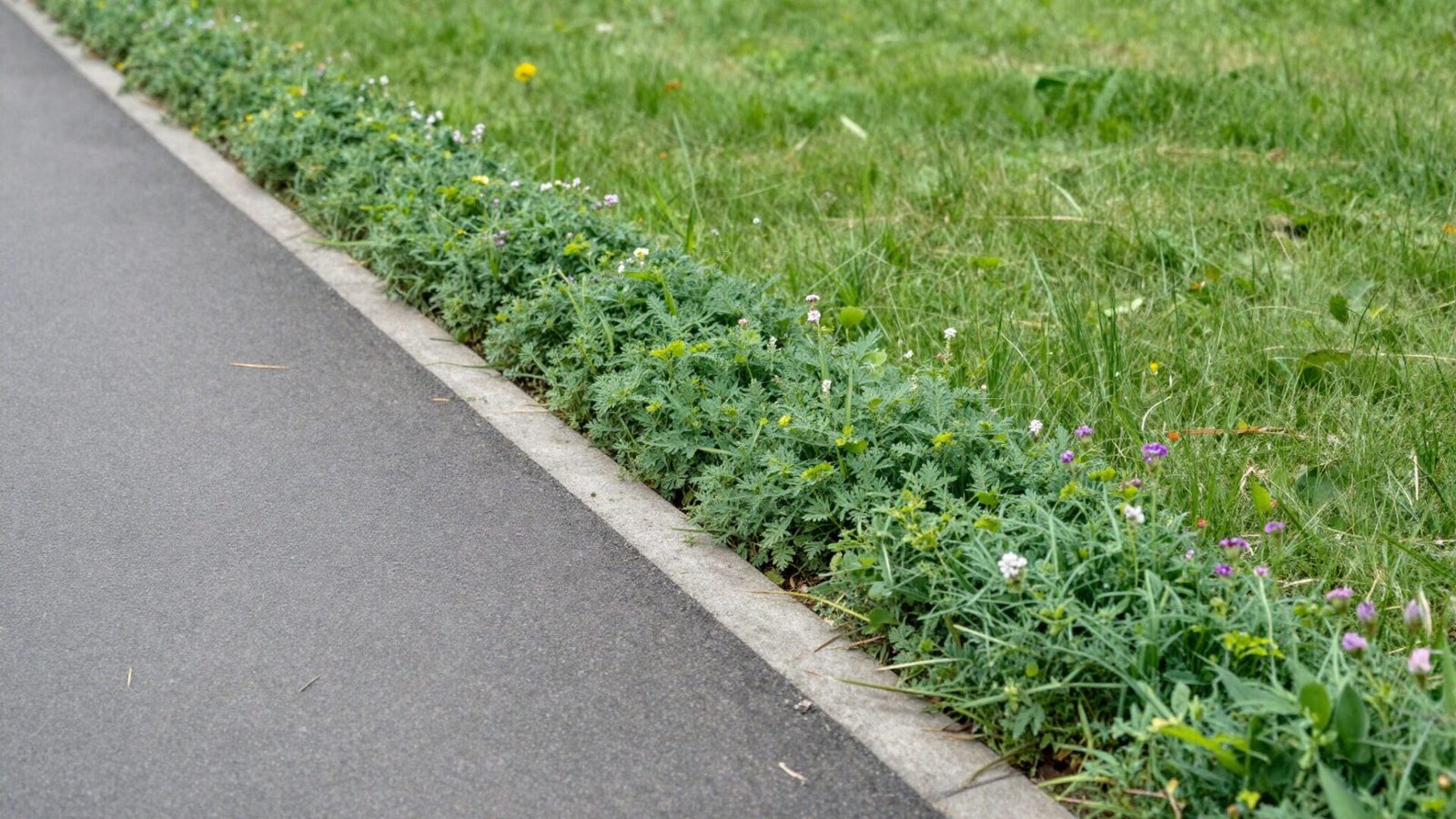
A hard concrete curb along a driveway creates a stark, utilitarian line. Low flowering groundcover along that same edge softens the transition considerably.
The plants also help hide minor imperfections in an older driveway’s edge that a hard border would only emphasize.
💡 Smart tip: Choose a spreading, low-growing variety that tolerates occasional foot and tire overhang without dying back.
⚠️ Mistake to avoid: Selecting a groundcover that grows too aggressively toward the pavement itself. Some spreading species will crack through asphalt seams over time.
15. Anchor the Entry With a Single Specimen Tree
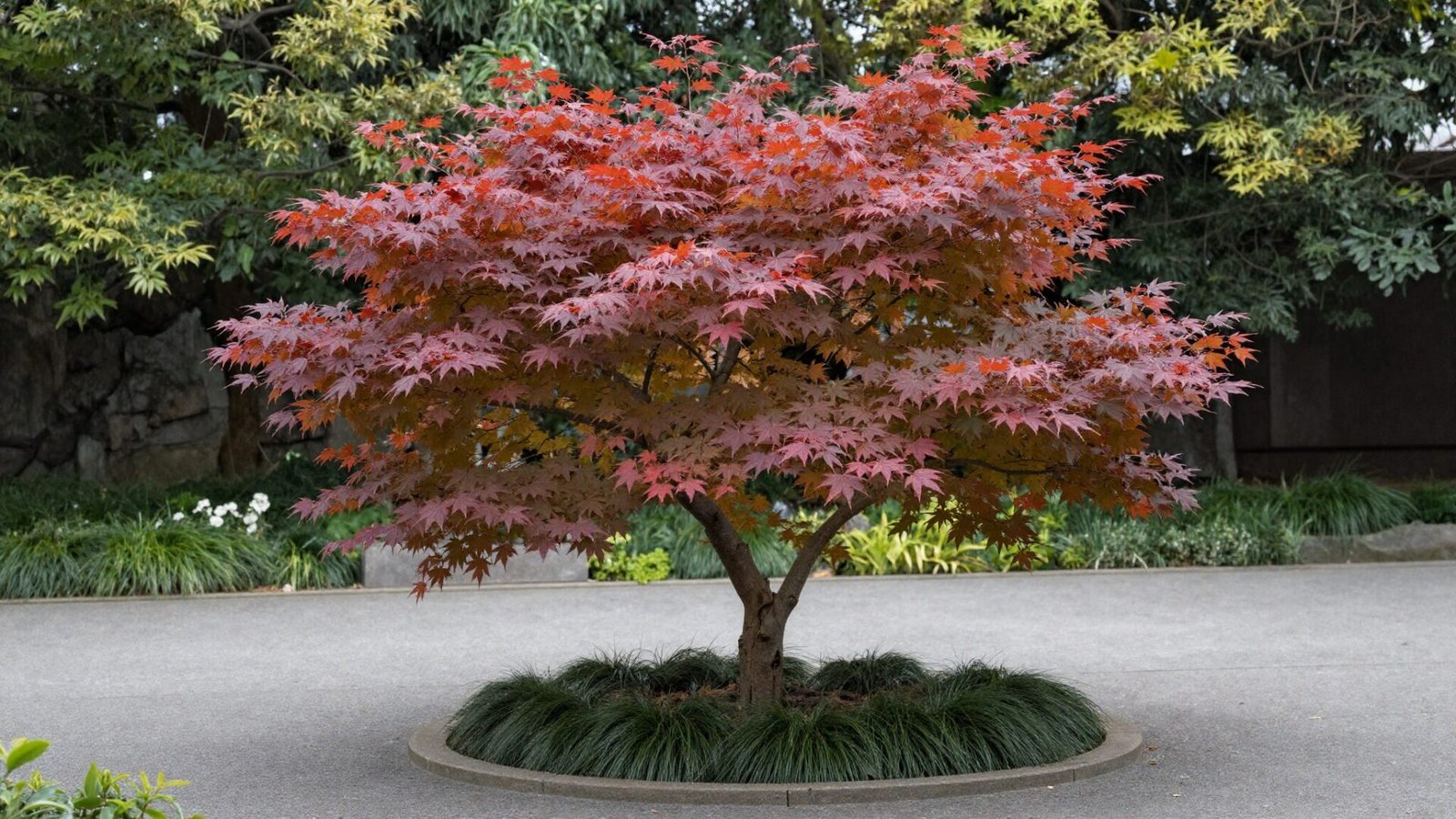
One well-chosen ornamental tree, like a Japanese maple, does more for a front walkway than a dozen scattered shrubs.
Its seasonal color shift also means the entrance actually looks different throughout the year instead of staying static.
💡 Smart tip: Position the specimen tree where it’s visible from the street but doesn’t block the house’s main architectural features.
⚠️ Mistake to avoid: Planting too close to the walkway itself. Roots from even a modest ornamental tree can eventually heave paving stones.
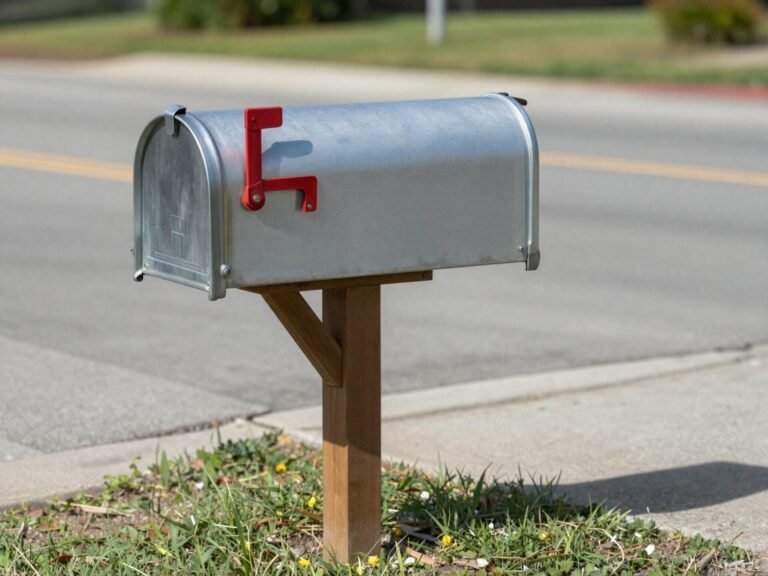
16. Coordinate the Mailbox With the Rest of the Yard
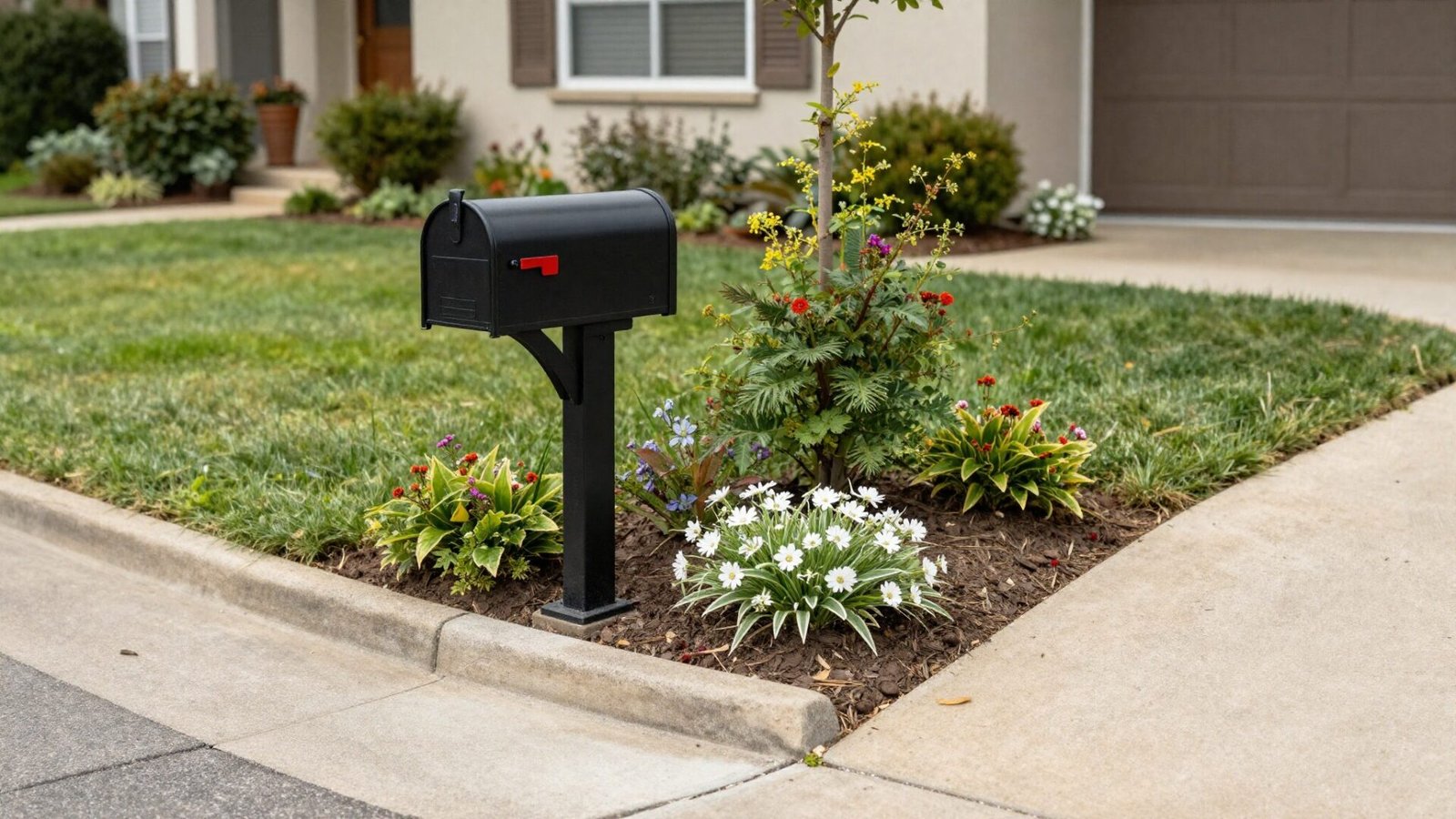
A mailbox standing alone at the end of a driveway often looks disconnected from everything else happening in the yard.
A small coordinated planting bed around its base ties it visually back into the overall landscape instead of leaving it as an afterthought.
💡 Smart tip: Choose low, tidy plants for this bed specifically, since it typically sits close to the street and needs to stay easy to maintain.
⚠️ Mistake to avoid: Planting anything tall enough to obstruct mail carrier or driver sightlines near the street. Keep this bed genuinely low.
Effort & Cost Snapshot
| Idea | Effort | Approx. Cost |
|——|——–|————–|
| 1. Winding Flagstone Path | Medium (DIY or pro) | $800–$4,000 |
| 2. Turf and Boulder Pockets | Medium–High (DIY or pro) | $1,000–$5,000 |
| 3. Linear Drain Channel | Medium (pro recommended) | $500–$2,500 |
| 4. Decorative Drain Cover | Low (DIY swap) | $80–$400 |
| 5. Concrete-to-Stone Replacement | High (pro recommended) | $2,000–$8,000 |
| 6. Layered Texture Yard | Medium–High (DIY or pro) | $1,500–$6,000 |
| 7. Interior-Matched Entrance | Low (furniture and planters) | $300–$2,000 |
| 8. Permeable Paver Driveway | Very High (pro required) | $8,000–$25,000+ |
| 9. Hidden Utility Screen | Low (DIY) | $150–$700 |
| 10. Boxwood Walkway Structure | Medium (DIY) | $300–$1,500 |
| 11. Arborvitae Privacy Row | Medium (DIY) | $500–$2,500 |
| 12. Crisp Material Edging | Low–Medium (DIY) | $150–$700 |
| 13. Downspout Rain Garden | Medium–High (DIY or pro) | $300–$1,500 |
| 14. Groundcover Driveway Edge | Low (DIY) | $80–$400 |
| 15. Specimen Focal Tree | Low–Medium (DIY) | $150–$800 |
| 16. Coordinated Mailbox Bed | Low (DIY) | $50–$250 |
The path to your front door does more work than most homeowners give it credit for. A few deliberate changes to the ground itself can shift how the entire property reads before anyone even reaches the porch.
Save this list to Pinterest so you can come back to it as you plan your own driveway and walkway upgrade, one section at a time.
Continue Your Home Transformation
Explore the full collection of step-by-step eBooks and get the guide that fits the room you're working on.