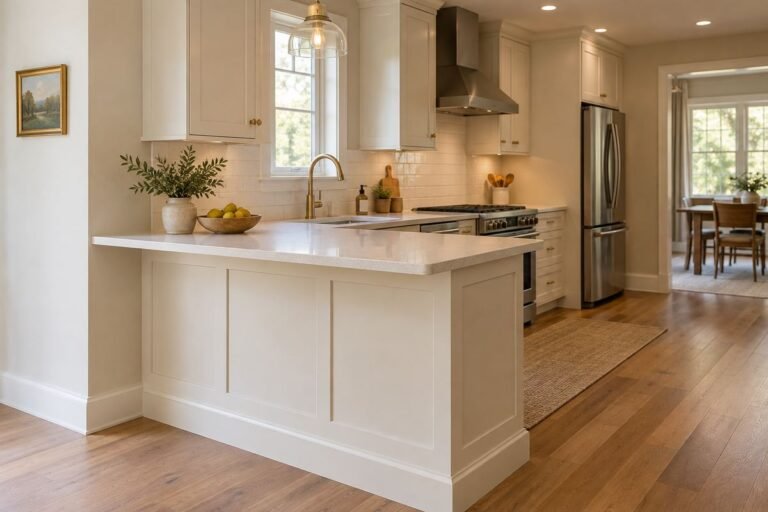
A breakfast nook should fit the people eating there while leaving the kitchen usable during the meal. Start with the occupied table and seats, then compare a freestanding bench, an L-shaped banquette or a compact two-chair corner. These 24 ideas include a fit test and a worked footprint example before you commit to furniture or joinery.
Choose the breakfast-nook layout before its finish
Set out the occupied seats, nearby doors and the route past the table at full size. Pottery Barn presents benches and banquettes as options for eat-in kitchens; their usefulness depends on the actual table, room and users. A compact appearance is not a substitute for an entry-and-exit test.
| Layout | Good question to test | Common conflict |
|---|---|---|
| Freestanding bench | Can it be moved for cleaning and other uses? | Table legs compete with seating positions |
| L-shaped banquette | Can each person enter and leave? | Inner diner must move everyone else |
| Two-chair corner | Does it meet everyday seating needs? | Extra occasional chairs occupy the route |
| Drop-leaf table | Does it work open and folded? | Expanded top conflicts with doors or cabinets |
These 24 illustrated options include furniture arrangements, storage choices, lighting, and finishing details. Treat them as alternatives to combine selectively. A two-person bistro corner can be just as successful as a custom banquette if it fits the room and feels comfortable.
Images are original AI-generated design concepts. They illustrate room arrangements, not tested products, exact dimensions, or construction instructions.
Compare Breakfast Nook Ideas During a Normal Meal
Compare breakfast nook ideas with the plates and cups used at an ordinary breakfast, then sit in every intended place. Next, have another person open nearby kitchen storage and pass the occupied table. For example, a pedestal can remove corner legs while its broad foot still affects the inner bench position. Test the easiest route for entering and leaving the seat before deciding that a longer bench means more useful places.
Check the Fit Before Choosing the Style
Mark the table and seating footprints with removable tape or paper, checking the finish first. Open nearby appliances, doors, and drawers. Test the arrangement with chairs occupied and allow a comfortable approach to each seat. Compare table underside height, bench height including cushions, knee space, and the manufacturer’s requirements. For more detailed measuring, use our dining-table sizing guide.
1. Compare Round-Table Breakfast Nook Ideas
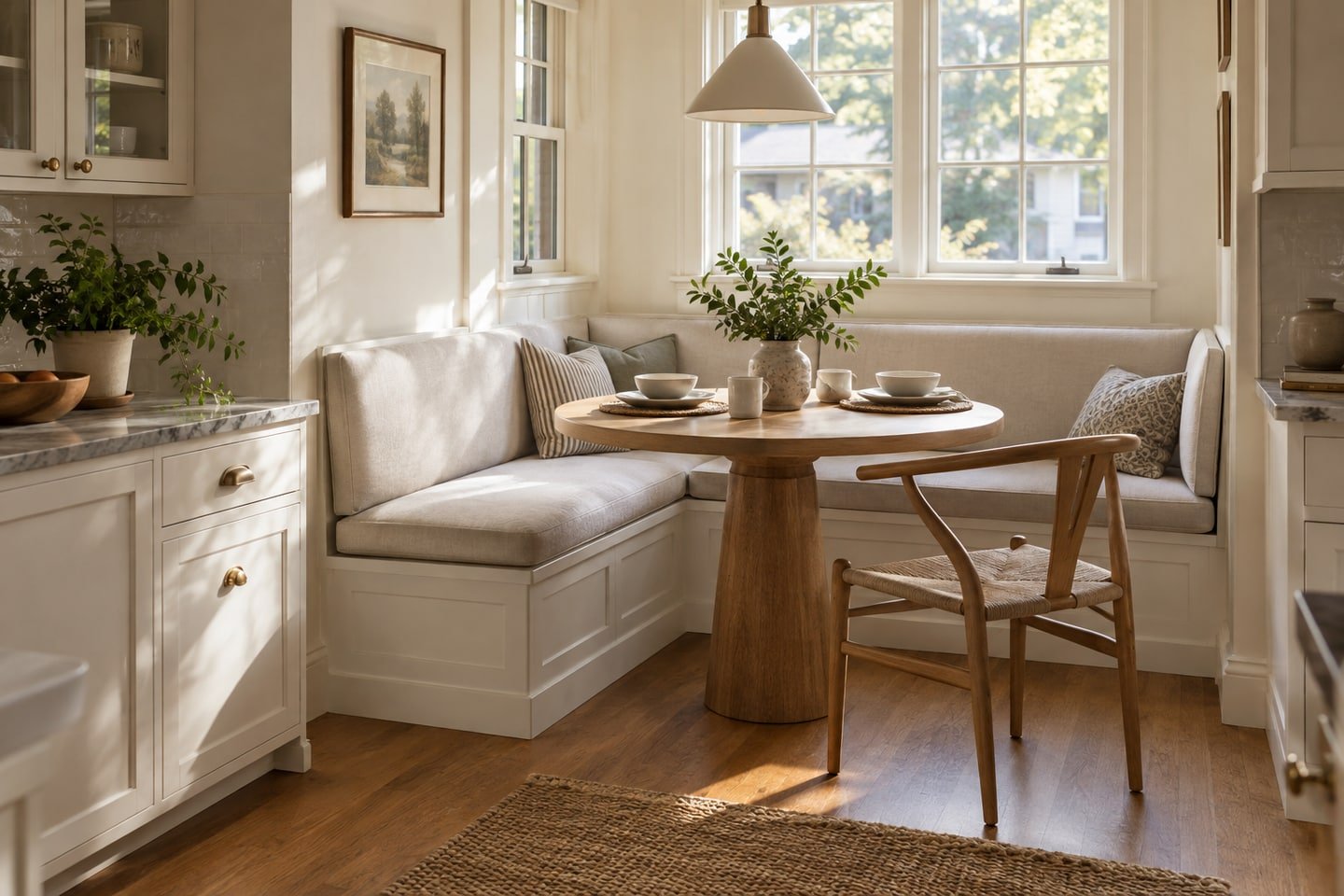
Compare a round table using the complete occupied circle, including chair backs. Check the base and foot positions with everyone seated. The absence of corners can help a route feel less abrupt, but a wide round top can still consume more useful kitchen space than a smaller rectangular table.
Check the base as carefully as the top. A wide pedestal foot can still catch your feet, and a small tabletop will not comfortably seat more people just because the bench is long.
Practical tip: Try the seating positions with plates on the table before deciding how many places you have.
2. Start With a Freestanding Bench
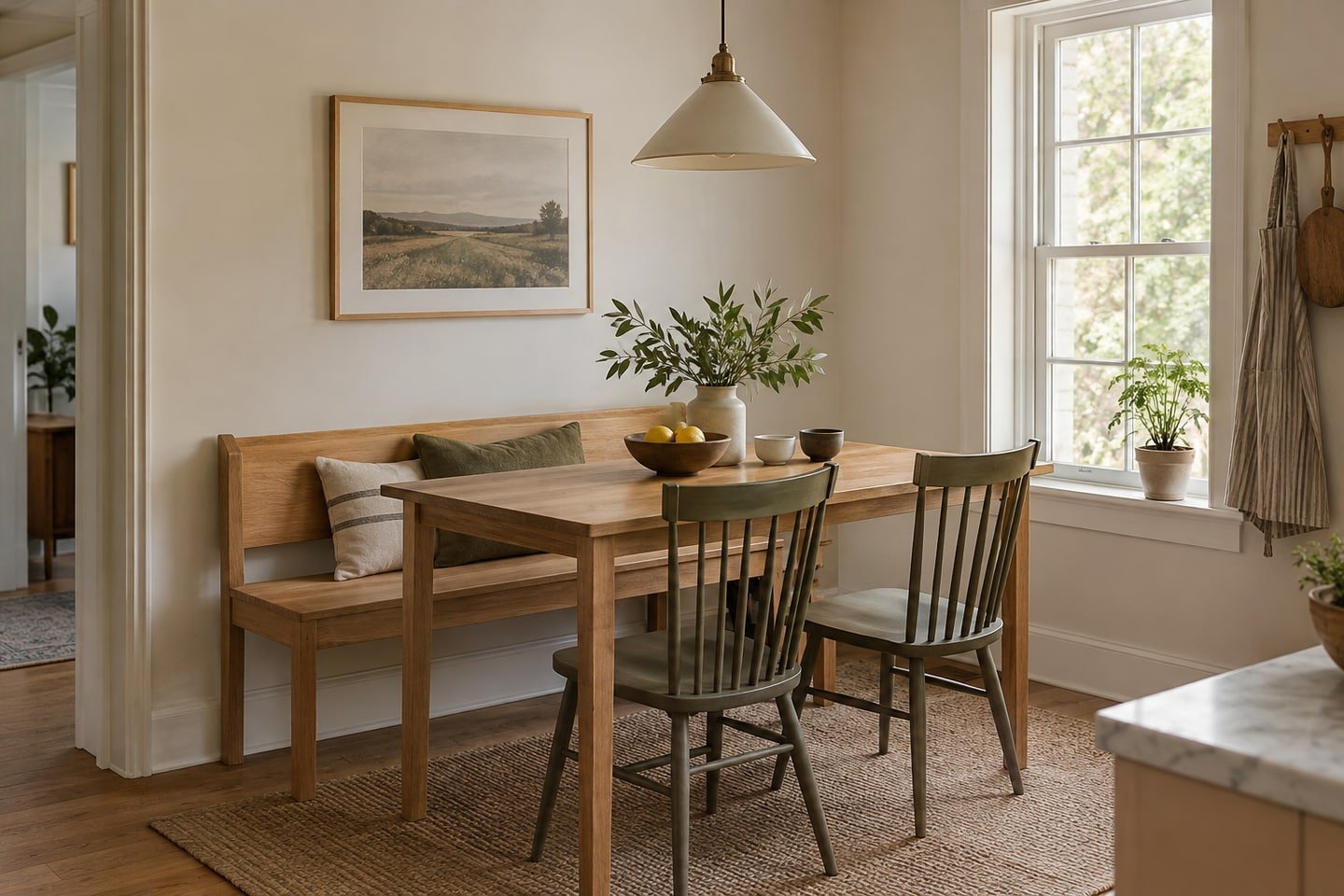
A dining bench against a wall gives you the feel of a nook without committing to custom cabinetry. It is a useful starting point in a rental or a room whose layout may change.
Choose a bench intended for seating and pair it with a table of a compatible height. Leave room to approach the seat from an open end rather than squeezing behind the table.
Practical tip: Measure seat height with the cushion included.
3. Give an L-Shaped Banquette an Open End

Keep one practical way into each occupied part of the banquette. Rehearse a meal with the usual diners and let the person in the inner seat leave first. If the table must move every time, compare an open-ended arrangement or fewer fixed seats before commissioning joinery.
Plan how each person gets in and out. A tightly enclosed corner may require everyone to stand up whenever the inner diner wants to leave; a shorter return can improve access.
Practical tip: Mock up the bench depth and the occupied chair positions together.
4. Use a Drop-Leaf Table for Two Everyday Places
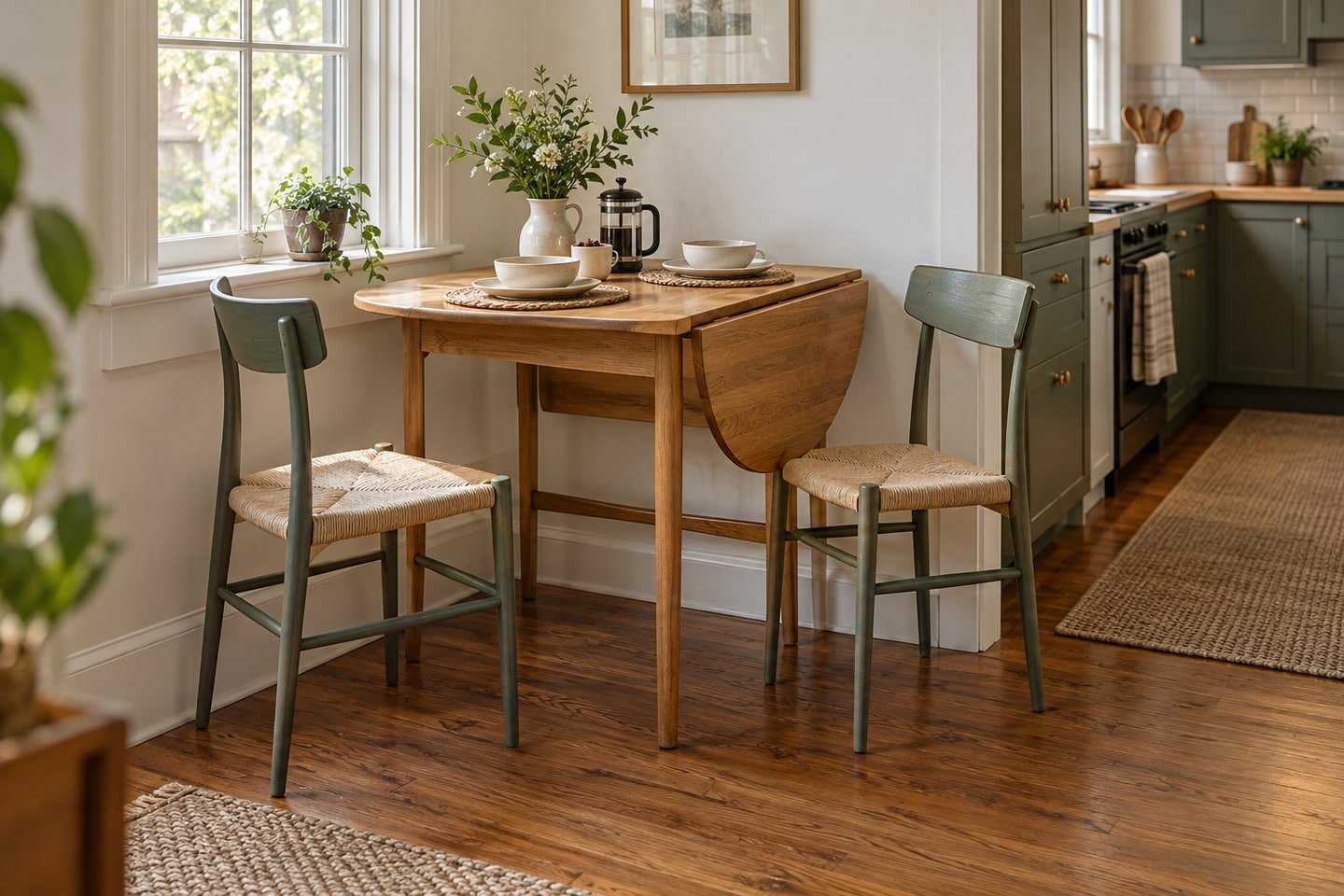
A drop-leaf table can stay compact for ordinary breakfasts and open when you need more surface. It works well when the room needs to recover its walking space between meals.
Compare the folded and extended footprints, including the supporting legs. Check that the raised leaf locks as designed and that neither configuration blocks a cabinet or doorway.
Practical tip: Keep the extra chairs somewhere accessible rather than crowding the folded table.
5. Run a Narrow Table Along a Straight Wall
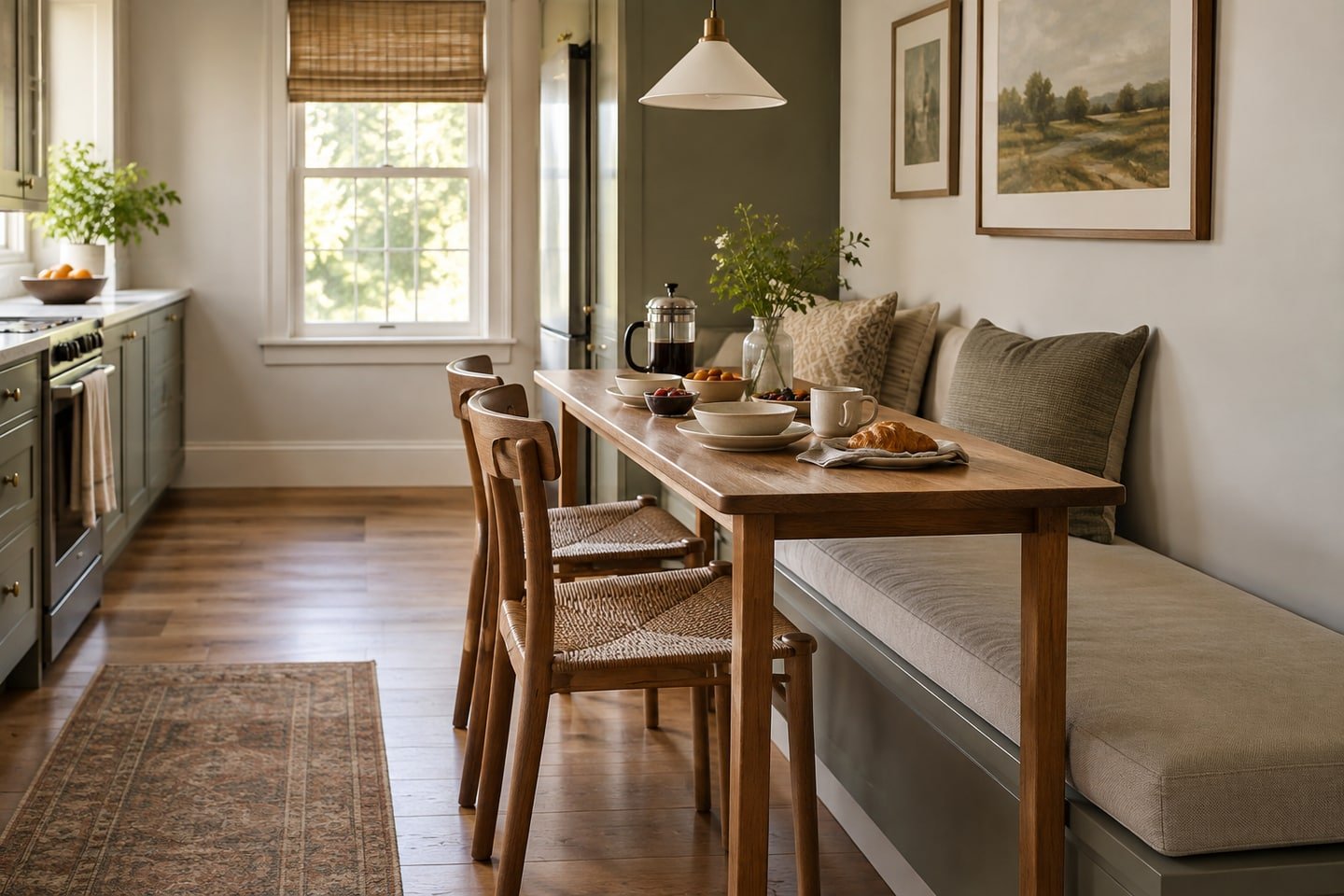
A long, shallow dining arrangement can suit a kitchen with more wall length than width. A straight bench on the wall side keeps the layout visually calm.
Do not reduce the tabletop until plates and glasses hang over its edges. The usable depth needs to suit the meals, and the outer chairs still need room to move when someone is seated.
Practical tip: Test a full place setting on a paper tabletop template.
6. Try Oval-Table Breakfast Nook Ideas Beside a Route
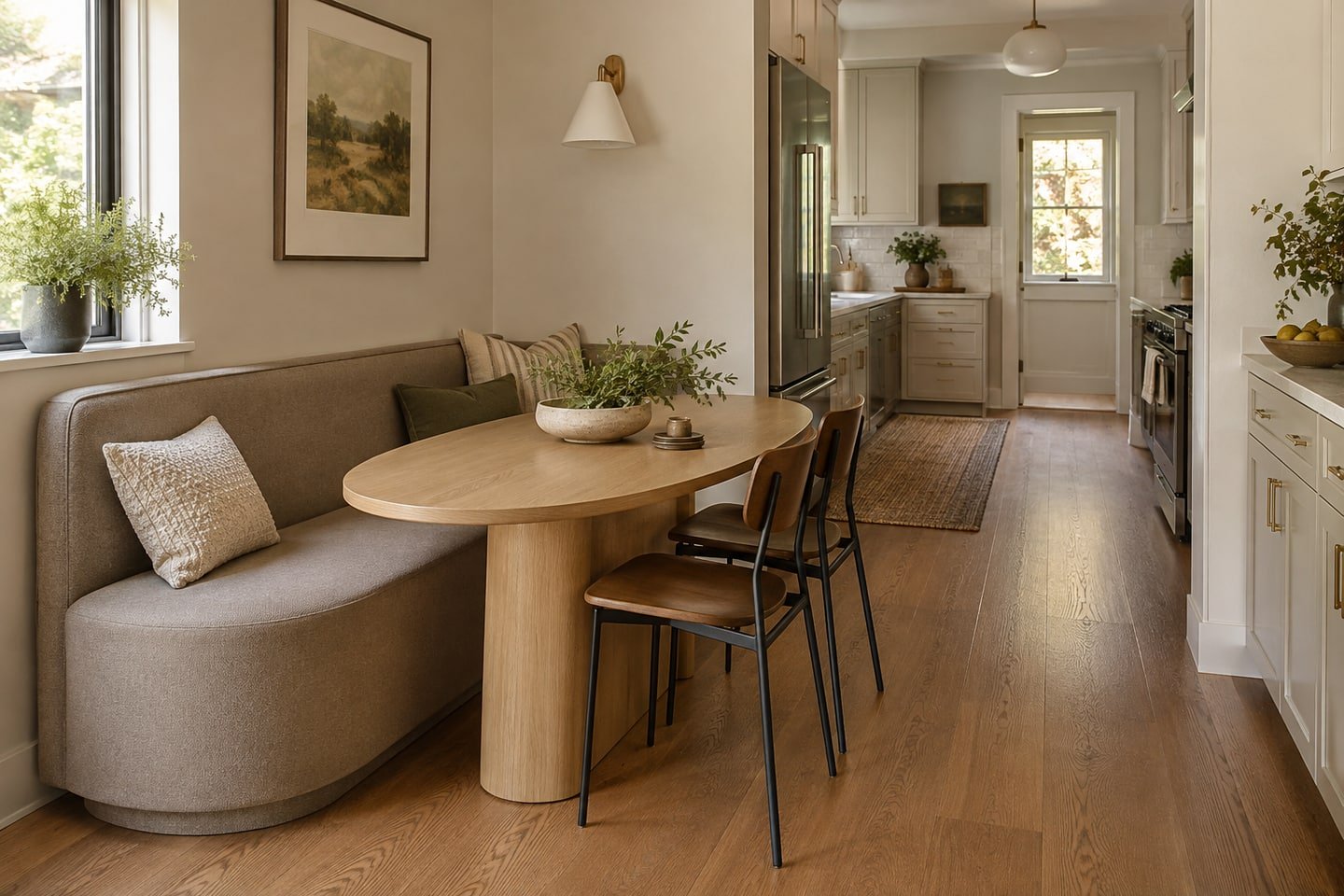
An oval tabletop can reduce the abrupt corners beside a route through an open kitchen. It offers a longer dining surface than a small round table without repeating a rigid rectangle.
Check where the legs meet the bench. A curved edge does not automatically solve cramped knees, and the narrow ends may not be useful seating positions.
Practical tip: Use the actual table dimensions rather than estimating from a photograph.
7. Let a Window Seat Become the Dining Anchor
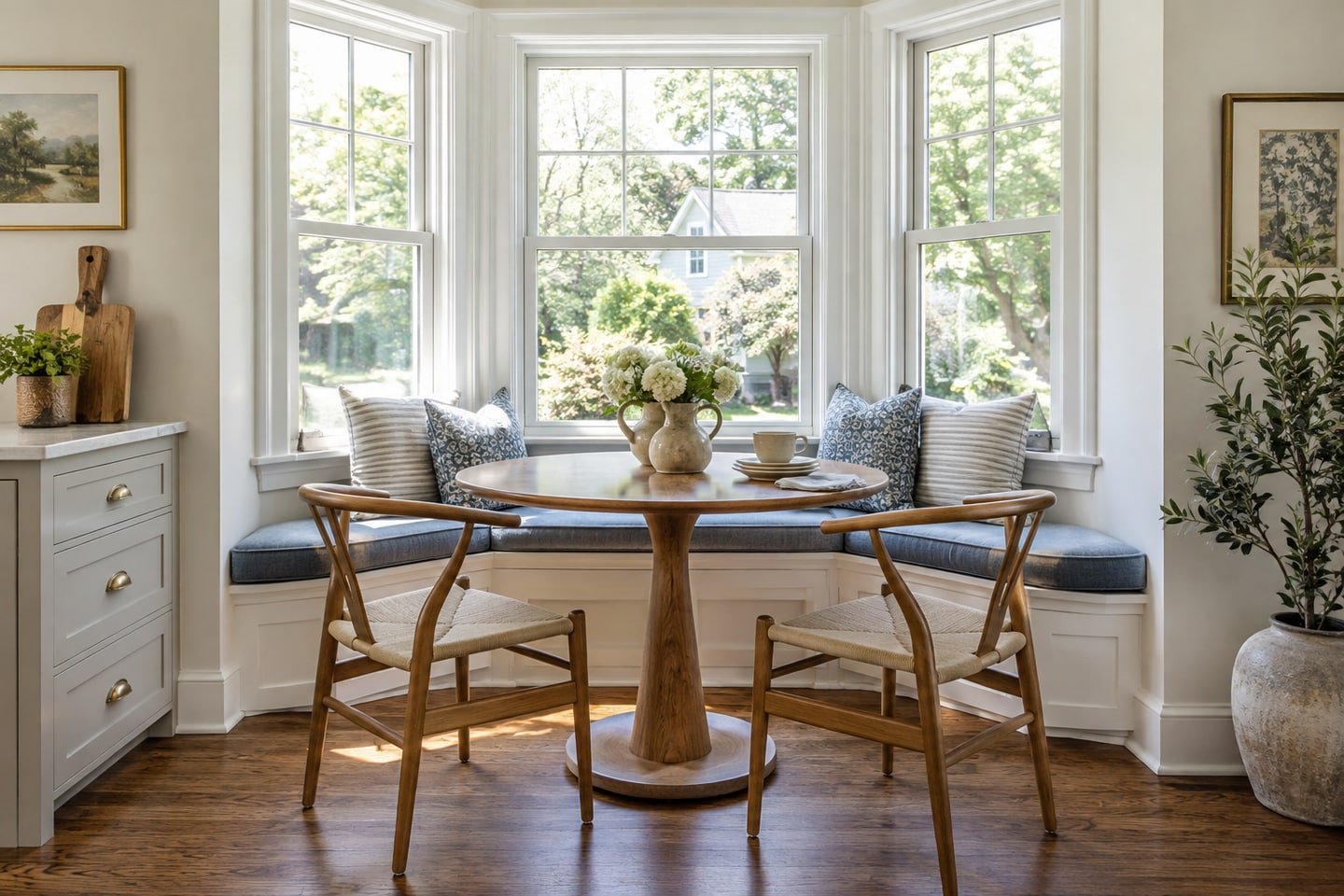
A suitable window bench can give a breakfast nook a clear focal point. Pair it with a table that lets diners use the view without having to lean across an oversized surface.
Check that the seat is intended to bear people and that windows, vents, radiators, and access panels remain usable. An ordinary low sill is not a substitute for a designed seat.
Practical tip: Open the window and test any nearby controls before finalizing furniture placement.
8. Make a Two-Seat Bistro Corner
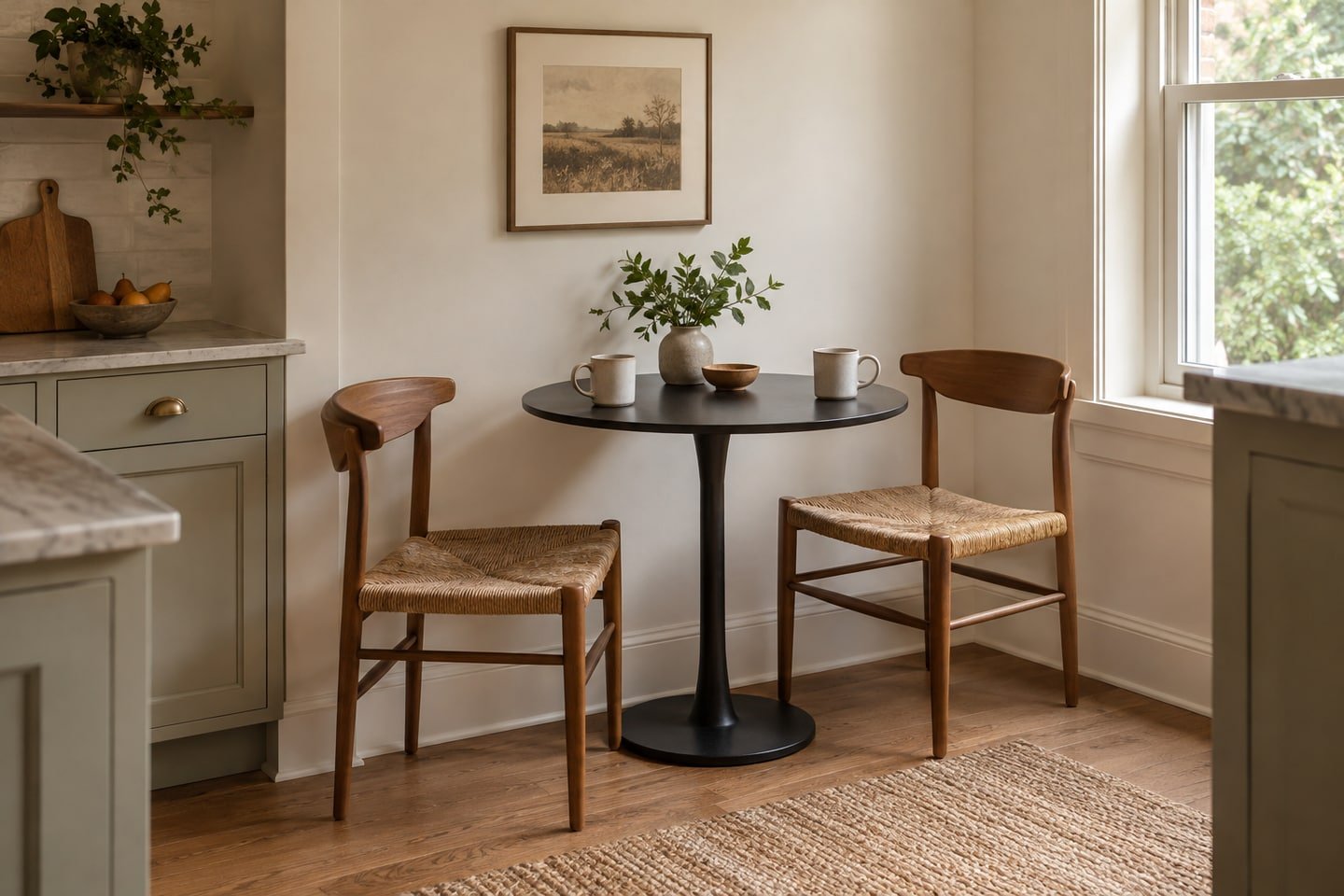
A nook does not need a bench. A small table and two comfortable dining chairs can make a neglected kitchen corner feel purposeful with very little furniture.
Give each chair a real place to pull out. Avoid choosing a delicate accent table solely for its size; it needs to work at dining height and hold the intended use.
Practical tip: Start with two seats if that is how the space is used most days.
9. Choose Front-Opening Bench Drawers
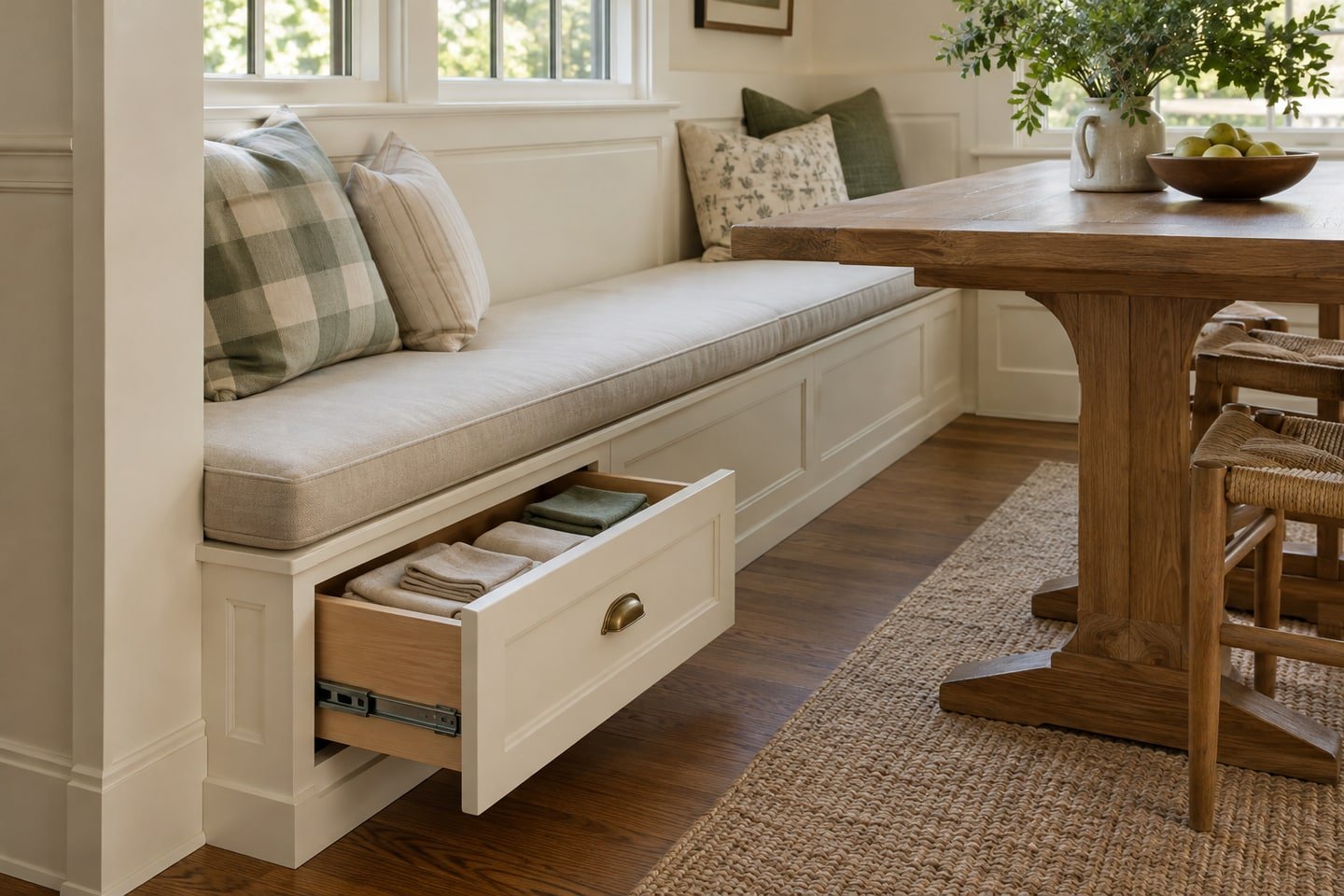
Test a front-opening bench drawer with the table, chair legs and feet in their normal positions. Measure the drawer’s usable interior separately from the bench dimensions. Storage that opens only after the whole dining group is moved may suit occasional supplies rather than everyday items.
Allow the drawer to open without hitting a table base or chair. Internal storage dimensions and runner access matter more than the appearance of the drawer fronts.
Practical tip: Put everyday napkins in the easiest drawer to reach from outside the nook.
10. Use a Purpose-Built Lift-Top Storage Bench

A lift-top dining bench can hold occasional table linens while leaving the walls simple. It suits items you do not need to retrieve every time somebody sits down.
Follow the product instructions for loading, hinges, and any lid supports. Do not improvise a heavy hinged lid or assume a storage chest is rated for seating.
Practical tip: Confirm that the lid opens fully without moving the table or striking the wall.
11. Choose Chairs That Actually Tuck Under

Measure chair width, arm height and the space between table legs, then try the chair pushed in and occupied. A catalog photo may show a different table base. Keep the seat comfortable at the tabletop and check that the back does not prevent the chair from tucking in as intended.
Armless chairs often tuck in farther, but check comfort rather than selecting by silhouette alone. A chair that disappears neatly may still feel awkward through an entire meal.
Practical tip: Measure the clear underside height of the table, not only its overall height.
12. Keep Breakfast Nook Ideas Open With Movable Chairs

A bench on the wall side and individual chairs on the open side create a flexible arrangement. You can remove one chair when the kitchen needs more room.
Avoid surrounding a tiny table with fixed seating on every edge. Movable chairs make it easier to clean, approach the bench, and adapt the arrangement to different diners.
Practical tip: Keep the most accessible seat available for whoever needs it.
13. Use a Low Back in an Open-Plan Room

A low-backed dining bench can mark the nook without creating a tall barrier between kitchen and living spaces. It works particularly well when the bench faces into the room.
Compare the seated view with the standing view. The back should support the intended use while letting the arrangement connect naturally to nearby furniture.
Practical tip: Match one material to the adjacent room instead of matching every furniture piece.
14. Repeat One Light Wood Tone
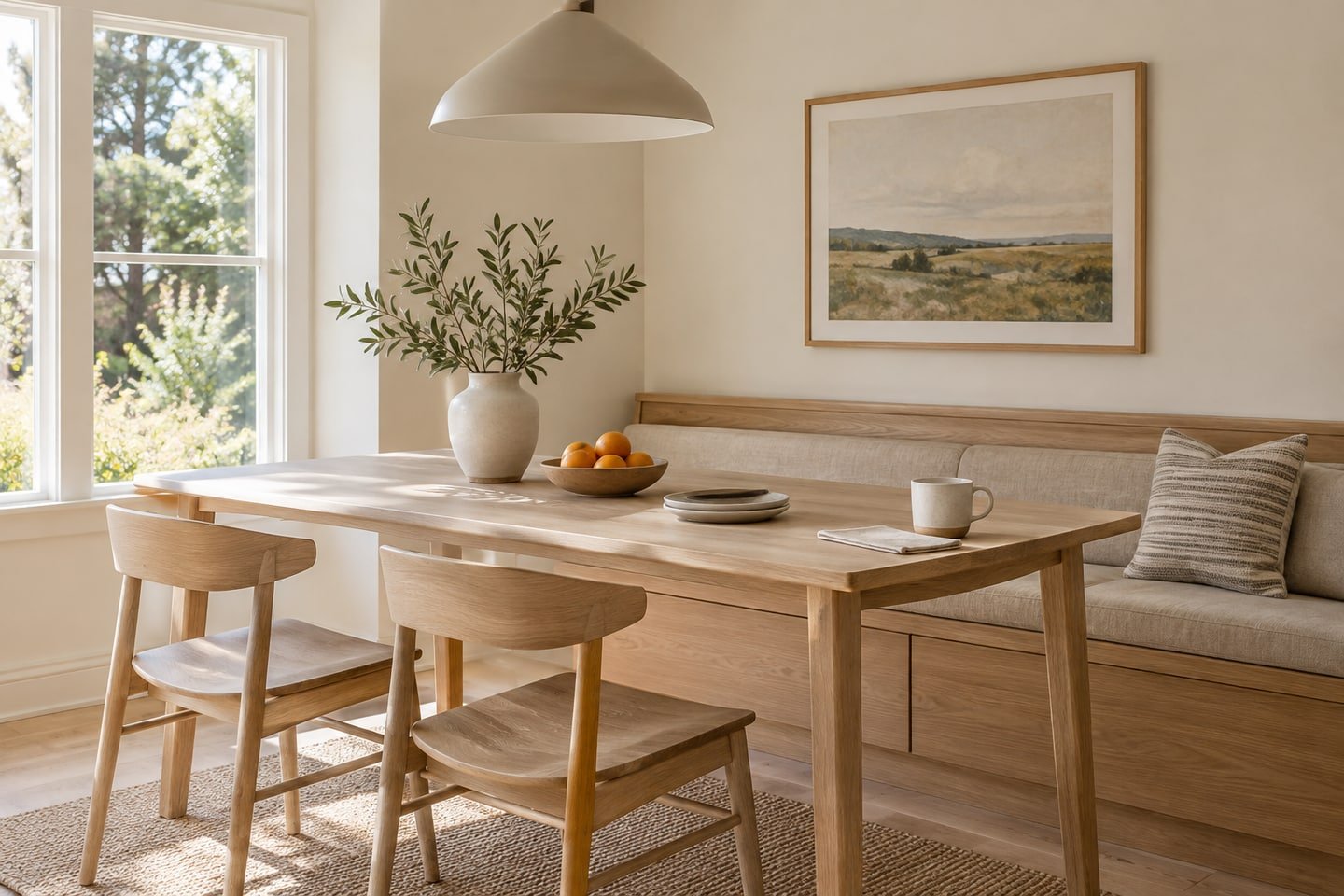
Repeating a wood tone across the table, bench details, or chair legs can make a small nook feel considered. It lets you vary the shape of the furniture without creating a busy collection.
The finishes do not have to match perfectly. Compare their warmth in the room and use fabric or paint to connect pieces with slightly different grain.
Practical tip: Bring a finish sample into the kitchen before ordering a large piece.
15. Use Removable Cushions in Breakfast Nook Ideas

A patterned seat cushion can give a plain nook personality without replacing its furniture. A small check or broad stripe also sits comfortably alongside simple kitchen cabinetry.
Choose a cover you can remove and care for according to its label. Confirm how the cushion stays in place and avoid extra thickness that makes the table feel too low.
Practical tip: Keep a sample near the countertop and flooring to check the colors together.
16. Define the Nook With a Painted Wall
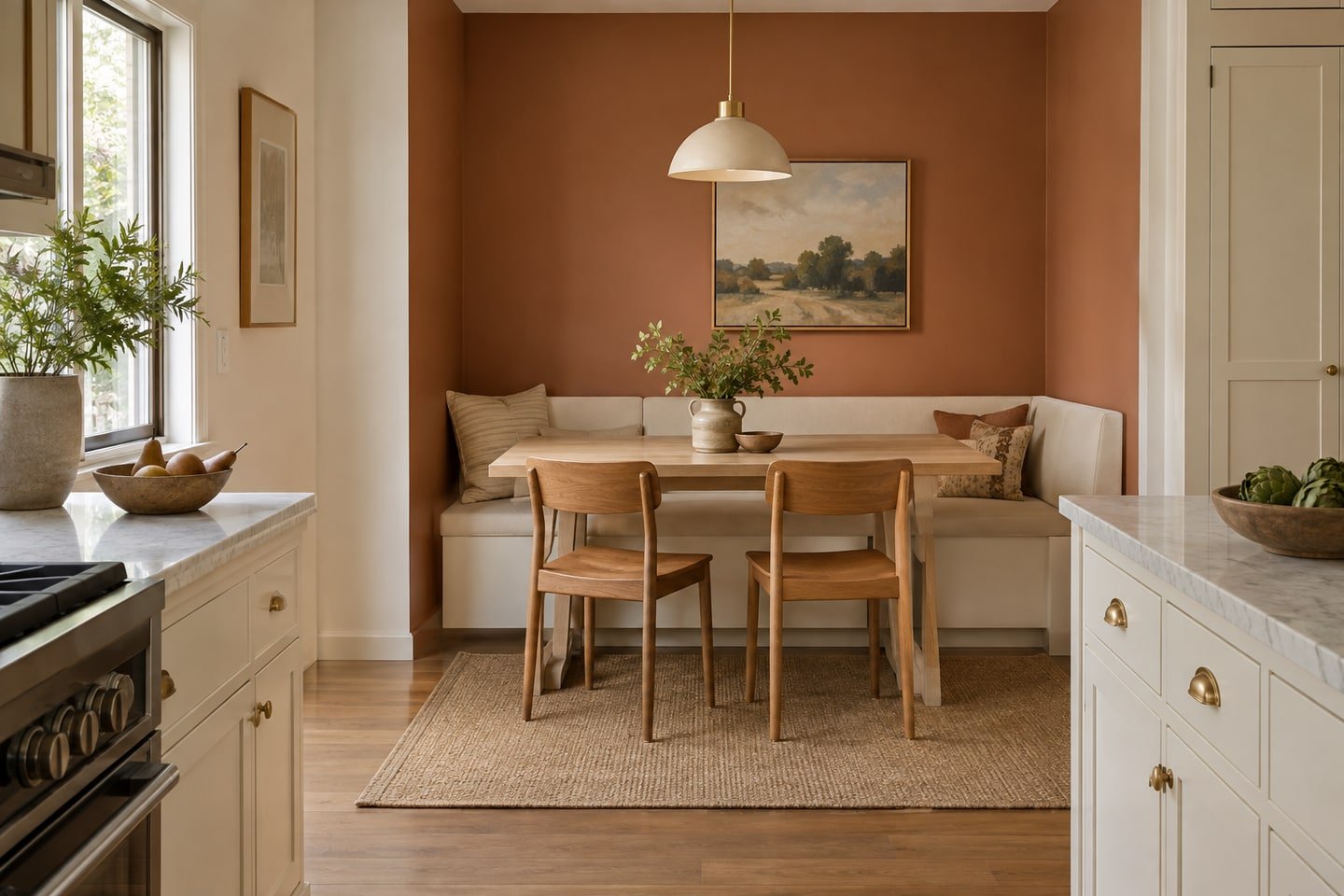
A single painted wall can distinguish a breakfast corner from the surrounding kitchen. The effect is useful when there is no architectural recess to explain where the dining space begins.
Choose the color with the room’s fixed surfaces in view. Keep the boundary intentional, such as an inside corner, rather than stopping at an arbitrary patch behind one chair.
Practical tip: Look at a large paint sample in morning and evening light.
17. Use Wallpaper as One Focused Backdrop

A wallpapered nook can carry the decorative interest while the table and seating stay simple. A restrained botanical or geometric repeat works best when you enjoy it at close range.
Keep it away from heavy splashing and follow the wallcovering instructions for the actual surface. Removable does not guarantee damage-free removal from every paint finish.
Practical tip: Order a sample and test suitability before committing to the whole wall.
18. Center the Pendant on the Table
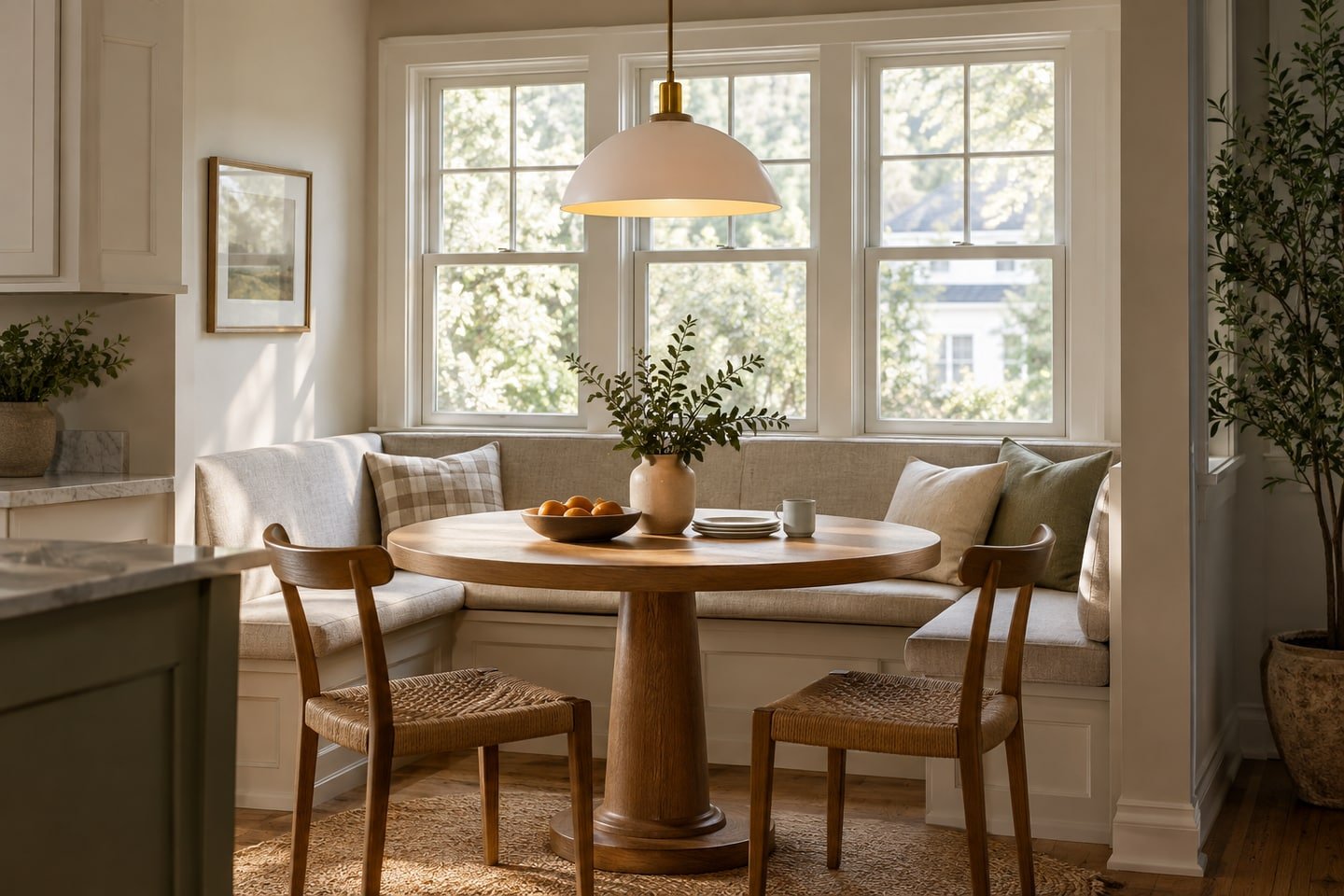
Locate the pendant over the final table position, with doors and seats tested, rather than over the geometric center of the corner. Check the fitting from sitting and standing positions and resolve electrical installation requirements. A lighting point should follow a workable layout instead of dictating an awkward one.
Check views across the room and head clearance with the actual furniture in place. Have electrical work handled as required for the home and fixture; a decorative image is not installation guidance.
Practical tip: Position the table first, then plan the light around it.
19. Move Accent Lighting Off the Table

A wall sconce can add evening atmosphere without taking space from plates and cups. It is particularly helpful when the table is already sized closely to the daily place settings.
Choose a fixture and position suited to the room, keeping cords and controls out of the seating area. Follow installation instructions rather than trailing a cable across a bench.
Practical tip: Check the light from a seated position to avoid glare at eye level.
20. Keep Breakfast Nook Ideas Shelves Clear of Movement

A shallow shelf beside the nook can hold a few frequently used cups or a small print. Keeping it to one controlled row makes the surface useful without turning it into another cupboard.
Install it for the intended load and wall type. Place it where people will not bump their heads while sitting down, and keep heavy or breakable objects secure.
Practical tip: Measure the shelf projection from the seated position as well as from the floor.
21. Keep Dining Supplies in a Slim Closed Cabinet

A small closed cabinet near the nook can hold breakfast dishes and table linens without putting everything on display. It is useful when you want the tabletop to stay clear between meals.
Test door and drawer movement alongside the occupied dining arrangement. Follow any required anchoring instructions and avoid fitting a tall unit into the only route past the table.
Practical tip: Store the items used at breakfast nearest the dining area.
22. Reset Breakfast Nook Ideas After Other Tasks
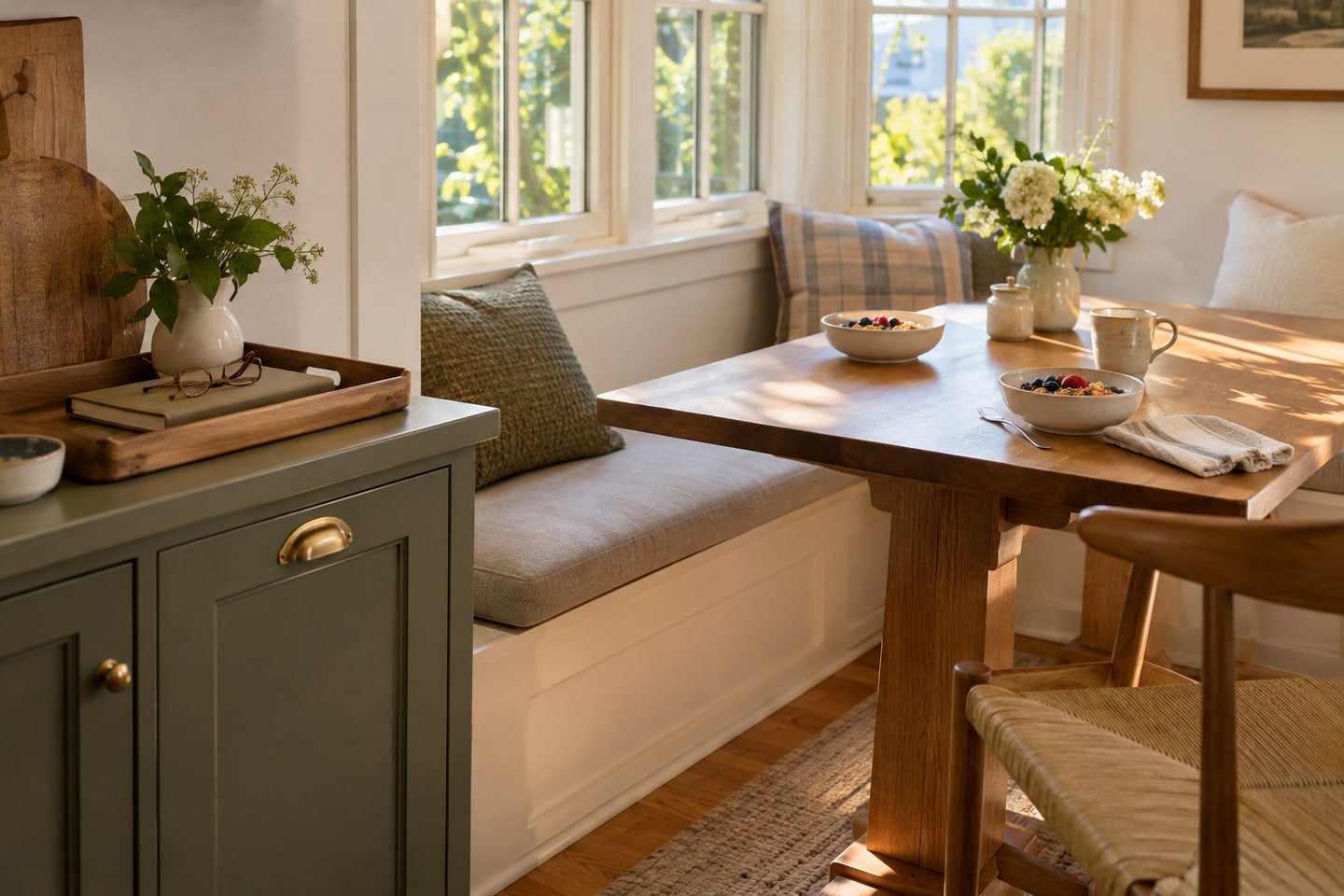
Give schoolwork or a laptop a separate storage destination before making the nook serve another task. Use a tray or a nearby cabinet for the temporary supplies, then test the complete reset before breakfast. A multipurpose nook works when the table can return to dining without a long sorting exercise.
Choose supportive dining seating first, then assess whether occasional work is comfortable. Clear drinks and work items before switching uses; a flexible nook should not become permanent overflow storage.
Practical tip: Keep a nearby home for the tray so clearing the table takes one trip.
23. Fit a Cordless Roman Shade Within the Window

A simple Roman shade can soften morning glare without placing a long curtain beside diners. Its tailored outline suits a compact nook where fabric should stay away from the tabletop and seating.
Choose a cordless window covering suited to the window and follow its fitting instructions. Read the care label: a removable fabric is not automatically machine washable. Check the folded stack against the opening sash, and keep fabric clear of cooking and heating equipment.
Practical tip: Test glare from the chair you use at breakfast before choosing the fabric opacity.
24. Leave the Floor Bare When a Rug Complicates Seating

A nook can feel finished without a rug. Keeping a continuous floor is especially useful when chair legs catch an edge or crumbs collect beneath a tightly fitted table.
Bring softness through the bench cushion and a restrained wall color instead. If you prefer a rug, test chair movement and cleaning access with the actual furniture before deciding.
Practical tip: Slide each chair in and out during a trial meal rather than judging only the empty arrangement.
Quick Questions Before You Plan a Breakfast Nook
Does a breakfast nook need a built-in bench?
No. A small freestanding bench or a compact table with separate chairs can work well when the room needs flexibility. Test the arrangement with people seated and the nearby doors open before choosing permanent joinery. Keep the normal route through the kitchen usable during meals.
Which window covering works beside the table?
Start with the amount of daylight and privacy you need, then check the product’s fitting and care instructions. A cordless design avoids dangling operating cords. Compare our kitchen window treatments for ways to balance light, privacy and access to the window.
Choose the Arrangement That Works Every Day
Choose the layout first, then add the pieces that make it pleasant to use. Begin with a comfortable table and the seats needed most days; bring in storage, lighting, and pattern only when each has a clear job. The nook should make breakfast easier and still leave the kitchen easy to move through.
For related planning, explore dining-table sizing guide and small-space coffee bar ideas.
Planning References
Pottery Barn: Planning an eat-in kitchen; IKEA: Flexible small-space dining; IKEA: Dining bench formats and fit considerations. Follow the instructions for the exact furniture and fixtures you select.
A worked breakfast-nook footprint to replace with your measurements
Suppose a rectangular table is 42 by 28 inches and the actual chair trial extends 24 inches beyond each of its two long sides. The occupied width in that direction is 28 + 24 + 24 = 76 inches. The 42-inch length still needs its own end-seat or entry test. These are assumed example inputs, not standard dining clearances.
Mark that occupied rectangle on the floor and add the route past it as a separate area. Open the nearest refrigerator, cupboard and room door. Bring an empty tray to the table and let each person leave the seat. Replace the 24-inch assumption with the result for your furniture and users, including any specific accessibility requirements.
Compare the trial against a bench layout using the same number of diners. Record where the seats begin, where knees meet the table base and how bench storage opens. Keep a photo of the successful mock-up with the measurements before requesting a custom quote.
Is a round table always best in a small breakfast nook?
Its base, diameter and occupied chair positions determine the result. Test it against a compact rectangular or drop-leaf table in the same corner instead of choosing by shape alone.
Should bench storage hold everyday dining supplies?
Only if it can be opened conveniently during the normal routine. A seat occupied during every meal may be a better home for occasional contents than for napkins needed while people are sitting.
For nearby food storage, use the pantry depth and retrieval worksheet to keep breakfast ingredients reachable.
References: Pottery Barn: eat-in kitchen and nook arrangements.
Optional digital guide for this topic
If you prefer a structured workbook, explore this related paid guide.