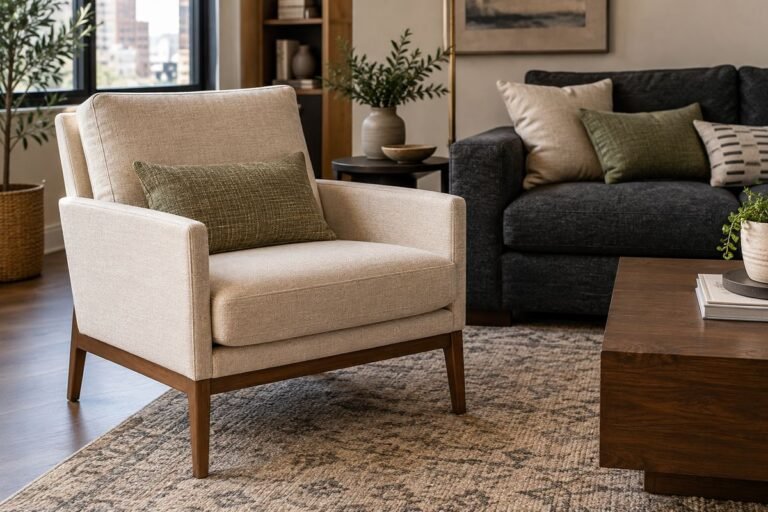
Sofa table ideas should solve the space behind the couch before they fill it with decoration. A narrow console can finish the back of a floating sofa, hold a reading light or provide a home for everyday objects. In a tight room, however, the wrong depth can turn a useful walkway into an obstacle.
Here, a sofa table means a console placed behind the sofa, rather than the coffee table in front of it. The ideas below cover placement, table construction, storage and styling so you can choose a combination that fits the room. You do not need to copy an entire arrangement; one suitable table and one useful job are enough to begin.
Measure the sofa back and the available floor area, then mark the table footprint with paper or tape suitable for your floor. Walk past it carrying the things you normally carry, and check reclining or sleeper mechanisms if your sofa has them. Compare the actual product dimensions and follow its stability and anchoring instructions.
The images are original AI-generated decor concepts, not installation diagrams or photographs of completed client projects.
Compare Sofa Table Ideas From the Walking Side
Mark the widest parts of the console, including feet and handles, then pass it carrying a normal bag or basket. Next, open its storage and any sofa mechanism before adding lamps or books. For example, a table may fit behind the back cushions while its basket needs more room to pull out. Judge visible sides from adjoining rooms and keep the arrangement that supports one useful task without narrowing the route.
Give the table a job and a measured footprint
Decide whether the table is mainly a visual divider, a storage piece or a place for a light. Check its depth, leg positions and access from the walking side. A console that looks slim in a photograph may still have projecting feet or handles. Keep power cords out of routes and use furniture according to its load and stability instructions.
1. Fit Slim Sofa Table Ideas Between Sofa and Wall
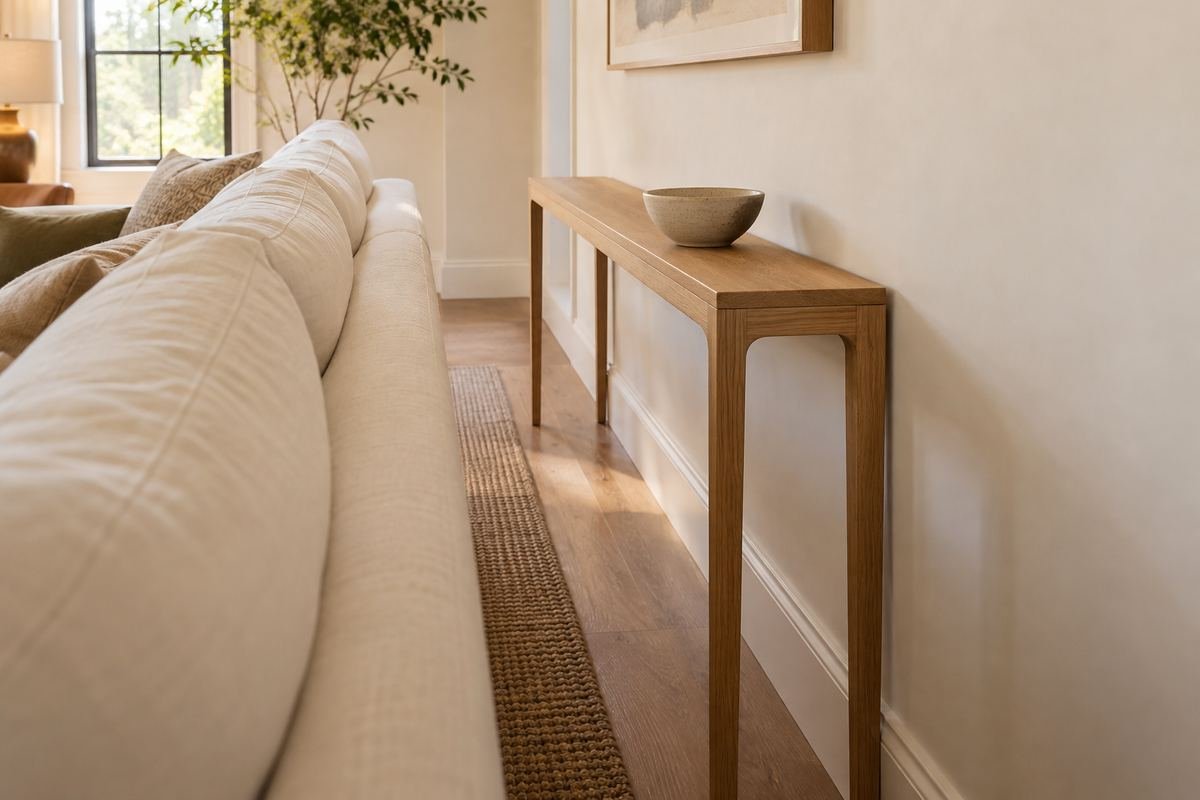
A slim table can create a narrow landing behind a sofa that already sits near a wall. It is useful when the room needs a place for a small object or light, but a deeper storage cabinet would push the seating too far into the room.
Check the complete footprint, including the feet, and leave access to any outlets you need. A long narrow table may still need an appropriate fixing arrangement; being tucked behind the sofa does not automatically make it stable.
Practical tip: Mock up the depth before moving the sofa.
2. An open console behind a floating sofa

An open-legged console gives the back of a floating sofa a considered finish while retaining views through the room. It can define the seating area without turning the boundary into a solid block of furniture.
Look at the console from the entrance and from adjacent dining or work areas. Its back and underside may be visible, so choose a piece finished on the sides that face the room, and keep the floor beneath it easy to clean.
Practical tip: Check every visible side of the furniture.
3. A lower shelf with two matching baskets

Baskets on a lower shelf give loose blankets or small living-room items a place to return. Using just two similar baskets can make the storage easy to understand without turning every opening into a different decorative display.
Measure the shelf opening and the basket handles, then test how the basket will slide out. If the console faces a walkway, storage should be accessible without leaving containers permanently projecting into the route.
Practical tip: Measure the handle height as well as the basket body.
4. Shallow drawers for the small things that wander
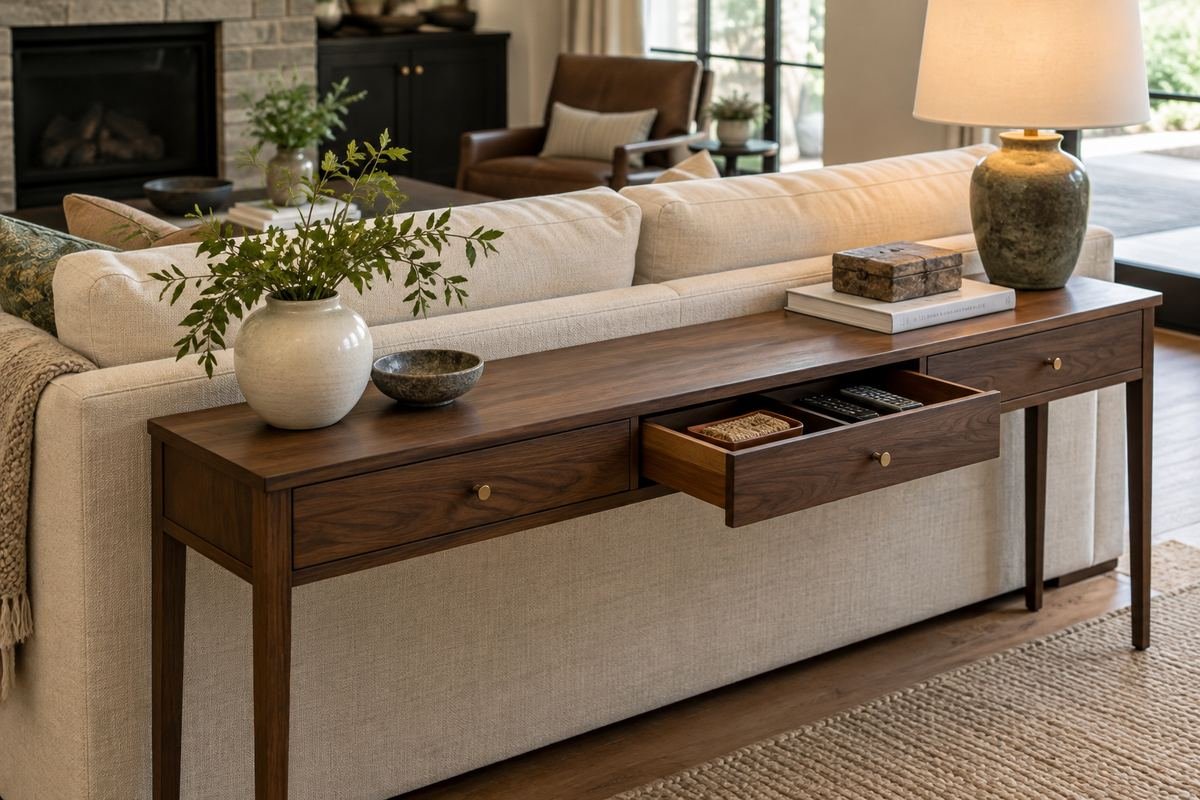
A console with shallow drawers can gather remotes, notebooks and charging accessories that otherwise spread across the room. It works best when the contents are small enough to remain visible and easy to sort.
Check drawer movement from the side where you will use it. A handle can catch clothing in a tight route, so compare projecting pulls with simpler recessed details before selecting the furniture.
Practical tip: Open the drawers in the floor plan.
5. A low closed cabinet for a quieter boundary

Closed storage can be useful behind a sofa when the room has no other place for games or occasional-use items. A cabinet gives the seating area a stronger visual boundary than an open console, so choose its mass deliberately.
Compare the cabinet height with the sofa cushions and the views through the room. Doors need room to open, and the piece should be installed according to its stability requirements rather than simply wedged behind the couch.
Practical tip: Balance concealed storage against the visual bulk.
6. Compare Paired Sofa Table Ideas Along a Long Sofa

Two compatible tables can serve a long sofa when a single piece is difficult to find. Repeating the same height and depth keeps the arrangement looking intentional rather than like two unrelated pieces pushed together.
Check the joint and all leg positions before buying. The pair should each stand securely, and a small alignment difference can be very noticeable across a long sofa back. Do not bridge the joint with a heavy object that relies on both tables for support.
Practical tip: Measure both pieces independently.
7. Rounded table ends beside a busy route
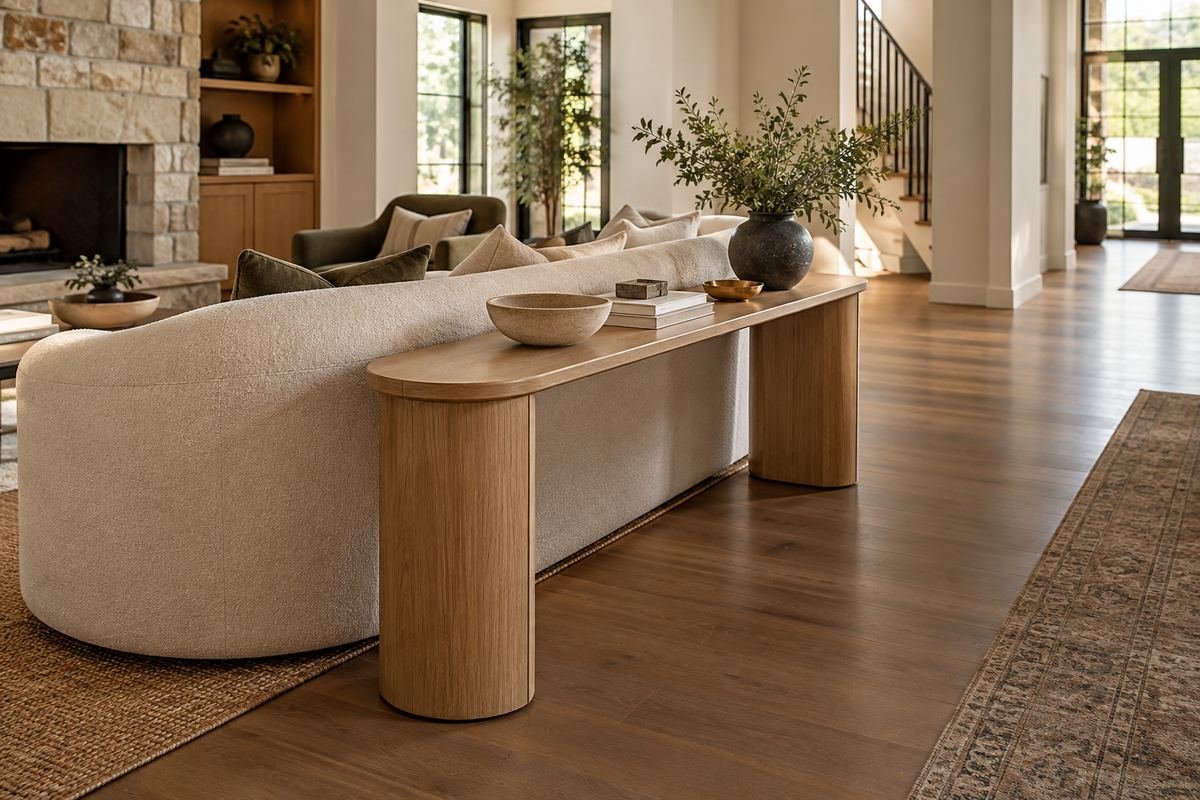
A console with rounded ends can soften the appearance of a table that sits near a turn in the walking route. The curve can also relate to a rounded sofa or circular coffee table elsewhere in the room.
Rounded corners do not compensate for a table that is too deep. Mark the widest point of the curve on the floor and check the route there, especially where people turn toward a door or dining chair.
Practical tip: Measure the curve at its widest point.
8. Natural wood with a restrained display
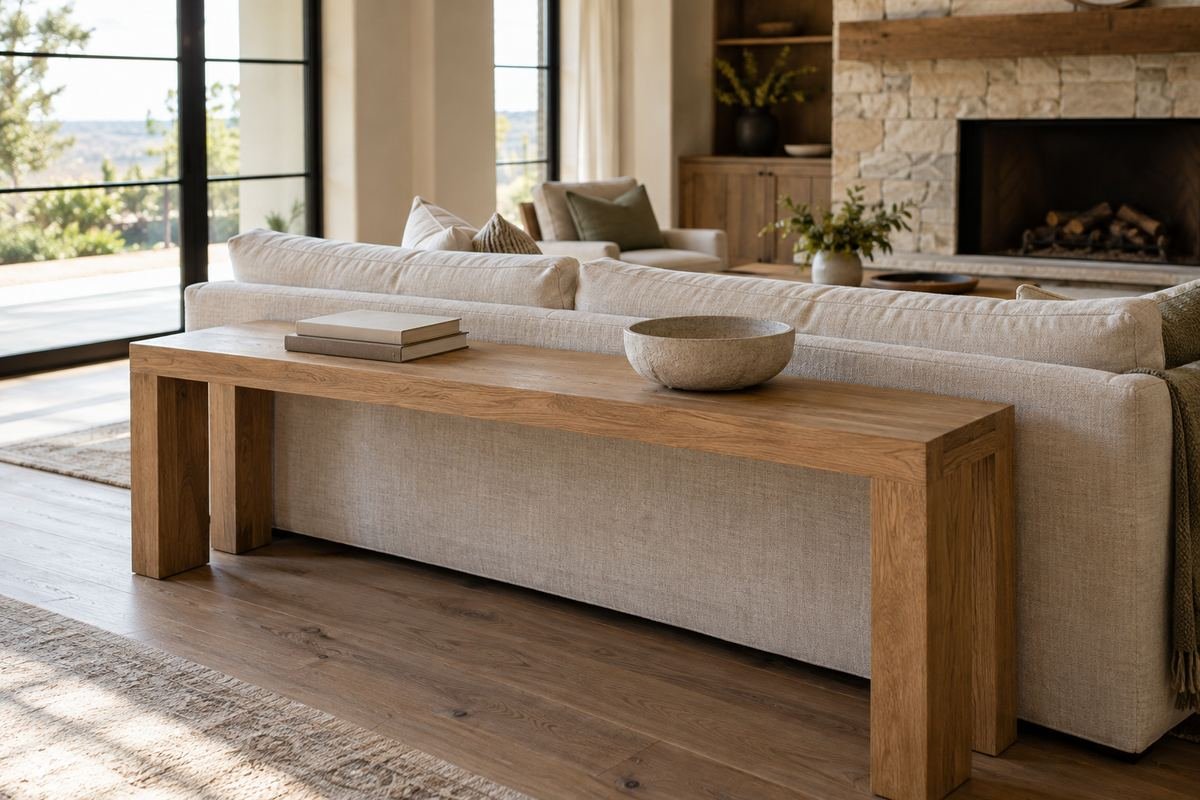
A simple wood console can provide enough character through its grain and proportions. Pair it with a small number of objects so the table remains a piece of furniture rather than disappearing beneath a crowded collection.
Look at the wood sample beside the floor and sofa legs. A close but imperfect match may feel less convincing than a deliberate contrast, so compare undertones in the room’s normal daylight.
Practical tip: Let the material be part of the decoration.
9. A dark console that gives a pale sofa definition

A dark table can draw a clear line behind pale upholstery and connect to a darker window frame or other furniture. A slim profile keeps that contrast from dominating the seating area.
Consider what is reflected on glossy finishes and how often the top will need dusting. If the room already contains several strong dark outlines, keep the objects on the table quieter so the arrangement has room to breathe.
Practical tip: Repeat a dark finish selectively.
10. Glass and metal where visual openness matters
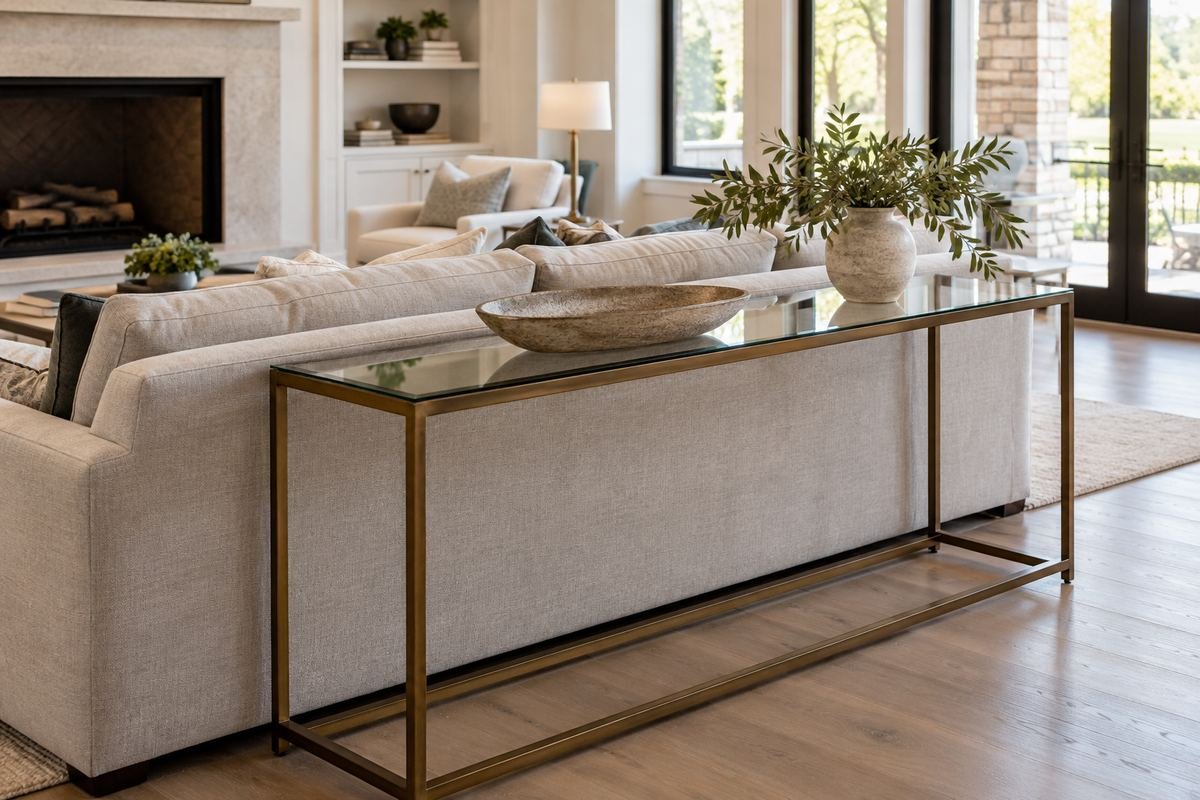
A glass-topped table with a simple metal base can keep the sofa boundary visually light. It may suit a room where a solid top or a bulky cabinet would block a useful sightline.
Choose furniture intended for the use and consider its edges, cleaning and household needs. Clear glass can be difficult to notice when approaching from an angle, so assess the table in the actual route rather than assuming transparency always helps.
Practical tip: Check the table’s visibility as well as its openness.
11. A ribbed front for one strong texture
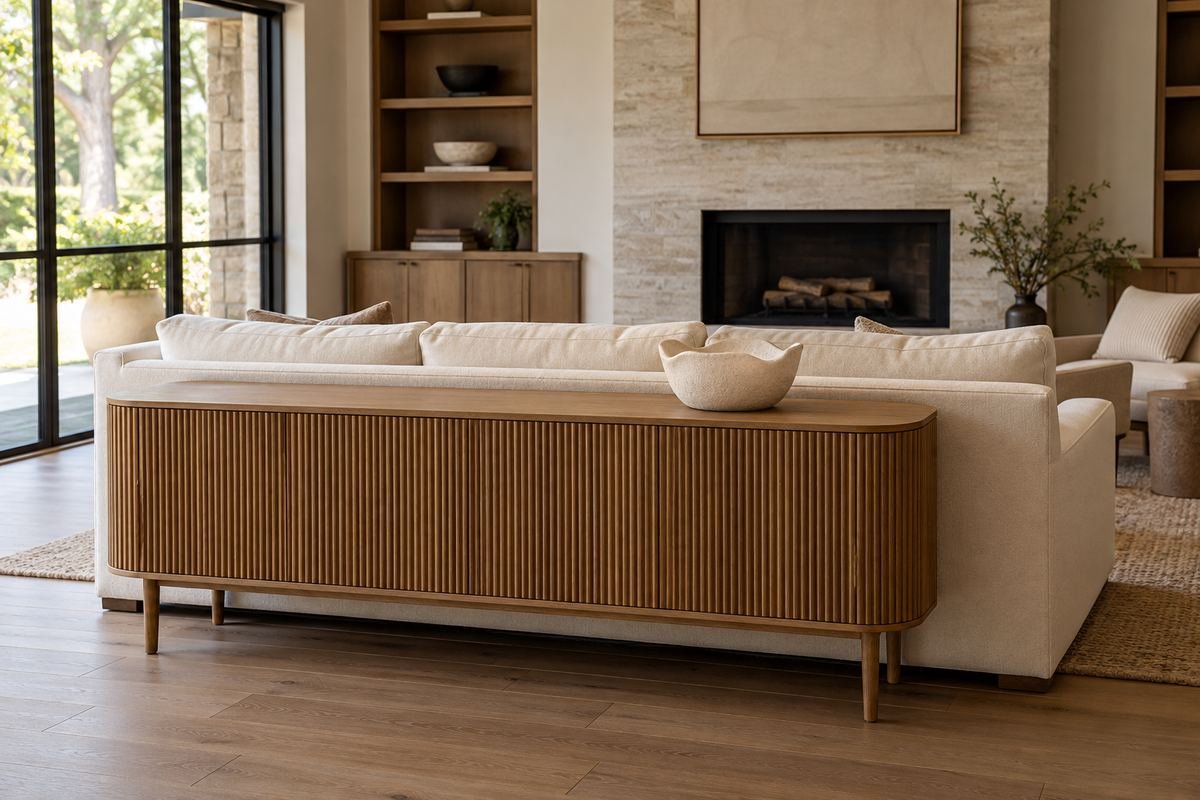
A console with a ribbed or fluted front can add interest when the room uses plain upholstery and quiet walls. Keep the styling simple so the texture reads as a single considered detail.
Look at the scale of the grooves and the cleaning they will need. A highly textured front may be attractive from the entrance but less useful if it catches dust or competes with several other patterned surfaces.
Practical tip: Use texture where you can see and maintain it.
12. Connect Painted Sofa Table Ideas With an Existing Accent

A painted console can connect the sofa area to a color used in a rug, print or adjacent room. A muted shade often gives enough distinction without making the table the only thing visible behind the seating.
If repainting an existing piece, check the original finish and use a preparation and coating system suitable for it. Test the color in place before committing, because a large painted surface can look different beside upholstery than on a small sample.
Practical tip: Choose the color in the room’s usual light.
13. One lamp balanced by low objects

A single table lamp can make one end of the console useful for evening light. Balance its visual weight with lower objects across the rest of the top rather than adding a second tall piece automatically.
Check the lamp’s footprint and shade projection from both sides of the sofa. A cord should reach an appropriate outlet without crossing a walking route or being pinched by the furniture.
Practical tip: Plan the cord route before placing the lamp.
14. A pair of lamps on a generously sized console

A pair of lamps can create an ordered rhythm behind a long sofa. The arrangement suits a table with enough surface for the lamp bases and enough room around the shades to avoid a crowded line.
Try the shades at their real size and check the view toward the television or conversation area. Symmetry is useful only if the light and objects still work for the people sitting in the room.
Practical tip: Check the seated sightline through both lamps.
15. A short book stack as a low styling layer

A small stack of books adds height variation without putting a tall object in every sightline. Choose books you actually want nearby so the display serves the room instead of becoming a permanent prop.
Keep the stack modest and leave space to lift a book without disturbing everything else. If the top is narrow, arrange the books lengthwise only when their edges remain fully supported.
Practical tip: Keep every book comfortably within the tabletop.
16. A tray that gives remotes a visible home

A shallow tray can make a console useful for remotes and a reading pair of glasses. It creates one obvious return point, which is often easier to maintain than several small boxes with different purposes.
Choose a tray that leaves a little clear tabletop around it and does not block access to the rest of the surface. Avoid placing the whole tray where a person brushing past could send it into the seating area.
Practical tip: Place the tray where it can be reached without stretching.
17. A low vase that keeps the view open
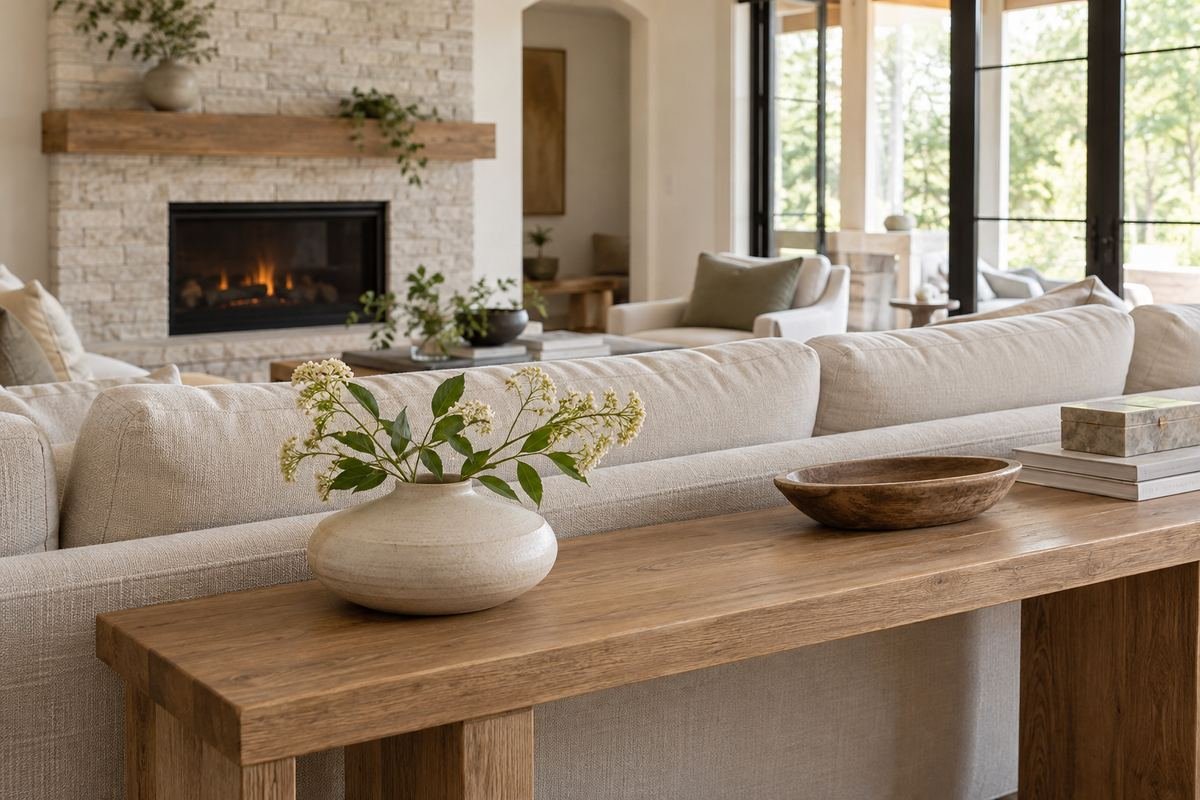
A small vase can add a natural shape while keeping the view across an open-plan room. Use a restrained arrangement that fits the table depth instead of branches that reach into the walkway or seating.
Protect the tabletop according to its care instructions and keep water-filled vessels away from electrical items. A narrow console is not the best place for a tall, top-heavy arrangement that will be bumped regularly.
Practical tip: Check the arrangement from the walking side.
18. Keep Sculptural Sofa Table Ideas Beyond the Busy Edge

A single sculptural ceramic piece can make the table feel finished without needing a crowded collection. An off-center placement often works well when it responds to an existing lamp, window or sofa arm.
Choose an object with a stable base and a scale that suits the top. Expensive or fragile pieces may be better displayed away from a busy route, especially in a household where the sofa is used for lively everyday activity.
Practical tip: Give the object a stable base and breathing room.
19. A discreet charging landing

A console near a suitable outlet can provide a place to leave a phone while relaxing. Keep the charging area limited to the items used there rather than turning the sofa back into a permanent electronics station.
Follow the charger’s instructions and keep it ventilated, dry and clear of soft furnishings. Route the cable along an appropriate path without trapping it under the sofa or stretching it across a route.
Practical tip: Avoid hiding operating chargers under throws or cushions.
20. Small ottomans beneath an open console

An open console may offer a parking place for small ottomans that are brought out when needed. The empty-looking upper area can keep the room calm while the seats remain nearby for flexible use.
Measure the actual opening between the legs and the space needed to pull each ottoman out. The pieces should fit without being forced against the table, and they should not turn a normal walkway into a storage corridor.
Practical tip: Test the pull-out movement, not just the stored position.
21. A lower shelf for folded throws

A lower shelf can hold a small stack of throws when a lidded basket would make them harder to use. A neat fold helps the textile storage look deliberate and adds a soft layer beneath a simple tabletop.
Keep the stack clear of the floor and within the shelf edges. Store only what the household uses regularly so the shelf remains easy to clean and the table’s structure stays visible.
Practical tip: Limit the stack to the blankets used in this room.
22. Fit Sofa Table Ideas to a Sectional and Its Route

A sectional can create an awkward-looking rear corner, especially when it faces an open dining area. A console placed along one clear back section can finish that view without trying to wrap furniture around every bend.
Check the sectional’s complete outline and any moving parts before deciding where the table ends. A shorter console may preserve the route better than a wall-to-wall arrangement, while still giving the sofa a clear finished edge.
Practical tip: Let the room’s route decide where the console stops.
Frequently Asked Questions
How high should a sofa table be?
Use the sofa back and the intended task as your reference. A table that sits quietly below or around the back height is a useful visual starting point, but lamps, access, cushions and reclining parts may change the choice. Test the actual arrangement instead of relying on a universal measurement.
Can I put a sofa table against a wall?
Yes, if the sofa and table fit without interfering with the room. Check the full table footprint and the space needed for curtains, outlets and any sofa mechanism. Follow the furniture manufacturer’s fixing instructions even when the sofa partly conceals the table.
What belongs on a narrow sofa table?
Choose a small set of objects that do a real job: a lamp, a remote-control tray or a few books, for example. Keep tall and fragile objects away from places where people brush past, and leave enough clear surface to clean the table easily.
Choose the Details That Work in Your Home
Start with the walking route, choose a table that fits the sofa and give it one clear purpose. Add storage or decoration only where it improves that purpose. A useful sofa table should make the room feel more complete without asking anyone to squeeze around it.
For related ideas, explore Living room furniture spacing, TV wall ideas, Living room lighting ideas.
Planning References
Bassett console and storage furniture dimensions. Follow the instructions for the exact products you choose.
Optional digital guide for this topic
If you prefer a structured workbook, explore this related paid guide.