Sideboard decor ideas work best when the surface still supports the room. A dining buffet may need room for serving dishes, while a living-room credenza might hold a lamp and a few things used every evening.
Start by deciding which objects can stay and which must move when the furniture is used. Then choose a few pieces that suit the depth, finish and nearby wall. A full surface is not automatically a finished one.
These arrangements offer different ways to balance display with use. Follow the furniture instructions for assembly, anchoring, loading and surface protection. Hang artwork and mirrors with suitable fixings rather than treating a styled image as an installation guide.
The images are original AI-generated decor concepts, not installation diagrams or photographs of completed client projects.
Compare Sideboard Decor Ideas During an Ordinary Serving Task
Set the actual empty platters on appropriate surface protection and identify which decorative pieces must move. Next, take the removable group to its planned stable destination and open the cabinet storage. For example, two lamps may frame a long sideboard well while leaving too little depth for the serving dish. Keep the everyday arrangement proportional to the furniture’s real tasks and photograph both useful setups for a quick reset.
Jump to an idea
- Build a simple lamp-and-bowl arrangement
- Use one removable display tray
- Frame the furniture with one wall artwork
- Choose a mirror for a useful reflection
- Try two related lamps for a balanced view
- Balance one taller piece with a low group
- Let a detailed cabinet front stay visible
- Bring definition to a plain cabinet
- Keep a dark sideboard visually light
- Add contrast to pale timber
- Repeat one accent color
- Use a tonal group with different textures
- Display one meaningful collection in a small group
- Use a low arrangement beneath a large artwork
- Choose flowers in a suitably protected vessel
- Keep a dry botanical accent restrained
- Make a living-room credenza useful
- Set up a clear serving mode
- Use a short runner only where it helps
- Scale the display to a small sideboard
- Change one seasonal detail
- Finish with a reset that takes little effort
Test sideboard decor ideas in display and serving modes
Draw the actual top as a rectangle, then mark the bases of the objects you want to keep. In a hypothetical 60-inch-wide sideboard, a 12-inch-wide lamp base and an 18-inch-wide removable tray leave 30 inches of width before any gaps are allowed. That does not mean a particular platter fits: depth, handles, spacing and the route to the furniture still matter. Compare each item in two arrangements. In display mode, keep the everyday objects easy to reach. In serving mode, move the tray to a predetermined stable surface and test your real dishes on appropriate protection. Open the drawers and doors, pull out nearby dining chairs and walk past while carrying an empty platter. Keep a photograph of both successful arrangements so resetting the room is simple.
| Room task | Useful starting arrangement | Leave available |
|---|---|---|
| Frequent buffet serving | One removable display tray | Space for the actual dishes and handling |
| Evening living-room use | One lamp and a small useful bowl | Easy access to everyday items |
| Detailed cabinet front | A restrained group of simple objects | A clear view of the furniture |
| Plain wall above | One suitably installed artwork or mirror | Comfortable visual space around it |
| Small sideboard | A few modestly scaled objects | Door, drawer and nearby chair access |
1. Begin Sideboard Decor Ideas With a Lamp and Useful Bowl
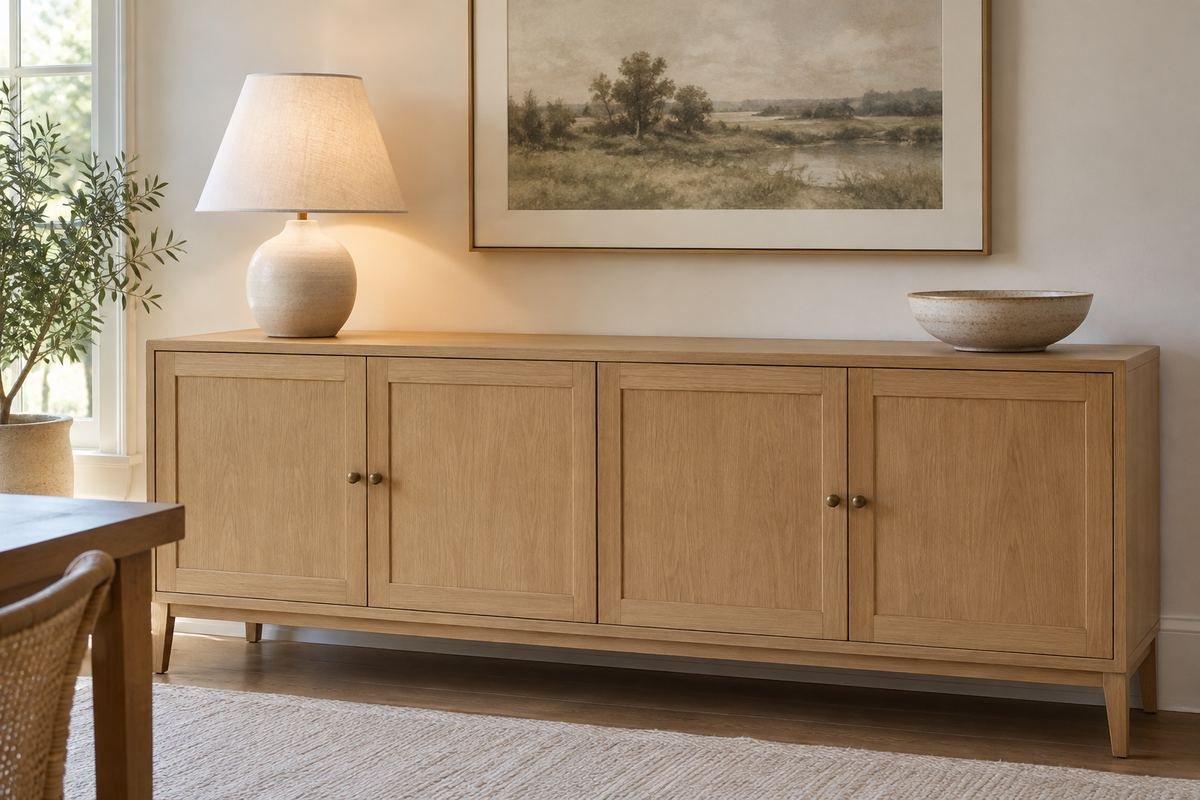
A lamp at one end and a low bowl elsewhere can give the surface two clear roles. The difference in height keeps the arrangement readable.
Choose a lamp that suits the furniture depth and keep its cord managed according to the product guidance. Use the bowl for something genuinely useful or leave it empty.
Practical tip: Let each object earn its place.
2. Use one removable display tray
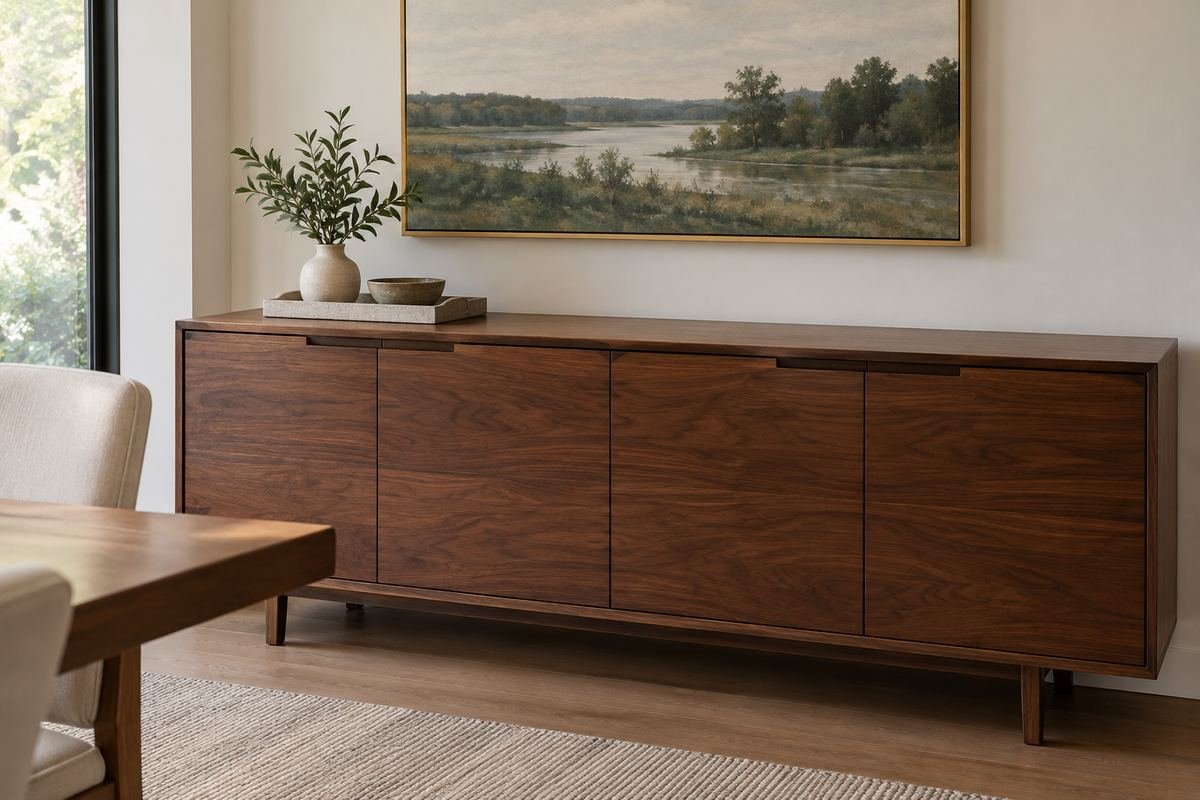
A tray can keep a small display together and make the buffet easier to clear. It creates a defined group without spreading objects across the entire top.
Keep the loaded tray manageable and give it a stable destination before serving. Choose compatible protection so the base does not damage the furniture finish.
Practical tip: Plan where the tray goes when the buffet is needed.
3. Frame the furniture with one wall artwork
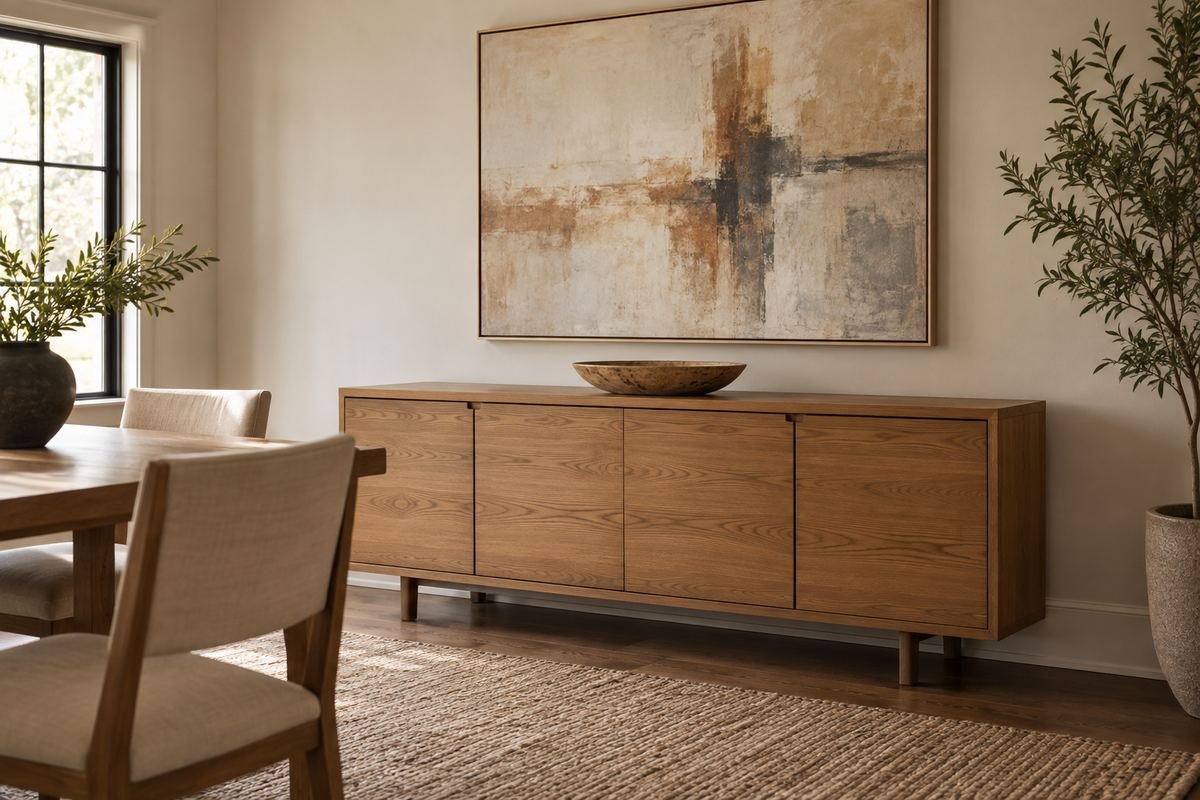
One suitably scaled artwork can give the sideboard a focal point without using much surface area. The furniture top can then remain simpler.
Compare the art and cabinet together from the room entrance. Use an appropriate installation for the wall and frame rather than balancing a heavy picture casually on the top.
Practical tip: Make the wall do some of the decorating.
4. Choose a mirror for a useful reflection
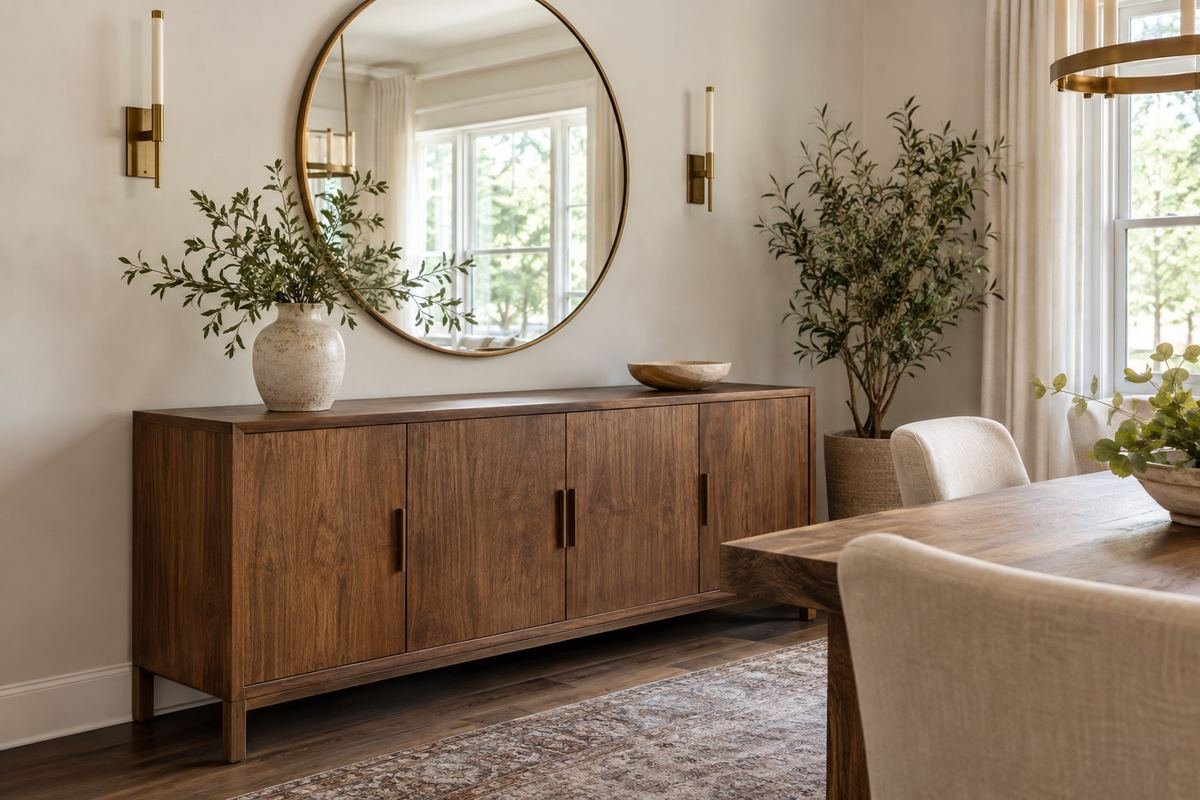
A mirror above the sideboard can relate the arrangement to the rest of the room. Its value depends on what it reflects from ordinary viewpoints.
Check seated and standing views before choosing the position. Follow the fixing and furniture guidance, and keep the surface display from obscuring most of the mirror.
Practical tip: Look at the reflection before selecting the frame.
5. Try two related lamps for a balanced view

Two compatible lamps can give a long sideboard a settled outline. The repeated shapes make a simple arrangement feel deliberate.
Check the scale and available outlets before committing. Leave enough useful top between the bases and keep the electrical setup appropriate to the location.
Practical tip: Test both lamp bases on the actual surface.
6. Balance Asymmetric Sideboard Decor Ideas Through Shape
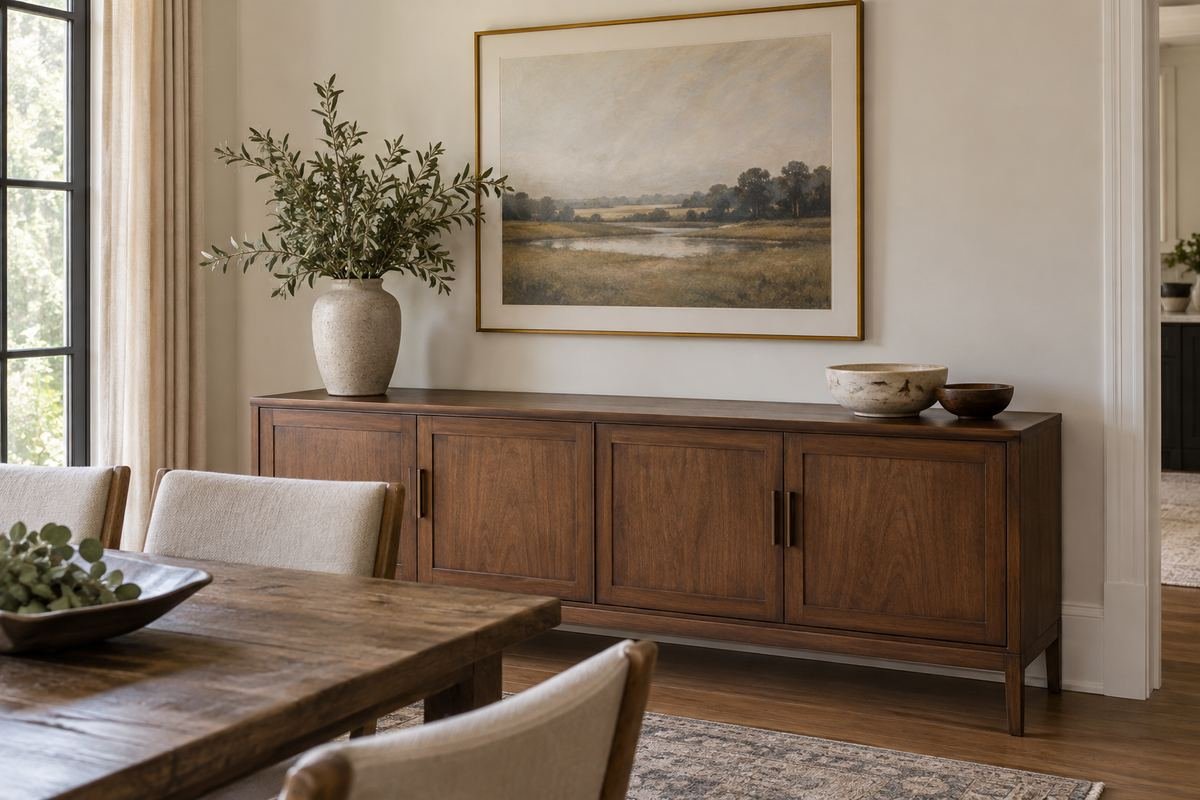
An offset arrangement can respond naturally to a door or nearby furniture. One taller object and a compact low group can provide balance without matching pairs.
Compare the visual weight from across the room. Avoid adding small fillers merely to make both sides contain the same number of objects.
Practical tip: Balance the overall shapes instead of counting accessories.
7. Let a detailed cabinet front stay visible
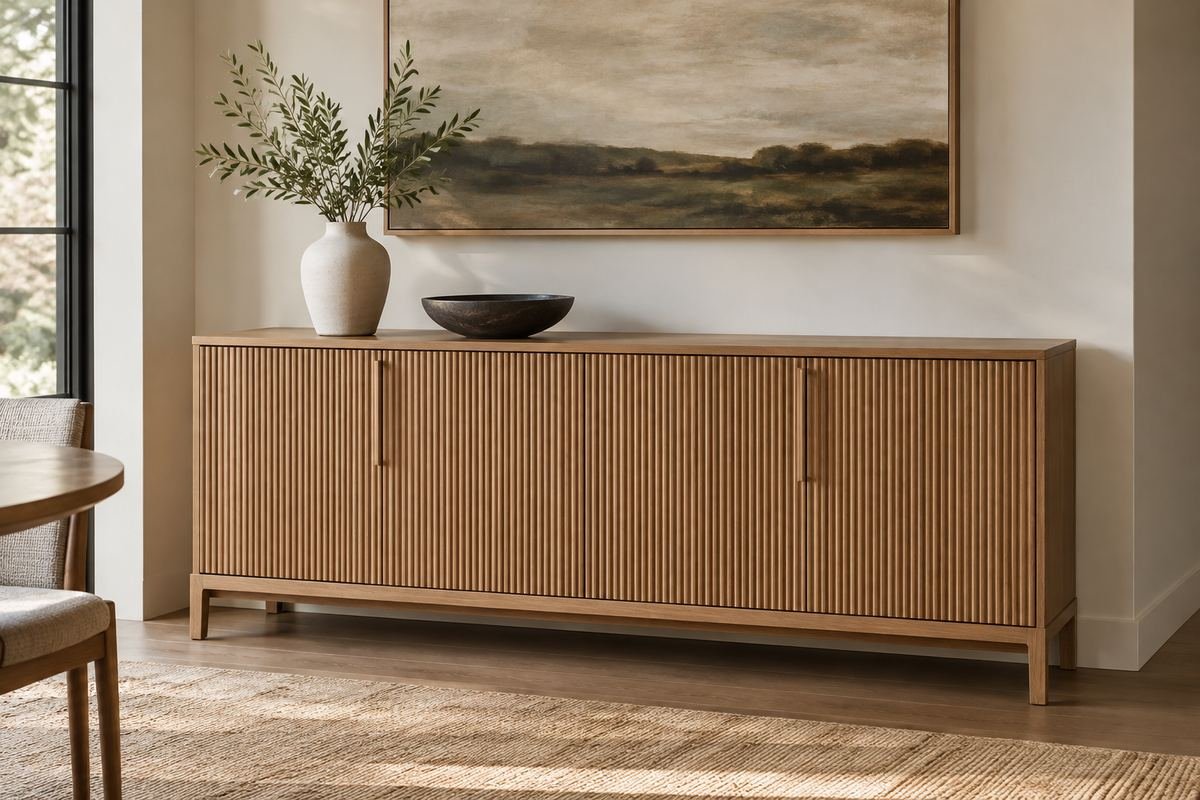
Fluting, grain or another strong cabinet detail may already provide the room with enough texture. A quieter top can make the furniture easier to appreciate.
Choose simple silhouettes and avoid covering the upper edge with draping fabric. Check that handles, doors and drawers remain easy to use.
Practical tip: Use fewer accessories when the cabinet has a strong character.
8. Bring definition to a plain cabinet
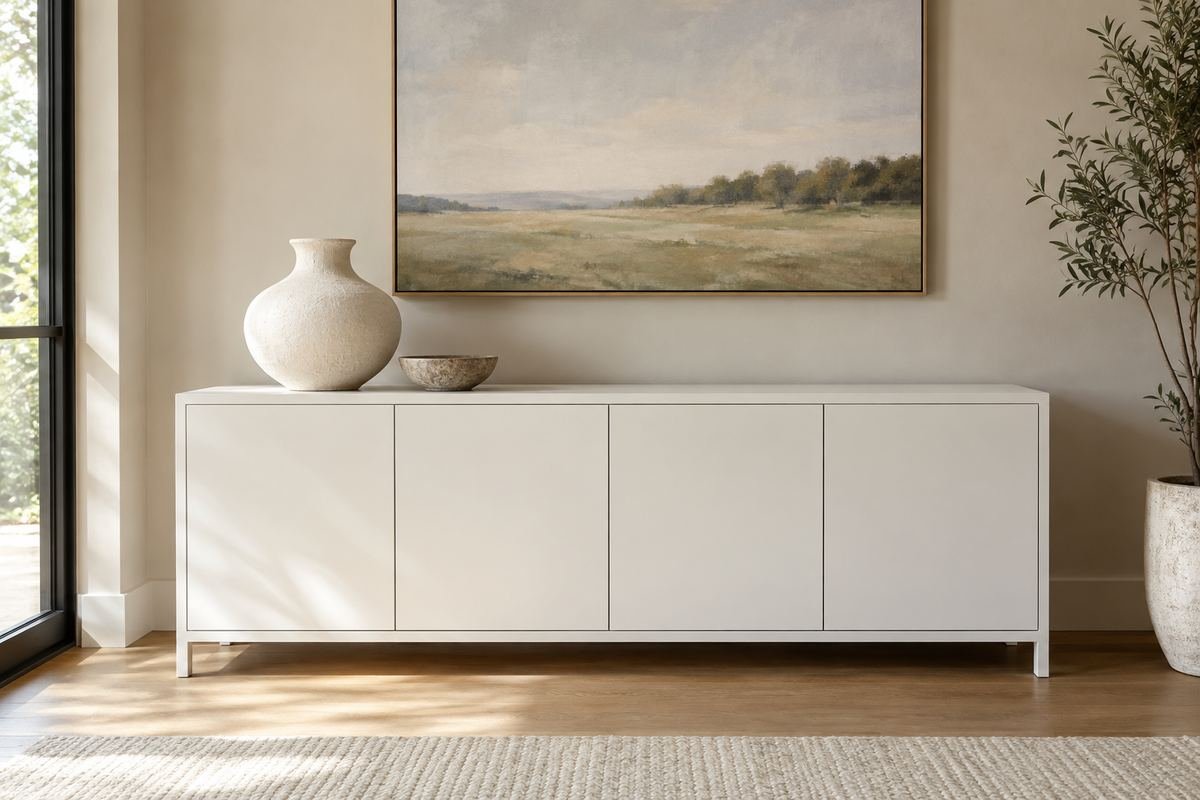
A very simple sideboard can support a slightly more distinctive arrangement. One sculptural object can add interest without requiring many accessories.
Choose a stable piece with a base that fits the top. Compare it with the wall art so the two focal points support each other.
Practical tip: Make one clear decorative choice.
9. Keep a dark sideboard visually light
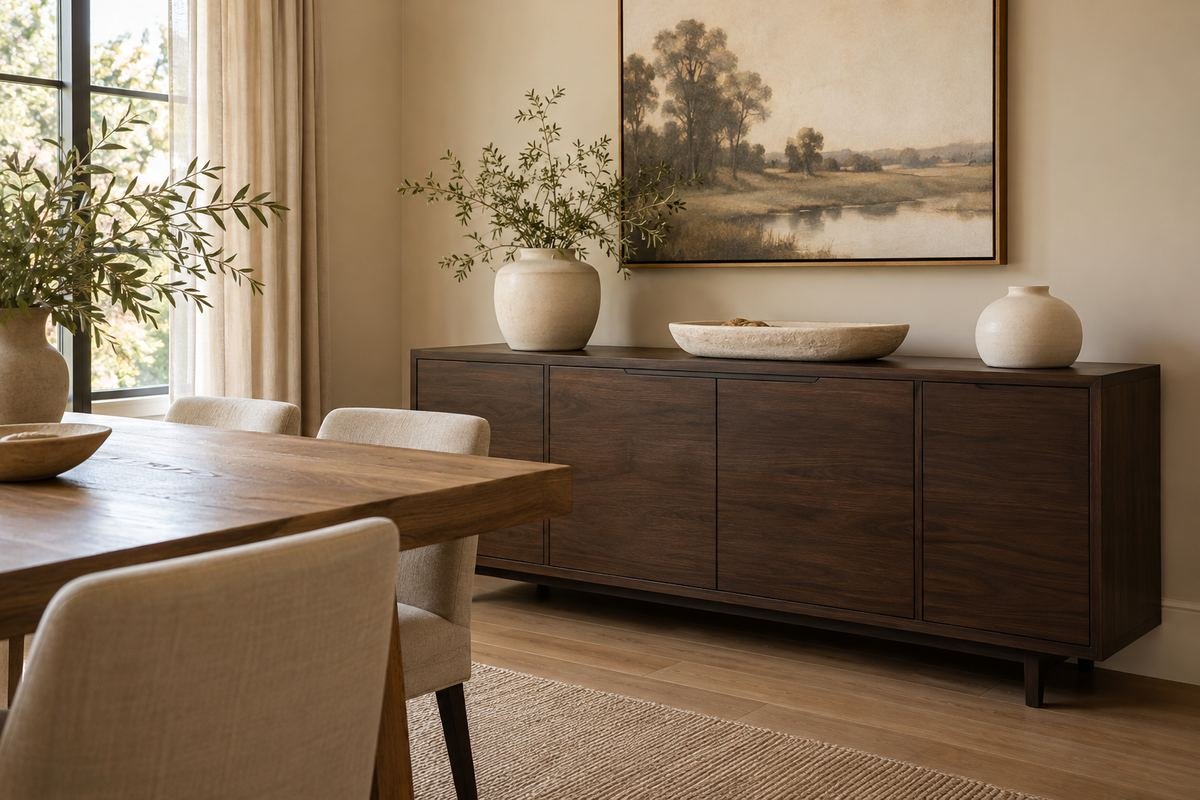
Pale objects can make their outlines clear against a dark cabinet. A small edited group can keep the arrangement from feeling heavy.
Use a few related light tones rather than many unrelated white accessories. Check each base and any moisture protection against the cabinet finish.
Practical tip: Let contrast explain the object shapes.
10. Add contrast to pale timber

A dark lamp or bowl can give a light wood surface a defined accent. It can relate the furniture to darker chair frames or wall details.
Repeat the dark tone selectively so it feels intentional. Keep the rest of the display restrained if the cabinet grain is already prominent.
Practical tip: Choose one controlled contrast.
11. Repeat one accent color
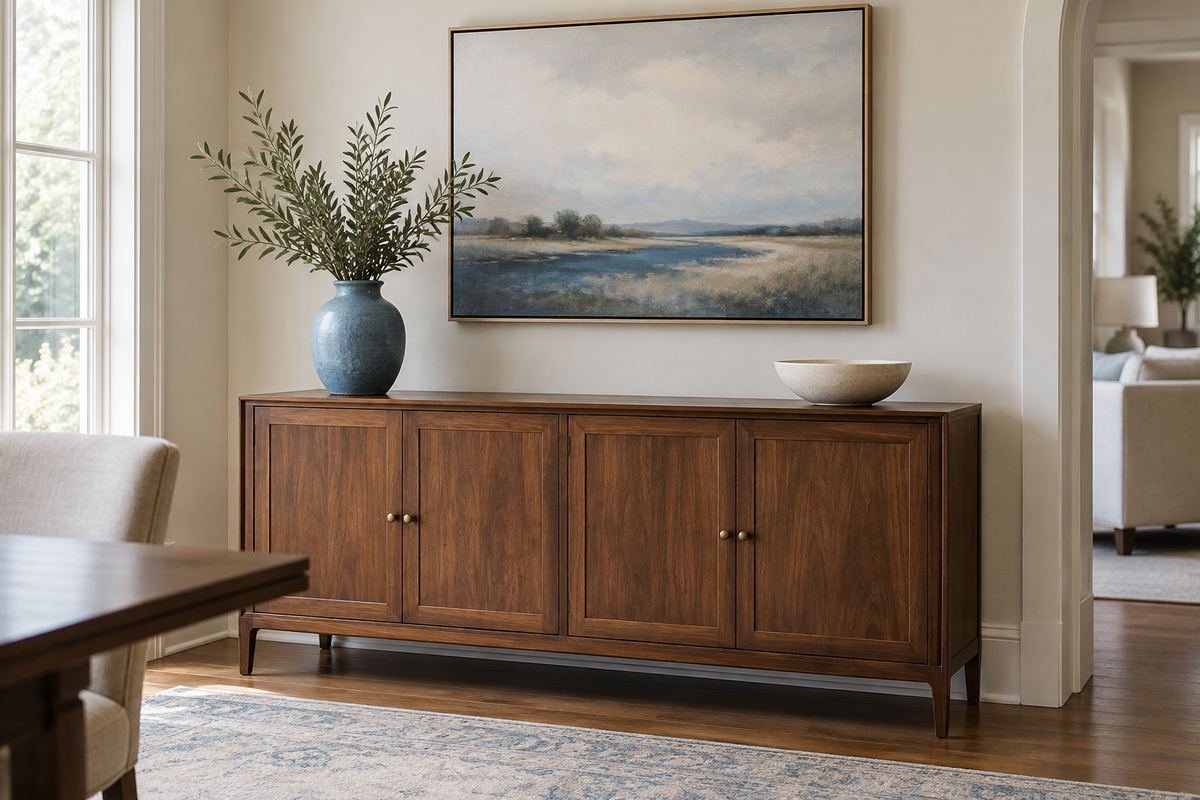
A colored vase or bowl can connect the sideboard to the room without matching every furnishing. One repeated tone may be sufficient.
Choose the color from a real room element, such as artwork or upholstery. View the arrangement in the existing light before adding further accents.
Practical tip: Repeat a color family without making a complete matching set.
12. Connect Tonal Sideboard Decor Ideas Through Texture
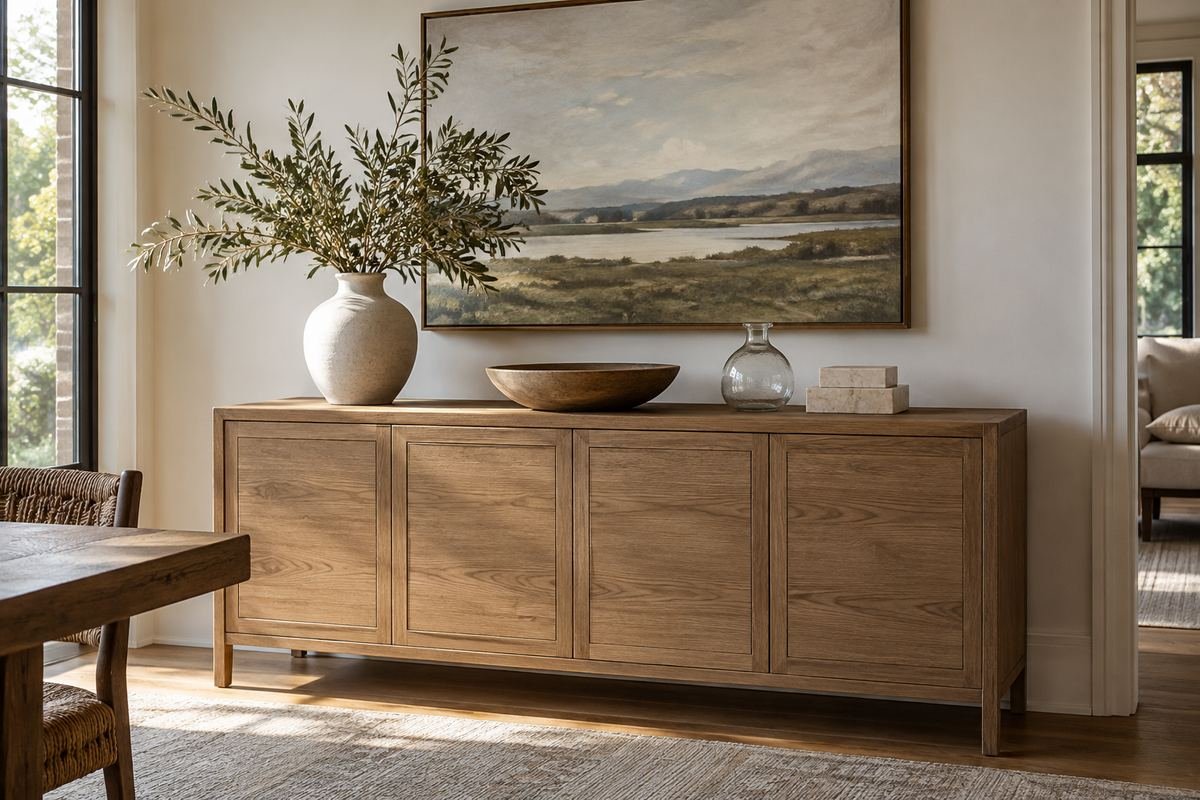
Objects in a narrow color range can still feel varied. Matte ceramic, smooth glass and wood create different surfaces without several bright colors.
Keep the silhouettes distinct enough to read from a distance. Similar tones work best when the arrangement has clear spacing and useful scale.
Practical tip: Create variation through material rather than more color.
13. Display one meaningful collection in a small group

A few related pieces can make a personal collection feel considered. Showing a selection often reveals the objects better than displaying everything at once.
Choose stable pieces and leave enough room to handle them. Keep the rest in appropriate storage and rotate the selection when you want a change.
Practical tip: Edit the collection to the furniture scale.
14. Use a low arrangement beneath a large artwork
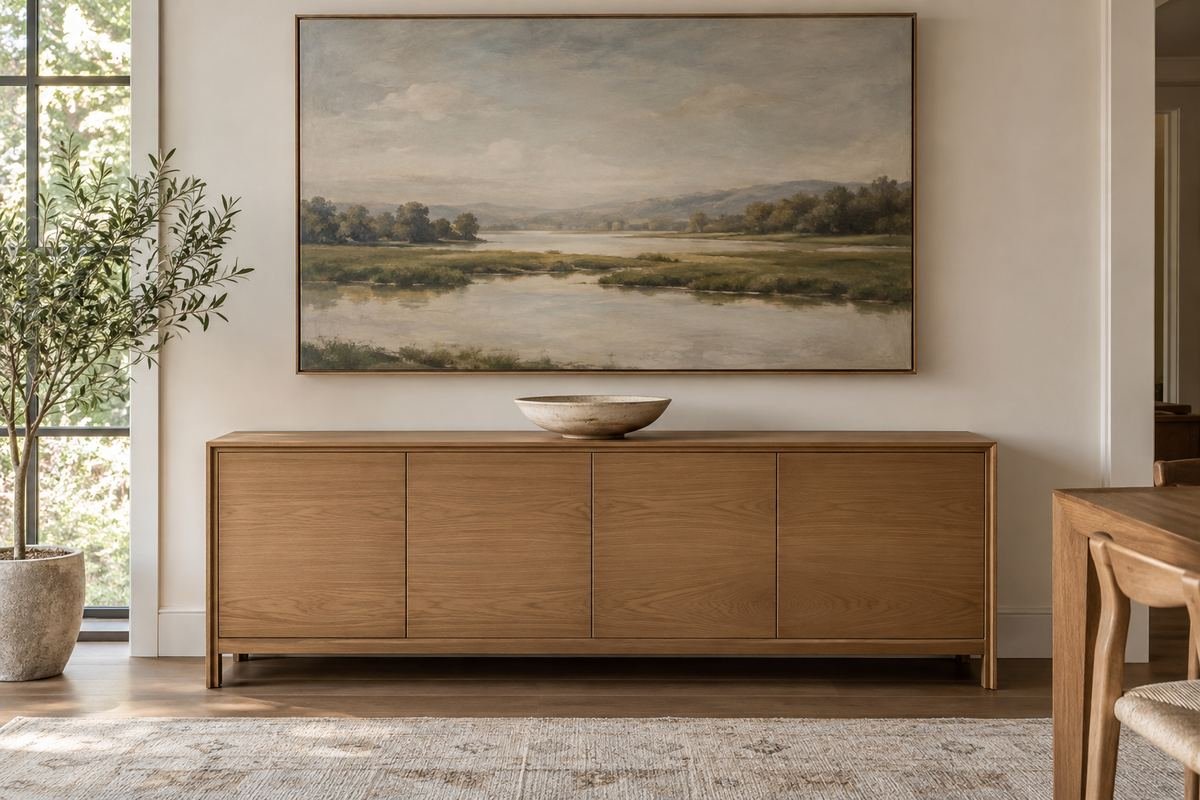
A low bowl or modest group can support a strong picture without obscuring it. This gives the wall and furniture separate visual roles.
Check the artwork from seated positions as well as the doorway. Keep taller pieces elsewhere if they repeatedly cover the image.
Practical tip: Let the artwork remain visible.
15. Choose flowers in a suitably protected vessel

A modest arrangement can add a changing natural element to the room. A stable vessel keeps the display easier to manage on a working sideboard.
Check the vessel for leaks and use surface protection compatible with the furniture. Keep the arrangement clear of lighting and remove it before it interferes with serving.
Practical tip: Treat water and the furniture finish as separate practical checks.
16. Keep a dry botanical accent restrained

A small faux or suitable dried arrangement can add shape without a water-filled vessel. It can be useful when the sideboard is not tended every day.
Keep it away from heat and follow the material guidance. Choose a scale that does not obstruct the artwork or make cleaning the furniture difficult.
Practical tip: Use a modest silhouette that is easy to maintain.
17. Make a living-room credenza useful
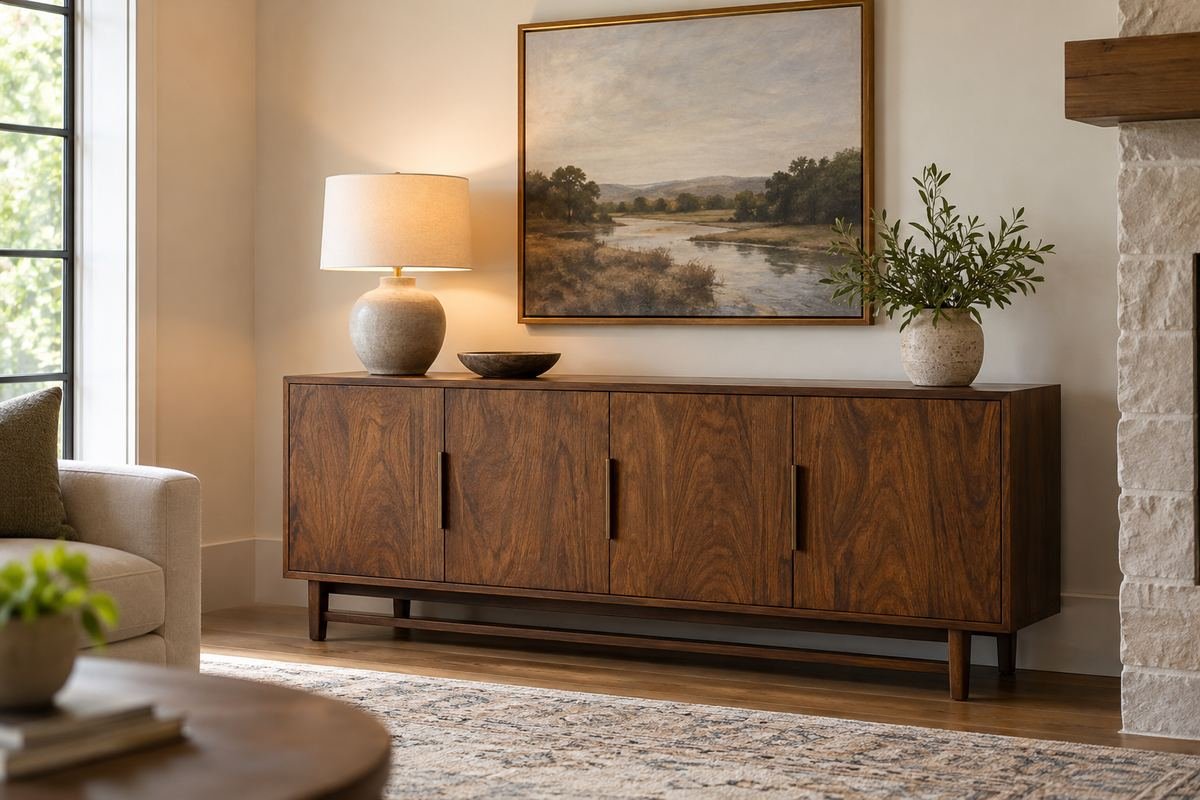
A small bowl for everyday items can give the display a practical role. The arrangement can support the sitting area rather than imitate a formal dining buffet.
Choose a place that is easy to reach and reset. Keep the cabinet access clear and do not hide equipment ventilation behind decorative objects.
Practical tip: Style around what the household actually uses.
18. Keep Serving Sideboard Decor Ideas Easy to Clear
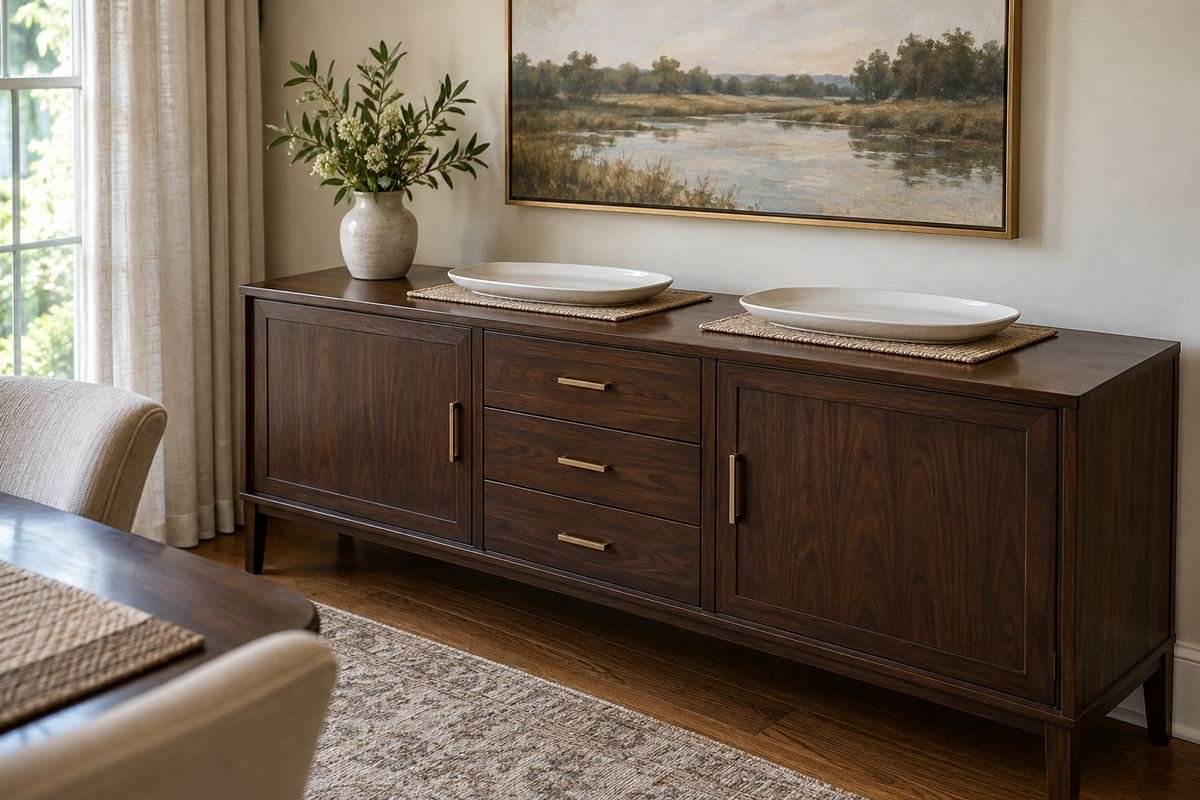
A dining sideboard can look complete with most of its top available. A few removable pieces let it change easily for a meal.
Test the actual platters and serving tools on suitable protection before guests arrive. Avoid placing hot or wet dishes directly on a finish without confirming the care instructions.
Practical tip: Try the serving arrangement with empty dishes first.
19. Use a short runner only where it helps

A short textile can define a small display area or soften the contrast with the top. It should serve the arrangement rather than conceal the furniture.
Check the furniture finish and fabric compatibility. Keep hanging ends away from drawers and doors, and do not treat a decorative runner as heat protection.
Practical tip: Use the textile for appearance rather than unsupported protection claims.
20. Scale the display to a small sideboard
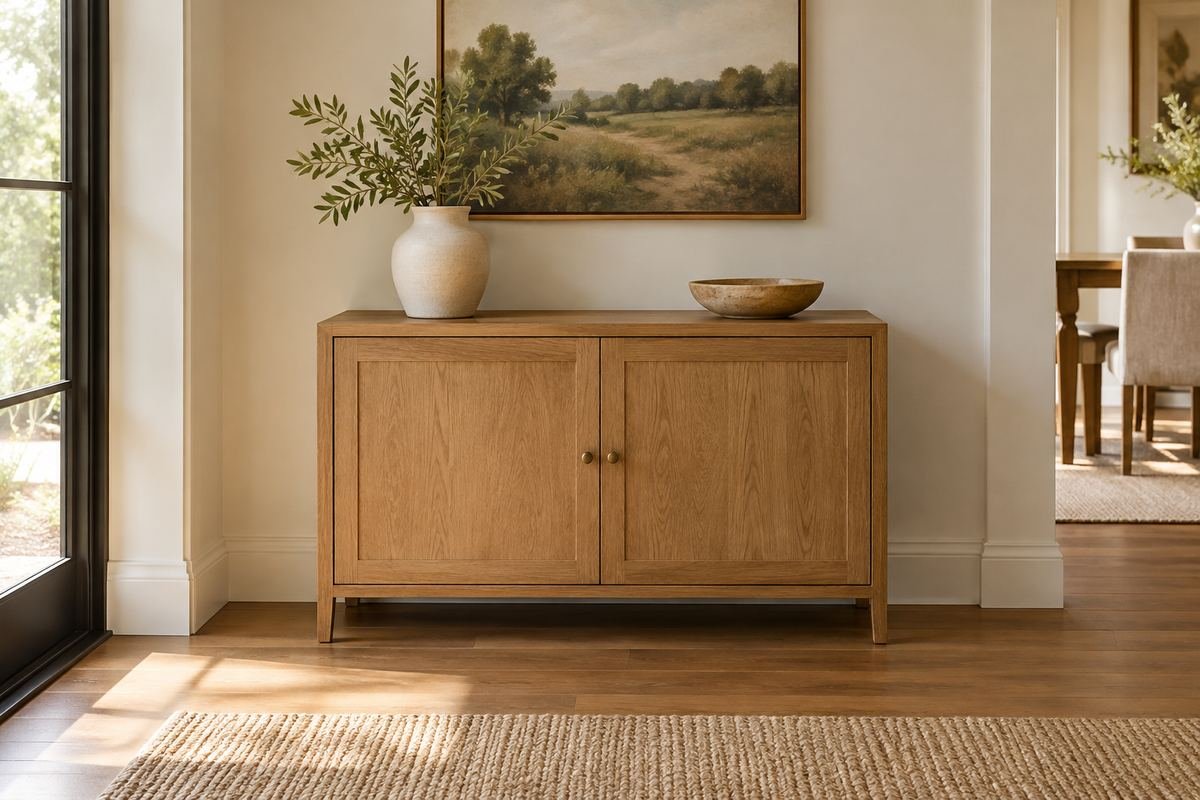
A compact cabinet can look settled with only one or two well-chosen objects. Smaller furniture does not need miniature versions of every accessory.
Test the bases and leave space to use the cabinet. If a lamp fills most of the depth, choose another size or move lighting elsewhere.
Practical tip: Choose from the real usable depth.
21. Change one seasonal detail
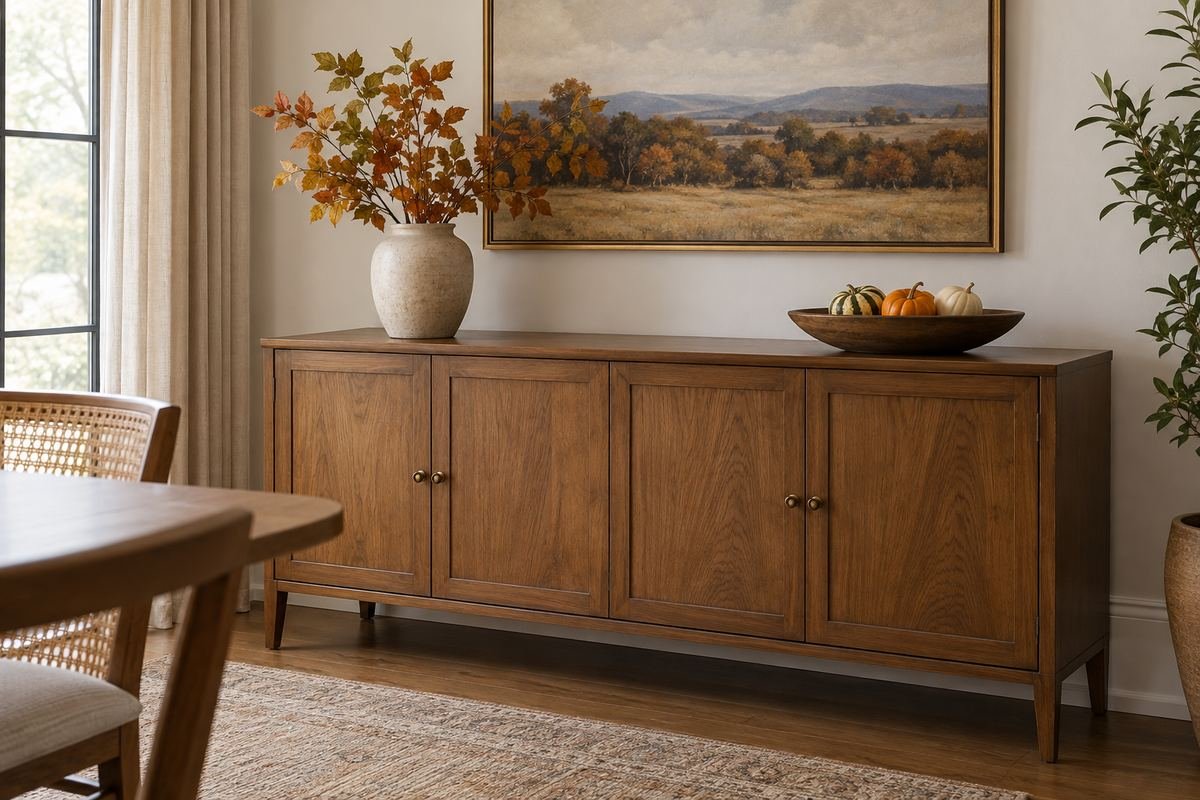
A sideboard can acknowledge the season without a complete restyling. One changed vessel or small arrangement can work with an established everyday group.
Keep the pieces that already function well and avoid covering cabinet access. Choose flameless decorative elements where an open flame would complicate the arrangement.
Practical tip: Make seasonal changes easy to remove.
22. Reset Sideboard Decor Ideas With Fewer Useful Pieces

A good arrangement remains useful after the room is lived in. A clear place for each object helps the sideboard return to its intended look.
Take a photograph of the display and serving setups. Remove objects that repeatedly get moved without serving a purpose, then judge the simpler arrangement again.
Practical tip: Keep only the pieces that make the room easier to use.
Frequently Asked Questions
What should I put on a dining room sideboard?
Start with how you use it. A lamp, modest vase or low bowl may be enough for everyday display. If you serve food there, plan a removable arrangement and test the actual dishes on suitable surface protection.
Does sideboard decor have to be symmetrical?
No. Symmetry can give the room a calm structure, while an offset group can respond to a doorway or artwork. Judge the visual weight and practical use rather than following a fixed object-count rule.
How much empty space should I leave?
Enough for the furniture to work for your household. Test the real items, door and drawer access and nearby chair movement. A percentage of the top cannot establish the right arrangement for every room.
Can I put a mirror above a sideboard?
Yes, when the mirror, wall and fixing system suit the location and installation follows the relevant instructions. Check the reflection from normal viewpoints. Do not rely on a casual lean to secure a heavy mirror.
How do I protect the sideboard top?
Follow the instructions for the actual finish and accessories. Check compatibility before using pads or liners, and use suitable protection for vessels and serving pieces. Do not assume all wood, stone and lacquer finishes tolerate the same treatment.
Choose the Details That Work in Your Home
Choose a few objects that make sense in the room, then test the surface with everyday activity. The strongest arrangement is one you can enjoy, use and reset without moving a collection of unrelated things.
For related ideas, explore Dining room wall decor, Small dining room ideas, Dining table centerpiece ideas.
Planning References
Crate & Barrel: sideboards, practical features and styling considerations. Follow the instructions for the exact products you choose.
Optional digital guide for this topic
If you prefer a structured workbook, explore this related paid guide.