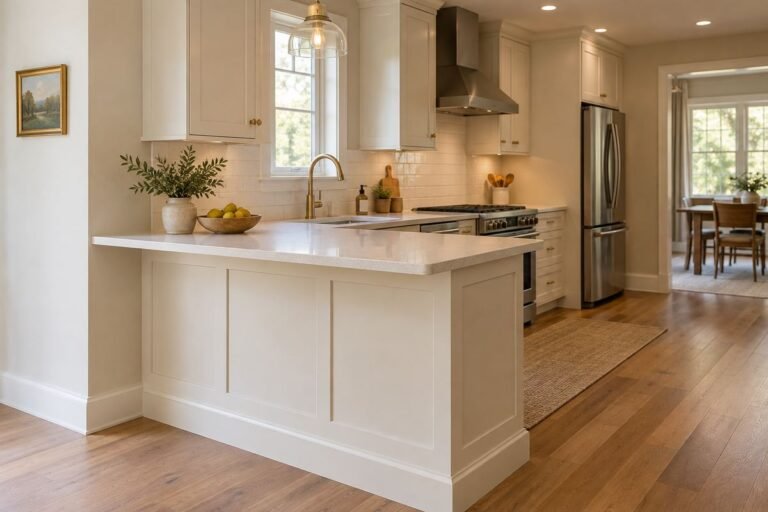
Dining room wall decor should make sense with the table, chairs, lighting, and the routes people use during a meal. The right wall arrangement can add character while leaving serving surfaces and seating comfortable.
These 26 ideas cover artwork, mirrors, paint, texture, and display. Choose one main direction, then adapt the proportions to your actual room rather than trying to fill every wall.
The images are original AI-generated decor concepts, not installation diagrams or photographs of completed client projects.
Compare Dining Room Wall Decor During an Ordinary Meal
Set the table and pull out the chairs before judging the wall group. Next, sit at each usual place and look toward the artwork, mirror or light. For example, a mirror may reflect a pleasant window from the doorway while directing glare toward one diner. Test serving and clearing the sideboard too, retaining the wall arrangement that works while the room is occupied.
Plan the Wall From the Table and the Doorway
Check the arrangement both seated and standing, with chairs pulled out and nearby doors open. Test outlines before making holes and follow the exact hardware and product instructions for every mirror, frame, shelf and fixture. Keep projecting objects away from heads and routes. Consider the room’s evening lighting as well as daylight before choosing color or reflective surfaces.
1. Center Dining Room Wall Decor Above a Useful Sideboard
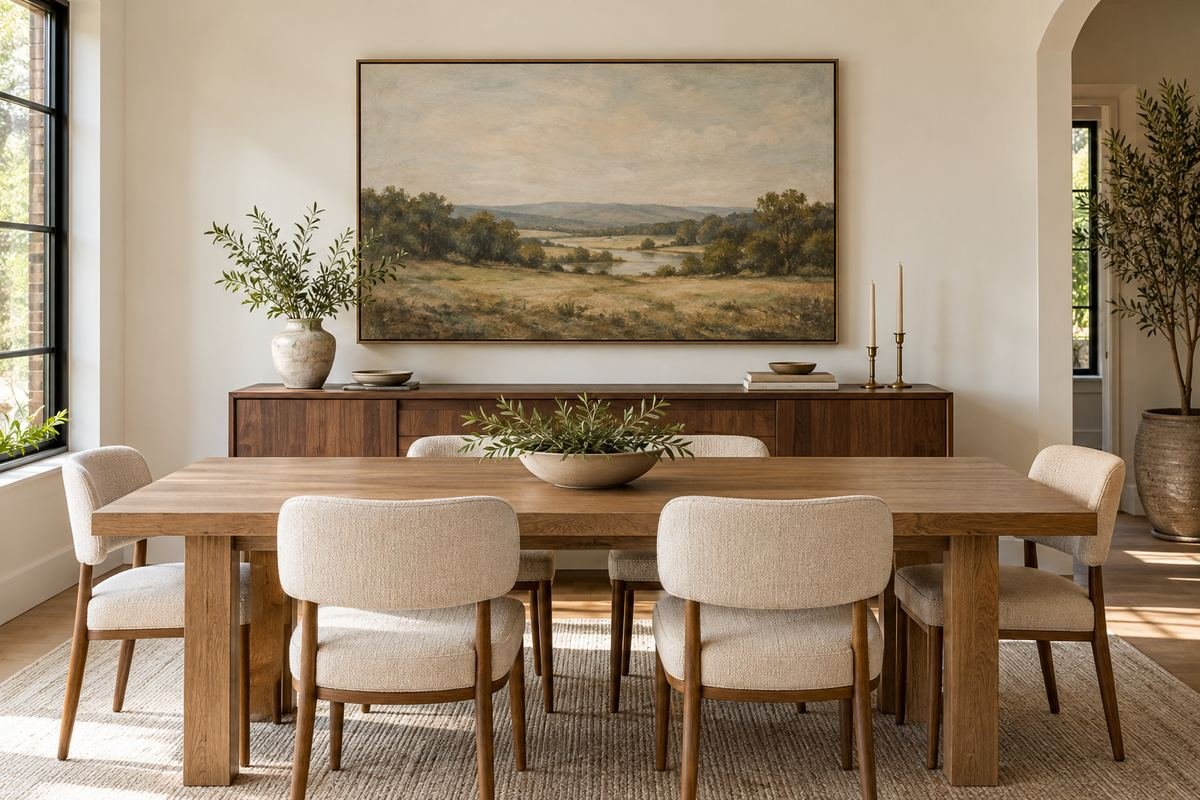
One generous artwork can give a dining wall a clear focal point. A sideboard below provides a visual base and a useful serving surface, especially when the table itself stays lightly styled.
Choose the picture with the sideboard and the whole wall in view. Test its outline before hanging, secure it appropriately, and leave the furniture top useful for the way you serve meals.
Practical tip: Judge the arrangement from a seated position.
2. Use a Round Mirror to Soften Straight Lines

A round mirror adds a curved shape to a room full of table edges and chair backs. It can make a plain wall feel more considered without adding another color or busy pattern.
Check what the mirror will reflect from the doorway and the table. Mount it according to its instructions and wall conditions, and avoid a position that sends a bright reflection directly into seated diners’ eyes.
Practical tip: Choose the reflection before the frame finish.
3. Build a Restrained Grid of Framed Prints

A regular grid gives several small artworks a shared structure. Related frames and mounts help the group read as one composition, which can suit a long dining wall beside a simple table.
Lay out the entire group with paper before drilling. Choose images you enjoy looking at and use suitable fixings for each frame; consistency in the gaps matters more than filling every available inch.
Practical tip: Begin with a smaller grid you can hang accurately.
4. Try a Pair of Oversized Botanical Prints

Two substantial botanical prints can give a dining wall a gentle sense of symmetry. The shared subject connects them while the paired format keeps the arrangement easier to plan than a large mixed gallery.
Compare the full frame outlines with the table or sideboard below. Keep the color palette connected to the room and hang each piece securely rather than balancing it on furniture used for serving.
Practical tip: Use equal gaps and matching outer dimensions.
5. Let a Deep Paint Color Define the Dining Zone

A deep painted wall can distinguish a dining area within an open room. Wood furniture and pale textiles keep the color grounded while the wall supplies most of the visual drama.
Sample the paint in daylight and under the lights used for meals. Check the color from the neighboring living space so the dining zone feels connected rather than abruptly separated.
Practical tip: Choose the wall after checking the main sightlines.
6. Frame Dining Room Wall Decor With Broad Molding

Broad box molding can give a plain dining wall a more architectural rhythm. Painting it the same color as the background keeps the detail quieter than a strongly contrasting trim layout.
Plan the divisions around doors, furniture and any artwork. Use the actual wall dimensions and appropriate materials; very narrow leftover panels can make a carefully styled room feel unresolved.
Practical tip: Draw the whole wall before selecting trim lengths.
7. Use Wainscoting to Ground a Tall Wall

A lower paneled section can give a tall dining room a more settled base. A contrasting upper wall leaves room for art while the lower finish relates to the table and chair height.
Check the proposed line against windows, switches and furniture backs. Choose a height that works with the architecture rather than applying a universal measurement from another room.
Practical tip: Tape the proposed top line and view it seated.
8. Choose Wallpaper With a Gentle Repeating Pattern

A small repeating wallpaper pattern can add movement behind plain dining furniture. Soft colors leave room for table settings to change without competing with a dramatic permanent mural.
Review a large sample and the repeat size before ordering. Confirm the product suits the wall and room conditions, calculate matching and waste, and use a preparation method appropriate to the surface.
Practical tip: View the sample from the table, not only close up.
9. Make a Landscape Mural the Main Feature

A landscape mural can give a dining wall a sense of depth and a distinct atmosphere. Simple furniture and quiet lighting let the scene remain the focal point.
Review the complete design at the actual wall proportions. Doors, sideboards and artwork should not cut through its most important features, and installation needs to suit the wall and product instructions.
Practical tip: Keep additional wall decor minimal.
10. Hang One Textured Textile as Artwork
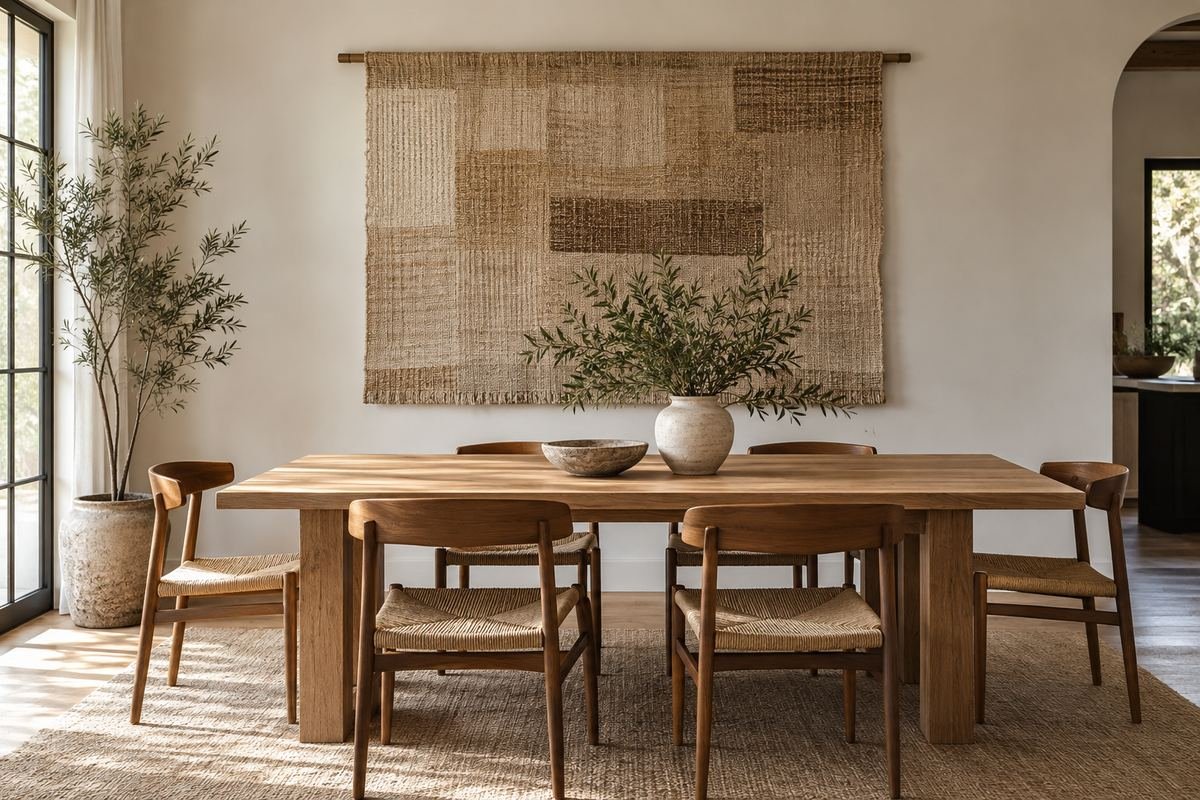
A textile can introduce a softer surface to a dining room with many hard finishes. A restrained woven piece offers texture without requiring a highly detailed painted pattern.
Use a secure hanging method suited to the textile and its weight. Consider dust, cleaning, light exposure and the distance from food preparation or heat before choosing the location.
Practical tip: Let the texture supply the detail.
11. Use a Shallow Picture Ledge for Small Art

A shallow picture ledge lets a small collection share one horizontal line. It can suit a dining wall where you want occasional changes without rehanging every frame.
Choose a purpose-made ledge and suitable fixing, observe its load limits, and secure displayed pieces against falling. Keep the projection outside routes and places where diners’ heads or chair backs could hit it.
Practical tip: Check the ledge from the side.
12. Light Dining Room Wall Decor From Seated Views

A picture light can make one artwork part of the evening atmosphere. It works well above a sideboard when the rest of the wall remains calm.
Plan the fixture around the picture and the light you want on it. Check glare from the table, use compatible equipment, and have electrical work handled as required rather than improvising wiring around the frame.
Practical tip: Test the view from every chair.
13. Use Two Wall Sconces to Frame a Sideboard
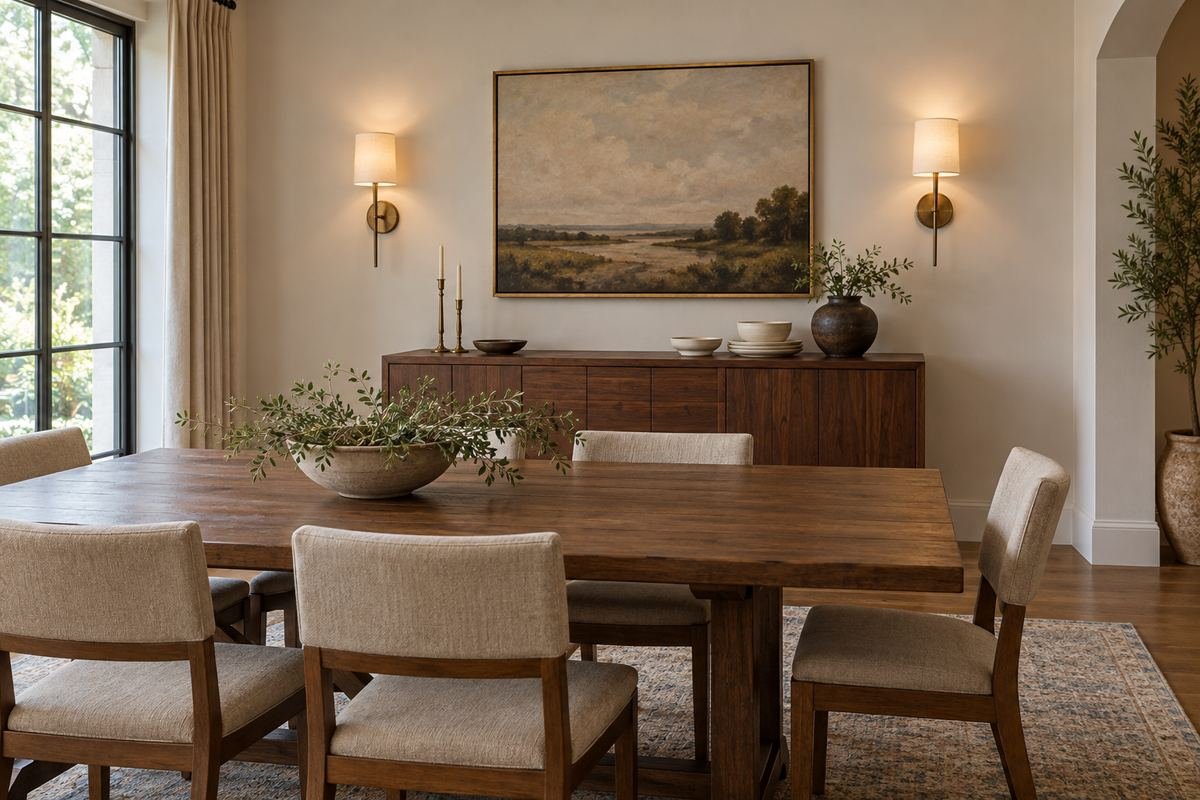
A pair of sconces can give the sideboard wall a composed outline. A mirror or simple artwork between them creates a clear center without filling the furniture top.
Check the fixtures’ projection, light direction and relation to nearby doors. Choose suitable installation and wiring, and make sure the lights support comfortable dining rather than shining into seated eyes.
Practical tip: Plan the complete grouping before fixing anything.
14. Display a Small Collection of Plates

A plate arrangement can bring personal character to a dining wall. A few related pieces often read more clearly than a large group chosen only to cover empty space.
Use display hardware designed for each plate’s size, weight and material, following its instructions. Keep fragile pieces secure and outside places where chairs, doors or passing people could strike them.
Practical tip: Lay the arrangement on a table first.
15. Bring in a Single Sculptural Wall Piece

A sculptural wall object can provide shadow and shape without another framed picture. It suits a simple dining room when the furniture and lighting already establish a clear palette.
Check the full projection and loaded weight, not only the front dimensions. Secure the piece appropriately and keep it outside circulation, chair movement and serving routes.
Practical tip: Look at the shadows under evening light.
16. Let Open Shelving Hold Useful Tableware

A restrained shelf display can connect wall decor with items used for meals. A few stacks of plain dishes and serving pieces give the wall purpose without needing many decorative accessories.
Choose shelving and fixings for the actual contents and wall, and keep loads within the product limits. Store frequently used heavy pieces where you can reach them safely and leave room to lift objects without catching neighboring items.
Practical tip: Edit the display around items you actually use.
17. Create a Monochrome Photography Group
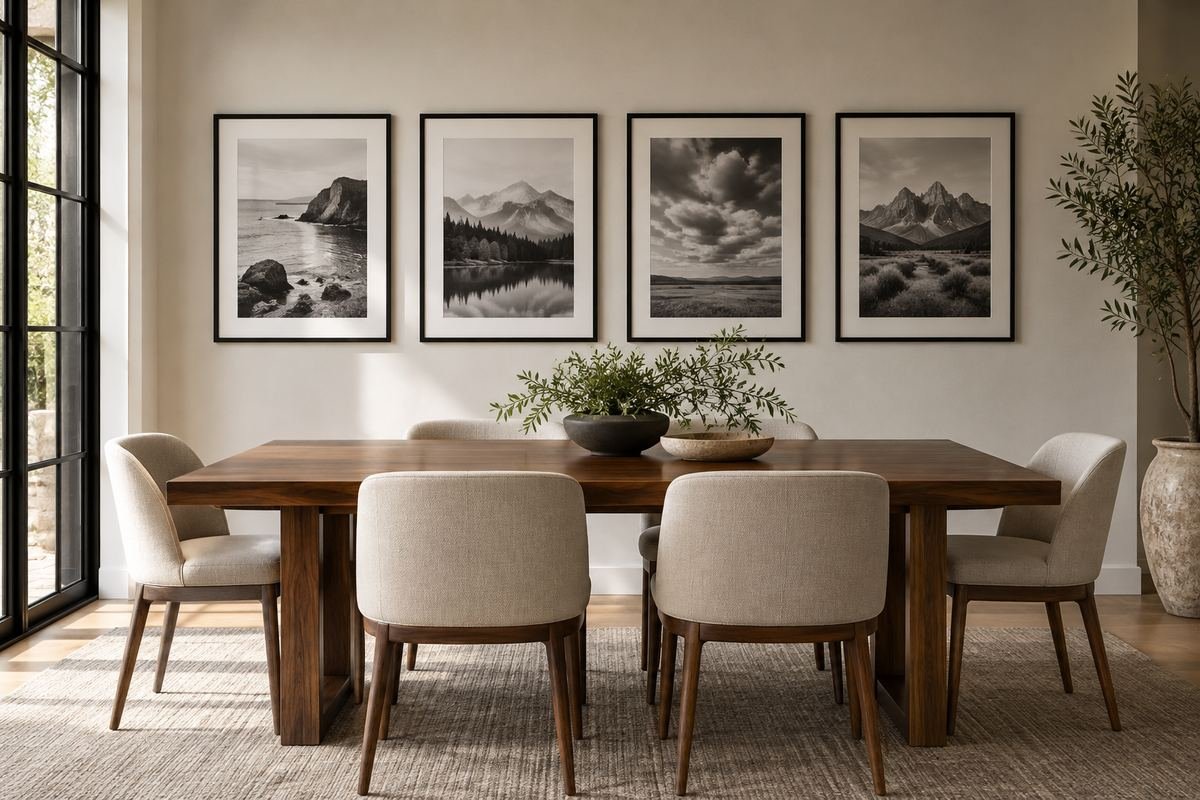
Black-and-white photographs can connect different subjects through a shared palette. Simple frames keep a dining wall coherent while allowing the images to remain personal.
Choose a small set with a common mood or subject. Test the complete group at the wall and check it from seated eye level before fixing the frames.
Practical tip: Use consistent mounts to connect different image sizes.
18. Warm Dining Room Wall Decor With One Wood Surface
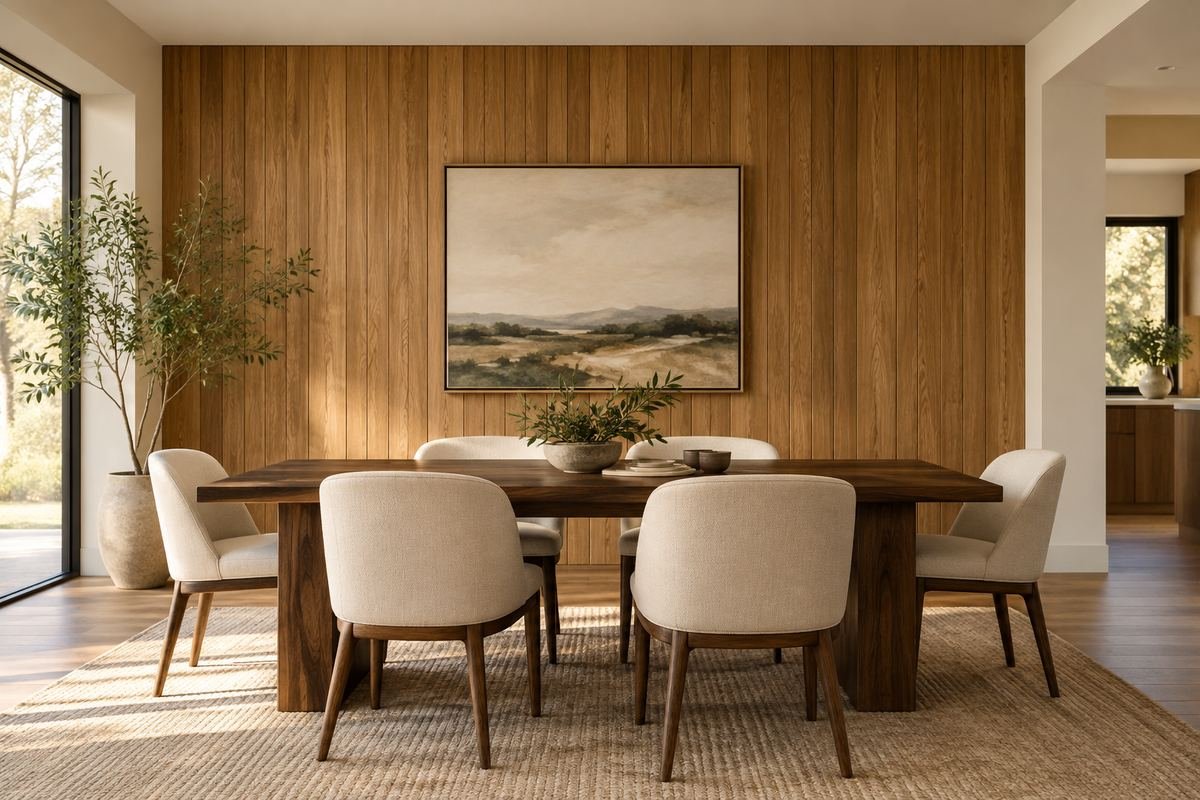
Wood paneling can add material warmth behind a dining table. One defined wall often provides enough texture, especially when the table and floor already contain visible grain.
Compare the wood tones together and plan the panel boundaries, joints and maintenance. The panel is a finish; heavy wall decor still needs appropriate structural fixing rather than relying on decorative material alone.
Practical tip: Avoid choosing every wood finish separately.
19. Paint a Soft Color Block Behind a Sideboard

A painted color block can give a sideboard a deliberate place on a longer wall. A muted clay rectangle provides definition without adding a projecting panel or shelf.
Plan the shape around the whole furniture arrangement rather than tracing the cabinet tightly. Check the edges from the doorway and keep nearby switches, trim and doors in the composition.
Practical tip: Try the outline with suitable removable layout tape.
20. Work With a Narrow Wall Between Openings
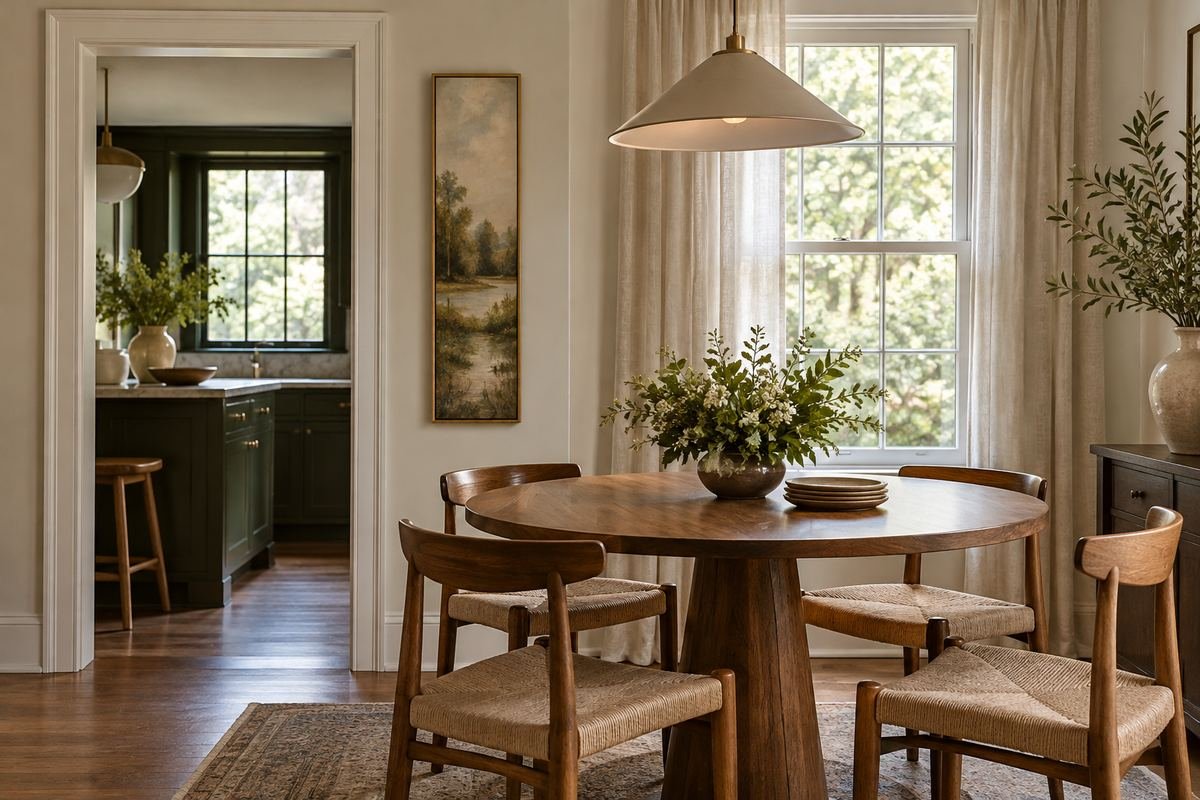
A narrow wall section may need only one upright artwork. Its vertical shape can use the available area without making a small dining room feel crowded.
Measure the wall with doors open and normal routes in use. Keep the frame proportionate to the solid wall and avoid accessories that project into the path beside the table. Check the same view with chairs pulled out and people seated: art, ledges and cabinet doors need to coexist with the occupied table. These small dining room ideas help plan seating and storage before finishing the wall.
Practical tip: Choose one clear piece instead of several tiny fillers.
21. Echo a Round Table With Curved Wall Art

Curved wall shapes can relate to a round dining table without making every object match. A circular or softly arched artwork gives the wall a different rhythm from a grid of frames.
Compare the scale with the table and surrounding architecture. Use a secure mounting system, and leave enough empty wall around the piece that its outline remains visible.
Practical tip: Repeat a shape once rather than throughout every accessory.
22. Use a Triptych on a Long Dining Wall

Three related artworks can stretch across a long wall while keeping a shared center. A triptych can feel more connected than several unrelated frames over a wide sideboard.
Check the intended gap and full combined width before ordering. Plan the group as one arrangement and use the same reference line when hanging each piece.
Practical tip: Keep the furniture below aligned with the whole group.
23. Choose Art That Connects With the Rug

Repeating one or two rug colors in wall art can connect the vertical and horizontal surfaces. This works particularly well when the furniture is simple and the rug contains a restrained pattern.
Compare the art with the actual textile in the room’s light. The colors can relate without matching exactly; leave enough quiet background that both surfaces remain comfortable together.
Practical tip: Choose one leading patterned surface.
24. Keep Banquette Dining Room Wall Decor Clear of Movement
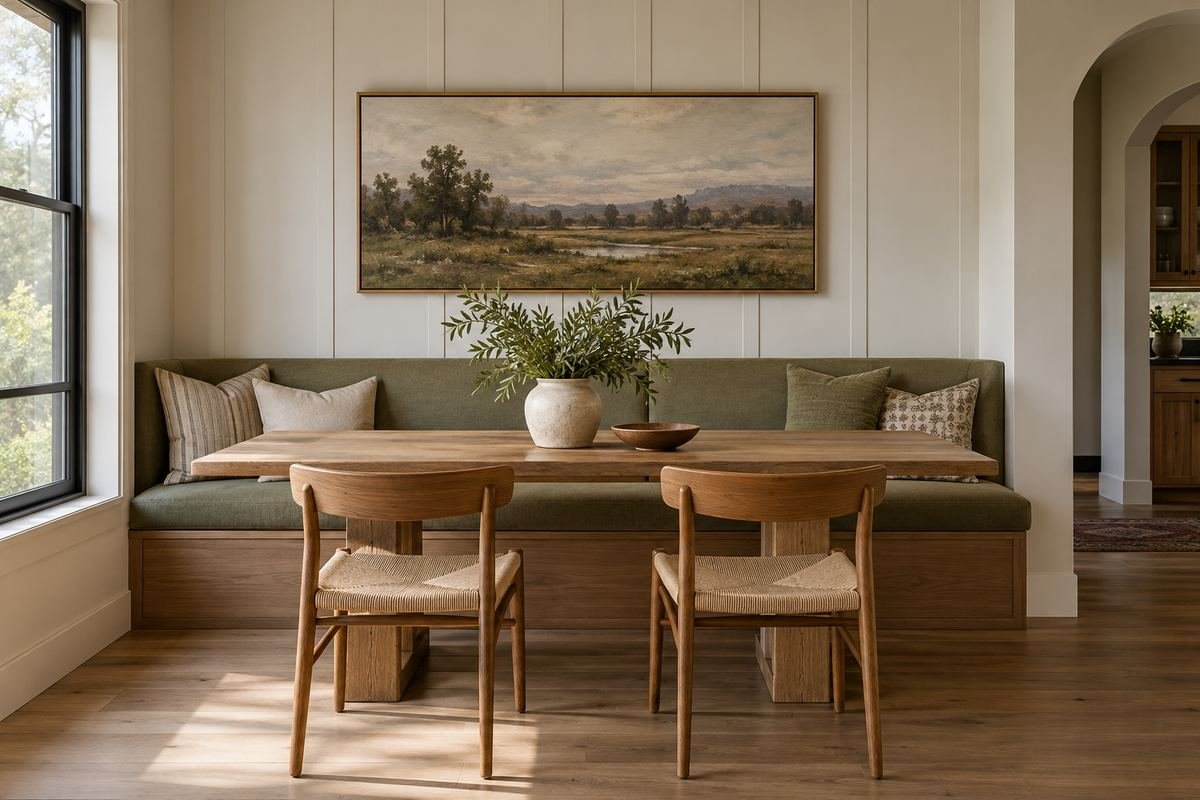
A banquette already adds a long upholstered shape to the room. One securely mounted artwork above it can finish the wall without making the seating corner feel overfilled.
Check the wall arrangement with people sitting down and standing up. Keep any projecting shelves or fragile objects away from heads and the seating movement, and choose decor that is easy to maintain.
Practical tip: Plan from a seated view before adding more objects.
25. Change a Small Gallery With the Seasons

A small gallery of replaceable prints can refresh a dining room while the frames and main arrangement stay fixed. It is a manageable way to bring in a different mood without rebuilding the whole wall.
Choose frames that open safely and keep spare prints protected in storage. Retain a shared palette or subject so the seasonal changes still feel connected to the furniture.
Practical tip: Swap a few images and reassess the whole wall.
26. Leave Part of the Wall Empty

A dining room does not need a decorated surface on every side. One focal arrangement and an unfilled neighboring wall can give chairs, lighting and a table setting more room to register.
View the room during an ordinary meal before adding anything else. If the wall already has a window, strong material, or a useful visual pause, it may be doing enough.
Practical tip: Let the room’s daily use guide the final edit.
Choose the Details That Work in Your Home
A clear focal point and a little empty wall often make a stronger arrangement than several unrelated decorations. Start with the view from the table, then choose a scale and material that connect the wall with the way the room is used.
For related ideas, explore dining table sizing checks and fall dining table decor ideas.
Planning References
Pottery Barn: dining room art ideas; Pottery Barn: dining room lighting guide. Follow the instructions for the exact products you choose.
Optional digital guide for this topic
If you prefer a structured workbook, explore this related paid guide.