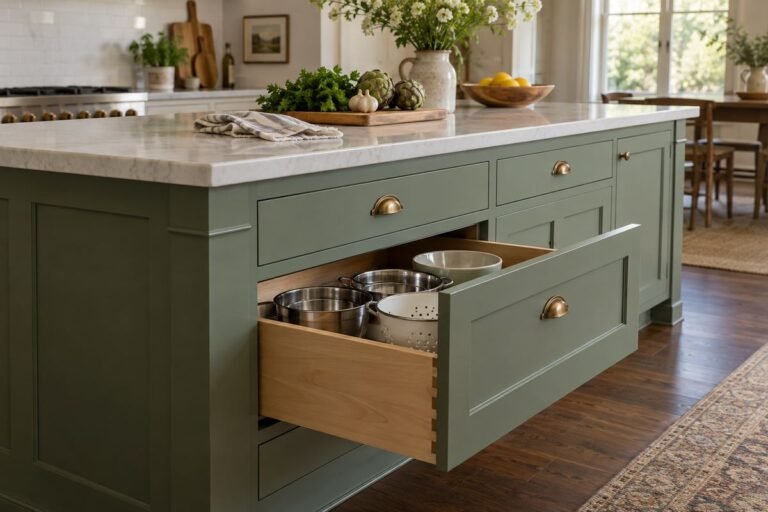
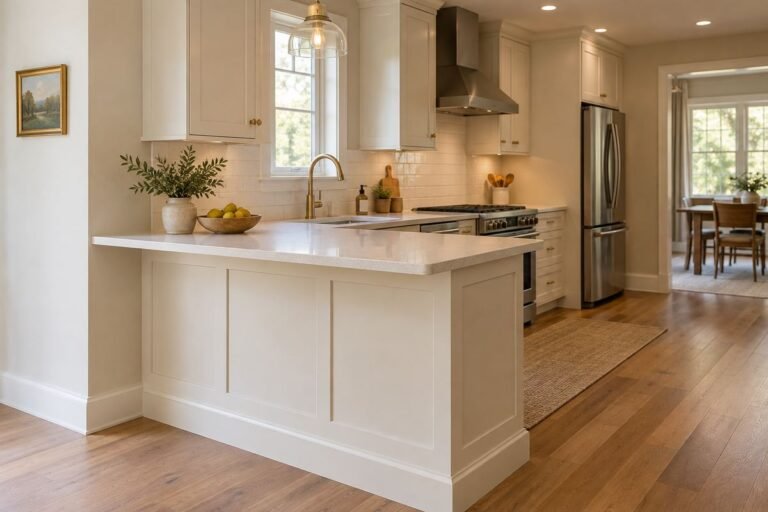
Kitchen shelf ideas should begin with the things you want to reach, not the empty wall you want to decorate. An open shelf can keep useful dishes close or give one collection a clear home. It can also become a hard-to-clean overflow zone if every surface is filled.
Choose the shelf location from the task, the room’s circulation and the actual items. Then compare depth, spacing and the complete installed system. A beautiful plank is only one part of a shelf: wall construction, brackets, fixings and the manufacturer’s load guidance matter too.
The ideas below focus on everyday storage and simple styling. They do not provide structural installation instructions. Use a system suited to the wall and expected load, with qualified help where needed. Keep hot zones, appliances, doors and required clearances in the plan.
The images are original AI-generated decor concepts, not installation diagrams or photographs of completed client projects.
Jump to an idea
- Give everyday plates one reachable shelf
- Create a breakfast shelf near the morning routine
- Use a narrow mug shelf for a limited collection
- Place serving pieces near the dining edge
- Kitchen shelf ideas beside closed cabinets
- Choose visible brackets as part of the design
- Use a floating appearance for a quieter wall
- Let a shelf bridge a short wall section
- Keep a window wall light with shelves beside it
- Make a corner useful without hiding the back
- Use different shelf spacing for different objects
- Give a tall pitcher a stable end position
- Keep recipe books away from the cooking splash zone
- Use containers only when they improve the task
- Group cups with the things used beside them
- Separate display pieces from the busiest storage
- Repeat one dish color for a calmer shelf
- Let wood soften a tiled wall
- Paint shelves to connect with the cabinetry
- Use metal shelving for a distinct utility feel
- Try a freestanding unit where the room allows it
- Keep shelves out of active appliance zones
- Kitchen shelf ideas that leave room to clean
- Use baskets for a defined small-item category
- Edit the shelf after a week of ordinary use
Compare kitchen shelf ideas with a space-and-reach worksheet
Group the items you want to store and measure their real footprints. In a hypothetical 60-inch usable shelf run, a 22-inch group of plates, a 14-inch group of bowls and an 8-inch group of mugs occupy 44 inches, leaving 16 inches to distribute between groups and at the ends. This is only a horizontal-space calculation, not a load rating or clearance rule. Include the largest plate depth, the height needed to lift a stack and the reach of the people using the kitchen. Test a paper outline on a table before choosing the shelf.
| Shelf job | Measure or check | A reason to change the plan |
|---|---|---|
| Daily plates | Largest plate depth, stack height and lifting reach | The shelf fits the plate but leaves no hand space |
| Mugs and cups | Real group width and comfortable grip | Handles overlap or daily cups sit out of reach |
| Display pieces | Stable footprint and suitable installed capacity | The object projects into a route or crowds useful items |
| Small containers | Container depth and clear identification | Front rows hide everything behind them |
| Mixed storage | Cleaning access and open-versus-closed balance | The shelf becomes a home for everything without a purpose |
Kitchen shelf ideas for open storage and daily use
Use open shelves for items you can reach and are willing to keep exposed. Near cooking areas, consider how grease and dust affect the actual location. Some supplies may work better behind doors. Before replacing a cabinet, compare the amount of usable storage you would lose and decide where its contents will go.
Check the complete installed shelf system
Use the load guidance for the actual shelf, supports, fixings and wall conditions. Do not infer capacity from a photograph or from the thickness of a board alone. Keep heavy everyday objects in a suitable reachable position, and follow any anchoring instructions for freestanding units. A shelf that looks minimal still needs a complete practical plan.
1. Give everyday plates one reachable shelf
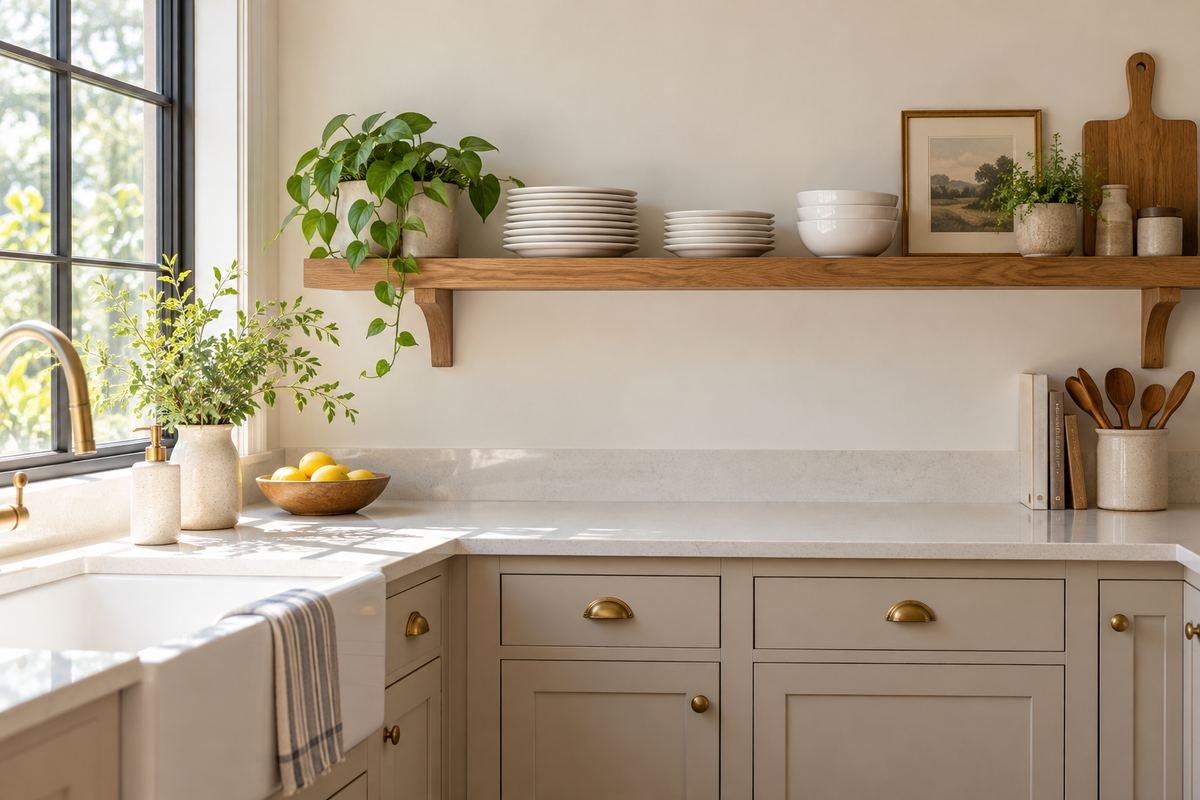
Keeping a modest set of plates together can simplify setting the table. Choose a position that works for the people who use the kitchen rather than the highest available wall space.
Measure the largest plate and the full stack. Leave room for hands to lift items without catching the shelf above. Keep the installed capacity suitable for the complete load, including the shelf itself where the product guidance requires it.
Practical tip: Test the lift with your actual stack of plates.
2. Create a breakfast shelf near the morning routine
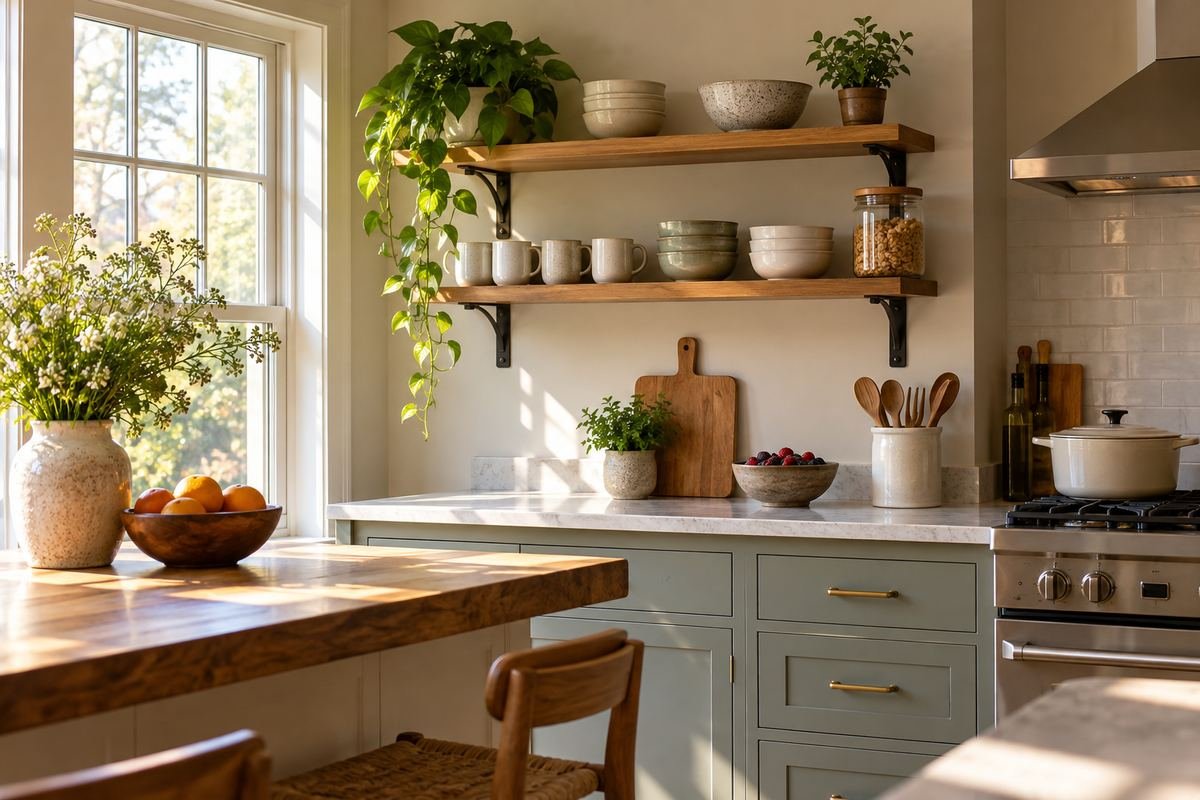
A shelf can gather bowls, cups and a small breakfast set near where they are used. The useful feature is a clear daily grouping rather than a large decorative collection.
Keep the arrangement away from appliance ventilation and heat requirements. Leave a clear counter below for preparing breakfast, and choose closed storage for supplies that do not benefit from being exposed.
Practical tip: Keep the morning set small enough to put back easily.
3. Use a narrow mug shelf for a limited collection
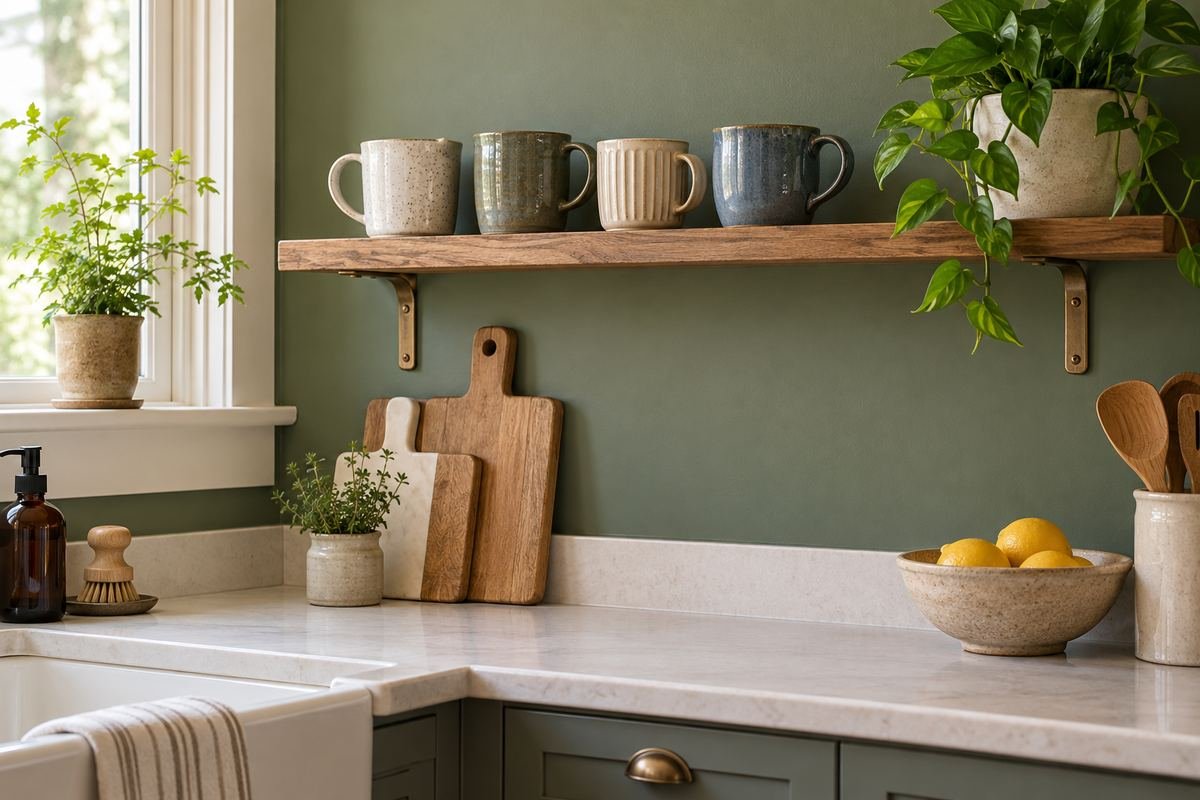
A shallower shelf may suit mugs when deep storage is unnecessary. It can make a small stretch of wall useful without projecting as far into the room.
Measure the handles as well as the bodies. Arrange the cups so you can pick one up without moving the whole row. A narrow shelf is only useful if the contents fit securely within its usable depth.
Practical tip: Measure the largest handle-to-handle footprint.
4. Place serving pieces near the dining edge
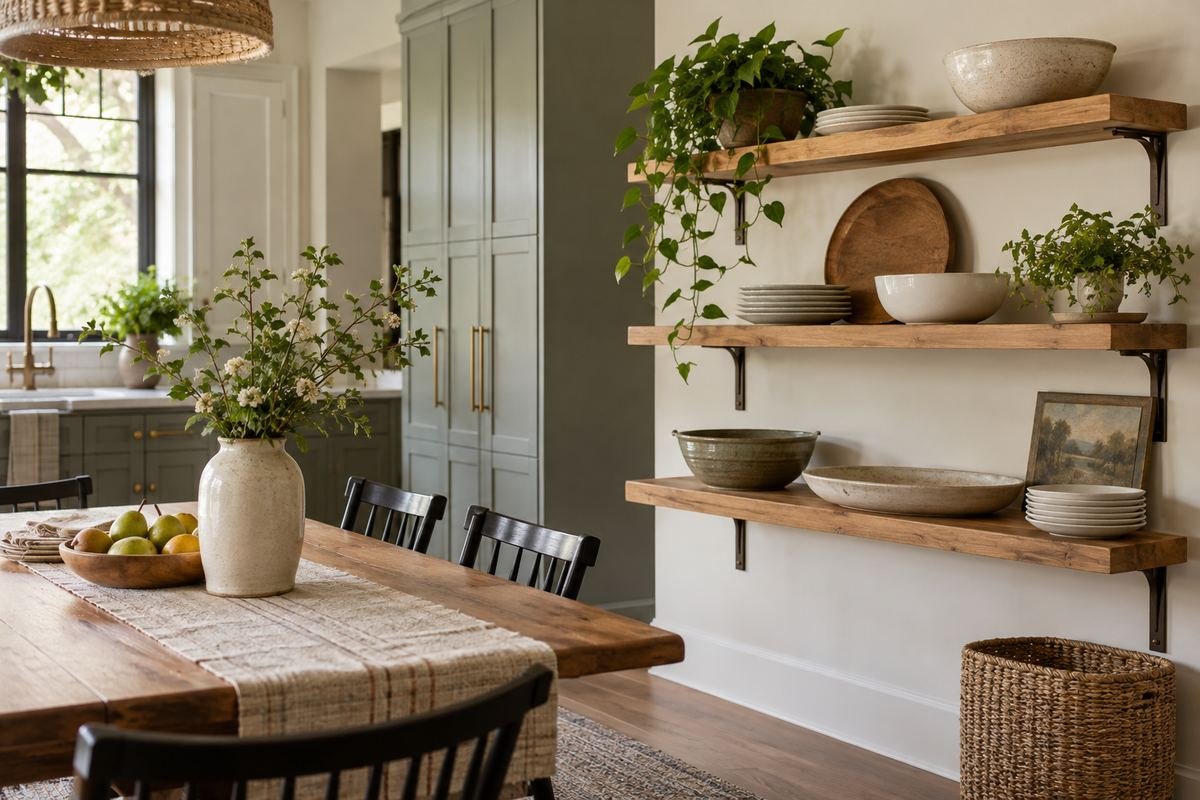
Serving bowls and platters can have a home close to where food leaves the kitchen. This separates occasional table items from the busiest cooking supplies.
Choose pieces that sit stably on the shelf and remain easy to lift. Store heavy or awkward platters in a more suitable position if the proposed open display makes everyday handling difficult.
Practical tip: Plan the route from shelf to table.
5. Kitchen shelf ideas beside closed cabinets

A small open section can provide accessible daily storage while cabinet doors handle the rest. You can try the idea without assuming every upper cabinet must disappear.
Map the cabinet contents first. Keep the open shelf’s job specific, such as cups or bowls, so it does not become a temporary parking spot for unrelated kitchen items.
Practical tip: Decide what stays behind doors before styling the shelf.
6. Choose visible brackets as part of the design

Brackets can give a shelf a clear rhythm and connect it to cabinet hardware. They make the support part of the visual composition rather than hiding it.
Choose the complete system for the intended wall and load. Decide bracket positions with the product guidance, then check how the stored objects fit between them. Decorative spacing alone is not an installation plan.
Practical tip: Plan the stored groups around the actual supports.
7. Use a floating appearance for a quieter wall
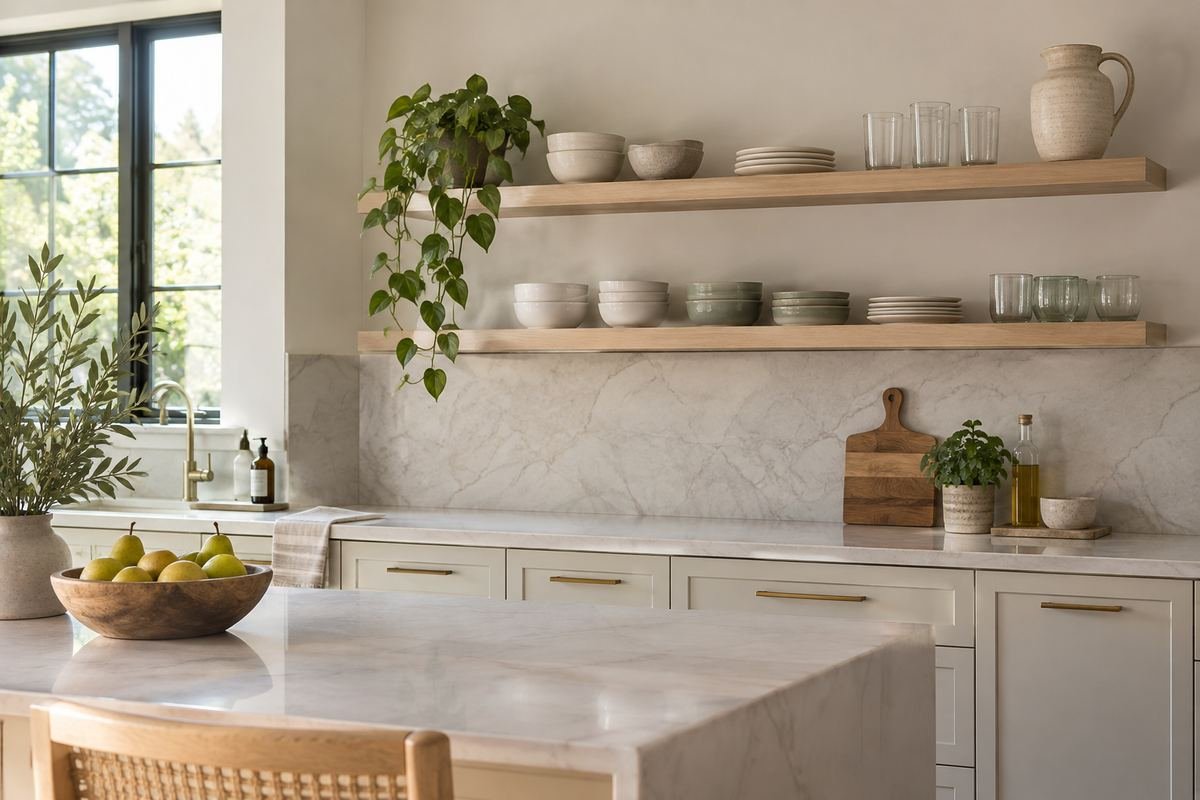
A shelf with concealed supports can let the stored items take visual priority. It suits a simple wall where exposed brackets would add more detail than you want.
Follow the complete concealed-support system requirements. The clean appearance does not tell you what it can hold, so compare actual product guidance before assigning heavy dishes to it.
Practical tip: Choose capacity before deciding how empty the wall should look.
8. Let a shelf bridge a short wall section
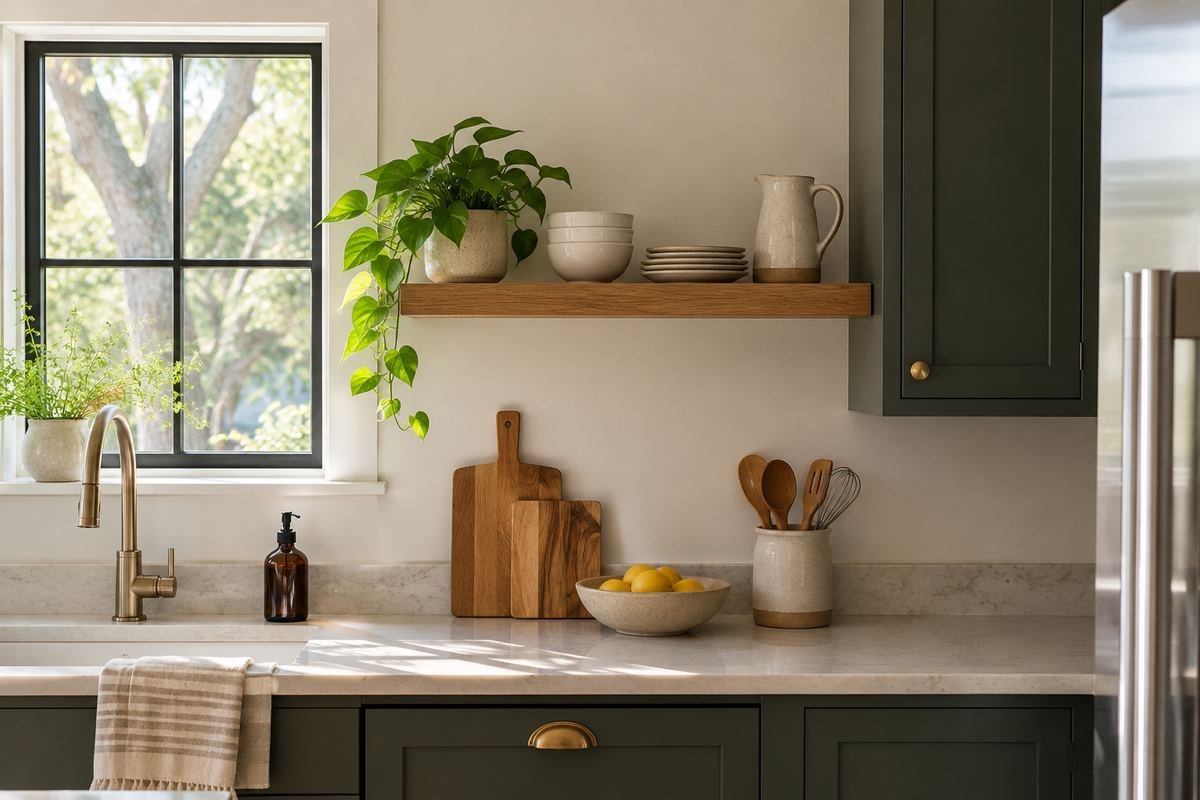
A short run between architectural boundaries can feel intentional without covering the entire room. It may provide enough storage for one genuinely useful group.
Measure the available wall and nearby doors. Resist adding another shelf simply to fill the remaining height if it makes the top row difficult to reach or the counter feel enclosed.
Practical tip: Use the amount of storage the task needs.
9. Keep a window wall light with shelves beside it
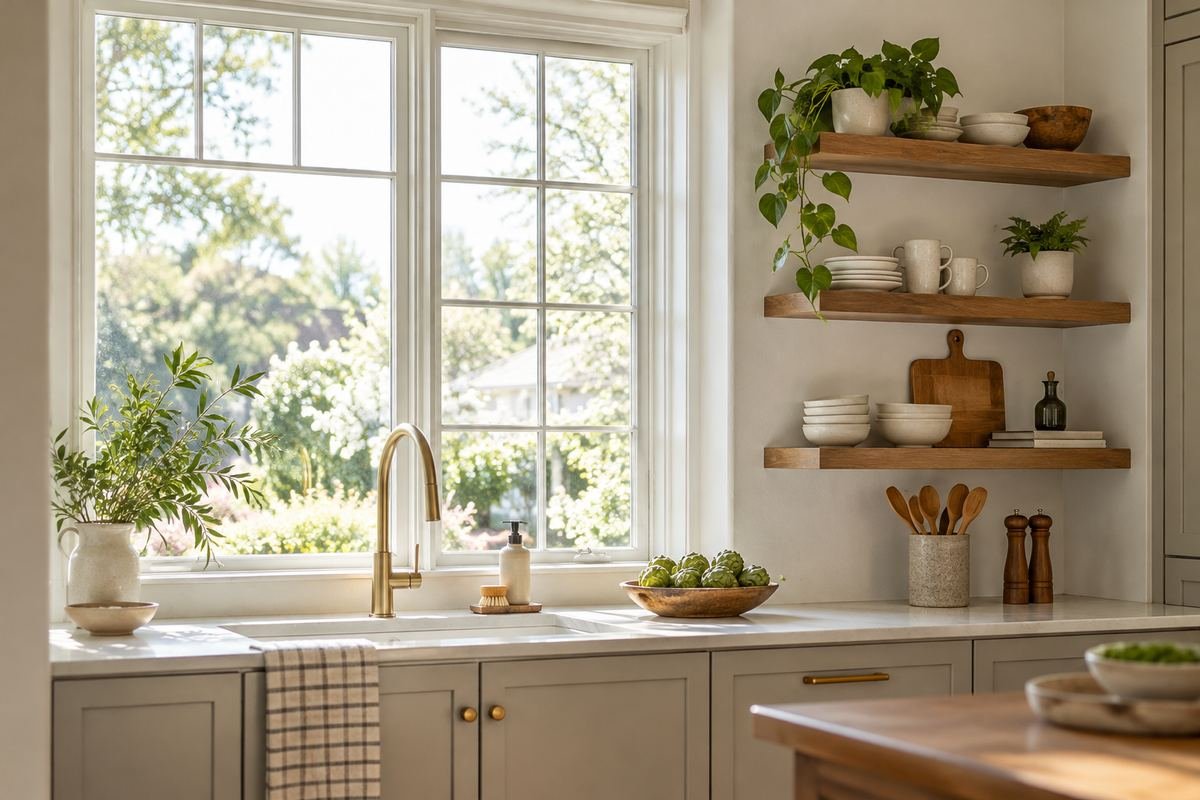
For kitchen shelf ideas near a window, start with the usable solid wall beside it. This can add storage while preserving daylight and access, so the window remains an opening rather than a storage backdrop.
Check the full window movement, curtains or blinds and cleaning access. Avoid extending a shelf across the glass just because it looks attractive in a staged photograph.
Practical tip: Open the window and covering during the layout test.
10. Make a corner useful without hiding the back

A suitable corner shelf can use a wall junction that is awkward for a straight run. The contents still need to be visible and reachable.
Place the most frequently used items near the accessible edge. Check that bowls or containers do not disappear into the deepest part of the corner. A corner is not automatically useful storage just because a shelf fits there.
Practical tip: Test the farthest item before filling the corner.
11. Use different shelf spacing for different objects
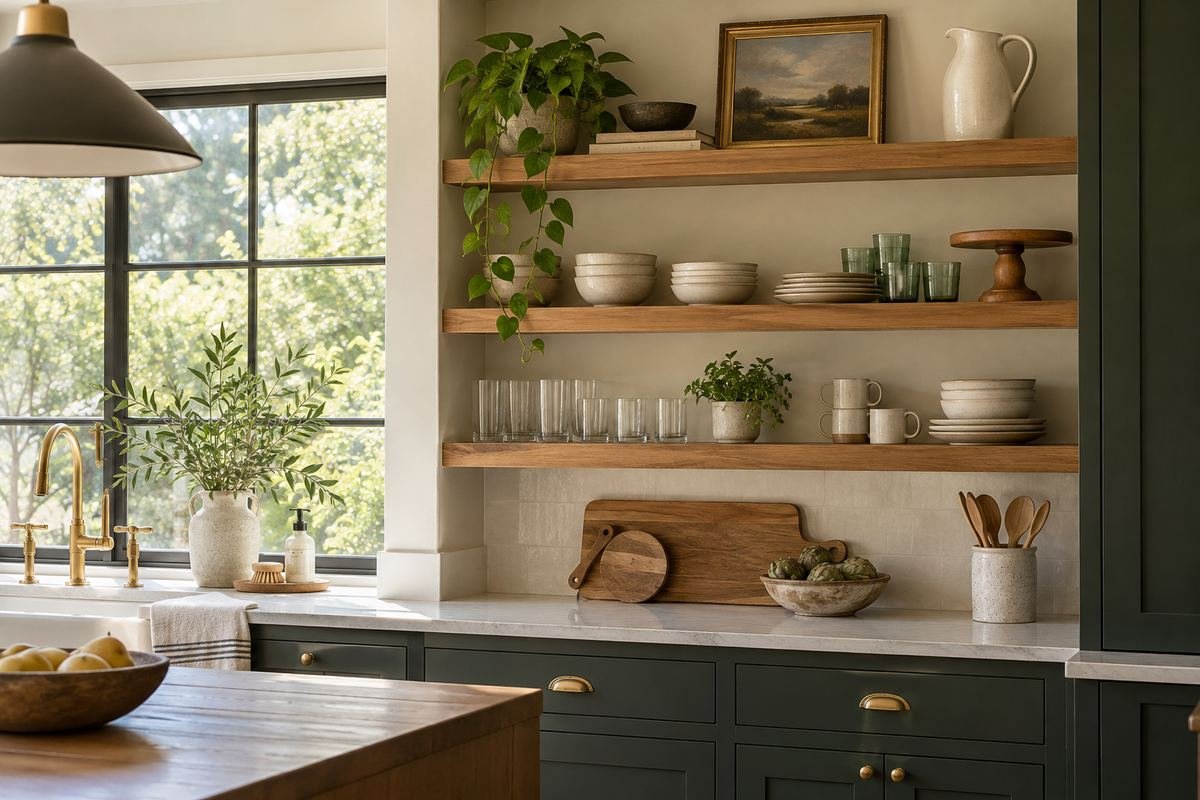
Not every group needs the same height. A taller pitcher and a small stack of bowls can require different clearances within the same arrangement.
Measure items in use, including the space to lift them. An adjustable system can help when storage changes, but check the actual system’s permitted positions and load requirements.
Practical tip: Include your hands in the height measurement.
12. Give a tall pitcher a stable end position
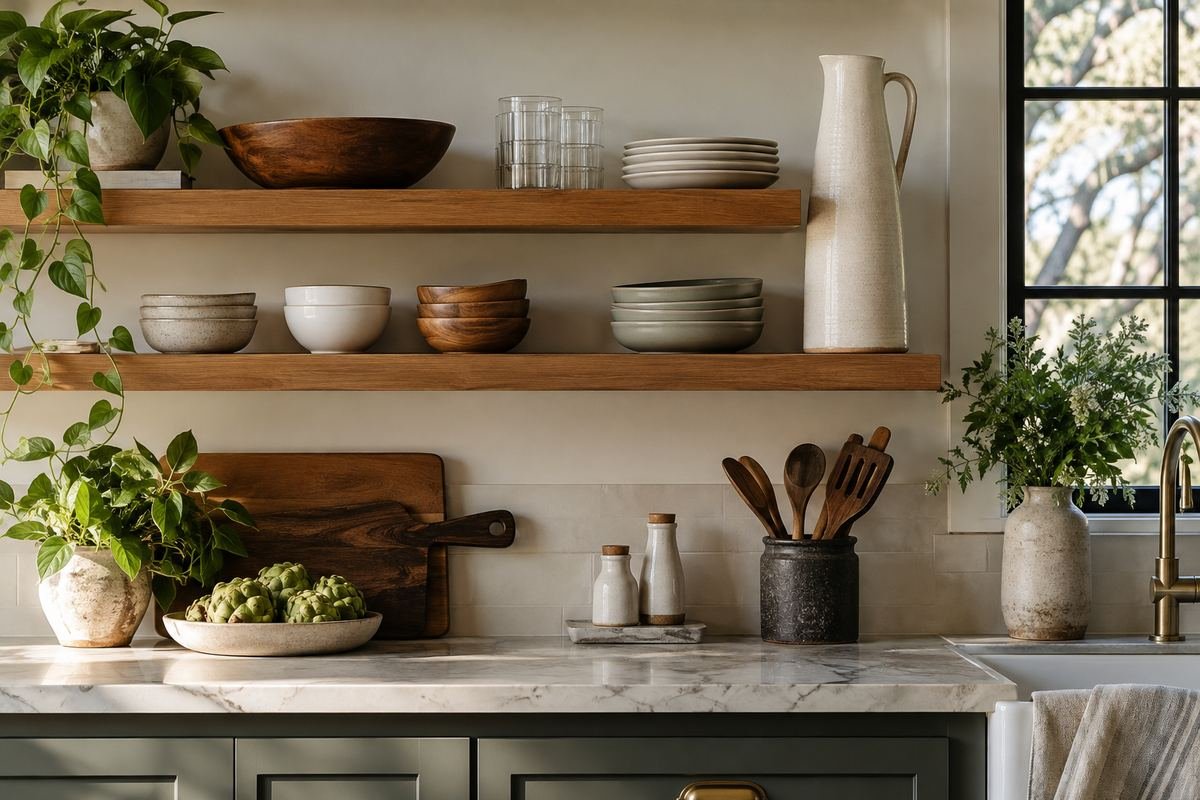
One tall vessel can create a clear visual anchor at the end of a shelf. It can also keep a useful serving piece within view.
Check the base footprint, lifting route and complete installed capacity. Do not place a tall unstable object where a cupboard door or reaching hand is likely to knock it.
Practical tip: Open nearby doors while testing the position.
13. Keep recipe books away from the cooking splash zone

A short row of frequently used cookbooks can make a shelf useful without turning the kitchen into a full library. Choose the books you actually open.
Keep them in a suitable dry location, away from direct heat, splashes and grease-heavy areas. Leave enough room to take one out without unstacking decorative objects.
Practical tip: Store the working books where you would comfortably read them.
14. Use containers only when they improve the task
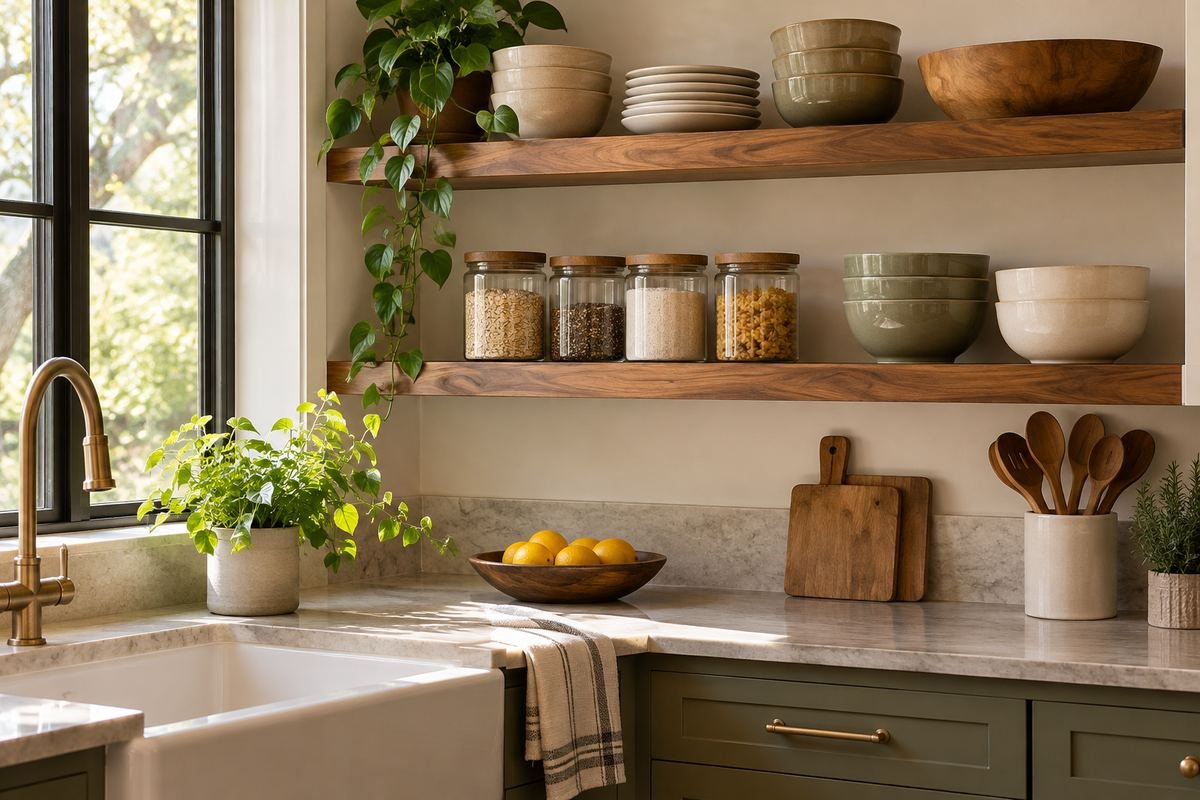
A few suitable containers can bring small supplies together and make a shelf easier to maintain. Matching packaging is less important than knowing what is inside and using it appropriately.
Choose containers suited to their actual contents. Keep required product information and food-storage guidance rather than decanting everything for appearance. Avoid back rows that become forgotten.
Practical tip: Leave identification readable and useful.
15. Group cups with the things used beside them
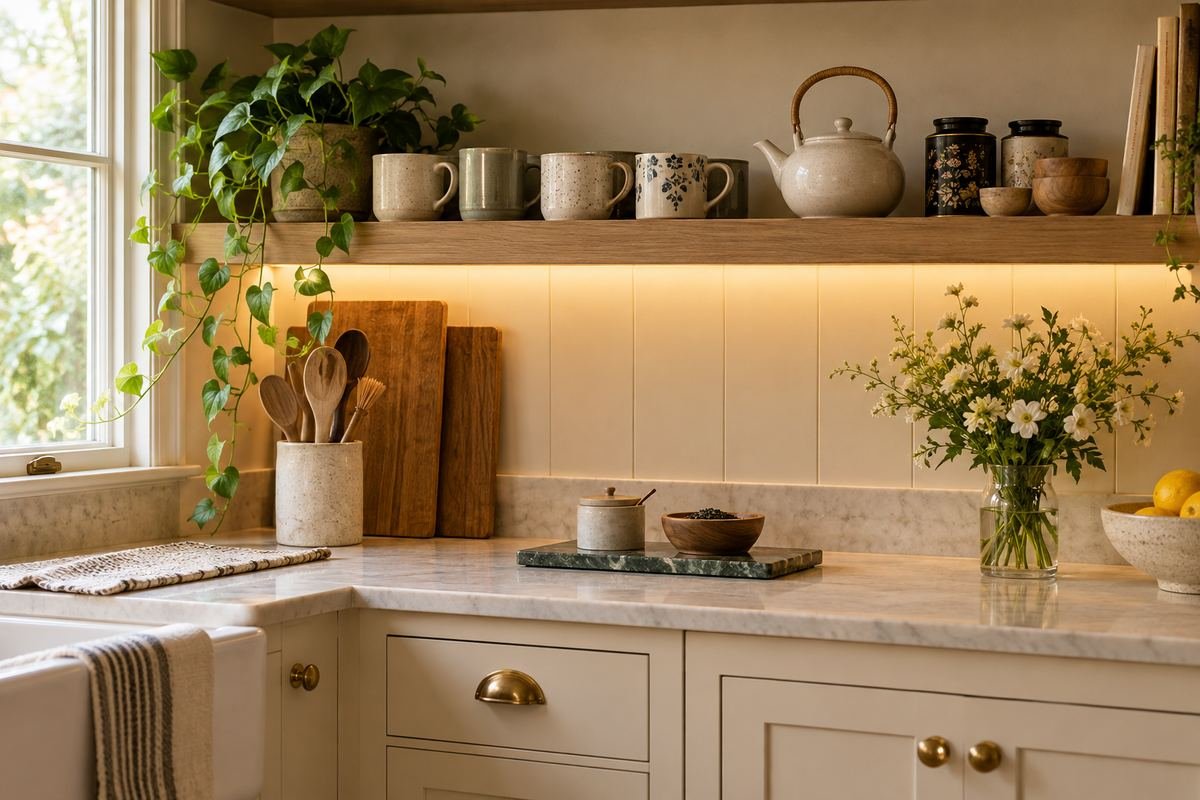
A daily cup shelf can work well when the related routine happens below. It reduces the amount of reaching across the kitchen for a small task.
Keep the counter available and respect appliance instructions. Store only the supplies that belong in the group, then leave the rest in their own positions so the shelf stays easy to reset.
Practical tip: Build the shelf around a routine rather than a theme.
16. Separate display pieces from the busiest storage

Kitchen shelf ideas can separate occasional display pieces from reachable daily dishes. A small upper display area gives a few less-used objects a place without disrupting normal cooking.
Choose stable objects and an appropriate shelf system. Do not put heavy or awkward pieces high merely because they are used infrequently; handling them still needs to be practical.
Practical tip: Make the daily shelf useful before arranging the display.
17. Repeat one dish color for a calmer shelf

A limited color palette can make varied everyday dishes look connected. It can work with pieces you already own rather than requiring a new matching collection.
Group by use first, then make small visual adjustments. Keep the arrangement easy to restore when some dishes are in use or in the dishwasher. A shelf should not depend on every cup being present.
Practical tip: Check how the shelf looks on an ordinary day.
18. Let wood soften a tiled wall

Wood can bring a warm visual contrast to tile and stone. A restrained shelf may be enough when the backsplash already has pattern or texture.
Choose a finish suitable for the location and follow its care guidance. Keep structural support and moisture conditions in the plan rather than selecting a board only from its grain.
Practical tip: Compare the finish sample against the actual tile.
19. Paint shelves to connect with the cabinetry
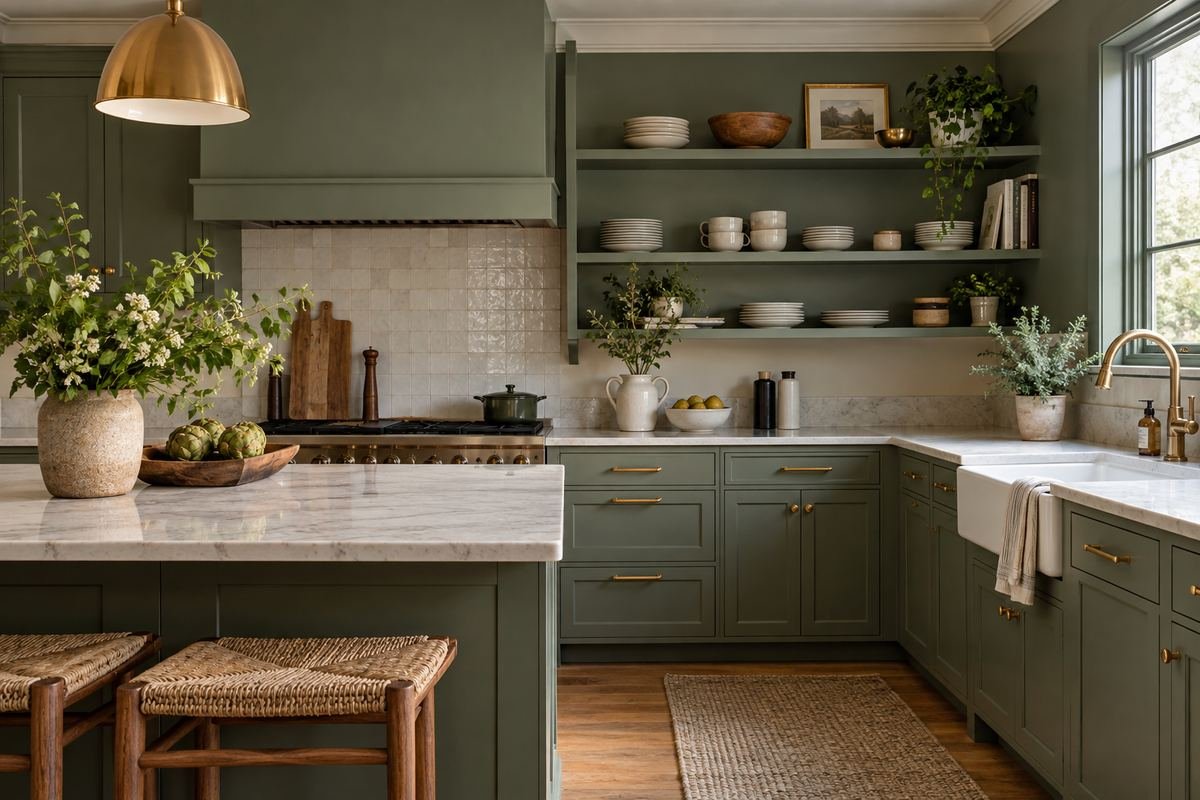
A related paint color can make a shelf feel like part of the fitted kitchen. It can also help the arrangement recede against a similarly colored wall.
Check the shelf material, finish durability and care instructions. Choose the storage job before committing to a color; a beautifully matched shelf still needs sufficient depth and support.
Practical tip: Use a real finish sample beside the cabinet door.
20. Use metal shelving for a distinct utility feel
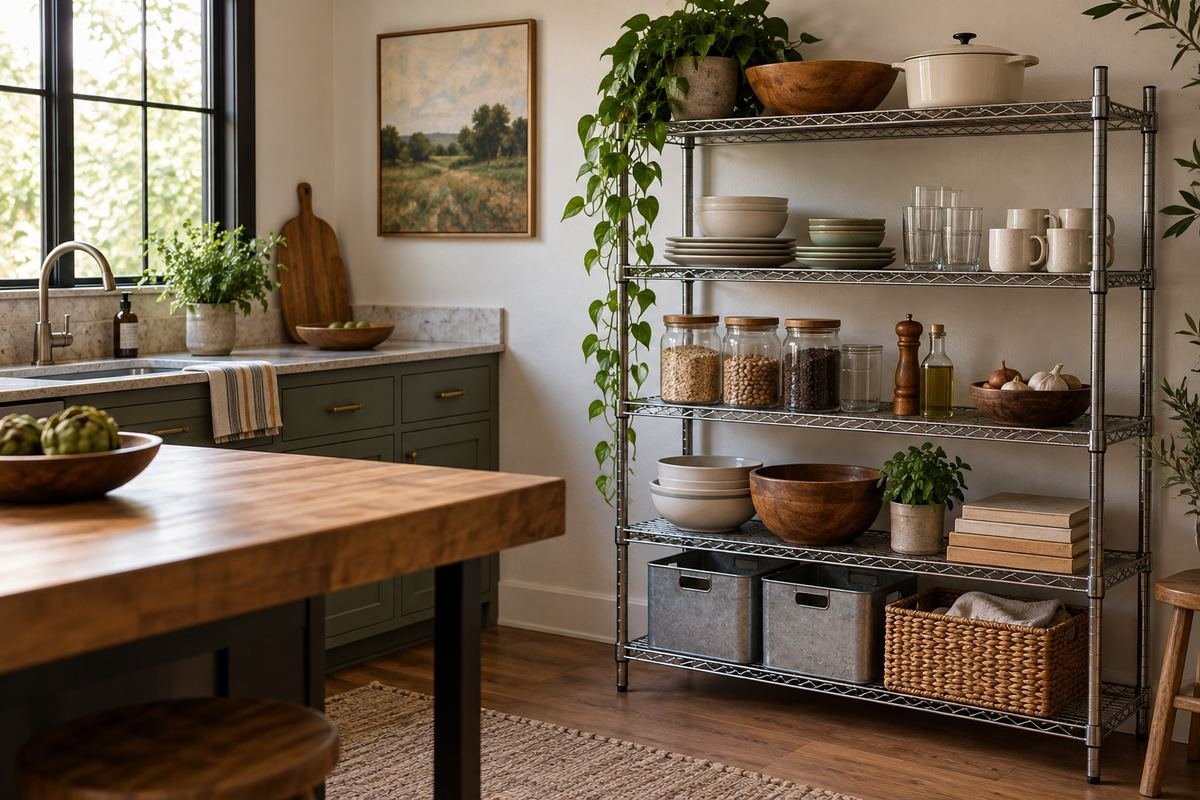
A suitable metal system can give storage a clean practical character. It can work as a deliberate contrast to painted cabinets or a wood counter.
Compare the actual shelf surface, stability, cleaning requirements and mounting guidance. Small objects may need a suitable solid tray on an open wire surface, provided the system allows it.
Practical tip: Test the smallest item on the actual shelf surface.
21. Try a freestanding unit where the room allows it
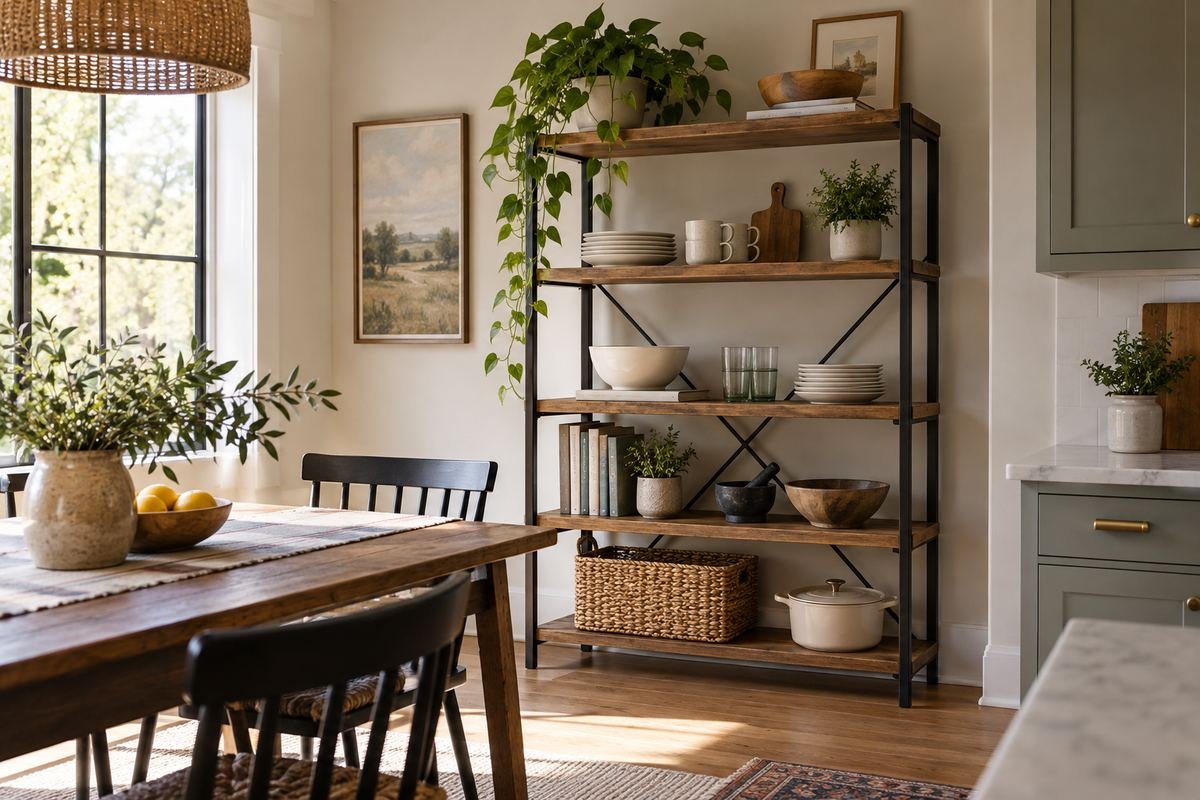
A freestanding shelf can provide storage without committing the same wall to a fixed shelf run. It still needs a deliberate location and any required anchoring.
Test the occupied floor footprint, door routes and nearby appliances. Follow the unit’s load and anchoring instructions rather than assuming a narrow unit is stable because it fits in a gap.
Practical tip: Choose the unit from its full footprint and instructions.
22. Keep shelves out of active appliance zones
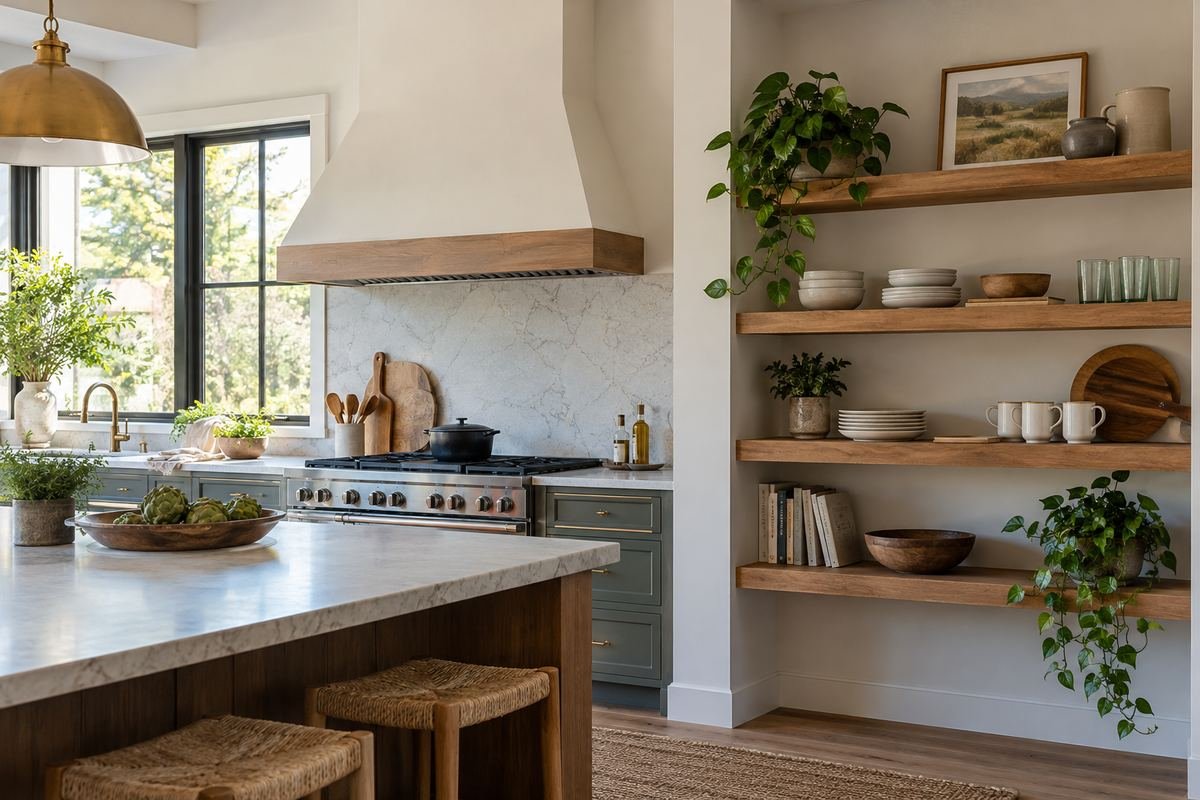
The clearest shelf layout sometimes leaves a wall empty. A nearby appliance may need ventilation, operating space or access that a shelf would interfere with.
Use the instructions for the actual appliances and the shelf system. Do not infer acceptable distances from a room photograph. Move the storage task to a more suitable wall if the requirements compete.
Practical tip: Check the appliance manual before fixing the shelf location.
23. Kitchen shelf ideas that leave room to clean

A shelf that can be cleaned without moving dozens of tiny objects is easier to maintain. Moderate groups can give both storage and breathing room.
Try lifting each group and reaching the surface behind it. If the back edge is inaccessible or the arrangement needs constant reconstruction, reduce the contents or choose another storage type.
Practical tip: Make the cleaning route part of the styling.
24. Use baskets for a defined small-item category
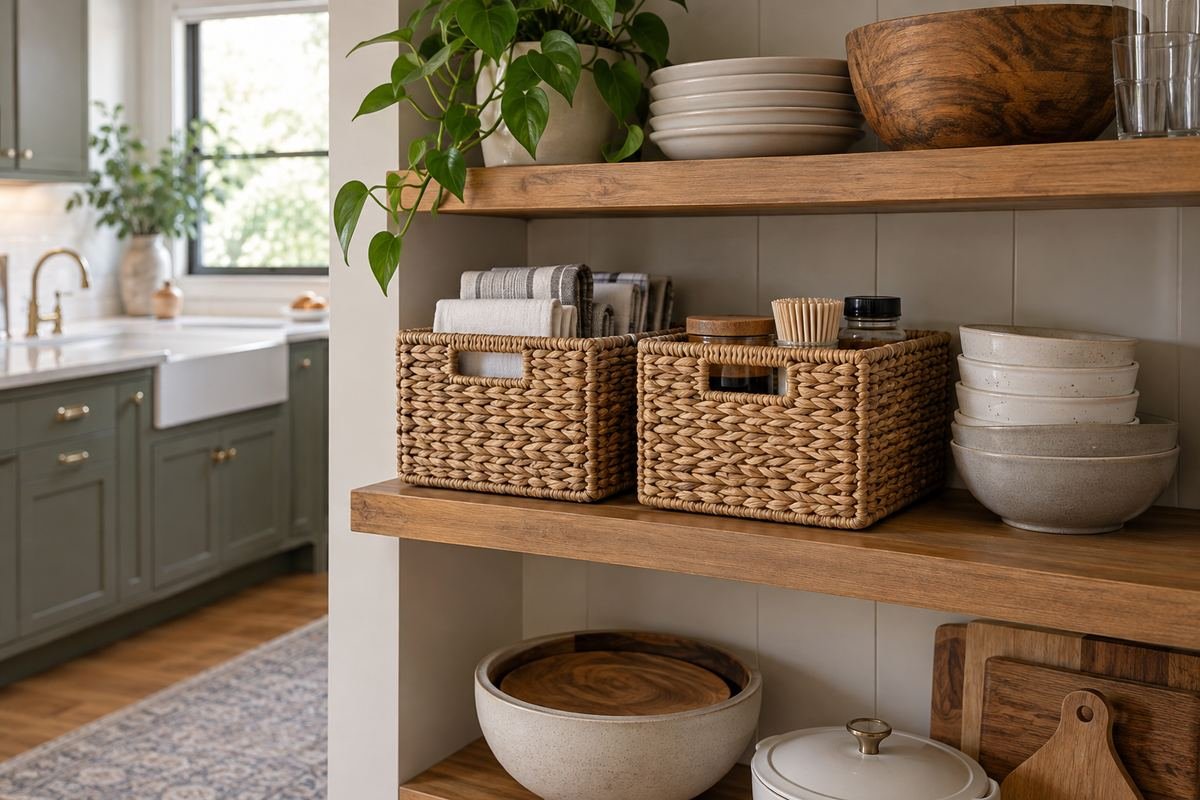
A suitable basket can keep a modest category together on an open shelf. It works when you can remove and replace it comfortably.
Measure the basket loaded and allow space to grip it. Keep the contents appropriate to the material and location. Several identical baskets are not useful if no one remembers what each contains.
Practical tip: Assign one clear category to each basket.
25. Edit the shelf after a week of ordinary use
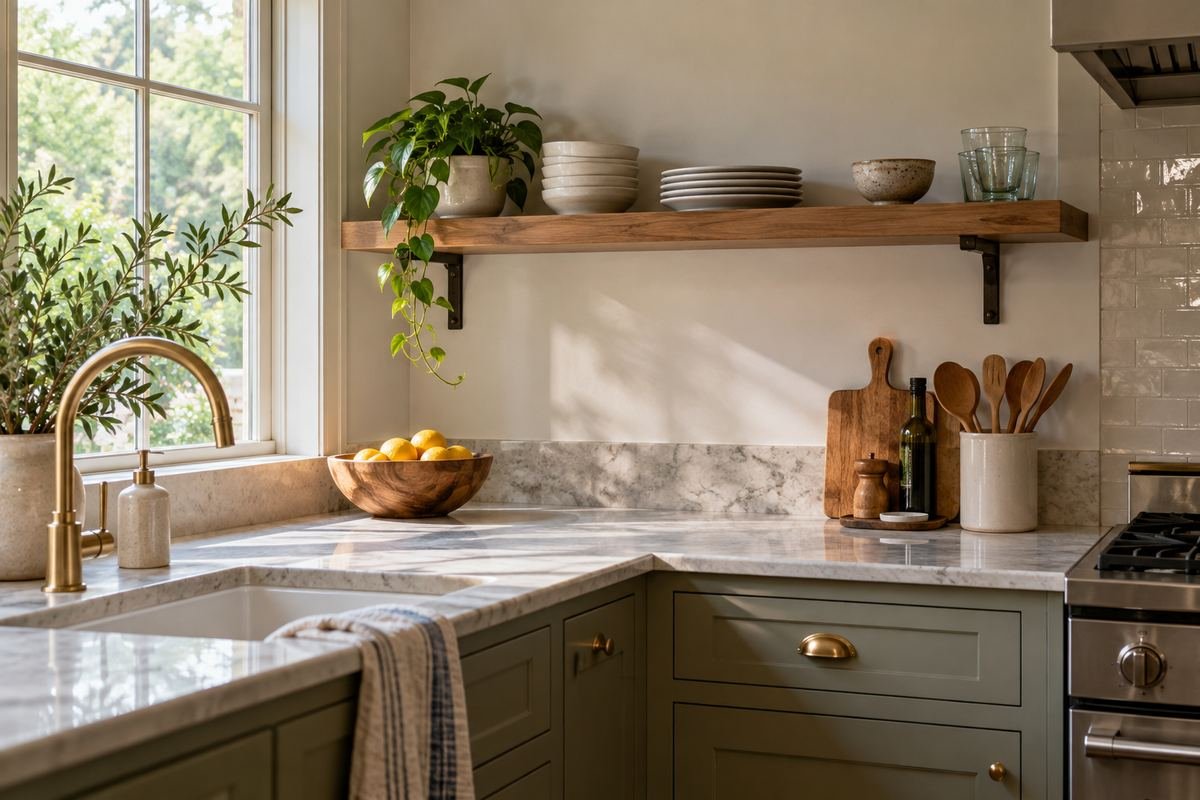
The best arrangement is the one that still works when the kitchen is busy. A short trial can reveal an awkward reach or a group that never returns to its intended place.
Move or remove objects based on that experience. Keep the shelf system within its guidance and avoid adding more storage before understanding why the first arrangement became crowded.
Practical tip: Change the layout from observed use, not a styling formula.
Frequently Asked Questions
What should I put on open kitchen shelves?
Start with a limited set of reachable everyday dishes or a small collection you want to display. Check the complete installed capacity and keep cleaning access. Supplies that create visual clutter or need more protection may suit closed storage better.
How deep should a kitchen shelf be?
Measure the actual items, supports and location. The largest plate or container needs to fit without projecting awkwardly, but a deeper shelf can interfere with the workspace or make back rows harder to reach. There is no single depth that suits every kitchen.
Can I replace all upper cabinets with open shelves?
Only after comparing usable storage, reach, cleaning and installation requirements. Map where every cabinet item would go. A partial change or a mix of open and closed storage may suit the household better.
How do I keep kitchen shelves from looking cluttered?
Give each shelf a defined job, group related items and leave enough space to lift and replace them. Limit decorative additions until daily supplies fit comfortably. The arrangement should work when the dishes are being used.
Can a floating shelf hold heavy plates?
That depends on the complete product and its installation, including supports, fixings and wall construction. Follow the actual system’s rating and guidance; a floating appearance does not establish load capacity.
Choose the Details That Work in Your Home
Test kitchen shelf ideas with one storage job and the actual items before adding shelves across the whole wall. When depth, reach, capacity and cleaning all work, the arrangement becomes easier to maintain. Leave some supplies behind doors and let the open shelves hold only what earns its place.
For related ideas, explore 14 Kitchen Storage Ideas for Reachable Everyday Supplies, 24 Kitchen Counter Decor Ideas That Leave Room to Cook, 25 Kitchen Backsplash Ideas for Color, Pattern and Everyday Use.
Planning References
IKEA: organizing kitchen counters around daily tasks; IKEA: kitchen shelf types and layout ideas; IKEA: a home visit about open and closed kitchen storage. Follow the instructions for the exact products you choose.
Optional digital guide for this topic
If you prefer a structured workbook, explore this related paid guide.