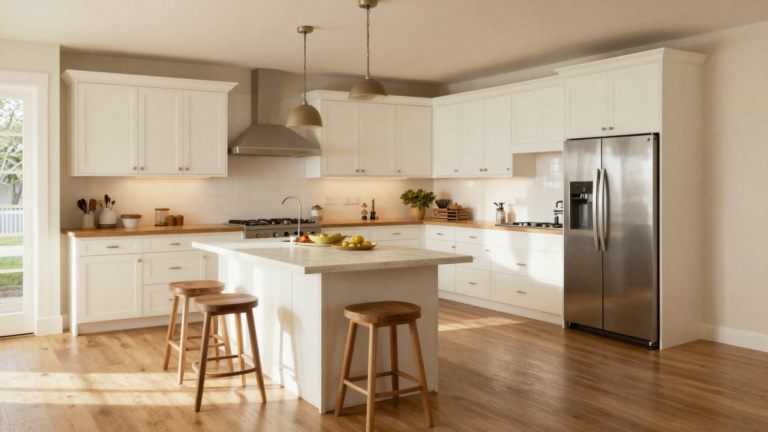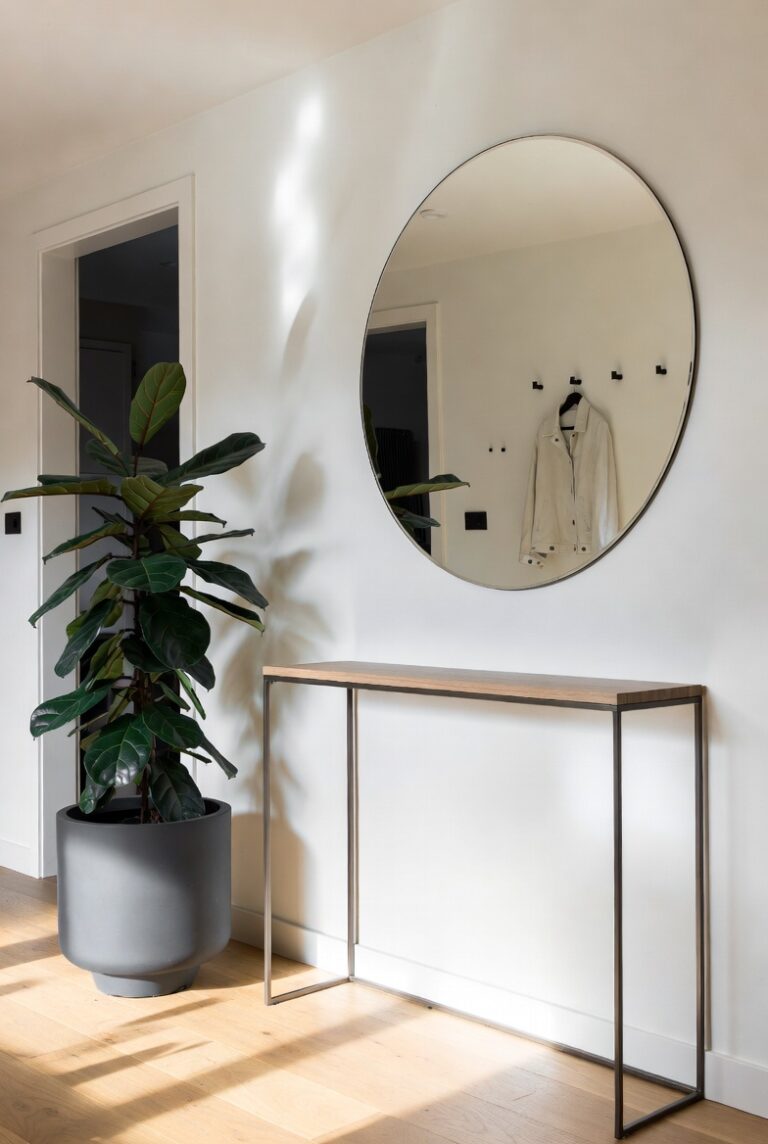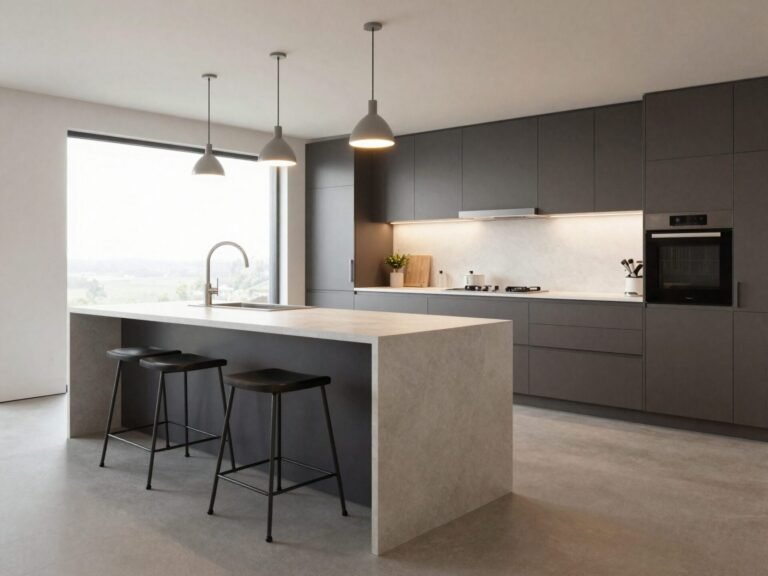
No one ever has enough kitchen storage. It doesn’t matter if your kitchen is small and tight or just poorly organized — the stress of digging through a deep cabinet or a stuffed drawer feels the same either way. The good news is that most of the fix isn’t about adding more space, it’s about using the space you already have more intentionally.
Getting the kitchen storage right makes the biggest difference in how the space actually feels day to day. A well-planned kitchen storage balances function and style, and even small tweaks to your kitchen storage can transform the whole area.
By the end of this article, you’ll have 14 real storage and organization ideas that make every cabinet, drawer, and shelf work harder, based on what’s actually trending in kitchen organization for 2026.
Table of Contents
- 1. Add Pull-Out Shelves to Deep Cabinets
- 2. Install a Wall Rack for Pots and Pans
- 3. Use Vertical Dividers for Trays and Sheets
- 4. Create a Dedicated Coffee Station Zone
- 5. Add a Hidden Counter Pantry
- 6. Use Clear Canisters for Pantry Staples
- 7. Install a Corner Cabinet Pull-Out
- 8. Add Under-Shelf Baskets
- 9. Mount a Magnetic Spice Rack
- 10. Use a Slim Rolling Cart in a Narrow Gap
- 11. Add Deep Drawer Dividers for Utensils
- 12. Install a Step Riser for Canned Goods
- 13. Use Door-Mounted Storage Racks
- 14. Zone Your Drawers by Task
- Effort & Cost Snapshot
1. Add Pull-Out Shelves to Deep Cabinets for Your Kitchen Storage
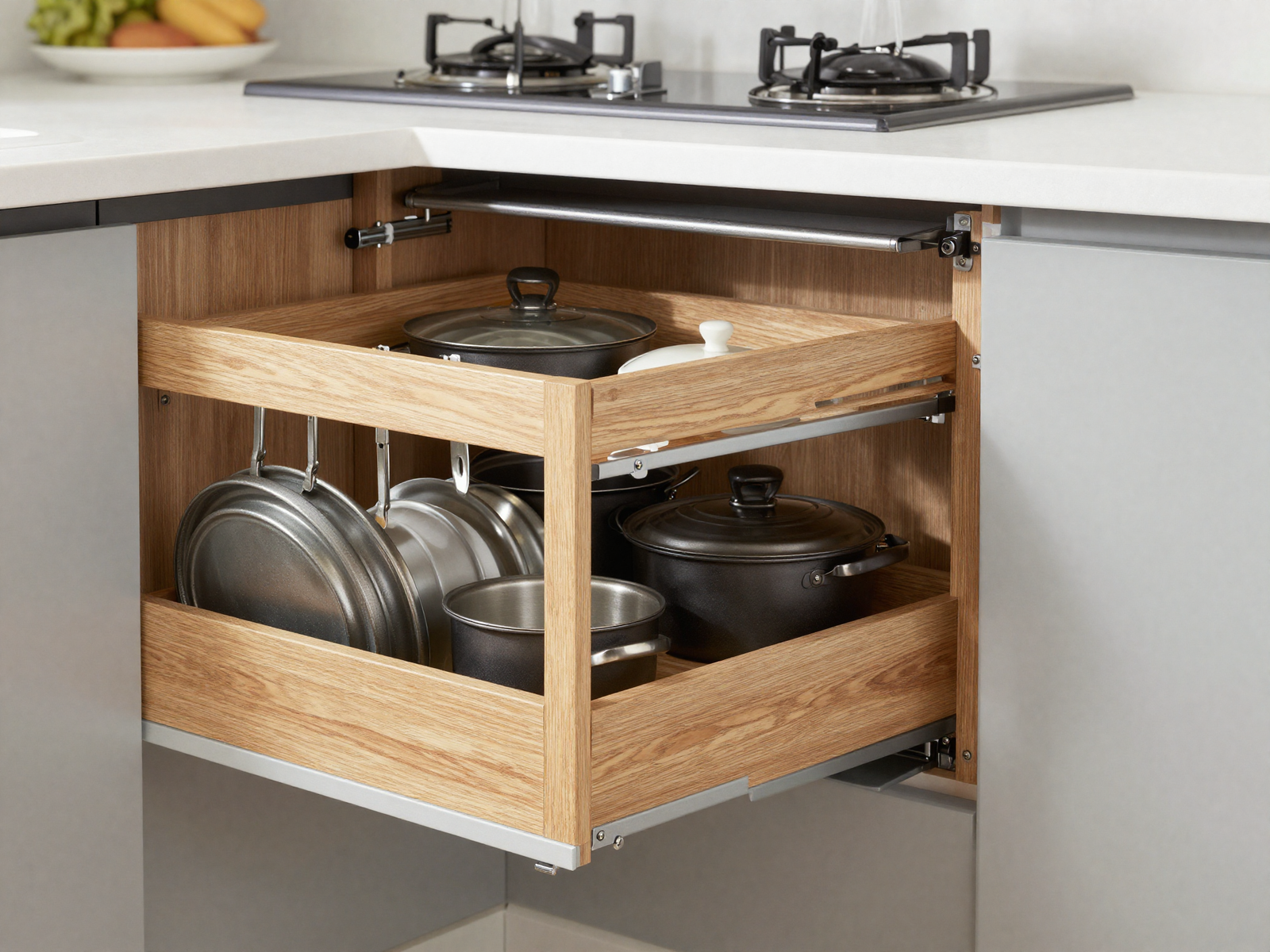
Deep base cabinets are notoriously wasteful — items get pushed to the back and forgotten until they’re expired. Pull-out shelves eliminate that dead space by bringing everything forward to eye level, which is why designers consistently rank them as the most impactful kitchen storage upgrade for 2026.
💡 Smart tip: You don’t need a full remodel — installing pull-outs in just your worst cabinet or two still makes a noticeable difference.
⚠️ Mistake to avoid: Don’t choose the cheapest hardware available — smooth, reliable gliding is what determines whether you keep using the pull-out or let it stick and go back to old habits.
2. Install a Wall Rack for Pots and Pans for Your Kitchen Storage
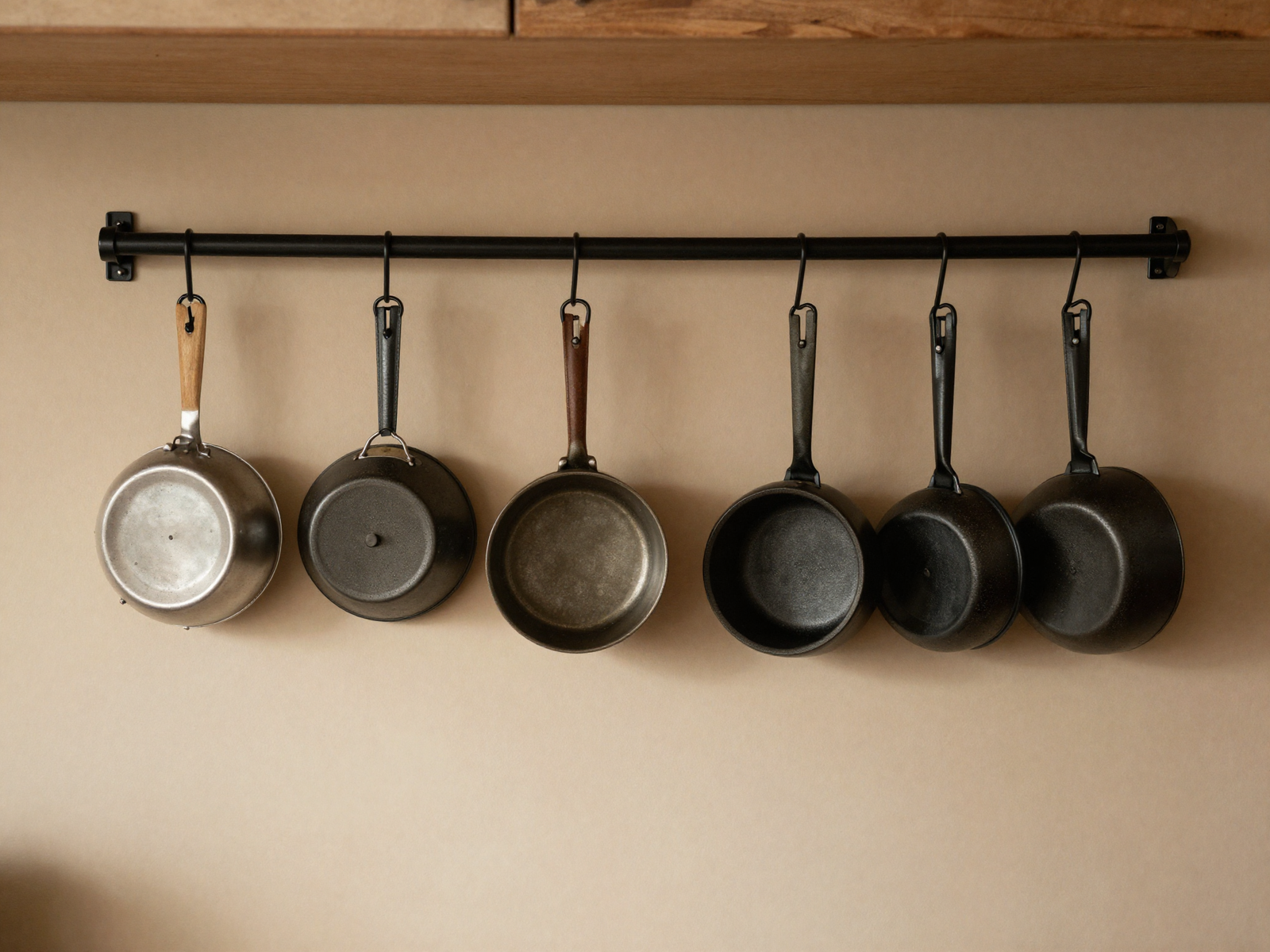
If cabinets are overflowing and cookware won’t fit, a wall-mounted rack takes pots and pans off your hands entirely, freeing up real cabinet space while doubling as a genuine design feature on an otherwise bare wall.
💡 Smart tip: Hang your most-used pieces at the center of the rack, within easy reach, and save the ends for occasional-use cookware.
⚠️ Mistake to avoid: Don’t overload one section of the rack — distribute weight evenly and confirm your wall anchors can handle cast iron before hanging heavier pieces.
3. Use Vertical Dividers for Trays and Sheets for Your Kitchen Storage
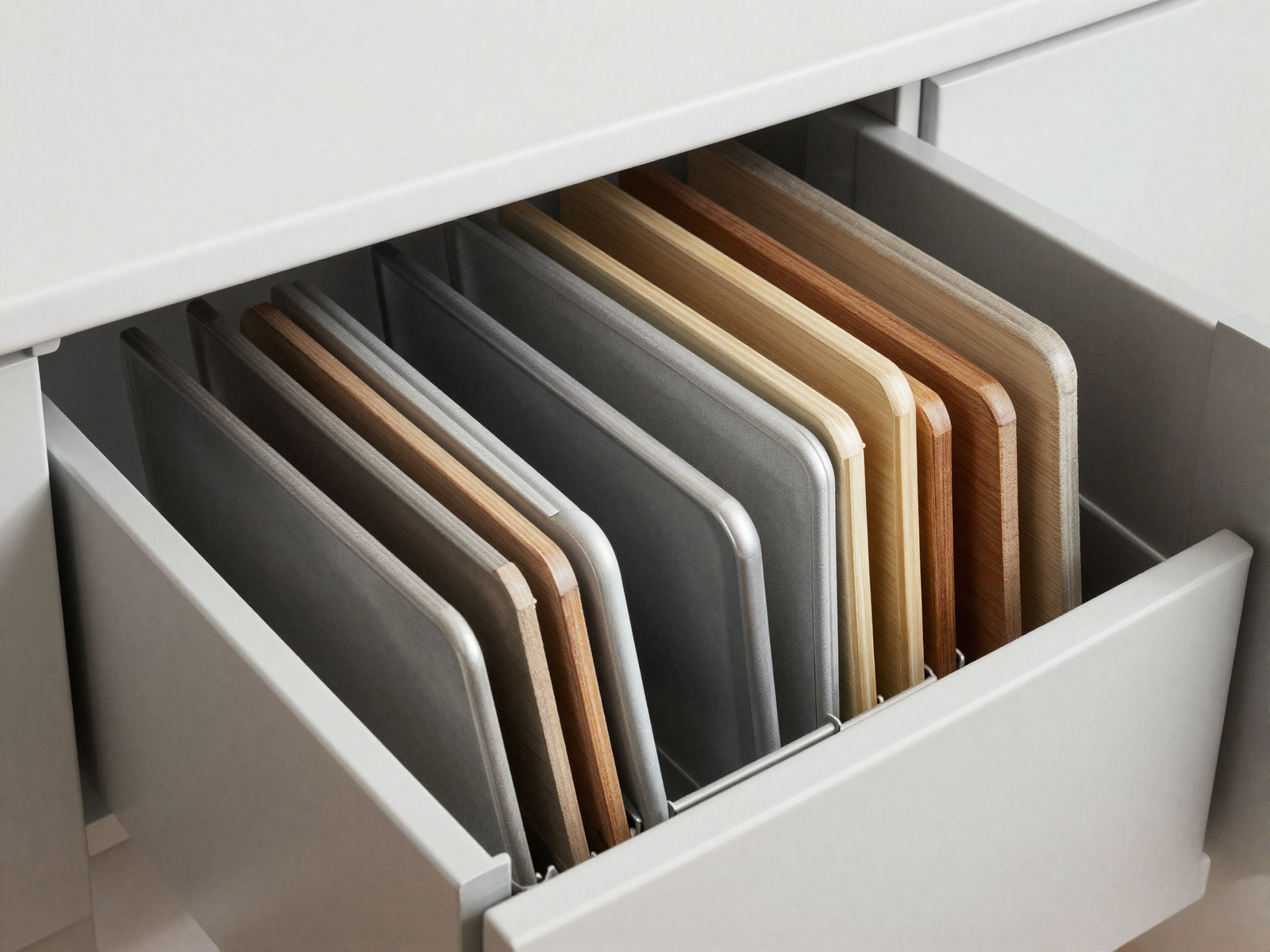
Stacked baking sheets and cutting boards are one of the most common sources of cabinet chaos — pull one out and the whole stack shifts. Vertical dividers store each piece upright and separate, so you can slide one out without disturbing the rest.
💡 Smart tip: Measure your tallest sheet pan before buying dividers — undersized inserts won’t fully contain larger cookware.
⚠️ Mistake to avoid: Don’t cram more slots into the space than actually fit comfortably — overly tight dividers make items harder to remove, not easier.
Loving These Ideas? Get the Step-by-Step Guide
Grab the full 5-day eBook and turn these ideas into a finished room.




4. Create a Dedicated Coffee Station Zone for Your Kitchen Storage
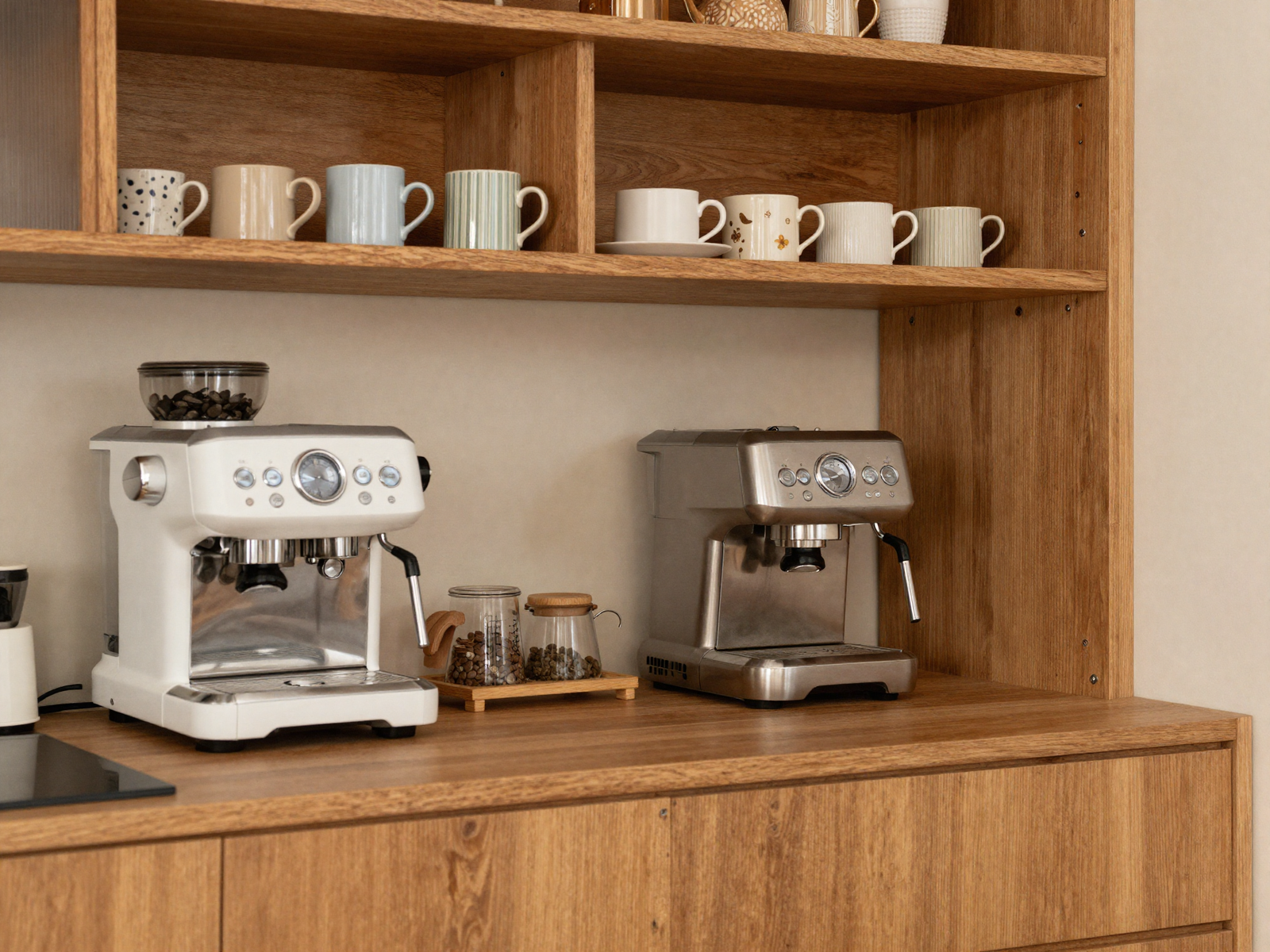
Grouping tools by task, rather than stuffing them wherever they fit, is the biggest organizing shift for 2026 kitchens. A coffee station keeps the machine, mugs, and syrups in one spot, which speeds up the morning routine and keeps the rest of the counter clear.
💡 Smart tip: A narrow 18-24 inch counter run is enough for a functional coffee zone — you don’t need a full corner to make it work.
⚠️ Mistake to avoid: Don’t place the coffee station directly in your main prep zone — it creates a bottleneck every morning when multiple people need the counter.
5. Add a Hidden Counter Pantry for Your Kitchen Storage
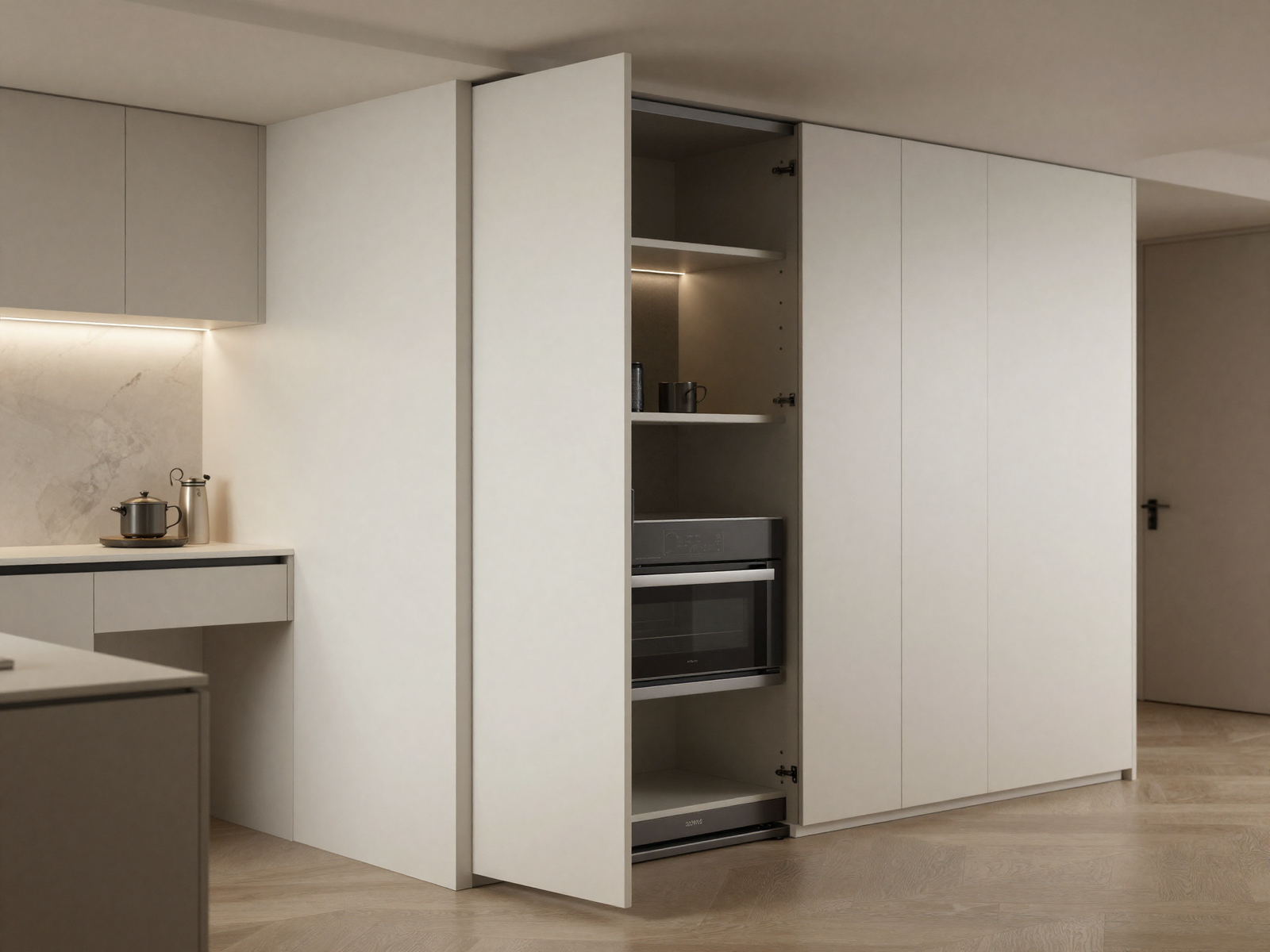
A hidden counter pantry — a tall cabinet disguised behind a sleek door — keeps small appliances and bulk items tucked away but still within reach. Closed, it disappears into the cabinetry; opened, it functions like its own mini kitchen station.
💡 Smart tip: Add a power outlet inside the pantry so appliances like a coffee maker or toaster can stay plugged in and ready behind the door.
⚠️ Mistake to avoid: Don’t skip interior lighting — a deep hidden pantry without a light strip becomes hard to actually use once the door is closed.
6. Use Clear Canisters for Pantry Staples for Your Kitchen Storage
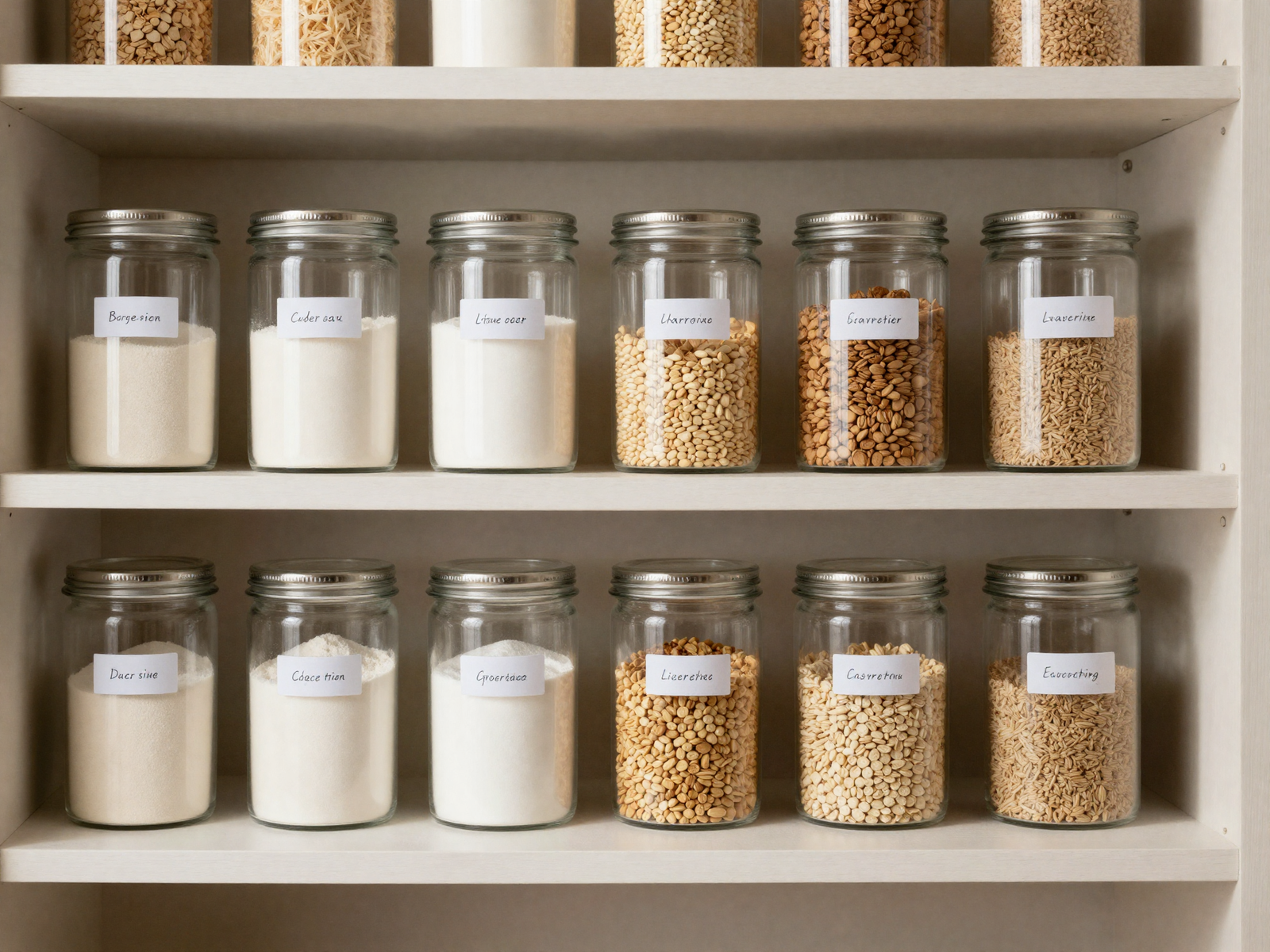
Clear, uniform canisters do more than look tidy — they let you see exactly what you have left at a glance, which cuts down on duplicate purchases and makes shelves feel far more organized even when they’re fully stocked.
💡 Smart tip: Standardize on one canister shape and size across your pantry — uniformity does more visual work than the containers themselves.
⚠️ Mistake to avoid: Don’t store canisters in direct sunlight — light exposure speeds up spoilage in flour, grains, and other pantry staples.
7. Install a Corner Cabinet Pull-Out for Your Kitchen Storage
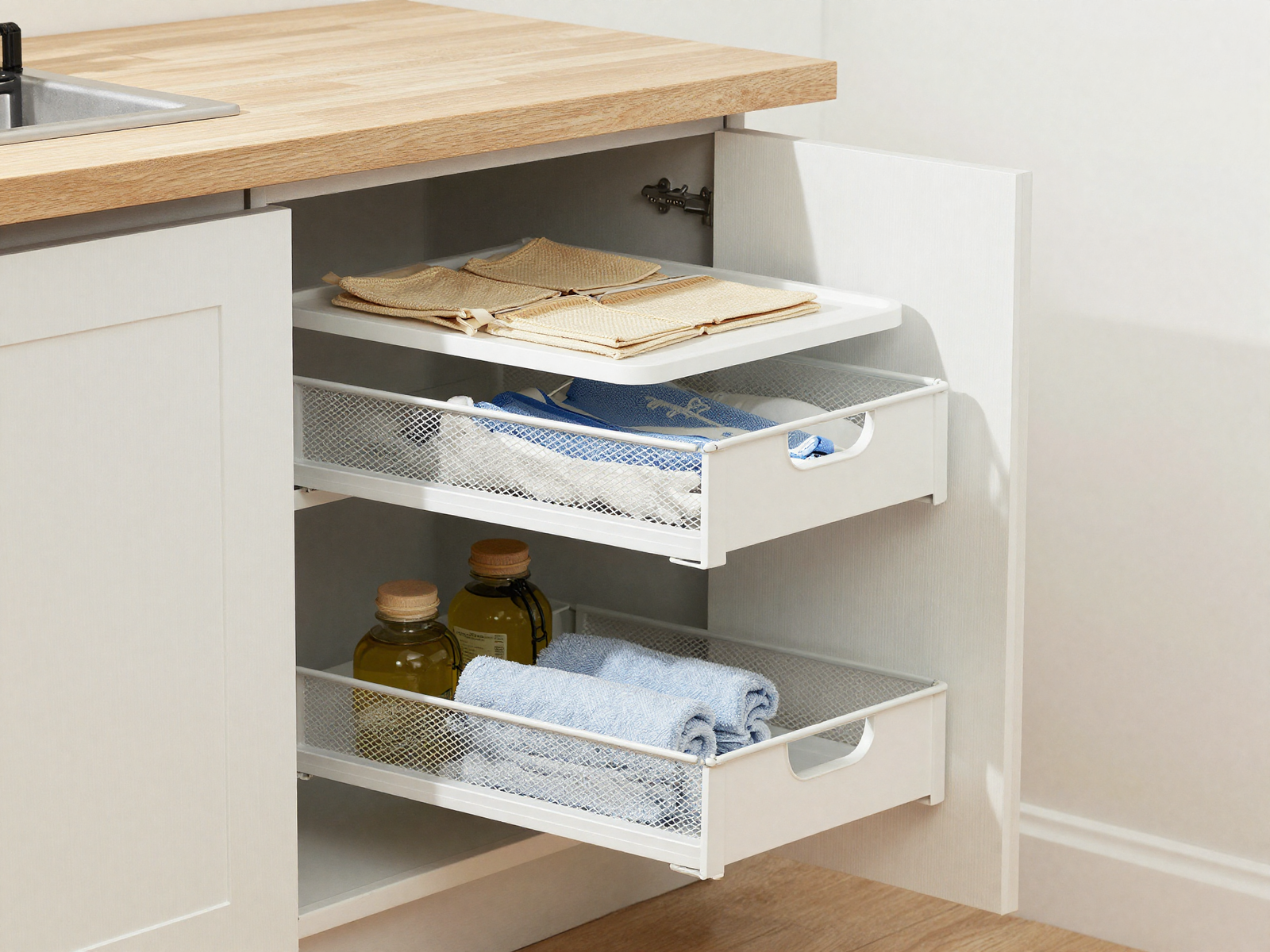
Corner cabinets are famous for swallowing items whole — reaching into that back dead space usually means kneeling and stretching blindly. A rotating or sliding pull-out system brings everything within view and reach, turning the kitchen’s least functional cabinet into one of its most useful.
💡 Smart tip: Measure your corner cabinet’s exact dimensions before ordering an organizer — corner units vary more than standard cabinets.
⚠️ Mistake to avoid: Don’t install a rotating shelf without checking clearance against the cabinet door — some systems need the door fully open to rotate freely.
8. Add Under-Shelf Baskets for Your Kitchen Storage
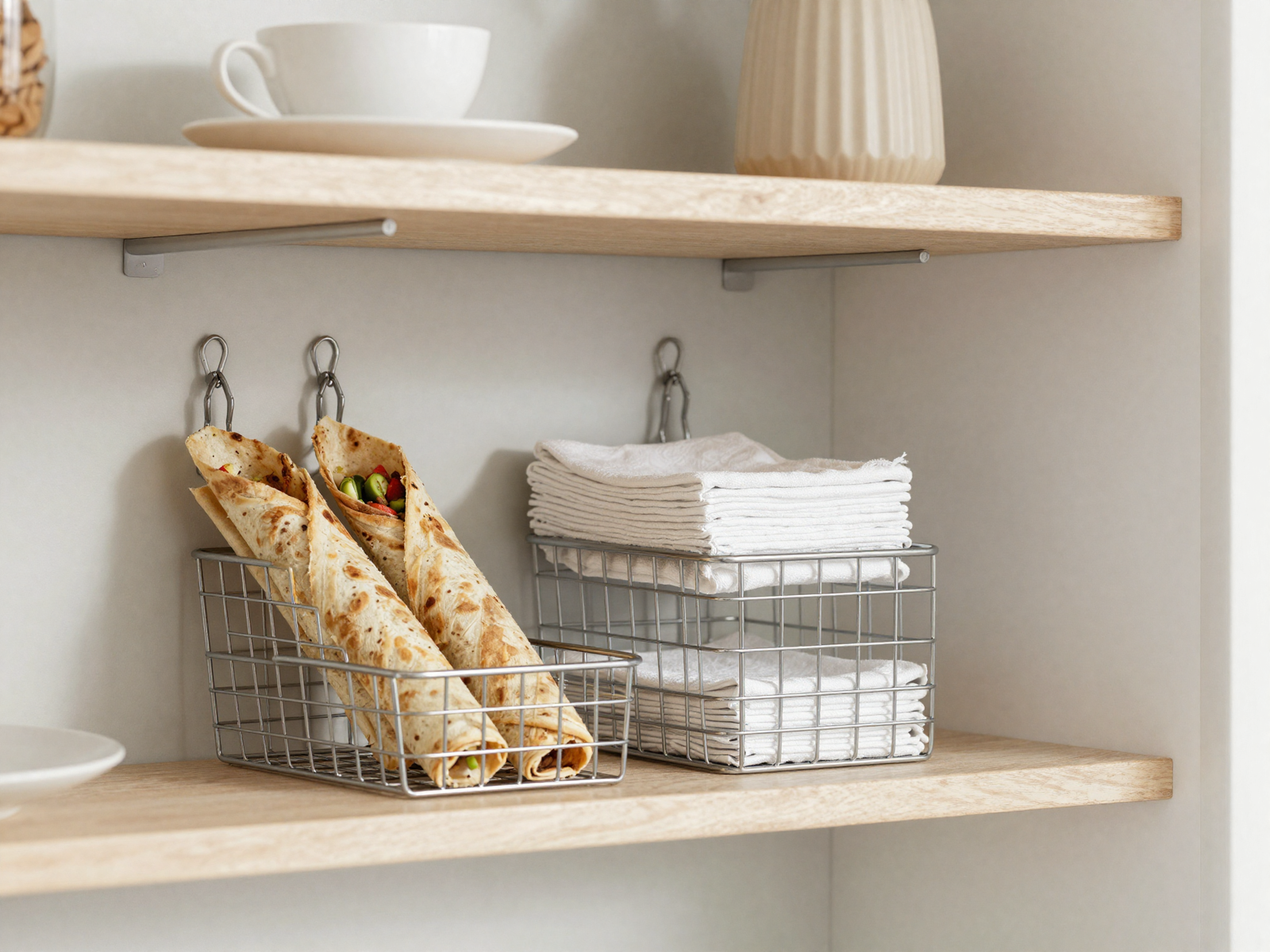
The empty air beneath a shelf is one of the most overlooked pockets of storage in any kitchen. A simple hanging wire basket adds instant capacity for wraps, napkins, or snack packs without giving up a single inch of shelf surface.
💡 Smart tip: Use under-shelf baskets for lightweight, flat items only — they’re not designed to hold heavy cans or jars.
⚠️ Mistake to avoid: Don’t mount one under a shelf that’s already at your lowest comfortable reach — check headroom before installing.
9. Mount a Magnetic Spice Rack
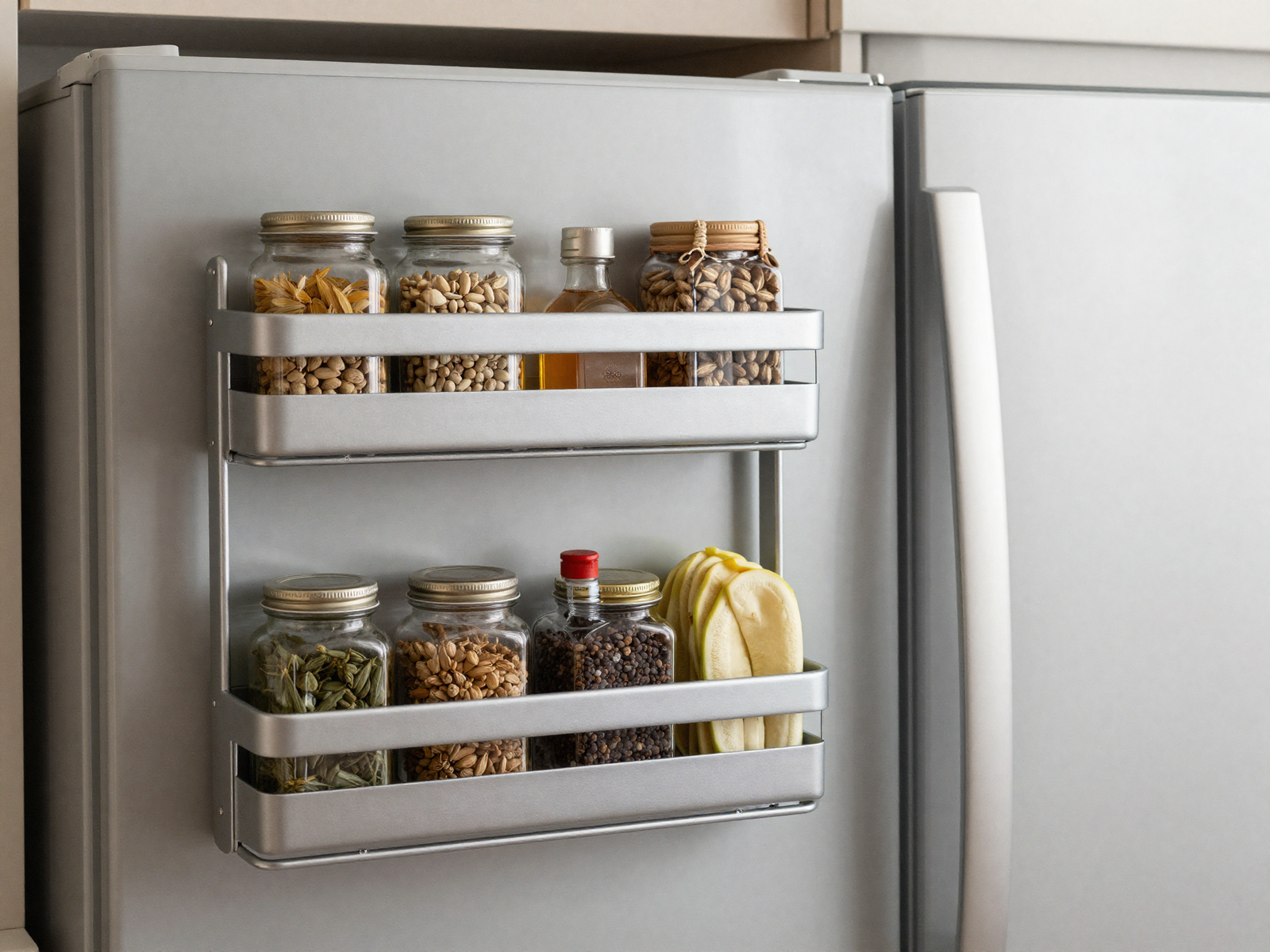
Spices are small, but they create outsized clutter once they spread across cabinets and counters. A magnetic rack on the fridge or a spare wall uses vertical space that usually goes completely unused, keeping every jar visible and sorted with one hand.
💡 Smart tip: Label the tops of magnetic tins, not just the sides — top-down visibility matters more once they’re mounted on a vertical surface.
⚠️ Mistake to avoid: Don’t overload a magnetic strip with tins heavier than it’s rated for — they can slide down or fall off over time.
10. Use a Slim Rolling Cart in a Narrow Gap
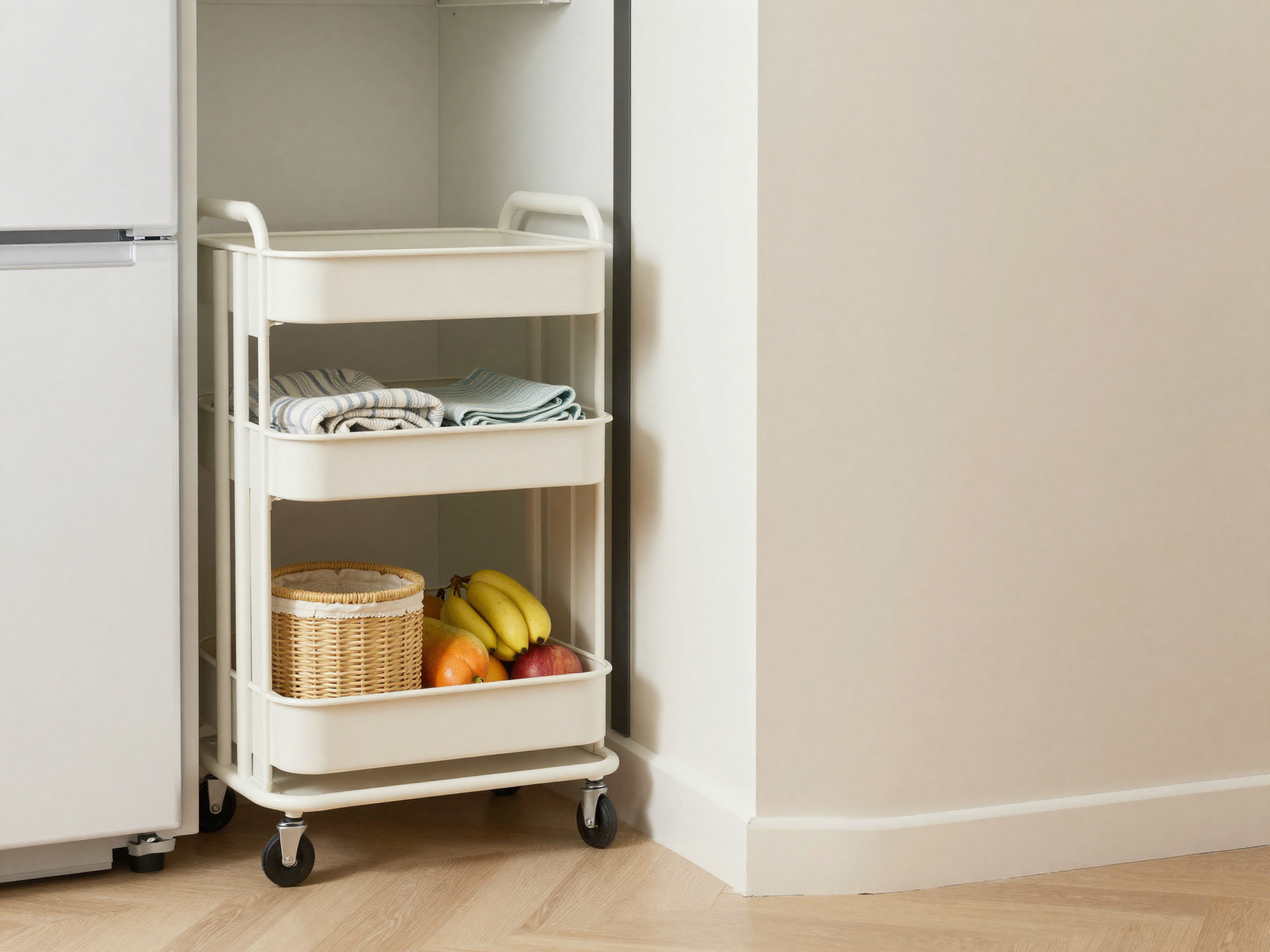
The few inches of gap between a fridge and a cabinet are usually wasted space. A slim rolling cart slots into that exact width and pulls out on demand, hiding extra pantry items or cleaning supplies where guests would never think to look.
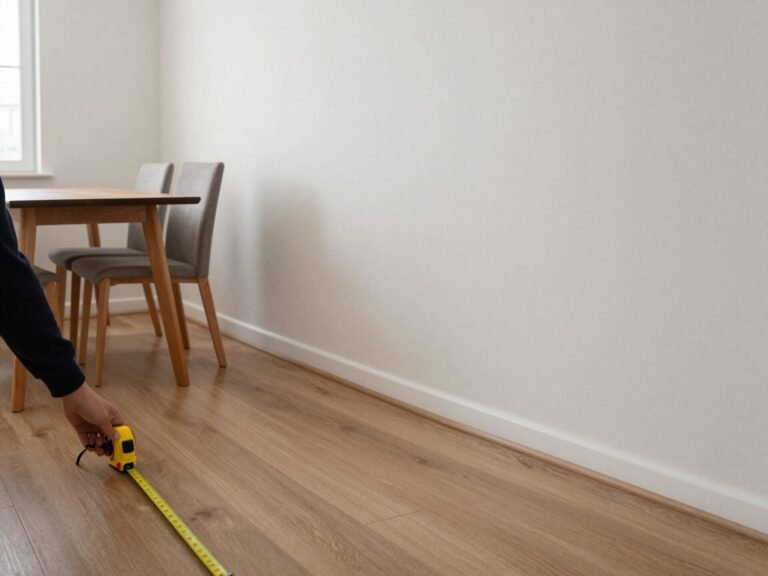
💡 Smart tip: Measure the gap precisely, including baseboard trim, before ordering — even half an inch too wide means the cart won’t fit.
⚠️ Mistake to avoid: Don’t load a narrow cart top-heavy — keep the heaviest items on the bottom shelf so it doesn’t tip when rolled out.
11. Add Deep Drawer Dividers for Utensils
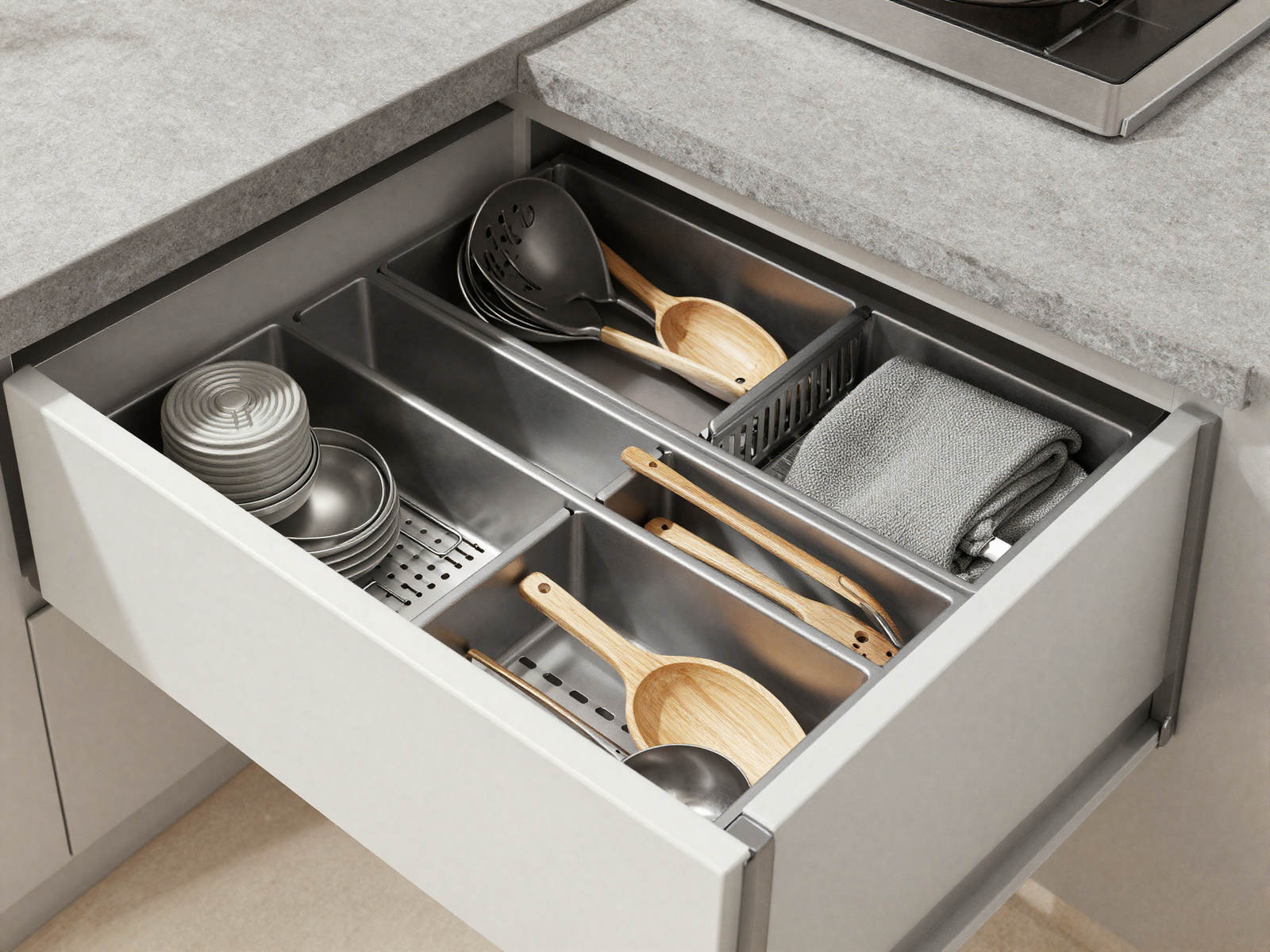
Deep drawers without dividers tend to become a jumble no matter how carefully you start. Custom dividers keep every tool in its own defined space, which makes cooking faster because you’re not digging through a pile to find the one spatula you need.
💡 Smart tip: Group dividers by cooking task — stirring tools together, cutting tools together — rather than just by size.
⚠️ Mistake to avoid: Don’t buy fixed-size dividers for an odd or non-standard drawer — adjustable, expandable ones fit far more reliably.
12. Install a Step Riser for Canned Goods
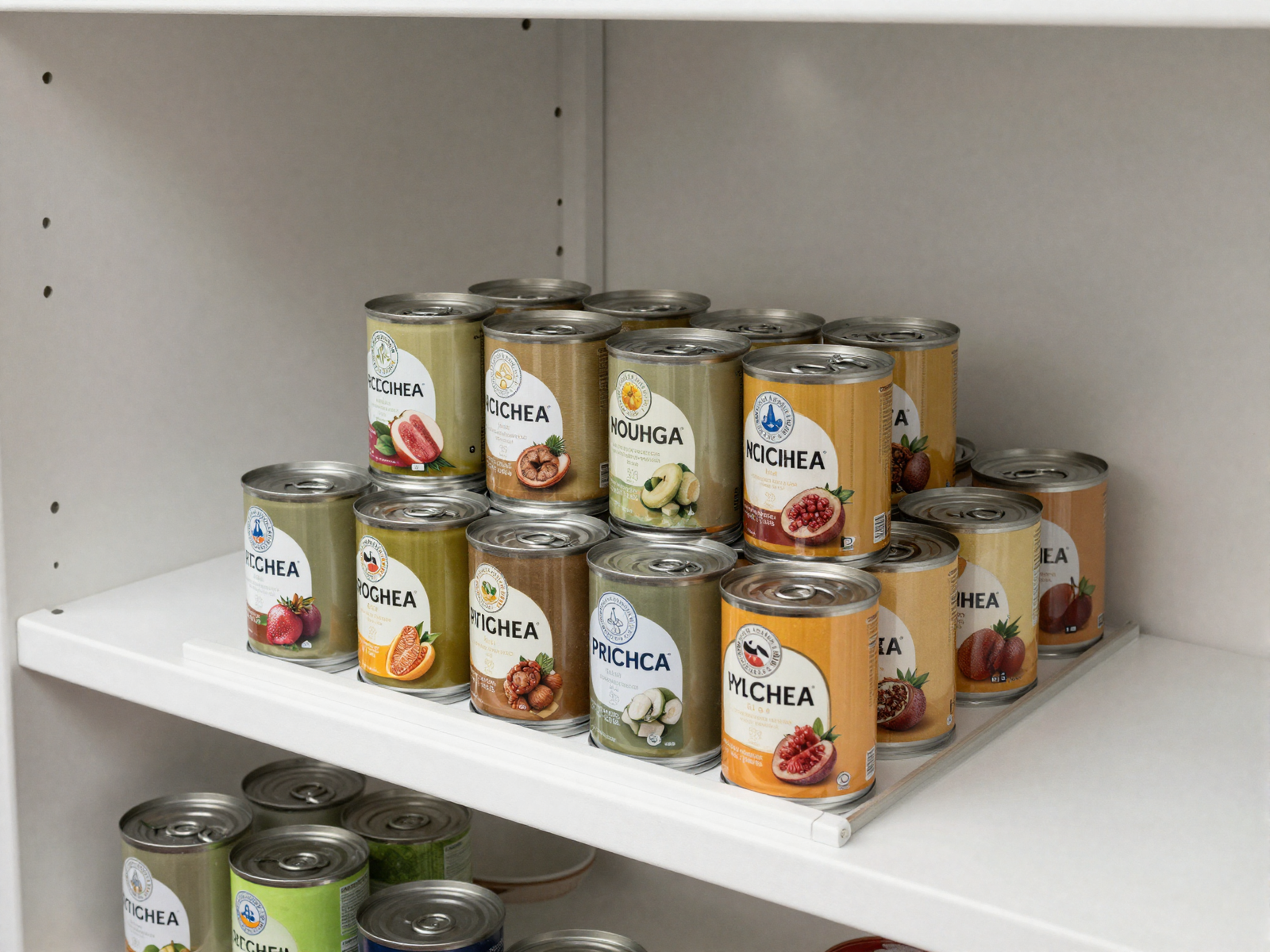
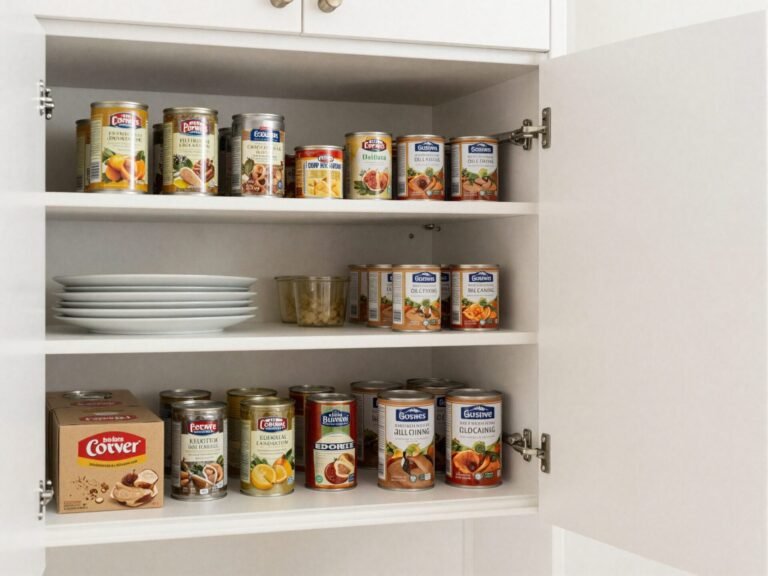
Cans and jars stored flat on a single shelf hide behind each other, so you end up buying duplicates of things you already have. A tiered step riser lifts the back row just enough that every label stays visible from the front.
💡 Smart tip: Arrange cans by category on each tier, like soups on one level and vegetables on another, for even faster grab-and-go access.
⚠️ Mistake to avoid: Don’t overload a riser’s back tier — check the weight rating, since risers are less sturdy than a flat shelf.
13. Use Door-Mounted Storage Racks
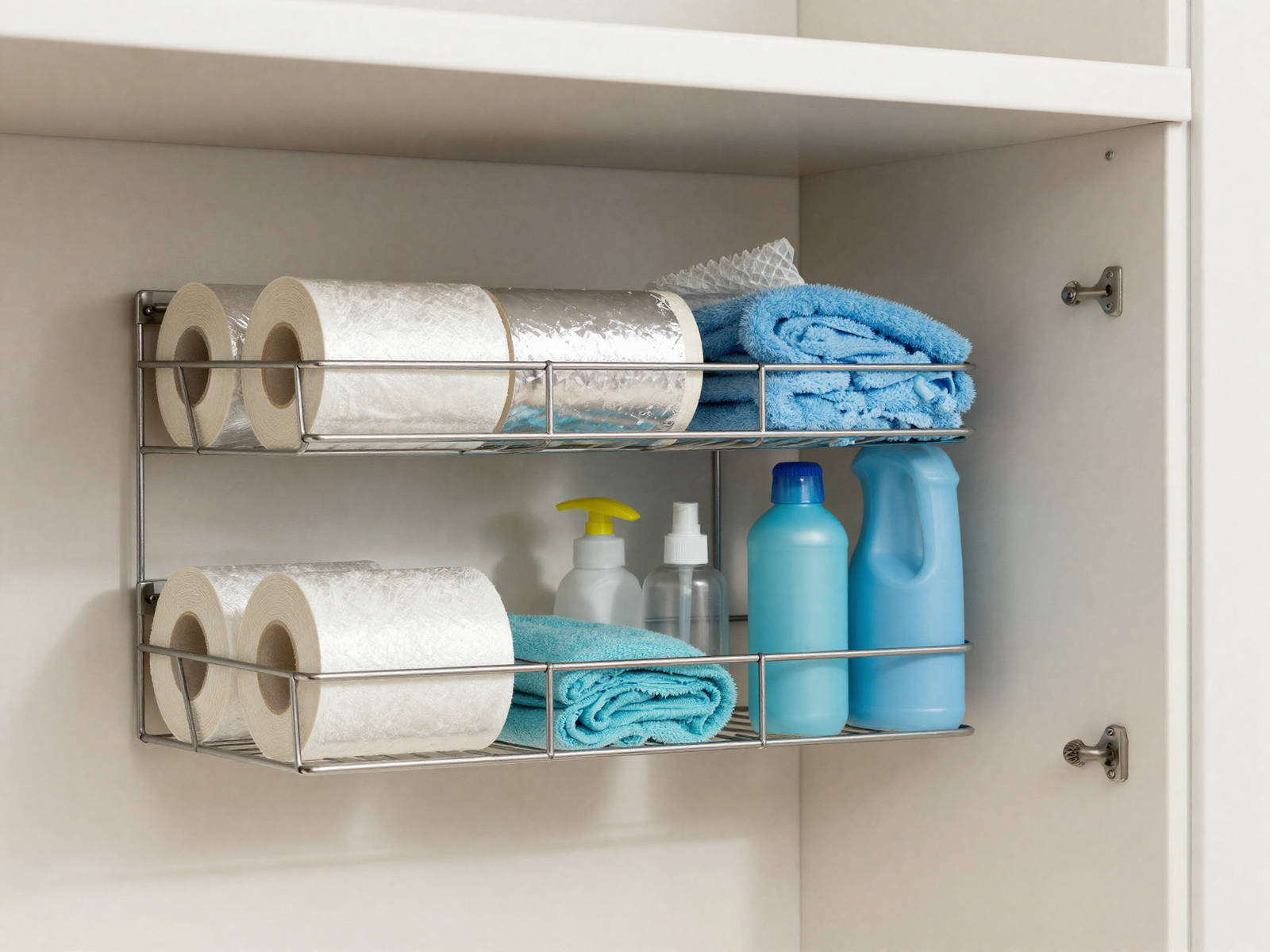
The back of a pantry or cabinet door is functional real estate that most kitchens leave completely empty. A mounted wire rack adds space for foil rolls, cleaning supplies, or small jars without touching a single inch of shelf space inside.
💡 Smart tip: Measure the door’s swing clearance before installing — a rack that’s too deep can hit adjacent shelving when the door closes.
⚠️ Mistake to avoid: Don’t use door racks for anything breakable — the swinging motion every time the door opens isn’t gentle on glass jars.
14. Zone Your Drawers by Task
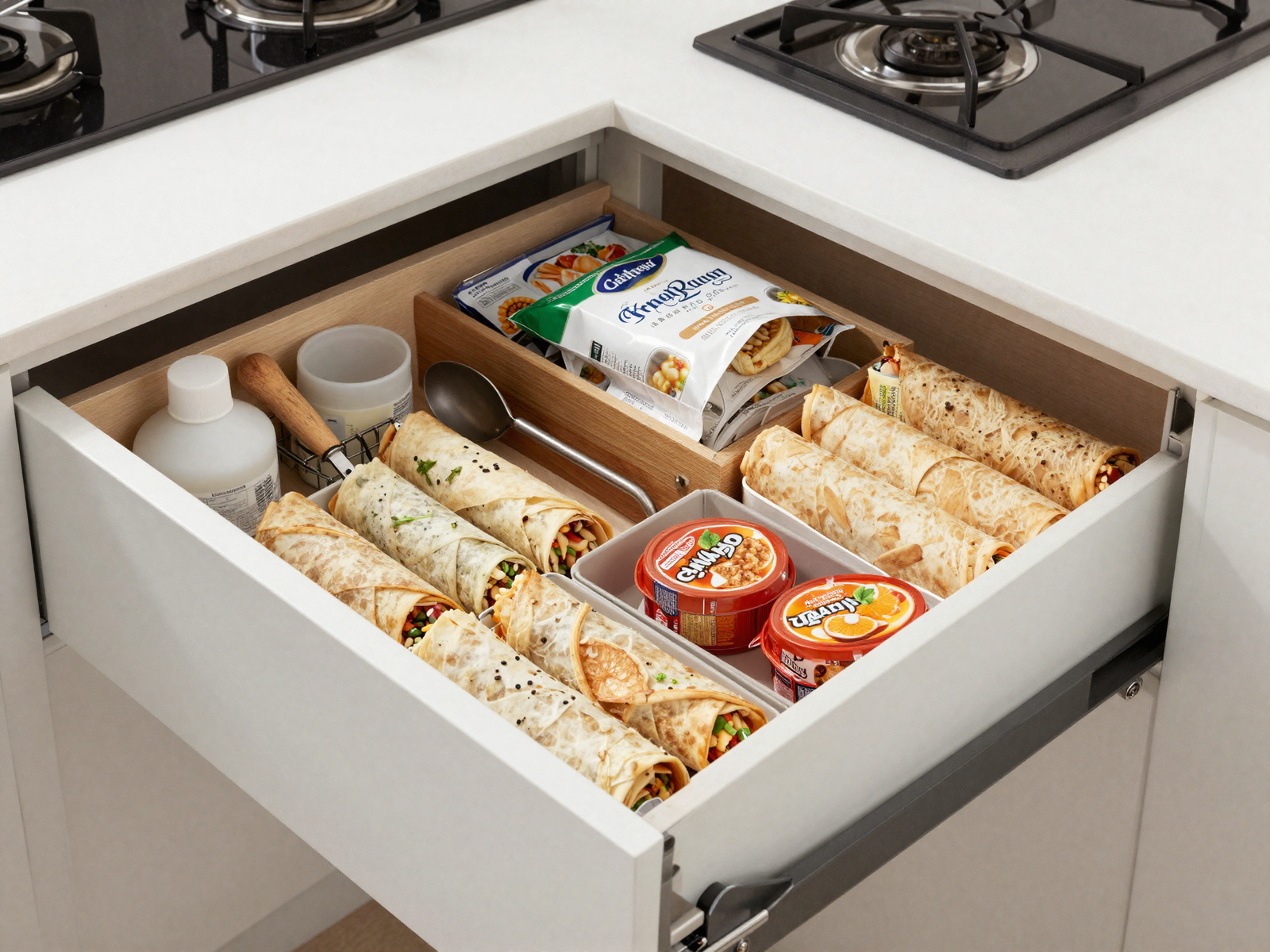
Once shelves have limits, drawers need a map too. Assigning each drawer a single clear purpose, like prep tools, wraps and bags, or snack gear, turns messy catch-all drawers into simple, predictable stations that reduce searching and re-stacking.
💡 Smart tip: Start with your most-opened drawer first — that’s where a clear zone system makes the biggest daily difference.
⚠️ Mistake to avoid: Don’t create more zones than you can realistically maintain — three or four clear categories per drawer works better than ten tiny ones.
Effort & Cost Snapshot
| Idea | Effort | Approx. Cost |
|---|---|---|
| 1. Pull-Out Shelves | Medium | $150–$500 per cabinet |
| 2. Wall Rack for Pots and Pans | Low | $40–$150 |
| 3. Vertical Tray Dividers | Low | $20–$60 |
| 4. Coffee Station Zone | Low | $50–$200 |
| 5. Hidden Counter Pantry | High | $800–$2,500 |
| 6. Clear Pantry Canisters | Low | $40–$120 (set) |
| 7. Corner Cabinet Pull-Out | Medium | $150–$450 |
| 8. Under-Shelf Baskets | Low | $10–$30 (each) |
| 9. Magnetic Spice Rack | Low | $25–$70 |
| 10. Slim Rolling Cart | Low | $40–$120 |
| 11. Deep Drawer Dividers | Low | $30–$90 |
| 12. Step Riser for Cans | Low | $15–$40 |
| 13. Door-Mounted Racks | Low | $20–$60 |
| 14. Zoned Drawer System | Low | $25–$80 per drawer |
You don’t need a full remodel to see results. Start with your most frustrating cabinet or drawer, apply one or two of these ideas, and let the system grow from there as you see what actually sticks.
Save this article to your Pinterest board so you can come back to it whenever you’re ready for the next update. 📌
Continue Your Home Transformation
Explore the full collection of step-by-step eBooks and get the guide that fits the room you're working on.