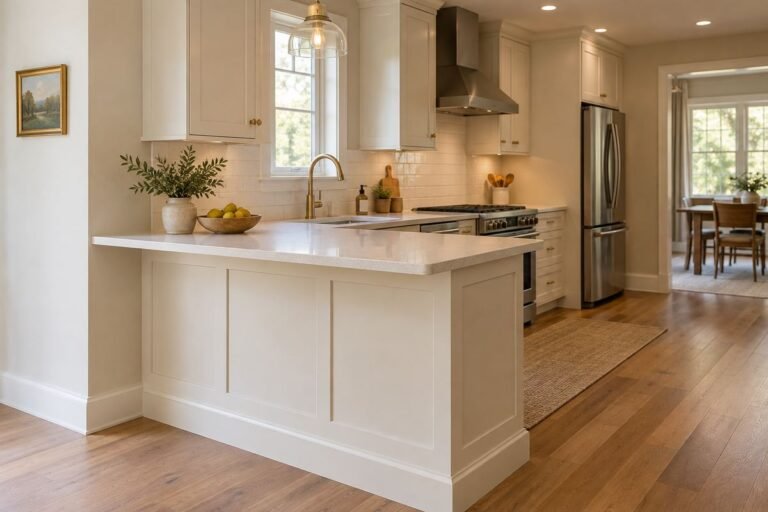
Kitchen backsplash ideas work best when the wall, countertop, cabinets, and everyday cooking tasks are considered together. A beautiful sample still needs the right layout, finish, and installation for the place it will be used.
These 25 concepts explore color, tile shape, pattern, height, and material character. Use them to narrow your direction, then compare real samples and product instructions before ordering.
The images are original AI-generated decor concepts, not installation diagrams or photographs of completed client projects.
Compare Kitchen Backsplash Ideas With a Complete Corner Sample
Place the intended wall sample upright beside the actual countertop and cabinet finishes. Next, view the group under the planned task light and compare the proposed joints and edges. For example, a glossy tile may look quiet on a table while reflecting every fitting when vertical. Review the complete layout around outlets and openings with the installer before buying from a single small tile or screen image.
Choose the Material and Installation Together
Measure the full area and review edges, outlets, corners and appliance locations. Confirm suitability for heat, moisture and cleaning with the exact tile, grout, adhesive and appliance instructions. Natural stone may need different care from ceramic or porcelain. Work with a qualified installer for the complete system, especially large panels and difficult substrates; these images show design concepts rather than installation details.
1. Begin Kitchen Backsplash Ideas With Tile and Grout Together

White subway tile can give a kitchen a clear backdrop without introducing another strong pattern. A grout color close to the tile makes the surface read as one gentle field beside wood, painted cabinets, or a patterned floor.
Compare a grouted sample with your countertop in daylight. White tiles vary from cool to creamy, and the joint width changes the finished effect. Choose a tile and complete installation system suitable for the actual wall and cooking area.
Practical tip: Judge the tile and grout together.
2. Turn Rectangular Tile Vertically

Vertical rectangular tile gives familiar material a different rhythm. It can make the wall feel more upright, particularly in a kitchen with long horizontal cabinet lines and a low strip of backsplash.
Plan the layout at the ends, corners, and outlets before ordering. Narrow slivers can distract from an otherwise simple pattern, so review the installer’s proposed cuts with the cabinet and countertop dimensions.
Practical tip: Test a full-height sample layout.
3. Try a Horizontal Stacked Grid
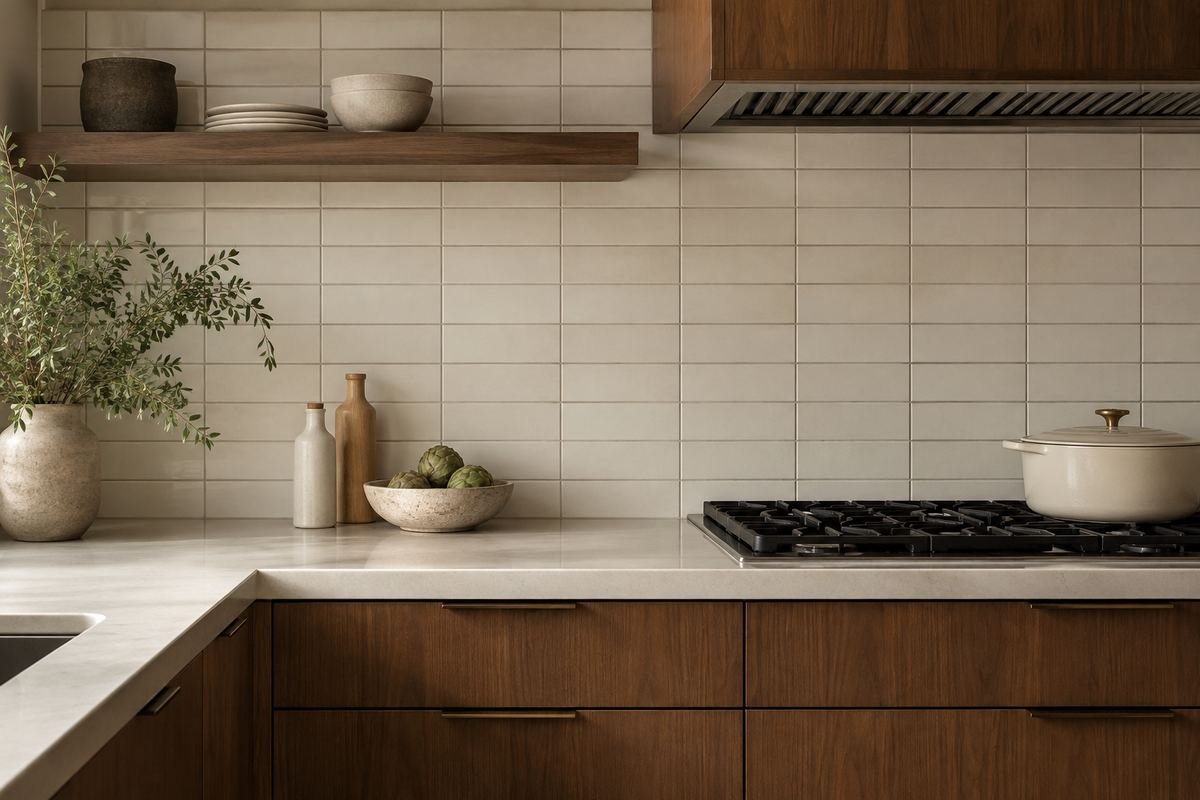
A stacked grid creates a more regular outline than a running-bond layout. The effect suits flat-front cabinets and a kitchen where straight lines are already part of the furniture and window design.
Consistent joints and planned edges matter because the grid makes misalignment easier to notice. Use samples to decide whether you want the grout to blend quietly or define every rectangle.
Practical tip: Keep competing countertop patterns restrained.
4. Choose Soft Green Tile for a Gentle Color Layer

Soft green tile can connect a kitchen with warm wood and neutral walls. A muted color adds interest while leaving room for everyday cookware and food to supply the changing details.
Check several sample pieces together, especially if the glaze varies. Compare the green with your cabinet finish and window light, and confirm the product’s suitability for the intended backsplash location.
Practical tip: Use the actual cabinet sample beside the tile.
5. Use Deep Blue Against Light Cabinets

A deep blue backsplash gives pale cabinets a clear contrast. Keeping the countertop and accessories simple allows the color to read as one strong surface rather than a collection of competing details.
Look at the tile in evening light as well as daylight. Some dark glazes reflect light strongly, while others appear almost black. Choose the sheen deliberately and review cleaning guidance for the exact product.
Practical tip: Check reflections from your task lighting.
6. Warm Kitchen Backsplash Ideas With Terracotta Tones

Terracotta-colored tile can introduce warmth without requiring actual unfinished clay. A suitable glazed ceramic or porcelain product offers the color in a surface chosen for the wall’s practical demands.
Compare the red, orange, and brown undertones with nearby flooring. Keep grout and cabinet samples in the same view, and check maintenance and installation requirements for the specific material.
Practical tip: Do not choose from a screen color alone.
7. Let Small Square Tiles Create the Pattern

Small square tiles bring a steady rhythm to a modest backsplash. Their shape works with both traditional and simple modern cabinets, especially when the color stays restrained.
The number of joints affects the visual texture and cleaning routine. Review a grouted sample, choose an appropriate grout system, and plan how the grid will finish at the wall ends.
Practical tip: Choose the joint appearance before ordering.
8. Use Larger Tiles for a Calmer Field

Larger-format tiles can make the backsplash read as broader areas of color or texture. They suit a kitchen where the cabinet fronts, floor, or accessories already provide plenty of smaller detail.
Fewer visible joints do not remove the need for careful installation. Review flatness, edges, cutouts, movement provisions, and the product’s required setting system with the installer.
Practical tip: Ask to see the planned cuts around outlets.
9. Choose Marble-Look Porcelain for Veining

Marble-look porcelain can introduce a veined pattern while keeping the choice within a porcelain product range. A restrained design works well when you want movement without making the wall the loudest element in the room.
Compare multiple pieces rather than a single small sample. Repeated printed patterns, veining direction, edges, and the relationship with the countertop will shape the finished result.
Practical tip: Review the full proposed wall layout.
10. Give Natural Stone a Simple Supporting Palette

Natural stone can provide the main material character in a kitchen. Quiet cabinetry and a restrained countertop let the variation remain visible without surrounding it with several unrelated patterns.
Different stones need different care and may require sealing. Confirm the exact material’s application and maintenance instructions, including suitable cleaners, before choosing it for a splash-prone or cooking location.
Practical tip: Ask for a realistic care plan before buying.
11. Make a Herringbone Layout the Main Detail

A herringbone backsplash changes the rhythm of a plain rectangular tile. It can supply enough movement on its own, particularly when the cabinet fronts and countertop remain simple.
Review the layout center and all perimeter cuts with the installer. A small sample cannot show how the pattern lands at a window, hood, or corner, so consider a larger drawing or dry layout.
Practical tip: Let the pattern lead and simplify nearby objects.
12. Compare Fine-Texture Kitchen Backsplash Ideas

Very narrow rectangular tiles create a fine repeating texture. A vertical arrangement can suit a compact kitchen when the color and grout are close enough to keep the overall field calm.
Review the sheet joints and individual tile spacing in a sample installation. Small-format products can show uneven sheet boundaries if the setting work is rushed, and the many joints become part of the cleaning routine.
Practical tip: Inspect a grouted panel under side light.
13. Try Warm Cream Instead of Bright White

Warm cream tile can sit comfortably beside beige stone, oak, and softer painted cabinets. It is useful when a bright white sample looks disconnected from the rest of the room.
Compare the tile with the countertop edge and wall paint at the same time. Undertones become easier to judge when the materials meet in their intended positions rather than lying separately on a table.
Practical tip: View samples upright against the wall.
14. Define the Grid With Contrasting Grout

Contrasting grout makes each tile shape more visible. It can give simple white tile a stronger graphic effect, particularly in a kitchen with understated cabinets and a quiet floor.
Try a full grouted sample before committing. Joint width and grout color together determine the strength of the pattern; a small change can make the wall considerably busier.
Practical tip: Use contrast deliberately rather than by default.
15. Continue One Backsplash Around a Corner
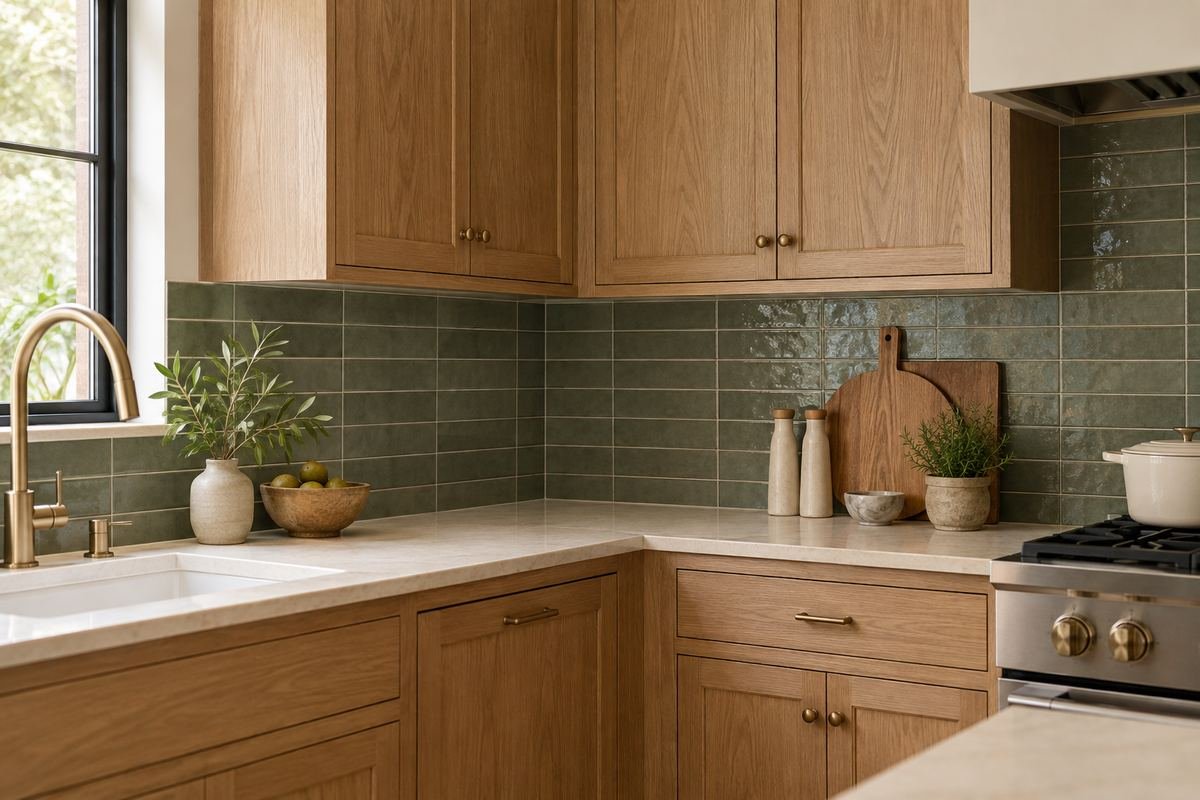
Continuing the same tile around a corner can connect two counter runs. The result often feels more considered than changing material at an arbitrary point behind everyday kitchen supplies.
Plan the corner, termination edges, and outlet cuts as one installation. Keep movement and sealing details appropriate to the system, and ask the installer how the pattern will meet at the turn.
Practical tip: Review both walls together.
16. Frame a Window With the Same Tile

Tile around a kitchen window can make the opening feel integrated with the counter wall. It is particularly effective when the rest of the room has a restrained palette and simple trim.
Discuss the returns, sill, edges, and junctions with the installer. Keep the window operation and required access clear, and choose details that suit both the tile system and the actual window construction.
Practical tip: Check the side returns as well as the front view.
17. Take the Backsplash to the Ceiling on One Wall

A full-height tiled wall can create a clear focal surface in a kitchen with few upper cabinets. Keeping the same material throughout makes the height feel intentional rather than like several separate strips.
Calculate the whole wall area, including waste and layout, before comparing costs. Review support, edges, fittings, and access requirements with the installer rather than treating the upper section as ordinary paint.
Practical tip: Keep adjacent walls quieter.
18. Choose Low Kitchen Backsplash Ideas for Actual Exposure

A low backsplash can leave more painted wall visible in a kitchen with limited splashing along a particular run. Its horizontal line can suit a pared-back room and a simple countertop.
Choose the height for the actual tasks, wall exposure, and appliance requirements. A low decorative strip is not automatically suitable behind every sink or cooking appliance; use appropriate protection where the kitchen needs it.
Practical tip: Plan the top edge so it looks finished.
19. Use a Small-Scale Checkerboard
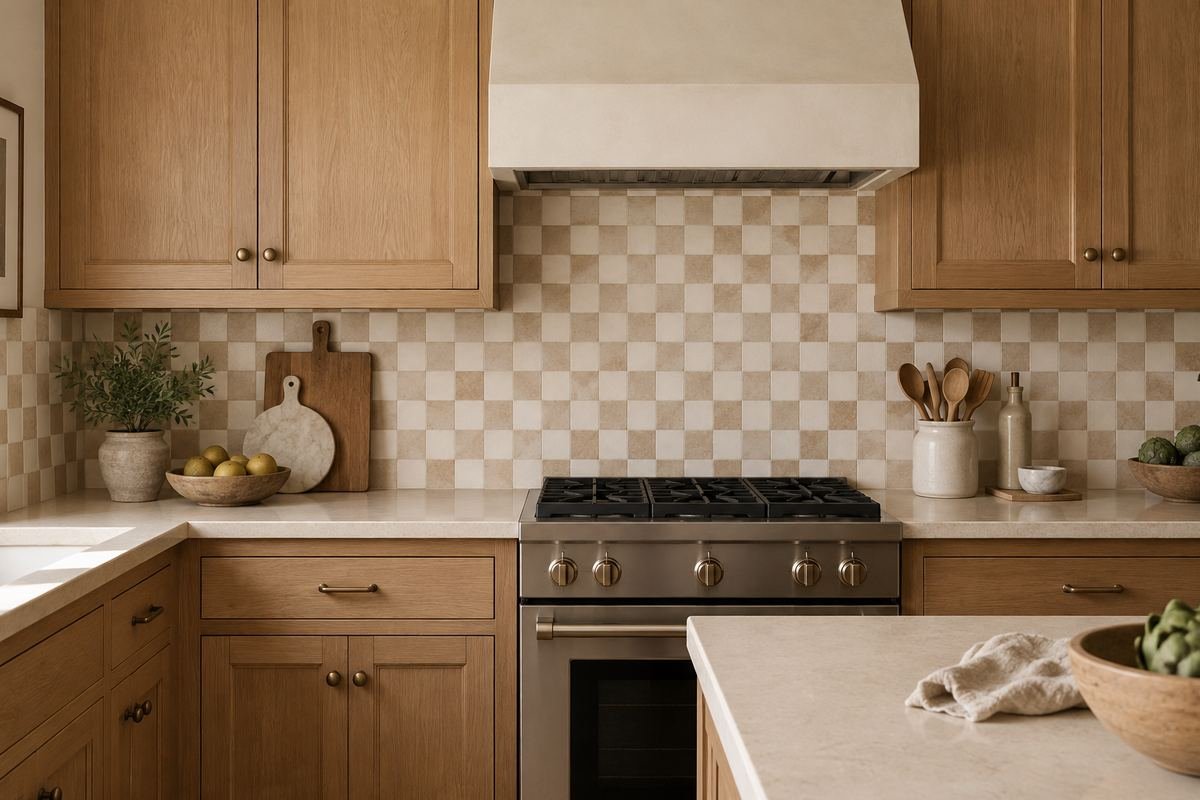
A checkerboard can bring a lively pattern to an otherwise quiet kitchen. Soft ivory and beige offer a gentler version than a stark black-and-white pairing.
Review the scale against the visible wall area. A very small pattern may feel busy behind open storage, while a larger square can create awkward cuts on a short backsplash.
Practical tip: Choose the pattern size with cabinet dimensions in view.
20. Choose a Subtle Handmade-Look Surface
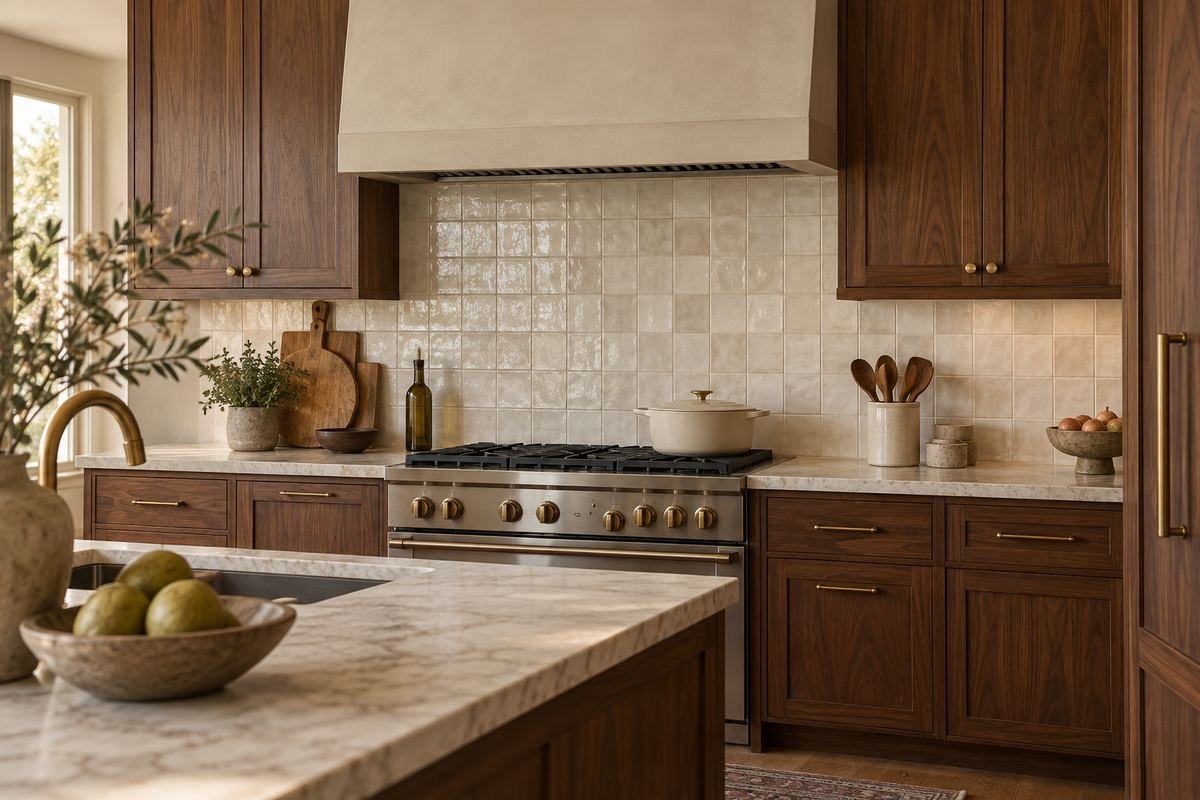
Handmade-look tile can add variation to a simple color. Small shifts in glaze and surface shape give the wall movement even when the arrangement is a straightforward grid.
Review the actual product’s variation range, joint recommendations, and cleaning needs. A glossy uneven surface will reflect task lighting differently from a flat matte tile, so inspect it under light from the intended direction.
Practical tip: Look at several pieces together.
21. Bring Warm Gray Beside Wood Cabinets

Warm gray tile can provide a quieter contrast to oak or walnut than a bright white wall. A beige undertone can help the backsplash connect with stone-look counters and neutral flooring.
Compare gray samples carefully because blue or green undertones may appear under different light. Check the tile vertically and beside the actual wood finish before settling on the color.
Practical tip: Revisit samples after dark with the kitchen lights on.
22. Use a Muted Pattern on One Focused Section

A patterned tile section can provide character without covering every wall. Keeping the surrounding finishes plain gives the pattern a clear boundary and makes it easier to relate to the rest of the kitchen.
Choose a location and product suitable for the actual exposure. Plan complete pattern repeats and border cuts rather than squeezing the design into a space that leaves most motifs incomplete.
Practical tip: Limit competing patterns nearby.
23. Connect the Backsplash With the Countertop Palette

The backsplash does not need to match the countertop exactly to feel connected. Repeating one undertone or a quiet color from the counter can make two different materials work together.
Bring the samples together at a right angle, as they will meet in the kitchen. Review the junction detail and the full slab or tile pattern so a small sample does not hide a strong color shift.
Practical tip: Use the actual counter sample instead of a phone photograph.
24. Use a Glossy Tile to Add Controlled Reflection

A glossy backsplash can introduce reflected light and a livelier surface. It may suit a kitchen with simple cabinetry where a matte wall would otherwise feel very flat.
Check the reflection from the actual task lights and window positions. Gloss does not fix poor lighting, and it may make splashes or uneven setting more apparent, so consider both the look and your cleaning routine.
Practical tip: Test the sheen under evening lighting.
25. Plan Kitchen Backsplash Ideas Behind Supported Shelves

A continuous backsplash behind open shelves can make the display feel more coherent. One quiet tile allows everyday cups and dishes to supply the smaller changing shapes.
Plan shelves, fixings, tile joints, and access together. The tile is a finish rather than structural support, and shelf loads and installation must follow the exact products and wall conditions. Keep the display light enough to use and clean easily.
Practical tip: Choose the tile before finalizing shelf fixing positions.
Choose the Details That Work in Your Home
Choose one main effect, whether that is color, a tile pattern, or a quieter surface that connects existing finishes. Review it with real samples and a complete layout so the backsplash remains useful as well as attractive.
For related ideas, explore practical kitchen decor ideas and small kitchen breakfast nook ideas.
Planning References
Daltile: backsplash materials and design options; Daltile: choosing tile for wall applications. Follow the instructions for the exact products you choose.
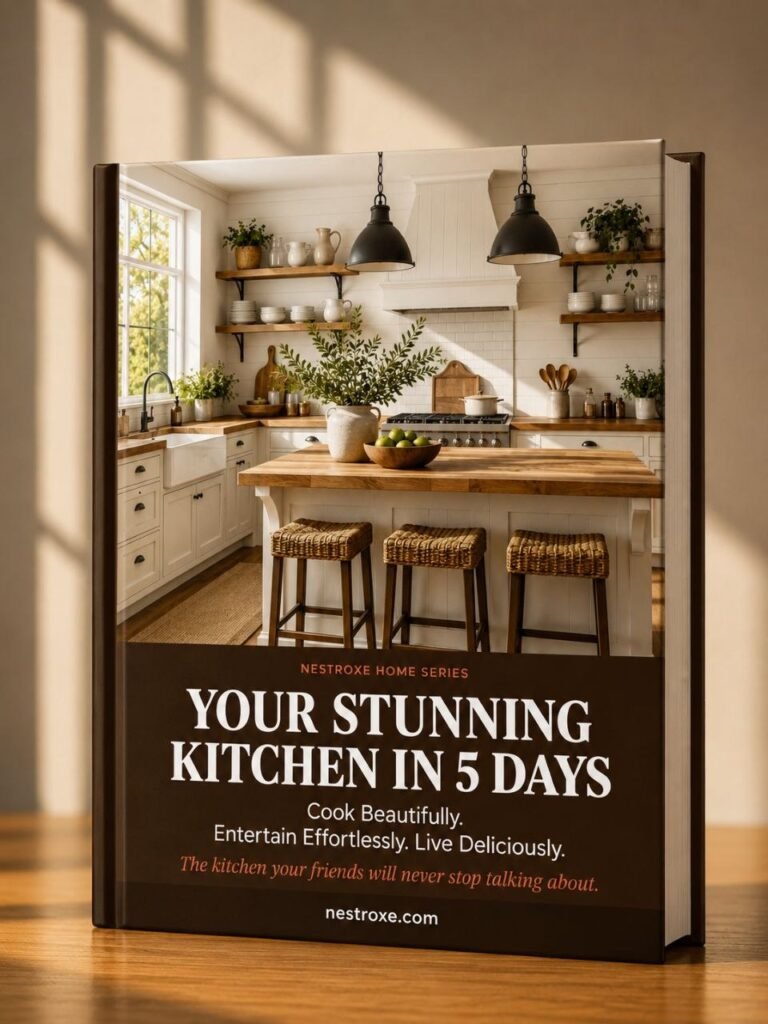
Optional digital guide for this topic
If you prefer a structured workbook, explore this related paid guide.