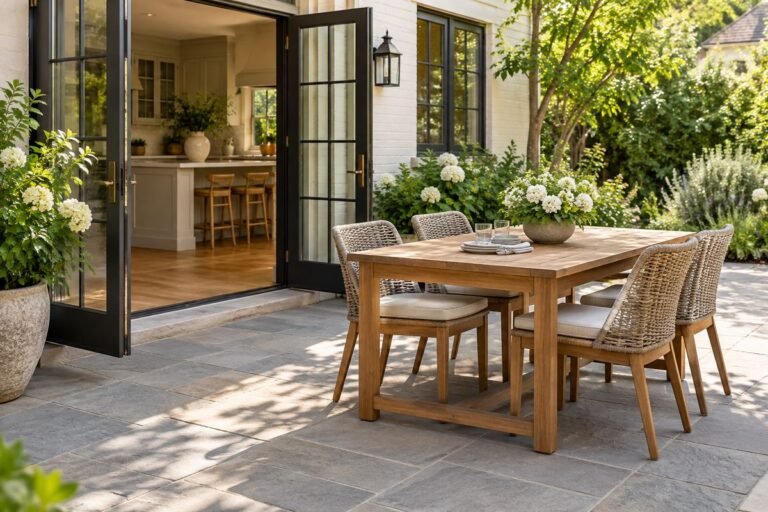
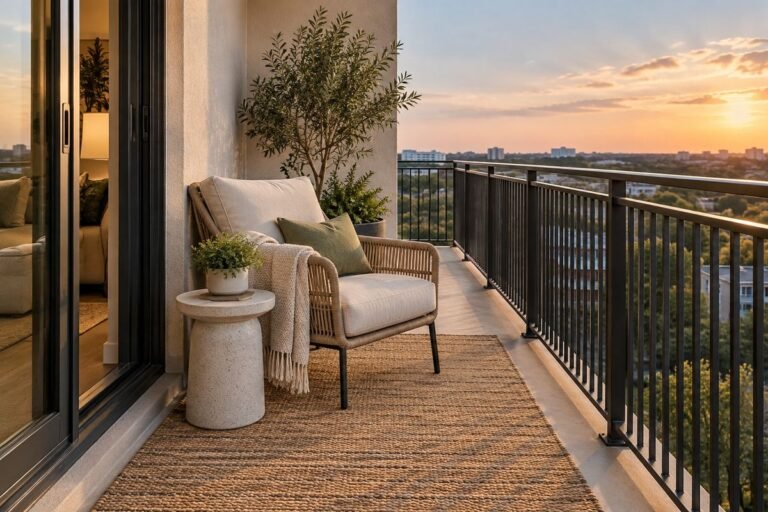
Patio rug ideas should suit the outdoor space you actually have: its furniture, exposure, surface and everyday routes. A rug can give a seating group a clear outline, but it also needs to work near doors, after rain and when chairs are moved.
Start with the patio surface and the furniture arrangement. Mark the proposed rug boundary, use the chairs normally and open the doors fully. Check where water goes and which areas are exposed to weather before deciding whether a rug belongs in that position.
These 29 original concepts cover layout, color and pattern choices for different outdoor groups. The illustrations cannot establish that a particular fiber, backing or pad is suitable outside. Select an actual outdoor-rated product for the intended exposure and follow its care and surface-compatibility instructions.
The images are original AI-generated decor concepts, not installation diagrams or photographs of completed client projects.
Browse These 29 Patio Rug Ideas
Jump to an idea
- Define a sofa-and-chair group with one rug
- Use a round rug beneath two conversational chairs
- Support a patio dining set with a complete footprint
- Echo a round outdoor table with a circle
- Let a long rug connect an outdoor bench group
- Choose one rug for a small balcony-like patio
- Use a square rug in a balanced corner
- Separate dining and lounging with two considered rugs
- Keep a rug clear of the main doorway
- Leave drainage routes visible and useful
- Use a restrained neutral rug with textured furniture
- Try muted blue with pale cushions
- Use navy and cream for a defined outdoor group
- Connect muted green to nearby planting
- Warm pale paving with a clay-colored rug
- Use charcoal to outline light furniture
- Try a warm cream rug with dark frames
- Use a broad stripe for an orderly patio
- Try a narrow stripe as a quieter pattern
- Use a geometric rug with simple furniture shapes
- Choose a tonal pattern for a calm covered patio
- Use a restrained border to define the seating area
- Pair a patterned rug with plain outdoor cushions
- Let colorful cushions sit over a quiet rug
- Compare the rug with the deck finish
- Use the rug to calm varied paving
- Keep the rug away from cooking and fire features
- Reassess a rug position that catches strong wind
- Finish with a realistic outdoor care routine
Plan patio rug ideas from the furniture and the surface
Draw the patio, doors, drainage points and furniture. Mark the rug outline and test the daily route with the seats in use. For a dining set, include the pulled-out chair footprint. For a lounge group, decide how the sofa and chair legs relate to the rug as one composition. Keep rug edges flat, check door movement and choose the final product for its real exposure and maintenance requirements.
| Outdoor condition | What to check | Design decision |
|---|---|---|
| Exposed patio | Product rating and weather care | Whether a rug suits this position |
| Covered porch | Wind-driven rain and actual damp exposure | The appropriate product and care routine |
| Dining group | Chairs pulled out during use | A complete useful footprint |
| Door or main route | Door swing and flat rug edges | An unobstructed approach |
| Deck or tiled surface | Drainage and backing compatibility | How to keep the surface appropriately dry |
Assess patio rug ideas for covered and exposed settings
A covered patio can still receive rain, humidity, dirt and direct sun. Check the actual exposure at the proposed rug position, including the edge nearest the open side. Use the supplier’s guidance for the specific product rather than assuming a covered area makes an indoor rug suitable. Wind conditions may also make a particular placement impractical.
Compare patio rug ideas with a realistic drying and care plan
Follow the rug and surface manufacturers’ guidance for cleaning, drying, backing and any pad. A rug should not block drainage or conceal a problem with the underlying surface. After rain or cleaning, make sure the arrangement can dry appropriately before returning furniture and accessories. Do not treat every outdoor rug as maintenance-free or assume every pad is compatible with a wood deck.
1. Define a sofa-and-chair group with one rug
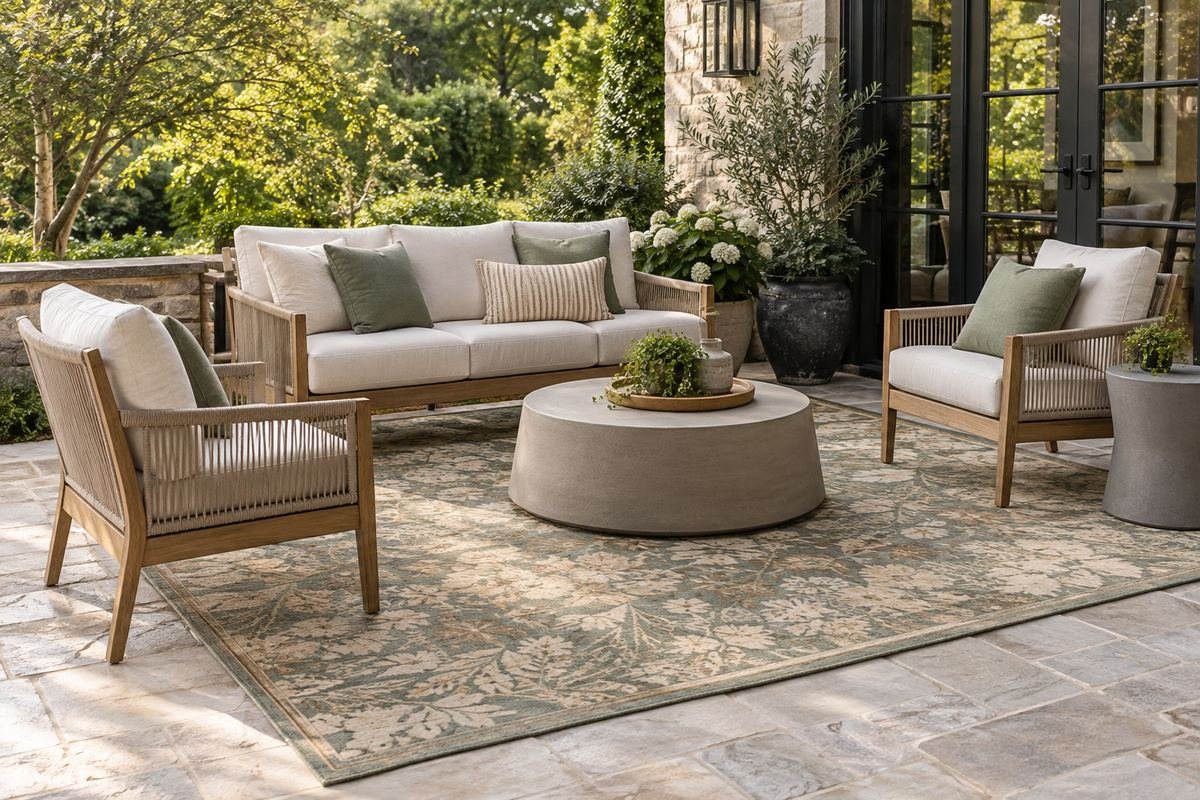
One rug can connect a patio sofa and two chairs into a clear conversation area. Its outline gives the group a shared center while leaving the surrounding patio visible.
Decide how the furniture legs relate to the rug and keep that relationship deliberate across the group. Test the route around the chairs before choosing the final dimensions. The rug should support the arrangement rather than dictate an awkward furniture position.
Practical tip: Mark the full seating group before choosing the rug size.
2. Use a round rug beneath two conversational chairs
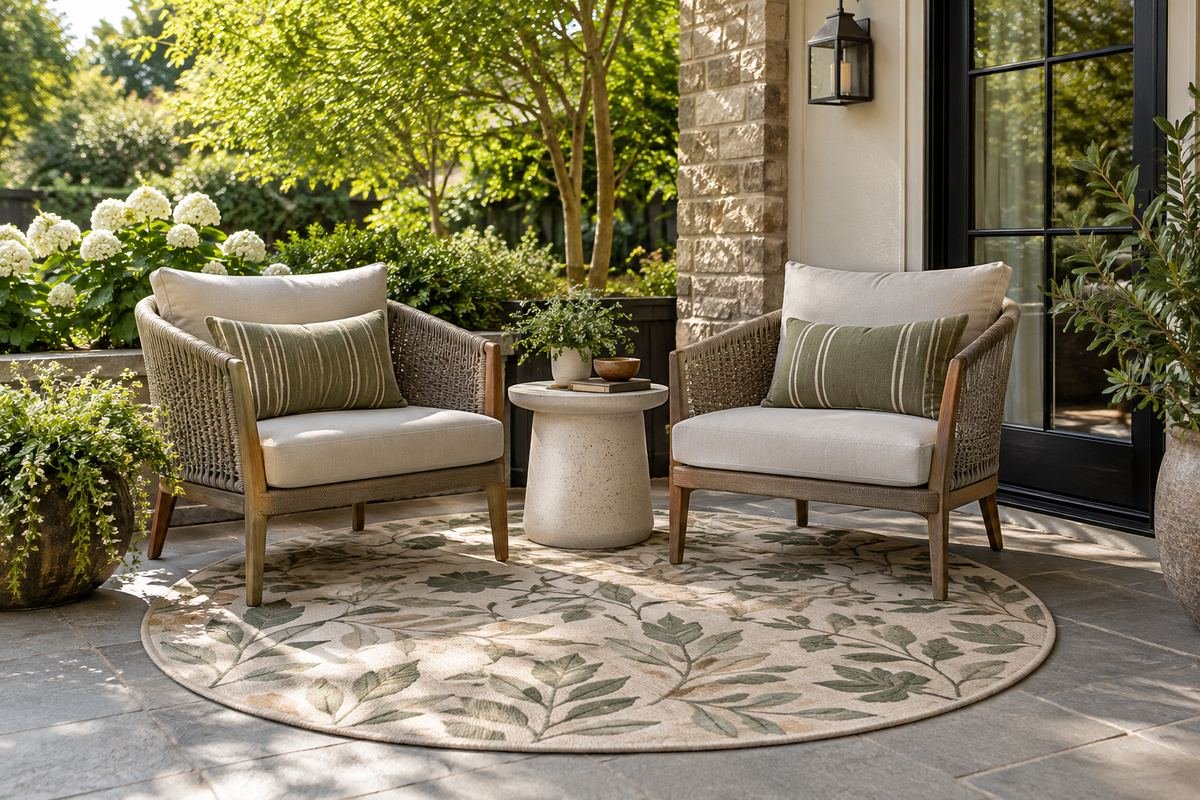
A round rug can give two outdoor chairs a soft shared center. A small table between them completes the grouping without turning the corner into a crowded lounge set.
Check where the chair feet land during normal movement. A small decorative circle may look appealing beneath the table but fail to connect the seating. Compare the circle with the actual patio shape and the route beside it.
Practical tip: Test the chairs in use rather than tightly tucked together.
3. Support a patio dining set with a complete footprint
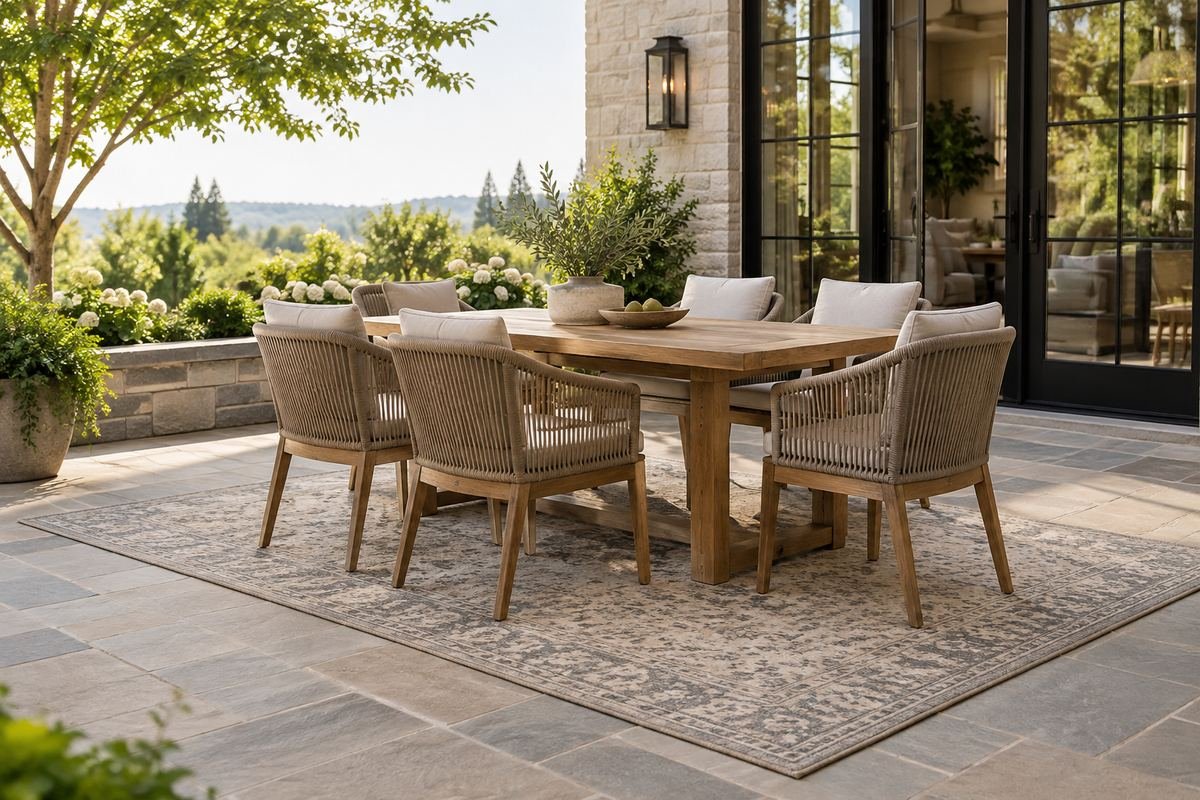
A dining rug should accommodate the way the outdoor chairs move during a meal. The table alone does not establish the required outline.
Pull out every chair and check its feet against the marked boundary. Include end seats and the nearby door in the same test. Choose the rug’s pattern after the footprint works, so an attractive design does not leave an awkward edge under a chair.
Practical tip: Test the end chairs as carefully as the side chairs.
4. Echo a round outdoor table with a circle

A round outdoor rug can make a compact round table feel like one defined dining group. The curved edge softens a patio with many straight paving lines.
Check the diameter with the chairs pulled out. Keep the circle away from drainage points and the main door route. The final product and placement still need to suit the actual weather exposure and surface.
Practical tip: Compare the complete dining footprint with the circle.
5. Let a long rug connect an outdoor bench group

A longer rectangular rug can relate to an outdoor bench and a pair of chairs. It gives the group a clear direction without adding several separate mats.
Test access at both ends of the bench and keep the rug edge out of the ordinary approach. The bench position should remain useful when people stand up or move around the table. Mark those movements before choosing a long narrow outline.
Practical tip: Include the bench approach in the floor plan.
6. Choose one rug for a small balcony-like patio

A small patio can benefit from one clear rug outline and a limited furniture group. A quiet design helps the space feel considered without several competing zones.
Open the door fully and use the chairs before ordering. If a suitable rug cannot fit without obstructing the route or creating loose edges, keeping the surface clear can be the more practical choice. The footprint comes before the pattern.
Practical tip: Test door clearance with the furniture in its everyday position.
7. Use a square rug in a balanced corner

A square rug can define a seating corner where the walls or paving create a square area. It gives the furniture a clear shared base without a long axis.
Check the corners against planters, doors and the walking route. Symmetry on a sketch does not establish a useful arrangement. Move the chairs normally and compare how much of the rug remains visible around the group.
Practical tip: Check each corner rather than only the rug’s center.
8. Separate dining and lounging with two considered rugs

Two rugs can distinguish an outdoor dining area from a nearby lounge group. Each outline should serve a complete furniture arrangement rather than divide the patio arbitrarily.
Compare the routes between the two zones. Related colors can connect the rugs without identical patterns. Keep the gap useful for walking and make sure neither rug interferes with the other group’s chair movement.
Practical tip: Mark both outlines and the route between them.
9. Keep a rug clear of the main doorway
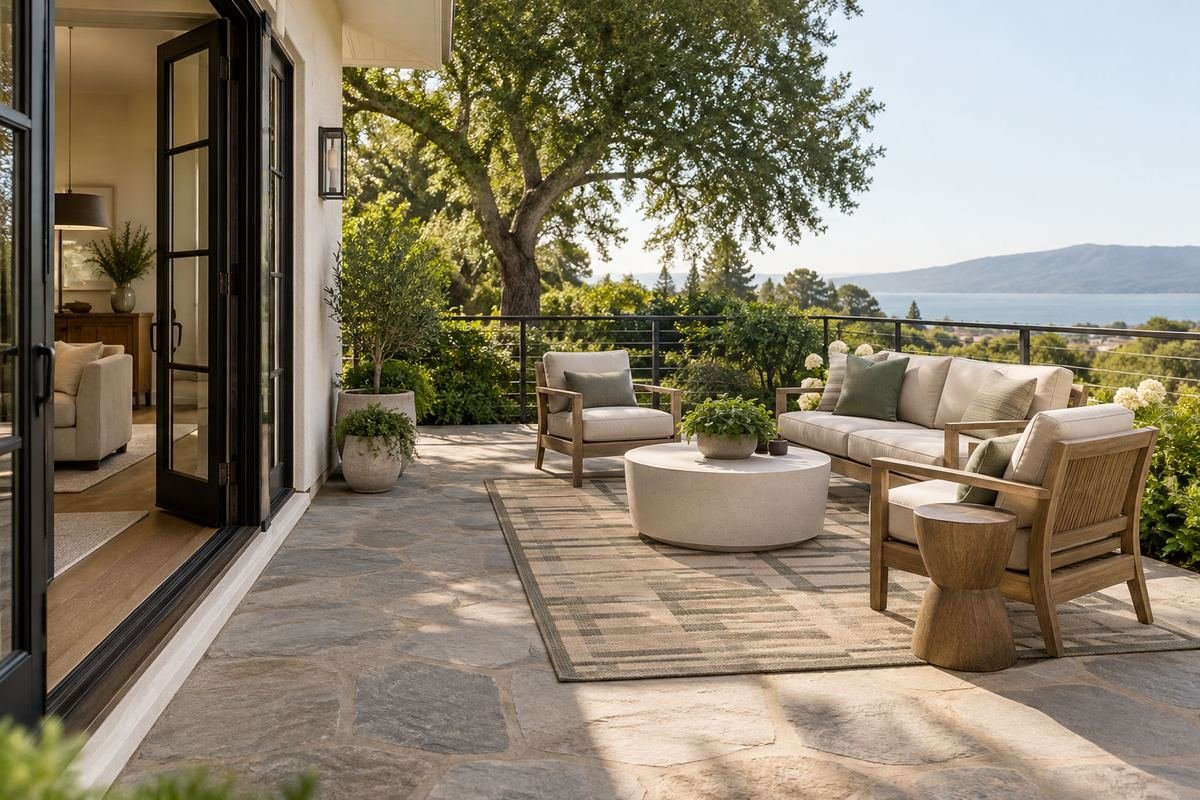
A rug near the house should respect the door’s full movement and the ordinary approach. The useful position may differ from the most centered-looking arrangement.
Test the door and the nearest chair at the same time. Keep edges flat and avoid a placement that forces people to step around furniture at the threshold. Reposition the group if necessary before selecting a smaller rug that does not serve the seats.
Practical tip: Open the door fully during the layout test.
10. Leave drainage routes visible and useful

The patio’s drainage needs should remain part of the rug plan. A textile should not cover a drain or disguise an area that stays wet.
Observe the surface after rain and review the product and patio care guidance. Choose a position that can dry appropriately. The attractive part of the layout is the seating group, while the underlying surface still needs to perform its ordinary job.
Practical tip: Check the proposed position after wet weather.
11. Use a restrained neutral rug with textured furniture
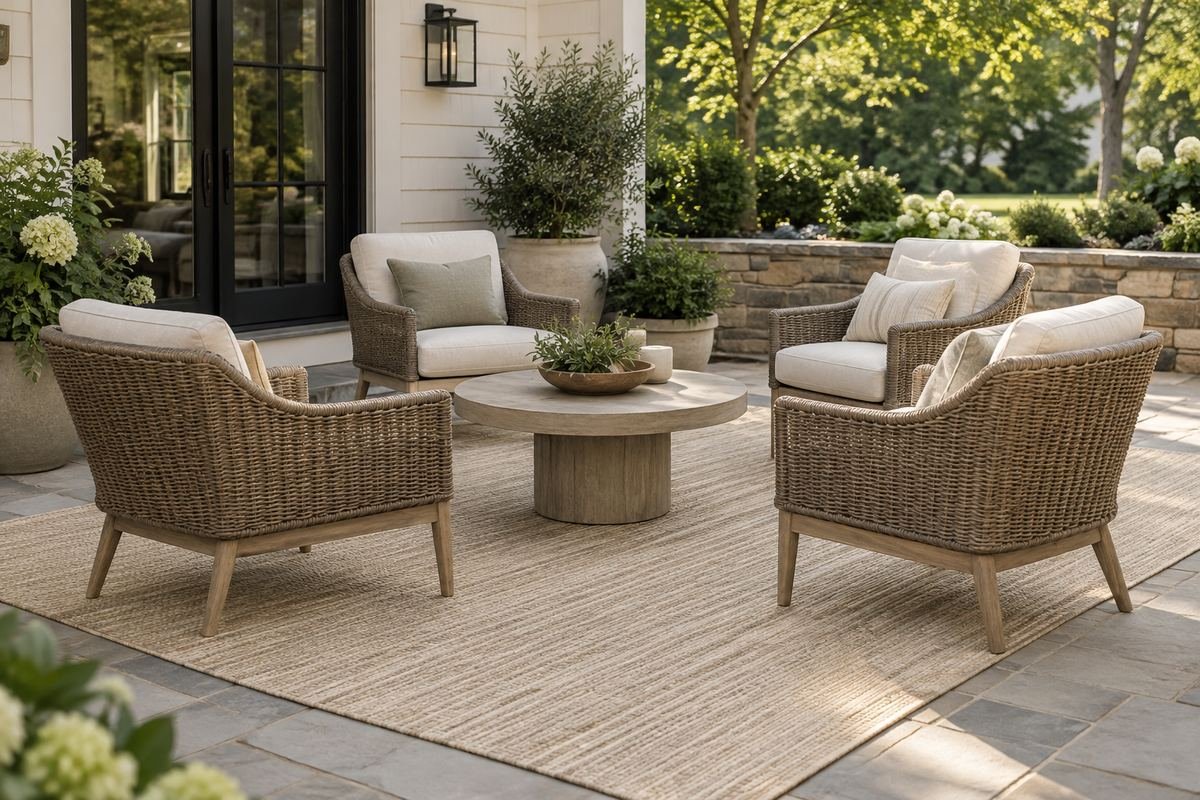
A neutral rug can give woven-looking or wood outdoor furniture a quieter base. The variation comes from the materials rather than several bright patterns.
Check the actual rug surface and care requirements. A natural-looking texture in a photograph does not establish its fiber or outdoor suitability. Choose a specified product and let the neutral color support the furniture’s real texture.
Practical tip: Read the material and use rating separately from the look.
12. Try muted blue with pale cushions

Muted blue can provide a cool base for pale outdoor cushions. The combination gives a quiet patio a clear color direction without a fully themed coastal scheme.
Compare the blue with the paving and nearby exterior wall. A gray-blue and a clearer navy create different contrasts. Keep the other textiles simple until the full rug’s color is visible in the actual outdoor light.
Practical tip: Compare the blue against the paving as well as the cushions.
13. Use navy and cream for a defined outdoor group

Navy and cream can create a clear graphic rug beneath simple outdoor furniture. A restrained motif gives the group definition without requiring matching patterned cushions.
Check how much of the pattern will remain visible around the chairs and table. Keep one textile as the main patterned surface. The rug’s outdoor rating and care instructions still need to be confirmed independently of its colors.
Practical tip: Let either the cushions or the rug carry the stronger print.
14. Connect muted green to nearby planting
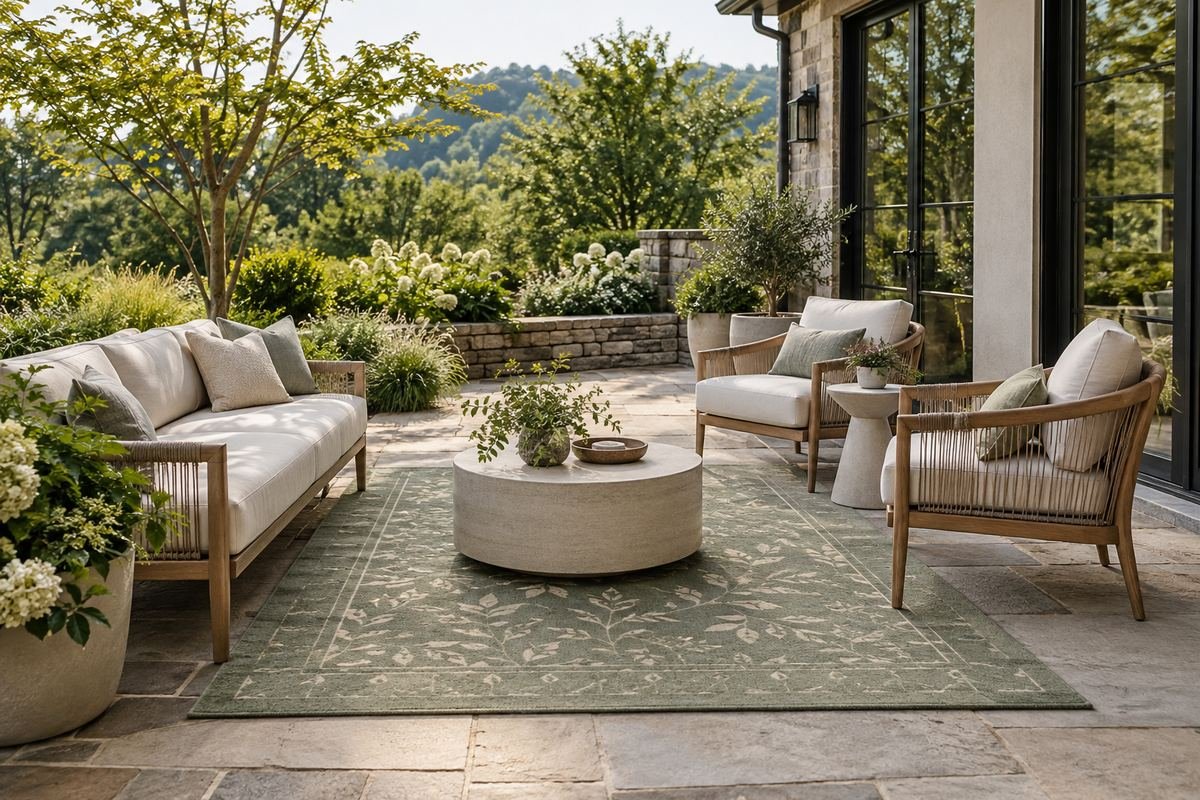
A muted green rug can relate to the garden without copying every shade of foliage. Quiet furniture and plain cushions let the green remain a subtle connection.
Compare the sample beside the actual patio wall and floor. The plants change through the seasons, so the rug should also work with the permanent surfaces. Keep the palette coherent when the garden is less full.
Practical tip: Choose the green with the permanent materials in view.
15. Warm pale paving with a clay-colored rug

A clay-colored rug can bring warmth to a patio with pale gray or off-white paving. Simple cushions allow the warm textile to become the main color area.
Compare the rug with any brick, timber or terracotta pots nearby. Several similar warm tones can connect or compete. Choose the actual depth from samples in outdoor light rather than treating all rust and clay shades as the same.
Practical tip: Compare every existing warm material beside the sample.
16. Use charcoal to outline light furniture

A charcoal rug can give pale outdoor furniture a clear base. The contrast helps the seating group remain distinct from a similarly light patio surface.
Look at the whole space from inside the house. A large dark rug may become the strongest feature in that view. Choose that role deliberately and confirm the actual product’s suitability for sun exposure and ordinary care.
Practical tip: Review the rug from the room that overlooks the patio.
17. Try a warm cream rug with dark frames

A warm cream rug can soften the outline of dark outdoor furniture frames. Plain pale cushions and a little natural wood keep the palette limited.
Choose the product with its real cleaning routine in mind. Pale color is an appearance choice, not a promise about stain resistance. Compare a sample beside the paving and frame finish before ordering a large light area.
Practical tip: Review care instructions before choosing the pale finish.
18. Use a broad stripe for an orderly patio
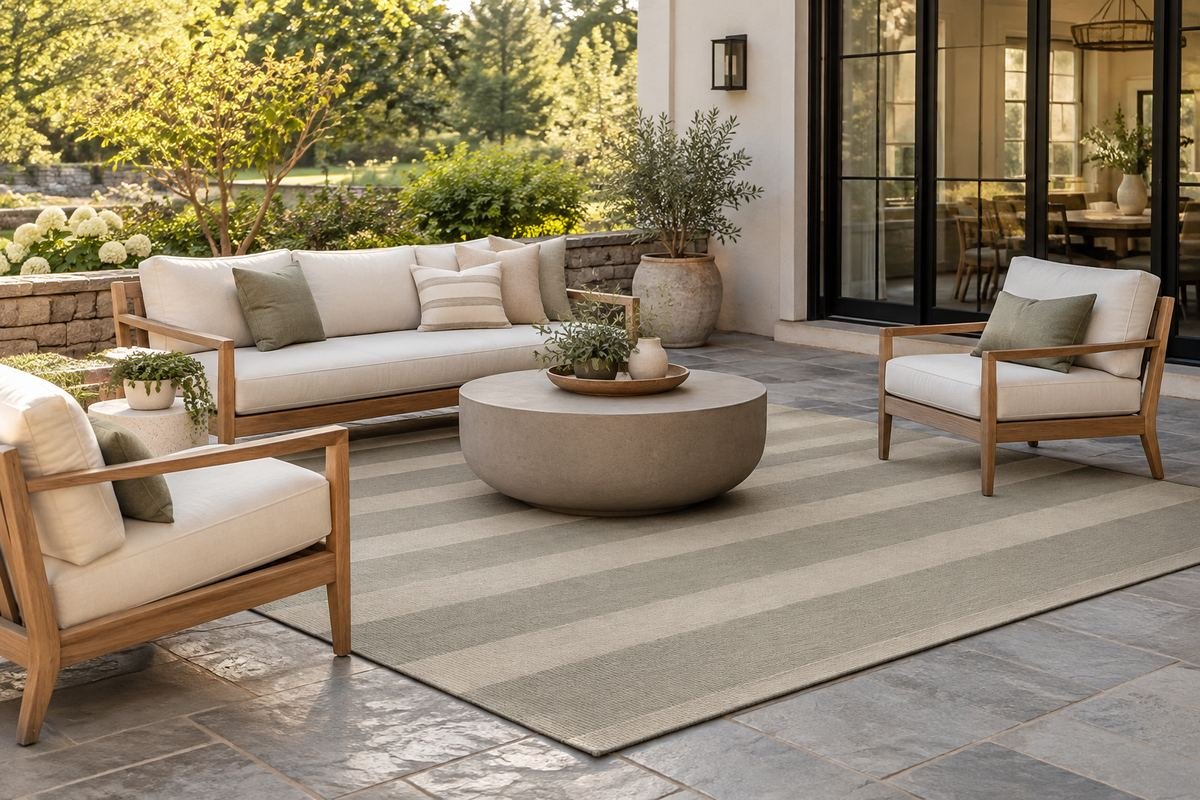
A broad stripe can give a simple outdoor group a clear rhythm. It works well when the furniture and cushions are otherwise restrained.
Plan the stripe direction in relation to the patio and sofa. Compare the visible edges after the furniture is placed, because the table may hide much of the center. Avoid adding several other striped textiles unless the whole group has been considered.
Practical tip: Choose the stripe direction from the full layout.
19. Try a narrow stripe as a quieter pattern

A narrow stripe may read almost like texture from the house while showing more detail nearby. It can suit a small patio where a bold motif would dominate.
Compare the contrast and spacing in a real sample. Fine dark lines can still create a strong pattern across a large area. Keep the cushions simple enough to judge whether the stripe supplies the right amount of visual detail.
Practical tip: View the sample close up and from the doorway.
20. Use a geometric rug with simple furniture shapes
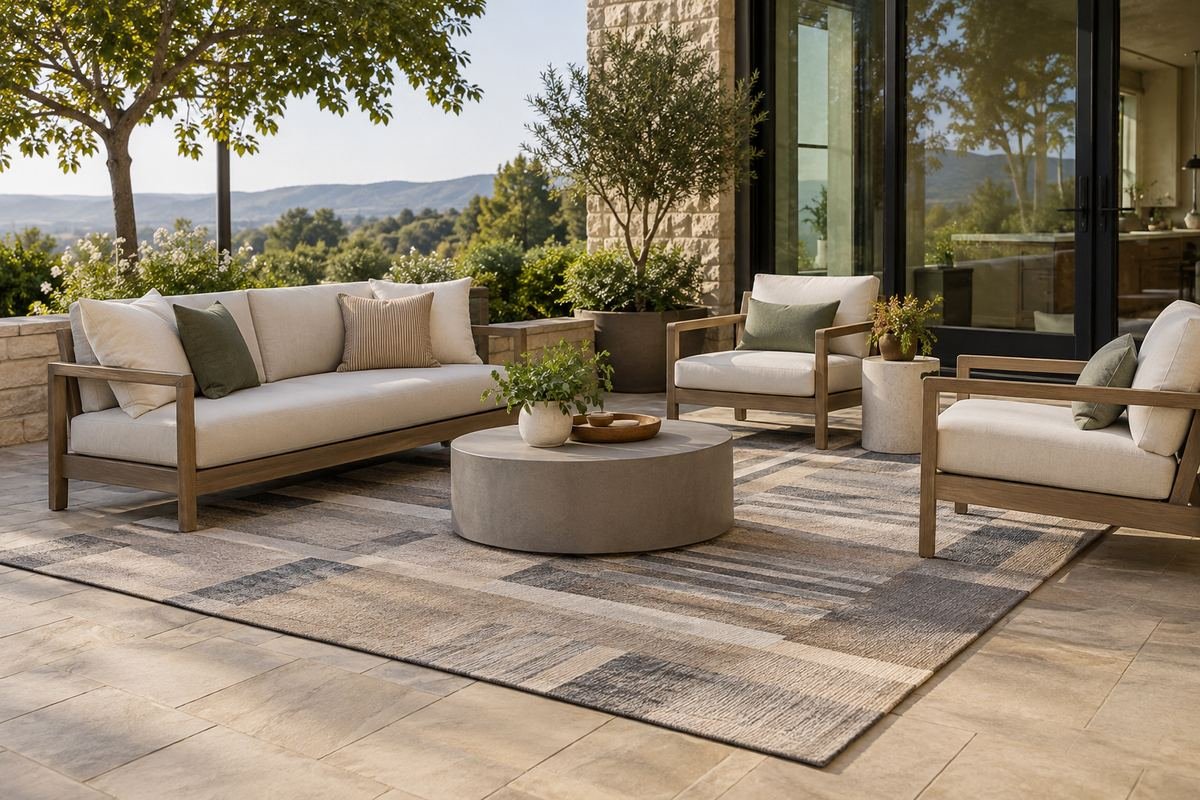
A geometric rug can become the main decorative feature under straightforward outdoor seating. A limited color palette keeps the design connected to the house and paving.
Look through the chair and table legs at the pattern. Strong lines on every surface can become crowded. Compare a larger quieter motif if the combined furniture and rug shapes compete.
Practical tip: Judge the pattern with the furniture placed over it.
21. Choose a tonal pattern for a calm covered patio

A tonal pattern offers detail without a strong contrast. It can give a covered patio a settled background while wood, metal or woven furniture supplies the texture.
Check the sample in the shade of the covered area. A pattern that looked clear in open sun may nearly disappear there. Choose that subtle effect deliberately, and confirm the product for the actual damp and weather exposure.
Practical tip: View the sample in the patio’s usual shade.
22. Use a restrained border to define the seating area

A bordered rug creates a clear outline around an outdoor lounge group. A quiet middle leaves room for the table and furniture legs to remain visually simple.
Check the border width against the amount of rug visible around the group. The border should not be used to judge whether the footprint is large enough. Mark the chair positions and route before refining the decorative edge.
Practical tip: Settle the usable outline before choosing the border.
23. Pair a patterned rug with plain outdoor cushions

Plain cushions can give a patterned rug the space to carry the decoration. This is useful when the rug already contains several colors or a clear motif.
Choose a cushion color from the actual rug sample if you want a close connection. Matching every color can make the group feel overly coordinated. Keep a neutral fabric in the comparison so you can choose a quieter relationship.
Practical tip: Compare one selected accent with a plain neutral option.
24. Let colorful cushions sit over a quiet rug
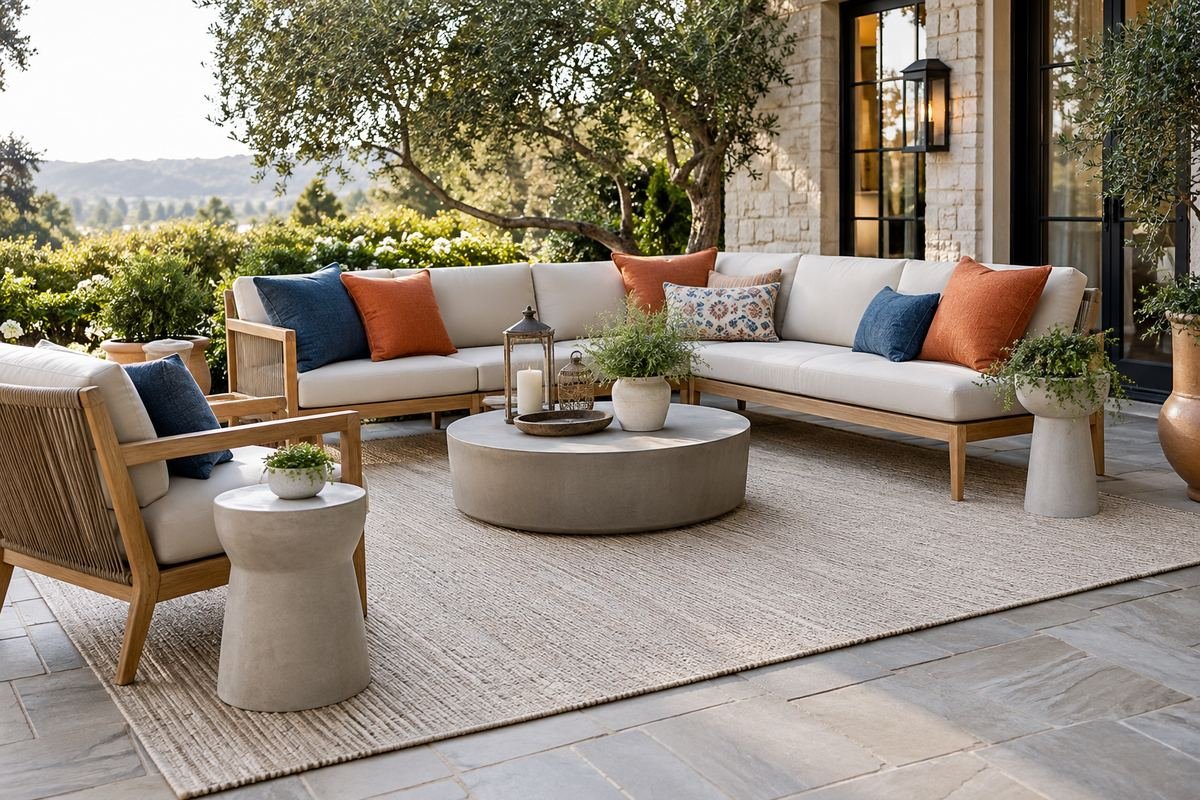
A quiet rug can support a seating group with colorful cushions. The textile beneath the furniture gives the group a defined area without competing for attention.
Compare the rug with the exterior wall and floor as well as the cushions. Those permanent surfaces remain when the cushions are stored. A related neutral lets the patio feel coherent across ordinary changes in smaller accessories.
Practical tip: Choose the rug for the permanent surfaces first.
25. Compare the rug with the deck finish

A deck introduces a strong material and often a clear linear pattern. The rug should relate to the timber finish while meeting the deck and rug manufacturers’ compatibility and care guidance.
Check the actual backing and drying requirements before choosing the position. Do not assume that any outdoor rug or pad suits every coated wood surface. Keep the furniture layout simple enough that the rug can be maintained as instructed.
Practical tip: Confirm deck-surface and backing compatibility before ordering.
26. Use the rug to calm varied paving

Varied paving can be attractive but visually busy beneath several pieces of furniture. A quiet rug may give the seating group a calmer center while the stone remains visible around it.
Compare the rug sample with several parts of the paving. Choose one useful neutral relationship rather than matching a single stone. Check that the surface condition and product guidance support the proposed placement and care.
Practical tip: Compare the sample with more than one paving stone.
27. Keep the rug away from cooking and fire features

A patio layout may include a grill or fire feature as well as seating. Keep the rug’s position within the exact appliance and product requirements for combustible materials and clearances.
Do not copy an attractive photograph as an installation plan or use a universal distance for every appliance. A separate seating rug can define the lounge while the cooking or fire area retains its specified clear zone.
Practical tip: Use the exact appliance instructions to plan the boundary.
28. Reassess a rug position that catches strong wind

An exposed patio may make a particular rug placement impractical. Observe how the area behaves and use the actual product guidance before settling the layout.
Loose or lifting edges should not become part of the normal walking route. Reconsider the product or position rather than improvising a decorative arrangement that needs constant correction. A clear rug-free section can be an intentional part of the patio.
Practical tip: Choose the position for ordinary weather rather than one calm afternoon.
29. Finish with a realistic outdoor care routine

The strongest patio rug idea includes a way to keep the product and underlying surface in good condition. Choose a layout that allows the specified cleaning and drying process.
Keep the furniture group limited enough to move or access as needed. Review the arrangement after the first period of ordinary use, including rain and meals. A small adjustment in position can make an attractive patio much easier to maintain.
Practical tip: Review the layout after real use before adding more accessories.
Frequently Asked Questions
Do patio rug ideas require an outdoor-rated product?
Yes. Choose a product rated for the actual outdoor exposure and confirm its backing, care and compatibility with the patio surface. A covered location can still be damp or exposed to rain.
How should I size patio rug ideas for a dining group?
Plan from the actual table and pulled-out chair footprint, then check doors and circulation. There is no single useful size for every outdoor dining set.
Can an outdoor rug stay wet?
Follow the exact product’s drying and care instructions, and make sure the underlying surface can dry appropriately. Outdoor use does not mean that persistent trapped moisture is desirable.
Do patio rug ideas always need a pad?
That depends on the rug, backing, surface and manufacturer’s guidance. Use a compatible product when specified; do not assume any indoor pad is suitable outdoors or on a deck.
What if patio rug ideas do not suit a windy location?
Reassess the product and position using the manufacturer’s guidance. Do not improvise a placement that creates loose edges or obstructs the route; a rug-free area may suit that exposed position better.
Choose the Details That Work in Your Home
Choose patio rug ideas from a useful outdoor layout, then refine the color and pattern. A flat, considered outline, suitable product and realistic care plan can give the seating or dining group definition while keeping the patio enjoyable to use.
For related ideas, explore backyard patio ideas, balcony and patio planting ideas, dining room rug ideas.
Planning References
Ruggable: choosing an outdoor rug for the setting; Ruggable: rug size guide; Ruggable: product-specific rug care. Follow the instructions for the exact products you choose.
Optional digital guide for this topic
If you prefer a structured workbook, explore this related paid guide.