Side yard ideas work best when they begin with the journey through the space. This strip may connect the driveway to the backyard, provide access to services or frame a view from the kitchen. Give that everyday purpose a clear place in the design.
Measure the usable width at the narrowest points, including gates, steps and projecting equipment. Record doors, windows, downspouts and the locations that need maintenance access. A beautiful passage should still allow the tasks that made the side yard useful in the first place.
The 22 concepts below range from simple planting edges to small destinations in genuinely wider areas. Choose the ideas that fit your actual site rather than trying to combine every feature in one narrow strip.
The images are original AI-generated decor concepts, not installation diagrams or photographs of completed client projects.
Browse These 22 Side Yard Ideas
Jump to an idea
- Start with side yard ideas built around one clear path
- Use a single planting border in a narrow passage
- Frame a gravel-look route with restrained edging
- Repeat rectangular pavers for a quiet rhythm
- Choose brick-toned side yard ideas for a warm connection
- Keep a pale surface beside a darker boundary
- Use a darker path with light planting details
- Connect side yard ideas to the backyard materials
- Make the gate part of the composition
- Use an open view at the far end
- Try shade-suited side yard ideas where conditions support them
- Use sun-suited planting in a genuinely bright strip
- Keep fence-side planting away from the walking line
- Use a few substantial containers in wider pockets
- Choose vertical side yard ideas with a suitable support
- Reserve a wider section for a small bench
- Give garden tools a planned storage recess
- Keep bin storage in a suitable accessible bay
- Use lighting side yard ideas to clarify the route
- Create a quiet focal planting at a wider end
- Reduce the palette for a lower-effort layout
- Finish with a side yard that connects both ends
Plan side yard ideas around the route you need to keep
Draw a continuous route before adding beds, screens or storage. Check how gates and doors open and how bins, tools or a cart move through the passage. Review ground levels and drainage with the proposed surface rather than treating loose gravel as proof that a path will manage water well. RHS guidance on permeable paving emphasizes the complete construction and ground conditions, not just the visible top layer.
| Record | Why it changes the layout | Design response |
|---|---|---|
| Narrowest usable width | A wider photograph can hide a local pinch point | Reserve the route through the tightest section |
| Doors and gate arcs | Open leaves occupy part of the passage | Keep planting and furniture outside their movement |
| Service locations | Equipment needs its specified access and clearance | Design around the actual manufacturer requirements |
| Sun and shade at different times | The two ends may have different conditions | Choose plants for each real position |
| Ground levels and water movement | A new surface changes the complete arrangement | Resolve drainage and building junctions first |
| Maintenance routine | Pruning and cleaning need working space | Use fewer features where access is limited |
Use a simple subtraction to test a proposed planting edge
Imagine a measured section 72 inches wide. If one proposed bed uses 18 inches and the opposite edging uses another 6 inches, 48 inches remains before accounting for projecting foliage, gates or equipment. This is a layout example, not a recommended walkway width. Confirm the dimensions, accessibility needs and requirements for your actual route.
Decide whether this is a passage, a view or a destination
A passage needs continuity. A view can use a focal plant or quiet end panel without adding a place to sit. A destination needs enough room for people, furniture and the journey past it. Choose the main job first. In a very narrow yard, a clear path with one thoughtful border may do more than a miniature patio squeezed into the middle.
Keep the first project manageable
Start by resolving the route and one planting zone. Compare the result from both ends and from the windows that overlook it before adding more objects. If US ground work is involved, contact 811 and follow the applicable state process before excavation. Separately check any services or site features that the standard locating process does not cover.
1. Start with side yard ideas built around one clear path

A continuous path gives a long side yard a simple structure. Its line connects the two ends and makes the space feel intentional before any decorative feature is added.
Mark the passage used in everyday life rather than centering the path automatically. A door, gate or service point may make an offset route more useful for the actual house.
Practical tip: Trace the full journey before choosing materials.
2. Use a single planting border in a narrow passage

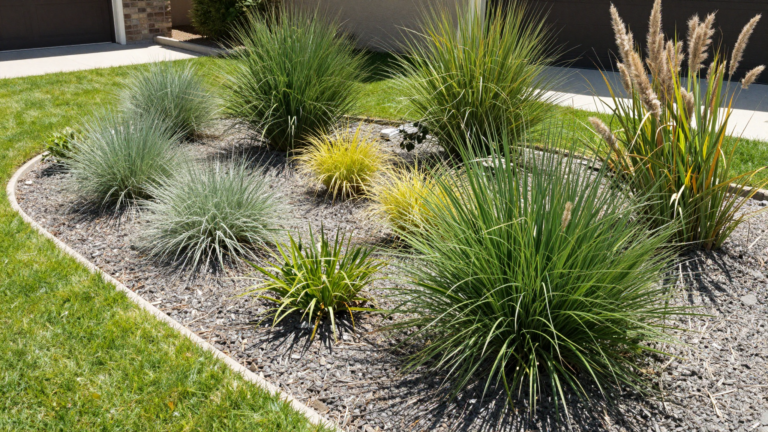
One planting edge gives a narrow strip a garden character without dividing the remaining width between two competing beds. The opposite edge can stay visually quiet.
Choose the bed around mature plant spread and maintenance access. A small plant at purchase may later occupy part of the route, so leave room for the selected plants to develop.
Practical tip: Plan for mature growth rather than the nursery-pot size.
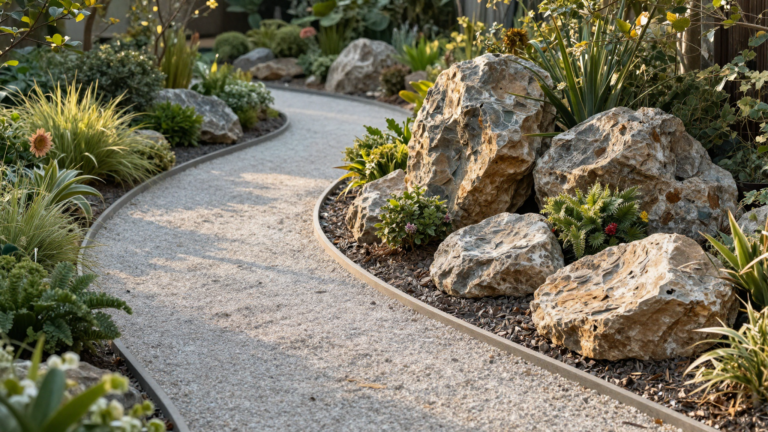
3. Frame a gravel-look route with restrained edging
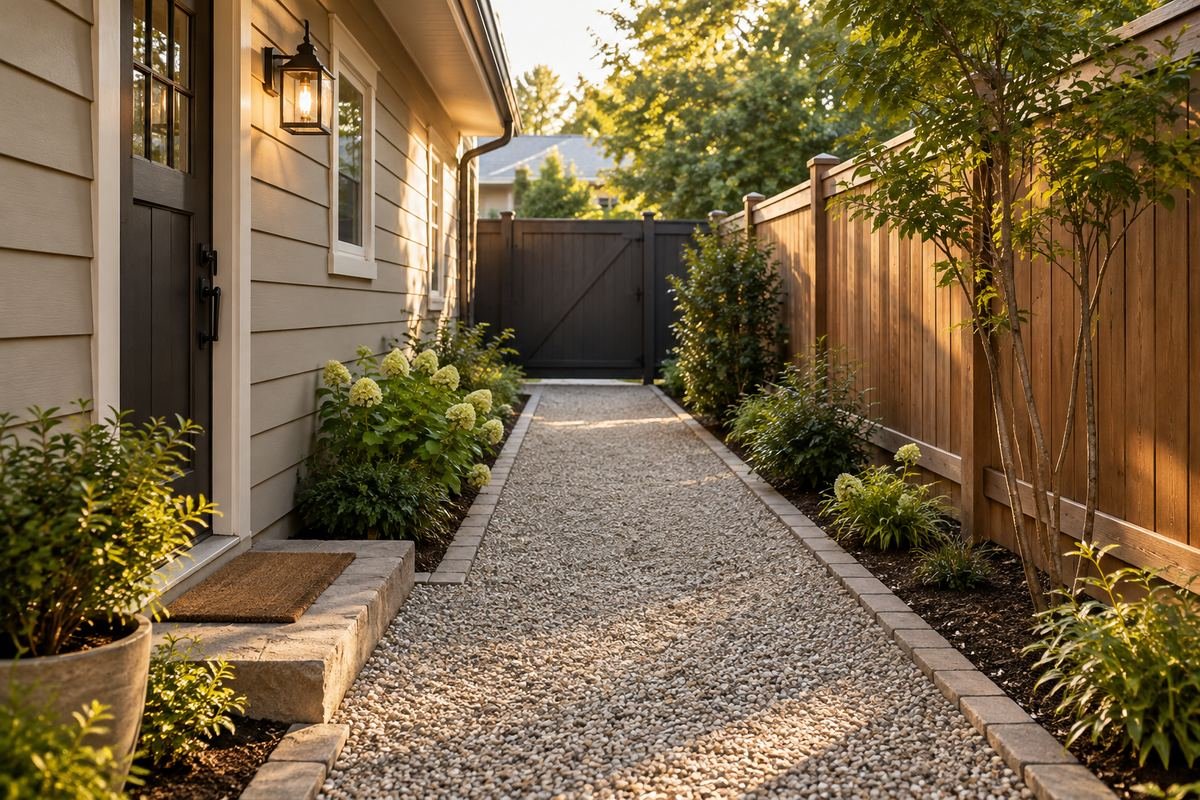
A restrained edge gives a loose-surface route a defined outline. Repeating one material at the ends can connect the passage with the adjoining yard.
Select the complete surface arrangement for the site and its users. Include cleaning, leaf removal and edging maintenance in the comparison rather than describing every gravel path as effortless.
Practical tip: Compare the maintenance routine before choosing the finish.
4. Repeat rectangular pavers for a quiet rhythm

Repeated rectangular paving can give a side yard a clear visual beat. A limited palette lets the planting and house details remain distinct.
Compare the unit size with the measured width and the pattern at both ends. A layout that creates awkward thin cuts beside every edge may need a different starting point or format.
Practical tip: Draw the actual paving pattern before ordering.
5. Choose brick-toned side yard ideas for a warm connection

Brick tones can connect a passage with a warm fence, clay pots or related details on the house. The surface introduces texture without requiring extra ornaments.
Use the real paving product and complete site specification to evaluate suitability. Color alone does not establish slip performance, drainage behavior or compatibility with the proposed installation.
Practical tip: Compare a real sample beside the house.
6. Keep a pale surface beside a darker boundary
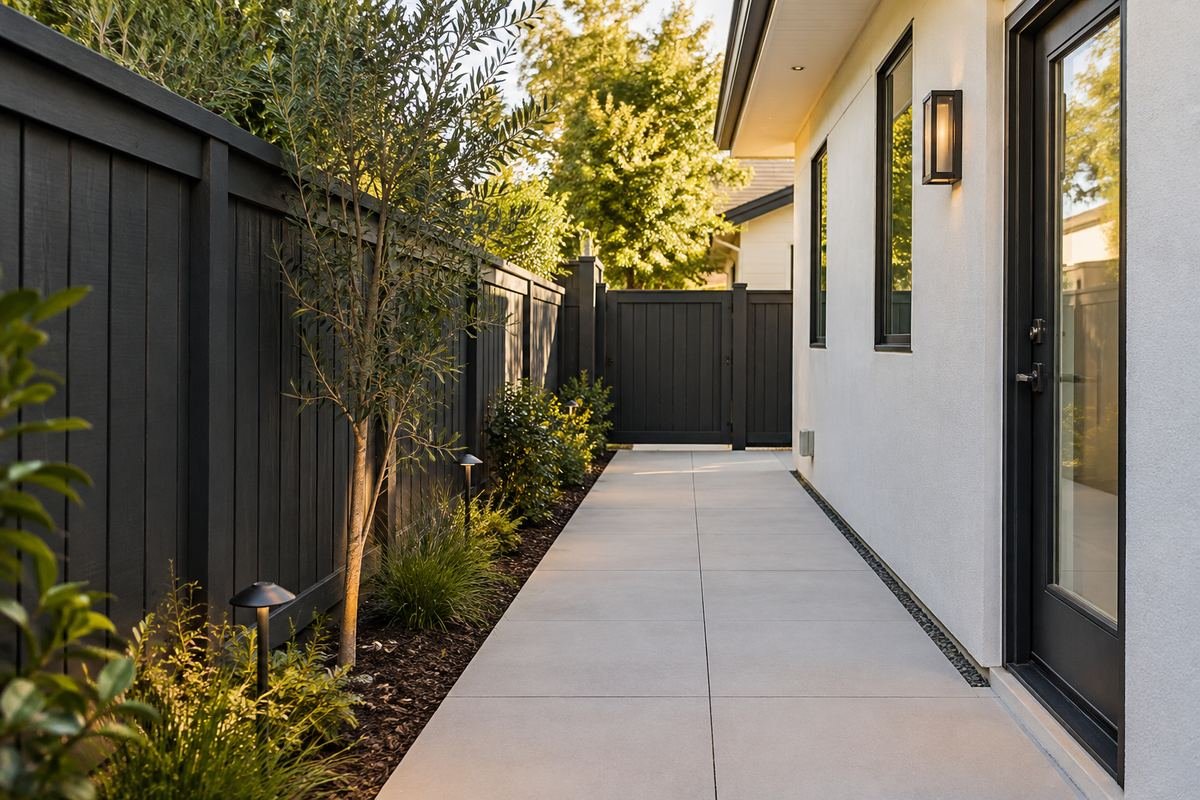
A pale route can make the contrast between the house and a darker fence more deliberate. Quiet planting softens the junction without hiding the clear line of travel.
Inspect samples when wet and in the actual light. The brightness of a concept image does not show glare, staining or the way a particular product will look throughout the day.
Practical tip: Check the sample in the real passage.
7. Use a darker path with light planting details
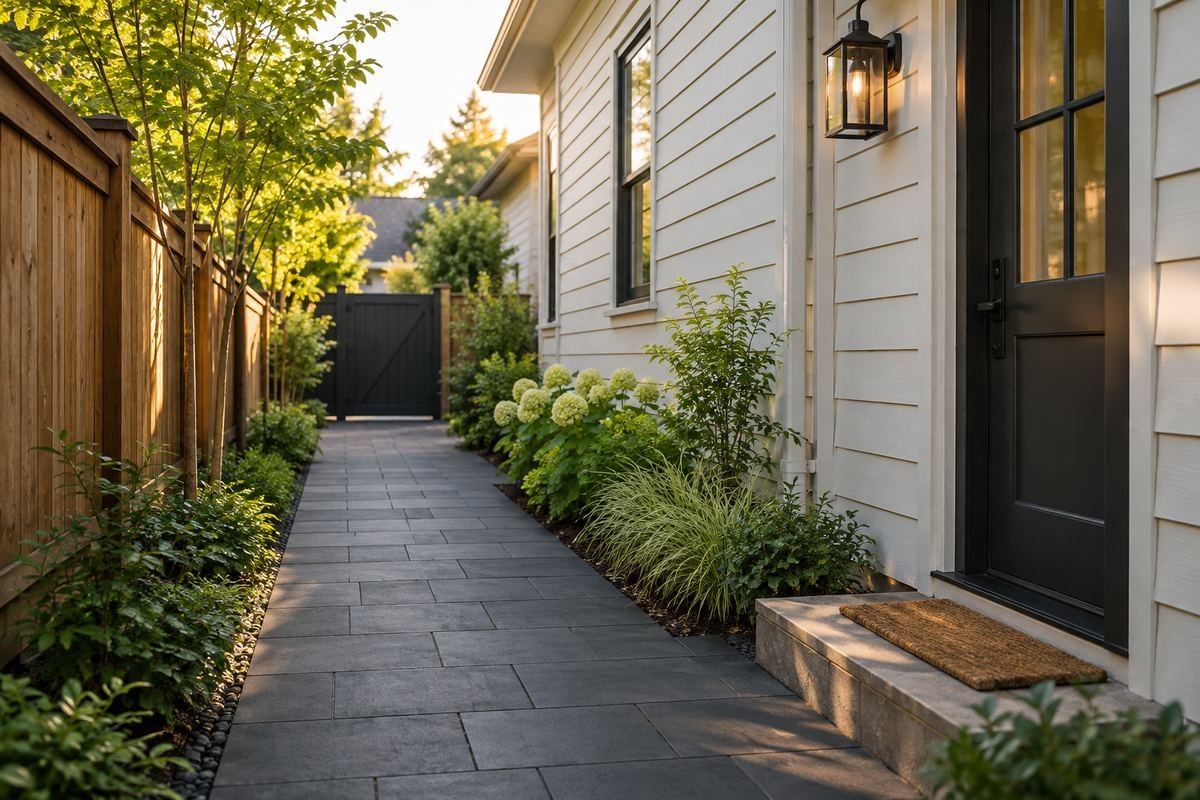
A darker route can connect with dark window frames or a gate. Pale foliage and simple flowers give the planting a readable edge against that deeper surface.
Keep the color selection separate from plant suitability. Choose plants for the real light and soil first, then find an appropriate combination that gives the contrast you want.
Practical tip: Choose growing conditions before foliage color.
8. Connect side yard ideas to the backyard materials

Repeating a patio material through the passage can make the backyard feel connected to the entrance. The repeat can be a color or edge detail rather than an identical surface everywhere.
Resolve the physical transition as well as the appearance. Changes in level, joints and water movement need to work together where two surfaces meet.
Practical tip: Plan the junction before matching the colors.
9. Make the gate part of the composition

A simple gate gives the end of a passage a clear destination. Repeating its timber tone in one nearby detail can connect the boundary with the rest of the yard.
Check the actual opening, swing and latch use before filling nearby areas with plants. The gate should work with the items normally moved through it.
Practical tip: Test the opening with everyday garden equipment.
10. Use an open view at the far end

A glimpse of the backyard can give a long narrow passage depth. Keep the end relatively quiet so the eye can follow the path into the larger space.
Avoid adding a focal object that blocks the route or creates another pinch point. The view may already be strong enough when the planting and surface are edited.
Practical tip: Check the view from both directions.
11. Try shade-suited side yard ideas where conditions support them

A shaded passage can feel deliberate with a limited group of suitable foliage plants. Repeating a few shapes can be clearer than placing many unrelated varieties in a narrow strip.
Observe the actual light and soil conditions rather than treating every side yard as dry shade. Confirm mature spread and local suitability with a knowledgeable local nursery or extension resource.
Practical tip: Match each planting position to its actual conditions.
12. Use sun-suited planting in a genuinely bright strip

An exposed side yard can support a different planting character from a shaded corridor. Repeated modest plant groups give the sunny edge a clear rhythm.
Choose the plant palette for the local climate and actual water availability. A sunny image does not identify drought tolerance or mean the bed can be left without establishment care.
Practical tip: Confirm the local planting and watering plan.
13. Keep fence-side planting away from the walking line

A planted fence edge can soften a long boundary without filling the whole side yard. Lower growth near the route keeps the passage visually open.
Account for mature stems, leaves and any supports. The usable path needs to remain clear after the plants develop, not only on the day the garden is installed.
Practical tip: Draw the mature planting outline on the plan.
14. Use a few substantial containers in wider pockets
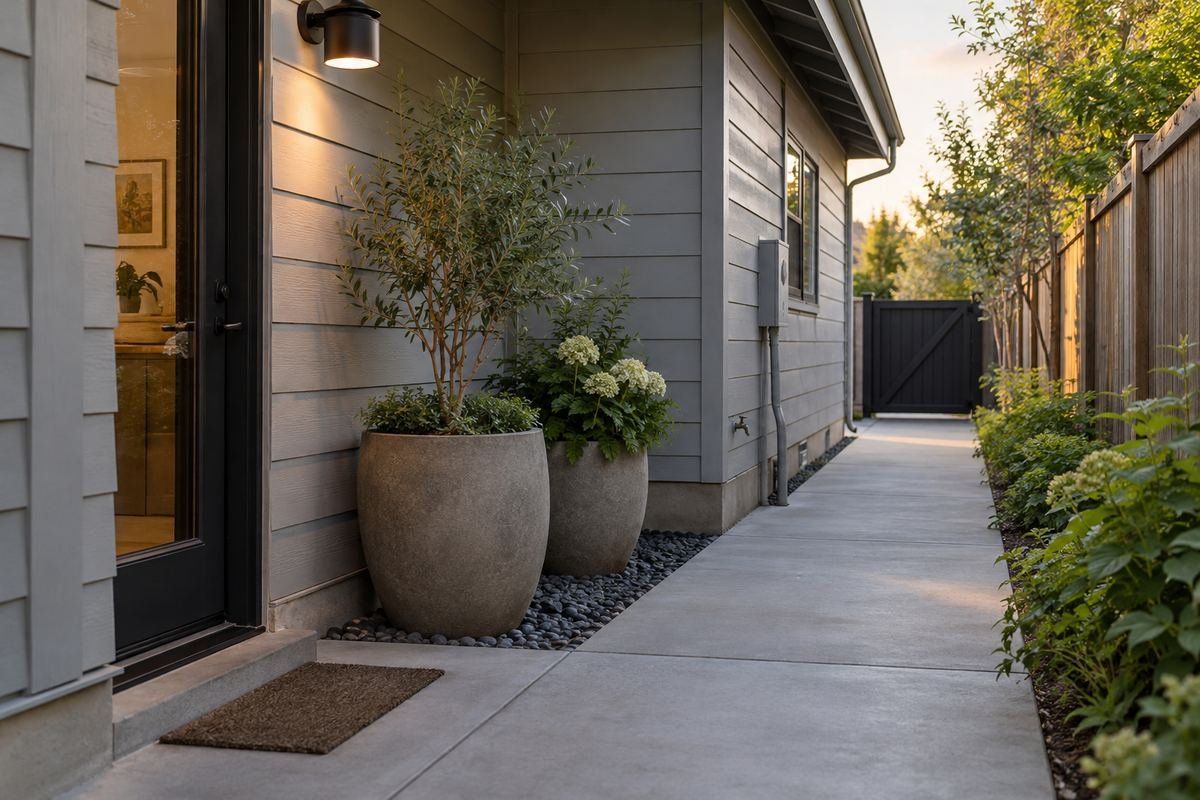
Containers can give a wider recess a deliberate use without creating a continuous new bed. One repeated pot style can connect separate pockets along the passage.
Place them only where the whole container and plant fit outside the necessary route. Plan drainage and watering access rather than allowing runoff or hoses to complicate normal movement.
Practical tip: Keep the planted container footprint in the measurement.
15. Choose vertical side yard ideas with a suitable support

A restrained trellis can add a vertical detail where ground space is limited. Its rhythm can relate to a gate or fence without making the corridor feel enclosed.
Confirm the actual support, fixing and plant growth requirements. Keep the mature planting clear of windows, services and the movement through the passage.
Practical tip: Plan the full grown display rather than an empty trellis.
16. Reserve a wider section for a small bench

A small bench can turn a genuinely wider section into a useful pause. It works best when the seated view has a reason to stop, such as a quiet garden corner.
Measure both the bench and the space used by someone sitting. If the route becomes awkward when the seat is occupied, keep the section as a passage instead.
Practical tip: Test the occupied layout.
17. Give garden tools a planned storage recess
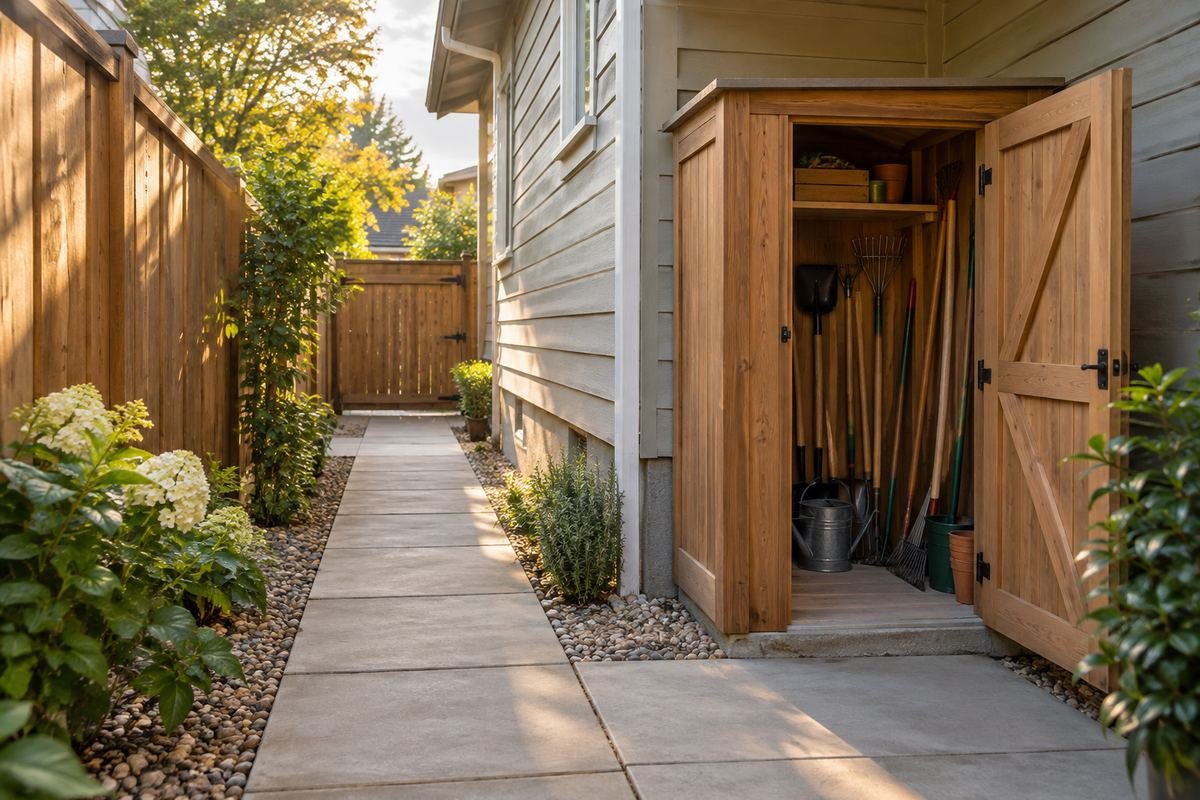
A quiet storage recess can make a side yard more useful when there is enough width. Matching its finish with the gate helps the practical feature belong to the composition.
Check door opening and access to the contents. Storage should simplify the maintenance routine without blocking house services or creating a narrow obstacle opposite another projection.
Practical tip: Measure the storage with its doors open.
18. Keep bin storage in a suitable accessible bay

A considered bin bay can organize an everyday task at the side of the house. Simple screening may help it read as part of the boundary rather than a separate object.
Check the actual bins, lid movement, collection route and local placement requirements. Keep the bay outside the continuous passage and any equipment clearances.
Practical tip: Walk the collection route before designing the screen.
19. Use lighting side yard ideas to clarify the route

A restrained lighting plan can make the route and gate easier to understand after dark. A few well-placed fixtures can be more useful than many decorative points.
Choose outdoor fixtures for the actual location and have the electrical arrangement designed appropriately. Compare glare and the view from nearby windows before selecting brightness or placement.
Practical tip: Review the route from the house and the gate.
20. Create a quiet focal planting at a wider end

One suitable focal plant can give a passage a clear visual ending where the layout has room. The surrounding planting can stay simple so its shape remains distinct.
Keep the focal area separate from necessary movement and maintenance access. A plant that fits the photograph may still become too large for the actual end of the yard.
Practical tip: Check mature scale before choosing a specimen.
21. Reduce the palette for a lower-effort layout

A limited combination of paving, one edging material and a few suitable plants can simplify decisions. Repetition gives a narrow yard a coherent character without constant additions.
Choose materials and plants whose real maintenance fits the time available. Low effort is a practical relationship between the site, the products and the gardener rather than a promise attached to one style.
Practical tip: List the seasonal tasks before committing.
22. Finish with a side yard that connects both ends
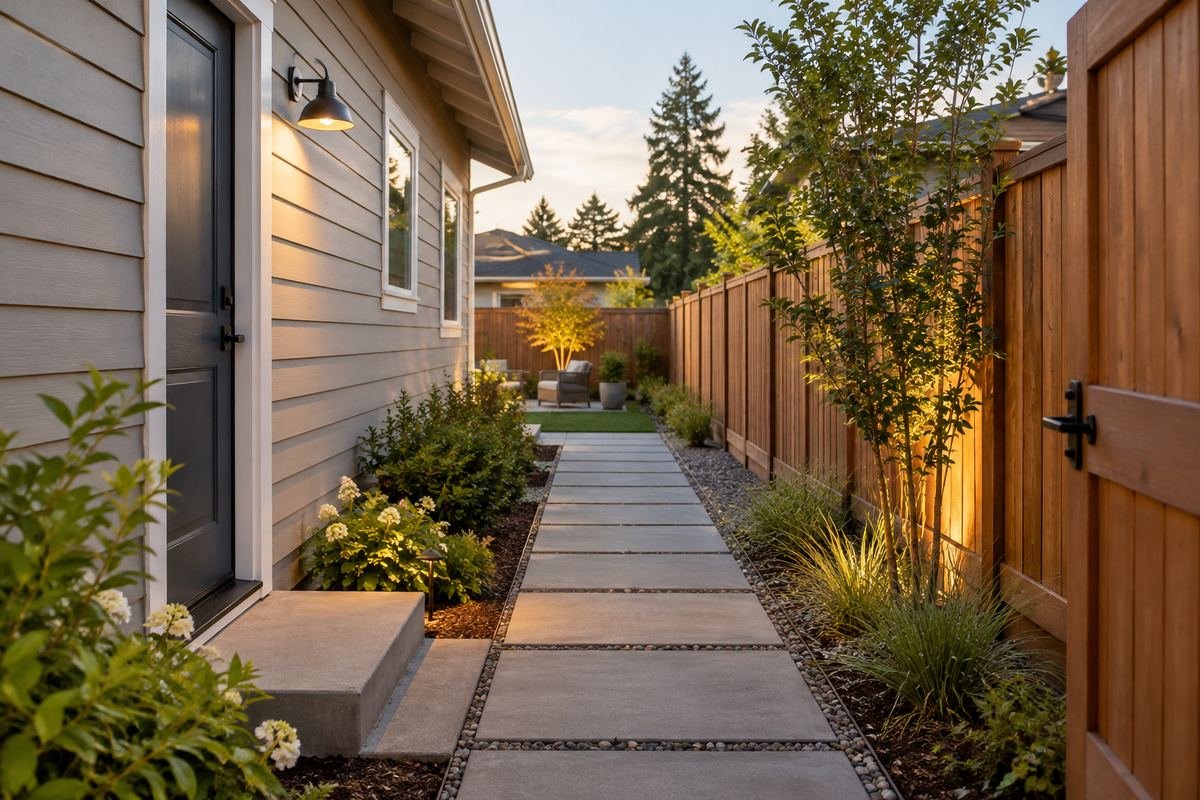
The final design should make sense from the front and from the backyard. Repeated materials and a clear route can link two different areas without making every detail identical.
Recheck the passage with gates open and the ordinary equipment in use. Remove any decorative item that makes the useful route harder to navigate.
Practical tip: Do a final walk-through in both directions.
Frequently Asked Questions
What should I do with a very narrow side yard?
Begin with a clear route and the access the house needs. A single restrained border or a repeated surface detail may be enough. Do not add furniture merely because a wider inspiration image includes it.
Is gravel a low-maintenance side-yard surface?
It can still require weeding, cleaning, edging and replenishment. Its suitability depends on the complete construction, ground and intended users. Compare that maintenance with other appropriate surfaces for the actual route.
Can I put planters beside an air-conditioning unit?
Use the equipment manufacturer’s clearance and service requirements for that exact installation. A decorative screen or pot should not be placed from a photograph alone. Keep the equipment and its access in the site plan.
How do I choose plants for a side passage?
Observe the available light, soil moisture and growing space at each position. Check mature dimensions and local suitability. A shaded corridor and an exposed side yard can need very different planting.
Should both sides have planting beds?
Only if enough usable width remains and the maintenance works. One well-planned border can be more useful than two narrow strips that crowd the path as plants grow.
Choose the Details That Work in Your Home
Give the side yard a clear purpose, preserve the route and choose a small number of details that support it. A coherent surface, suitable planting and a considered view can make an ordinary passage feel like a deliberate part of the garden.
For related ideas, explore garden path ideas, small garden design ideas, raised garden bed ideas.
Planning References
RHS: permeable paving as a complete system; Common Ground Alliance: 811 before digging in the United States. Follow the instructions for the exact products you choose.
Optional digital guide for this topic
If you prefer a structured workbook, explore this related paid guide.