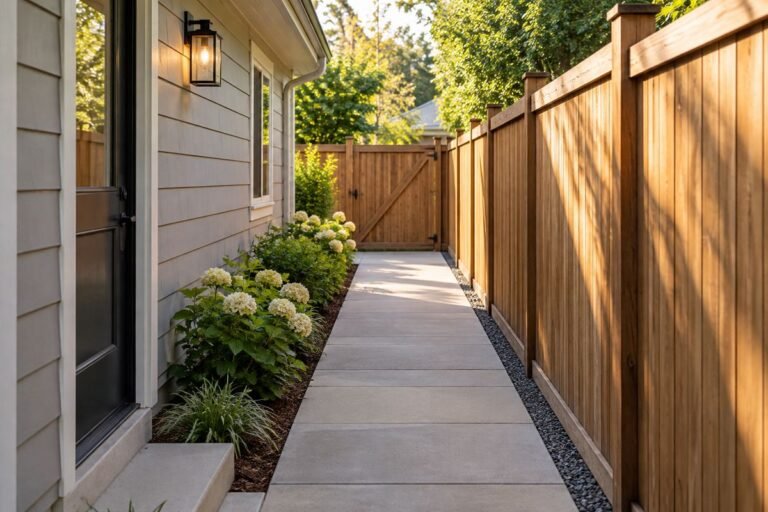
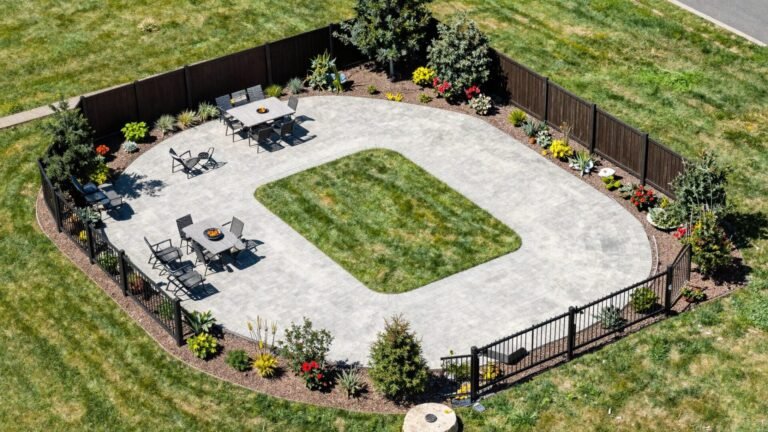
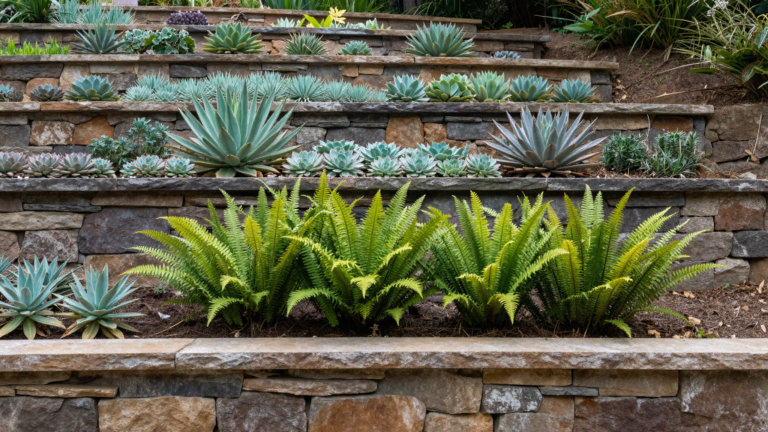
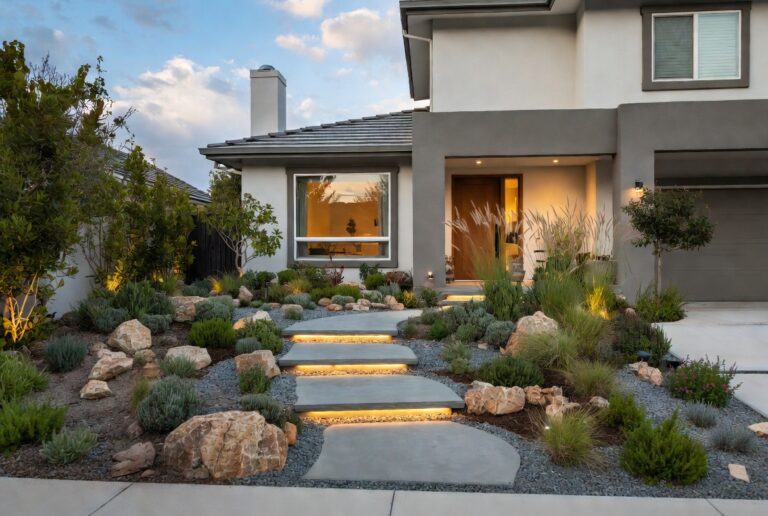
Backyard landscaping works best when a clear path leads to a place you want to use. Start with how you enter the garden, where water goes and the seats you will occupy before choosing decorative features.
These landscaping ideas are design starting points. Changes to drainage, retaining structures, ponds or fire features need site-specific planning and any required professional assessment before construction.
Draw the Backyard Landscaping Route First
Mark the main destination with chairs you already own, then walk there from the house carrying a tray or garden tool. Next, look back toward the entrance from the seat. This tests both the route and the view before you add bends or screens. Leave space for mature planting beside the path; otherwise a generous-looking gap in a new garden can become an awkward squeeze later.
1. Give Backyard Landscaping Paths a Destination
A gentle curve can connect the patio with a seat or garden bed. Let the route respond to the available space rather than adding bends that make daily access difficult.
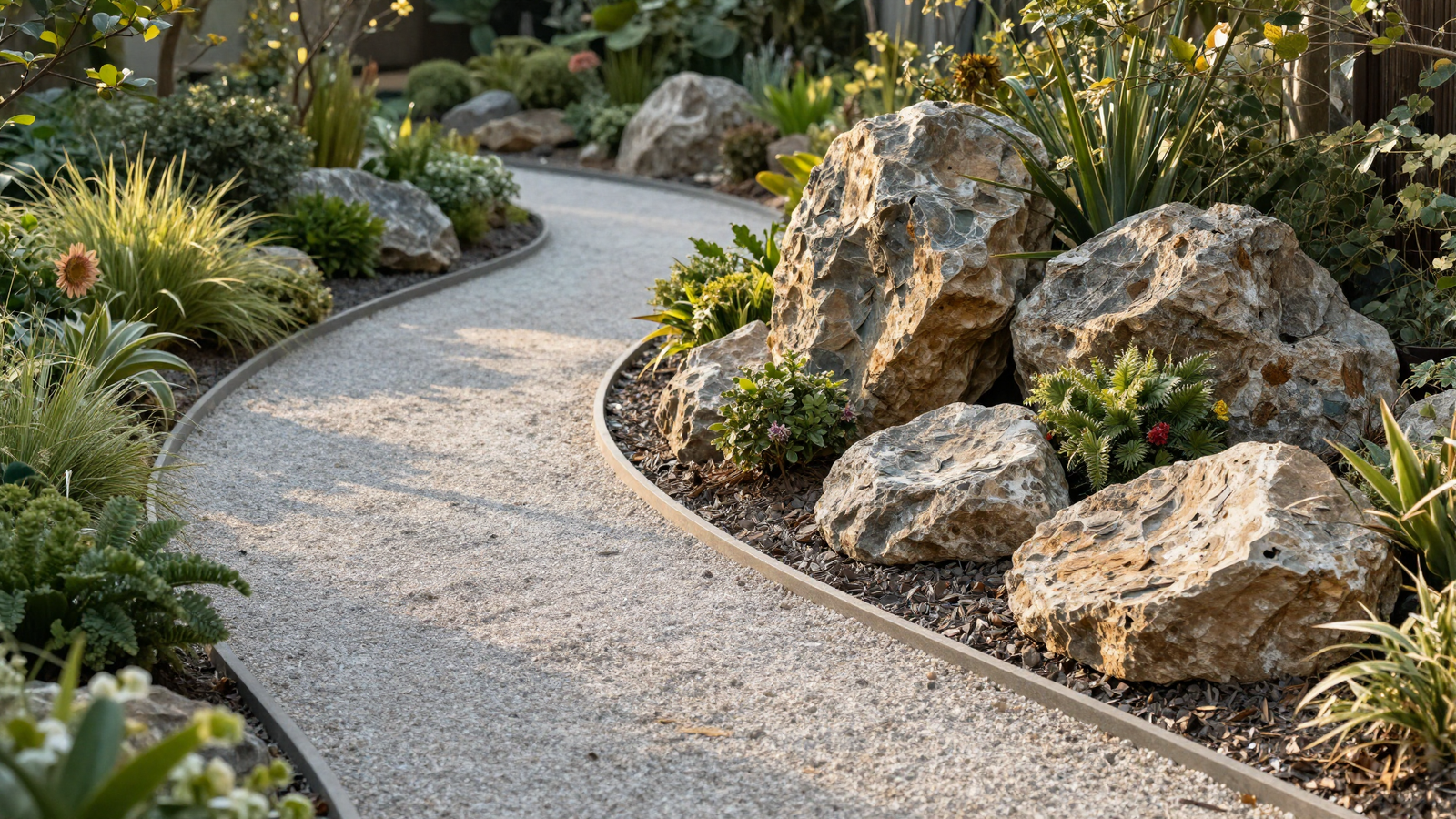
Choose a surface for drainage, slope, mobility needs and maintenance. Loose gravel may suit one garden while a firm continuous surface is more useful in another.
Try this: Walk the proposed route before drawing its edges.
2. Distinguish a Decorative Creek Bed From Drainage
A band of stone can introduce contrast and suggest a dry creek through planting. Decide whether it is purely decorative or intended to carry water.
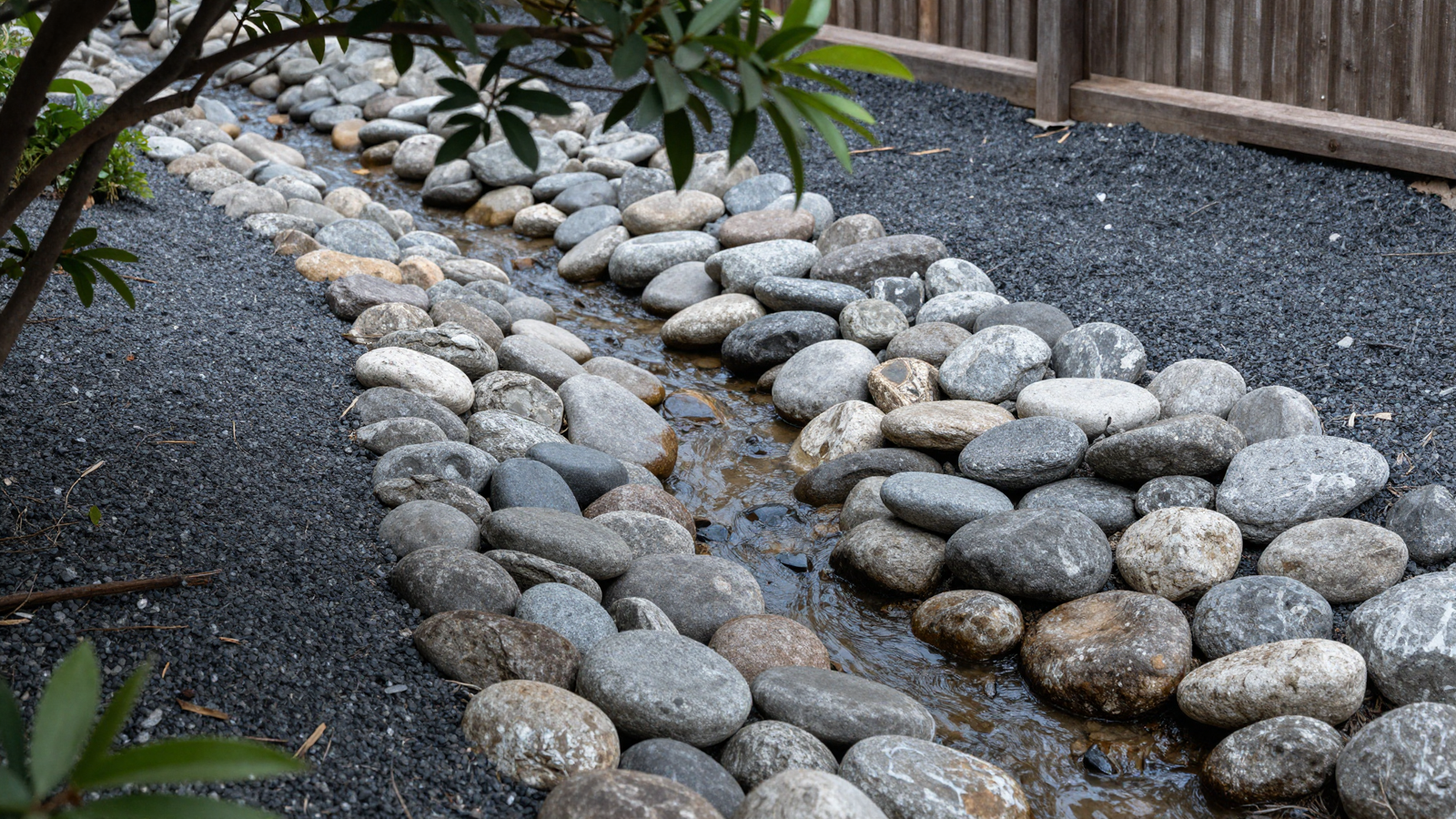
A functional drainage route needs assessment of flow, outlets, erosion and neighboring property. Do not direct runoff toward a structure or assume scattered rocks solve a wet area.
Try this: Observe the site during rain before planning water movement.
3. Give a Water Feature a Maintainable Setting
A small reflecting basin can provide a still focal point near a path. Consider access for cleaning, water quality, wildlife and the household before choosing an open-water feature.
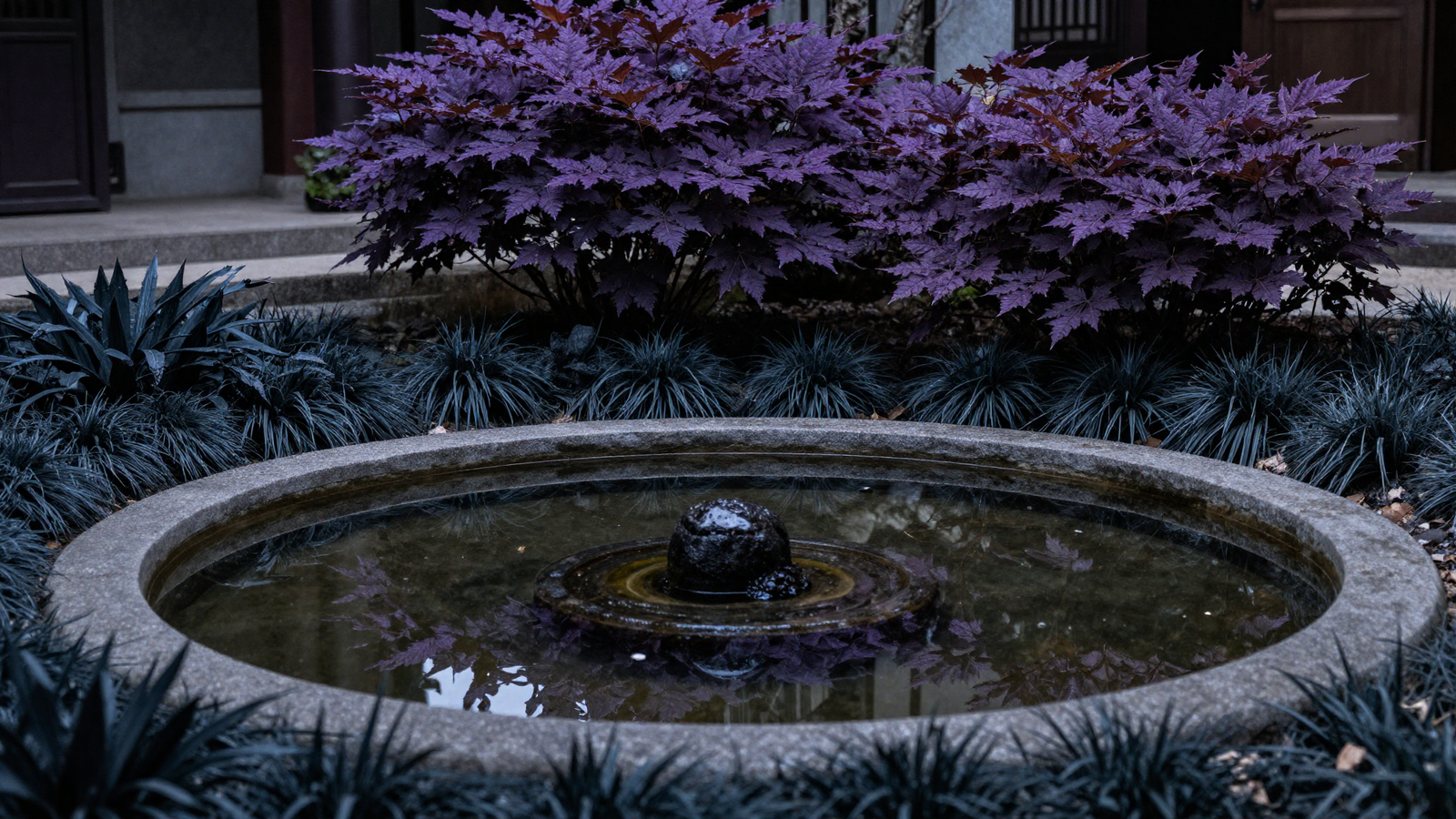
Follow installation and local requirements, and assess child and pet access appropriately. A container-based feature may be more manageable than an excavated pond in a compact yard.
Try this: Plan maintenance access without stepping through planting.
4. Make Seating Around a Garden Feature Usable
A curved bench can relate to a round planting bed while leaving a clear entry. Choose a seat depth and height that suit the intended users and keep the feet on a stable surface.

Use a few separate benches if a continuous ring would make access awkward. Include space for legs and a small movable table.
Try this: Sit in the proposed position and check the view before building.
5. Create a Backyard Landscaping Seating Destination
One chair or a small pair can feel sheltered when planting frames the area without blocking its entrance. Start with the seated view and the shade available when you will use it.
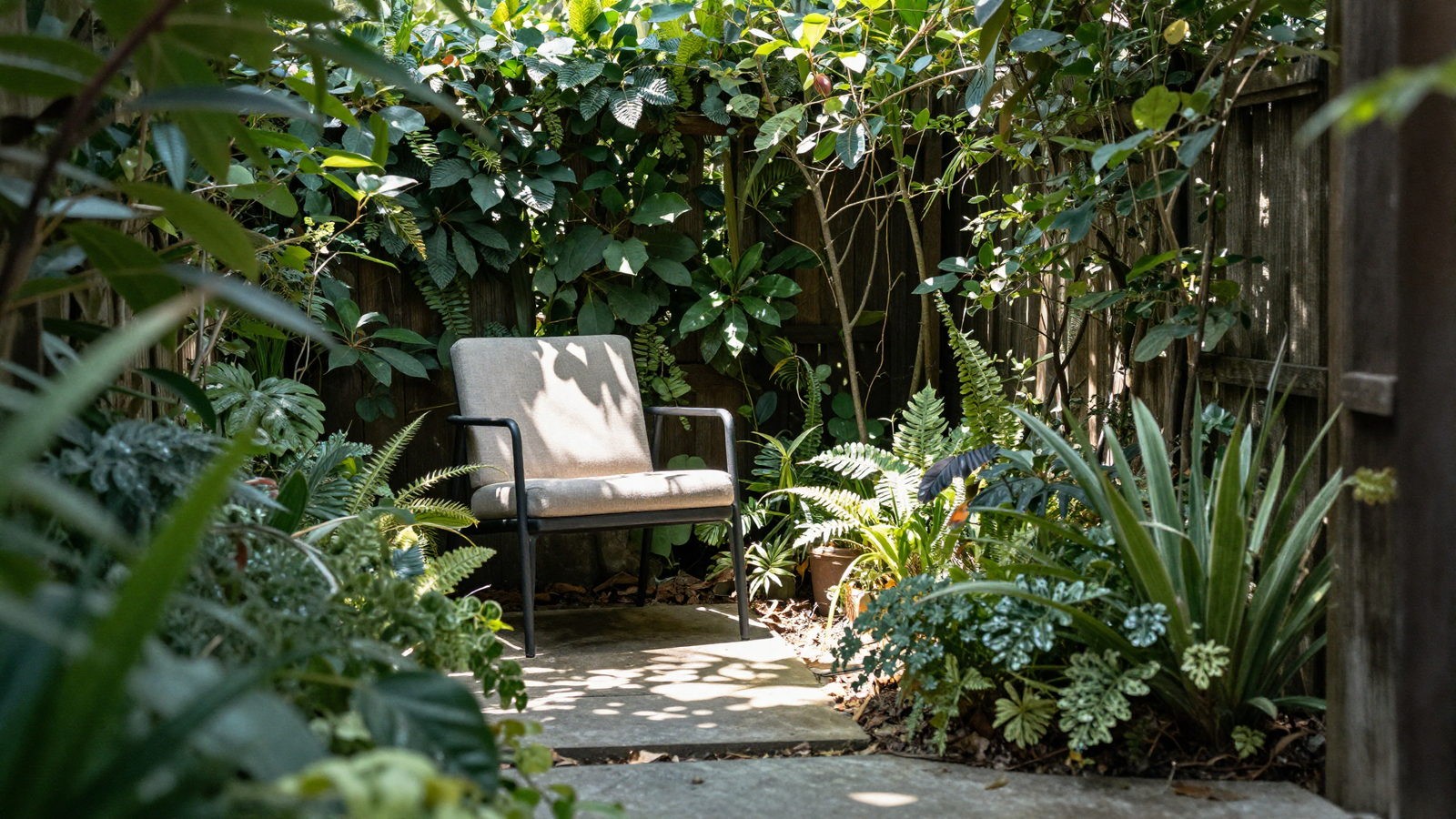
Choose plant sizes for their mature spread and preserve access for pruning. A nook should not require pushing through wet foliage to reach a chair.
Try this: Leave a visible path back to the house.
6. Plan a Fire Feature Around Its Installation Needs
A fire bowl can form a gathering point where the site, product and local rules allow it. Keep seating, structures and planting outside the clearances specified for the actual feature.

Fuel, wind, surface, overhead clearance and operation all matter. An illustration of a gravel circle is not a construction or clearance plan; use an unlit focal feature if fire is unsuitable.
Try this: Check the requirements before designing the surrounding furniture.
7. Set Stepping Pavers on a Stable Route
Broad pavers can create a simple path through low planting. Choose their spacing and finish around the people using the route rather than relying on a dramatic floating appearance.

Each slab needs appropriate support and an even walking surface. Where accessible continuous travel is needed, a suitable continuous path may be the better solution.
Try this: Test the stride and turning space with full-size templates.
8. Layer Backyard Landscaping Borders Around the View
Layered planting can frame a view and partly conceal a later destination. Keep lower growth near the path and allow enough room for mature shrubs farther back.
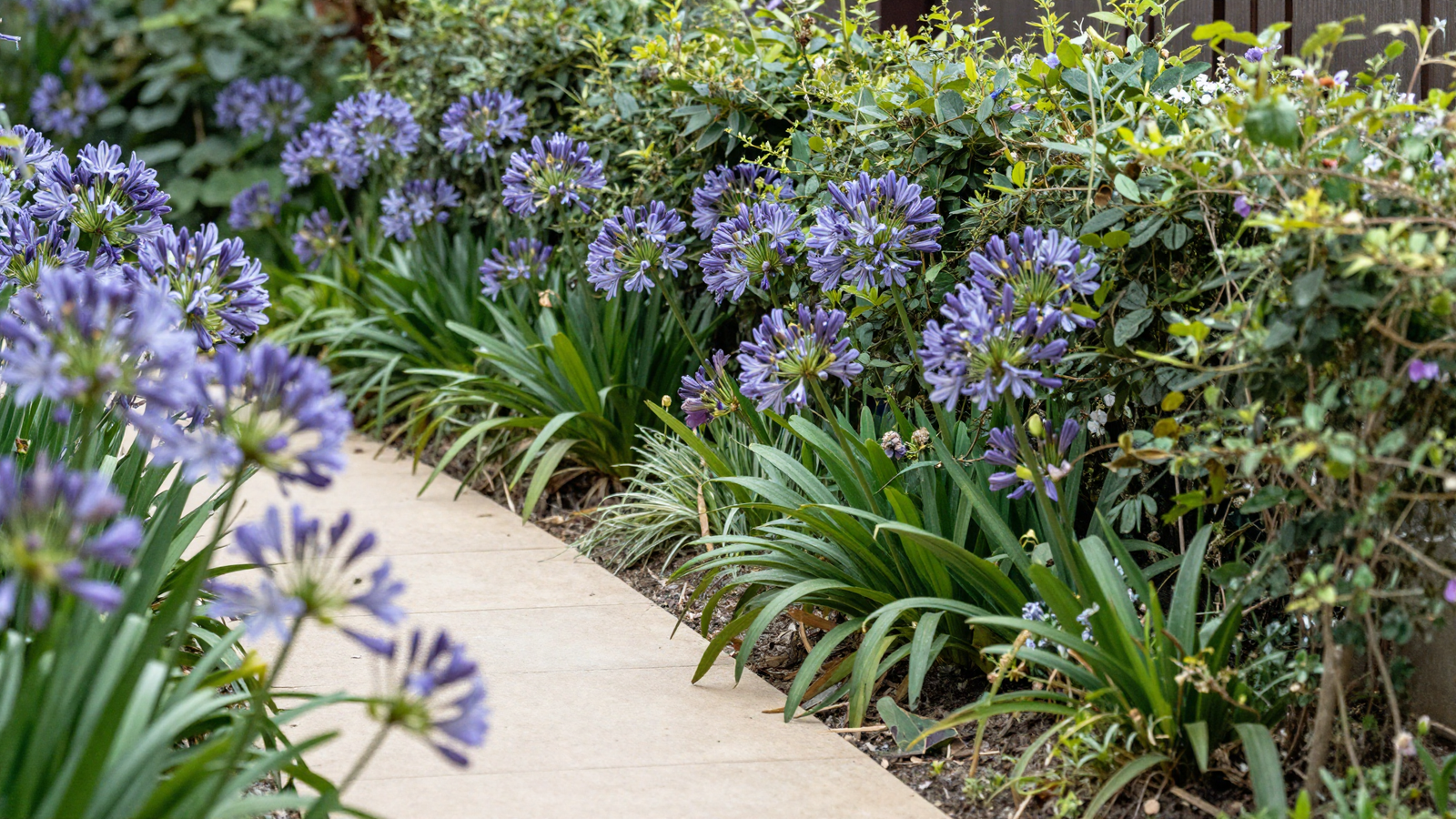
Choose species for local conditions and maintenance. Avoid hiding steps, corners or the main route behind dense growth simply to create a sense of mystery.
Try this: Compare the garden from the doorway and from a seated position.
Establish One Route and One Destination
Choose one useful path and one comfortable destination before adding more focal points. A coherent garden can grow in stages when drainage, access and mature plant size guide the plan.
Related Guides
- 10 Sloped Yard Landscaping Ideas to Plan Around the Site
- 8 Backyard Privacy Ideas for More Comfortable Seating
- 17 Stunning Low-Maintenance Garden Ideas for a Beautiful Thriving Yard
Planting and Water Planning Reference
Match planting to local conditions and group compatible water needs while keeping care access practical. EPA WaterSense: landscaping tips.
Optional digital guide for this topic
If you prefer a structured workbook, explore this related paid guide.