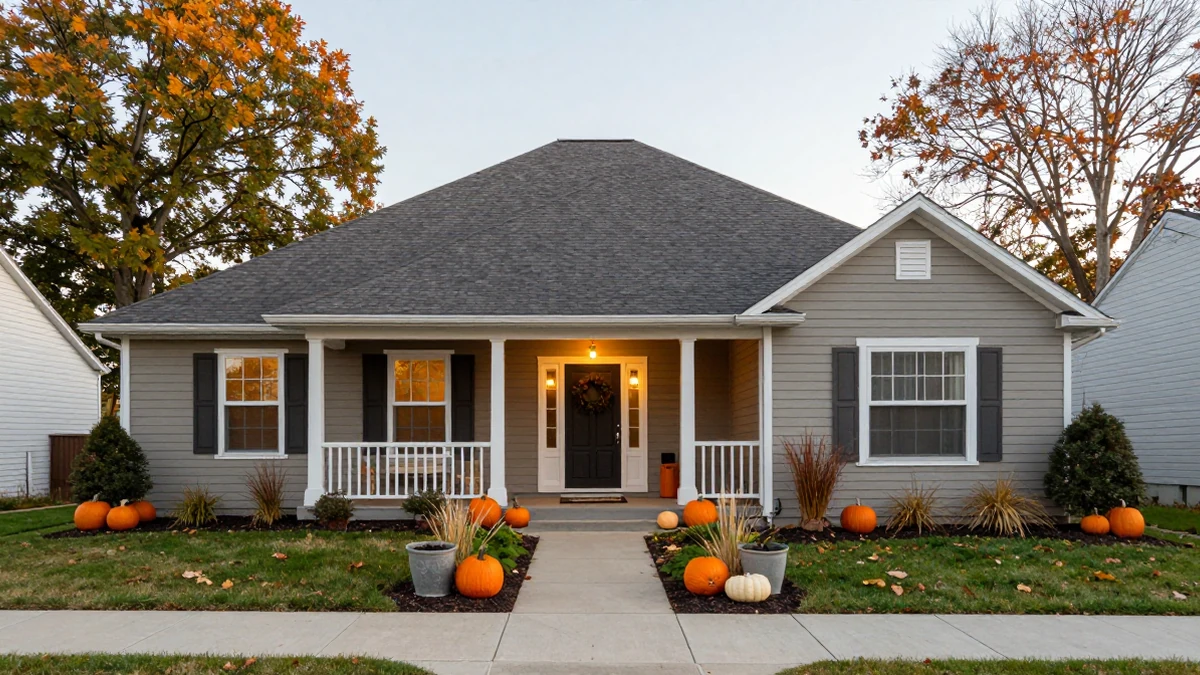
Effective fall yard decor does more than scatter pumpkins across the lawn. It creates a visible route to the entrance, complements the house, and survives the damp, wind, leaf drop, and temperature swings that accompany the season.
These ideas cover porches, paths, planting beds, patios, and compact outdoor spaces. Each one includes a placement decision, material tradeoff, or maintenance consideration so you can build a display that looks intentional rather than crowded. Start by identifying the view people notice first, then repeat a limited mix of colors and materials from that point through the yard.
1. Establish One Strong Entry Display
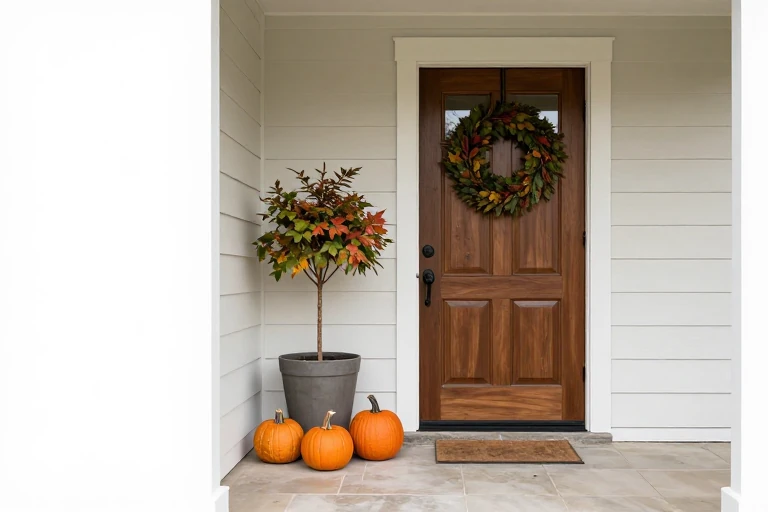
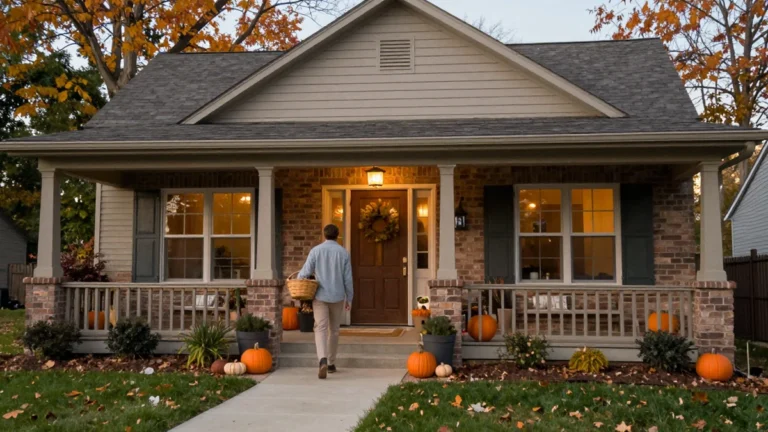
Choose the front door, gate, or beginning of the walkway as your main focal point. Concentrating decor there gives the yard structure before you add smaller accents.
Combine one tall element, one broad element, and a low ground-level cluster. A planter, wreath, and pumpkin grouping provide useful differences in height.
Stand at the curb to check visibility. Move anything that hides steps, door hardware, lighting, or the walking surface.
2. Build a Controlled Pumpkin Cluster
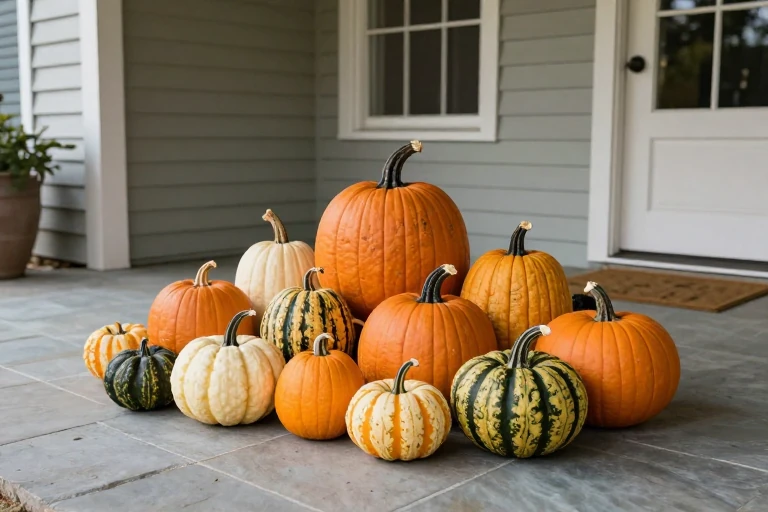
Instead of spacing pumpkins evenly, group them in an irregular triangle. Place the largest near the back and let smaller gourds bridge gaps at the front.
Mixing muted orange, cream, green, and striped varieties adds variation without introducing unrelated accessories. Flat-bottomed pumpkins are generally easier to stabilize on steps.
Keep produce off consistently wet soil with a paver, saucer, or shallow crate. Inspect touching surfaces as moisture and decay develop.
Loving These Ideas? Get the Step-by-Step Guide
Grab the full 5-day eBook and turn these ideas into a finished room.




3. Refresh Existing Planters for Fall
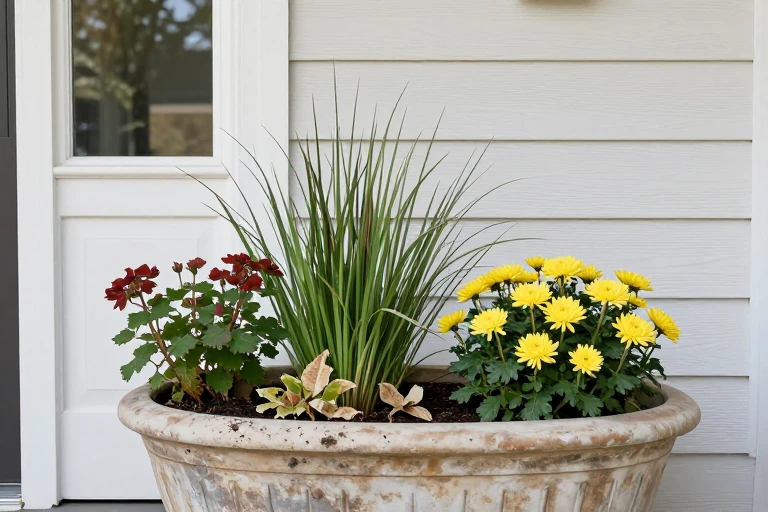
Remove exhausted summer annuals before adding seasonal color. Retain healthy evergreen or perennial structure when appropriate, then fill visible gaps rather than replacing the entire container.
Ornamental grasses supply height, while chrysanthemums, asters, kale, or foliage plants can provide mass and color. Plant suitability and cold tolerance vary by climate.
Confirm that drainage openings remain clear. Decorative cachepots can trap rain, leaving roots wet and making containers unnecessarily heavy.
4. Repeat Colors Already on the House
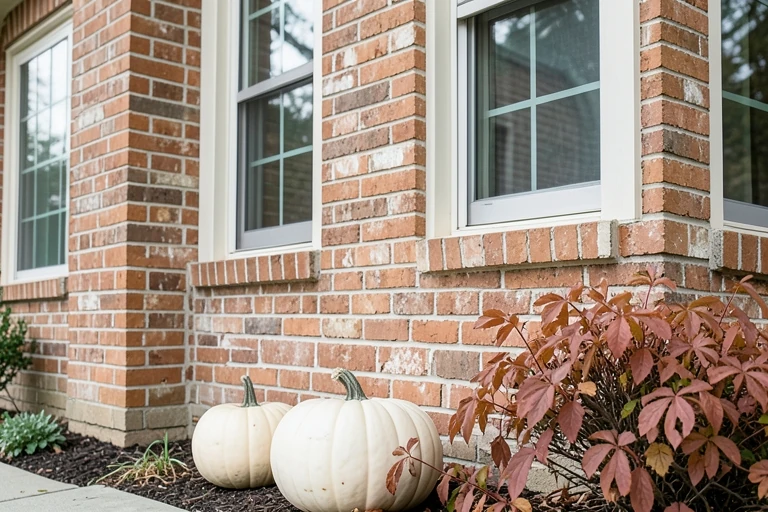
Use siding, brick, trim, and door colors to edit your fall palette. Cream pumpkins can echo pale trim, while rust foliage relates naturally to warm masonry.
A limited palette usually reads as calmer than every traditional harvest color at once. Add contrast where visibility matters, such as a dark door behind a light wreath.
Photograph the facade before shopping. The image makes undertones and empty areas easier to spot than memory does.
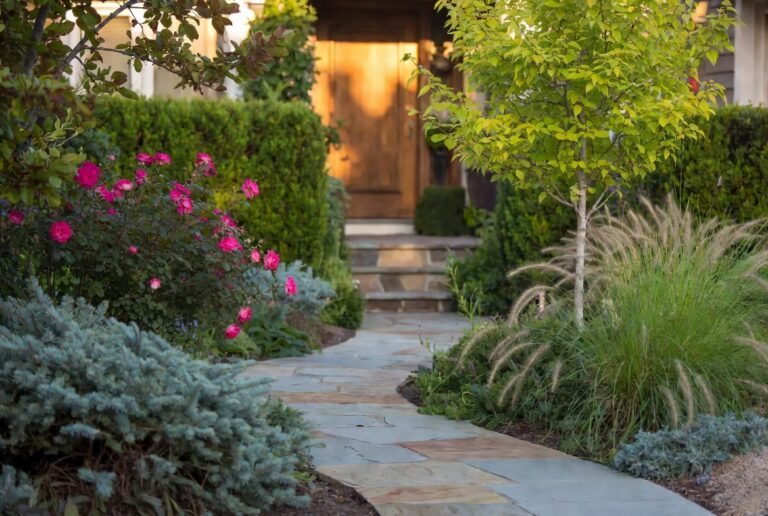
5. Frame the Walkway Without Narrowing It
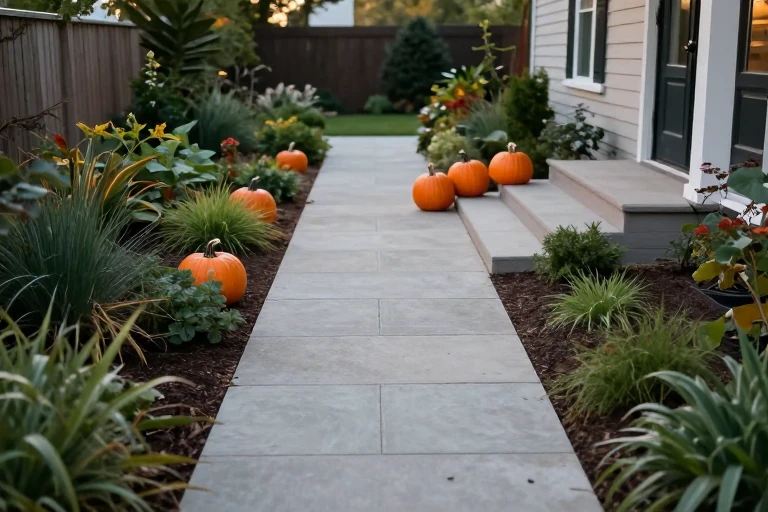
Place decor beside the path rather than on its edges. Pumpkins, lanterns, and pots can become trip hazards when they reduce usable walking space or blend into fallen leaves.
Mark only the beginning, a turn, or the final approach instead of lining every foot. This creates rhythm with fewer objects and leaves room for maintenance.
Walk the route carrying bags after dark. Relocate anything that catches clothing, blocks light, or requires an awkward step.
6. Use Cornstalks as Vertical Accents
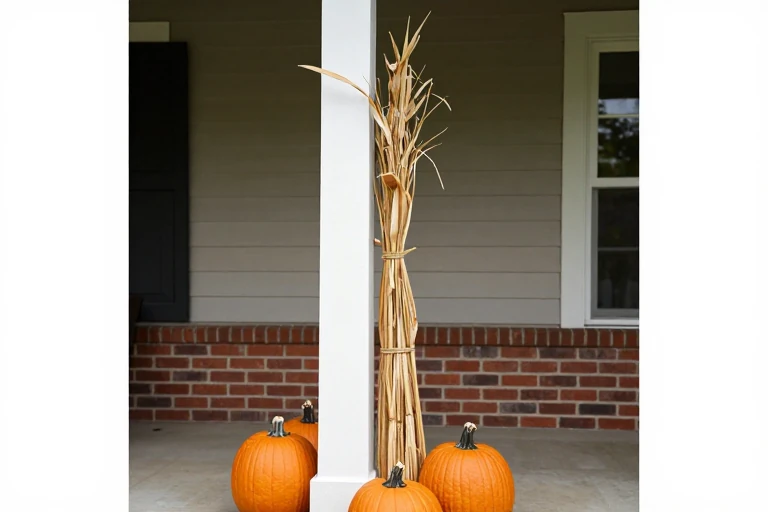
Cornstalk bundles can balance a tall doorway or visually anchor a porch column. Use them selectively; too many brittle bundles can overwhelm a compact entrance.
Secure stalks around a stable internal support rather than relying on loose twine alone. Keep dry plant material away from flames, heaters, grills, and hot fixtures.
After storms, check bindings and collect broken leaves. Remove the bundle once it begins shedding heavily or blocking the view from the door.
7. Turn a Garden Bed Into a Harvest Scene
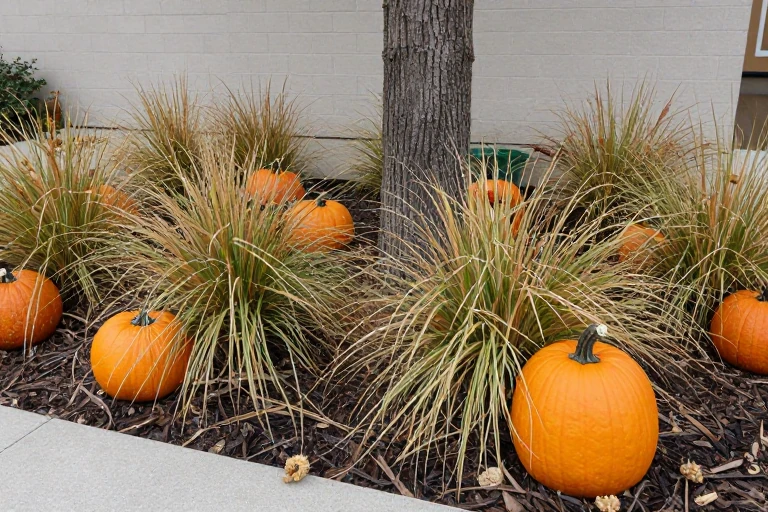
Use an already-visible bed beneath a tree or near the entry rather than creating an isolated display in the lawn. Existing grasses and seed heads provide a natural background.
Nestle pumpkins beside plants without crushing crowns or covering irrigation components. A shallow mulch-free landing spot helps keep each piece stable and visible.
Leave room for leaf removal and seasonal pruning. Decor that must be moved for every chore quickly becomes a maintenance burden.
8. Make a Weather-Aware Wreath
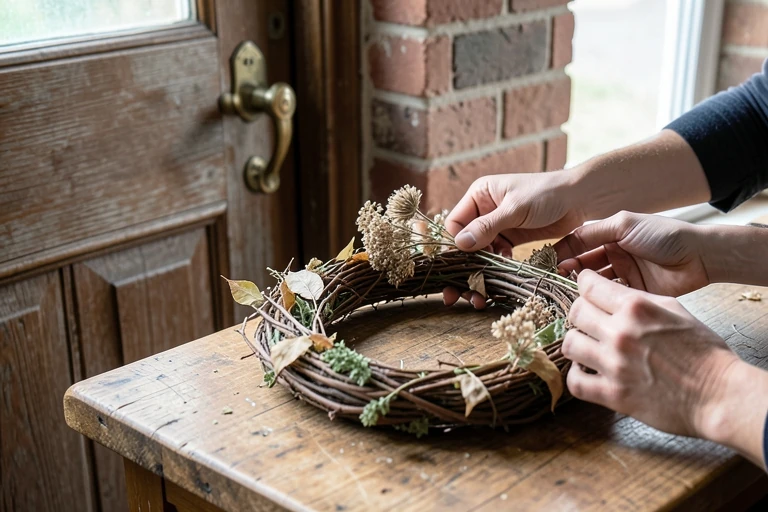
A grapevine base suits dried leaves, seed heads, herbs, and preserved botanical materials. Keep the composition shallow enough that it does not interfere with a storm door.
Natural wreaths weather attractively but may shed or fade. Faux stems last longer and can be reused, although overly glossy finishes may look conspicuous beside natural plantings.
Attach the wreath securely and inspect it after wind. Bring delicate materials inside during severe weather instead of repeatedly repairing them.
9. Give Window Boxes Autumn Structure
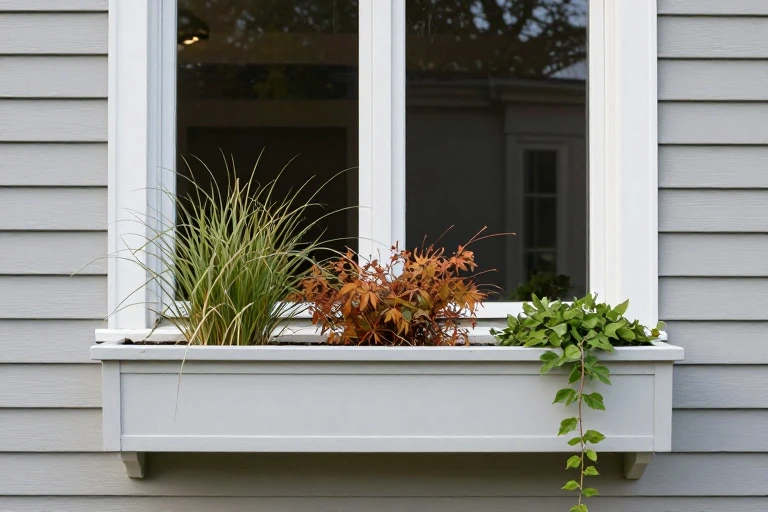
Replace sparse summer growth with a simple thriller, filler, and trailing arrangement. Compact grass or upright foliage creates height without obscuring the window.
Use trailing ivy or durable cut foliage sparingly so stems do not whip against siding in wind. Confirm that brackets and boxes remain sound before adding wet soil or heavy gourds.
Water according to plant and weather conditions, not the summer schedule. Cooler containers may dry more slowly.
10. Decorate a Mailbox Without Blocking Access
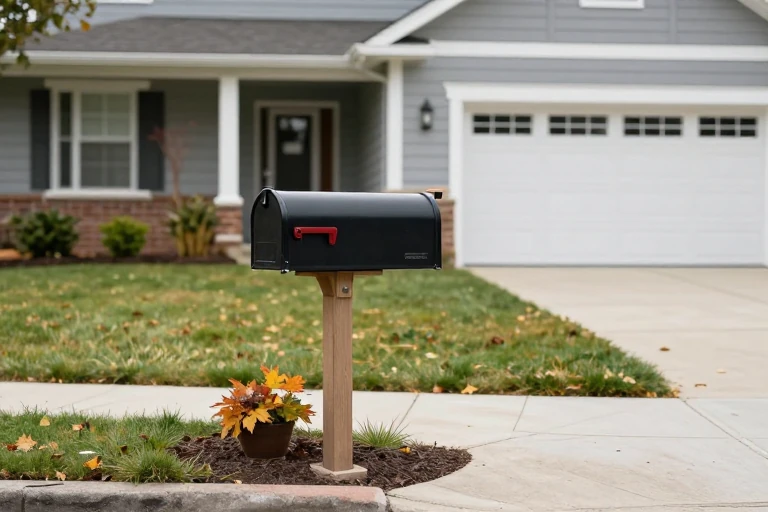
Treat a freestanding mailbox as a small landscape feature, not a platform for a bulky arrangement. Keep the door, flag, approach, and surrounding sightlines fully usable.
A low planter or restrained planting at the base is safer and easier to maintain than loose objects beside the road. Avoid materials that shed into traffic.
Before adding anything, follow applicable postal, property, road-clearance, and community rules. Remove decor if it loosens, leans, or interferes with delivery.
11. Style Steps With an Open Route
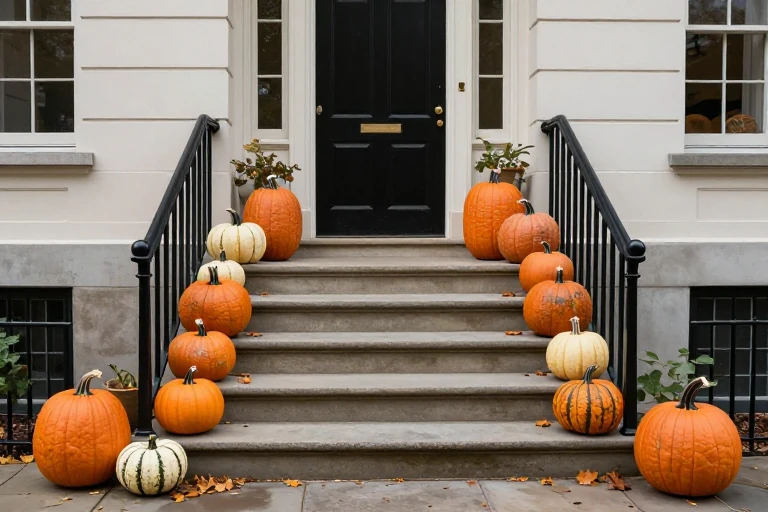
Keep the center or handrail side of every step open. Decor belongs on generous outer corners only when the remaining tread is comfortably usable.
Repeat a planter-pumpkin combination from top to bottom rather than using unrelated objects. Vary the scale slightly so the arrangement follows the stair slope.
Test the route in wet conditions and at night. Fallen leaves can conceal small gourds, cords, and uneven decorative mats, so clear them promptly.
12. Choose Lanterns for Safe Ambience
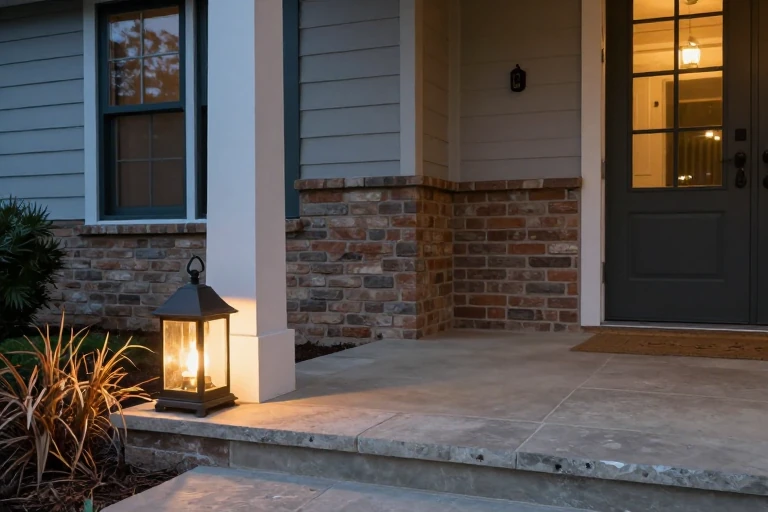
Use enclosed, outdoor-suitable battery lights when you want glow near dried foliage, children, or pets. Real flames introduce avoidable ignition and supervision concerns.
Place lanterns on firm, level surfaces where they cannot be kicked or tipped. Varying lantern heights can create depth, but every unit should remain stable.
Check housings after rain and follow the manufacturer’s outdoor-use instructions. Decorative lighting should supplement functional entry lighting, never replace it.
13. Dress a Bench as a Functional Pause
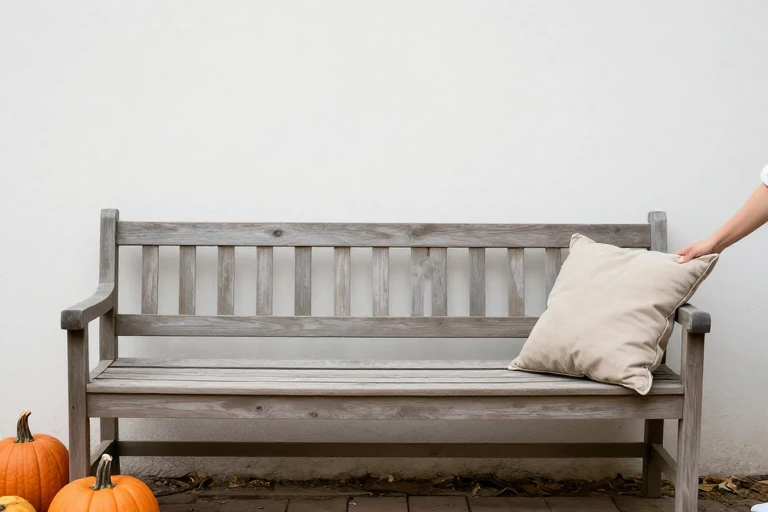
Keep most of the seat available if the bench is actually used. One outdoor pillow and a nearby pumpkin cluster can signal the season without converting furniture into a shelf.
Select quick-drying or easily stored textiles. Indoor throws can hold moisture, collect debris, and require constant rescue from changing weather.
Check the ground beneath freestanding benches before decorating. Wobbling furniture, loose hardware, or decayed wood needs attention before added objects disguise the problem.
14. Add Texture With Baskets and Crates
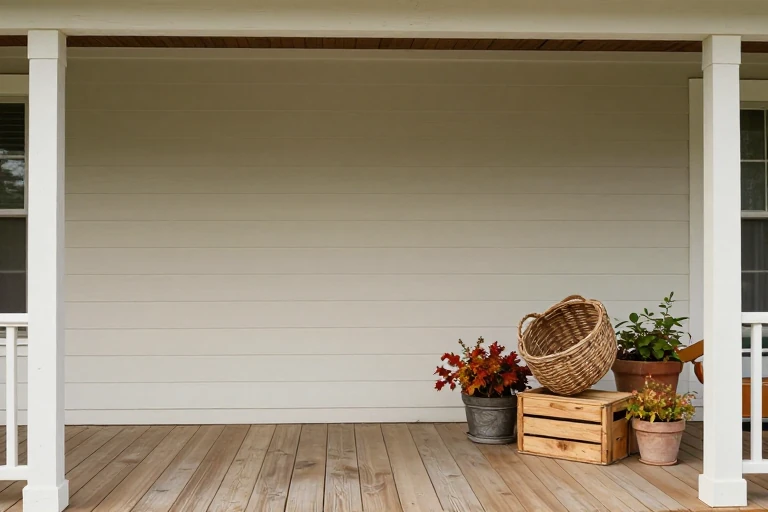
Baskets soften hard porch surfaces, while wooden crates add useful height. Use them as frames for weather-tolerant pots or sealed decorative objects rather than containers for standing water.
Untreated natural materials develop stains and decay outdoors. That patina may suit a rustic display, but protected or synthetic versions generally require less seasonal maintenance.
Elevate absorbent materials slightly and inspect hidden surfaces. Trapped moisture can mark decking and create soft, unstable bases.
15. Use Hay or Straw With Restraint
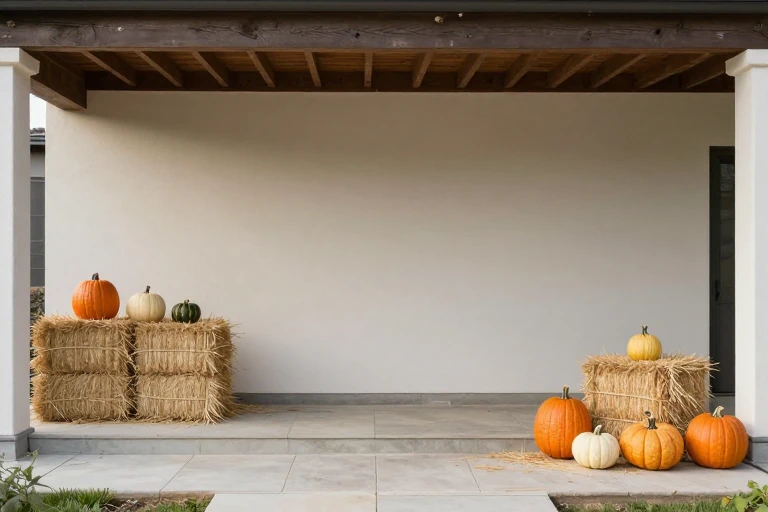
A single compact bale can create height beneath a covered display, but loose plant material scatters easily and may hold moisture. It also requires more cleanup than a crate.
Keep bales away from ignition sources, mechanical equipment, drainage routes, and regularly used steps. Do not place them where they invite climbing near a drop.
Inspect the underside for dampness and deterioration. If weather exposure is persistent, use a reusable riser with a similar proportion instead.
16. Create a Subtle Display Under a Tree
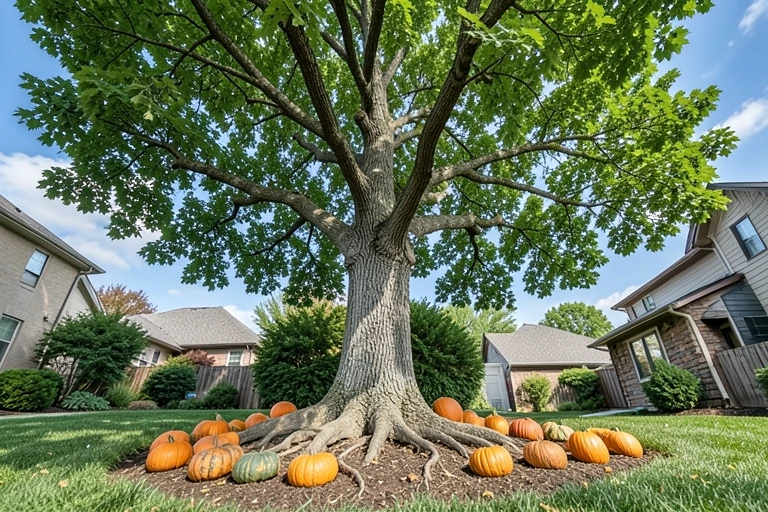
Use the trunk as a visual anchor, but keep decor off exposed roots and away from the root flare. A loose crescent of pumpkins can follow the bed edge.
Avoid driving stakes blindly into the ground, where irrigation, utilities, or roots may be present. Site conditions and local requirements govern any digging or installation.
Choose pieces large enough to remain visible after leaves fall. Clear debris periodically so hidden produce does not deteriorate unnoticed.
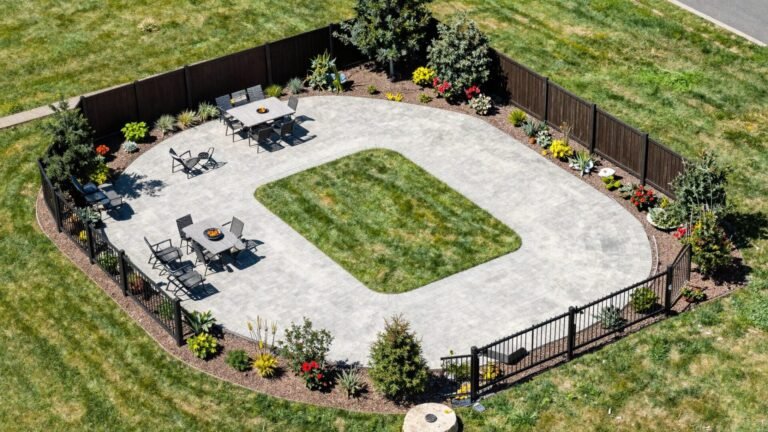
17. Give the Patio a Harvest Centerpiece
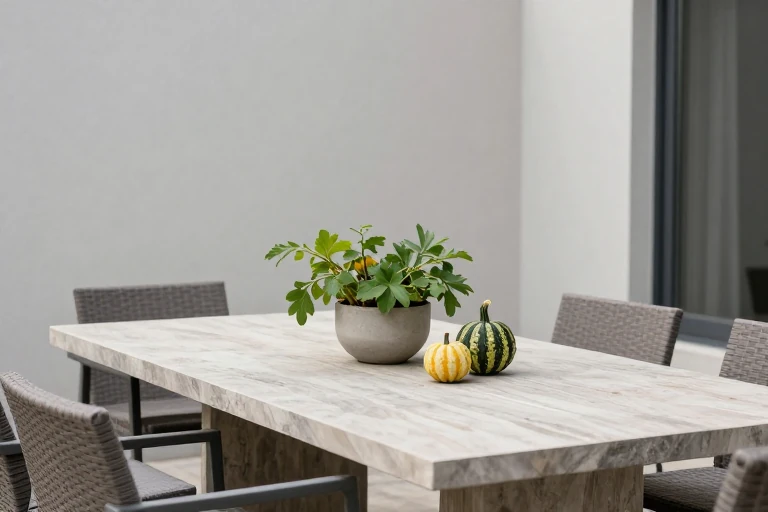
Center the seasonal treatment on the table or hearth area rather than spreading accessories across every surface. A low container preserves conversation and views across the patio.
Combine clipped foliage, small gourds, and a weather-resistant vessel. Cut materials are temporary; reusable stems reduce replacement but require storage after the season.
Move lightweight pieces before wind or rain. Keep tabletops clear enough for meals, drinks, and hot serving dishes.
18. Decorate Fences With Repetition
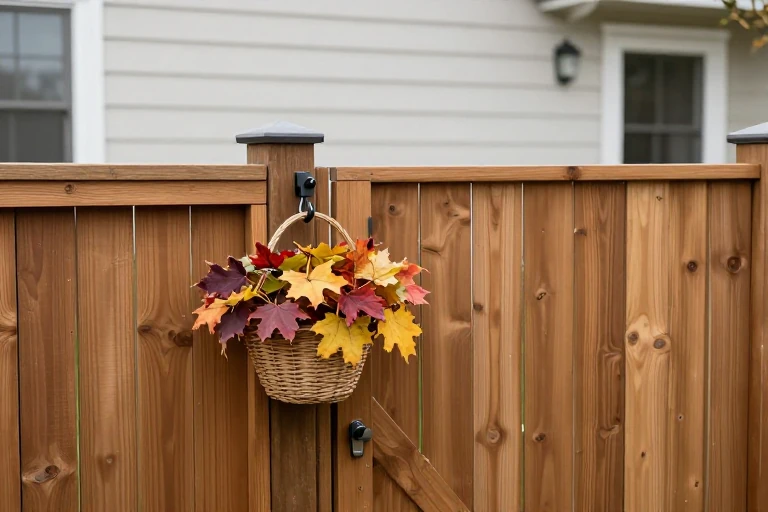
Select one or two fence bays that are visible from the patio or street. Repeating a restrained wreath, basket, or foliage bundle creates order without covering the entire boundary.
Use attachments suited to the fence material and weight. Do not puncture shared, rented, historic, or finished surfaces without permission and an appropriate method.
Check clearances around gates and latches. Wind-driven decorations can scratch finishes, snag clothing, or prevent a gate from closing securely.
19. Make Small Yards Feel Intentional
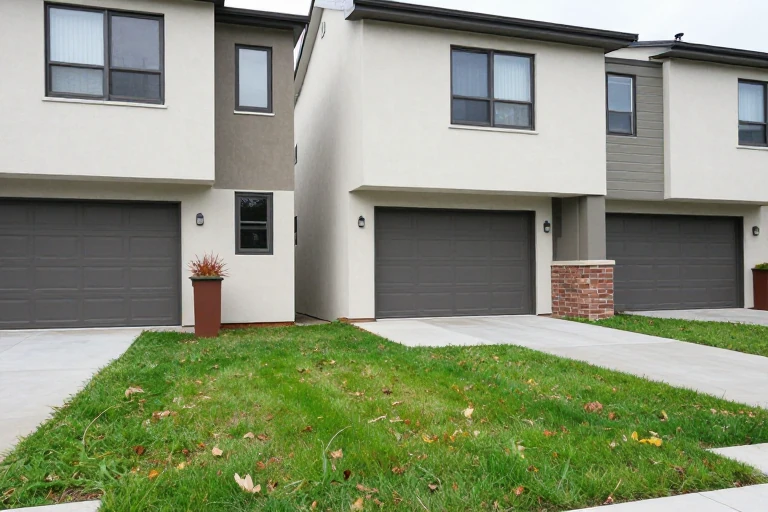
In a compact yard, decorate the strongest sightline instead of every boundary. A coordinated doorstep and one planted corner can feel more composed than numerous miniature displays.
Favor vertical planters, wall-safe wreaths, and narrow containers that preserve circulation. Storage is the tradeoff: collapsible, plantable, or consumable materials are easier to manage after fall.
View the arrangement from indoors too. Remove items that block light, doors, or the limited green space.
20. Keep Play and Pet Areas Clear
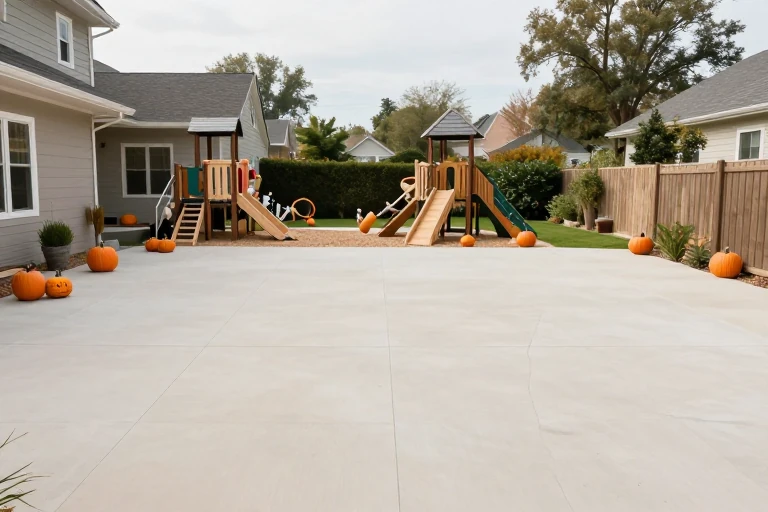
Do not place decorative stakes, cords, hard objects, or unstable displays in active play routes or equipment use zones. Children need predictable, unobstructed space around outdoor play equipment.
For pets, avoid loose pieces that resemble toys or food. Plant and produce suitability depends on the animal, so confirm questionable materials with a veterinarian.
Anchor decor outside activity zones and inspect it after play or wind. Relocate any item that has shifted into a path.
21. Plan for Wind, Rain, and Leaf Drop
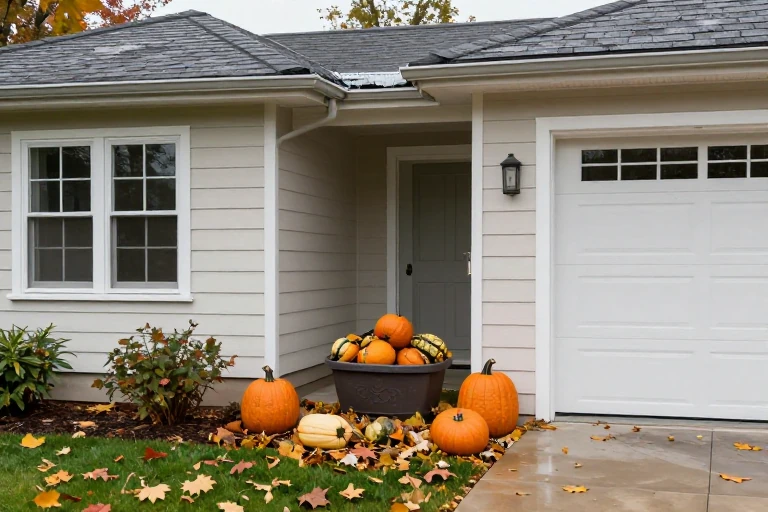
Before decorating, identify runoff paths, roof drip lines, windy corners, and places where leaves collect. Fragile pieces perform better in sheltered locations.
Use broad, weighted bases rather than hidden sharp stakes wherever possible. Never secure decor to utilities, vents, railings, or building components that are not designed for added loads.
After severe weather, inspect the display before simply resetting it. Discard cracked containers, spoiled produce, and damaged electrical items.
22. Set a Simple Maintenance Routine
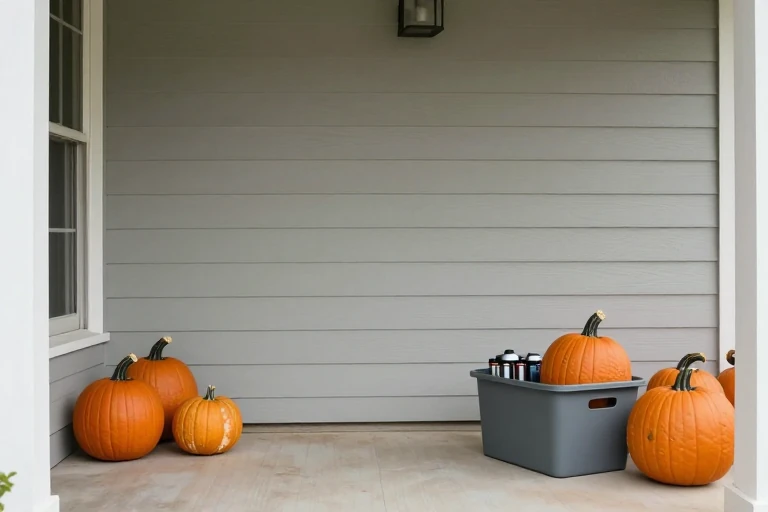
Group tasks by frequency: clear walking surfaces often, check living plants as conditions require, and inspect attachments after wind. This prevents a polished display from becoming a chore.
Rotate pumpkins so hidden soft spots become visible. Remove deteriorating natural materials promptly rather than allowing one piece to affect nearby items.
Keep a small storage bin near the entry for reusable lights and delicate accents during storms. Dry everything before long-term storage to limit staining and damage.
23. Common Fall Yard Decor Mistakes
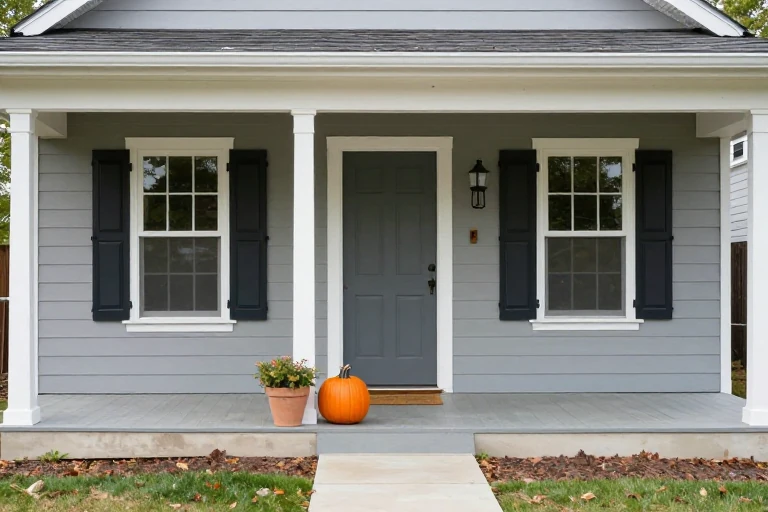
The most frequent design mistake is equal emphasis everywhere. Choose a dominant display, then use quieter repetitions so the eye knows where to land.
Practical errors include blocked paths, unstable risers, trapped water, unsecured dry foliage, and products used outdoors without suitable instructions. Correct these before adding another accessory.
Finally, remove decor in stages as it deteriorates. A smaller, maintained arrangement looks more intentional than a large display left beyond its useful condition.
Effort & Cost Snapshot
| Topic | Effort | Cost Note |
|---|---|---|
| 1. Establish One Strong Entry Display | Medium | Varies by materials, scope, and local labor |
| 2. Build a Controlled Pumpkin Cluster | Low | Often achievable with existing furnishings or simple updates |
| 3. Refresh Existing Planters for Fall | Low | Often achievable with existing furnishings or simple updates |
| 4. Repeat Colors Already on the House | Low | Often achievable with existing furnishings or simple updates |
| 5. Frame the Walkway Without Narrowing It | Low | Often achievable with existing furnishings or simple updates |
| 6. Use Cornstalks as Vertical Accents | Medium | Varies by materials, scope, and local labor |
| 7. Turn a Garden Bed Into a Harvest Scene | Low | Often achievable with existing furnishings or simple updates |
| 8. Make a Weather-Aware Wreath | Low | Often achievable with existing furnishings or simple updates |
| 9. Give Window Boxes Autumn Structure | Low | Often achievable with existing furnishings or simple updates |
| 10. Decorate a Mailbox Without Blocking Access | Low | Often achievable with existing furnishings or simple updates |
| 11. Style Steps With an Open Route | Low | Often achievable with existing furnishings or simple updates |
| 12. Choose Lanterns for Safe Ambience | Medium | Varies by materials, scope, and local labor |
| 13. Dress a Bench as a Functional Pause | Medium | Varies by materials, scope, and local labor |
| 14. Add Texture With Baskets and Crates | Low | Often achievable with existing furnishings or simple updates |
| 15. Use Hay or Straw With Restraint | Low | Often achievable with existing furnishings or simple updates |
| 16. Create a Subtle Display Under a Tree | Medium | Varies by materials, scope, and local labor |
| 17. Give the Patio a Harvest Centerpiece | Low | Often achievable with existing furnishings or simple updates |
| 18. Decorate Fences With Repetition | Low | Often achievable with existing furnishings or simple updates |
| 19. Make Small Yards Feel Intentional | Low | Often achievable with existing furnishings or simple updates |
| 20. Keep Play and Pet Areas Clear | Low | Often achievable with existing furnishings or simple updates |
| 21. Plan for Wind, Rain, and Leaf Drop | High | Get a project-specific professional quote |
| 22. Set a Simple Maintenance Routine | Low | Often achievable with existing furnishings or simple updates |
| 23. Common Fall Yard Decor Mistakes | Low | Often achievable with existing furnishings or simple updates |
Frequently Asked Questions
When should I put out fall yard decor?
Start when local weather begins supporting fall plants and natural materials, or when you are ready to maintain them. A foliage-based display can precede pumpkins, which may deteriorate faster in warm, wet conditions. Add pieces gradually rather than installing everything on one date.
How can I keep pumpkins from rotting quickly?
Choose firm, undamaged pumpkins and set them on dry, stable surfaces away from persistent moisture. Check undersides and contact points regularly, especially after rain. Remove any pumpkin that becomes soft or leaks so it does not soil nearby materials.
What fall decor works best for renters?
Use freestanding planters, weighted pumpkin clusters, over-door hangers compatible with the door, and removable attachments approved for the surface. Avoid drilling, staining materials, or blocking shared routes. Confirm lease and community restrictions before decorating exterior areas.
How do I make outdoor fall decor look cohesive?
Limit the palette and repeat a few materials, such as cream pumpkins, rust foliage, and dark planters. Establish one prominent entry display, then echo it with smaller accents. Consistent spacing and clear walking surfaces matter more than owning matching decorations.
The strongest fall yard decor begins with editing. Choose one focal area, repeat a limited palette, and preserve the routes and outdoor features your household uses every day. Natural materials offer rich texture but need monitoring; reusable pieces last longer but require suitable storage.
Once the main arrangement is in place, review it from the curb, doorway, and after dark. Correct blocked sightlines, unstable objects, and exposed materials before adding more. A modest display that remains dry, secure, and maintained will usually feel more welcoming than an elaborate arrangement competing with the yard.
Sources & Further Reading
- FALL: Landscape Decor
- Yard Work Safety: Autumn Safety Tips for Outdoor Chores
- Outdoor Home Playground Safety Handbook
- Landscape and Horticultural Services – Standards …
Continue Your Home Transformation
Explore the full collection of step-by-step eBooks and get the guide that fits the room you're working on.