A robe hook needs room for the hanging garment, not just its small metal fitting. The robe may be wider than the hook, longer than the gap beside a cabinet and heavier than another item stored there before. Start with the actual robe and the way the bathroom is used, then choose the finish and position.
Use hardware intended for the surface, setting and load, and follow its exact installation instructions. A decorative hook is not a support handle or grab bar. The concept photographs illustrate positions and styles; they do not establish load capacity, wall construction or installation suitability.
Contents
- 1. Place one hook near the usual changing position
- 2. Give a long robe its own clear drop
- 3. Use two separate hooks for two regular users
- 4. Choose a single row for a clear shared arrangement
- 5. Check an over-door model with the door closed
- 6. Keep a behind-door robe outside the swing conflict
- 7. Use a small hook in a narrow wall strip
- 8. Repeat a simple metal finish
- 9. Use contrast to make an empty hook easy to see
- 10. Choose a broad smooth form around the intended hanger loop
- 11. Keep hooks separate from the towel-drying area
- 12. Choose bathroom-rated adhesive hardware only where approved
- 13. Use mechanical hardware when the chosen system calls for it
- 14. Give a guest robe a defined temporary position
- 15. Keep robe hooks clear of mirror-cabinet doors
- 16. Check the hook from the normal approach
- 17. Choose a compact double hook only when both loads fit
- 18. Keep a robe away from the basin's working space
- 19. Use a quiet background for textured robes
- 20. Keep occasional robes in suitable wardrobe storage
- 21. Save the exact product instructions
- 22. Finish with the robe hanging during the door test
Check surface, load and movement together
Manufacturer guidance can be quite specific. Command's bathroom instructions distinguish approved surfaces and require particular preparation and waiting steps; they exclude surfaces such as wallpaper and textured or rough walls for those products. Do not transfer one hook's instructions to another. Record the robe's hanging length, complete width, intended attachment point and comfortable reach before choosing the mounting position.
Compare the storage or placement options
- One daily robe: A clear appropriate hook near the normal changing route.
- Two bulky robes: Compare separate fittings with the full garments hanging, not the hook width alone.
- Removable adhesive product: Check exact approved surfaces, preparation, waiting and loading requirements.
- Behind a door: Test the complete robe and the door's full ordinary movement.
1. Place one hook near the usual changing position
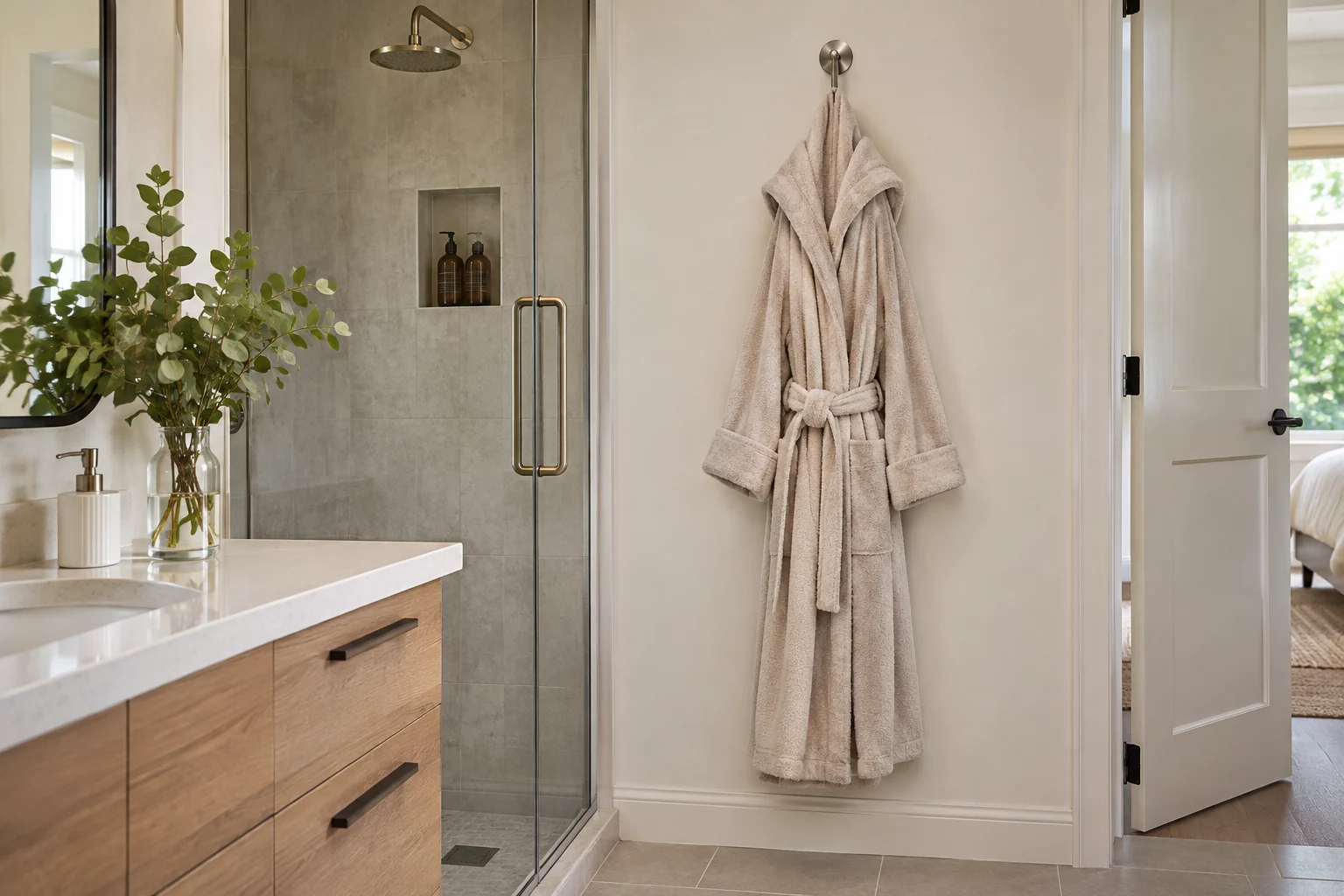
A hook is useful when it serves the movement that happens every day. Choose an appropriate wall position near where the robe is removed or put on, without blocking a cabinet or doorway. Check the garment's full hanging outline. The nearest empty wall is not necessarily the most practical if the robe ends up across the room's main route.
2. Give a long robe its own clear drop
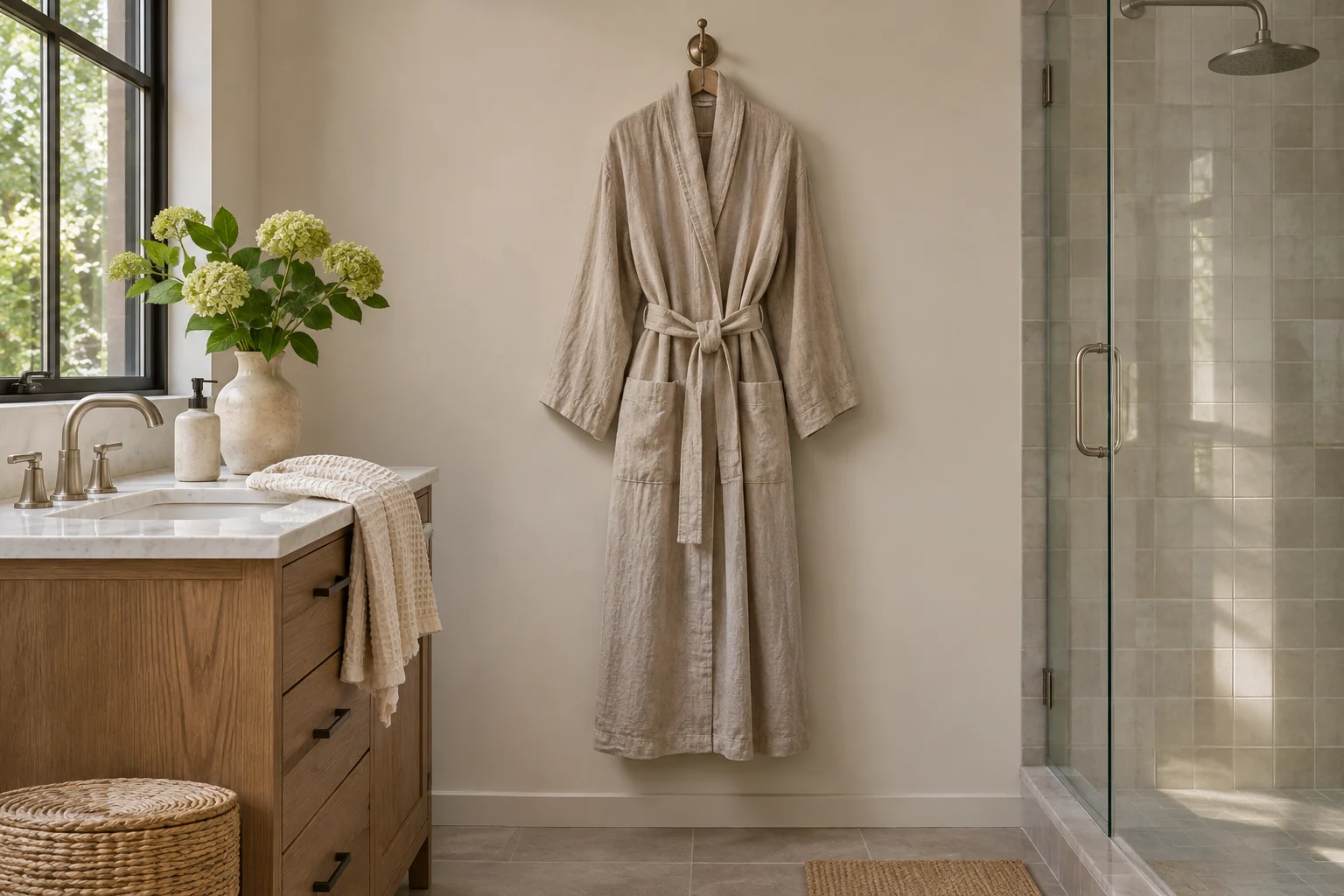
Hang the actual robe temporarily from a suitable test support to understand its length before choosing a final position. Keep the hem clear of the intended surrounding surfaces and floor according to the room and garment needs. Do not choose height from an online photograph alone. Reach, approved mounting and the full robe all need to work together.
3. Use two separate hooks for two regular users
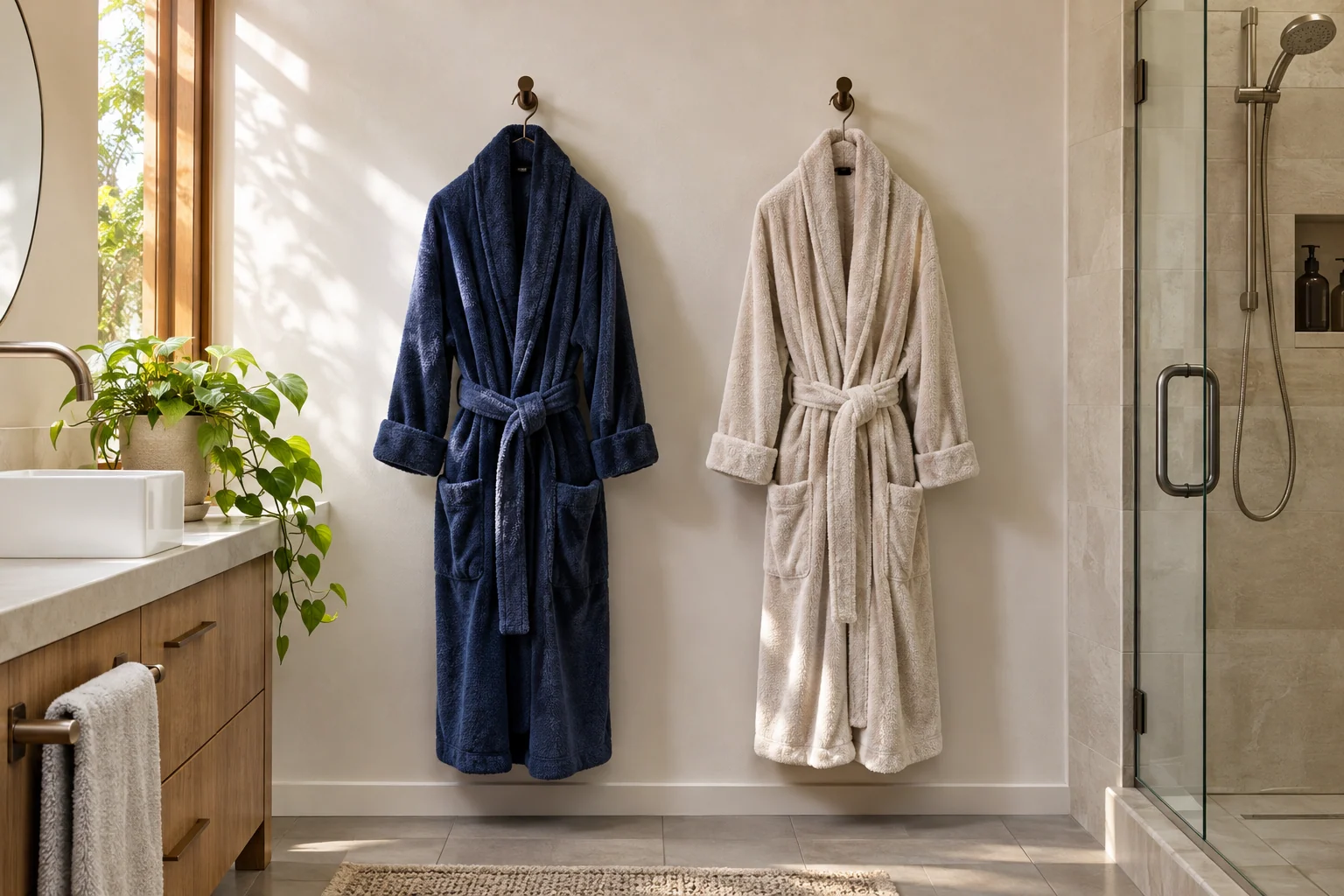
Two hooks can make a shared bathroom easier to reset when each robe has enough independent space. Measure the garments' actual width and thickness rather than spacing the hardware by appearance alone. Keep neighboring sleeves from tangling with the other hook. A pair can look balanced without being placed so closely that every return disturbs both robes.
4. Choose a single row for a clear shared arrangement
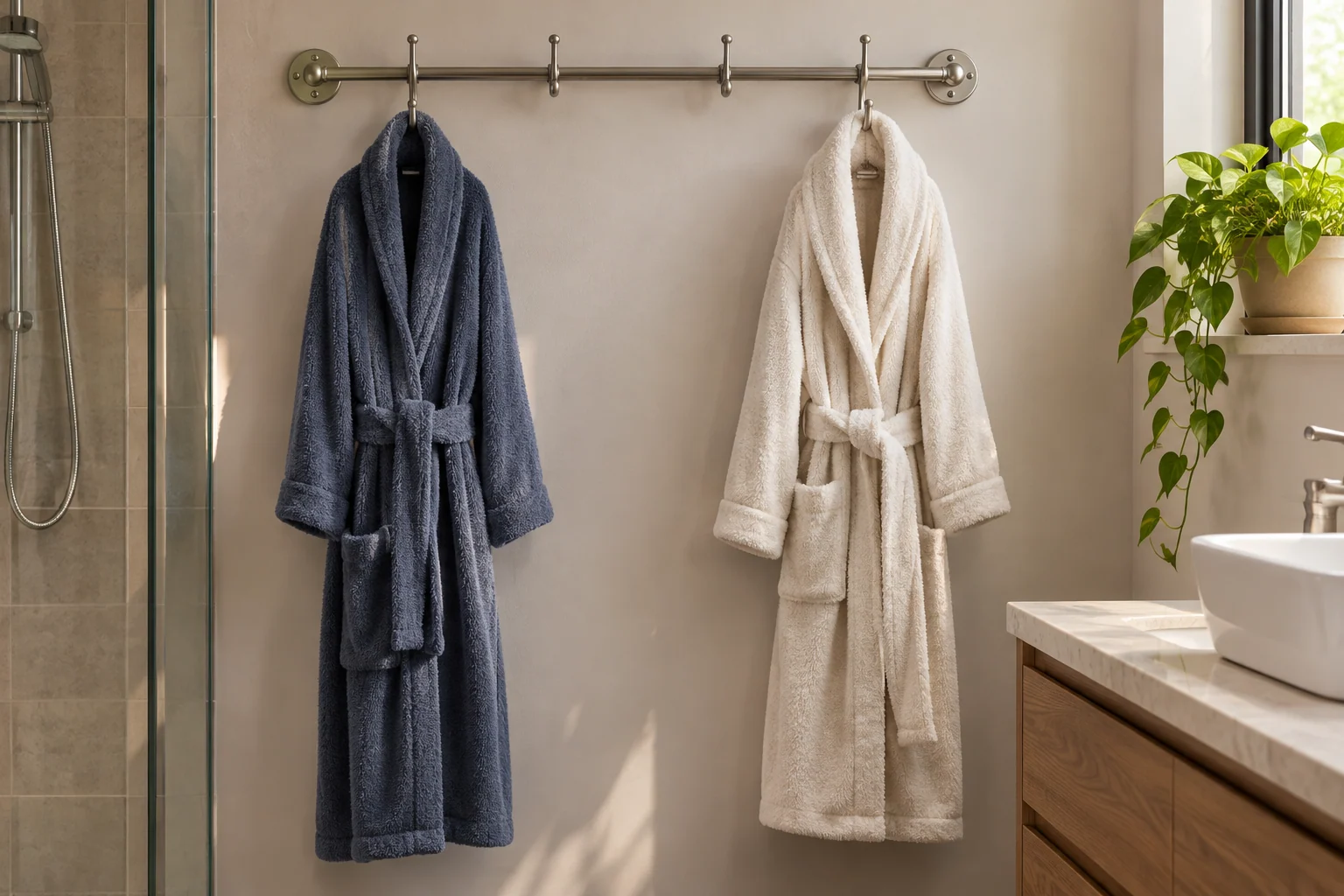
A short purpose-designed hook rail can give several suitable garments a defined place. Check the actual product's mounting, loading and spacing guidance. Keep the number around what the rail and robes can accommodate, not the number of visible pegs. A smaller working group may be more useful than filling every position with bulky fabric.
5. Check an over-door model with the door closed
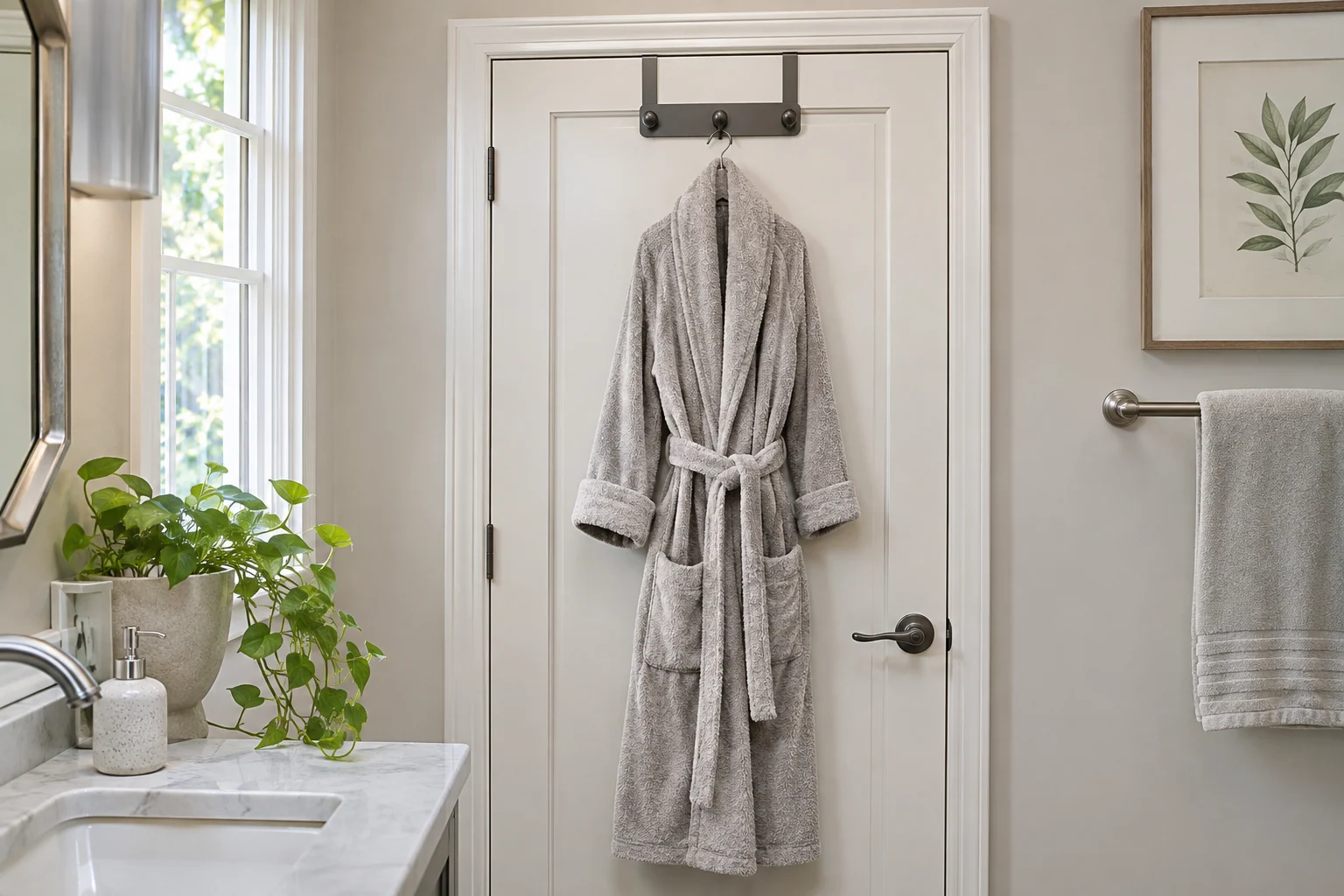
An over-door hook can suit some doors when the product is designed for their thickness and clearances. Check normal opening and closing with the complete intended load. Keep it from interfering with the frame, hinges or nearby fittings. Do not assume a slim-looking bracket works with every door simply because it fits over the top while open.
6. Keep a behind-door robe outside the swing conflict
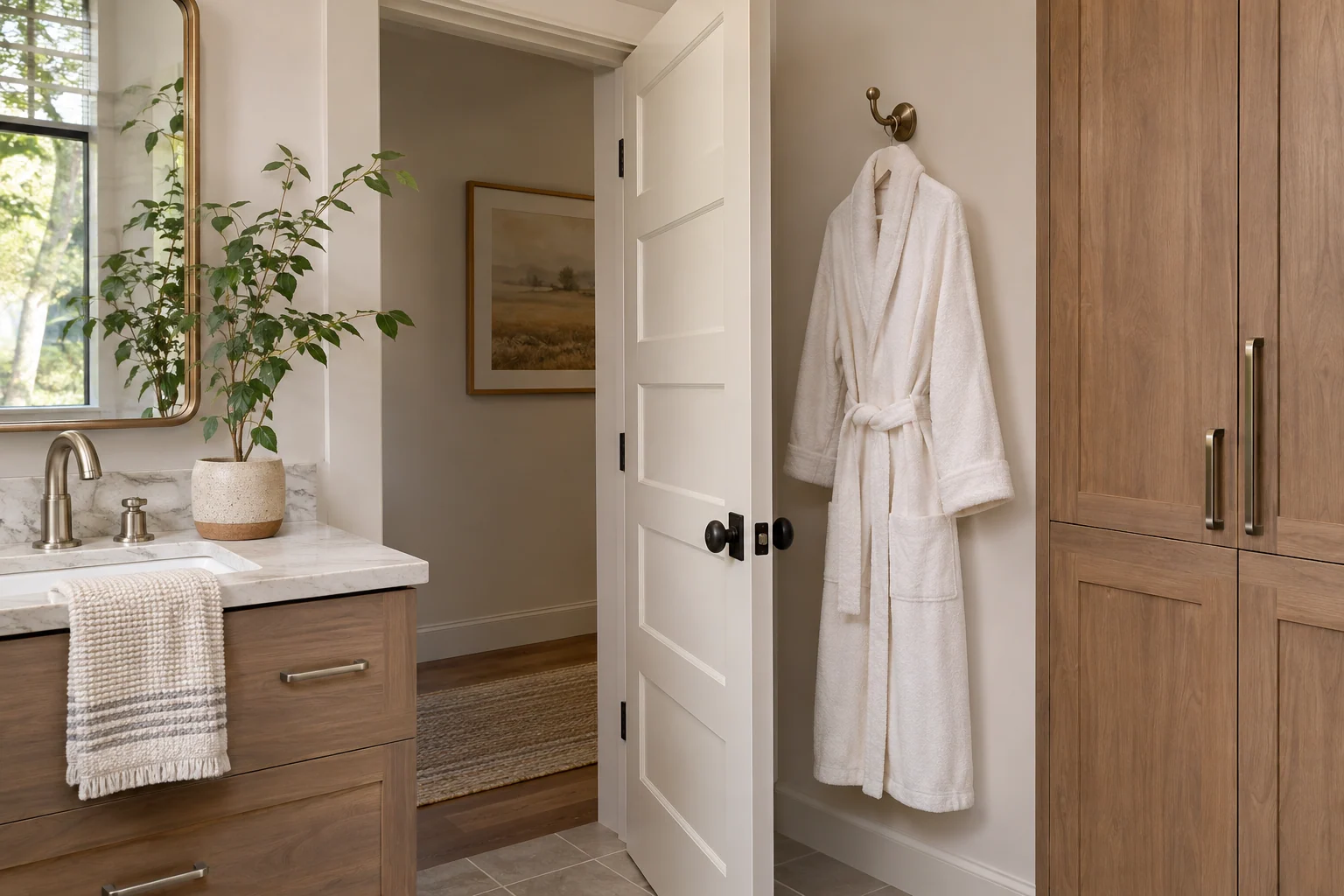
The space behind a door may seem unused until the door opens fully. Check the robe as a bulky object, including its sleeves and hem, against the wall and neighboring furniture. Keep normal door movement independent. Choose another position if the garment is repeatedly squeezed behind the door or catches a handle during an ordinary entrance.
7. Use a small hook in a narrow wall strip
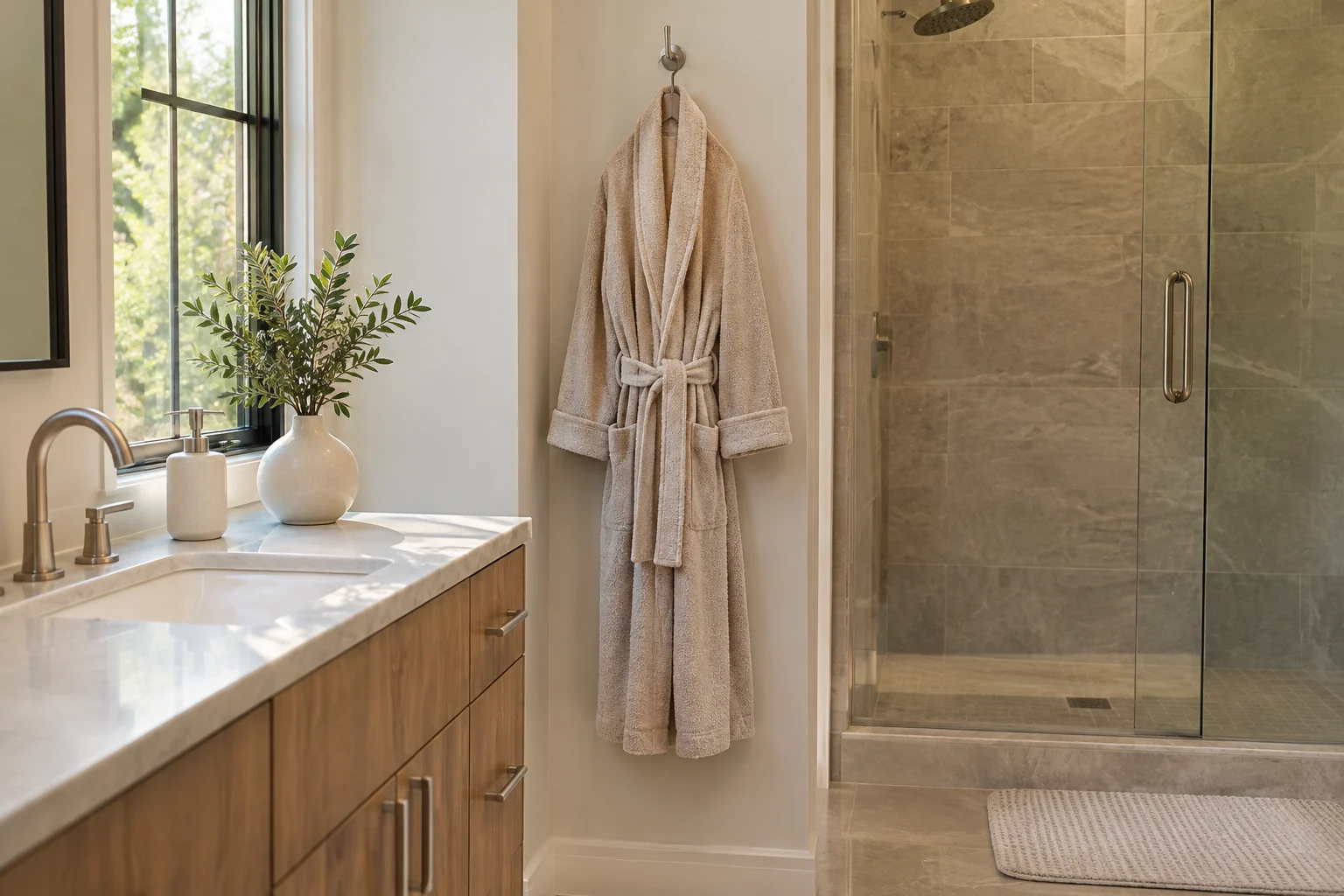
A narrow wall strip can hold a suitable hook only when the robe itself has enough room. Compare the hanging outline with the gap between the wall and vanity. Keep the sleeve from lying across the basin or drawers. A small fitting does not make the full garment narrow, so a different wall may be the more useful choice.
8. Repeat a simple metal finish
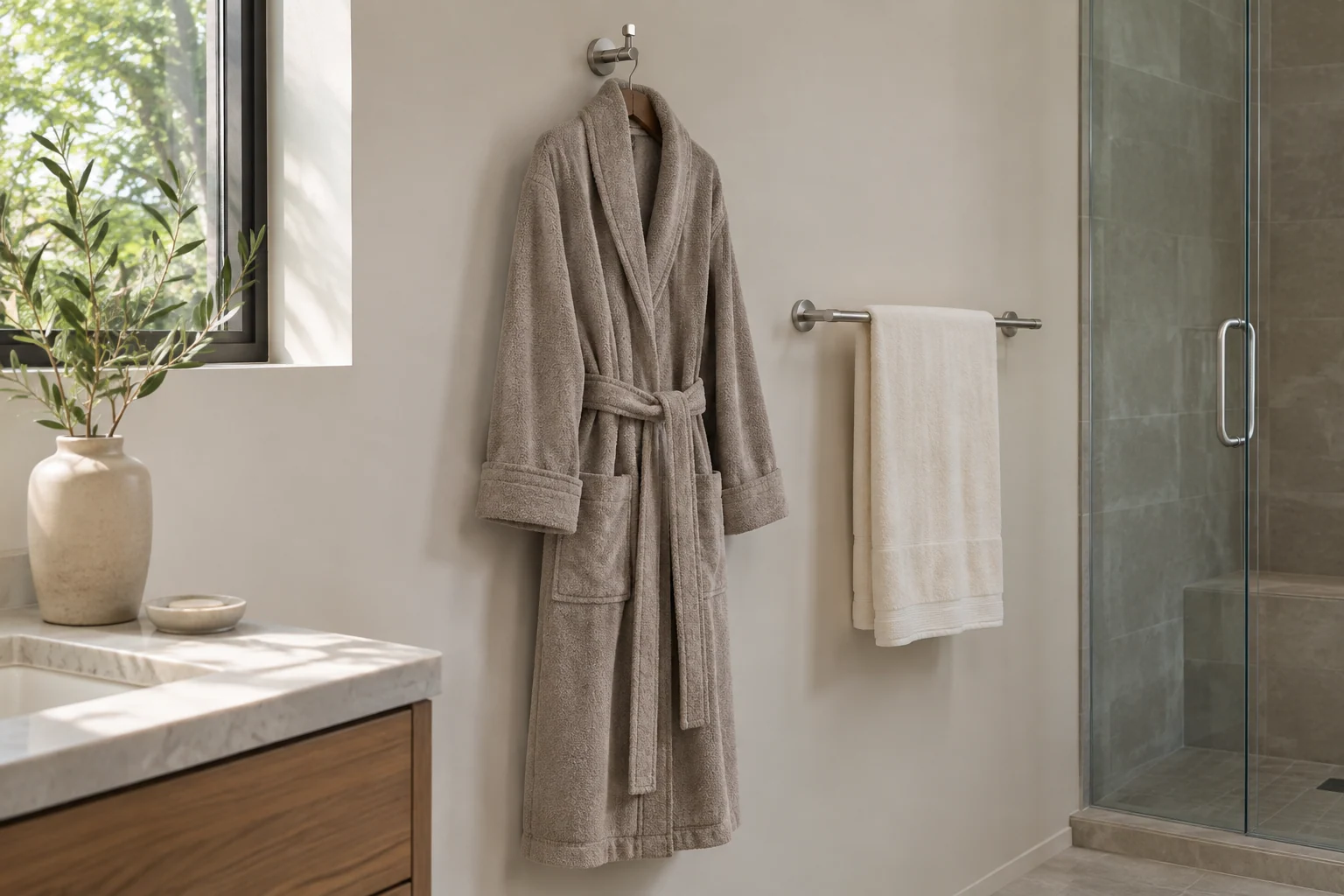
A hook can connect to a tap, towel rail or mirror detail through a related finish without requiring every fitting to be identical. Compare the actual product in the room's light. Choose suitability for the bathroom and surface first, then use the finish as a visual connection. Brass-colored or black hardware does not by itself establish corrosion resistance or load capacity.
9. Use contrast to make an empty hook easy to see
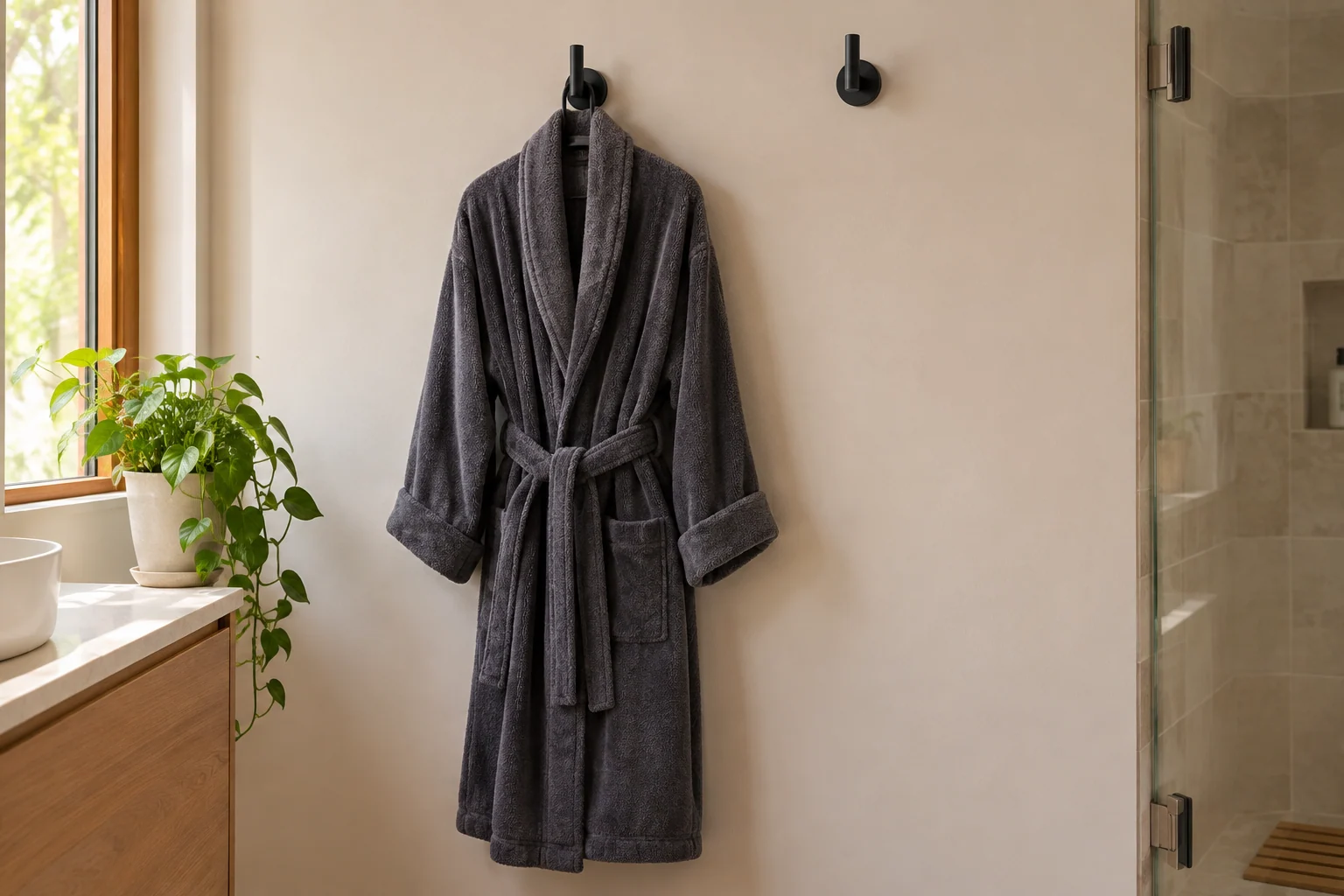
A contrasting finish can help a small fitting read clearly against the wall when no robe is hanging. Keep the form uncomplicated and choose a compatible product for the actual surface. The hook should remain reachable without a decorative arrangement around it. A visible simple return position can support the routine without adding labels or extra storage accessories.
10. Choose a broad smooth form around the intended hanger loop
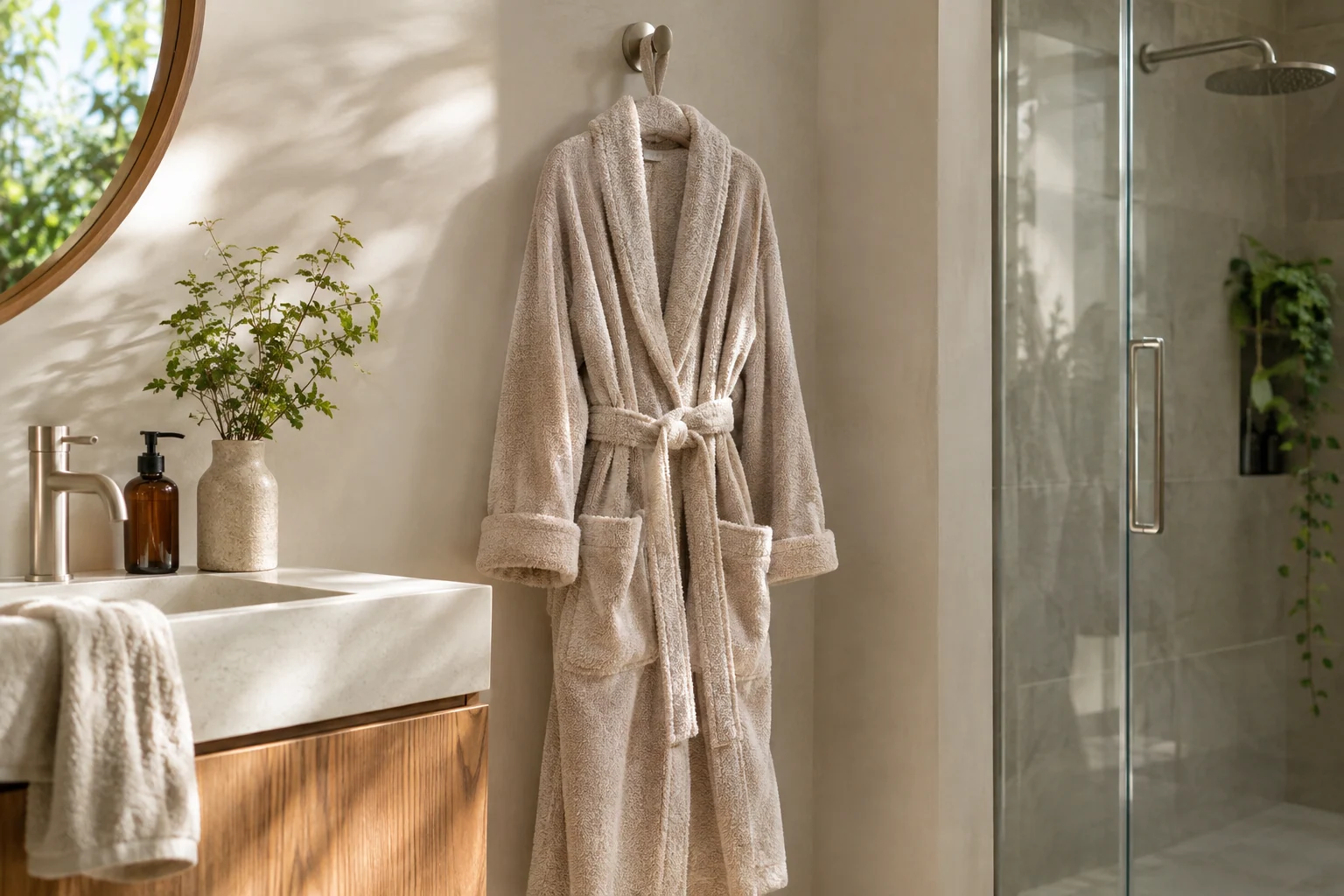
Check how the robe is meant to hang and whether its loop fits the proposed hook without forcing it. A smooth suitable shape can make the ordinary return straightforward, but the garment's construction remains the guide. Avoid using an improvised sharp projection or assuming every collar should support the robe's full weight.
11. Keep hooks separate from the towel-drying area
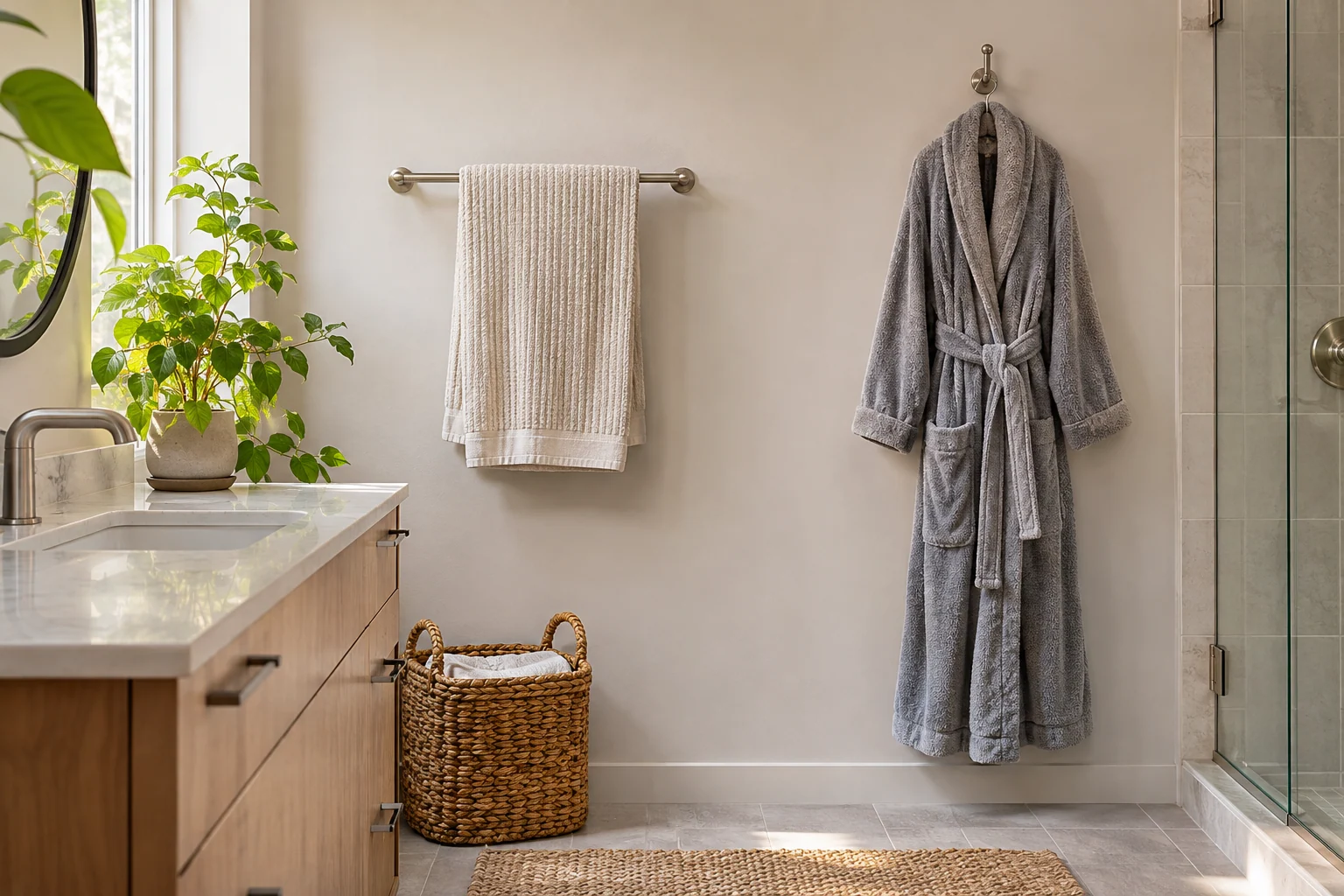
A robe and a used towel can need different positions in the bathroom routine. Give each an appropriate place rather than hanging several bulky textiles from one fitting. Check the full arrangement for reach and door movement. A distinct dry-robe position can make the room clearer without implying that one hook can replace all towel storage.
12. Choose bathroom-rated adhesive hardware only where approved
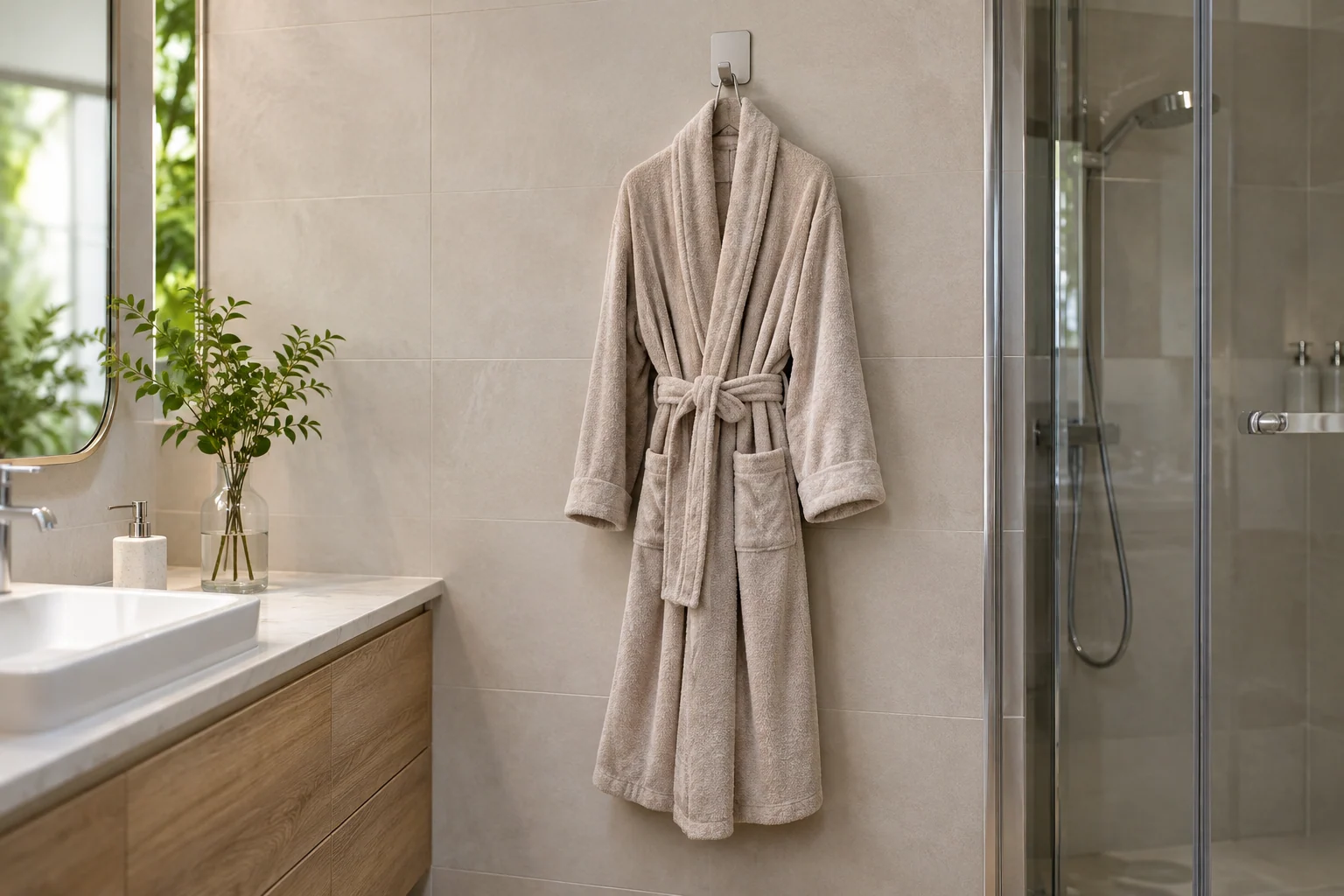
A product designed for bathroom conditions can be an option on its listed surfaces when all its instructions are followed. Check the actual hook, strip, preparation and waiting requirements together. Command's published exclusions show why a decorative wallpapered or rough wall cannot be assumed suitable for that system. Do not treat every removable hook as an interchangeable alternative.
13. Use mechanical hardware when the chosen system calls for it
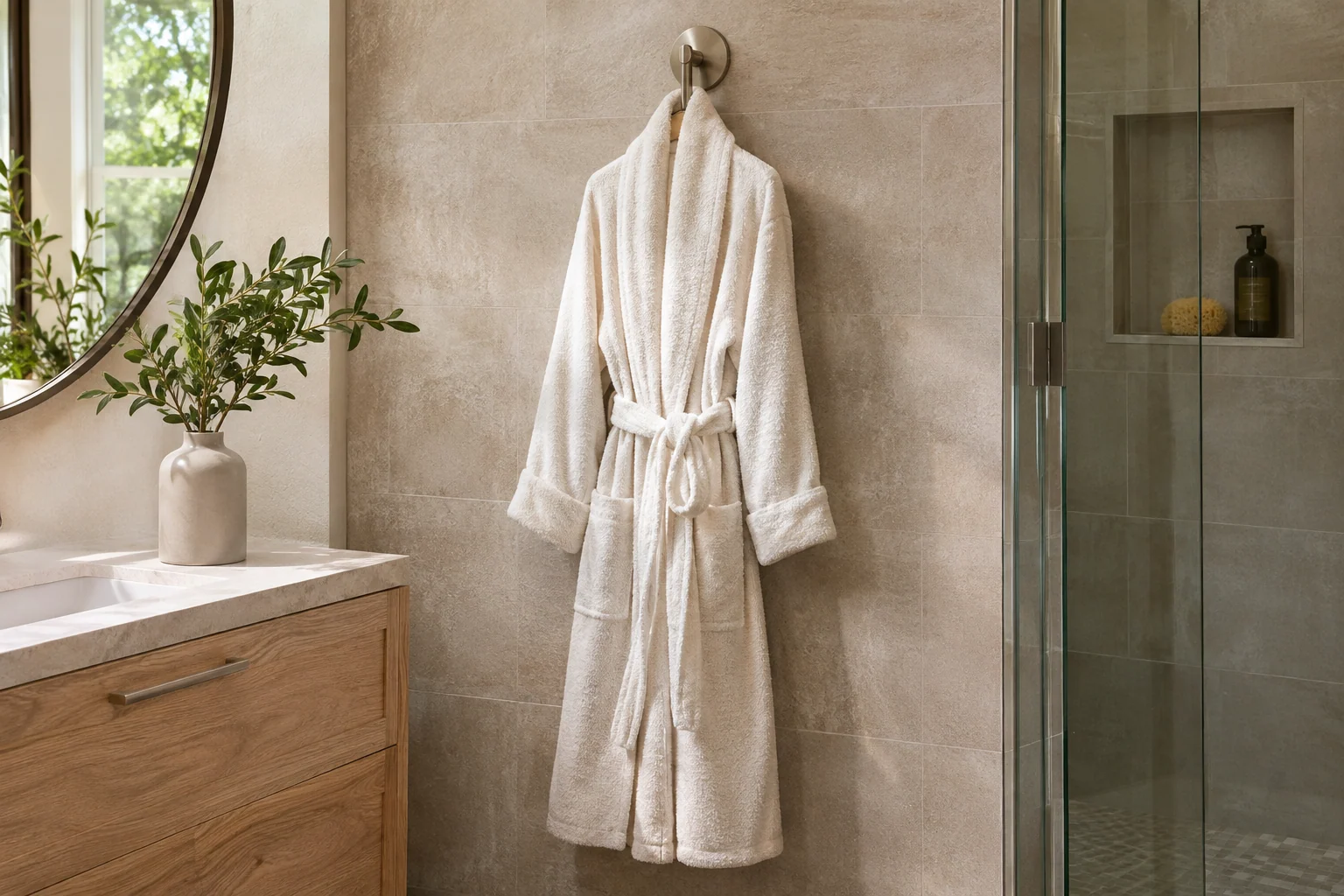
Follow the exact fitting's requirements for the actual wall, including appropriate fixings and competent installation where needed. A concept image cannot identify what is behind a painted or tiled surface. Choose the intended system rather than mixing unrelated parts to reproduce a style. The finished hook should serve the robe without becoming a reason to improvise wall construction.
14. Give a guest robe a defined temporary position
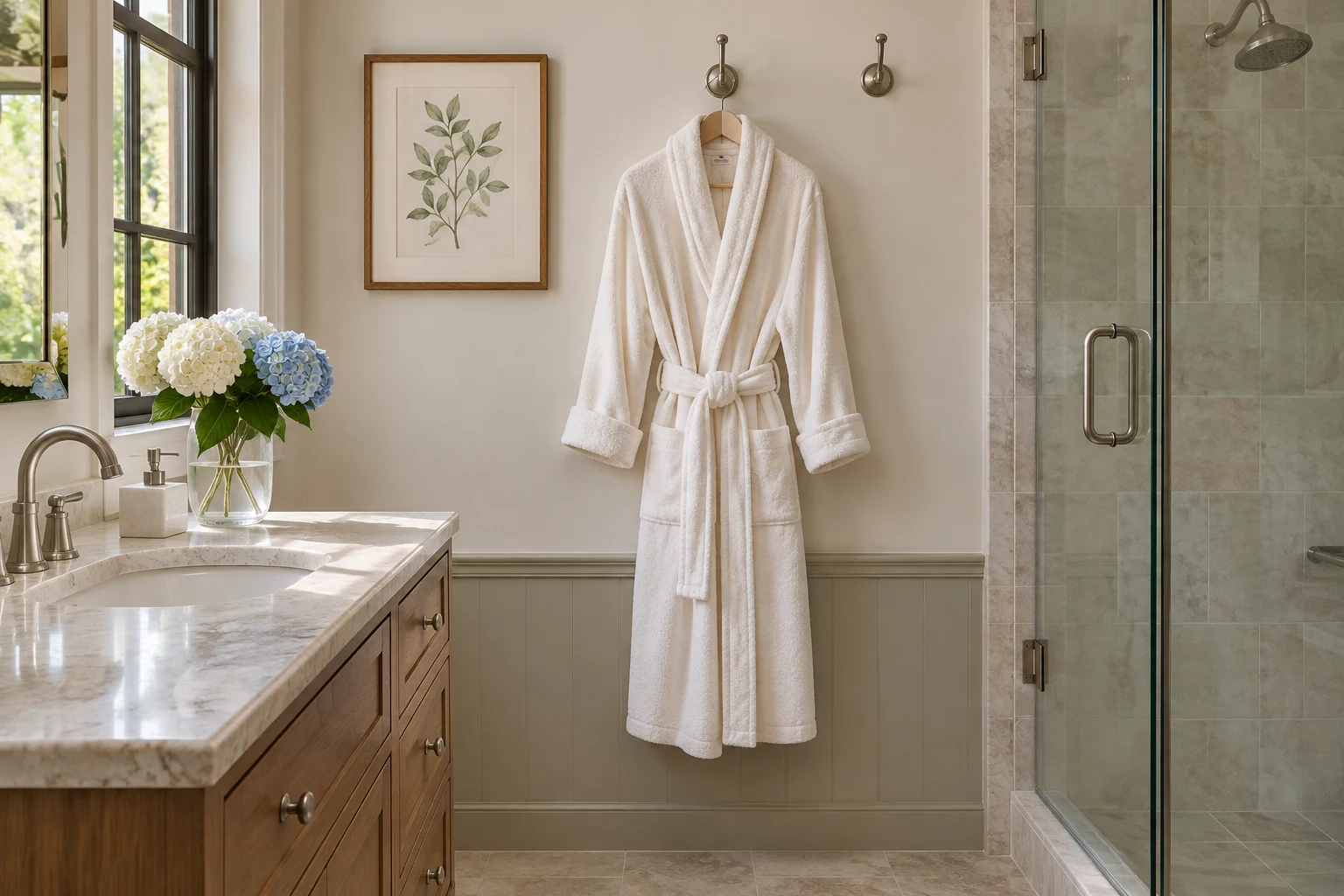
A guest bathroom can provide a clear empty hook or an appropriately arranged robe without making the room feel like permanent overflow storage. Check the intended garment's length and access. Keep the hook separate from personal items that must remain available. A simple useful position is more welcoming than several crowded pegs with no obvious purpose.
15. Keep robe hooks clear of mirror-cabinet doors
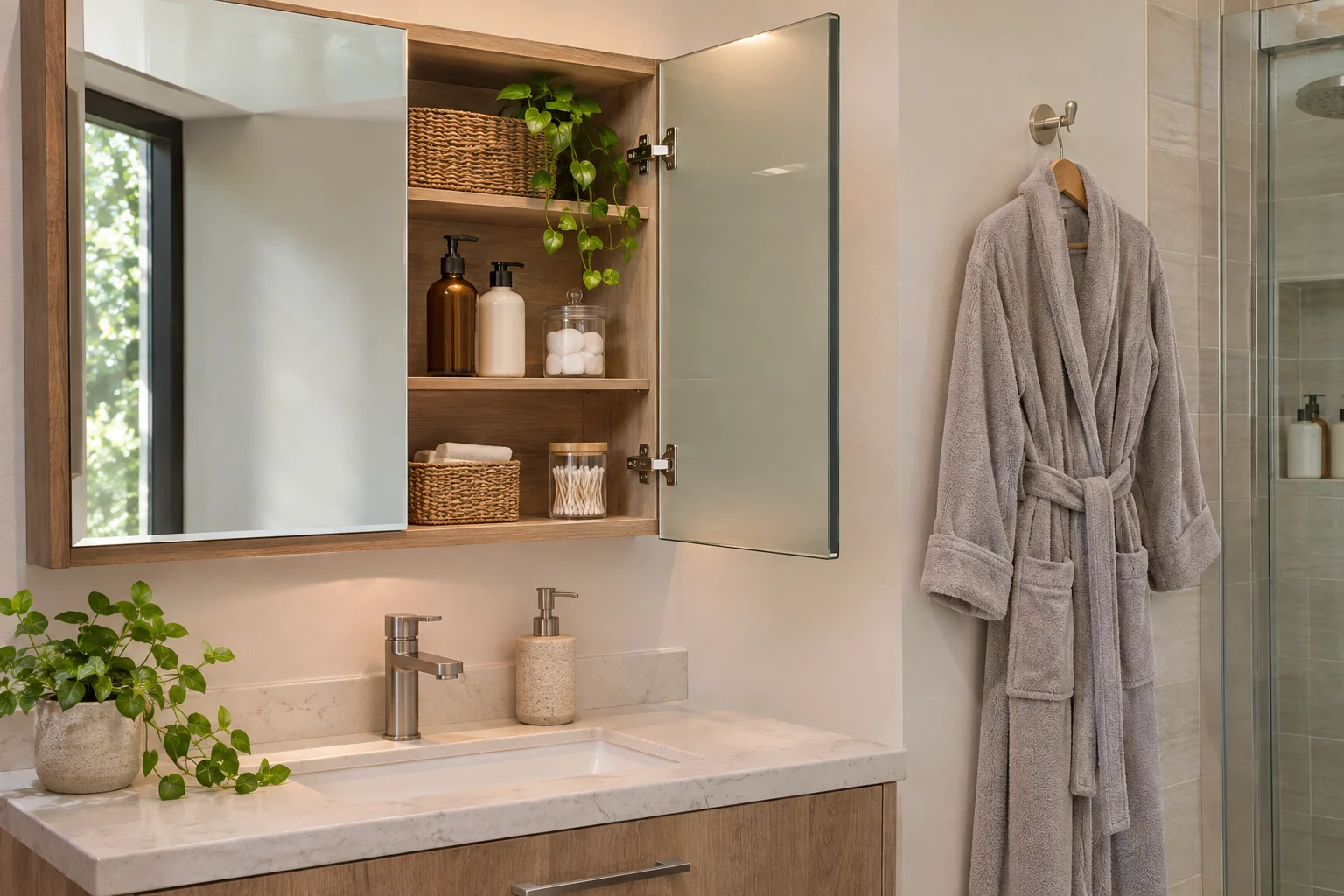
A mirror cabinet may swing into a space that appears empty beside the vanity. Open it fully while checking the hook and garment position. Include the robe's shoulders and sleeves in the outline, not just the hardware. Move the hook plan when using everyday bathroom storage would repeatedly press or catch the fabric.
16. Check the hook from the normal approach
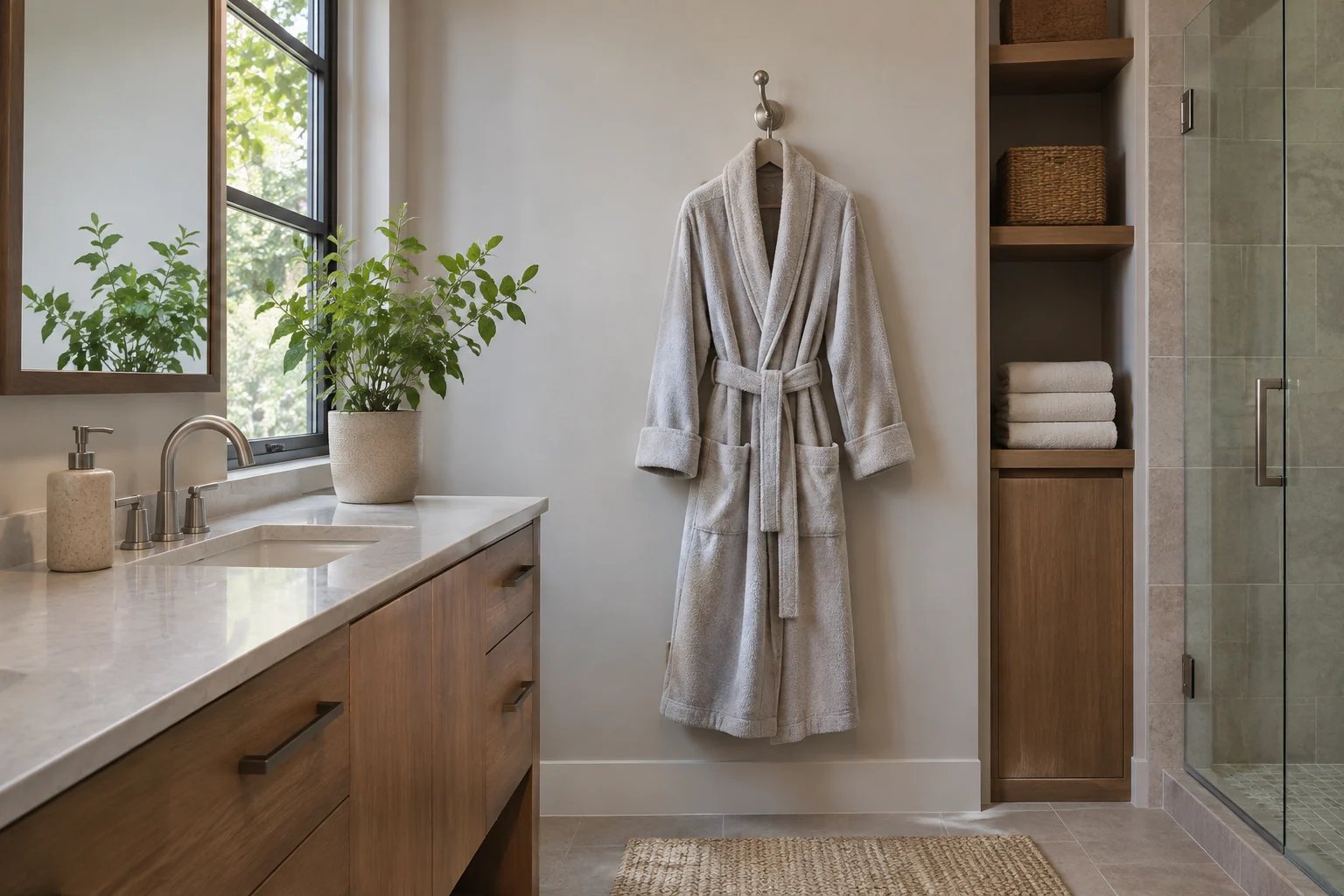
Stand where the robe will usually be put on or returned and assess reach before finalizing the position. A fitting centered neatly on a wall may be inconvenient from that route. Use the actual person's comfortable access and the product requirements rather than an assumed universal height. Keep the surrounding floor clear for the ordinary movement.
17. Choose a compact double hook only when both loads fit
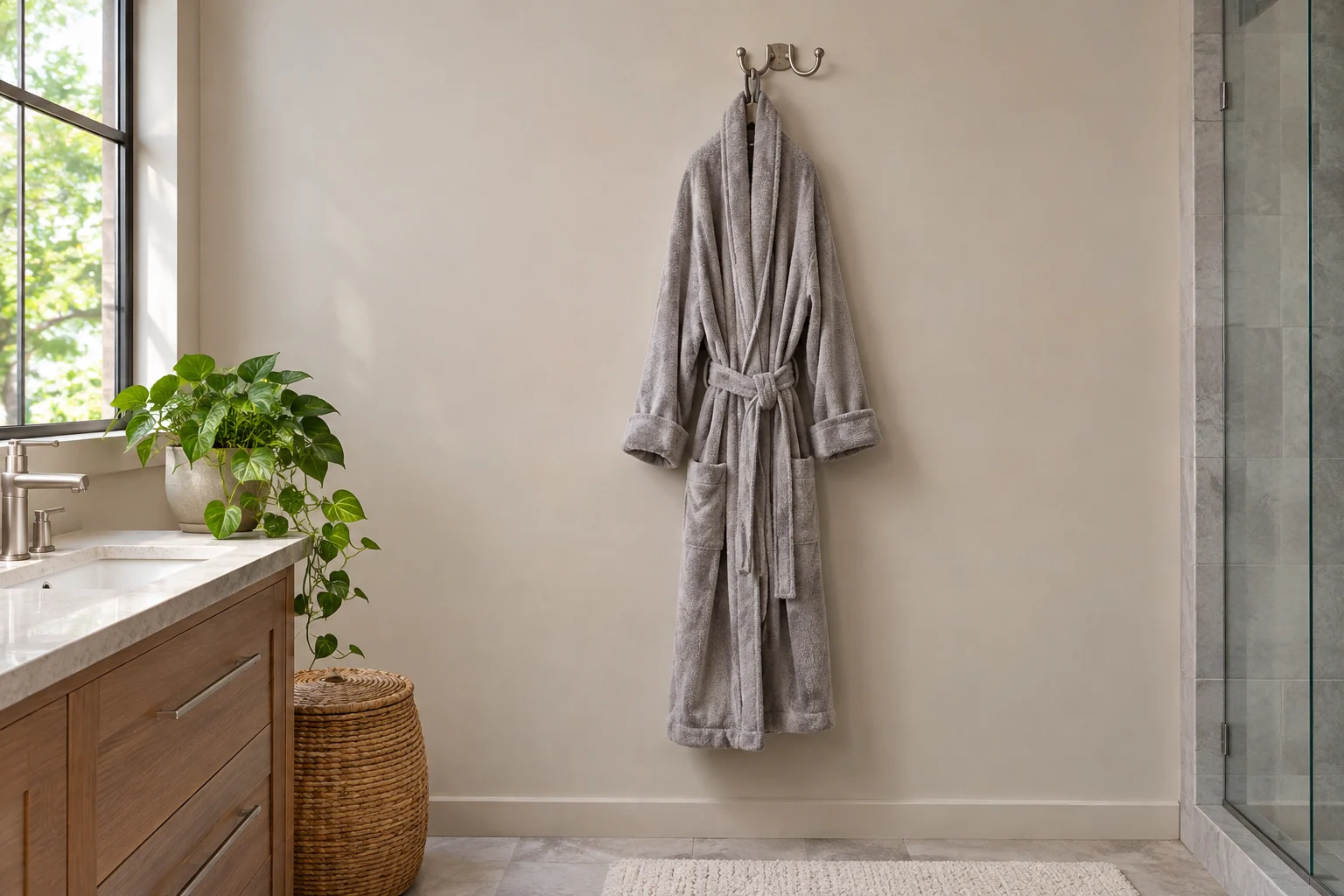
A double fitting can separate two suitable small hanging groups when its instructions and actual load permit. Check whether two full robes would crowd each other around the hook's projection. Two separate fittings may be more useful for bulky garments. The number of arms is a design feature, not permission to hang any combination of objects.
18. Keep a robe away from the basin's working space
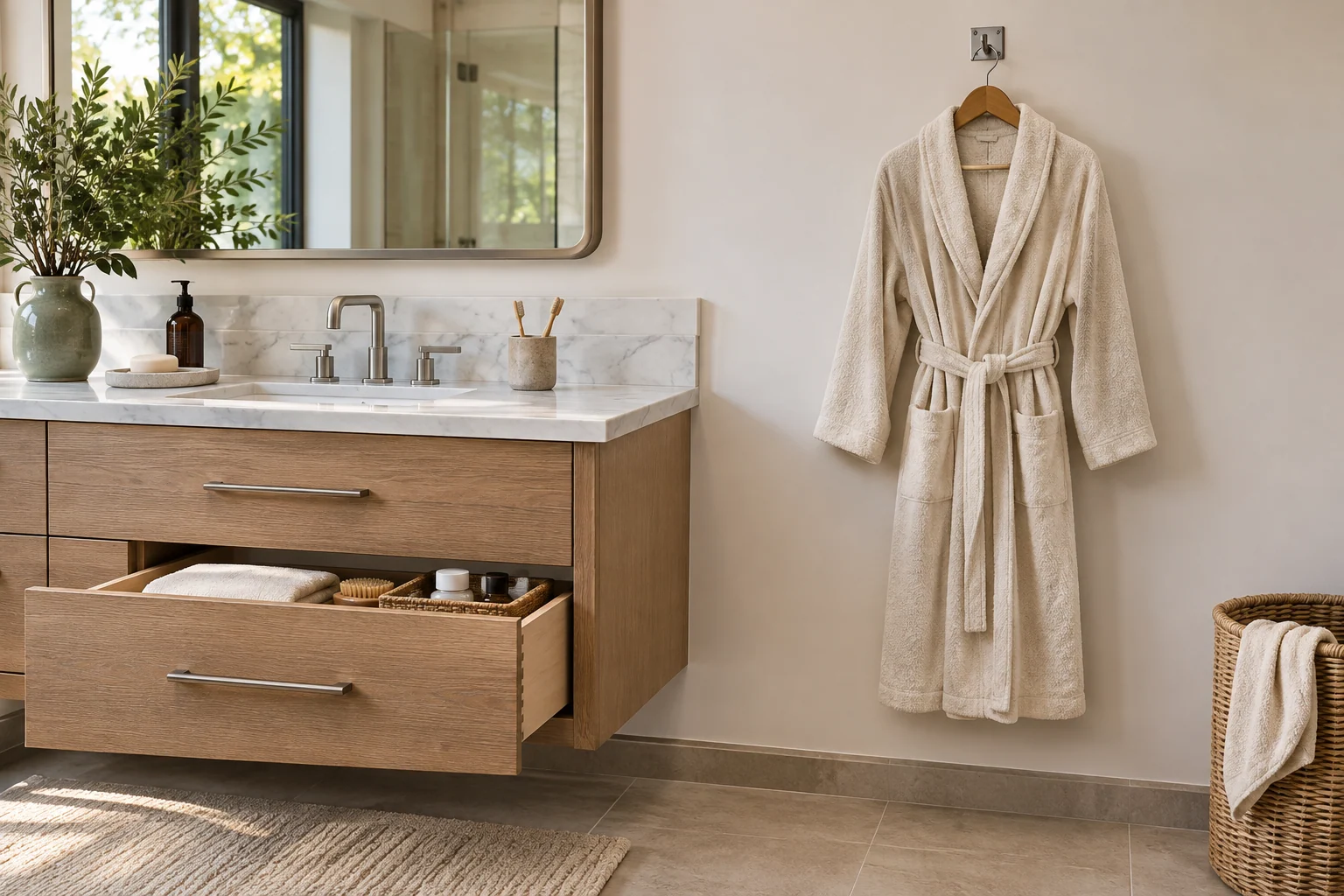
A wall beside the sink can seem convenient, but a hanging sleeve may enter the space used for washing or opening a drawer. Check the full garment against that activity. Choose a different location when the robe becomes part of the counter clutter. A nearby but distinct wall section can preserve both the hook's usefulness and the basin's working area.
19. Use a quiet background for textured robes
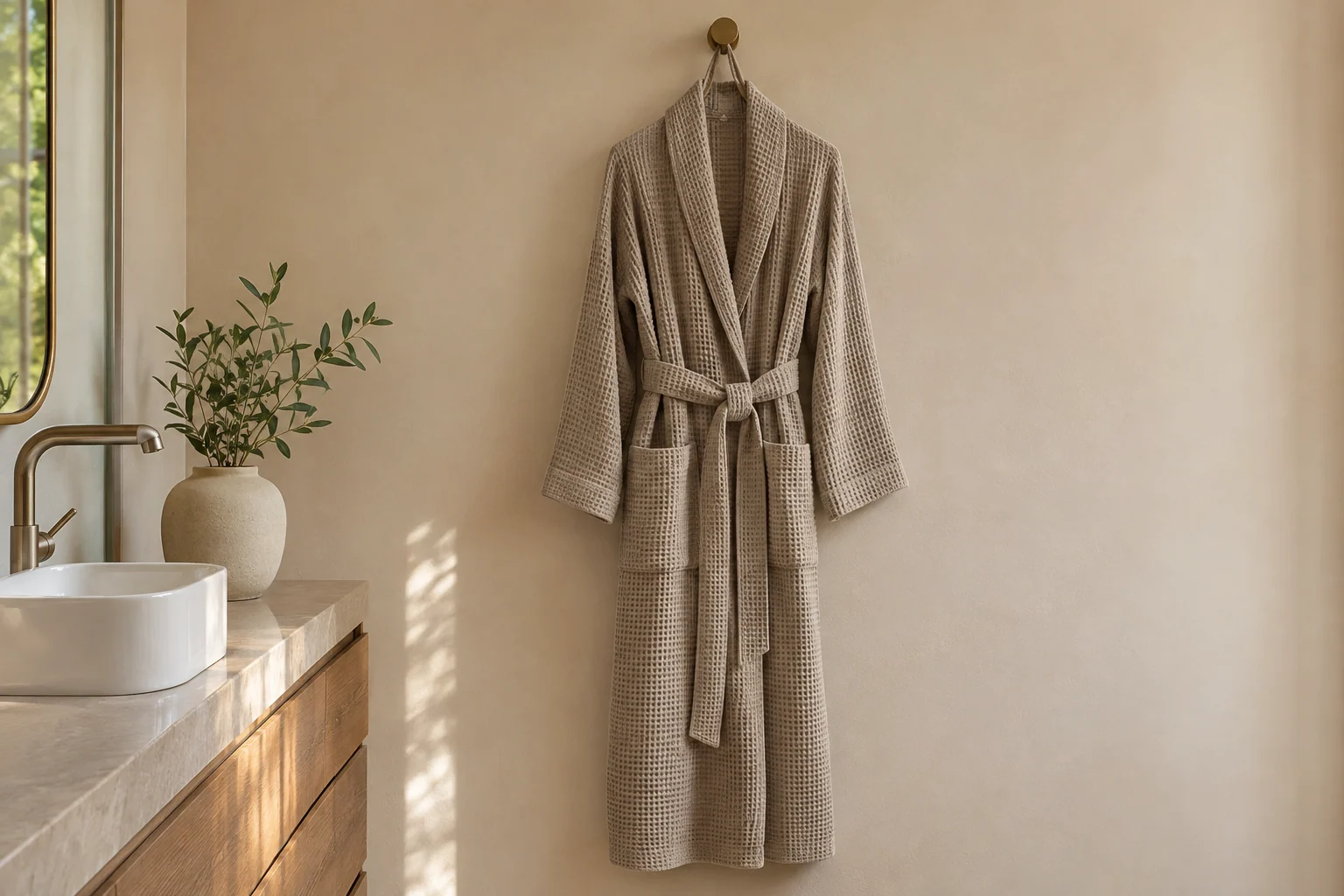
A plain wall can make a waffle, terry or linen-like textile feel considered without another decorative object. Let the robe supply the texture and keep the hook form simple. Choose the fitting and position around the actual garment first. The visual arrangement should not disguise crowded sleeves or an unsuitable attachment point behind an attractive fabric.
20. Keep occasional robes in suitable wardrobe storage
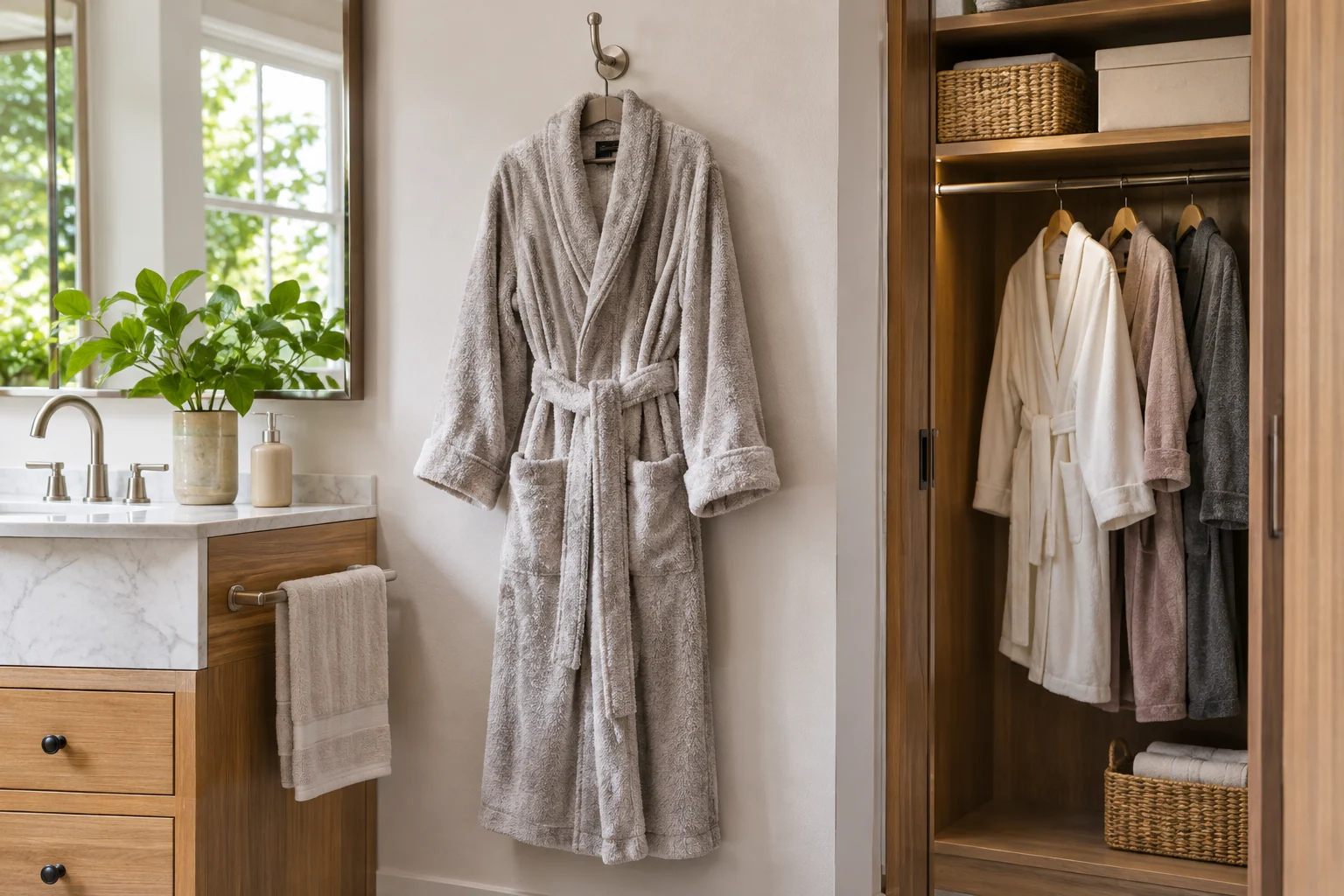
A bathroom hook can serve the working robe while occasional garments have a separate appropriate home. Store them clean and dry according to their care guidance. Keep the bathroom rail from becoming the entire household's robe collection. This makes the daily position easier to use without requiring more hooks across every remaining patch of wall.
21. Save the exact product instructions
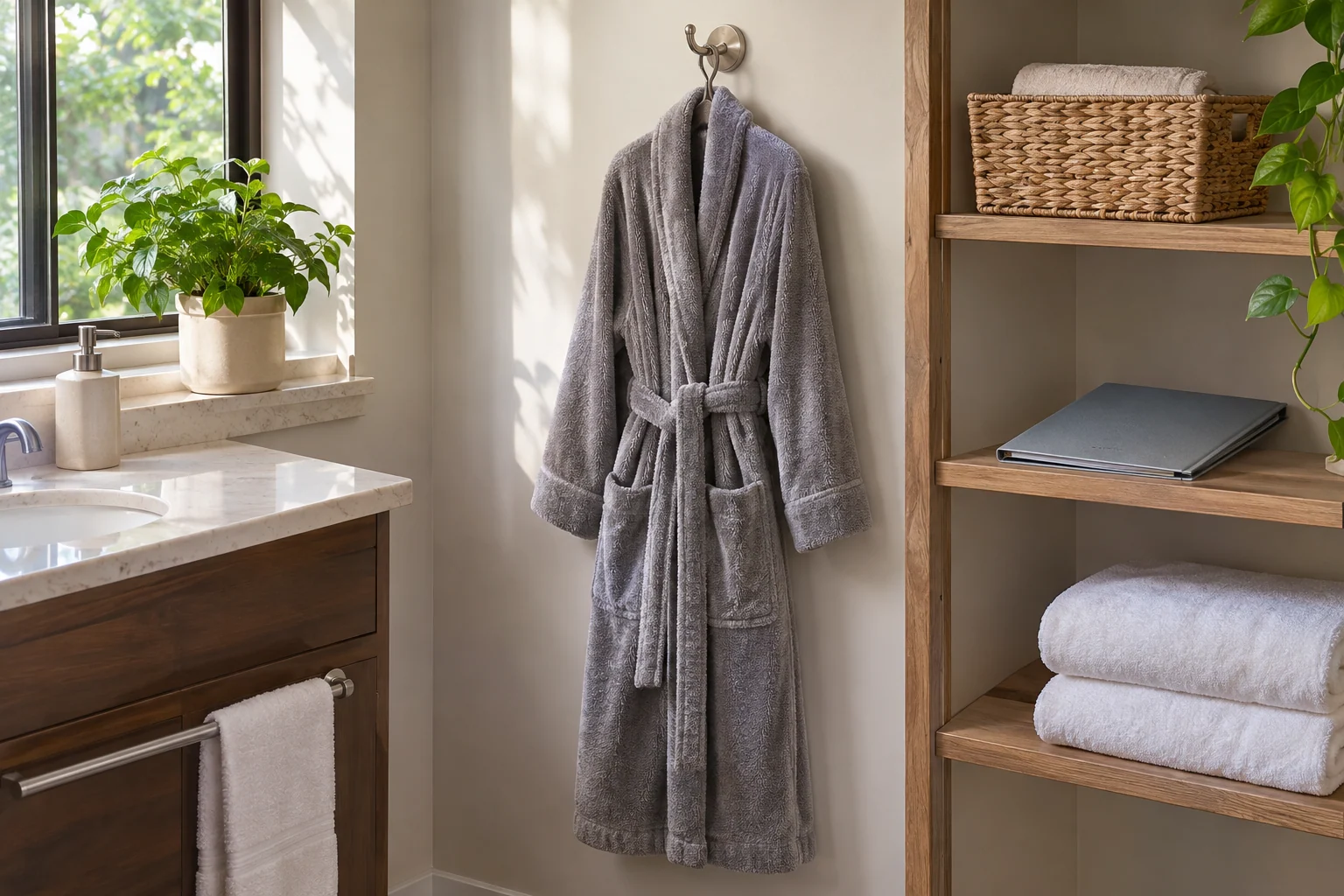
Keep the hook model, compatible surface and loading guidance with the household's maintenance information. This is useful when a removable strip needs replacing or the hook is moved. Do not substitute another product's instructions because the finish looks similar. The record should identify the actual fitting rather than a generic photograph from a decoration article.
22. Finish with the robe hanging during the door test
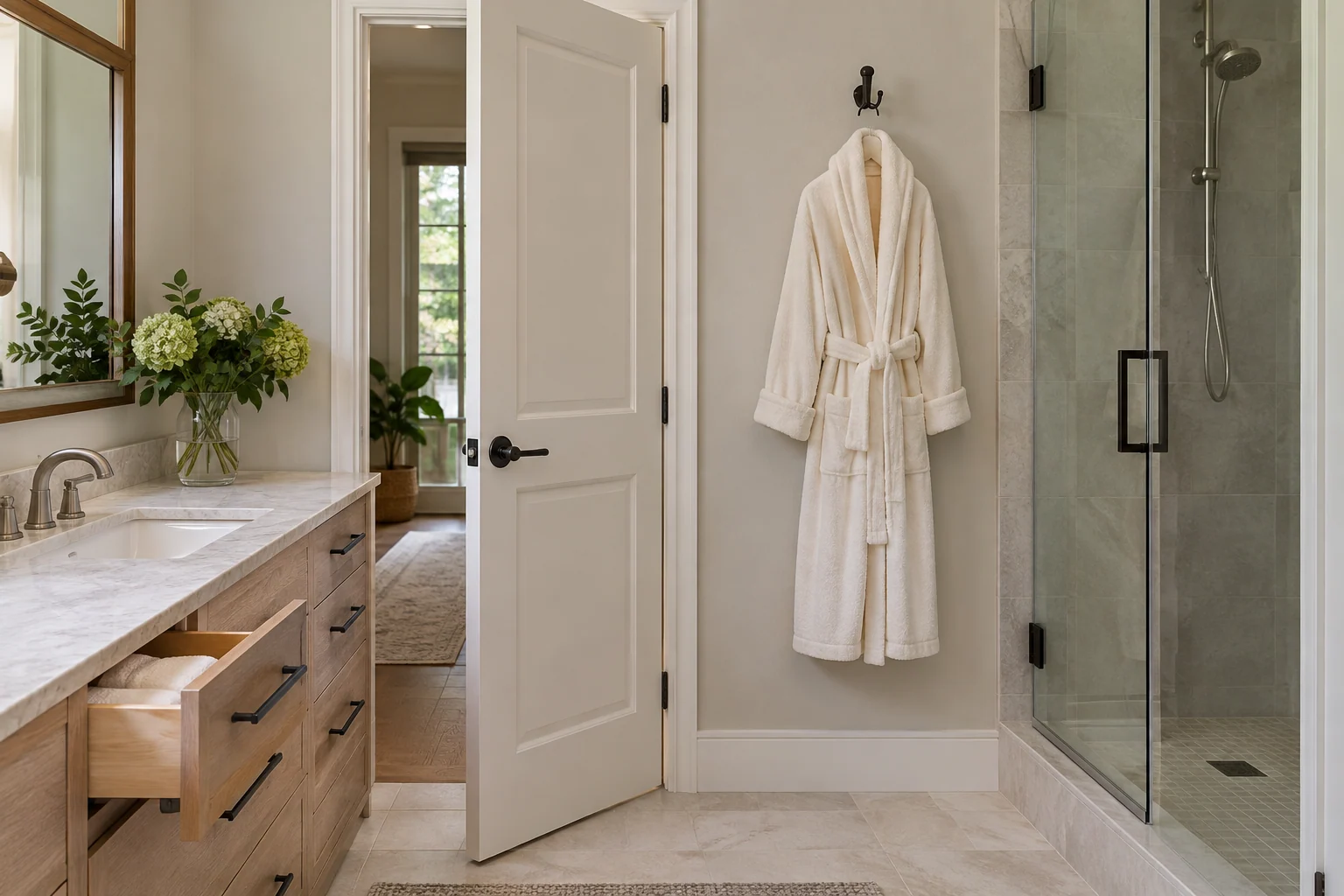
Check every nearby door and drawer while the actual robe is in place. Notice where its sleeves, belt or hem settle during normal use. Adjust the plan around a repeated conflict rather than adding another fitting immediately. The useful result is a clear return place for the full garment, not only a neatly centered hook on an empty wall.
A robe-hook position card
Record the robe's hanging length and width, intended garment loop, actual loaded product requirements, approved wall surface, comfortable reach and nearby door movement. If a hypothetical robe hangs 48 inches below a hook positioned 68 inches above the floor, its hem sits 20 inches above that floor before movement or fabric variation. This is arithmetic only, not a recommended hook height, load rating or accessibility standard.
A practical next step
Plan the hook around the whole robe, its attachment and the bathroom's everyday movement. A simple appropriate fitting with enough garment space can serve better than a crowded decorative rail chosen from the empty wall alone.
The images are original AI-generated design concepts. They illustrate arrangements rather than tested products, installations or measured performance.
Sources and care references
Related reading on Nestroxe
Optional digital guide for this topic
If you prefer a structured workbook, explore this related paid guide.