Good fence planter ideas bring planting into the boundary view while preserving gates, routes and maintenance. The container can stand beside the fence; it does not have to hang from it. That distinction opens useful design options when the fence cannot support a planted load.
These 24 concepts compare modest arrangements along an ordinary garden boundary. Choose plants for the actual location and containers for their growing needs. Assess any mounting system and supporting structure for the complete intended use. The illustrations are design concepts, not verified attachment details or proof that a fence can carry weight.
Contents
- 1. Begin with one ground-supported trough
- 2. Use a pair of broad pots as a simple group
- 3. Repeat a short run of matching shapes
- 4. Concentrate the planting at one useful end
- 5. Leave the complete gate movement clear
- 6. Give a nearby bench its own usable space
- 7. Use a corner only when care remains accessible
- 8. Keep low planting beneath a detailed fence
- 9. Let pale containers provide a quiet contrast
- 10. Use a dark container to define one planting shape
- 11. Bring terracotta tones into a small grouped display
- 12. Use a suitable wood cover around separate growing pots
- 13. Compare an independent plant stand
- 14. Keep a low boundary visually open
- 15. Use a rail planter only with its intended rail
- 16. Keep mounted boxes a separately assessed option
- 17. Choose a display height that is practical to tend
- 18. Plan where drainage water will go
- 19. Choose plants for the boundary's real conditions
- 20. Make one modest plant group the starting point
- 21. Include seasonal changes in the container decision
- 22. Keep individual growing pots removable when appropriate
- 23. Judge the group from the normal garden view
- 24. Review the arrangement after ordinary care
Separate the planting design from the support decision
Start with ownership, access, gate movement, the actual growing conditions and the space available at ground level. For any elevated container, the full planted and watered load, exposure, compatible hardware and supporting structure need appropriate assessment. A railing product is not automatically a fence product: Gardener's Supply describes its cited saddle planter for particular rail widths. That does not approve it for an arbitrary thin fence cap. If suitability is uncertain, choose an independent ground-supported arrangement. For the growing container, Iowa State Extension emphasizes appropriate drainage and notes that gravel cannot replace a missing drainage hole. Follow the exact container system's instructions and keep the water's exit route from creating a new problem.
Choose an arrangement that fits your situation
- Fence support is uncertain: Choose independent ground-supported containers
- Long plain boundary: Compare a short repeated group with useful gaps
- Gate or seating nearby: Preserve the complete movement and approach
- Elevated planter desired: Resolve exact system and structural compatibility first
- Changing conditions: Keep drainage, plant care and seasonal access reviewable
1. Begin with one ground-supported trough

A modest trough beside the fence can create a clear planting line without loading the boundary. Choose its root space and growing medium for the actual plants. Leave the separation needed to inspect and maintain the fence and container. Test the occupied footprint against the normal route; a long planter is useful only when it fits the garden's ordinary movement.
2. Use a pair of broad pots as a simple group

Two appropriate pots can give a plain fence a deliberate focal point without filling its entire length. Compare the containers' bases, complete planting outline and care needs. Keep both on a suitable stable surface outside the route. The pair can share a finish while allowing the plants to remain in separate growing conditions when that is the better arrangement.
3. Repeat a short run of matching shapes
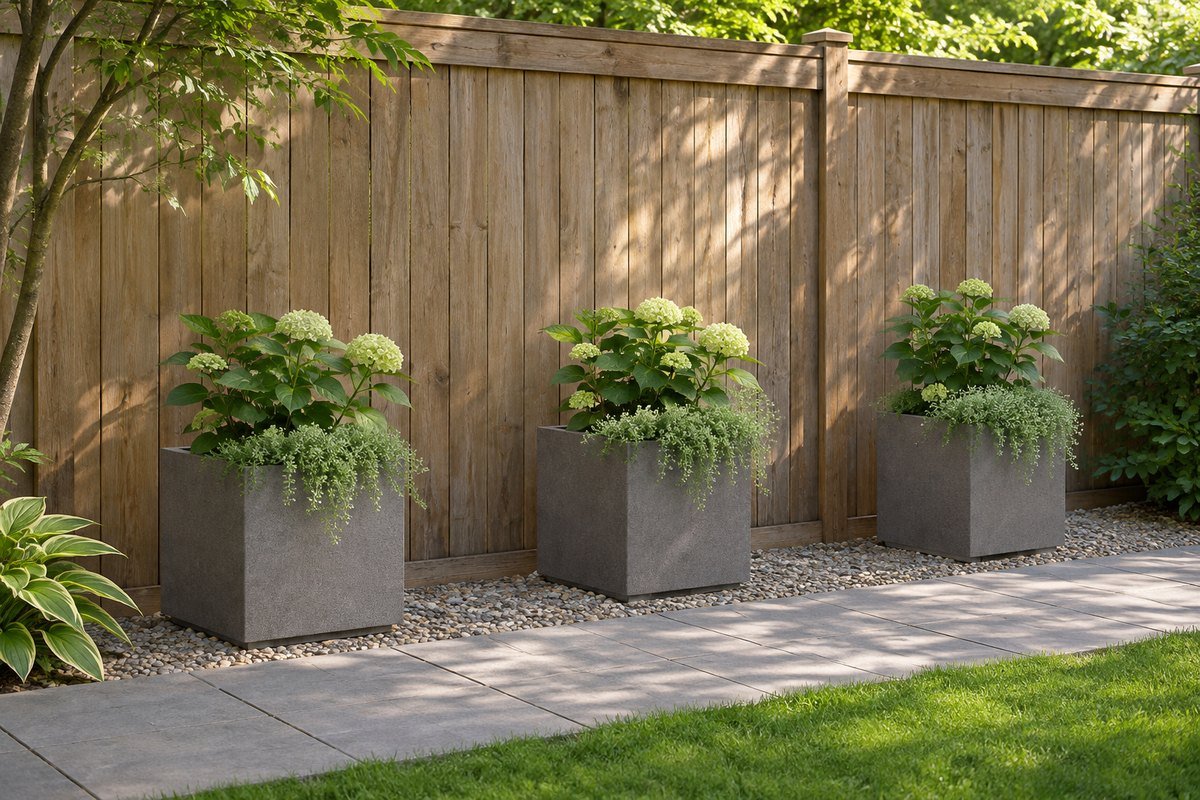
A limited repeated group can connect a longer boundary visually. Set the spacing from access, growing room and the view rather than a rigid decorative formula. Keep the number of containers manageable for watering and seasonal attention. A short intentional sequence often gives a clearer result than a continuous row that becomes difficult to reach at either end.
4. Concentrate the planting at one useful end
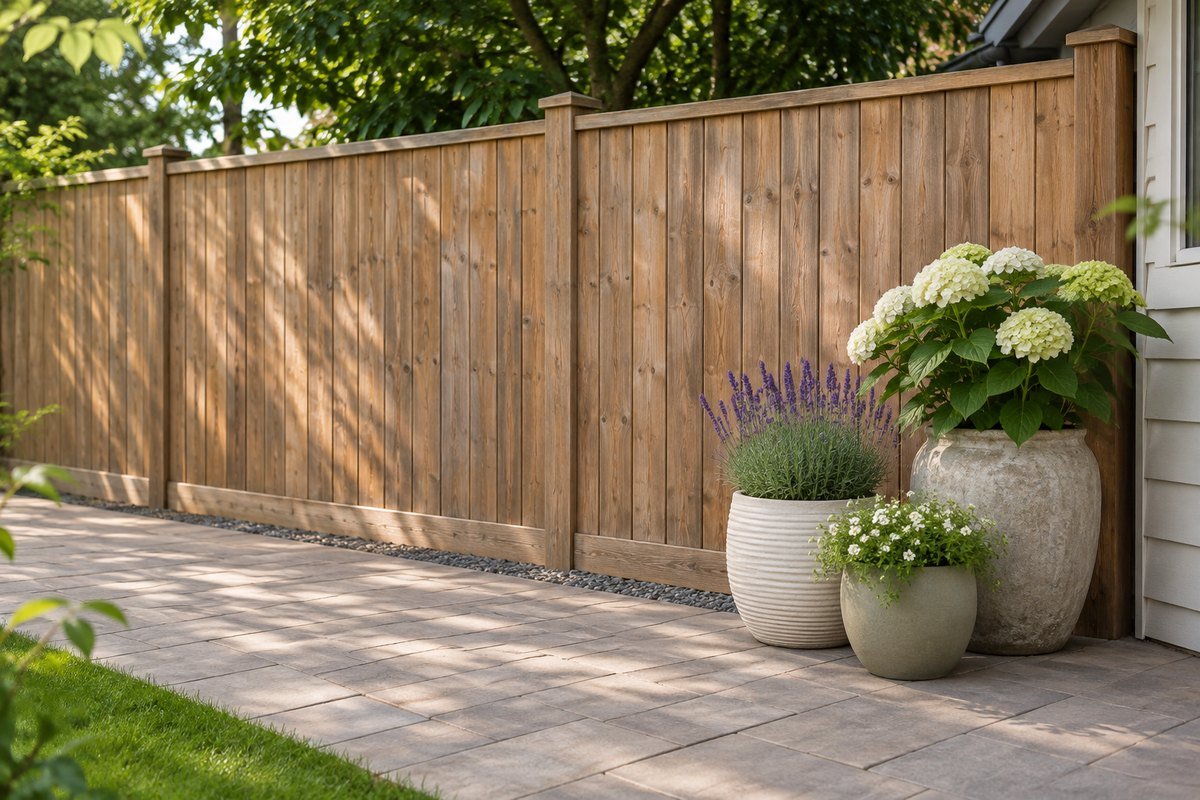
A small group at the end of a fence can leave the rest of the boundary calm and practical. Choose the location from the approach and the space already used there. Keep the group contained rather than extending pots into the route. This can be a useful answer when the garden needs one decorative point rather than an uninterrupted living wall.
5. Leave the complete gate movement clear

A gate needs its ordinary opening and approach even after plants have grown. Check handles, latches and the area where a person stands to operate them. Keep the container and its future foliage outside that movement. Choose a different position if the arrangement works only with the gate partly closed or with a pot moved before every use.
6. Give a nearby bench its own usable space

A planter can frame a seating area without making the bench difficult to reach or occupy. Compare the growing outline with legs, shoulders and the route used to sit down. Keep watering access separate from the seat. A modest container at one side may work better than placing a deep continuous trough directly behind a bench pressed against the fence.
7. Use a corner only when care remains accessible

A corner can gather a small container group into a deliberate shape. Leave room to inspect the back of the pots and the adjoining boundary. Keep the inner container reachable without lifting a larger one out first. If the corner receives different light or moisture from the rest of the garden, choose the plants for that actual position.
8. Keep low planting beneath a detailed fence

A decorative boundary may already provide the main pattern. A lower container group can soften its base while leaving the fence readable. Choose the plants from their expected mature size and growing requirements. The effect should remain useful after growth develops, rather than relying on repeatedly cutting unsuitable tall plants to preserve the original photograph.
9. Let pale containers provide a quiet contrast

A pale finish can make a small group visible against darker timber. Compare the actual surface in the garden's changing light before choosing several containers. Keep the plant and container requirements ahead of the color choice. A restrained contrast can give the boundary a considered outline without repeating the same accent on every pot, cushion and ornament nearby.
10. Use a dark container to define one planting shape

A simple dark trough can give foliage a clear base against a pale boundary. Keep the overall shape modest and consider the actual material, exposure and care guidance. A dark color alone does not establish durability or suitable root conditions. Compare the complete planted outline from the room or seating place where the boundary is normally viewed.
11. Bring terracotta tones into a small grouped display
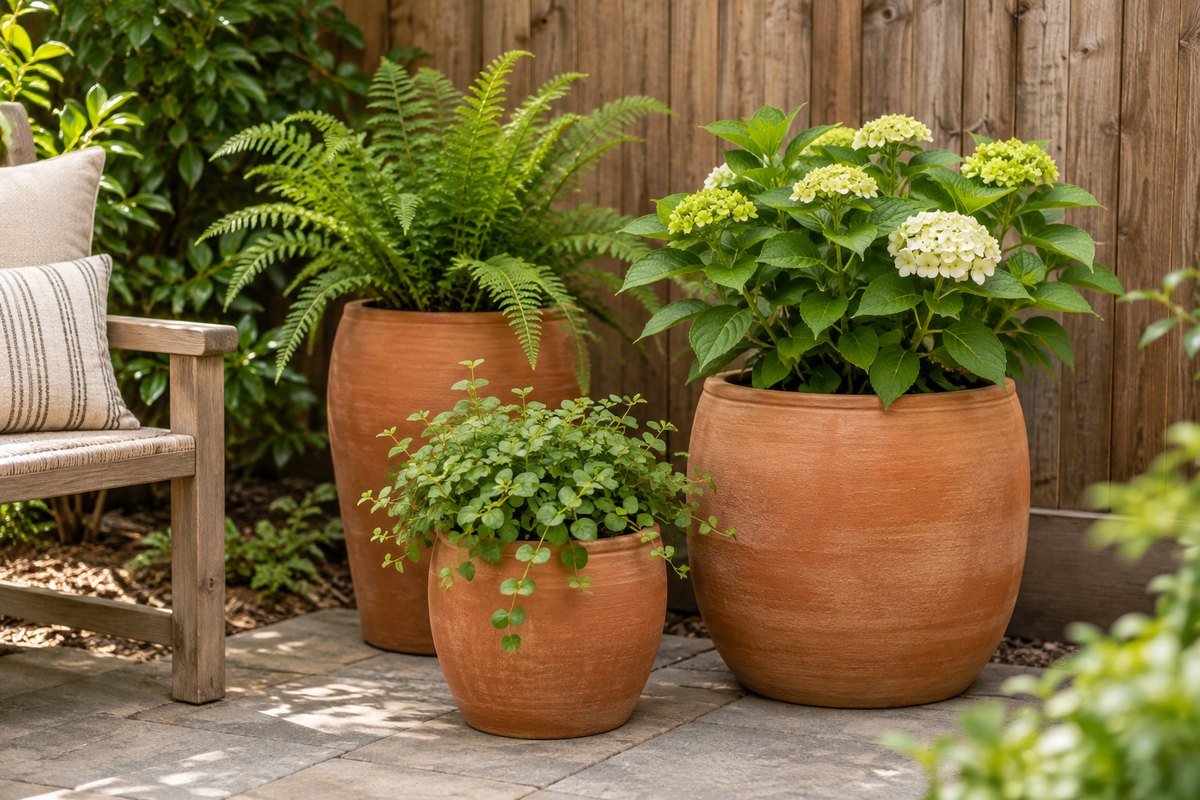
Warm clay tones can relate to paving or a garden wall without matching every container exactly. Check the actual pots' condition and suitability for local exposure. Keep the arrangement small enough to reach and maintain. Treat the finish as one decorative choice within a growing plan rather than proof that every clay-colored pot has the same porosity or cold-weather performance.
12. Use a suitable wood cover around separate growing pots

A purpose-made cover can provide a warmer outline while the plants remain in appropriate growing containers. Confirm the cover's intended use, support and care requirements. Keep drainage and inspection possible instead of allowing water to collect unseen. Do not treat a reclaimed box or thin decorative crate as a load-bearing planter merely because its appearance suits the fence.
13. Compare an independent plant stand
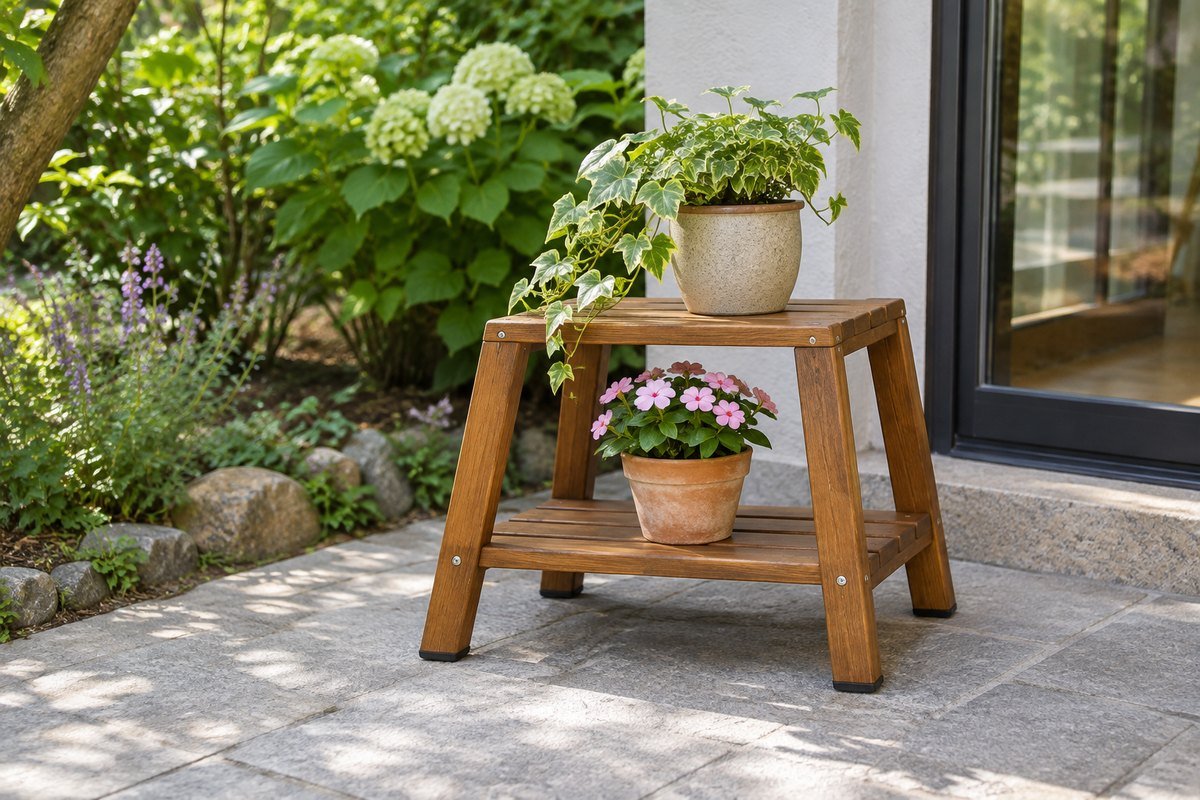
A specified outdoor stand can vary the display height without attaching the load to the fence. Check the exact stand, container dimensions, full footprint and intended load. Keep every pot completely supported and the route clear. Use ground-level containers when the stand complicates access or stability rather than adding a genuinely useful position for the plants.
14. Keep a low boundary visually open

A low fence may be intended to preserve a view rather than create privacy. Use modest ground-level containers that respect that role. Check any sightlines and access relevant to the actual location. Growing more height is not automatically an improvement when the boundary's value comes from its lighter outline and connection to the space beyond it.
15. Use a rail planter only with its intended rail

A purpose-made saddle or railing planter needs the supporting rail specified by its maker and an appropriate complete installation. Compare the exact profile, dimensions, exposure and watered load. Do not hang it from an arbitrary fence cap, wire or narrow board. Where that compatibility cannot be established, achieve the same color grouping with independent containers beside the boundary.
16. Keep mounted boxes a separately assessed option
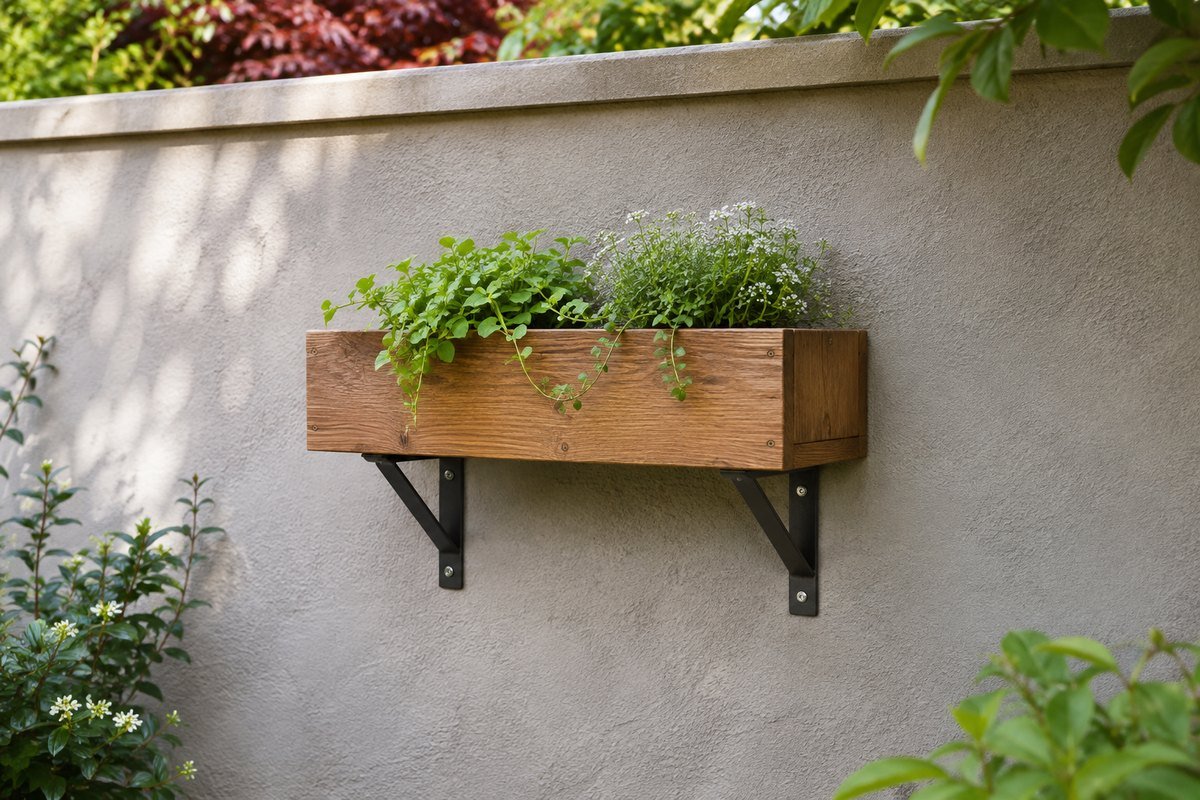
A mounted box changes the support requirements of the boundary. Have the actual structure, attachment system and full intended conditions assessed, and follow the exact product guidance. A decorative image cannot supply the missing fixing details. Choose an independent planter when suitable mounting cannot be established; the planting design can still belong in the fence view without hanging from it.
17. Choose a display height that is practical to tend

Compare the container's rim with the reach needed to inspect the growing medium and care for the plants. Keep the working position on a suitable stable surface. Avoid making a small decorative display dependent on climbing between pots. Lower independent containers can provide a useful alternative when an elevated arrangement looks attractive but is difficult for the actual user to maintain.
18. Plan where drainage water will go

The water leaving a container needs an appropriate destination. Keep it from creating persistent wetness at the boundary, a slippery route or a problem for neighboring space. Follow the actual container and supporting-surface guidance. Do not assume a decorative outer cover solves drainage, and do not conceal an unsuitable water path behind additional pots or trailing foliage.
19. Choose plants for the boundary's real conditions

A fence can create several different growing positions along a short length. Observe light, exposure and the conditions at each intended pot location. Select plants through reliable regional and species guidance. Keep the decorative palette flexible enough to accommodate those needs instead of insisting on one identical plant in every container regardless of where it stands.
20. Make one modest plant group the starting point

A small group gives the household a chance to test access and the care routine. Keep the containers appropriate for the chosen plants rather than making them artificially tiny. Observe the arrangement through ordinary weather before extending it. The boundary does not need to become a full vertical garden to benefit from a deliberate patch of greenery.
21. Include seasonal changes in the container decision
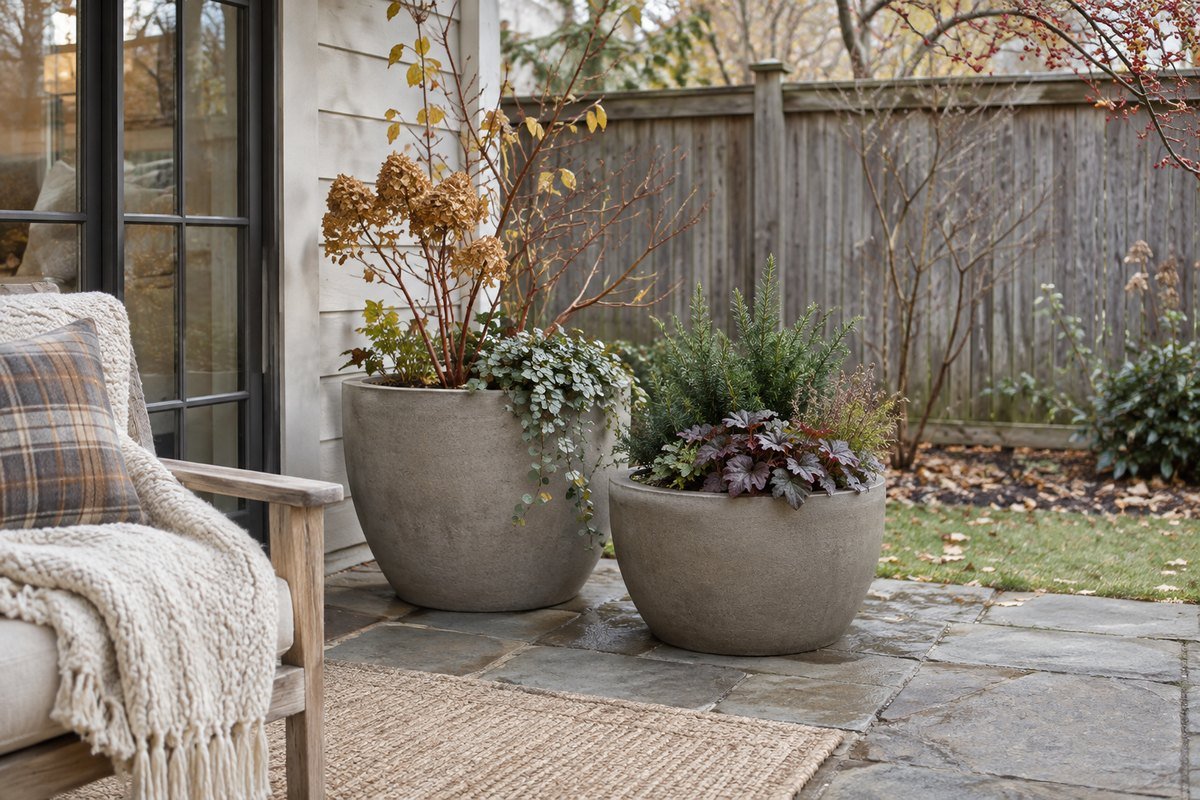
Review the selected plants, container material and exposure before assuming the arrangement can stay unchanged year-round. Follow local guidance for the particular plants and products. Keep any seasonal move practical for the full container, or choose a different plan. A picture of a healthy summer display cannot establish winter performance at another site.
22. Keep individual growing pots removable when appropriate

A suitable cover or grouping can allow one plant's container to be cared for separately. Confirm the complete arrangement still provides support, drainage and access. Keep the individual pot easy to inspect without dismantling a stacked display. This can make a changing collection more manageable while allowing the boundary's overall decorative outline to remain simple.
23. Judge the group from the normal garden view

Stand where the boundary is usually seen and compare the container group with gates, furniture and neighboring planting. Keep the useful gaps visible rather than filling them with more pots. A small adjustment to the group's position may help more than another accessory. The best view should remain compatible with the practical route and plant care already planned.
24. Review the arrangement after ordinary care

Notice which pot is difficult to reach, where water collects and whether foliage has begun to cover an opening. Adjust the arrangement within the products' intended use and the plants' requirements. Keep the boundary accessible as the garden changes. Strong fence planter ideas combine an attractive view with a care routine that remains practical after the initial styling.
A fence-side planting and access card
Record ownership and any permission needed, the boundary's maintenance access, gate movement, the ordinary walking route and observed growing conditions. List each plant, its mature outline, suitable container, medium and care guidance. Add the drainage destination and the complete supported footprint. For an elevated option, record the exact planter system, rail or structure compatibility and assessed full planted-and-watered conditions. A hypothetical pot that is 30 cm deep needs more space than its empty base if mature foliage projects beyond it; mark the occupied outline on the plan. If support or access remains unresolved, compare an independent ground-level arrangement before refining colors.
A practical next step
Choose fence planter ideas from the boundary's real role, the plants' growing needs and the support available. A few independent containers can create a considered garden view while keeping maintenance and movement straightforward. Add height or mounting only when the complete arrangement is suitable for the actual site.
For the surrounding room, compare a separate seasonal outdoor planter arrangement. review garden bed layouts for a larger growing area.
The images are original AI-generated design concepts, not photographs of tested products or verified installations.
Sources and care references
- RHS: container choice, growing conditions and ongoing care
- Iowa State Extension: container suitability and drainage
- Gardener's Supply: an example of model-specific rail compatibility
Optional digital guide for this topic
If you prefer a structured workbook, explore this related paid guide.